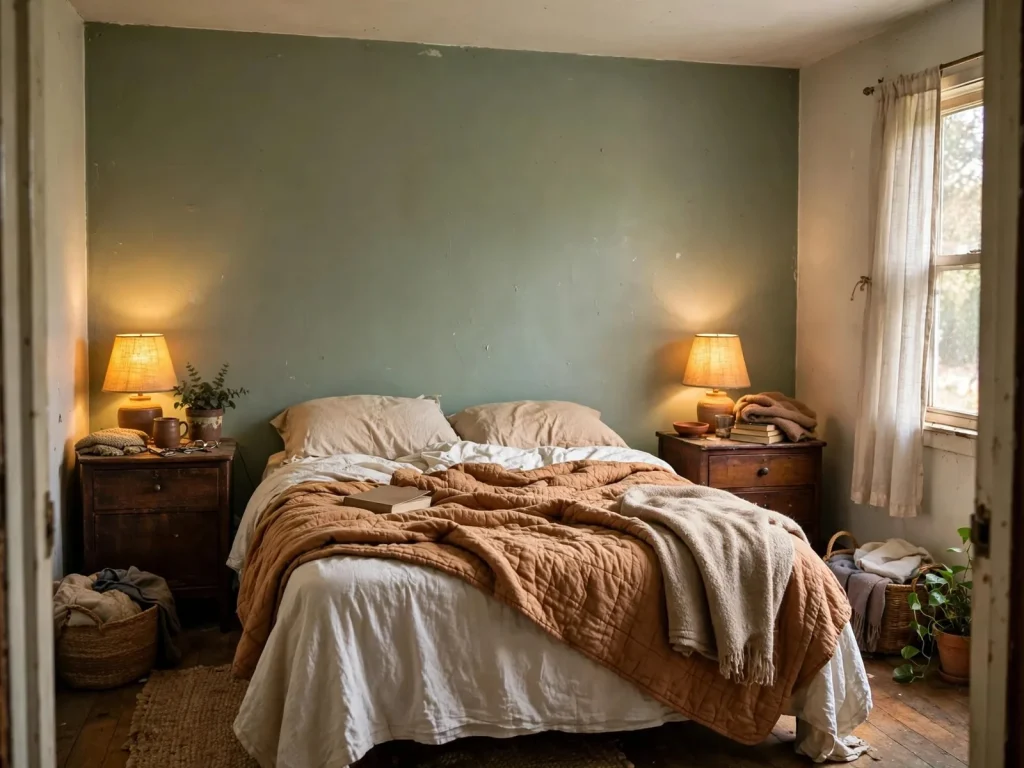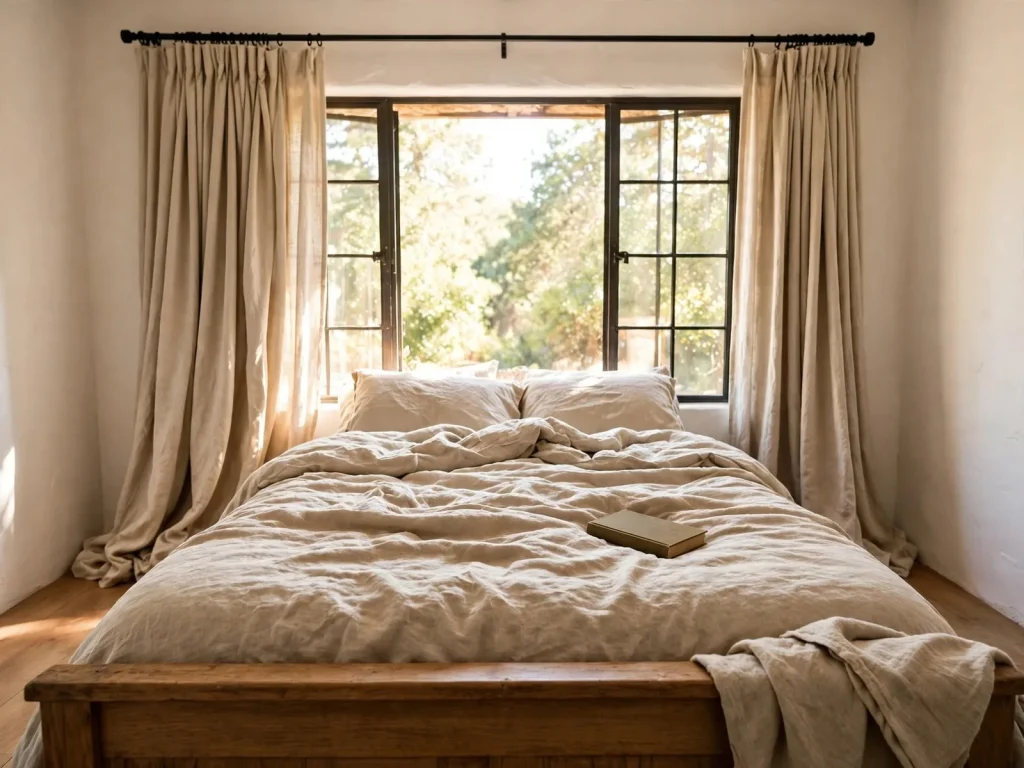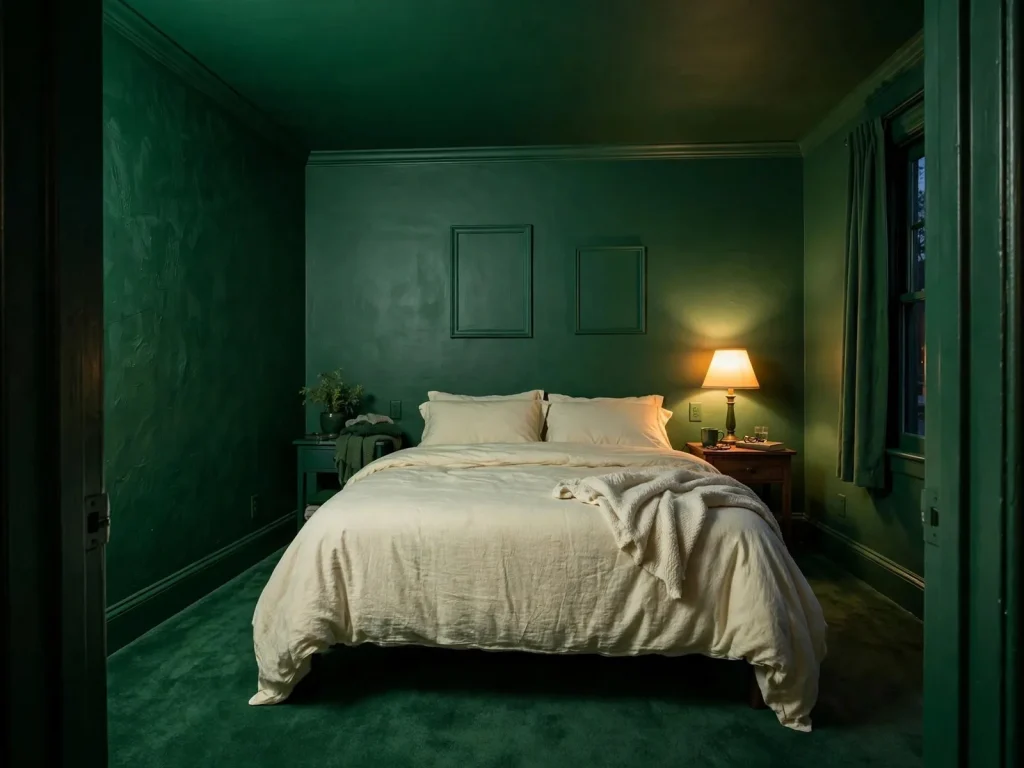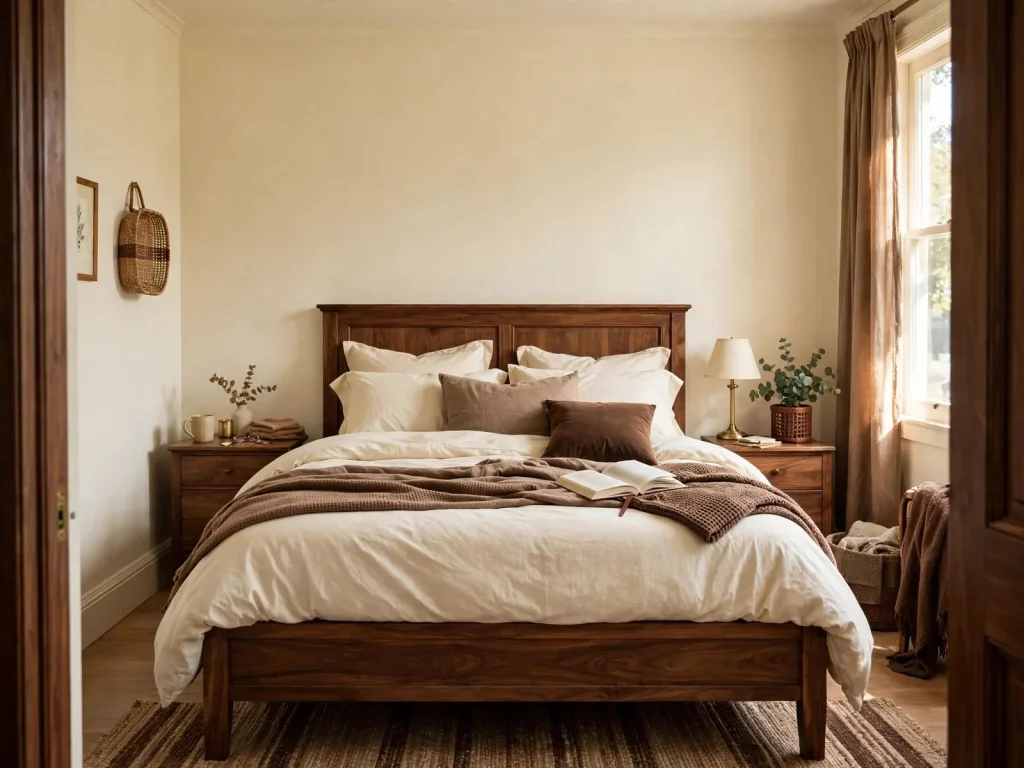
You have saved the same sage bedroom fourteen times. What you are looking for is not really the sage. It is the room that feels calm, holds its colour, and does not ask for perfection.
Green earns its place because it sits in the middle of the colour wheel. It is easy for the eye to rest on, it changes gently with the light, and it takes wood, linen, brass and stone without arguing with any of them. This page is the green chapter of our bedroom color ideas, where every colour family gets the same named-paint and light-first treatment.
Before you start: measure, budget, rules
Face check first. Stand in your bedroom doorway and look at the wall the bed will face. Measure it now, because every number in this guide uses that wall, your side distance to the skirting, and the room’s height.
The named paints here are listed as named matches, not exact shades. Scan the tin’s own swatch in daylight before you open it. The match is a starting point for your eyes, not the finished colour.
If the room needs more than colour, the full plan lives in the bedroom ideas pillar.
The palettes, one by one
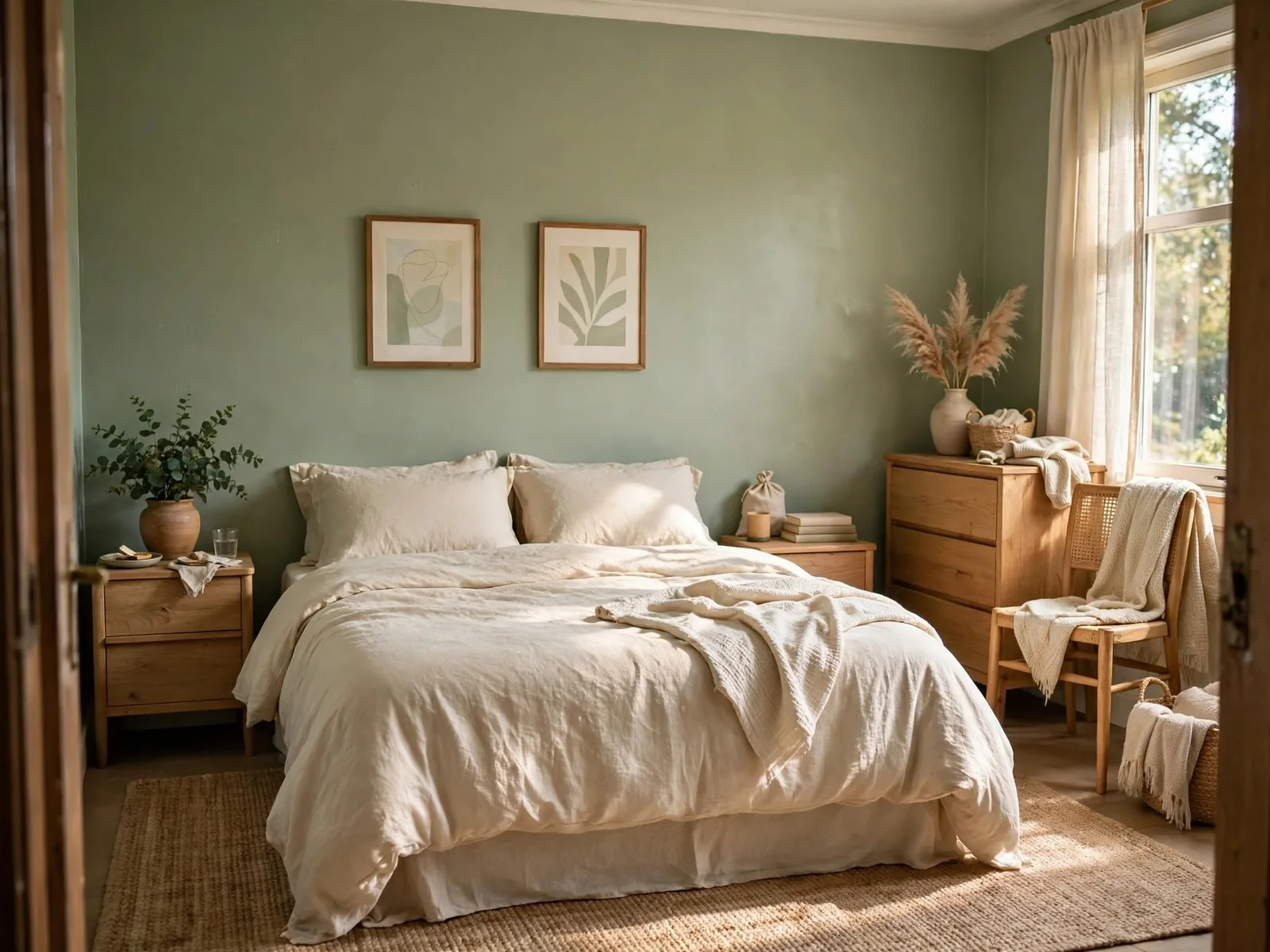
1. Paint all four walls a soft sage green
Pick the lightest green in the family. Go soft enough that the walls feel near-white, with the colour only present at the edges. That keeps the pale wood, the cream bedding, and the light coming through the window doing most of the talking.
Measure: one litre test pot, two test boards 2 feet by 2 feet, and a 60-watt bulb in the lamp you use most. If the pot covers both boards, you need one gallon for the average 12-by-11-foot room.
Budget: one gallon for under £40, one primer for £12, and one roll of painter’s tape for £4. That is the whole job if the filler under the door is sound. Double the paint if it is nail holes and loose plaster.
Renter-friendly: paint only the wall the bed faces with one tester pot, then use sage bedding to repeat the colour. The wall can be painted back to white by the next tenant in about fifteen minutes.
It suits a master bedroom first of all, because it holds up at large wall scale without going sweet.
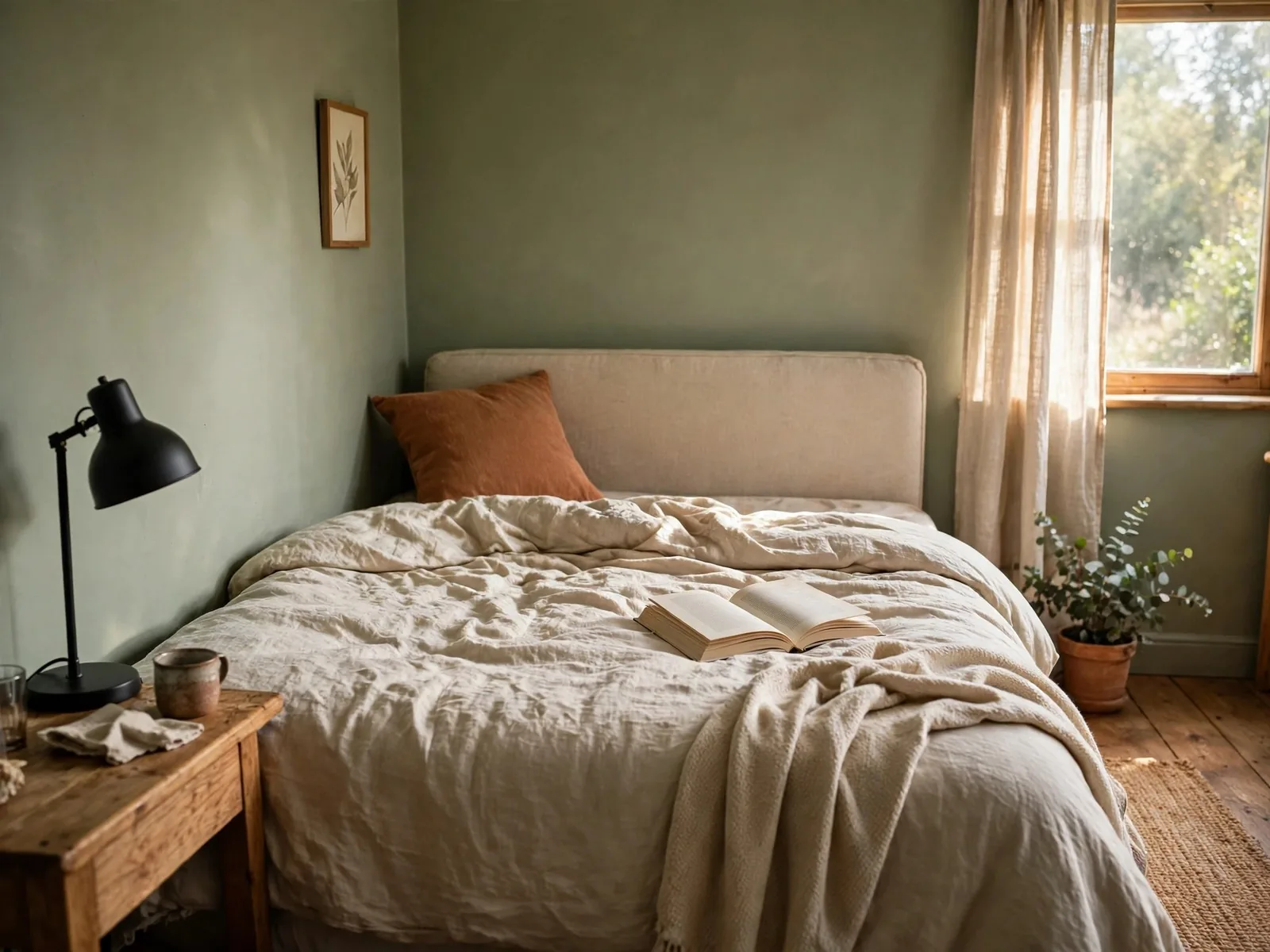
2. Choose a modern sage like Clary Sage
Clary Sage leans slightly green-grey, and it works because the grey calms the green. It suits the modern room with a low-ceilinged built-in wardrobe; pull it out of the tube in the shade of your picture rail and it can be either warm or cool, depending on the mix you use.
Measure: one gallon for a 12-by-11-foot room, one metal tester pot for the topcoat at a 1:1 ratio, and two coats for a dark base. If your walls are already painted white, one gallon will do.
Budget: one gallon for £35, one tester pot for £7, and two 2-inch brushes for £10. A good quality mini roller and cage costs £6.
Renter-friendly: skip the hot colour of your choice and use the same sage on two walls and the matching headboard area instead. Green paint is a lovely backdrop indoors, and it will wash back off.
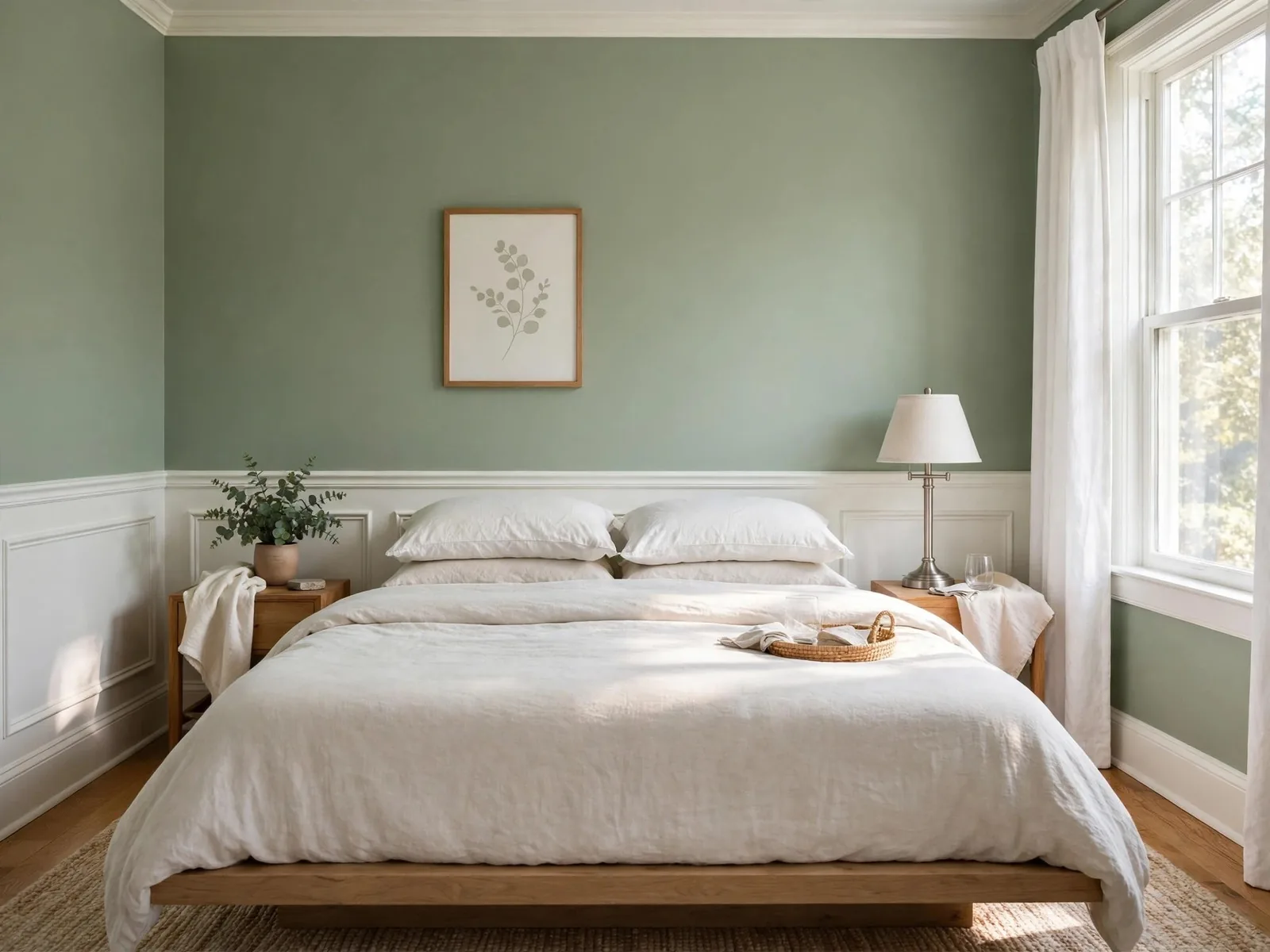
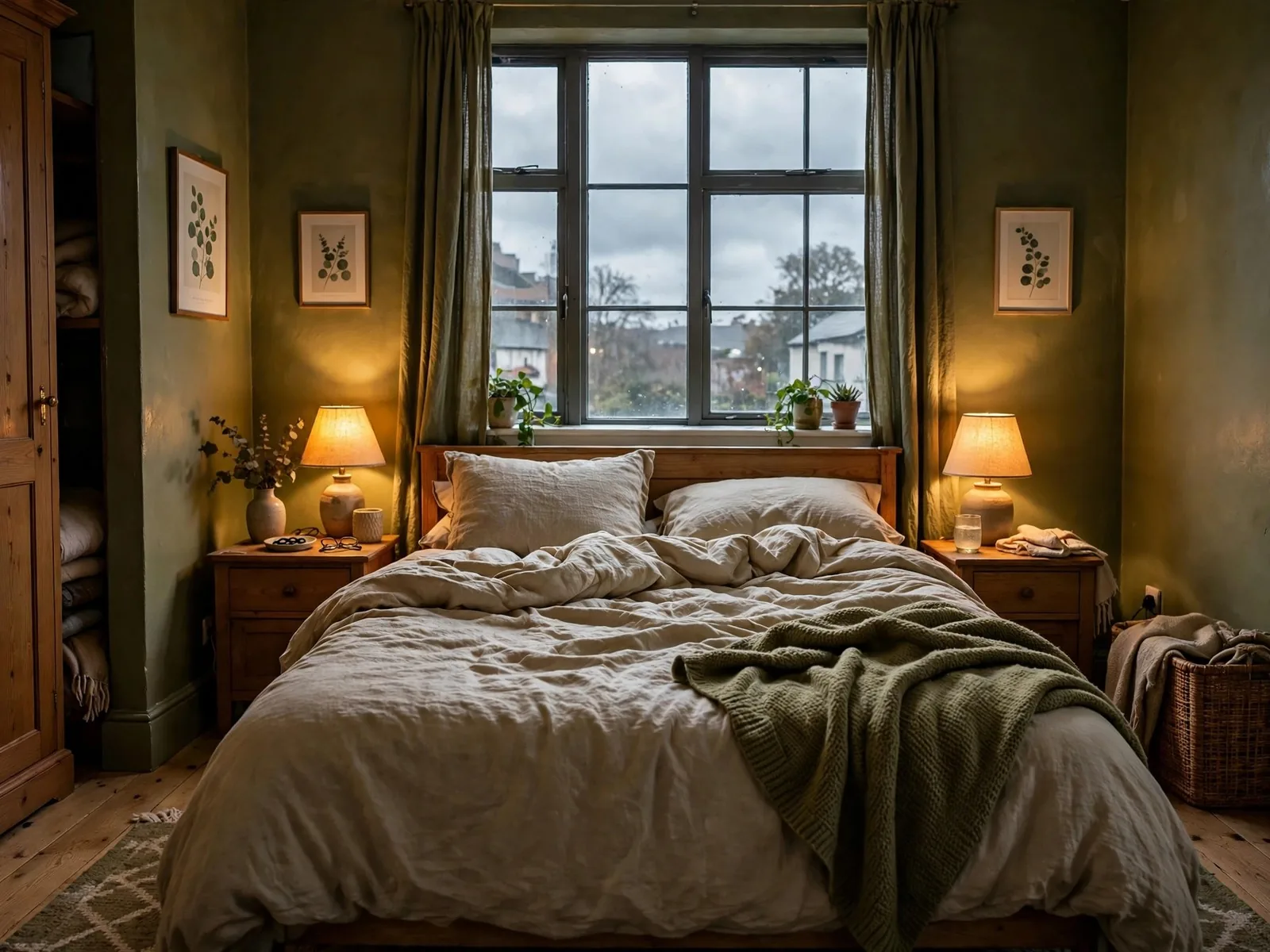
3. Try olive with Dried Thyme
Dried Thyme is a richer olive than sage. It reads as a deeper shade on the walls, so you need to run the room in a vintage or mid-century palette with walnut, deep leather, or dark oak. The room will look richer in the evening.
Measure: one gallon of topcoat for a 12-by-11-foot room, one gallon of topcoat for the dark wood and one roller set. Two coats for a dark base.
Budget: one gallon of topcoat for £35, one gallon of primer for £12, and a wallpaper paste table for £5. A coat of topcoat for the wood is £8.
Renter-friendly: use olive on one wall and in the fabric of your choice on bedding. The wall can be painted back to white by the next tenant, and the bedding goes with you.
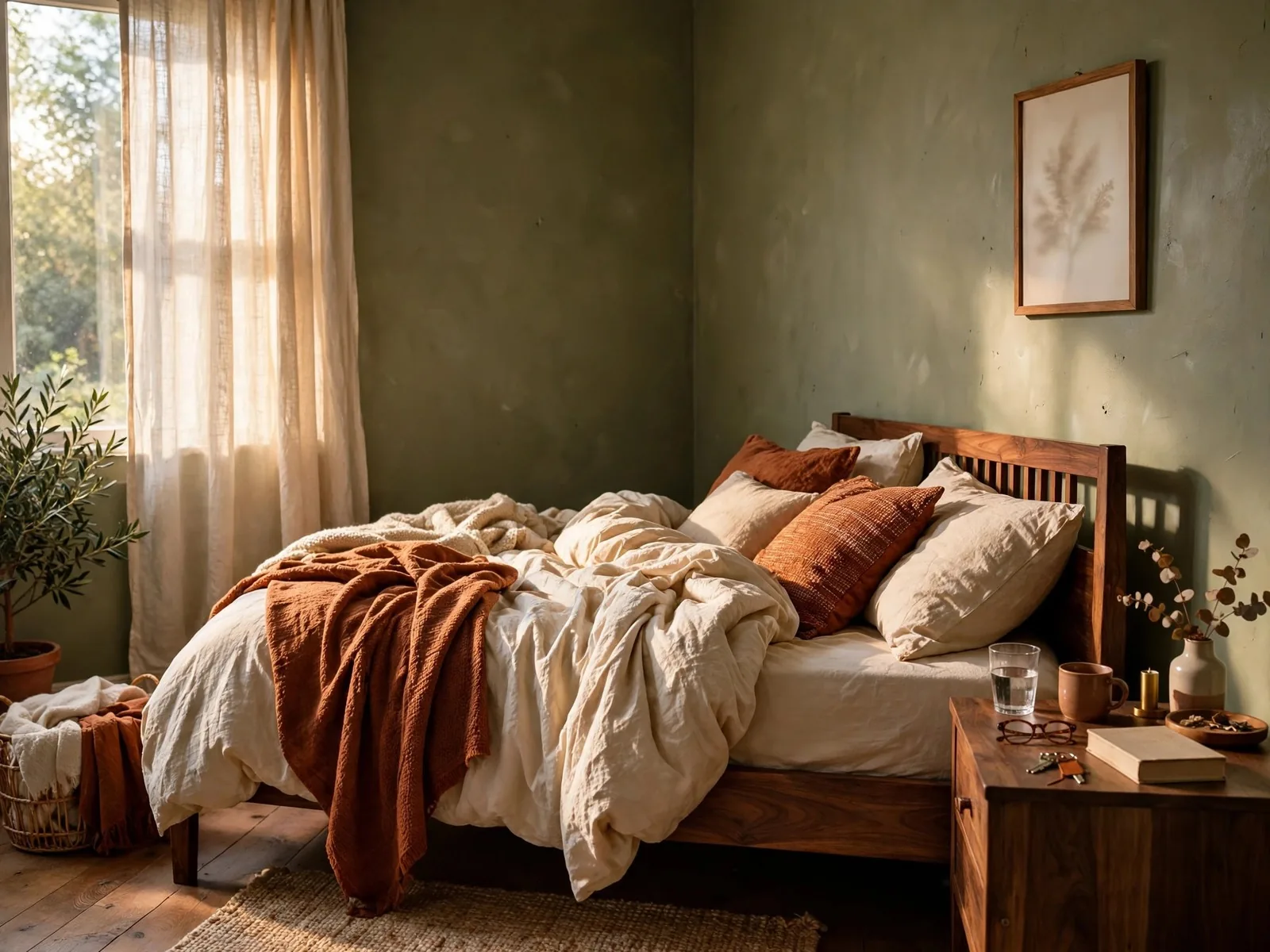
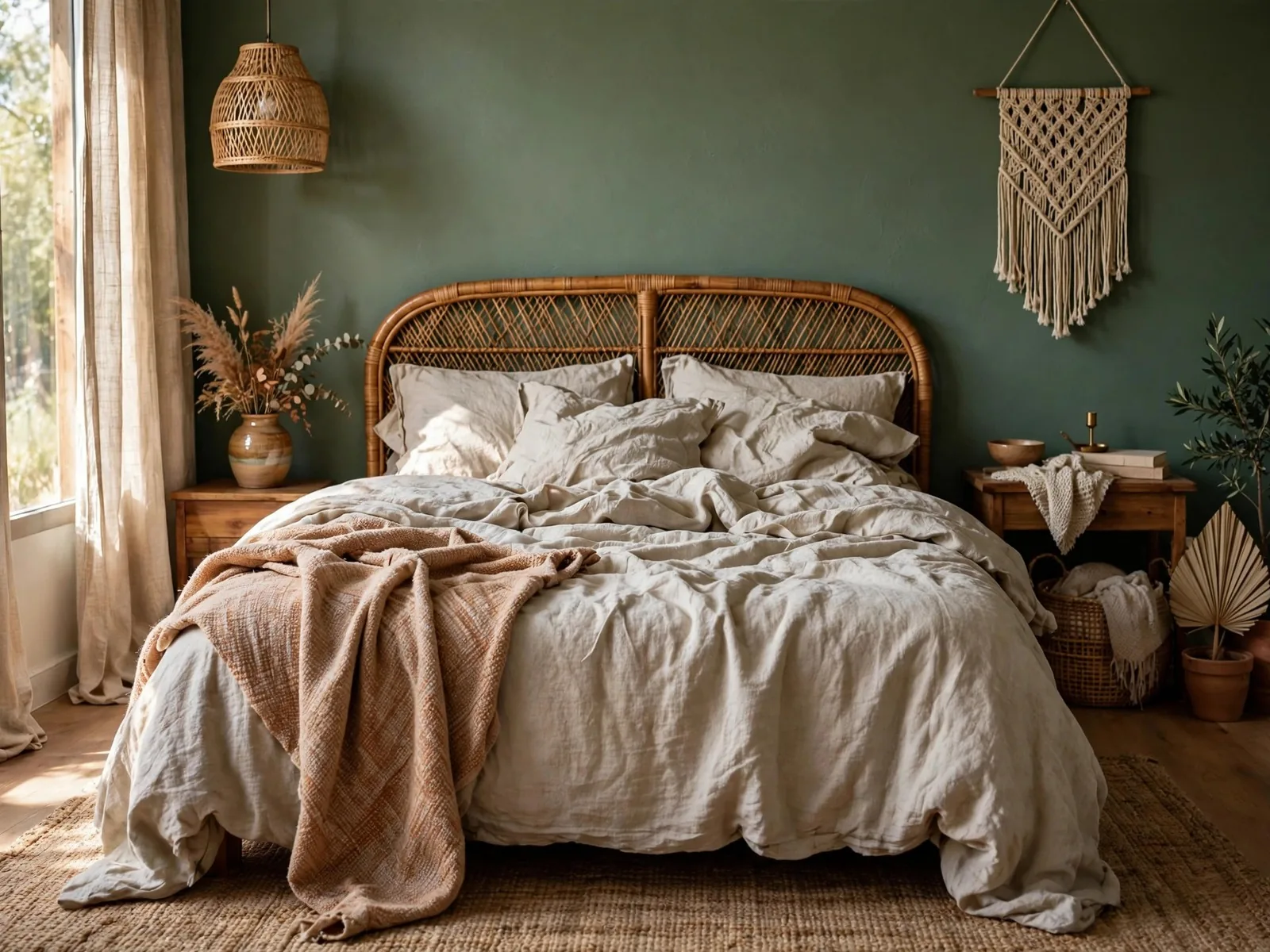
4. Go deep with a boho sage like Retreat
Retreat is darker than Clary Sage but still soft enough to be a backdrop. It suits a boho bedroom with rattan, jute, and cream linen. The colour keeps boho soft rather than shouty, so you can hang braided macramé, dried flowers, and warm wood without the room feeling overdone.
Measure: one litre test pot, one 2-x-2-foot painted test board, one 40-watt tungsten lamp. Paint one test board with the colour on the main light wall and one on the wall the bed faces, then lift it to the room and check at 10 a.m. and 7 p.m.
Budget: one gallon for £35, one tester pot for £7, and brushes for £12. Leave the floor alone if it is wood.
Renter-friendly: use this colour on the wall right behind the bed and put the rattan on the opposite wall. The colour will keep the room’s greens near each other, and then you move on.
The amount of layering that stays tidy, rather than sliding off the bed, is set out in our boho bedroom ideas.
How each palette behaves in north and south light
North and south light are not opposites to settle; they are a reminder that the same green changes colour twice a day. What looks perfect at 3 p.m. can look muddy at 9 a.m., or the other way round. All the greens in this guide behave properly in both directions if you make the following checks.
5. North-facing green that still feels warm
A north-facing room never gets direct sun. At noon, the light coming through the pilot hole of the room will be cool and grey. A green that is too blue-grey here will look like a cement wall. Pick a sage with a yellow underside, like the warm olive below.
Measure: two test boards 1 foot by 1 foot, one 60-watt tungsten bulb, and a piece of cardboard. Put the bulb 6 inches from the boards and look at it from eye level at the wall you most often face. The colour will warm in the evening.
Budget: one litre paint for £12 and a tester pot for £7. A floor lamp with a warm bulb costs £30 or less.
Renter-friendly: choose the warmer option and let your lamps do the work. Your white walls stay white, and you add olive through bedding and cushions, and sheers and linen that are quick to change.
The rule for wattage and bulb temperature is in our bedroom lighting ideas.
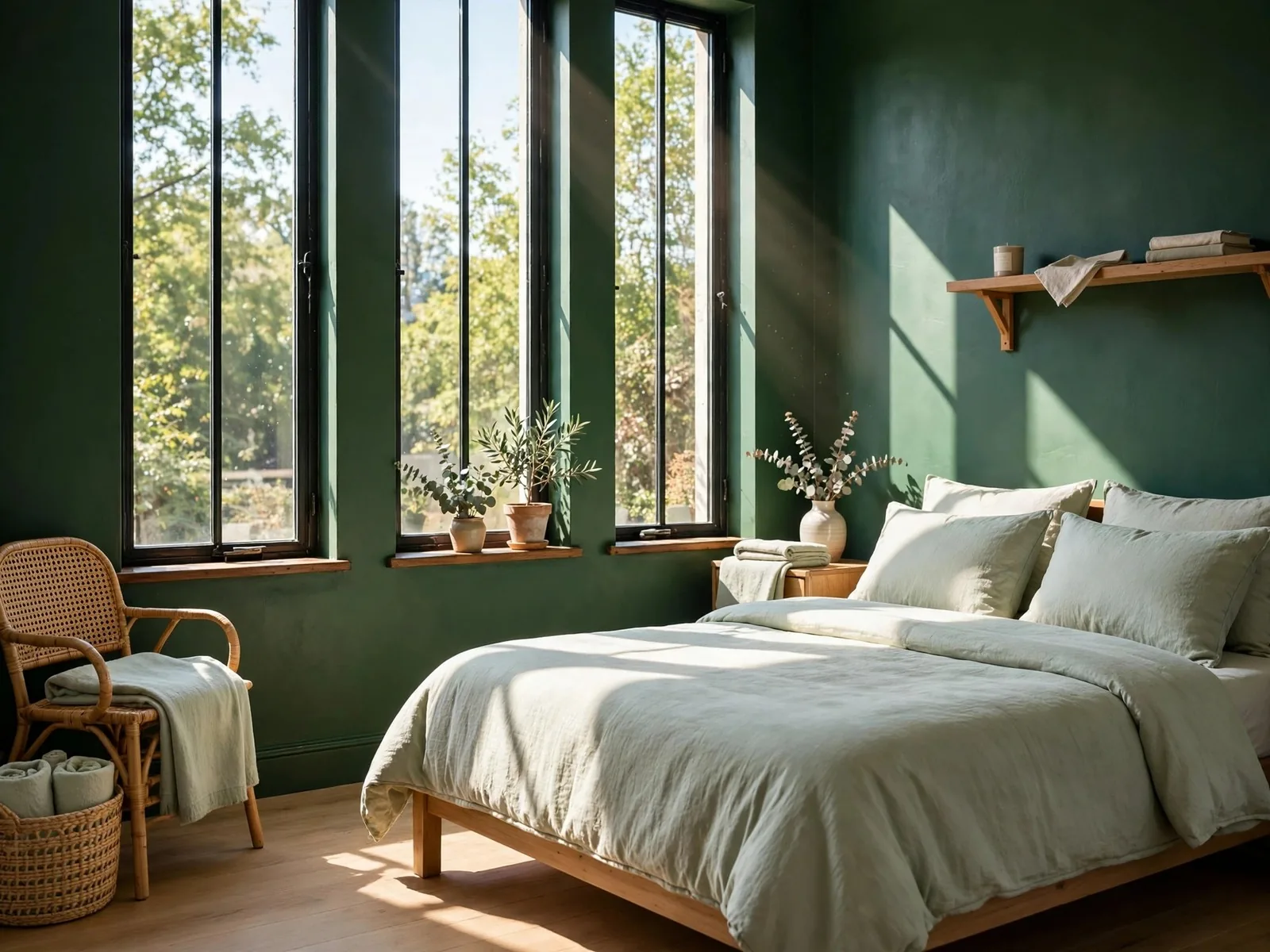
6. South-facing deep green that does not bleach
A south-facing room gets direct sun. Deep greens survive because the chlorophyll pigment is muted under bright light, so the walls will hold their colour longer than most styles. Avoid pale greens in a strong south room: once the sun hits and the lamps are off, the pale green will fade to grey and feel dull.
Measure: a test board 2 feet by 2 feet, painted and checked at 10 a.m., 2 p.m. and 6 p.m. Once yellow in daylight, the colour will hold and the walls will not yellow.
Budget: one gallon of paint for £35 if you prime first, plus a blackout blind for £18 if the room faces southwest and the light is strong at night.
Renter-friendly: use a dark green through your bedding and curtains only. Paint stays white and the dark green works through fabric.
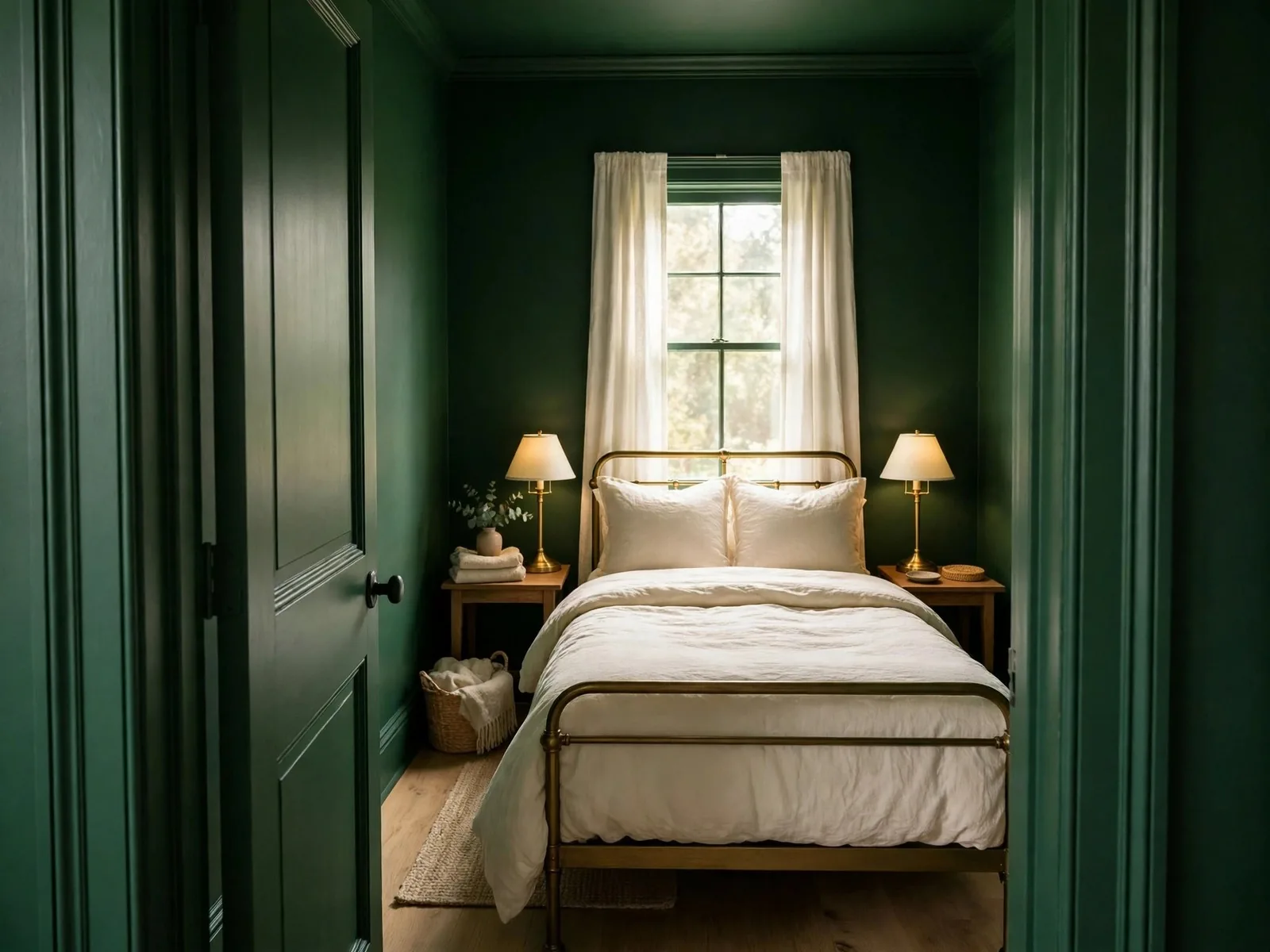
7. Small bedroom drenched in forest green
In a small room of 10 by 11 feet or less, one strong green on every surface removes the edges and makes the room feel larger. Details like sockets and the skirting are better painted in the same colour, so the eye meets no visual break.
Measure: one gallon for a 9-by-10-foot room and a 2-inch sash brush. Check the colour at 100% daylight with the curtains open and at night with all lamps on. If the room looks near-black at night, lighten the topcoat by a shade.
Budget: one gallon for £35, one tester pot for £7, and two 2-inch brushes for £10. Leave the floor pale and light to stop the room going heavy.
Renter-friendly: painting a wall the same colour as the doors can be done without the landlord’s permission if the doors were already painted. If not, use a dark green bedding and cushion set with a repeat on the walls; walls with tall pale wood look warm in the evening.
Detail it in dark greens late at night. Our moody bedroom ideas run the same edge-erasing trick in a deep teal, so the room at night stays cozy rather than forbidding.
8. Test before you commit and make the call
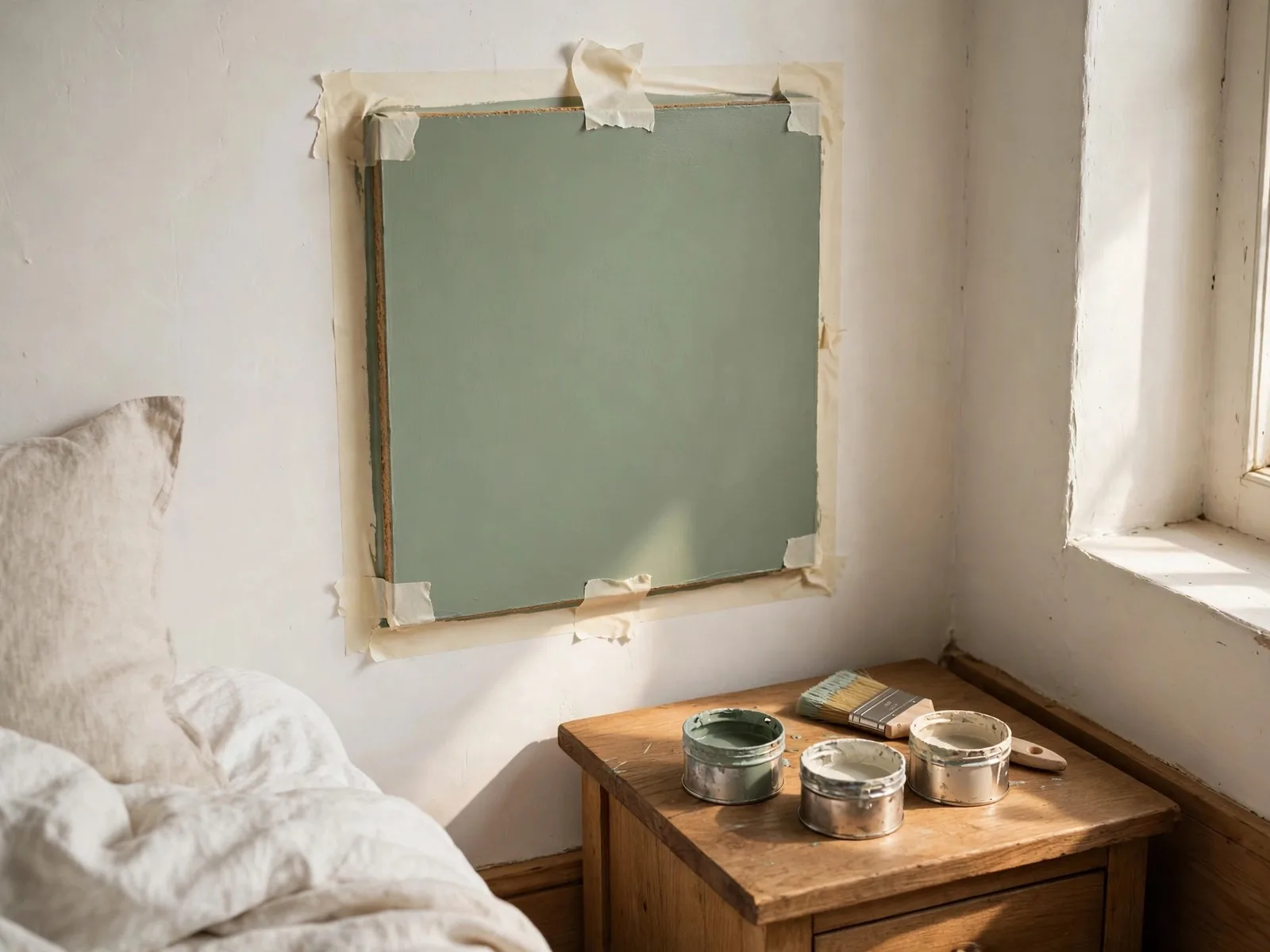
A gallon of paint is a lot to move once you have started, and a tester pot in the wrong room is wasted. Buy one tester pot and one 2-by-2-foot foam board. Paint a small area near the bed, then tape the board to the wall and leave it for a week.
Measure: one 2-foot foam board at 25 mm thick, painted, taped to the wall you most often face. The board is the real test, not just a swatch.
Budget: one tester pot for £7, one foam board for £5, and one piece of tape for £3. If your test boards are not giving you a read, buy a second tester pot for £7.
Renter-friendly: keep the paint on the board, not on the wall, and cover the board with the same tape you use for the test. The board will do the job and leave no mark.
Textiles and wood: completing each palette
Green alone from the tin will not be enough to make a room look finished. What the palette needs is a layer that carries colour through fabric, so the room feels chosen rather than painted. A room with three objects in the same green — the bedding, one cushion of a smaller size, and the wood of the furniture — will read as a palette rather than a paint swatch.
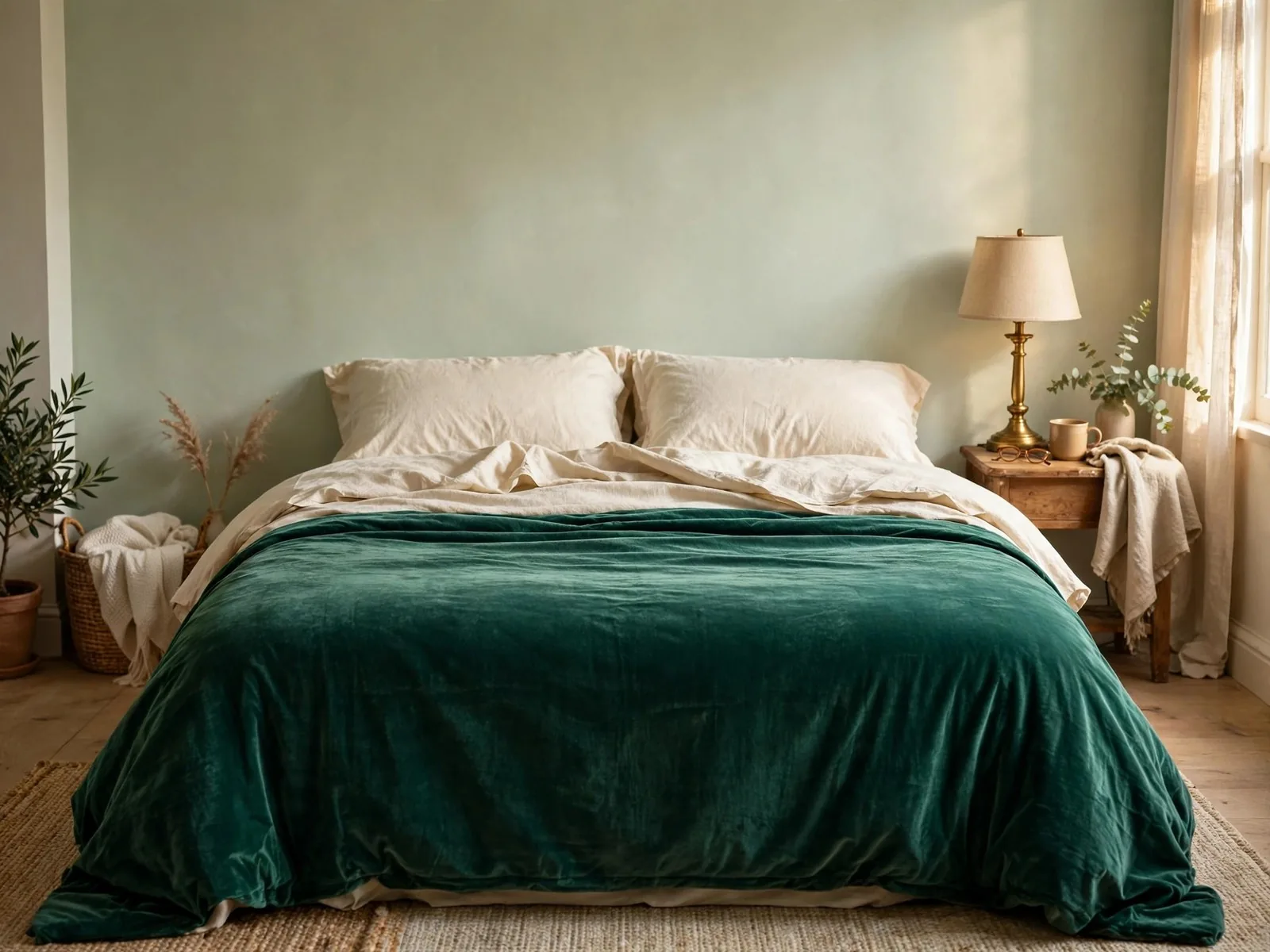
9. Emerald velvet bedding
Emerald velvet or satin brings the richest green to a room that already has warm white or pale grey walls. The fabric gives the room depth without a new paint job, and the glossy finish makes the green visible even in flat artificial light.
Measure: a 60 x 80-inch duvet cover, one 20 x 30-inch sham, and a 50 x 60-inch throw. Always buy bedding one size up cos it will draw the eye to the green more.
Budget: a velvet duvet set for £50, one sham for £25, and one throw for £30, or a cotton sateen duvet set for £35 if velvet is not for the warmer months.
Renter-friendly: velvet bedding is the simplest way to get a deep green into a rented room because you can change it without touching the walls.
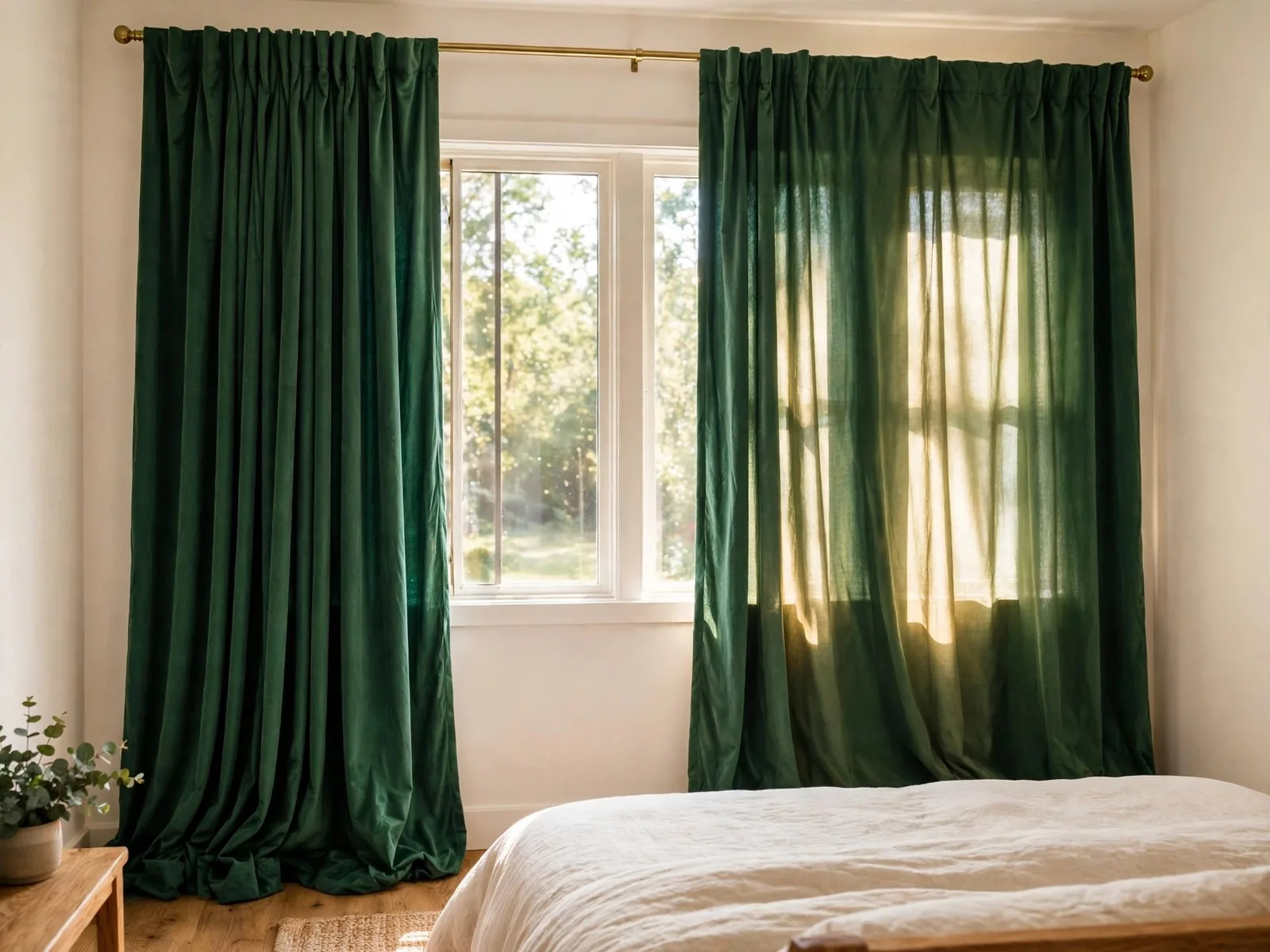
10. Emerald curtains hung high and wide
Emerald curtains hung high and wide change the room from a plain rental to a finished design. The eye reads a tall room, and the green folds read as one sweep of colour rather than two window frames.
Measure: hang the rod 4 inches above the window frame and 4 to 10 inches wider on each side of the frame. That width of fabric makes the wall feel broader and keeps the light from spilling from the sides. The curtain drop is the frame height, plus 4 inches extra if you want the fabric to puddle.
Budget: two curtain panels for £40, one rod for £15, and rings for £5. Leave a 2-inch gap between the rod and the ceiling if the room is a narrow 8-by-10-foot space.
Renter-friendly: curtains hung higher than the window create a hotel feel, which is how you add depth without painting a wall. They fold back to a small size, so they are easy to take with you.
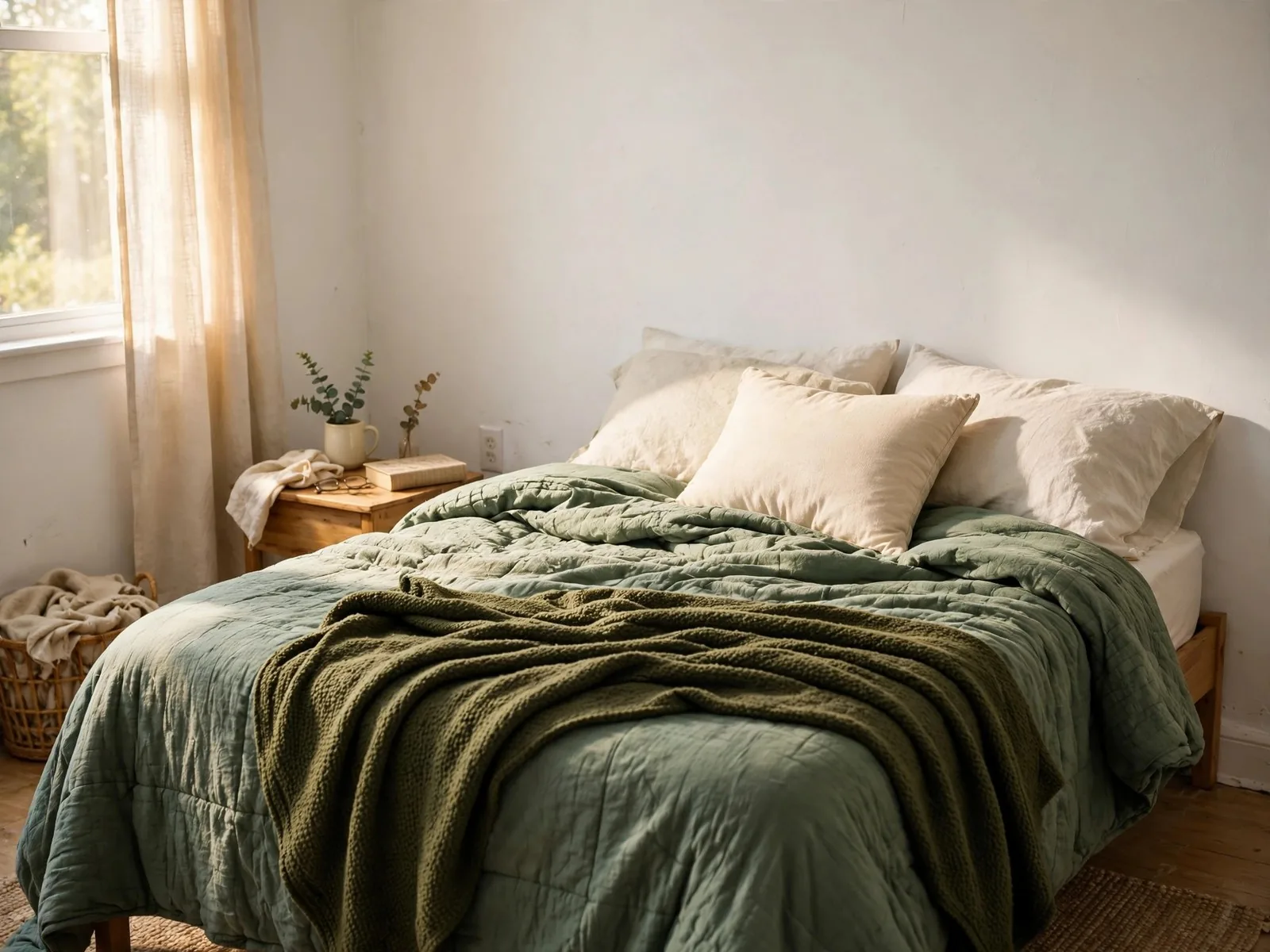
11. Layered sage and olive bedding
Layered sage and olive bedding makes the room feel cosy and lived-in, rather than perfect. The trick is the order of the layers: a pale sheet on top, then the duvet, then a slightly smaller pile of covers than the bed.
Measure: one sage fitted sheet, one olive duvet cover, one cream cushion 18 x 18 inches, and one sage throw folded at the foot. Keep the pillowcases plain, so the colour is not fighting with patterns.
Budget: one duvet set for £40, one extra cushion for £25, and one throw for £25. Two fitted sheets in rotation work better than one, if it is possible.
Renter-friendly: bedding is the only thing in the house that is guaranteed to be taken to the next room, so buy what you can travel with: fitted sheets, duvet covers, pillowcases, and throws.
12. Swatches before you buy
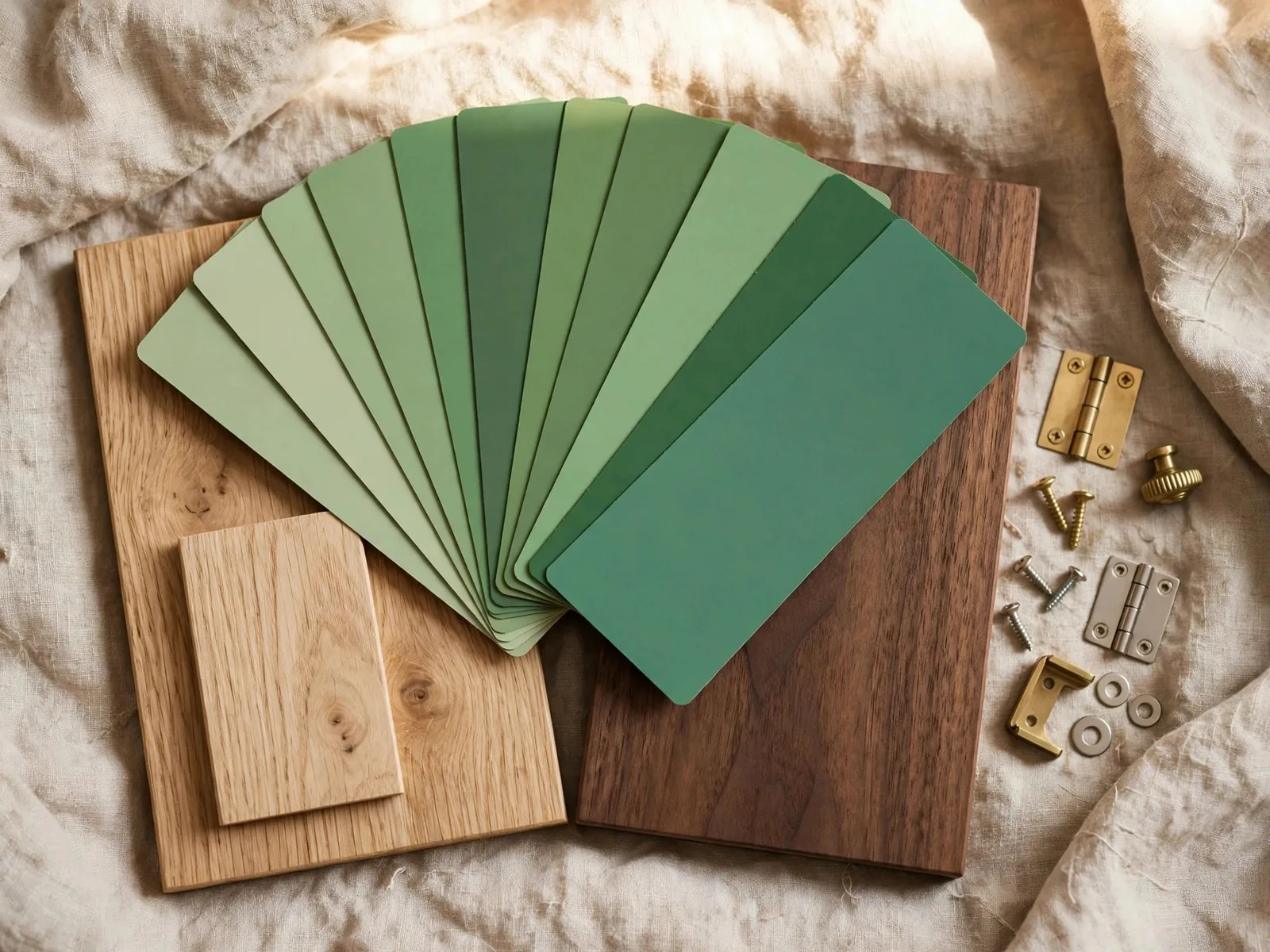
Parallel testing of paints, wall colour, and combinations in different rooms is a great way to avoid costly mistakes, so we created a quick reference for the paint colour and its partner swatches. It is one of those things that is tiny and underwhelming and really does work.
Measure: a single test board 2 feet by 2 feet, painted across the whole surface so the colour shows in full. Wood and fabric swatches can be added on top, along with metal samples, to see how different wood finishes will carry the green.
Renter-friendly: swatch-testing on a small piece of the wall is one of the easiest wins in this guide. It is cheap, fast, and safe, and you can use tape to check whether a change in the light direction will affect the colour you plan to use.
Budget: one small tester pot for £7 and one small piece of board for £5. If your test pieces do not show the pairing well, a larger board can be hired.
13. Hunter bedding on pale walls
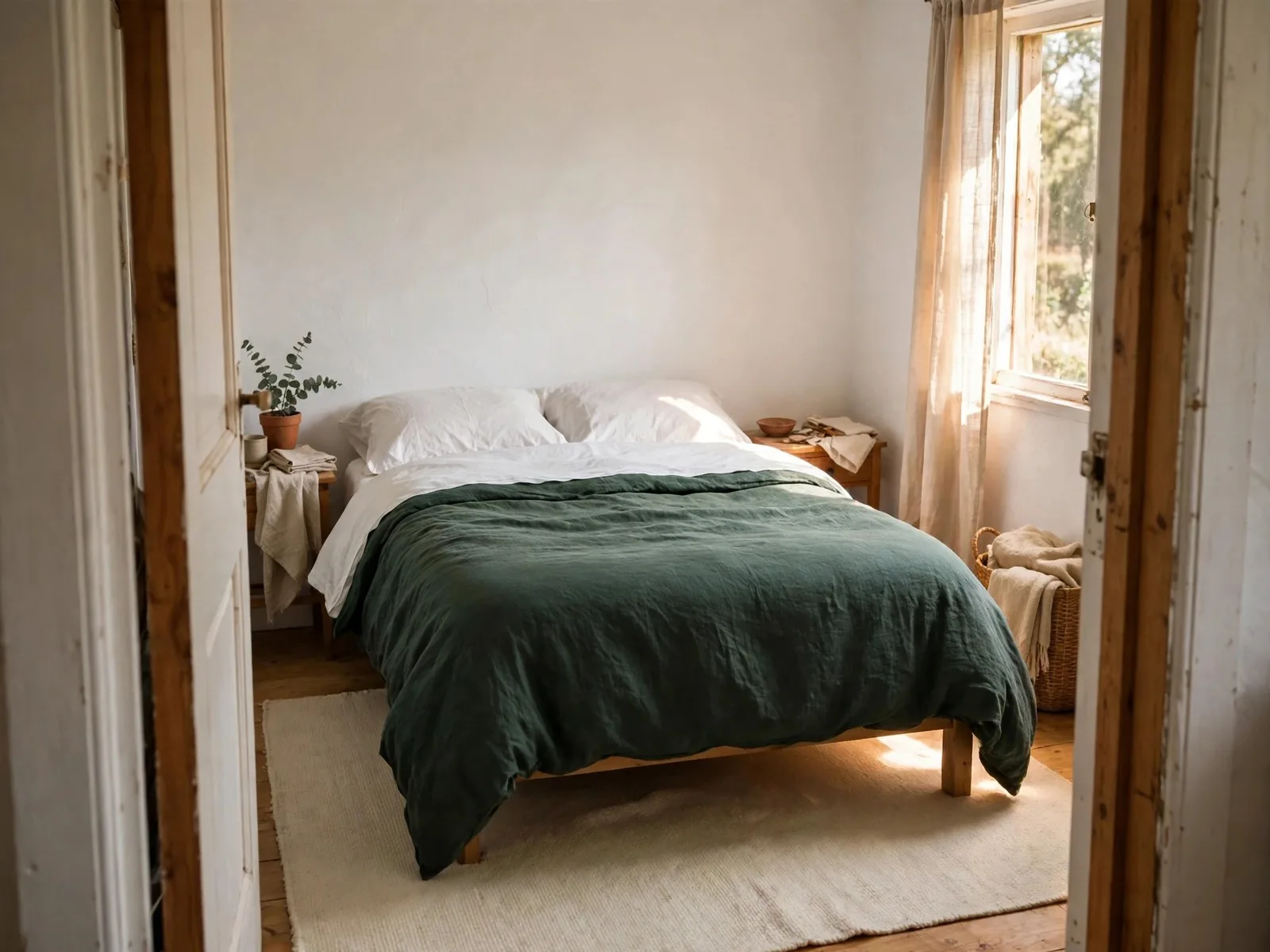
Dark hunter green bedding works best when the rest of the room is pale. White walls, oak, or pale birch work with it, and a narrow band of white at the top of the duvet gives a clean edge.
Measure: one dark hunter duvet cover, one white sheet folded back 6 inches from the top of the bed, and two pillowcases the same green or in a pale cream.
Budget: one duvet set for £40, a pair of pillowcases for £20, and a throw for £25, or a cotton duvet set for £30 if you want it a little lighter.
Renter-friendly: dark bedding is the easiest way to add colour and texture to a rented room cos it pulls the green into the room without painting.
The same narrow-room light-walls-dark-bed split drives our small bedroom ideas, so read that first if the room is under 100 square feet.
The same palettes on a budget
The paint alone would be a big enough change, if that is all your budget allows. Green on a rental budget works because the paint usually stays the same, and the money goes elsewhere. The list below is the order I would work in if the budget was tight.
14. One deep green accent wall only
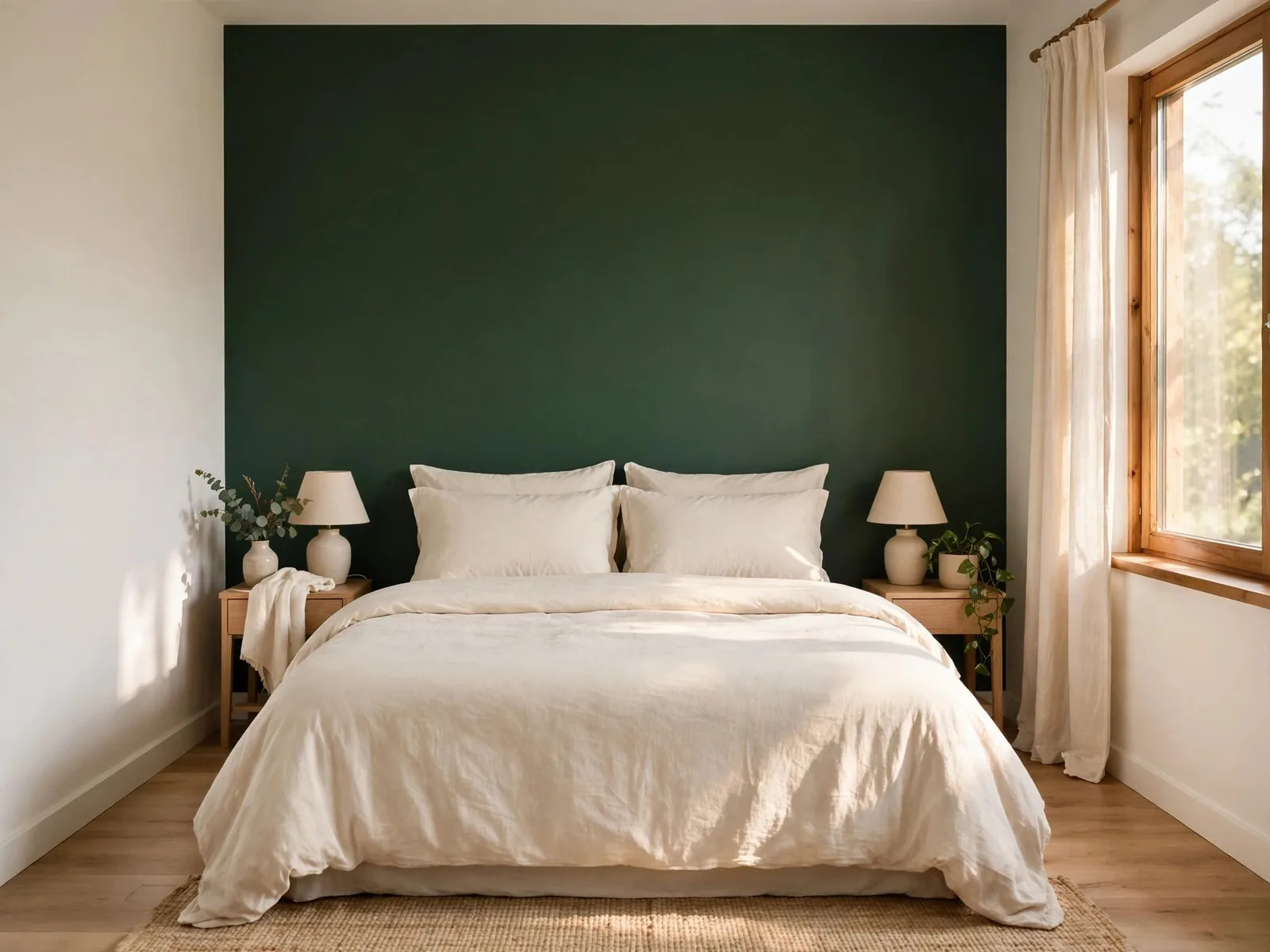
One deep green accent wall behind the bed gives you the colour you want and the clean-up afterwards is the price of one pot of paint. The room still looks decorated, rather than white with the same colour behind it.
Measure: one accent wall 10 to 12 feet wide, one tester pot to check the colour at the right place, and one roller and brush set. Stop the paint at the wall’s corners to keep the edge clean.
Budget: one gallon for £35, one roller and brush for £12, and a sheet of painter’s tape for £4. Skip primer if the wall is already white.
Renter-friendly: a single accent wall is the easiest renter change, because one deep green wall behind the bed feels like a design choice, not a landlord repair job — and if you want it back to white, one coat of the landlord’s white covers it.
The side distances and the sideways spread are the measure-and-mark part, and our bedroom accent wall ideas cover that layout math in the same way.
15. Sage botanical peel-and-stick wallpaper
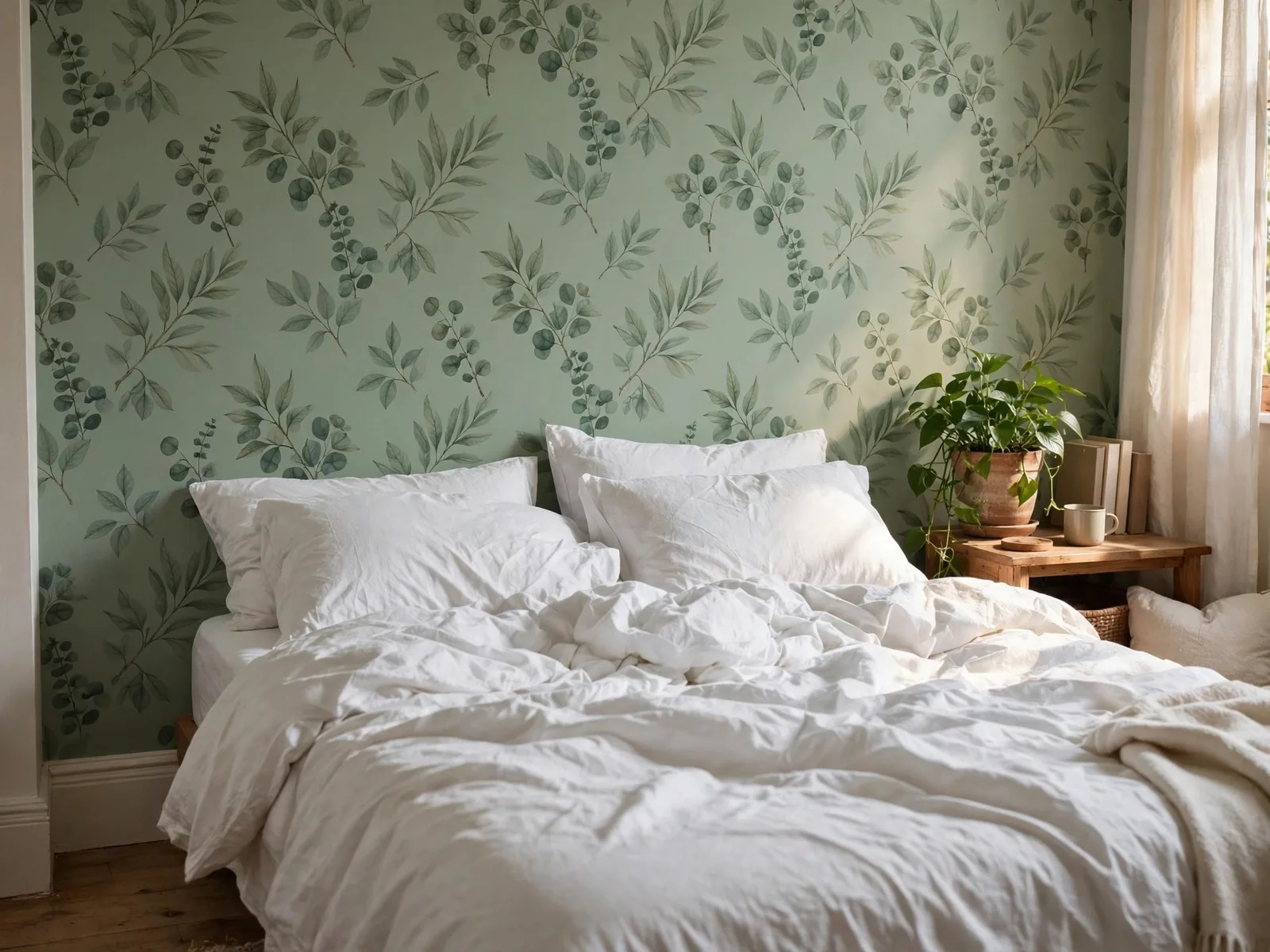
Sage botanical peel-and-stick wallpaper is a quick way to add a pattern, but use it on a small piece of the room. If the paper is on one accent wall, the room still looks calm; if it is on four walls, it will feel busy.
Measure: one roll 20.5 inches wide by 33 feet, for a standard 10-by-12-foot room, one roll for a 10-by-11-foot room, and one tube of wallpaper adhesive for a 8-by-10-foot room. Check the paper’s repeat at eye level; the botanical pattern should not be cut across the middle of the wall.
Budget: one roll for £25–£40, one kit for £8, and one 2-inch paste brush for £5. Leave a small gap at the bottom of the wall for the skirt: cutting the paper at 45 degrees can be done, but it takes a human touch.
Renter-friendly: peel-and-stick paper leaves the least trace on a wall, and it comes off in strips, so it is the safest decoration for a rented room.
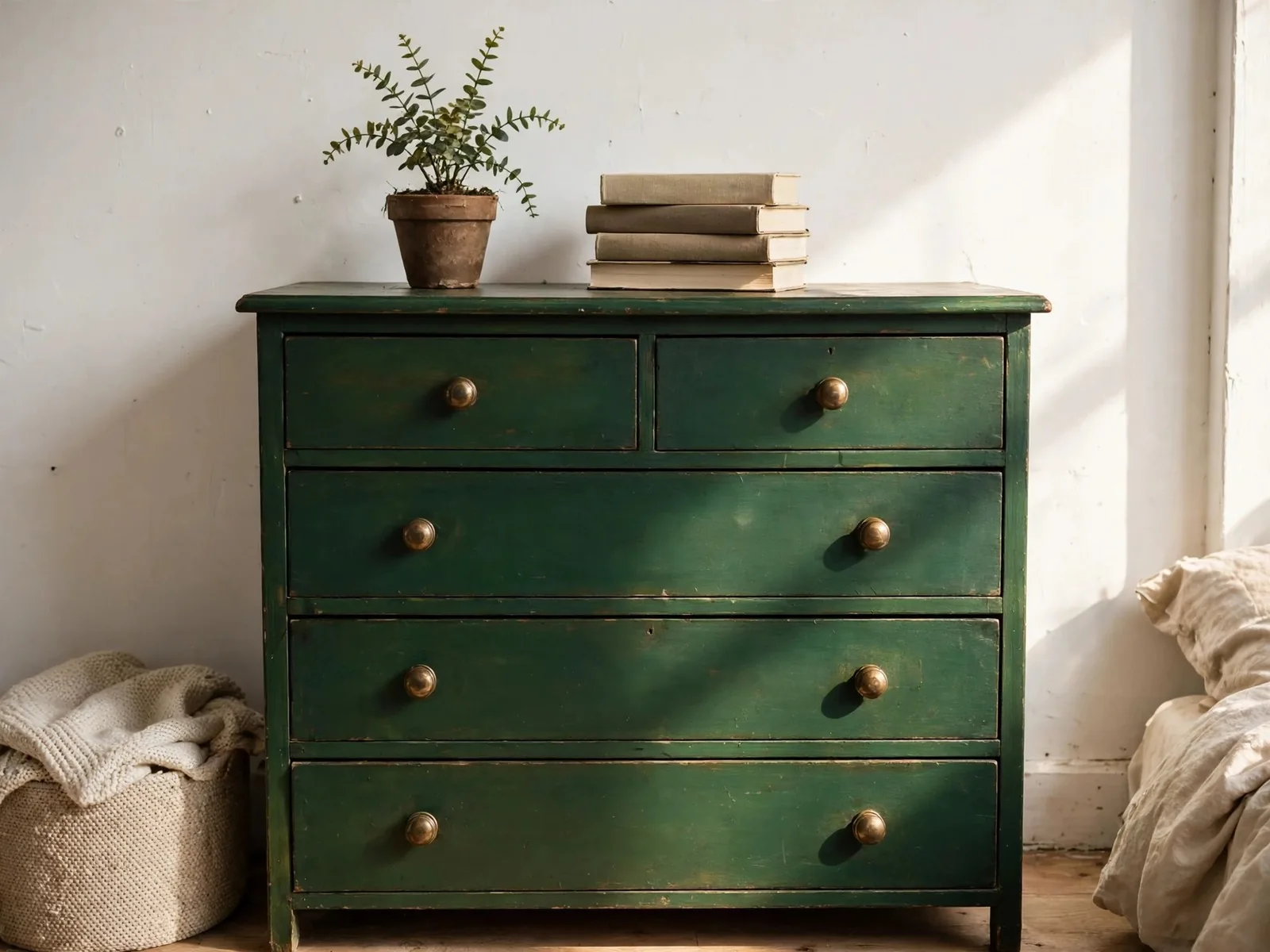
16. Thrifted dresser painted deep green
Painted furniture holds a palette together because it puts the green at hip height, where the eye rests most of the day. A dresser is a good choice because it stores things and adds a green piece of furniture to a pale room.
Measure: one deep green litre, one 2-inch brush, one roller, and one piece of 120-grit sandpaper for preparation. The dresser needs a coat of paint on all four sides, otherwise it will look two-dimensional.
Budget: one can of paint for £20, one brush for £5, and one piece of sandpaper for £2, plus the dresser itself for £20 or less.
Renter-friendly: old furniture is the cheapest green in the room, and it is also the most obvious, because it is at eye level and you cannot ignore it. One thrifted dresser painted deep green will outlast the room’s paint job.
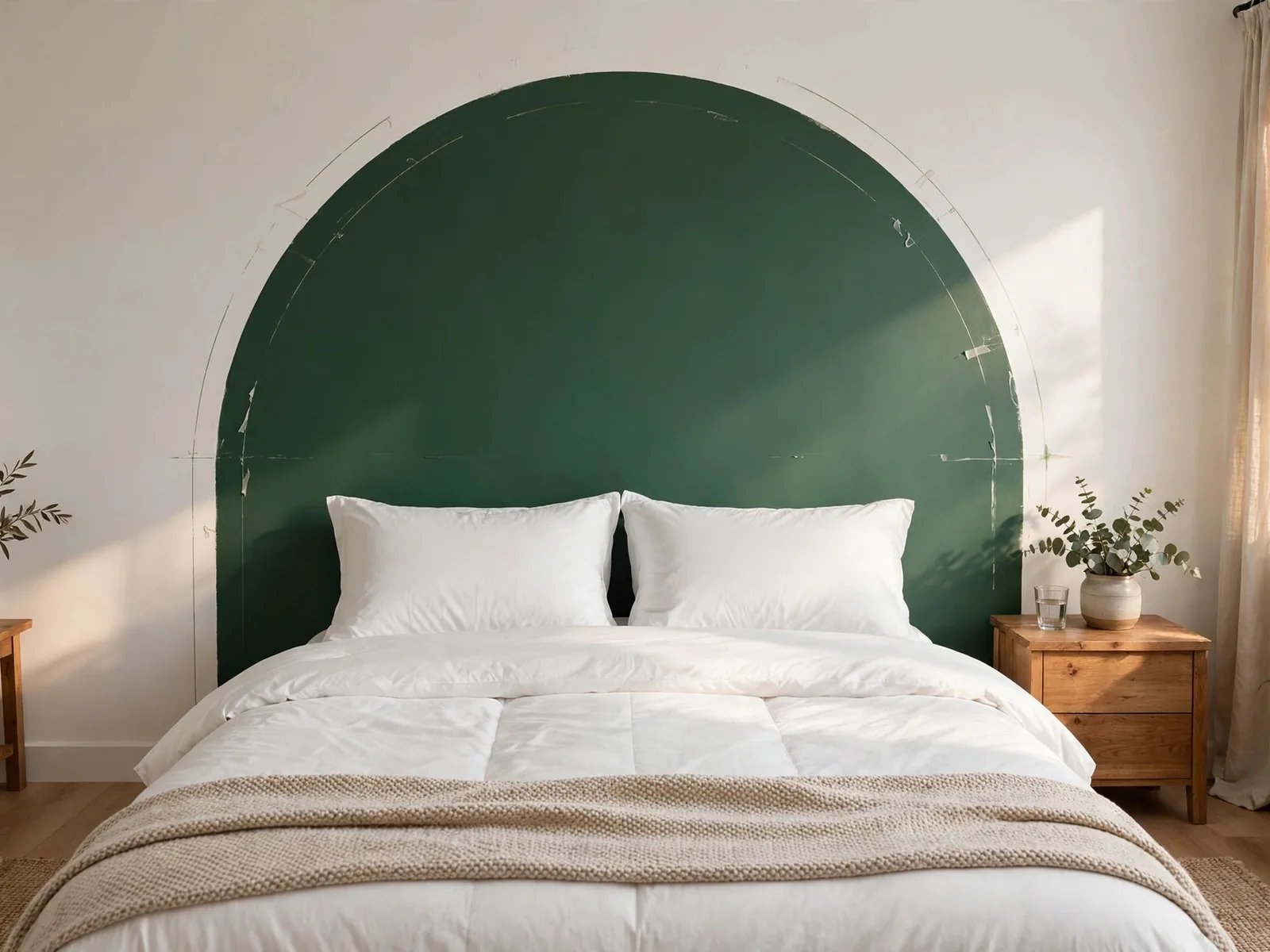
17. Painted arch behind the bed instead of a headboard
A painted green arch behind a bed is a good replacement for a headboard because it gives the wall behind it a shape, rather than just a colour. You can find a free arch shape from a local copy shop, then work from the wall measurements to draw the arch with a piece of string and a pencil to get the correct centre.
Measure: one litre of paint, one 2-inch brush, one 2-foot length of string with a pencil, and one piece of painter’s tape for the outline. Mark the shape with painter’s tape, cut along the line with a sharp knife, and you will have a perfect arch. The arch can be outlined with string and cut with a knife to get the correct shape.
Budget: one can of paint for £20, one brush for £5, one piece of tape for £3, and one length of string for £1. Take all the edges off the lines as you go, so the arch looks sharp.
Renter-friendly: a painted arch is a good replacement for a headboard, because it does not cost much and it does not leave permanent holes in the wall. Take all the edges off the lines as you go, so the arch looks sharp.
The framing alternatives are the measure-and-mark work, and our headboard ideas cover the same job without a new purchase.
Green Bedroom Ideas on a budget
Most green rooms already come in at £60–£100 per wall. If you are painting a whole room in sage, plan on £150–£200 for the paint, the matching primer and brushes, and one feature wall in a deeper green.
If you are working through a whole room, the makeover path in our bedroom makeover ideas starts with a budget board, then sorts the changes into the same do-first, do-later order as above.
Mistakes that make it fall flat
1. Testing the paint at noon only. A green approved in the middle of the day can look brown in the morning and pale again by evening. Test at 9 a.m., at 2 p.m., and at 7 p.m. before you buy the gallon.
2. Painting the walls before the bedding is there. A green you liked in the shop can sit against the wrong bedding and look washed out. Let the bedding be the first green in the room, then match the walls.
3. Mixing sage and olive in the same room. Mixing two green families in one room makes the eye work harder than it has to. Keep to either sage or olive, and work in only one family in the whole room.
Questions people ask about this
What is the best color to pair with green in a bedroom?
The best pairing is warm white on the walls or ceiling, oak or walnut wood on the furniture, and a slightly warm metallic on the handles and light fittings. Green is calm, tactile, and easy to live with; it does not need a contrast colour to make it work.
Is green a good colour for a small bedroom?
Green is a good small bedroom colour if the green is near-white and repeated in the bedding. A 10-by-11-foot room painted with a pale sage on all four walls and a darker bedding colour will make the walls disappear. If the room is under 100 square feet, leave one wall white.
How much paint do I need for a green bedroom?
For a 12-by-11-foot room with doors and windows, one gallon of paint will do the job on the walls. If the walls were not painted before, buy the primer; if they were painted before, you can buy one gallon of paint to cover them with two coats. One gallon covers about 350 square feet per coat, with the paint roller.
The bottom line
The best green bedroom is not the most saturated one. It is the one you have tested on all four walls at 9 a.m., 2 p.m., and 7 p.m., with the right paint, the right bedding, and the right lamps to warm it up. Pick one shade and repeat it in three places: wall, bedding, and accent. Then stop, and live in the room for a fortnight to see how it handles the light.
The bottom line is that a green bedroom wins when you keep your copy simple and copyable. Do it once, well, and you will see why this shade family is the default backdrop for so many calm bedrooms.