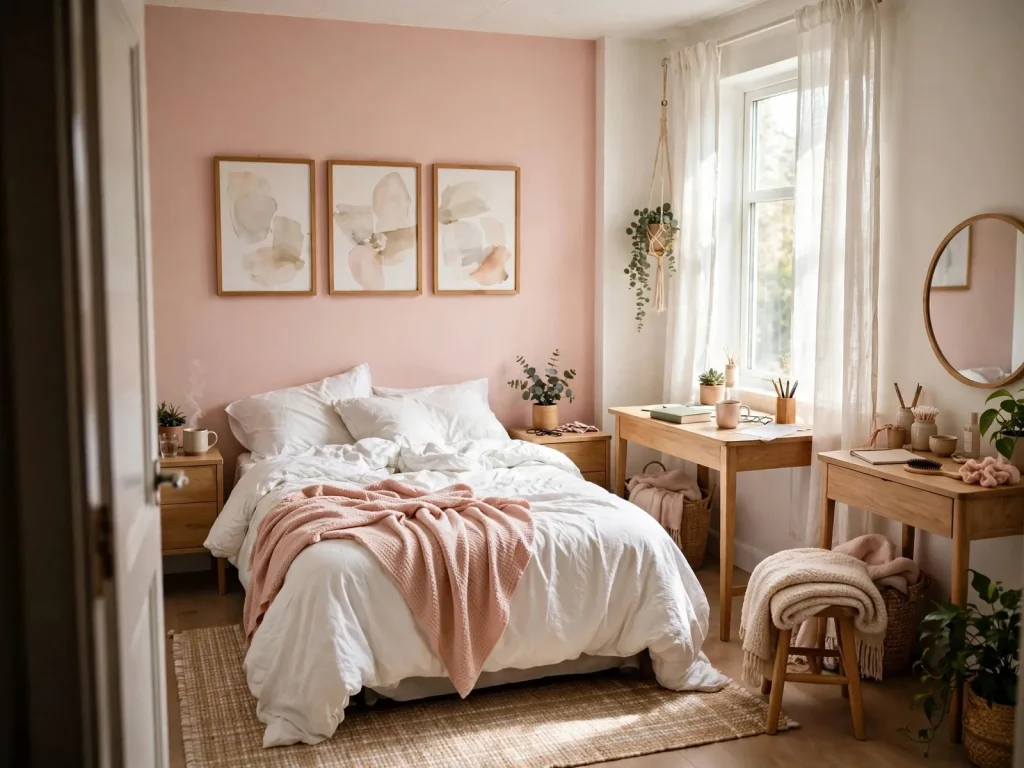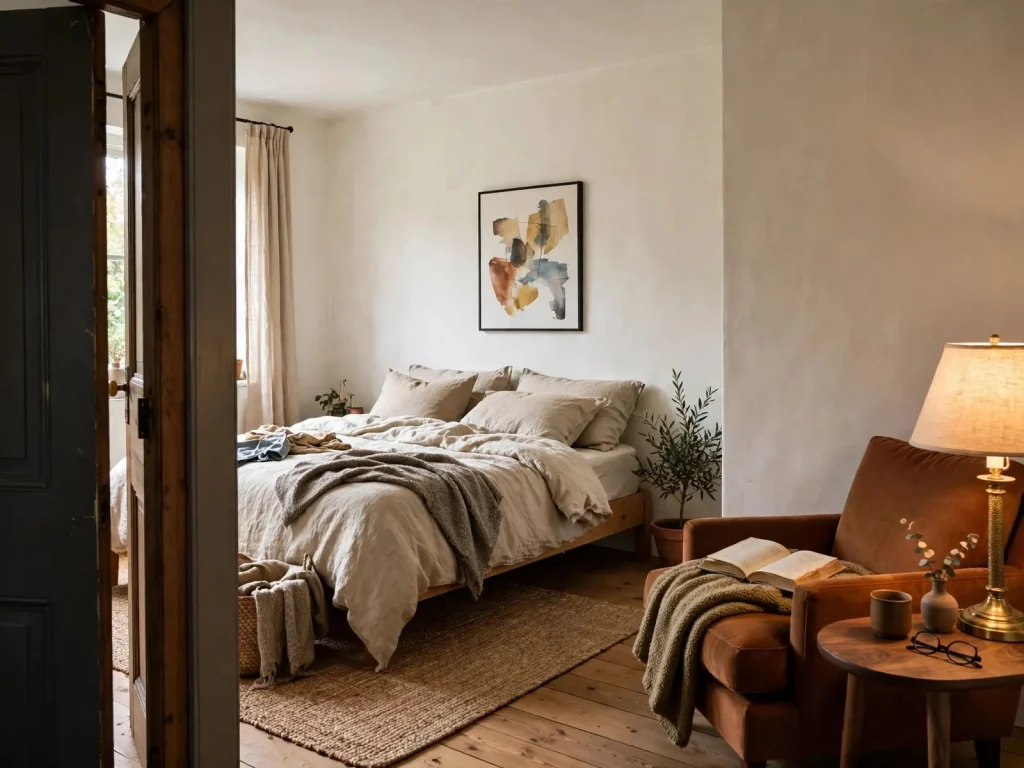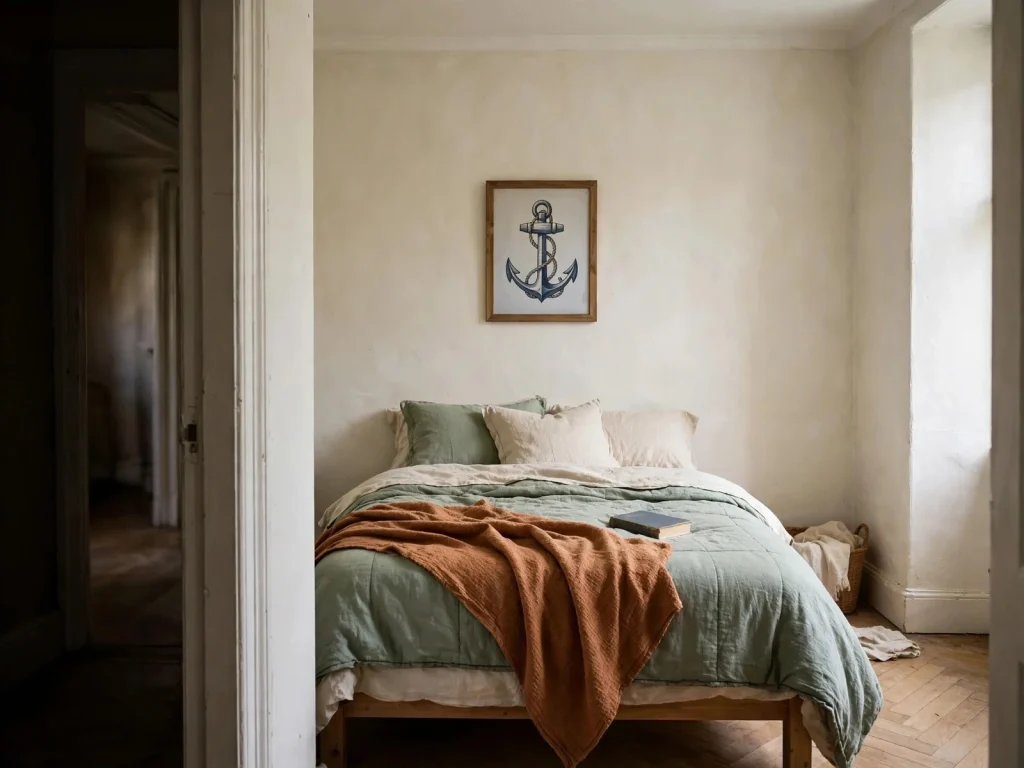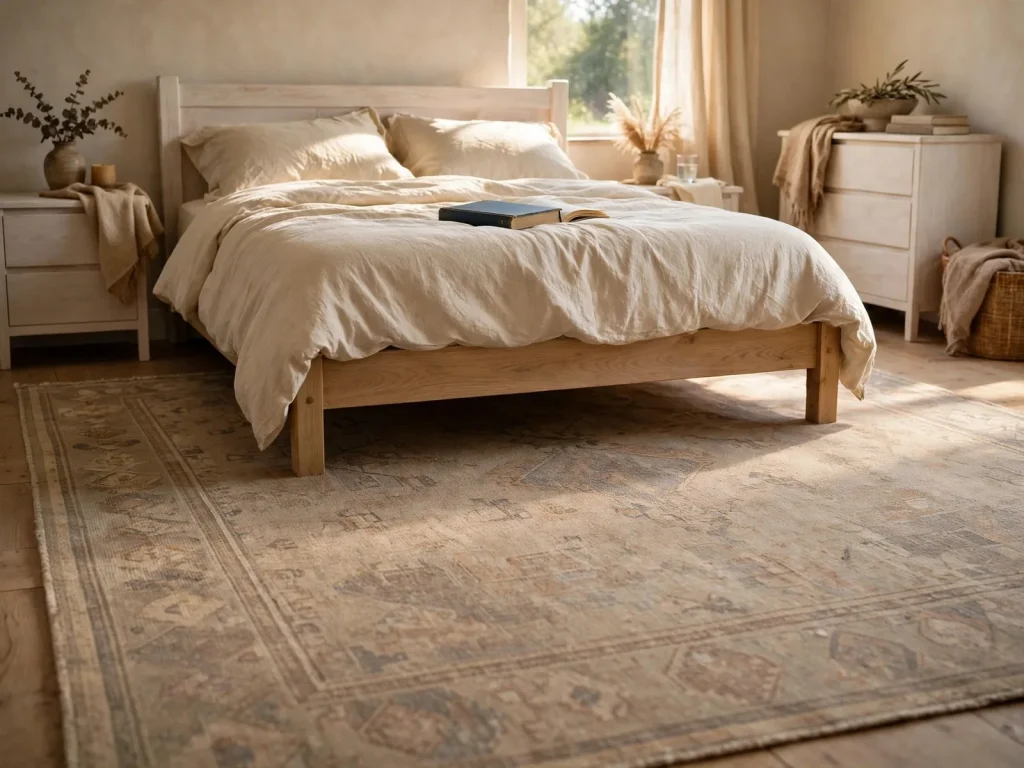
You have a number in your head for this room and every idea you save seems to cost three times it. The bedding is tired, the walls are a color you never chose and the dresser has been wrong since you moved in, so the project waits for money that keeps going somewhere else. Most budget bedroom decor ideas quietly assume new furniture, which is how a cheap refresh turns into a four-figure cart and a room that still is not done.
This page works the other way. It gives you a spend order for the whole bedroom and three budget tiers stated up front: about $150, about $400 and about $900. Every idea names its cost band, how long it takes and the renter route through it. The free moves come first, because rearranging fixes more rooms than shopping does. Pick the tier that matches your money and work down the list in order.
Before you start: measure, budget, rules
Measure the room wall to wall and write down the bed size, the longest clear wall and the wall behind the bed. Bed sizes run twin 38 by 75 inches, full 54 by 75, queen 60 by 80 and king 76 by 80. Those four numbers decide every later move: which wall takes paint, what bedding size to buy and whether a rug fits or crowds.
The order on this page is fixed: clear, paint, textiles, lighting and styling. Clearing costs nothing and takes half a day. Paint takes one day and $40 to $90. Textiles take an hour of shopping and $50 to $200 across the page. Lighting takes an hour and under $50. Styling gets whatever money is left at the end and works fine on nothing.
The three tiers buy in that same order. About $150 buys the clear, one painted wall, warm bulbs and one new textile layer. About $400 adds a full bedding set and curtains that close. About $900 adds one headboard, one secondhand wood piece and a real rug. The $150 tier needs one person and one weekend. The $400 tier needs one person and a weekend plus an evening. The $900 tier needs a second pair of hands for the furniture hour and spreads across two weekends.
Two rules sit under every tier. First, the reuse rule: keep and restyle what you own before anything is bought, because half of most rooms is the right pieces in the wrong places. Second, the renter rule: every step below has a no-drill or no-paint route. Anything else is flagged as needing landlord permission in plain words. Paint color is the one decision to lock early. The color page tests whole palettes room by room if you want the wall settled before the paint weekend.
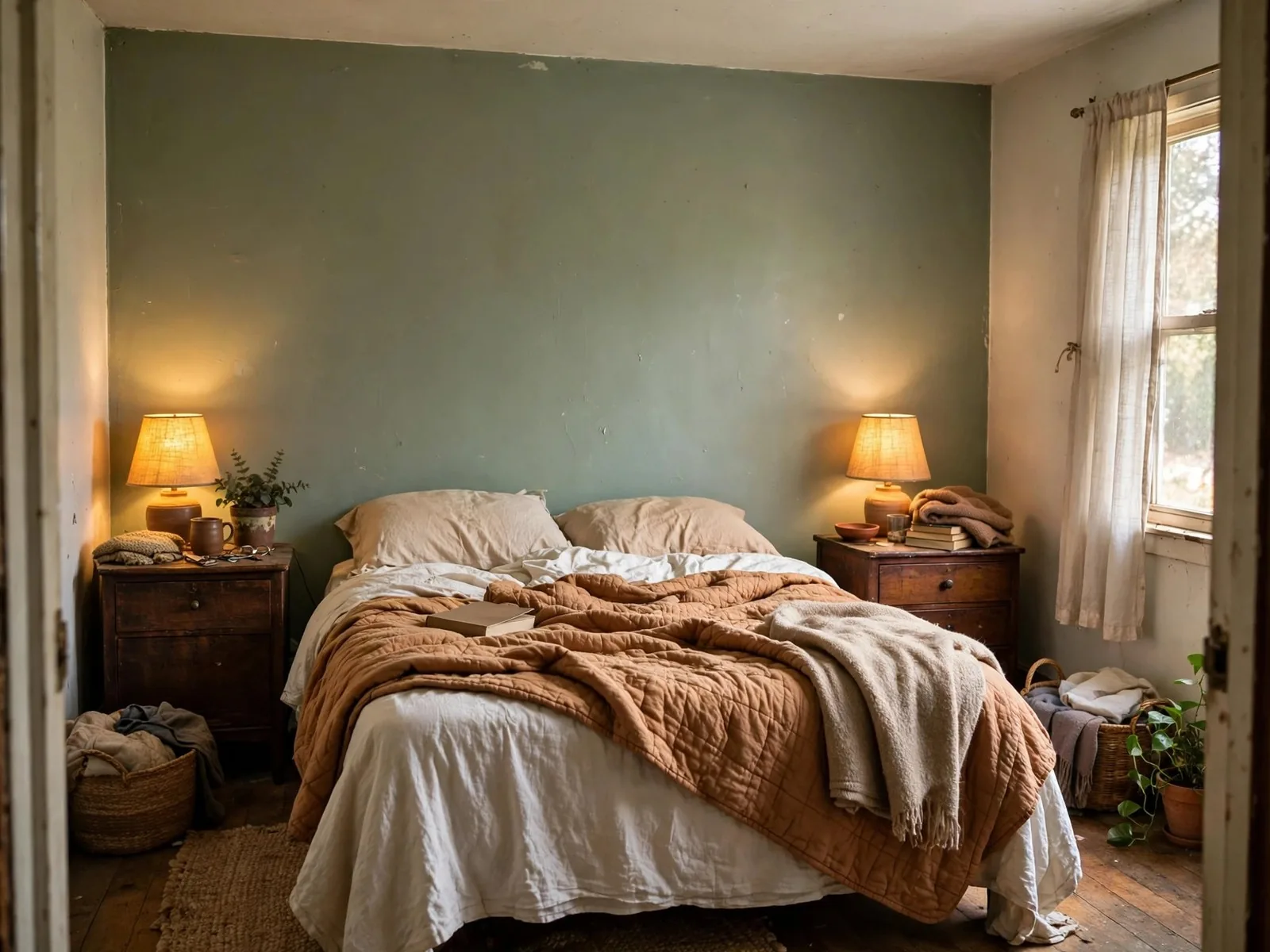
Free first: what rearranging alone fixes
1. Clear the room back to the pieces that earn their floor
Start with the clear, the step every later idea assumes. Carry out everything that does not help you sleep, store clothes or light the room. What is left gets sorted into three piles: keep in the room, move to another room and restyle with a wash or a new spot.
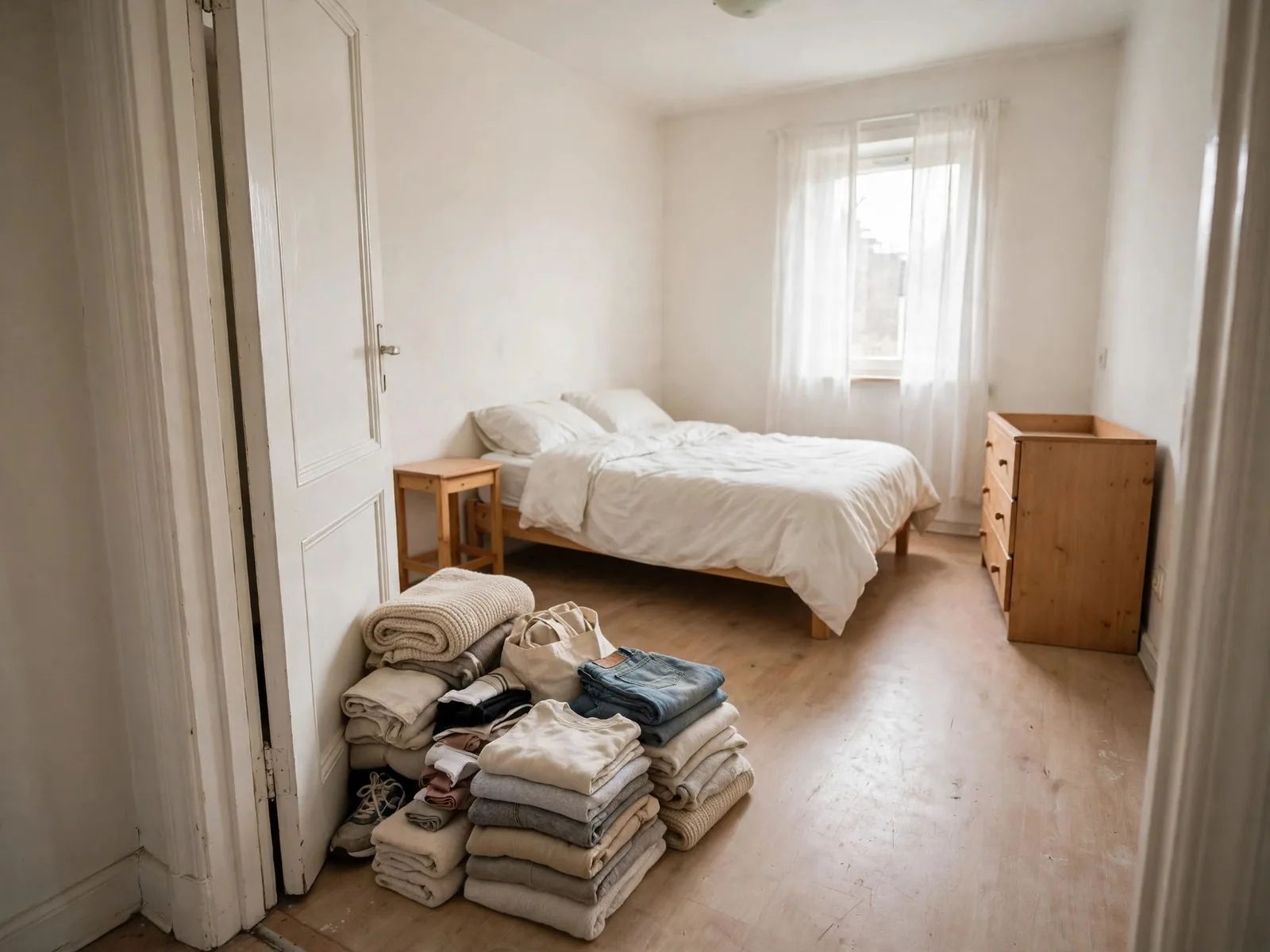
Most budget rooms do not suffer from wrong furniture. They suffer from too much furniture and a layer of homeless objects on every surface. The clear is what makes a $0 room look like a decision instead of a storage unit with a bed in it.
The catch is sentiment and guilt, not effort. A piece that leaves the room is not thrown away. It is promoted to a room where it works, which is a much easier yes.
Budget: $0. Two to three hours, one person, one free afternoon.
2. Restyle the bed with textiles from elsewhere in the house
The bed fills most of what you see from the door, so restyle it before you shop for it. Flip a reversible duvet to its calmer side. Fold a living room throw or a spare quilt across the foot of the bed. Swap the cushion covers with the sofa cushions and see which room wears the color better.
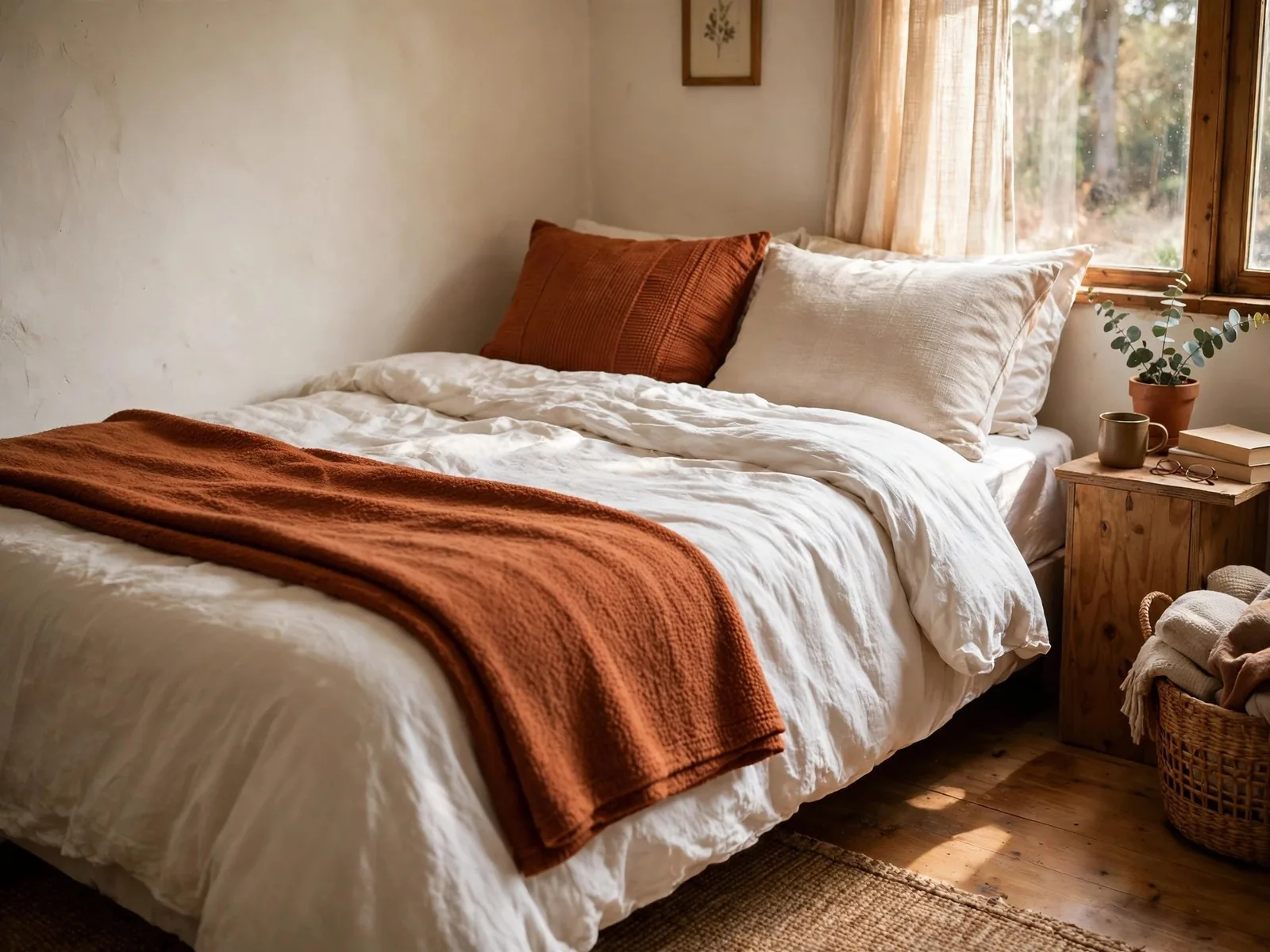
This is the reuse rule doing its first job. A folded layer across the lower third of the bed reads as styling at any price, because the eye reads layers as intention. If the swapped layer looks wrong after a week, swap it back and you have spent nothing but information.
Budget: $0. Thirty minutes with a laundry basket and the linen closet.
3. Move the bed to the wall the room has been asking for
Beds drift to odd walls during move-in and stay there for years. The bed belongs on the longest clear wall, with the headboard wall free of the door swing, so the first thing you see from the doorway is a made bed rather than the side of a dresser.
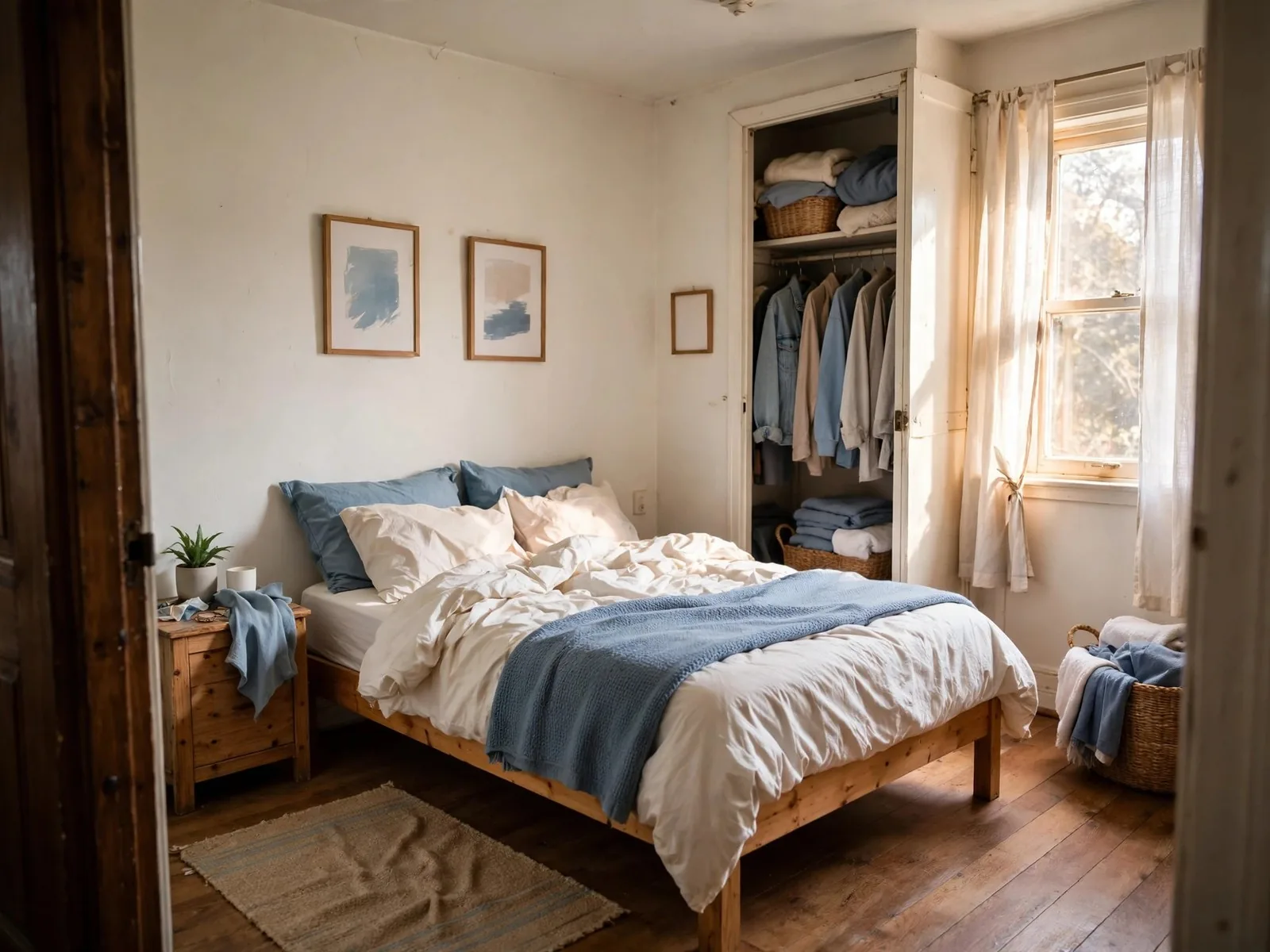
In a small room this move is the whole page in miniature: bed to the long wall, one clear path to the closet and nothing stored in the walkway. The small bedroom page works the tightest floor plans in more detail.
Effort is the catch. A twin moves with one person. A queen frame with a mattress wants two people and ten minutes of planning the turn through the door.
Measure: keep 24 inches of walkway on the side you climb out of and never let the bed block the door swing.
4. Trade one piece with another room
Houses hold a spare of almost everything and the bedroom usually has the wrong one. Trade the bedroom chair for the hallway bench. Trade the living room lamp for the bedside table. Trade the entry mirror for the small print over the dresser.
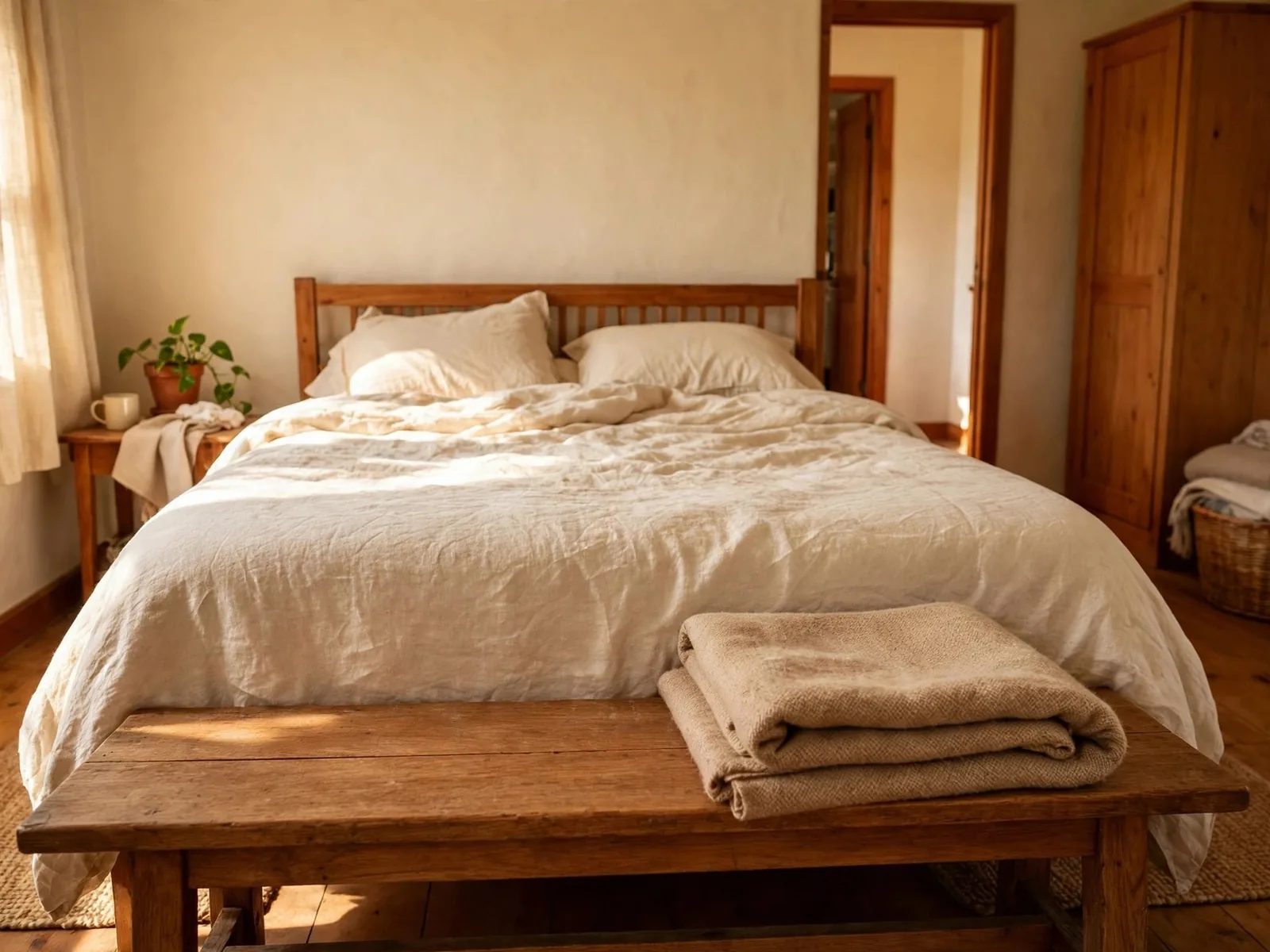
A trade costs nothing and improves two rooms at once, because each piece lands where its size and light actually fit. Live with the trade for a week before you call it permanent. Pieces that look right on day one and wrong on day five go back with no receipt to argue with.
Budget: $0. Test each trade for a week before it counts as done.
5. Give every surface a one-object rule
A nightstand earns a lamp, a book and a glass of water. A dresser top earns one tray. Everything else goes into a drawer, a basket or another room. Cleared surfaces are the cheapest signal that a room was planned. They also make every budget piece in it look more expensive.

The rule survives only if the overflow has a home at arm’s reach. A drawer or one lidded basket catches the chargers, creams and paperbacks that used to live on top. Without that catch-all, the rule lasts a day and the surfaces refill by Friday.
Budget: $0 with a drawer you already own. $5 to $10 for one catch-all tray if you do not.
Cheap and visible: under $50 moves
6. Paint the wall behind the bed and only that wall
Paint is step two in the order and the single biggest change on this page. One wall behind the bed changes the backdrop of the largest object in the room. A gallon covers a 10 by 8 foot bed wall with two coats and leaves a spare for touch-ups.
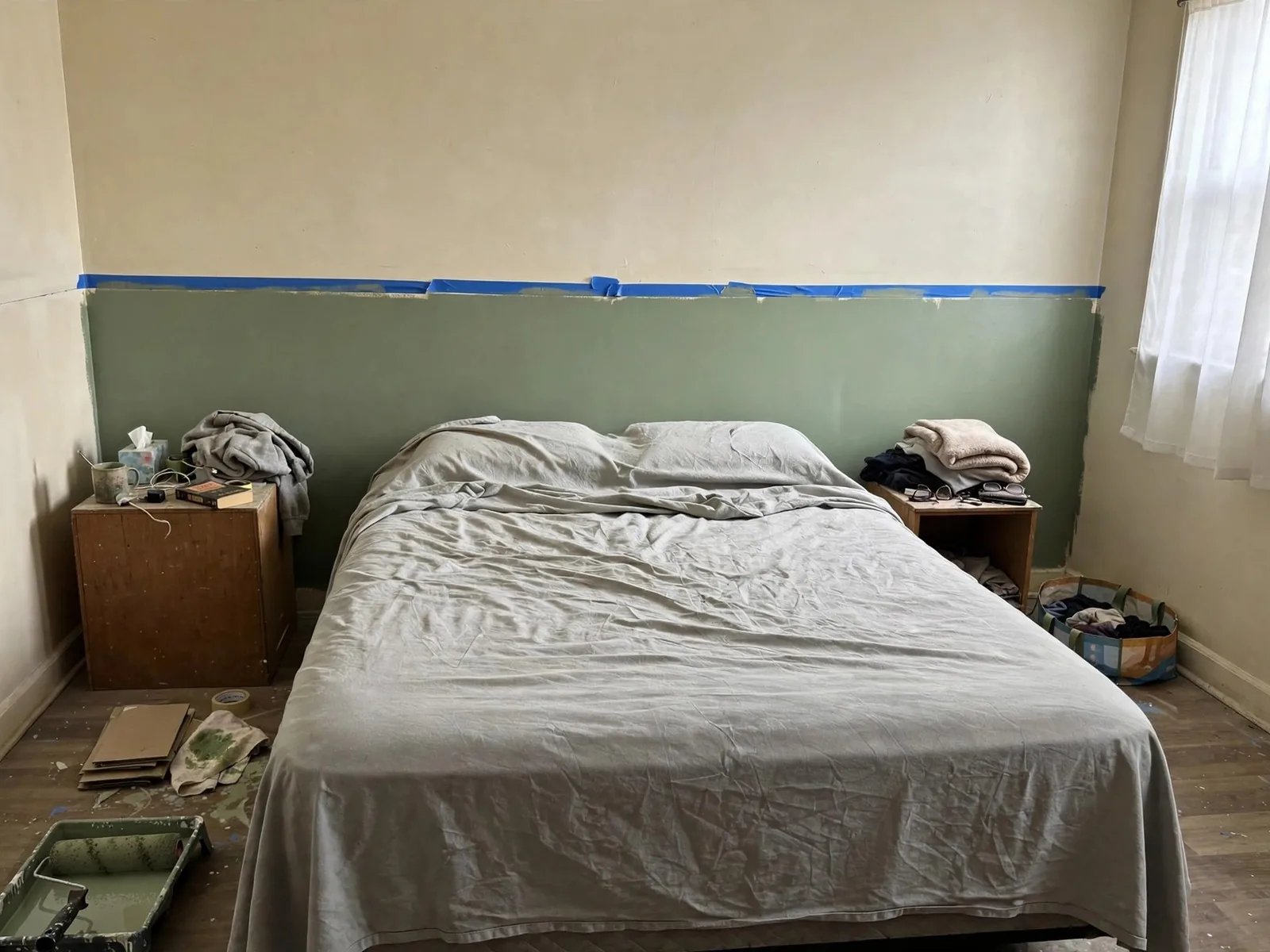
Choose the color from the palettes you settled in the Before you start section, then tape the edges, sheet the bed and roll the wall in one session. The accent wall page covers roller technique and edge work in full.
Renters, stated plainly: paint is the one step on this page that needs written landlord permission in most leases. The no-paint route is a flat curtain panel or a large textile hung the width of the bed behind it, which gives the same color block with zero deposit risk.
Budget: $40 to $90 for a gallon, a roller kit and tape. One day, one person.
7. Swap every bulb in the room to 2700K warm white
A ceiling bulb at 5000K makes every paint color and fabric in the room look colder and cheaper than it is. Swap the ceiling bulb and the bedside bulb to 2700K warm white LEDs and the same room reads furnished instead of fluorescent.
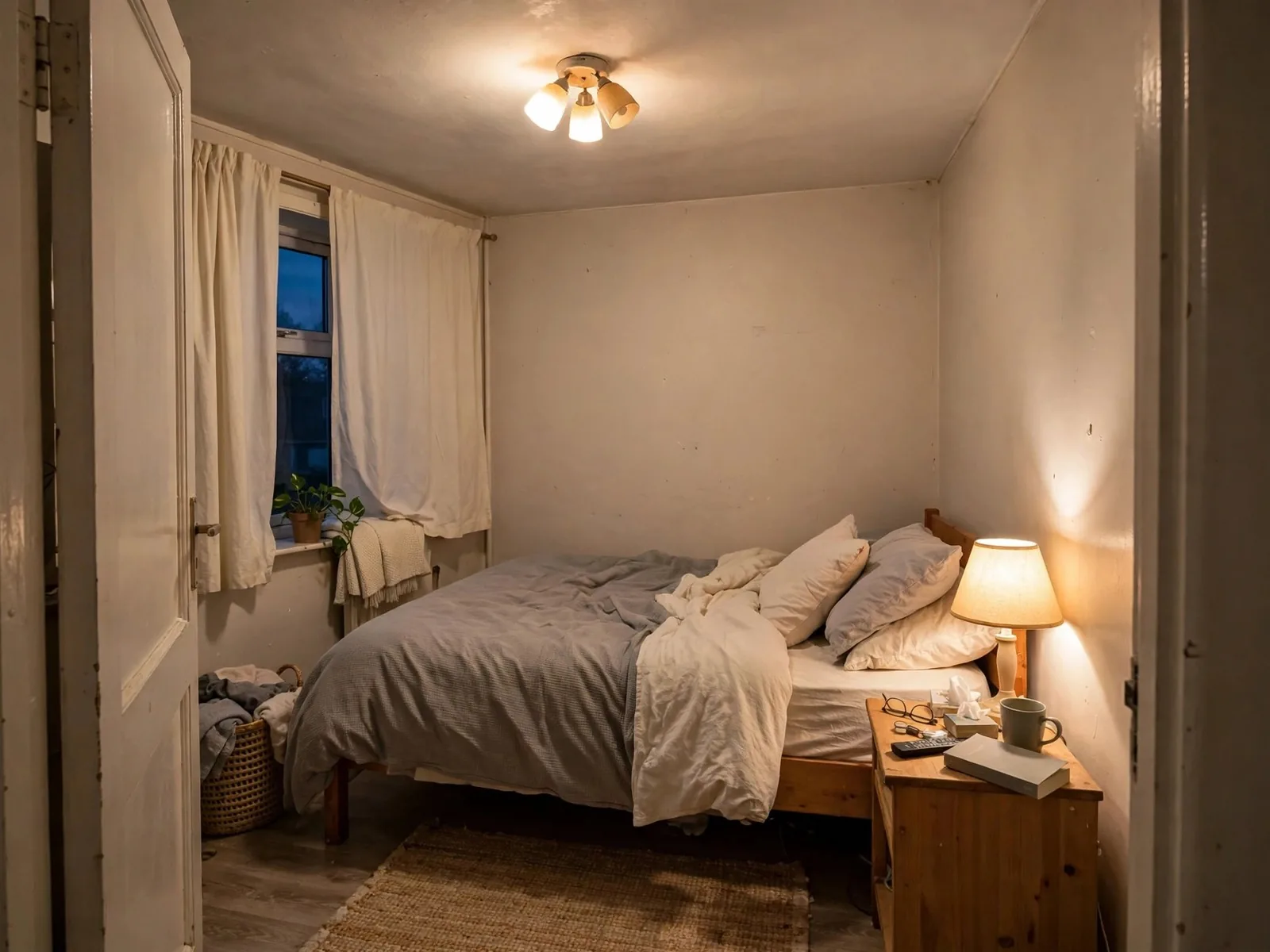
Brightness is a separate choice from warmth. A bedside bulb at 450 to 800 lumens reads well without lighting the whole room. When a real lamp joins the room later, the lighting page sizes it against your bed width.
Budget: $8 to $15 for two warm LED bulbs. Ten minutes and a step stool.
8. Add one textile layer from the dollar aisle or the thrift rack
Textiles are step three in the order and the layer searchers mean by affordable dollar general bedroom decor: a $10 throw and two $5 cushion covers carry the whole color story of a bed. Pull the color from something already in the room, a print, a rug edge or the new wall.

One layer is the dose. A throw folded at the foot or two covers on the existing cushions reads as a palette. Three new textiles in three new colors reads as a sale rail. Wash thrift textiles hot before they touch the bed.
Budget: $15 to $30 for a throw and two cushion covers.
9. Hang one large piece above the bed
Six small frames scattered over the bed wall read as indecision. One large piece reads as the plan. A thrifted frame at 36 to 40 inches wide with a $5 poster inside it anchors the whole wall for less than a pizza night.
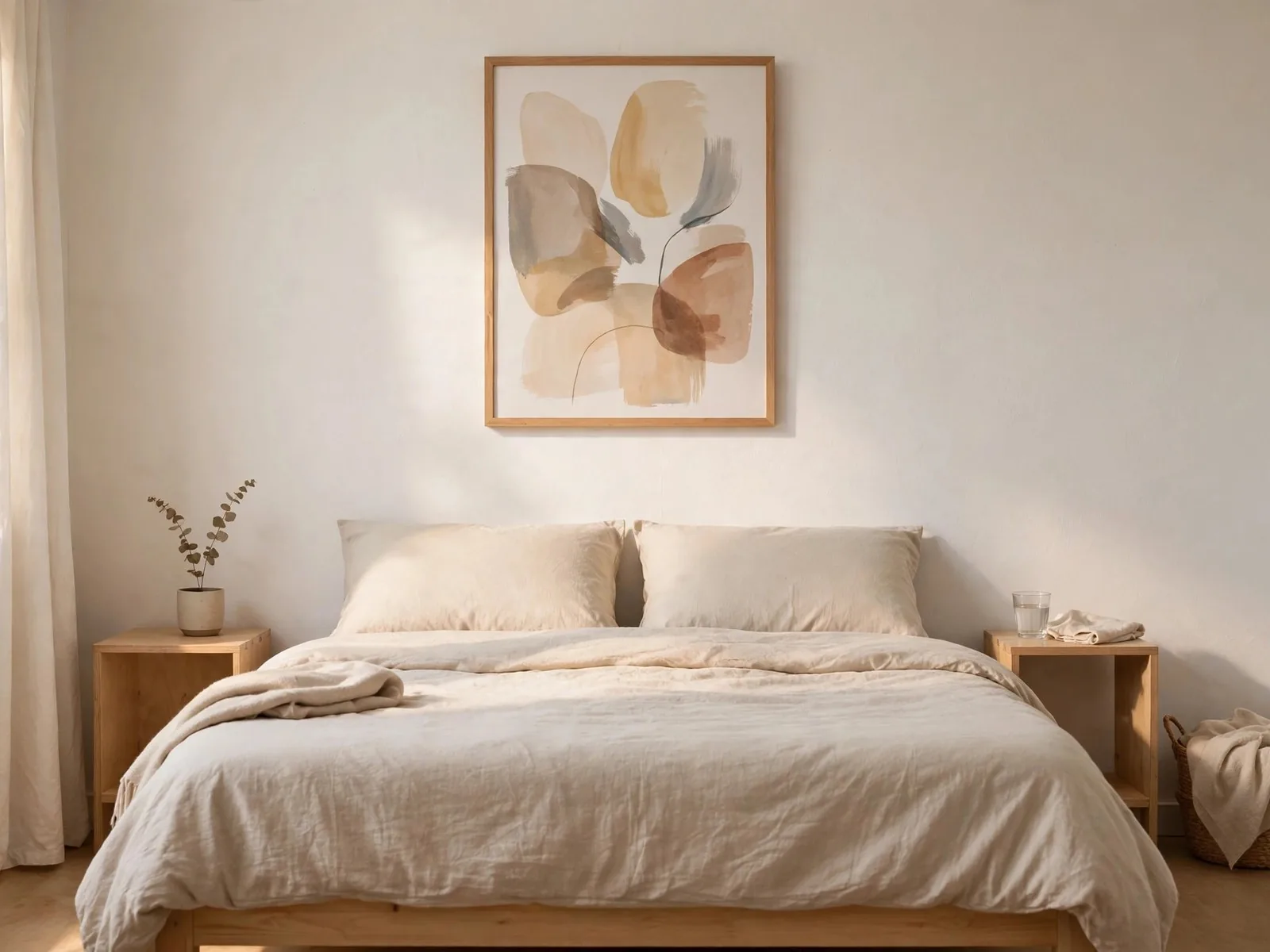
Hang it with its center at about 57 inches from the floor and its bottom edge 6 to 8 inches above the headboard. Renters use two adhesive hooks rated for the frame’s weight or lean the frame on a picture ledge instead.
Measure: aim for art at two thirds of the bed width, so about 40 inches over a queen.
10. Put one runner where your feet land
Cold floor at the bedside is the cheapest discomfort in the room and the fastest to fix. One flat-weave runner on the side you climb out of puts warmth and color exactly where the room is used hardest.
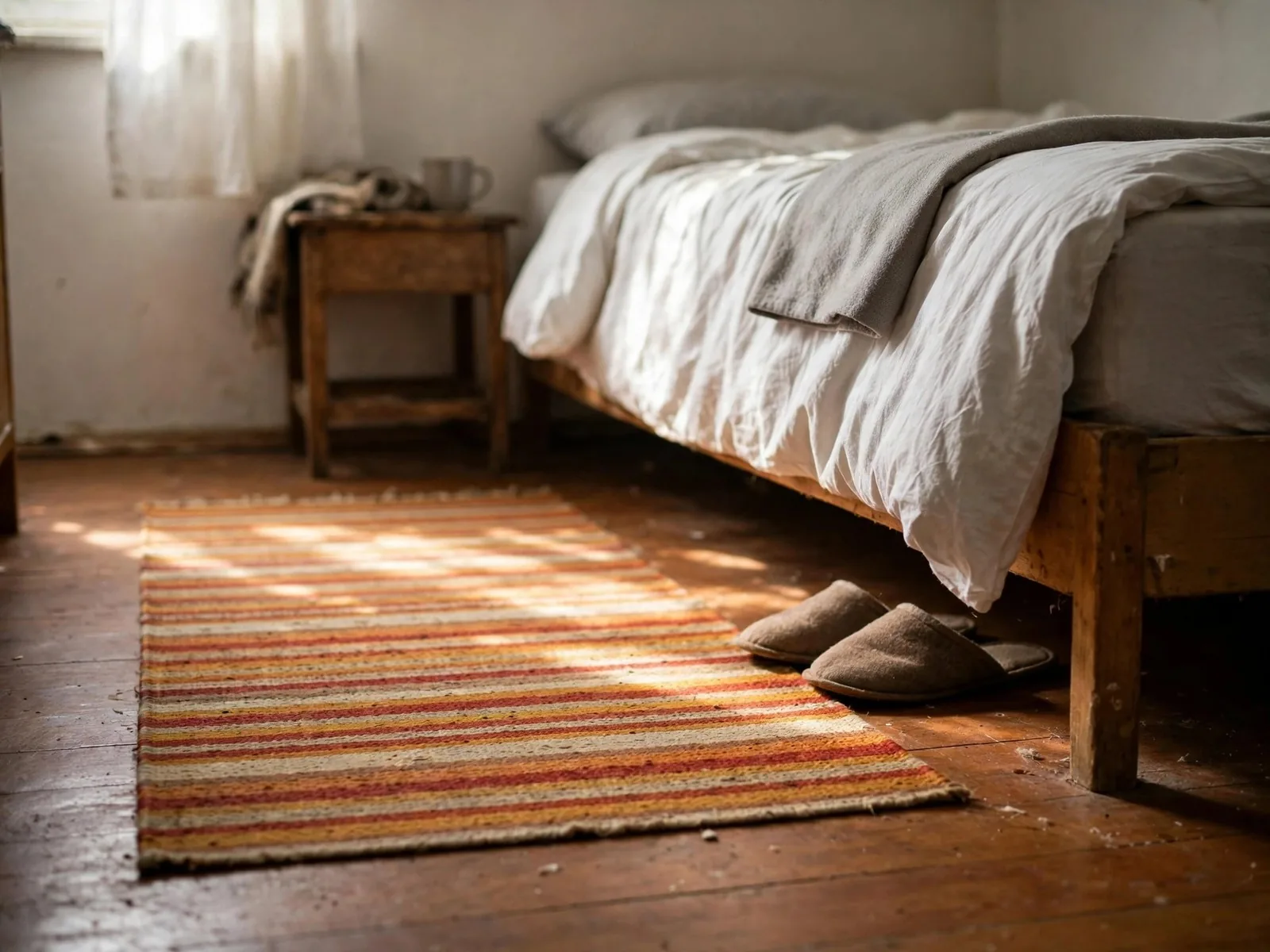
Flat weave matters at this price. It vacuums clean, sits under doors that swing over it and does not curl at the corners the way thick pile does. In a room where the walkway narrows below 24 inches, skip this one and keep the floor clear.
Budget: $25 to $50 for one flat-weave runner. Measure the bedside run first: most fit 5 to 6 feet.
The one-purchase upgrades
11. Buy the bedding set first and buy it whole
When real money starts, the first purchase is the bedding set, because it covers the largest surface in the room. Buy the whole set at once, duvet cover or comforter, shams and pillowcases in one calm color that answers to the painted wall from idea 6.
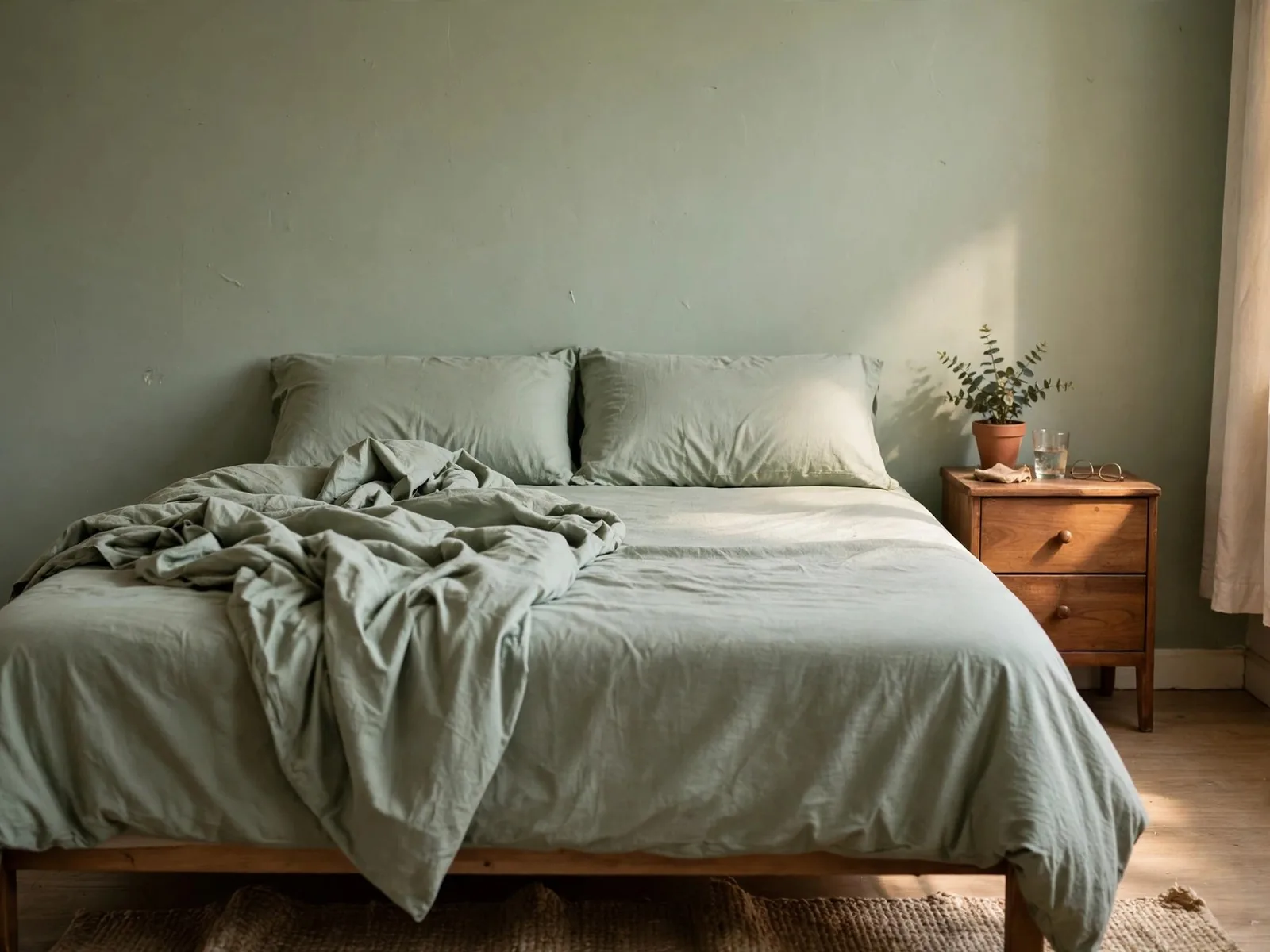
Piecemeal bedding is how budget rooms drift: a white duvet this month, grey shams on sale next month and a throw that matches neither. One set bought whole ends the drift in a single bag. Cotton or a cotton blend washes hot and survives the thrift-store duvet you may pair under it.
This purchase is where tier two begins. If your money stops here, the room still reads finished, because the bed is the room.
Budget: $50 to $120 for a full queen set at a discount retailer. Buy it after the paint color exists, never before.
12. Hang curtains that meet in the middle
Curtains are the second purchase in the order. Two panels that close fully, meeting in the middle with no light gap, make a cheap room look tailored and a bright room sleepable. Panels should total one and a half to two times the rod width or they pull flat and leak light at the folds.
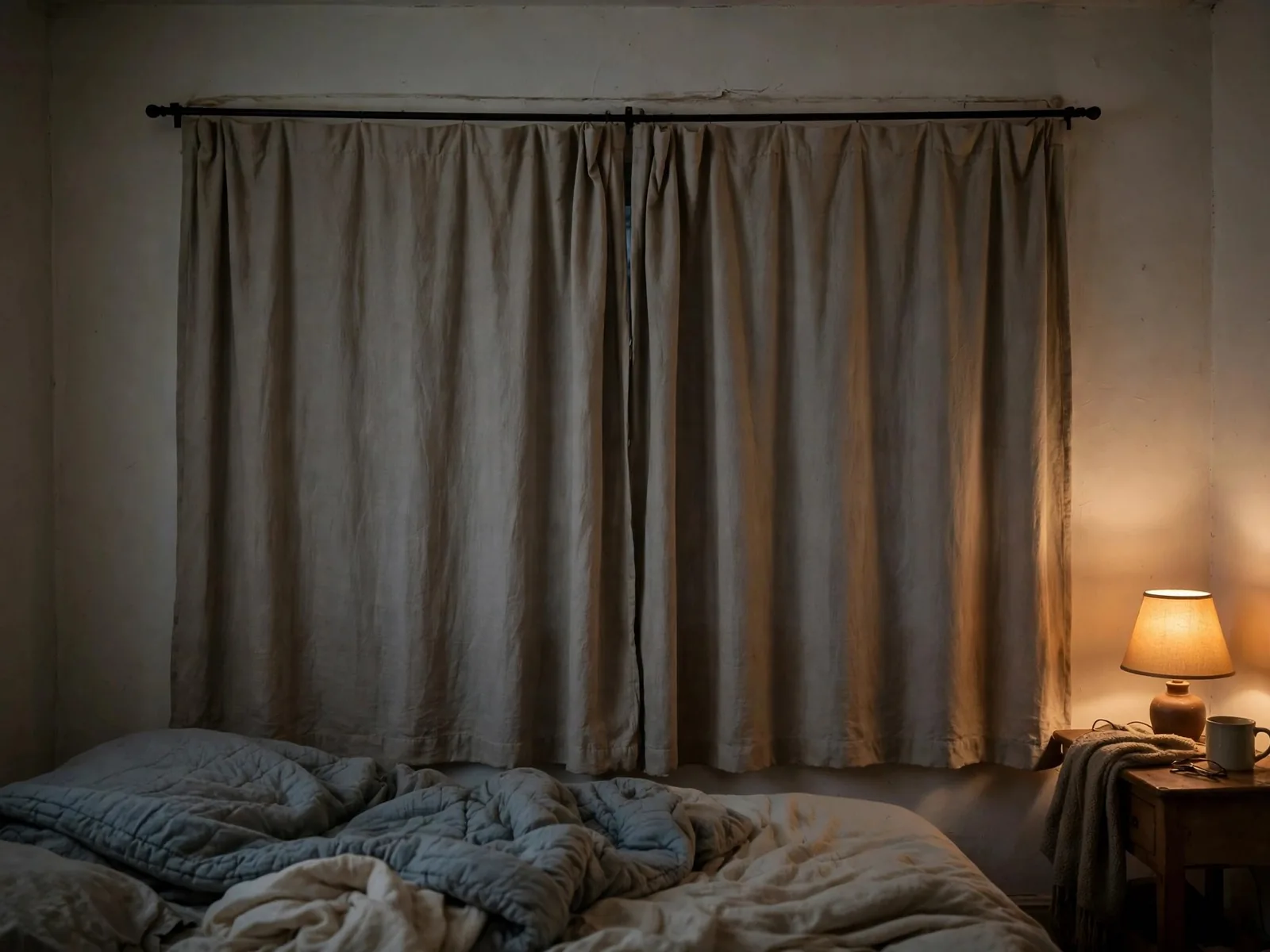
Lined or blackout panels earn their keep on a streetlit wall. Renters hang them on a tension rod inside the frame, the same no-drill trick the dorm page relies on for a full semester.
Measure before you shop: rod 4 to 6 inches above the frame, panels to the sill for a short window or to the floor for a tall one.
Budget: $30 to $80 for two lined panels and a tension rod.
13. Buy one headboard before any other furniture
A mattress pushed to a wall reads as temporary at any budget. One headboard turns it into a bed and finishes the painted wall behind it. Upholstered panels give softness for readers. A plain wood frame gives structure and wipes clean.
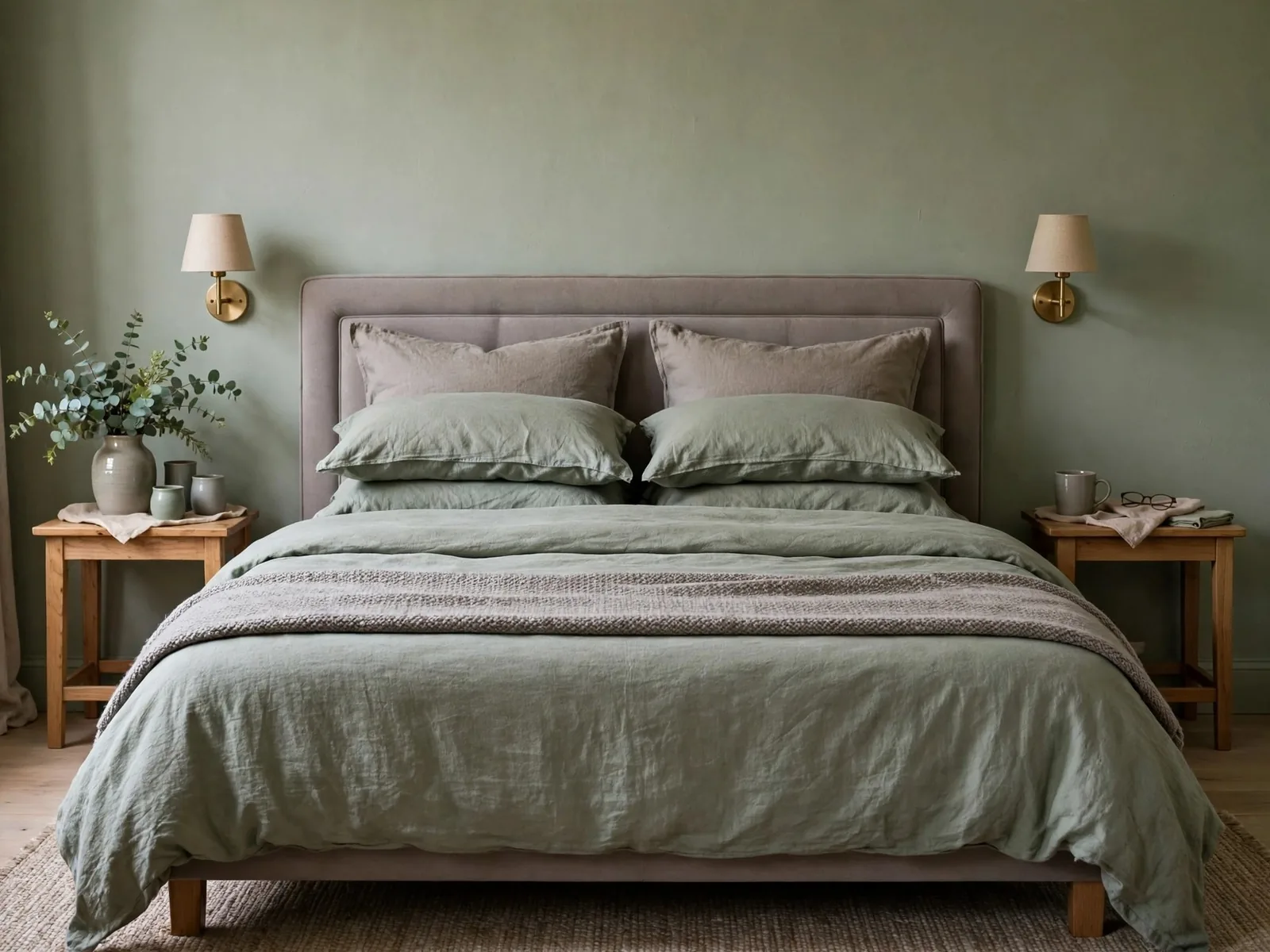
Height is the number that matters: 48 to 54 inches puts support behind your shoulders with pillows in place. The headboard page compares heights, materials and mounting types before you spend.
Secondhand headboards are the safe buy in this category: solid frames, no soft parts you cannot wash and prices a third of new. Wall-mounted versions need two screws and a second pair of hands for about ten minutes.
Budget: $60 to $150 new. $20 to $60 secondhand.
14. Buy secondhand wood and wash everything else
Secondhand is the multiplier that makes the $900 tier possible. Solid wood dressers, nightstands and bed frames are the safe buys: check that drawers run true, sniff for smoke and inspect joints and seams for any sign of bedbugs before money changes hands.
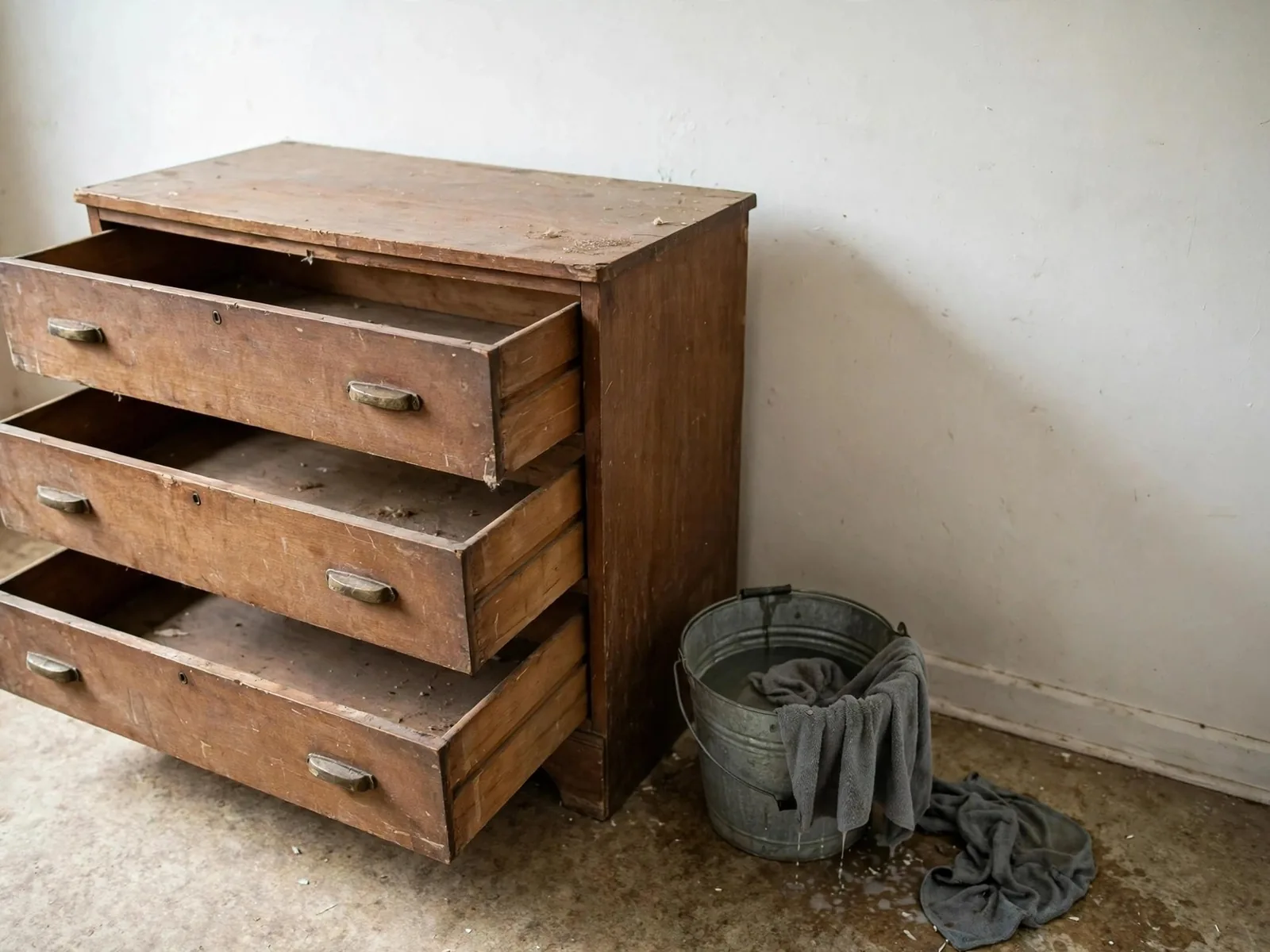
Two categories stay off the used list. Mattresses are never bought secondhand, at any price. Upholstery joins the room only if its covers unzip and go through a hot wash.
Give every secondhand piece a cleaning hour before it crosses the bedroom door: drawers out, a wipe-down with a damp cloth and mild soap, then a day standing open near a window so it smells like your house instead of someone else’s.
Budget: $40 to $150 for a solid wood dresser or a pair of nightstands secondhand, against $300 plus new.
Putting it together in one weekend
How long does a bedroom makeover take on this plan? One tier at a time, one weekend each. The $150 tier fills a Saturday. The $400 tier takes a weekend plus one evening. The $900 tier spreads over two weekends, because secondhand hunting does not keep office hours.
What follows is the money order turned into three plans and one staging rule. If this bedroom is one room inside a whole-home project with timelines and mood boards, the makeover page runs that full process. This page keeps the narrower job: what to buy first, second and never.
15. Run the $150 weekend in this order
Saturday morning is the clear from idea 1, with the bed moved to its right wall while the room is empty. Late morning is the paint from idea 6, one wall, two coats. The textile swap from idea 2 fills the drying time.
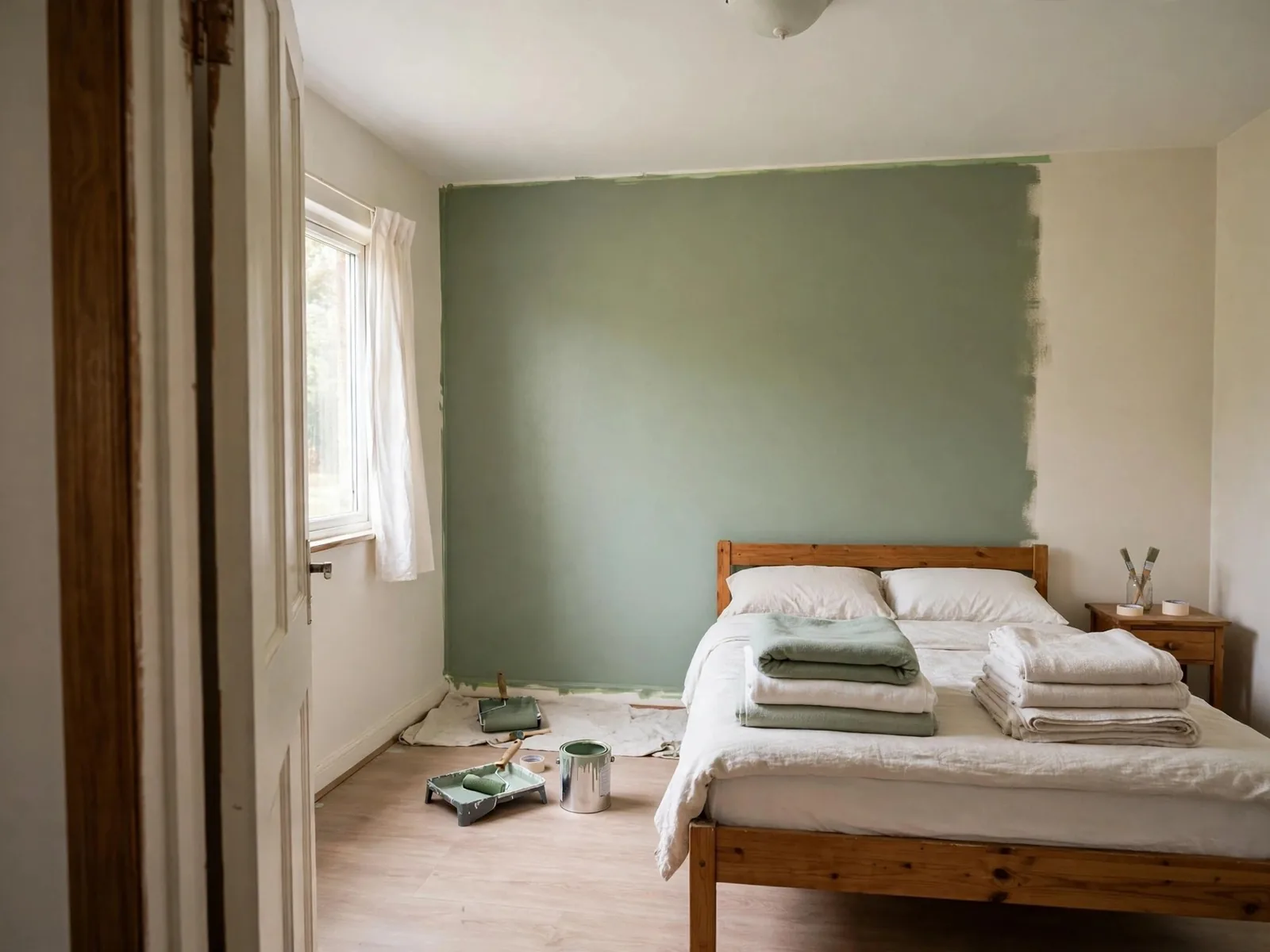
Evening is bulbs from idea 7 and the new textile layer from idea 8, hung and folded after the paint is touch-dry. You sleep in a different room that night for the price of a takeaway.
Budget: about $150 all in. Six working hours across one Saturday, one person throughout.
16. Run the $400 weekend in this order
The $400 weekend starts where idea 15 ended and adds purchases 11 and 12. Friday evening: wash the new bedding set so it is ready. Saturday: clear, paint and bulbs in the idea 15 order.
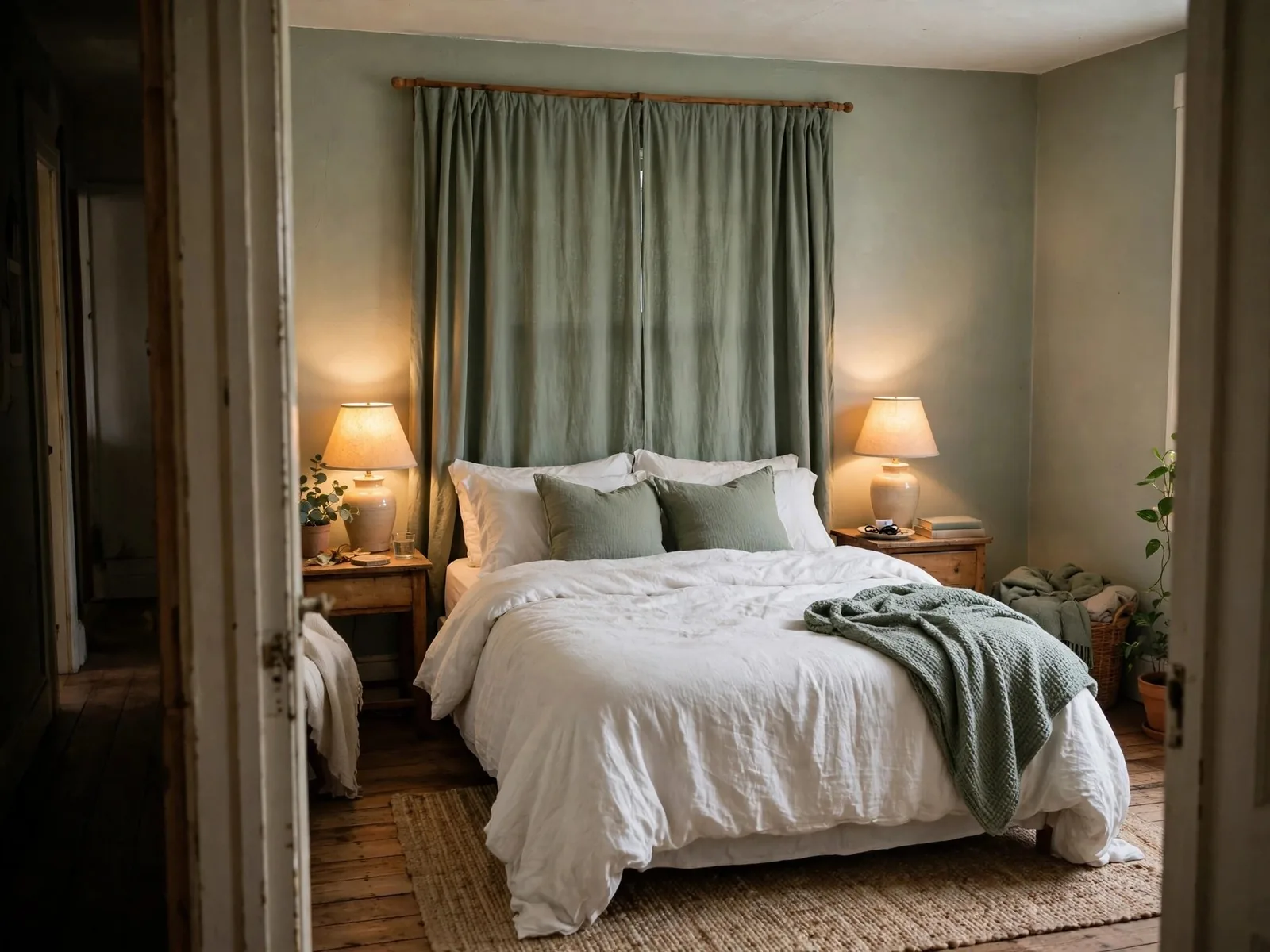
Sunday is curtains and the dressed bed. Hang the panels while the paint cures, then make the bed last, because the bedding is the reveal the whole weekend was buying. Two people help for the curtain rod and nothing else.
Budget: about $400 all in. Two days and one evening, one person, with a second pair of hands for the rod.
17. Run the $900 weekend in this order
Tier three buys time before it buys things. Weekend one is the hunt: the secondhand dresser or nightstands from idea 14 and the headboard from idea 13, cleaned the same day they come home.
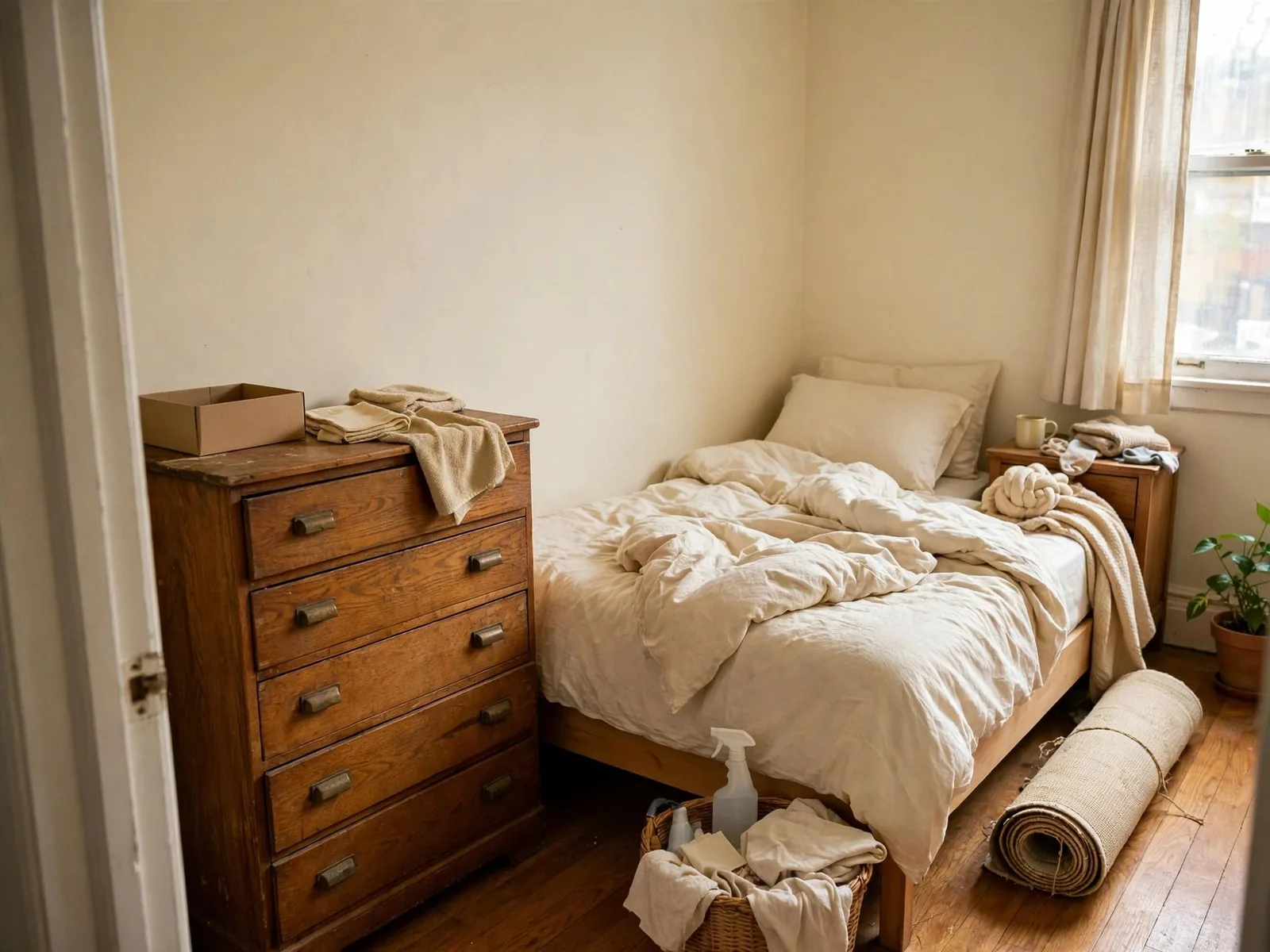
Weekend two is the idea 16 plan plus the rug: paint Saturday, curtains and bedding Sunday, then the rug rolled out and the secondhand pieces placed last, once the floor is final. Furniture is the only step on this page that truly needs two people, for about an hour of lifting and turning.
Budget: about $900 all in. Two weekends, two people for the furniture hour and one for everything else.
18. Stage it by paycheck if the tier is out of reach
A tier is a destination, not a deadline. If $150 is not there this month, buy in the fixed order at $50 a paycheck: bulbs and one textile layer first, paint second, the bedding set third and curtains fourth.

The rule that protects the plan is sequence discipline. Never buy a later step before an earlier one. A headboard bought before the paint exists gets chosen against a wall color that is about to change, which is exactly how cheap rooms become expensive ones.
Budget: $50 per paycheck in the fixed order. The room improves every month and never waits on a whole tier.
Budget Bedroom Decor Ideas for a small room
A small room runs the same order with two steps swapped and one step skipped. The clear matters double under 100 square feet, because every object in a small room is visible from the bed. Paint goes light and warm rather than deep, since a small bed wall has less daylight to spend.
Skip the runner from idea 10 if it narrows the walkway below 24 inches and put that money toward the bedding instead. Curtains hang inside the frame on the tension rod from idea 12 so they steal no wall width. In practice the $150 tier covers nearly the whole effect in a small room. The storage half of the problem has its own page.
Two searched variants change the queue in one place each. For a small guest bedroom on a budget, bedding jumps to first purchase: guests forgive plain walls and never forgive a tired bed. For a basement bedroom on a budget, lighting jumps the queue instead, because low ceilings and small windows starve the room of light long before color matters: warm bulbs and a second lamp beat paint there.
Mistakes that make it fall flat
- Buying decor before the clear. Cushions and prints land on a room that has not been edited, so they decorate the clutter. The clear is free and it comes first because every later dollar works harder in an emptied room.
- New flat-pack furniture as the first big buy. The largest check in an early tier buys the weakest piece in the room, a wobbling dresser that dates in two years. Secondhand solid wood costs less, outlasts it and can be sold on for near what you paid.
- A matching set bought all at once. A five-piece set eats the whole $900 tier in one afternoon and freezes the room’s look for a decade. Pieces bought in the plan order can change one at a time as taste and money move.
- Painting before the palette exists. A wall color chosen in the store answers to nothing in the room, so the bedding and curtains spend the next year apologizing for it. Lock the palette in the Before you start step and let paint follow it.
- Skipping the bulb swap. It is the cheapest step on the page and the one most often skipped. Under a cold 5000K bulb every color reads wrong, so readers repaint a wall that was fine. Swap the bulbs before you judge any color.
- A rug sized to the budget instead of the bed. A 3 by 5 rug under a queen reads as a bath mat and makes the room look smaller than it is. Either buy the runner that fits the bedside run or save the rug money for the tier where a 5 by 7 fits.
Questions people ask about this
What should I do first in a bedroom makeover? Clear the room before you buy anything. Take out everything that does not sleep, store or light, then restyle the bed with textiles you already own. Paint comes second and bedding third. That order is free, takes one afternoon and shows you what the room actually needs before any money moves.
How much does a budget bedroom makeover cost? A real change starts at about $150: one painted wall, warm bulbs and one new textile layer over a cleared room. At $400 the bedding and curtains join. At $900 a secondhand dresser and a rug finish the room. Staged across weekends, most readers land between $200 and $400.
What gives the biggest change for the least money in a bedroom? Paint on one wall, by a wide margin. A gallon and a roller kit run $40 to $90 and the bed wall changes the whole room in one afternoon. Warm bulbs are second at under $15. New bedding looks bigger but costs three times more, so it comes after the wall.
The bottom line
A budget bedroom is not a smaller version of an expensive one. It is the same room bought in the right order: clear first, paint second, textiles and lighting after, furniture last and secondhand where wood allows. The tiers are just that order with dollar signs on it. This week, take the free first morning: clear the room back to its keepers and restyle the bed with textiles borrowed from another room, then photograph it from the door. The photo tells you which tier your room actually needs.