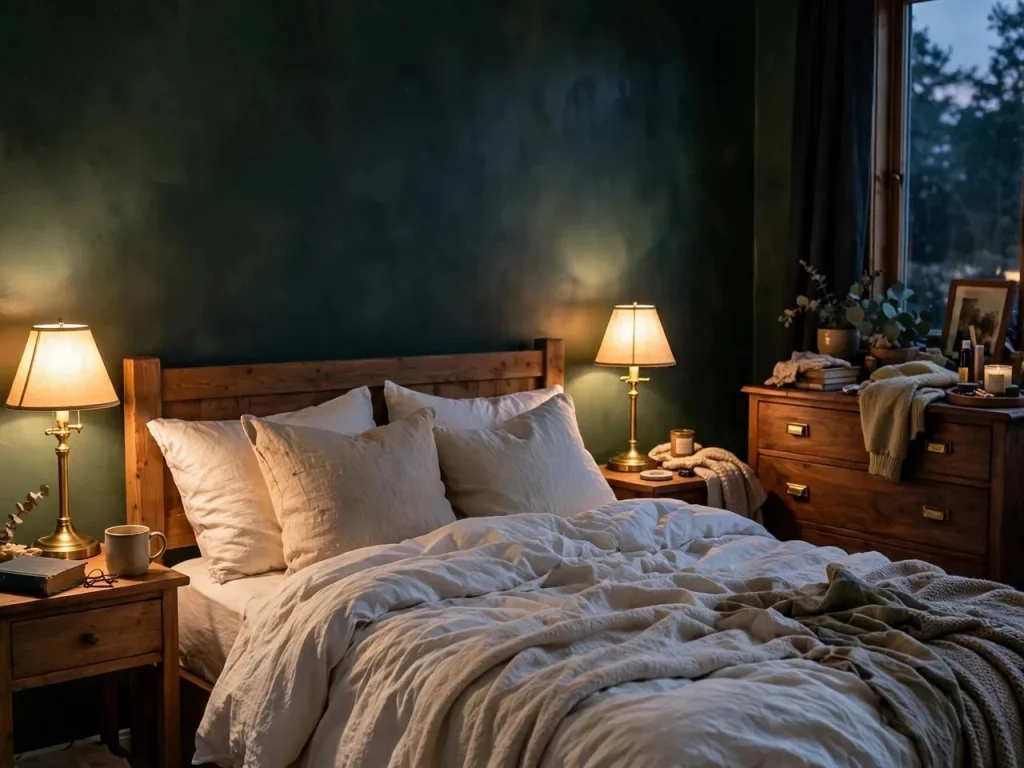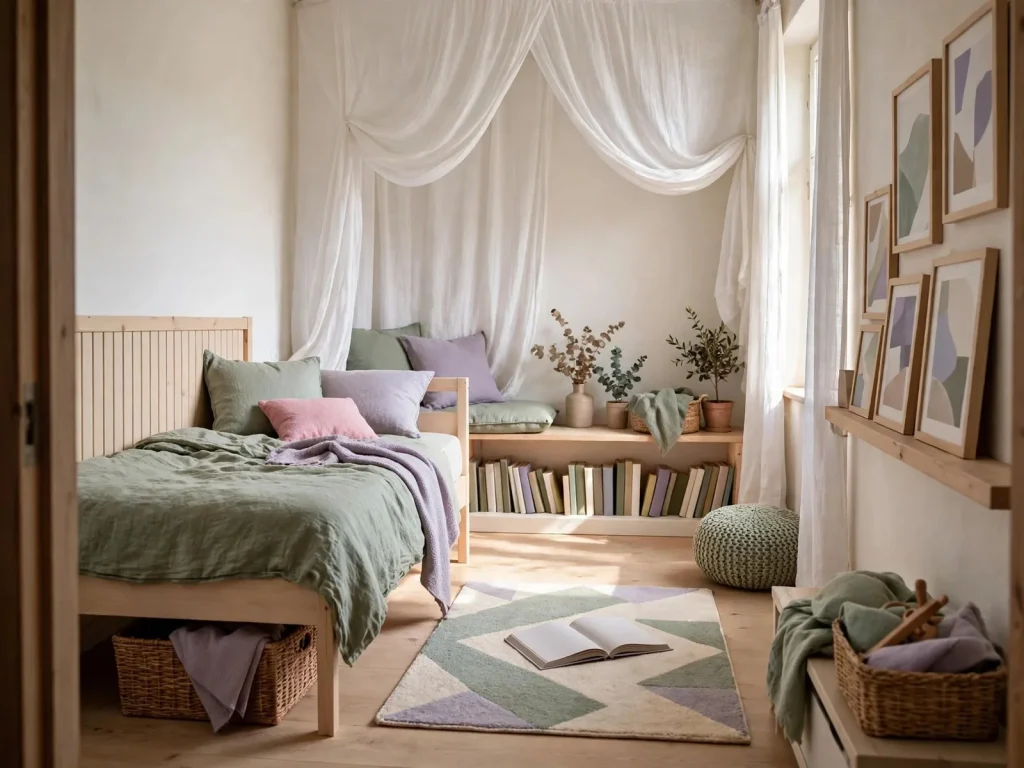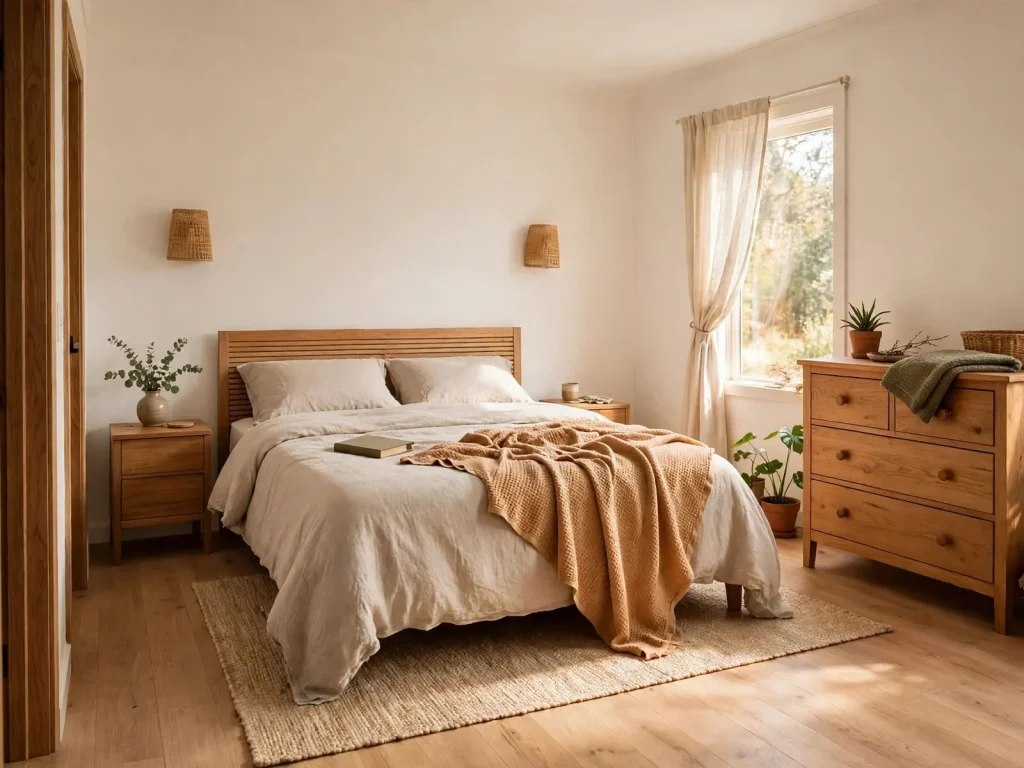
Your saved folder is full of calm bedrooms. What you are looking for is not really the calm. It is the room that feels light, holds its colour, and does not ask for perfection.
Neutral never meant one colour. It is a ruled choice. This color really does make a room feel finished, because it does two jobs at once: the walls go quiet and the texture turns up the volume. What holds it together is not luck. It is a named palette, a 60-30-10 split, and texture doing the work that colour does in louder rooms.
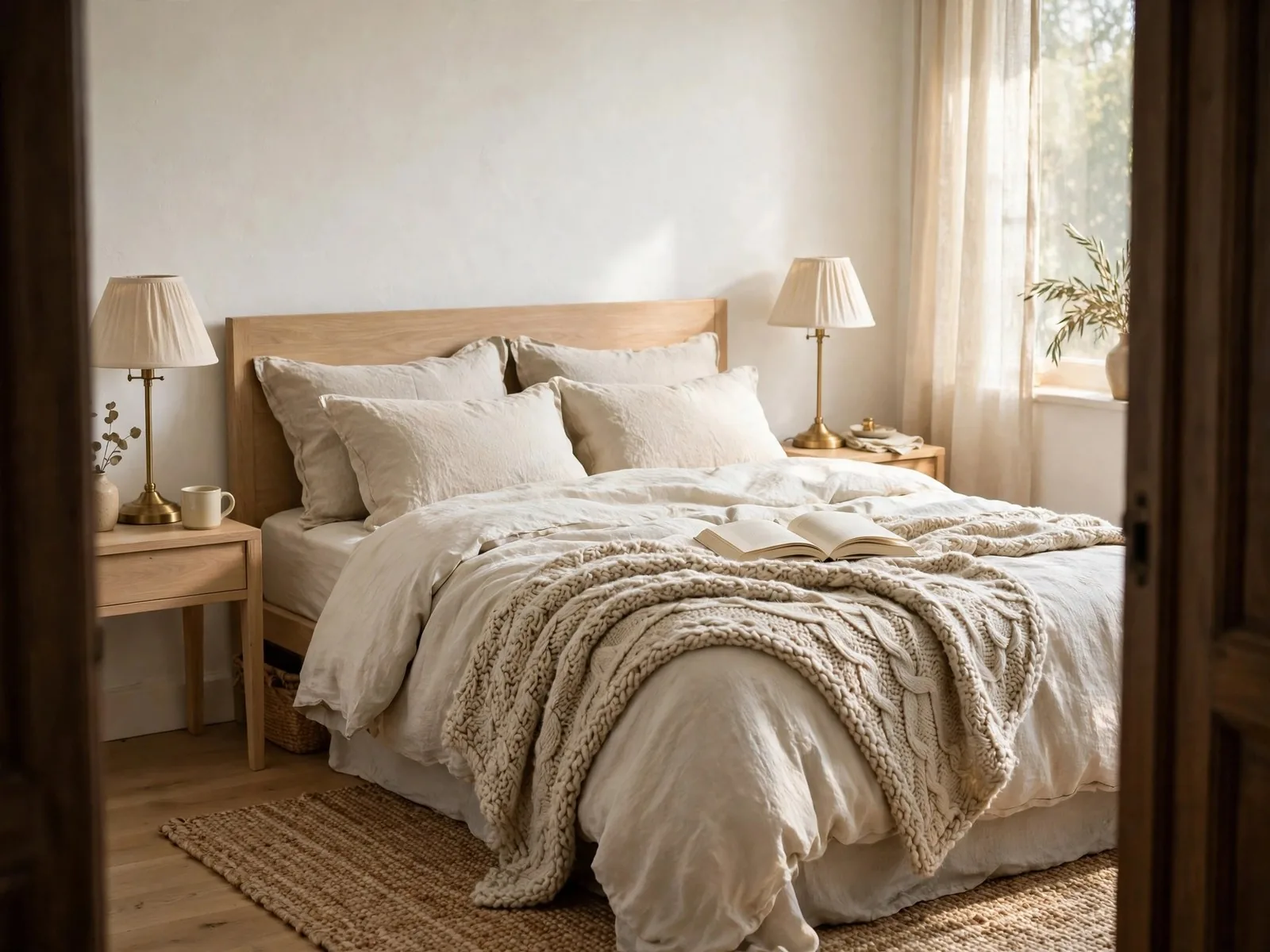
Before you start: measure, budget, rules
Face check first. Stand in your bedroom doorway and look at the wall the bed will face. Measure it now, because every number after this is written about that wall, how far your bed sits from the side walls, and how tall the room is.
This section sits before your first swatch for a reason: neutral bedrooms are simple, and when the room starts empty and slow it is easier to see the layers, the texture, the live texture and the color than it is to pull apart a room that is already full.
A single accent is never the main job: one welcome board, one warm throw, one palette. The named paints named here are matches, not exact shades. Check the tin’s own swatch in daylight before you buy it. The match is a starting point for your eyes, not the final colour.
Some rooms need more than a new colour. One window, one door, one shared wall can change the palette. If your room has that, fix the light first, then the colour. Your revisions will be fewer and your spend more productive.
The palettes, one by one
1. Run the warm white palette when you want zero risk
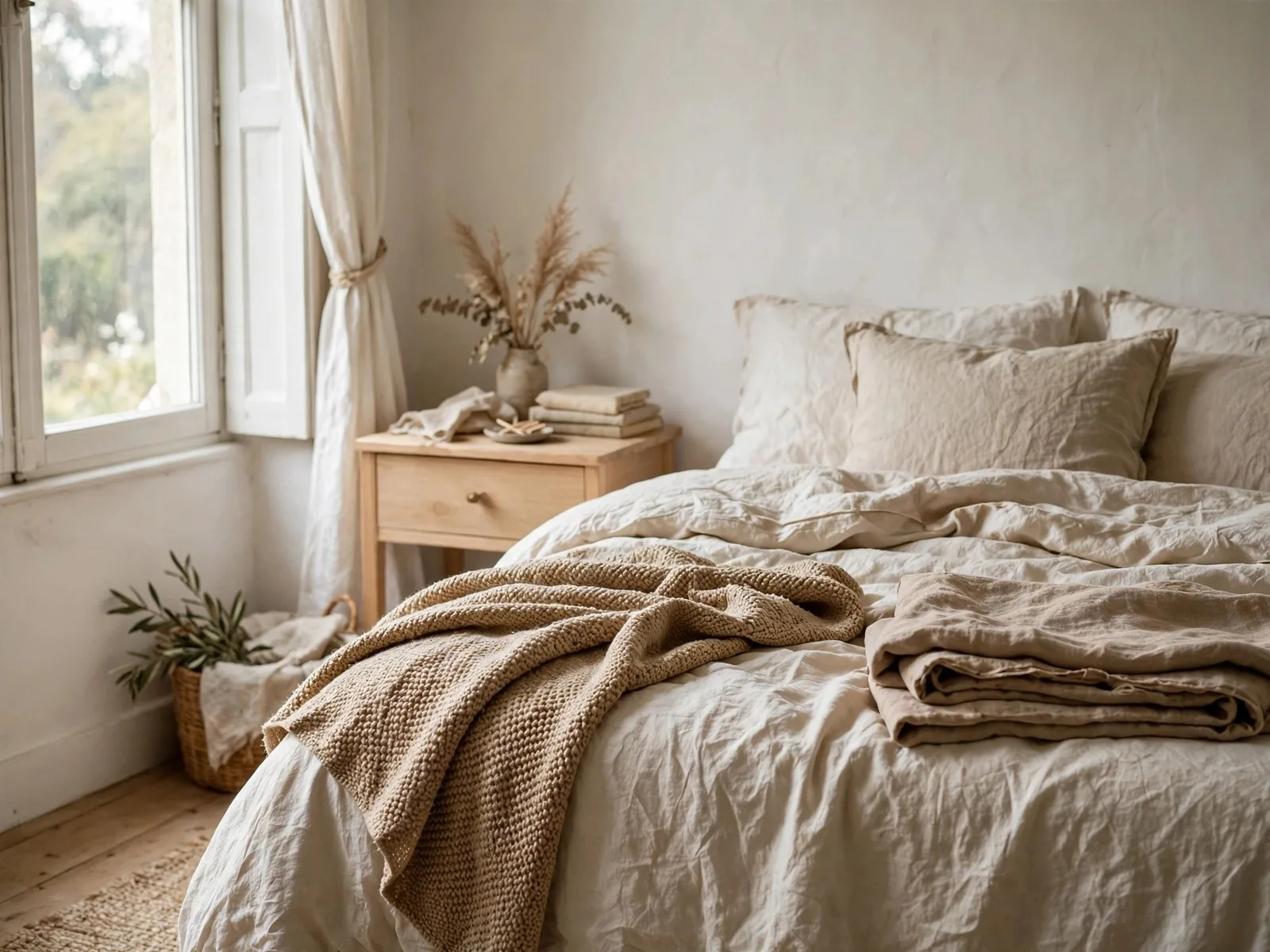
Warm white works when you want the room calm right away. It is the only palette where you cannot pick the wrong wall: every wall can be the same warm white, the bedding can be cream and oatmeal, and one texture can be the rough one. The room reads final before you add anything.
This room did not relax because the walls changed, it relaxed because the predictability did. The warm whites are golden-green-tone with a rosy peach warm light, and the light feels fine on the eyes, even at the end of the day.
Budget: three warm white sample pots at £10 each, and a gallon of the winner for £35. If the pot covers both boards, you need one gallon for the average 12-by-11-foot room.
2. Build a modern white bedroom around one black anchor
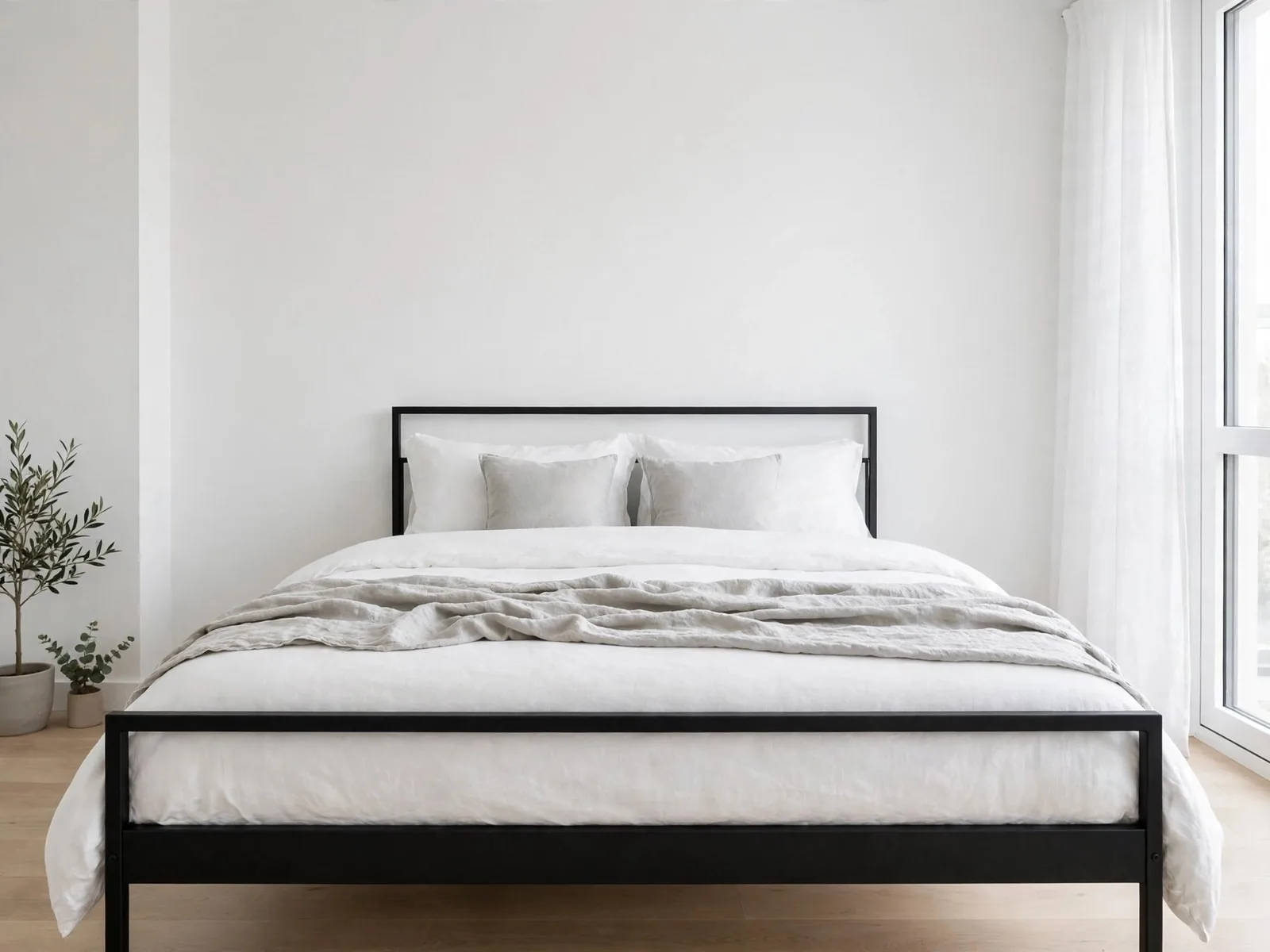
A modern white room needs one thing to keep it from going clinical: one black anchor. A black bed frame does it without paint, without a dark wall, and without giving up the white walls that make the room look larger at night.
The rule is one anchor only. If the bed is black, the lamps stay pale, the cushions stay stone, the rug stays light, and the curtains stay white. Two anchors make the room look styled backwards. One makes it read modern.
Measure: one black bed frame at 60 inches wide for a queen, one 20 x 30-inch sham in pale stone, and one throw in white or the palest grey. If the black frame is narrower than 60 inches, the room reads narrow; if it is wider, the white walls close in.
3. Run beige in three depths so the room never looks flat
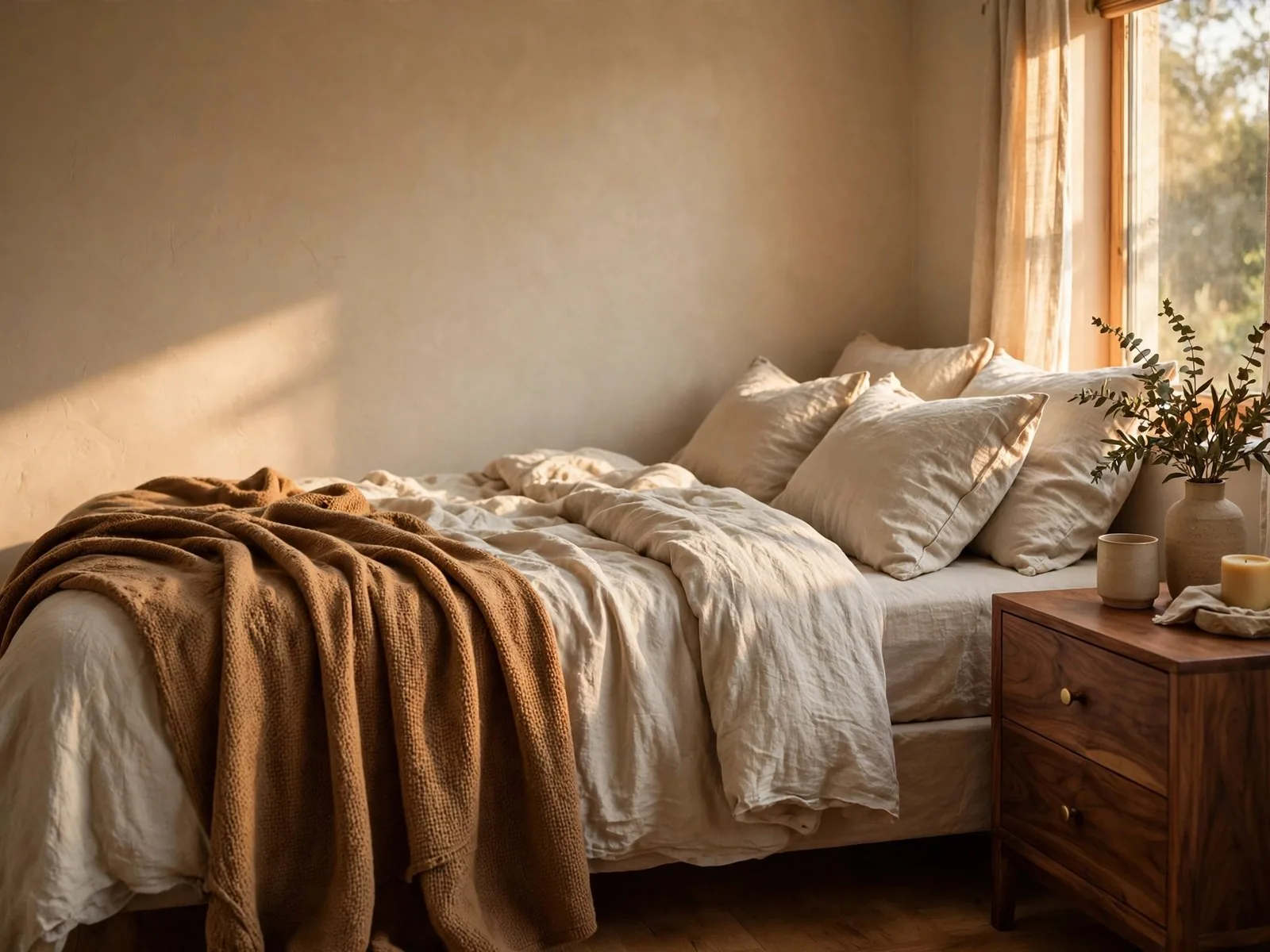
Beige looks flat when it is one tone on every surface. The fix is three depths, not three beiges: a mid-tone beige on the walls, a lighter oatmeal on the bedding, and one deep camel on the throw or the cushion. The eye reads the steps, so the room reads layered, not washed out.
Start with the throw. Put the deepest tone at the foot of the bed, where it pulls the eye down, then keep the lightest tone at the head where the pillows are. The room will feel warm before the light even hits the window.
Budget: two sample pots at £12 each for the wall tone, one duvet set in oatmeal for £35, and one deep camel throw for £25. Two fitted sheets in rotation work better than one, if it is possible.
4. Use greige when beige feels too warm
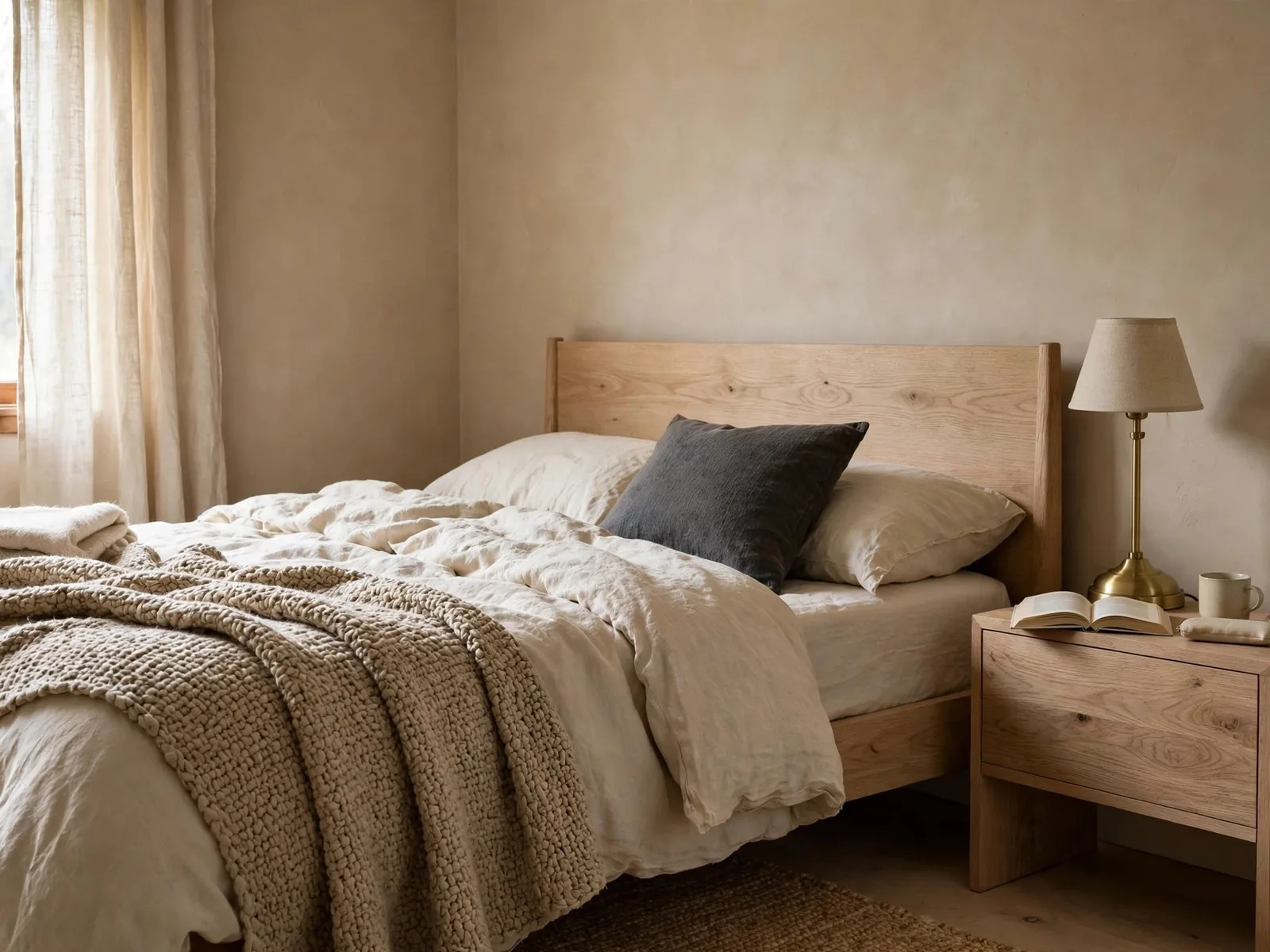
Greige is the answer when beige reads yellow and grey reads cold. It sits in the middle: warm enough to feel soft at night, grey enough to look clean in daylight. If beige feels too warm on your test board, greige is the colour you were actually looking for.
The rule is one greige, not two. Use it on the walls, then go stone on the bedding and cream on the throw, with one charcoal cushion at the bed for depth. If you want the wider color map before you settle then our bedroom color ideas post lays out every family side by side.
Renter-friendly: greige works best in fabric in a rental. Paint stays white, the palette comes through the bedding and the throw, and the charcoal cushion adds the depth a flat white room always lacks.
5. Keep grey white and warm it with cream and oak
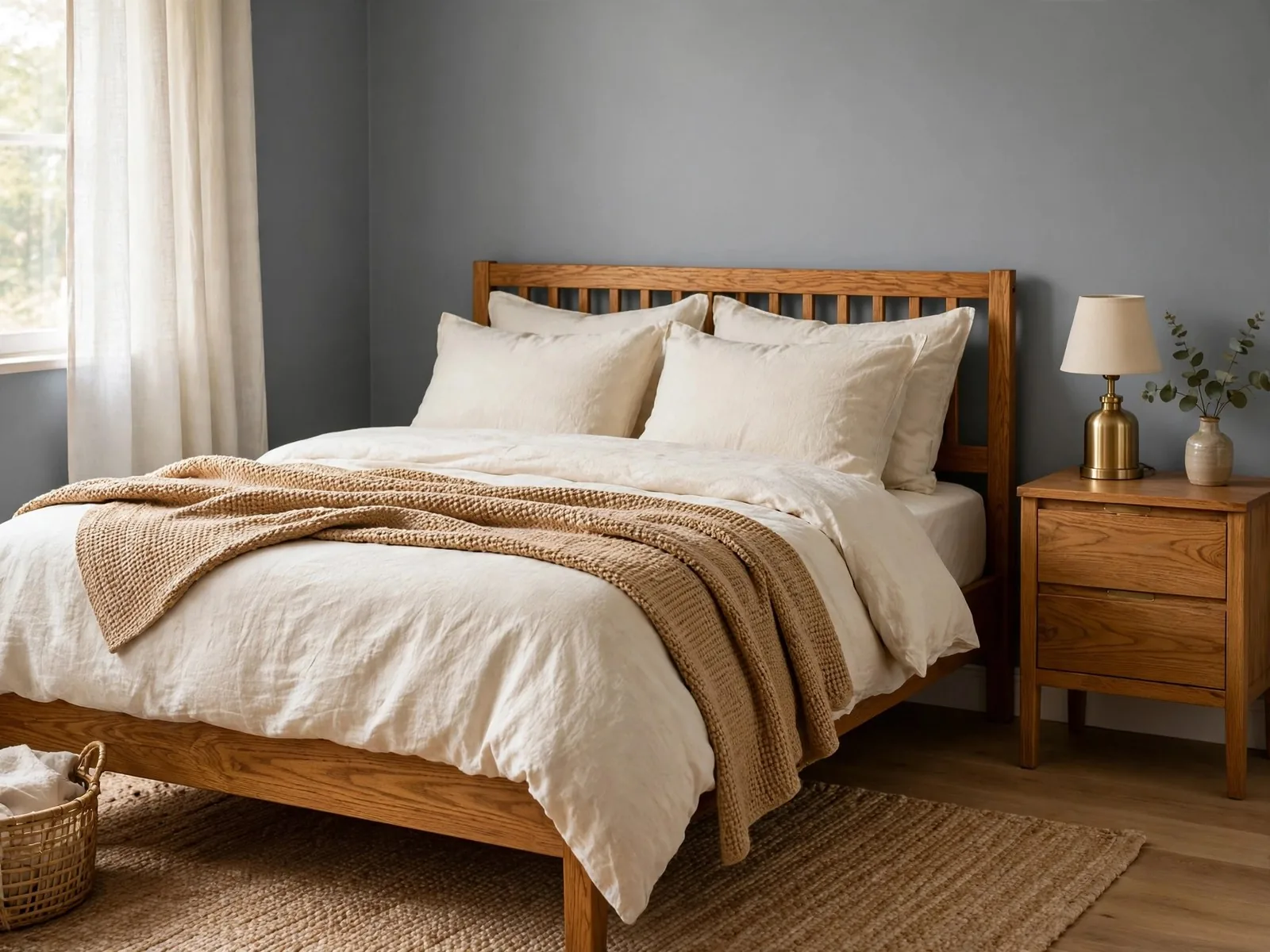
Grey and white can look cold if the grey is a blue grey and the white is bright white. Warm it with cream bedding and honey oak wood at the bed, and a soft brushed brass lamp that puts a warm circle of light at the head of the bed at night.
Warmth here is a layer, not paint. Put the cream bedding on first, add the honey oak nightstand, then put the lamp on it and turn it on at dusk. The room will read warm before you sit down in it.
Measure: one cream duvet cover, one pair of honey oak nightstands at 18 inches wide, and one brushed brass lamp with a 40-watt bulb. If the nightstand is narrower than 18 inches, the lamp looks crowded; if it is wider, it eats the wall.
6. One black accent wall, done properly
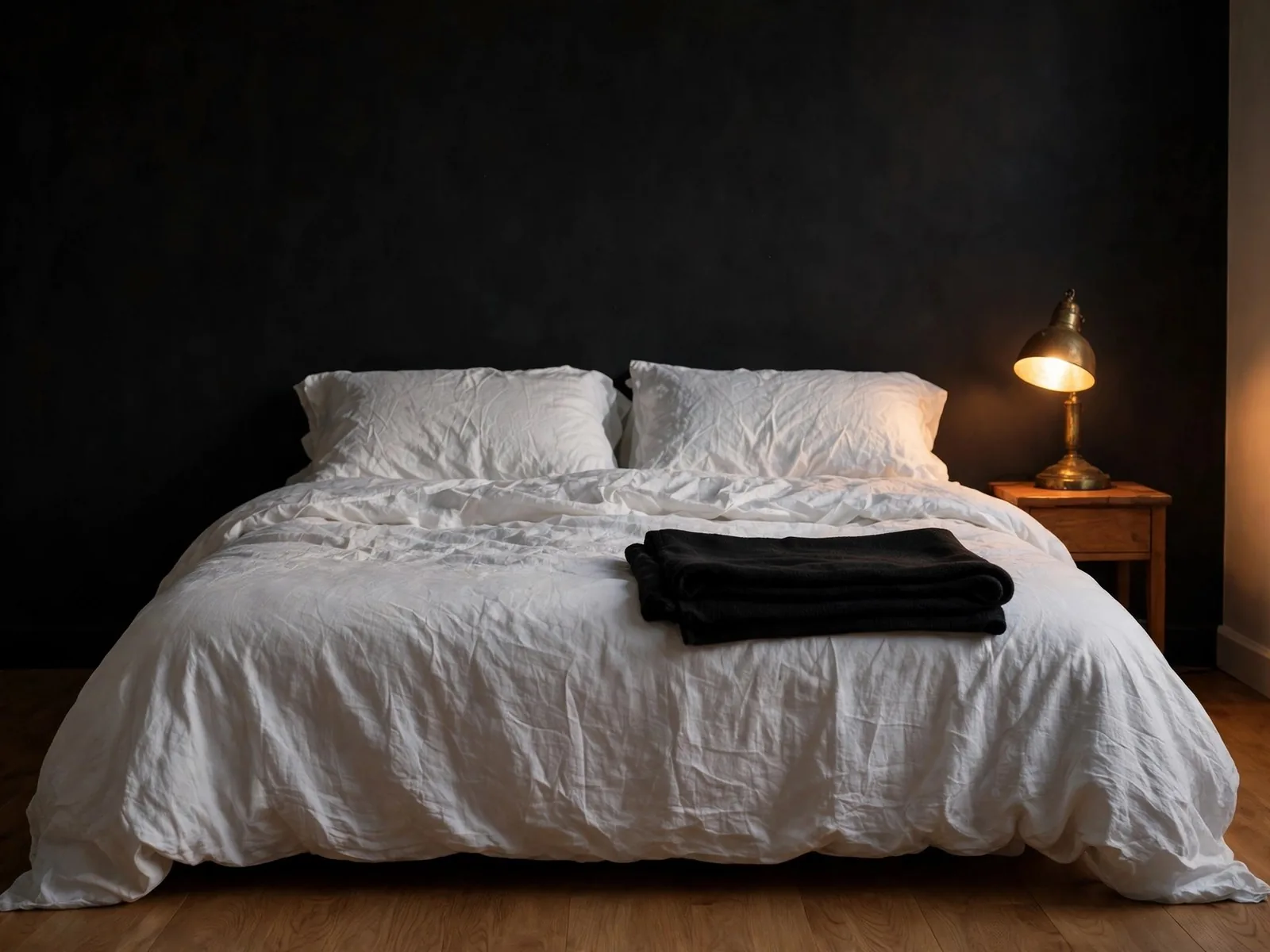
A single black wall behind the bed reads as pure modern if the rest of the room stays white. It is the only deep tone in this guide, and it works because it sits in one place, at one height, and the bedding stays white against it.
Keep one wall black and all the others white. A second black wall makes the room look like a cave. One makes it read like a hotel with a designer at the door. If black feels too strong, you can use deep charcoal instead, and the same logic in our moody bedroom ideas post shows how it works in a full dark version.
Budget: one gallon of paint for £35 if you prime first, plus a blackout blind for £18 if the room faces southwest and the light is strong at night.
How each palette behaves in north and south light
7. In a north-facing room, choose warmneutrals so the light adds warmth
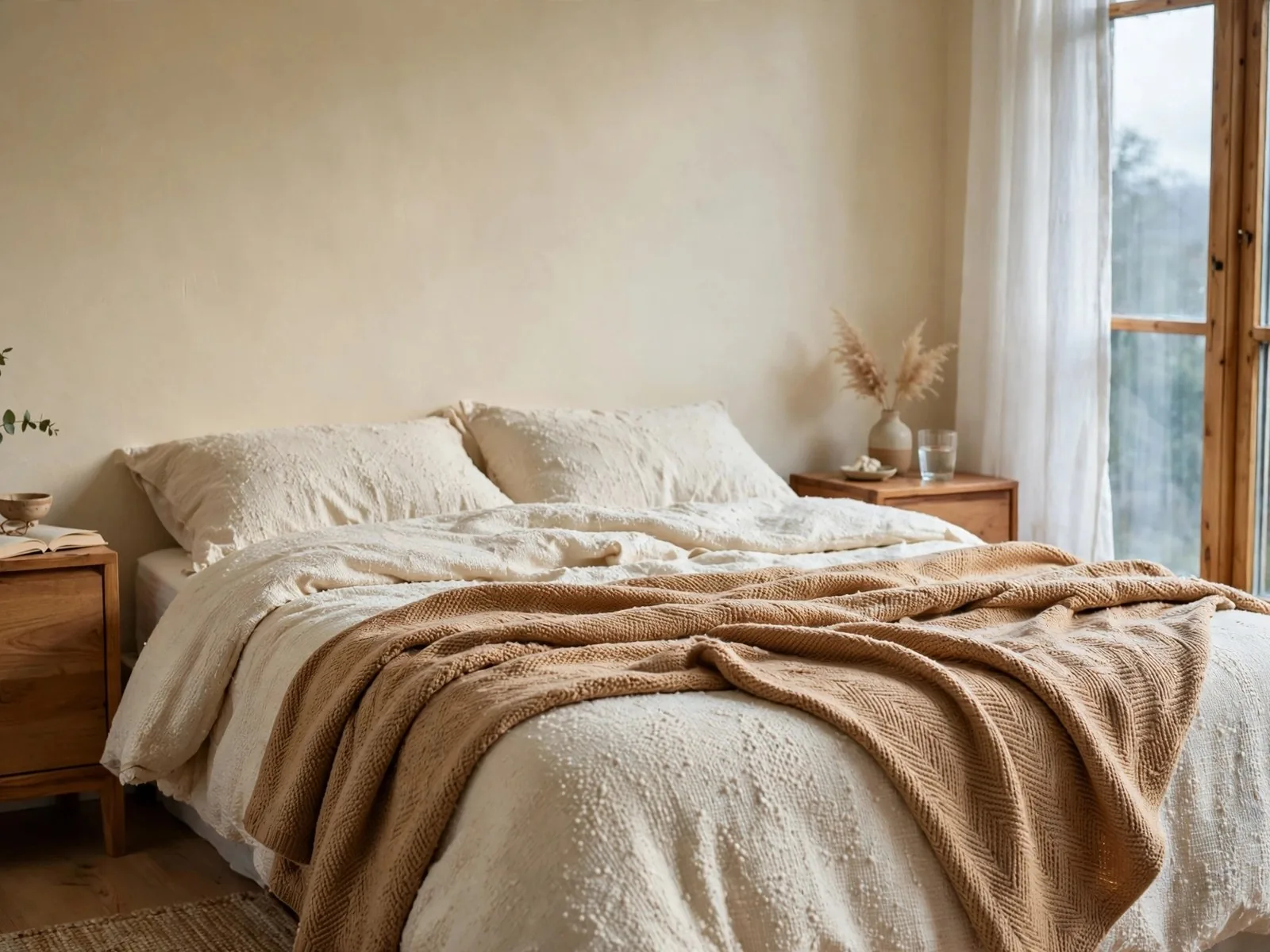
A north-facing room never gets direct sun. At noon, the light will be cool and grey. A neutral that is too blue-grey here will look like a cement wall. Pick a neutral with a yellow underside, like the warm cream or the deep camel in this guide.
The room will warm in the evening. The right choice is not a cooler neutral, it is a warmer one, and the warmer one will still look right at midday. A north-facing room with warm wood and warm lamps is the easiest neutral room to live in long term.
Measure: two test boards 1 foot by 1 foot, one 60-watt tungsten bulb, and a piece of cardboard. Put the bulb six inches from the boards and look at it from eye level at the wall you most often face. The colour will warm in the evening.
8. Soften a south-facing room without making it dull
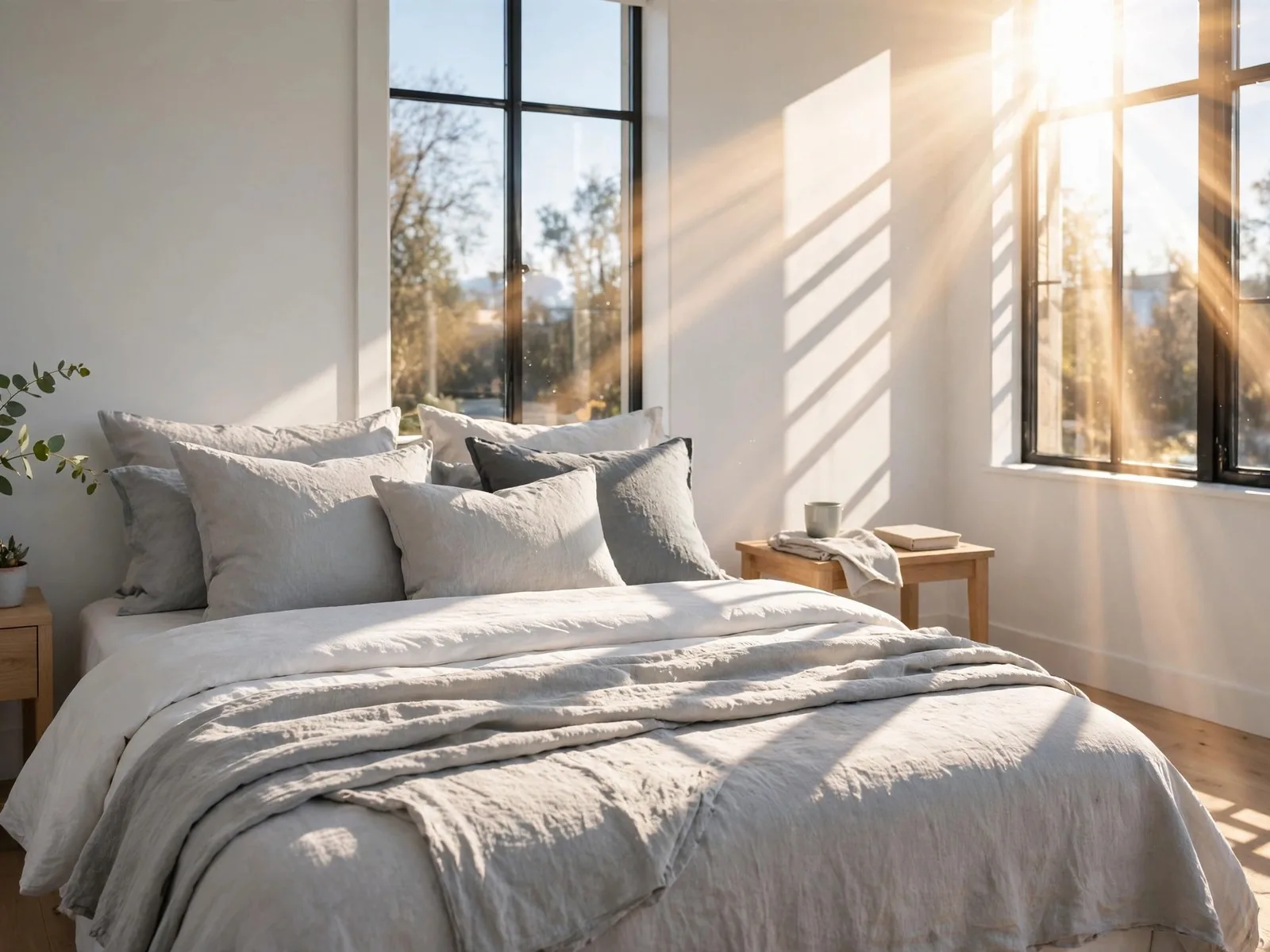
A south-facing room gets direct sun. Crisp white and pale grey hold their colour here because they do not fight the light. Avoid warm whites in a strong south room: they go yellow by noon and the room feels tired by evening.
Use pale grey on the walls and white on the bedding, with strong warm midday light coming through large windows. The pale palette handles the sun, and the bedding stays white so the room never looks yellow.
Budget: free if the walls are already white, one gallon of pale grey for £35 if you want the walls cooler, and one roll of painter’s tape for £4 to keep the pale trim crisp.
9. In a small bedroom, test one palette on a board before you commit
In a bedroom under 100 square feet, one palette in three depths is enough. Put the room’s only deep tone on the throw, the mid-tone on the bedding, and the light tone on the walls. There is no wall to paint, no second accent to argue, and the room feels chosen rather than painted.
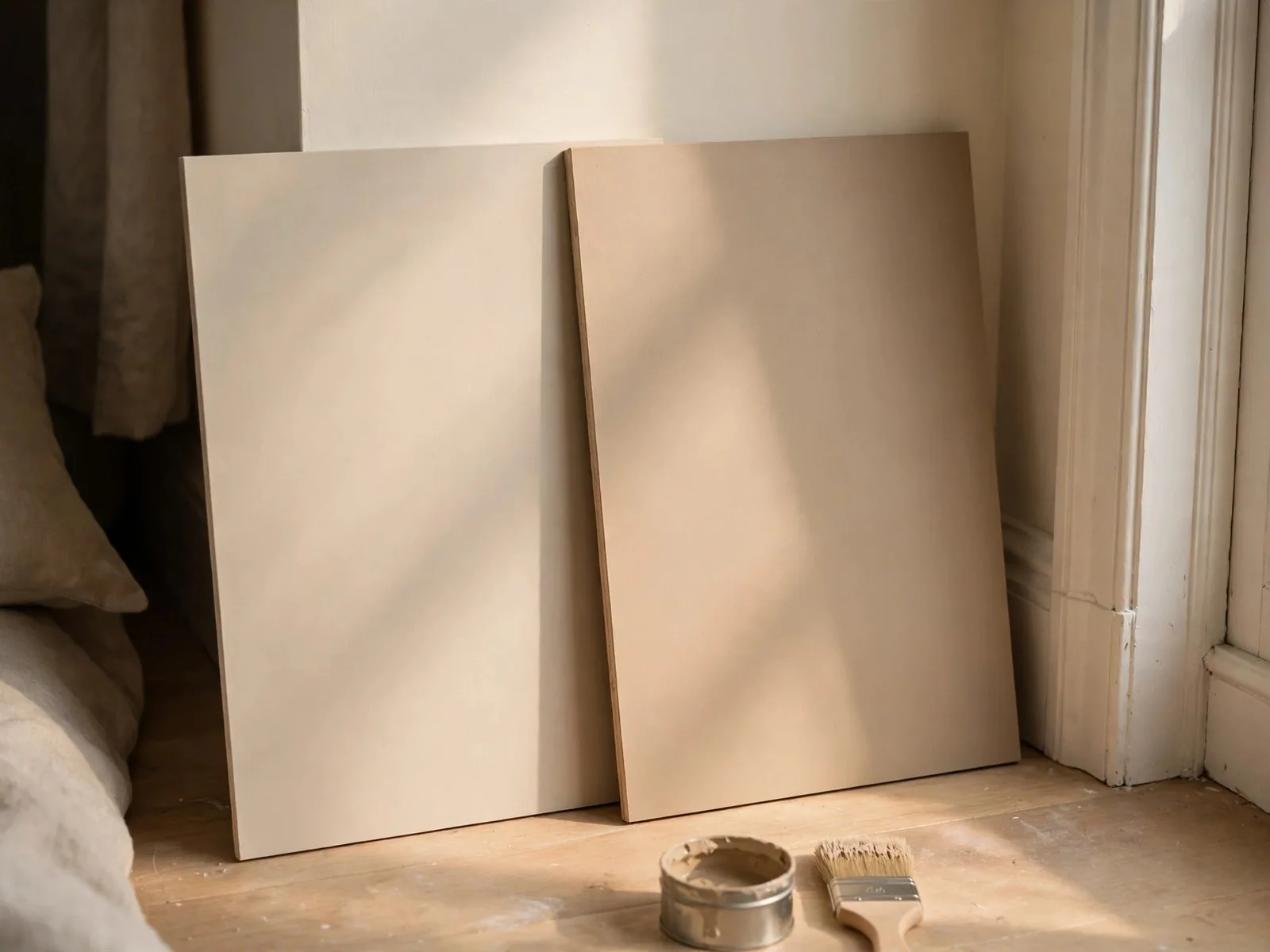
Use one board and two pots. Paint the board and lean it against the bed wall at noon and at 7 in the evening. If it reads rich in the day and warm at night, it will still read warm on the whole wall. If it reads grey at noon, it will read colder on the whole wall, no matter how sure you felt in the shop.
Measure: one 2-foot-by-2-foot board and two sample pots at £10 each. If the board shows the tone on the bed wall, you need one gallon for the average 12-by-11-foot room.
10. Test light, texture, and sheen before you spend big
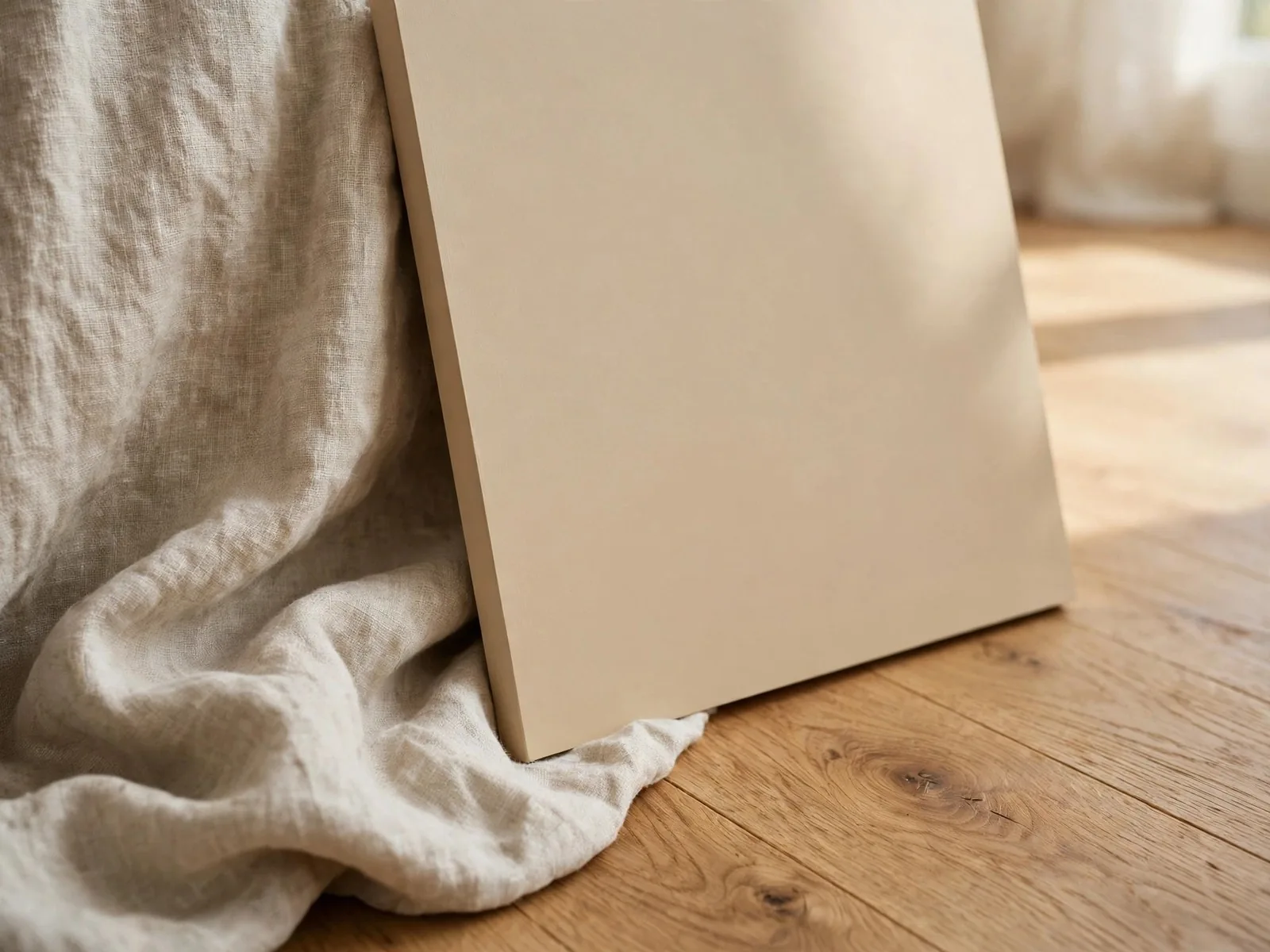
Parallel testing of paints, wall colour, and combinations in different rooms is a great way to avoid costly mistakes, so we created a quick reference for the paint colour and its partner swatches. It is one of those things that is tiny and underwhelming and really does work.
Keep the palette in one place first. One foam board and a line of your chosen swatches will show how the palette sits at midday and in the evening. The board will do the job and leave no mark, and if the tone shifts at 7 in the evening, you will see it on the board before you see it on the walls.
Budget: one small tester pot for £7 and one small piece of board for £5. If your test pieces do not show the pairing well, a larger board can be hired.
Textiles and wood: completing each palette
11. Layer three textures so a neutral room never looks flat
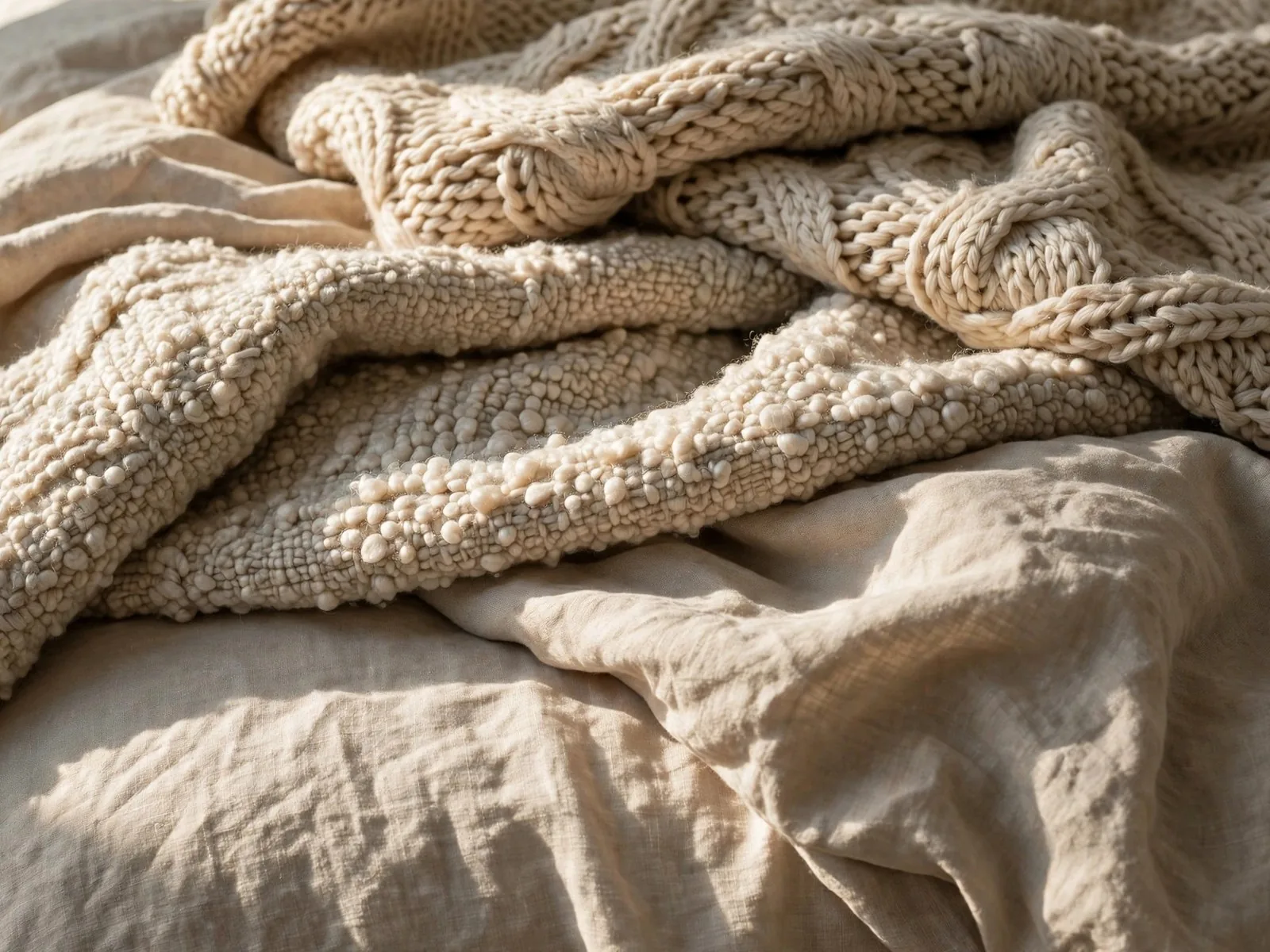
A room with three textures in the same neutral, the bedding, one cushion of a smaller size, and the wood of the furniture, reads as a palette rather than a clean wall. The layers are the same trick as the paint families, just in fabric. If you want that logic in a softer layer, our boho bedroom ideas post follows the same mix with braided macramé and warm wood.
Texture steps are the same size as the palette steps. Once the layers match, a bedside cushion and a folded throw at the foot are enough. A room with three objects in the same neutral, the bedding, one cushion of a smaller size, and the wood of the furniture, will read as a palette rather than a flat wall. Our small bedroom ideas post follows the same layering logic for rooms where the bed stays pale and the depth comes from the texture alone.
Budget: one washed linen duvet set at £35, one boucle blanket at £25, and one knit throw at £25, or a cotton sateen duvet set for £30 if you want it lower cost.
12. Wood, walnut and a beige wall that looks richer, not darker
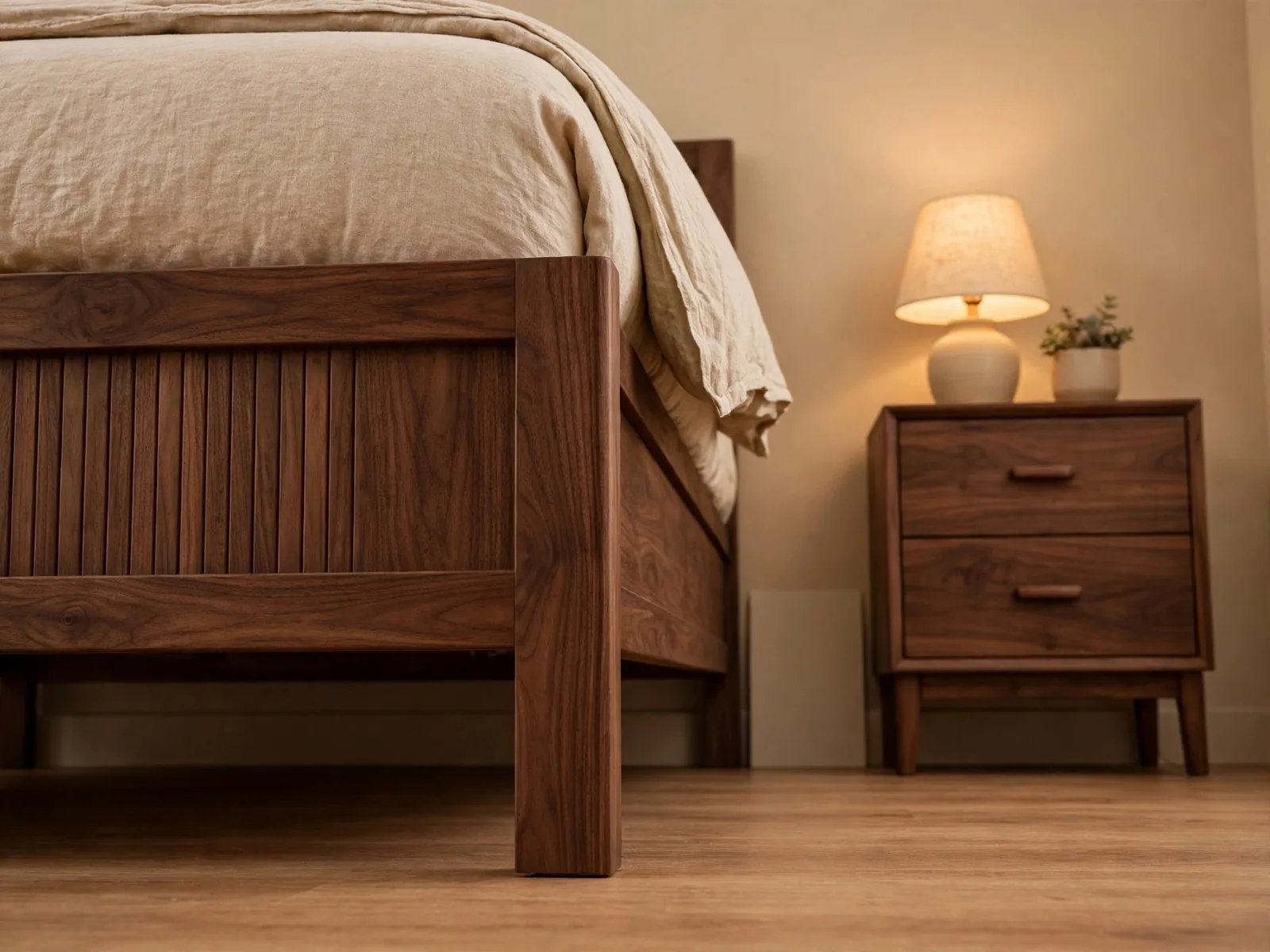
Walnut and white oak make a beige wall look richer without making it darker. Keep the wall mid-beige, the bed frame walnut, the nightstands the same walnut, and the bedding a lighter shade of the same beige. The room will feel warm before the light even hits the window.
Put the wood on the bed and the wall will take care of itself. A walnut bed frame and nightstands against a warm beige wall, sample board resting against the wood floor. Our headboard ideas post covers the same job without a new purchase, and the same walnut across the bed and the nightstand keeps the palette at one depth.
Measure: one walnut bed frame at 60 inches wide, two walnut nightstands at 18 inches wide, and one test board 2 feet by 2 feet. If the boards fill the floor, you need one gallon for the average 12-by-11-foot room.
13. Brass and wood give warm light without gold paint
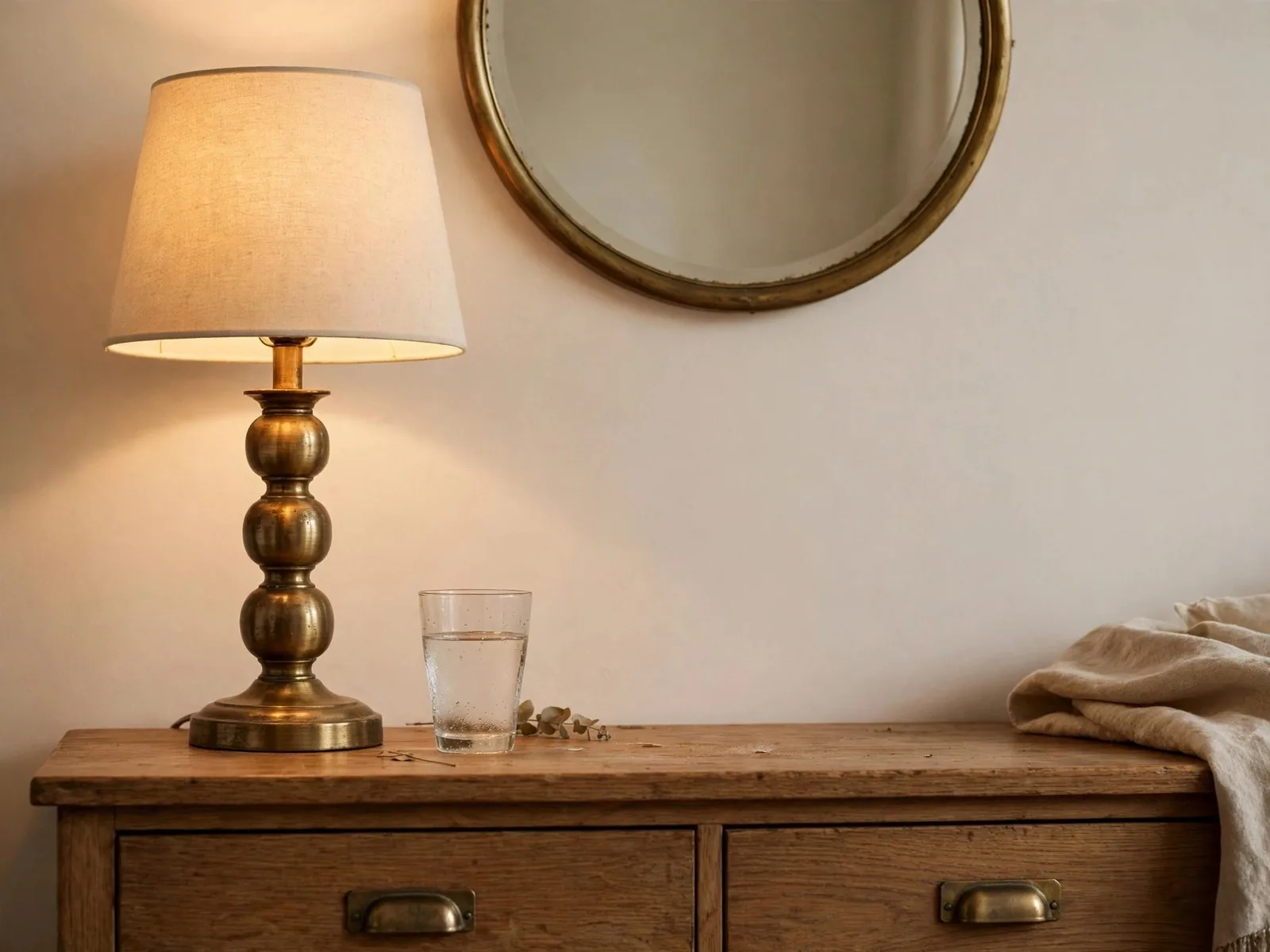
Warm metals do not need a gold finish to work. Use aged brass on the lamp bases and a brass framed mirror above the dresser with brass drawer pulls, and the room will glow at dusk. The metal lasts, the wood warms, and the light stays the same shape as the room every night.
Warm metals are a layer, not paint. Put the brass on the lamp, hang the mirror above the dresser, and keep the bedding white and stone so the brass lamp glow and the walnut grain in it read at night. The room gets warm before dark and stays warm without changing anything in the wall.
Budget: one pair of aged brass lamp bases at £30 each, one brass framed mirror at £40, and one roll of painter’s tape at £4 to keep the wall clean behind the mirror.
14. Keep one lamp warm and the rest of the room pale
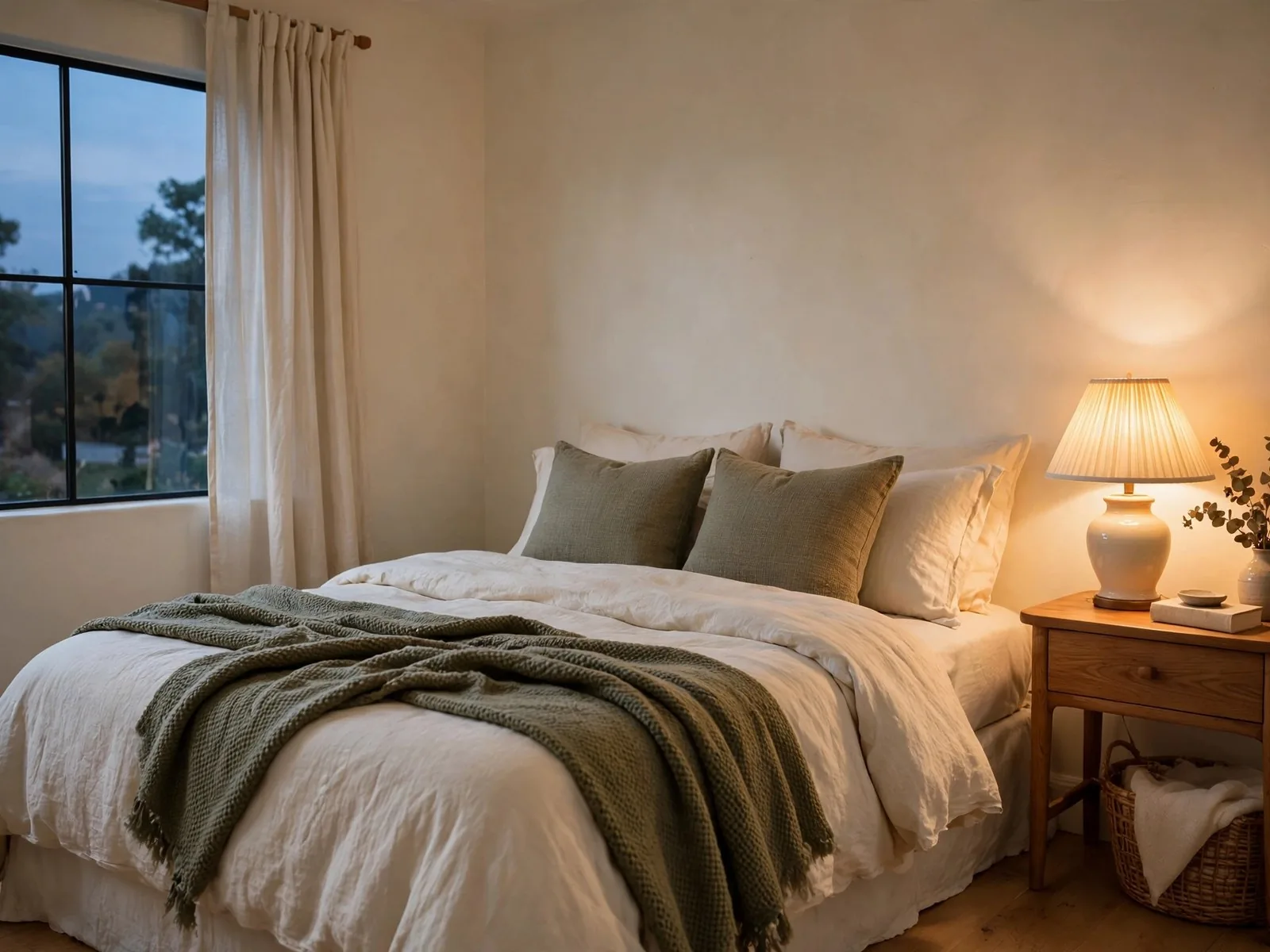
One warm lamp against a pale wall is the easiest warm light in this guide. A soft white lamp on the nightstand, bulbs at 2700K, and one olive green accent on the bed at night, keeps the room glowing at dusk and pale by day.
Warm light is the layer that saves a pale room. The lamp stays warm at the bedside, the bedding is mostly white and stone, and the olive green throw on the bed shows the warmth without hiding it. Our bedroom lighting ideas post covers the same warm lamp logic with a single 40-watt lamp and a warm-white bulb that will not yellow the room.
Renter-friendly: one olive green throw and one warm brass lamp is a no-paint change. The white walls stay white, the palette comes through the bedding and the lamp, and the olive throw folds small, so it is easy to take with you.
The same palettes on a budget
15. Paint only the wall behind the bed
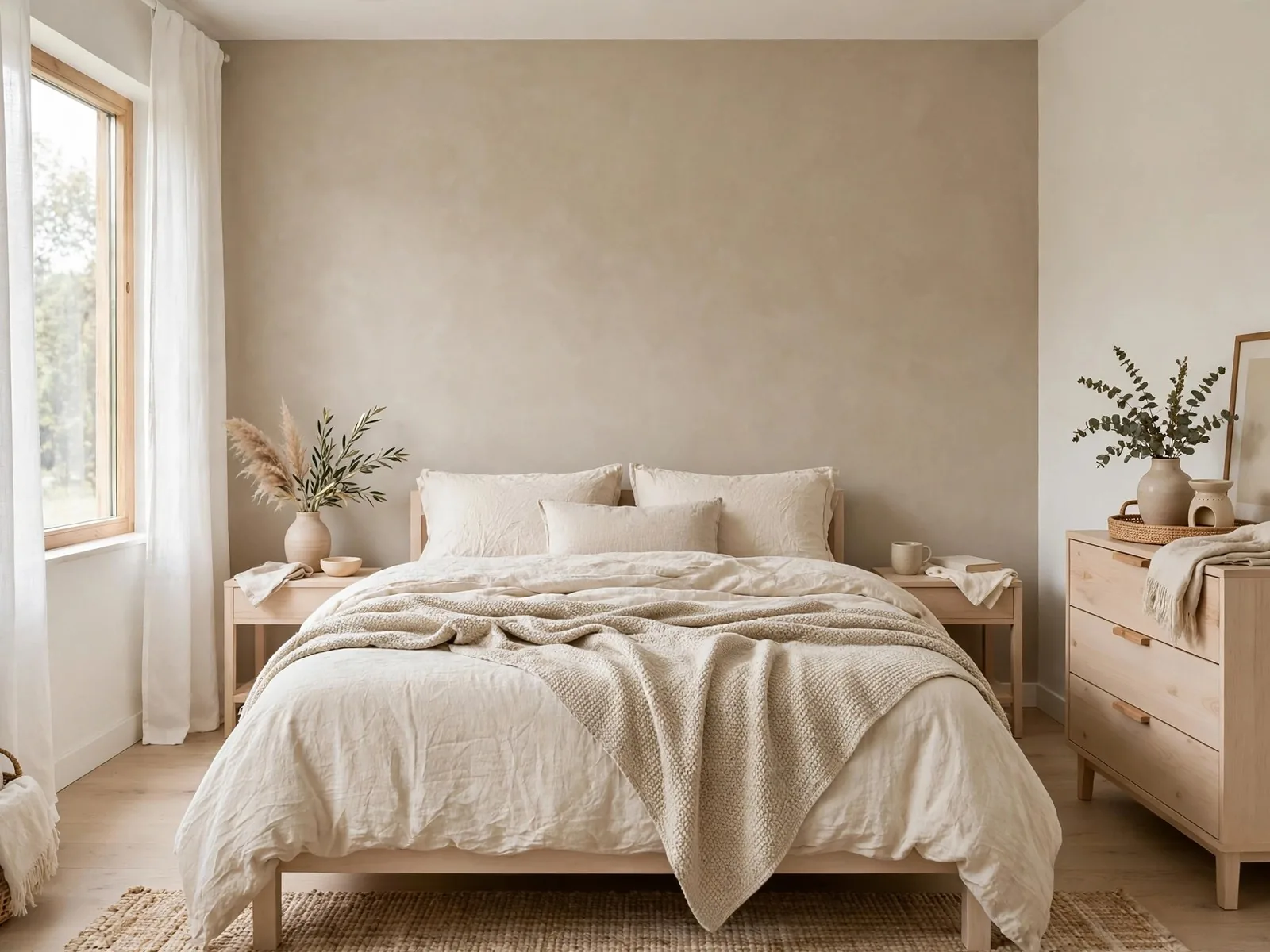
One beige accent wall behind the bed gives you the colour you want and the clean-up afterwards is the price of one pot of paint. The rest of the walls stay warm white, and the room still looks decorated, rather than white with the same colour behind it. Our bedroom accent wall ideas post covers that with the same fold as the neutral.
Choose the wall and stop. One beige accent wall, done properly, is the cheapest palette in this guide. A single wall behind the bed, one tester pot, and one roll of painter’s tape for £4. Then stop, and live in the room for a fortnight to see how it handles the light.
Measure: one accent wall 10 to 12 feet wide, one tester pot for £7 to check the colour at the right place, and one roller and brush set. Stop the paint at the wall’s corners to keep the edge clean.
16. Carry the palette in bedding and keep the walls white
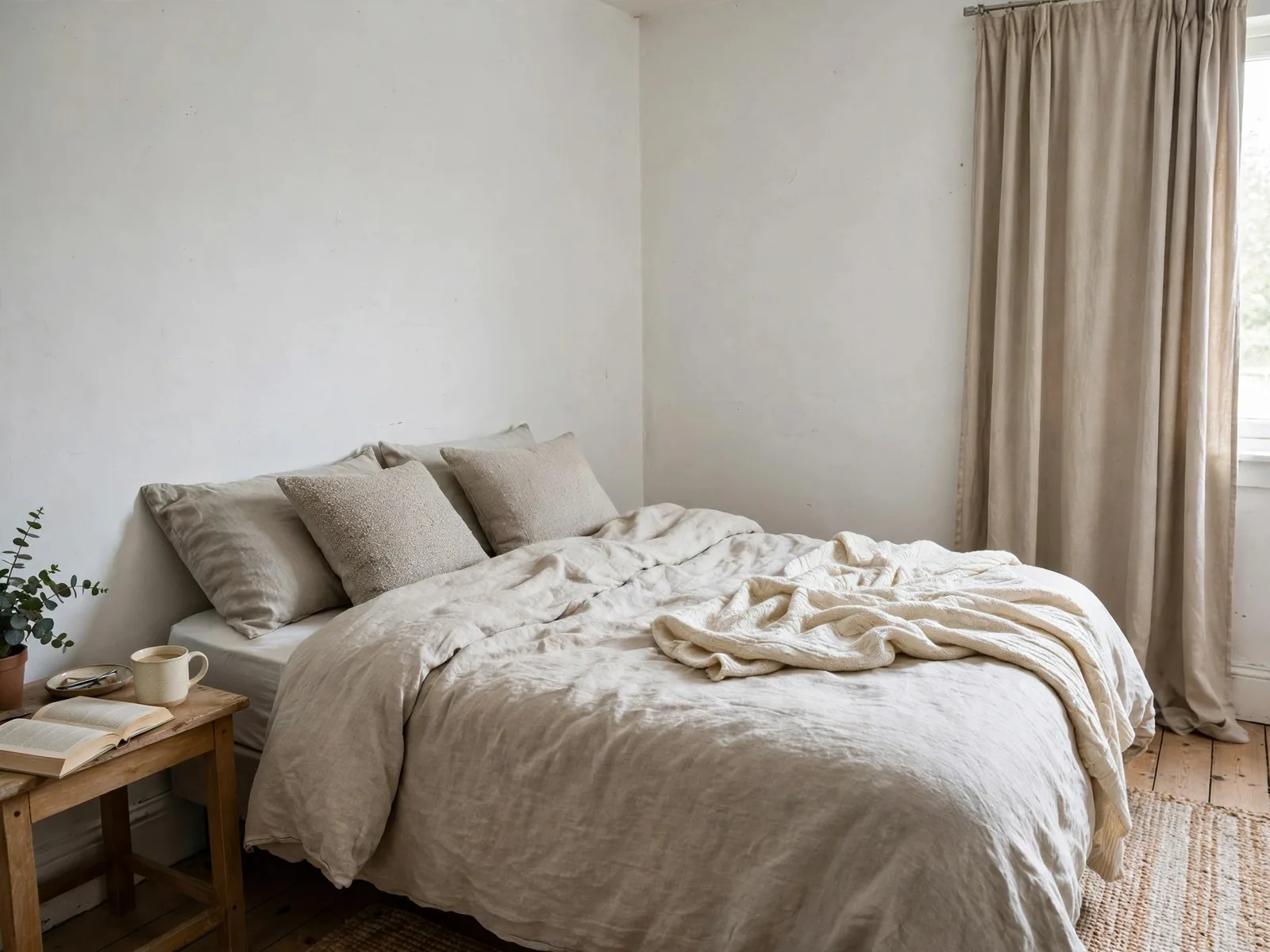
Some rooms need the palette in fabric, not paint. A rental bedroom with the palette carried by an oatmeal duvet set and a cream throw and stone cushion covers is the easiest way to carry the neutral palette through the room. The walls stay white and seem to disappear, and the bedding is guaranteed to be taken to the next room.
Bedding is the only thing in the house that is guaranteed to be taken to the next room, so buy what you can travel with: fitted sheets, duvet covers, pillowcases and throws. The colour choices are the same as the rest of the neutral palette: a light oatmeal and a deep camel, in a 60-30-10 split on the fabric of the bed.
Budget: one oatmeal duvet set for £40, one cream throw for £25, and one stone cushion for £25. Two fitted sheets in rotation work better than one, if it is possible.
17. Build a budget room from peel-and-stick and a rug
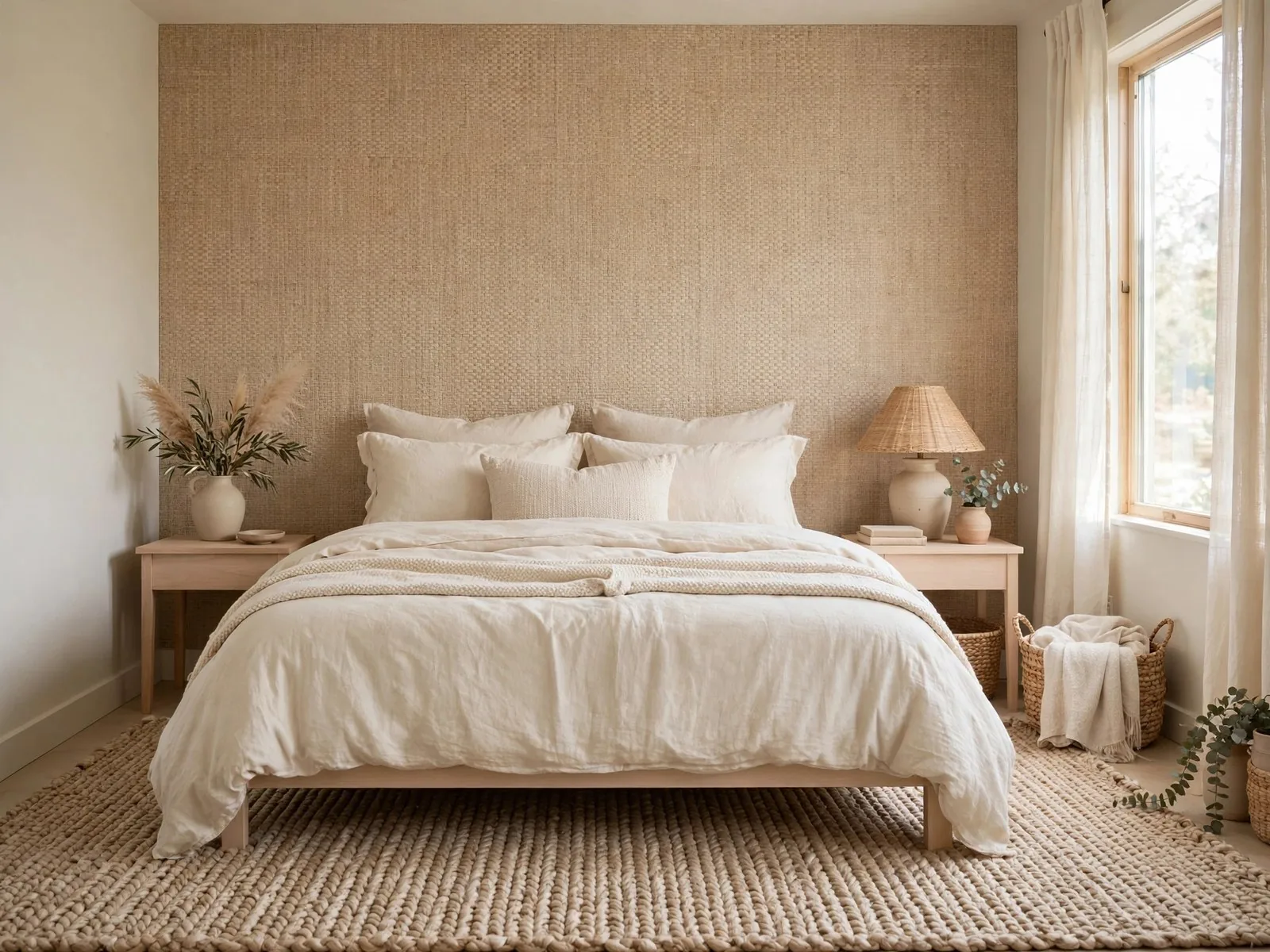
One warm peel-and-stick feature wall and a large neutral rug over the floor will build the cheapest neutral bedroom in this guide. The feature wall is a quick way to add a pattern, but use it on a small piece of the room. If the paper is on one wall, the room still looks calm; if it is on four walls, it will feel busy.
Peel-and-stick is the safest decoration for a rented room, and it comes off in strips, so it is the safest way to add the palette for one night and then take it back off. Put one strip behind the bed, one small gap at the top, and then stop. Our bedroom makeover ideas post covers the same layout starting with a budget board and sorting the changes into the same do-first, do-later order as above.
Renter-friendly: peel-and-stick paper leaves the least trace on a wall, and it comes off in strips, so it is the safest decoration for a rented room.
18. Use sample boards before you touch a wall
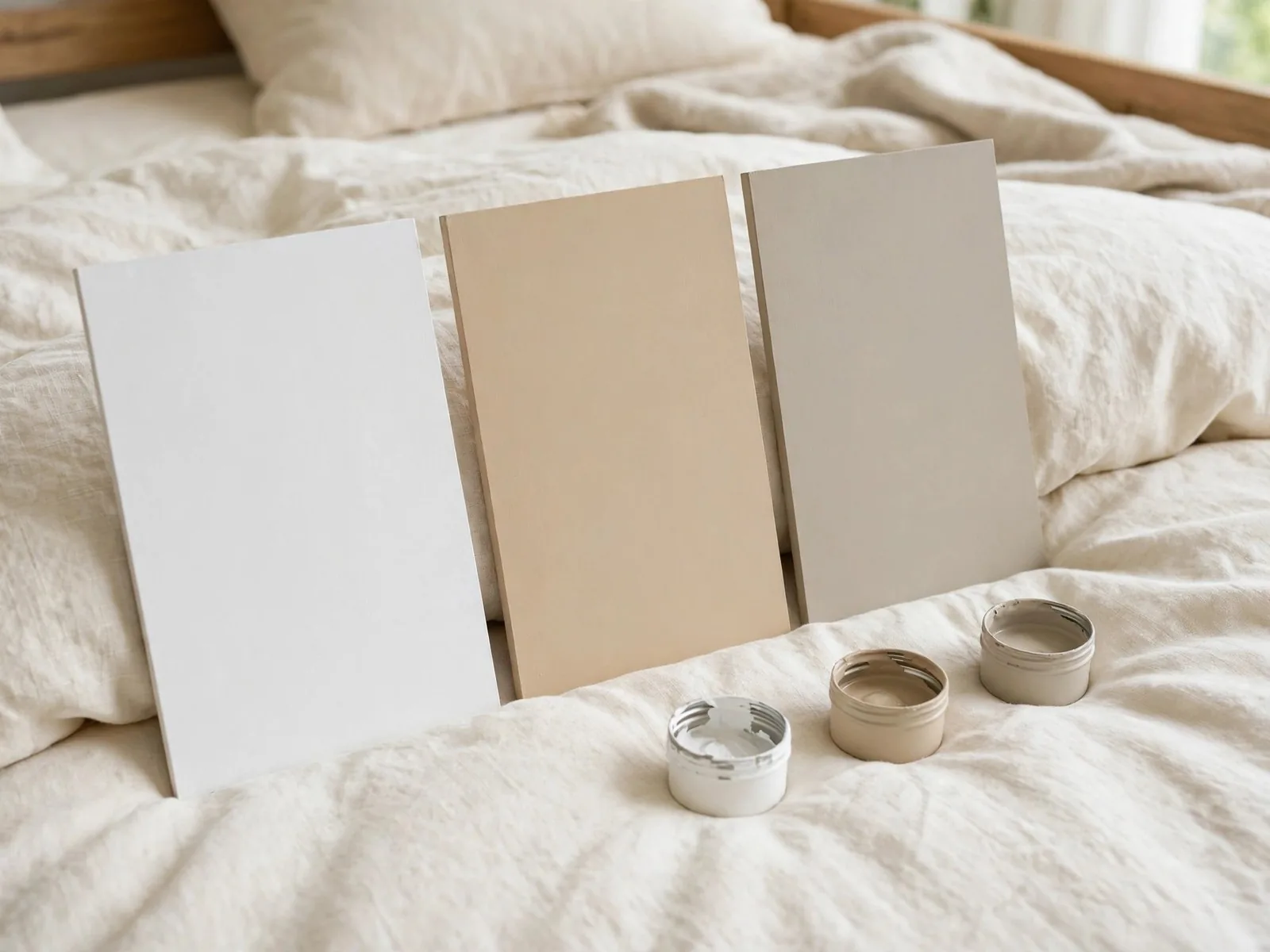
Three painted sample boards in white and beige and greige leaning on a bedroom wall beside sample pots is the cheapest way to pick a neutral without opening a gallon. Paint one board on the wall, leave it for a week, then check it at 9 a.m., 2 p.m. and 7 p.m. before you buy the gallon.
The board is the real test, not just a swatch. It will tell you if the warm white goes peach, if the beige goes pink, and if the greige reads yellow before it is a wall, and you will see the shift and the less-expensive mistake at a glance. Now, paint one board with the colour on the main light wall and one on the wall the bed faces, then lift it to the room and check at 10 a.m. and 7 p.m.
Budget: three tester pots at £10 each, one foam board for £5, and one piece of tape for £3.
Neutral Bedroom Ideas on a budget
Neutral palettes are cheap. If you can paint, one gallon of paint and one feature wall in a deeper neutral will hang for around £60. If you cannot paint, the palette carried by the bedding and the rug is one duvet set, one throw and one cushion.
If you are working through a whole room, the makeover path in our bedroom ideas pillar starts with a budget board, then sorts the changes into the same do-first, do-later order as above.
Mistakes that make it fall flat
Neutral rooms rarely fail on the color itself. They fail on one of these five habits.
- One flat beige everywhere. Walls and bedding in the same one tone make the room look like a single sheet of paper. Three depths make the room read layered, and the depth makes the palette visible.
- Two neutrals in different families. Mixing warm beige and cool grey in the same room makes the eye work harder than it thinks it should. Keep to either beige or grey, and work in one family in the whole room.
- No texture in the room. A flat room reads colder than it is: washed linen, a boucle blanket, a knit throw, and one layer in each will warm a neutral room without ever touching the walls.
- Too much white, no depth. Too much white may be too cold in a north-facing room. One layer that adds warmth – a camel throw, a warm cream cushion, a honey-oak nightstand, or a warm lamp – will close the gap without breaking the palette.
- Wrong white for the light. Warm white goes yellow in a strong south room. White walks up one shade in the light, so a south-facing room is best in crisp white or pale grey, not its warmest cousins.
Questions people ask about this
What is the best color for a bedroom walls and bedding together?
Pick the wall color first, then the bedding. The wall is the lightest of the three tones, the bedding is mid-toned and the throw is the deepest tone. If the wall is pale, the bedding can be cream and oatmeal; if the wall is mid beige, the bedding can be white and stone.
What color never goes out of style for a bedroom?
White. White works through every season if it is warm white in a north-facing room and crisp white in a south-facing room. The palette changes with the texture and the throw, never with the wall.
What color makes a small bedroom feel bigger?
One palette, in one depth, wall to bedding to rug. A small room in one neutral looks larger than the same room in three neutrals. If the room is under 100 square feet, leave one wall white.
The bottom line
A neutral bedroom never looks boring when the palette is a recipe instead of a guess: named paint and a 60-30-10 split and texture doing the work that color does in louder rooms. This week, buy two sample pots of the palette you keep saving and paint one board and live with it in your own light for two full days before you spend another dollar.