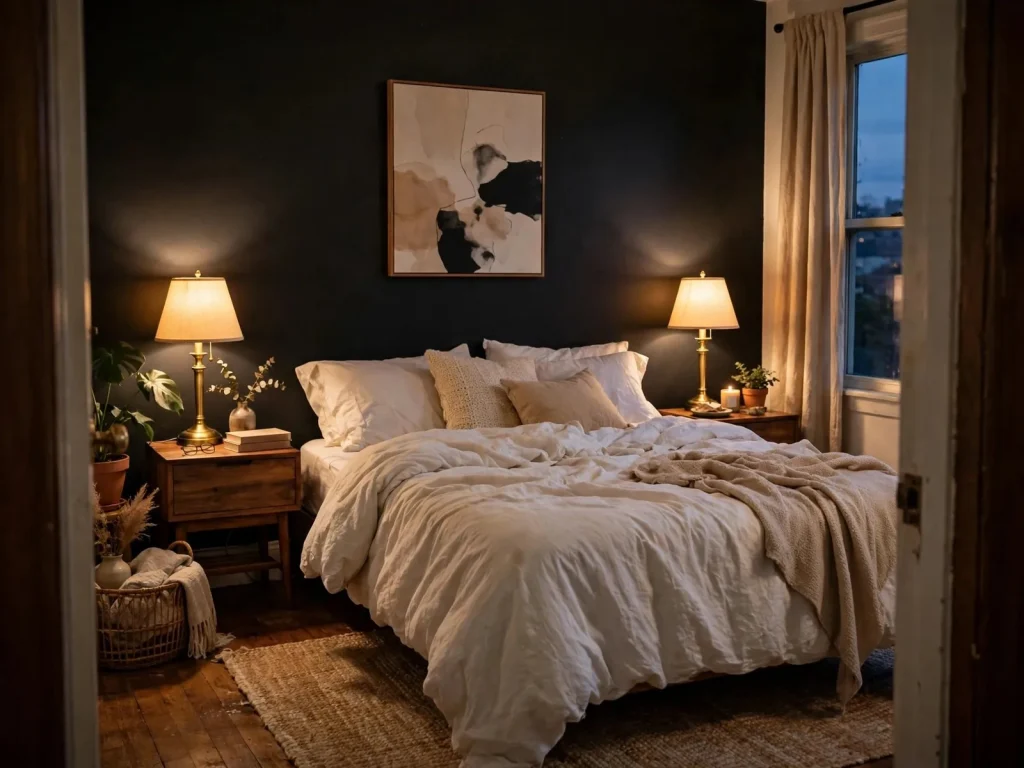
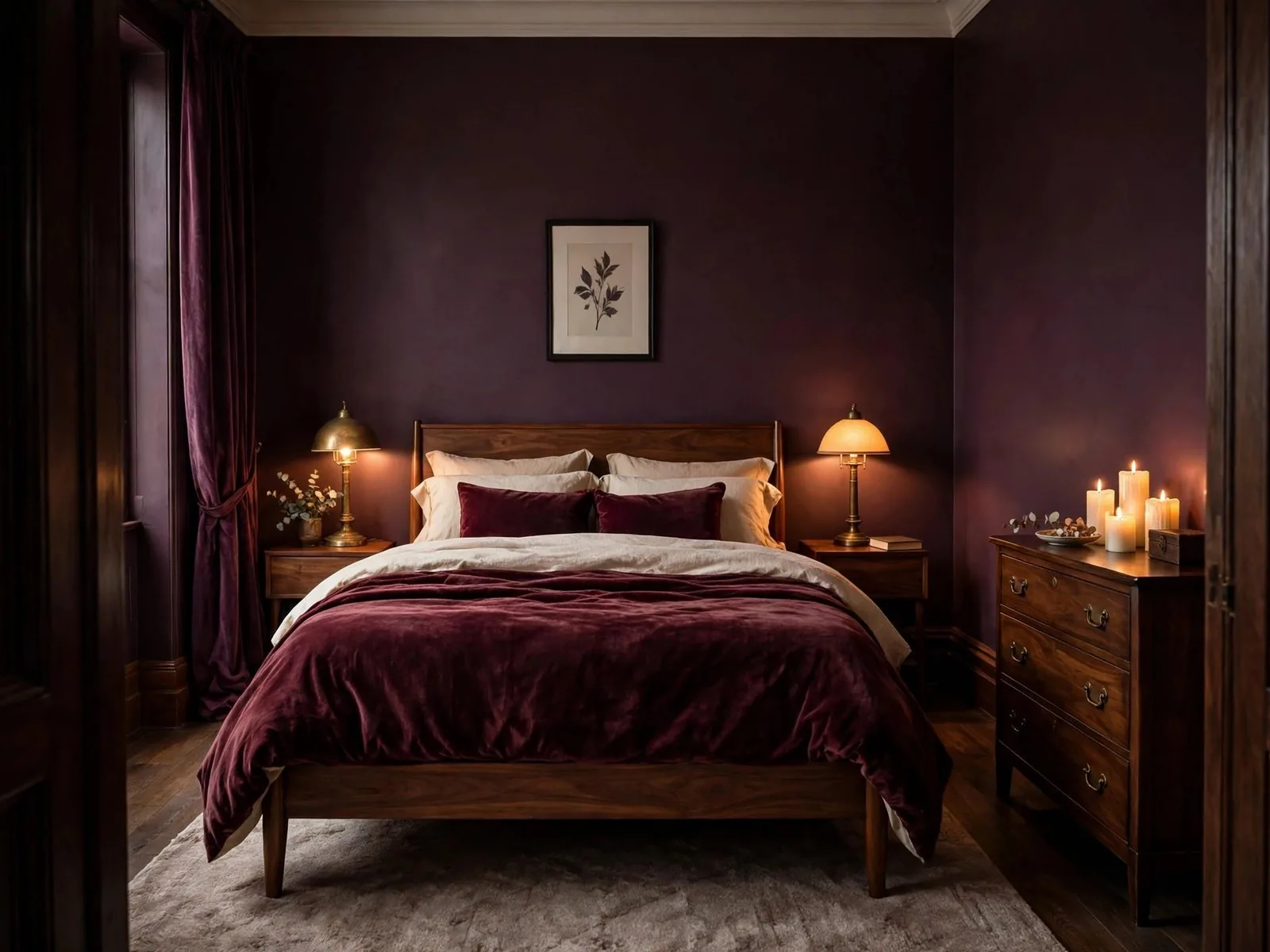
You want the bedroom to feel like a boutique hotel at 10 p.m.: deep walls, a velvet throw across the bed and light low enough to soften every edge. What you do not want is the haunted-house version, all black paint and hard surfaces and a room that reads as a theater set by daylight. Most dark romantic bedroom ideas skip the part that decides which of those two rooms you get.
The deciding part is not the paint. Dark reads as romantic when the color is warm, the surfaces are soft and the light sits low. It reads as gothic when the color is black, the surfaces are hard and the light is bright. Every idea on this page carries its palette line with the paints named by brand and code. There are versions for couples, renters and small rooms too. For dark color palettes without the romance angle, the moody bedroom ideas page covers the wider family.
Before you start: what makes dark feel romantic, not gothic
Hold every choice against four tests. Warm darks beat black: plum, oxblood, midnight blue and forest green all carry red or brown underneath, so they stay warm under lamplight where pure black turns flat and cold. Soft beats hard: velvet, washed linen and a deep-pile rug absorb light and sound, while lacquer, chrome and bare painted wood bounce both back at you.
Low warm light beats bright light. One strong ceiling fixture exposes a dark room. Two or three low sources at bed height wrap it. And one antique element beats a theme: a single old mirror or a worn wood dresser gives the room a past, where five themed props give it a costume. If you are still choosing between color families rather than between darks, the bedroom color ideas page compares the families side by side.
Practical notes before the ideas. Measure the bed wall and note which way the window faces, because north light cools every dark on this page and south light warms it. Budget bands used below: under $30 for light and candles, $40 to $120 for the textile layer and $150 to $400 for paint with a bedding refresh. Renters: paint is the only idea here that needs permission. The no-paint route through textiles, canopy and lamps is flagged as it comes up.
Color
Five palettes, each named with its paints. Choose by the light in your room first and by the photograph second. If dark turns out to be only one room of several, the pillar collection of bedroom ideas covers the lighter rooms in the house.
1. Paint the walls deep plum
Plum is the easiest dark romantic color to live with because it is a red and a purple at once, warm in lamplight and cool enough to stay calm in daylight. Brinjal No. 222 by Farrow & Ball is a deep aubergine plum with a brown base. In a matte or eggshell finish on all four walls it gives the room the upholstered feel the saved photos promise.
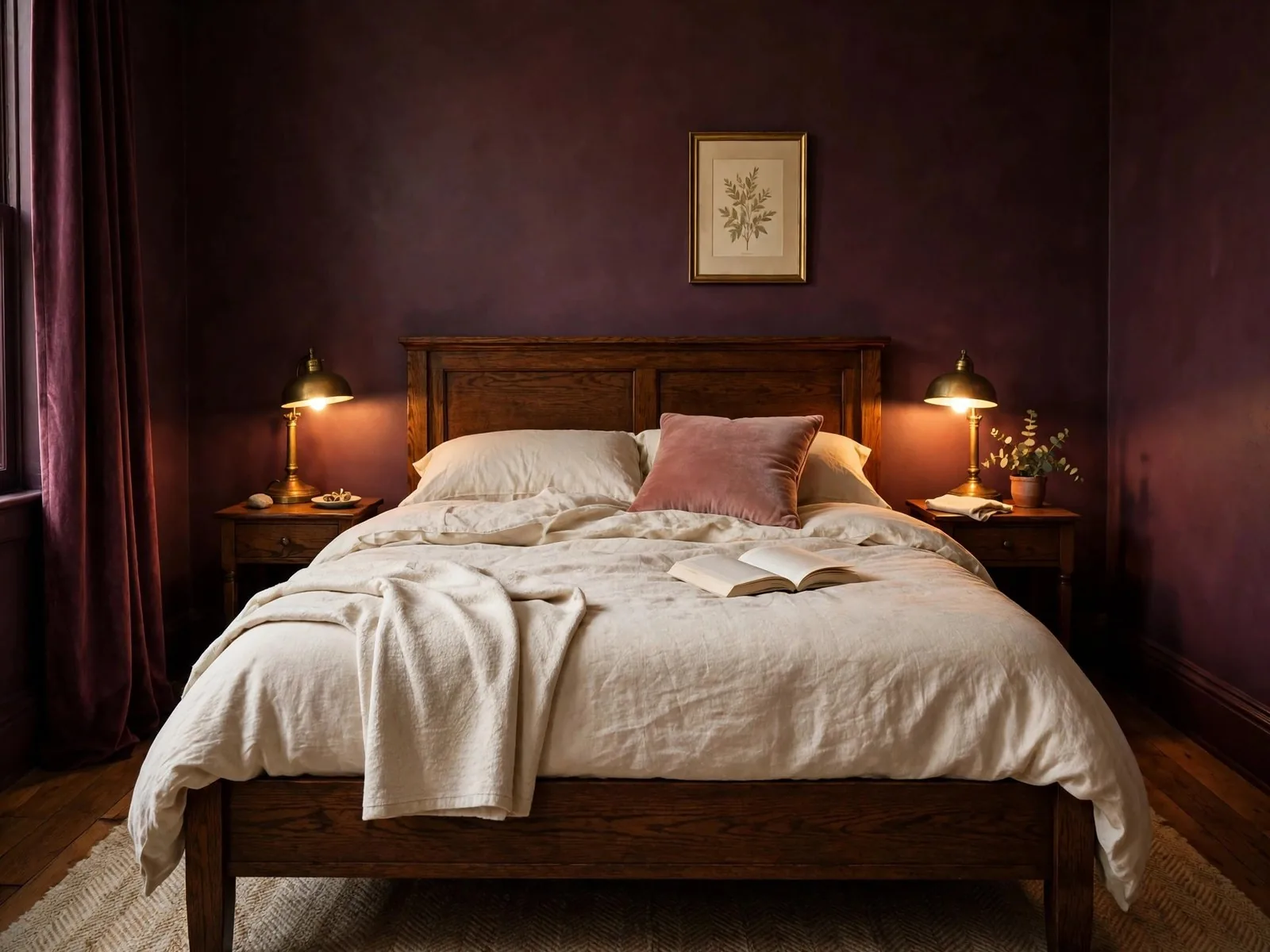
The palette line: walls in Brinjal carry the 60. The 30 is textiles in cream and dusty rose, washed linen bedding with one velvet cushion. The 10 is aged brass in the lamps and picture frames. Walnut or dark oak furniture suits it; pale pine fights the depth and loses.
The catch is undertone drift. Plums with a blue base read purple and cold in north-facing rooms. Brinjal’s brown base is the insurance. Test it on a board for a full day before the walls commit, the same board test the budget route relies on.
Budget: two sample pots and two foam boards run under $25 and settle the undertone question before a gallon is opened.
2. Go oxblood for a red with brown underneath
Oxblood is burgundy pulled toward brown, which makes it the warmest red on this page and the safest first dark for couples who disagree about red. Eating Room Red No. 43 by Farrow & Ball sits in that family: deep red, brown underneath and steady under warm bulbs.
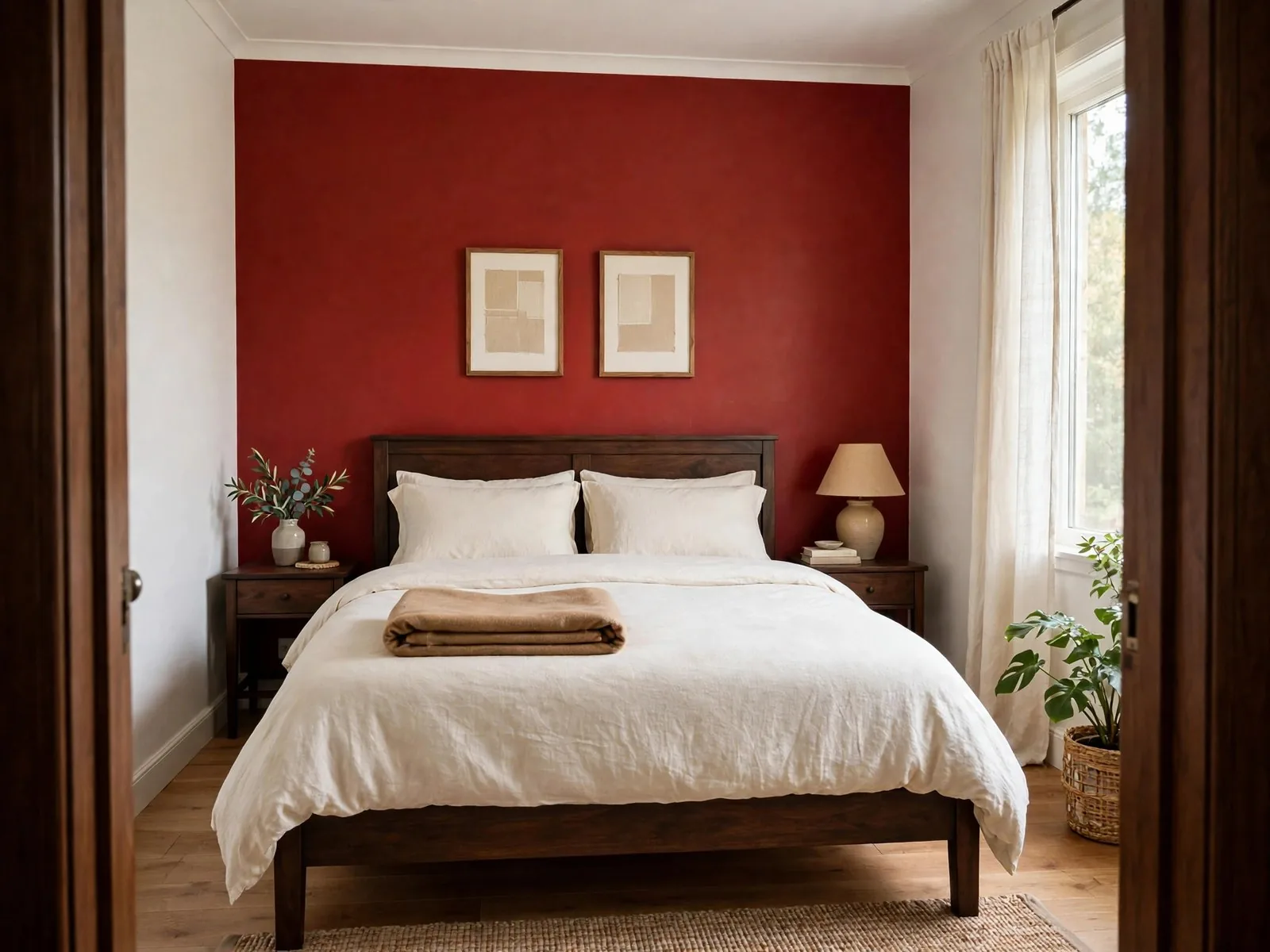
Run it on the bed wall first if four walls feel like a leap. The palette line: the wall in Eating Room Red, bedding in ivory linen, a camel wool throw as the warm mid-tone and dark wood on the bed frame and dresser. Aged brass warms it further. Black metal cools it back down, so keep black to one picture frame at most.
The catch is dose. Oxblood on every wall plus oxblood bedding tips the room from romantic to heavy. Keep the red on the walls or on the bed, never both at full strength.
Measure: one gallon covers about 350 square feet per coat, so a bed wall takes one gallon for two coats with paint left for touch-ups.
3. Pair midnight blue with brass
Midnight blue is the dark romantic palette for people who find red too warm. Hague Blue No. 30 by Farrow & Ball is a deep blue with a green note that keeps it rich rather than navy-flat. It behaves like a neutral at night and shows its color only in daylight.
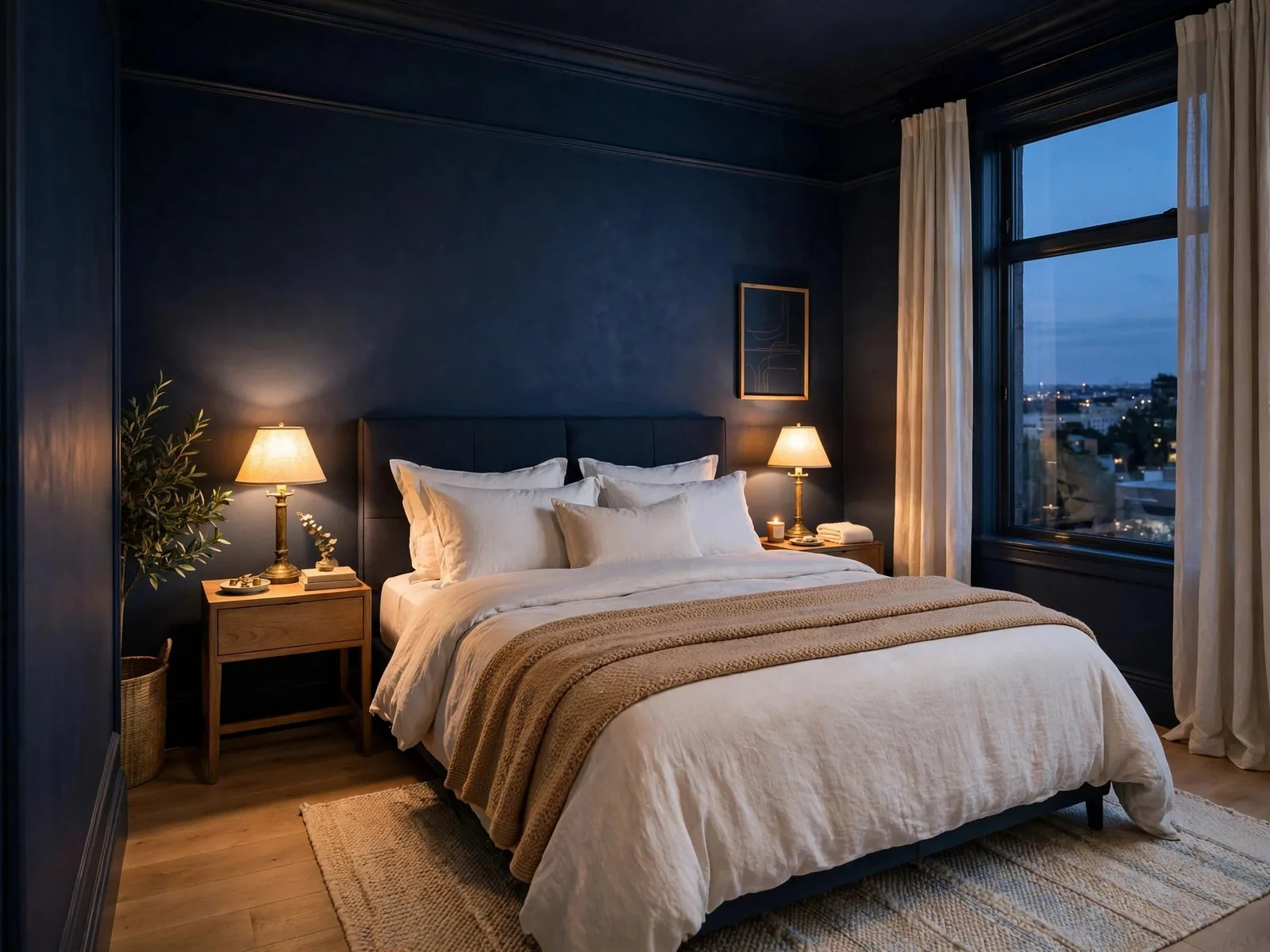
The palette line: walls in Hague Blue, bedding in warm white with one blush or camel layer, then brass everywhere metal appears. Brass is the point of this palette. Its yellow warmth against the blue is what keeps the room romantic instead of corporate. Silver and chrome push it toward an office.
The catch is daylight strength. In a bright south-facing room Hague Blue can read almost teal at noon. Sheer linen curtains soften the hit and hold the midnight reading for more of the day.
Budget: the brass layer is two lamps and a set of drawer pulls for $50 to $110. It warms any dark palette on this page.
4. Use forest green with aged brass
Forest green is the old-library dark: deep, warm and calm enough to sleep in. Studio Green No. 93 by Farrow & Ball is a near-black green that reads green in daylight and almost black by lamplight, which is exactly the shift a romantic room wants.
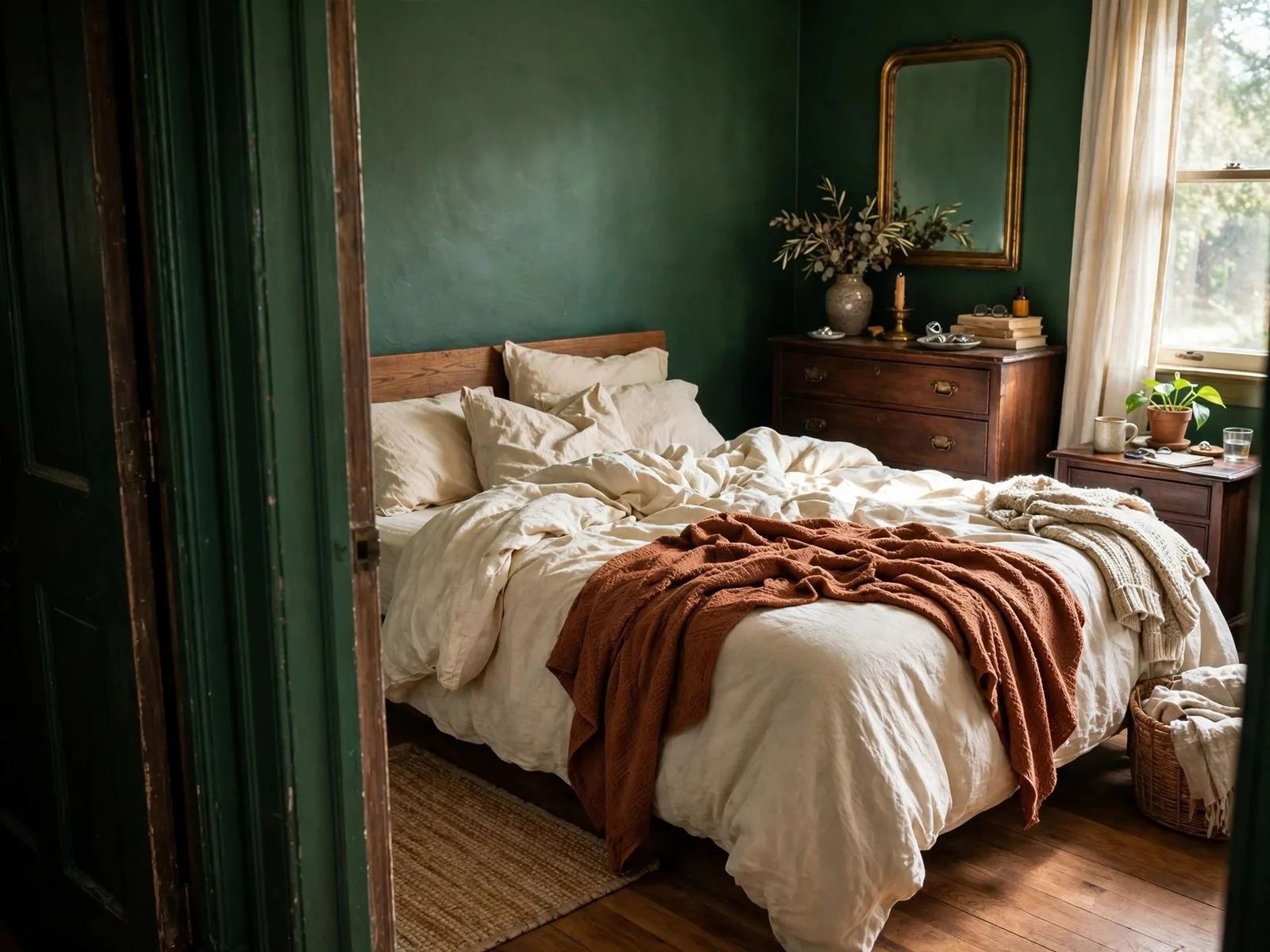
The palette line: walls in Studio Green in eggshell, bedding in cream linen with a burgundy or rust throw as the warm accent and aged brass at the lamps and mirror. Dark wood furniture disappears into this palette in a good way. Keep one pale layer on the bed or the room goes from library to cave.
The catch is green fatigue in small rooms. Four walls of near-black green in a room under 100 square feet can feel like a box. Paint the bed wall only and keep the other walls warm white; the green still sets the mood.
Measure: green darkens as it dries and darkens again at night. Judge the sample board beside the bed after dark before you order the gallon.
5. Drench the ceiling too
Color drenching takes one dark over the walls, the ceiling and the woodwork so the room has no white edges left to break the mood. Shadow 2117-30 by Benjamin Moore is a deep charcoal plum made for this job. In matte on every surface it wraps the room the way a canopy does, from above as well as around.
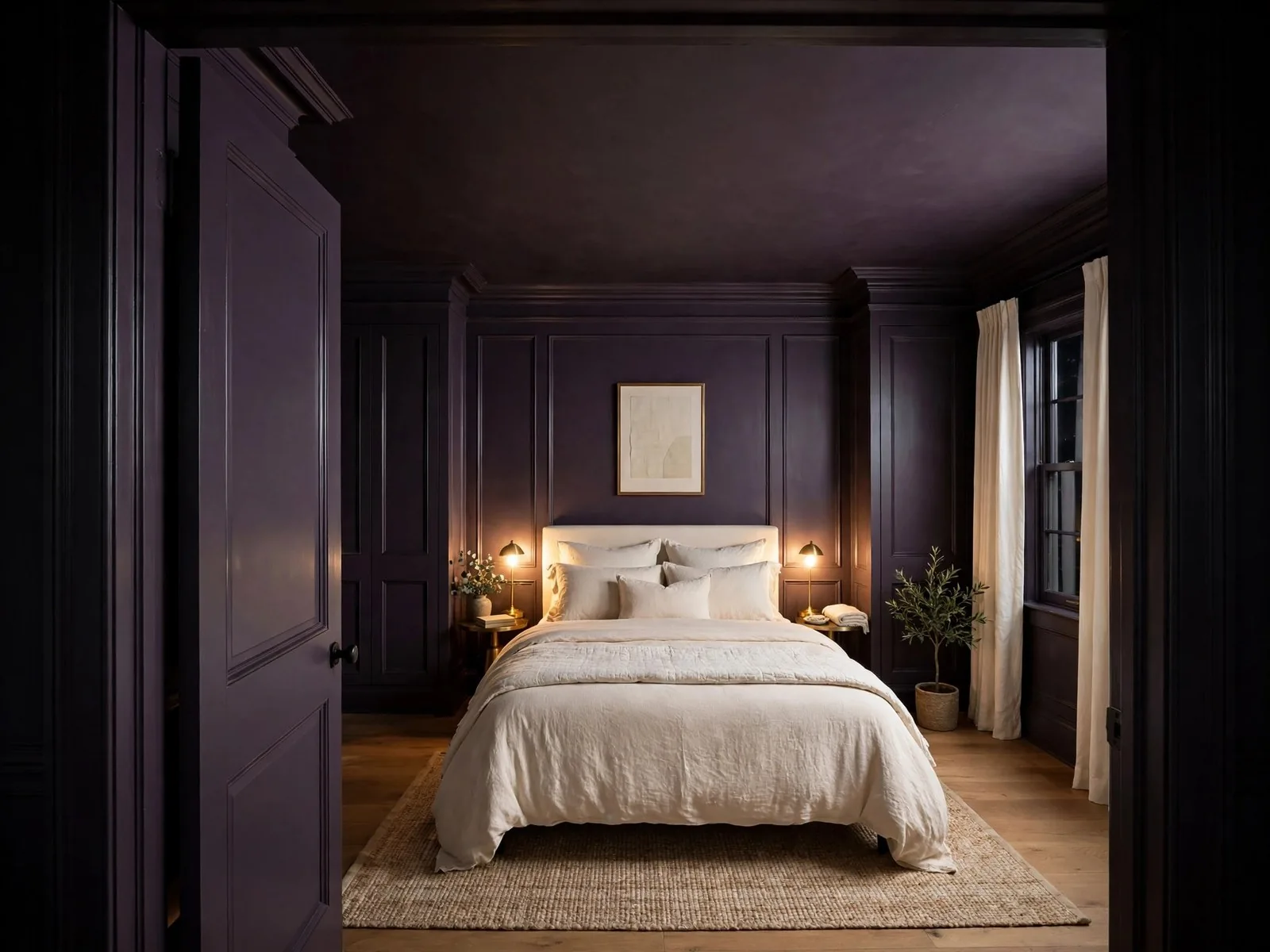
The palette line: Shadow on walls and ceiling, bedding in warm ivory with one camel layer and brass kept small and low in two bedside lamps. Skip bright blue-white bedding sets; against a dark ceiling they glow like a screen. Warm ivory is the version that sits quietly.
The catch is commitment and light. A drenched ceiling lowers the room visually, which suits high ceilings and fights low ones. Under 8 feet, stop the drench at the walls and paint the ceiling in the same color cut with half warm white. If a full room feels like too much commitment, one wall is the smaller dose and the bedroom accent wall ideas page works through it.
Measure: a ceiling adds roughly the room’s floor area to your paint math. A 12 by 14 room adds about 168 square feet, near half a gallon per coat.
Textures
Texture is what separates romantic from gothic once the paint is the same.
6. Dress the bed in velvet over washed linen
Velvet is the fabric this whole style stands on. Its pile catches light at different depths, so a velvet duvet reads rich at noon and near black at dusk without changing color. Cotton velvet in burgundy, plum or forest is the strongest single purchase on this page.

Layer it over washed linen rather than under more velvet. Linen sheets and pillowcases in ivory or stone soften the velvet’s formality and stop the bed reading as a costume. The order that works: linen against the skin, velvet as the cover, one linen or wool throw folded at the foot.
The catch is heat and care. A full velvet set sleeps warm, which suits cold rooms and fights hot ones. In a warm climate keep velvet to the throw and two cushions and let linen carry the bed.
Budget: a cotton velvet duvet cover set runs $60 to $120 in mid-range bedding lines, the cost of one painted wall with no permission needed.
7. Hang heavy drapes from ceiling to floor
Drapes do three jobs in a dark room. They frame the window in the room’s deepest fabric, they soften the wall of glass that reflects lamplight back as glare and they give the eye a vertical line that makes the ceiling feel higher. Velvet or heavy linen both work. Thin cotton does not.
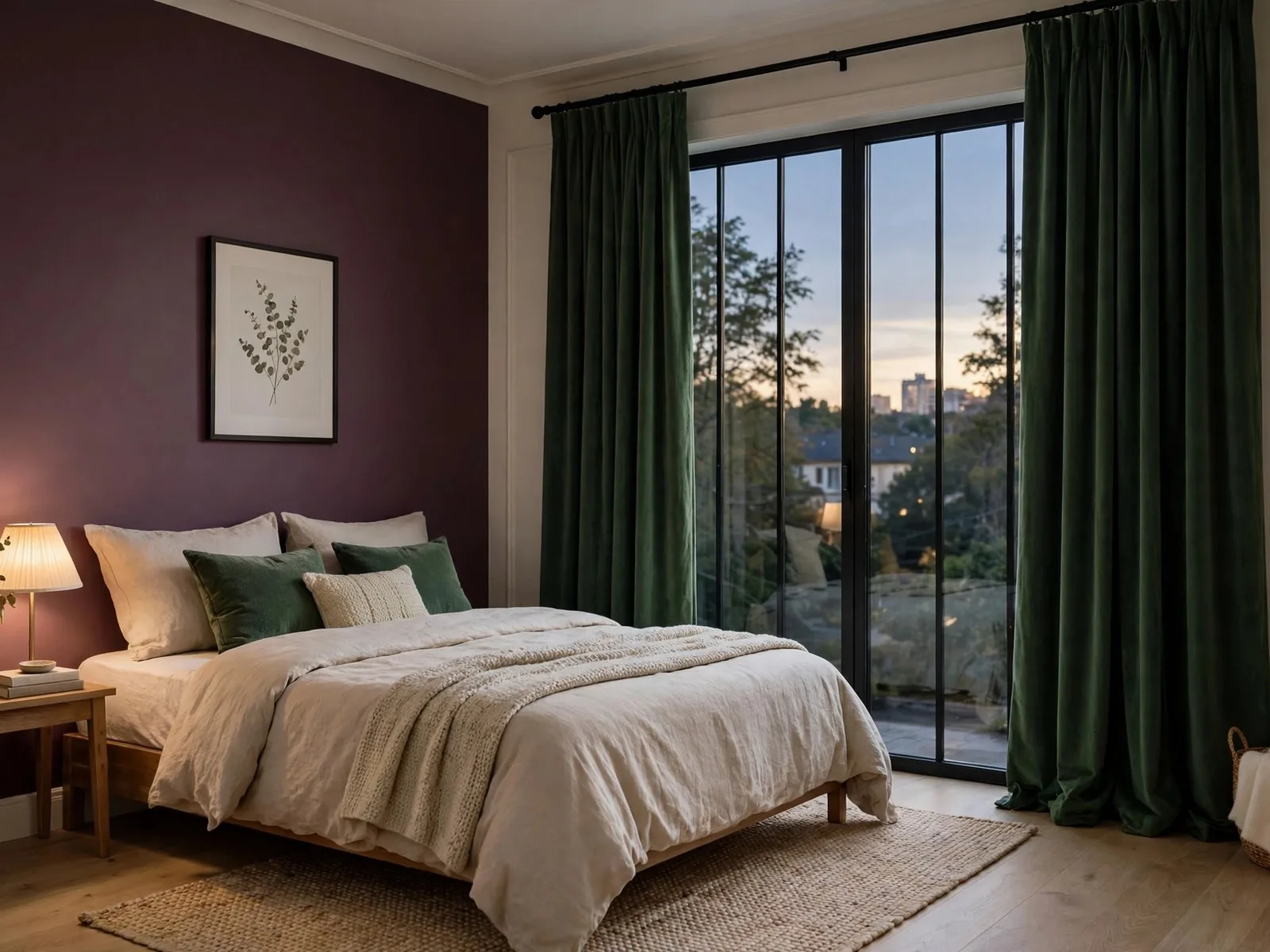
Hang them high and wide. The rod goes four to six inches above the frame and extends six inches past it on each side, so the open panels cover wall rather than glass. Panels should kiss the floor. A pair that stops at the sill cuts the room’s height in half visually.
The catch is light control. Heavy drapes in a dark color absorb the window’s daylight as well as its glare. In a north-facing room choose lined linen in a mid tone and keep the full velvet for the bed.
Measure: buy panels at twice the window width for a full gather. A 48-inch window wants about 96 inches of fabric across the pair.
8. Lay a deep-pile rug under the bed
Bare floor is the hardest surface in the room and the one your feet meet first. A deep-pile rug in a faded Persian pattern or a plain long-pile wool takes the echo out of a dark room and gives the palette a floor-level layer that paint cannot.
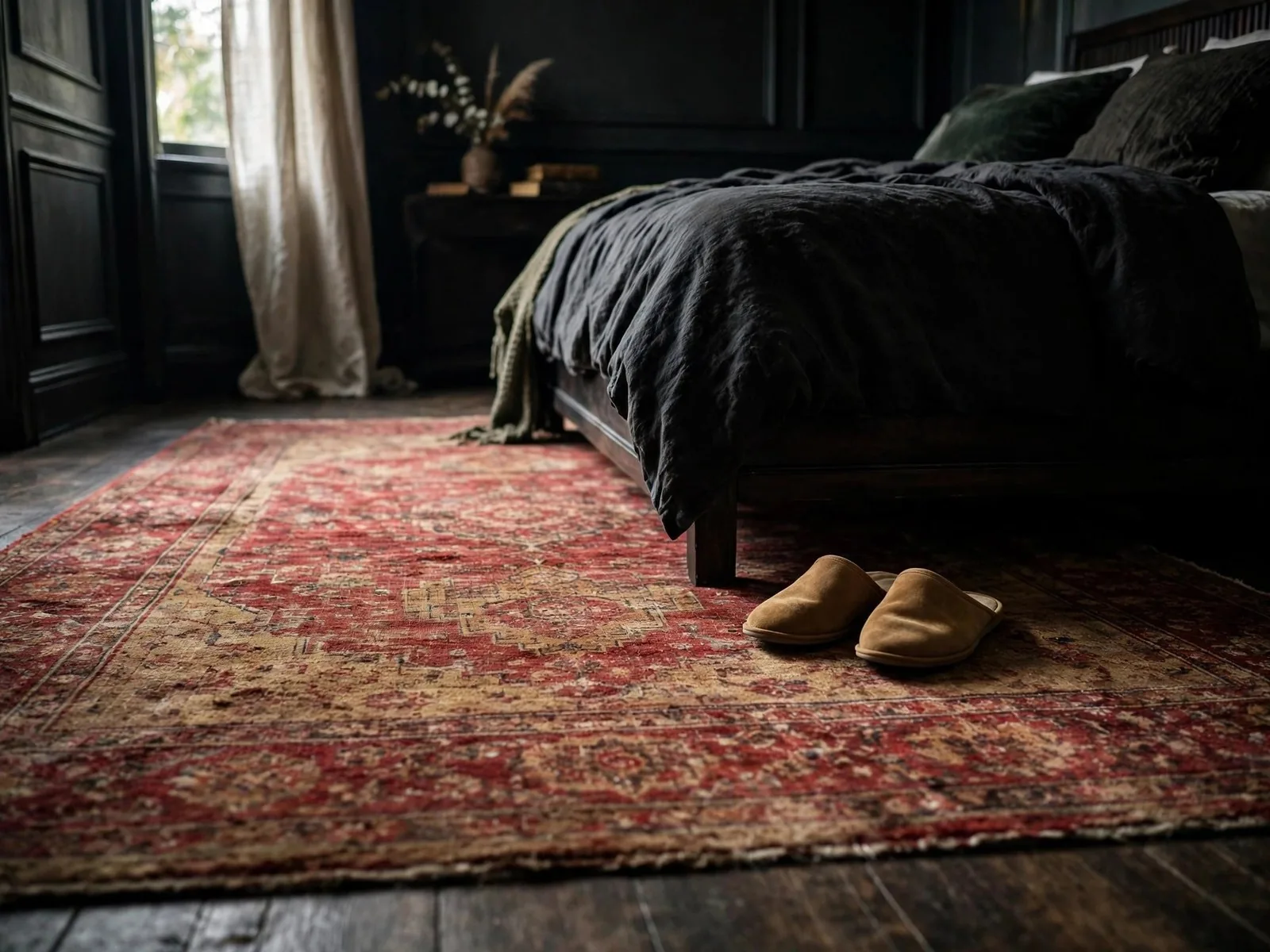
Size it against the bed, not the room. The rug should extend at least 18 inches beyond the sides and the foot of the bed, so the first steps land on pile. An 8 by 10 rug under a queen bed is the usual answer. A small rug floating at the foot reads as a bath mat at this scale.
The catch is pattern temperature. A cool grey rug cools every warm dark on this page. Stay in the faded red, camel and brown family and the rug quietly agrees with all five palettes.
Measure: an 8 by 10 rug under a queen bed leaves about 18 inches of pile on each side, which is the minimum for a soft landing.
The bed
The bed is the largest surface in the room, so it carries the mood.
9. Hang a fabric canopy over the bed
A canopy is the fastest route to romantic that exists, because it builds a smaller and softer room inside the room. You do not need a four-poster. Two ceiling hooks and a length of sheer or linen fabric draped over the head of the bed give the same enclosure for a fraction of the cost.
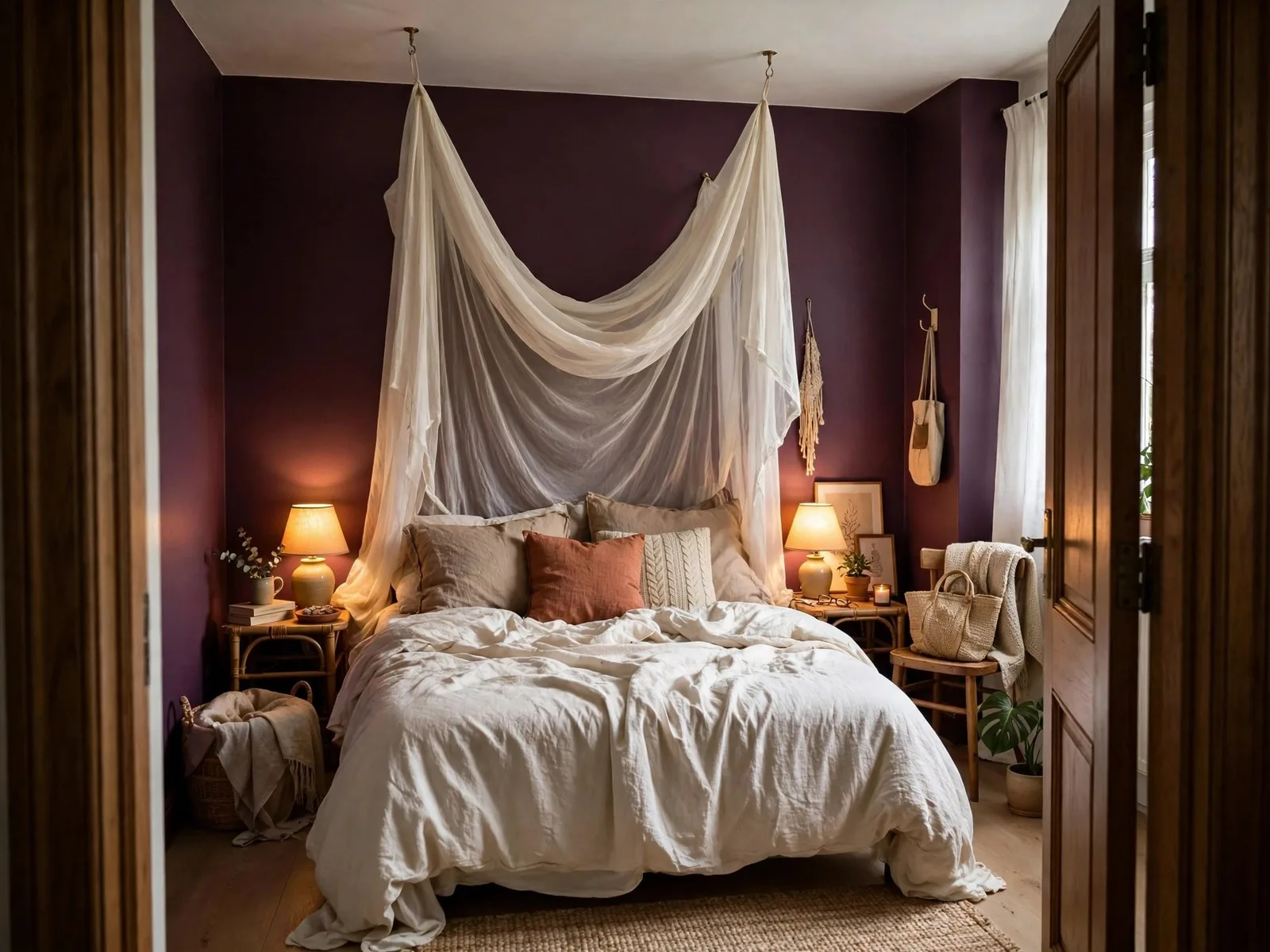
Keep the fabric light in color even in a dark room. Ivory or blush sheers glow against deep walls when the lamps are on and they read as mist rather than tent. Heavy dark fabric over the bed swallows the light and the sleeper with it.
The catch is dust and height. Fabric over a bed collects dust, so choose a weave you can shake out or wash monthly. Keep the drape at least 12 inches clear of any ceiling light fitting.
Renter-friendly: two small ceiling hooks or adhesive hooks rated for the fabric weight leave pinholes at most. Every part of this idea leaves with you.
10. Choose a tall upholstered headboard
A tall headboard gives a dark room its focal point and its softest wall in one piece. Velvet upholstery in the wall color or one shade lighter makes the bed read as part of the architecture. A plain rectangle or a gentle arch suits this style. Scrolls and deep buttons date it.
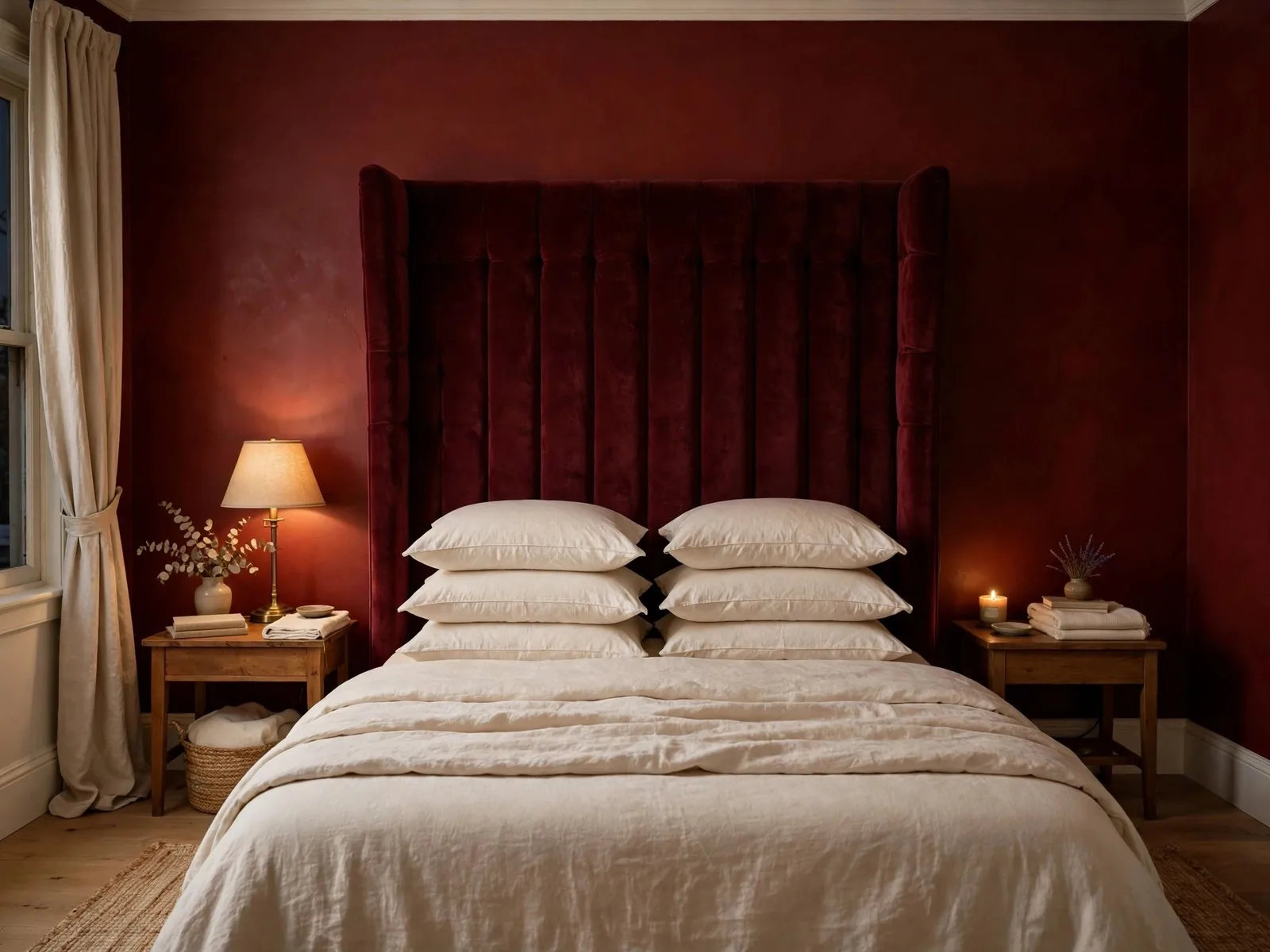
Size it with intent. The headboard should run at least two inches wider than the mattress on each side and rise 24 to 30 inches above the mattress top, so the upholstery shows above stacked pillows. The headboard ideas page covers shapes, heights and fabrics across styles.
The catch is matching velvet to paint. A headboard one shade off the wall looks like a mistake at close range. Either match it exactly with a fabric sample against the dried paint or step it two shades lighter on purpose.
Measure: mattress width plus four inches is the minimum headboard width. For a queen at 60 inches wide, that means 64 inches or more.
11. Furnish in dark wood
Dark wood is the material that gives this style its age. Walnut, mahogany tones and stained oak carry warm brown underneath, which is why they sit calmly beside plum and oxblood where pale pine looks raw. One substantial piece, a dresser or a wardrobe, does more than a matching set of small ones.
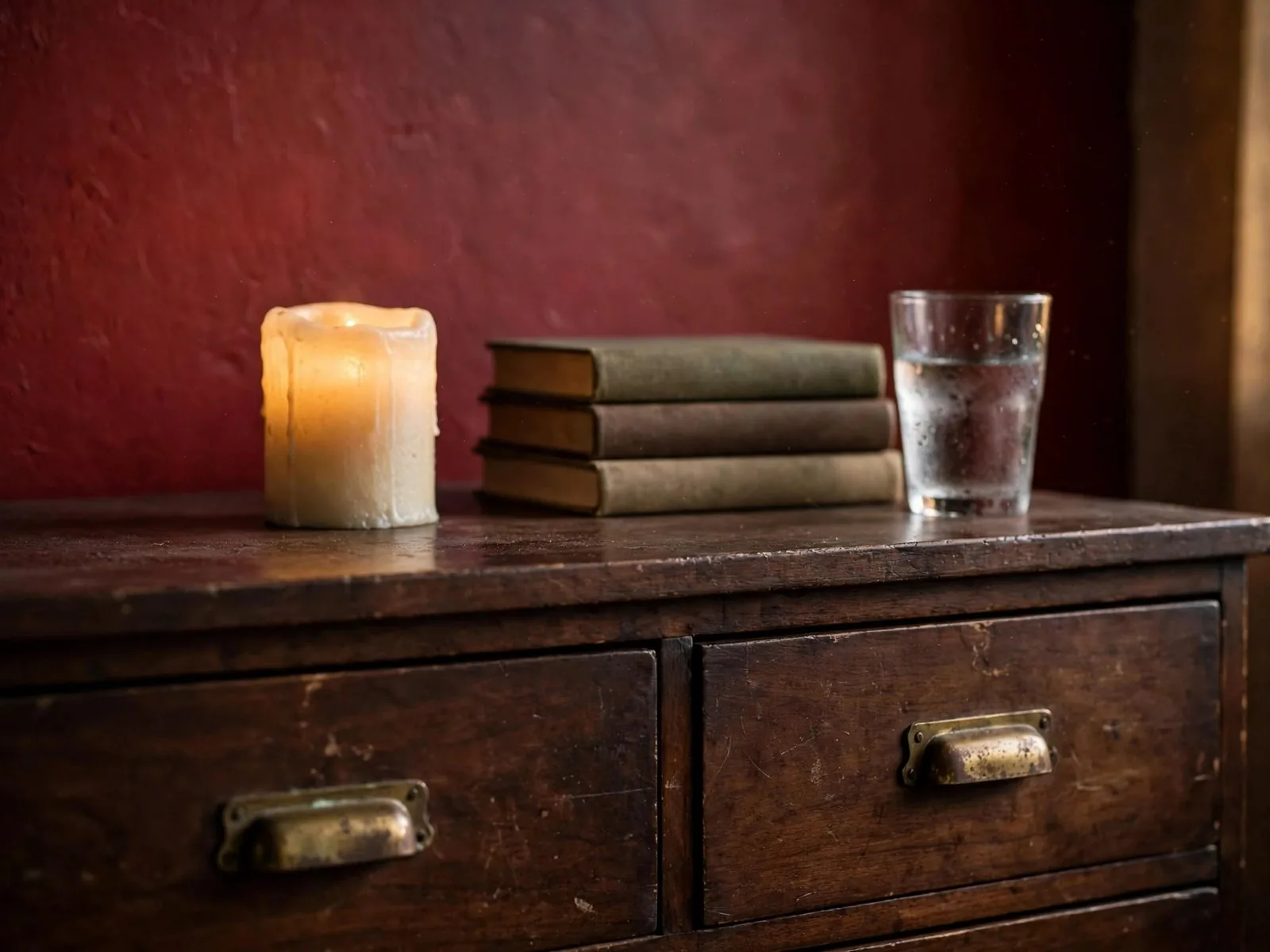
Secondhand is the natural source. Solid dark wood furniture is unfashionable enough to be cheap and built well enough to outlast the room. Check drawer runners and legs, then let one cleaning and one coat of wax do the rest. Paint-grade pieces can be stained darker; veneer cannot, so test an unseen corner first.
The catch is total darkness. Dark wood against dark walls with a dark bed can flatten into one brown-black mass. Keep the bedding pale and keep the mirror from idea 15 in the room, so the wood reads as furniture rather than shadow.
Budget: a solid secondhand dresser runs $80 to $200 in most cities, less than its flat-pack equivalent and heavier in every sense that matters.
Light and atmosphere
Dark rooms are lit into romance, not painted into it.
12. Light the room with flameless candles
Candlelight is the light this style is named for and flameless candles deliver it without a flame near drapes or bedding. Current versions flicker at the right speed and come in real wax, so at bed distance the difference is the smell, not the look. Group them in threes at bed height or below: a cluster on the dresser and one on each nightstand.
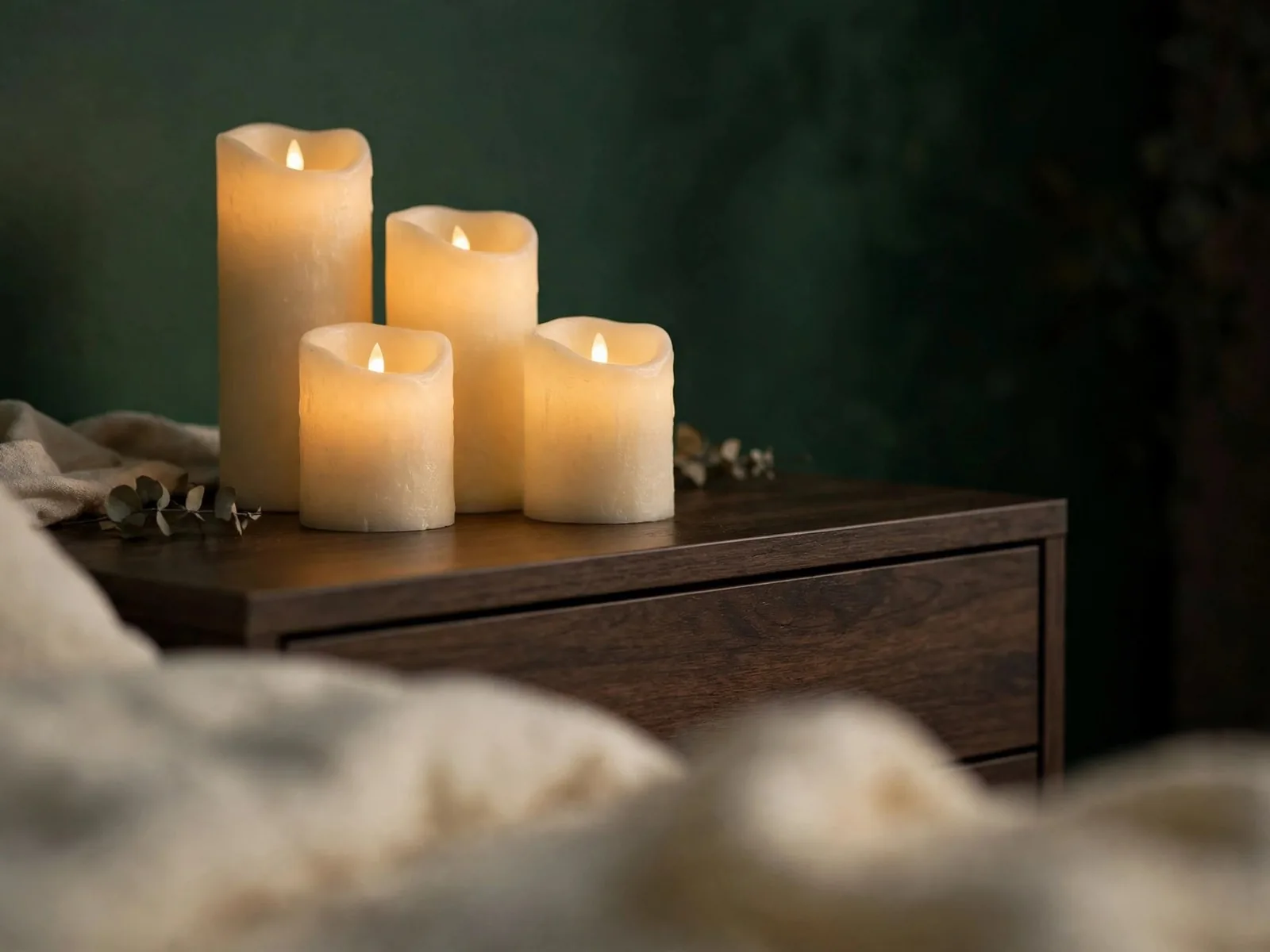
Placement matters more than count. Light that sits low wraps the bed and leaves the ceiling in shadow, which is where the mood lives. A candle display on a high shelf reads as a shop window instead. Keep them off the bed itself and off any fabric surface.
The safety point is plain. Fire guidance is consistent that real candles belong away from drapes, bedding and anything that can burn. They should never be left burning while you sleep either. Flameless candles remove that whole category of risk, which is why they are the version this page recommends.
Budget: a set of six real-wax flameless candles with a timer runs $20 to $35 and replaces the room’s harshest light tonight.
13. Hang one dramatic fixture
Every dark room needs one piece of light that is also furniture: a small chandelier, a smoked glass pendant or a brass lantern over the room. It gives the ceiling a reason to exist in a drenched room and it throws patterned light that flat fittings cannot.
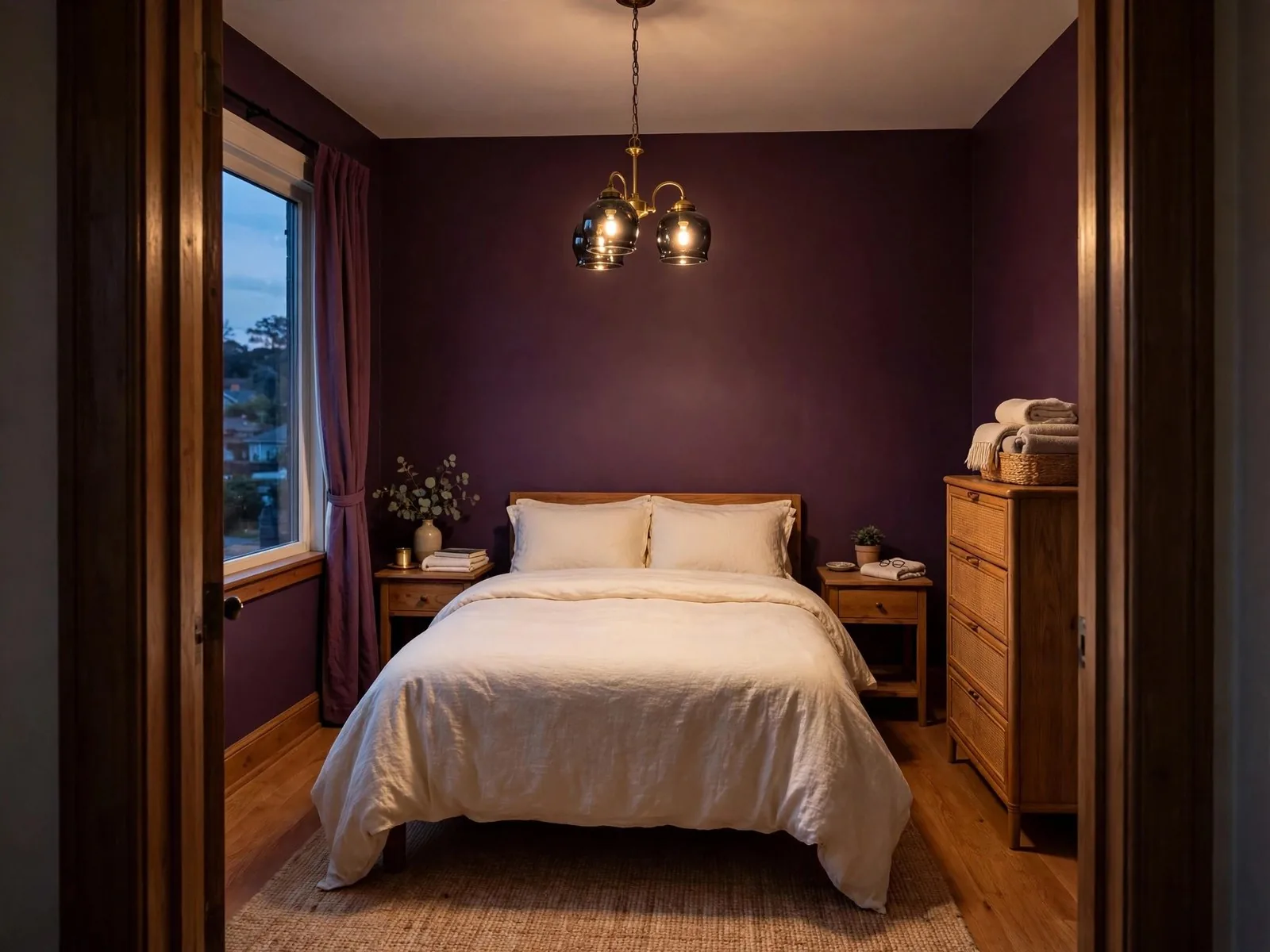
Scale it to the bed rather than the room. A fixture 20 to 30 inches across suits most bedrooms. On a low ceiling, hang it over the foot of the bed rather than the middle of the room, so it lights the bed without hanging over a sleeper’s head.
The catch is wiring. A hardwired swap is a junction box job. Renters and the cautious should use a plug-in pendant on a ceiling hook with a cord cover, which gives the same silhouette with no electrician.
Needs drilling: a hardwired fixture mounts to the ceiling box and may need an electrician. The plug-in version needs one hook and a cord channel.
14. Put every lamp on 2700K and a dimmer
Color temperature decides whether a dark room feels warm or feels broken. 2700K is the warm end of household bulbs, close to candlelight in tone. Anything above 3000K strips the red out of plum and burgundy and leaves them brown. Fit 2700K bulbs in every lamp before you judge any paint on this page.
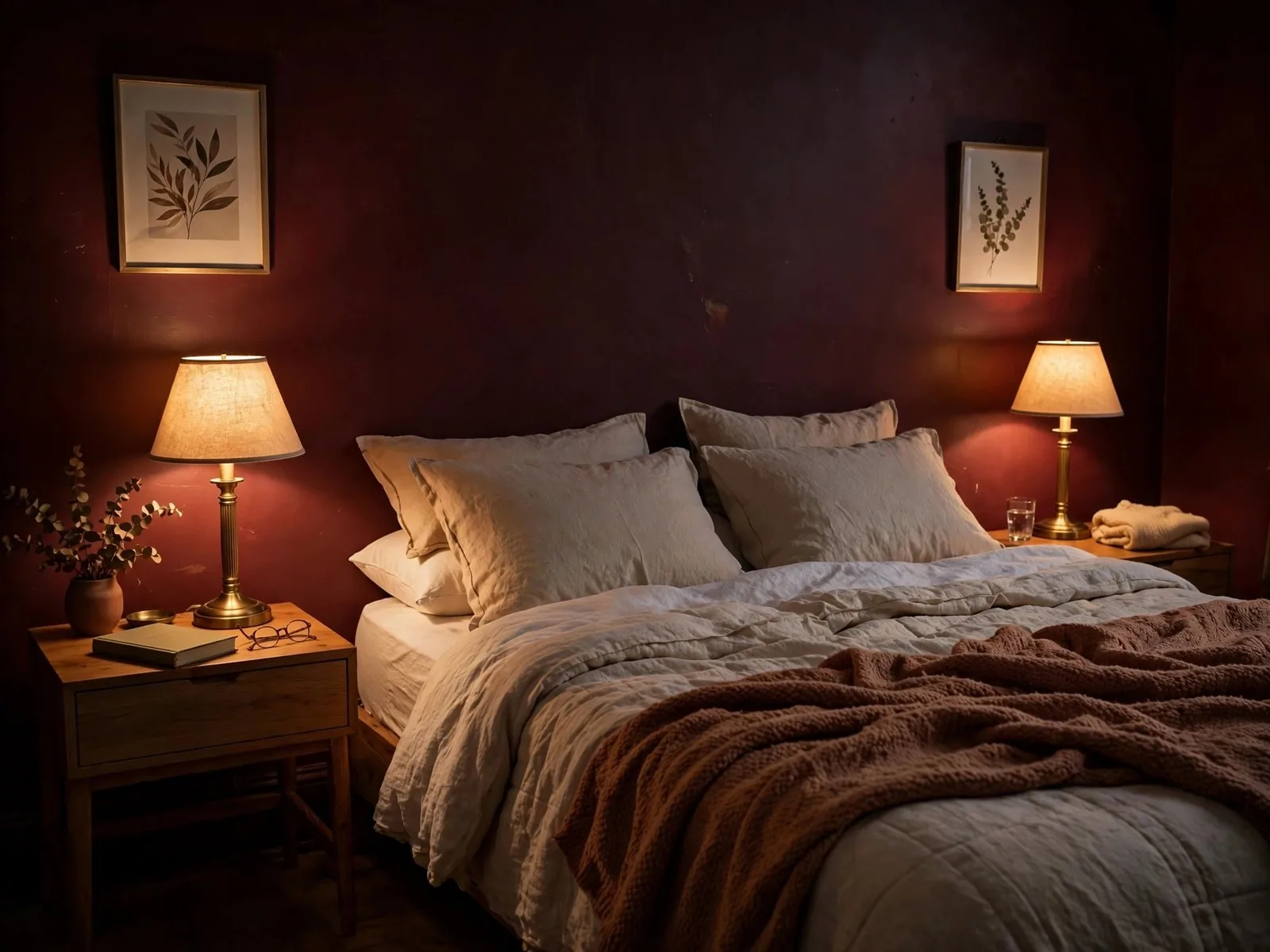
Dimmers finish the job. A lamp at full brightness in a dark room is a spotlight. The same lamp at half power is atmosphere. Plug-in dimmers sit between the lamp and the outlet, so no rewiring is involved. The bedroom lighting ideas page works through lamp height and bulb choice in full.
The catch is mismatched bulbs. Two lamps at 2700K and one at 4000K in the same room fight all evening. Replace bulbs in sets, including the one in the ceiling fitting you rarely use.
Budget: four 2700K bulbs and two plug-in dimmers run under $40 in total and change the room before any paint does.
15. Add an antique mirror
A mirror is the hardest-working object in a dark room. It doubles every low light source near it, so two flameless candles become four points of glow. It also gives deep walls the one bright rectangle they need. An antique or antique-look frame in worn gilt keeps it on the romantic side of the line.
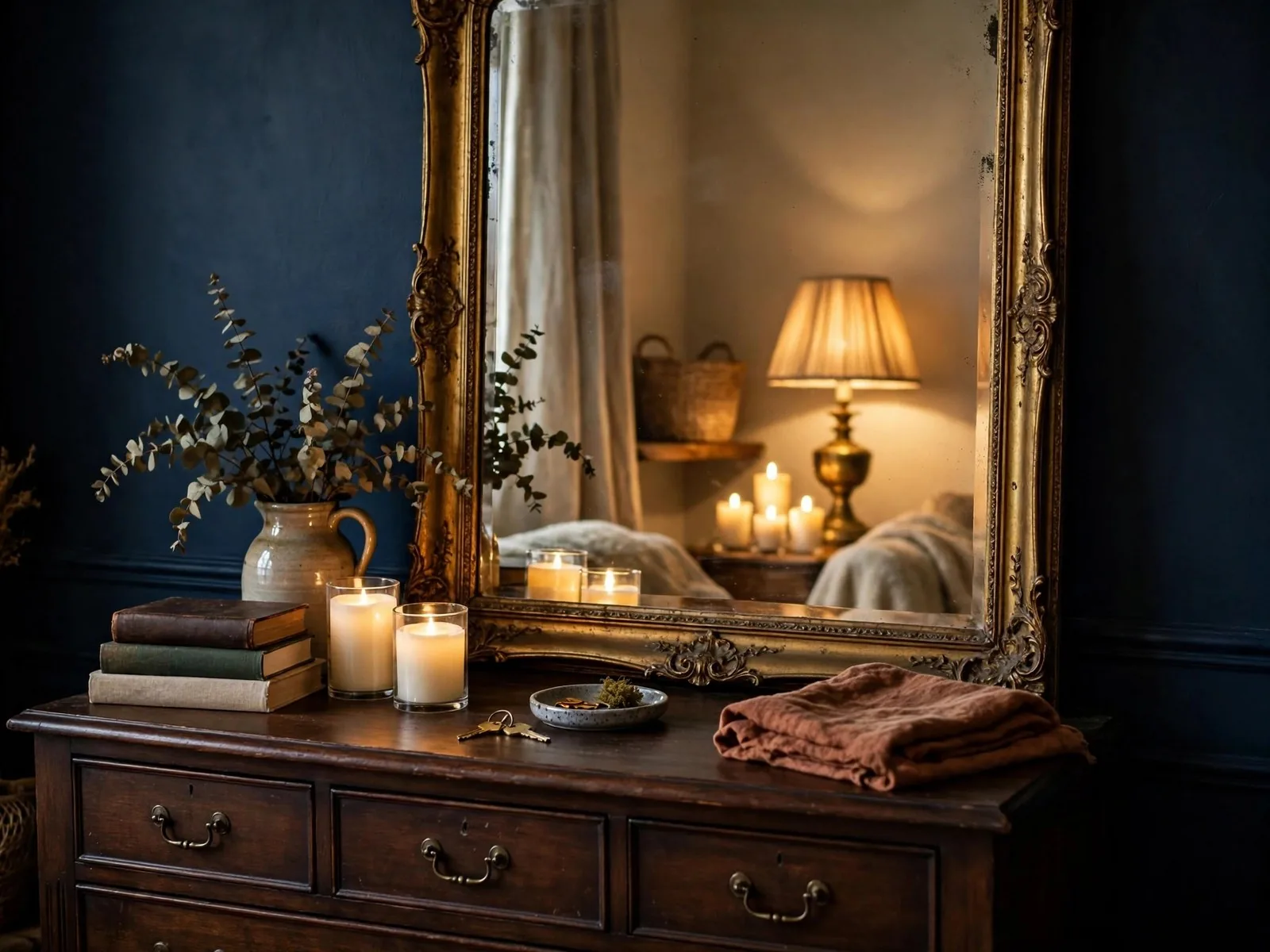
Hang it where it reflects light, not clutter. Opposite or beside a lamp is right. Opposite the closet door or the laundry chair is a mirror doing the wrong job beautifully. A leaner mirror on a dresser is the renter version and reflects the same glow at an angle.
The catch is the glass itself. Genuinely old mirror glass is foxed and dim, which suits this style at reading distance and fails as a getting-ready mirror. Keep a clear small mirror in a drawer for the practical jobs.
Budget: antique-look mirrors run $40 to $120 secondhand depending on size. One over the dresser replaces a whole category of wall decor.
Finishing touches
The last layer is small, personal and easy to overdo.
16. Bring in dark florals
Florals keep a dark room from taking itself too seriously. The dark versions, peonies, roses and ranunculus in plum, wine and blush, sit inside the palette instead of interrupting it. One arrangement on the dresser or a dark floral print on the bedding is the dose. A floral wallpaper, a floral duvet and fresh flowers together is a theme park.
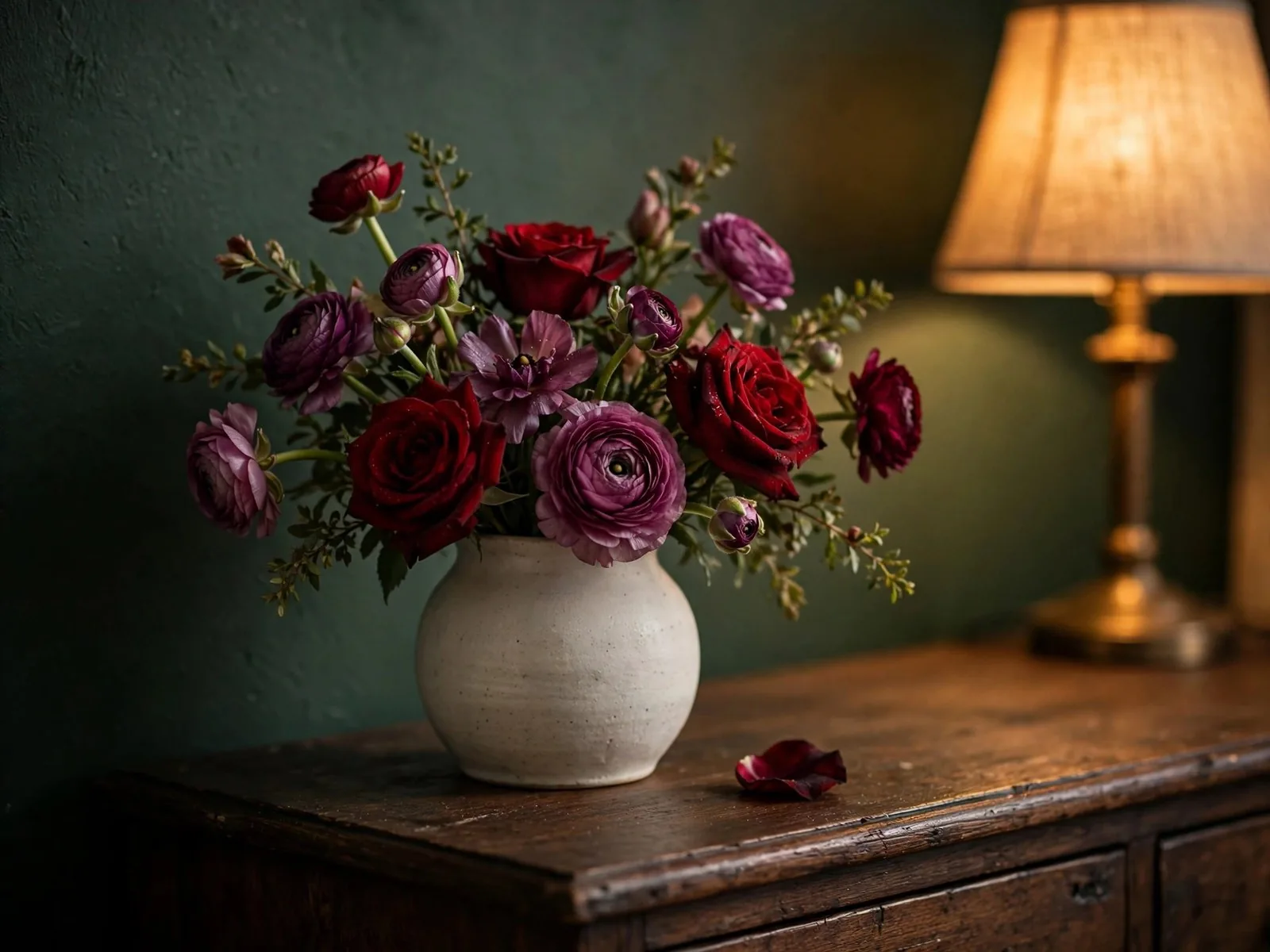
Real flowers are the short-lived luxury version. A grocery bunch of deep red roses or plum tulips costs little and lasts a week. Put them where the lamplight reaches them, because dark petals in a dark corner disappear.
The catch is sweetness. Pink pastel florals pull the room toward girly rather than romantic. Stay in the wine and plum family and keep the arrangement loose rather than sculpted.
Budget: one grocery bunch a week runs $8 to $15. A dark floral cushion cover does the same job permanently for about $20.
17. Use dried flowers for the zero-upkeep version
Dried flowers give the same soft silhouette as fresh ones with none of the weekly cost. Pampas, dried roses and bunny tails in a ceramic or brass vase hold their shape for a year or more and their faded tones were made for this palette.
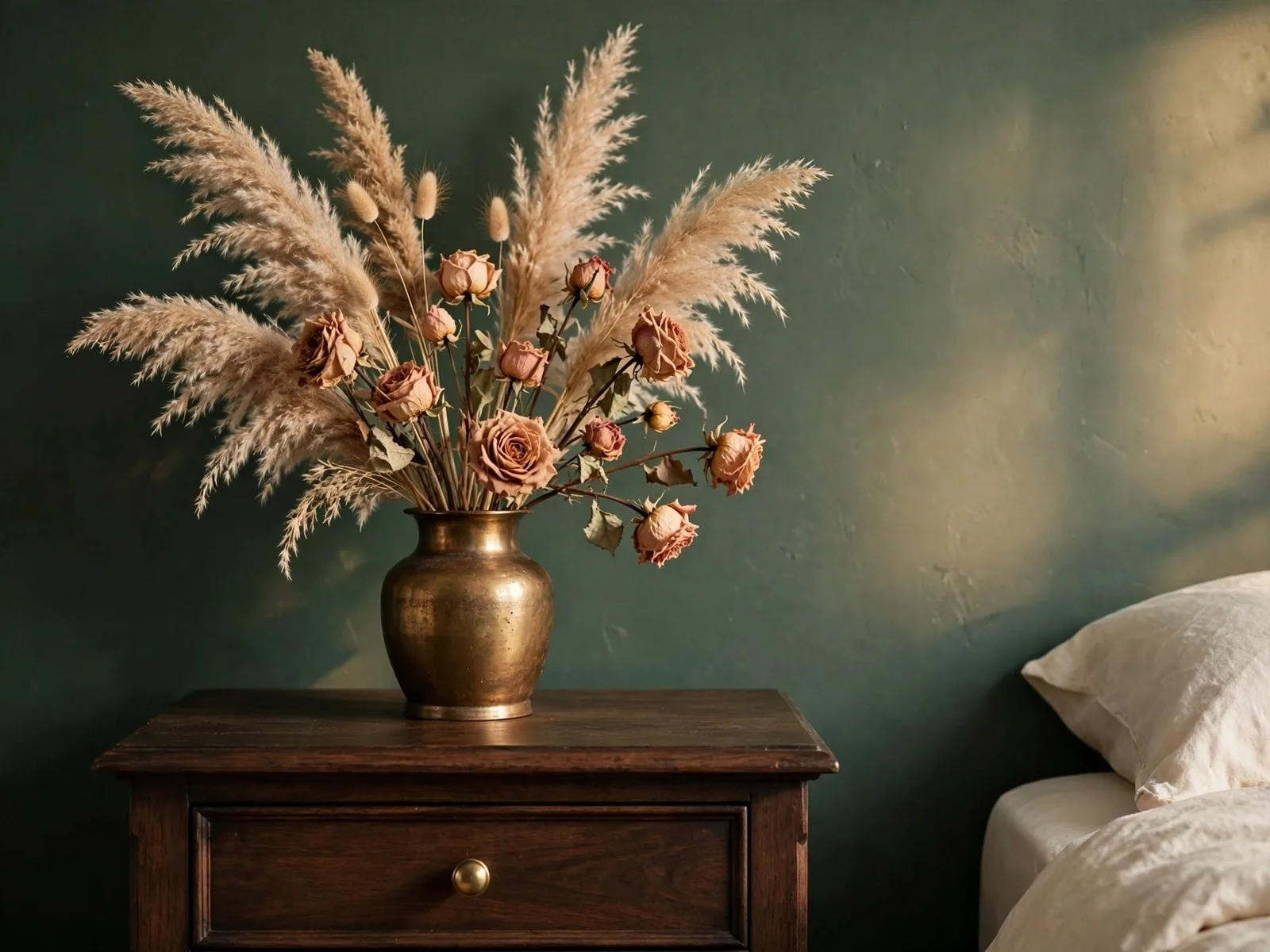
Keep them out of direct sun, which bleaches them to grey. Dust them with a hairdryer on cool every few months. A dried arrangement on the nightstand leaves the dresser free for the mirror and candles from ideas 15 and 12.
The catch is quantity. One vase reads as a texture. Four vases read as a craft fair. This style wants one arrangement per room, placed where the light is.
Budget: a dried bunch runs $15 to $30 and outlasts a year of weekly fresh flowers by a wide margin.
18. Hang moody art in gilt frames
Dark rooms take art that pale rooms cannot: moody landscapes, old portraits and still lifes with deep backgrounds. A gilt frame is the signal that separates romantic from gothic here. The gold warms the dark image and echoes the brass in the palettes.
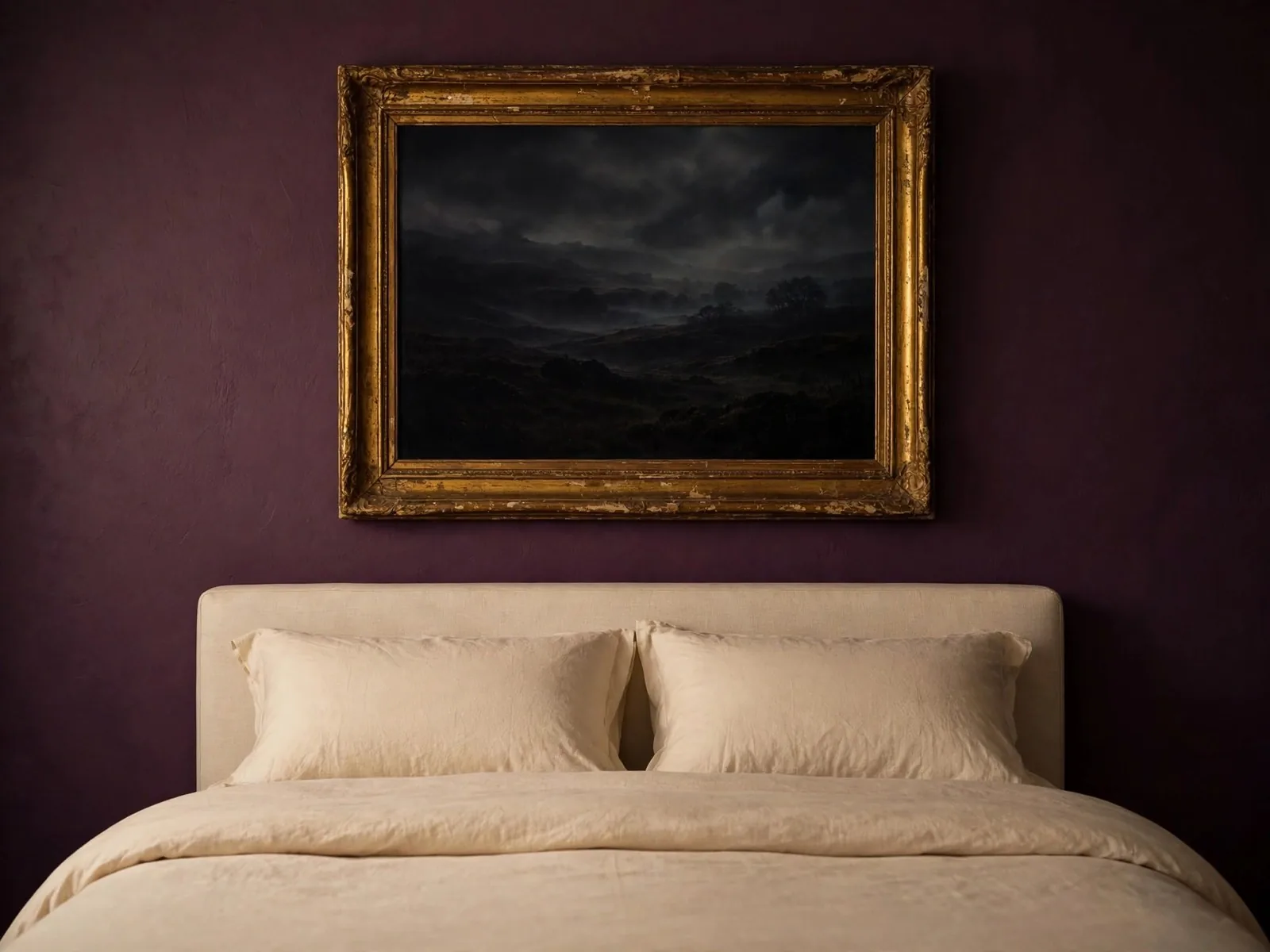
One large piece over the bed beats a gallery of small ones. Aim for a frame about two-thirds the width of the bed. Secondhand shops and estate sales price gilt frames below the cost of the print inside them. A modern print in an old frame is the whole trick.
The catch is subject creep. Skulls, antlers and occult imagery push the room across the gothic line faster than any paint. Landscapes and portraits keep the mystery without the costume.
Measure: for a queen bed at 60 inches, a frame near 40 inches wide holds the wall. Smaller pieces should group to the same total width.
19. Keep the tech out of sight
Nothing breaks the 10 p.m. hotel feeling faster than a glowing router and a tangle of white chargers. Route charging into a drawer or a lidded basket on the nightstand, run cords behind the furniture and put the phone face down after the alarm is set.
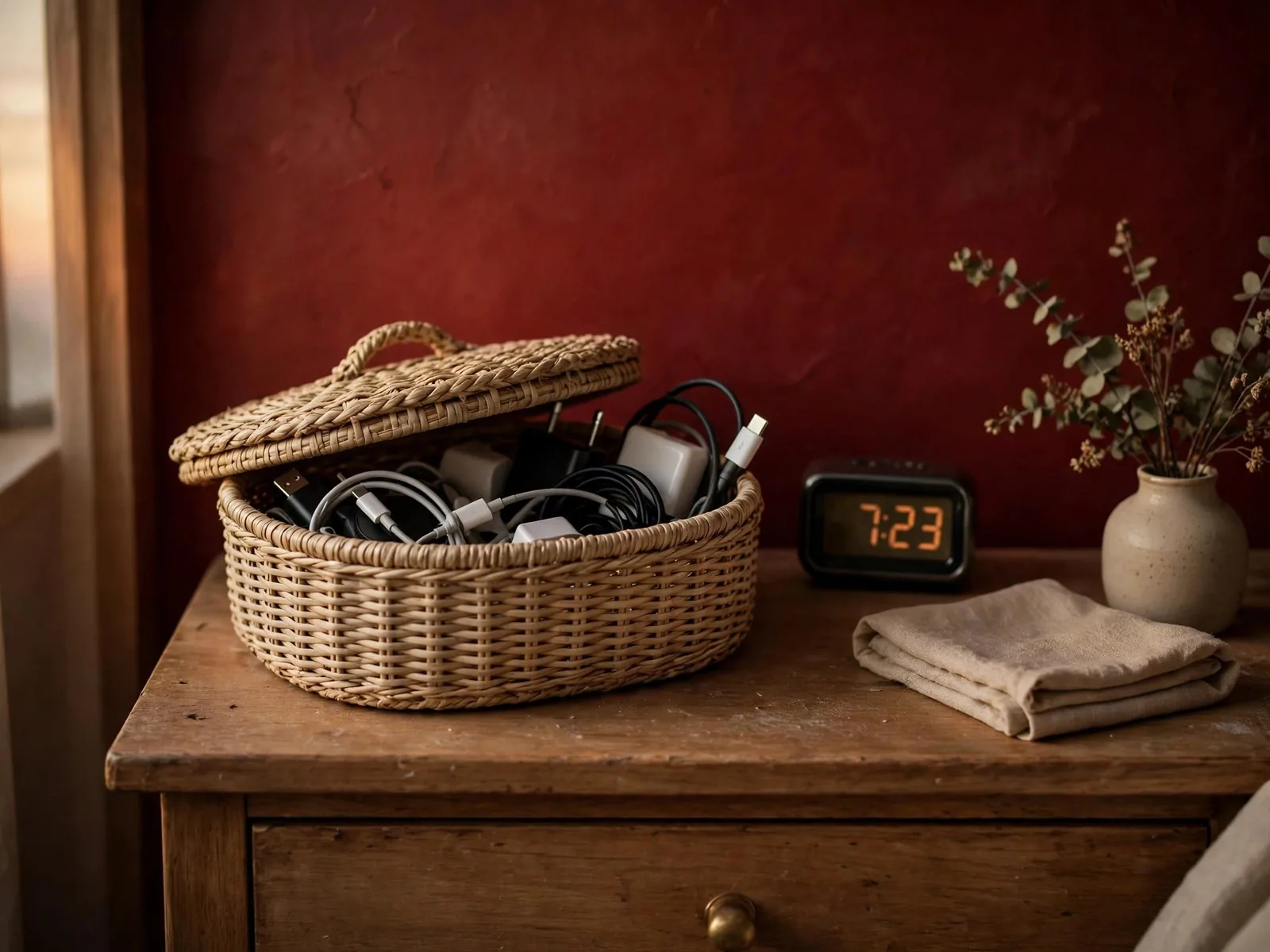
The television question decides itself by size. A large bright screen is a second window that reflects every lamp and flattens the dark walls behind it. If it stays, a dark wood or gilt frame around it and a dark painting as the idle screensaver keep it inside the palette. If it goes, the wall it leaves is the right home for the mirror from idea 15.
The catch is alarm practicality. A phone banished to a drawer still needs to be heard. A small alarm clock with a dim amber display is the old answer and it costs less than the charging basket.
Budget: a lidded charging basket and two cord covers run under $30 and remove the room’s most modern sight in ten minutes.
20. Balance the dark with one warm light color
The final idea is the one that keeps all the others working. A dark romantic room needs one warm light color, cream or camel, carried through the bedding and one or two other pieces. It gives the eye a resting place and it is the difference between a room that feels deep and a room that feels like a cave with furniture in it.
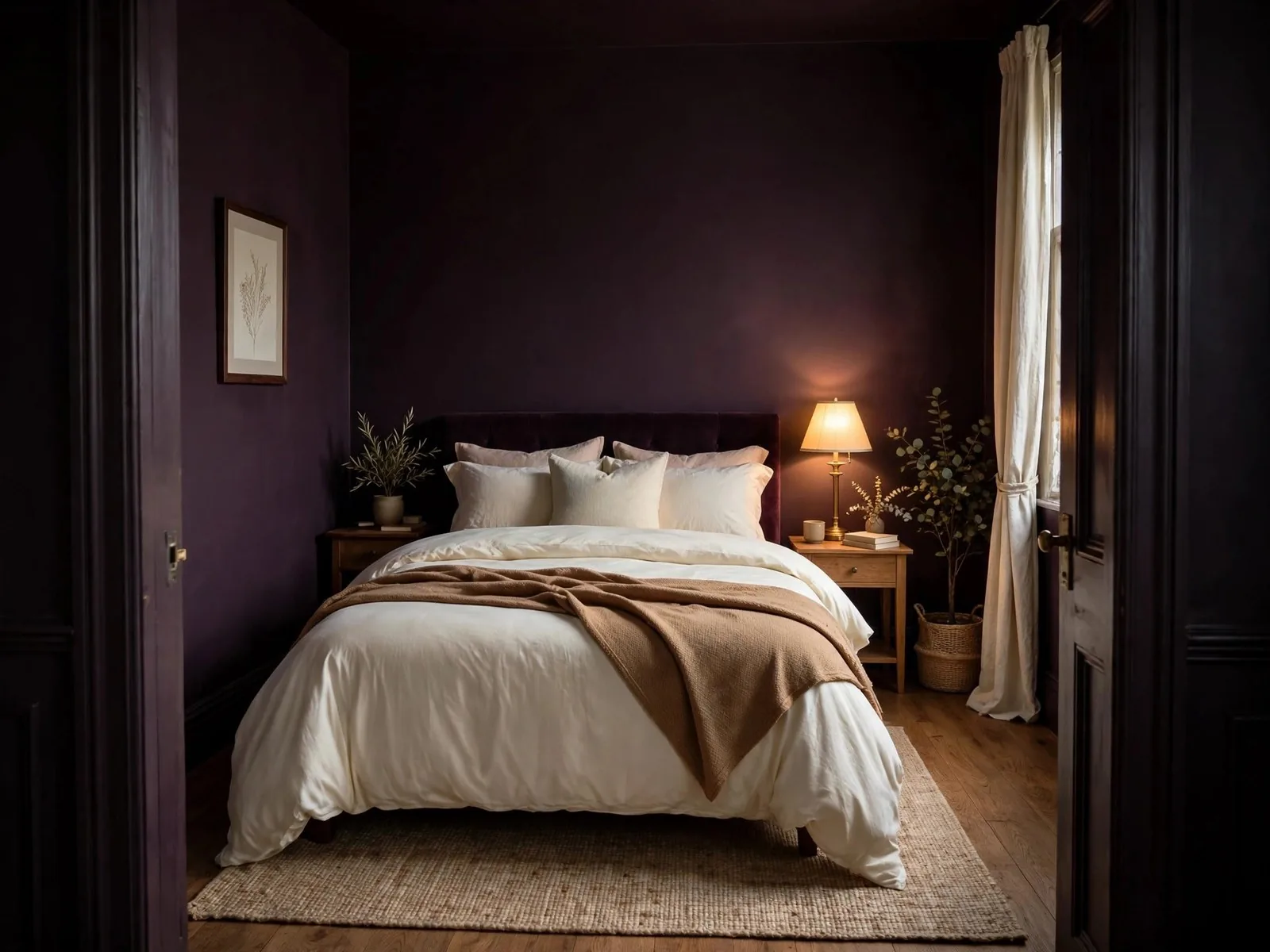
The proportion is roughly a third of what you see when you stand in the doorway. Cream bedding alone often covers it. Add a camel throw or pale cushion covers if the bed is dressed dark. What matters is that the light layer is warm. Blue-white bedding against dark walls reads as a hospital sheet and breaks every palette on this page.
The catch is spreading it too thin. A single white cushion in an all-dark room looks lost rather than balanced. Group the light color in two or three connected pieces so it reads as a layer.
Measure: stand in the doorway and squint. If the pale layer is not the second thing you see after the bed, add one more piece of it.
Dark romantic bedrooms for your situation
For couples
Build the room around two readers rather than one sleeper. Two lamps on two dimmers from idea 14, one at each side of the bed, end the brightness argument. Burgundy from idea 2 and midnight blue from idea 3 are the palettes couples split on least, because both stay warm at lamp level. Split the difference the way the palettes do: dark walls, soft bedding and one antique piece neither of you has to defend. The master bedroom ideas page builds whole rooms at this scale.
Renting or on a budget
Paint is the only locked door here. The renter route runs through idea 6 for the velvet and linen bed, idea 8 for the rug, idea 9 for the canopy and ideas 12 and 14 for the candlelight and dimmers. Every one of those lifts out in an afternoon and none of them asks a landlord anything. Spend first on the bulbs and candles, because they change the room tonight for under $30. The bedroom makeover ideas page sequences a bigger room change in the same spend order.
A small bedroom
Small rooms take dark better than their owners fear, because the color blurs the corners the eye uses to measure size. The drench in idea 5 is the boldest version. The mirror in idea 15 doubles the light you have. Keep the palette to one dark and let the bedding carry the pale third from idea 20. The small bedroom ideas page works on the same footprint-first logic.
If you want it a little gothic
Push ideas 1 and 5 darker, keep the gilt frames from idea 18 and add one antique with real age on it. Stop before the props: no skulls and no occult symbols unless they mean something to you personally. The line is texture. Gothic done with velvet and candlelight stays romantic. Gothic done with objects turns into a set by Halloween.
Mistakes that make it fall flat
“All black everything.” Black walls, black bedding and a black rug remove every warm note the style depends on. Black is the gothic shortcut. The romantic version starts one step warmer, in plum, oxblood or green.
“Bright cool light.” One 4000K ceiling bulb strips the warmth out of every dark on this page and leaves the room looking unfinished. Dark paint is judged under the bulbs you will actually live with, so fit 2700K first.
“Too many themed props.” Candles, a canopy, dark florals and an antique mirror is a room. Add skulls, tapestries and a coffin-shaped shelf and it is a set. One antique element is the rule from the start of this page.
“Real candles near drapes and bedding.” The one mistake on this list that can hurt someone. Open flame beside fabric is how bedroom fires start. Flameless candles from idea 12 give the same light with none of the risk.
“No light color anywhere.” Dark walls and dark bedding with no cream or camel layer leave the eye nowhere to rest. Idea 20 is not decoration. It is the load-bearing piece of the palette.
Questions people ask about this
How do I make a dark bedroom romantic?
Start with a warm dark color rather than black: deep plum, burgundy or forest green in a matte or eggshell finish. Add two soft textures, usually velvet on the bed and washed linen beside it. Light the room low with 2700K lamps and flameless candles. Finish with one antique piece.
Are dark colors good for a bedroom?
Yes, when the light is warm and the bedding stays soft. Dark walls cut glare and make a room feel enclosed, which suits sleep. They fail when the only light is one bright ceiling fixture or when every textile is dark too. Keep one pale layer and the depth reads as calm.
What colors make a bedroom romantic?
The romantic darks are the warm ones: deep plum, oxblood, burgundy, midnight blue and forest green. Each has red or brown underneath, which keeps it warm under lamplight. Pair any of them with cream bedding and aged brass. Pure black and blue-grey sit on the gothic side of the line.
How do I make a dark romantic bedroom on a budget?
Skip the paint and buy the light and the fabric first. Warm 2700K bulbs and two flameless candles cost under $25 and change the room tonight. Add a velvet throw and dark curtains next. Renters can hang a fabric canopy from ceiling hooks and take every piece with them.
The bottom line
The paint gets the credit and the light does the work. Dark walls set the stage, but low warm light and soft fabric are what make a room romantic rather than gloomy. Both cost less than a gallon of paint. This week, fit 2700K bulbs in the bedside lamps and put one velvet throw across the bed. Live with the room after dark for a few nights, then choose your plum or your oxblood with the light already right.