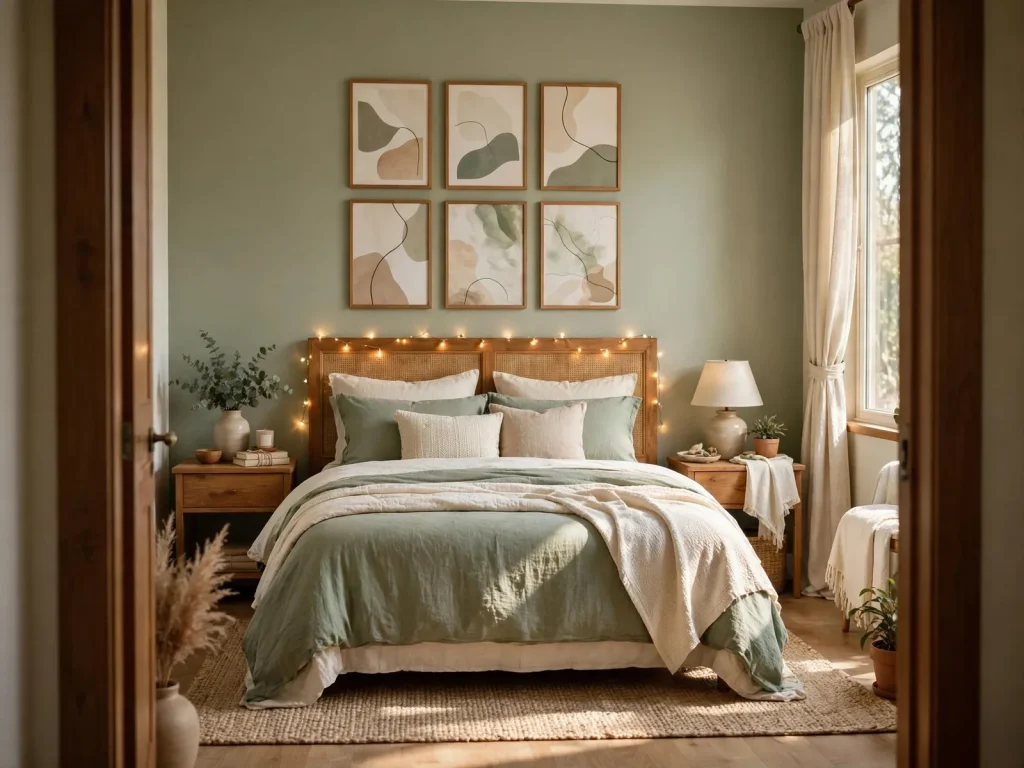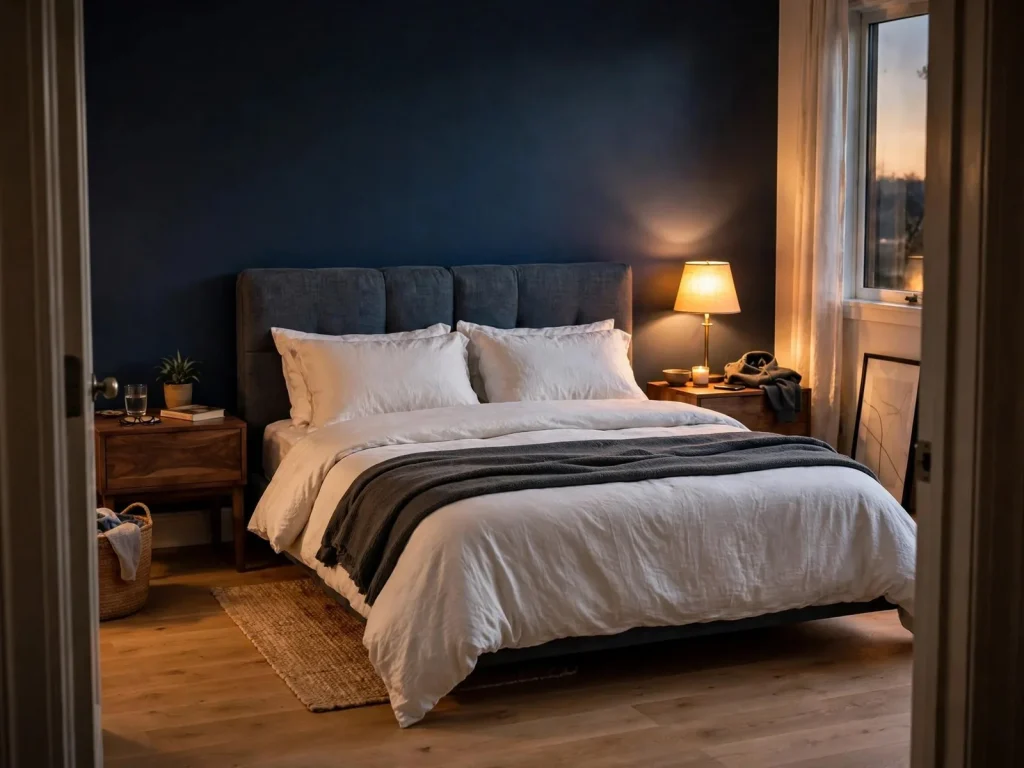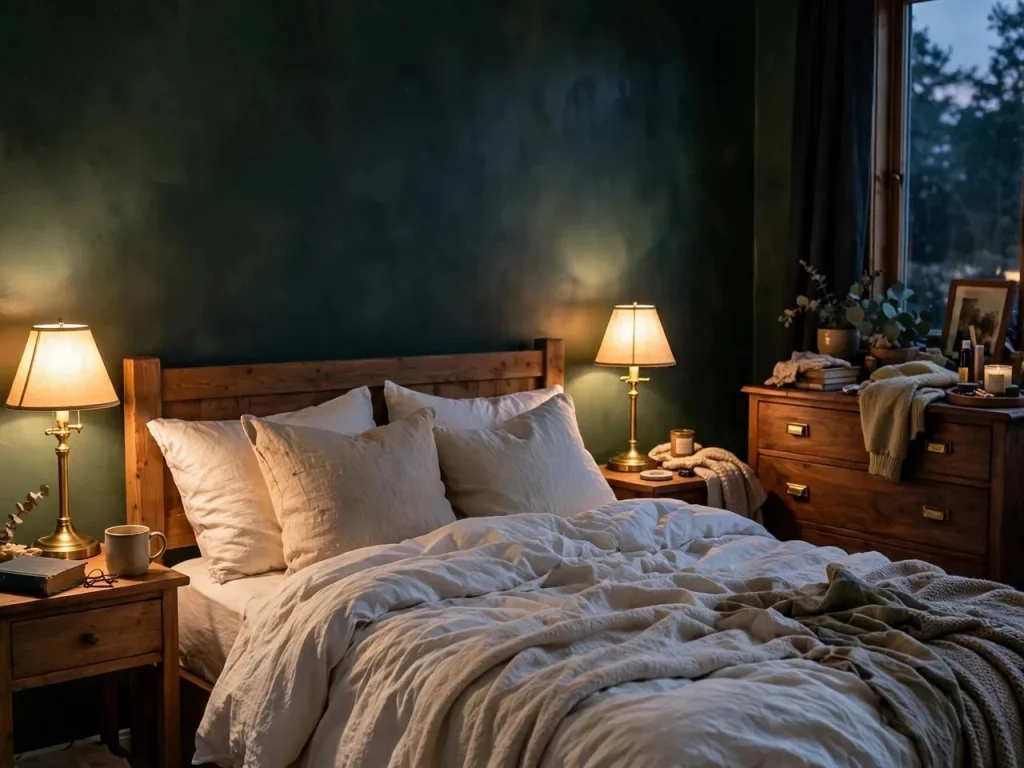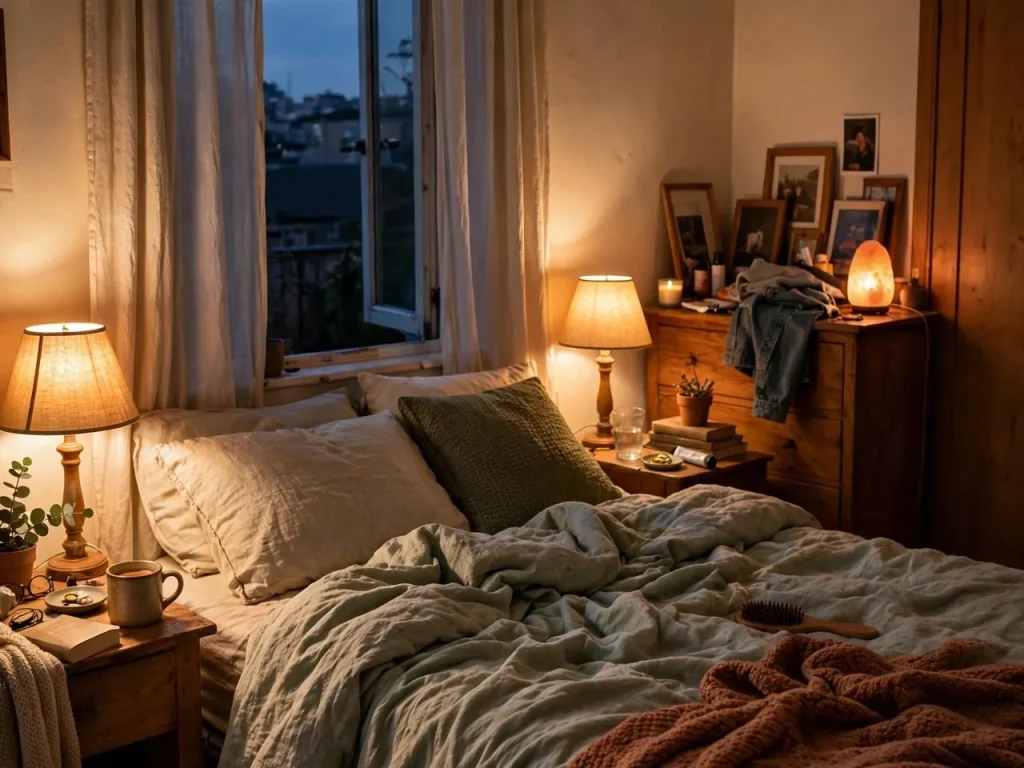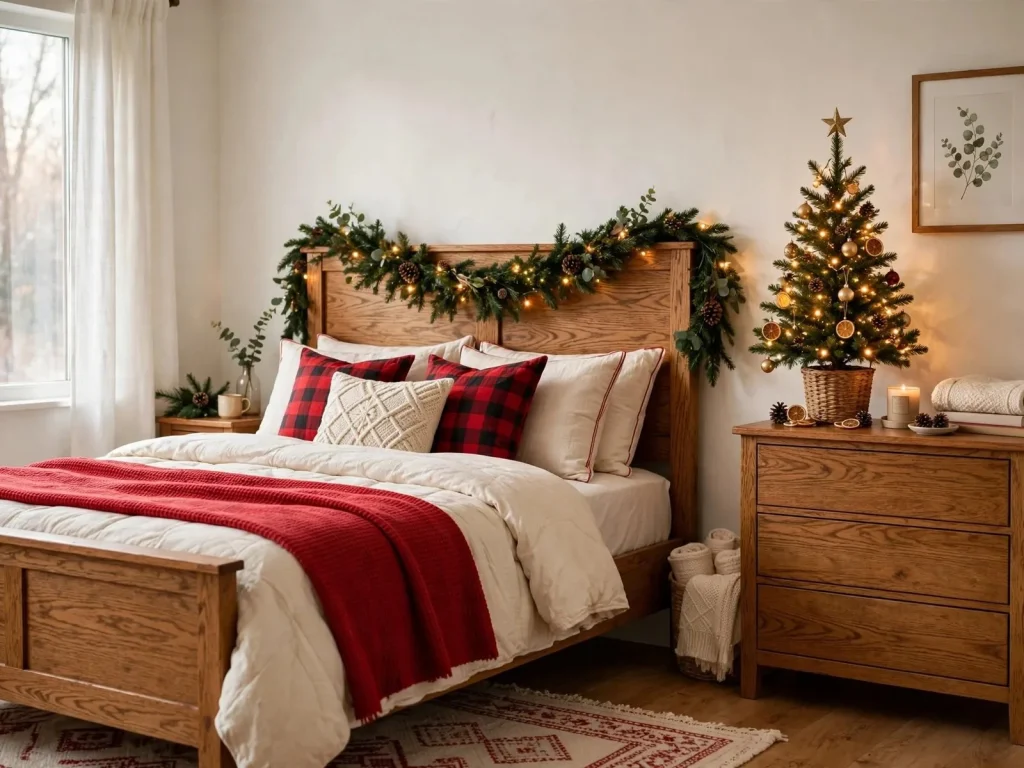
One small bedroom, two people, two laundry piles, two phone chargers and two firm opinions about the wall color. That is the real situation behind most searches for bedroom ideas for couples. The room is not struggling because it lacks romance. It is struggling because it was set up for one person and a second person moved in with a whole life of stuff and nowhere agreed to put it.
This page plans the room for two on purpose. It serves the master bedroom a married couple shares every night, the small rental room for two and the dual-use room that works as an office by day. Every idea is two-sided: storage on both sides of the bed, light on both sides and a color palette both partners sign before a single tin opens. The bigger version of this thinking lives on the master bedroom page. The full bank of bedroom ideas sits on the pillar page.
Before you start: measure, budget, rules
Measure the room wall to wall. Write down the bed footprint, the door swing and which wall the window sits on, then note the direction that window faces. A north-facing window gives cool flat light all day and pushes colors colder than the sample card promised. A south-facing window warms everything and can carry cooler colors without the room feeling gray.
Budget bands on this page run in five steps: free, under $50, under $150, under $300 and over $300. Size bands are just as plain: small means under 100 square feet, medium means 100 to 150 and large means over 150. Two household rules sit under every idea. Shared purchases need two yes votes, never one yes and one silence. Renters get a flag on every idea that touches paint or a drill and a no-damage route is given each time. The small bedroom page works the tightest floor plans in more detail.
Start here: the highest-impact ideas
1. Agree the palette before either of you buys anything
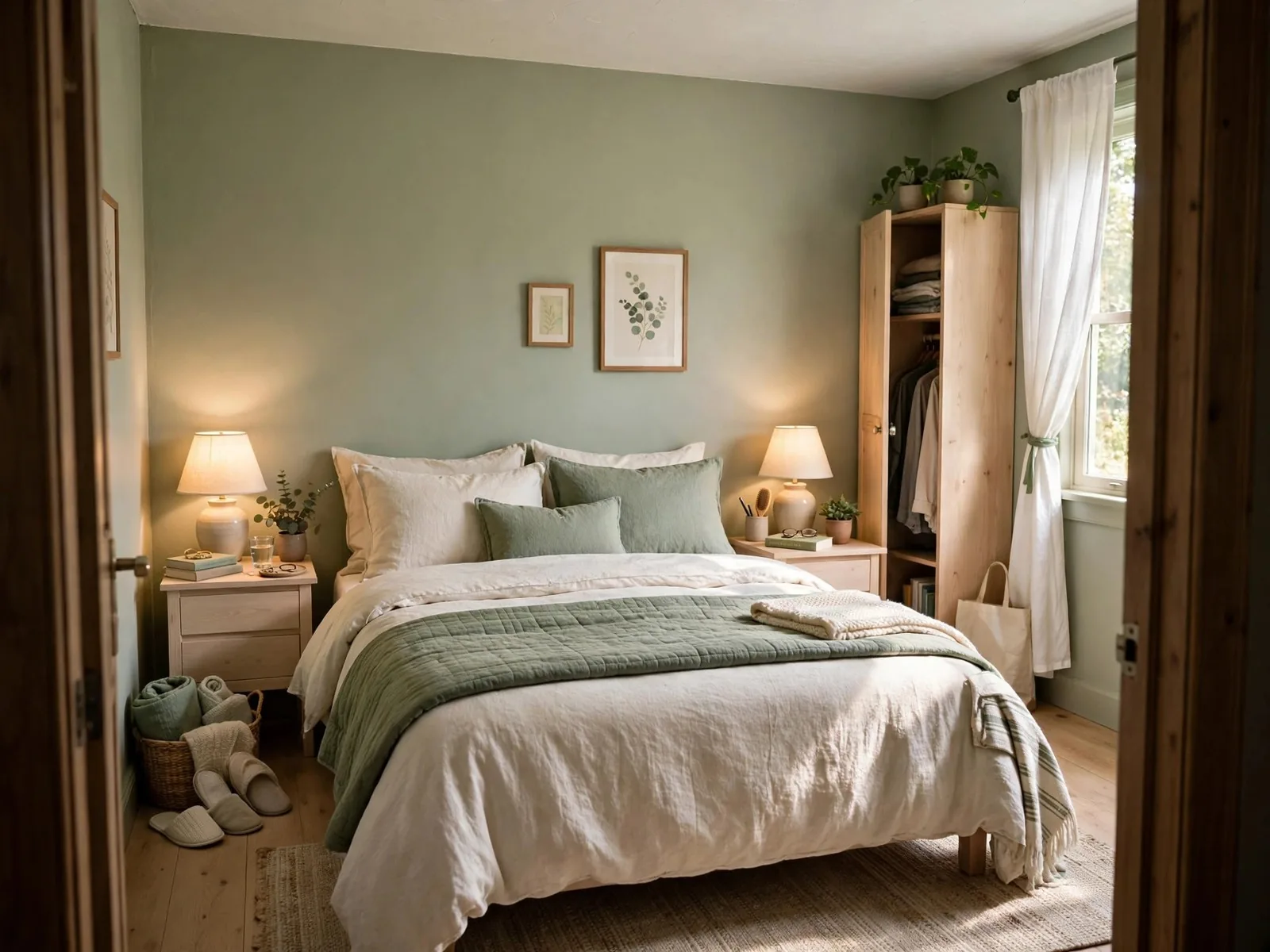
Most couples’ rooms look unsettled for one simple reason: the colors arrived one purchase at a time and nobody ever chose them together. She bought the rust cushions. He bought the gray duvet. Both are fine on their own. Together they argue. A shared palette ends the argument at the source: three colors maximum, a base, a mid tone and one accent, agreed before money moves.
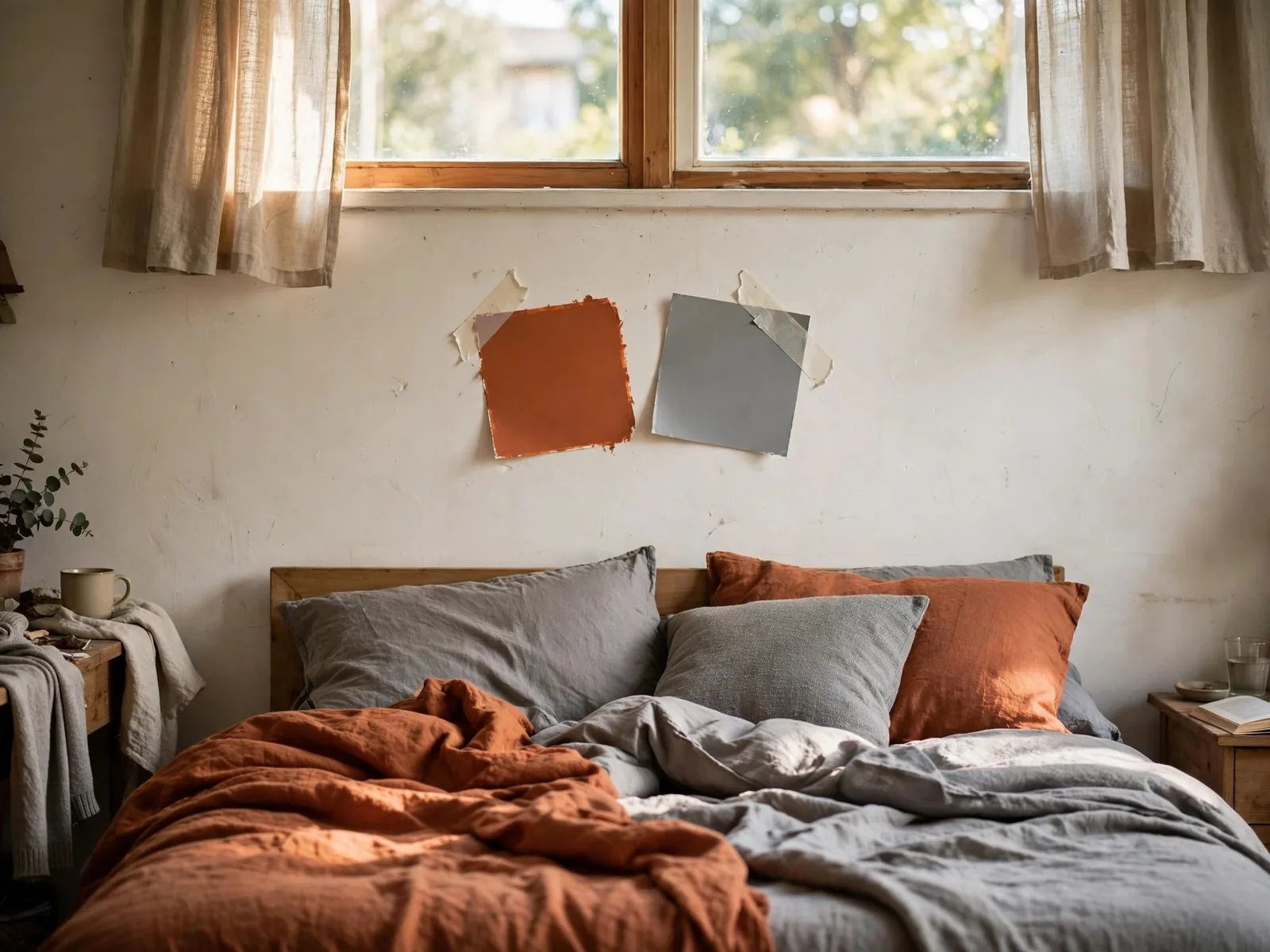
Test the palette where the light actually lands. Paint both sample colors on 12-inch squares on the window wall and live with them for two days. North light cools every color, so warm whites and soft taupes survive it best. South light forgives cooler blues and grays. Renters run the same palette through bedding and cushions and skip the paint entirely. The color page lists ready-made palettes room by room if you want a shortcut to the agreement.
Budget: $5 to $10 for two sample pots. The agreement costs nothing and saves the most money on this page.
2. Give each side of the bed its own nightstand
One nightstand for two people guarantees a floor pile on the unserved side. Give each side of the bed its own table with at least one drawer. Matched pairs are the easy route. Mismatched tables work when they share a height and a tone family, the same rule that keeps thrifted furniture calm anywhere else in the room.
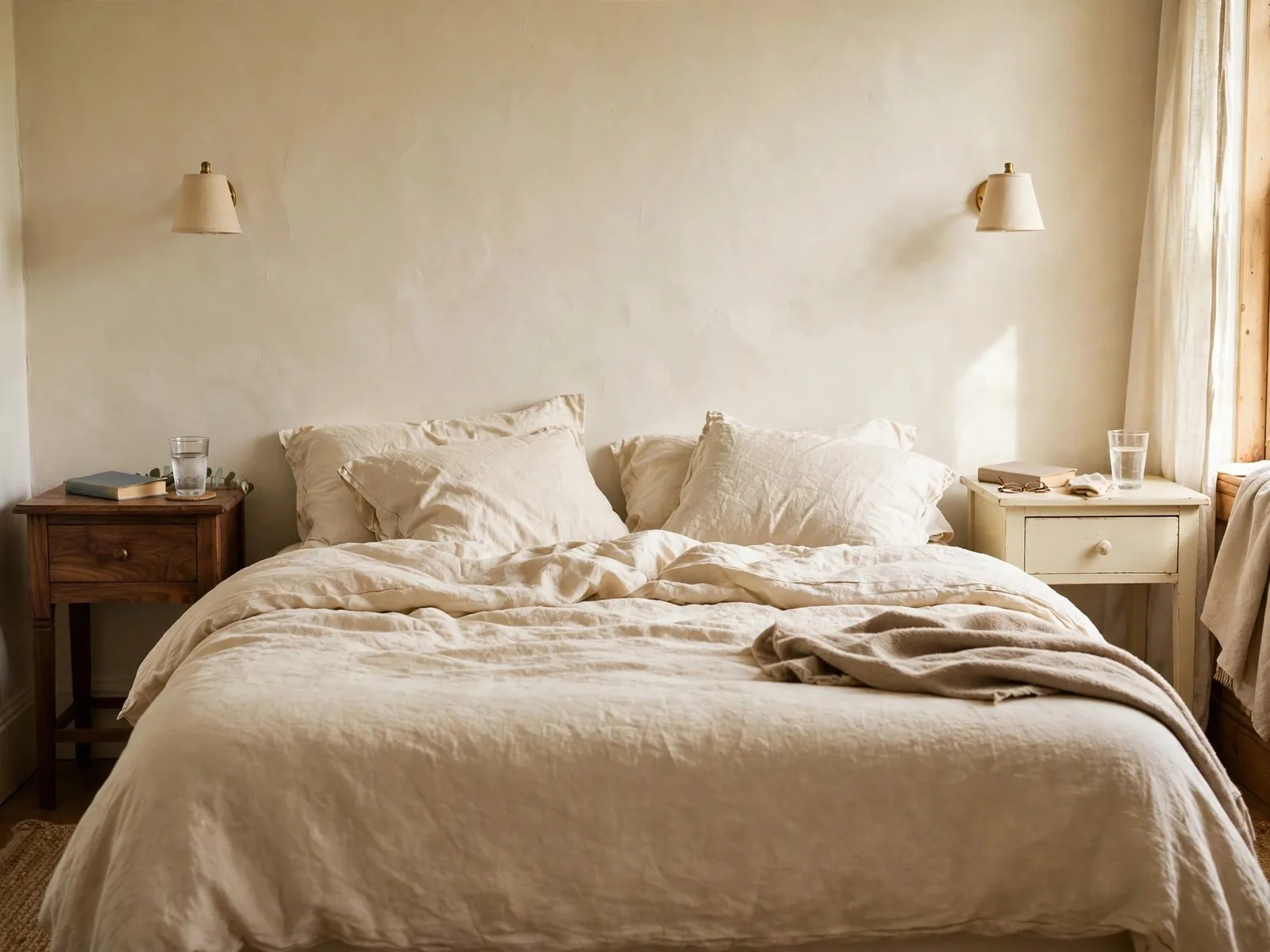
Height is the measurement that matters. The tabletop should land within 2 inches of the top of the mattress, so a glass of water and a phone sit at pillow height for both sleepers. In a small room, 15 to 20 inches of width per side is enough. Wall shelves take over in idea 8 if even that will not fit.
Measure: tabletop within 2 inches of the mattress top. Under 24 inches of width per side keeps a small room walkable.
3. Sleep under two duvets, not one
The two-duvet method is the cheapest peace treaty on this whole page. Each sleeper gets a twin duvet, roughly 55 to 65 inches wide, on a shared queen or king bed. One of you sleeps hot under a light fill. The other burrows into a heavy one. Nobody wakes up at 3 a.m. holding three inches of stolen blanket.
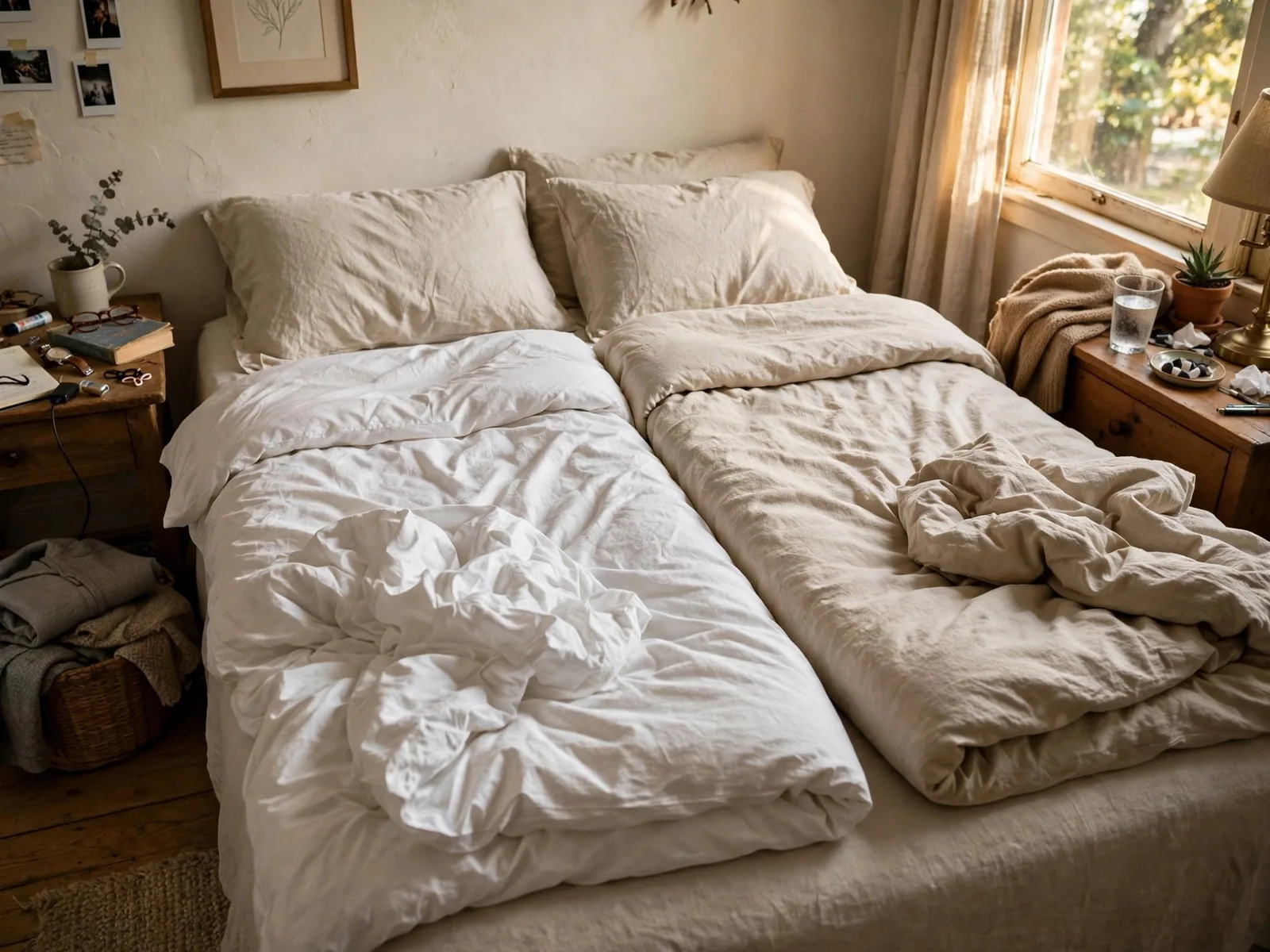
It also solves different bedtimes. The early sleeper’s side stays made while the night owl reads under a lamp on the other side. The catch is laundry: two covers to wash instead of one. The bed looks best with the tops folded down in matching lines each morning. Thirty seconds, once it is a habit.
Budget: $50 to $110 for two twin duvets with covers. Split the fill weights if your temperatures differ.
4. Put a lamp on each side, each with its own switch
One lamp between two readers means one person sleeps inside the other person’s light. Put a lamp on each nightstand, each with its own switch, reachable from the pillow without sitting up. Plug-in wall sconces free the tabletop in small rooms and need no electrician. Table lamps suit renters who cannot fix anything to a wall.
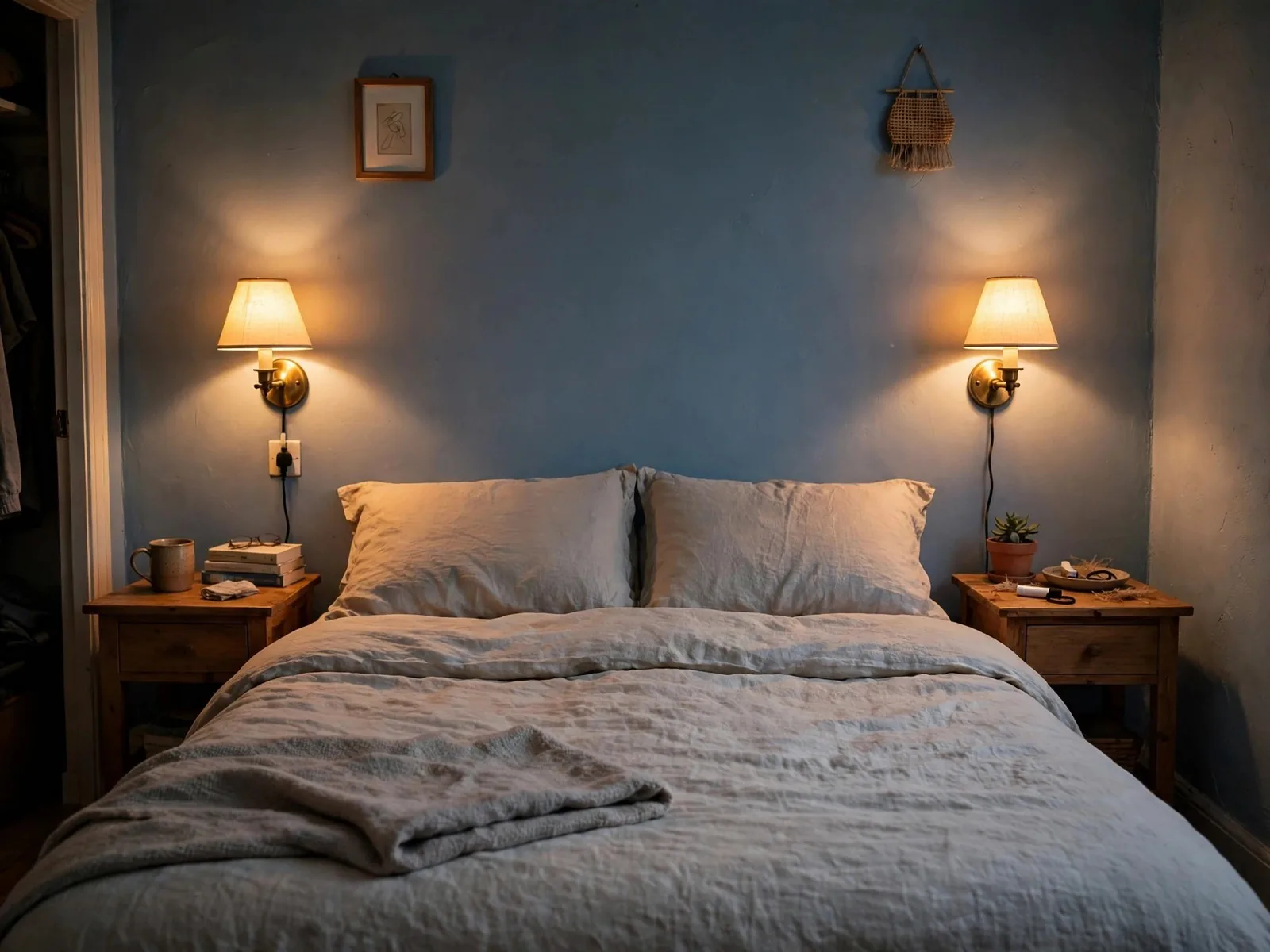
Keep both bulbs at 2700K warm white and match their brightness. Mismatched color temperature across one bed reads as a mistake even when nobody can name it. The lighting page sizes lamps and sconces for every bed width if you want the full chart.
Budget: $40 to $90 for a matched pair of plug-in lamps or sconces.
5. Split the closet into two zones with a visible line
Pinterest searches for this room keep landing on the same phrase: bedroom closet ideas for couples. The fix is a visible split. One rail end carries a divider or a different hanger color for each person. Shelves divide by height, with the taller partner’s stack on top. Two narrow laundry baskets beat one wide one, because the sorting happens at the source.
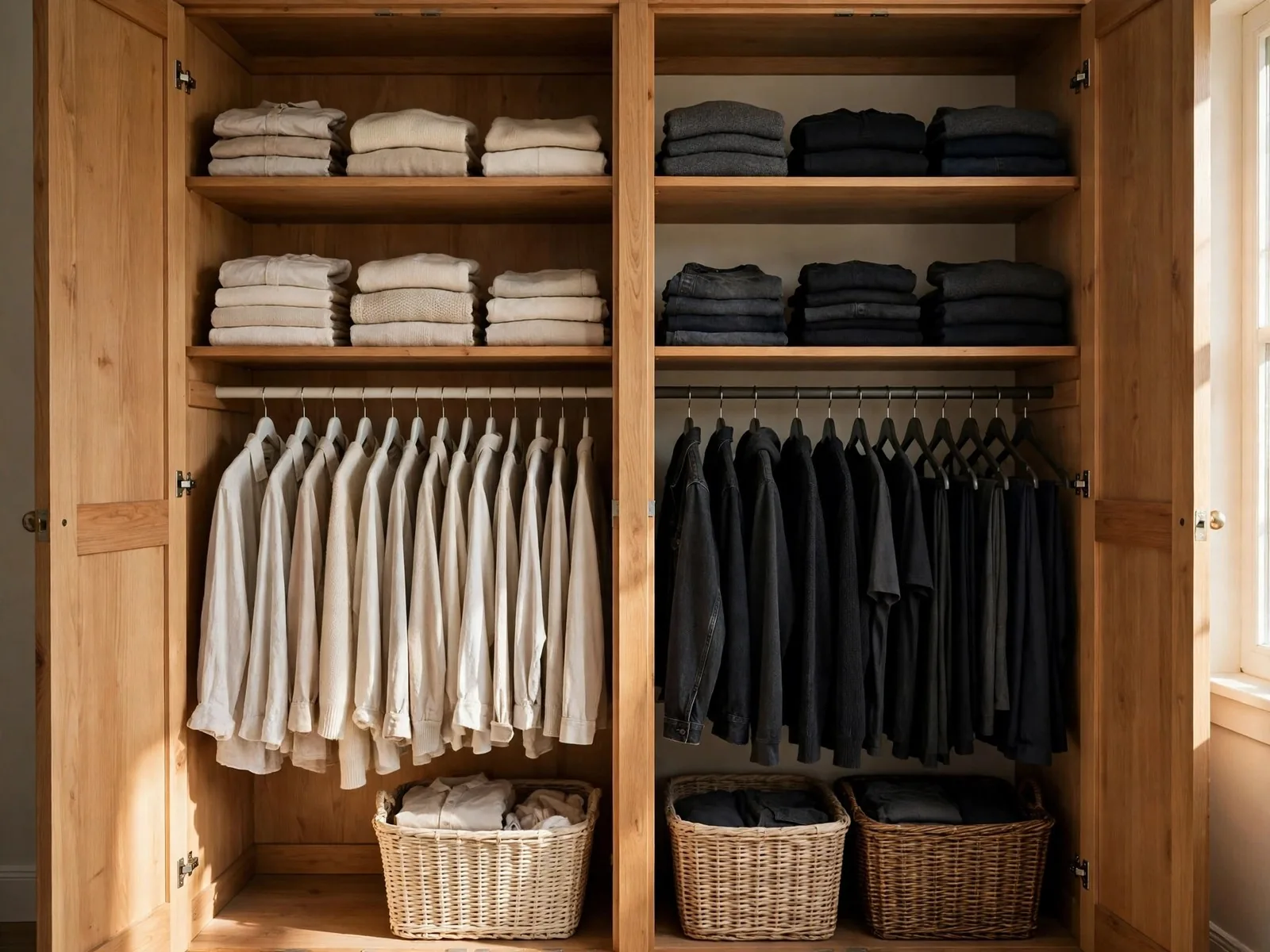
Give the split real numbers. In a 48-inch closet, 24 inches of rail each is a fair start, adjusted for whoever owns more hanging clothes. A tension-rod second rail doubles the hanging space for shirts and needs no screws, which keeps this idea fully open to renters. The storage page plans the rest of the small-room system, from under-bed boxes to door racks.
Budget: $20 to $60 for a tension rail, shelf dividers and a twin laundry sorter.
Ideas by room problem
6. One of you runs hot, one runs cold: layer the bed in zones
Two duvets handle the blanket war. The layers around them handle the rest. A shared cotton sheet suits most pairs. On top of the two duvets, the cold sleeper adds a folded wool throw on their half of the foot. The hot sleeper keeps a linen pillowcase, which stays cooler against the skin than cotton sateen.
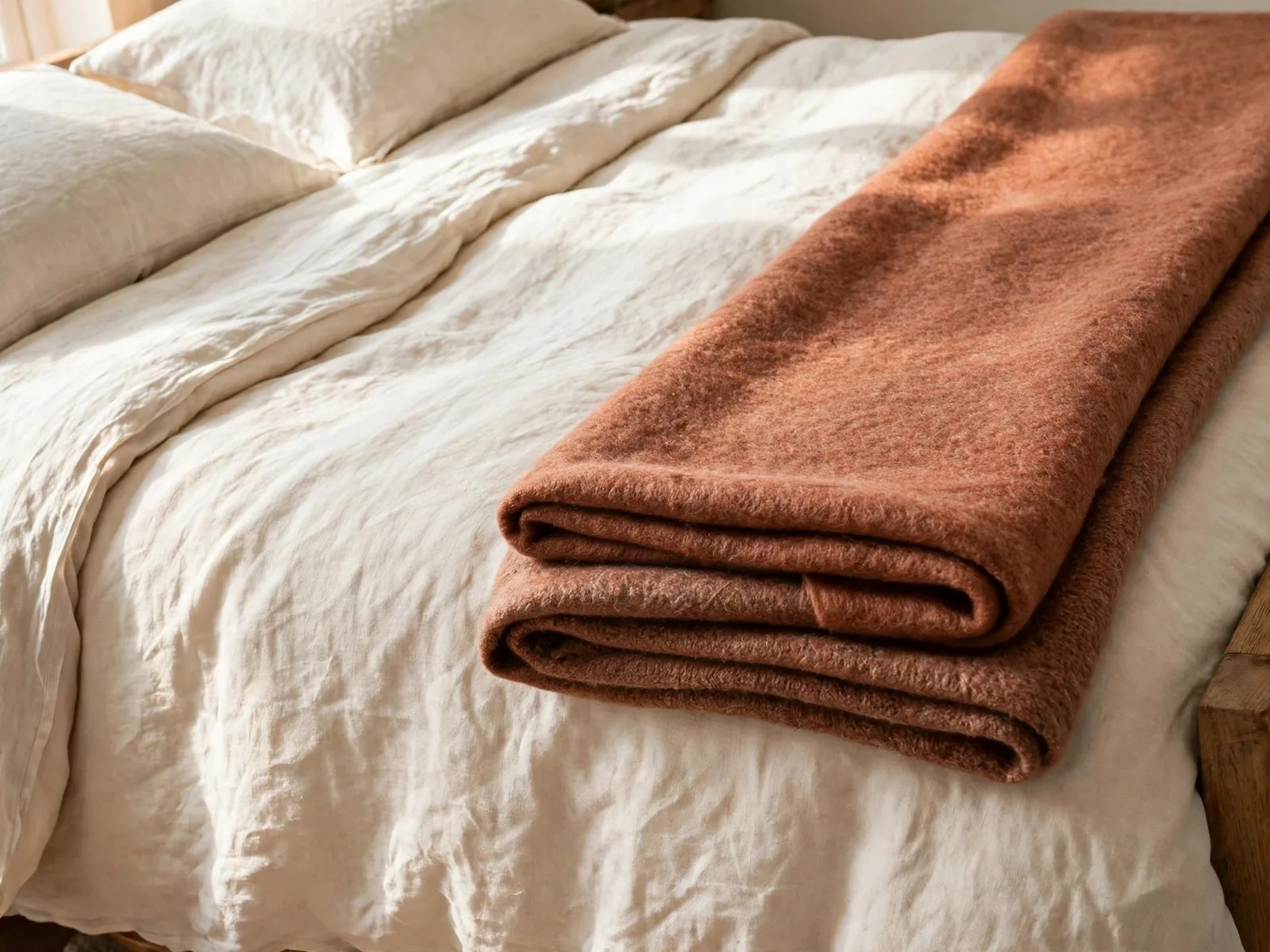
If one of you runs a fan, aim it across the hot side only and let the cold side keep still air. Small rooms trap heat, so this idea matters most in the small band. It matters least in large rooms with a window on each side of the bed, where separate air is free.
Budget: $30 to $60 for one wool throw and a linen pillowcase pair.
7. Different wake-up times: build a dark side and a quiet side
When one partner leaves at 6 and the other sleeps until 8, the room needs two climates. The early riser takes the door side of the bed, so the exit path never crosses the sleeper. Blackout curtains hold the dark. Tomorrow’s clothes get laid out in the bathroom or the hall the night before, so no drawers open inside the dark room.
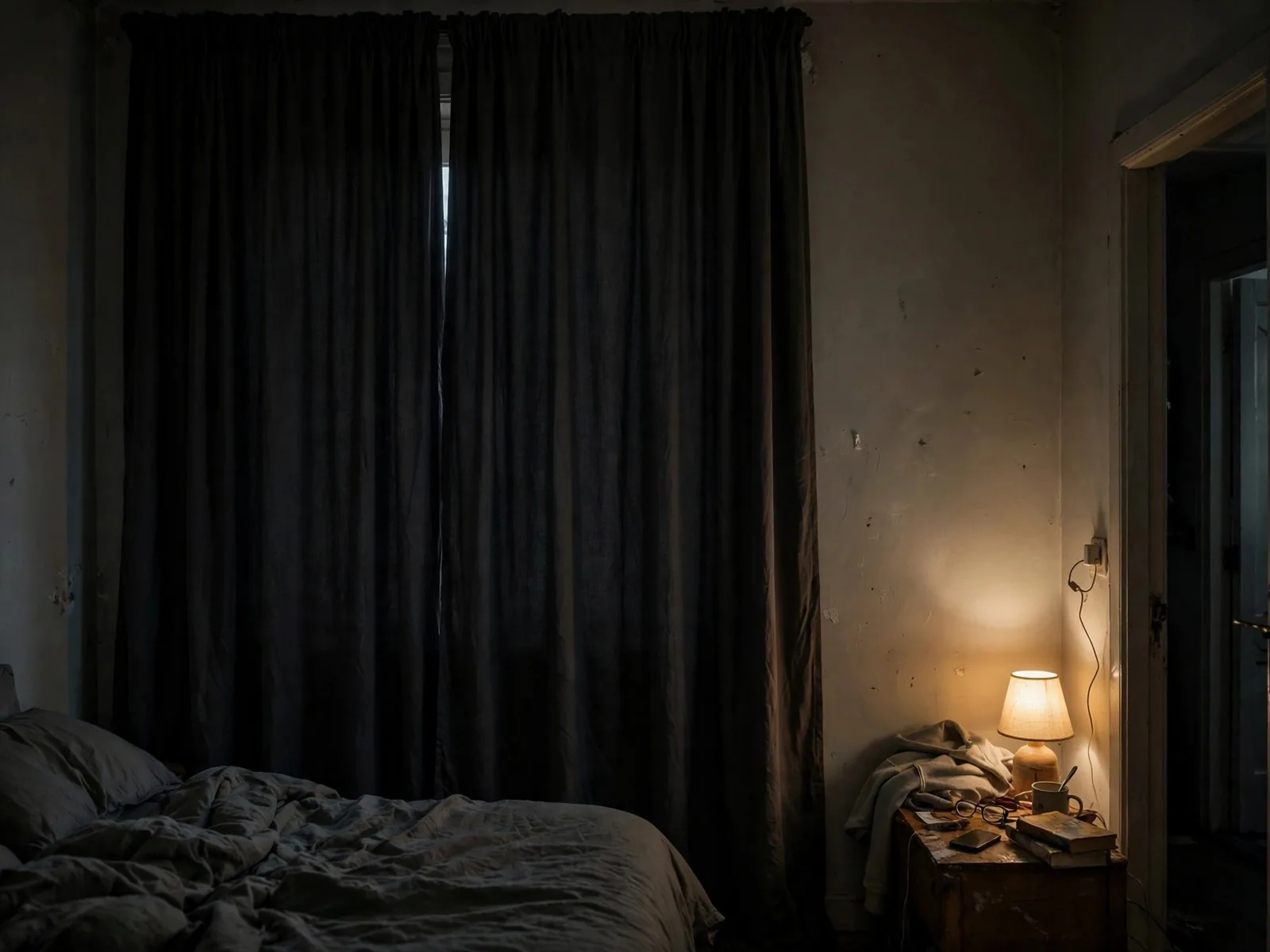
Blackout liners hang behind existing curtains on the same rod and cost far less than new curtains. On a tension rod they stay renter-safe. The catch is honesty about noise: soft-close habits beat any product. The partner who rises early owns an alarm set to vibrate.
Budget: $35 to $80 for blackout liners or curtains. A tension rod keeps the whole idea drill-free.
8. No floor space left: take storage up the wall on both sides
When the floor plan is spent, the walls are the remaining storage. A shelf above each nightstand, 10 to 12 inches deep, holds the books and chargers and glasses that used to need a second dresser. Both sides get the same shelf at the same height, which keeps the bed wall balanced instead of lopsided.
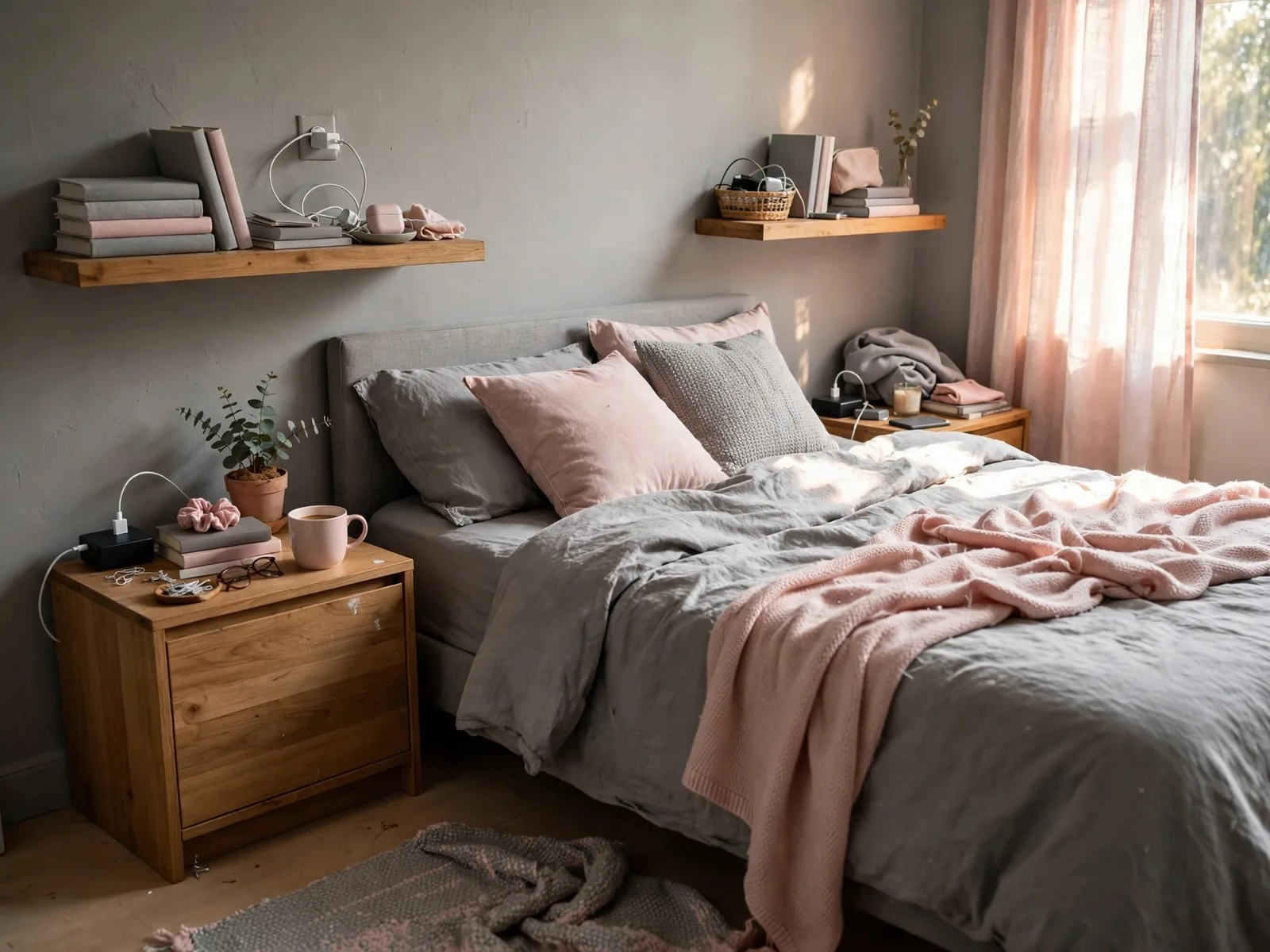
Fix brackets into studs wherever you can. Adhesive shelves rated at 10 pounds are the renter version and they are honest shelves for light things only, never for a stack of hardbacks above a pillow. In small rooms this is often the idea that returns the walkway at the foot of the bed.
Needs drilling: two screws per bracket into studs. Renters use the adhesive version and keep the loads light.
9. Two styles, one room: repeat one color through both
One of you wants boho texture. The other wants plain modern lines. The peace formula is a shared base color repeated through both styles: the same warm white on the bedding and the walls, the same walnut tone in a woven bench and a plain nightstand. Roughly 60 percent of the room reads shared. Each style then gets a zone to be itself in.
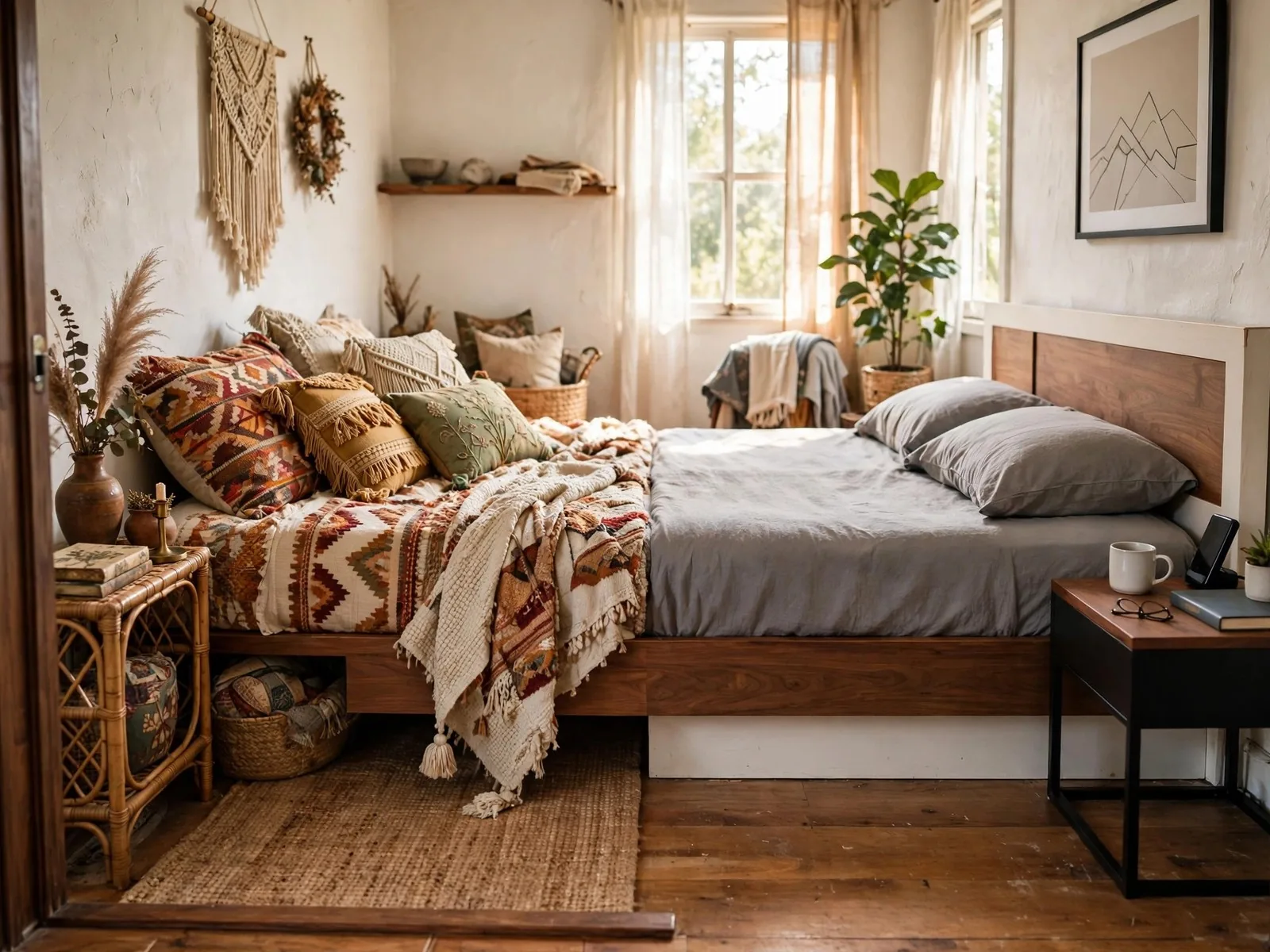
Let the zones be real. Her side carries the patterned cushion and the trailing plant. His side carries the clean lamp and the stack of books. The boho page shows how much texture one zone can hold before it starts leaking across the whole room. What breaks the peace is mixing piece by piece, because then nothing in the room belongs fully to either of you.
Budget: free if you shop the room first. $20 to $40 buys two cushion covers in the shared color to tie the zones together.
Ideas by budget
10. Free: re-zone the room you already own
Before buying anything, re-zone what the room already holds. Swap sides of the bed for a week; the partner who never got the window side may turn out to sleep better there. Reassign the drawers by person instead of by clothing type. Move the dresser to the wall it should have stood on since you moved in. Dorm rooms run this negotiation in 100 square feet every semester and their layouts are worth stealing.
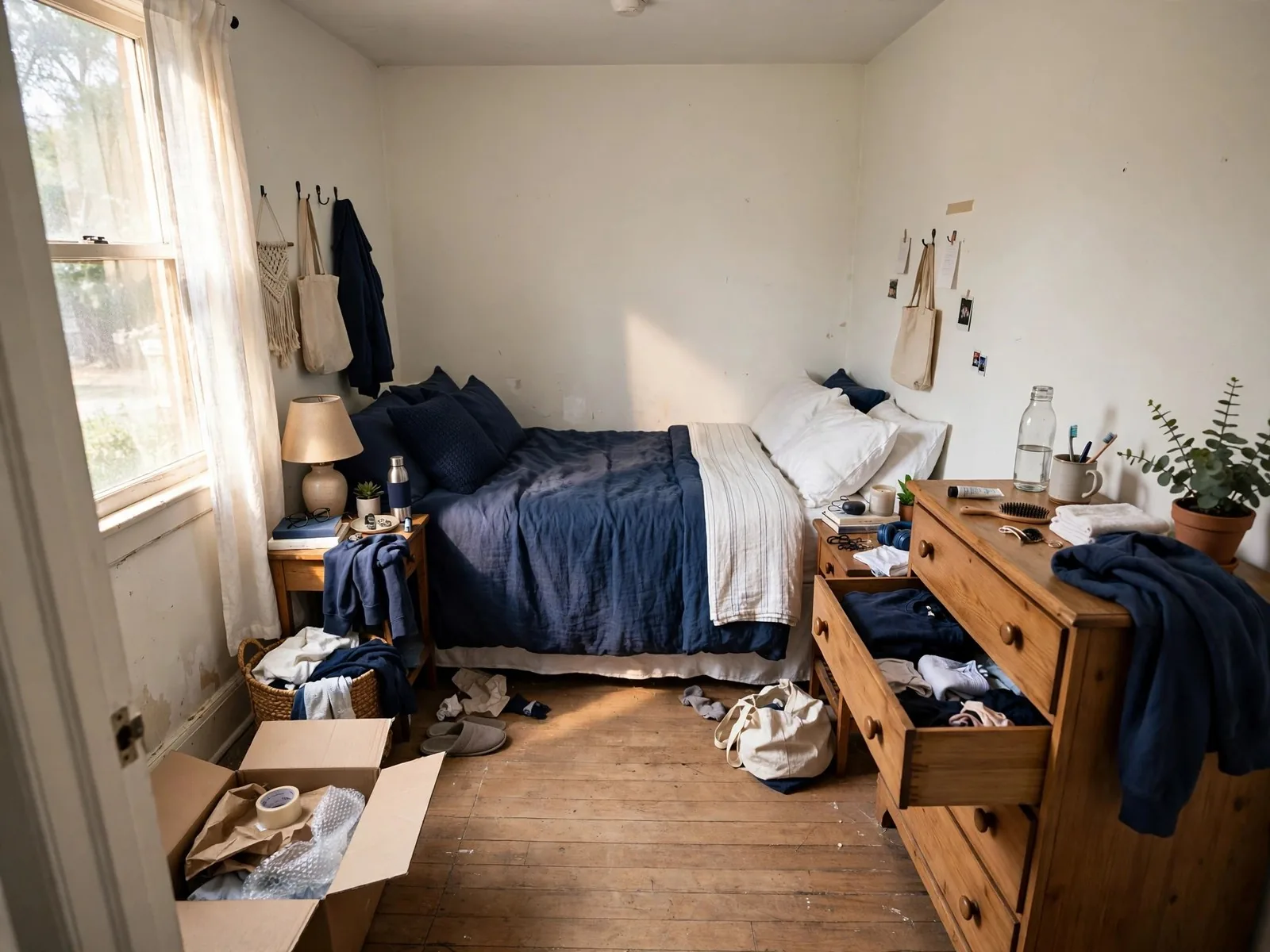
Write the zones down if you have to. The argument couples have in month three is never about taste. It is about one person’s things slowly annexing shared space. A written split ends it kindly.
Budget: free. It regularly finds a foot of floor the room had all along.
11. Under $50: one clutter basket each, same size, same place
Bedside clutter is a two-person problem with a two-basket answer. One basket each, same size, same spot on each side of the bed. Chargers and books and hand cream and the remote live in the basket or they live somewhere else. Two matching baskets also give the room a small deliberate symmetry, which reads as designed even in a rental.
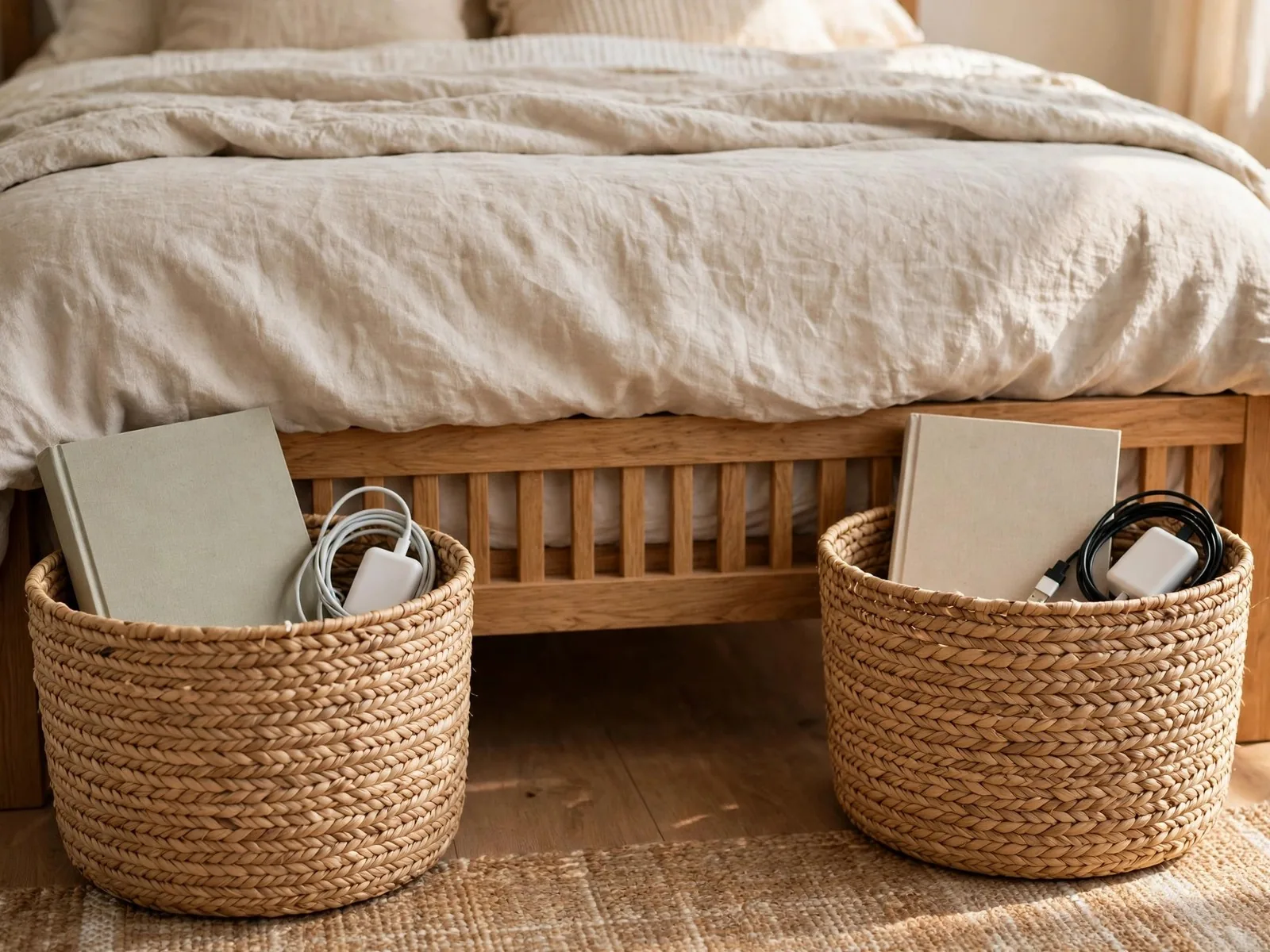
Size them honestly. A basket around 12 by 9 inches swallows a paperback and a charger without becoming a storage unit. If it overflows every week, the rule is one item out, not a bigger basket.
Budget: $15 to $40 for two woven baskets.
12. Under $150: a bench or trunk at the foot of the bed
A bench or trunk at the foot of the bed is shared furniture that serves two people at once: blanket storage inside, a seat for shoes going on and a landing strip that keeps clothes off the bed. It is also the piece that makes a couple’s room read as planned rather than accumulated.
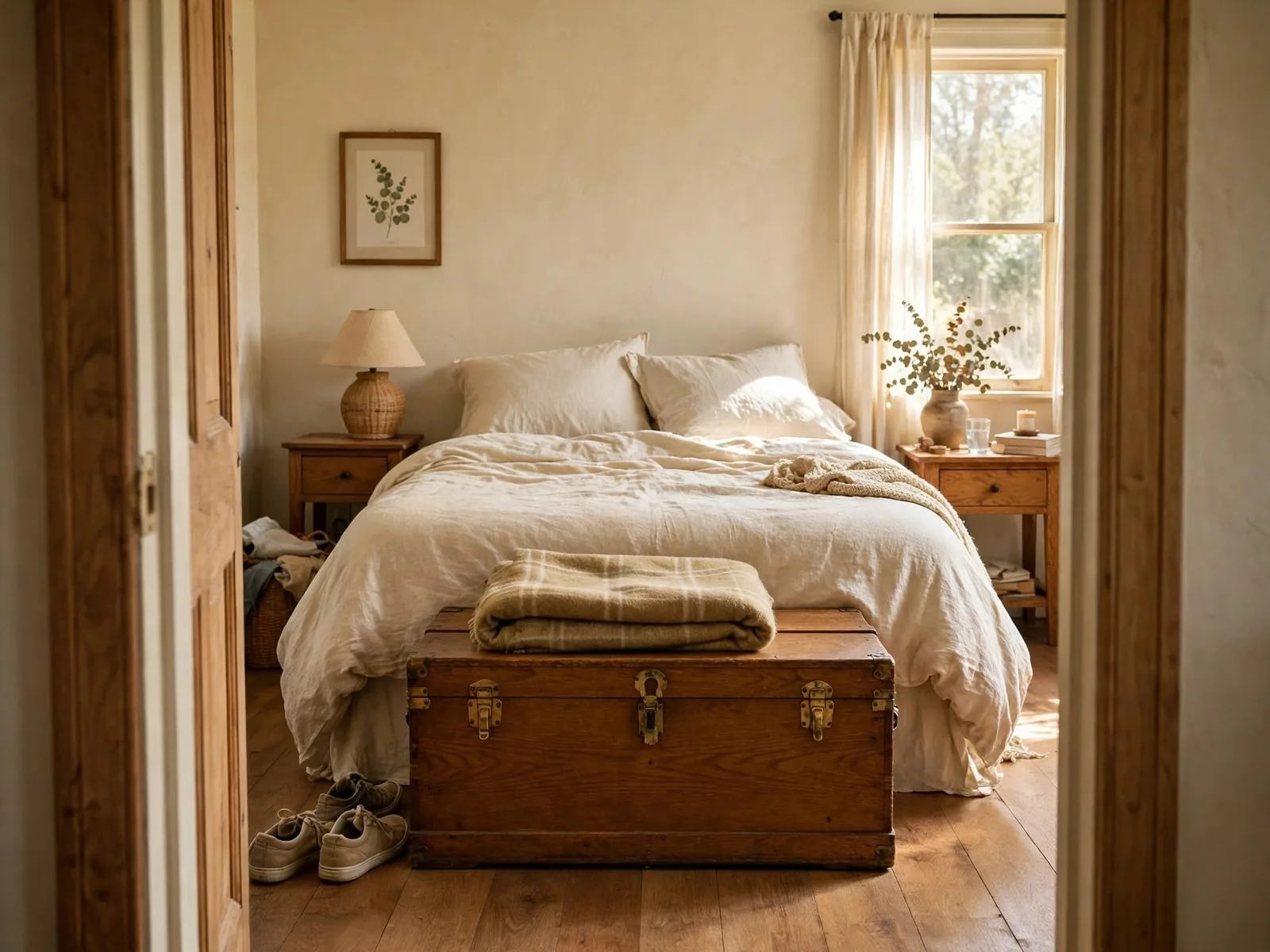
Size it to the bed, about 12 inches narrower than the mattress and 18 to 20 inches high. In medium and large rooms it sits clear of the walkway. In small rooms under 100 square feet, skip it or choose a slim 12-inch-deep version, because a blocked path at the foot of the bed annoys two people twice as fast.
Budget: $80 to $150 for a storage bench or trunk. Solid thrifted trunks often land under that.
13. Under $300: one wide headboard that works for two readers
Two readers need one headboard built for two backs. Choose a width that matches the bed exactly and a height of 48 to 54 inches, so both of you can sit up against it with a pillow behind the shoulders. Upholstered designs forgive the lean best. Bare wood and metal punish it nightly.
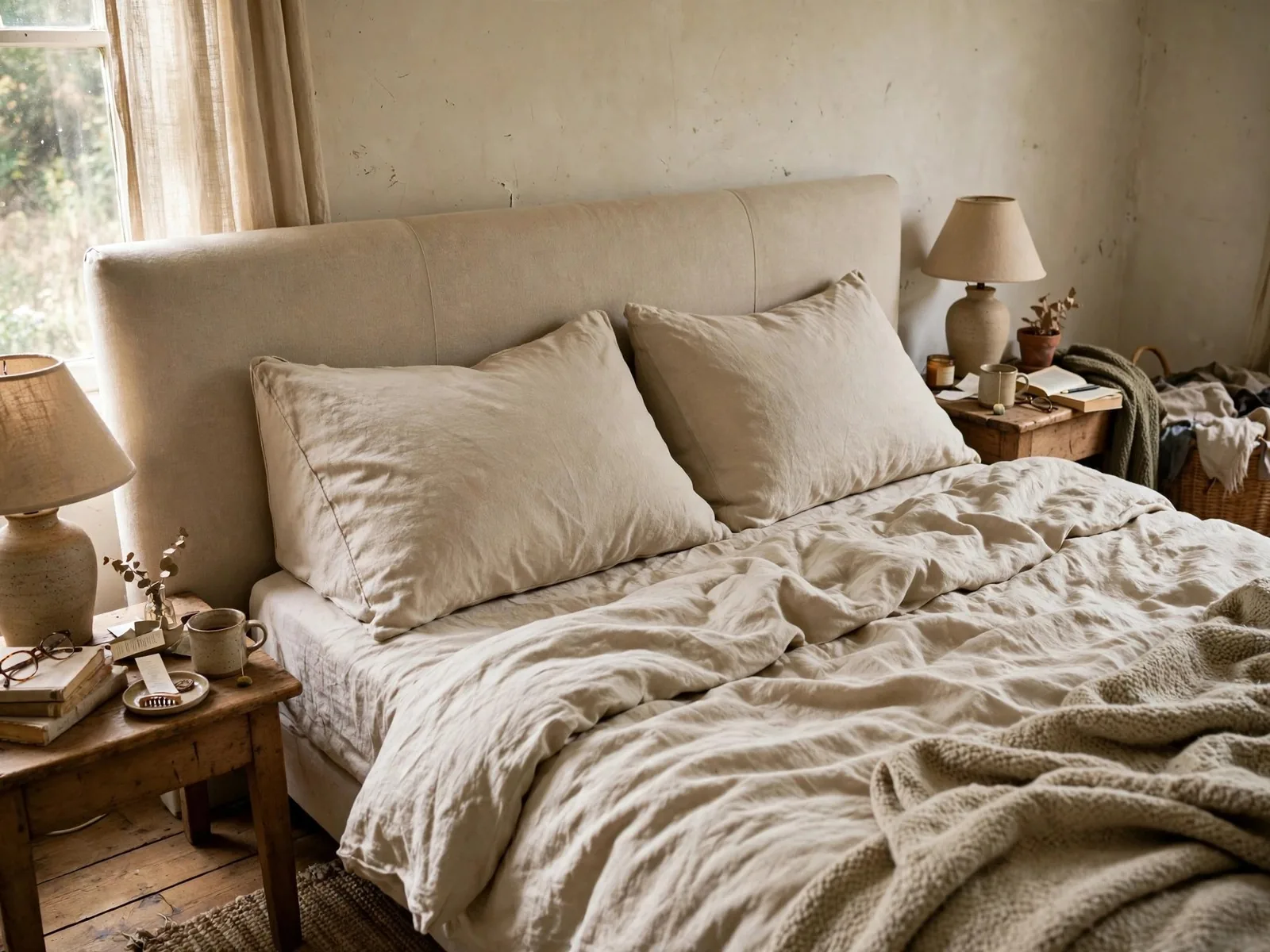
Freestanding and bed-frame-mounted headboards need no wall fixings at all, which keeps this one renter-open despite its size. headboard page compares heights and materials and mounting types before you spend. Buy this after the nightstands, because its width has to agree with theirs.
Budget: $150 to $300 for an upholstered queen headboard.
Finishing touches
14. Hang one piece above the bed that belongs to both of you
The wall above the bed is the room’s one big shared canvas and Pinterest knows it: wall decor above bed for couples is a search of its own. The strongest version means something to both of you. A pair of prints from a trip you took together, two photos in matching frames, one wide piece you chose in the same shop on the same day. Paired pieces hung as a set suit this wall better than a gallery of small frames.
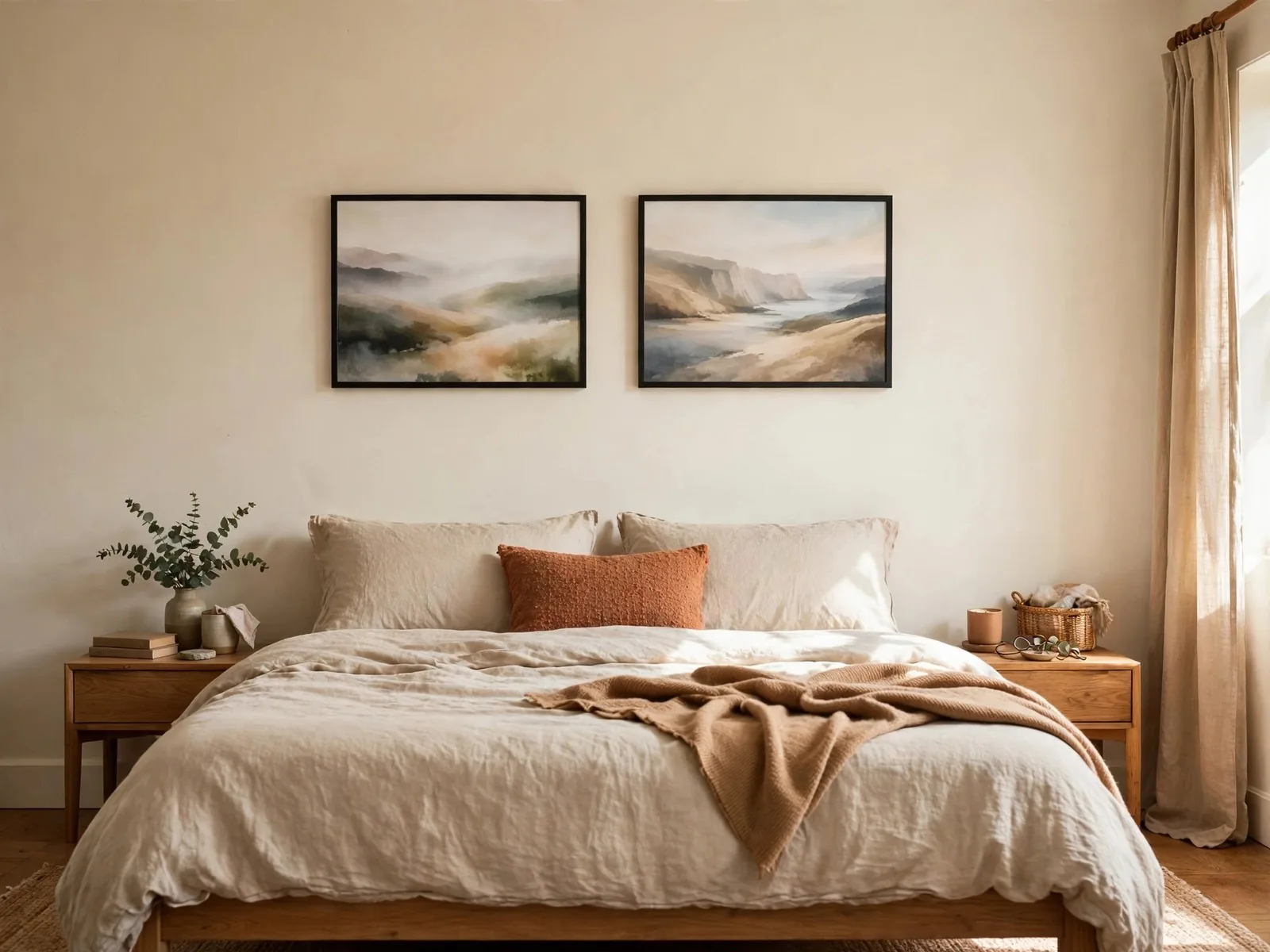
Scale follows the house rule: the piece or the pair should span about two-thirds of the bed’s width, so a queen wants roughly 40 inches of art. If you want the whole wall to do this job instead, the accent wall page plans it.
Renter-friendly: peel-and-stick frames and removable-strip ledges hold this whole idea with zero holes.
15. Add one romantic layer: warm low light and a scent you both chose
Romantic bedroom decor, in the searches people actually type, rarely means rose petals. It means light that flatters and air that smells like a decision you made together. Dim the side lamps or swap one evening a week to flameless candles on the dresser. Pick one scent together, candle or linen spray. Let both noses vote before it moves in.
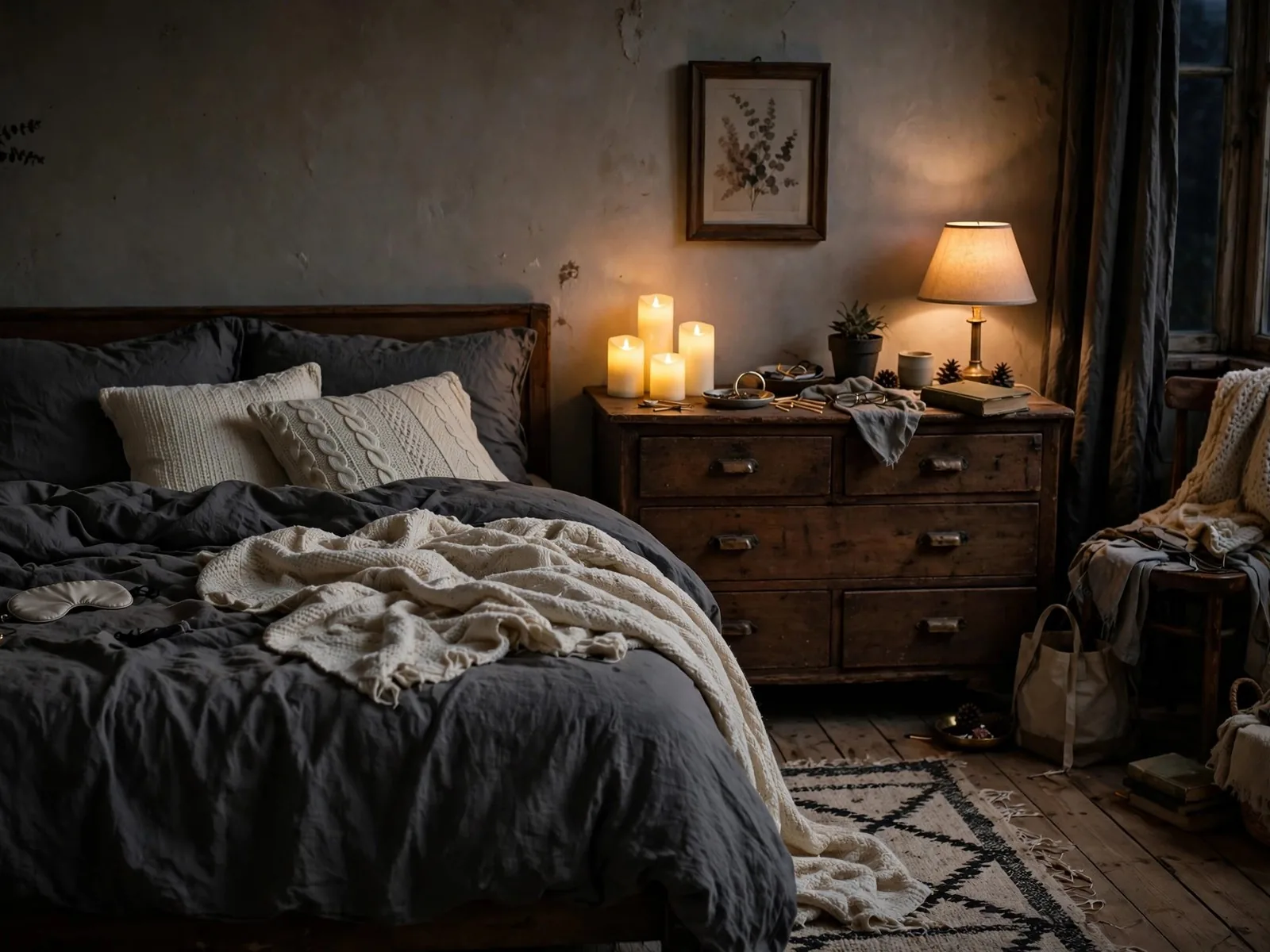
Dark rooms carry this layer furthest. If the full version tempts you, deep walls and low warm light and heavy curtains, the moody page is the honest guide to doing it without the gloom. Keep real flame out of it if either of you falls asleep reading. Flameless candles exist for exactly that couple.
Budget: $15 to $35 for flameless candles and a plug-in dimmer.
16. Match the small things on purpose: two of one thing
Deliberate matching is the cheapest signal that a room belongs to a couple on purpose. Two matching pillow shams, two plants in identical pots and two frames from one set will do it. The match tells every eye that lands here that the room was planned by two people together.
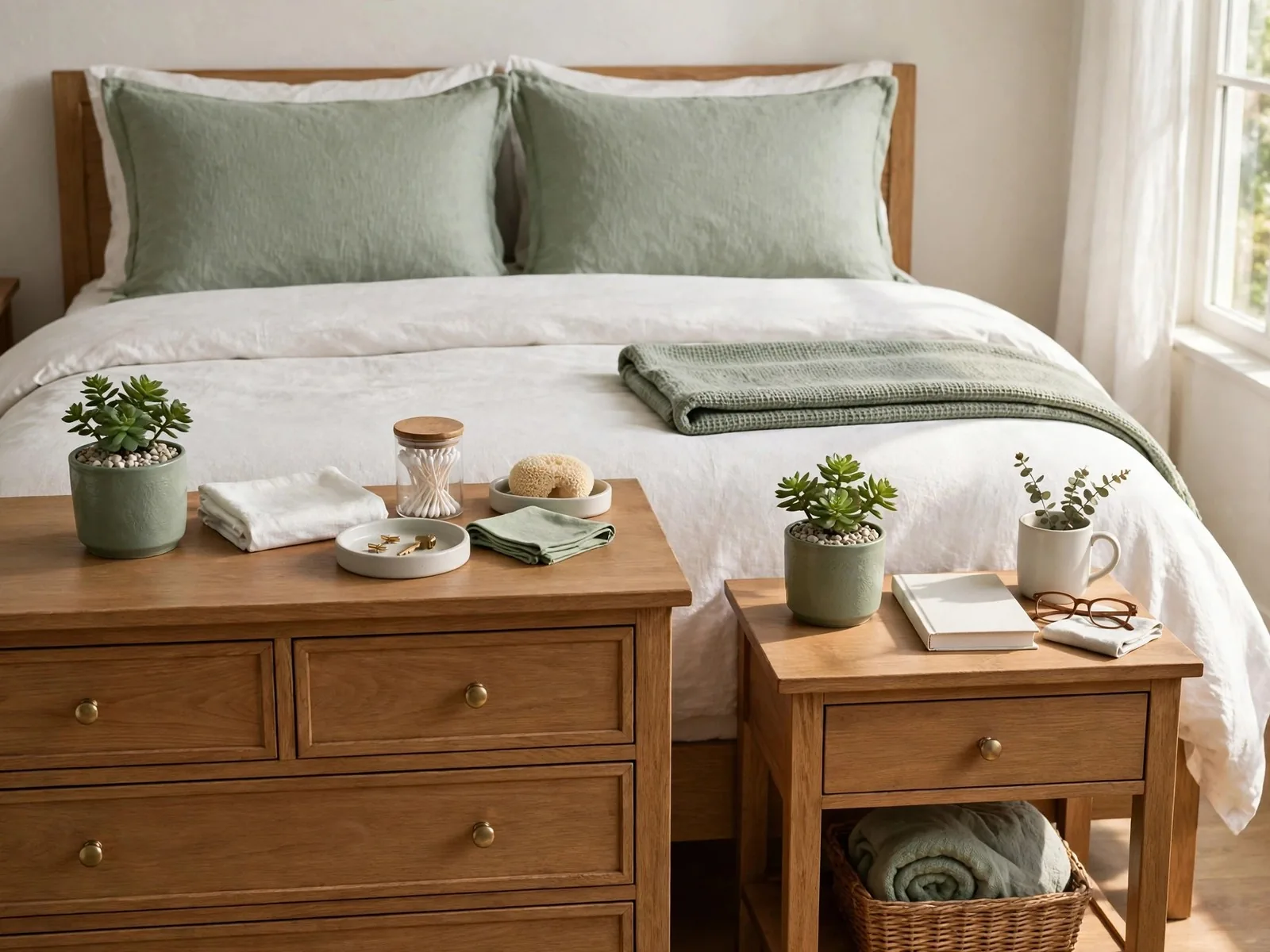
Match the small things only. Matching furniture suites and matching everything is the hotel look. Hotels are designed for strangers. Three matched pairs is plenty of signal. The rest of the room can stay as mixed as your two lives actually are.
Budget: $10 to $30 for one matched pair of shams, pots or frames.
17. Run a ten-minute two-person reset every night
The last idea is a habit, not a purchase. Ten minutes, two people, same jobs every night: surfaces cleared, chargers into one shared tray on the dresser, laundry into the two baskets from idea 11 and tomorrow’s clothes out of the bedroom entirely. The room you wake up in is the room this page has been promising.
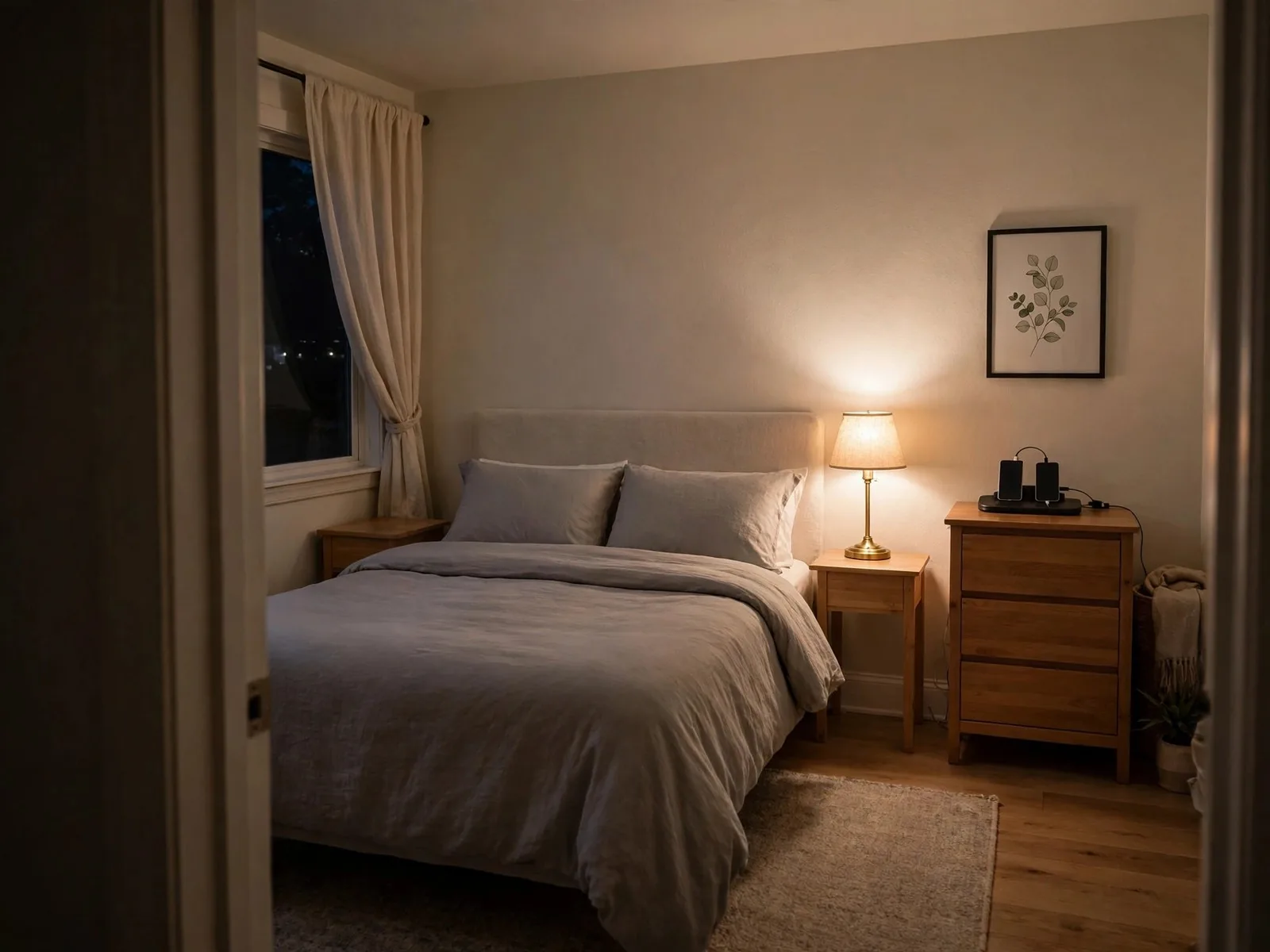
It works because it is shared. A reset done by one partner for both breeds the exact resentment this page exists to prevent. Split it the same way you split the closet: your side, my side, shared surfaces together.
Budget: free. The tray you already own becomes the charging station tonight.
Bedroom Ideas For Couples on a budget
The strongest ideas on this page are the cheap ones, which is lucky. Run them in this order. First the free re-zone and the palette agreement, which together cost sample pots at most. Then the two lamps and the two baskets, bought in one trip for under $100 total if the lamps come secondhand. The headboard and the bench wait until the room has proved it works, because both are miserable to return and easy to buy once the zones are settled.
A realistic shared total is $120 to $200 across a month, split any way the two of you split things. The makeover page runs this same spend-in-order method across a full room refresh when you are ready to go further. Save one small line for December: a seasonal layer over the bed is the cheapest romantic refresh of the year and it gets its own treatment on the Christmas bedroom page and in its family version on the kids Christmas page.
Mistakes that make it fall flat
- One partner decorates alone. The room arrives finished and the other person lives inside someone else’s taste for years. Even perfect choices fail this way, because a couples room is a negotiation made visible. Decide the palette and the big pieces together or do not call it shared.
- The matched furniture suite. Bed, dresser and nightstands bought as one set fit a showroom, not two people’s storage. One side always needs more drawers than the other. Buy pieces per person and tie them together with the shared palette instead.
- One duvet for two temperatures. The 3 a.m. blanket war is a purchasing error, not a personality flaw. Two duvets end it for under $110 and nobody has to win anything.
- Storage on one side only. One nightstand, one good closet rail, one basket. The unserved side grows a floor pile within a month and the pile becomes the argument. Every storage idea on this page exists in pairs for this reason.
- Choosing colors at the store, at night. Fluorescent light lies and evening light flatters everything. A color chosen under either one will betray you in your own window light, north-facing rooms most of all. Sample on the wall and wait two days.
Questions people ask about this
Where do I start when decorating a bedroom for two? Start with the agreement, not the shopping. Measure the room, set the budget bands you can both live with and choose a three-color palette you both sign. Then fix the bed and the two nightstands, because sleep and storage cause more friction than any decor choice. Decor comes last and argues least.
What order should I buy bedroom items in for a couples room? Buy in the order problems arrive. Bedding and two duvets first, then a nightstand and a lamp for each side, then closet storage split into two zones. The headboard and bench come next. Art and the romantic layer go last, because they are cheap and easy and they reward a room that already works underneath.
How do I make a shared bedroom feel finished? A couples room feels finished when the two-sided basics match the eye: lamps at the same height, one piece of art scaled to the bed above it and surfaces that end the day clear. Add one matched pair of small things and one shared scent or light ritual. Finished is symmetry plus habit, not spending.
The bottom line
A couples bedroom is not a style problem. It is a fairness problem with a style answer: two of everything that matters, one palette you chose together and storage that serves both sides of the bed equally. Get those right and the room starts feeling romantic on its own, because nobody is annoyed in it. This week, do the free part: measure both sides of your bed, agree the zones out loud and reassign the drawers. The shopping list writes itself after that.