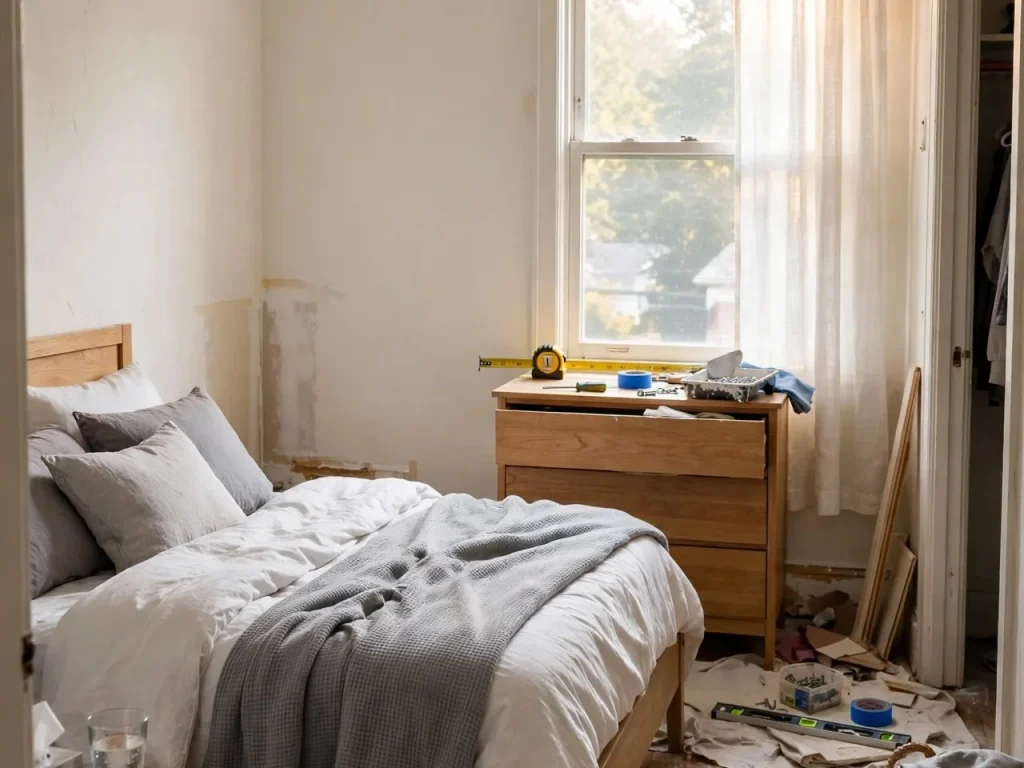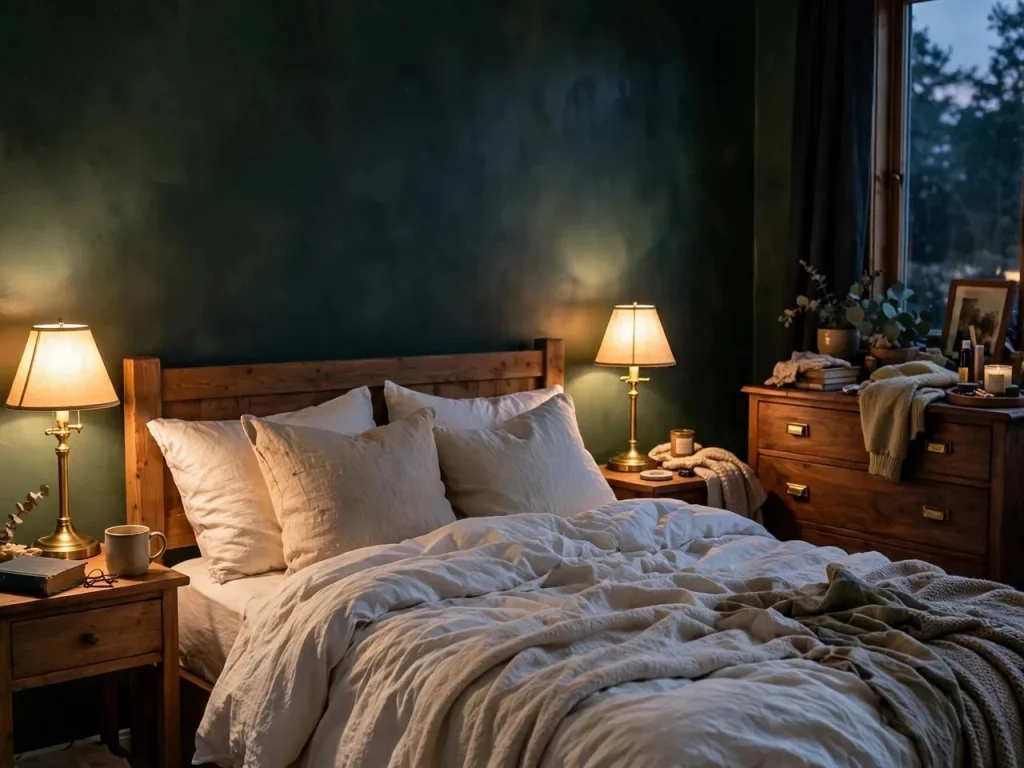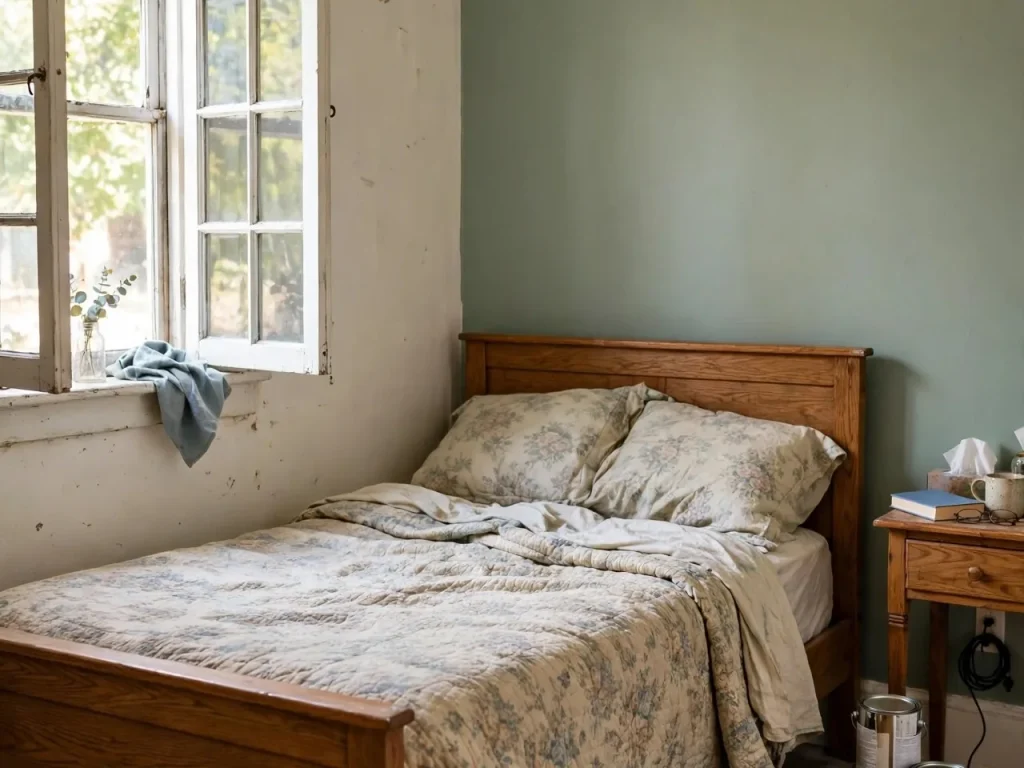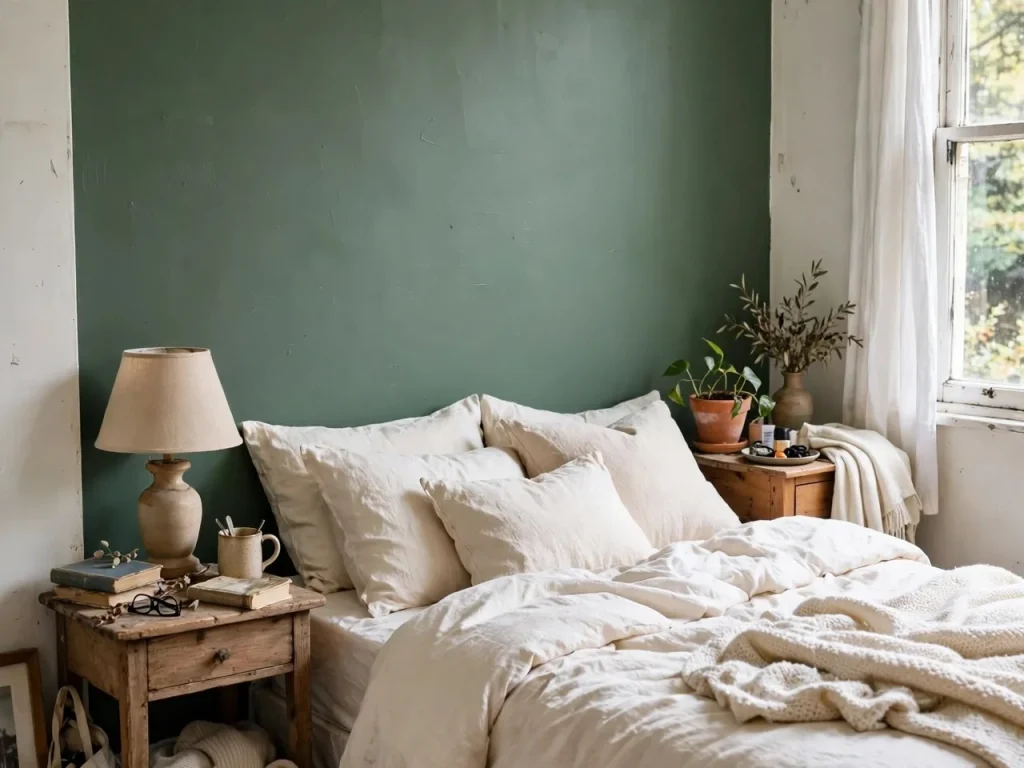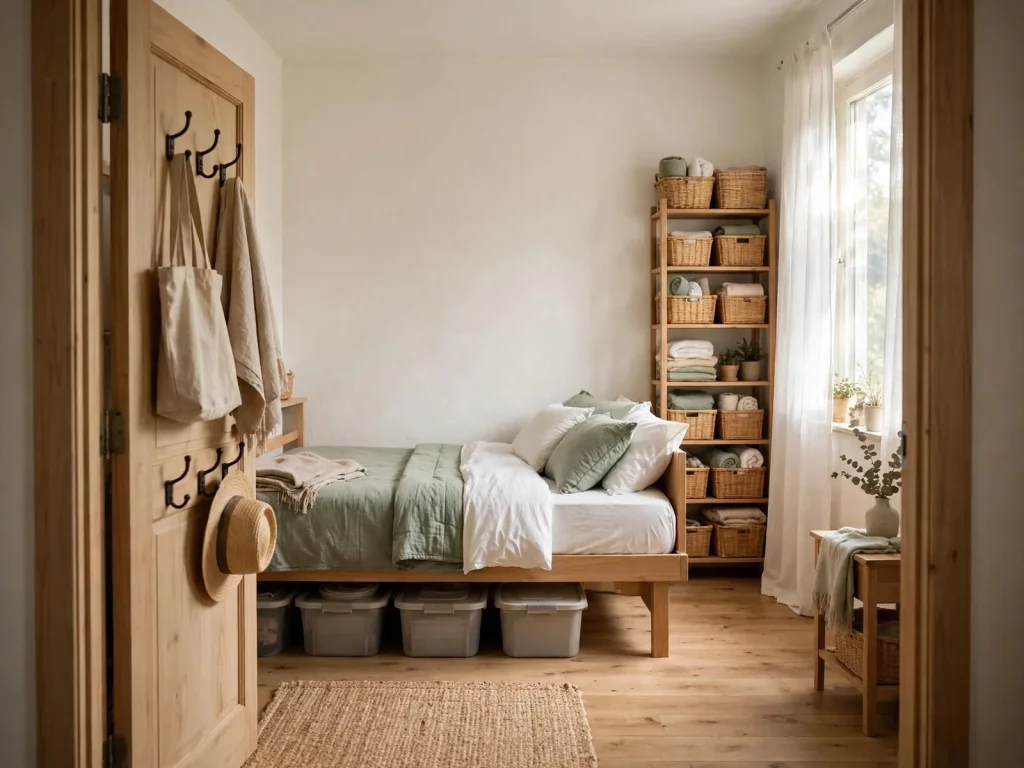
You have saved forty bedroom photos this month and your actual room still looks like a storage unit with a bed in it. The gap is not taste. The saved rooms run on decisions you can copy: one palette held all the way through, light layered at bed height and every surface edited down to a few chosen things. These aesthetic bedroom ideas work for a master bedroom that needs calming down, a guest room that feels forgotten, a couples room where two styles keep colliding and a dual-use room that doubles as an office all week.
That is the promise here and it is narrower than most roundups make. Every idea states its size band and its budget band and flags the renter version wherever paint or drilling shows up. Light direction gets named where it changes the result, because a trick that glows in a south-facing room can die in a north-facing one. Start with the full bank of bedroom ideas if you want range first. If your room is the main one in the house, the master bedroom page runs the same copyable approach at a bigger scale.
Before you start: measure, budget, rules
Measure the room wall to wall and note the window wall and the door swing. Write down which way the window faces. An east-facing room gets strong morning light, a west-facing room glows late and a north-facing room stays flat and cool all day. That one fact decides your palette temperature and your lighting plan before any decor does.
Size bands on this page are plain: small means under 100 square feet, medium means 100 to 150 and large means over 150. Budget bands run in six steps: free, under $25, under $50, under $150, under $300 and over $300. Every idea carries one of those bands. Renters get a flag on every idea that touches paint or a drill and a no-damage version is given each time.
Start here: the highest-impact ideas
1. Choose a three-color palette and hold every purchase to it
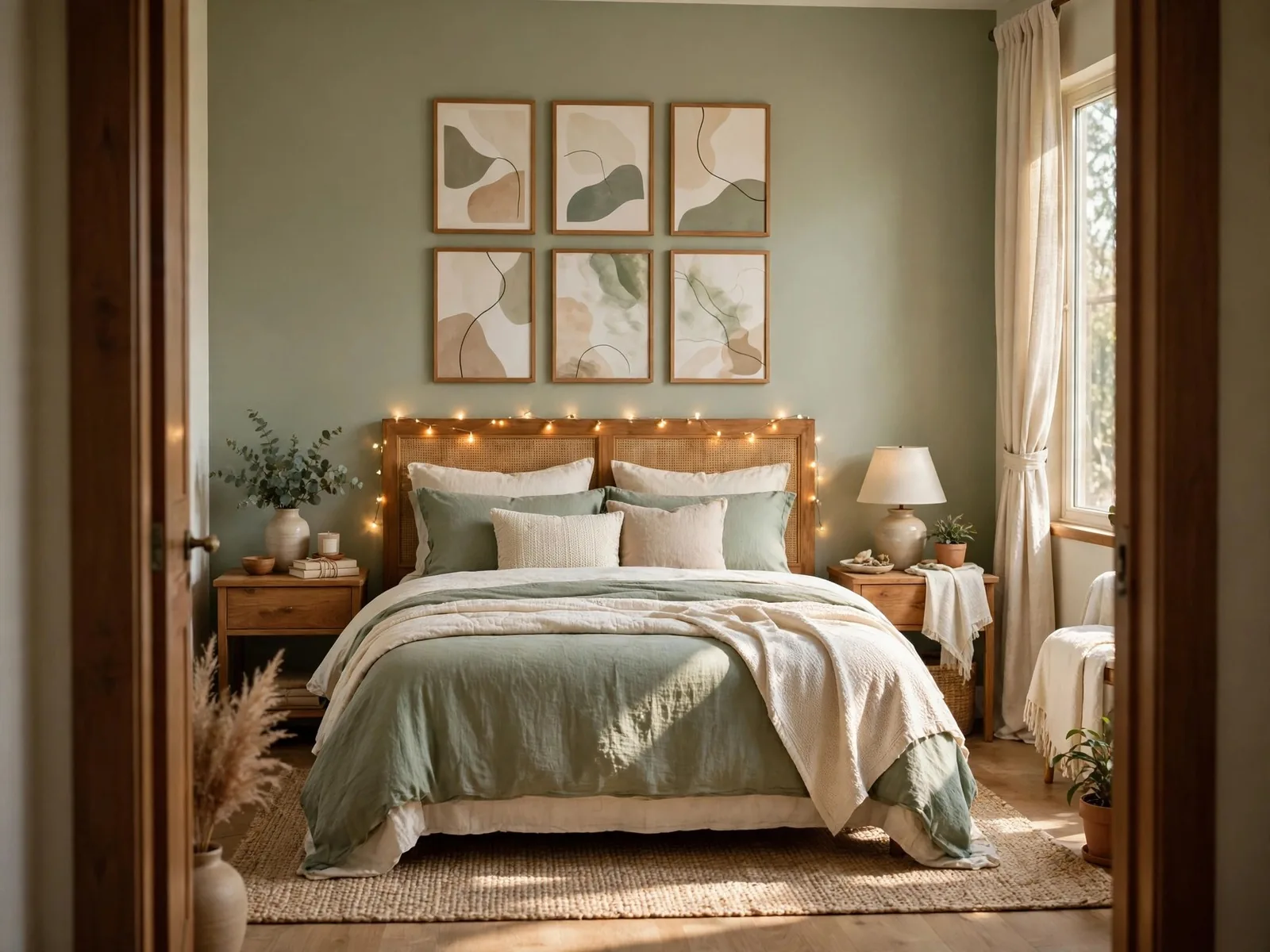
Every saved room that reads as aesthetic runs on about three colors in a 60-30-10 split. Sixty percent is the base, usually bedding and walls. Thirty percent is the support color in curtains and rugs and furniture. Ten percent is the accent that shows up in cushions and art and one small object. Sage green with cream and warm wood is the palette Pinterest saves most right now. Blush with white and brushed gold is the softer version and warm beige with white and black is the quiet one.
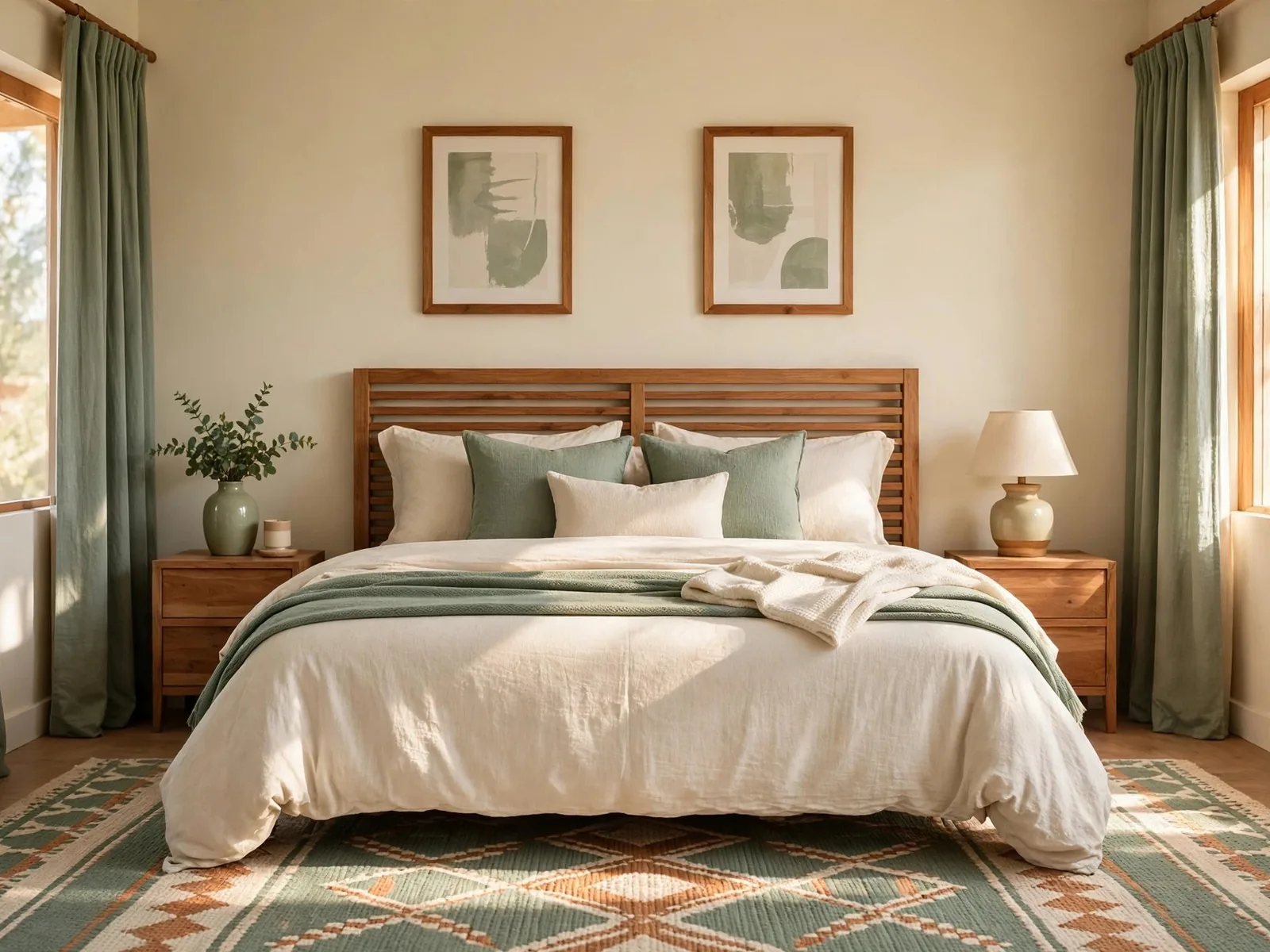
Pick yours from what you already own, not from a photo. Lay your bedding and curtains and rug on the bed in daylight and the palette is whichever three colors keep repeating. The color page works through palette building room by room if you want more combinations.
Budget: free. The palette costs nothing and it saves money on every idea after this one.
2. Layer the bed with three textures in the palette colors
A flat bed in one fabric is the main reason a room photographs fine and feels unfinished in person. Layer three textures instead: a washed cotton or linen duvet as the base, one knit or woven throw across the foot and cushions in two sizes at the head. Keep all three layers inside your palette and let texture do the work that extra colors usually do badly.
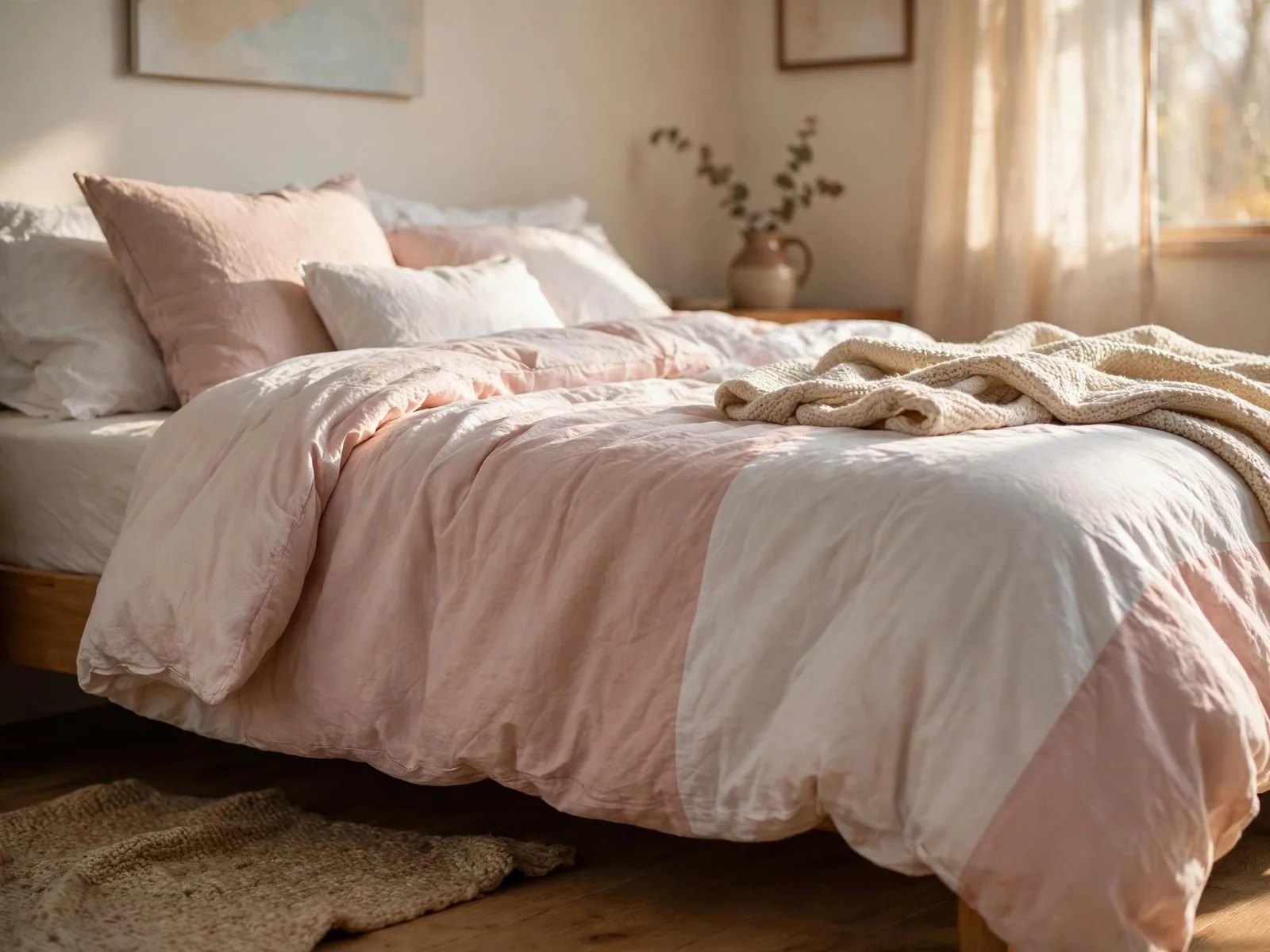
A 50 by 60 inch throw is the right size for a queen bed, folded in thirds so it lands in the lower third of the bed. Two sleeping pillows, two square cushions and one long lumbar is the count that looks styled without making the bed a nightly project. The boho bedroom page layers the same way with natural fibers if your palette leans warm and earthy.
Budget: under $150 for a throw and three cushion covers; the duvet you own already counts as layer one.
3. Add fairy lights as the warm second light source
The dreamy glow in saved bedroom photos is almost never the ceiling light. It is a low warm second source. Fairy lights are the cheapest way to get it. Run a 16 foot warm white strand along the headboard or across the top of the curtain rod and switch the ceiling light off in the evening. The room reads soft in photos and calmer in person.
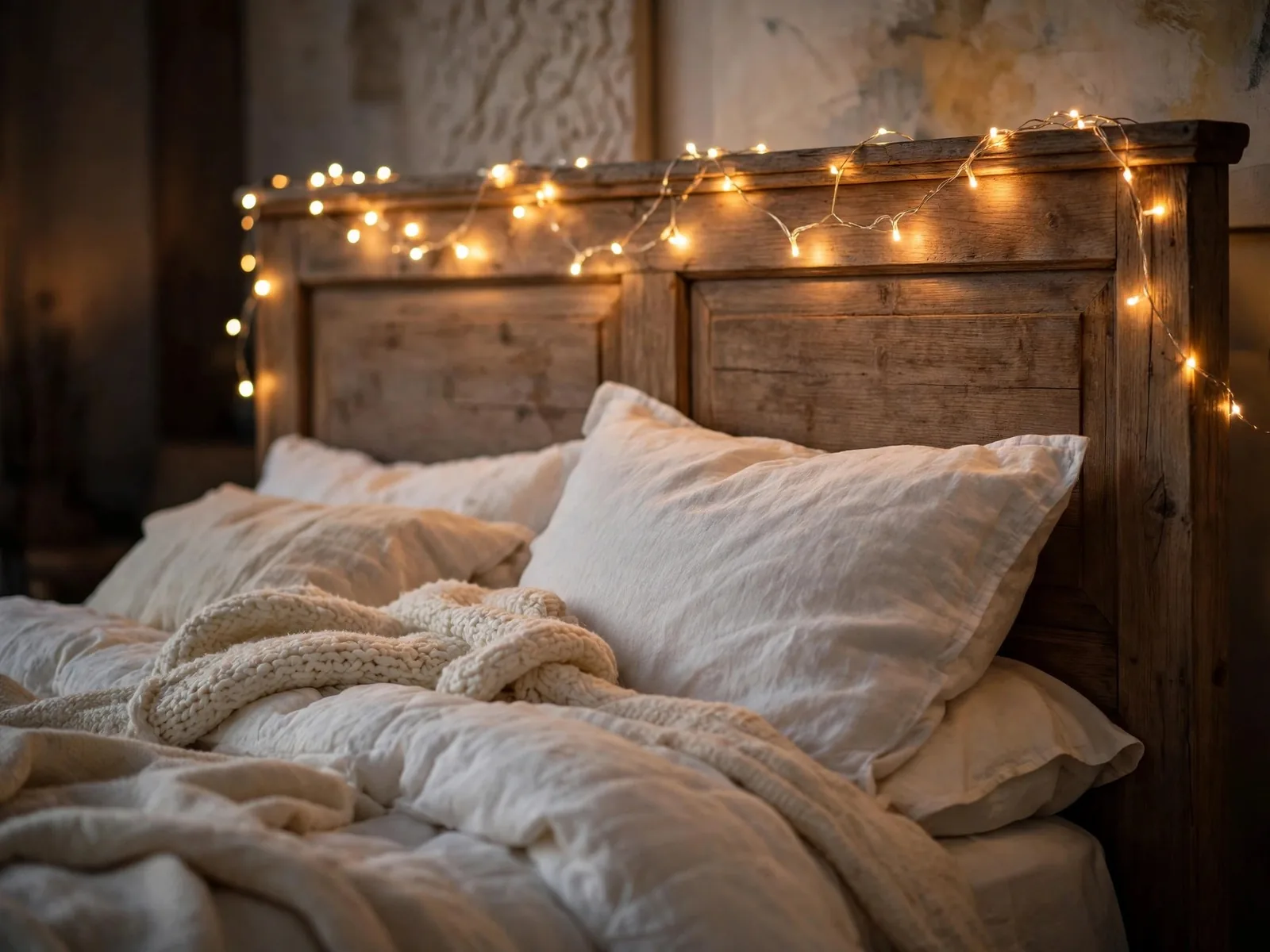
Buy warm white at 2700K, never daylight white, which turns the same strand blue and clinical. Battery packs suit renters and anyone short on sockets; a plug-in strand with a timer suits a master bedroom. The lighting page covers the full layered plan if you want lamps and pendants in the mix too.
Renter-friendly: no drilling and no wiring. The strand clips to the headboard and the battery pack tucks behind a pillow.
4. Build a poster wall above the bed with one grid and one theme
Poster walls are the most saved wall treatment in this whole topic and the difference between the good ones and the messy ones is a grid. Pick prints in two sizes only, 8 by 10 and 11 by 14 inches and hang them with a consistent 2 inch gap. One theme holds it together: landscapes, line art, vintage posters or your own photos printed in the same tones.
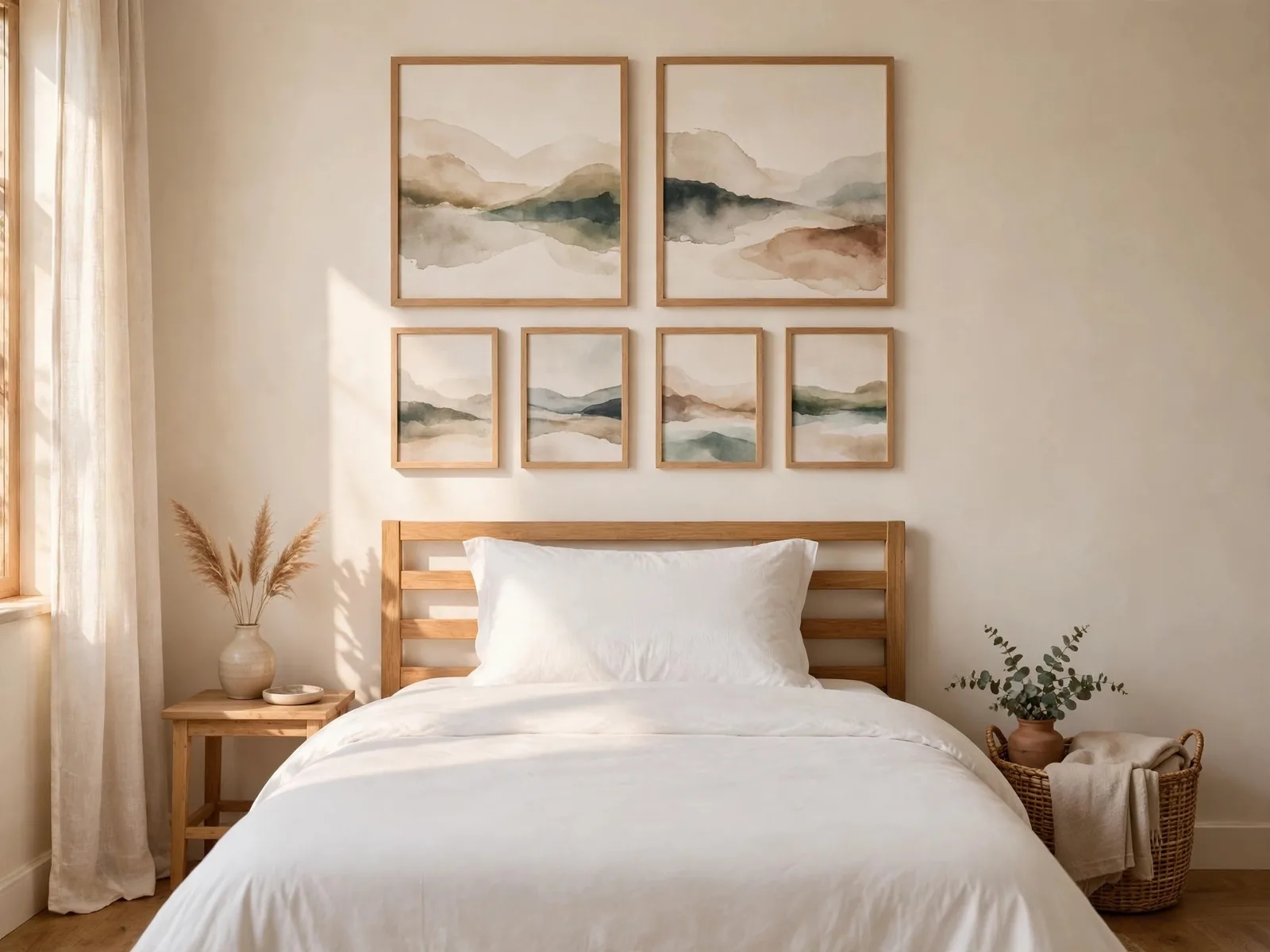
The bottom edge of the lowest frame should sit 6 to 8 inches above the headboard. Lay the whole grid on the bed first and photograph it, because the phone shows crooked spacing your eye forgives. Dorm rooms run this wall harder than anyone and the dorm page has the full poster and photo wall treatment.
Renter-friendly: removable strips hold prints this size with no holes. Two strips per frame, rated for the frame weight.
5. Hang curtains high and wide so the window wall looks taller.
Curtains hung at the top of the window frame make the window look small and the ceiling low. Mount the rod 4 to 6 inches above the frame and 8 to 10 inches wider on each side, then hang panels that just touch the floor. The window reads a foot taller and the wall of fabric becomes the soft backdrop the saved rooms all have.
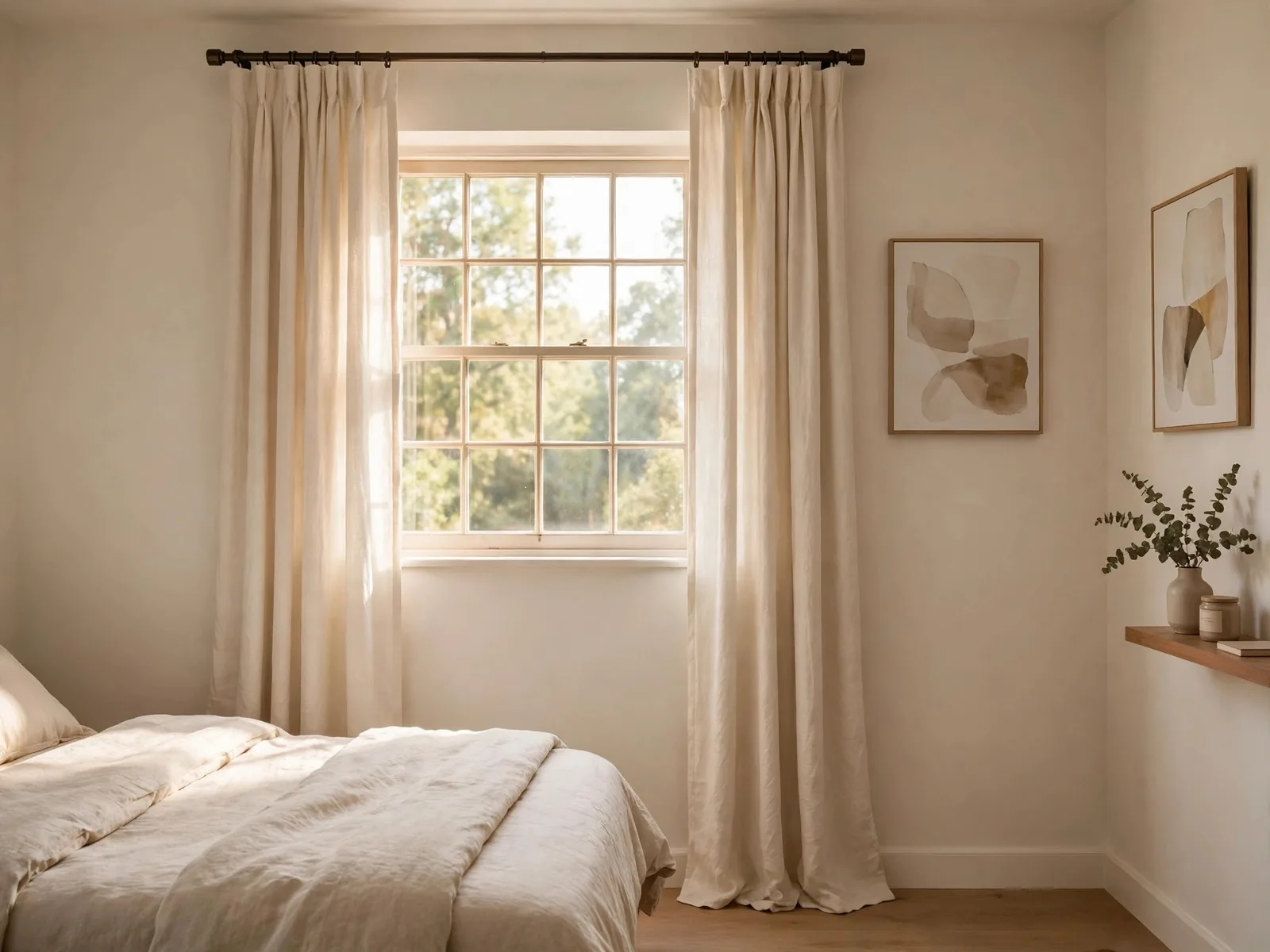
Panel length is the number people get wrong. Measure from the rod to the floor and buy that length, 84 or 96 inches in most rooms, never the shorter panel that hovers above the sill. In a small room this single change does more than any furniture swap, because the eye reads ceiling height from the curtain line.
Needs drilling: two brackets into the wall above the frame. Renters can use a tension rod inside the frame and gain half the effect.
6. Bounce light around a small room with one large mirror.
In a small room under 100 square feet, one large mirror does the work of three small decor pieces. Hang or lean a mirror at least 24 by 36 inches opposite or beside the window so it throws daylight back across the bed. The room reads brighter at noon and the mirror doubles as the dressing spot a small room rarely has space for.
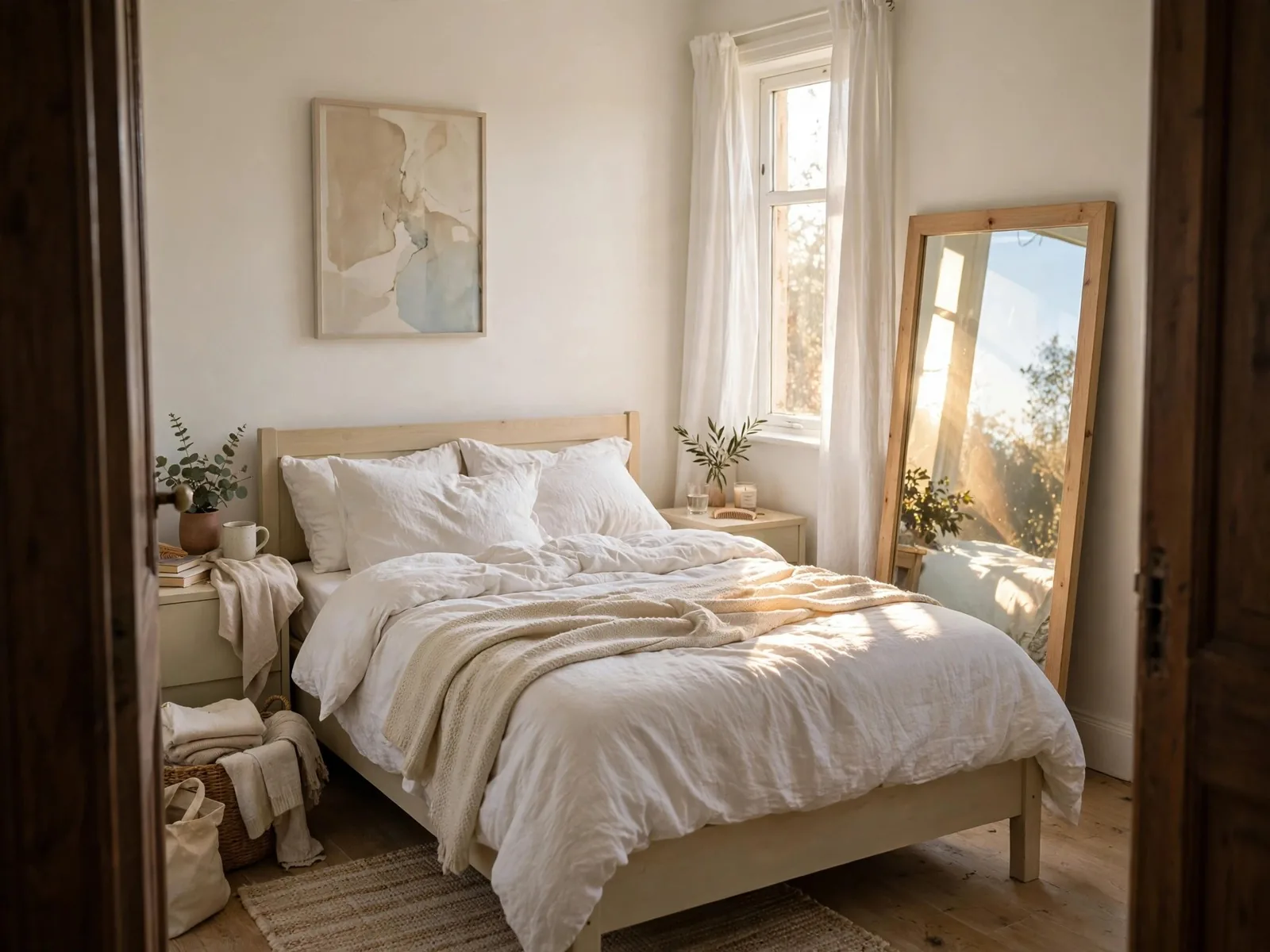
Leaning a floor mirror against the wall suits renters and keeps the wall intact. Keep the mirror out of the direct line of the bed if you wake up startled by reflections at night; beside the window works as well as opposite it. The small bedroom page builds a whole room around light tricks like this one.
Budget: under $150 for a large framed mirror; thrifted mirrors in this size run under $50.
7. Warm up a north-facing room with cream bedding and warm bulbs.
A north-facing room gets flat blue-grey light all day and it makes white bedding look dingy and grey walls look cold. The fix is temperature, not more light. Switch the bedding to cream or warm white, keep the palette in the warm family and change every bulb on the room to 2700K. The same room reads golden by evening instead of grey.
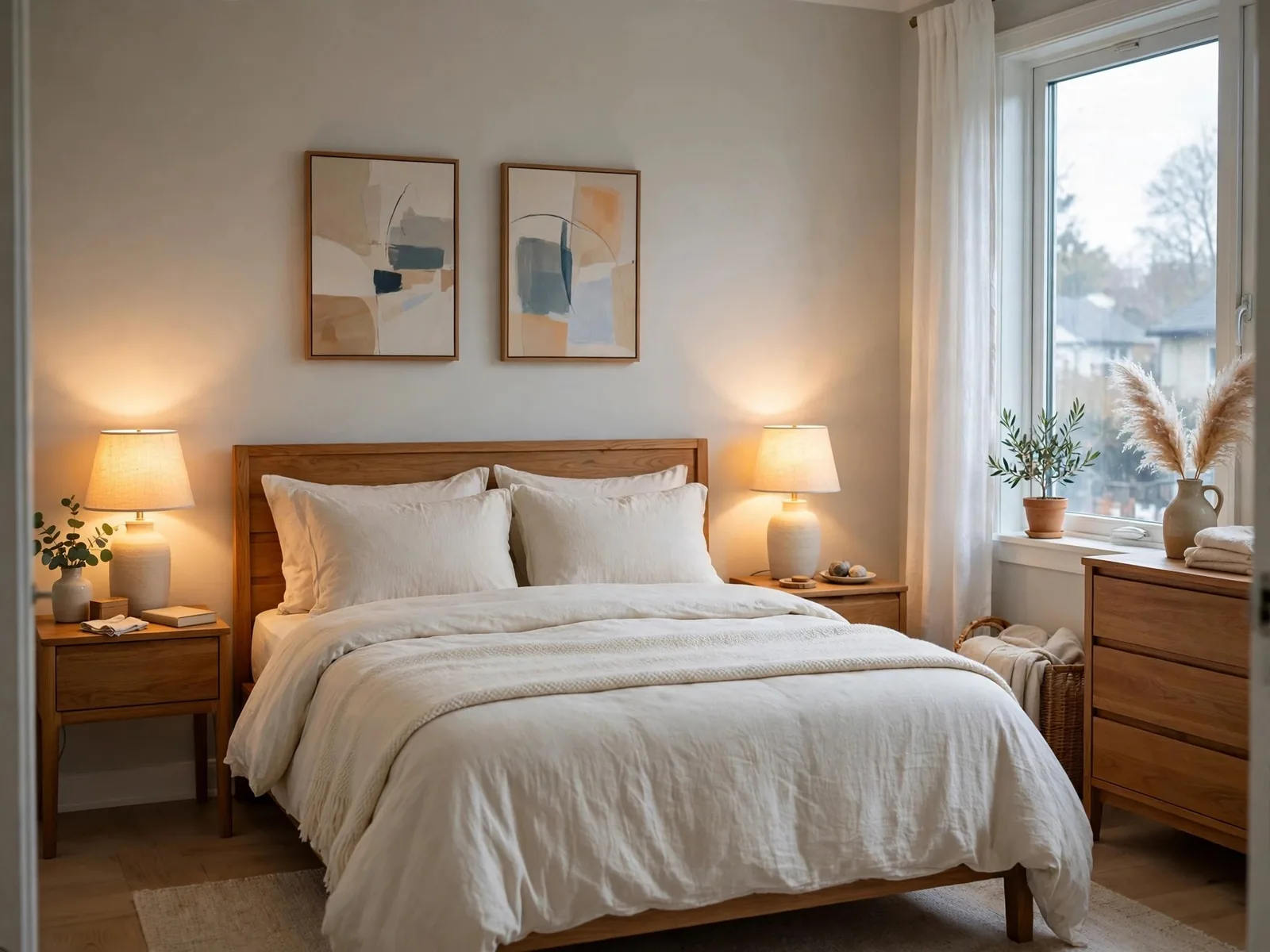
Test paint and fabric in this room at midday, not in the store, because north light shifts every color cooler than its swatch. If your walls are already a cool grey, a cream throw and warm wood tones can correct the feel without repainting.
Budget: under $50 for bulbs and a cream throw; the bedding swap waits until your current set wears out.
8. Zone a dual-use room with a rug and a low shelf.
A dual-use room that works as a bedroom and an office fails when the desk stares at the bed all night. Zone it instead. A 5 by 7 foot rug under the bed marks the sleep zone and a low open shelf around 32 inches high marks the work zone without blocking light or making either half feel like a corridor.
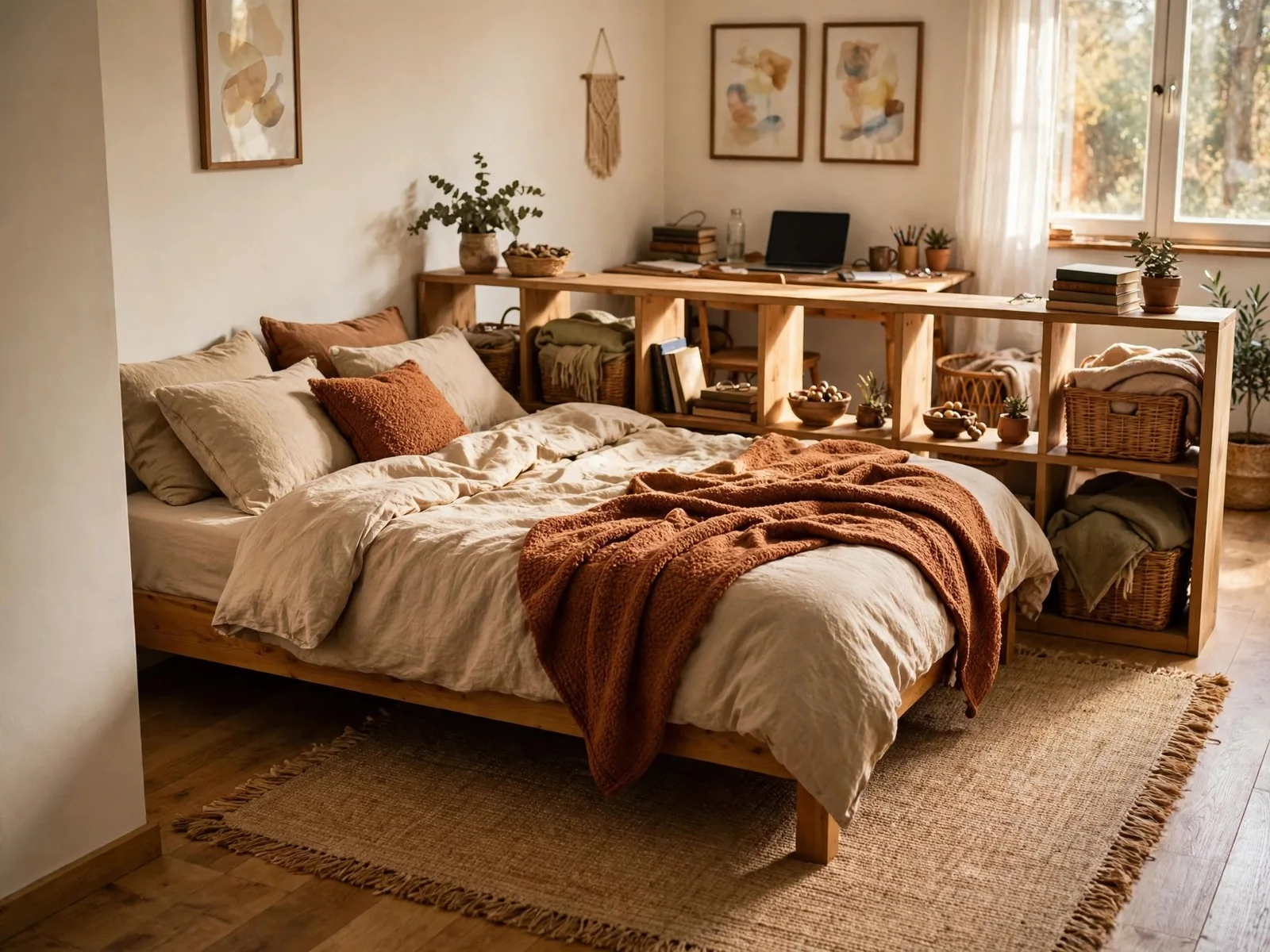
Face the desk toward a wall instead of the bed and keep work things on the shelf side of the line after hours. The visual separation is what lets the room read as a bedroom in photos and feel like one at midnight. Storage that earns its footprint matters here. The storage page covers the closed and vertical options for rooms doing two jobs.
Measure: leave 24 inches of walking space between the bed zone and the desk zone; tighter than that and both zones feel cramped.
9. Calm a couples room with matched nightstands and lamps.
A couples room often looks unsettled because two styles meet at the bed. Symmetry settles it. Matched nightstands within 2 inches of the same height and a pair of identical lamps give the bed wall one clear rhythm. Each person still gets a drawer and a light and a surface of their own.
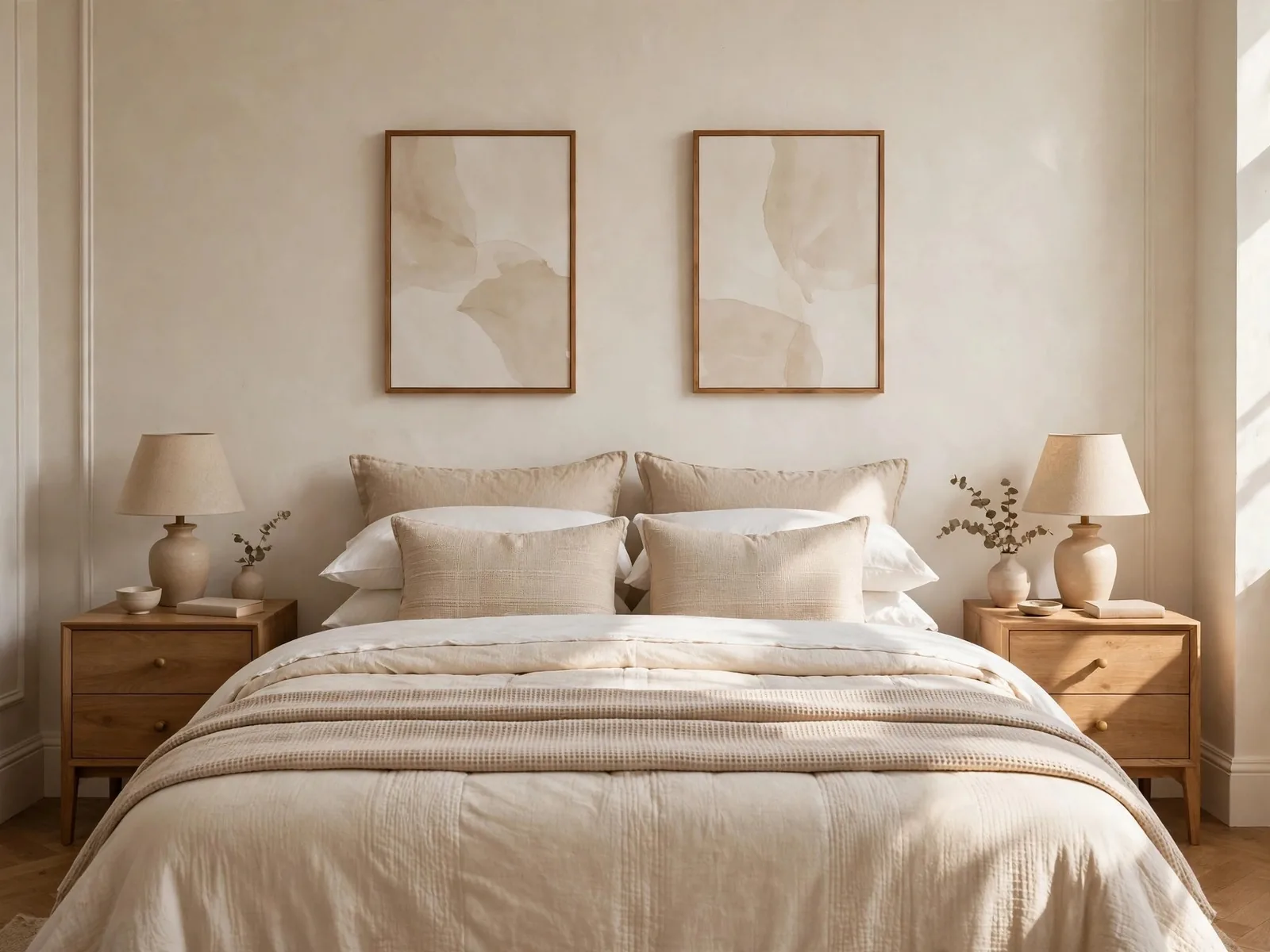
Everything else in the room can stay mismatched and personal. The bed wall is what the eye reads first from the door, so order there carries the whole room. If budgets are tight, match the lamps first; they are cheaper than furniture and they frame the bed every night.
Budget: under $300 for two nightstands and a lamp pair bought as a set; lamps alone run under $80.
10. Fake an accent wall with peel-and-stick wallpaper behind the bed.
The accent wall behind the bed is the single most pinned shot in this topic and renters can have it without paint. Peel-and-stick wallpaper in a soft print or a grasscloth texture covers the bed wall and comes off clean when you leave. One standard roll covers about 28 square feet, so a bed wall in a medium room usually takes three rolls.
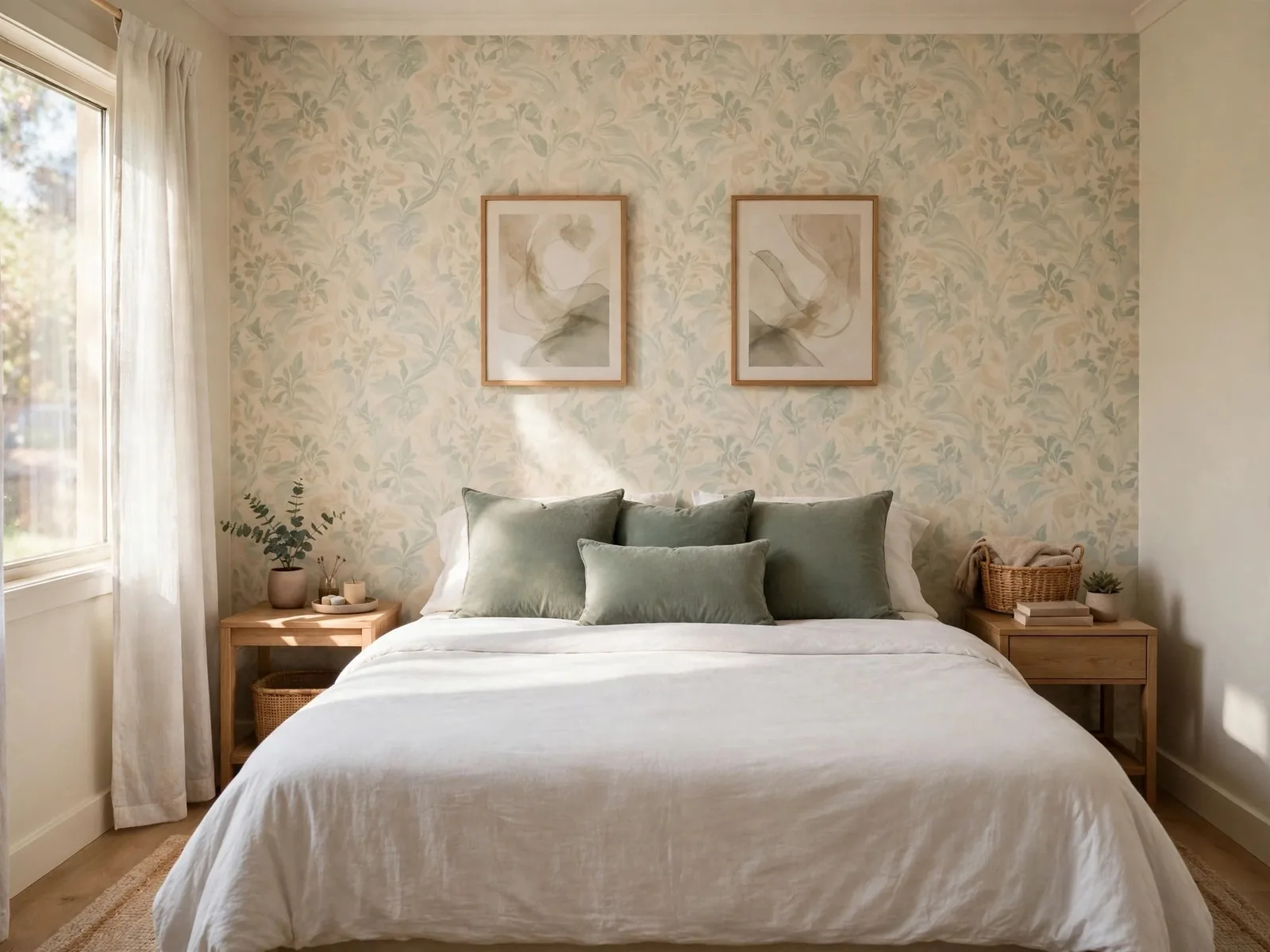
Start from the corner behind the door side of the bed and work toward the visible side, so the final seam lands where nobody looks. The accent wall page walks through patterns and placement for every wall in the room. Smooth walls take the paper well; heavy orange-peel texture shows through thin paper, so order a sample first.
Renter-friendly: no paint and no paste. The paper peels off in full strips and leaves the wall as it was.
11. Rearrange around one focal point and clear every surface.
The free version of this whole page: pick the bed wall as the focal point and arrange the room so it is the first thing seen from the door. Then clear every surface down to three objects or fewer. Dressers and nightstands in saved rooms hold almost nothing. That emptiness is what makes the few chosen things read as decor.
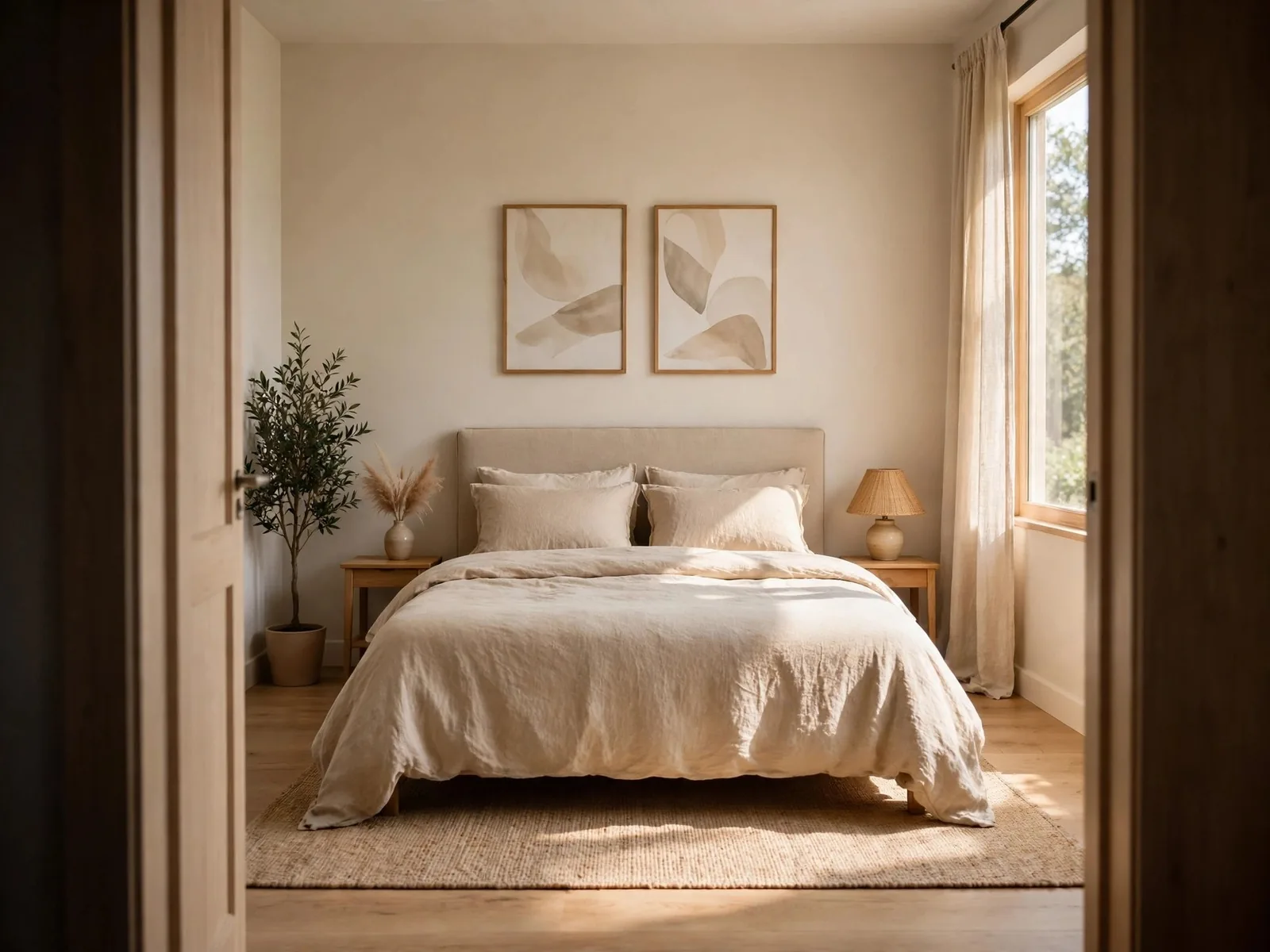
Work in one pass with a box. Everything that does not earn its place goes in the box for a week and most of it never comes back. Keep 24 inches of clear floor around the bed so the room breathes. This rearrangement costs an afternoon and it changes the room more than most purchases do.
Budget: free. This is the highest-impact idea on the page and it needs no shopping at all.
12. Print a photo garland for under $25.
A string of your own photos above the desk or along a shelf edge is the cute bedroom decor staple that costs almost nothing. Print twelve to fifteen 4 by 6 photos in the same tones, warm or black and white, then clip them along 6 feet of twine or a wire strand with small clips. Mixed color photos in mixed tones look scattered; one tone family looks styled.
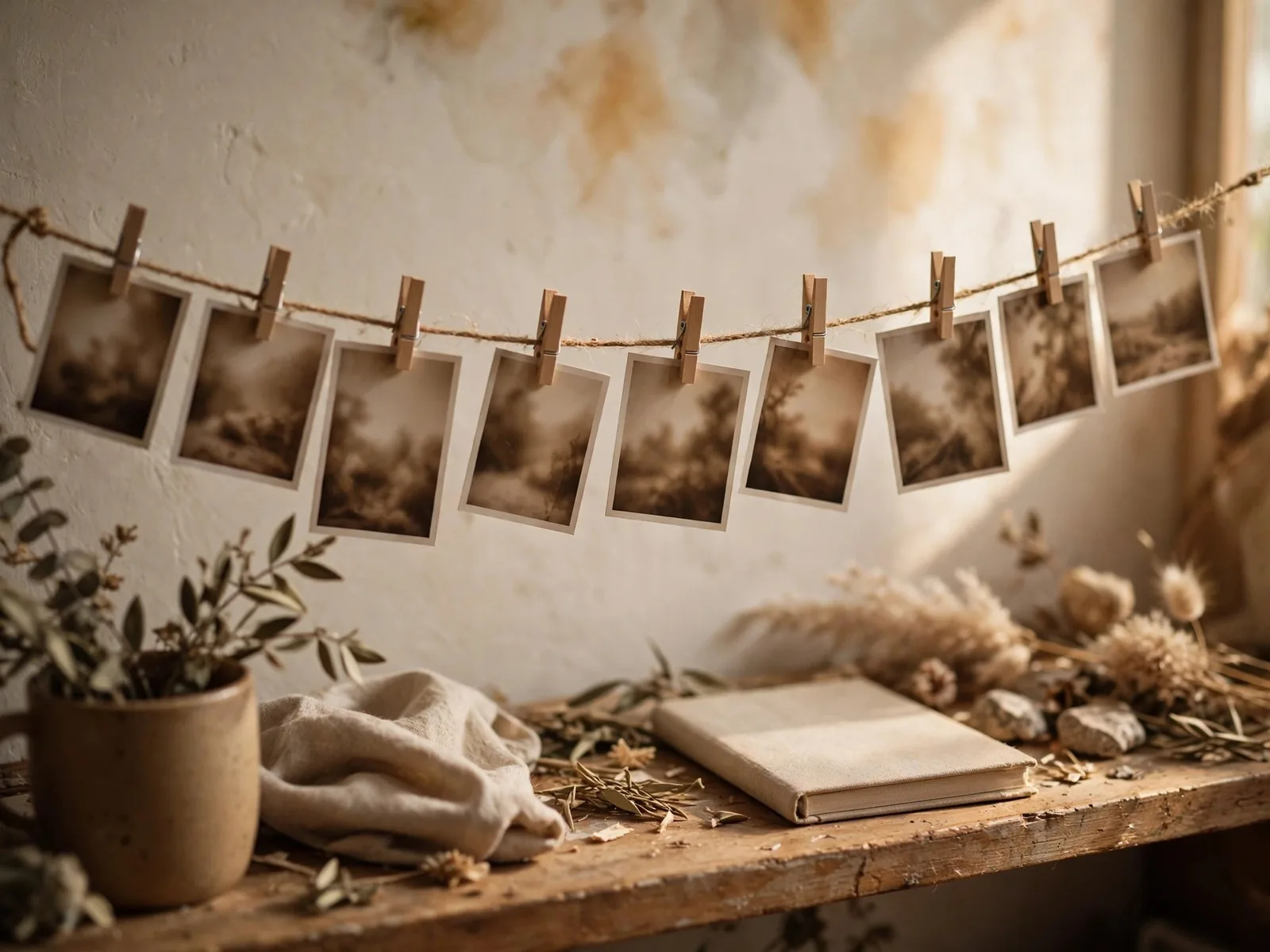
Leave uneven spacing alone. The garland reads handmade on purpose and perfect spacing makes it look like a shop display. Swap the photos seasonally and the wall refreshes itself for the price of one print order.
Budget: under $25 for prints and clips and twine; most of it is the print order.
13. Cluster three plants at three heights for under $50.
One plant on a dresser looks like an afterthought. Three plants at three heights look like a decision. Set a trailing plant on a high shelf, a medium plant on the nightstand or dresser and a small one on the floor or a stool. The eye travels the levels and the room gains the soft edge that plastic decor never gives.
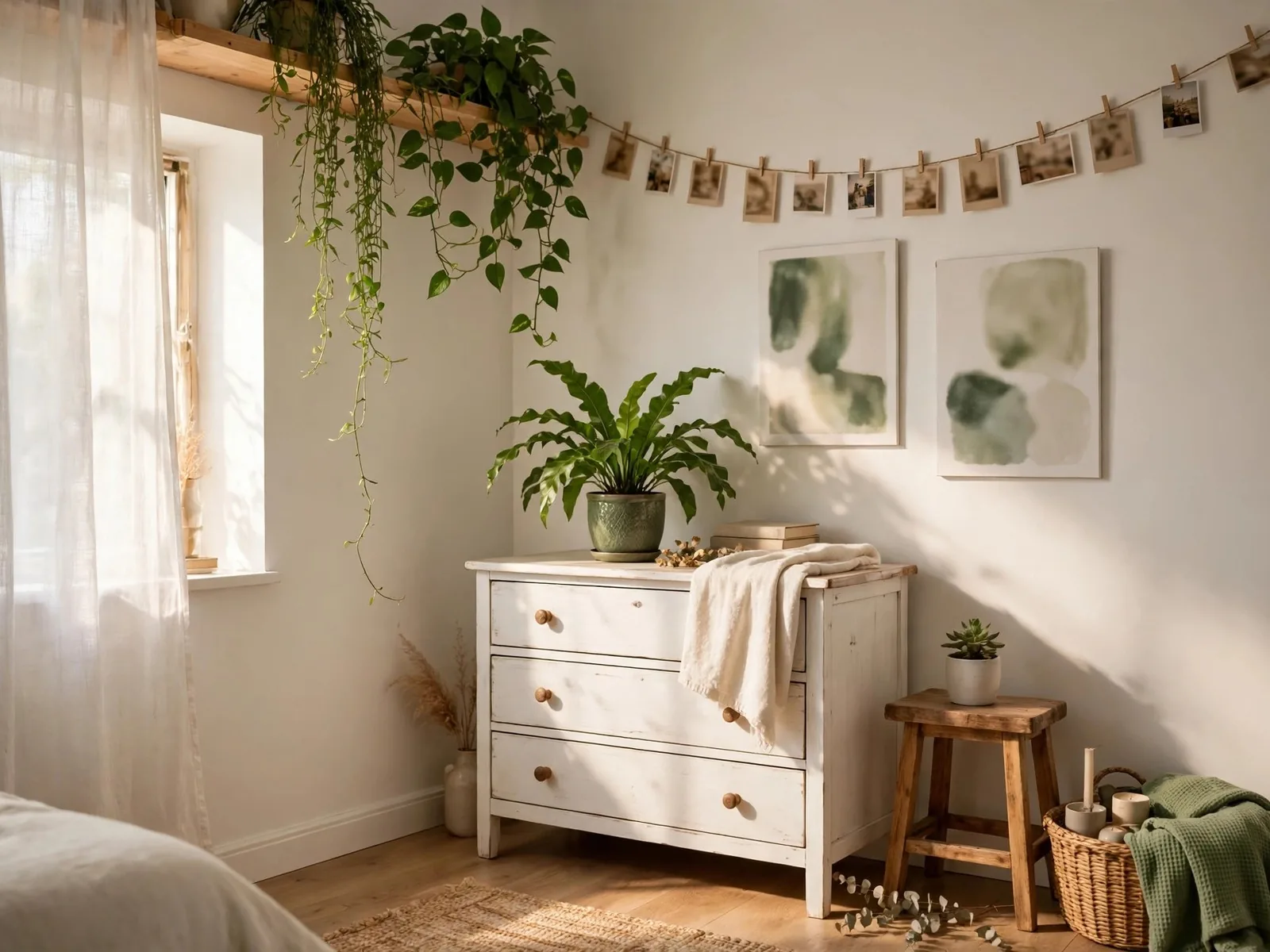
Pothos and snake plants survive bedroom light and irregular watering, which is why they fill the saved photos. Six inch pots are the size that reads in a photo without crowding the surface. Keep plants out of the bed itself; leaves on pillows photograph well once and annoy nightly.
Budget: under $50 for three plants in 6 inch pots; thrifted pots and cuttings from friends cut it further.
14. Layer two rugs for under $150.
Bare floor around the bed is where a room loses its softness. Layer a large flat jute or woven rug under the bed with a smaller soft rug on top at the side you step onto. The base rug should reach at least 18 inches beyond the bed on both sides; an 8 by 10 foot base under a queen bed is the size that works.
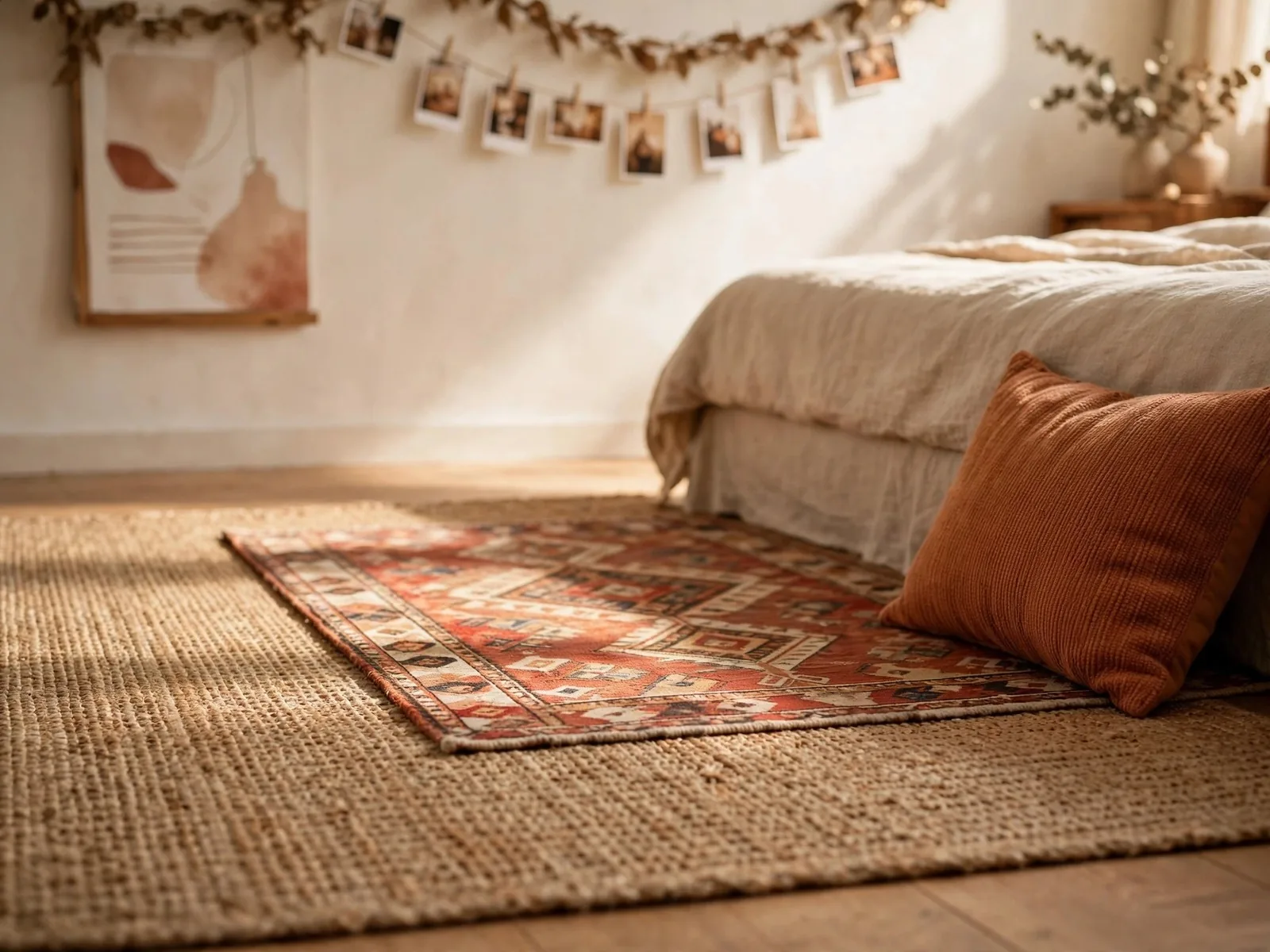
The top rug is where the palette accent can live, in a pattern or a deeper tone. Layering lets a cheap large rug do the coverage and a nicer small rug do the look, which is how the budget splits best in this room.
Budget: under $150 for both layers bought in that order; the base rug alone still works while you save for the top one.
15. Swap the headboard for under $300.
The headboard is the largest single object in the bed wall picture and an upholstered or cane one changes every photo of the room. A padded headboard in cream or sage makes the layered bed read finished; a cane or rattan panel makes it read warm. Queen size is the most stocked and the cheapest to find.
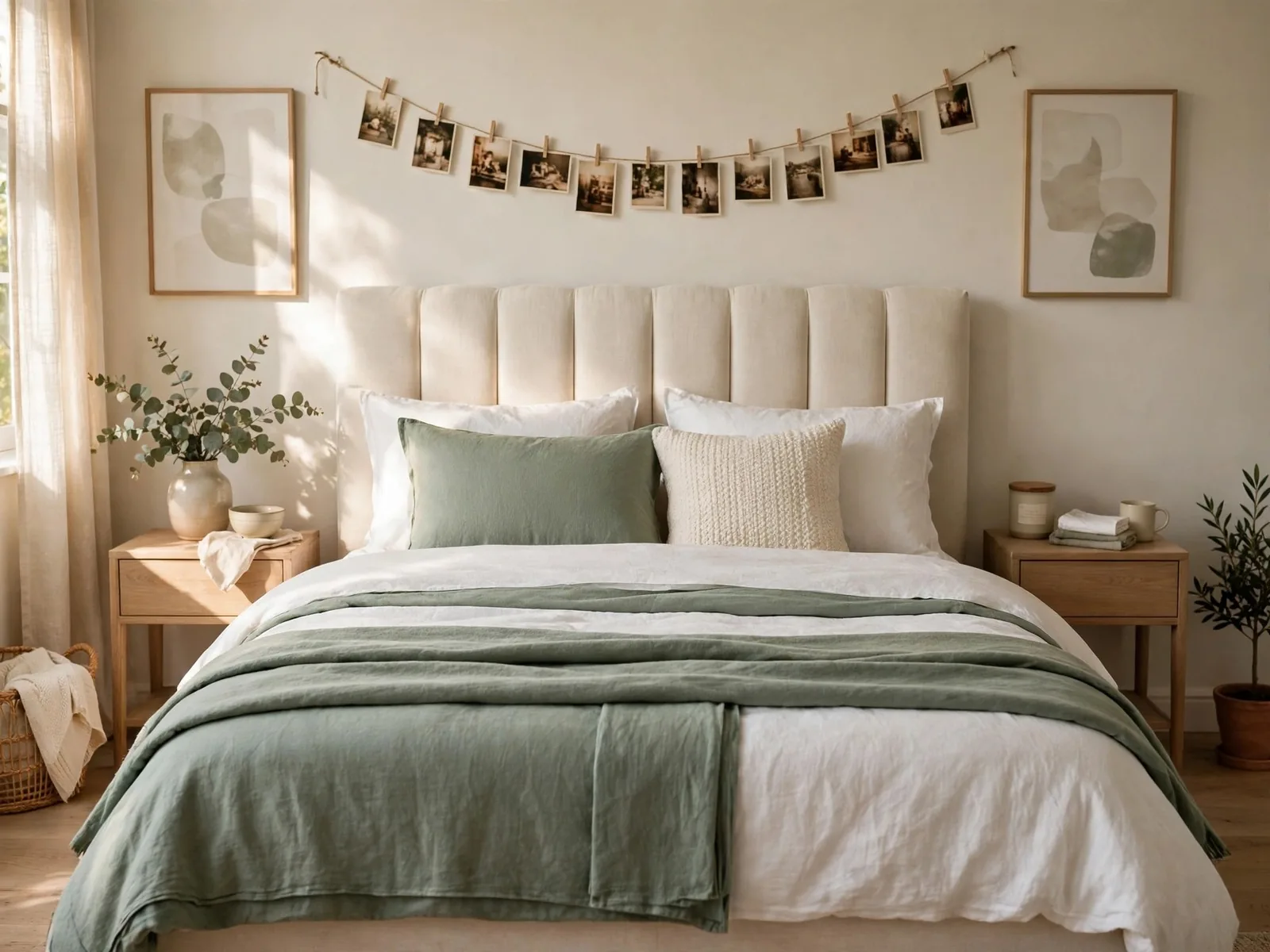
Many headboards bolt to the bed frame and need no wall contact at all, which keeps this idea open to renters. Measure your frame width before ordering, because a headboard 2 inches too narrow shows a gap at both sides. The headboard page compares shapes and heights across every bed size.
Budget: under $300 for a queen upholstered headboard; frame-mounted, so no drilling in most cases.
16. Match lamp height and bulb warmth on both sides of the bed.
Two different lamps at two heights make the bed wall look accidental even when everything else is right. Match the pair and set the bottom of each shade around shoulder height when you sit up in bed, which means a lamp 24 to 28 inches tall on a standard nightstand. Both bulbs at 2700K keep the pair reading as one decision.
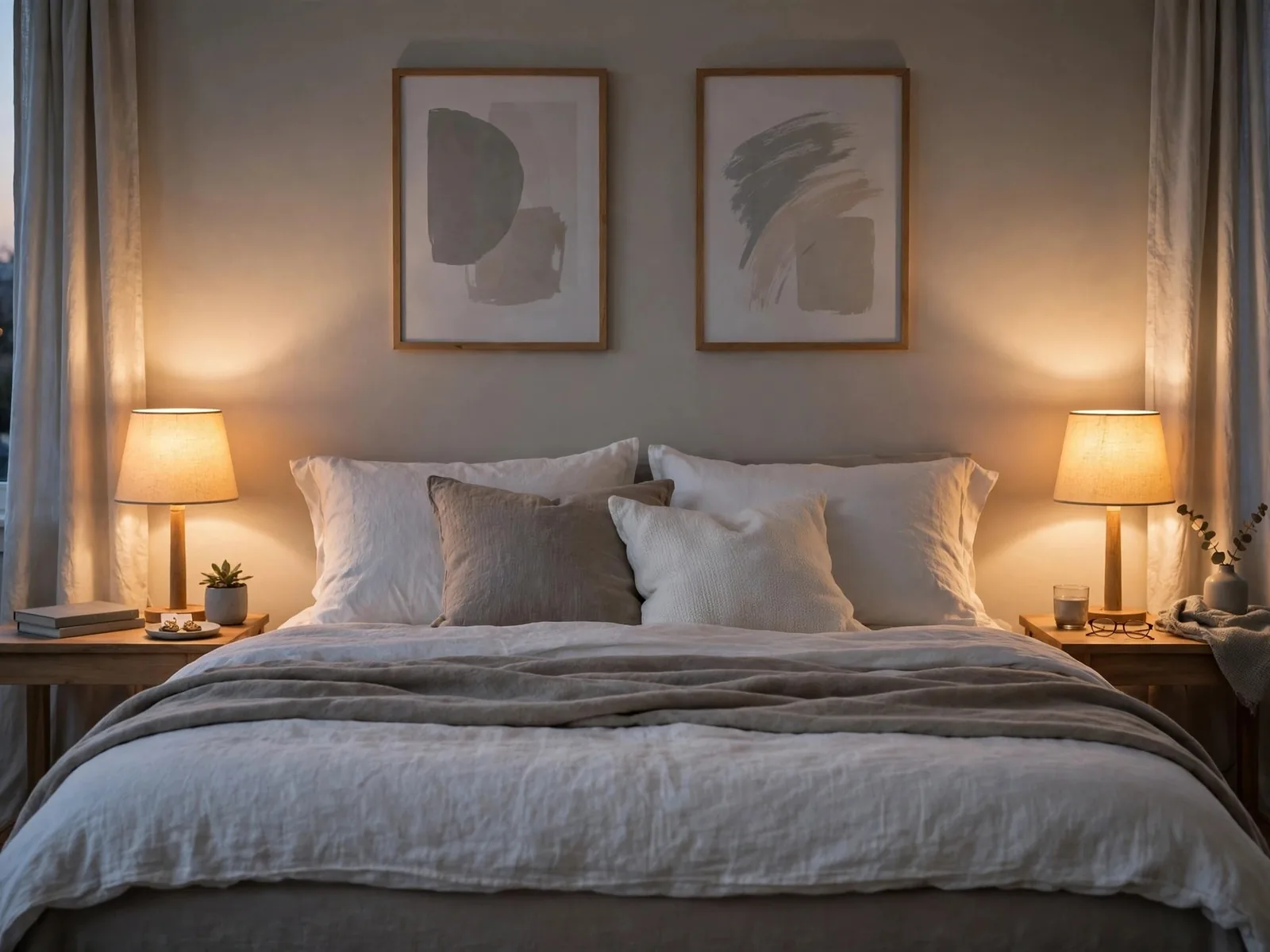
If a matched pair is not in the budget, matching bulbs and matching shades on different bases gets surprisingly close. Light color mismatch is what the eye actually catches.
Budget: under $80 for a matched lamp pair; under $15 to just match the bulbs and shades.
17. Style the nightstand in threes.
The nightstand close-up is a Pinterest staple and it runs on the rule of three: one practical thing, one living thing and one personal thing. A book and a small plant and a candle. A water glass and a tiny vase and a framed photo. Three objects at three heights, arranged in a loose triangle, with the rest of the surface left empty.
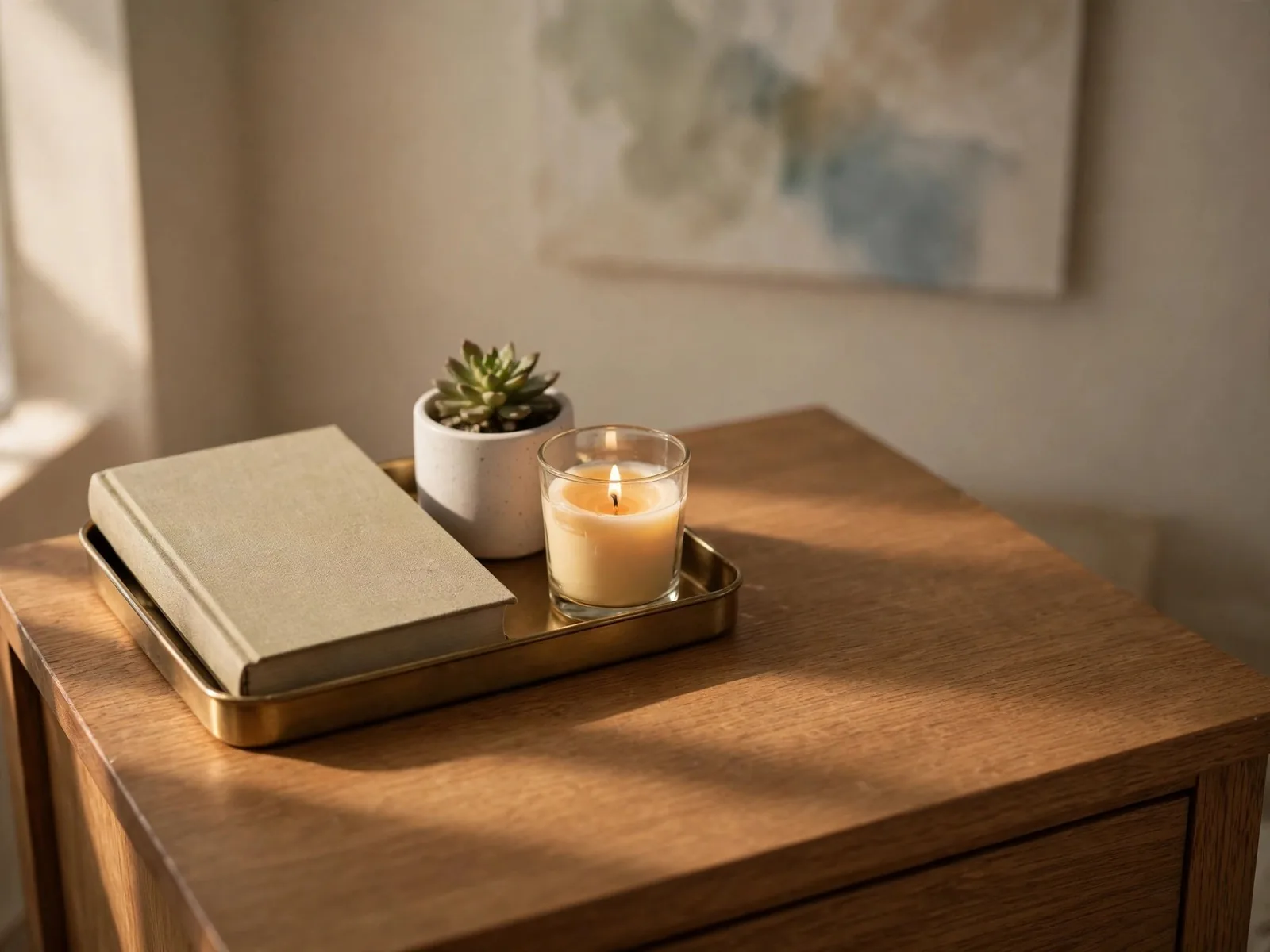
A small tray around 12 inches wide corrals the group and makes dusting a one-lift job. Everything else that used to live on the nightstand goes in the drawer, because visible clutter is what breaks the close-up and the calm.
Budget: under $25; most nightstands already hold the three objects, buried under the clutter.
18. Set a candle cluster on the dresser.
Three candles at three heights on the dresser give the room its evening layer: soft light, a scent you chose and a small ritual that marks the day ending. Group them on a tray or a small stack of books so they read as one arrangement instead of scattered singles.
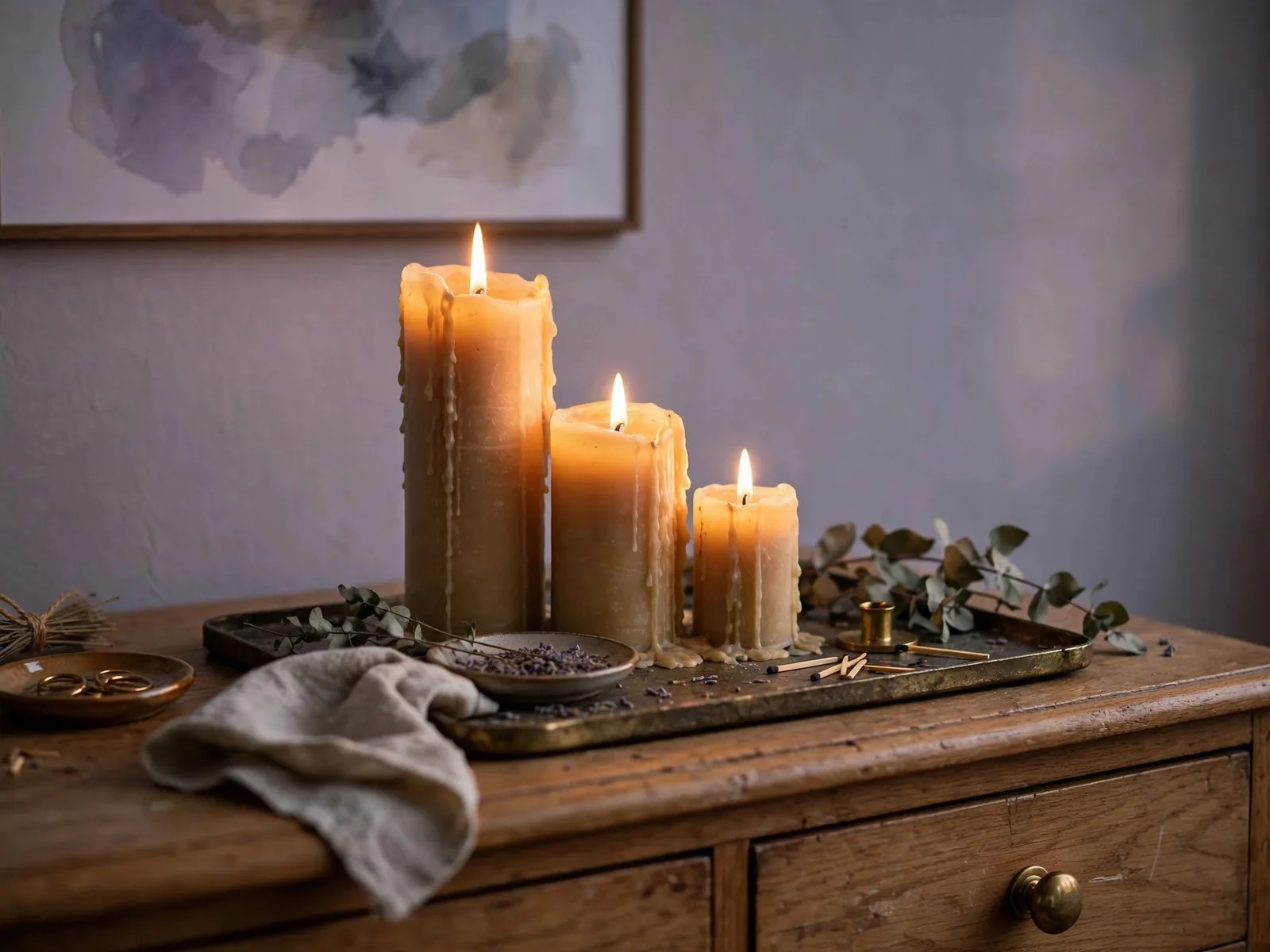
Battery candles on a timer do the same job for anyone who forgets flames. They also suit rooms with pets or small children. Keep real flames a clear 12 inches from curtains and bedding, always.
Budget: under $25 for a cluster of three; battery versions cost a little more and last for years.
19. Leave one wall and one surface completely empty.
The last idea is a subtraction. Saved rooms always include a rest for the eye: one wall with nothing on it and one surface holding nothing at all. That emptiness is what makes the poster wall and the layered bed register. A room where every wall and every surface is filled reads busy at any budget.
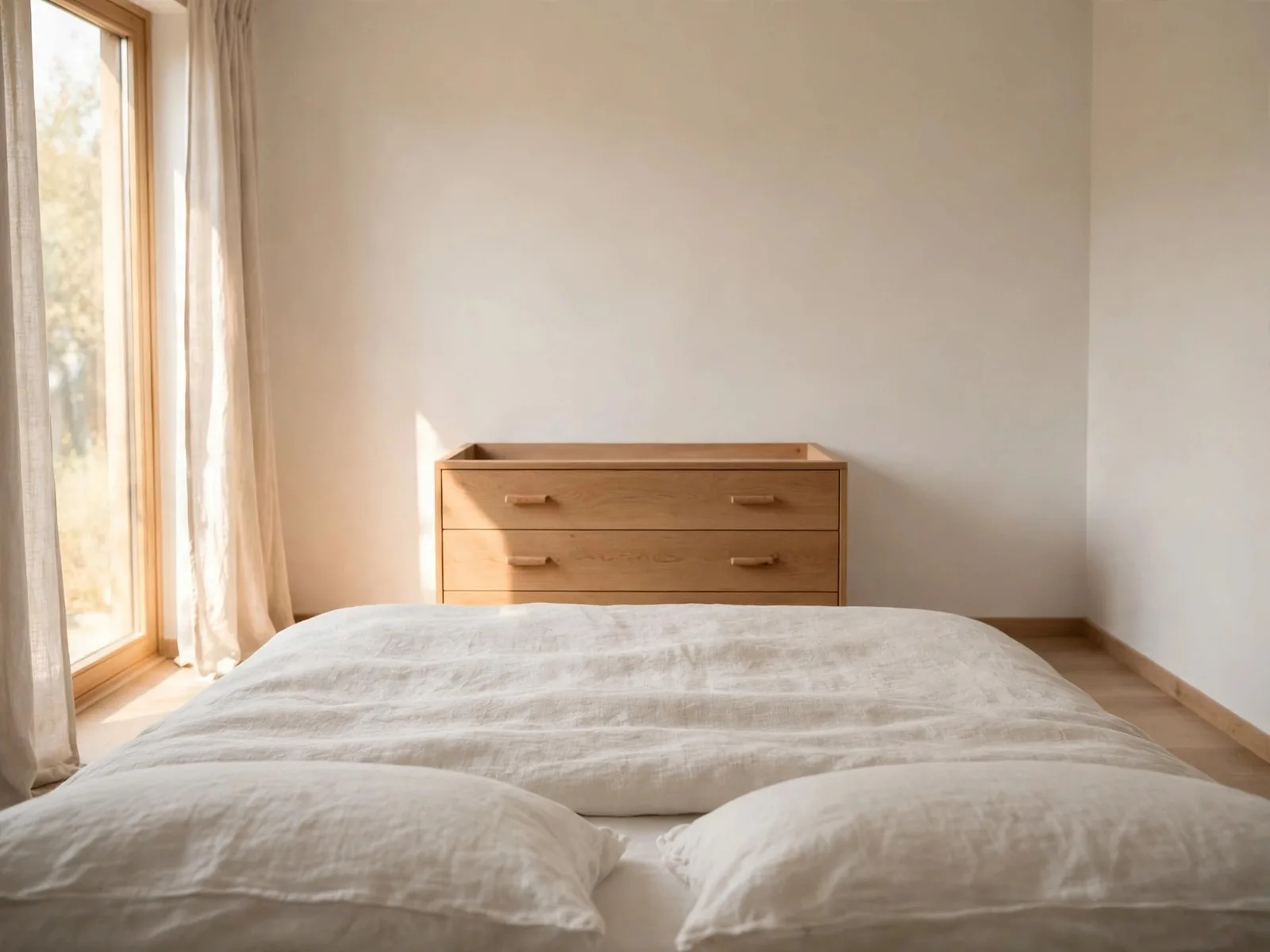
Choose the wall opposite the bed for the empty one if you can, so the last thing you see at night is calm. This is also the discipline that keeps the room working in daylight, because real life adds objects daily and the empty zones absorb the drift.
Budget: free; this one protects every dollar spent on the ideas above it.
Aesthetic bedroom ideas on a budget
The budget version of this room runs in the same order, just tighter. Do the free rearrange first and hold it for a week; half the rooms that feel wrong just need editing. Then set the palette from what you own, because the palette is free and it makes every later dollar land in the right color.
Spend next on light and the bed, in that order: fairy lights and warm bulbs for under $30, then a throw and cushion covers in the palette for under $60. The photo garland and the plant trio together run under $75 and cover the walls and corners. A realistic total for the full budget version is $150 to $200 spread over two months. The makeover page runs this same spend-in-order approach across a whole room refresh.
Mistakes that make it fall flat
- Buying the matching furniture set. A bed and nightstands and a dresser all in the same finish is the fastest route to a room that looks cheap, because it reads as a showroom bundle instead of a collected room. Mix two wood tones and one painted piece instead.
- Overhead light only. One ceiling bulb flattens everything and makes even good bedding look dull. The saved rooms never use it. Two low warm sources change the room more than another cushion does.
- Posters with bare curled edges. Unframed prints taped at the corners curl within a month and drag the whole wall down. A frame or a clip rail or a printed canvas keeps edges straight and costs little.
- Too many small objects. Twelve tiny items on a dresser read as clutter where three larger ones read as decor. Scale up and count down: fewer pieces, each big enough to see from the door.
- Copying a photo without its light. A palette that glowed in a south-facing photo can look flat in your north-facing room. Test colors in your own daylight before committing to paint or big textiles.
Questions people ask about this
Where do I start when decorating a bedroom?
Start with the bed wall and the palette. Choose three colors from things you already own and arrange the bed as the focal point seen from the door. Then fix the lighting with one warm low source. Storage and wall decor come after, because the bed and the light decide how every later piece reads.
What order should I buy bedroom items in?
Buy in the order your eye meets them. Bedding and curtains first, since they cover the largest areas. A headboard and lamps next, because they frame the bed. Rugs and storage follow. Art and cushions and small decor come last, because they are the cheapest pieces to swap when the room settles.
How do I make a bedroom feel finished?
A room feels finished when the bed is layered, both sides have a light and a surface and one wall carries a single clear arrangement. Add one plant and one personal object, then leave one surface empty. Matching bulbs and a folded throw do more for the finished feel than another piece of decor.
The bottom line
An aesthetic bedroom is not a style you buy; it is a short list of decisions you hold: one palette, layered light, a bed dressed in three textures and surfaces edited down to the pieces that earn their place. This week, photograph your room from the door in daylight, pick the palette hiding in what you already own and run the free rearrange before you spend a single dollar.