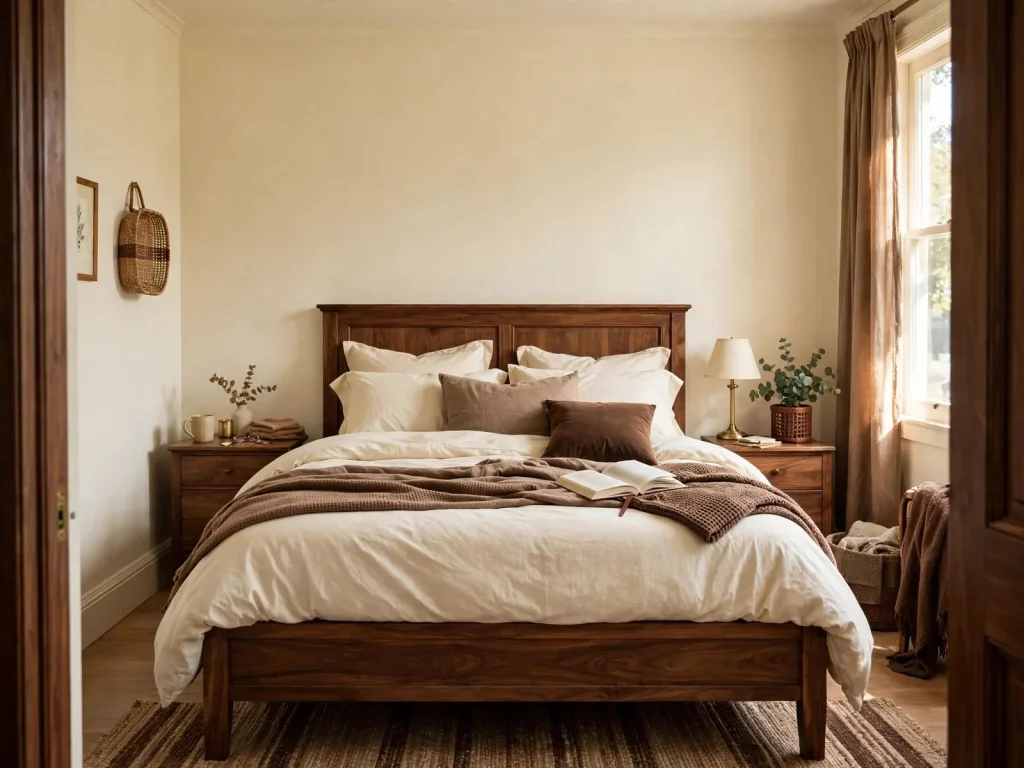
Your saved folder is full of black bedrooms and every one of them looks rich in the photo, yet you cannot tell whether black would feel warm and calm in your room or cold and gloomy by November. Black bedroom ideas succeed or fail on two things the photos never label: the undertone of the black and the dose of it. The same paint reads velvet in a south-facing room with brass lamps and reads like a chalkboard in a north-facing room with one ceiling light.
This page hands you the recipe instead of the mood board. You get 14 black bedroom ideas built as five named palettes, each one split 60-30-10 into a wall color with its brand and code, the textiles that complete it and the accent that warms it. Every palette names its dose, from one wall behind the bed to a full drench, plus its finish and the wood and metal it pairs with. The light rules come before the palettes rather than after the mistake. Each idea carries a budget band or a renter note. The full bank of bedroom ideas lives on the pillar page, if black turns out to be only your first dark room.
Before you start: measure, budget, rules
Note the light before anything else. Stand in the room with a phone compass and name the direction the window faces, because that single fact steers every palette on this page. North-facing rooms take warm blacks with brown undertones. South-facing rooms take cooler blue-blacks. East rooms get their truth in the morning and west rooms get theirs at the hour you actually use the room.
Measure the bed wall in feet and count your walls. One gallon of paint covers about 350 square feet with one coat and black usually wants two coats to sit even, so a mid-size bedroom needs two gallons for four walls and one gallon paints a single bed wall with paint to spare. Budget bands on this page: under $25 for testing, under $90 for one wall, $75 to $300 for a textiles-led change and $200 to $450 for a full repaint with a bedding refresh.
Test before any gallon. Paint two coats of your sample on a foam board or straight onto the wall behind the bed and make the patch at least 12 by 12 inches. Live with it through one full day and one lamplit evening. Black shows its undertone only after dark, so the evening look is the vote that counts. Two sample pots run about $5 to $10 each and they are the cheapest decision on this page.
Two rules hold for every idea below. Finish: eggshell or satin on walls, because both wipe clean and keep black reading rich; matte is saved for the full drench palette, where sheen would fight the cocoon. Trim and painted furniture take satin or semi-gloss, so the black on wood reads as its own layer against the wall. Renters: paint needs written permission in most leases, so the no-paint versions are flagged Renter-friendly and ideas 10, 13 and 14 keep black off the walls entirely. If you are still choosing between color families rather than between blacks, the bedroom color ideas page compares the families first.
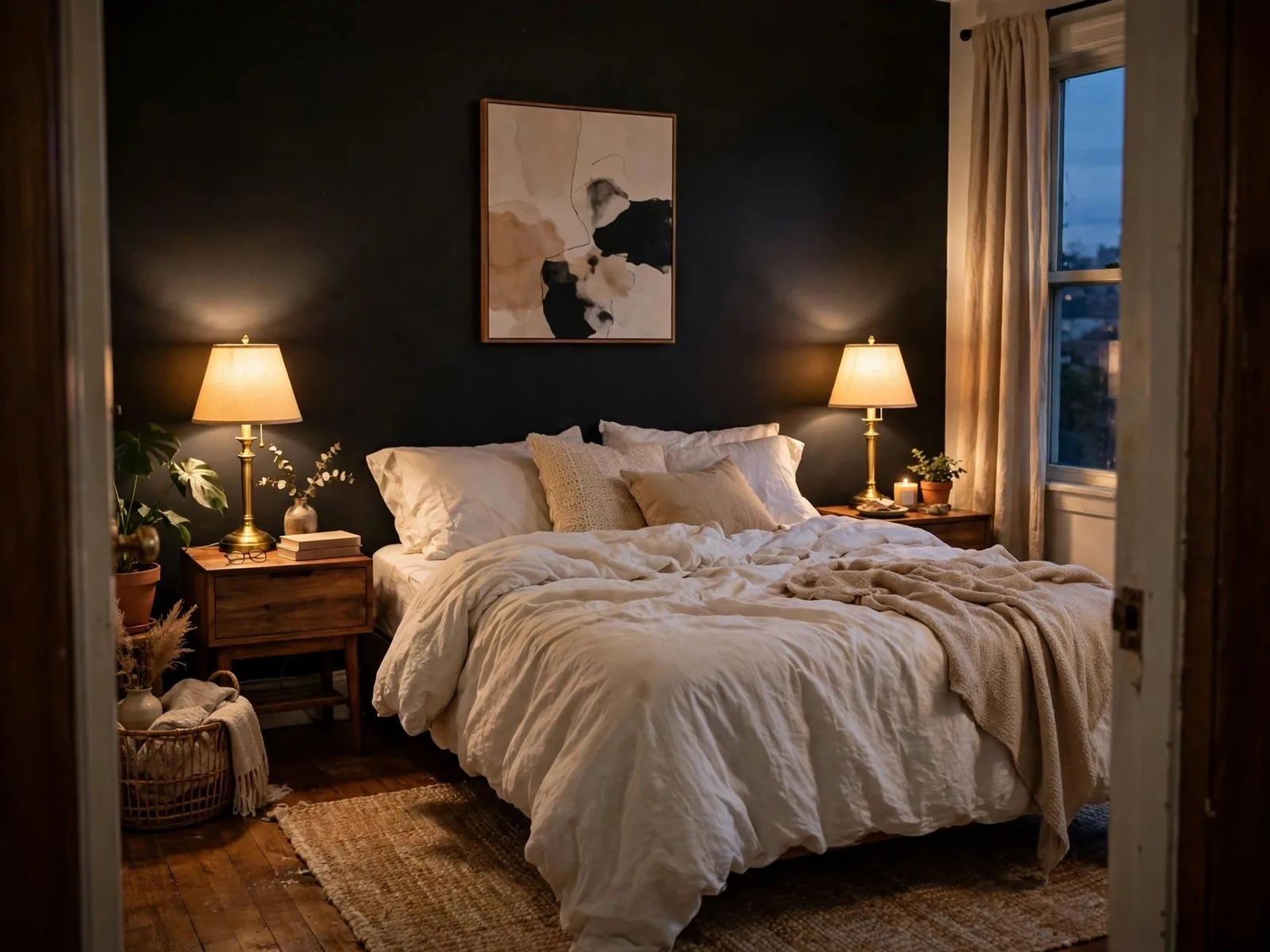
The palettes, one by one
1. Paint one black wall behind the bed in Tricorn Black
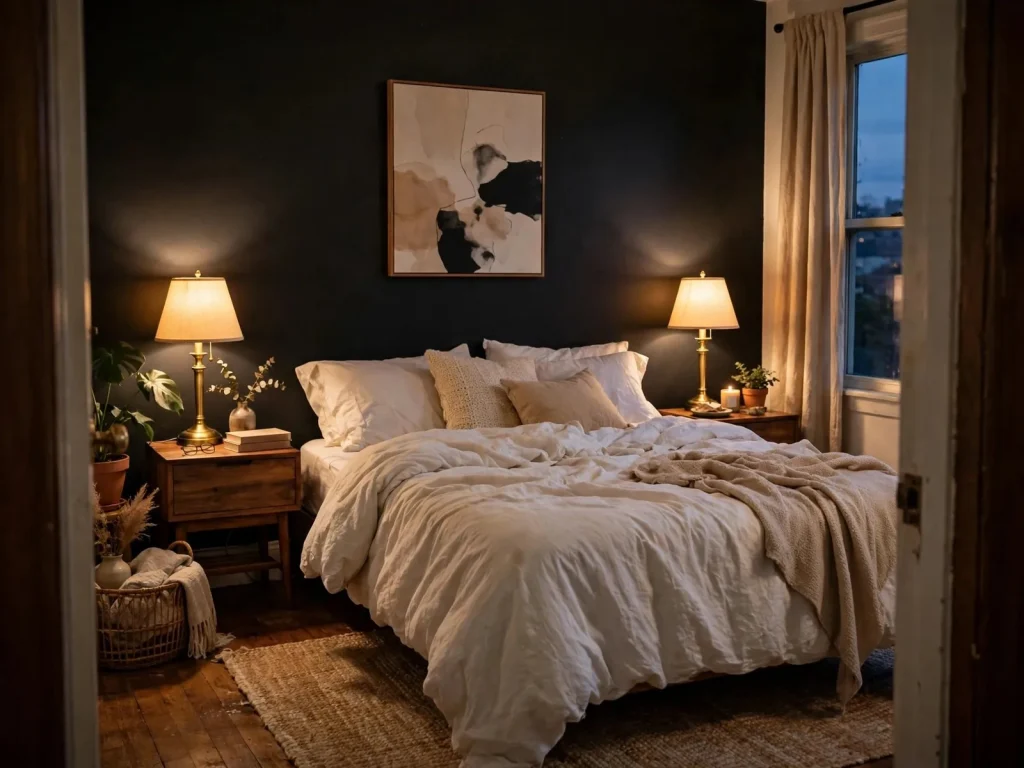
This is the dose most saved black rooms actually use. One black wall behind the bed gives the room its photograph and leaves three walls to bounce light back. Tricorn Black SW 6258 by Sherwin-Williams is the truest black on this page: a light reflectance value of 3 and almost no undertone to argue with your light.

Run the split out loud. The bed wall carries the 60 in Tricorn Black in an eggshell finish. Bedding and curtains carry the 30 in warm white and cream. The last 10 is warm metal: brass lamps plus one brass-framed mirror. The pairing it likes is walnut or warm oak furniture, because pale woods go chalky against a black this deep.
The catch is edges and coverage. Black over white needs a gray-tinted primer or a third coat to sit even, so buy for three coats and be pleasantly surprised. One wall is a palette dose on this page; the measuring and taping method for any single painted wall lives on the accent wall page.
Measure: a bed wall in a typical bedroom runs 100 to 120 square feet. One gallon covers it twice over with two coats, so the leftover belongs on the nightstands if you want the room to match.
2. Run black and white at full contrast with Onyx
Black and white bedroom ideas start here. Onyx 2133-10 by Benjamin Moore is a deep neutral black with an LRV of about 5, crisp enough to hold a hard line against white without drifting blue or brown. On all four walls in an eggshell finish it makes the room feel tailored and modern, like a good suit.
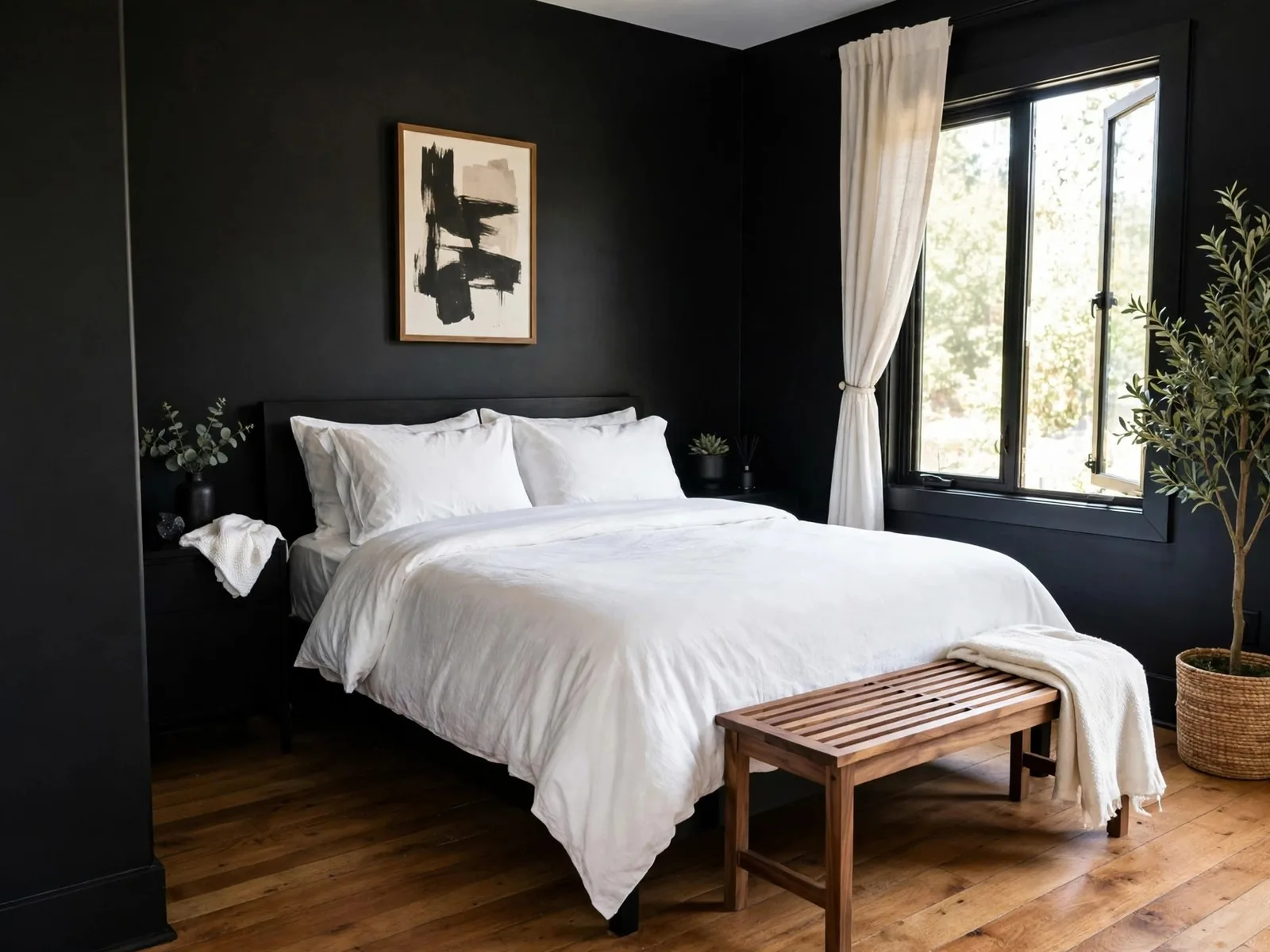
The split: 60 on the walls in Onyx, 30 in bedding of bright warm white with a white coverlet. The 10 is black itself, repeated once in a cushion or a throw, plus one warm wood piece that keeps the contrast from turning cold. The pairing is white oak or walnut furniture with matte black hardware, so the metal disappears into the scheme instead of competing with it.
The catch is maintenance. A black and white room shows every scuff and every gray hair of dust. White bedding beside black walls tells you plainly when either one is tired. This palette suits a master bedroom best, where the bed is the room. The master bedroom ideas page builds whole rooms on that kind of confidence.
Budget: two gallons of a premium black run $110 to $170 and the contrast does the rest, so skip new decor in month one.
3. Layer black and gray with Iron Ore for the softer version
Black and grey bedroom ideas fail when the black is too black. Iron Ore SW 7069 by Sherwin-Williams is the fix: a soft charcoal-black with an LRV of 6 and a warm green-gray undertone that reads black at night and forgiving charcoal by day. It is the palette for people who want the mood with an exit route.
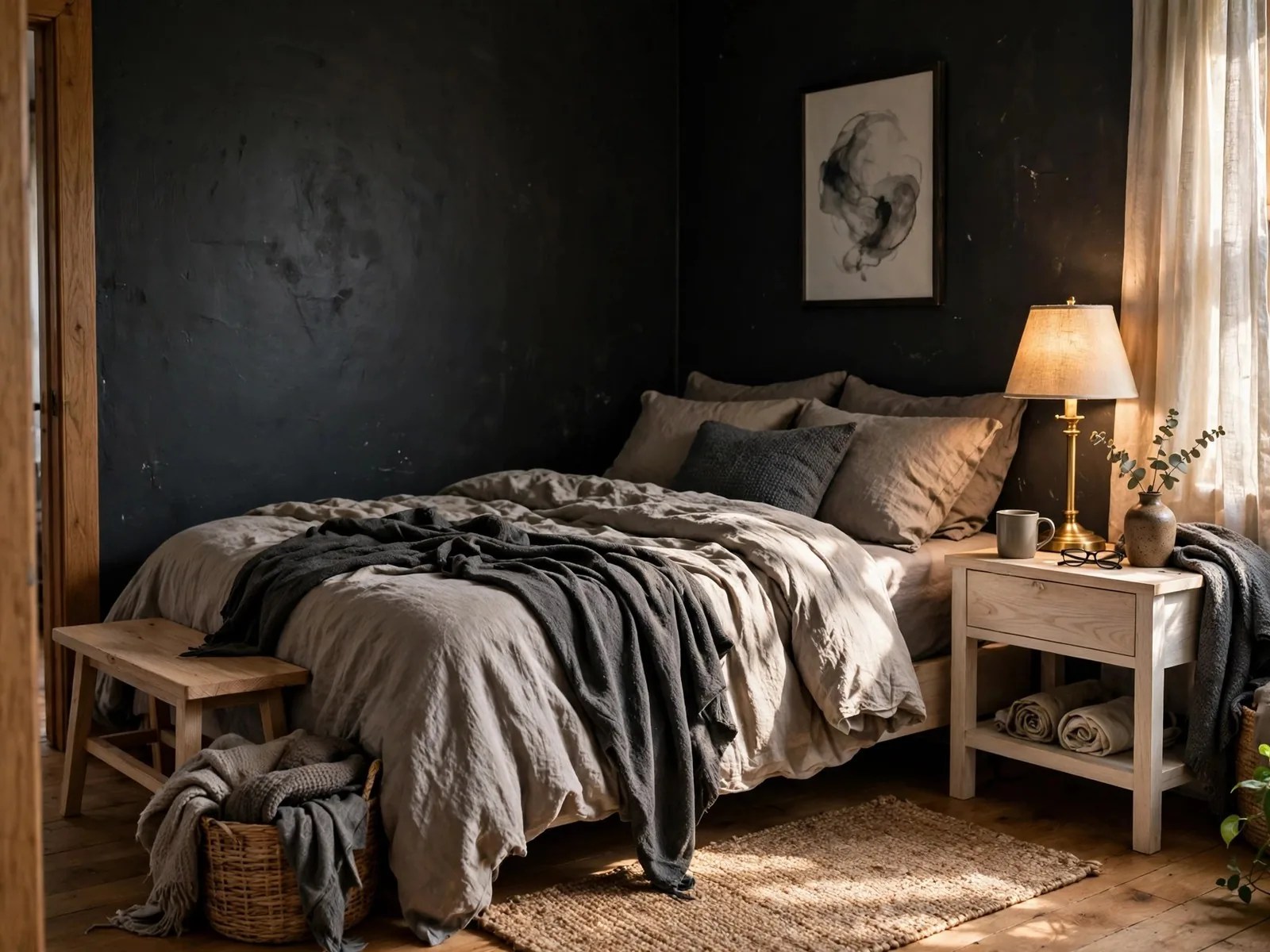
The split: 60 on the walls in Iron Ore in an eggshell finish, 30 in textiles of layered gray, meaning a warm gray linen duvet over white sheets with a charcoal throw. The 10 is texture: one woven or nubby piece per layer. The pairing is warm oak furniture with brushed brass lamps and pulls, because a soft black needs warm metal more than a true black does.
The catch is bulb color. Under cool white bulbs Iron Ore gives up its warmth and reads plain gray. Warm 2700K bulbs keep the black half of it alive after dark.
Measure: hold the Iron Ore chip against your gray bedding in daylight. If the chip reads a full step darker than the bedding, the layering works. If they read the same, go one textile lighter.
4. Warm the black up with Caviar, walnut and brass
Warm black is the version that feels calm instead of dramatic. Caviar SW 6990 by Sherwin-Williams is a rich black with a brown undertone and an LRV of 3, as dark as Tricorn Black on paper and noticeably softer in a room. Black Beauty 2128-10 by Benjamin Moore is its close cousin, a warm velvety black that suits traditional rooms the same way.
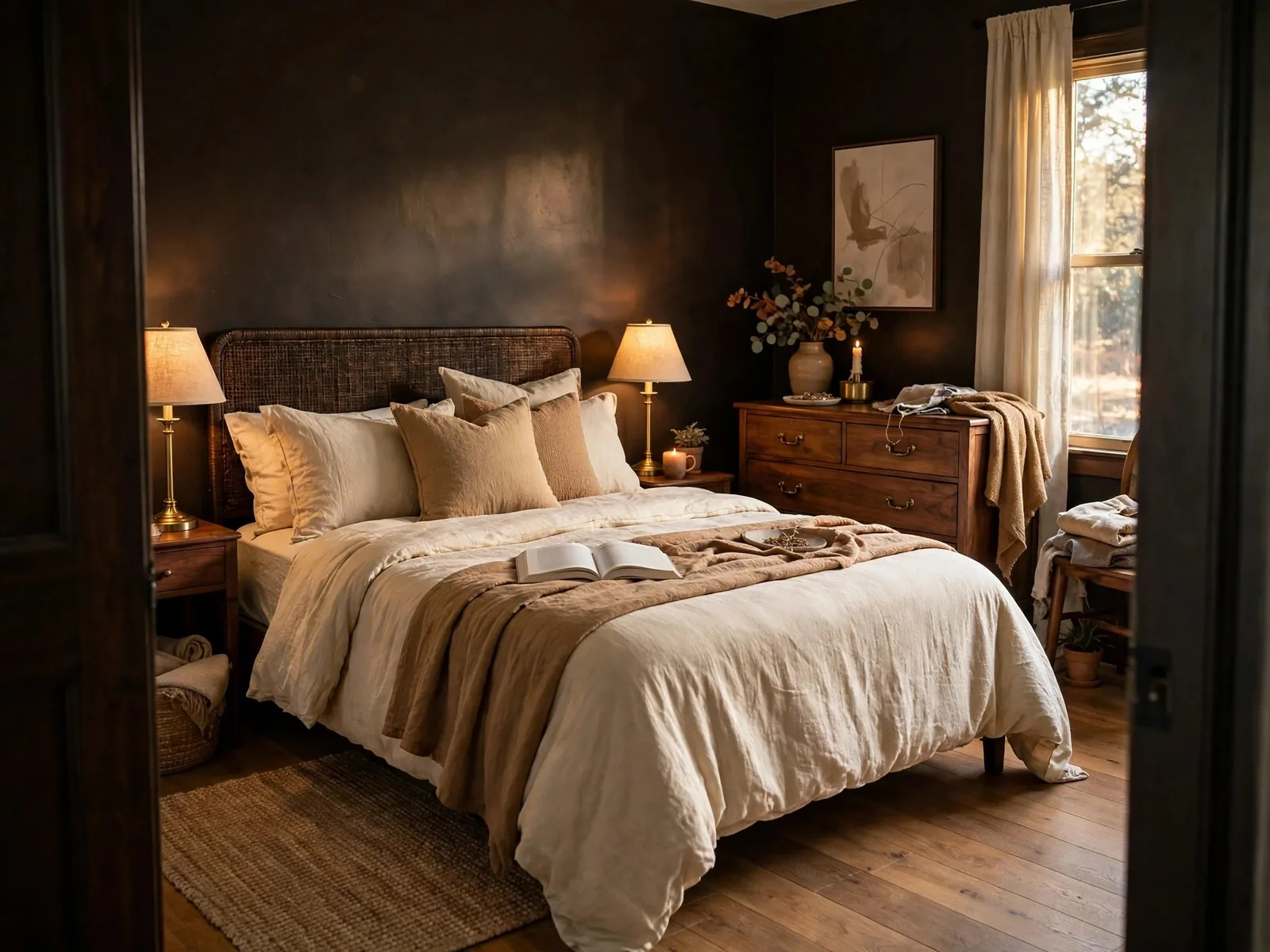
The split: 60 on the walls in Caviar in an eggshell finish, 30 in textiles of cream, camel and warm ivory. The 10 is brass, spread across lamps and frames and one mirror. The pairing is the point of this palette: walnut furniture at the bed and brass at hand height, so every surface a hand lands on is warm.
The catch is orange wood. Honey pine and orange-toned oak fight a brown-based black and turn it muddy. Walnut and mid-tone oak hold; if your furniture runs orange, test the swatch against the dresser before the wall.
Budget: this palette is paint plus two brass lamps if your wood is already warm, $150 to $260 all in for most rooms.
5. Commit to the full matte drench
The full drench is black on every wall, the ceiling and the trim, all in matte, so the room stops having edges. Pitch Black No. 256 by Farrow & Ball is the purest version, a saturated black with an LRV of about 3. Tricorn Black from idea 1 in a matte finish is the easier-to-find twin.
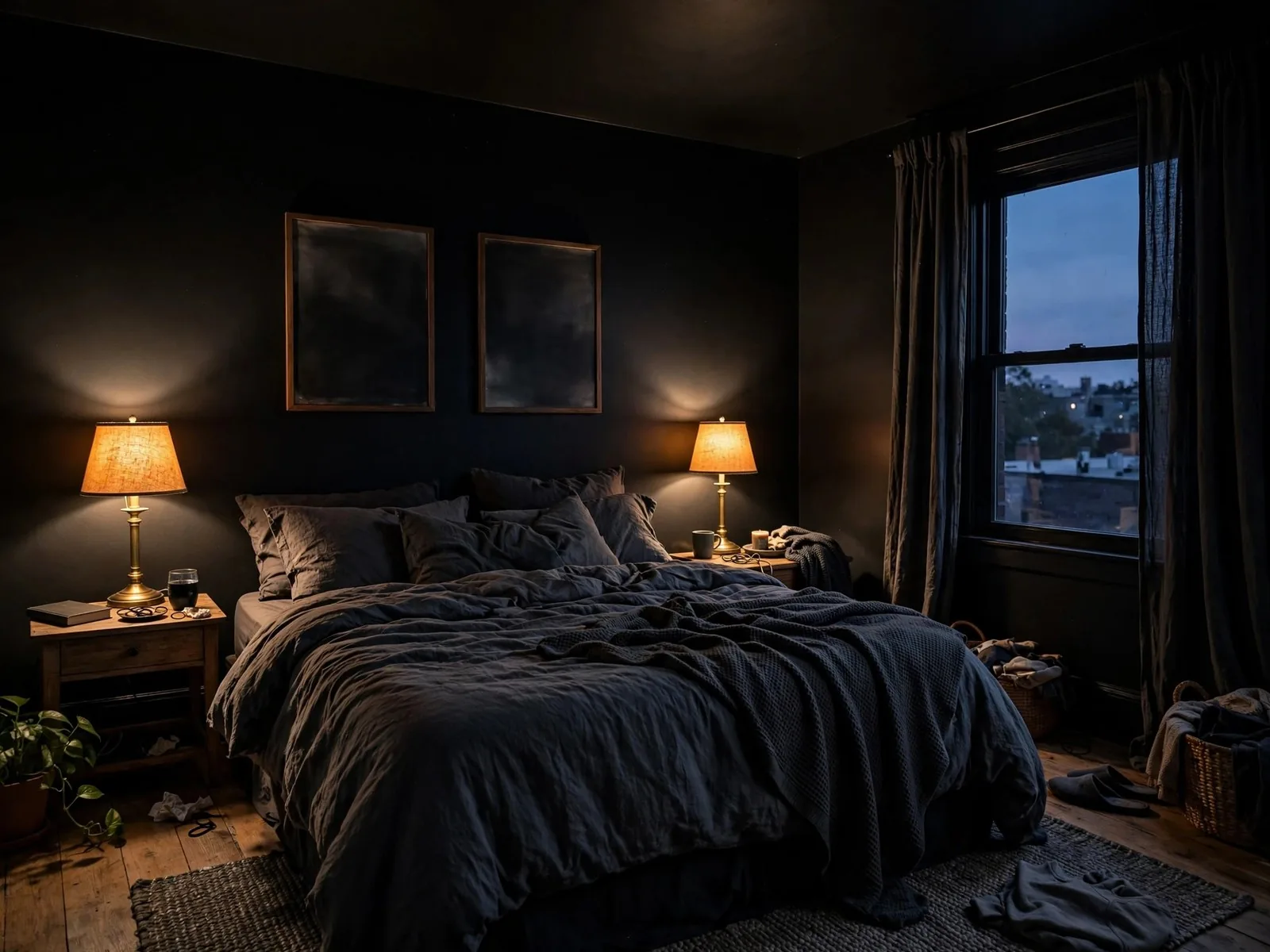
The split changes shape here. The 60 is the black itself on walls and ceiling in matte. The 30 drops to textiles kept tonal: a black or charcoal duvet with a deep gray throw. The 10 is the light itself, amber glass or brass lamps glowing at bed height. The pairing is dark walnut with antique brass. Chrome would cut the cocoon in half.
The catch is light count and honesty. One ceiling light flattens a drench into a cave with a bed in it, so two lamps at two heights are structure here rather than decoration. Readers who want to step sideways into plum, forest and navy instead of deeper black are heading into the wider dark family. The moody bedroom ideas page owns that tour.
Measure: count your light sources before you paint. A drench needs at least two lamps plus one low light near the floor, with the ceiling light off by default after dark.
How each palette behaves in north and south light
6. In a north-facing room, buy the warm black
North light is cool and gray and honest about undertone. It takes the black you bought and removes the warmth you thought you saw under the store lights. A blue-black that looked inky on the chip reads cold and faintly navy on a north wall.
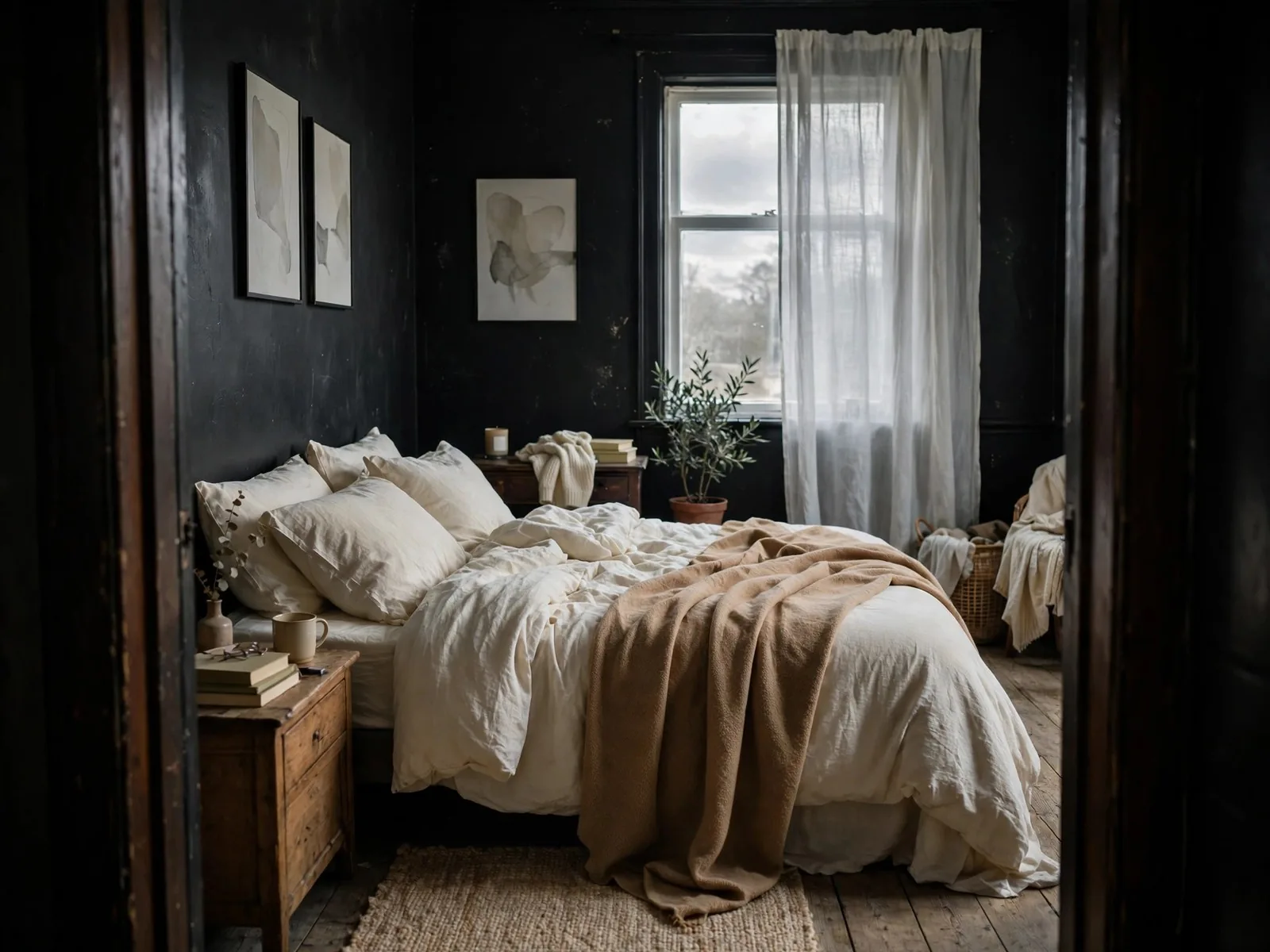
The fix is to buy the warm version of the same idea. Caviar from idea 4 carries brown in its base and keeps its nerve in gray light. Black Beauty 2128-10 by Benjamin Moore does the same job with a softer velvet feel. The splits and the finishes stay exactly as the palette ideas set them; only the code changes.
Textiles then do the rest of the warming: cream instead of bright white, one camel or rust note, warm wood at the bed. North rooms forgive deep colors better than pale ones, because their light stays even all day and nothing glares.
Budget: $0. The warm version is the same gallon in a different code, decided at the chip rack rather than at the register.
7. In a south-facing room, let the black lean blue
South light is warm and strong. It spends the day warming everything it touches, so a brown-based black can come up muddy or faintly red by afternoon. Strong sun is the one light that flatters a cool black.
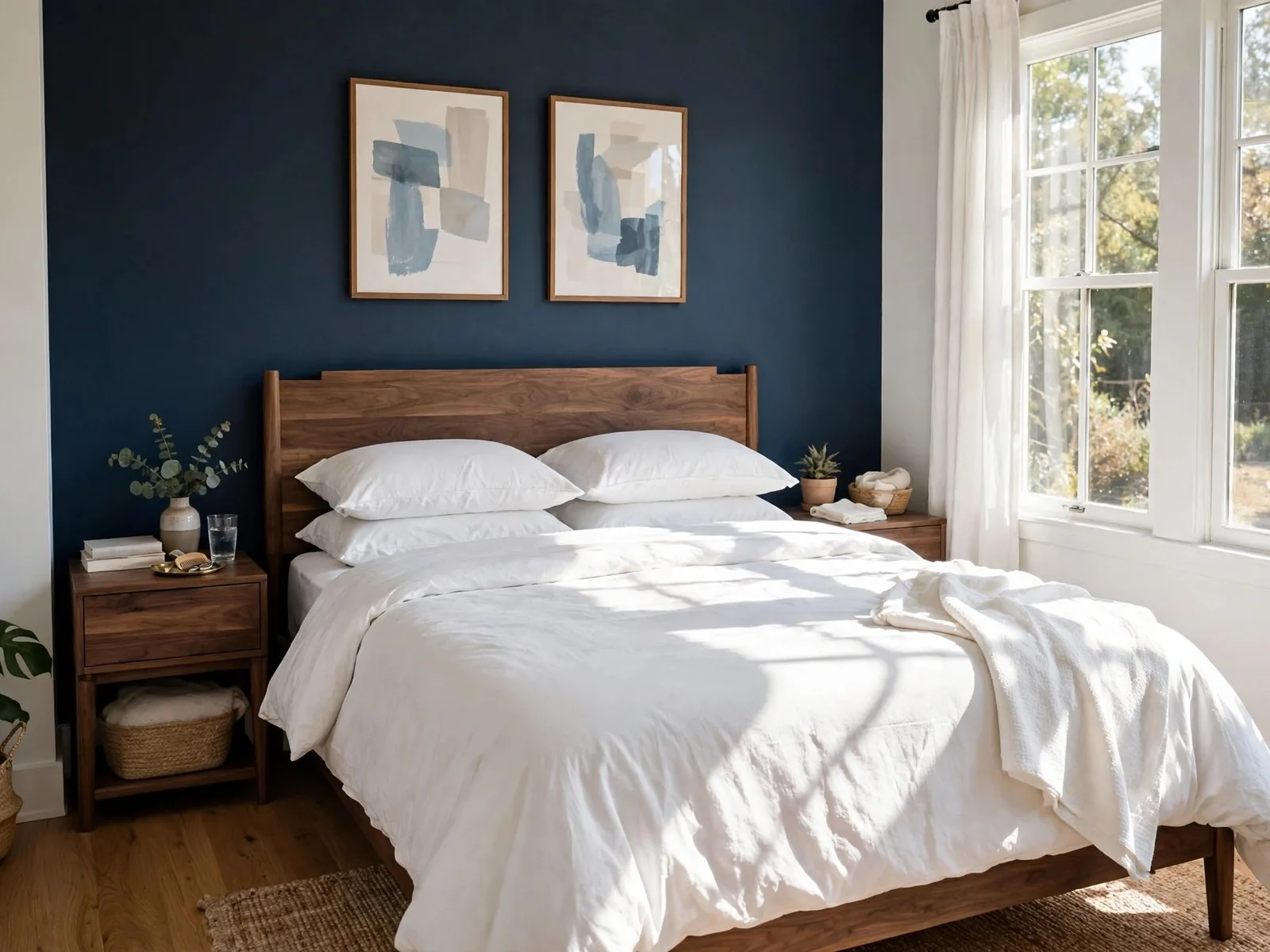
So choose the blue-blacks here. Railings No. 31 by Farrow & Ball is a soft black with a real blue undertone that reads inky and calm in bright rooms. Wrought Iron 2124-10 by Benjamin Moore is its American cousin, a blue-gray black with an LRV of about 6 that sits on the border between charcoal and black. Both hold their depth at midday instead of washing out.
Judge the test again in the evening under the lamps you actually own. Bulb color moves black as surely as daylight does. A blue-black under warm bulbs settles into a neutral dark that most people like better than the chip.
Measure: judge a south-facing swatch at midday first. If the undertone still reads clean at the harshest hour, it survives the day.
8. Fix every black room after dark with layered lamps
Every black palette on this page has the same evening problem. Black walls absorb the light a pale room would bounce back, so one ceiling light leaves the corners dead and the bed floating in a pool. The fix is layers, not brightness.
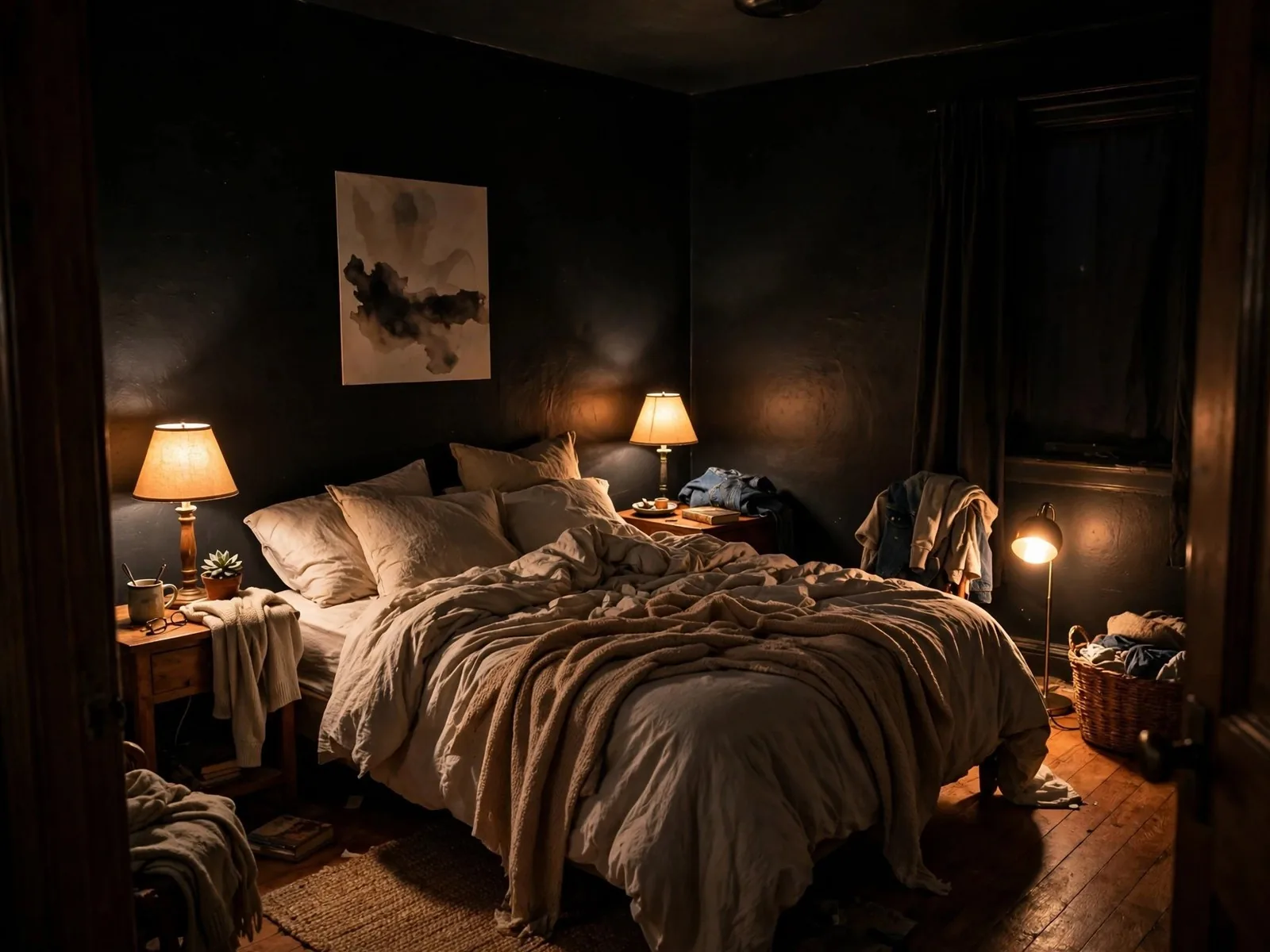
Run three heights. Two bedside lamps at shade height for the bed itself, one low source near the floor such as a small uplight or a lamp on a low dresser, plus the ceiling light only for finding socks. Warm 2700K bulbs throughout, because cool bulbs turn black walls greenish and undo the undertone you chose on purpose. The bedroom lighting page works through placement and bulb choice in full.
The catch is symmetry. Matching lamps at matching heights read calm; one bright lamp alone reads interrogation. Buy lamps in pairs for a black room even if you mix them everywhere else.
Budget: a matched pair of warm-bulb bedside lamps runs $50 to $110 and does more for a black room after dark than any cushion.
Textiles, furniture and wood: completing each palette
9. Put warm white bedding against black walls and let the wall do the work
The most saved black room on Pinterest is not black on black. It is black walls behind a white bed. The white bedding is what makes a dark wall read as a choice instead of a cave. It does it at the exact center of the room.
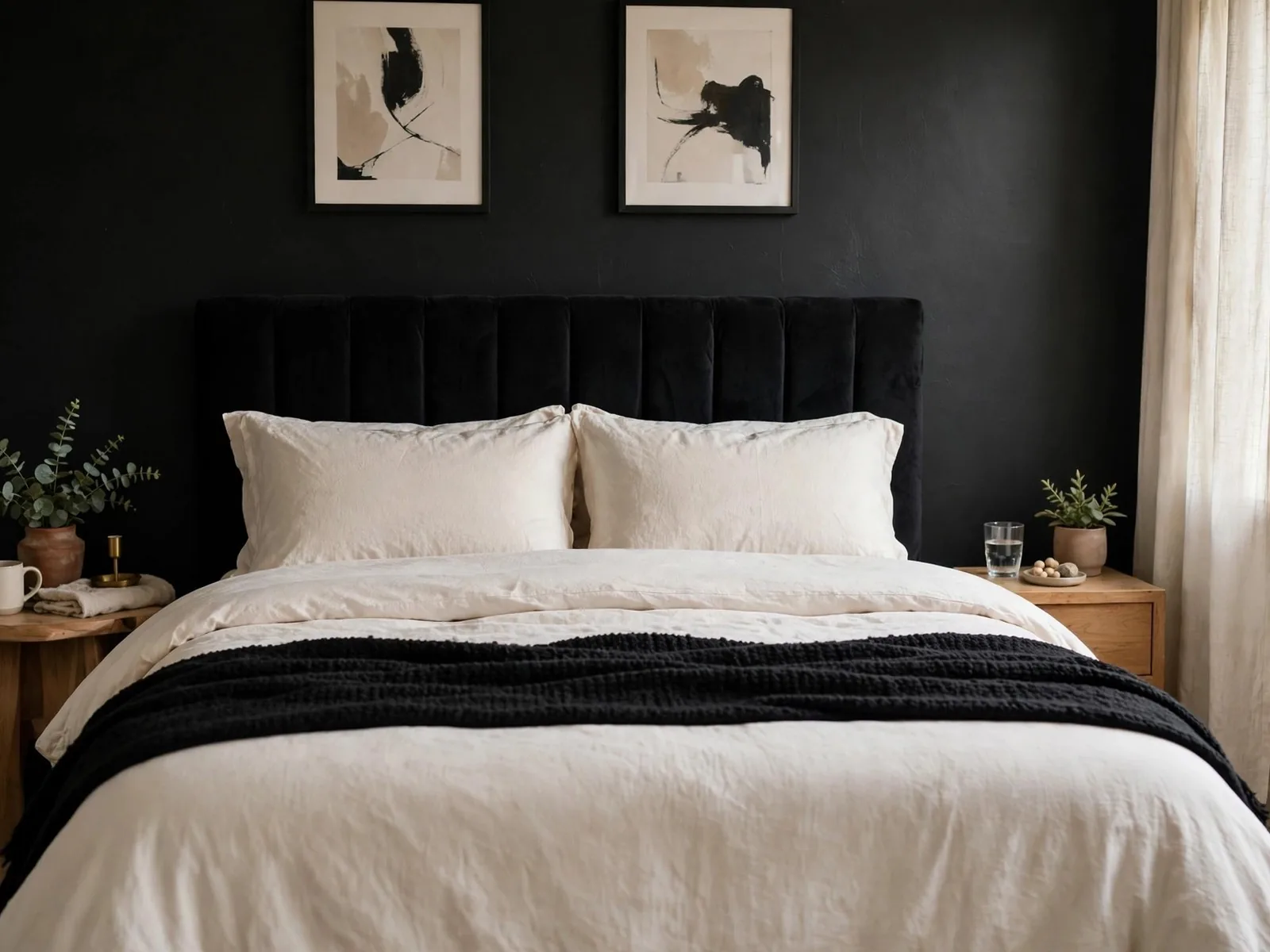
Keep the white warm. Ivory and cream bedding flatter every black on this page; a blue-white duvet cover fights all of them. Add black back exactly once, in a throw or a single cushion, so bed and wall read as one scheme. A black upholstered or black-stained wood headboard deepens the line where bedding meets paint without adding a second color. The headboard page is full of shapes built for that job.
The catch is honesty. White bedding shows everything, which is the point. It washes in one load and tells you plainly when it is tired. Replace it before it grays; grayed white against black reads neglected instead of crisp.
Budget: if your walls are already black, this whole idea is one warm-white duvet set at $50 to $110.
10. Flip the dose: a black bed frame and black furniture in a light room
Black bedroom decor works with no paint at all when the furniture carries it. A black bed frame and a black dresser against white or warm gray walls give you the contrast of the dark palettes with none of the commitment. This is the furniture and bedding only dose. It leaves with you when you move.
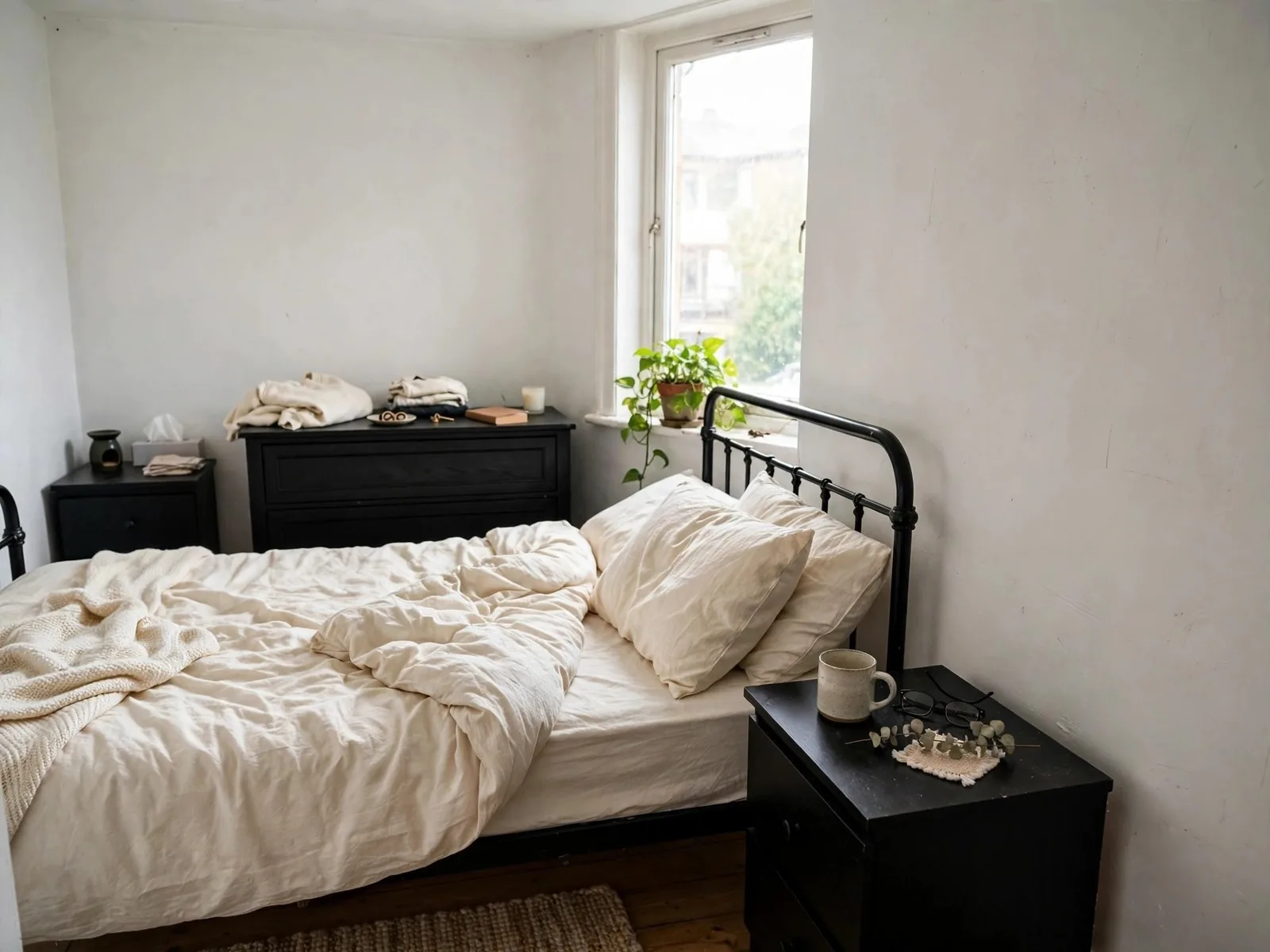
The split flips honestly. The light walls become the quiet 60. The black frame, dresser and nightstands carry the 30. Bedding stays warm white or cream for the contrast, with black repeated once in a throw. Boho rooms run this exact flip with a black frame against cream walls and woven texture doing the warming. The boho page shows the soft version.
The catch is finish matching. A matte black frame beside a glossy black dresser reads as two rooms sharing furniture. Keep every painted piece in the same satin finish family so the blacks agree with each other.
Measure: a black frame needs visual air. Keep at least 24 inches of light wall visible on both sides of the bed. Any less and the frame swallows the wall it stands on.
11. Warm black up with walnut, oak and brass
Wood is the warmth budget of a black room. Each depth of black spends it differently. Get the pairing wrong and the paint gets blamed for the furniture’s mistake.
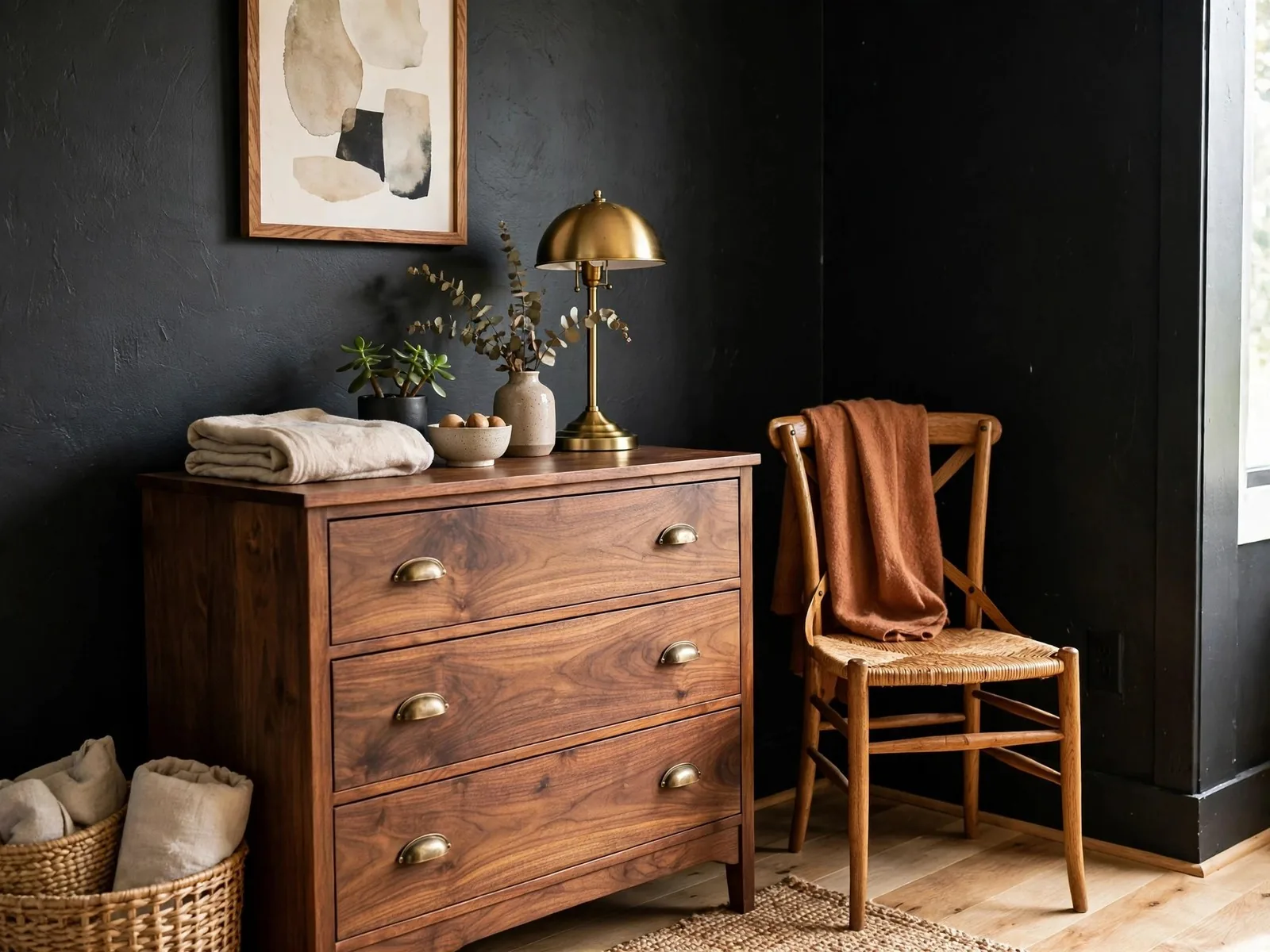
The pairings that hold: true blacks like Tricorn Black and Onyx with walnut or warm mid-tone oak; soft blacks like Iron Ore with white oak; warm blacks like Caviar with walnut and aged brass. The two collisions to avoid are orange-toned pine against any black, which fights like two accents at once, plus gray-wash wood against blue-blacks, which stacks cold on cold until the room gives up.
Metals follow the same rule. Brass and antique brass warm every palette on this page. Matte black hardware disappears into dark walls and sharpens light ones. Chrome belongs only in the high-contrast palette from idea 2. Even there it chills the room by evening.
Budget: $0. This idea moves furniture between rooms and decides what stays; it buys nothing.
The same palettes on a budget
12. Paint the bed wall with one gallon and stop there
The strict-budget run of idea 1 is the same wall with harder shopping. One gallon of a mid-range black covers a bed wall twice with paint left over. The other walls keep their existing color as the quiet background.
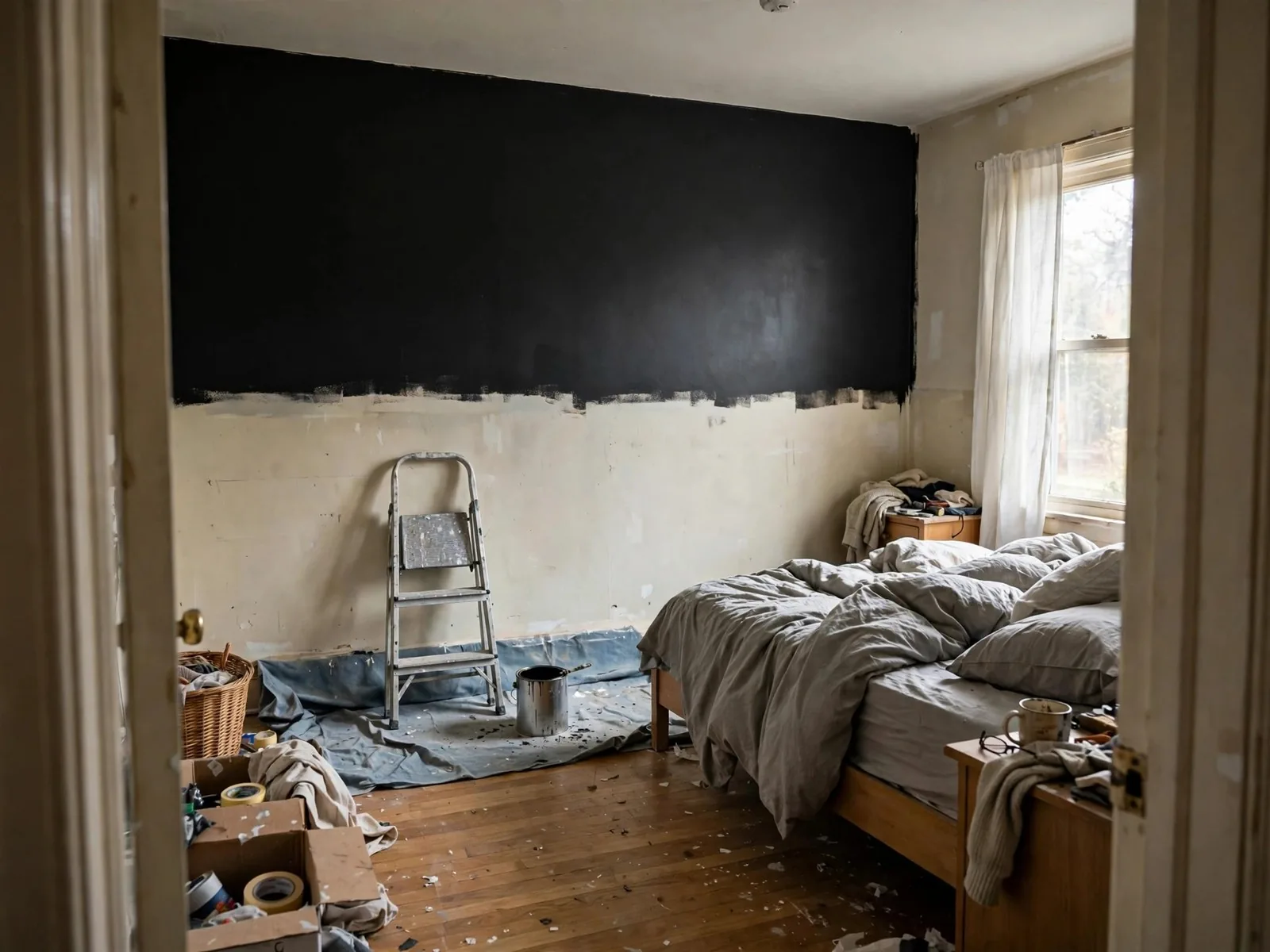
Choose Tricorn Black for the true version or Iron Ore if your room faces north and you want the softer read. Two coats over a gray-tinted primer keep the color even; cheap black over white in one coat dries streaky and reads navy at the thin spots. Tape the edges and cut in by hand, then roll the field.
The catch is stopping. A finished black bed wall makes the side walls look unfinished for about a week. Live with it a month before you buy gallon two; most people never do.
Budget: one gallon plus a tinted primer and tape runs $55 to $90 all in.
13. Skip paint entirely: black bedding and black curtains on white walls
Renters are banned from the painted half of this page, so this idea moves the black into the layers that leave with you. The walls stay whatever the landlord chose. The black arrives on the bed and at the window.
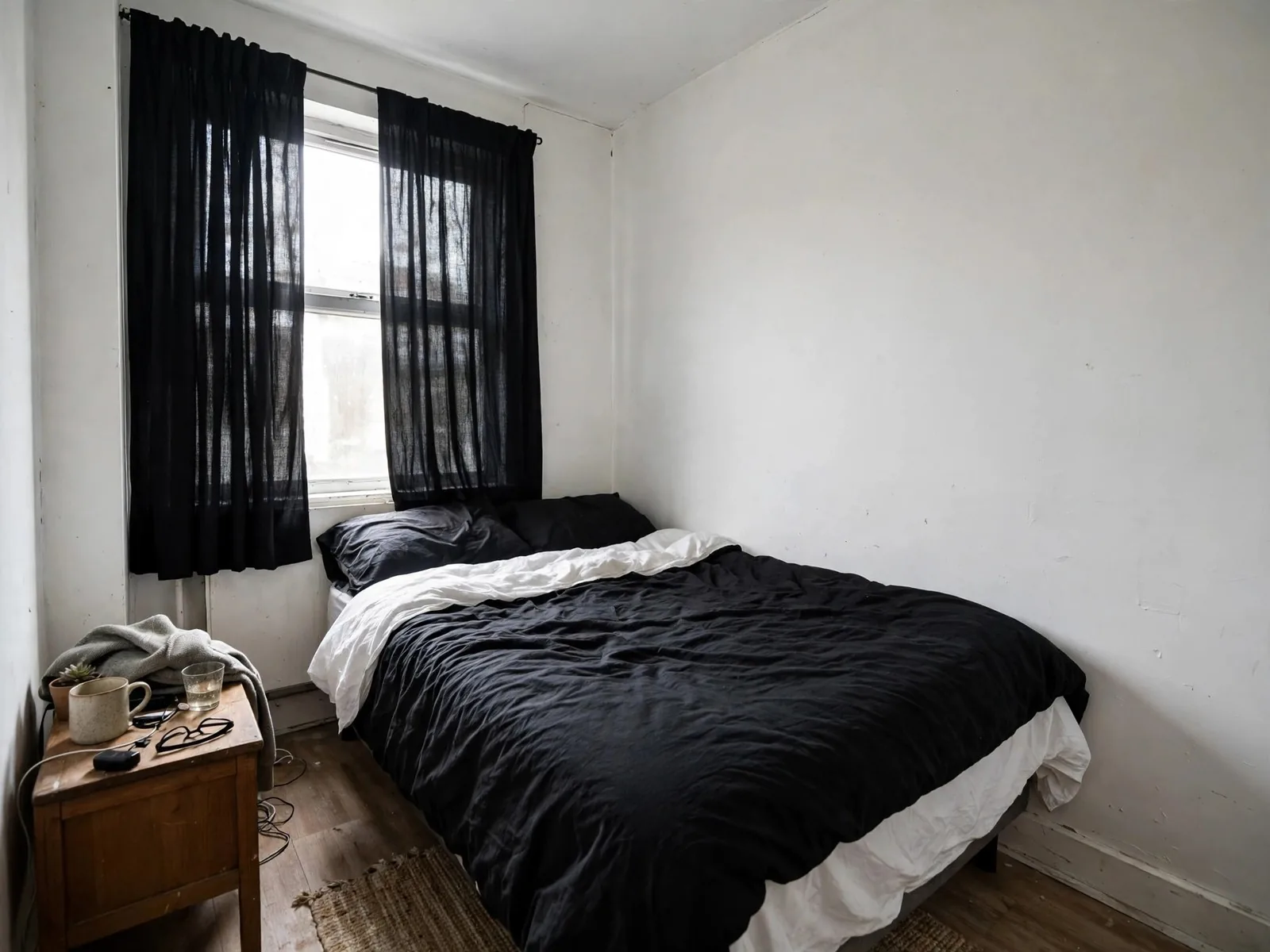
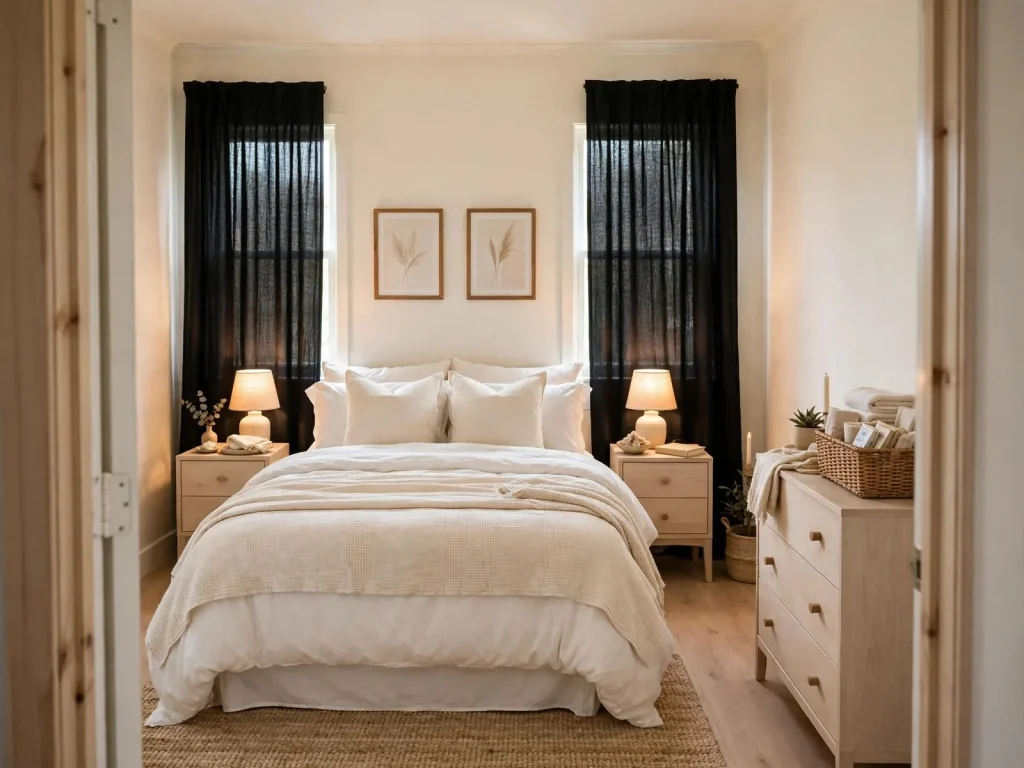
Flip the split honestly. Neutral walls become the quiet 60. A black duvet cover with matching black curtains carries the color at two heights. White sheets plus one warm wood or woven piece supply the contrast and the warmth. Dorm rooms run on bedding first for the same reason. The dorm page builds whole rooms on that one legal layer.
The catch is scale. A black duvet alone is a dark blanket on a white room; the curtains are what turn it into a palette, because they put the color up high as well as down low. Buy the pair together or not at all.
Renter-friendly: nothing in this idea touches the walls, the ceiling or the lease. Every layer leaves with you.
14. Paint a secondhand dresser black and let furniture carry the dose
The cheapest black in decorating is a quart of furniture paint on a dresser somebody else got tired of. Solid wood dressers with good drawers and bad finishes are the thrift store’s most reliable stock. Black forgives almost every sin in the wood.
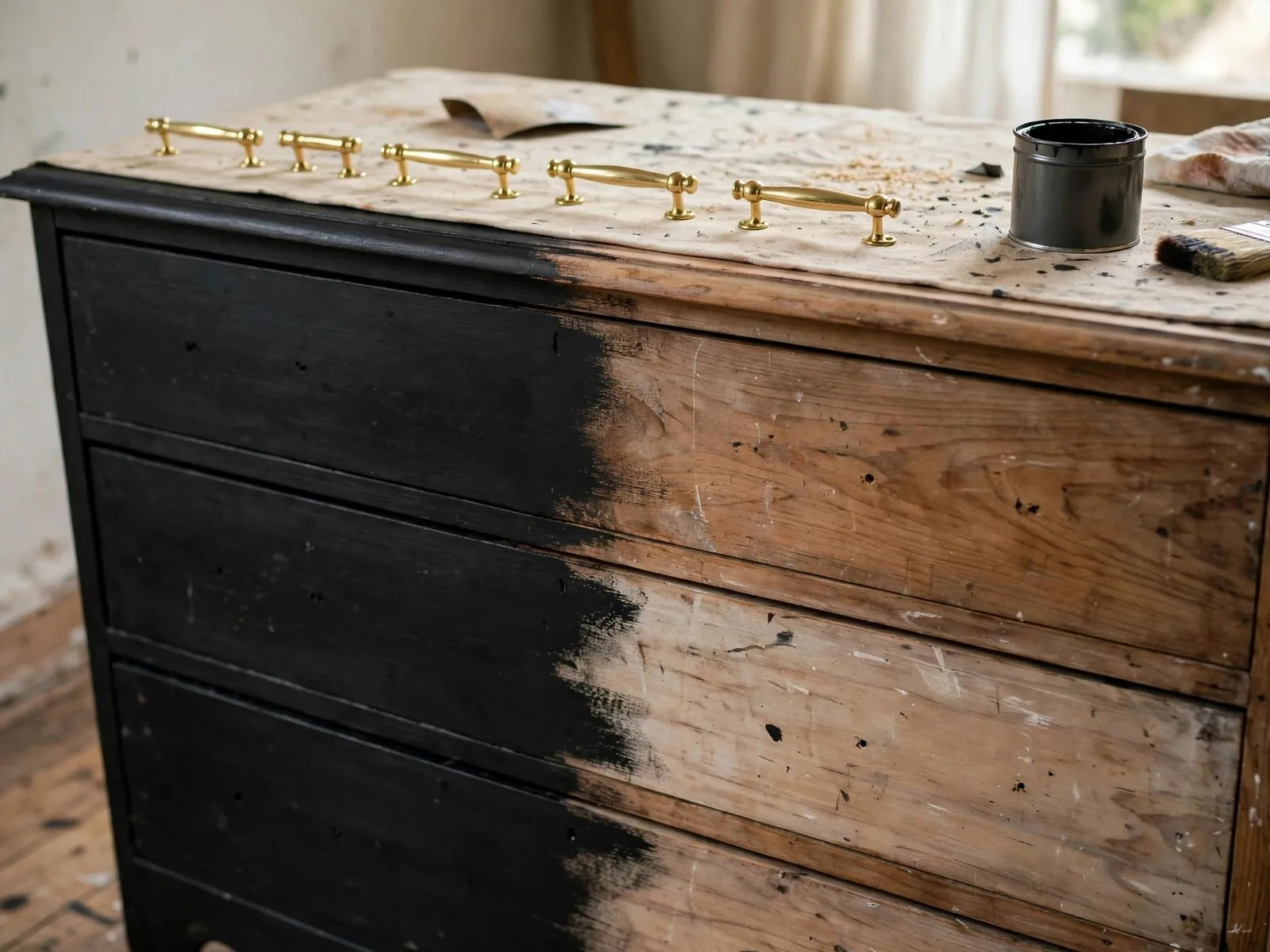
Work the order. Clean and sand until the shine is gone, prime with a bonding primer, then two thin coats of your wall black in satin or semi-gloss. The higher sheen is what makes painted furniture read as its own layer against a wall and it wipes clean in a way matte never will. Swap the pulls for brass while the paint cures and the dresser reads bought rather than rescued.
The catch is drawers. Paint only the frame and the drawer fronts, never the drawer sides or the runners. Paint on the runners makes drawers stick shut by the second humid week.
Budget: a thrifted dresser plus a quart of paint and new pulls runs $45 to $100 total.
Black Bedroom Ideas on a budget
Here is the strongest version of this page for under $150, in spending order. Start with two samples at about $15 total: the true black you love and its warmer neighbor. Run the day and evening test from Before you start on both. Then paint the bed wall only, one gallon, in Tricorn Black or Iron Ore. Keep the white bedding you already own. Add one pair of warm-bulb lamps if your evenings currently run on the ceiling light alone. That is the whole recipe. It photographs like the full commitment.
Renters swap the wall step for idea 13 and spend the gallon money on the black duvet and curtain pair instead. Shared rooms should be picked by evening light, since evening is when a shared bedroom is actually used. The bedroom makeover page shows how to sequence a whole-room change in this same test-first order.
Black Bedroom Ideas for small rooms
Small rooms take the lightest dose on this page and wear it best. One black wall behind the bed, warm white bedding and one mirror on the wall opposite the window is the whole recipe. The dark wall recedes behind the bed, the bedding keeps the center of the room bright and the mirror hands the daylight back.
Keep the other three walls warm white or pale warm gray and keep the black off the ceiling. A full drench in a small room is the version to skip: without a second window or a lamp at floor height it reads as a box with the lid on. The small bedroom page works the same one-dark-wall logic with storage and layout added.
Mistakes that make it fall flat
- Painting straight from the chip. Black shows its undertone only on the wall and only after dark. A color approved under store lights is a rumor. Run the two-sample test from Before you start before a gallon exists.
- Black on every surface at the wrong dose. Black walls under black bedding behind black curtains is not a palette; it is a flood. The 60-30-10 split exists to stop exactly this. One of the three layers has to stay light or warm.
- A blue-black in a north-facing room. North light adds gray of its own. An already cool black reads cold and faintly navy by midday. Buy the warm version of the same depth and let the room keep its calm.
- The finish working against the surface. Satin on a full drench shows every wall ripple and breaks the cocoon. Matte on a painted dresser scuffs at the first laundry basket. Match finish to surface: matte for the drench, eggshell for walls, satin or semi-gloss for furniture and trim.
- One ceiling light after dark. Black walls swallow the bounce a pale room gives back, so a single overhead light leaves dead corners and a floating bed. Layer lamps at two heights instead; warm 2700K bulbs keep black honest at the hours a bedroom is actually used.
Questions people ask about this
Do black walls make a bedroom look smaller? No. Black blurs the corners of a room, so the walls stop announcing their exact position and the space can feel deeper, not smaller. What shrinks a bedroom is clutter at eye level and light that pools in one spot. One black wall with light bedding and lamps at two heights reads generous.
What paint finish is best for black bedroom walls? Eggshell or satin for most black walls. Both wipe clean and hold just enough sheen to keep black reading rich instead of chalky. Save matte for a full drench, where sheen would show every wall ripple and break the cocoon. Trim and painted furniture take satin or semi-gloss.
What colors go with black in a bedroom? Warm whites and creams first, because they keep black calm instead of stark. Warm grays layer in without cooling the room. Camel, cognac and rust add the warm note, while walnut and oak supply it in wood form. Brass is the metal that flatters black most; keep chrome for the high-contrast palette only.
The bottom line
Black is not a risky color; untested black is. Every palette on this page is a named paint at a named dose: one wall if you want the photograph, all four if you want the cocoon, furniture only if you want it to leave with you. This week, buy two sample pots (the true black you love and its warmer neighbor) and paint both on the wall behind your bed before you commit to a single gallon.