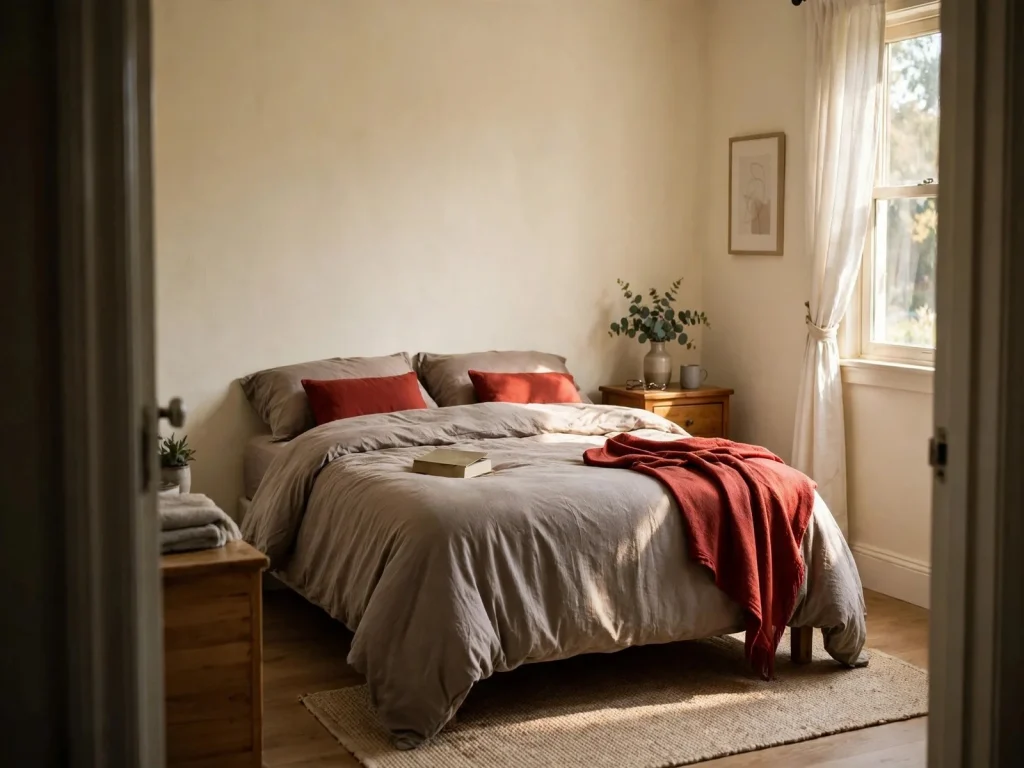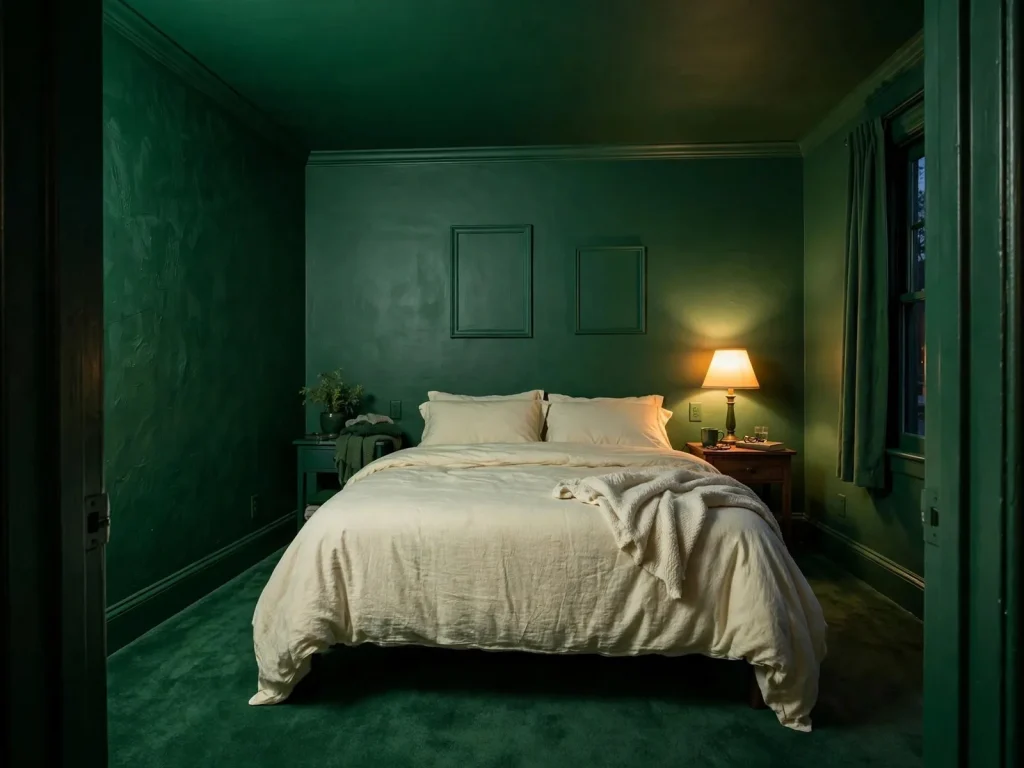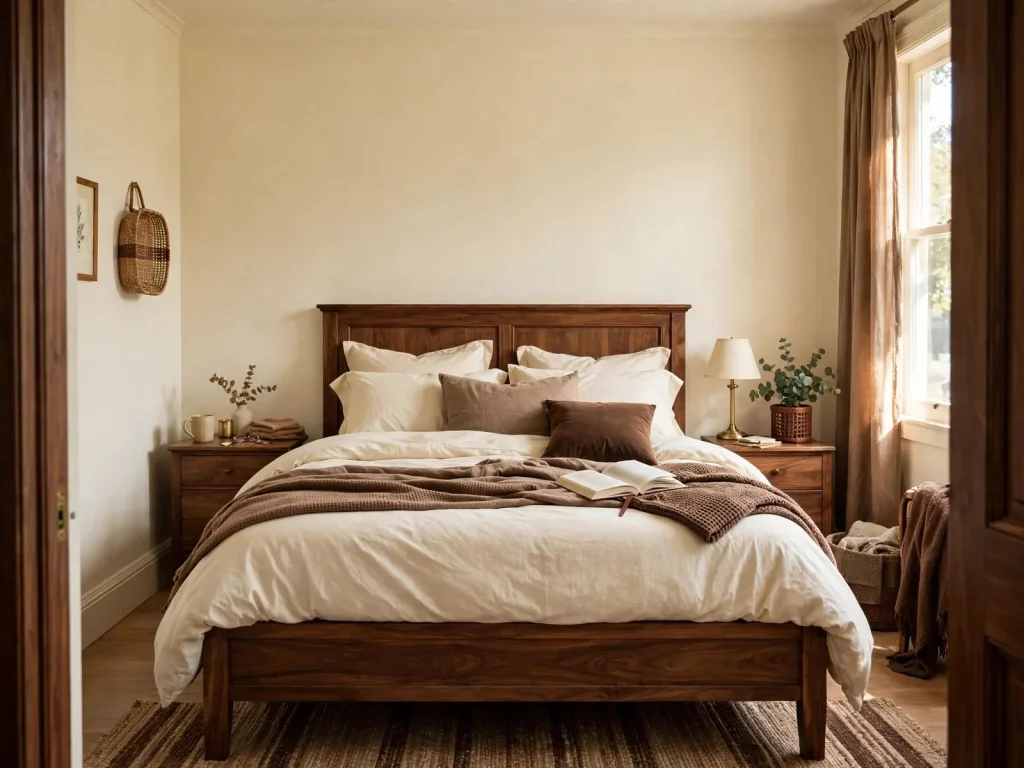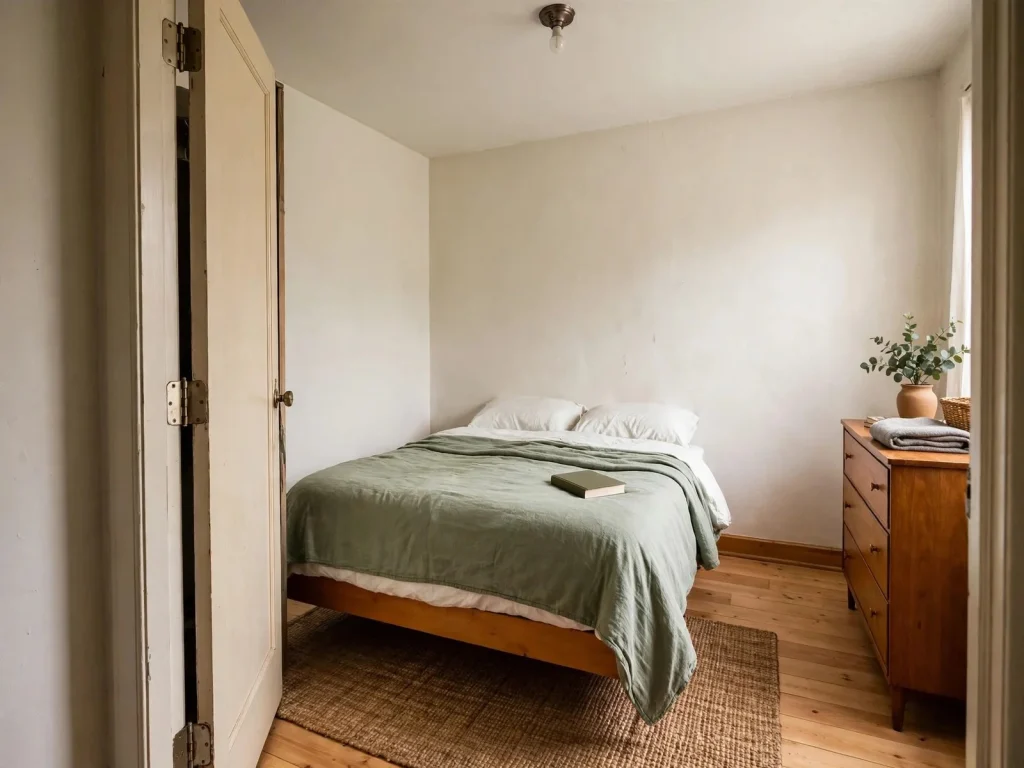
Your saved folder is full of blue rooms. The problem is that the same photo looks serene in one house and cold in another. Blue is a moving target: its apparent warmth changes with the light, the sheen, the wood and the white next to it.
This page removes the guesswork. Every idea below is a 60-30-10 split, a named paint color with a clear-light cue, a measure or budget number, or both. The full bank of bedroom ideas lives on the pillar page, if blue turns out to be only your first room.
Before you start: measure, budget, rules
Note the light before anything else. South light warms a blue by a half shade by noon, north light cools it by the same amount, and the bulb in the lamp decides what you see after dark.
Measure the bed wall in feet, check your budget in dollars, and check the renter rules before you commit to paint. The numbers below assume a 12 by 12 foot bedroom, one queen bed, and a shop that sells sample pots, so translate them to your own room before you buy.
Two rules hold for every idea below. First, try the exact paint on a test board before you commit a wall, never the printed chip. Second, keep a bright white somewhere in the room — a ceiling, a door, skirting, bedding or a lamp — because blue without a crisp neighbor can look like a badly lit photo. If you are still choosing between color families rather than between blues, the bedroom color ideas page compares the families first.
The palettes, one by one
1. Go pale sky with Palladian Blue and all-white bedding
Light blue bedroom ideas live or die on undertone. Palladian Blue HC-144 reads as clear sky when the light is bright and turns faintly green after dark, which is the shift that saves it from looking icy. Pair it with all-white bedding and pale oak furniture, and plan on white trim to keep the edges clean, because a blue that greys out in a dim corner needs something crisp to sit against.
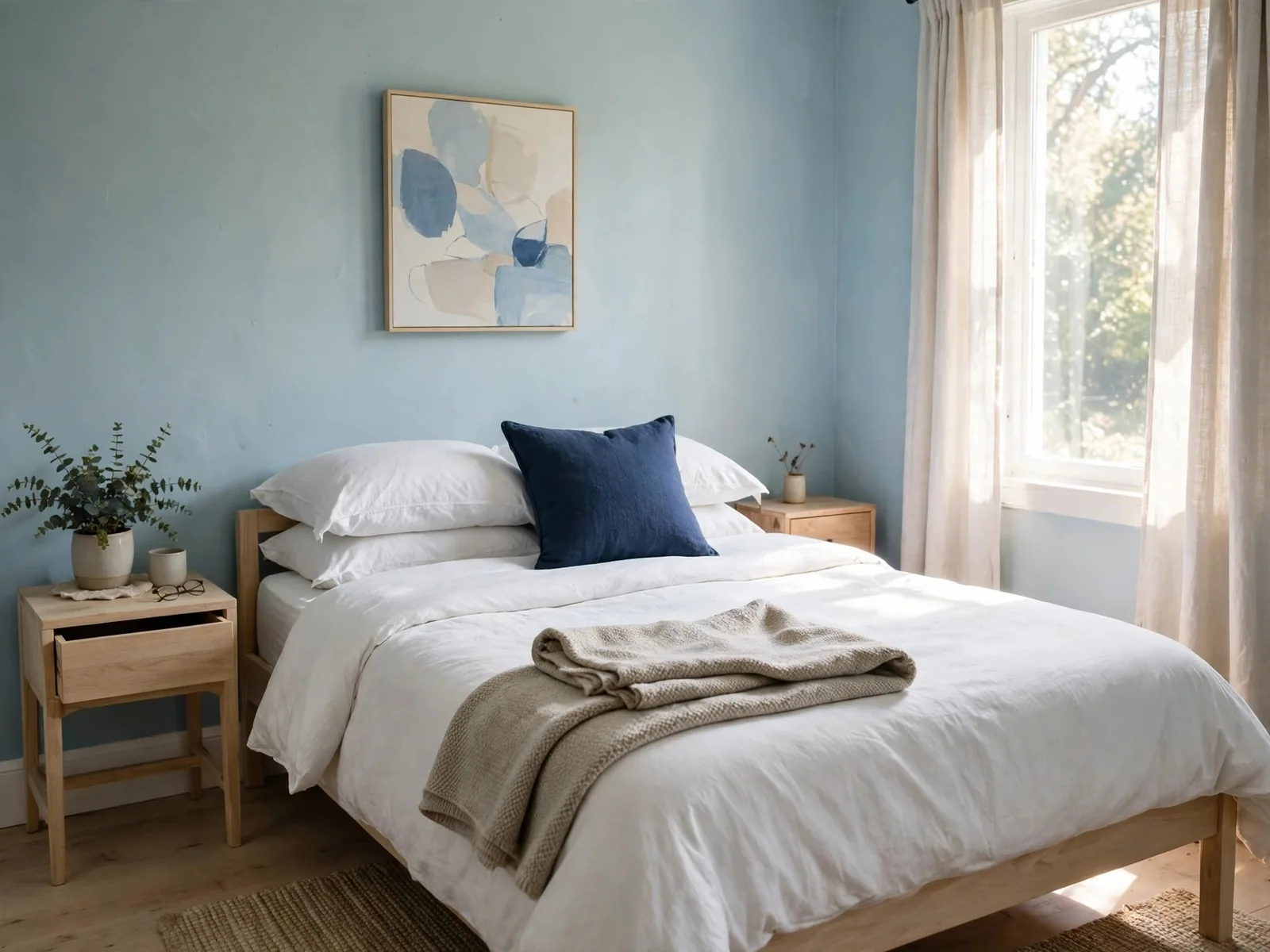
Run the split out loud before you buy anything. Sixty percent is the walls, in Palladian Blue HC-144 with a white ceiling and white trim. Thirty percent is the bedding in pure white, channeled as a flat sheet, a duvet and a folded throw, because white holds up under the green-blue shift. Ten percent is one navy cushion and one slim brass lamp at one side, since a thin thread of dark metal is enough to stop the far side of the bed looking washed out.
The catch is south light: on three sun-facing walls the room can turn mint by midday. A sheer white roller blind holds the brightness and keeps the blue blue. The small bedroom page works on that same light-first logic.
Budget: paint is nearly the whole spend. Two gallons covers the walls in two coats, plus one sample pot and one foam board for the test. The bedding and lamp are already-own items, so skip any cushion purchase until the walls are up.
2. Pick dusty blue-grey with Krypton when you want calm without cold
Dusty blue is the middle answer when pale sky feels too light and navy feels too strong. Krypton SW 6247 is a grey-blue that reads as a calm, almost slate room in the evening and as a true blue in daylight. The grey in it is what keeps the room from going cold — it borrows warmth from the wood and the textiles instead of demanding it.
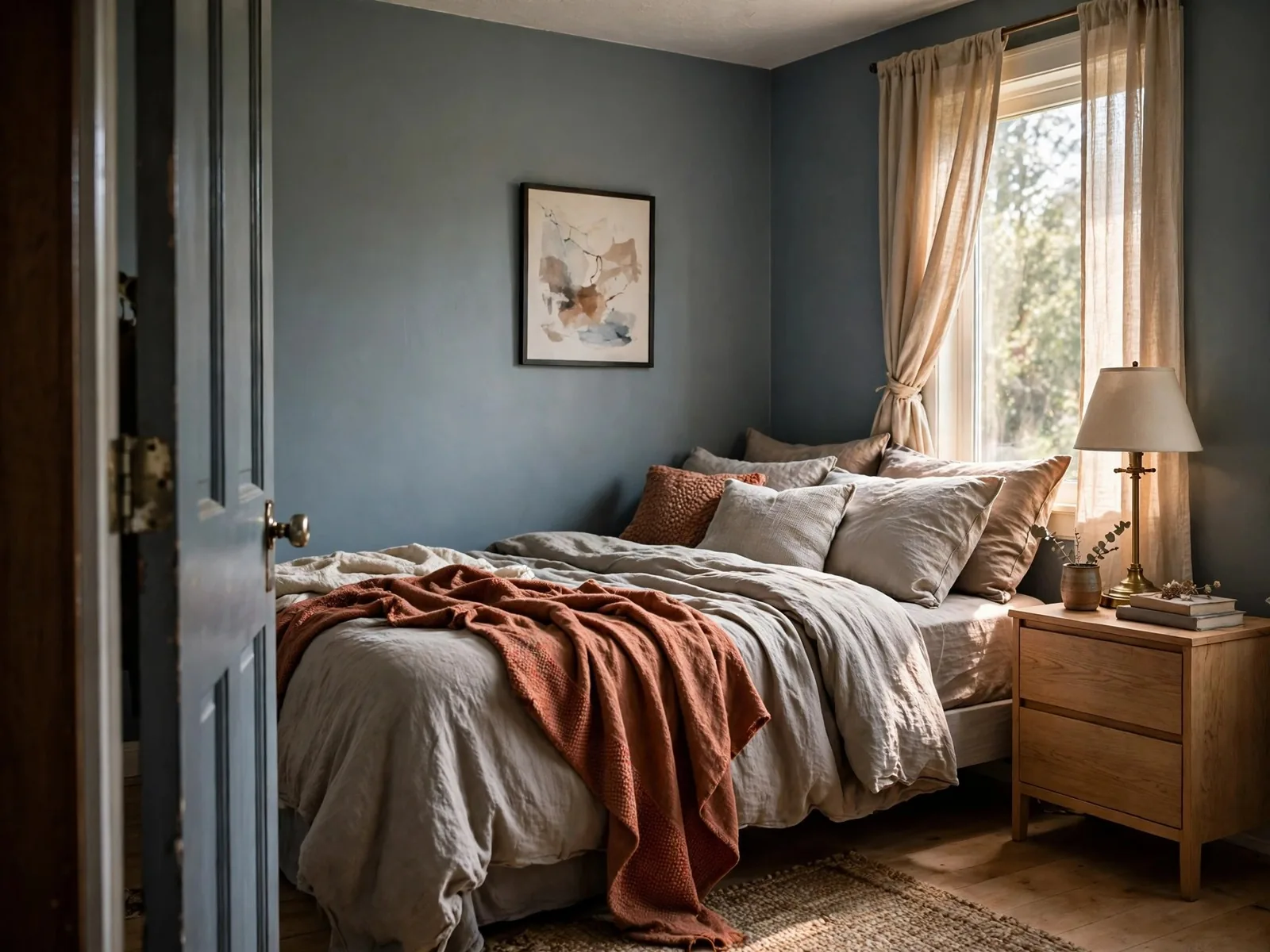
The split: 60 on the walls in Krypton SW 6247, then 30 in warm grey linen bedding with a rust throw across the foot of the bed, and 10 in a brass reading lamp on a white oak nightstand. The rust is the trick, as the blue exception on the boho page shows.
The catch is bulb color. A cool daylight bulb will push Krypton grey-blue toward a flat grey; a warm white bulb keeps it blue. Lamp your bedside lamp at 2700K and judge the paint after dark, not at noon.
Measure: hold the Krypton chip against your own white oak nightstand before you buy. If the grey in the paint clashes with the grey in the wood, go one shade warmer in the furniture instead — the wall color will not fix it.
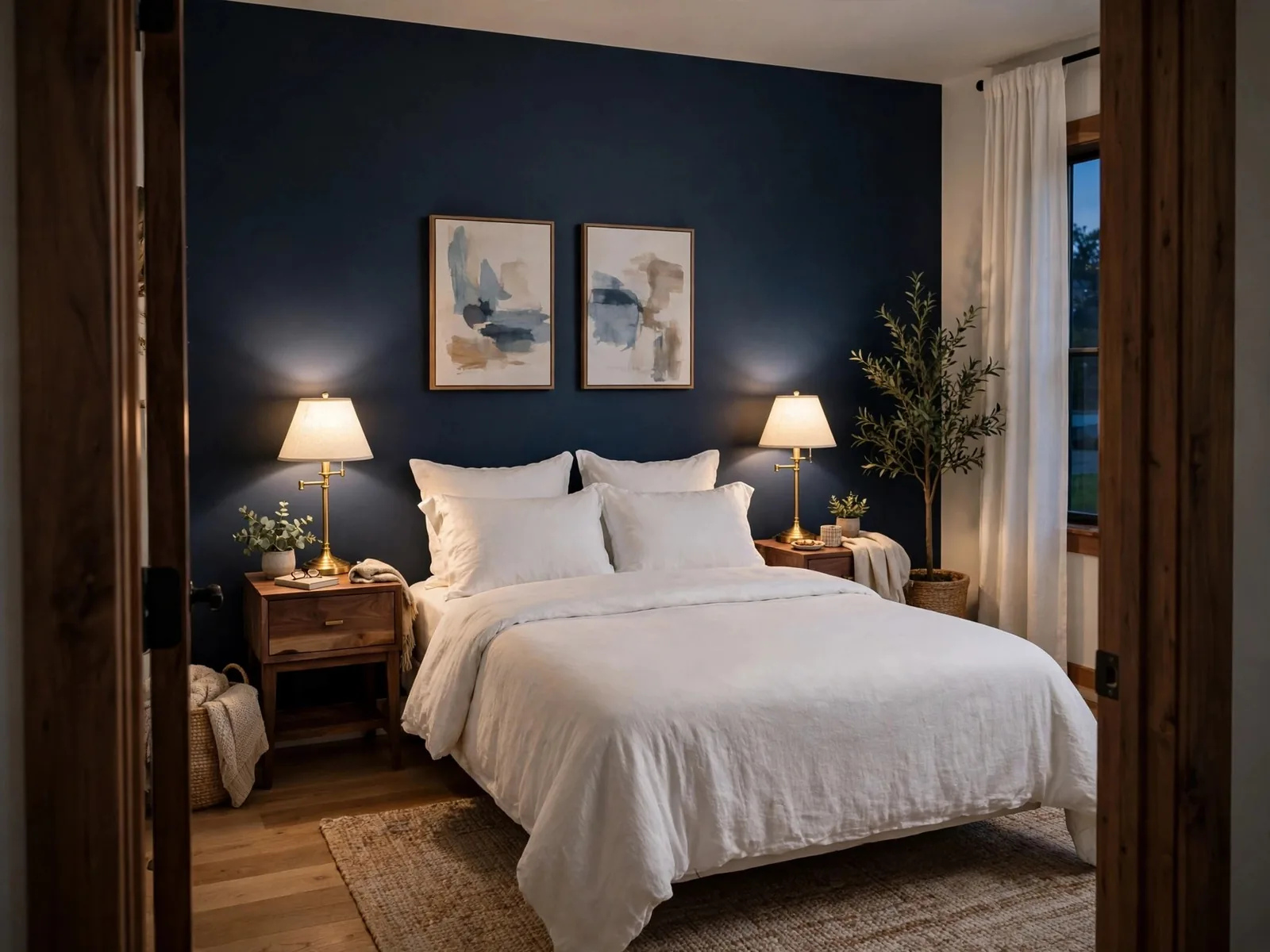
3. Commit to classic navy on all four walls
Navy blue bedroom ideas start here, and this is the version most people picture first. Naval SW 6244 on all four walls, in matte or eggshell, is a room you step into rather than look at. It works precisely because it does not stop at the bed wall: the color wraps you, the white bedding glows against the dark wall, and the walnut furniture reads as warm rather than heavy.
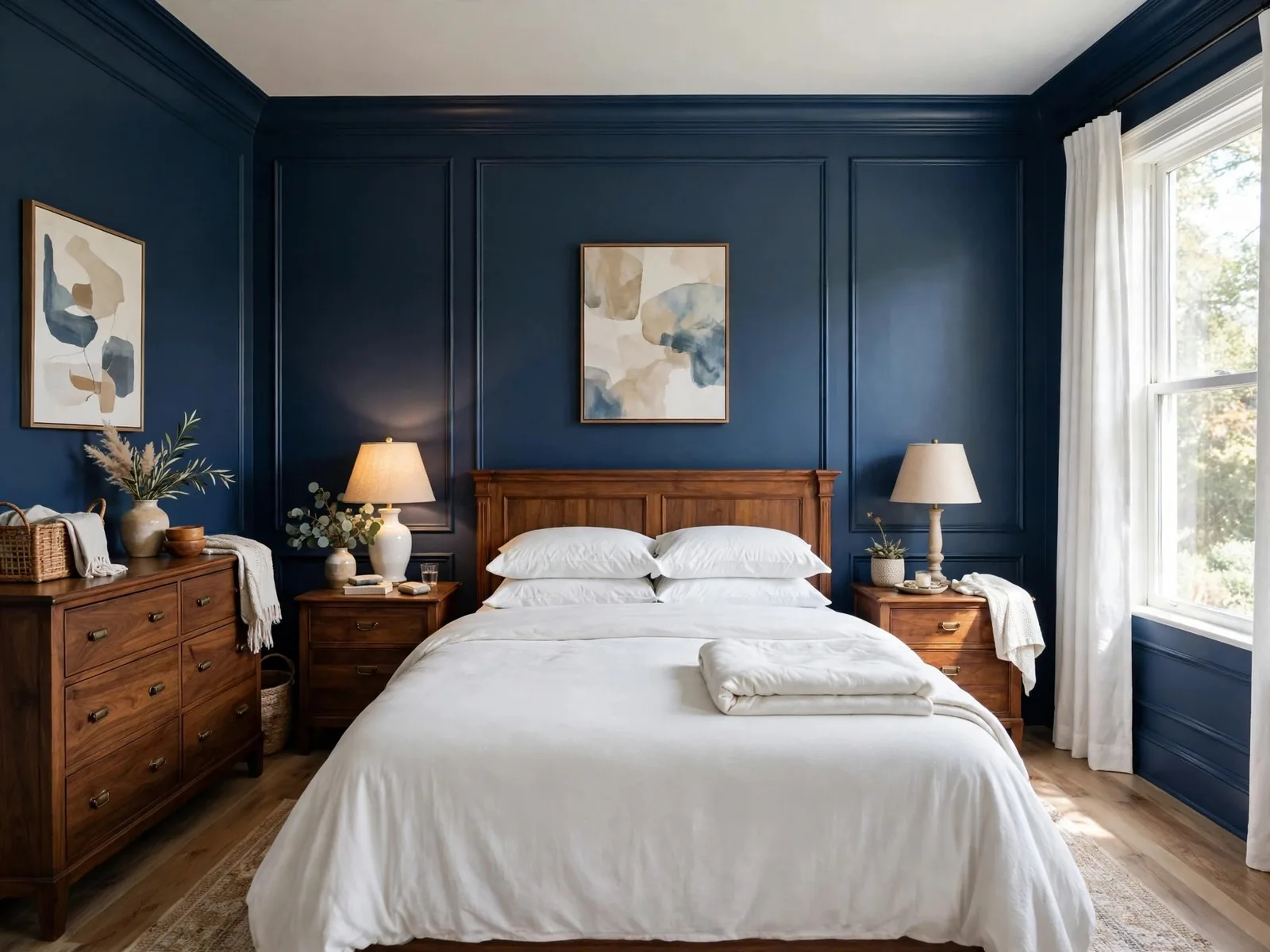
The split: 60 on the walls in Naval SW 6244, 30 in crisp white bedding with a cream throw across the foot, and 10 in walnut and brass in the nightstands and lamps. The master bedroom ideas page builds whole rooms on wall color with this kind of confidence.
The catch is coverage and dust. Two coats cover the wall properly, and any dust shows more on dark paint, so plan on a monthly dusting of the visible edges. Wipe the skirting and the baseboards clean before the painter arrives, because a smudge on a white edge shows more on navy than it does on pale paint.
Budget: two gallons covers a 12 by 12 foot room in two coats, plus one sample pot first. If the room is larger than 12 by 14, buy a third gallon, because running out mid-wall is the one place where saving 10 percent bounces back.
4. Drop to midnight navy in matte for the full cocoon
Dark blue bedroom ideas reach their floor here. Midnight navy, for example Benjamin Moore’s Midnight 2131-10, sits at the bottom of the blue family and needs matte or a very low eggshell sheen to keep it from going glossy under lamps. The tonal bedding keeps the room soft: a navy duvet in a slightly lighter navy, a charcoal throw across the foot, and amber brass lamps that glow.
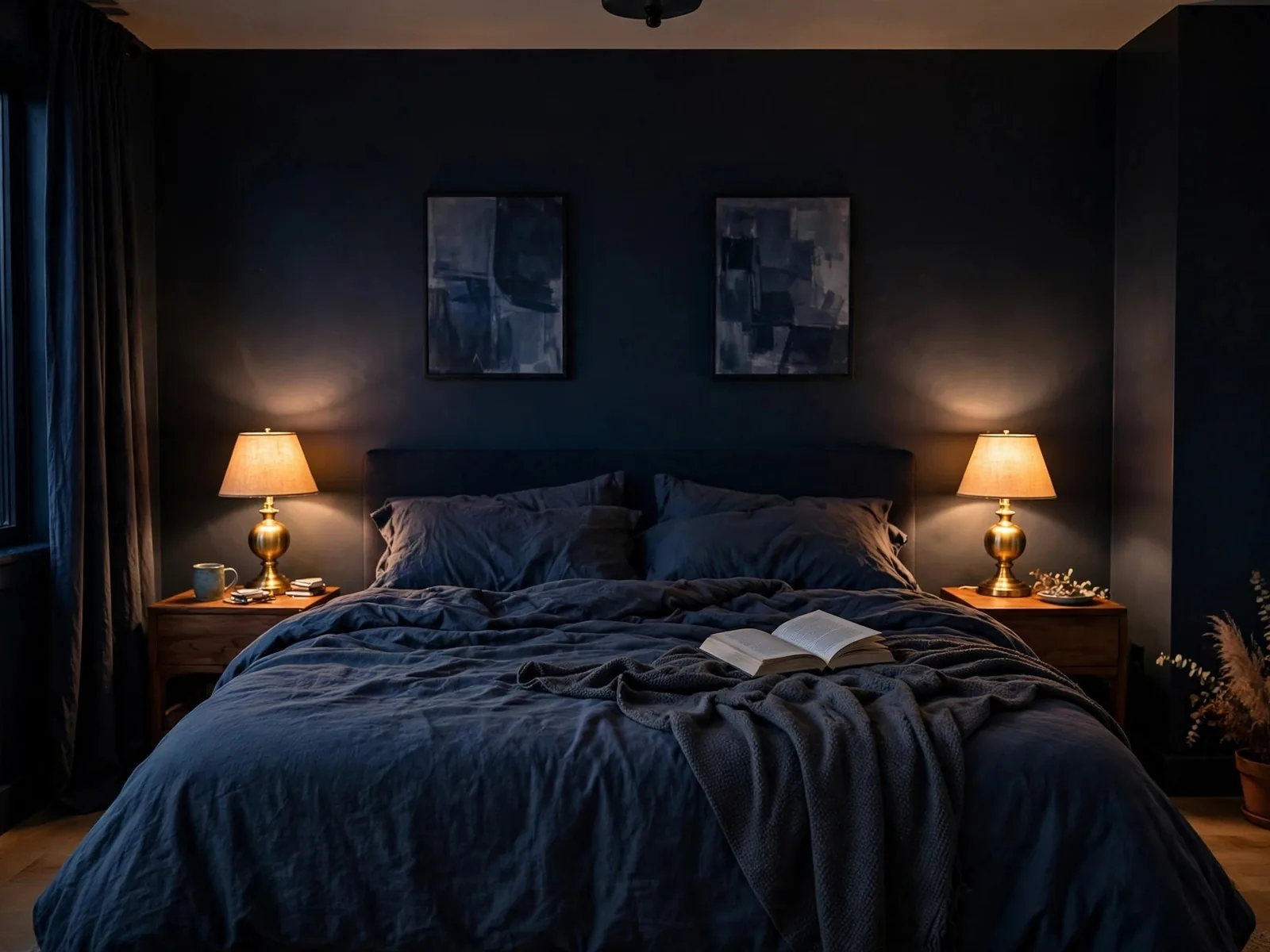
The split: 60 on the walls in matte midnight navy, 30 in the tonal navy bedding and charcoal throw, and 10 in the warm amber brass lamps. Go to the moody bedroom ideas page if this palette is the direction you are heading.
The catch is light count. This palette wants at least two light sources in the room, a bedside lamp and a ceiling light, and it wants a 2700K bulb to keep the amber brass glowing. A single bulb under a fabric shade will make the room look smaller and darker than it is.
Measure: count your light sources before you commit. If the room has only one bulb, add a second lamp or a floor lamp first, and only then paint the walls, because matte navy swallows light the way pale blue cannot.
5. Split the difference with Aegean Teal, the blue that leans green
Aegean Teal 2136-40 is not a pure blue — it is a deep, soft teal that leans blue-green, and it earns its place here because it reads as blue in daylight and green at dusk. It suits the person who loves navy in the evening and wants something softer in the morning, and it is the least likely of these palettes to look flat in a room that only ever gets grey light.
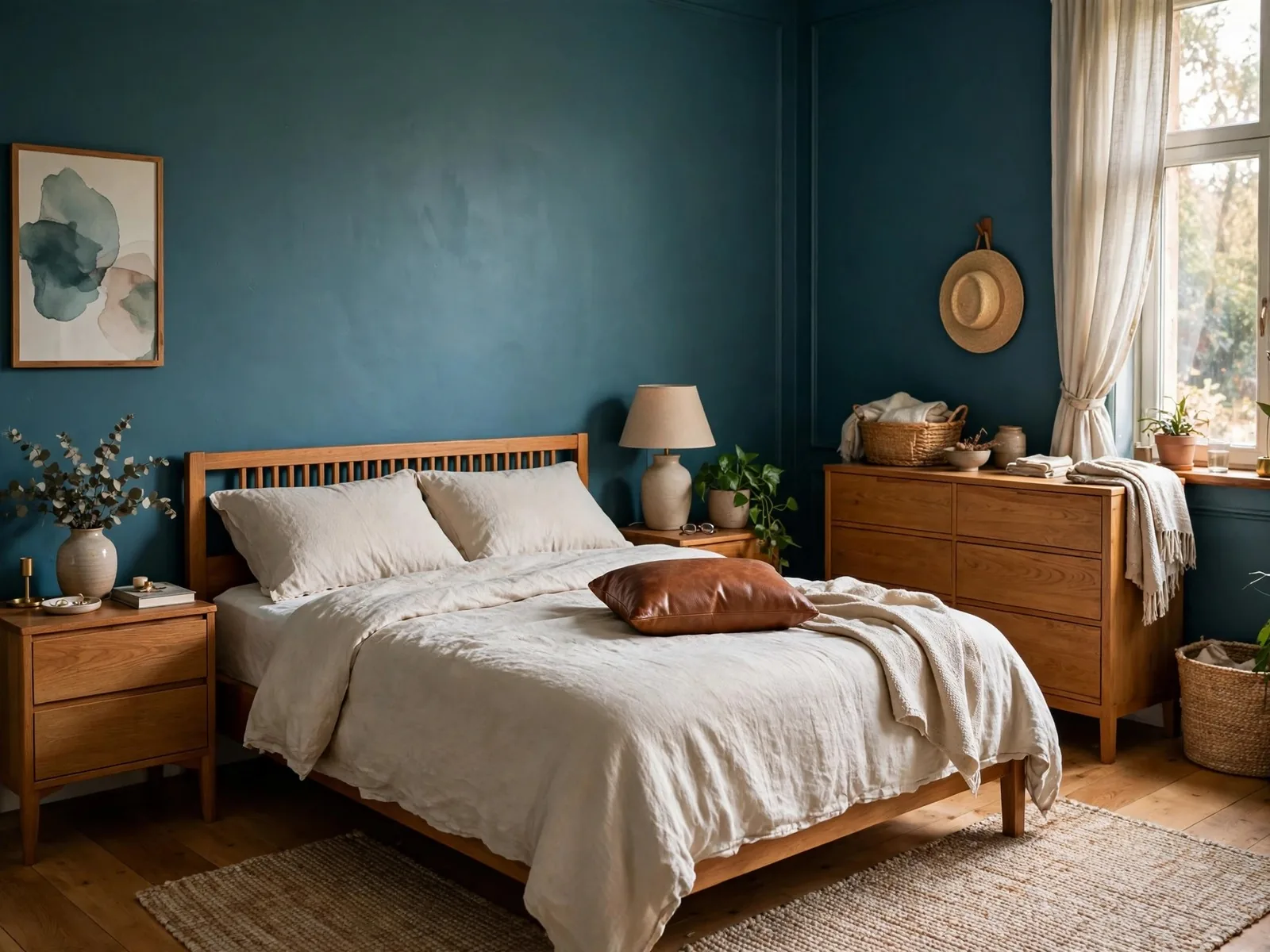
The split: 60 on the walls in Aegean Teal 2136-40, 30 in natural linen bedding with a cognac cushion, and 10 in warm oak furniture. The oak stops the green side of the teal from turning mint after dark.
The catch is that this color keeps two shifts a day: it goes greener at dusk and bluer at noon. Live with the test board for 24 hours before you trust it, because the teal you see at 10 a.m. is not the teal you get at 6 p.m.
Budget: the same one-to-two-gallon math as idea 3, but the test matters more, because the shifted green at dusk will sink the whole palette if you pick the wrong teal. Test Aegean Teal against the oak you already own.
How each palette behaves in north and south light
6. In a north-facing room, buy the warmer version of your blue
North light is cool and grey, and it pushes every blue toward the cold end. A north-facing bedroom in a pale blue can look icy rather than calm, and a navy wall can look muddy rather than rich. The fix is to buy the warmer version of the color you already like, not a different color: Palladian Blue HC-144 goes warmer if you step to Woodlawn Blue HC-147, Krypton SW 6247 goes warmer at Krypton SW 6247 in a warm grey, and Naval SW 6244 goes warmer with a deep teal trim rather than a cooler navy.
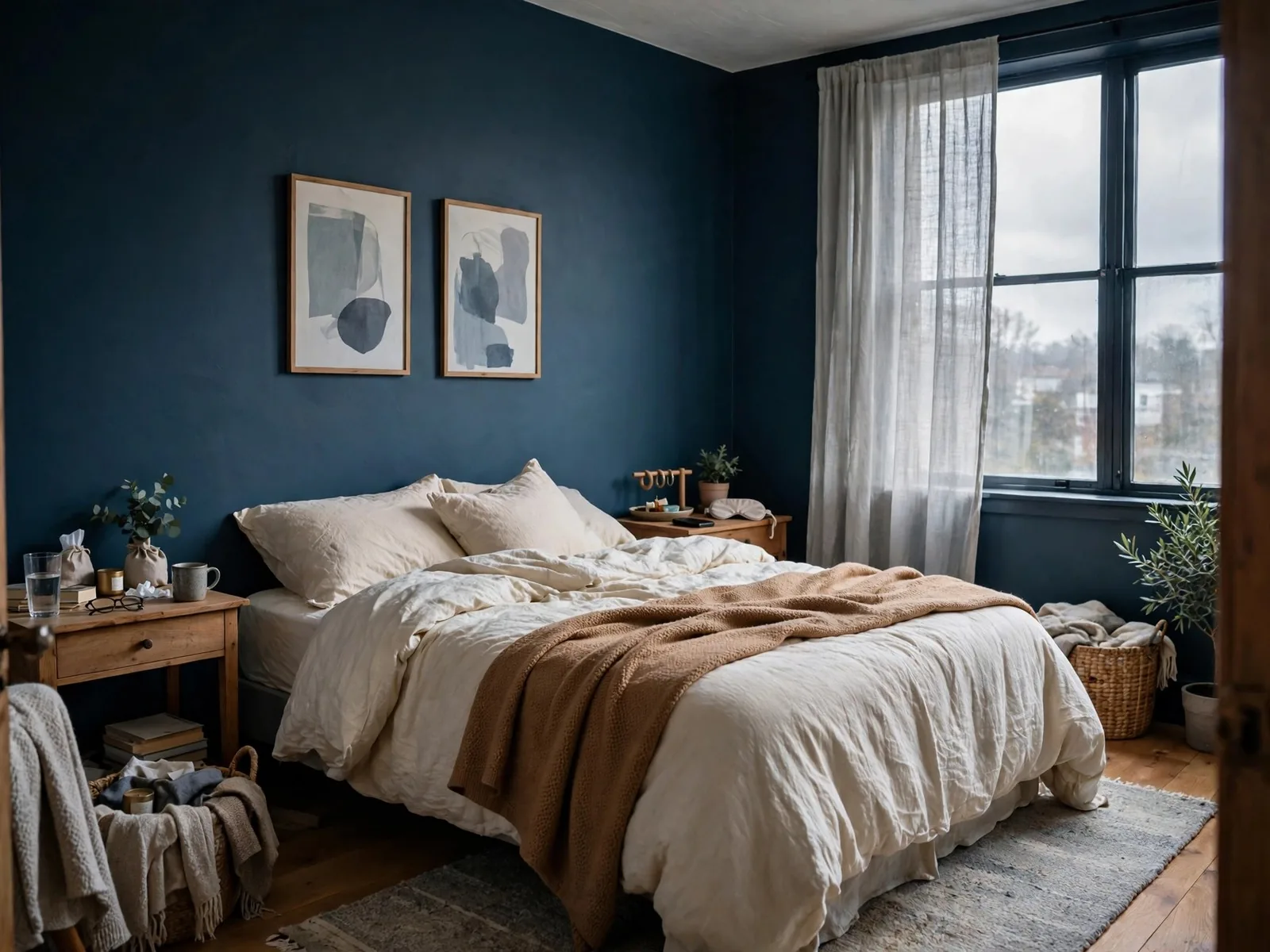
The fix is to buy the warmer version of your blue, then warm the textiles, then warm the metal. Swap the cool grey throw for a camel throw, the steel lamp for a brass one, and the white bedding for a warm cream. The wall color is fixed; the light is not.
Textiles then do the rest of the warming. A camel throw, a warm cream sheet and a brass lamp remove the chill from the room without changing the paint you bought.
Budget: $0. This idea moves furniture and bedding, not a paint can. If you already own a camel throw and a brass lamp, it is a 10-minute change.
7. In a south-facing room, go one shade cooler and deeper
South light is warm and strong, and it lifts every blue toward the light and the mint. A south-facing bedroom in pale sky blue can look washed out by midday and mint by evening. The fix is to go one shade cooler and deeper than the chip suggests: Palladian Blue HC-144 is the warm-lit version of the color you actually want when the room is facing south, and a deep teal or a classic navy holds its color in a south room when a pale blue cannot.
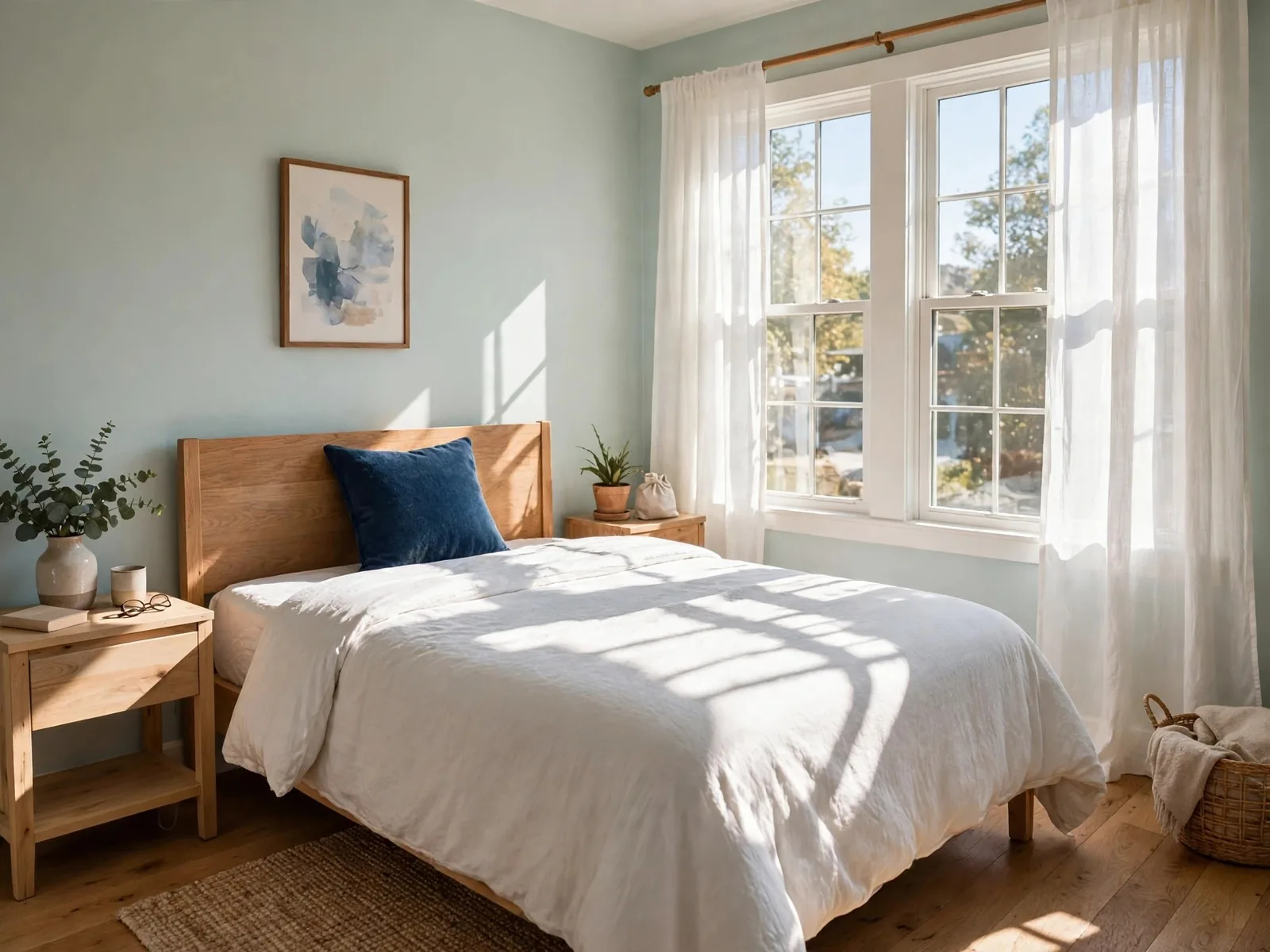
So go one shade cooler and deeper than the chip suggests. Then add a sheer white roller blind to control the glare, and put the deepest blue in the room at the far end of the room, where the light cannot reach it.
Judge the test again in the evening: the south-facing test board that looks right at noon will look mint by 6 p.m. The bedroom lighting page works through the warm-bulb side of that equation.
Measure: judge a south-facing swatch at three times — 10 a.m., 2 p.m., and 6 p.m. — before you commit, because a color that only works at one time of day is not a working color.
8. Test every blue on two walls and live with it for 24 hours
Blue changes its mind with the light, and the chip lies about it on every wall. A paint sample painted on the wall itself is the only honest test. Paint two coats on a foam board, 12 by 12 inches at least, and lean it against the bed wall and the wall opposite. Then check it at 10 a.m., 2 p.m., and after the lamps come on.
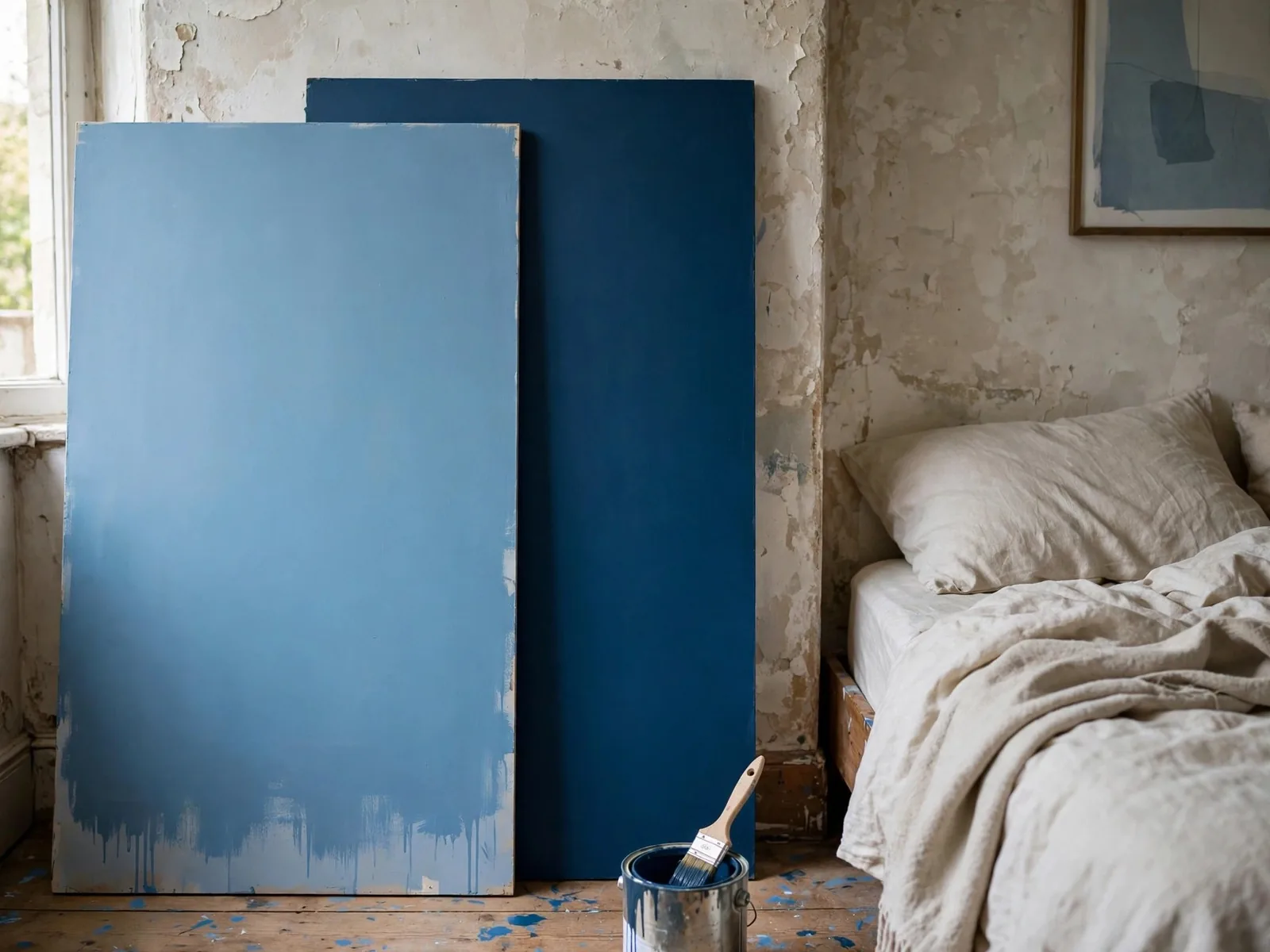
Paint two coats on a foam board, 12 by 12 inches at least, and tape it on the wall in two spots if the room is small.
Live with it for 24 hours and check it at three times: mid-morning, mid-afternoon, and after dark. If you would pick a different blue at any one of those times, pick another blue.
Measure: two coats, two walls, 12 by 12 inches minimum, and 24 hours with three checks. Any shortcut — one wall, one coat, one look — will miss the change.
Textiles and wood: completing each palette
9. Put warm white bedding against navy and let the wall do the work
The most saved navy room on Pinterest is not a navy room. It is white on navy: warm white bedding, a cream headboard, one blue throw across the foot, and everything else white. The navy wall does the drama and the white bedding does the sleeping, and the warm white keeps the room from looking like a showroom at night.
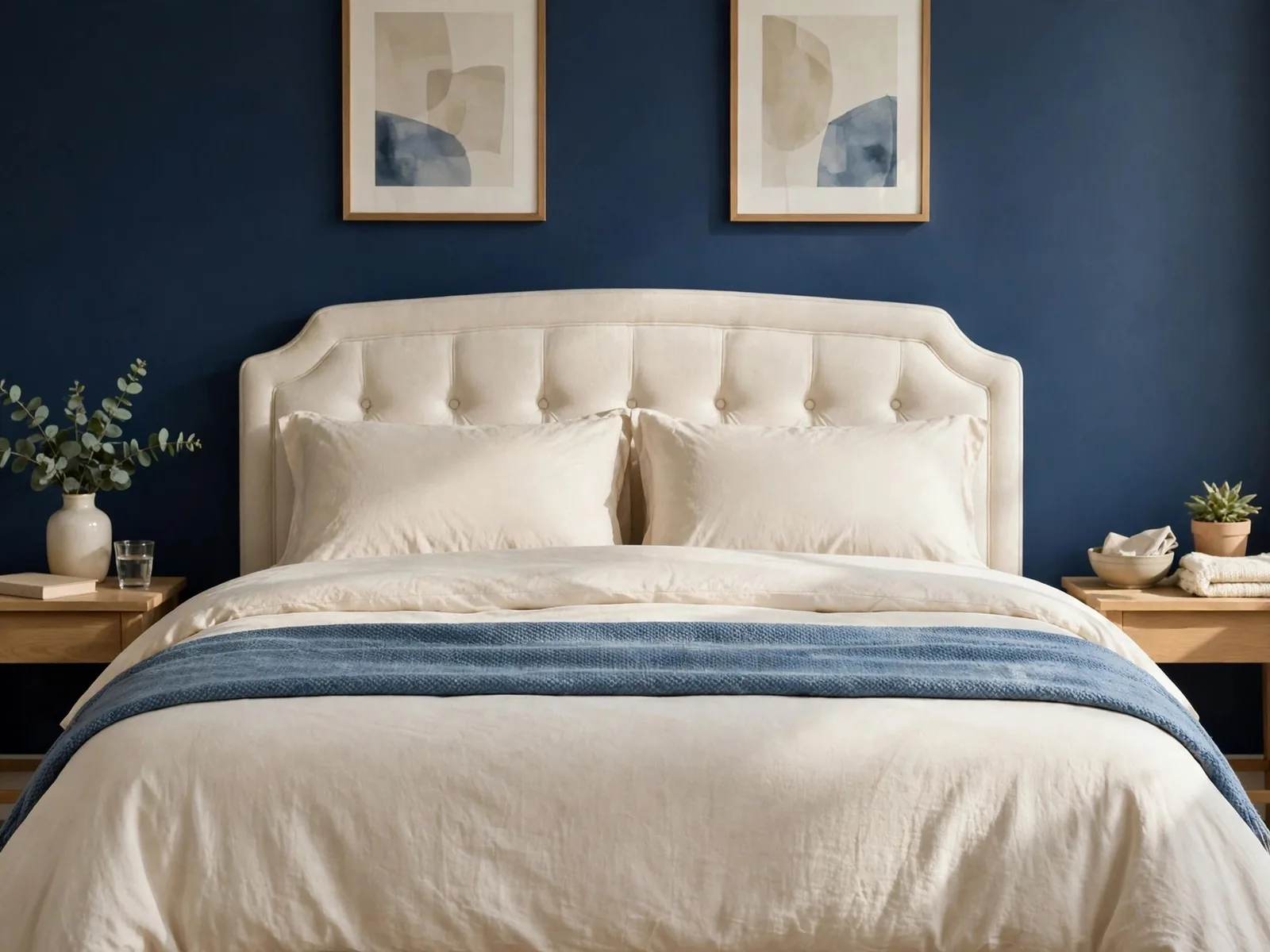
Keep the white warm, not bright white, because a cool white sheet will turn blue against the navy wall after dark.
The headboard page is full of shapes built for that job.
The catch is honesty: if your white bedding is the only warm thing in the room, one metal lamp and one warm wood item will not carry the rest of the palette. Warm the side tables, the throws, and the lampshades, or the navy wall will feel colder than you planned.
Budget: if your walls are already blue, put the whole budget into bedding and textiles. A warm white duvet, one cream throw and one navy cushion carry this idea.
10. Run blue and grey together without the chill
Navy blue and grey bedroom ideas fail often because they are built from the same cold half of the circle: grey walls, grey bedding, grey light. The room looks like a photograph of a room rather than a room. The fix is to split the work: let the blue be the color, let the grey be the texture, and let the warmth come from anywhere else in the room.
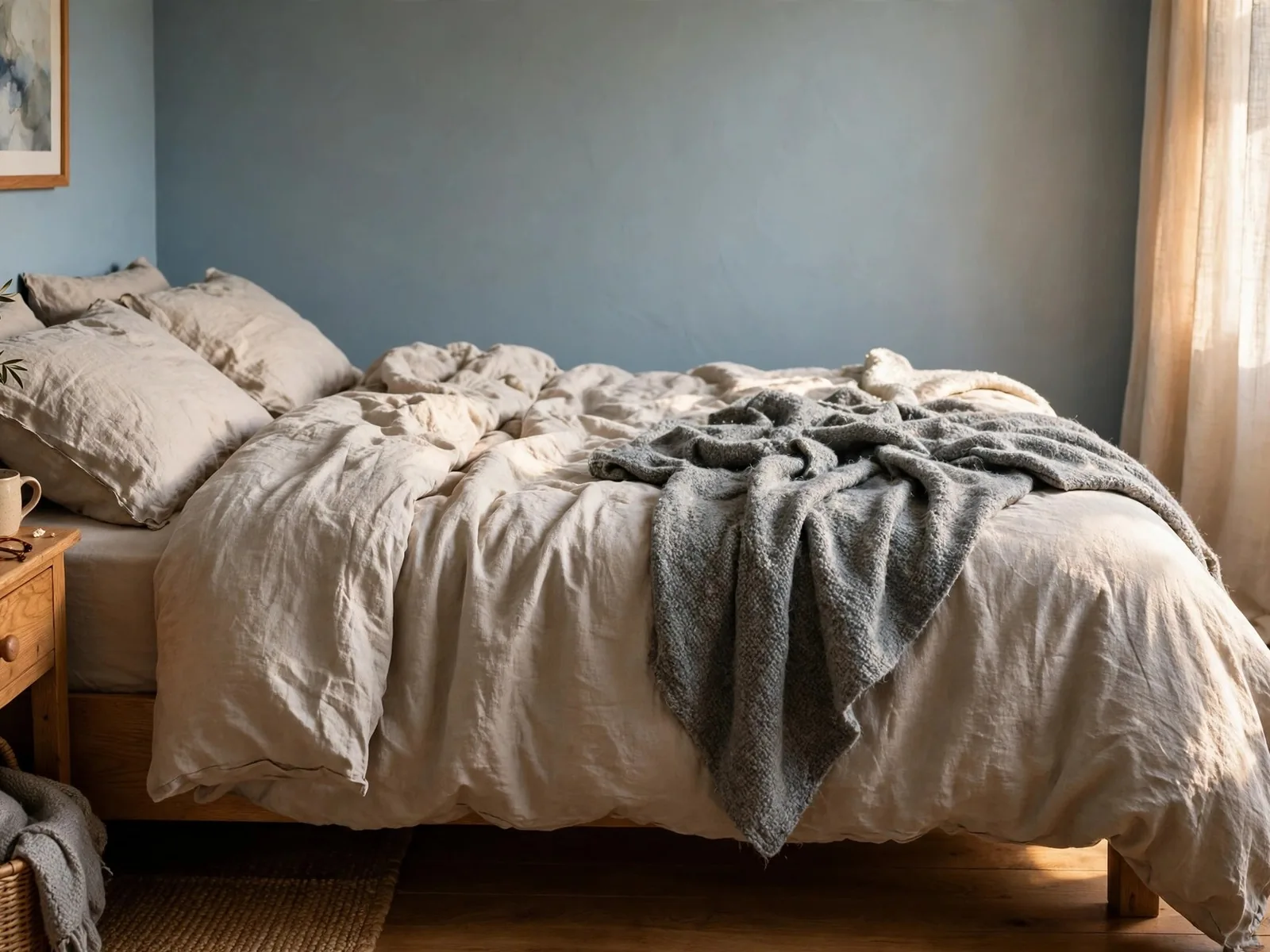
Build it warm: a navy or deep teal wall with a warm grey duvet in greige, a woven wool throw in a warmer grey, and an oak bedside table. The grey stays grey; the room does not.
The test is touch rather than sight: if every surface in the room feels cool, add a warm textile before you add a warm color, because a soft wool throw will do more than a second color.
Budget: one wool or woven throw in a warm grey carries this idea. If the grey duvet is already warm, you do not need to buy anything else.
11. Match the wood tone to the depth of the blue
Wood is the warmth budget, and it needs to match the depth of the blue rather than the color of the bedding. A pale sky blue wants pale oak; a dusty blue-grey wants white oak; a classic navy wants walnut; a deep teal wants warm oak or smoked oak. Dark wood in a pale blue room will look like a mistake, and pale wood in a navy room will look washed out.
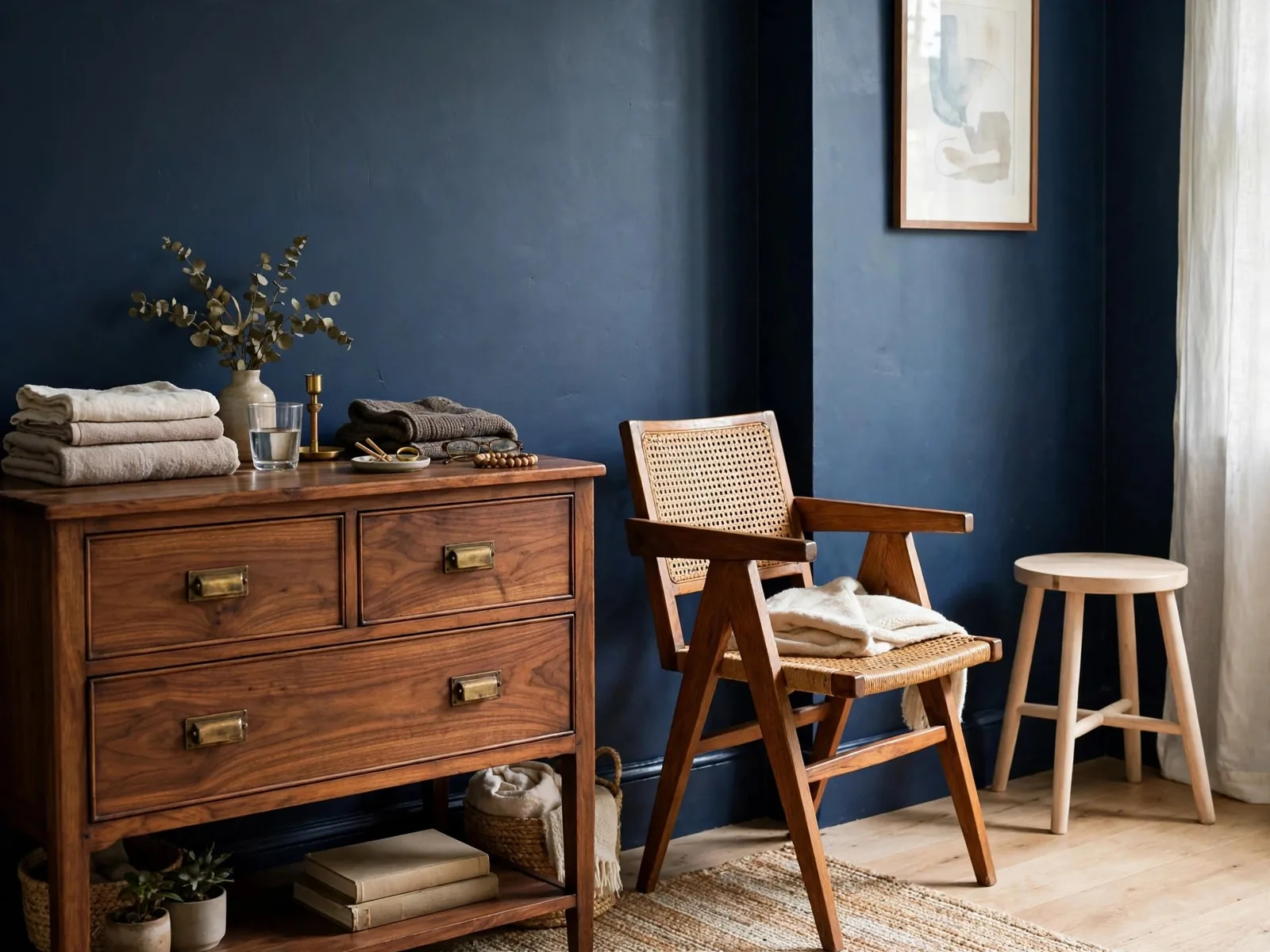
The pairings that hold: pale oak with pale sky, white oak with dusty blue, walnut with classic navy, warm oak with deep teal. The test is to hold the wood against the wall color in the morning light, because the morning light is the light the room actually lives in.
Test before you rearrange a thing. Keep the chair, the dresser and the nightstand in place, and only move them once you have seen them all against the wall at 10 a.m.
Budget: $0. This idea moves furniture, not a paint can. If you already own a walnut dresser and a warm oak chair, it is a 10-minute change.
12. Choose the metal last: brass warms navy, black sharpens pale blue
Metal is the smallest layer in the room and the one people notice first. Brass warms a navy wall, black sharpens a pale blue wall, and chrome cools a blue room in a way that reads as unfinished. Pick the metal after the bedding, because that is when you know whether the room needs warming or sharpening.
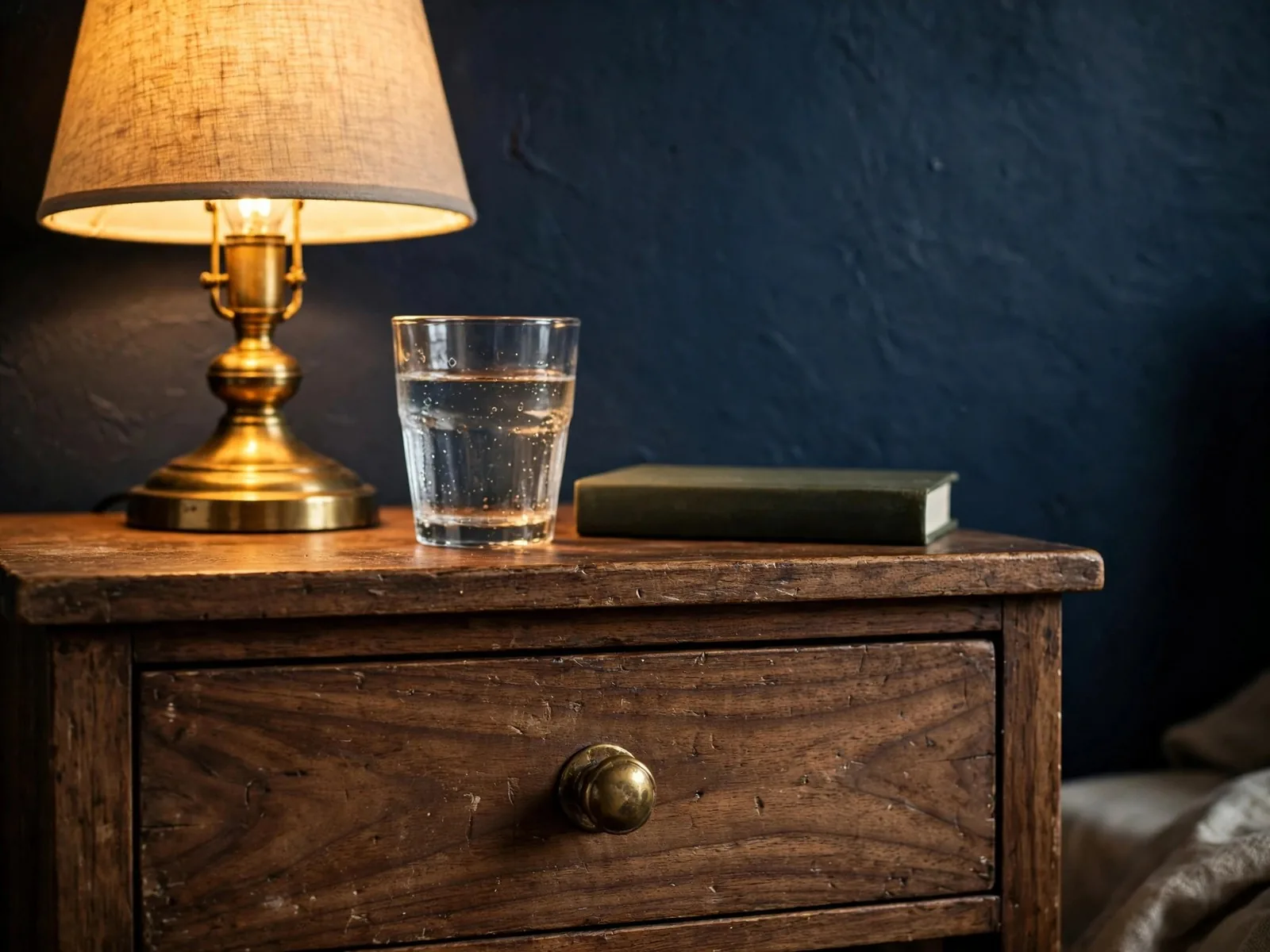
Brass and antique brass warm a navy or midnight room, because the warm metal pulls the eye away from the coldest part of the wall and toward the light.
The swap itself is small: two lamps at the bedside, a set of drawer pulls, and one mirror frame. In a pale blue room, black is the sharper choice, and it works because the black pulls the blue into focus.
Budget: two lamps and a set of pulls, plus one frame, comes to roughly $60 to $120 depending on the lamps. If you already own brass lamps, the swap is free.
The same palettes on a budget
13. Paint only the bed wall navy and stop there
The full navy room is a commitment, but one navy wall is a decision you can make on a Saturday. A deep navy accent wall behind the bed gives you the same cocoon feeling without changing the whole room, and it leaves every other wall free to work with the light: warm white walls that reflect rather than absorb.
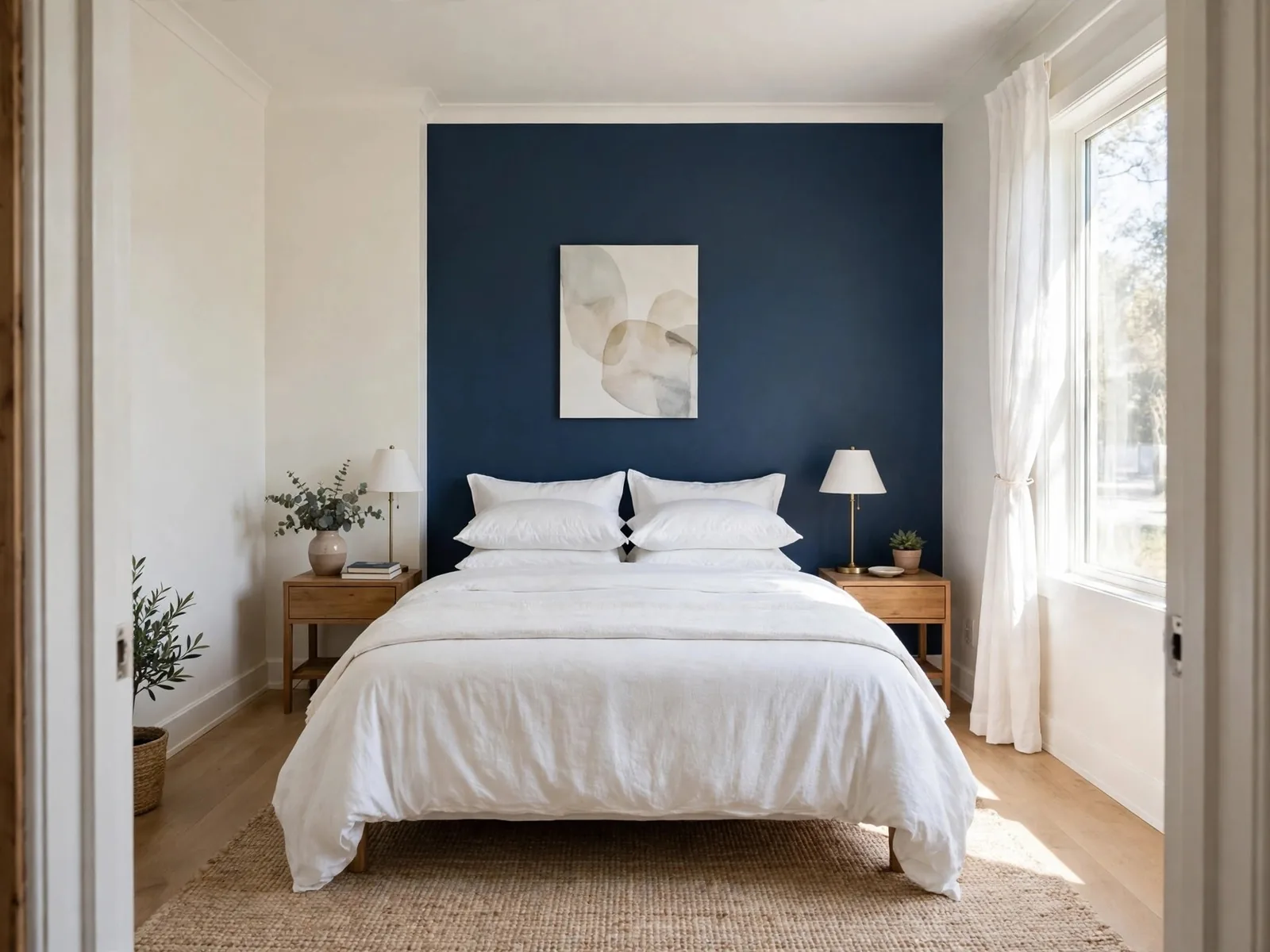
The math is kind: one gallon covers one bed wall in two coats, with tape and a roller adding $15 to the total. Keep the white walls warm rather than bright white, because a cool white next to a navy wall turns blue after dark.
Placement and edge technique for a single painted wall live on the accent wall page.
Choose Naval for the classic version, Midnight for the full cocoon, or Aegean Teal for the version that leans green. The deep teal is the best one-wall choice for a north-facing room.
Budget: one gallon plus tape and a roller comes to roughly $55 to $75. The rest of the room stays as it is, with the same bedding you already own.
14. Skip paint entirely: blue bedding and curtains on neutral walls
Renters and dorm rooms are banned from painting the walls and from drilling holes in a white wall that is not theirs. This is the palette for them: a navy duvet cover, matching navy curtains, and white sheets on a white or warm white wall. Nothing in the room is nailed, screwed or painted.
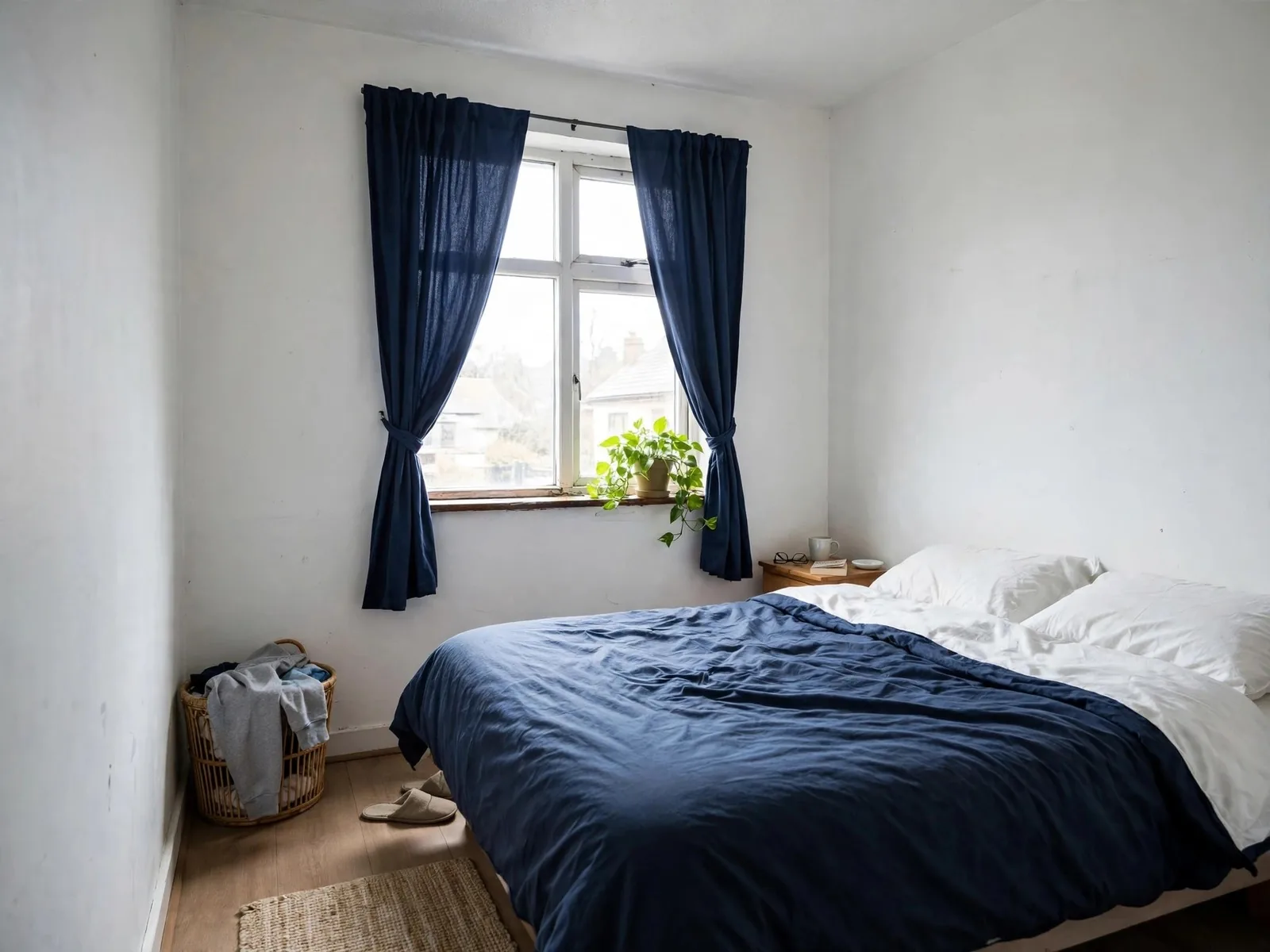
Flip the split honestly. Sixty percent is the bedding and curtains, 30 percent is the white walls and white sheets, and 10 percent is one navy cushion and one brass lamp. The dorm page builds whole rooms on that one legal layer.
The catch is scale: a navy duvet on a white wall can look thin if the throw is small. Keep the curtain and the throw the same blue, and let the navy cushion sit in the middle of the bed where the light hits it.
Renter-friendly: nothing in this idea touches the walls, the skirting or the ceiling. It survives inspection, and any landlord can see it is removable in five minutes.
15. Change the 10 percent first and live with it for a month
Before any gallon, spend a month with the 10 percent: two dusty-blue cushions, one folded blue throw, and one pair of blue lampshades. The month tells you whether you are living with a blue room or a blue phase, and it lets the room grow into the color before you commit to it.
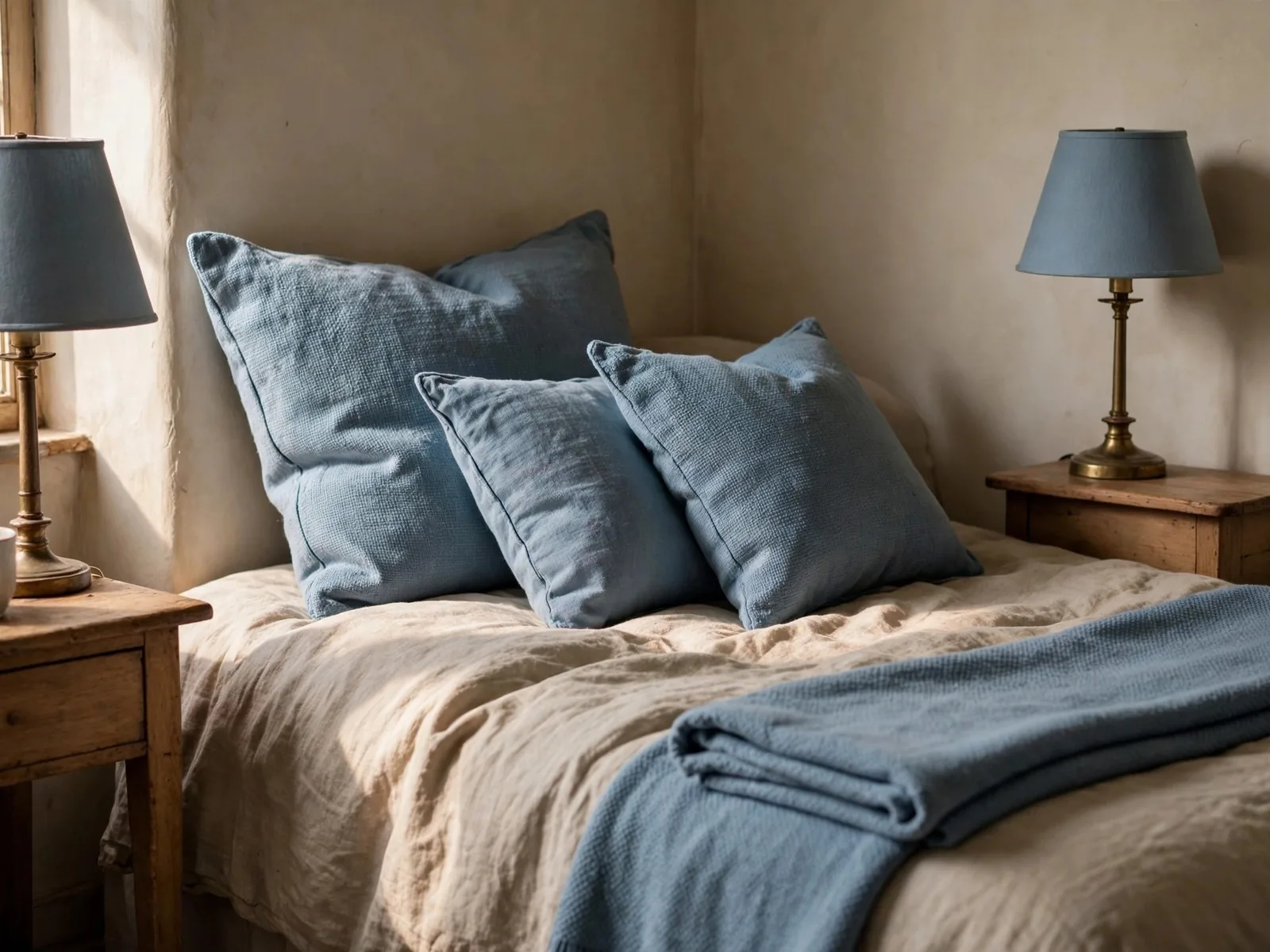
This is the test method from idea 8: two walls, one test board, 24 hours. Only now the test is the room itself — the cushions, the throw and the lampshades live with you, and every morning they tell you whether you still want navy.
Every piece survives into the final room. The cushions, the throw and the lampshades will still be there once the walls are up, and the month of living with them is what makes the final palette honest.
Budget: under $60 total, and every piece survives the next change. If the blue fades out of your interest in three weeks, you have spent $60 on a test and learned something real.
Blue Bedroom Ideas on a budget
Here is the strongest version of this page for under $150: pick one idea below, then run it in this order. First, paint one gallon of Naval SW 6244 on the bed wall, in matte, from idea 13. Second, put a warm white duvet on the bed, from idea 9. Third, lean one walnut nightstand at the bedside, from idea 11. Fourth, give the room two brass lamps and one warm throw, from idea 12. The bedroom makeover page shows how to sequence a whole-room change in this same test-first order.
Renters swap the wall step for idea 14, a navy duvet and matching curtains on white walls, and keep the same order of work.
Mistakes that make it fall flat
- Painting straight from the chip. Blue changes size on a wall, and the chip changes color in the light. Test boards exist for a reason.
- Blue on every surface. A blue wall, a blue bed, blue curtains and a blue floor stack up into a room that looks like a shop window in the dark. One warm textile will do more than another blue.
- An icy blue in a north-facing room. The room will read as cold rather than calm, and a throw will not fix a color that fights the light. Buy the warmer version or change the textiles.
- The finish working against the depth. A glossy navy wall under a lamp glares; a matte midnight wall under one bulb looks flat. The sheen has to match the depth of the blue.
- Cool bulbs after dark. A 3000K or daylight bulb pushes a navy wall muddy and a pale blue wall mint. Swap to 2700K before you judge the paint.
Questions people ask about this
What is the best color for a bedroom walls and bedding together? Pick the wall color first and let the bedding stay quiet. A navy wall with white bedding, or a pale blue wall with cream bedding, never misses, because the wall is the color and the bedding is the light.
Which blue is best for a small bedroom? Use a pale, warm blue like Palladian Blue HC-144, with white trim and a warm white duvet. A deep blue is possible in a small room if the light is strong and the ceiling is white, but pale blue is the safer first step.
Is navy too dark for a bedroom? Not if the ceiling stays white, the trim stays white, and the room has two light sources. Navy needs more warm light than a pale blue does, which is why the bulb choice matters more than the paint choice.
The bottom line
Blue is not a risky color; untested blue is. The test board, the 24-hour check and the warm bulb keep it honest. Pick one idea, run its split, live with the 10 percent for a month, and let the room prove itself before the paint dries.