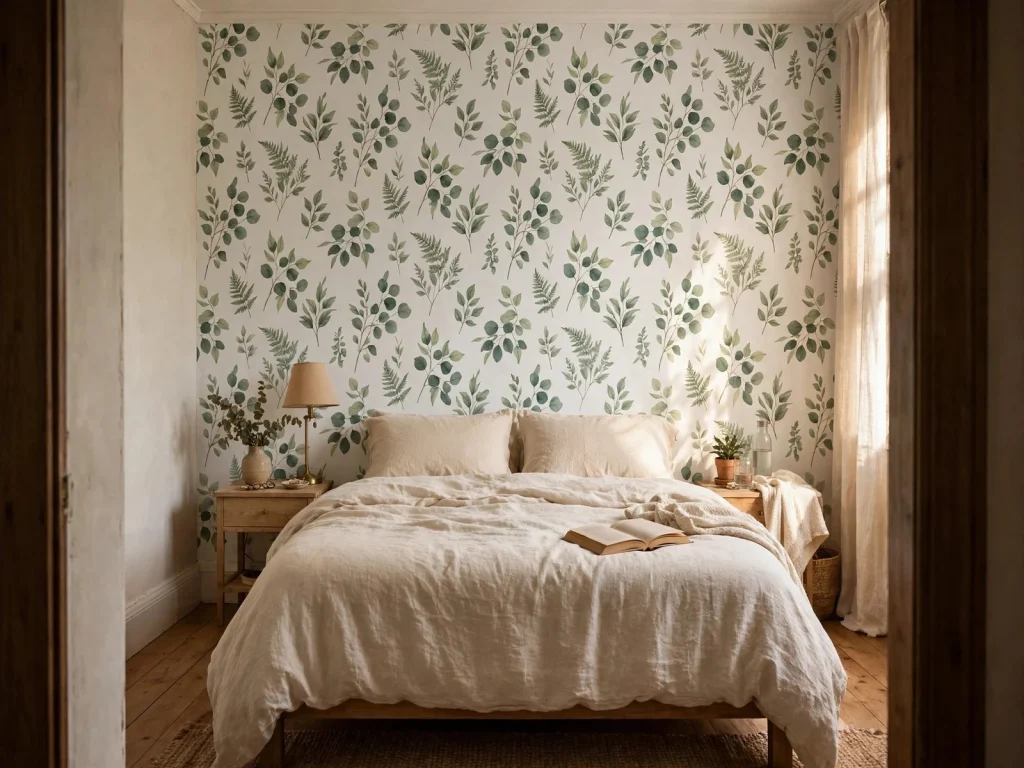
You bought the pretty bedding set and made the bed exactly like the picture on the packet and it still looks flat. The duvet ends halfway down the sides of the mattress and the pillows slump and the whole bed reads tired by Tuesday. The pieces are fine. The sizes and the layer order are what nobody told you.
This page fixes that with bedroom bedding ideas built on numbers instead of taste. You get the size to buy for every soft layer on the bed and the order those layers stack in and the wash reality that decides whether a layer survives your laundry routine. Every idea carries a measurement or a budget band or a renter note so you can copy it into a real room.
Before you start: measure, budget, rules
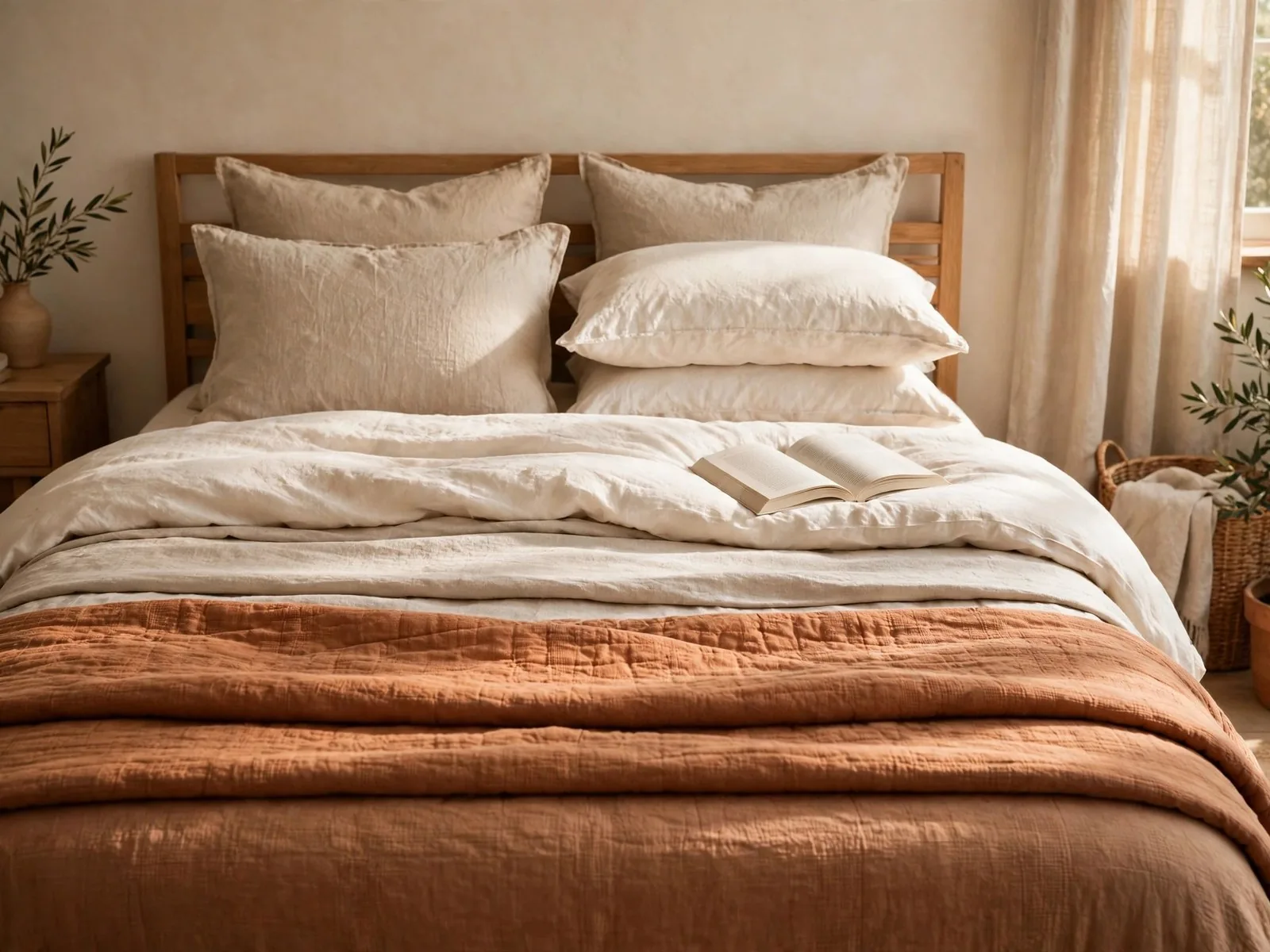
Measure the mattress before you buy a single layer. Write down the width and the length and the depth at one corner with a tape pushed flat against the side. A queen is 60 by 80 inches and a king is 76 by 80 and most mattresses run 10 to 14 inches deep once a topper goes on. Those three numbers decide every size on this page.
Buy in this order. Sheets first because your skin touches them all night. The duvet insert second because it carries the warmth. The cover or comforter third and the quilt fourth and decorative pillows dead last with whatever budget survives. Most people buy in the reverse order and end up with beautiful cushions on a bed that sleeps badly.
The budget bands on this page are simple. Under $50 covers a throw or pillow inserts or a spare sheet set. The $50 to $150 band covers sheet sets and quilts and most inserts. The $150 to $300 band covers a full bedding reset for one bed. One wash rule rules them all: if a layer cannot go through your own machine it will quietly stop being washed so machine-washable wins every tie. The bedding sits inside the bigger plan in our bedroom ideas post.
Choosing the size before the style
1. Size the duvet by its drop and not by the bed label
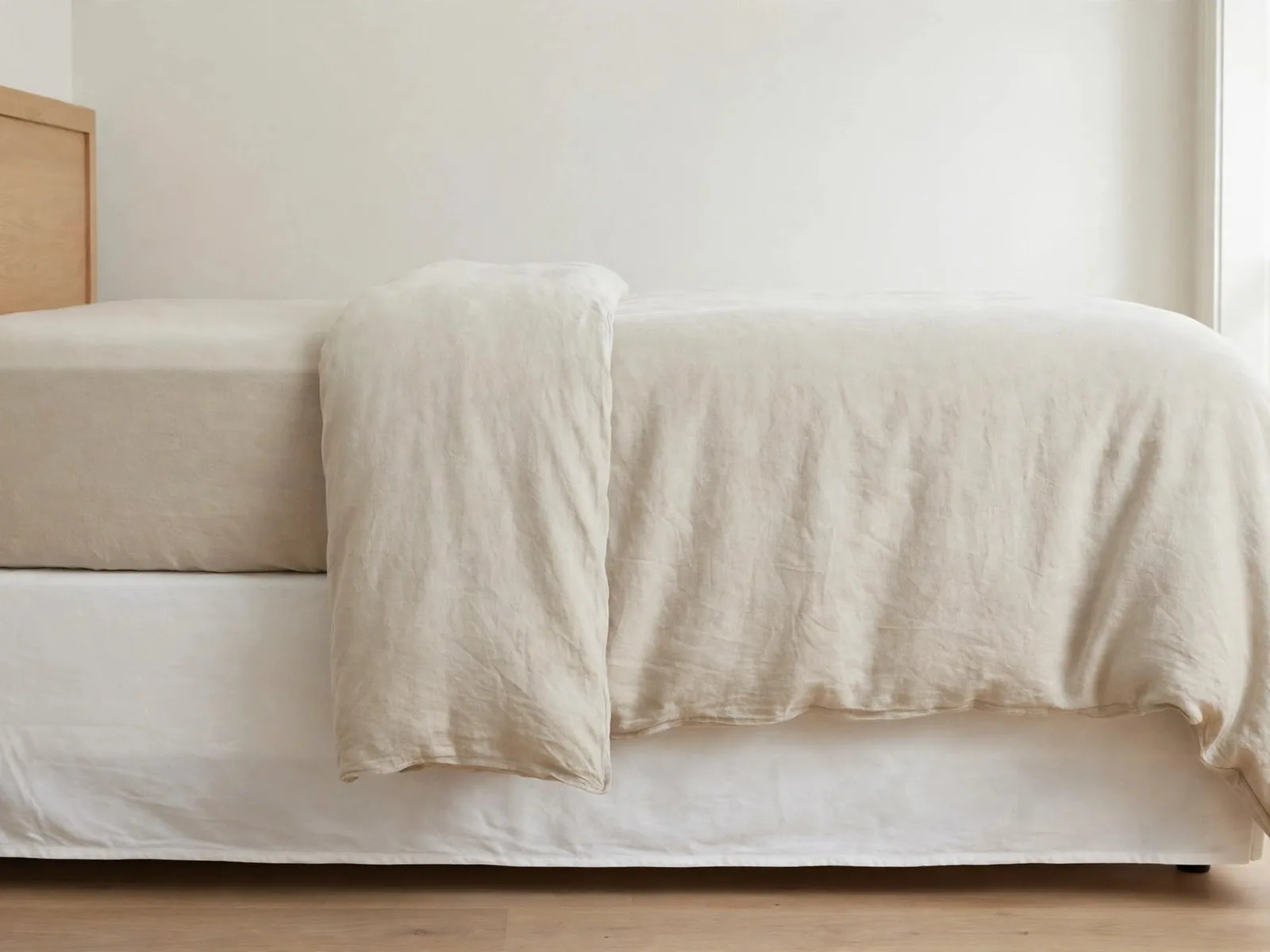
The duvet in the photos is always wider than the bed it sits on. That extra width hangs down both sides and covers the sheet and the top of the box spring and it is the single biggest difference between a catalog bed and a real one.
Do the math once. A queen mattress is 60 inches wide. A full or queen duvet at 88 to 92 inches wide leaves 14 to 16 inches of drop on each side and that drop is what you want. A twin duvet at 68 inches gives the same 15 inches on a 38 inch twin. King duvets run 104 to 108 inches for the 76 inch king.
The catch is excess. Go far past 16 inches of drop and the duvet pools toward the floor and drags when you make the bed. In a small room keep the drop at the modest end so the bed does not swallow the walkway. Our small bedroom ideas post plans the whole room around that same restraint.
Measure: mattress width plus 28 to 32 inches is the duvet width to shop for.
2. Match the sheet pocket to your mattress depth
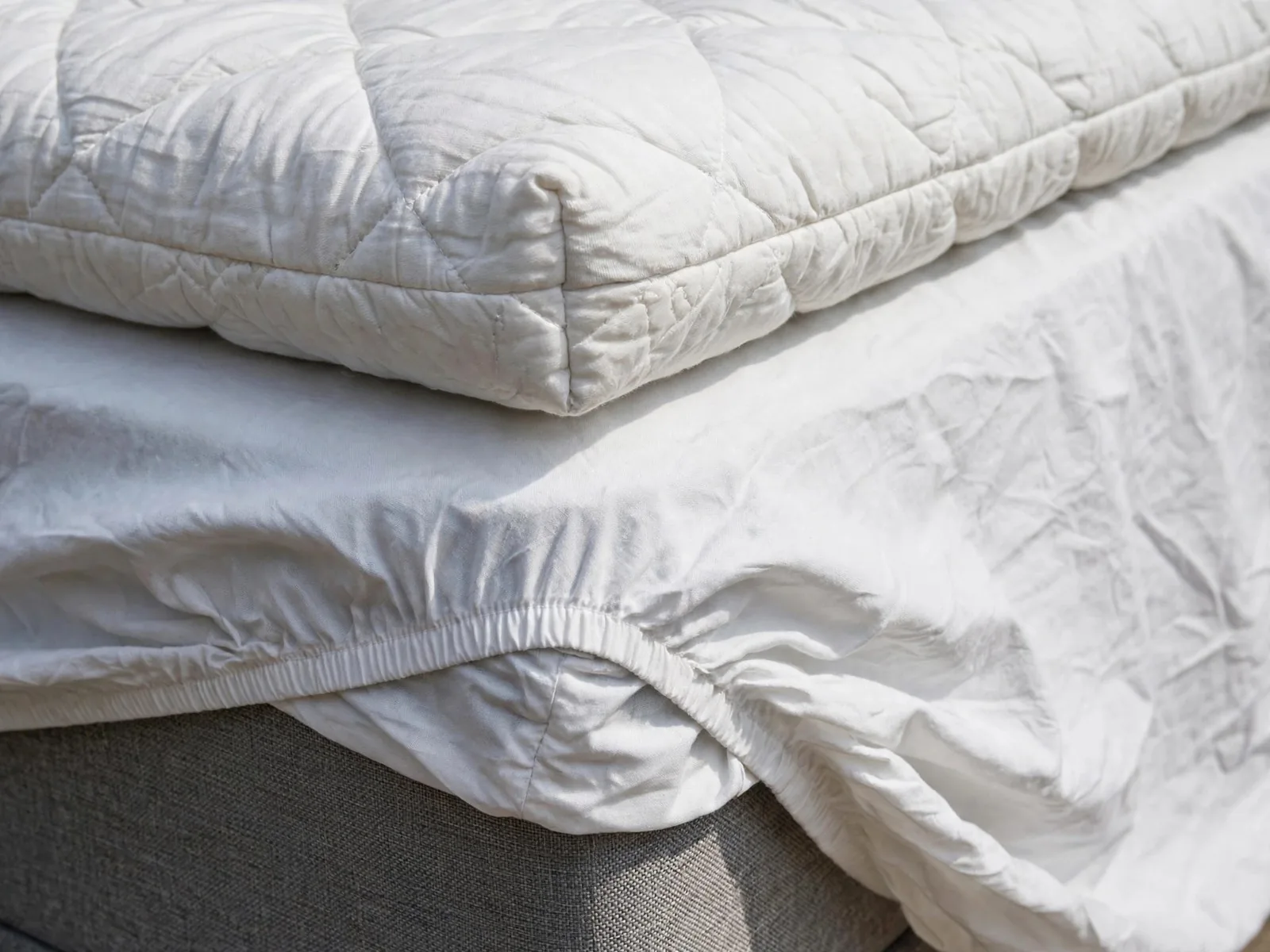
Fitted sheets fail by depth and never by width. The print can be perfect and the corners still pop off at 3 a.m. because the pocket is two inches shallower than the mattress it wraps.
Measure the corner from the top surface down to the bottom seam line with any topper in place. Standard mattresses run 10 to 12 inches deep and a pillow top or a 3 inch topper pushes the total to 14 to 16. Standard pockets fit about 12 to 14 inches. Deep pockets run 15 to 18 and extra deep runs to 22.
One size trap hides in dorm rooms and guest twin beds. A twin XL is 38 by 80 inches so a regular twin sheet at 75 inches long will never stay tucked. The full twin XL rundown lives in our dorm room ideas post.
Measure: buy a pocket depth 2 inches deeper than your corner measurement so the corners stay on through the night.
3. Pick the quilt size by where its edge lands
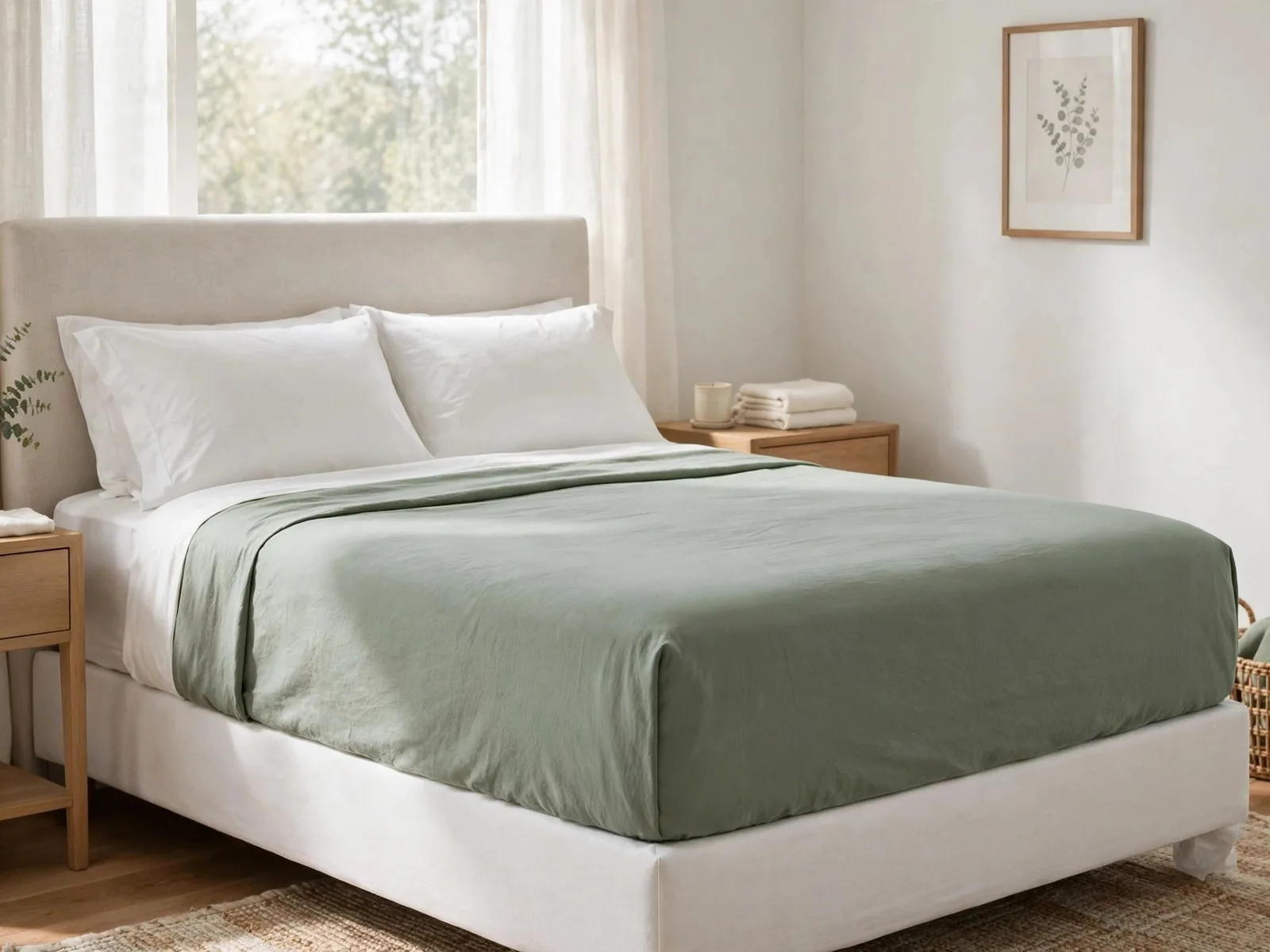
A quilt or coverlet is a thin layer so it hangs flat and honest. Every extra inch shows. Decide where you want the bottom edge to land before you look at patterns: the top of the box spring is the classic line and the floor is the modern one.
Work backward from that line. Note the distance from the top of the mattress down to your landing line and add it twice to the bed width. On most queen setups that lands you at a 90 to 96 inch quilt. Buy smaller and the edge floats above the frame and shows the blanket underneath at the sides.
A folded quilt plays by different rules. A twin quilt folded in thirds across the foot of a queen bed only needs to span the width once so the smaller and cheaper size wins there.
Measure: bed width plus twice the drop to your landing line is the coverlet width to buy.
4. Count pillows from the bed size up
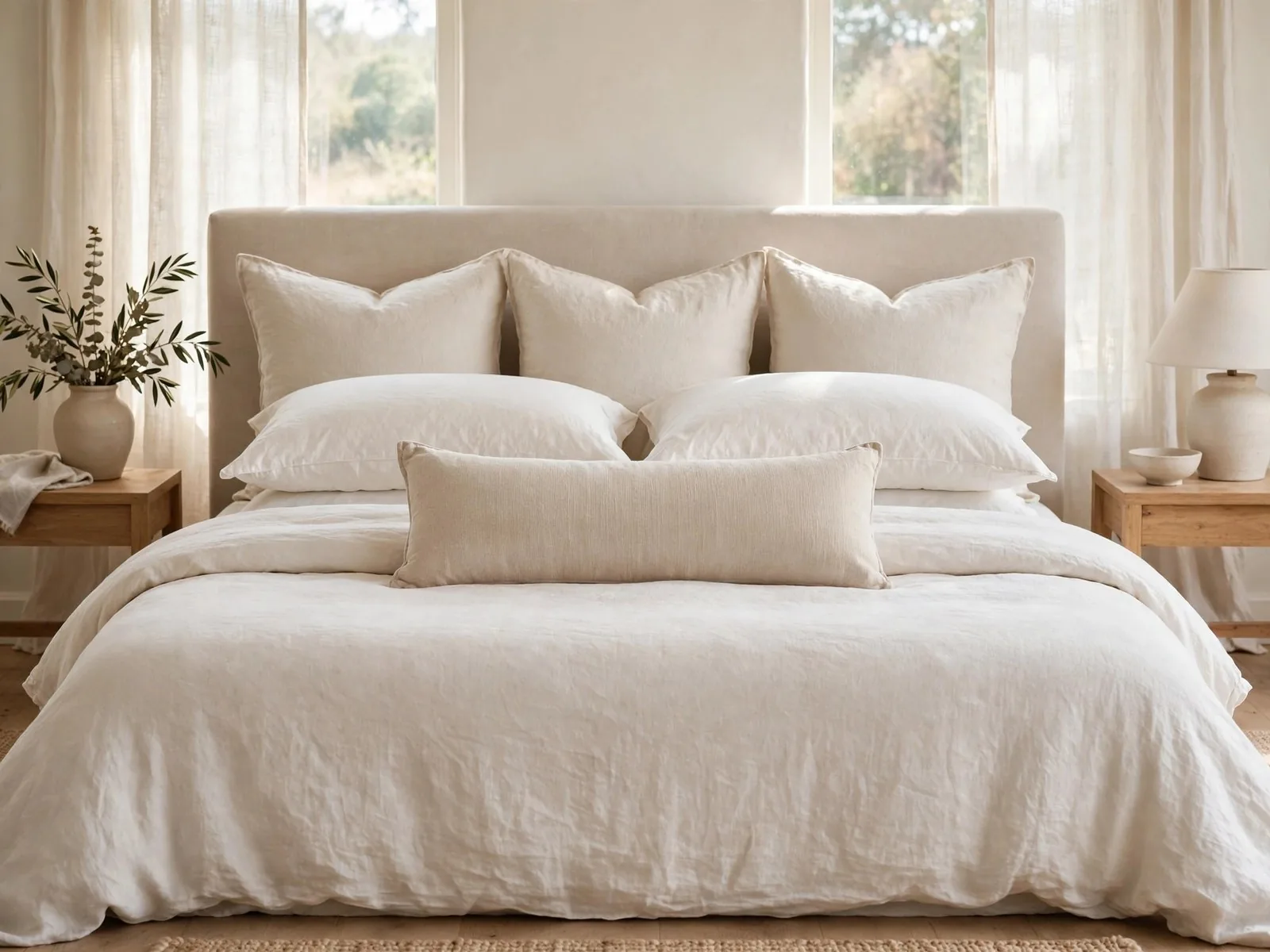
Pillow math starts with the sham sizes. A standard pillow is 20 by 26 inches and a queen pillow is 20 by 30 and a king pillow is 20 by 36. Euro shams are 26 by 26 and they follow the bed: one on a twin and two on a full or queen and three across a king.
A queen bed looks finished with two sleeping pillows and two euros and one accent in front. A king master setup takes three euros and two king sleeping pillows and one long lumbar. Bedding ideas for master bedroom searches all land on that same recipe because it fills the 76 inch width without a pile.
Past that count the extra pillows sleep on the floor and the bed takes ten minutes to make so it stops getting made. Stop at five pieces on a queen and seven on a king.
Budget: $10 to $25 per insert. Filling the shams you already own with inserts one size up fixes most slumping for under $50.
The pieces, one by one
5. Start with sheets in a fabric you can name
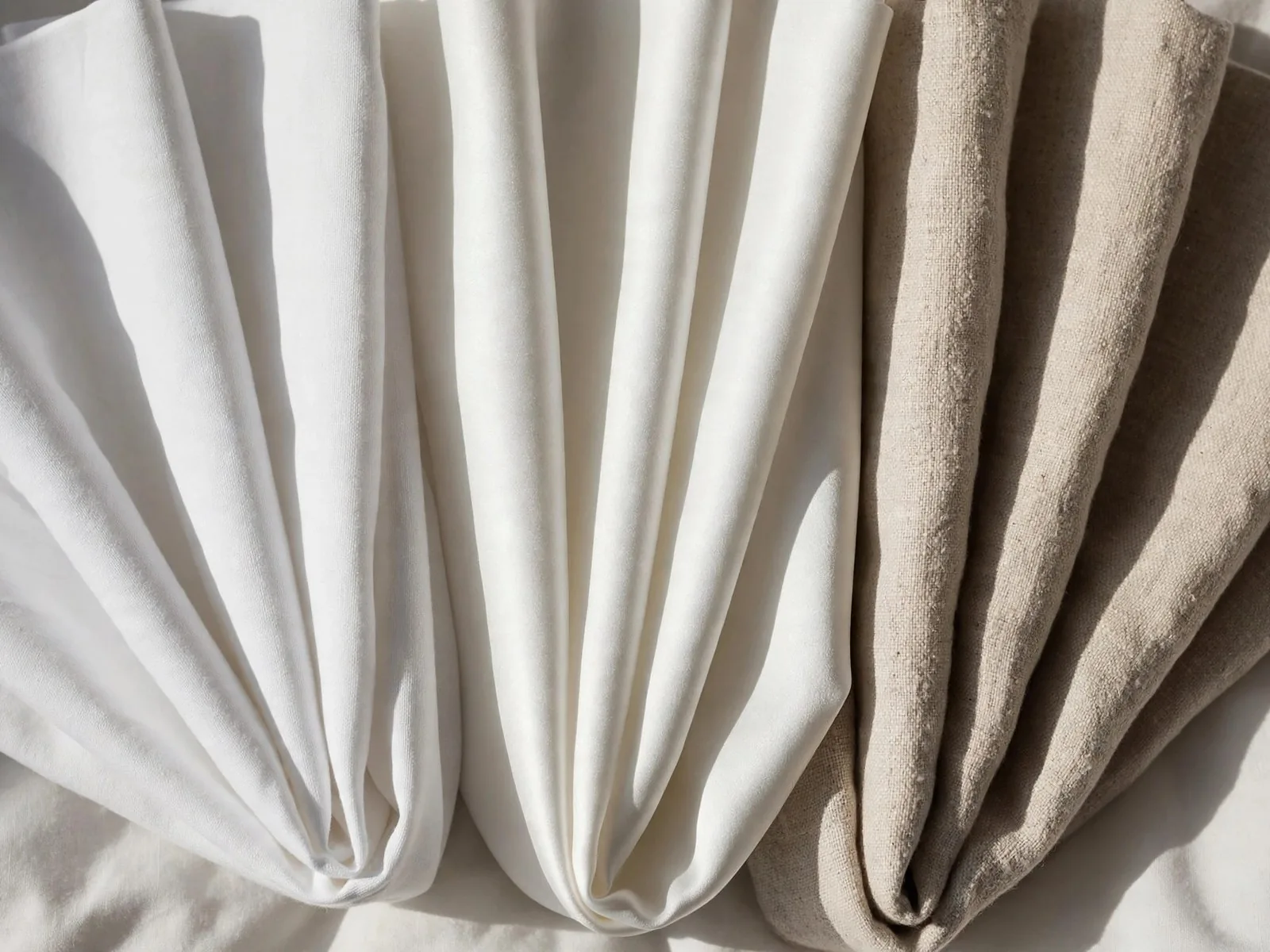
Three fabrics cover almost every good bed. Percale is a plain weave that feels matte and crisp and sleeps cool. Sateen weaves smoother with a soft sheen and drapes closer to the body. Linen is textured and breathable and gets softer with every wash instead of wearing thin.
Thread count needs one honest sentence. In long-staple cotton the 300 to 500 range is the sweet spot and four-digit counts are marketing math built on multi-ply yarn. Your hand can judge a sheet better than the packet can.
Wash sheets weekly in warm water for cotton. Linen takes cold to warm water and a low tumble or a line dry and rewards you by outlasting the cotton sets beside it.
Budget: $40 to $80 buys a solid cotton set. Spend here before any decorative layer because this is the layer your skin votes on.
6. Put the real warmth into a duvet insert
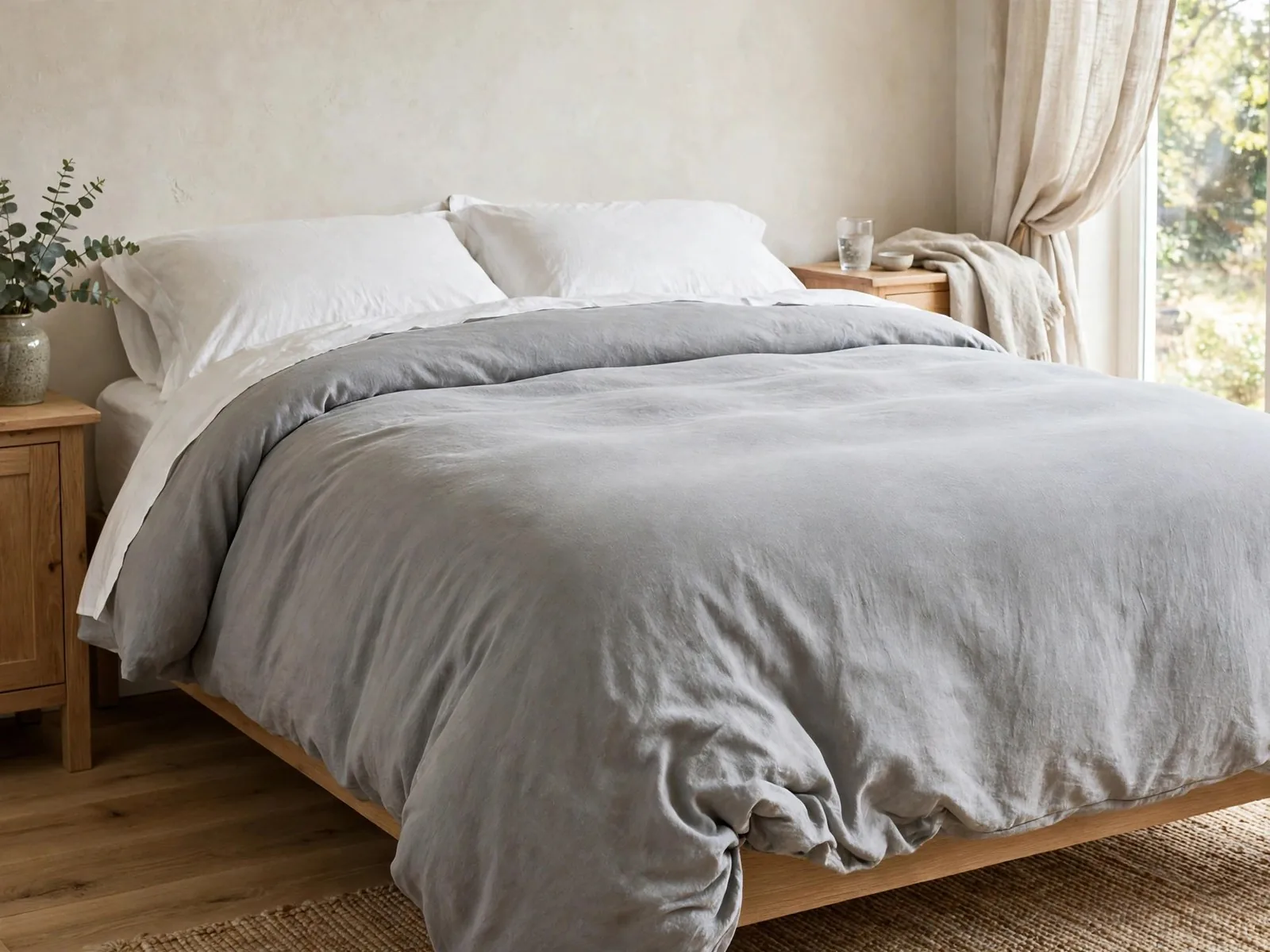
The cover is the outfit. The insert is the body underneath and it does the warming. Buy the insert by tog rating: 4.5 tog for summer and 10.5 for all season and 13.5 for a cold house in winter. Most homes live happily at 10.5 with a blanket added on the coldest nights.
Size the insert to the cover or one step fuller. An insert up to 2 inches wider than the cover fills the corners and keeps the top plump instead of pooled in the middle. Clip or tie the corners inside the cover so the fill stays where you put it.
Down alternative beats down for most households for one reason: it washes at home. Wash the insert two or three times a year in the biggest machine you can access and let the cover take the weekly dirt the rest of the time.
Budget: $60 to $150 for an all-season down-alternative insert that covers most homes all year.
7. Make a white comforter the base you restyle
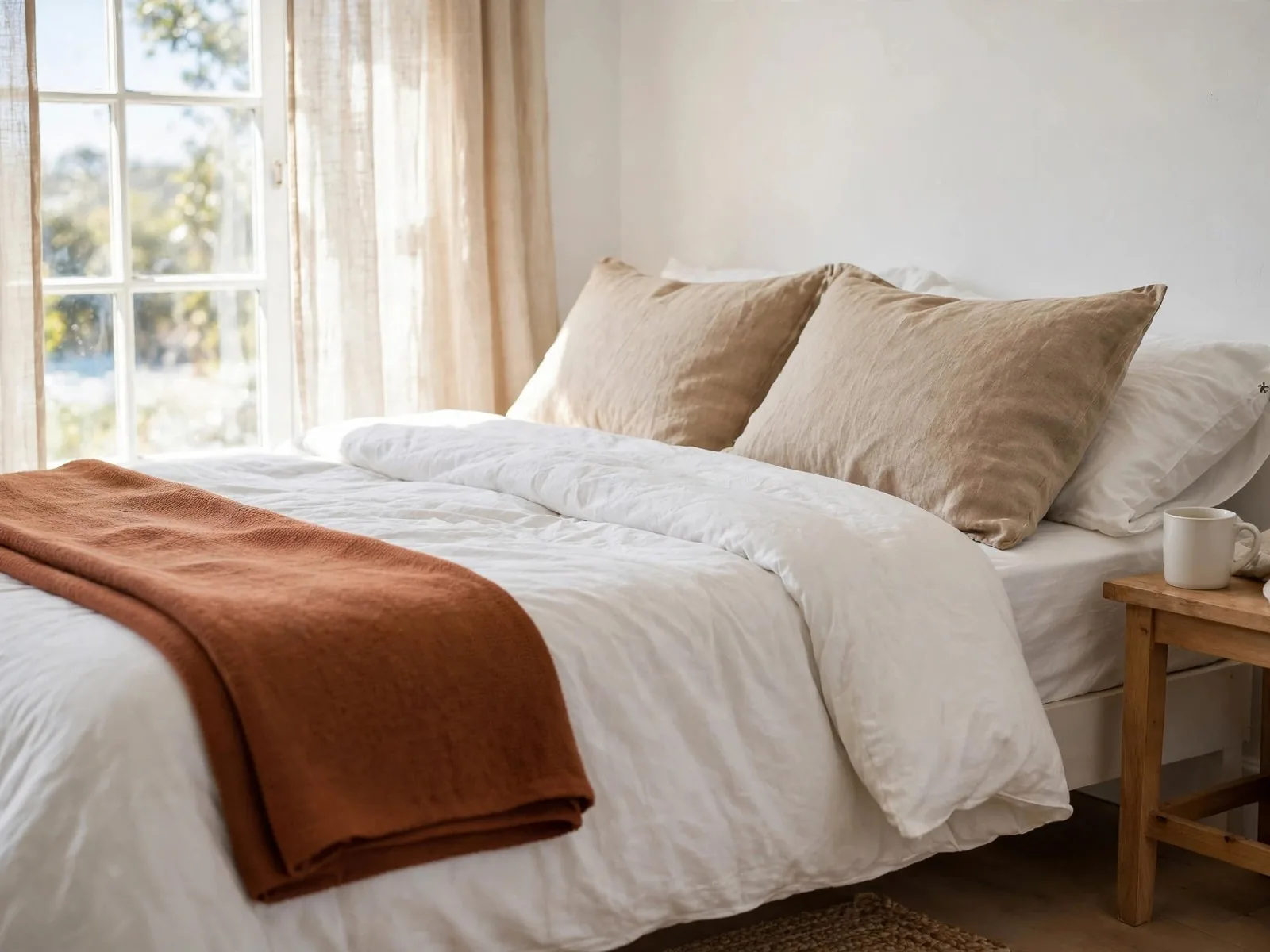
White comforter bedroom ideas keep ranking because white solves the styling problem permanently. A plain white top layer reads clean at every age of a room and takes any accent color you throw at its foot.
Hotels run white for a harder reason: it washes hot and tolerates bleach so it stays white. Copy that at home with a machine-washable white comforter or a white duvet cover over the insert you already own. Then the seasons change at the foot of the bed with one throw or a folded quilt while the base never changes.
The catch is honesty. White shows every coffee splash and every muddy paw so this idea only works if the layer fits your machine and your habits. A white cover you fear washing turns grey by spring.
Renter-friendly: white bedding needs no color match to a landlord’s walls and it brightens a low-light rental room in every photo you take of it.
8. Fold a quilt across the foot third
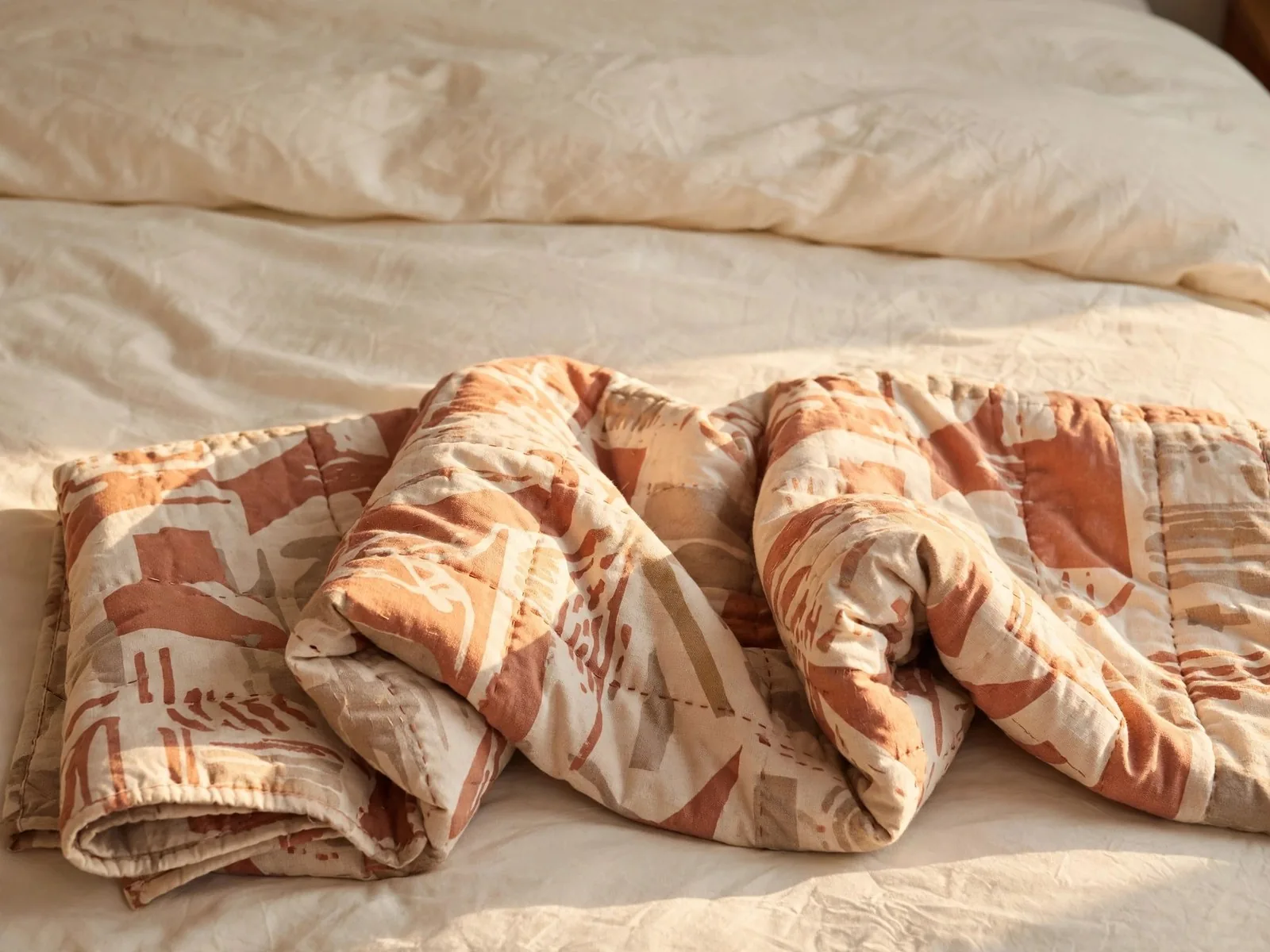
The quilt is the photo layer. Folded across the lower third of the bed it puts pattern and weight exactly where the eye lands first and it pulls up over your legs on a cold night without remaking the whole bed.
Cotton quilts earn the spot on care alone. They wash in a home machine and dry the same day and fold flat in a drawer between seasons. A twin quilt folded in thirds spans a queen foot neatly so the foot layer is the cheapest place to buy vintage or secondhand.
Count the quilt as the bed’s one pattern. If the quilt carries the print then the duvet and shams stay plain and the bed reads layered instead of busy.
Budget: $50 to $90 for a new cotton quilt. Secondhand quilts wash soft and often cost half.
Placement and layering order
9. Stack the layers in one fixed order
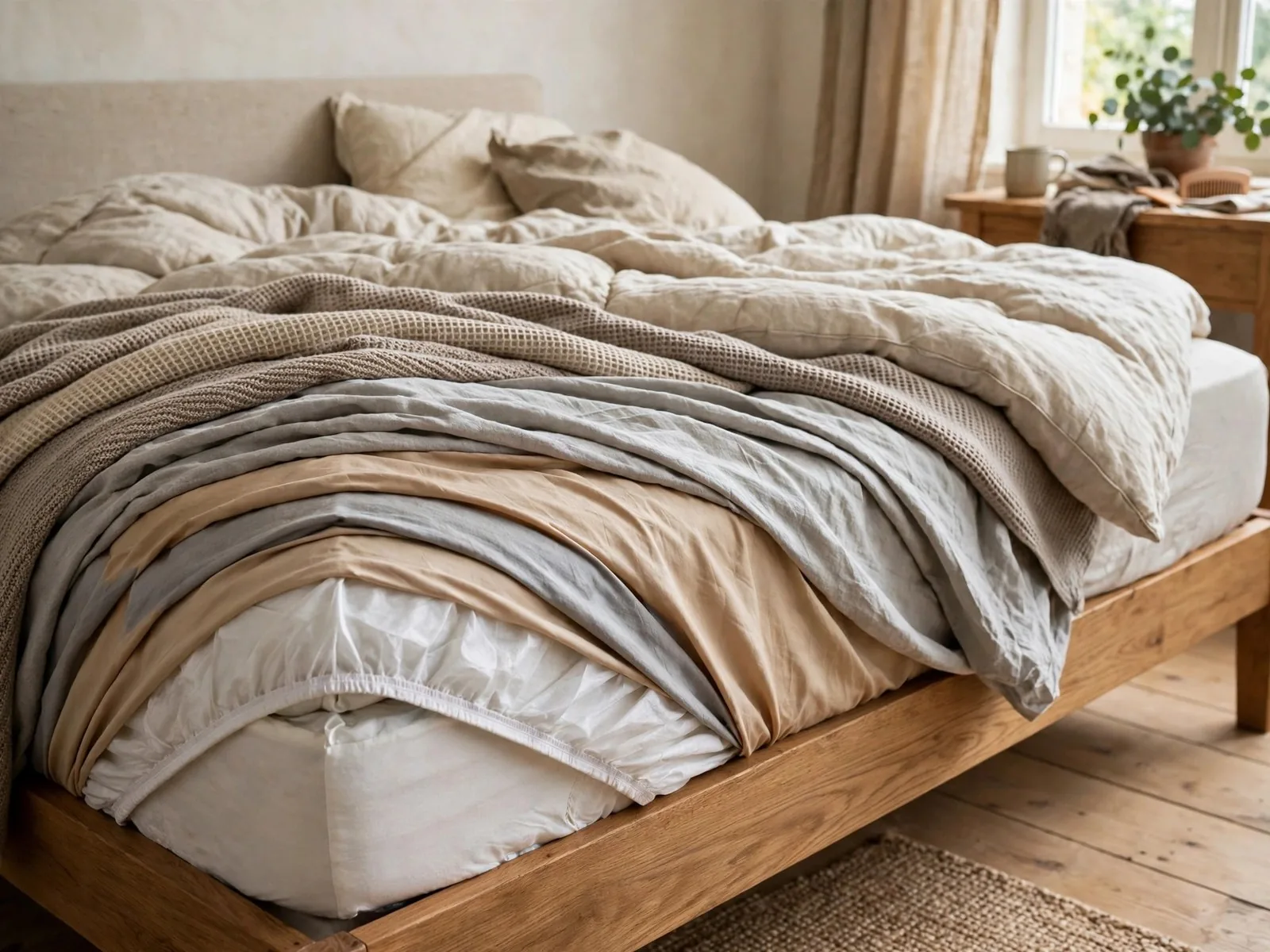
Every photo bed you have ever saved is built in the same order from the mattress up. Protector first. Fitted sheet over it. Flat sheet next with its top edge ready to fold back. A light blanket over the sheet. The duvet above the blanket. The quilt folded at the foot and a throw over one corner to finish.
Each layer has one job. The protector guards the mattress. The sheets touch skin. The blanket regulates on nights between seasons. The duvet carries the real warmth and the quilt and throw do the visual work. Skip a job and the bed feels it even if the photo still looks fine.
Making the bed in a fixed order takes about four minutes once your hands learn it. That routine is the whole secret behind beds that look layered every day instead of once for a picture.
Measure: the full stack adds 2 to 4 inches above the mattress so size the duvet drop from the top of the stack and not from the bare mattress.
10. Fold the top back so the sheet shows

One fold separates a photo bed from a plain bed. Pull the duvet and the top sheet down toward the foot and fold them back on themselves so a band of sheet shows across the bed below the pillows.
Fold back 12 to 18 inches so the fold line sits just below the sleeping pillows. The move works hardest when the sheet carries a hem detail or a contrast color against the duvet. A plain white sheet folded back over a colored duvet is the cheapest styling on this page because it costs nothing at all.
The catch is the flat sheet itself. Skip the flat sheet and there is nothing to fold back so this idea quietly requires the full sheet set from idea 5.
Measure: fold to just below pillow depth so the turned-back band reads as one clean line across the bed.
11. Dress a black bed in black bedding
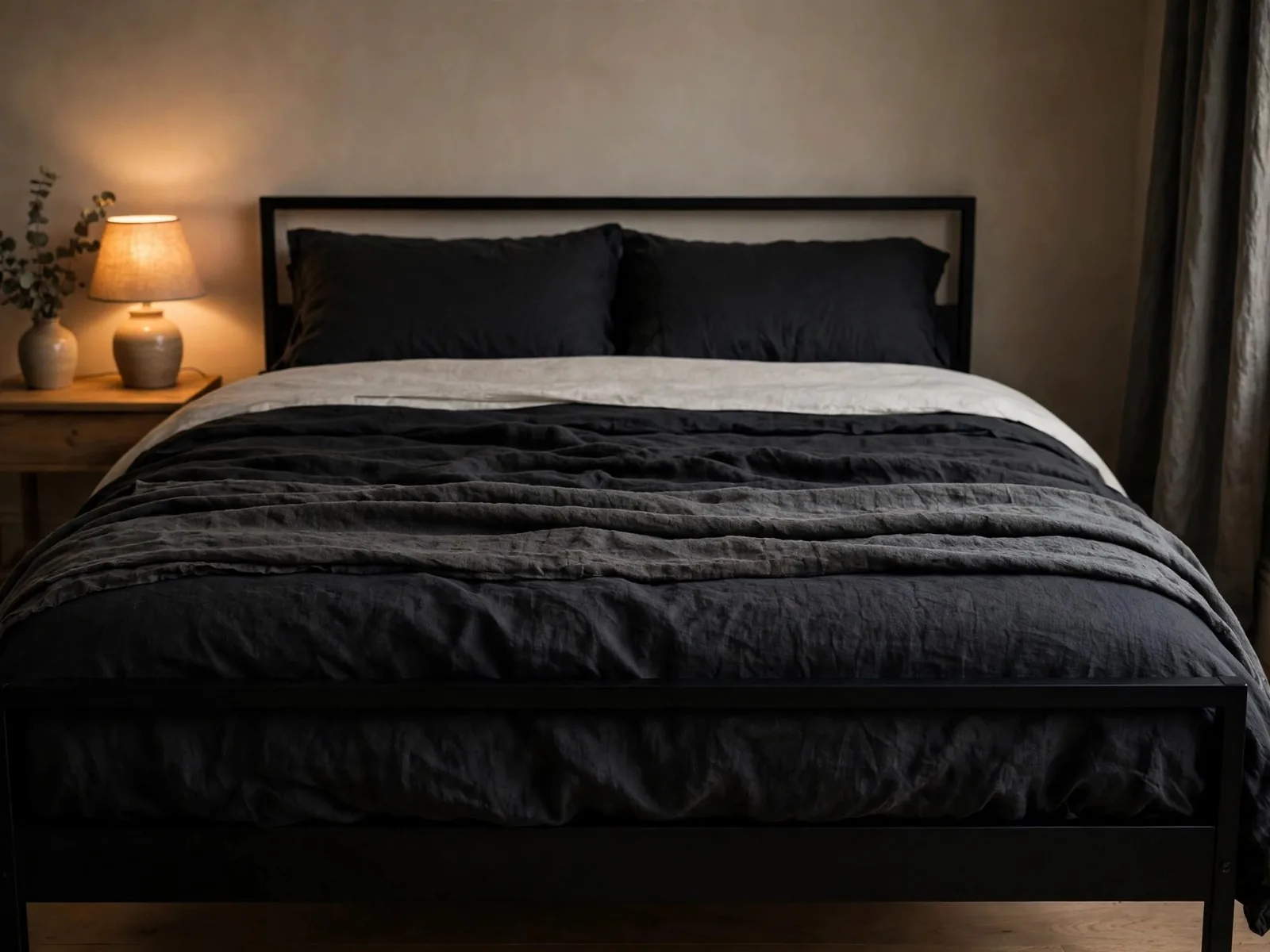
A black bed frame or a black headboard asks for black bedding and the searches for bedding ideas black bed prove how often people try it. Done flat it fails: one black rectangle with no edges. The fix is to change the texture and hold the color.
Start with a matte black cotton duvet cover. Add a charcoal washed linen throw with visible weave at the foot. Keep the fold-back in an off-white or natural sheet so one pale line cuts across the bed and proves the layers exist. That contrast line matters more here than on any other bed on this page.
Wash black bedding cold and inside out and skip the fabric softener so the color holds past the first season. Readers building the full dark room around this bed will find the palette work in our moody bedroom ideas post.
Budget: $40 to $70 for a black duvet cover set that restyles the black frame you already own.
12. Arrange the pillows back to front
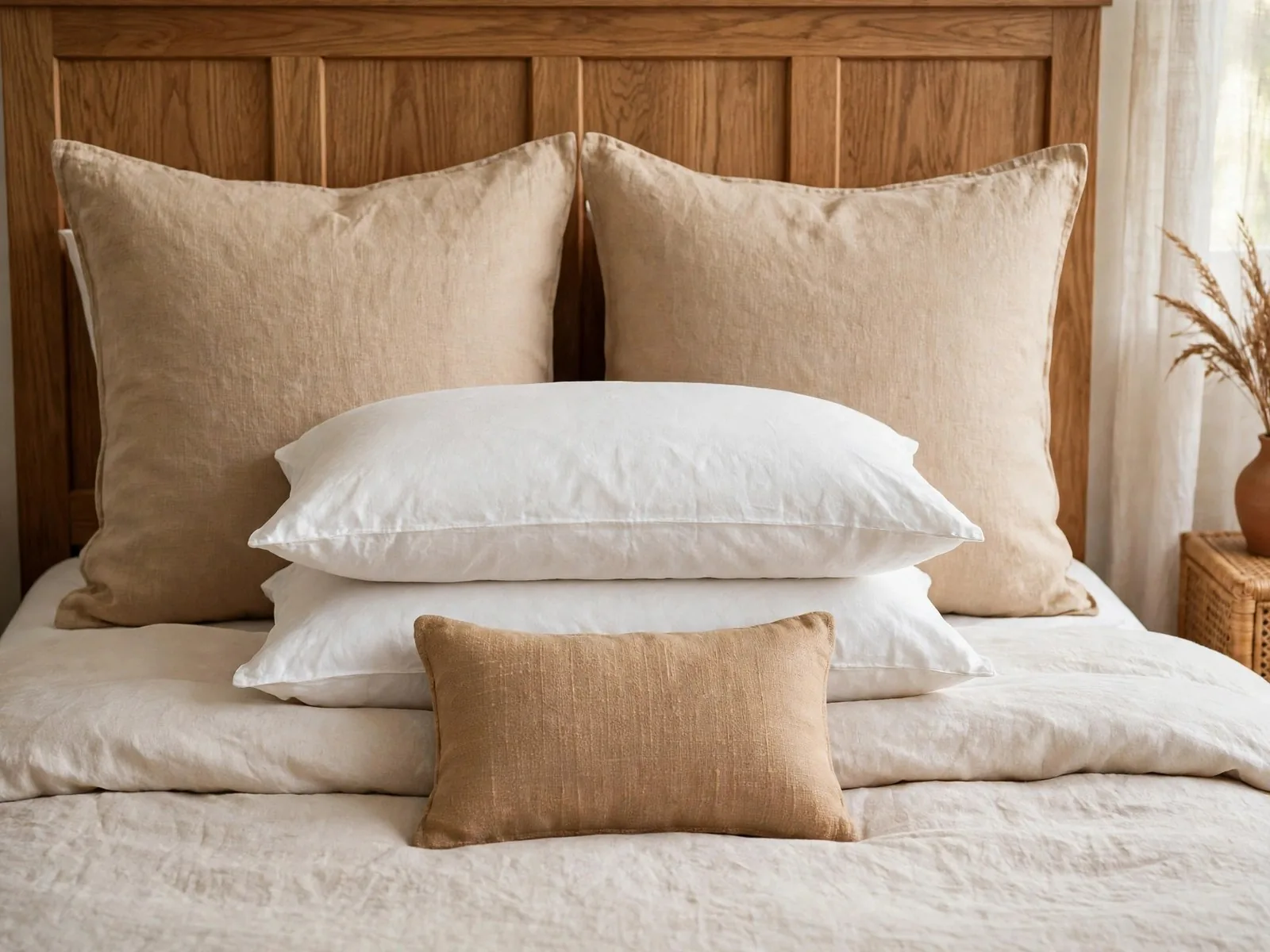
Pillows stack in one order that always works. Euros stand at the back against the headboard. Sleeping pillows go in front of them standing or stacked flat in pairs. One accent pillow or a single lumbar lands at the front and closes the arrangement.
Keep the top third of the headboard visible above the stack so the bed keeps its focal point. Our headboard ideas post covers the board itself if yours disappears behind the pillows entirely.
Flat stacking suits readers and standing suits show. Either reads fine as long as the order stays back to front and the sizes step down toward you. A king pillow on a queen bed breaks the steps so match pillow size to bed size from idea 4.
Measure: keep the whole pillow stack under 24 inches deep so a queen bed keeps at least 56 inches of its length clear for sleepers.
Mixing pieces you already own
13. Break the matching set on purpose
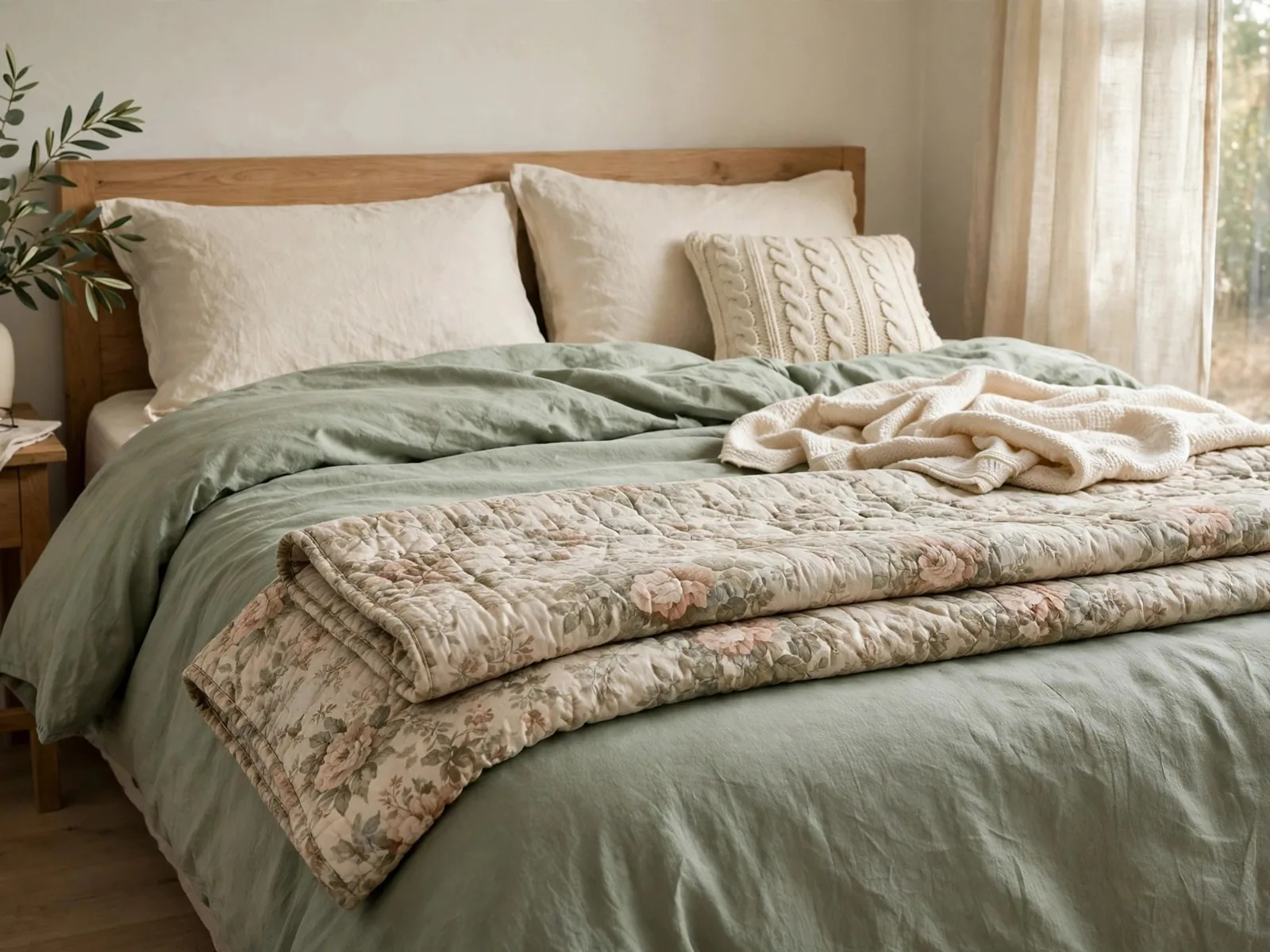
Here is the mix-and-match rule stated plainly: no full matching set survives contact with a real room unless it gets styled apart. The duvet and the shams and the throw all in one print reads like a showroom bed that nobody sleeps in.
Split the set across the bed instead. Keep the base plain in one color. Add one patterned piece from another set as the quilt or the throw. Bring in one texture the other two lack like a linen sham or a knitted cushion. The formula is plain plus pattern plus texture and one shared tone runs through all three.
Pattern mixing is the boho strength and our boho bedroom ideas post leans on the same plain-plus-pattern-plus-texture formula at room scale.
Budget: free. This idea is a rearrangement of sets already folded in your linen closet.
14. Tie the bedding to the curtains with one shared color
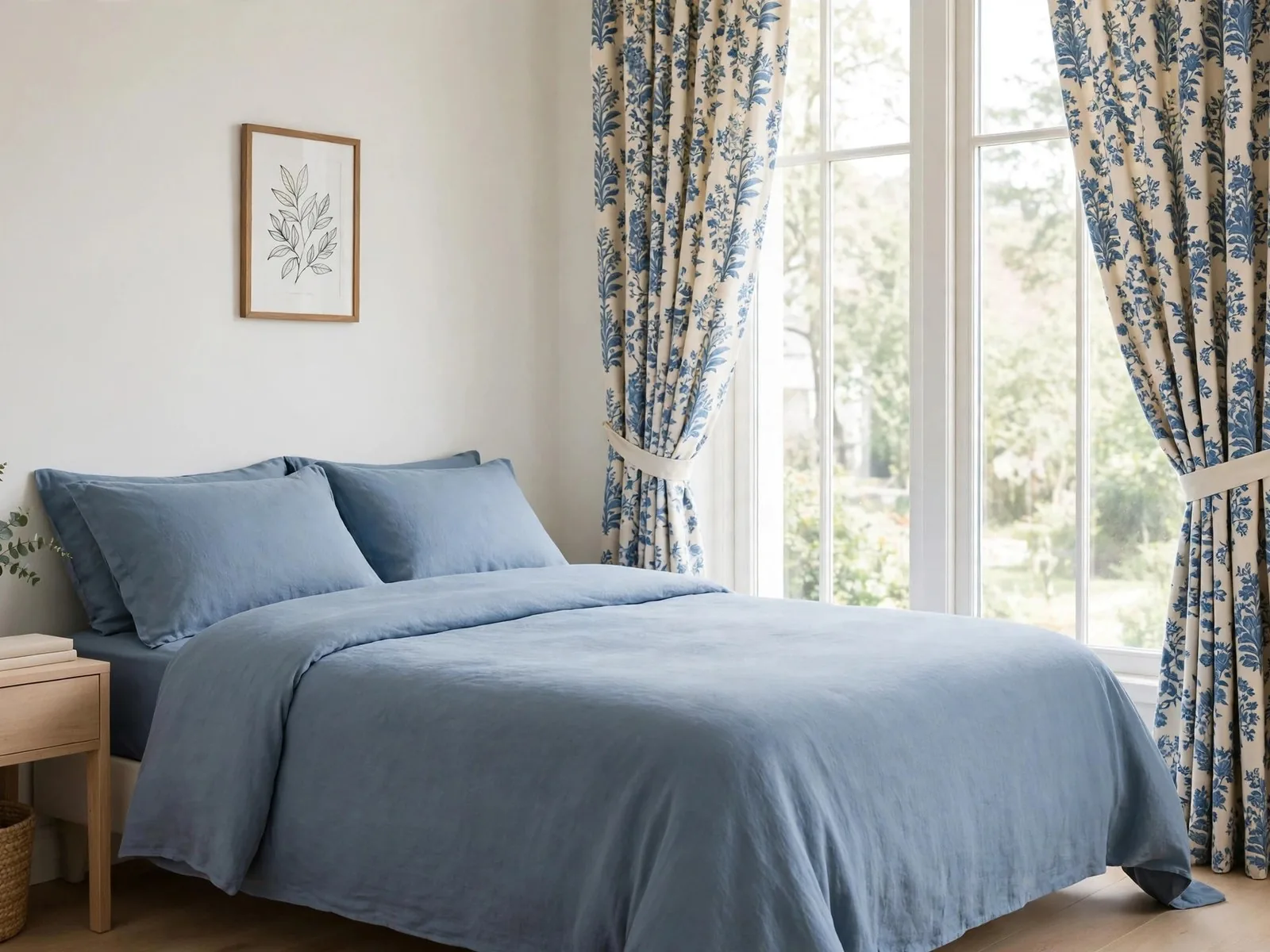
Bedding and curtain searches pair up on Pinterest because the two biggest fabric surfaces in the room either agree or argue. They only need one shared color to agree. Matching the fabric or the pattern exactly is what makes a room look like a boxed set.
If the curtains carry a pattern then pull their background color into the bedding as the plain base and let one cushion repeat a second curtain tone. If the curtains are plain then the bedding can hold the pattern and the curtains stay quiet. One of the two surfaces leads and the other supports.
Test before you buy. Hold a pillow sham against the curtain panel in daylight and again under the bedside lamp at night because the shared tone has to survive both lights.
Measure: judge the match from the doorway at full room distance. If the tie reads from there it reads everywhere.
15. Layer the guest bed from your second set
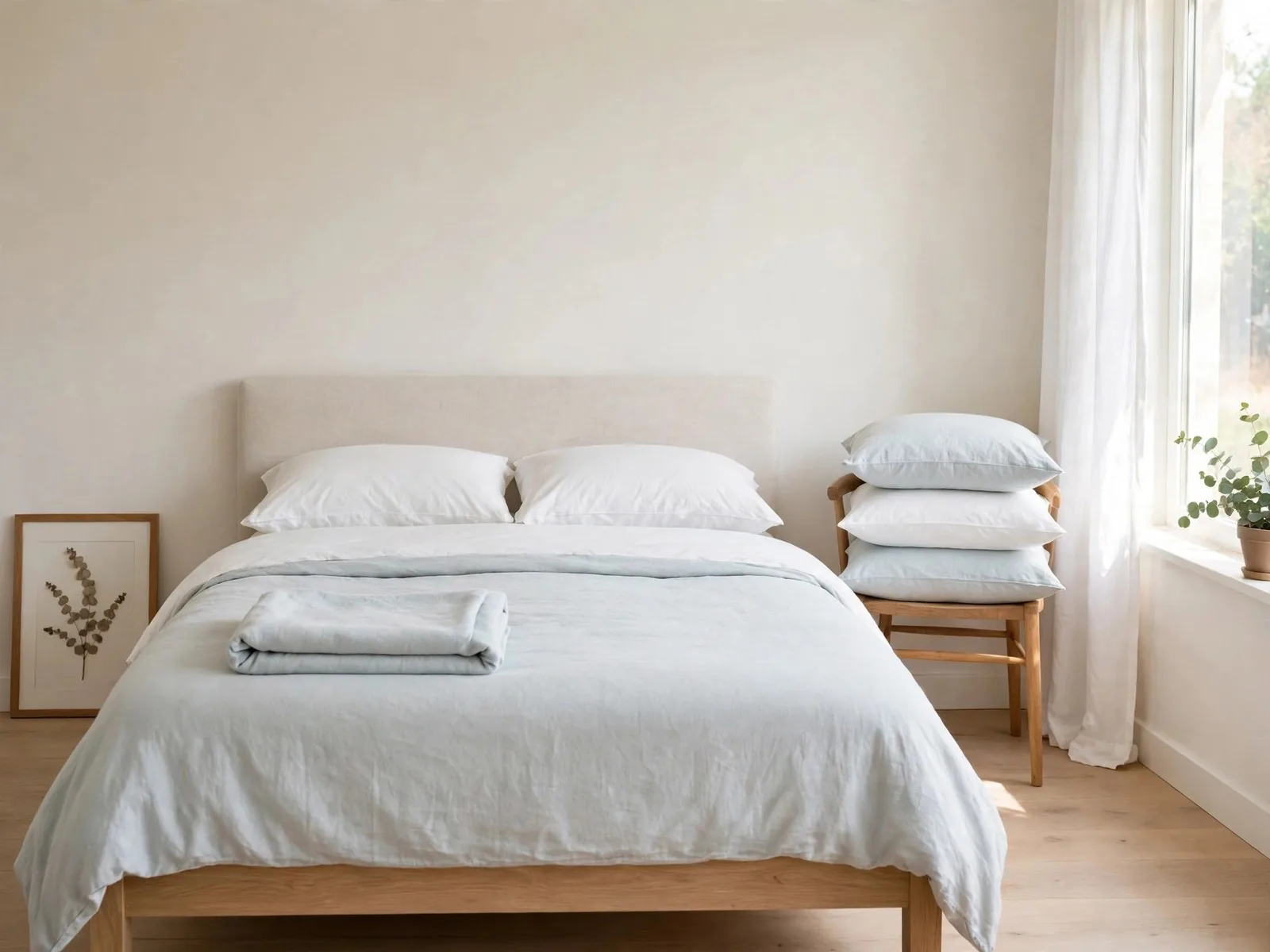
Guest bedroom bedding ideas follow one rule: the guest bed gets your second-best layers and your clearest system. The retired master set is perfect here because it already survived years of washing and nobody’s sleep depends on it nightly.
Build it simple. All-season insert inside a plain cover. Light sheets that wash hot between guests. One folded blanket at the foot for the guest who runs cold. Two sleeping pillows on the bed and one spare in the closet with a fresh case on it.
Skip the decorative stack entirely. A guest needs a clear corner of the bed for a suitcase and a surface that says sleep here instead of admire this. Four pillows total is the ceiling.
Budget: $0 to $60. A fresh fitted sheet in the right depth is usually the only real buy.
16. Swap one layer with the seasons
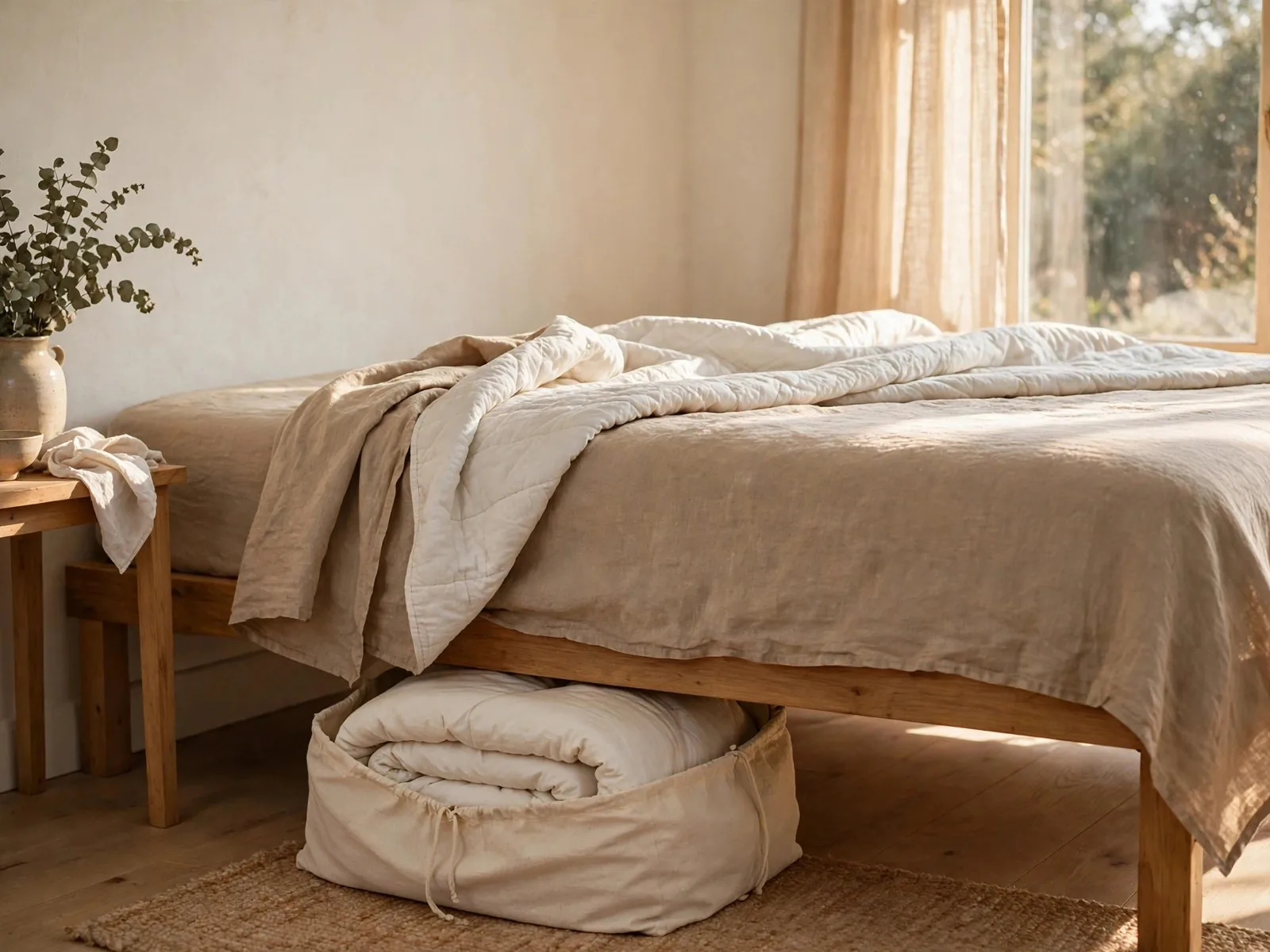
A bed that never changes layers sleeps too hot in July and too cold in January. The seasonal move is one layer at a time. Summer takes a linen or percale top layer with the quilt alone over the sheet. Winter brings flannel sheets and the full insert and the throw back to the foot.
Store the off-season layer in a breathable cotton bag under the bed or on the closet shelf so it airs instead of mildewing in plastic. Our small bedroom storage ideas post maps those under-bed inches for rooms that have no linen closet at all.
The December version of this swap is one seasonal throw and two cushion covers over the same base. Our christmas bedroom ideas post builds whole rooms on that one-layer change.
Renter-friendly: seasonal swaps change the whole feel of the room with zero paint and zero holes and zero landlord conversations.
Bedroom Bedding Ideas on a budget
Start with the free moves because bedding rewards order more than spending. Fold the top back. Break the matching set apart. Borrow the guest room duvet for one week to test whether sizing up fixes your bed before you buy anything.
Spend the first money on fit. A fitted sheet with the right pocket depth at $40 to $80 ends the nightly corner fight and an all-season insert at $60 to $150 ends the too-cold problem. The cover and the quilt come after because they change the look and not the sleep. Decorative pillows wait until the very end and most beds never miss them. A full budget reset of one bed lands between $150 and $300 in that order and our bedroom makeover ideas post runs the same spend-in-order logic across the whole room.
Secondhand money goes furthest on quilts. A used cotton quilt washes clean and softens beautifully and costs half of new. Sheets and inserts are the two layers to buy new every time for hygiene and for loft.
Mistakes that make it fall flat
- Buying by the bed label alone. Queen on the packet does not promise the drop or the pocket your mattress needs. Measure the width and the corner depth first or the prettiest set in the store still fits badly.
- Wearing the full matching set at once. Duvet and shams and throw in one print flattens the bed into a single surface. Split the set and mix in one plain and one textured piece from another set.
- A duvet one size too small. The mattress stripe shows down both sides and the bed reads skimpy no matter how good the fabric is. Size up until the drop reaches 14 to 16 inches per side.
- The pillow mountain. Six decorative pillows look rich at noon and sleep on the floor at midnight and the bed stops getting made. Cap the stack at five pieces on a queen and put the money into inserts that hold their shape.
- Layers that never get washed. A dry-clean-only quilt becomes decor instead of bedding within a month. Choose machine-washable layers and wash the insert itself two or three times a year.
Questions people ask about this
What size bedding should I buy for a small bedroom?
Buy for the mattress and not the room. A small room still sleeps best under a duvet with 12 to 15 inches of drop per side. Oversized king bedding on a queen bed swamps a small room visually so keep the drop modest and store the spare layers inside the closet.
How much clearance do I need around the bed?
Plan on 24 inches of clear floor on the sides you use and 30 inches at the foot if a dresser faces the bed. Bedding counts toward that number. A duvet that pools on the floor eats the walkway so size the drop to end above the floor.
Should bedroom bedding match?
No. A full matching set is the fastest way to make a bed look flat. Keep the base plain in one color and then mix in a quilt or throw from another set in a shared tone. One pattern at a time is enough and the bed gains depth without new furniture.
The bottom line
A layered bed is arithmetic wearing fabric: the right drop on the duvet and the right depth on the sheet and one pattern at a time in a fixed stack order. This week measure the width of your bed and the depth of one mattress corner and write both numbers on a card inside the linen closet door. Every bedding buy after that takes thirty seconds to get right.