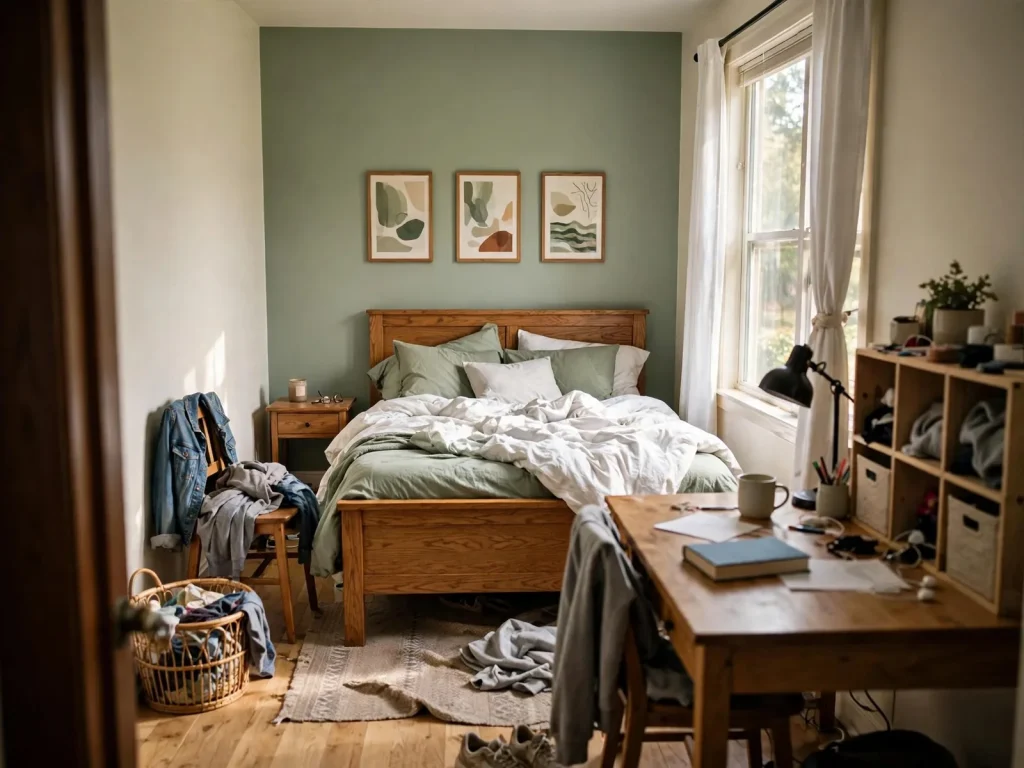
Your lease bans paint and nails and your bedroom walls are blank, white and not yours. You want one strong wall behind the bed, the wall every photo of your room will be judged by and you want your deposit back in full when you leave. Those two wishes fight on most advice pages, which assume a drill and a paint tin.
This page is the renter slice of the accent wall world. Every renter friendly bedroom accent wall idea here is judged by one test: it comes off clean. Methods are sized to the wall you actually have, removal effort is stated next to each one and the lease rules are treated as design inputs, not fine print. The full method set, paint and paneling included, lives in our bedroom accent wall ideas pillar; this page is its deposit-safe half.
Before you start: measure, budget, rules
Measure the full wall in inches before anything is ordered: width, height and the run of wall your bed covers. Standard ceiling height is 8 feet and a queen headboard wall run is 60 inches of bed width plus side margins. Those numbers drive every coverage calculation on this page, because removable materials are sold by the roll and the pack, not by the wall.
The lease rules are the second measurement. Paint counts as an alteration in most leases unless written permission exists, so treat your landlord’s silence as a no. Photograph the bare wall before you start and again after removal, test any removable product on a hidden patch first and keep the product packaging until move-out as proof of the removable claim. Cost follows coverage: the methods here are priced by the square foot or the yard, which is why the tape measure goes first and the shopping second.
Peel and stick options that come off clean
1. Cover the headboard wall in peel and stick wallpaper
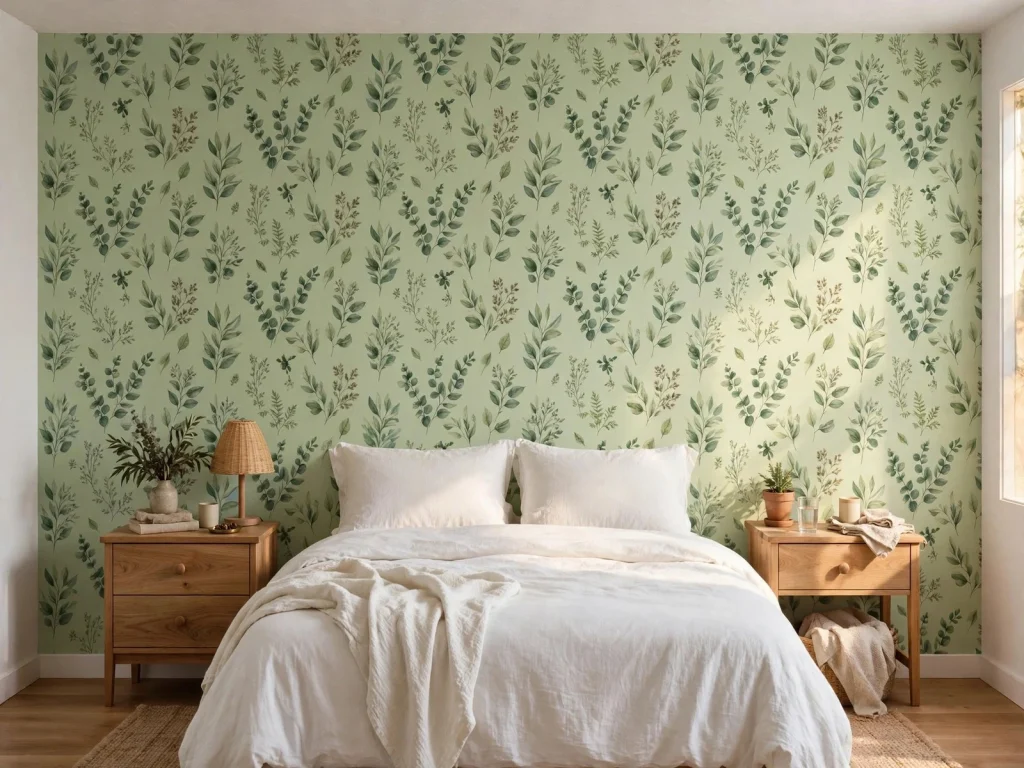
The strongest renter move is the one that looks least like a compromise: a full wallpaper accent wall bedroom treatment in peel and stick form. Behind the bed it reads as a designed room and the bed hides the seams and the edges where removal will start one day.
Size it from the label, not the listing photo. Peel and stick rolls commonly run 17.7 inches and 20.5 inches wide and the roll coverage printed on the label in square feet is the number to trust. Measure your wall, divide by the label coverage and order 10 to 15 percent extra for pattern match and mistakes. Our bedroom wallpaper ideas post covers patterns and scales across both peel and stick and traditional papers.
Measure: rolls run 17.7 and 20.5 inches wide. Trust the coverage in square feet printed on the label and order 10 to 15 percent extra for pattern match.
2. Run a peel and stick band behind the bed only

A full wall is not the only shape. A horizontal band of peel and stick paper running behind the bed, from the floor to just above the headboard, gives the accent where the eye lands and leaves the rest of the wall untouched. Less paper, less money and half the removal work at move-out.
Size the band to the bed run rather than the wall. The bed’s width plus a margin on each side is the band’s length and the headboard’s top plus a few inches is its height. In a small bedroom this is often the smarter buy, because the bed covers most of a full wall’s lower half anyway.
Measure: size the band to the bed run, the bed’s width plus a margin each side and you cover the seen wall for roughly half the paper of the full version.
3. Place one large mural panel behind the bed

A single peel and stick mural panel skips the pattern-match problem entirely. One wide panel centered on the bed gives you the art-wall effect with two seams at most and removal is one slow peel instead of a wall of strips.
Center it on the bed, not on the wall. When the bed sits off-center in the room, a wall-centered panel makes the bed look wrong in every photo. The eye forgives an off-center panel. It never forgives an off-center bed.
Measure: center the panel on the bed’s run, 60 inches for a queen and let the wall margins fall where they fall.
4. Test first and remove with heat
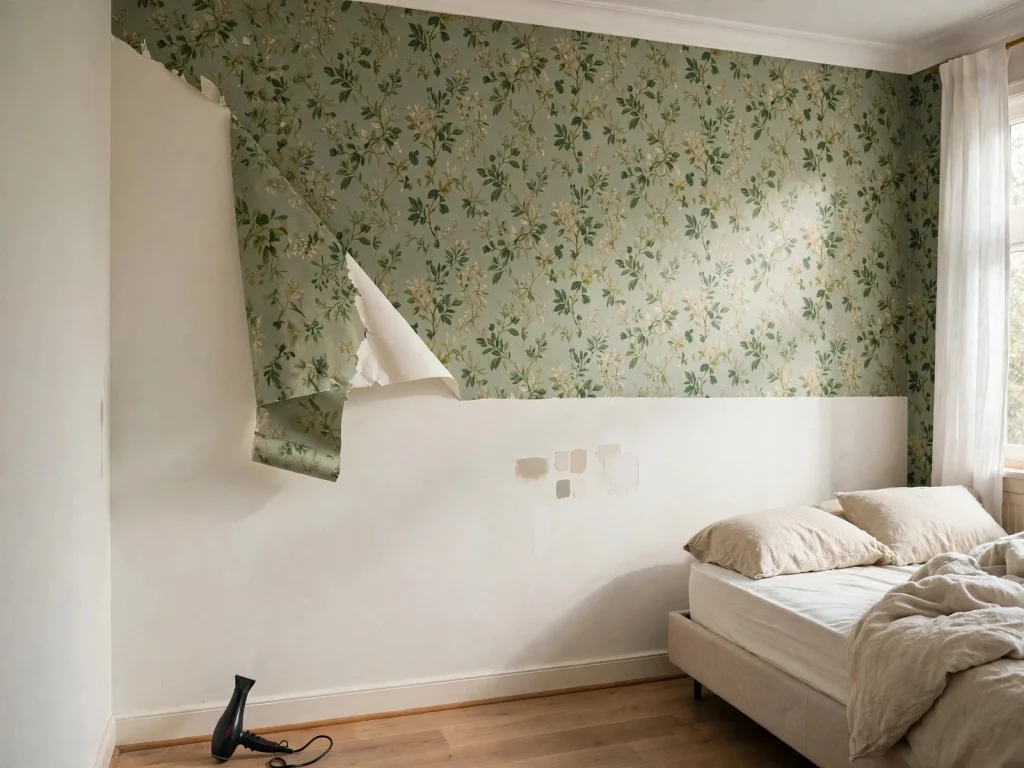
Every removable product on this page carries the same condition: it performed on the maker’s test walls and your wall is not one of them. Old paint, fresh paint and matte finishes all release differently. The hidden patch test, a small piece behind the bed left for a week, is the only honest preview of your move-out day.
Removal has a technique. Low heat from a hair dryer softens the adhesive and a slow peel at a low angle brings paper and strips away clean, while a fast cold rip is what takes paint with it. Follow the maker’s own instructions for your product over any general advice, this page included.
Renter-friendly: test on a hidden patch behind the bed first and at move-out remove with low heat and a slow peel, exactly as the maker’s instructions describe.
Fabric, curtains and panels with no holes
5. Hang fabric with liquid starch

The oldest renter trick still works: fabric fixed to the wall with liquid starch only. The fabric soaks in starch, smooths onto the wall like wallpaper and dries firm. No paste, no pins through the wall and no adhesive film to argue about later.
Removal is the reason it survives every lease: warm water re-softens the starch and the fabric peels away, then the wall wipes clean. The limits are real, though. It works on smooth walls and fails on heavy texture, where the fabric bridges the bumps and lifts at the corners within weeks.
Renter-friendly: liquid starch only and it soaks off with warm water at move-out. Smooth walls hold it; heavy texture defeats it, so test your wall’s finish first.
6. Drape a curtain wall behind the bed

A wall of curtain behind the bed is an accent wall with a hem. Hung from a rod on removable adhesive brackets or on a tension rod where the room’s shape allows one, full-length panels give you color, pattern and softness in one move and they wash when apartment dust wins.
Run the drop full: rod near the ceiling and a hem that just touches the floor. A curtain that stops short reads as a window treatment looking for its window. Width follows the bed: the bed’s run plus a margin each side, gathered enough to fall in folds rather than stretched flat.
Measure: full drop, ceiling to floor, with the hem just touching the floor. Size the width to the bed run plus margins, never to the curtain pack’s optimism.
7. Lean oversized art or a screen against the wall

The zero-fixing accent wall is a lean. One oversized framed print, a tall mirror or a folding screen stood on the floor and leaned against the wall behind or beside the bed changes the wall’s whole read and touches nothing but floor.
Scale is the trick. A piece that leans must be big enough to argue with the bed: at least two thirds of the bed’s width or it reads as clutter waiting to be hung. Wedge it safely at its base so a slammed door cannot walk it forward.
Renter-friendly: leaning fixes nothing to anything. The piece stands on the floor, so the wall behind it stays exactly as the landlord photographed it.
8. Clip textiles up with adhesive strips

A tapestry, a thin quilt or a woven throw hung flat becomes a fabric accent wall with real texture. Adhesive clips and removable strips carry it: large picture-hanging strips hold up to 16 pounds, which covers most textiles and light frames with room to spare.
Respect the cure time. Strips must cure for the hours stated on the pack before any weight hangs on them and the 2 a.m. textile slide is almost always a cure that was skipped. Hang the clips, wait the stated hours and then dress the wall.
Renter-friendly: large picture strips hold up to 16 pounds. Let strips cure for the full hours stated on the pack before the textile goes up.
Decals, tape and paint-free color
9. Build the pattern from large removable decals
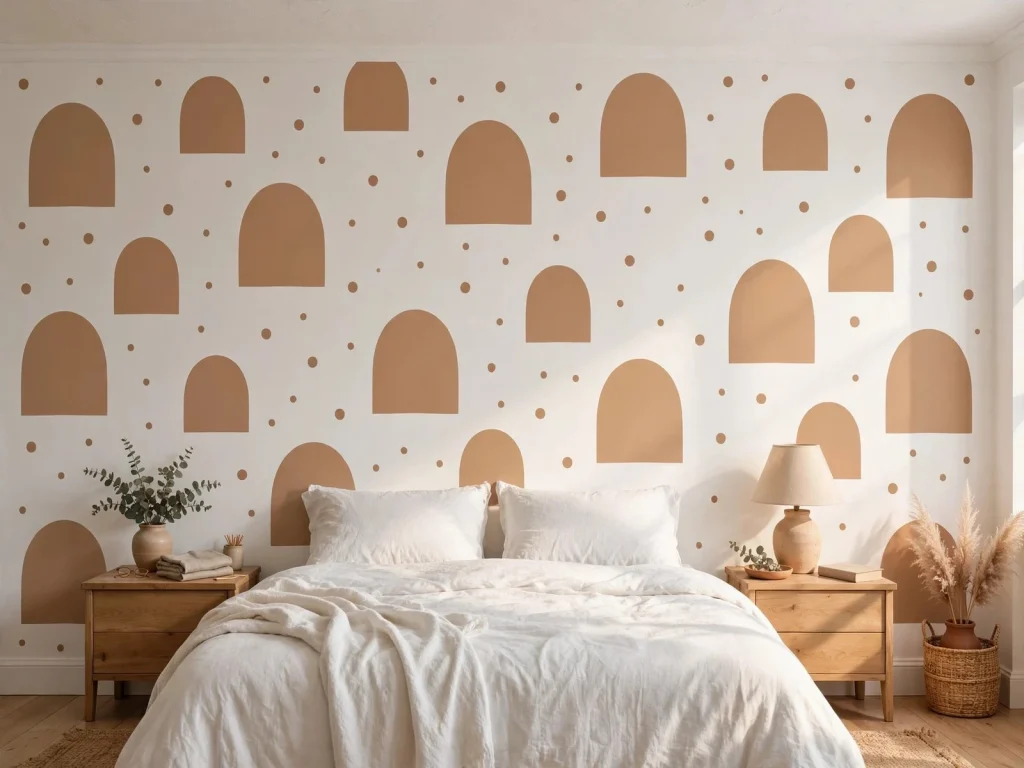
Removable wall decals are the accent wall at its lowest commitment. Dots, arches or a scattered botanical set can pattern the whole bed wall and each piece peels off individually at move-out, which makes decals the friendliest first try for a nervous renter.
Plan the layout on the floor first. Measure the wall, mark the decal positions on the floor at real scale with painter’s tape and step back. Spacing decided at floor level stays even; spacing decided at ladder height drifts by the third row.
Measure: lay the grid out on the floor at the wall’s real measurements first. Even spacing is a floor decision, not a ladder decision.
10. Draw the color block with washi or painter's tape
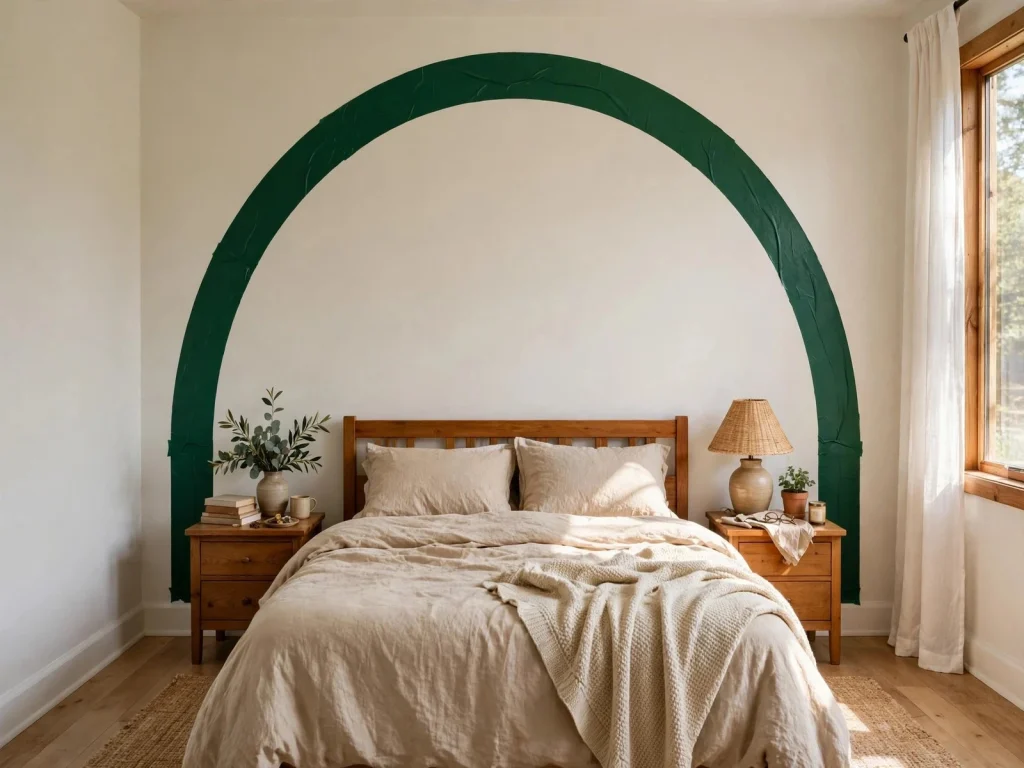
Tape can draw what paint would have: an arch over the headboard, a color-block rectangle or a set of clean geometric lines, all in washi tape or low-tack painter’s tape. It is the cheapest experiment on this page and the fastest to reverse when the shape disappoints.
Tape reads best in simple geometry. One bold arch or one rectangle in a single color looks drawn; five colors in thin lines look like a craft project. Press every edge down firmly, because lifted tape edges are what separate a drawn wall from a peeling one.
Budget: tape is the cheapest accent wall that exists and it reverses in minutes. Test the whole design in tape before any larger spend on the same wall.
11. Hang a gallery grid on removable strips
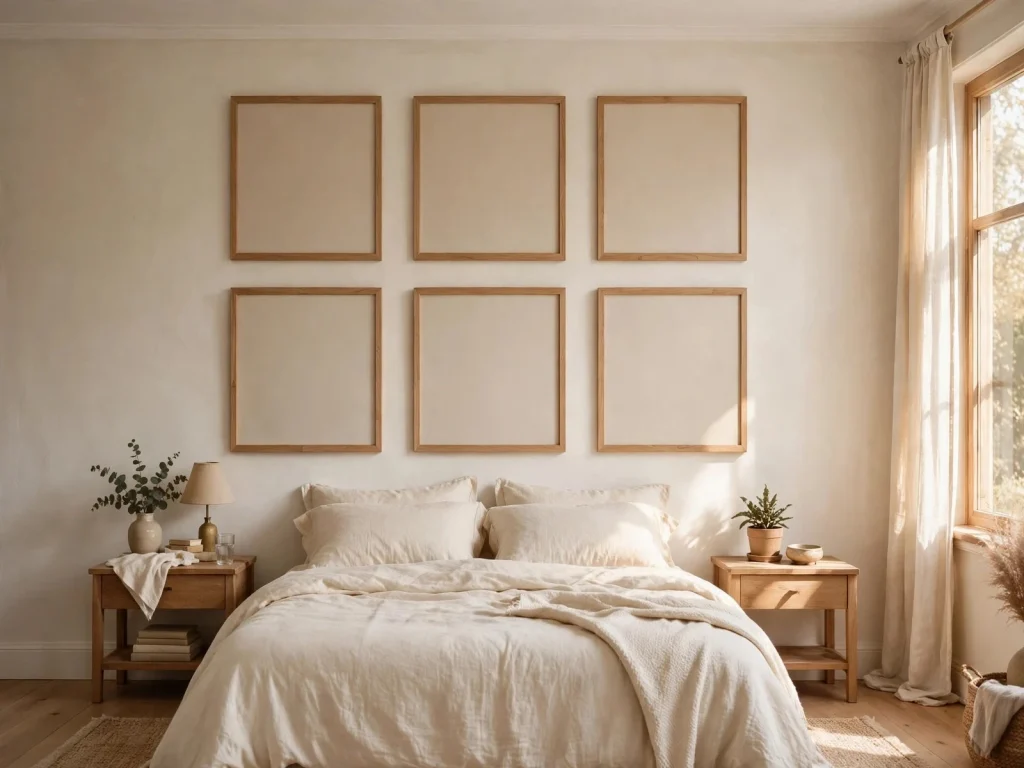
For some renters the accent is not a surface but a collection. A tight grid of light frames over the bed wall, all hung on removable strips, builds the focal wall from art you already own. It is the apartment bedroom accent wall that moves house with you, frames and all.
Keep the frames light and the strips honest. Small strips are rated at 1 to 4 pounds, so weigh a frame before the grid goes up and use two strips per frame on anything near the limit. Even spacing, about 2 inches between frames, is what makes a grid read as one wall rather than nine accidents.
Renter-friendly: small strips hold 1 to 4 pounds each. Weigh one frame, use two strips per frame and keep every frame inside the ratings on the pack.
12. Fake panel molding with peel and stick trim
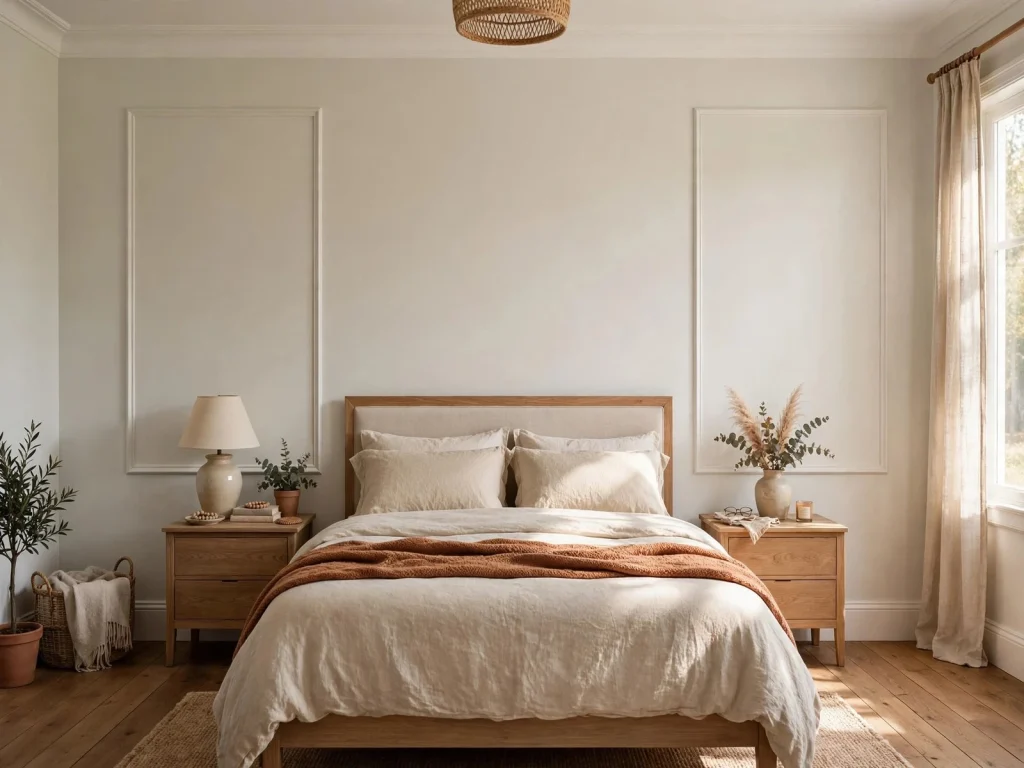
The paneled look, the one all over small bedroom accent wall ideas right now, exists in peel and stick form: adhesive-backed trim strips that stick on in rectangles and peel off later. Two rectangles flanking the bed or one wide rectangle behind it gives plain rental drywall an architecture it never had.
Align the panels to the bed, not the wall. One wide panel behind a queen wants the bed’s 60 inch run centered inside it, with equal margins to the wall ends where the room allows. Paint-free and nail-free, the trim is the whole project; the wall inside the rectangles stays white and reads as the panel’s inset.
Measure: size the trim rectangles to the bed run, with the bed centered in the panel and equal margins to the wall ends where the room allows.
Planning the wall behind the bed
13. Measure the whole wall in inches before ordering
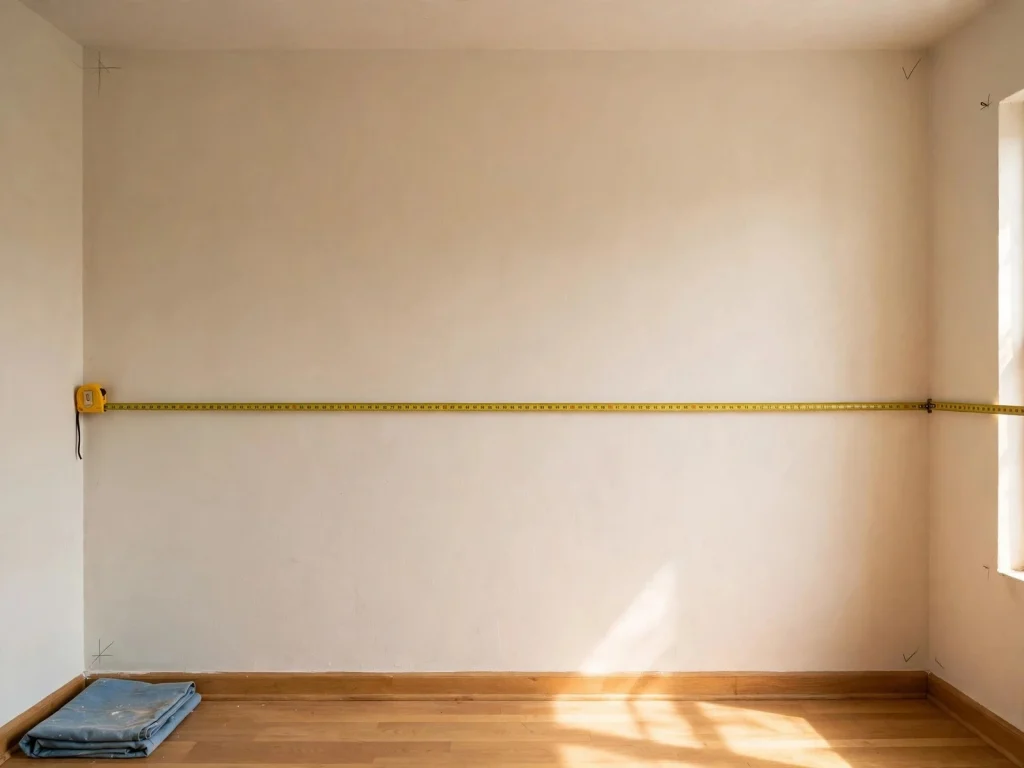
Every number on this page flows from one habit: the wall gets measured in inches, fully, before a single roll or pack is bought. Width times height gives the square feet and square feet is the only language labels speak. A wall 12 feet wide under an 8 foot ceiling is 96 square feet and that figure, plus the pattern-match extra, is the order.
Guessing by room name is the classic failure. A “standard bedroom wall” exists in no rental ever built and the shortfall shows up mid-wall on a Sunday with the stores shut. Measure twice, photograph the tape against the wall and shop from the photograph.
Measure: wall width times height, converted to square feet, is the only coverage number to shop with. A 12 by 8 foot wall is 96 square feet before the extra percentage.
14. Photograph the wall and keep every pack
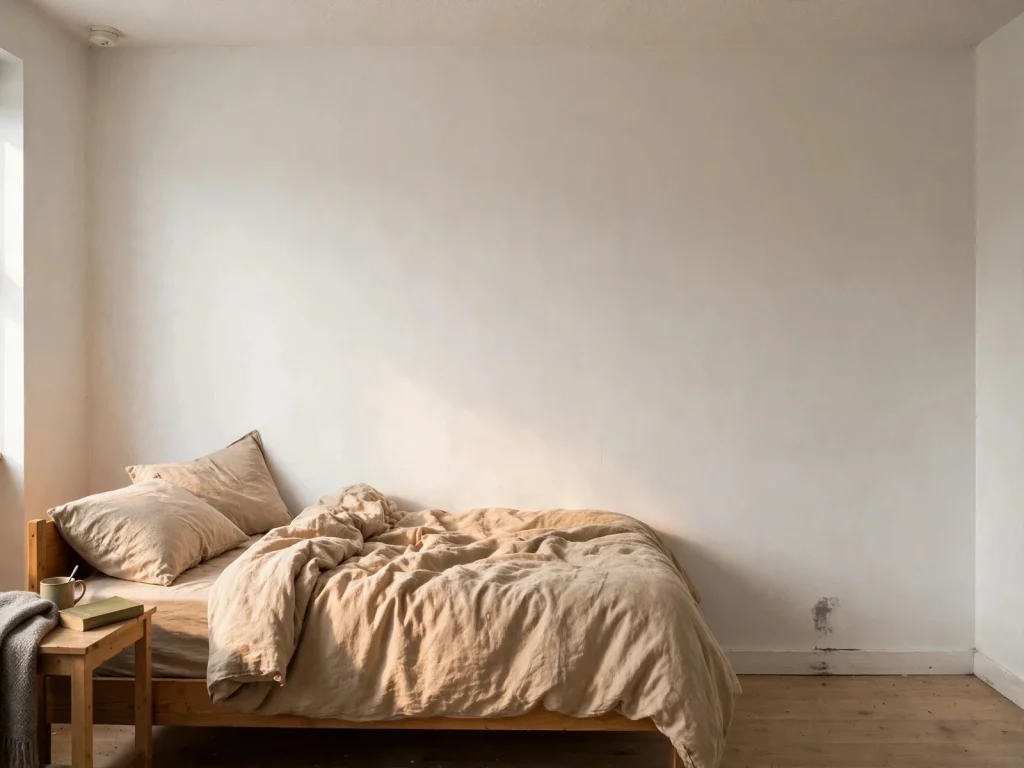
Your deposit defense is a paper trail, built before the first strip goes up. Photograph the bare wall in daylight, close enough to show its existing marks and keep those photographs with your lease. Then keep every product pack, sleeve and instruction sheet until move-out.
The packaging is evidence. A pack that says removable, with the maker’s removal instructions printed on it, answers the landlord’s damage claim better than any argument. After removal, photograph the restored wall from the same spots. Before and after, dated, is the whole case.
Renter-friendly: photograph the wall before and after and keep the product packaging until move-out as proof of the removable claim.
15. Choose the bed wall and commit to one wall

The wall behind the bed is the default for reasons of pure geometry: it is the wall the room faces, the bed frames it and the headboard gives every treatment a natural stopping point. In small rooms it is also the only wall with enough unbroken run to carry a pattern.
Commit to that one wall only. Two accent walls in a small bedroom halve each other’s effect and double your removal work at move-out. The other three walls stay quiet and quiet is what makes the chosen wall loud.
Measure: one accent wall per room and it is the wall behind the bed unless the bed cannot move and the room says otherwise.
16. Read the alteration clause before the fun part

The last planning step is a paragraph in your lease. Find the alteration clause and read what it actually bans: some leases name paint only, some ban adhesives too and some allow anything removable. That paragraph decides which third of this page is yours.
Paint deserves its own honesty. In most leases paint counts as an alteration unless written permission exists and a landlord’s friendly shrug is not written permission. If you truly want a painted wall, the email asking for written permission is the renter-friendly version of the idea and a yes in writing turns idea zero into the cheapest accent wall of all.
Renter-friendly: paint counts as an alteration in most leases unless written permission exists. Get any permission in writing before a brush comes out.
Accent wall ideas for apartment bedrooms
Apartments tighten every rule on this page: walls run smaller, leases run stricter and the neighbor on the other side of the wall is part of the design brief. The good news is that small walls are cheaper to cover and faster to restore. Our apartment bedroom ideas post works the same deposit-first logic across the whole room.
If your lease bans wallpaper completely, including peel and stick, the ladder does not end. It just changes rungs: fabric on liquid starch, a curtain wall, leaned art and tape geometry all sit outside a wallpaper ban, because none of them is wallpaper and none of them alters the wall. Read the clause for what it names, not for what it fears and pick from the rungs it leaves open.
On a small apartment wall, size everything down a step. A band behind the bed or one mural panel covers most of what the room shows, decals can stop at a tidy grid of twelve instead of a full scatter and the gallery grid shrinks to four frames that mean something. The deposit math improves with every step down and the room never notices the difference.
Mistakes that make it fall flat
- Ordering by the room’s name instead of its square feet. Listings show walls, labels sell square feet and the gap between them is where projects stall half-covered. Measure the wall, trust the label coverage and add the pattern-match extra before you order.
- Skipping the hidden patch test. Every wall’s paint and finish releases differently and the product that peeled clean in a video can lift your matte rental paint. The test patch behind the bed is a week of patience standing between you and a repaint charge.
- Hanging weight the same hour as the strips. Adhesive strips need their stated cure hours before they carry anything. Skip the wait and the frame, the textile or the gallery comes down at 2 a.m., usually onto the bed.
- Starching fabric onto a heavily textured wall. Liquid starch needs a smooth surface to grip. On heavy texture the fabric bridges the bumps, lifts at the corners and ends up looking worse than the blank wall it covered.
- Painting on a verbal okay. A relaxed landlord in September is a deposit deduction in June and memories differ. If paint is the plan, written permission is the plan; everything else is a story you will lose.
Questions people ask about this
How can I make an accent wall in a rental without painting?
Work down the ladder: peel and stick wallpaper or a mural panel for the full effect, fabric on liquid starch or a curtain wall for a soft version, removable decals and tape geometry for the lightest touch. Every rung comes off clean when it is tested on a hidden patch first and removed by its maker’s instructions.
Does peel and stick wallpaper damage walls when it comes off?
On sound paint, removed slowly with low heat from a hair dryer and by the maker’s instructions, it generally comes off clean. Weak, fresh or matte paint can lift, which is exactly what the hidden patch test exists to reveal. Test behind the bed for a week before you commit the wall and keep the packaging as proof of the removable claim.
How much peel and stick wallpaper do I need for one wall?
Measure the wall in inches and convert to square feet: a 12 by 8 foot wall is 96 square feet. Divide by the coverage printed on the roll’s label, since roll widths run 17.7 and 20.5 inches and coverage varies by maker. Then order 10 to 15 percent extra for pattern match, cuts and one mistake.
The bottom line
A rental accent wall is a promise you keep twice: once to the room, which gets its one strong wall and once to the deposit, which gets the wall back untouched. The methods here keep both promises when they are sized by measurement and removed by the book. This week, take the before photographs of your bed wall and measure it in inches in the same ten minutes; every idea on this page is unlocked by those two small acts.