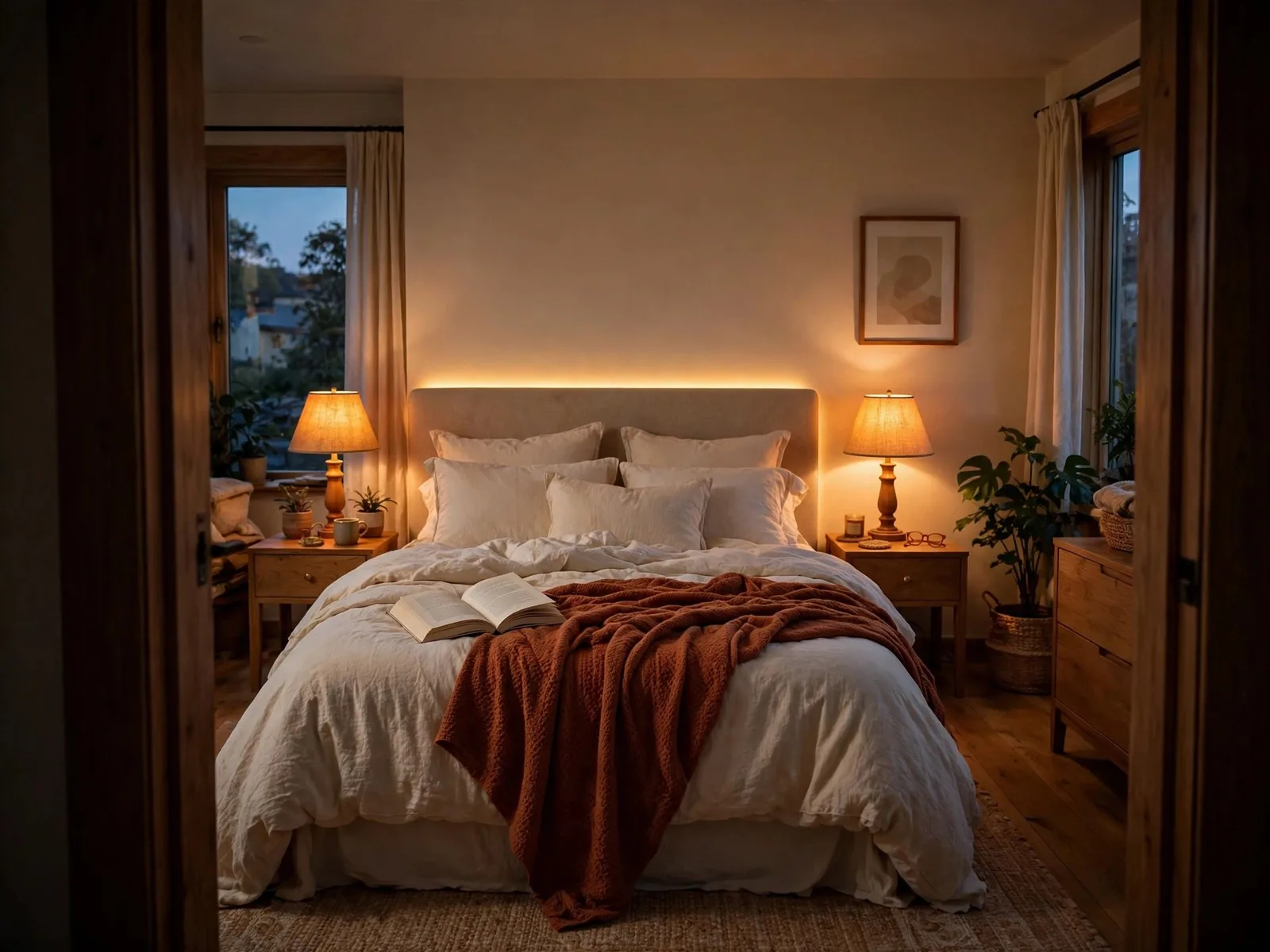
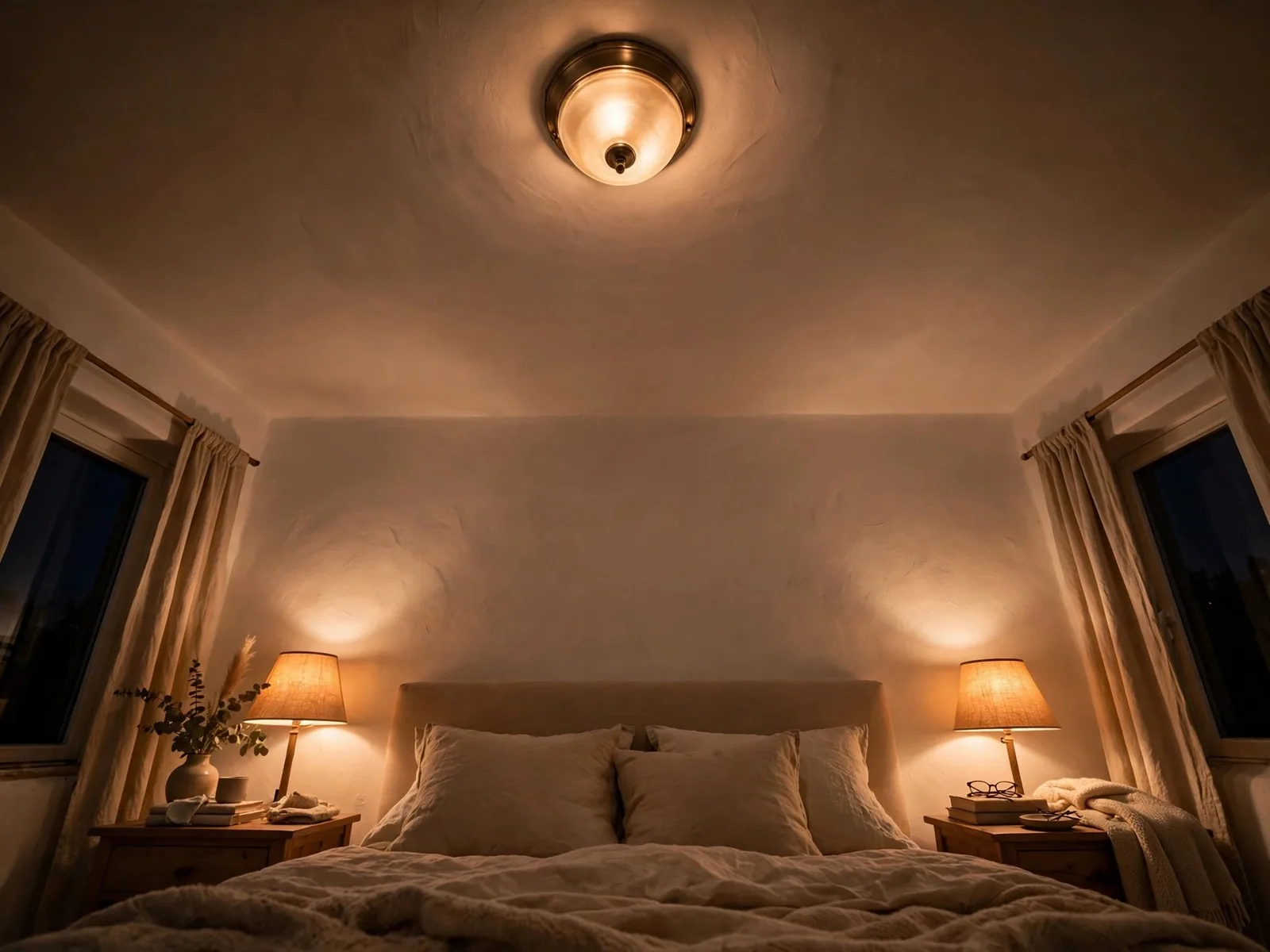
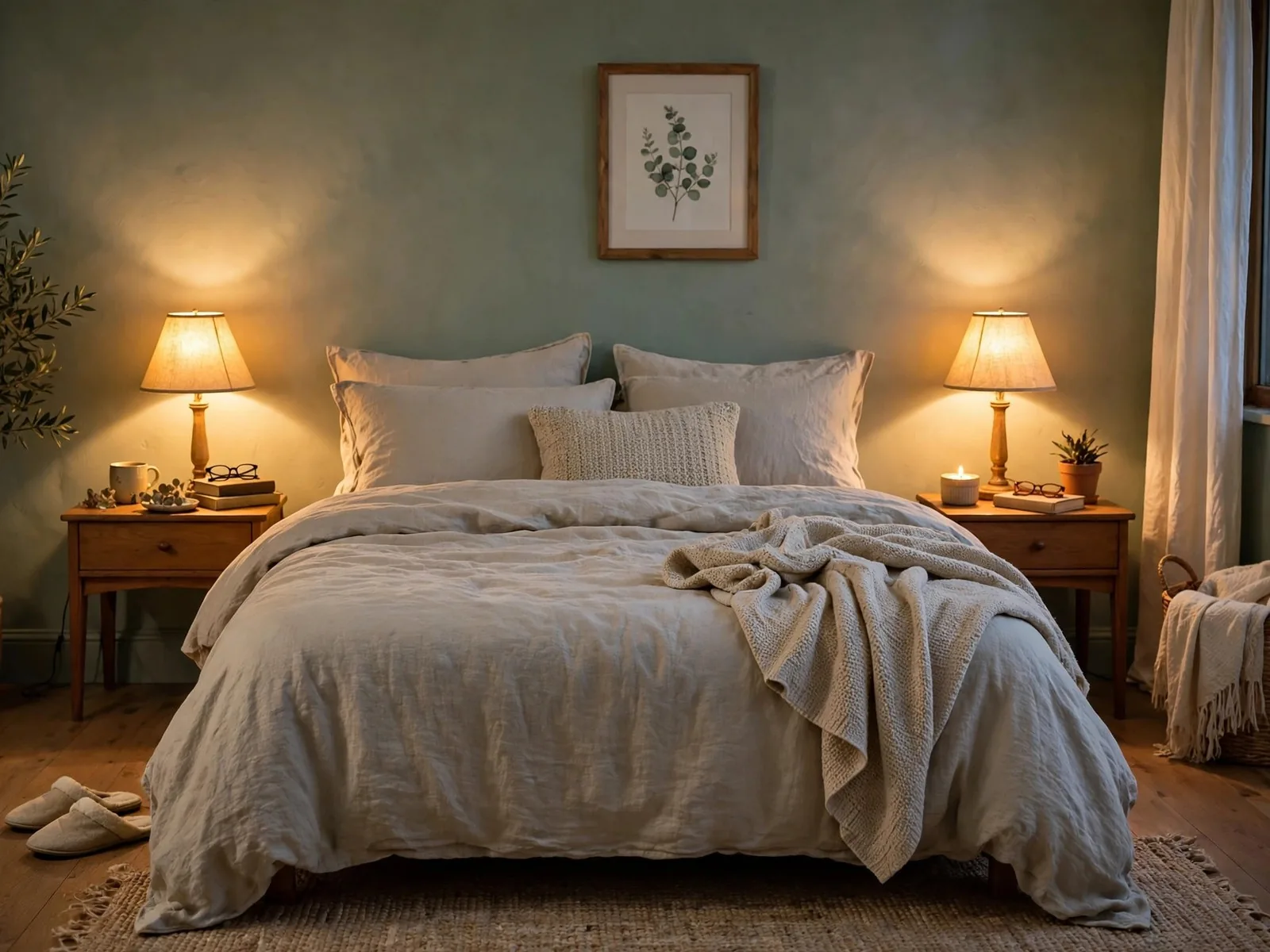
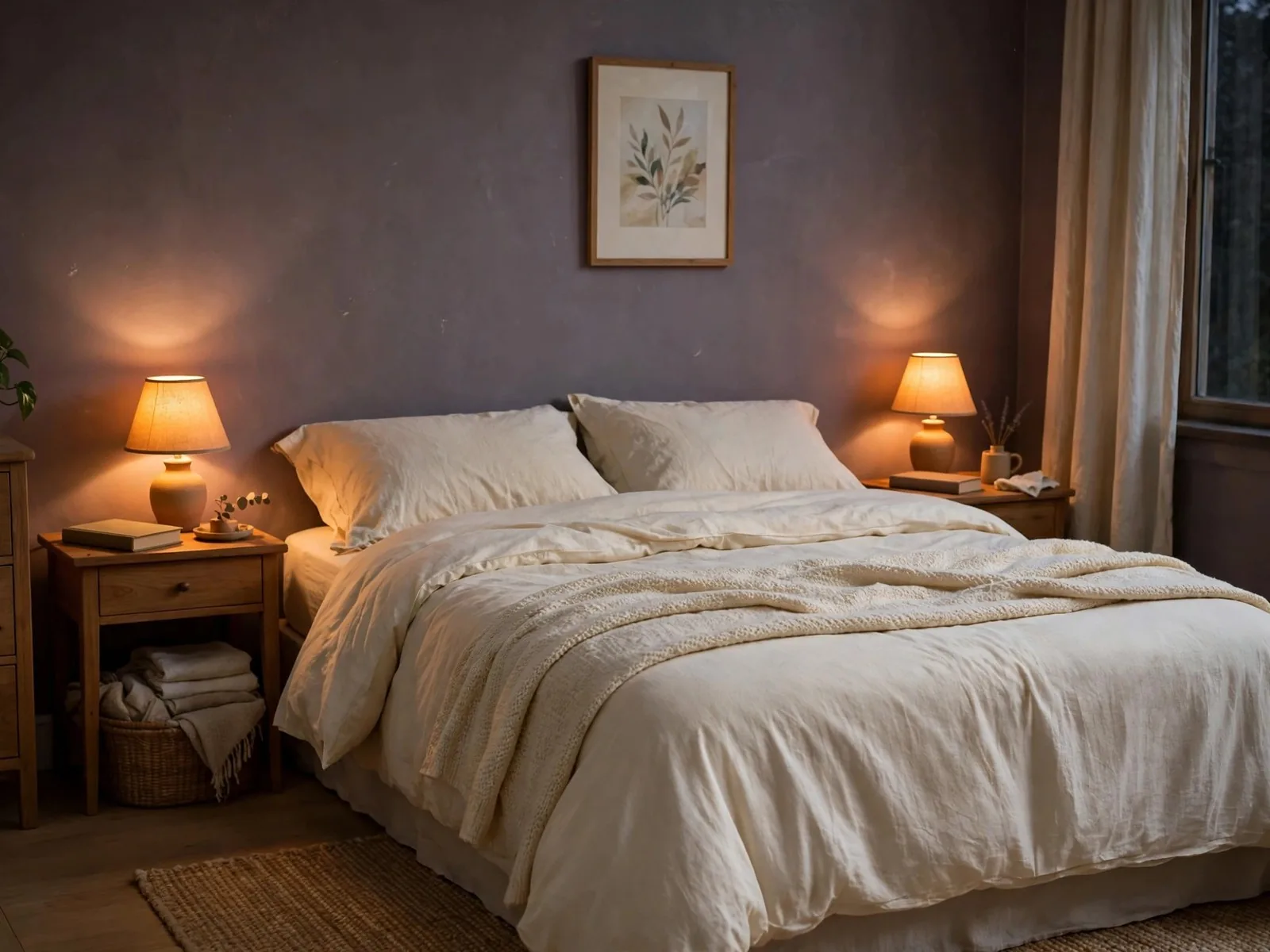
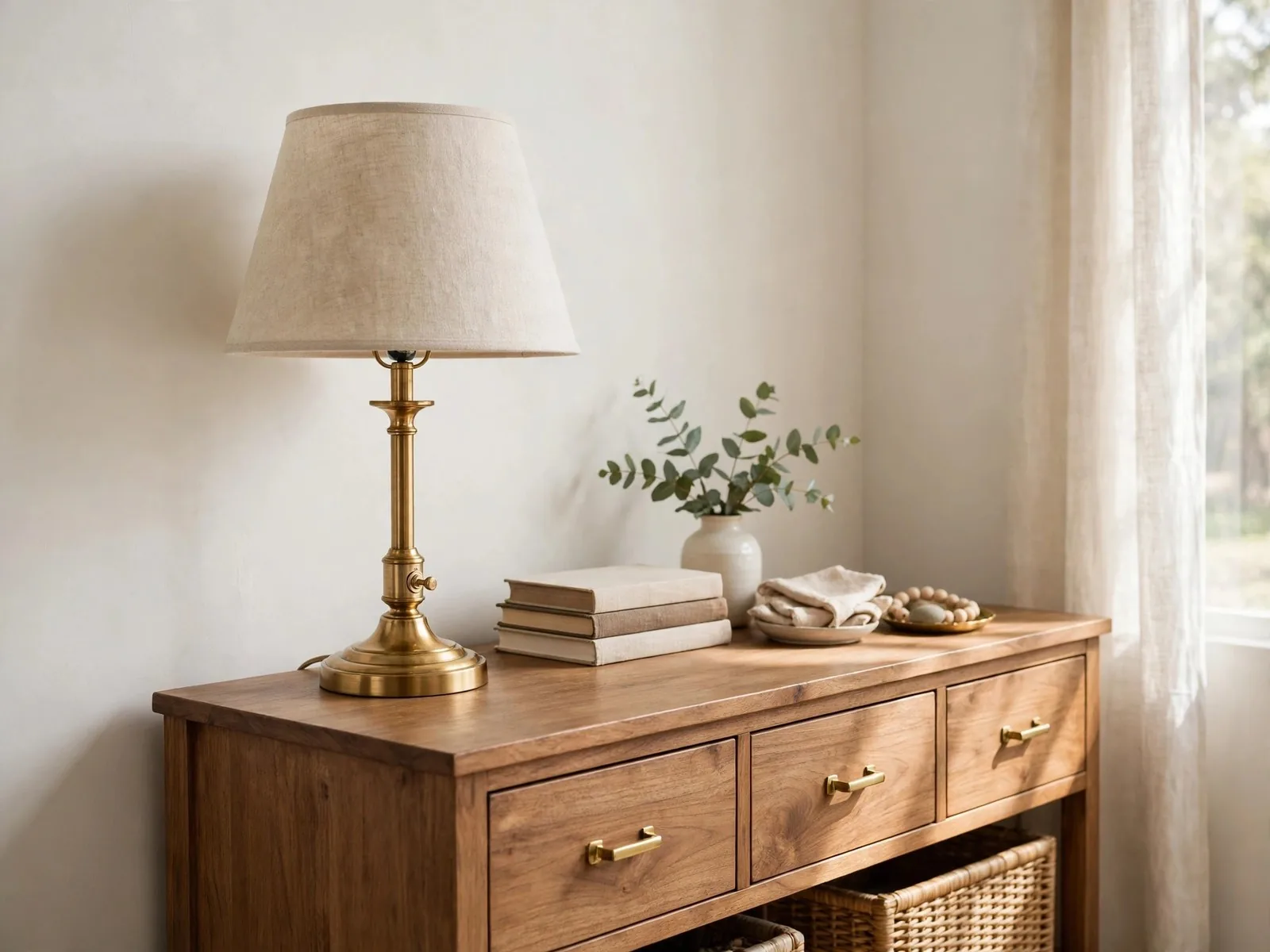
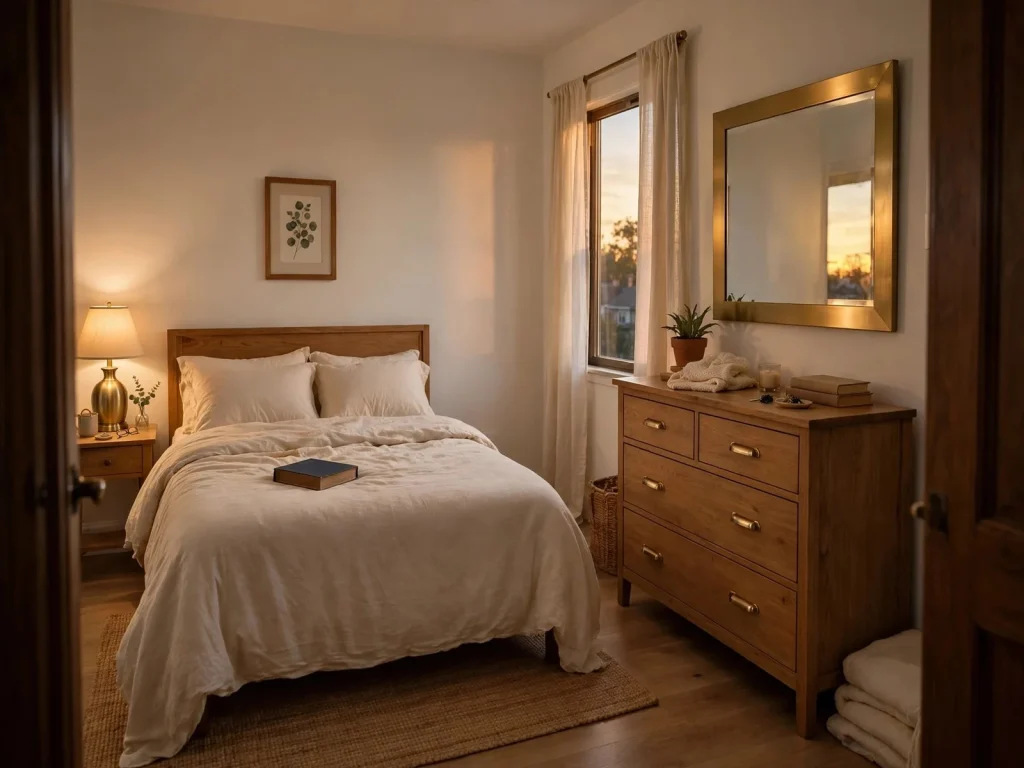
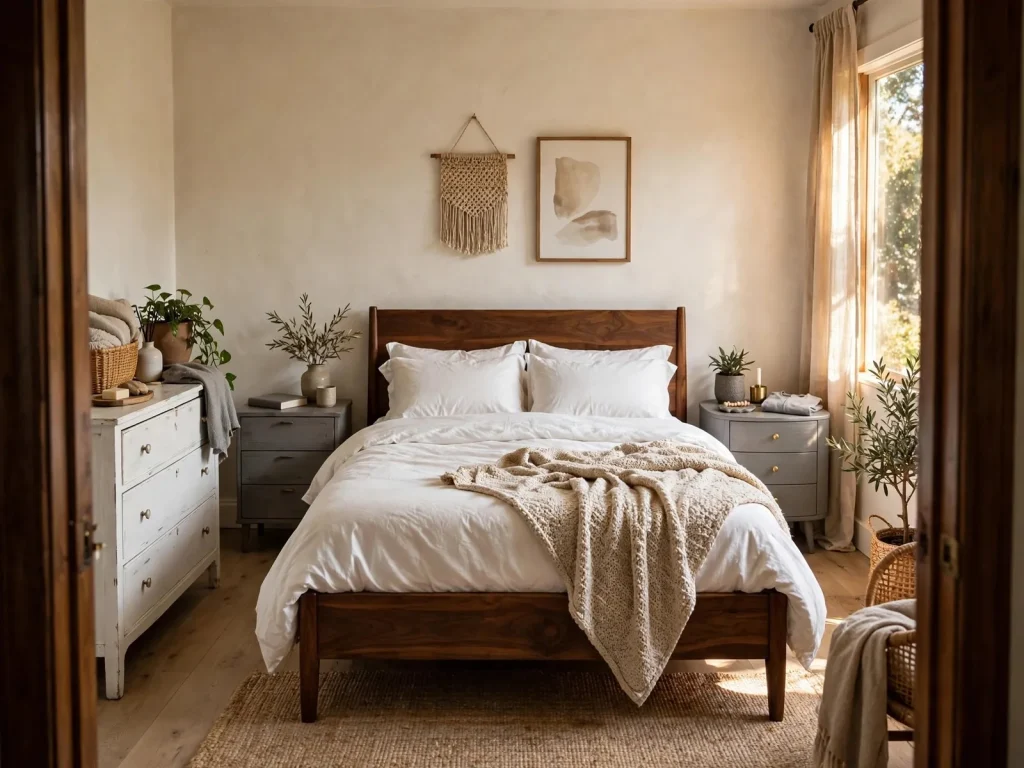
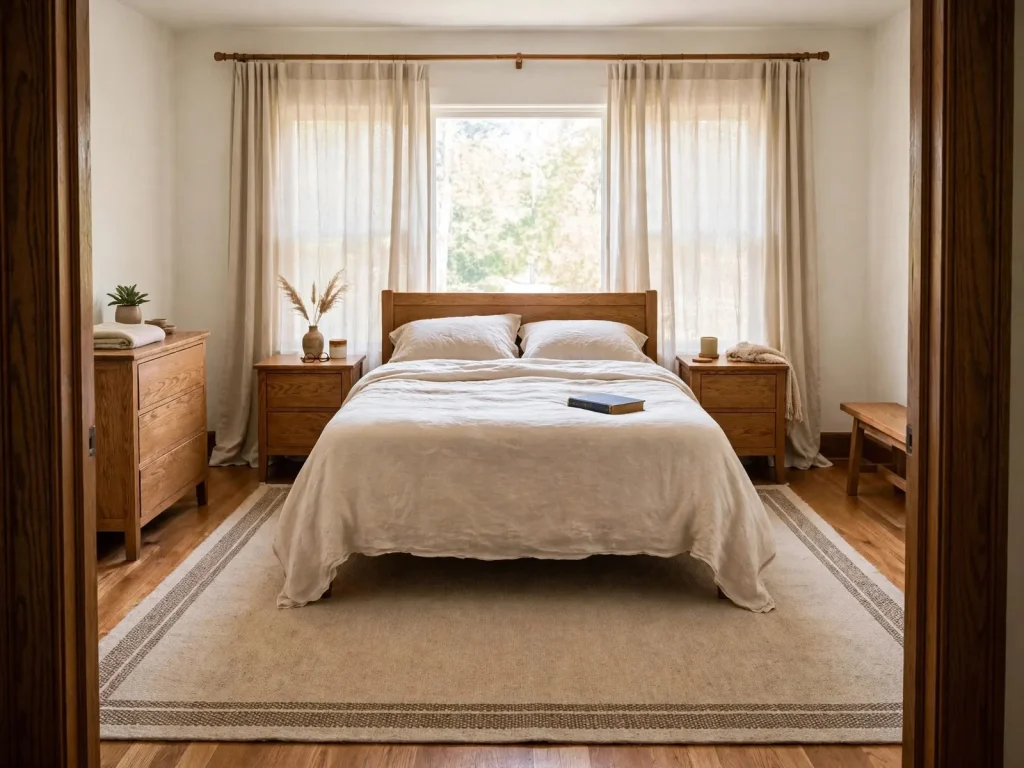
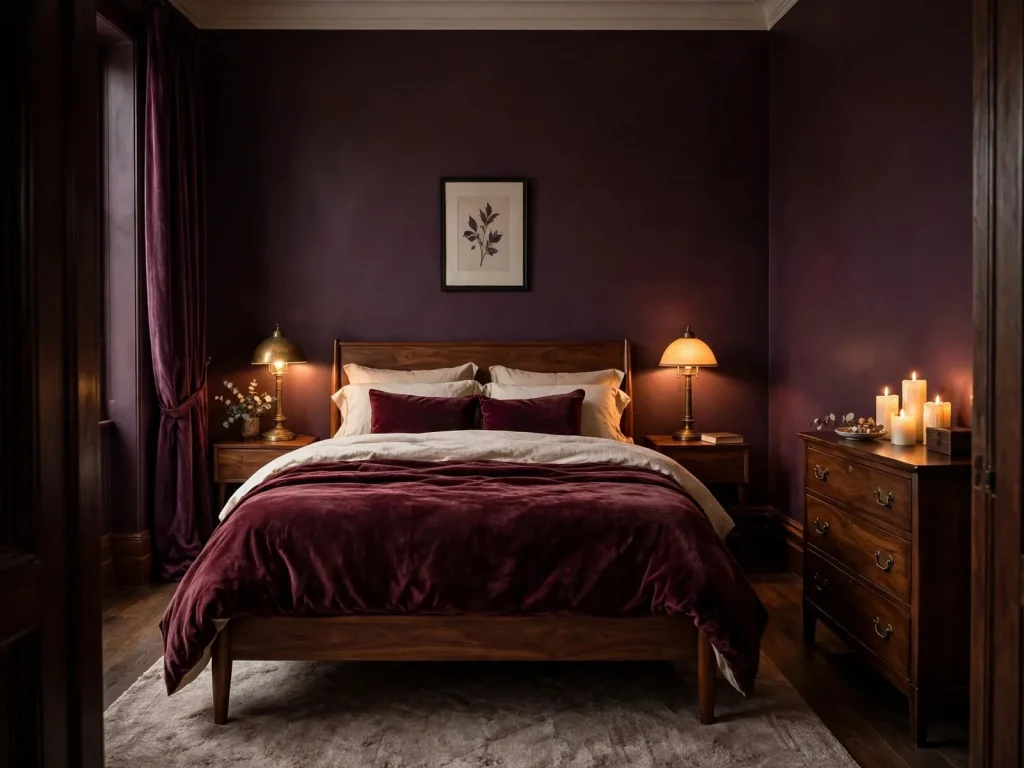
At seven in the evening your bedroom can look like a waiting room. One bright bulb in the middle of the ceiling lights every corner at the same flat level and the bed you made this morning reads like it belongs to a clinic. The fix is not new furniture. These cozy bedroom lighting ideas start by turning that overhead light off and building three low and warm layers in its place: one that fills the room, one that lands where you read and one that just glows.
Every idea below tells you where the light goes and which bulb to put in it and whether it needs an electrician. Almost none of them do. Most are plug-in or battery powered and the whole set works in a rental and in a room with no ceiling light at all. Fix the bulbs first and everything after that gets cheaper.
First, fix the bulbs
Most cozy lighting problems are bulb problems. Color temperature is measured in kelvin and it decides whether a room feels warm or clinical before any fixture matters. About 2700K is the warm white people usually prefer in a bedroom. A 3000K bulb looks slightly whiter and still works. A 4000K or 5000K bulb is daylight on the box and it belongs in a kitchen or a workshop, not beside a bed.
Brightness is a separate choice. Kelvin sets the color and lumens set the output, so buy the bulb for its color and handle brightness with a dimmer. A bedside lamp wants roughly 400 to 800 lumens. A lamp for the far corner wants 800 to 1,100 lumens so the room reads filled rather than dotted. Put every bulb in the room at the same kelvin, because one warm bulb beside one cool bulb looks like a mistake even when nobody can name it. Fixture types and mounting heights for each layer sit in our bedroom lighting ideas post.
Ambient: the light that fills the room
This layer replaces the ceiling light. It should come from low and from more than one direction.
1. Turn the overhead off at night
One ceiling light sits in the worst spot in the room. It shines straight down on the top of your head and leaves the walls and the bed in comparative gloom, so the room flattens no matter what color the walls are.
Make the overhead the daytime light only. If you keep using it in the evening, put it on a dimmer switch or swap its bulb for a smart bulb you can drop to a low warm setting from the bed. The rest of this page is what replaces it after dark.
Budget: $0 to leave it off. A dimmable smart bulb for the fixture runs $10 to $15.
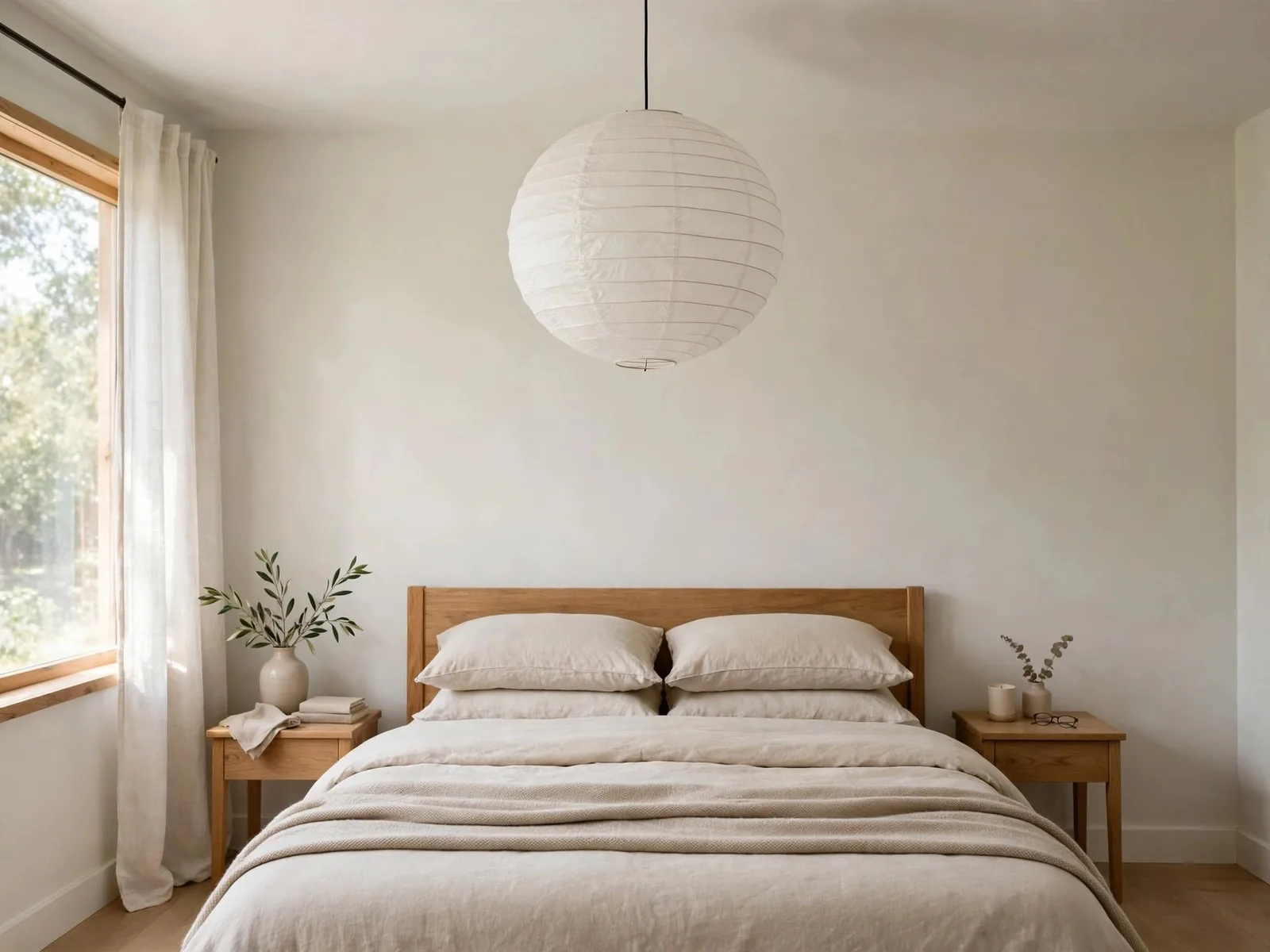
2. Swap a bare fixture for a fabric shade or a paper lantern
A bare bulb or a clear glass fixture throws hard shadows and shows its own filament every time you look up. A fabric shade or a paper lantern spreads the same light sideways and the room softens in one move.
Renters can usually swap a shade without touching the wiring. A paper lantern slides over most existing pendant fittings. Keep paper and fabric at least a few inches from the bulb and use an LED bulb, which runs cool enough for close shades.
Renter-friendly: the shade swaps onto the fitting you already have and swaps back at move-out.
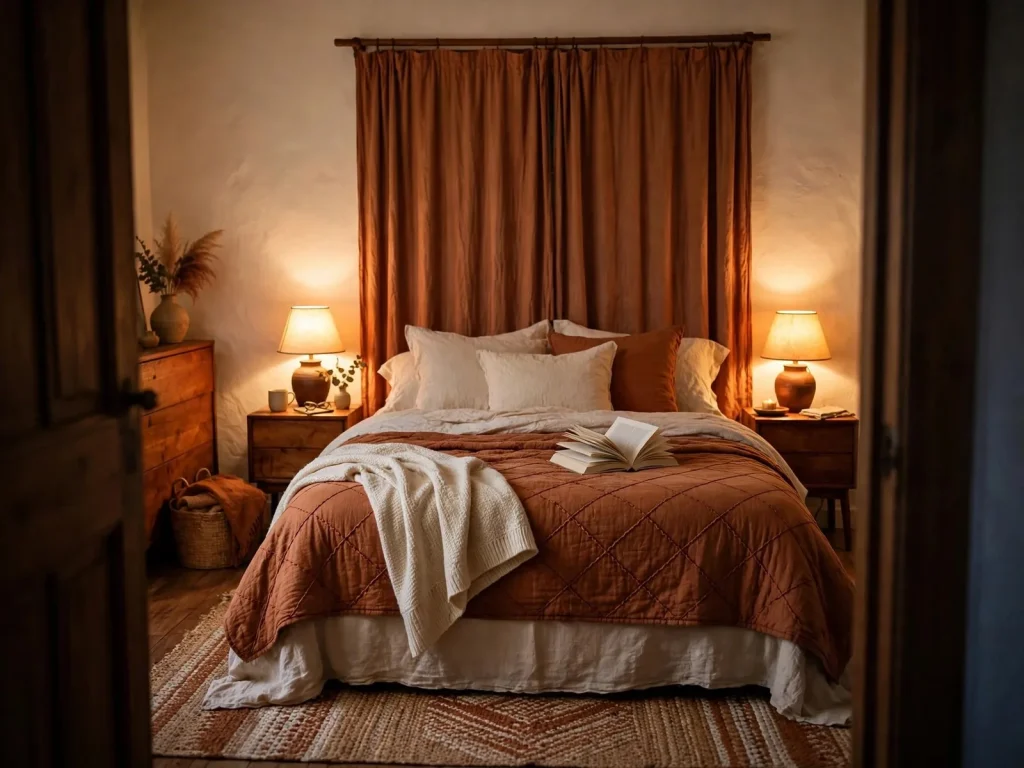
3. Put two lamps on opposite sides of the room
One lamp leaves the far half of the room to fend for itself. Two lamps at lower brightness beat one bright lamp every time, because light arriving from two directions fills corners and puts a warm pool on both sides of the bed.
Place the second lamp on a dresser or a small table across the room from the first. Dark walls swallow light whole, so a deep colored room needs the same two-point spread with bulbs one step brighter. Our moody bedroom ideas post pairs layered lamps with deep wall colors room by room.
Measure: keep the two lamps at least 8 feet apart so their pools of light stay separate.
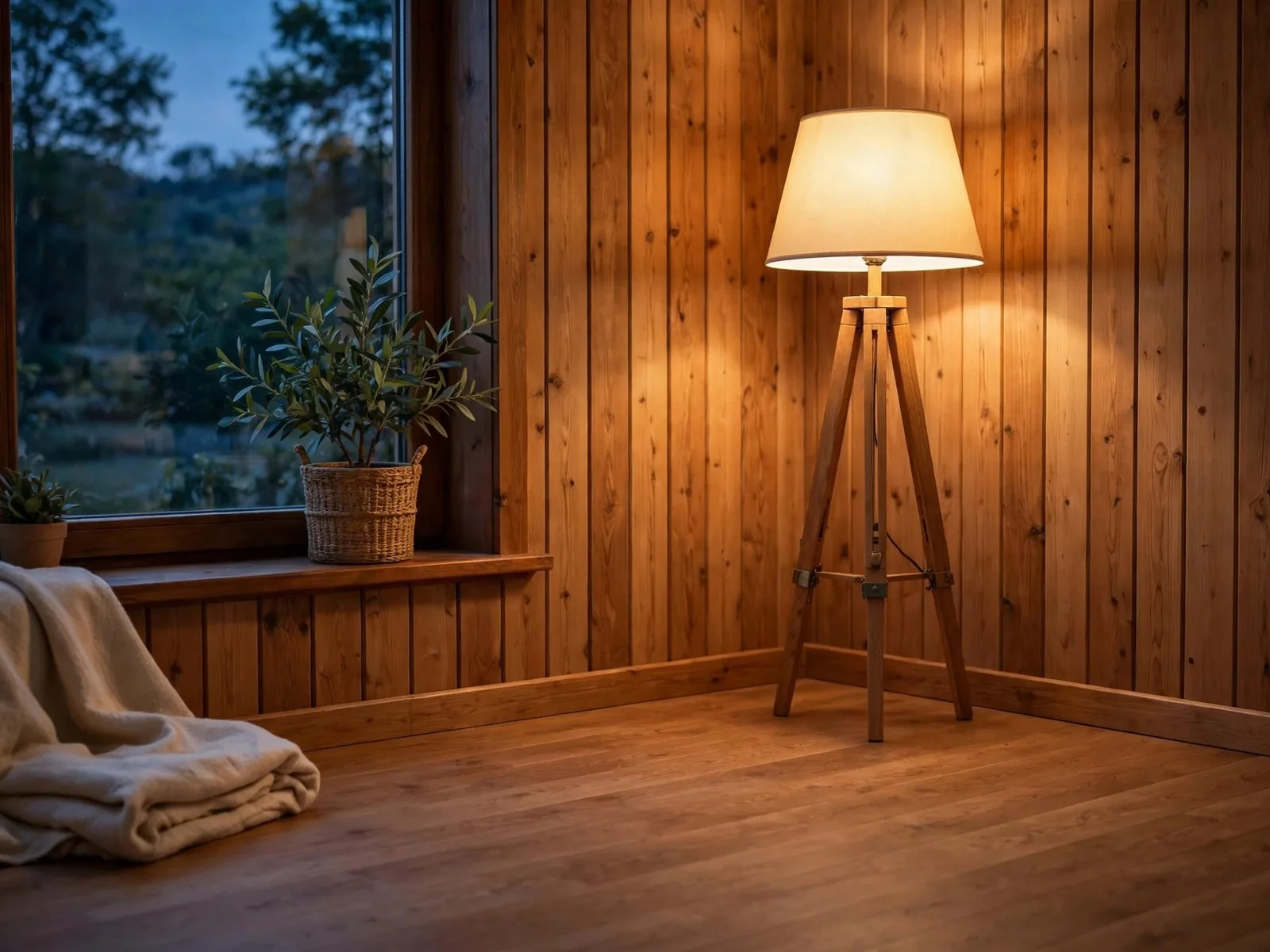
4. Add a floor lamp in the empty corner
Every bedroom has one corner that holds nothing but a laundry pile. A floor lamp with a fabric shade claims that corner and throws light up and out at the same time, which is the closest a plug-in lamp gets to filling a room evenly.
An uplight shade aimed at the ceiling bounces a soft wash back down and works well in rooms with no ceiling fixture. Pair the lamp with a chair later if the corner earns it. The lamp comes first because light is what makes a corner feel chosen rather than leftover.
Budget: $50 to $120 for a plug-in floor lamp with a fabric or paper shade.
Task: light where you read
This layer is smaller and more focused. It lands on the page and nowhere else.
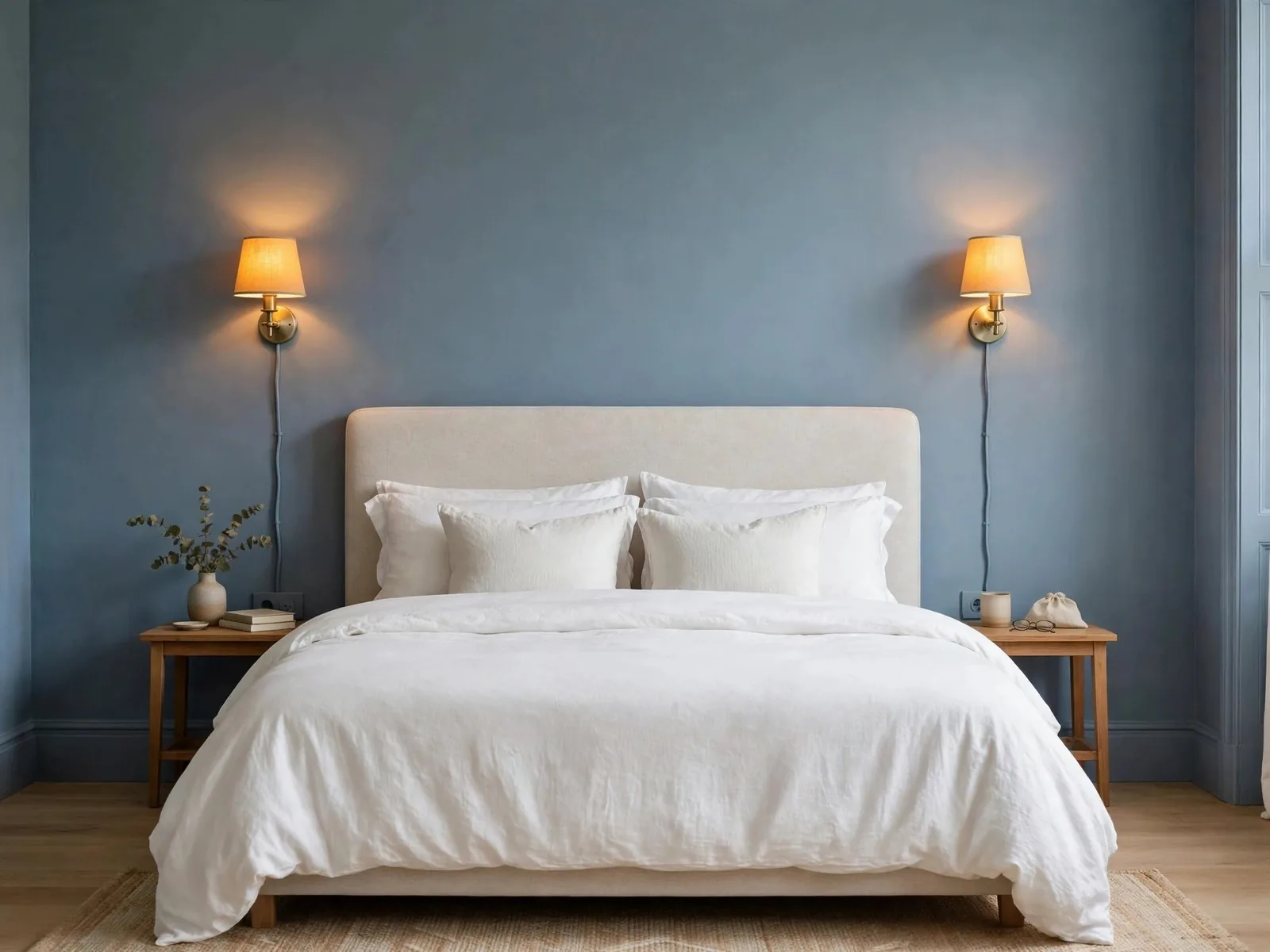
5. Mount plug-in sconces by the bed
A plug-in sconce gives you reading light without giving up the nightstand surface to a lamp base. It mounts with two screws, plugs into the nearest outlet and frees the table for a book and a water glass.
Run the cord down inside a cord cover painted the wall color and the install reads finished instead of improvised. Aim the shade so the light lands at shoulder height when you sit up in bed, which is about 50 inches off the floor for most bed and nightstand combinations.
Renter-friendly: plug-in with a cord cover. The two screw holes fill in minutes at move-out.
6. Choose a swing-arm sconce for reading
A swing-arm sconce is the reading light that respects a sleeping partner. The arm brings the shade out over your book and the shade itself blocks the light from spilling across the bed.
Pair it with a low lumen bulb. Reading needs about 400 lumens at the page and more than that just lights the whole room again. Swing the arm back against the wall in the morning and the fixture takes up no visual space at all.
Measure: an arm reach of 12 to 18 inches puts the light over the page and off your partner.
7. Pick a lamp with a warm dimmable bulb
If you keep a table lamp, the shade height matters more than the base style. Sit up in bed and check where the bulb sits. A bare bulb visible from the pillow glares no matter how warm its color is.
Choose a lamp tall enough that the shade hides the bulb from a person lying down. Fit a dimmable 2700K bulb so the same lamp reads at full strength and glows at bedtime strength. Dimming by bulb or by plug-in dimmer both work; idea 13 covers the plug-in route.
Measure: a total lamp height of 24 to 30 inches on a standard nightstand keeps the bulb below eye level in bed.
Accent: the glow
This layer lights nothing on purpose. It is the layer visitors remember.
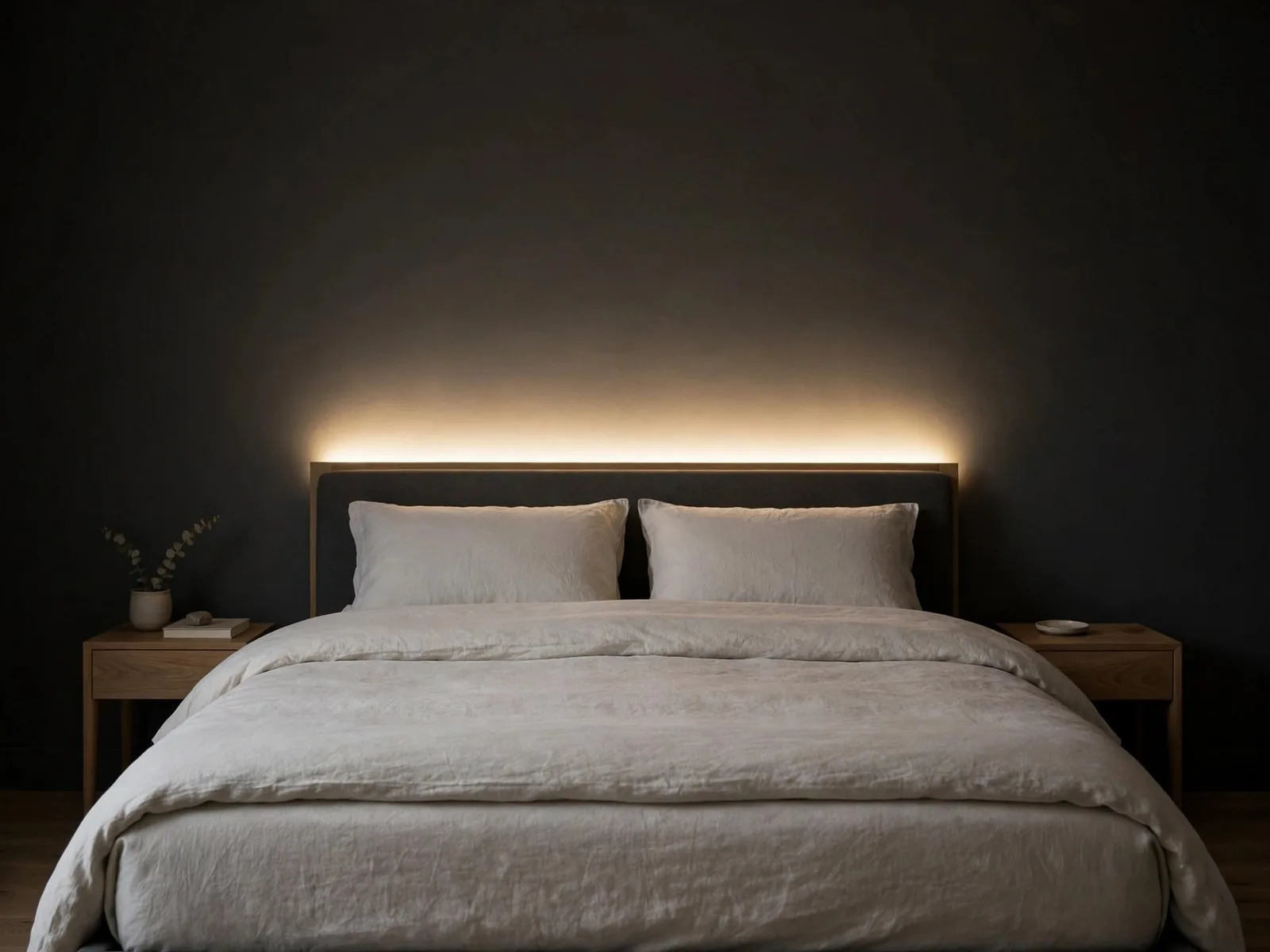
8. Run an LED strip behind the headboard
A warm white LED strip fixed to the back of the headboard throws a halo onto the wall and lights the bed area without a single visible bulb. It is the highest-impact accent on this page for the money.
Choose a strip sold as warm white at 2700K and rated for indoor use. Color-changing strips belong to a different mood. Stick the strip so it faces the wall rather than the room and the light arrives as a wash instead of a row of dots. Yes, strips suit a bedroom when they stay warm and indirect like this.
Budget: $15 to $30 for a 6-foot warm white strip with a dimmer remote.
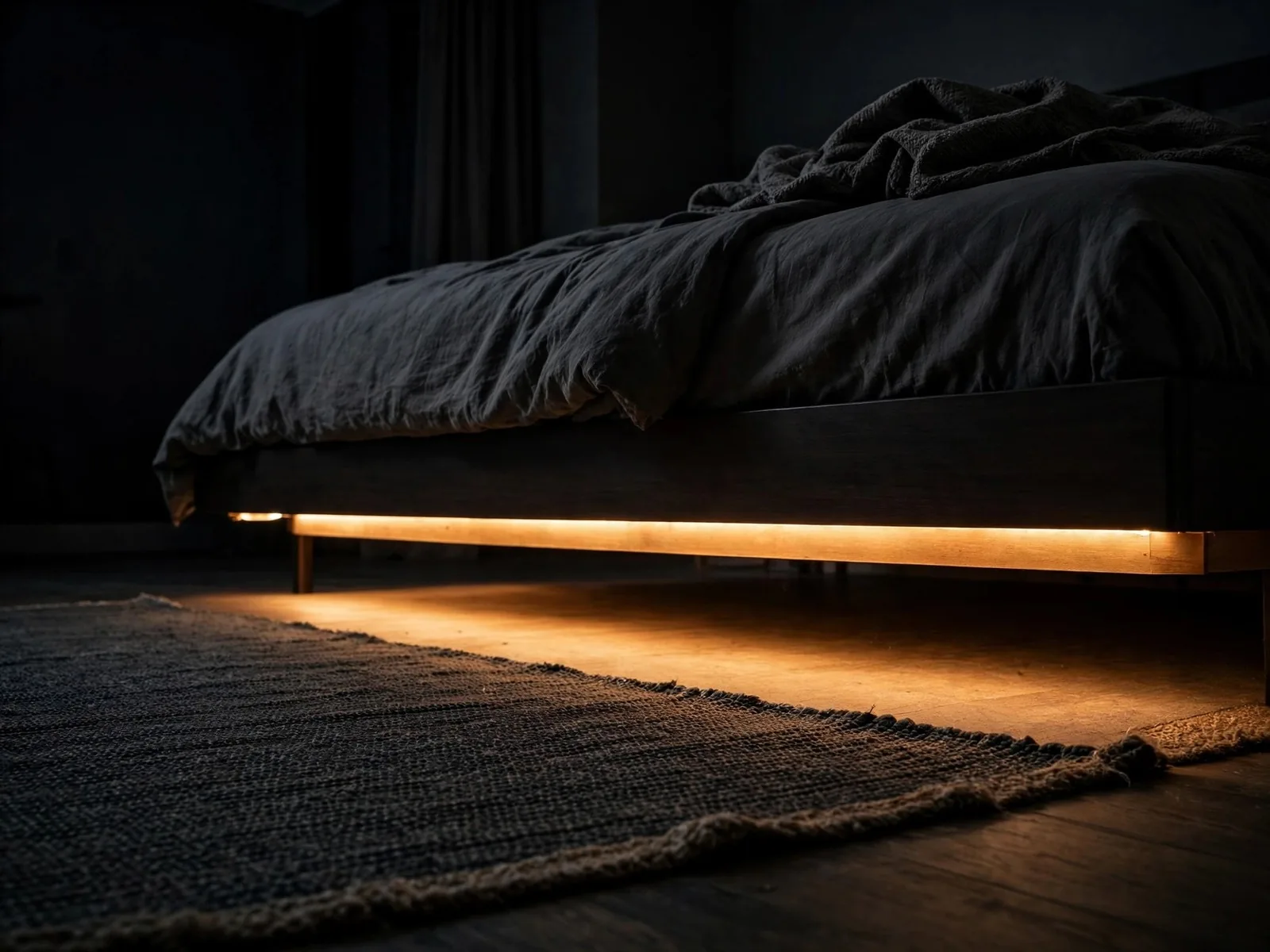
9. Glow under the bed frame
The same strip trick works at floor level. A warm strip under the bed frame rails floats the bed on a low pool of light and doubles as the path light for a midnight trip to the bathroom.
Mount it facing down or facing the wall so no diode shows directly. A motion sensor version switches itself on when your feet hit the floor and off again a minute later, which saves the fumbling that wakes a partner. Idea 15 covers a stand-alone path light if your frame has no rail to hold a strip.
Renter-friendly: adhesive clips hold the strip under the frame and peel off clean at move-out.
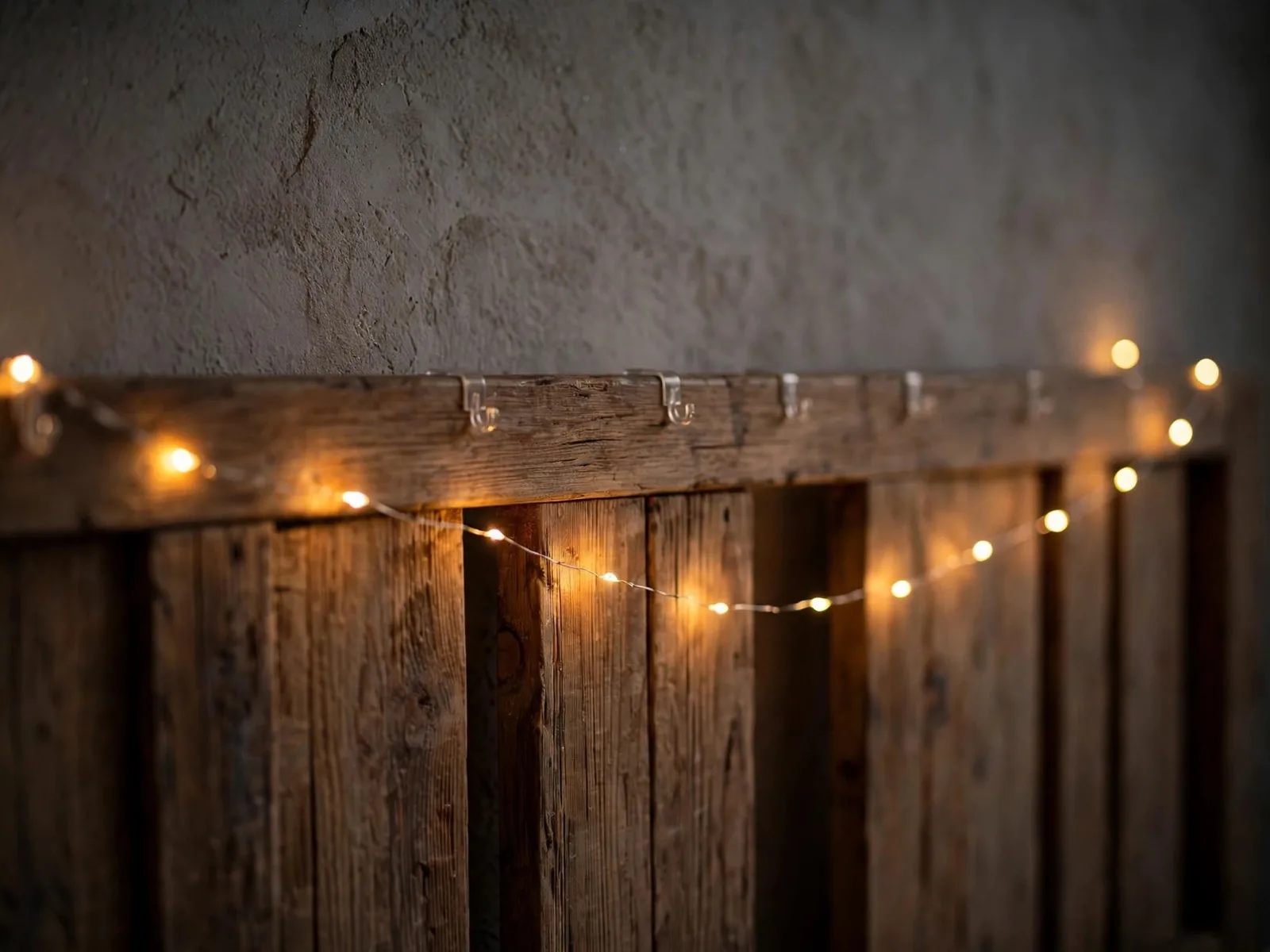
10. Drape string lights on hooks, not nails
String lights are the pin that starts most cozy lighting searches and they earn their place used once and used warm. One strand along the headboard or across a mirror frame gives a room its evening outline.
Hang the strand on removable hooks instead of nails and keep it off the bedding itself. Choose warm white bulbs and a set with a lab listing such as UL or ETL on the box. Switch the strand off at bedtime rather than leaving it on all night. Our Christmas bedroom ideas post hangs the same strands for the season on the same hooks.
Budget: under $20 for one warm white strand. Removable hooks only and no nails.
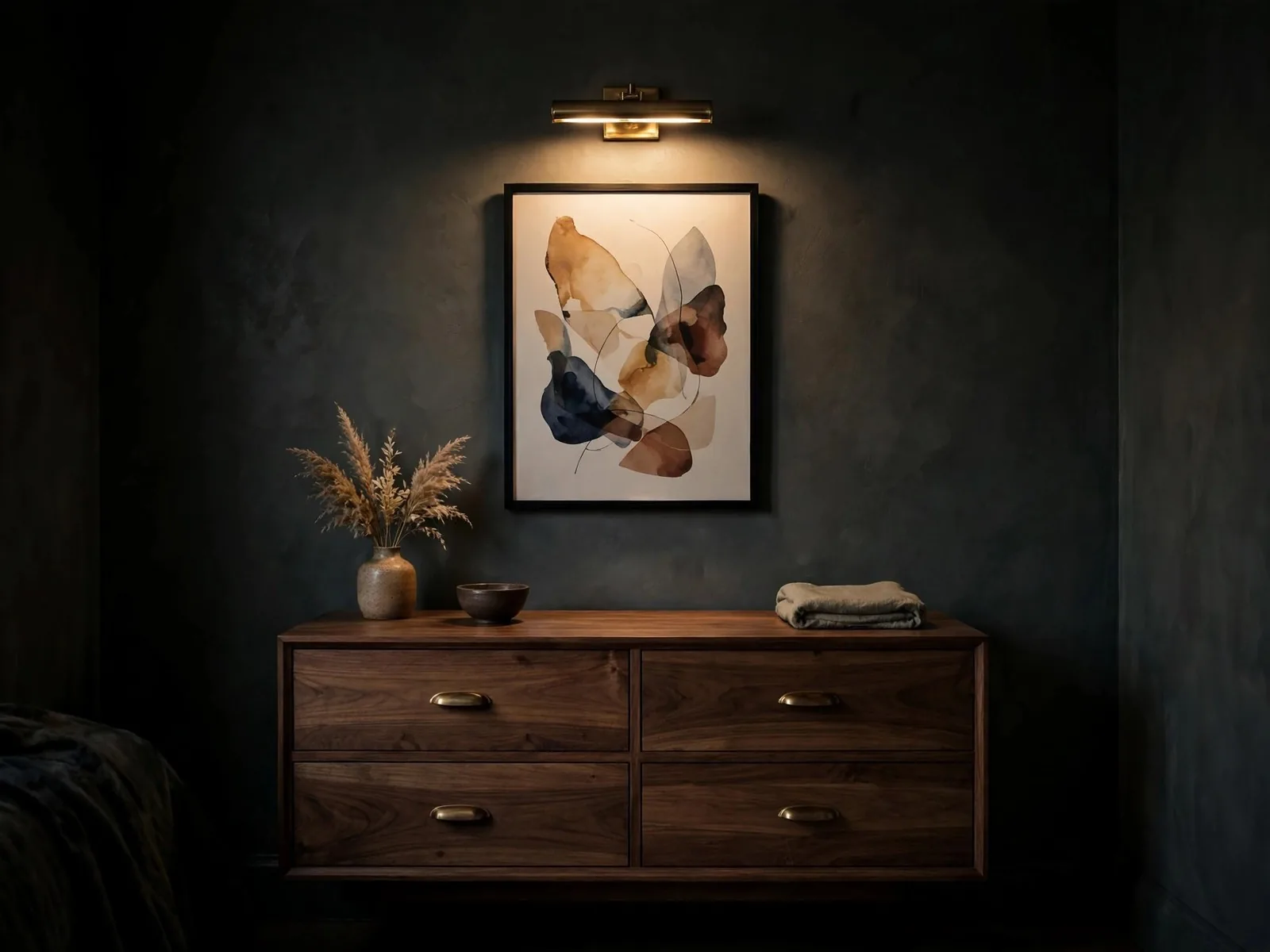
11. Light a shelf or a picture
One lit object convinces your eye that the whole room glows. A battery picture light over the print above the dresser or a puck light inside an open shelf gives the room a focal point that is not the bed.
Rechargeable models stick on with a magnetic strip and come down for charging, so this idea needs no wiring and no outlet nearby. Keep the light warm. Most picture lights ship at 3000K, which sits close enough to a 2700K room to pass at a glance.
Budget: $10 to $25 for a rechargeable picture light or a three-pack of puck lights.
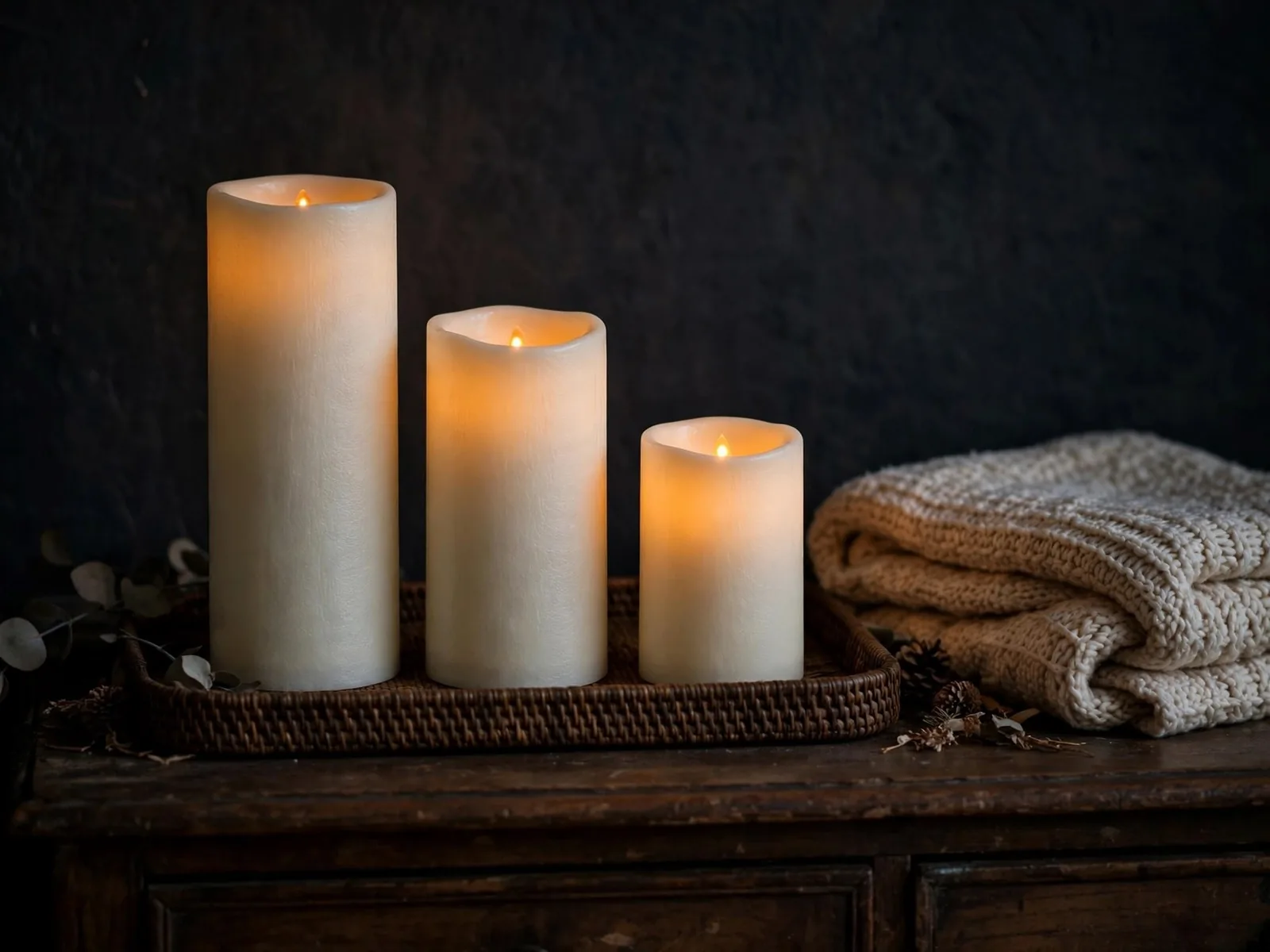
12. Use flameless candles
Candlelight is the warmest light there is and open flame beside bedding is a risk nobody needs at midnight. Flameless candles keep the flicker and drop the risk. The wax-bodied ones read real from three feet away.
Group three at different heights on a tray or a mantel shelf and put them on a timer so they come on at dusk without you thinking about it. One candle alone reads as an afterthought. Three read as a decision.
Budget: $15 to $30 for a set of three with a timer remote.
Smart and small
These ideas cost little and change how the other layers behave.
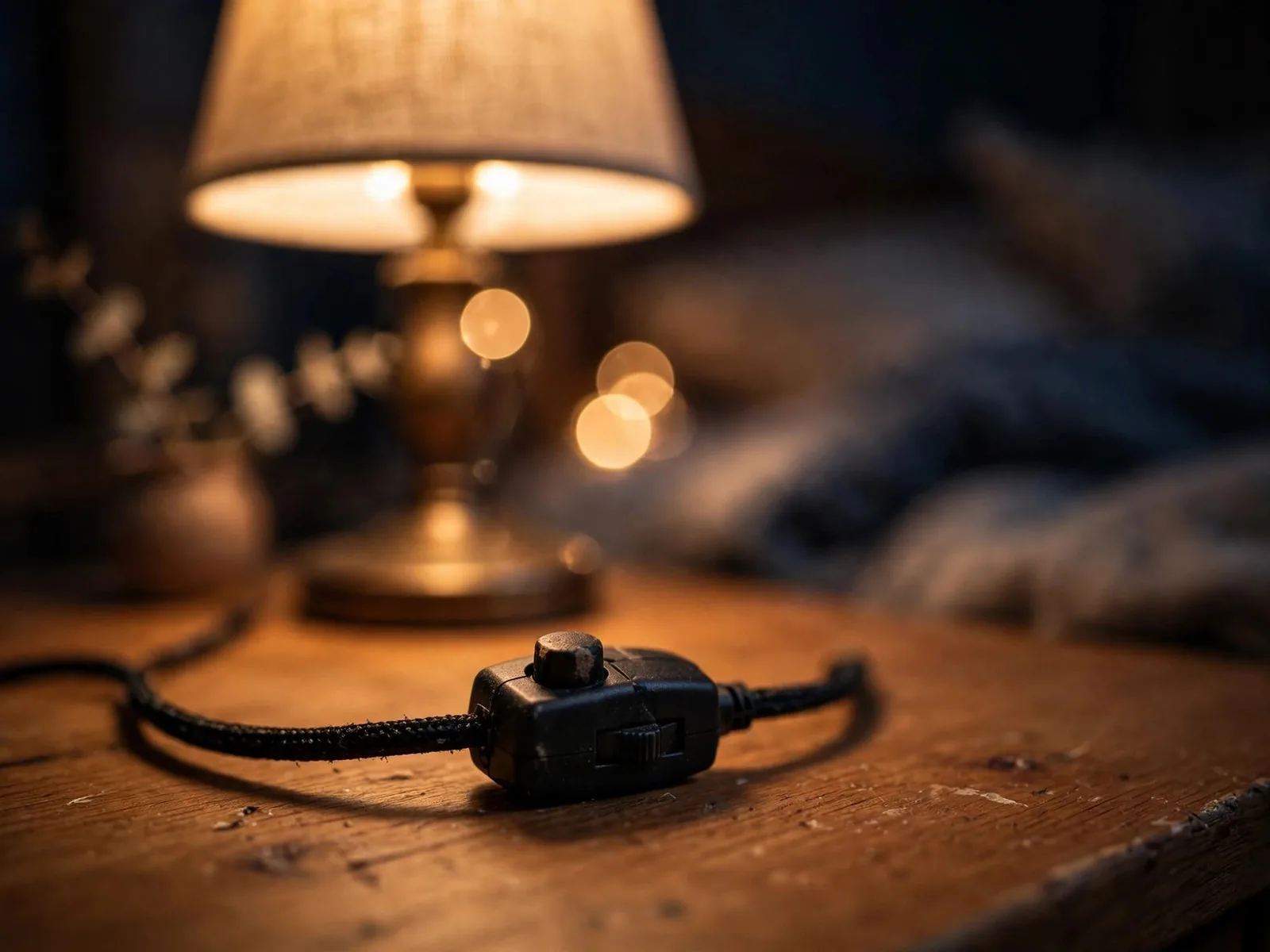
13. Put lamps on plug-in dimmers
Dimming is the cheapest mood change on this page. A plug-in dimmer sits between the outlet and the lamp cord and gives any lamp a brightness dial for the price of two bulbs.
Check the bulb first. The LED in the lamp has to be sold as dimmable or it will flicker and buzz at low settings. One dimmer per lamp keeps each side of the bed independent, which matters when one person reads and the other sleeps.
Budget: $10 to $20 per lamp for a plug-in dimmer with a cord switch.
14. Use smart bulbs for a bedtime scene
Smart bulbs earn their keep on a schedule. Set a scene that brings the lamps up warm at dusk and drops them to a low amber level an hour before bed. The room winds down without you touching a switch.
Bulbs that shift warmer as they dim get closest to candlelight at their lowest setting. Wi-Fi models need no hub and renters can take every bulb with them at move-out. Start with the two lamps you use most rather than rebulbing the whole house at once.
Budget: $10 to $15 per smart bulb and no hub for Wi-Fi models.
15. Light the path to the door
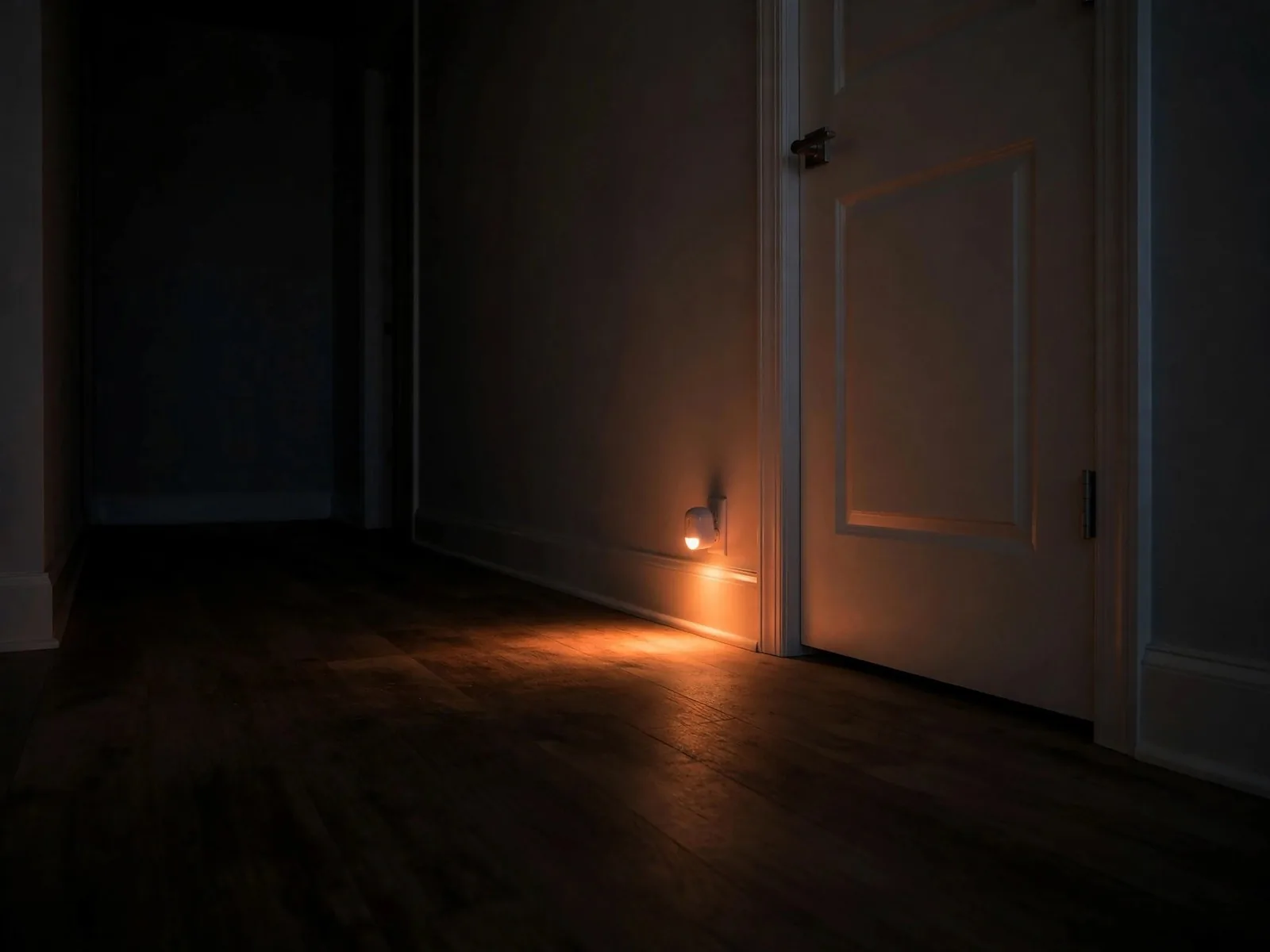
A motion night light at ankle height solves the 3 a.m. problem without the ceiling light. It comes on when you pass, throws just enough warm light to find the door and goes dark again on its own.
Keep it dim and keep it low. A bright night light at eye level wakes you up fully and defeats its own purpose. Amber or warm white models under 30 lumens are the right strength for a hallway-side socket or a spot under the dresser edge.
Measure: mount path lights at about 12 inches high so the light pools on the floor and not in your eyes.
16. Choose warm metals and shades
Materials change the color of light after the bulb does its part. Brass and aged gold bounce warm light back into the room. Chrome and glossy white push the same bulb cooler and harder.
Shade fabric does the same job. Linen and paper warm any bulb that passes through them, while a white plastic shade keeps light raw. If a lamp you own reads cold, swap its shade before you blame its bulb. The swap borrows from rooms you already own and costs nothing to test.
Budget: free if you swap shades between rooms. A linen shade runs $15 to $40.
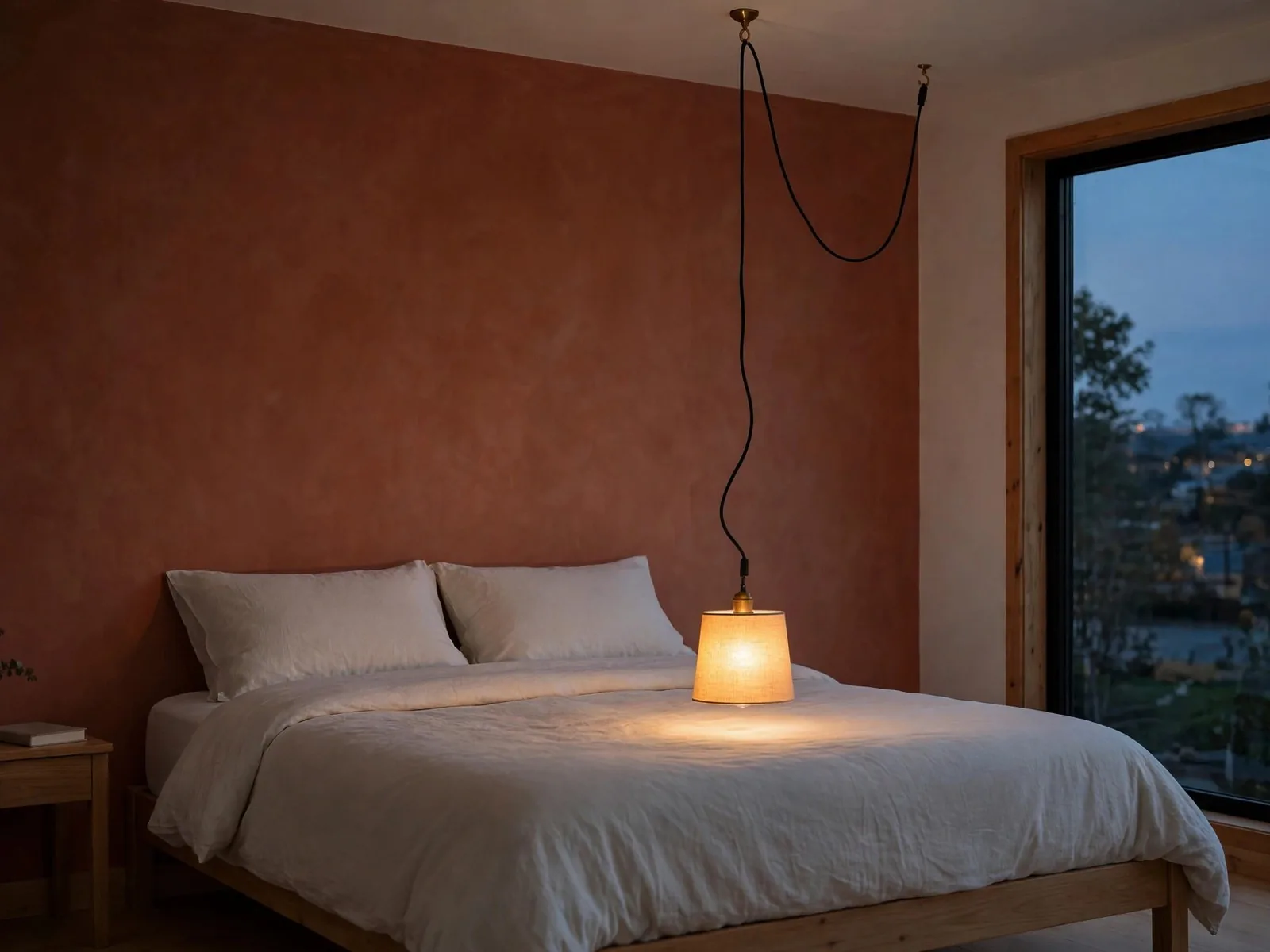
17. Keep one statement light, not three
One pendant or one small chandelier gives a bedroom its jewelry. Three statement fixtures compete and the room reads busy instead of calm, especially a small room where every fixture sits in the same sightline.
Let the statement piece hang over the foot of the bed or over a reading corner rather than dead center. Keep every other light on this page plain. Fit it with a warm bulb at modest output. The statement is the shape, not the brightness.
Budget: $80 to $200 for one plug-in pendant with a warm shade and a ceiling hook.
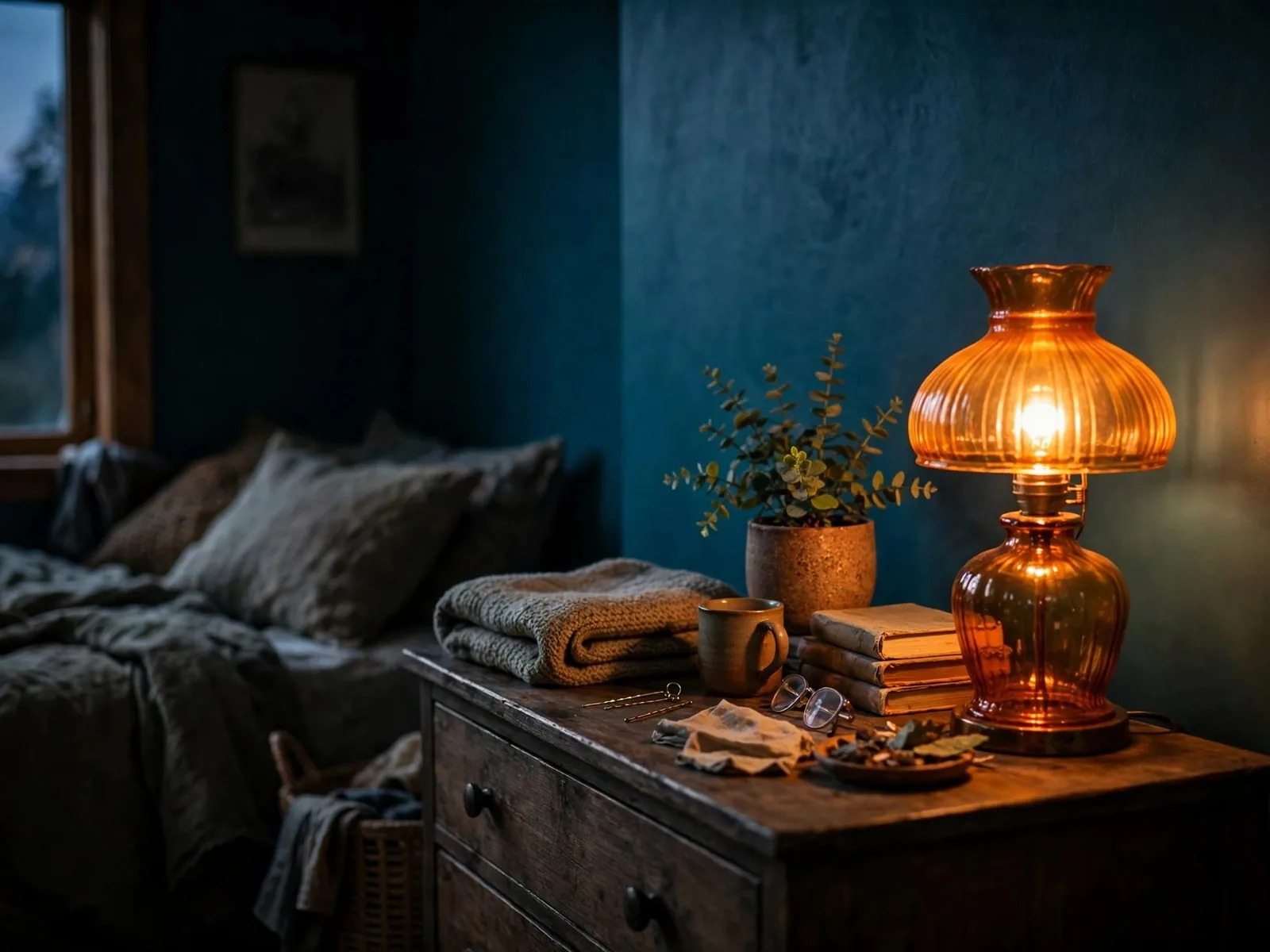
18. Add a salt lamp or amber glass for color
Some rooms need one point of color in the light itself. A salt lamp or an amber glass table lamp throws an orange-leaning glow that no bulb swap quite copies. It warms a corner that lamps in linen shades leave plain.
Treat it as decor and nothing more. It is a small warm accent for a dresser or a shelf corner, not a fixture that lights a room. Keep it as the only orange source so the color reads as an accent rather than a theme.
Budget: $15 to $35 for a small salt lamp or an amber glass table lamp.
Cozy lighting for your room
No ceiling light
Start with the outlet the wall switch controls, because most rooms built without a ceiling fixture wire one outlet to that switch. Plug the floor lamp from idea 4 into it and the switch by the door works again. Add the two lamps from idea 3 for the base layer and the plug-in sconces from idea 5 by the bed. Run everything through the plug-in dimmers in idea 13.
Renting
Every plug-in and battery idea on this page is yours: the shade swap in idea 2, sconces in ideas 5 and 6, the strips in ideas 8 and 9, string lights on hooks in idea 10, the picture light in idea 11, plug-in dimmers in idea 13 and smart bulbs in idea 14. Nothing here asks a landlord for wiring.
A small bedroom
Trade table lamps for wall light. The sconces in ideas 5 and 6 and the headboard strip in idea 8 light a small room without eating its two flat surfaces. Skip the floor lamp and keep the statement-light budget for one small pendant at most.
Reading in bed with a partner asleep
Idea 6 was built for this. A swing-arm sconce on your side with a 400-lumen warm bulb lights your page and stops at the shade edge. Add the under-bed glow from idea 9 at its lowest setting if you are the one who gets up in the night.
Cozy lighting mistakes
- Cool or daylight bulbs. A 4000K or 5000K bulb makes warm bedding look grey and tired. This is the first mistake to fix and the cheapest, because every other idea on this page fails behind the wrong bulb color.
- One overhead light only. A single ceiling fixture flattens the room from directly above. Layers at lamp height are the whole method here, so a room with only an overhead light has no layers to warm up.
- Mixed bulb colors in one room. One 2700K lamp beside one 4000K lamp reads as a mistake even when guests cannot name it. Buy bulbs in matching packs and replace them in matching pairs.
- Bare bulbs at eye level. A visible bulb glares from the pillow no matter how warm its color is. Shades exist to hide the bulb from the bed, so a shade that ends above the bulb undoes itself.
- String lights left on all night. Decorative strands are evening lights, not night lights. Switch them off at bedtime and let a low motion light from idea 15 handle the dark hours instead.
Bedroom lighting questions
What type of lighting is best for a bedroom? Layered lighting works best: a soft ambient layer from lamps or a shaded fixture, a task layer aimed at the bed for reading and a low accent layer for glow. Keep every bulb near 2700K and put brightness on dimmers. One ceiling light alone is the setup that makes bedrooms feel flat.
How do I create cozy lighting in my bedroom? Turn the overhead light off and work in layers. Swap every bulb to 2700K warm white first. Add two lamps on opposite sides of the room for the base layer, put a focused light by the bed for reading and finish with one low glow like a strip behind the headboard.
How do I light a bedroom without a ceiling light? Use the outlet the wall switch controls, since most rooms without a ceiling fixture wire one outlet to that switch. Plug a floor lamp into it for your main light, add two table lamps for the base layer and use plug-in sconces by the bed. Battery pucks cover shelves and closets.
The bottom line
Most bedrooms already own enough lights. They own the wrong bulbs in the wrong places, with one overhead doing a job it is bad at. This week, swap every bulb in the room to about 2700K and turn the overhead off for one full evening to see what your lamps alone can do.