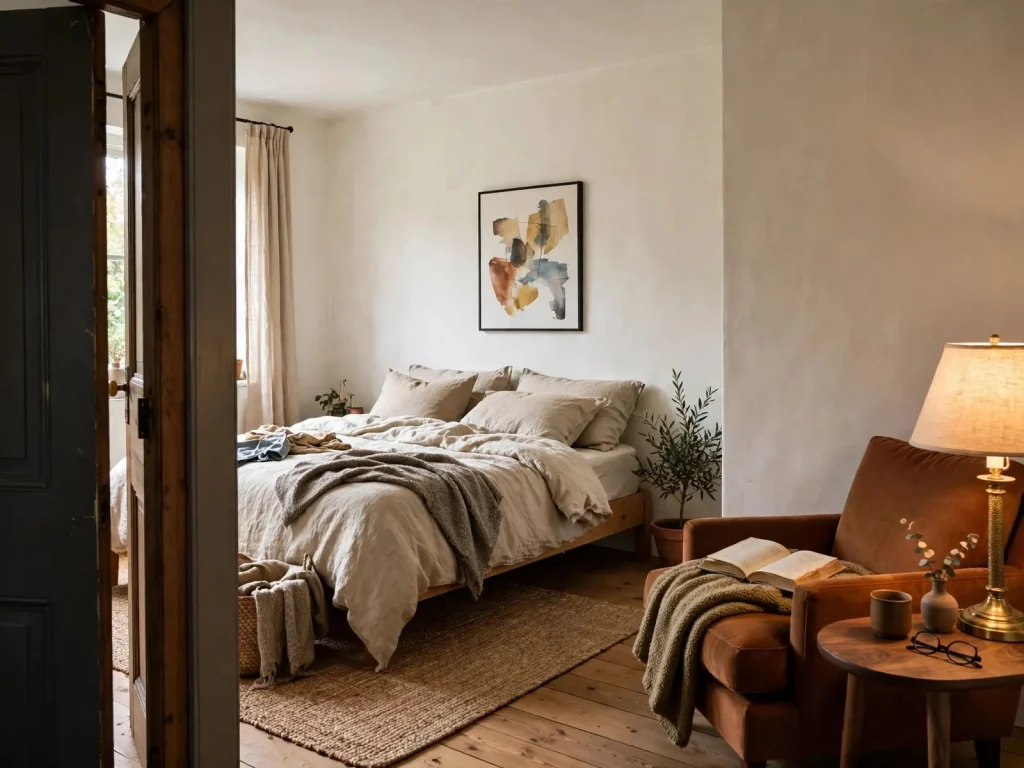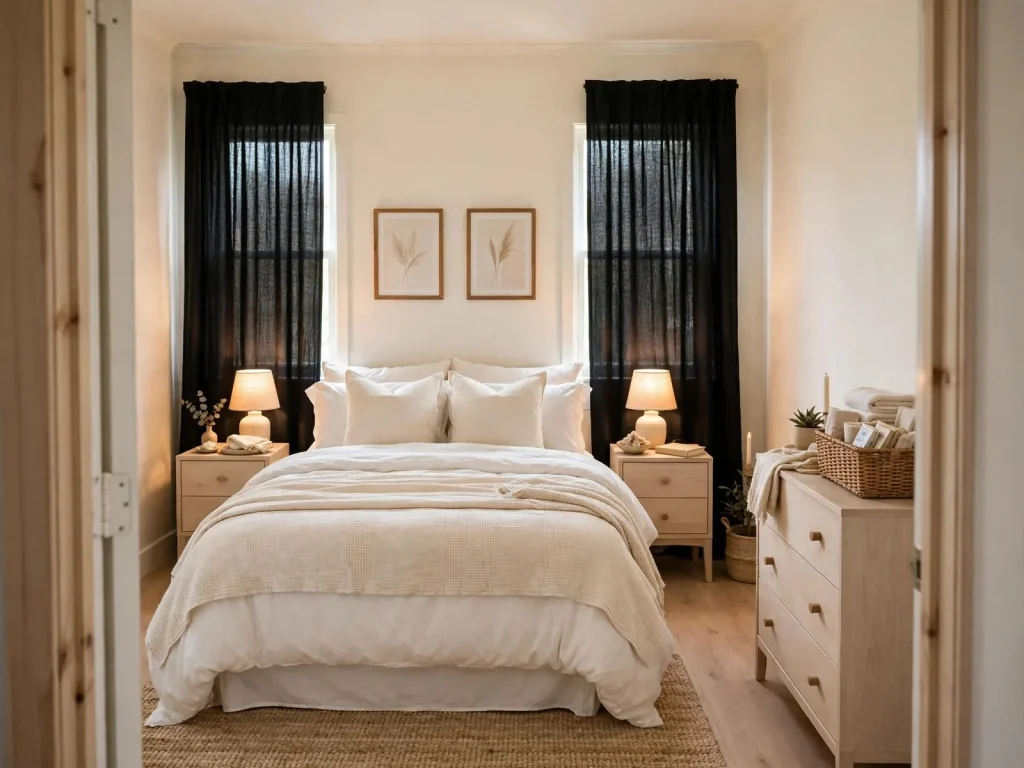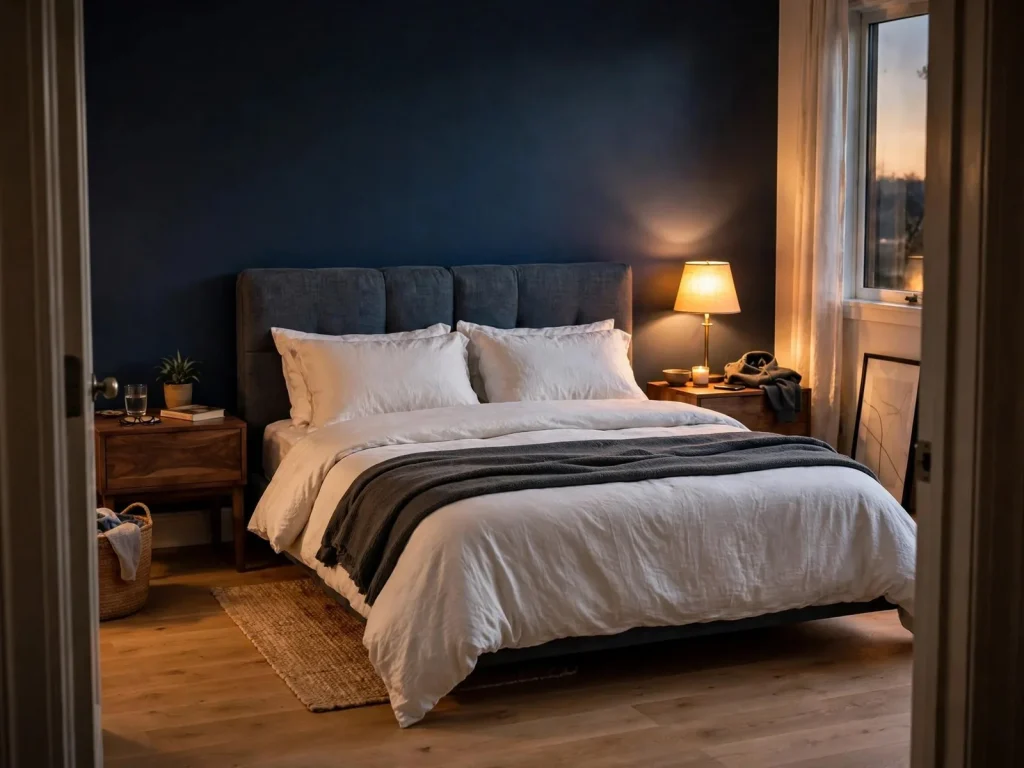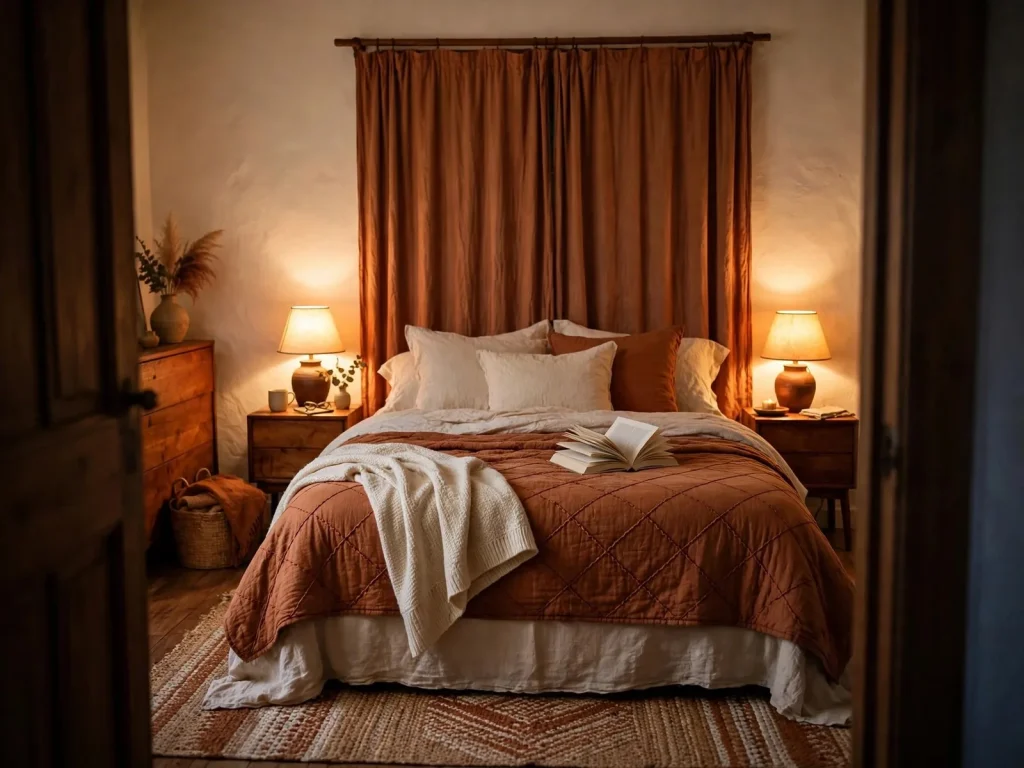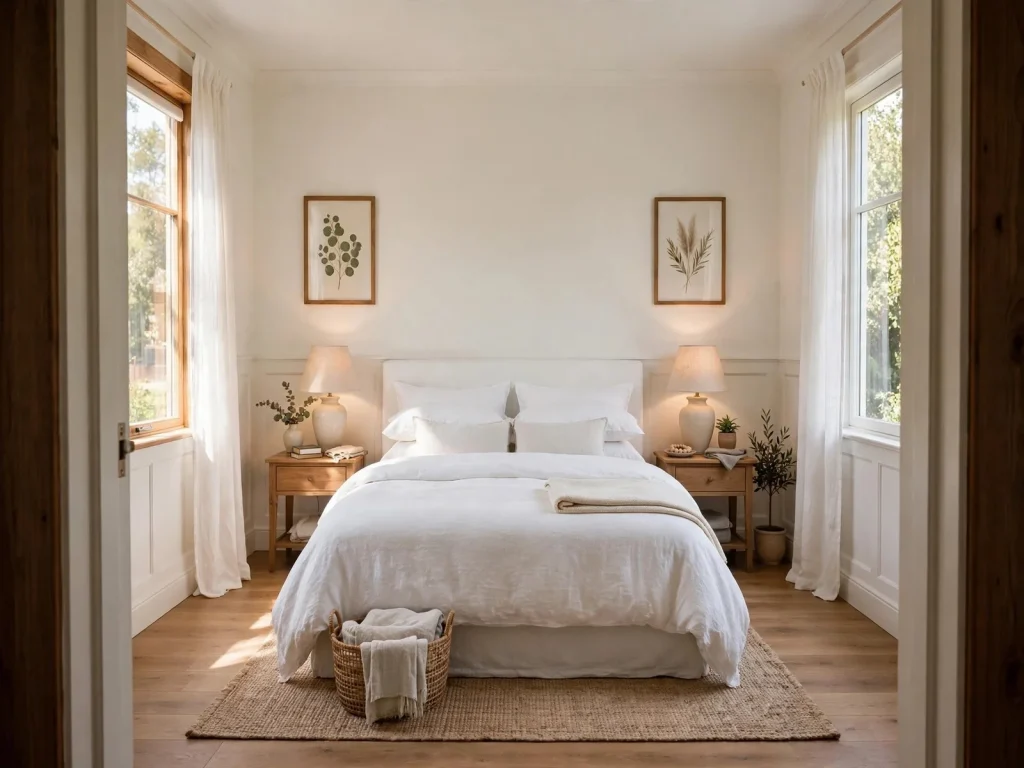
The bed wall in your room has survived three duvet covers and two rug swaps and it still looks like a hotel room nobody finished. Paint feels like a half answer. A full renovation is not in this year’s budget or this lease. What you actually want is one free weekend and a finish that looks deliberate every time you walk in, which is exactly the job bedroom wallpaper was made for.
This page sorts 16 bedroom wallpaper ideas by the things that actually decide the job: peel and stick versus paste, one wall versus the whole room, the roll count behind the pretty picture and the cost per wall stated as a range you can budget against. Every idea names its fixing rule too: adhesive, paste or hung like art. Renters get a safe version of everything. The wall behind the bed is where this page starts, the same wall our main bedroom ideas collection treats as the room’s focal point.
Before you start: measure, budget, rules
Measure the wall before you fall for a pattern. Write down the width and the height in inches and note every window, door and outlet the paper has to work around. A standard bed wall in a 12 by 12 foot bedroom is 144 inches wide and 96 inches tall, which is 96 square feet before you subtract anything.
Now the roll math, because this is where wallpaper budgets go wrong. A typical peel and stick roll is about 20.5 inches wide and 16.5 feet long and covers roughly 28 square feet on paper. Plan on 24 usable square feet once the pattern match takes its cut. A traditional double roll covers about 56 square feet, with 45 usable as a safe plan. That 96 square foot bed wall therefore takes four peel and stick rolls or two double rolls.
The pattern repeat is printed on every label and it decides your spare roll. Repeats commonly run 18 to 25 inches and each new strip can lose up to one full repeat at the ceiling line while you line the pattern up. Small repeats under 12 inches waste far less. When the repeat is over 20 inches, order one roll beyond the math. Keep the receipt until the last strip is up.
The budget bands on this page are ranges seen across home stores this season, stated per finished wall. One bed wall in peel and stick runs $100 to $250. One wall in paste paper runs $150 to $400 once paste and tools join the paper. A full room lands between $400 and $1,200 depending on the paper. Samples cost $3 to $8 each and they are the cheapest insurance in the whole project.
One fork in the road before the paper starts. If you want color with no pattern, a paint-only accent wall does it for under $75. Shiplap or wainscoting builds the wall out instead of covering it. Both of those methods live in our bedroom accent wall ideas post, with their own measurements and renter notes.
Renters, three rules before any roll opens. Check the lease for a wallpaper clause, because some leases name it directly. Peel and stick belongs on smooth walls only; heavy orange-peel texture telegraphs through the paper and starves the adhesive at every bump. Fresh paint needs about four weeks to cure before paper goes on it, whatever the tin says about dry time.
Measure: wall width times wall height gives square feet; divide by 24 for peel and stick rolls or by 45 for double rolls and round up.
Peel and stick: the low-effort papers
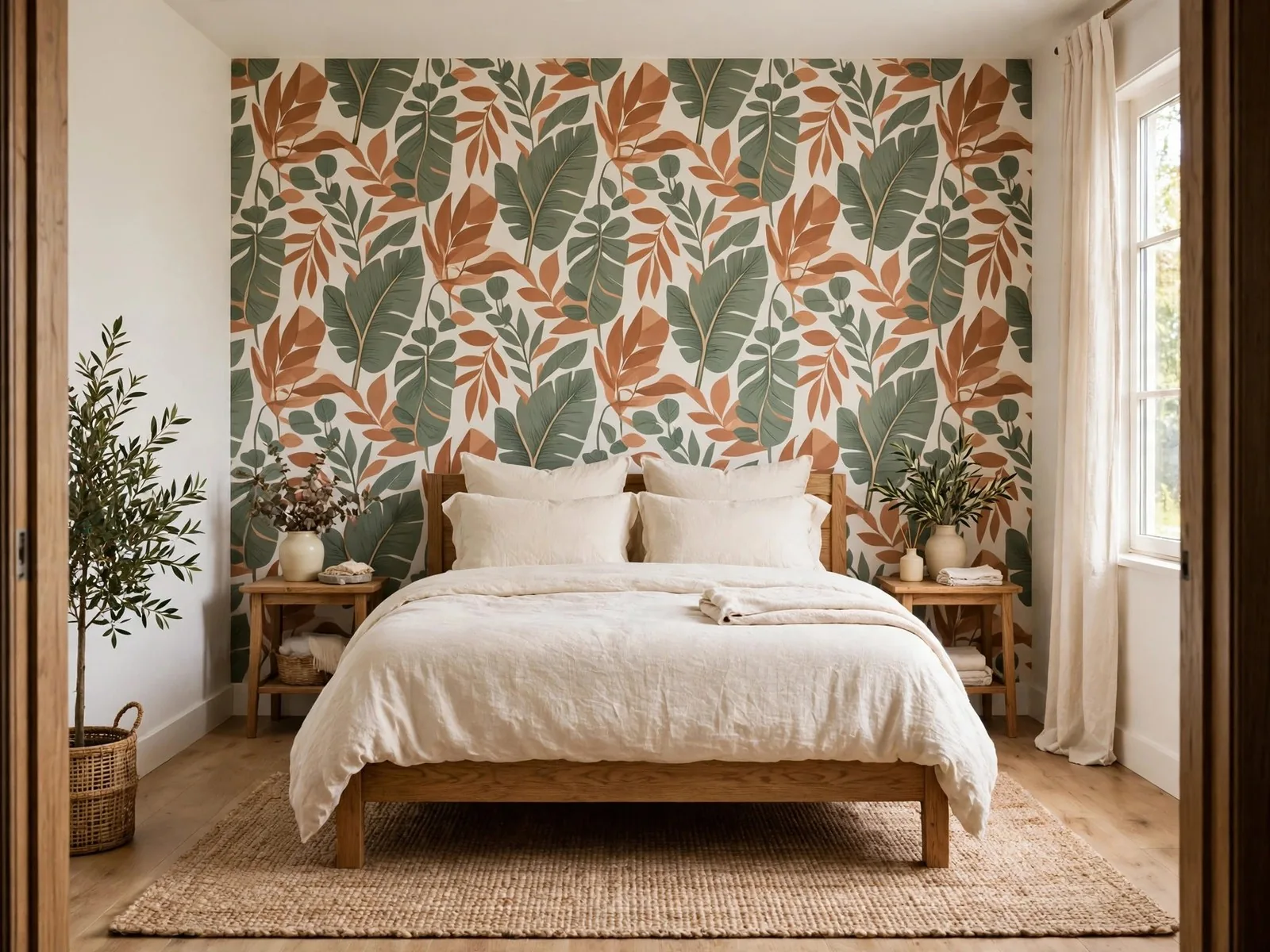
1. Paper the bed wall only and let one bold botanical do the work

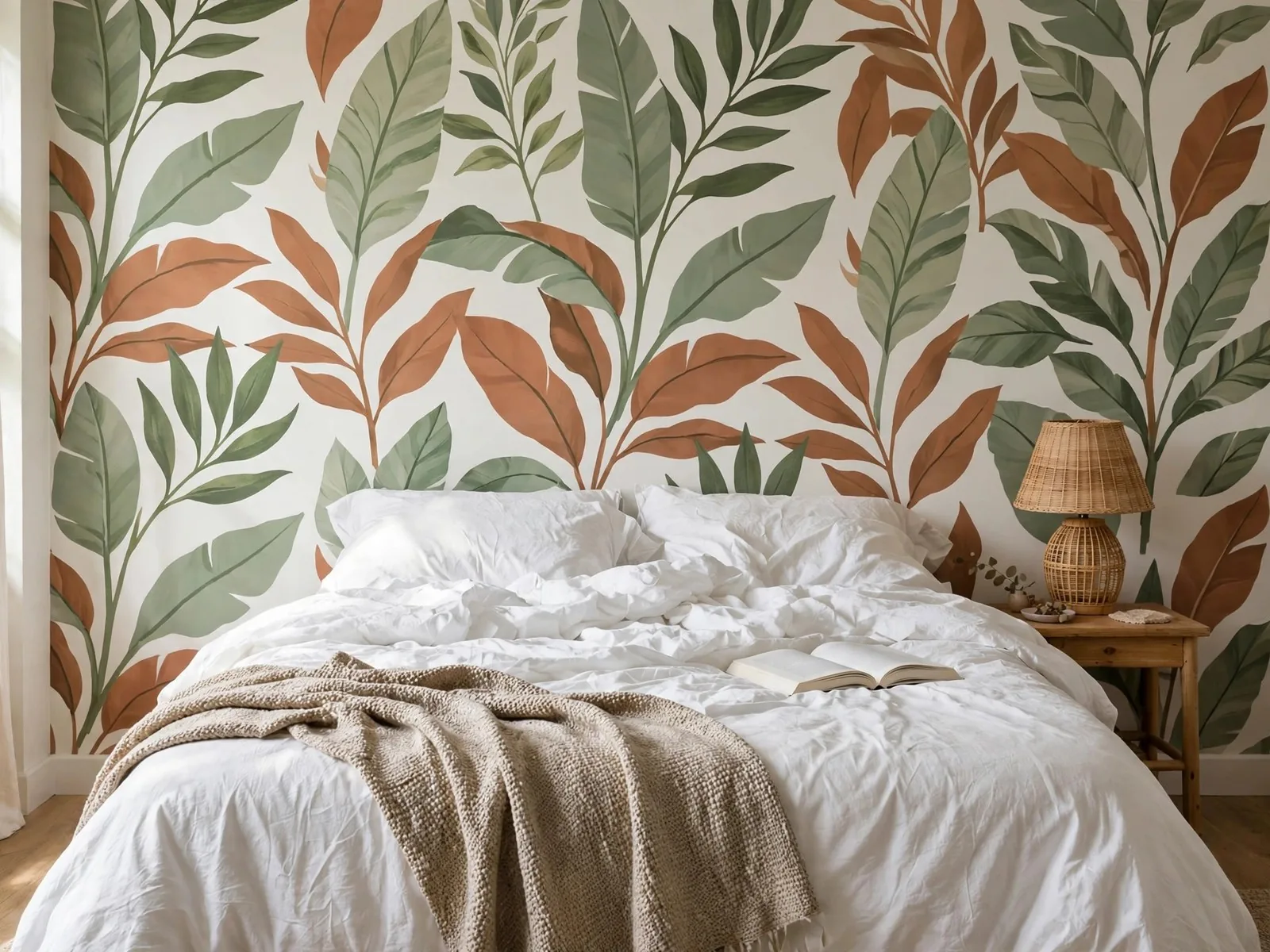
The bed wall is the one wall you see from the door and the one wall the bed already frames, so it gives a pattern the most audience for the fewest rolls. A bold botanical is the version Pinterest saves most for this topic and it suits the wall behind a bed because the headboard and pillows crop the print into something calmer than the roll suggests. Rooms styled around natural materials take it especially well, as the boho bedroom ideas on this site show.
Hang the first strip plumb at the center of the bed and work outward in both directions, so the pattern lands symmetrical behind the pillows. Leave 2 inches of extra paper at the ceiling and the baseboard and trim both once the strip is smoothed. A 12 foot wall takes four 20.5 inch rolls side by side with a little waste at the edges.
The catch is the dye lot. Peel and stick prints vary slightly between lots and a seam between two lots shows in raking light. Buy every roll in one order and check the lot number on each label before the first strip goes up.
Budget: four rolls at $35 to $55 each puts the whole bed wall at $140 to $220, with the smoothing tool usually in the box.
2. Choose a small repeat for your first paper
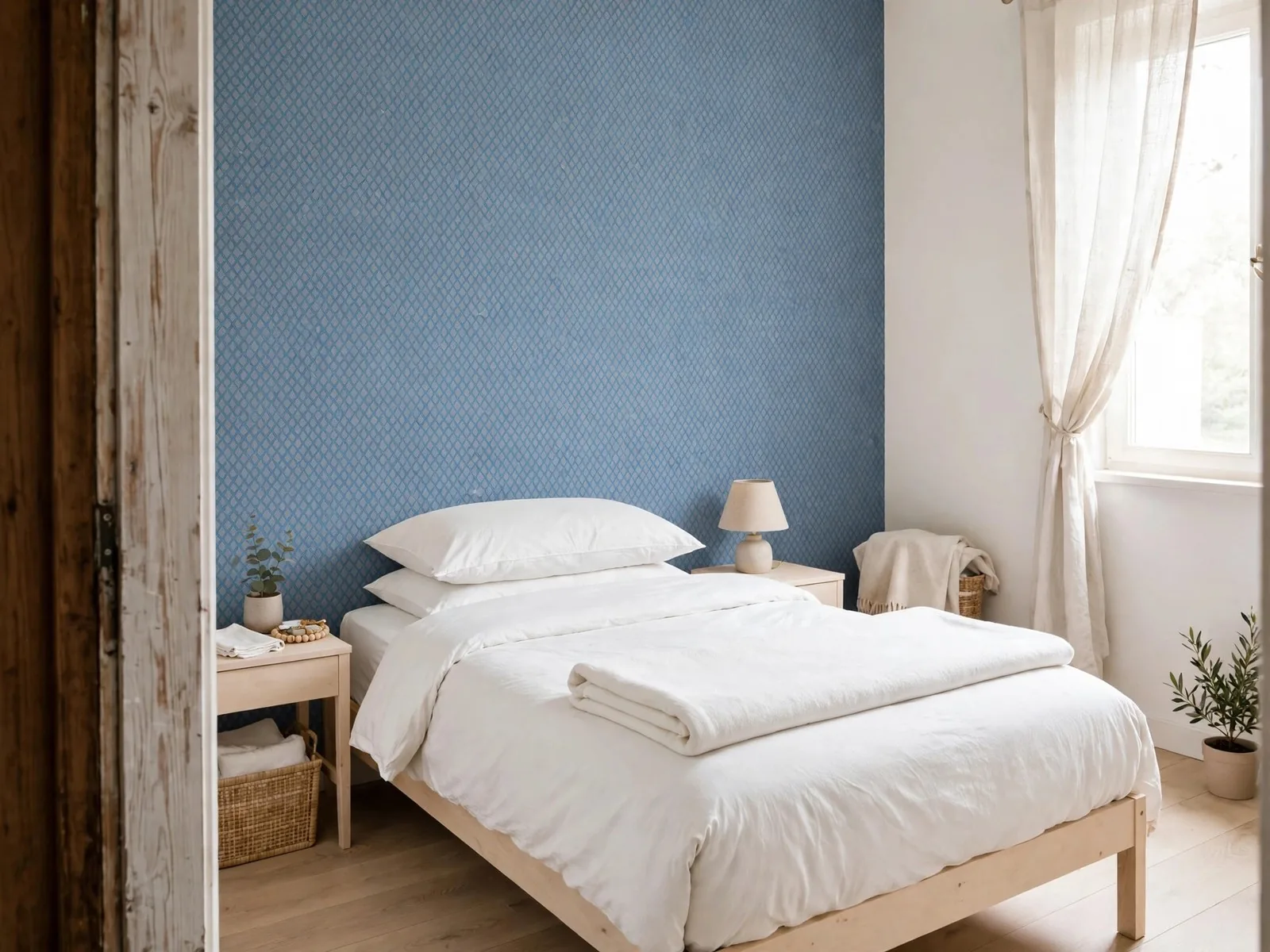
A repeat under 12 inches is the forgiving end of the wallpaper shelf. The pattern lines up again quickly on every strip, so you lose inches to matching instead of feet. A small mismatch hides inside a busy little print. Small geometrics, tiny florals and fine stripes all live here.
The math is the reason this idea suits small rooms and first attempts. On an 8 foot wall a 6 inch repeat wastes at most 6 inches per strip. A 24 inch repeat can waste four times that on the same wall. Across six strips the small repeat can save you a full roll, which is real money in a small bedroom.
Small prints read busy from across a big room. Hold the sample against the bed wall and look at it from the doorway before you order; if it fizzes at ten feet, scale up one step.
Measure: read the repeat on the label before you order; under 12 inches is the forgiving zone for a first hang.
3. Run a quiet peel and stick around all four walls
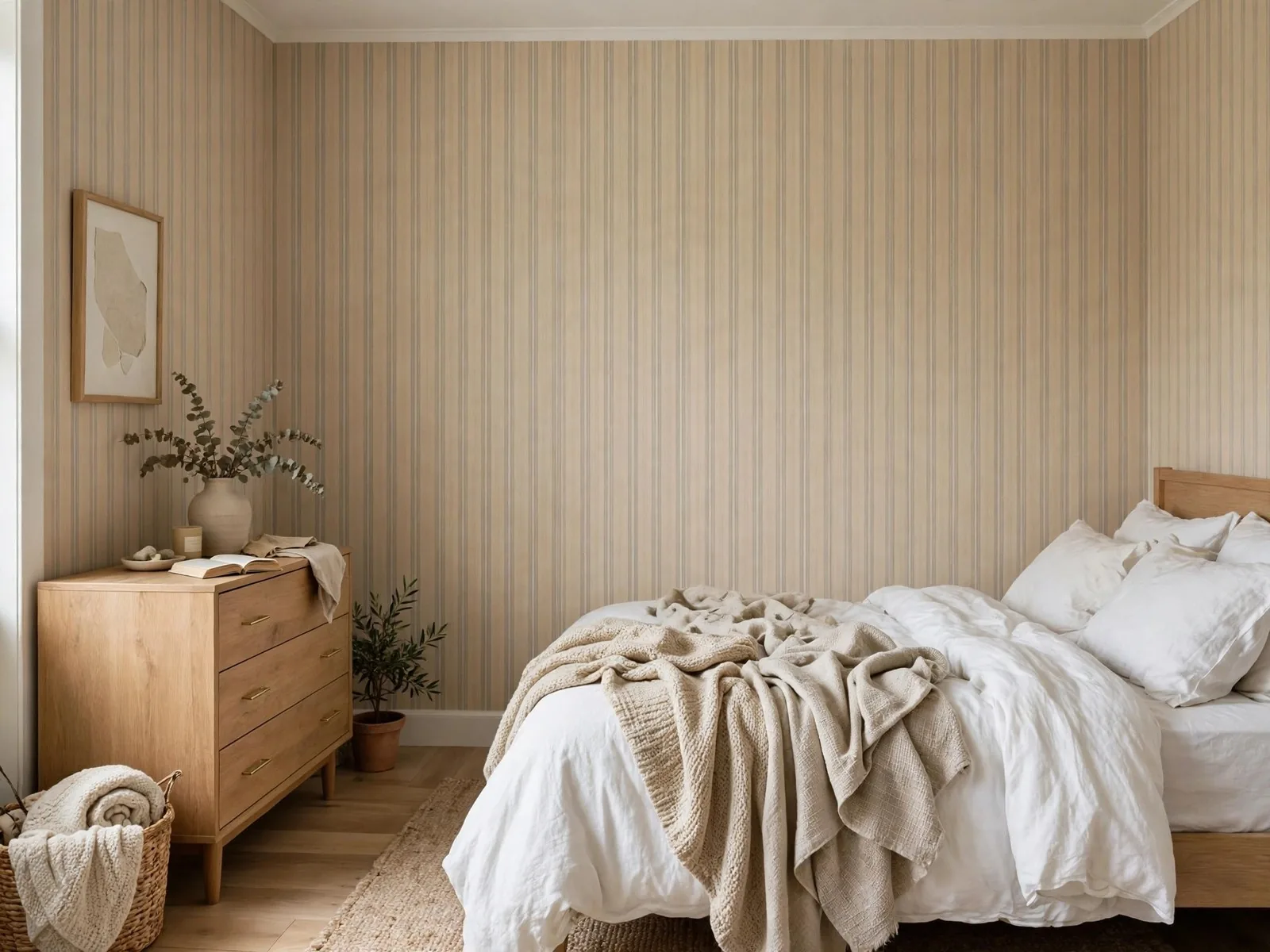
Full-room wallpaper works when the pattern is quiet: a tone-on-tone stripe, a faint grid or a texture print in two shades of the same color. The room reads wrapped rather than decorated and the bed wall stops performing solo. This is the wallpaper for bedroom walls version of the job, all four of them.
Count the room honestly first. A 12 by 12 foot room with 8 foot ceilings has about 380 square feet of wall and roughly 340 once the door and window come out. At 24 usable square feet a roll, that is about 14 rolls of peel and stick. Corners get a strip wrapped 1 inch around them rather than cut flush, which keeps edges from lifting.
Four walls multiply every seam and every mistake, so this is a second-project paper, not a first. Do the bed wall this month and live with it before you order the rest.
Budget: a full room in peel and stick runs $450 to $800 in paper alone at $35 to $55 a roll, so price the bed wall first and treat it as the audition.
4. Hang a peel and stick mural as one scene behind the bed

A mural skips the repeat entirely. The scene arrives as a set of numbered panels sized to your wall, misty hills or an oversized floral or a soft landscape. The whole picture assembles in an afternoon. Dark murals behind the bed are the dramatic end of this idea and they pair with the palette logic in our moody bedroom ideas post.
Order the mural larger than the wall. Panels are printed to a set size you choose at checkout, commonly around 150 inches wide and 100 inches tall for a feature wall. You trim the excess after hanging. Hang panels in the printed order and match the scene at eye height first, because that is the line everyone sees.
A mural cannot grow. If you move the bed to another wall or move house, the picture stays behind and it only fits the wall it was sized for. Measure twice and photograph the measurements before you order.
Measure: order a mural at least 2 inches wider and 2 inches taller than the wall and trim the excess once every panel is up.
Paste paper and texture: the committed wallpapers
5. Choose traditional paste wallpaper when the room is a keeper
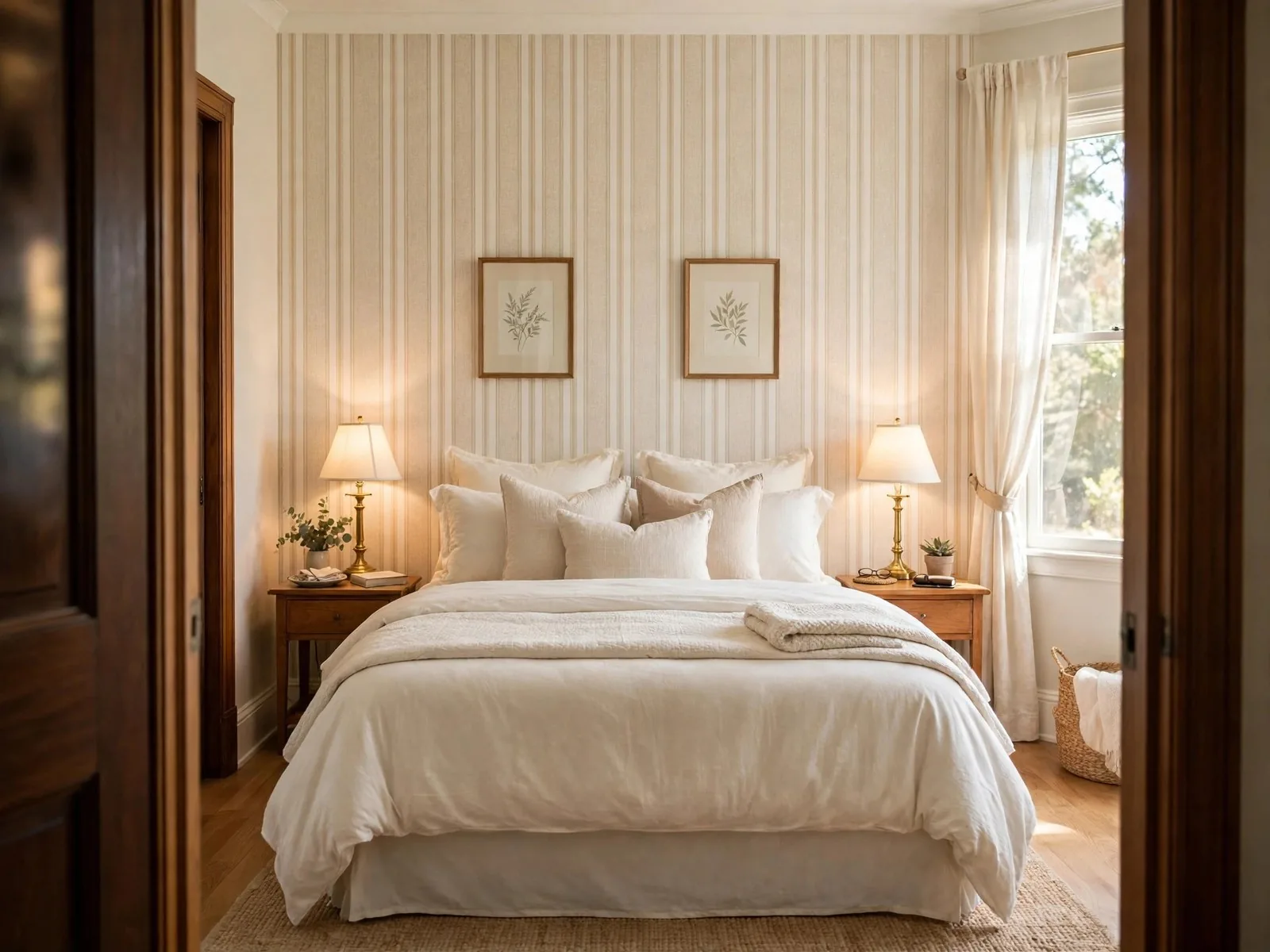
Modern paste paper is mostly non-woven, which means the paste goes on the wall and the paper goes up dry. You can slide each strip into place for a minute before it grabs, which makes matching calmer than the peel and stick rush. The bond is stronger and a well-hung non-woven paper lasts a decade or more.
The roll math changes with the format. A double roll runs about 20.5 inches by 33 feet and covers roughly 56 square feet, with 45 square feet as the safe planning number after matching. The 96 square foot bed wall takes two double rolls. Add $15 to $25 for paste and about $30 for a basic kit of smoother, knife and seam roller.
Removal is a bigger job than peel and stick even with strippable non-wovens, so this is the wrong paper for a short lease. Save it for a room you plan to keep for five years or more.
Budget: two double rolls plus paste and tools land between $150 and $400 for one wall, depending on the paper you fall for.
6. Go large-scale floral in the master bedroom
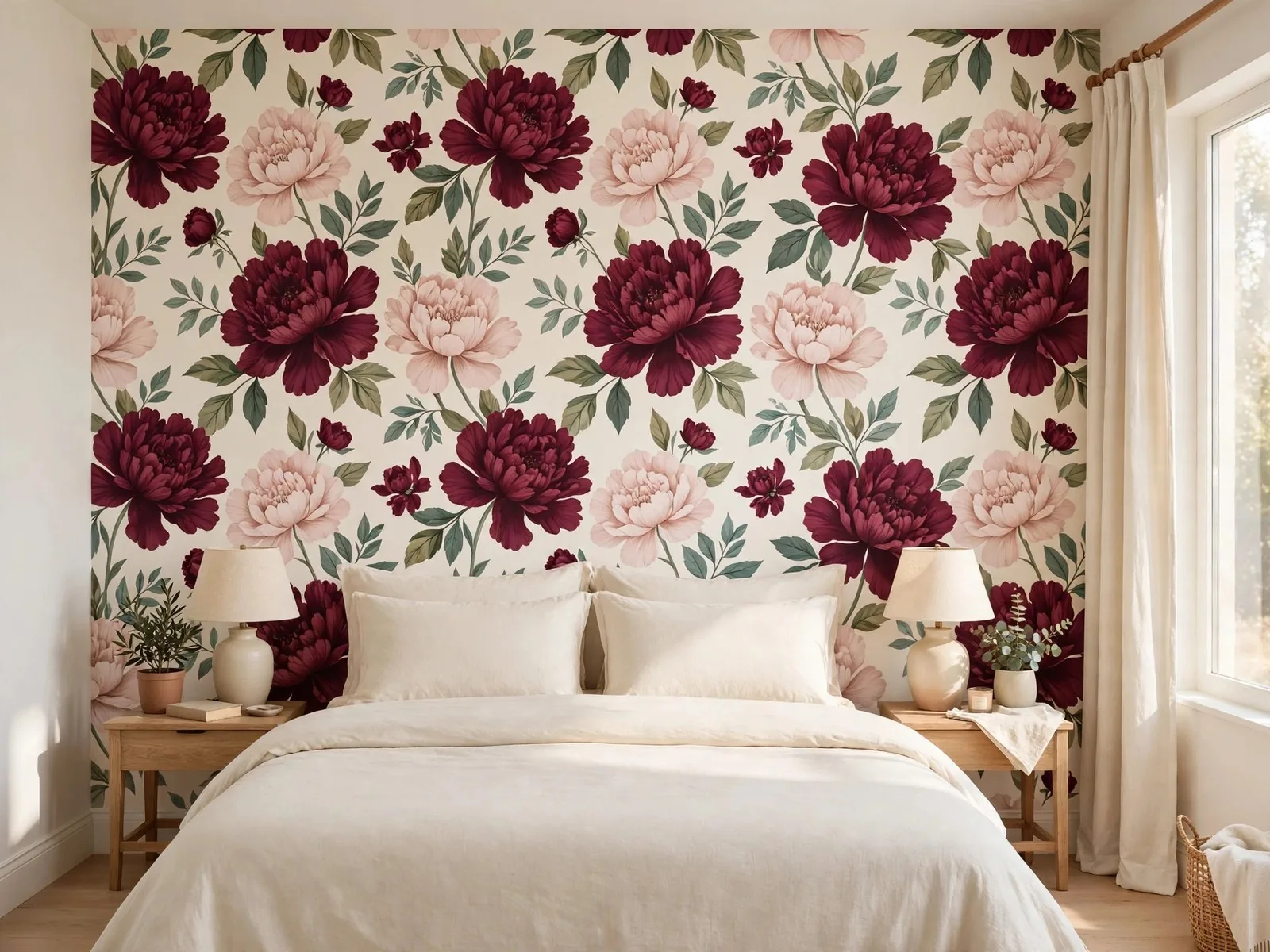
Master bedroom wallpaper earns its keep at large scale. A big floral needs wall width to show a whole motif and a king or queen bed gives it the furniture weight to balance against. This is the one room where a 24 inch repeat looks restrained instead of loud. Our master bedroom ideas post builds whole rooms around statements like this.
Keep everything else in the room quieter than the paper. Plain bedding in one of the print’s softer colors, curtains in a solid and art nowhere on the papered wall. The pattern is the art. Two lamps and a bench are plenty of supporting cast.
Large repeats are hungry. Each strip can lose up to 24 inches at the ceiling line while you match the motif, so the spare roll stops being optional at this scale.
Measure: a large-scale print needs a bed wall at least 10 feet wide so the motif shows whole behind the bed instead of cropped at both edges.
7. Use grasscloth when you want texture without a pattern
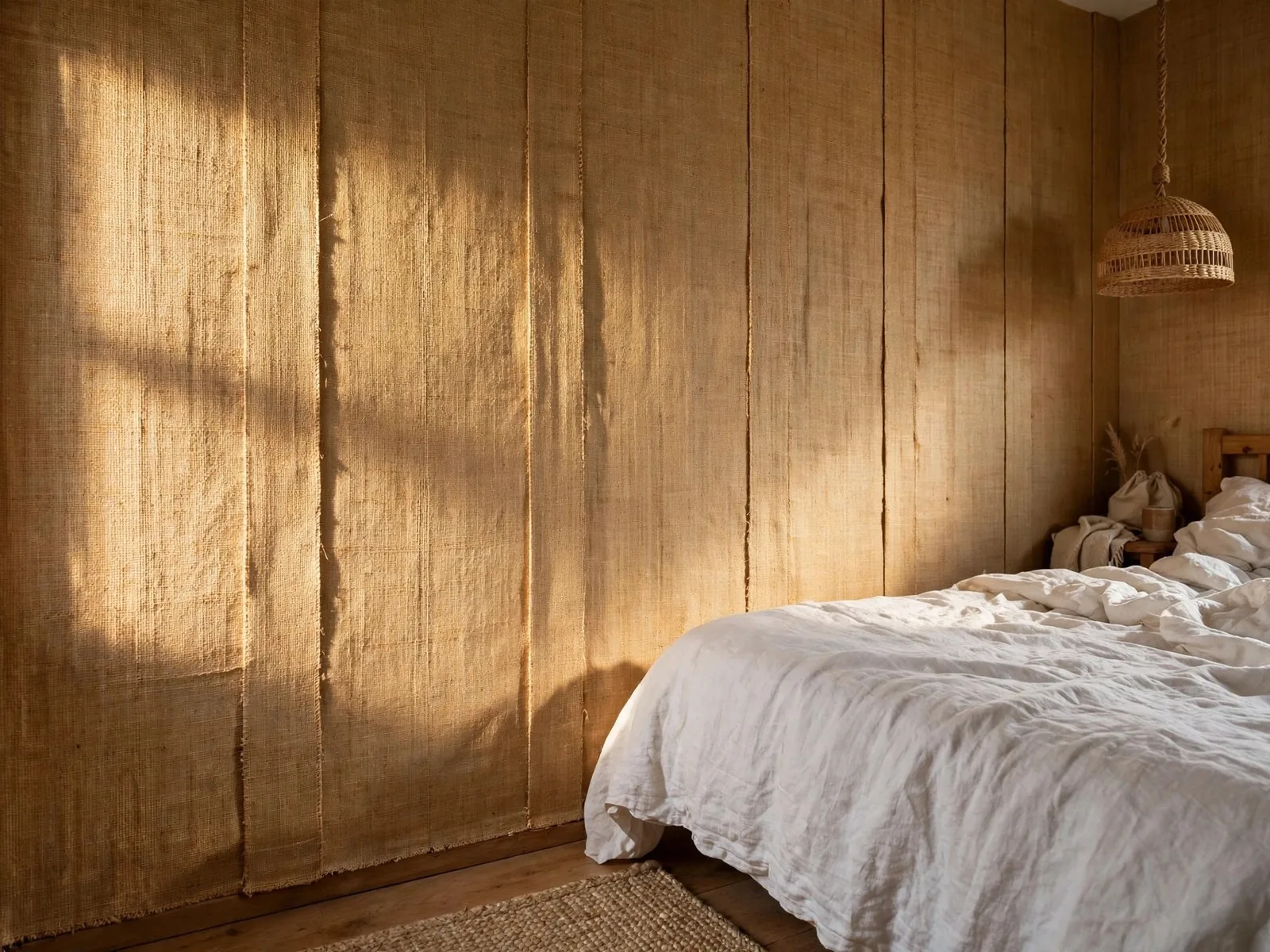
Grasscloth is woven natural fiber on a paper backing and it warms a wall the way linen warms a bed. There is no motif to match, so strips hang fast and waste drops to almost nothing. The seams stay visible and that is part of the material’s honesty; every grasscloth room shows its joins.
Real grasscloth rolls are wider than standard paper, commonly 36 inches, so a 12 foot bed wall takes four strips and usually two rolls. The vinyl grasscloth-look papers copy the texture at a third of the price and they wipe clean, which the real fiber never will.
Dye lots vary hard in natural fiber. One roll can run visibly warmer than the next, so order every roll from one lot and unroll two side by side before paste touches a wall.
Budget: real grasscloth runs $100 to $300 a roll and a bed wall usually needs two; the vinyl look-alike cuts that to $40 to $70 a roll.
8. Dose a modern geometric on the smallest wall
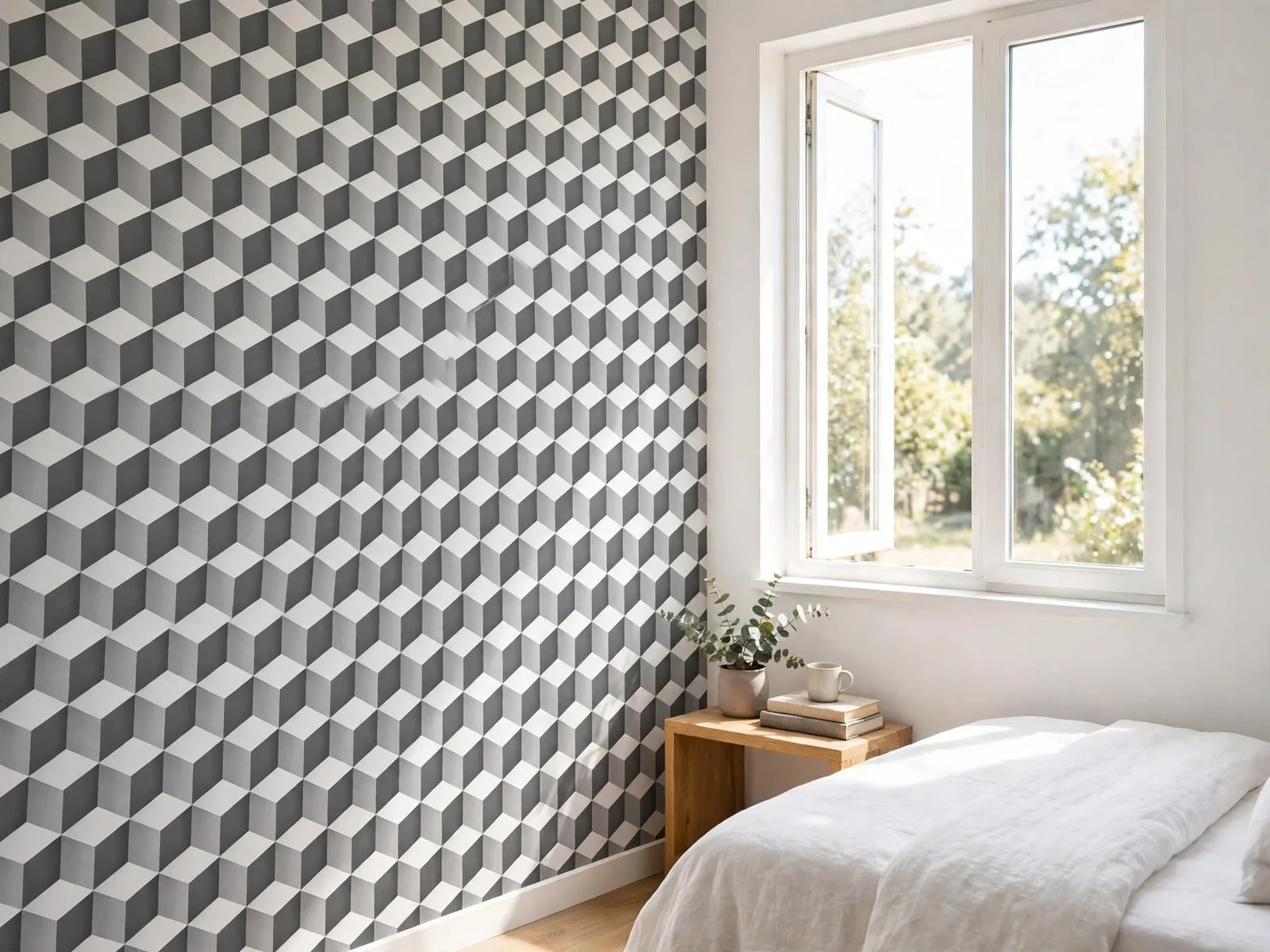
Modern bedroom wallpaper searches lean geometric: crisp grids, arches and 3D-effect cubes that read almost architectural. These prints date faster than florals, so dose them on the smallest wall in the room, the short wall beside a window or the wall the door opens onto. The room gets the edge and your future self gets a smaller job when tastes move on.
Judge the print by the repeat count. The motif should repeat at least three times across the wall’s width to read as a pattern. Fewer repeats than that and the wall becomes one big picture, which is a mural decision and belongs in idea 4.
Geometric patterns show crooked hanging mercilessly. A laser level or a plumb line on the first strip is not optional here; half an inch of drift shouts by the third strip.
Measure: count the motif across the sample wall before you buy; three repeats or more reads as pattern and fewer reads as poster.
The renter-safe versions of everything above
Every treatment above has a version that leaves the wall exactly as you found it. These four are the ones that protect the deposit.
9. Frame wallpaper panels and hang them like art
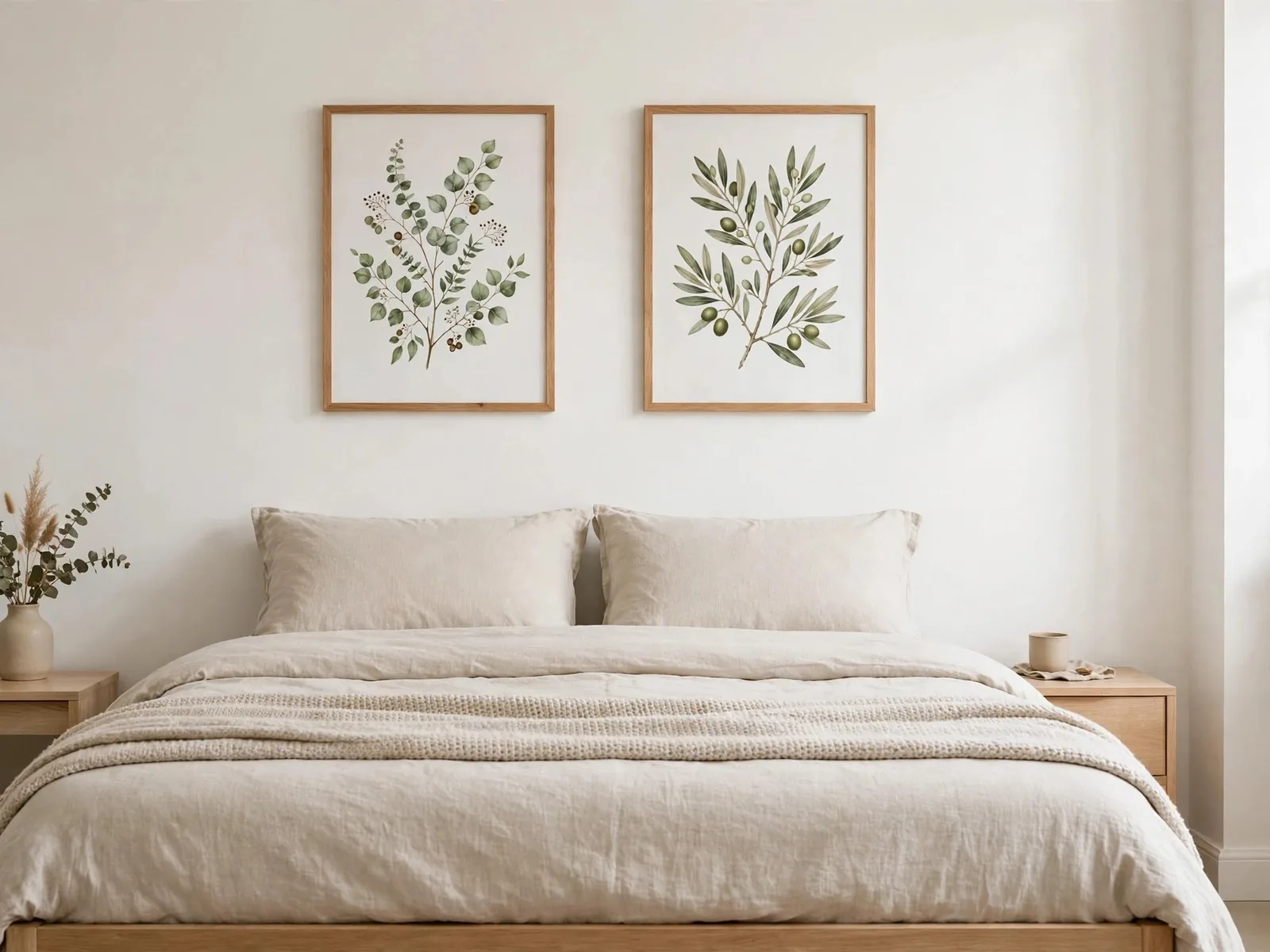
Framed wallpaper panels are a Pinterest staple for this topic and they solve the renter problem completely: the paper never touches your wall paint. Cut the paper to fit inside large frames or wrap it around foam board and add slim trim strips over the edges for a paneled look. Hang the set above the bed like the art it is pretending to be.
Size the set to the bed, following the scale rule on this page. Two panels at 30 inches wide span a 60 inch queen bed with a small gap between them. Three narrower panels suit a king. Picture hooks carry the weight and even the biggest frame needs only one small nail per panel.
Foam board warps in humid rooms if you wrap it tight. Leave the paper a fraction loose or choose real frames with backing board for a bathroom-adjacent bedroom.
Renter-friendly: completely. The paper hangs from picture hooks, the landlord’s paint stays untouched and the panels move house with you.
10. Paper one column behind the bed as a headboard backdrop
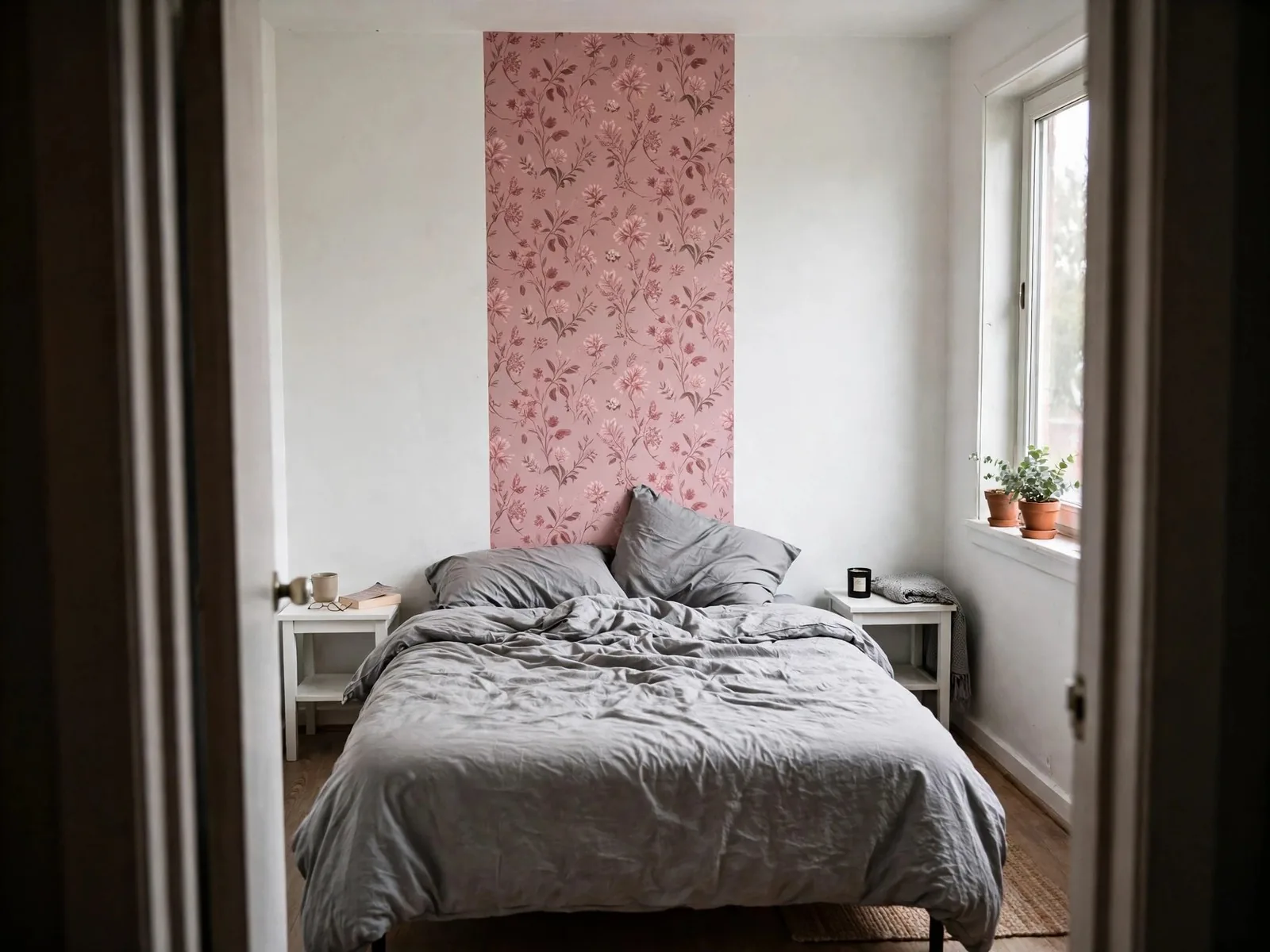
Run peel and stick in a single vertical band, floor to ceiling, the width of the bed plus a few inches. The band reads as an oversized fabric headboard and it gives a plain rental bedroom a focal point for two rolls or less. It is the budget form of the mural idea and it works with the real headboard shapes in our headboard ideas post if you later add one.
A queen bed is 60 inches wide, so a 66 inch band takes three strips of standard 20.5 inch paper with the outer strips trimmed. Plumb the first edge against a level line, because a crooked band next to a straight bed frame advertises itself daily.
The band’s edges are exposed, so this version wants a smooth wall and a gentle hand at removal time. Heat each strip for 30 seconds with a hair dryer as you peel and the adhesive lets go cleanly.
Budget: two rolls at $35 to $55 cover a queen-width column, which makes this the $70 to $110 version of the mural.
11. Paper the inside of an alcove or the back of a bookcase
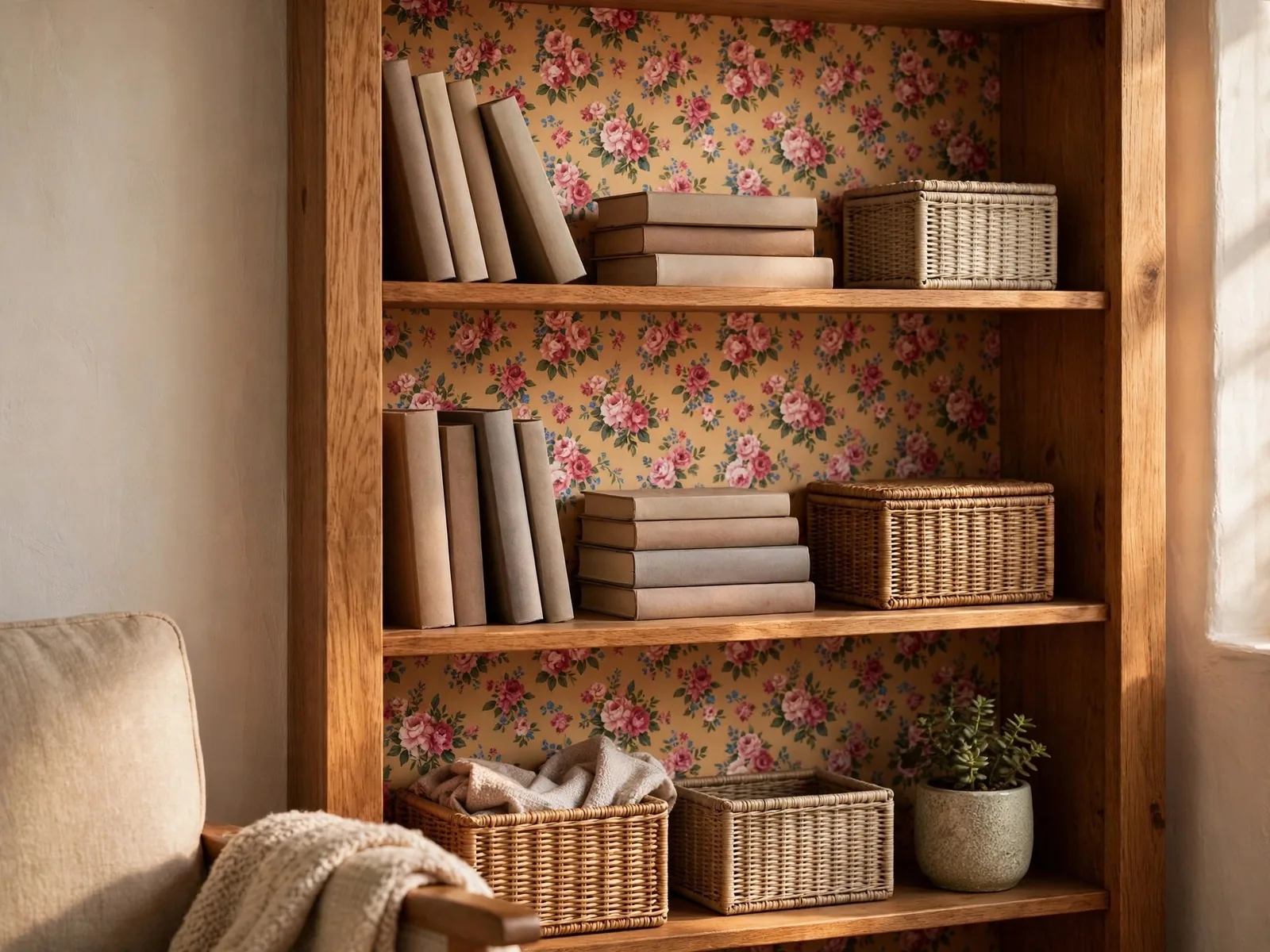
Small areas carry big patterns safely. The inside wall of a closet alcove, a dressing nook or the backs of an open bookcase take a bold paper without asking the whole room to live with it. It is also the honest use for leftover rolls from a bigger job, the ones too short for a wall and too pretty to bin. Dorm rooms run on this logic, as our dorm room ideas post shows.
A standard bookcase back is about 10 to 15 square feet. One peel and stick roll covers two of them with paper to spare. Paper the back panel before you load the shelves and let books and boxes crop the pattern into glimpses.
Adhesive inside furniture is close to permanent on raw particleboard. Paper the back of a bookcase you own and plan to keep, not one you hope to resell as new.
Renter-friendly: paper inside your own furniture is never a lease question; one roll covers the backs of two standard bookcases.
12. Patch-test one square foot before any roll opens
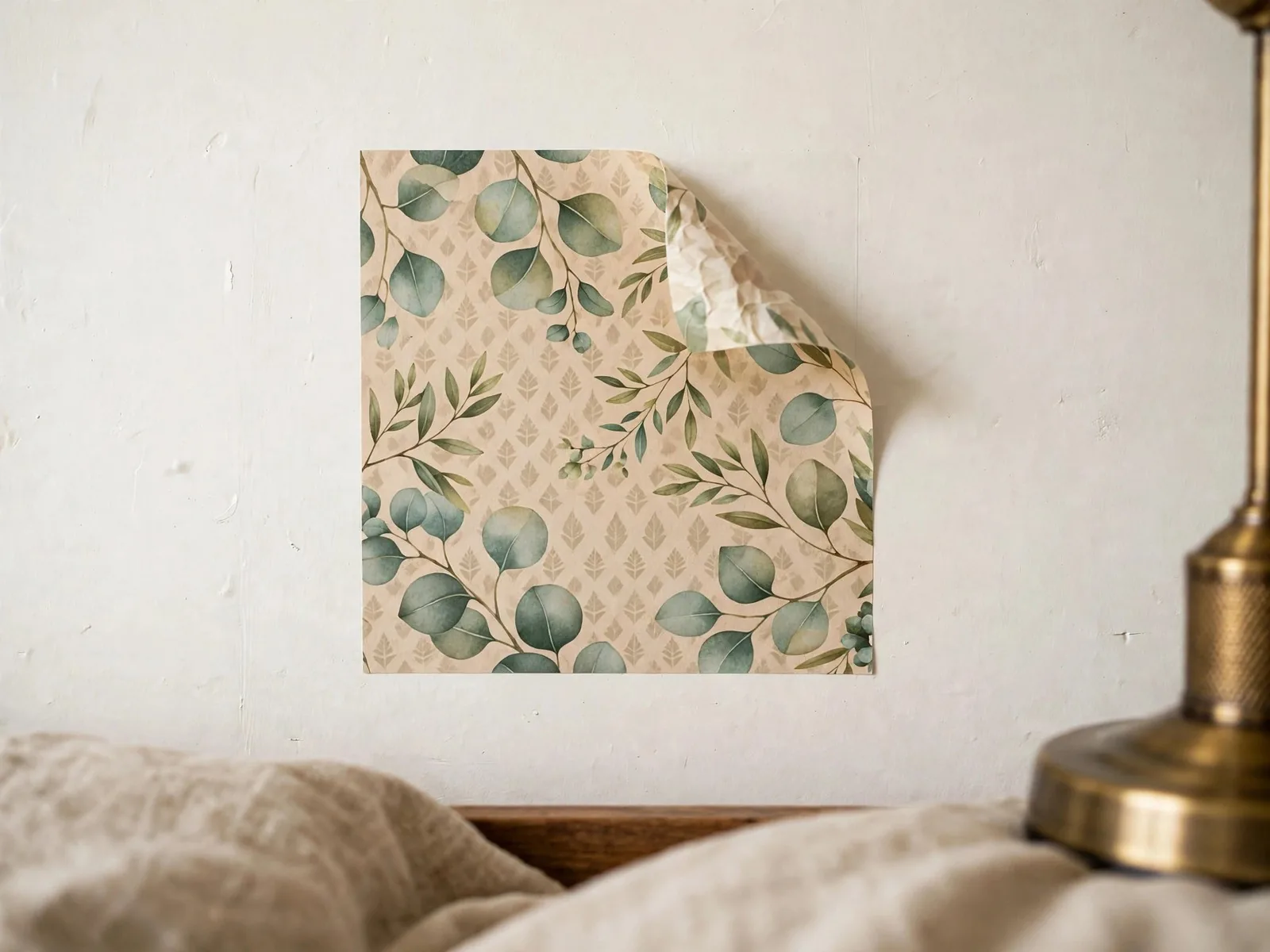
This is the idea that answers the question under every peel and stick listing: does it damage paint? On sound paint that cured for at least four weeks, good peel and stick comes off clean. On fresh paint, chalky flat paint or a wall with lifting edges, it can pull paint away in sheets. The difference is your wall, not the brand.
So test the actual wall. Stick a 12 by 12 inch piece behind the bed where a failure hides, leave it 48 hours at minimum and a week if you can stand the wait. Peel it slowly at a low angle. Clean release with no paint on the backing means the wall is cleared for the full job.
A patch test behind the bed tests the least-sunned paint in the room. If the room has one wall of different paint or a patched repair, test there too; repairs are where adhesive misbehaves.
Renter-friendly: the patch test is the deposit saver. Twelve inches of paper and 48 hours tells you what a whole wall would have cost you.
Styling the finished wall
13. Size the pattern to the bed, not to the room
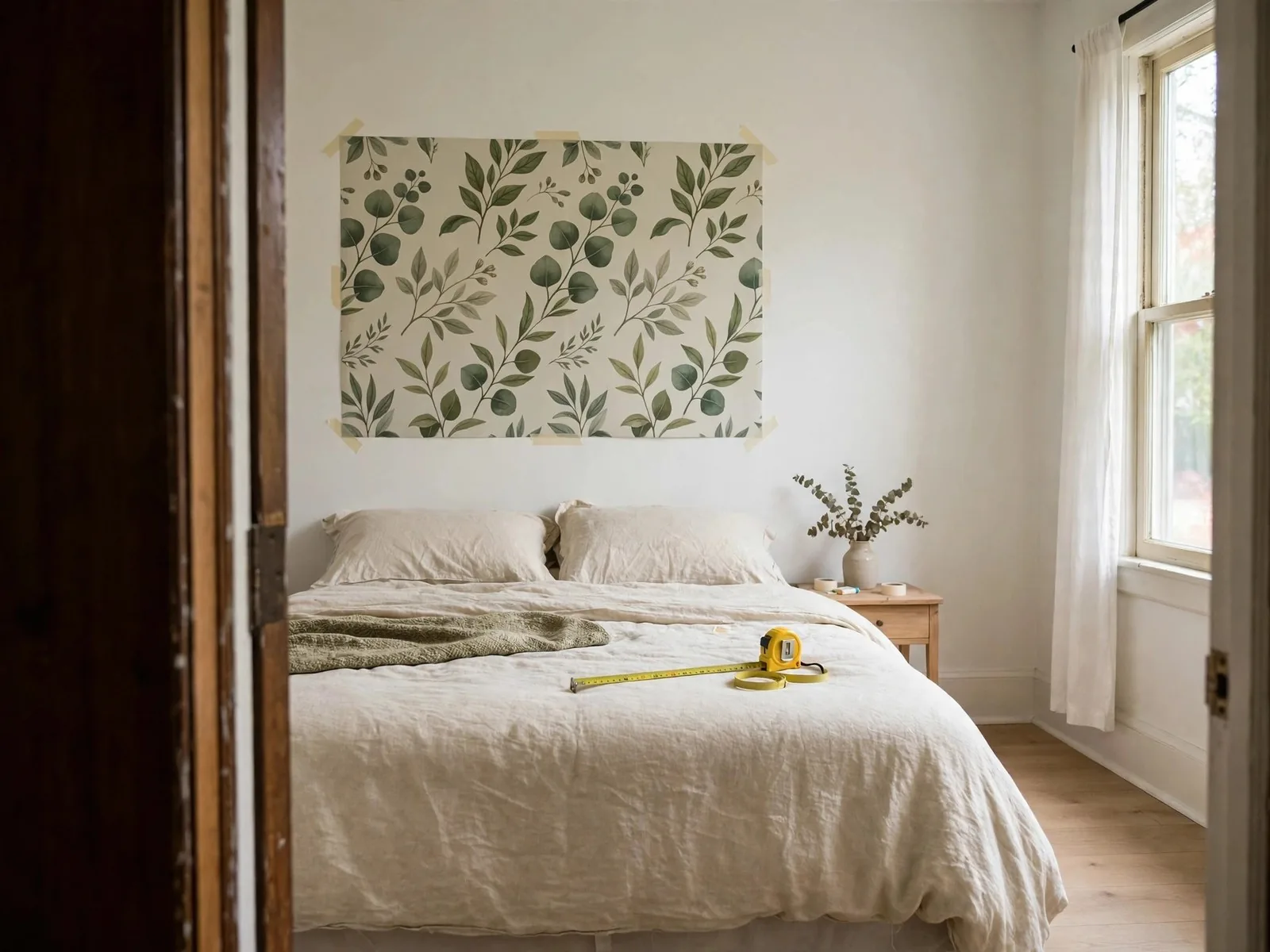
The scale rule on this page is simple: paper and panels get sized to the bed width first. A queen bed is 60 inches wide and a king is 76. The pattern behind them has to hold its own against that much furniture. Tiny prints behind a king bed dissolve into visual noise. Huge motifs behind a twin bed crop into fragments.
Use the sample honestly. Tape the largest sample you can get at the center of the bed wall, dress the bed and step back to the doorway, about ten feet in most bedrooms. If the pattern disappears at that distance it is too small for the wall. If one motif fills your whole view it belongs on a smaller dose, like the column in idea 10.
Online photos lie about scale more than about color. A print that looked delicate on a screen arrives with 9 inch flowers. The sample is the only truth and it costs less than a return shipment.
Measure: if the pattern vanishes from the doorway it is too small for that wall; if one motif fills the frame it is too big for a full wall.
14. Hang art over paper with the 57 inch rule
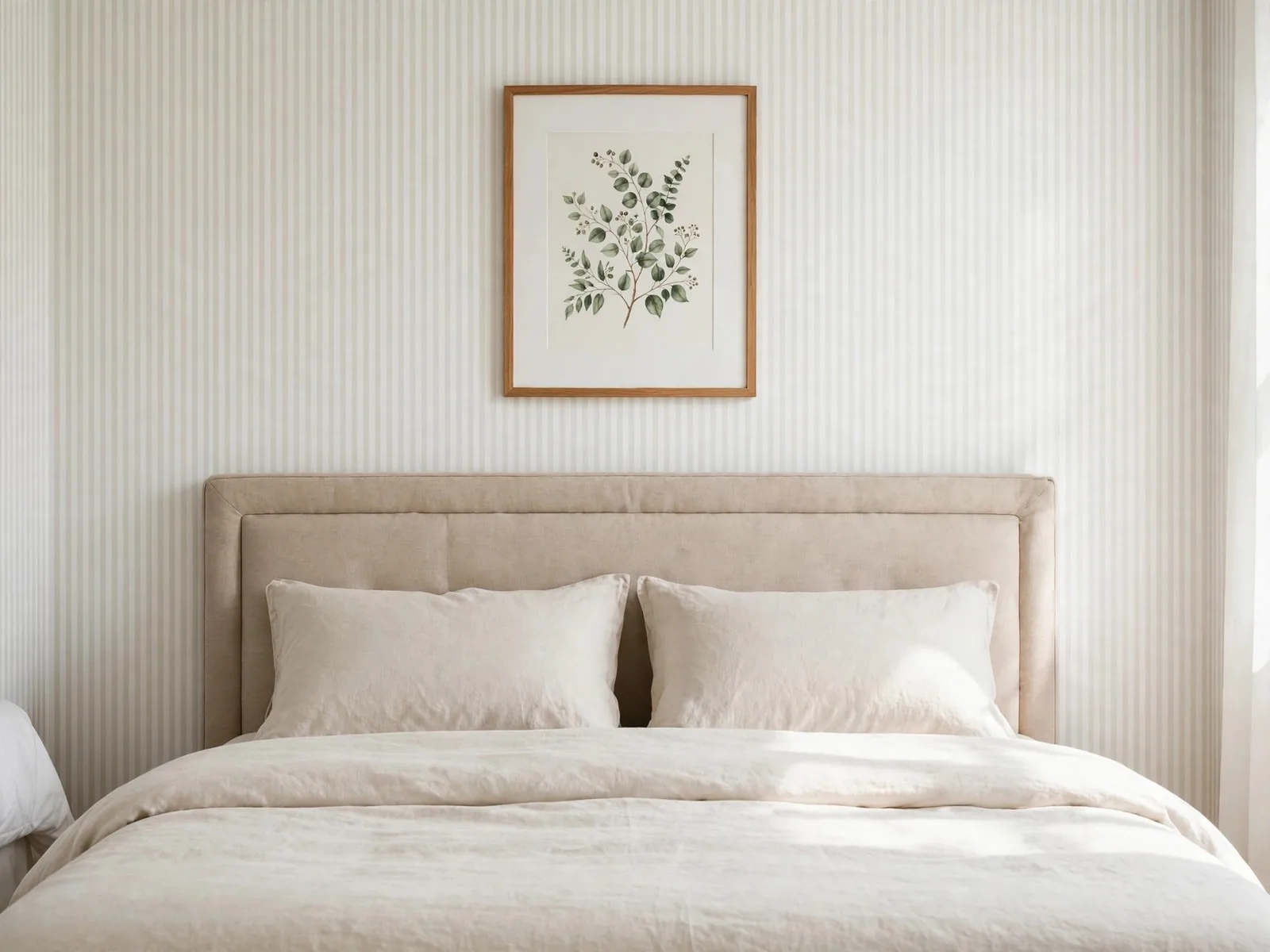
Papered walls can still carry art, on the quiet walls or even over a subtle print. The rule for hung pieces: start with the center of the piece at about 57 inches from the floor, which is average eye height and the height galleries use. Above a bed, adjust so the frame clears the top of the headboard by 6 to 10 inches.
Fixing over paper wants the smallest hole that holds. One picture nail beats a fistful of adhesive strips on textured or foiled paper. The hole hides behind the frame if the art ever moves. Heavy pieces over paste paper need a real anchor into the stud, paper or no paper.
Do not hang art over a bold pattern and expect either to win. Over a loud print, art needs a wide mat and a plain frame to carve out its own quiet.
Measure: mark 57 inches from the floor for the center of the piece and keep 6 to 10 inches between the headboard top and the frame edge.
15. Pull the bedding colors out of the paper and leave the other walls quiet
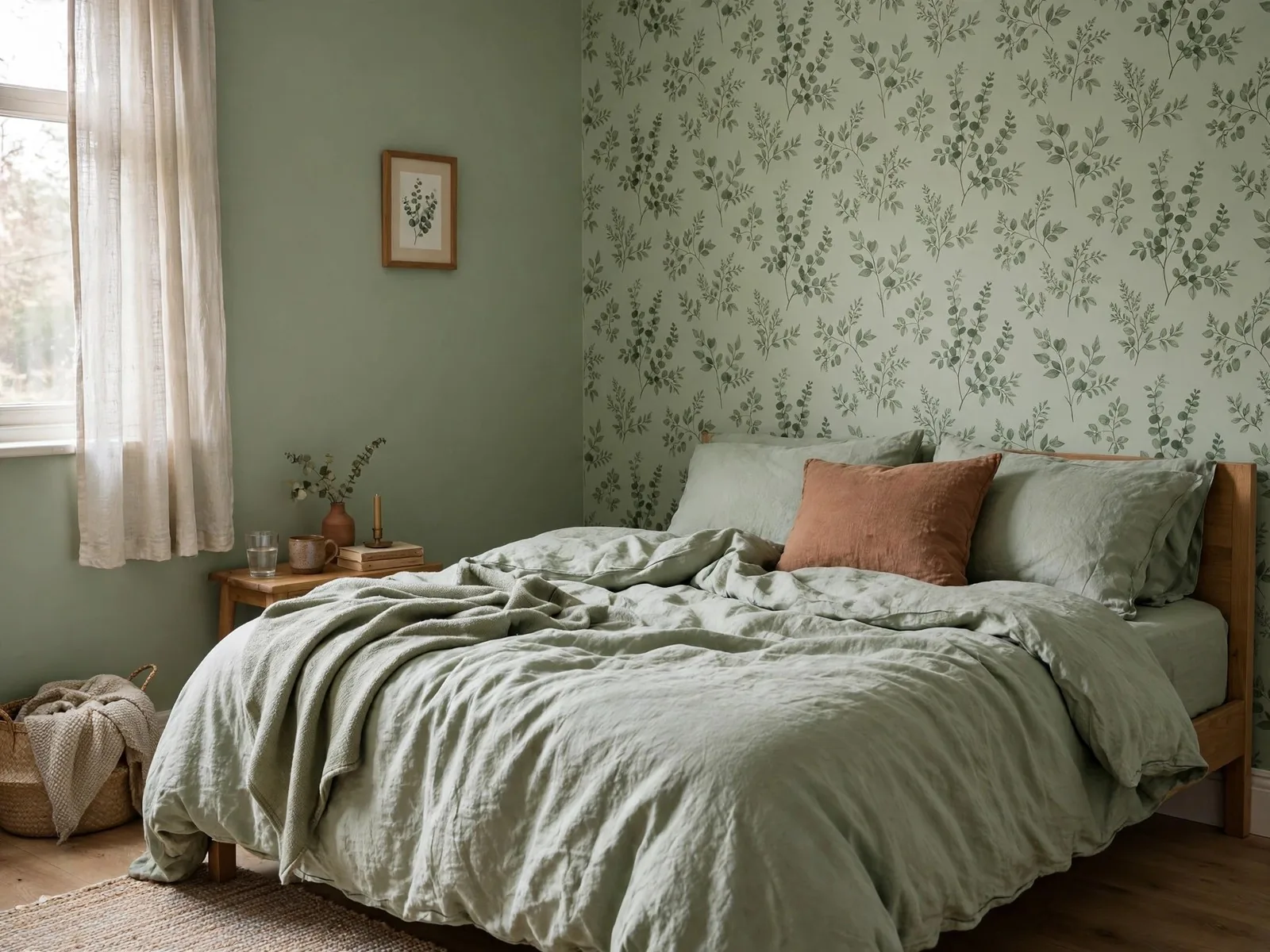
The wall position rule finishes the room: the bed wall carries the pattern and the other three walls stay quiet. Paint them the paper’s background color or a shade softer, which makes the room feel wrapped rather than interrupted. Our bedroom color ideas post shows how to pull a paint color out of a print you already own.
Then repeat two colors from the print at lower strength in the bedding and curtains. A sage leaf in the paper becomes a washed sage duvet. A clay flower becomes one cushion, not five. The paper stays the loudest thing in the room and everything else agrees with it quietly.
Matching the paper exactly is the trap. Store-bought bedding in the print’s exact pink reads like a themed set. One shade softer or deeper always looks chosen rather than matched.
Budget: $0 in extra paper. One gallon of paint matched to the paper’s ground color covers the quiet walls of an average bedroom for $40 to $60.
16. Light the paper so its texture shows

Texture papers earn their money under raking light. A lamp or sconce close to the wall throws light across grasscloth and embossed prints at an angle. Every fiber casts a tiny shadow. The flat ceiling light in most bedrooms does the opposite and irons the texture out of the room. The bulb and shade rules live in our bedroom lighting ideas post.
Plug-in sconces are the easy version: one screw or a rated adhesive strip per lamp, shade center at about 60 inches from the floor and the cord run down inside a paintable cover. Place one each side of the bed and the papered wall glows at exactly the hours you are in the room to see it.
Raking light is honest about seams too. A badly butted seam shows under sconce light that hid under ceiling light, so check your seams at lamp height before you call the wall finished.
Needs drilling: hardwired sconces do. Plug-in versions hang from one screw each and the stick-on versions need no hole at all.
Bedroom Wallpaper on a budget
The budget order of operations starts with samples: two patterns at $3 to $8 each, patch-tested, before any roll is ordered. Then one wall only, the bed wall, in a small-repeat peel and stick, which is the cheapest combination of paper and forgiveness on this page. Our bedroom makeover ideas post uses the same one-wall-first discipline for whole rooms.
Sale rolls and remnants finish the job cheaply. A single roll at a clearance price covers a bookcase back or a headboard column from ideas 10 and 11. One kept spare strip repairs a torn corner years later. The one place never to save money is mixing dye lots to stretch a discount; a mismatched seam costs more to stare at than the extra roll cost to buy.
Mistakes that make it fall flat
- Papering all four walls in a loud pattern. The room shrinks visually and the pattern you loved in April shouts by August. One wall carries a bold print happily; four walls need the quiet kind from idea 3.
- Hanging peel and stick on fresh paint. Paint feels dry in days but cures for about four weeks and paper on uncured paint bonds to the paint instead of the wall. Removal then takes the paint with it. Wait the full cure time; it is the cheapest patience in decorating.
- Ordering to the exact square foot. The repeat eats paper at every strip and a mid-wall shortage means a new order and a new dye lot. Order the spare roll and return it unopened if the wall behaves.
- Buying rolls from mixed dye lots. The same print in two lots can differ by half a shade and the seam between lots shows in daylight. Check the lot number on every label before the first strip goes up.
- Skipping the plumb line. Walls and ceilings are rarely true and paper hung by eye drifts a little per strip. By the fourth strip the pattern leans. Snap a chalk line for strip one and re-check every third strip.
- Papering heavy texture with peel and stick. Bumps telegraph through thin paper and the adhesive touches only the high spots, so seams lift within a season. Heavy texture needs paste paper over a lining paper instead.
Questions people ask about this
Can renters do an accent wall? Yes, with the right fixing. Peel and stick on smooth cured paint, framed panels on picture hooks and paper inside your own furniture all leave the wall as you found it. The firm rules are a lease check first, a 12 inch patch test for 48 hours and no paper on paint younger than four weeks.
What is the cheapest way to do an accent wall? In wallpaper, the cheapest full result is one peel and stick column the width of the bed: two rolls or fewer and $70 to $110 all in. Framed panels from a single roll run about the same and hang like art. Paint alone costs less, under $75 a wall; that method lives on our accent wall page.
How high should art hang above a bed? Start with the center of the piece about 57 inches from the floor, gallery height. Then check the gap: leave 6 to 10 inches between the top of the headboard and the bottom of the frame. Tall headboards push the art up a little; low ones let the 57 inch rule stand as measured.
The bottom line
Bedroom wallpaper rewards the reader who measures first: one wall, the right fixing and a pattern sized to the bed will change a room more in a weekend than a year of new cushions. This week, order two samples of the pattern you keep coming back to, stick one square foot of each behind the bed and live with them until Sunday. The wall will tell you which one it wants.