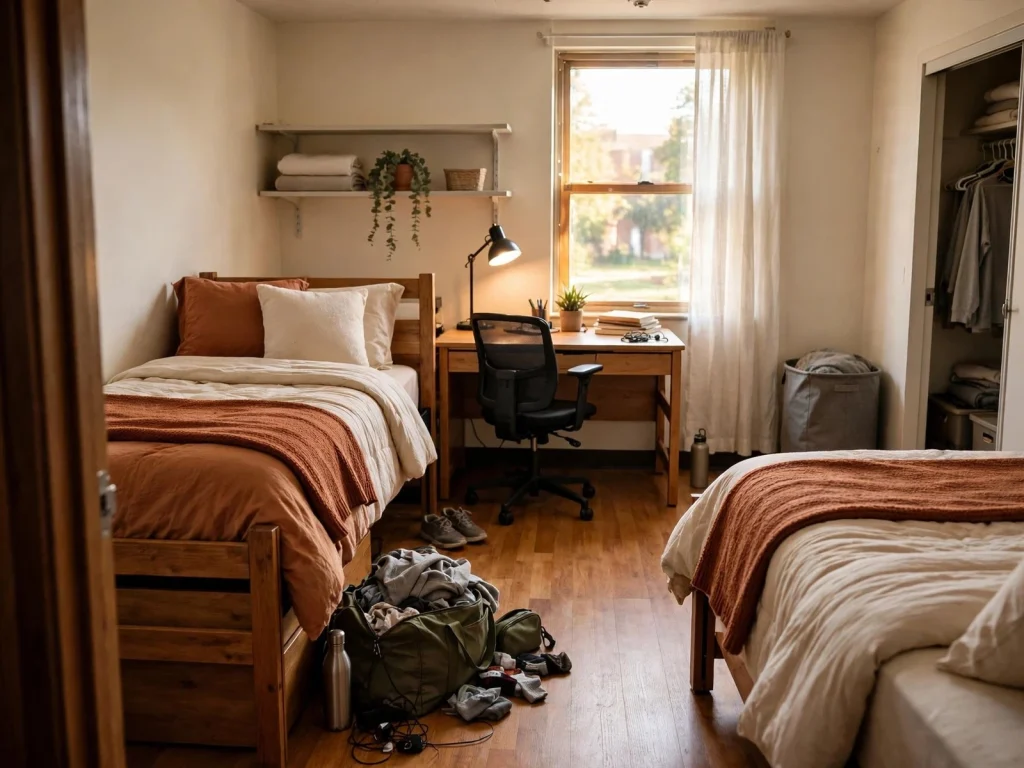
You want the storybook bedroom. Deep color on the walls, a ceiling that hints at stars and furniture with curves instead of corners. Then the search results split in two: whimsical rooms dressed for a seven year old and dark rooms with all the joy ironed out of them. Neither is the room in your head and the gap between them is exactly where this style lives.
These dark whimsical bedroom ideas draw the line in numbers. One hero motif per room and no more than two small repeats of it. Exactly one patterned surface. One metallic accent. Deep bases chosen from five named shades. The guardrails are what keep the room enchanted for a grown up, because whimsy for adults comes from motif, curve and light rather than from toys. This page is about story; if what you want is velvet, candlelight and romance between people, that mood has its own home in our dark romantic bedroom ideas post.
Before you start: measure, budget, rules
Take the room’s light first. Note the window direction and the room’s size in square feet, because deep shades in a small or north-facing room need the testing rule from idea 3 before any paint is bought. Then inventory your shapes: count the curved pieces you already own and the boxy ones, since idea 12 asks for at least two curves against the boxes.
The rough cost notes on this page run in a kind order. The palette and the motif rules can be carried by paint, bedding and one string of lights. The expensive version of this style is furniture and most rooms need at most one curved piece bought new. Every idea states its layer so the cheap moves come first.
Renters, this style is friendlier than it looks. The motif can live on bedding instead of wallpaper, the canopy can be a draped outline that hangs from removable hooks and the deep color can arrive as textiles over pale walls. Where an idea assumes paint, the textile version is named inside it.
The storybook palette
1. Choose one deep base from the five shades
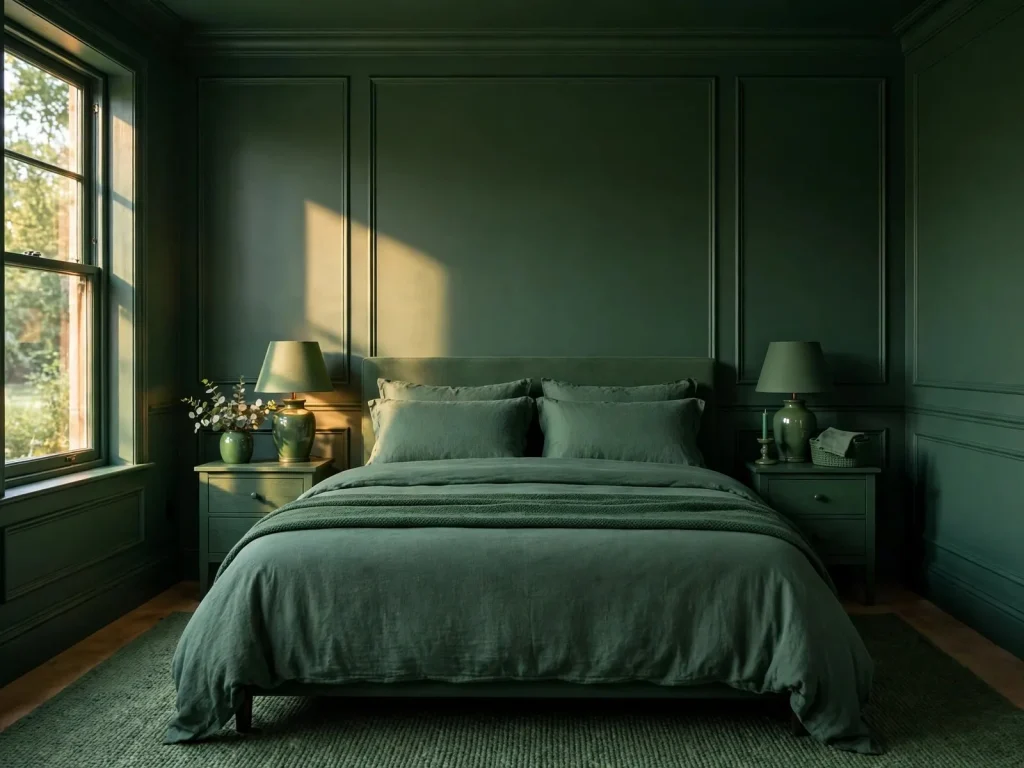
Every dark whimsical bedroom starts from the same short list: deep teal, forest green, plum, navy and charcoal. These five carry the style because each one reads as night, forest or deep water rather than as a dark version of a daytime color. Pick one as the base and let it own the walls or the largest textile surface in the room.
Choosing one is the discipline. Two deep bases split the room into rival moods and the storybook feeling dissolves into ordinary dark decor. If you love teal and plum equally, the base takes the walls and the runner-up is allowed one appearance in the motif, at the small repeat scale set by idea 6.
The catch is daylight. A base that reads as enchanted at dusk can read as flat black at noon if it goes too deep for the room’s windows. Test per idea 3 before the gallons. For the broader family of deep rooms and their shade logic, our moody bedroom ideas post covers the palette ground this page builds on.
Measure: 1 base shade from deep teal, forest green, plum, navy and charcoal, owning the walls or the largest textile surface.
2. Add exactly one metallic accent
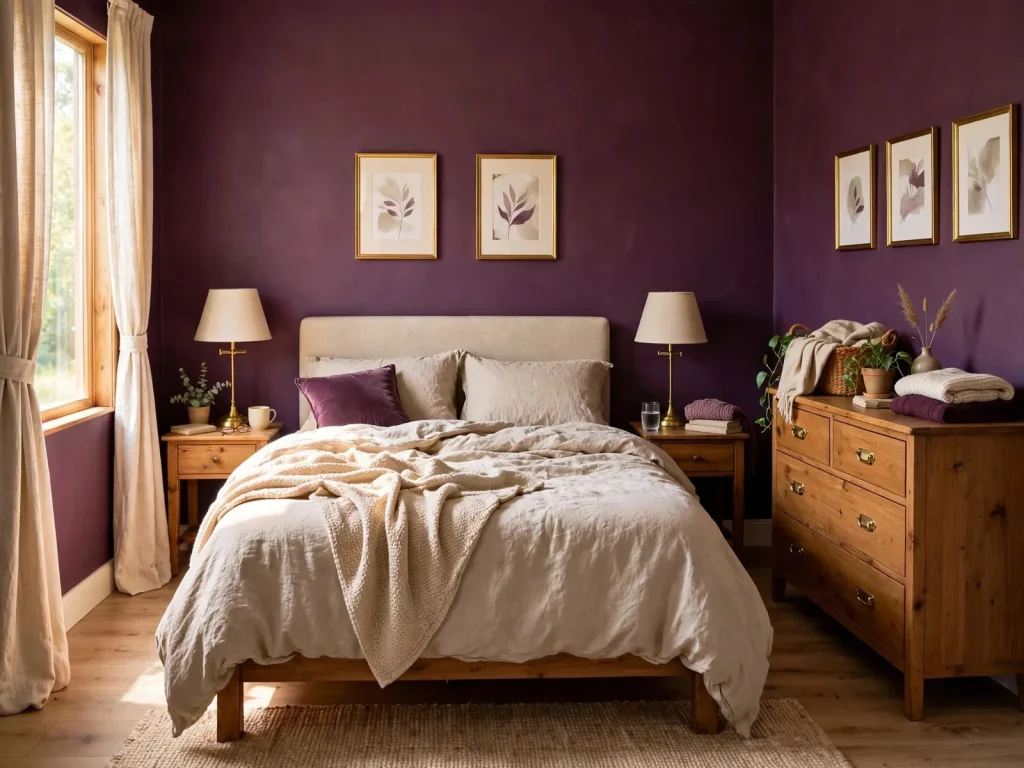
Metal is the firefly light of this palette: a little of it reads as magic and a lot of it reads as a shop display. Choose one metallic only, from brass, copper and antique gold and let it repeat in small touches: lamp bases, frame edges, drawer pulls and the hooks of the canopy outline. One metal, repeated, is a signature. Three metals is a hardware aisle.
Warm metals suit the five bases because they glow against deep color the way lamplight does. Chrome and bright nickel belong to cooler styles and pull the room toward modern, which fights the storybook from the inside.
The catch is finish mixing inside one metal. Polished brass and antique brass are close enough to clash and far enough to look like a mistake. Pick one finish within your metal and hold it across the room, replacing or setting aside the pieces that miss.
Measure: 1 metallic accent only, brass, copper or antique gold, in 1 finish, repeated on small pieces across the room.
3. Test the deep shade after dark before you commit
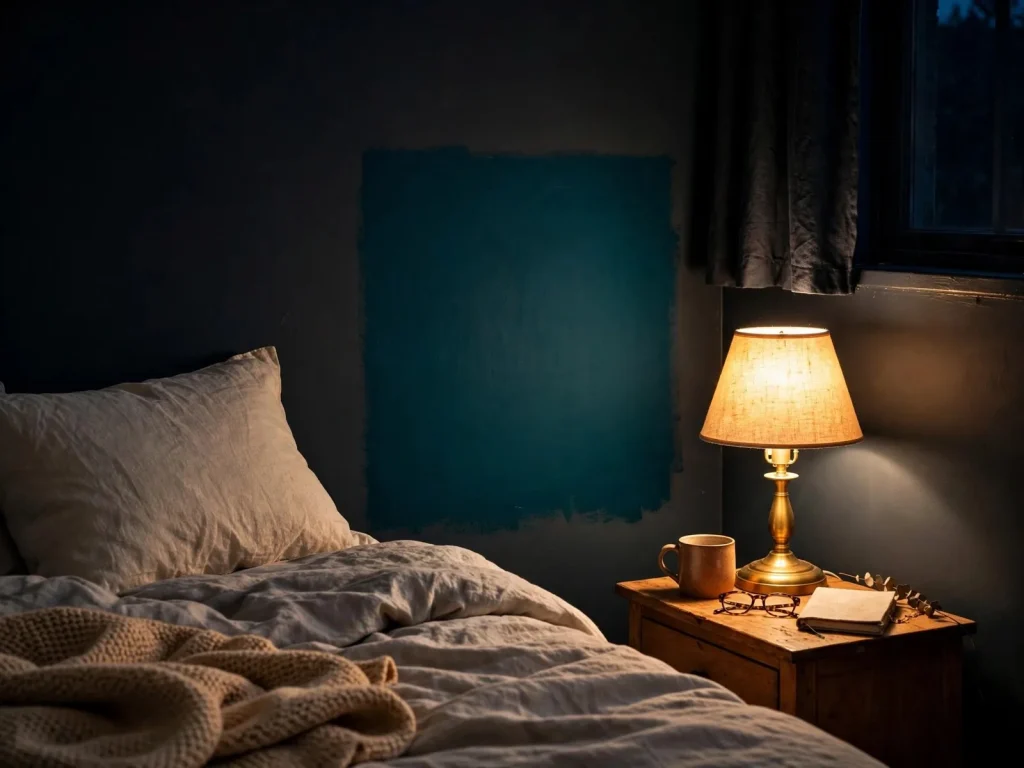
Deep shades are two-faced. The teal that glows like deep water at eight in the evening can sit grey and tired at breakfast and plum can slide toward brown under the wrong bulbs. Paint a large swatch, at least a foot square, on the wall that gets the least light and live with it through one full day and one full evening.
Read the swatch at the bed’s distance, not at arm’s length. You will experience this color from the pillow and from the doorway and both views are longer than the one at the paint counter. If the shade dies in daylight, step it one notch lighter within the same family rather than abandoning the family entirely.
The catch is bulb temperature, which is half of the evening read. Judge the swatch under the bulbs the room will actually use, at 2700K or warmer per idea 13. A swatch approved under a cool shop-style bulb is a swatch approved for a different room.
Measure: a swatch at least 12 by 12 inches on the darkest wall, judged once in daylight and once under the room’s own warm lamplight.
4. Let charcoal carry the furniture so color can star
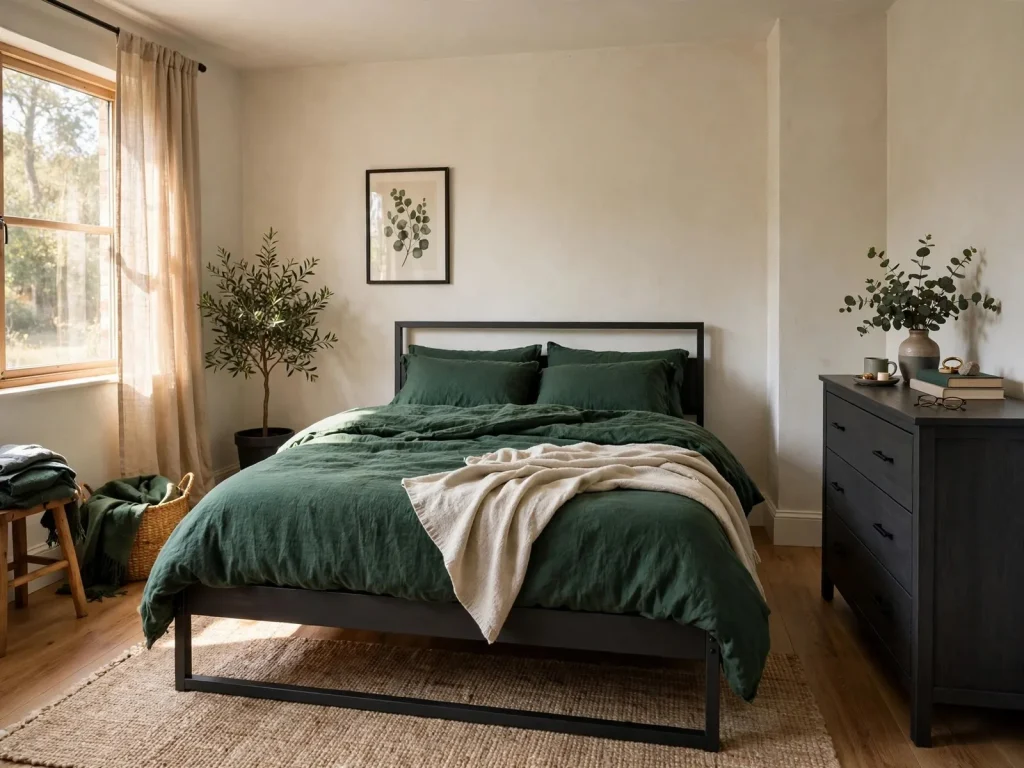
Charcoal is the base that behaves like a stage. Where the other four shades ask for commitment, charcoal lets the bed frame, the dresser and the bedding run near-neutral while the chosen color appears in the motif and one or two deep textiles. It is the right base when the room must stay flexible or when a landlord owns the walls.
Build it in layers of value. Charcoal on the largest pieces, a mid grey or the chosen color at textile level and the metallic at the smallest scale. The eye reads depth without a single saturated wall and the storybook note arrives through motif and light instead of paint.
The catch is flatness. Charcoal on charcoal with no value steps becomes a cave with furniture in it. Keep at least three value levels in the room, deepest at the frame, mid at the bedding and lightest at one pale textile, even in the darkest version of this style.
Measure: at least 3 value levels in the room, with charcoal carrying the largest pieces and the chosen color reserved for motif and textiles.
Motifs that stay grown up
5. Pick one hero motif and let it lead
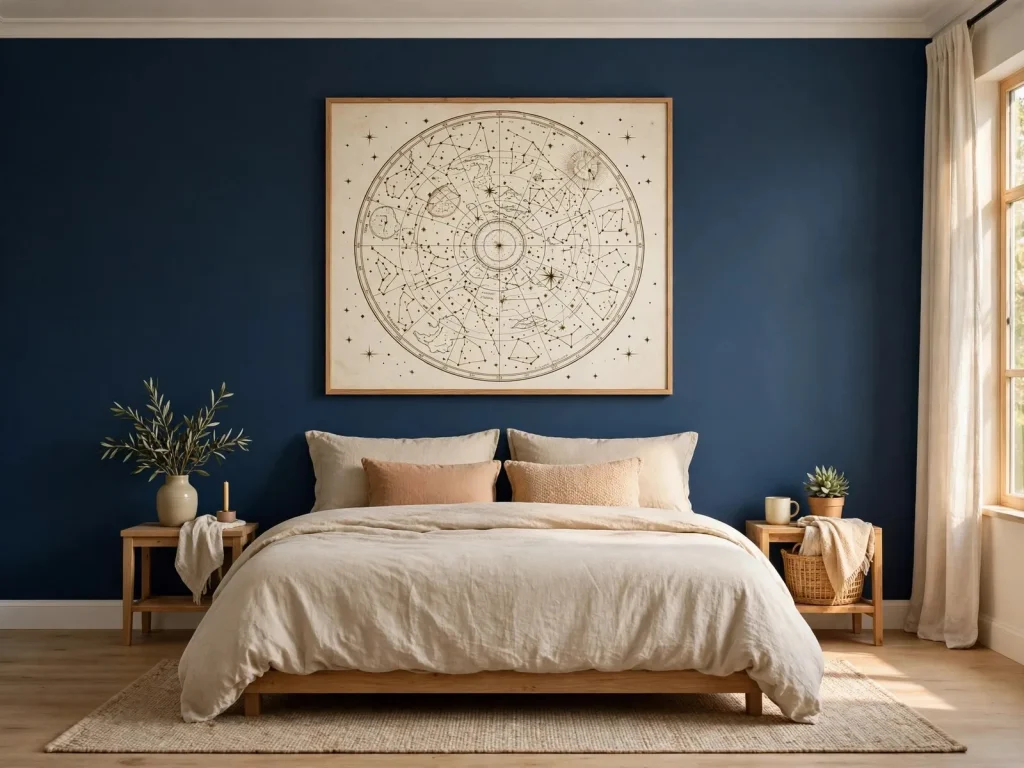
The motif is the story the room tells and a room can only tell one at a time. Choose a single hero motif from the grown-up set: stars and moons, woodland, arches or celestial maps. It gets the room’s best position, the wall above the bed or the bedding itself, at the largest scale the room holds.
Each option steers the room differently. Stars and moons lean celestial and pair with navy and plum. Woodland leans forest and pairs with green and teal. Arches are architectural, the quietest of the four and carry rooms where pattern itself feels risky. Celestial maps bring the dark academia bedroom note, print-like and studious.
The catch is mixing stories. A woodland wall with star bedding and arch decals is three picture books open at once. The other motifs are not banned from your life. They are banned from this room.
Measure: 1 hero motif per room, chosen from stars and moons, woodland, arches or celestial maps, placed at the room’s best position.
6. Repeat the hero motif at most twice and small
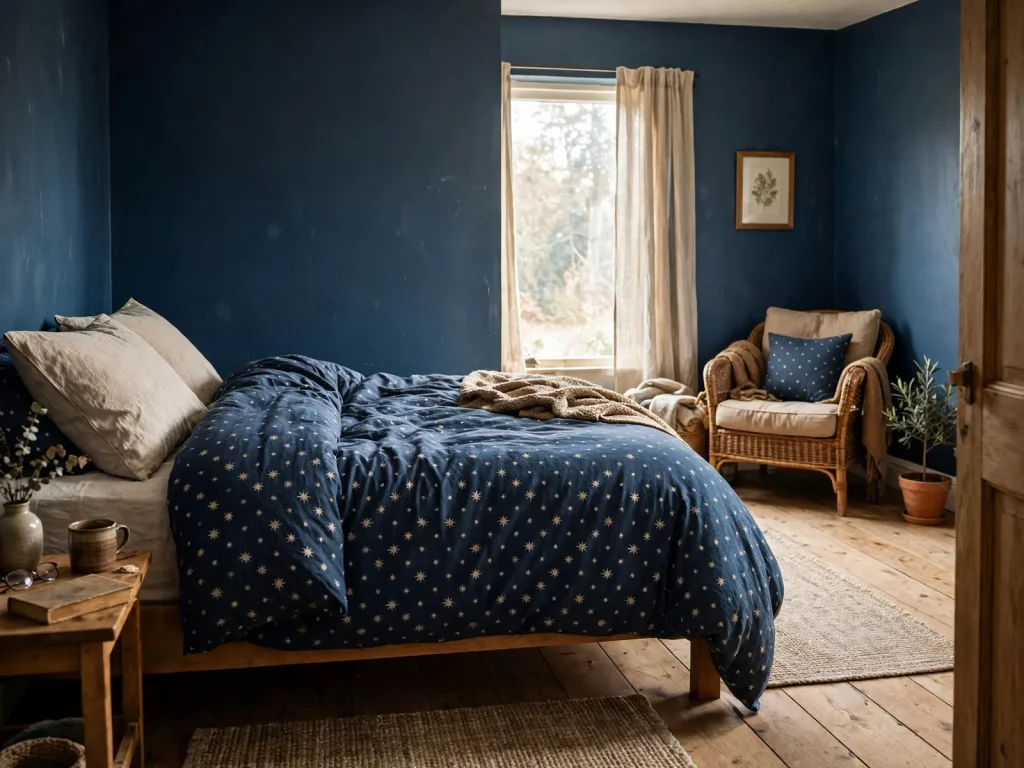
A hero earns its status through scarcity. Beyond its main appearance, the motif may repeat at most 2 times elsewhere in the room and each repeat stays small: a cushion, a print, a drawer pull or a bookend. Small repeats are how the eye connects the corners of the room without the theme shouting from every surface.
Scale is the enforcing rule. A repeat should be readable at arm’s length and lost at the doorway. If a repeat can be identified from the door, it is not a repeat. It is a second hero and the room now has two stories competing at full volume.
The catch is gift drift. Whimsical rooms attract themed gifts and each new owl or star feels harmless alone. Keep the count on a note inside a drawer if you must: hero once, repeats twice and anything beyond that lives in another room or waits for a swap.
Measure: at most 2 small repeats of the hero motif, each readable at arm’s length and lost from the doorway.
7. Put the pattern on exactly one surface
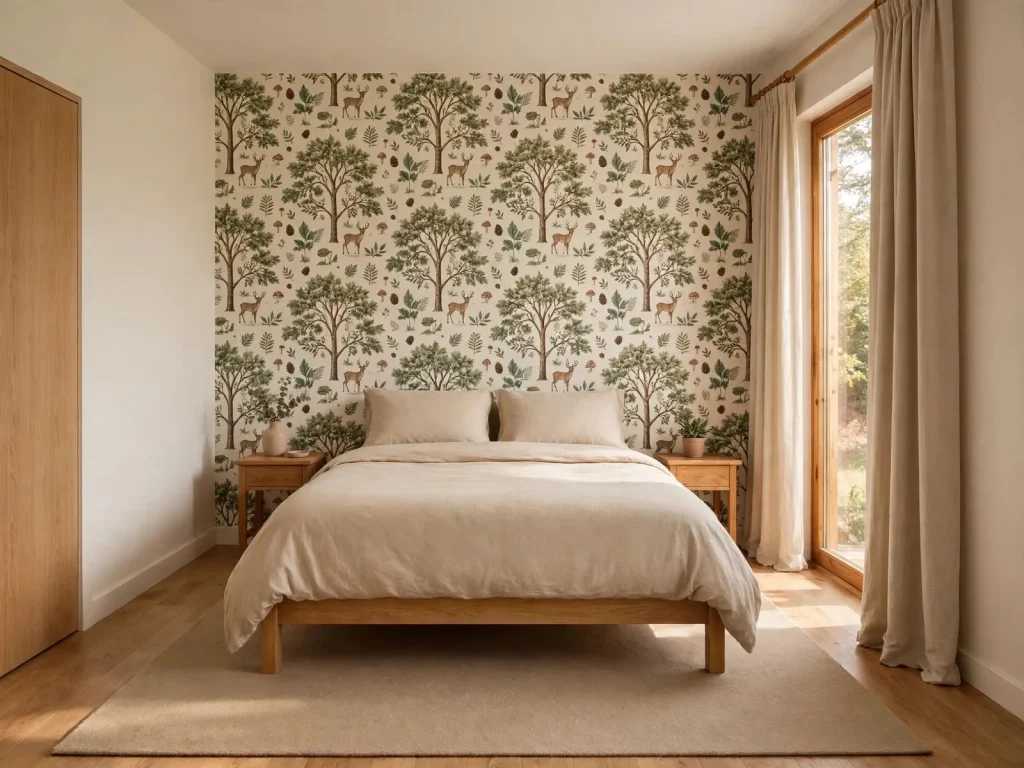
Here is the arithmetic that separates moody from busy: exactly 1 of wallpaper, bedding and curtains carries the pattern. Every other surface stays solid. A woodland wallpaper with solid bedding in the base shade and plain curtains reads as a forest room. The same wallpaper with star bedding and patterned curtains reads as a wrapping paper accident.
Choose the patterned surface by commitment level. Wallpaper is the boldest and the least reversible. Bedding is the renter’s version and can carry the hero motif at full scale for the price of a duvet set. Curtains sit between the two and soften the pattern with folds, which halve its visual volume.
The catch is the rug and the small prints. A patterned rug quietly becomes a second patterned surface at floor level. Keep the rug solid or in a texture without a motif and let framed prints join the repeat count from idea 6 instead of freelancing. Our bedroom wallpaper ideas post shows the full-wall version of this rule.
Measure: exactly 1 patterned surface among wallpaper, bedding and curtains, with the rug and all other surfaces solid.
8. Run the motif large in one place only
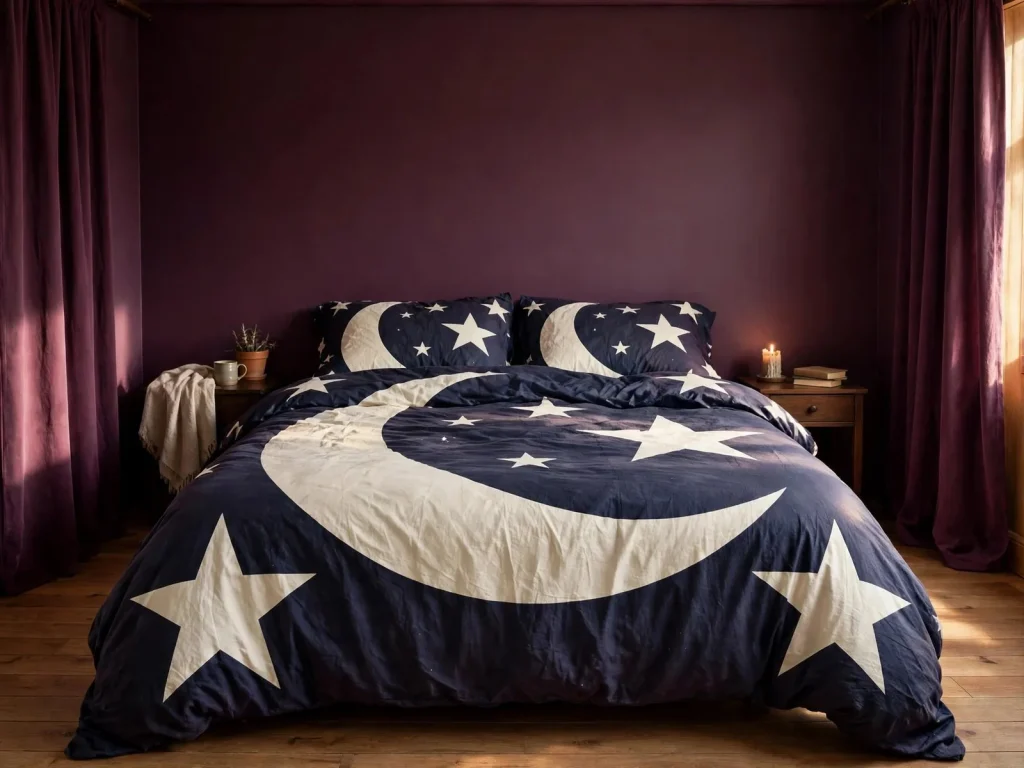
Scale is the adult setting on any motif. The hero appears at large scale in one place only: the full bed wall, the whole duvet or a single oversized print. Large scale reads as art and confidence. The same motif scattered at medium scale in five places reads as a theme park, whatever the colors are.
Large means the motif’s main shapes measure in feet, not inches. A celestial map print at 24 by 36 inches above the bed is large. A dozen 6 inch star decals is scatter and scatter is the childish setting regardless of how tasteful each decal is alone.
The catch is ceilings. A painted or papered ceiling of stars is the one large-scale placement that can double as the room’s single patterned surface and its hero at once, which makes it efficient, but it spends both budgets in one move. Count it honestly if you take it.
Measure: the hero motif at large scale, shapes measured in feet, in exactly 1 place. Scatter at medium scale is capped at the 2 small repeats.
Curves, canopies and cozy corners
9. Curve the headboard
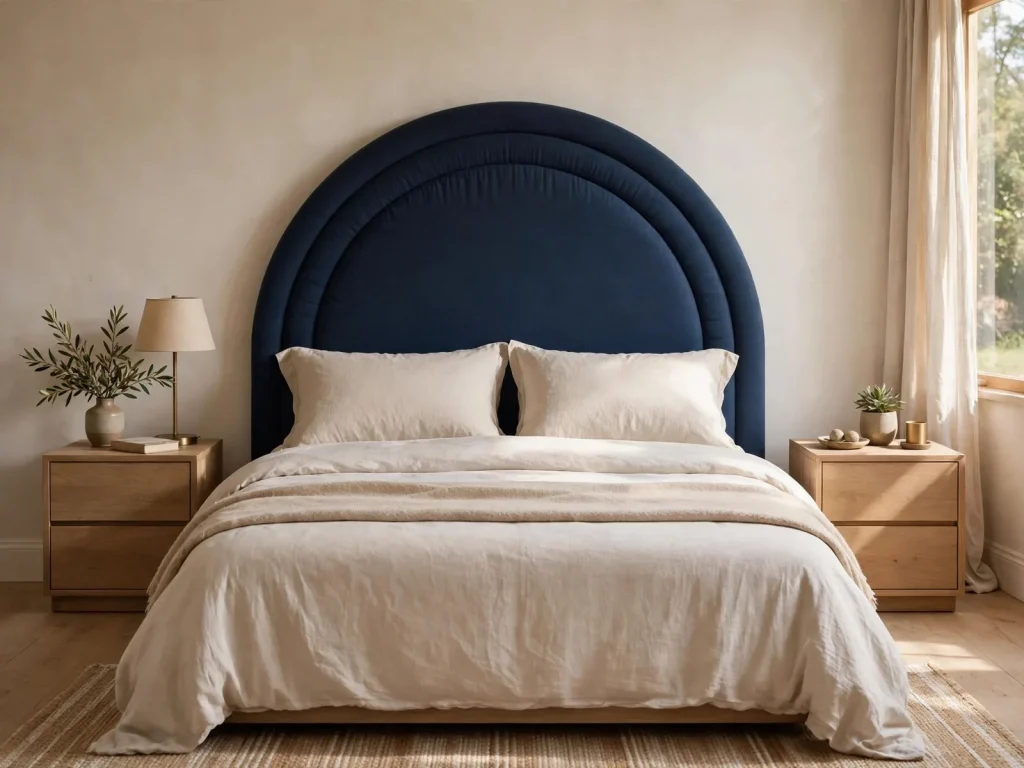
Storybook rooms are built on curves and bedrooms are built on rectangles, which is why one curved piece changes everything. An arched or curved headboard is the strongest single move: it softens the bed wall, echoes the arch motif if that is your hero and gives deep color a silhouette worth looking at. Upholstered versions in a solid deep tone carry the palette and the curve in one purchase.
Size it against the bed, not the catalog. The headboard should run at least the width of the mattress and rise visibly above the pillows, roughly 20 to 30 inches of visible curve above the mattress top once pillows are in place. A curve that hides behind sleeping pillows is a rumor, not a feature.
The catch is the boxy partner pieces. A curved headboard flanked by two sharp-cornered nightstands still reads as a curve applied to a rectangle room. It earns its keep fully when a second curve joins it, which is the count in idea 12.
Measure: a curved or arched headboard at least the mattress width, with 20 to 30 inches of curve visible above the pillow line.
10. Outline a canopy without building one
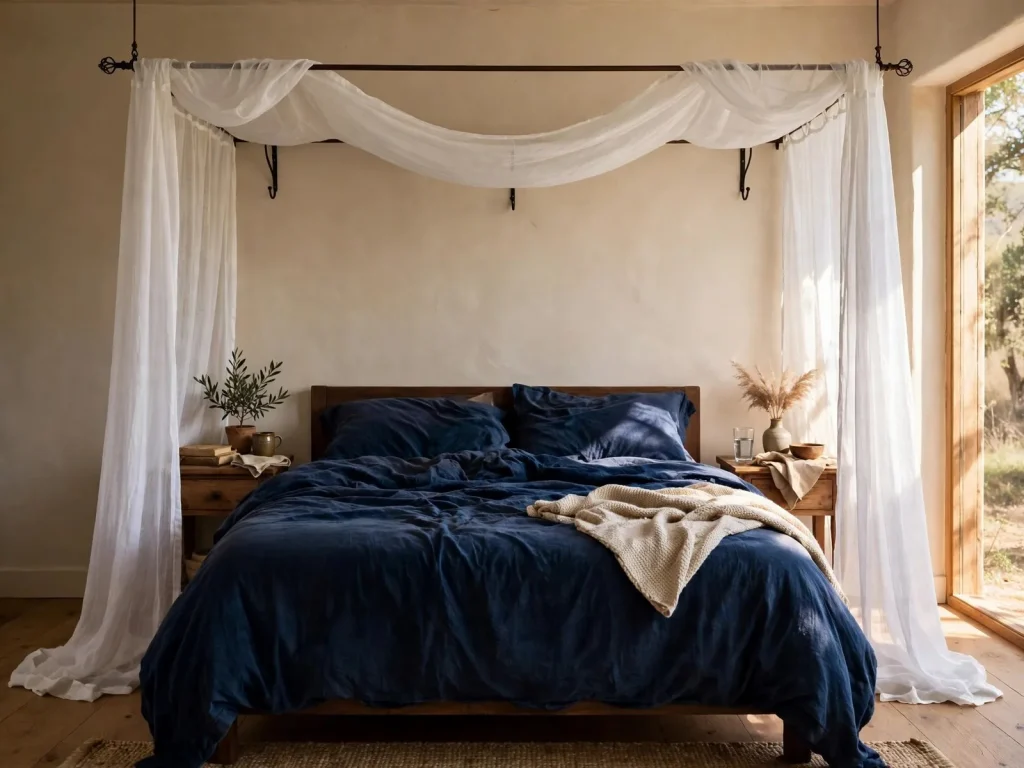
A full four-poster is a commitment. A canopy outline is a suggestion and suggestion is the grown-up setting for this idea too. Run a slim rod, a draped length of fabric or a line of the string lights from idea 14 along the bed’s top edges, so the bed gains a frame in the air and the room gains its second curve family: the long soft line.
Keep the fabric honest. A sheer or light linen panel draped over a rod reads as atmosphere. Heavy drapes on a frame you built from plumbing pipe read as a project. Renters can hang the rod from removable hooks rated for the weight and the whole outline comes down in minutes at move-out.
The catch is dust and air. Fabric above a bed collects dust where you sleep, so the drape needs a wash cycle in its plan and ceiling fans directly over the bed turn an outline into a sail. Still air or a rod mounted clear of the fan’s sweep keeps the effect.
Renter-friendly: a canopy outline on removable hooks with one washable sheer panel. No frame, no holes and the whole effect lifts down in minutes.
11. Add one rounded stool or chair

The second curve usually arrives small. A rounded stool at the foot of the bed, a barrel chair in the corner or a round ottoman gives the room its other arc and a genuinely useful surface. Upholster it inside the palette: solid base shade, the metallic’s family in a cushion or plain texture that keeps the single-pattern rule intact.
Place it where rectangles gather. Bedrooms collect boxes at the dresser and the nightstand line, so the rounded piece belongs opposite them, at the foot or the window corner, where its silhouette breaks the run of straight edges in the doorway view.
The catch is scale again. A tiny round footstool is a repeat, not a curve. The piece must be big enough to register as furniture from the door, seat height in the usual 16 to 19 inch range and a top wide enough to hold a book and a cup.
Measure: 1 rounded seating piece with a seat height of 16 to 19 inches, large enough to read as furniture from the doorway.
12. Count two curves against the boxes
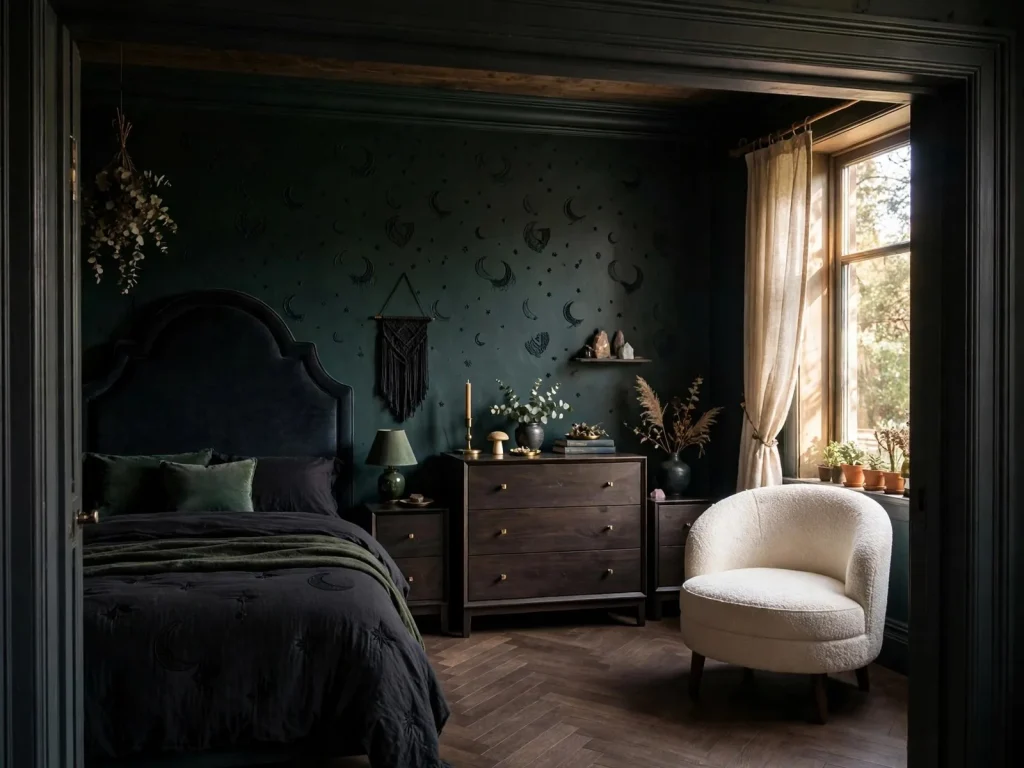
Here is the silhouette rule stated whole: at least 2 curved pieces among the curved or arched headboard, the canopy outline and a rounded stool or chair, set against the boxy standard furniture you already own. One curve is an accent. Two curves are a language and the room starts telling its story in shapes as well as colors.
Audit from the doorway. Rectangles will win the count easily: bed frame, dresser, nightstands, door. The curves do not need to outnumber them. They need to appear in two different zones of the room, usually the bed wall and one other, so the eye meets an arc wherever it lands.
The catch is furniture with fake curves. A rectangular headboard with a printed arch on it is a pattern and it spends from the pattern budget in idea 7 instead of the curve budget. Curves in this rule are silhouettes, not drawings of silhouettes.
Measure: at least 2 real curved silhouettes in 2 zones of the room, counted against the boxy furniture from the doorway view.
Light for a storybook mood
13. Warm every bulb to 2700K or warmer
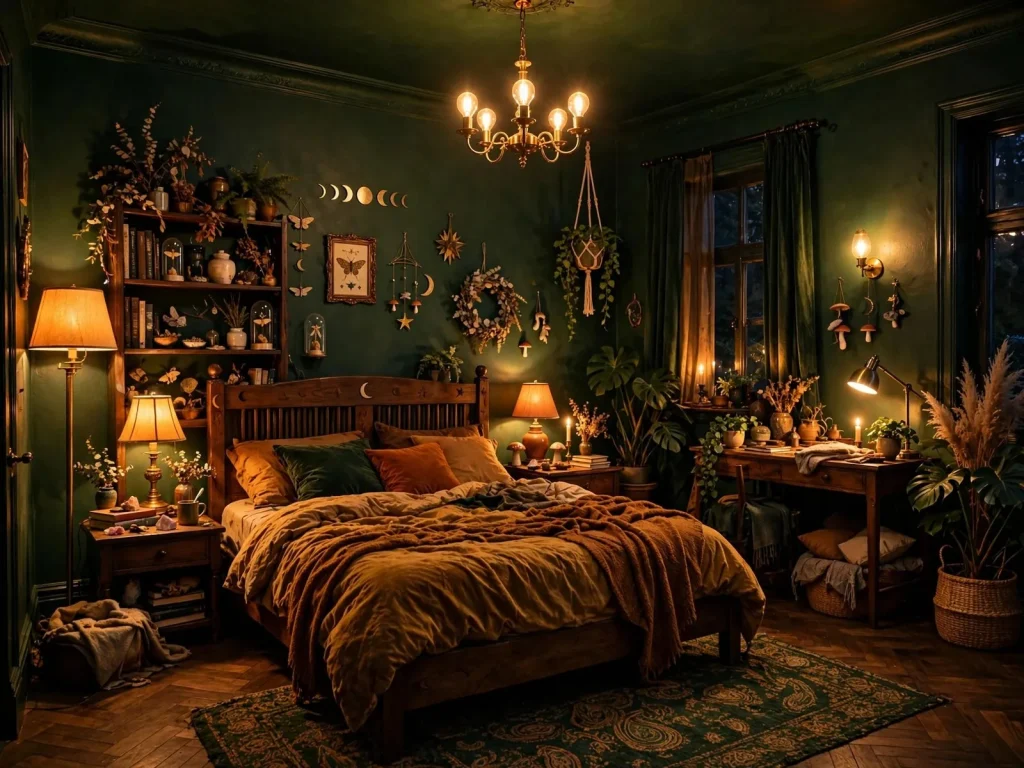
Deep colors are lit or they are lost. Bulbs at 2700K or warmer keep teal, plum and forest green rich after dark, because warm light feeds their warm side. Cool white bulbs drain them toward grey and turn the whole palette into a waiting room at night, whatever it did at noon.
Include every source in the rule: bedside lamps, the ceiling fixture and any strip or string lighting with a stated temperature. One cool bulb in the mix splits the room at lamp height and the split lands on the bed, the worst possible place.
The catch is shopping. Warm bulbs hide among daylight boxes on the same shelf and the print is small. Buy the room’s bulbs in one batch and test one in the bedside lamp before the rest are opened, while returns are still easy.
Measure: every bulb at 2700K or warmer, bought in one batch and tested first in the bedside lamp.
14. Run one string of fairy lights, 10 to 20 feet
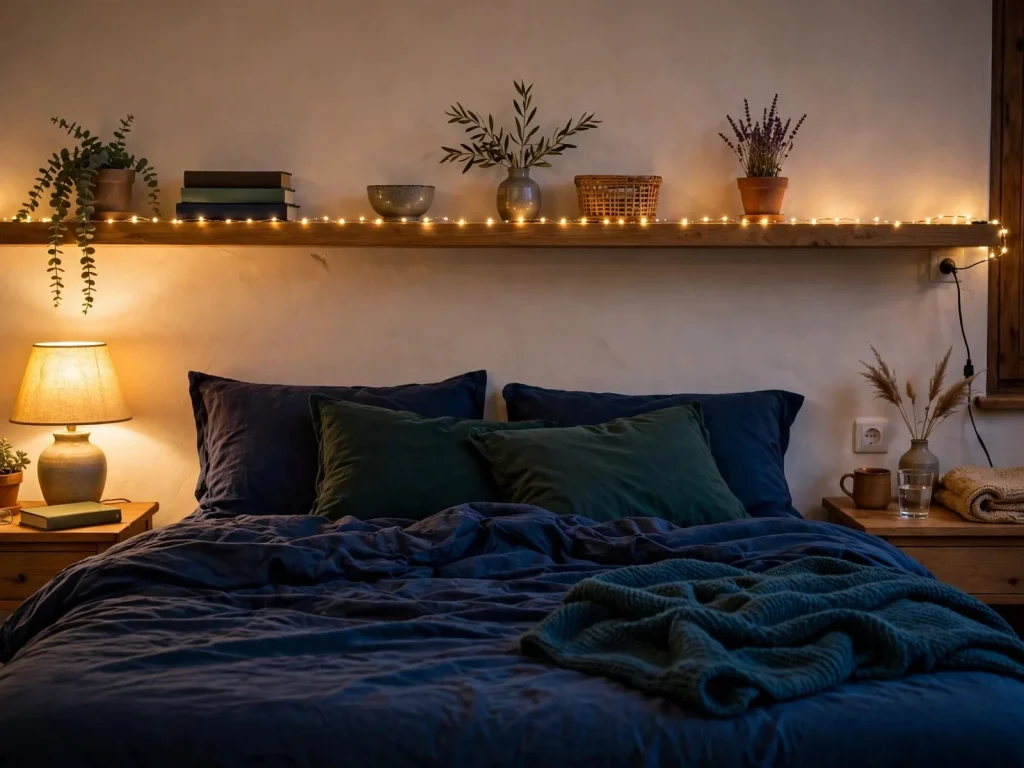
Fairy lights are this style’s signature and its easiest excess. The rule is a single run of 10 to 20 feet, placed along a shelf edge, the canopy outline or the headboard’s curve. One run reads as starlight that found its way indoors. Three runs read as a dorm corridor in December.
Choose the wire and bulb style for adults. Warm white micro bulbs on a copper or dark wire disappear by day and glow by night. Multicolor strings and large novelty bulbs belong to other rooms and other ages and they spend the room’s wonder on the wrong object.
The catch is power and timers. A run that needs an extension cord across the floor trades magic for a trip hazard, so measure the distance to the outlet before buying the length and put the run on a timer so its evening arrival feels like the room doing it on purpose.
Measure: 1 string light run of 10 to 20 feet along a shelf or canopy edge, measured against the outlet distance before buying.
15. Make lamplight the main evening source
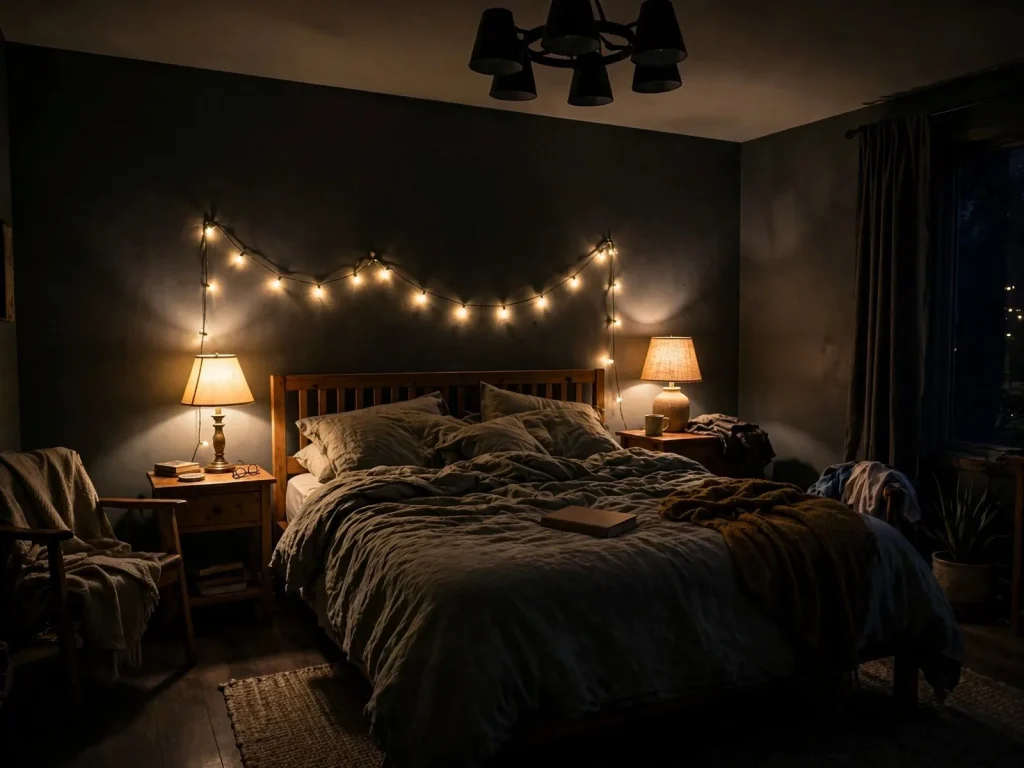
The overhead white light is never the main evening source in a storybook room. It flattens deep color, kills the fairy light’s effect and turns shadow, which this style uses as a material, into mere darkness. Evenings run on the two bedside lamps plus the string run, with the ceiling light kept for cleaning and lost socks.
This is a switching habit more than a purchase. If the room’s only lamps are dim, raise their bulb wattage within the shade’s rating before adding fixtures and put the bedside pair on one switch or a smart plug so the evening setting takes one motion from the door.
The catch is reading. Lamplight as the main source still has to land on the page, which brings back the lamp height logic: shades near eye level when sitting up, so the storybook mood and a readable book survive in the same room.
Budget: the evening setting costs one smart plug or a switched outlet, about $10 to $15, once the lamps and warm bulbs are in place.
Dark whimsical in a rented or small bedroom
Renters take this style through textiles and light. The deep base moves onto bedding and curtains over pale walls, the hero motif rides the duvet at full scale and the single patterned surface rule gets easier, not harder, because wallpaper was never an option. Fairy lights on removable hooks and a canopy outline on a tension line deliver the two effects landlords cannot object to, since both come down without a mark.
Small rooms keep the palette and shrink the counts. One deep shade still works, tested per idea 3 and kept a notch lighter when the room has one small window. The motif count holds at one hero and two repeats and the curves come from a headboard cushion and a round stool rather than large furniture. A small dark whimsical bedroom reads as a jewel box when the counts hold and as a closet when they do not.
Skip the full paint drench entirely. In a small rented room the same depth arrives from a deep duvet, a charcoal throw and warm lamplight after dark and all three leave with you.
Mistakes that make it fall flat
- Collecting motifs like souvenirs. A star cushion here, an owl there and a moon lamp because it was on sale. Each piece is charming and the room is a gift shop. One hero, two repeats and the rest of the whimsy budget goes to curves and light.
- Spending the pattern budget three times. Patterned wallpaper with patterned bedding and a patterned rug is the fastest route from moody to busy. Exactly one surface carries the pattern. The others carry the color, which is a different and quieter job.
- Letting novelty lamps become the focal point. A mushroom lamp or a moon lamp as the room’s main event reads as a toy at adult scale. Whimsy comes from motif, curve and light spread across the room, not from one shaped object asking for applause.
- Judging deep color at the paint counter. The counter’s light is not your room’s light and noon is not when this style lives. Swatch on the darkest wall and judge it after dark under warm bulbs or the shade you bring home is a stranger.
Questions people ask about this
How do I make a whimsical bedroom look grown up and not like a child’s room? Control the counts and the shapes. One hero motif at large scale, at most two small repeats and exactly one patterned surface keep the theme disciplined. Curves, deep color and warm lamplight do the rest and novelty pieces stay out of the focal spots. The room reads as storybook because its rules are strict, not because its objects are cute.
What colors suit a dark whimsical bedroom? Five bases carry the style: deep teal, forest green, plum, navy and charcoal. Pick one as the base and add exactly one metallic accent from brass, copper or antique gold. Two rival bases or three metals split the mood and the room stops telling one story.
How many patterns can a dark whimsical room hold? One. Exactly one of wallpaper, bedding and curtains carries the pattern and the rug stays solid so it does not become a second patterned surface at floor level. Everything else repeats the base color or the motif at small scale, within the two-repeat limit.
The bottom line
Dark whimsy is a discipline disguised as a fantasy. One motif, one pattern, one metal and two curves, held against a deep and tested shade and the room turns storybook without turning childish. This week, stand in your doorway and count: motifs, patterned surfaces, metals and curves. Write the four numbers down. The room you want is the one where those numbers read 1, 1, 1 and 2 and now you know which purchases move them.