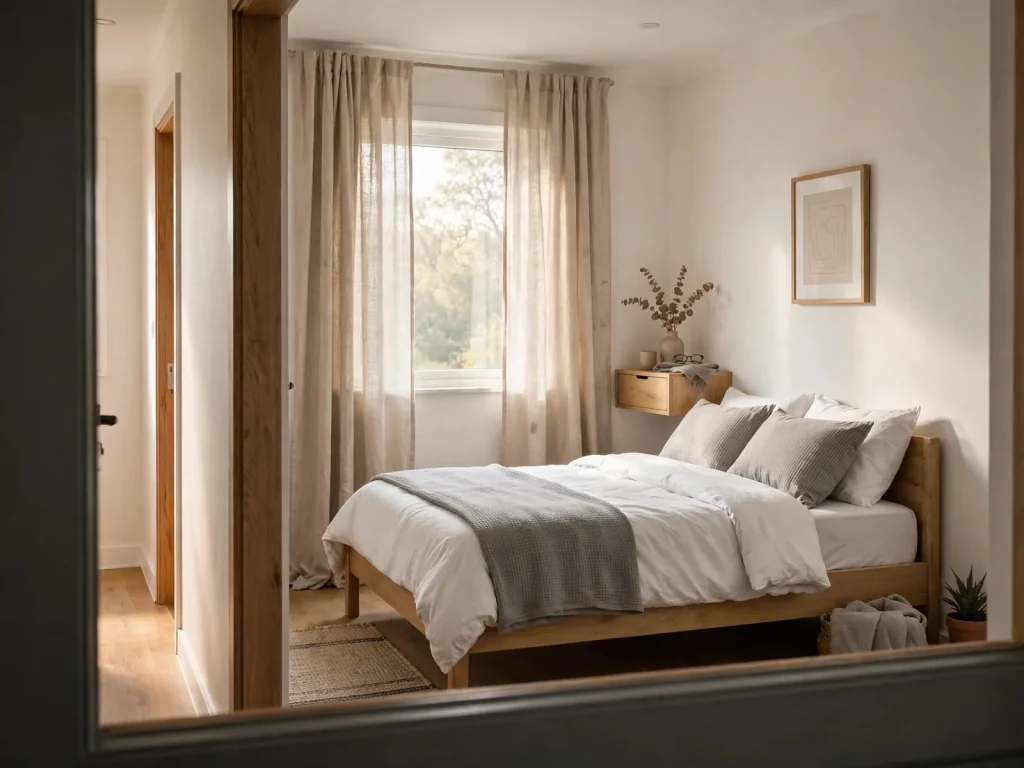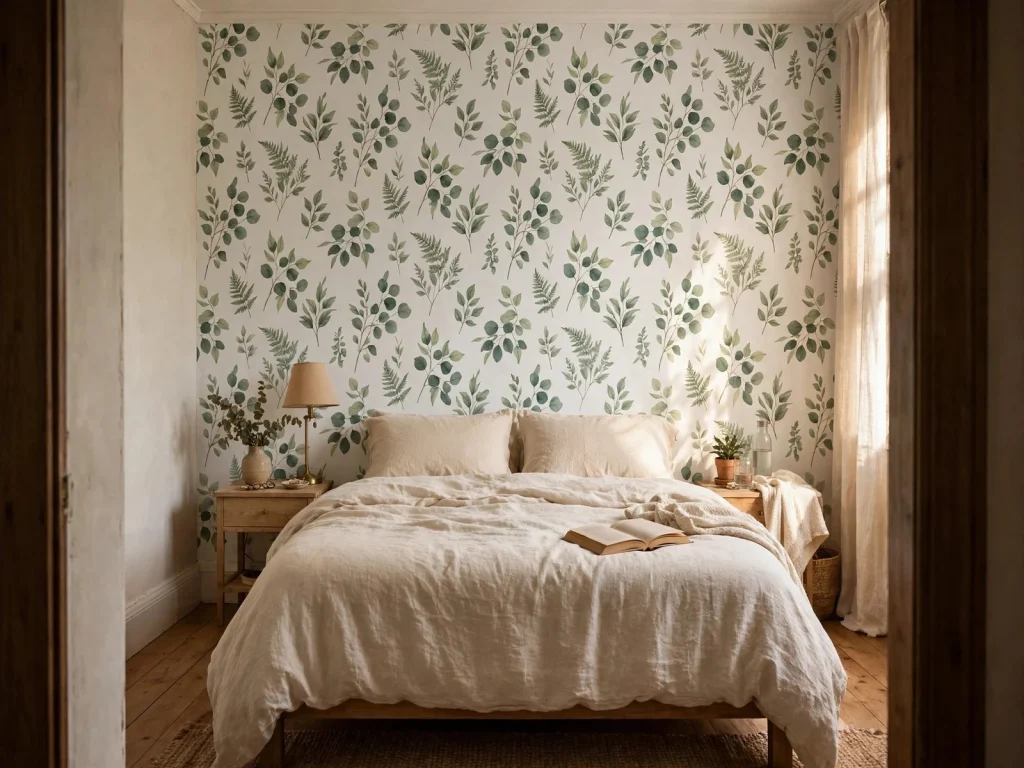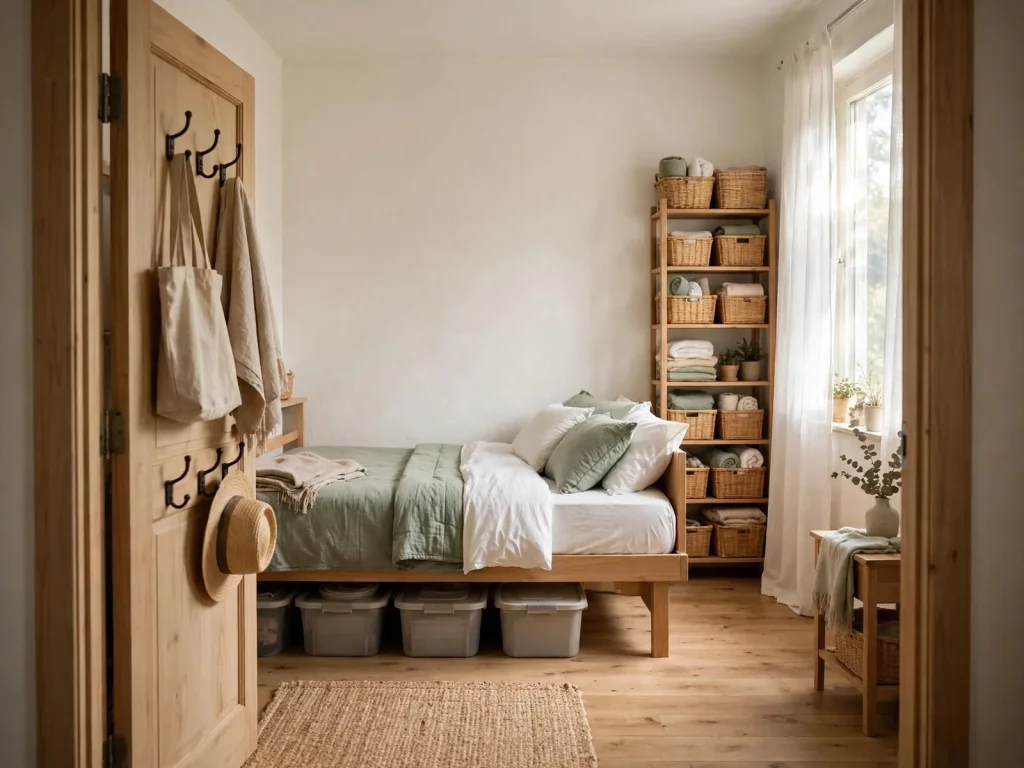
You came back from winter break, dropped your bag on the same bed and felt it in one second: the room works and it is completely stale. Same school desk, same humming overhead light, same posters you stopped seeing in October. You cannot swap the furniture and you cannot paint, so most dorm room refresh ideas that start with buying a new look are useless to you.
This page is a weekend reset instead. It works in the order a refresh actually happens: swap the big soft surfaces, fix the storage that swallows the mess, warm up the walls and light without a single nail and reset the bed and desk you live on. Every idea is checked against a shared room of 150 to 200 square feet and against housing rules, so nothing here risks your deposit. When you want the full first-time setup behind it, our dorm room ideas pillar covers the room from move-in day.
Before you start: measure, budget, rules
Take five numbers before you touch anything. The room: a typical shared dorm room runs 150 to 200 square feet for two people, so every plan here protects walkways of 24 inches minimum between the beds and the desks. The bed: a dorm mattress is twin XL, 39 by 80 inches, longer than a home twin. The desk: school-issued desks usually run 36 to 48 inches wide. Under the bed: measure the frame clearance with a tape, because standard frames sit about 7 to 8 inches off the floor and that number decides every bin in idea 5.
Work the free moves first. Rearranging and resetting cost nothing and they tell you what is actually missing, so the short shopping list that follows stays short. Housing rules run through the whole page: most contracts ban nails and paint outright and damage at move-out becomes a housing charge, so every wall idea here hangs on adhesive rated for its load. Read your contract’s wall clause before idea 8, not after.
Swaps that change the whole room
1. Change the bedding first, because the bed is the room
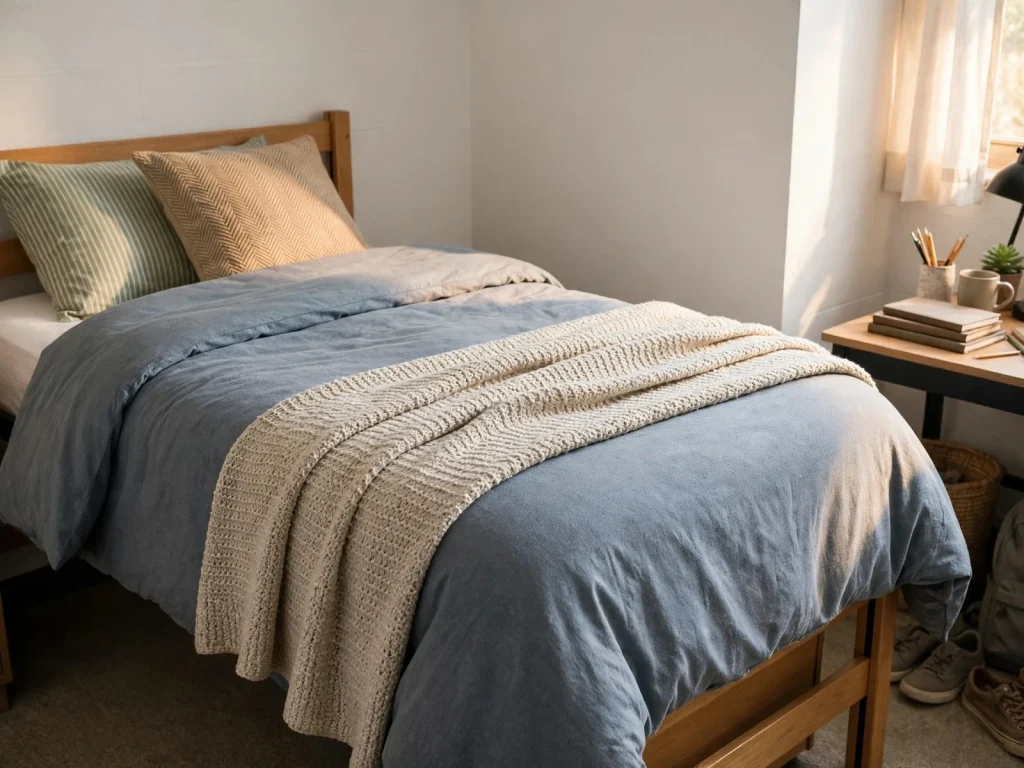
In a room this small the bed is the largest surface you own, bigger than the floor you can actually see. It is the first thing you notice from the door and the background of every photo taken in the room. When the bedding changes, the whole room reads new even though nothing else moved. That is why the refresh starts here and not at the desk.
Buy true twin XL. A dorm mattress is 39 by 80 inches and regular twin bedding at 75 inches long rides up at the corners and untucks by midnight. A twin XL duvet cover or comforter set plus one throw in a different texture gives you the layered look without buying a whole new bed’s worth of pieces.
The catch is color regret. White looks fresh for one week in a room where coffee and makeup happen daily. Mid tones and small patterns forgive real life and still read as a deliberate swap.
Measure: twin XL means 39 by 80 inches. Check the tag for twin XL before you pay, because standard twin is 5 inches shorter.
2. Rearrange the layout before you buy anything
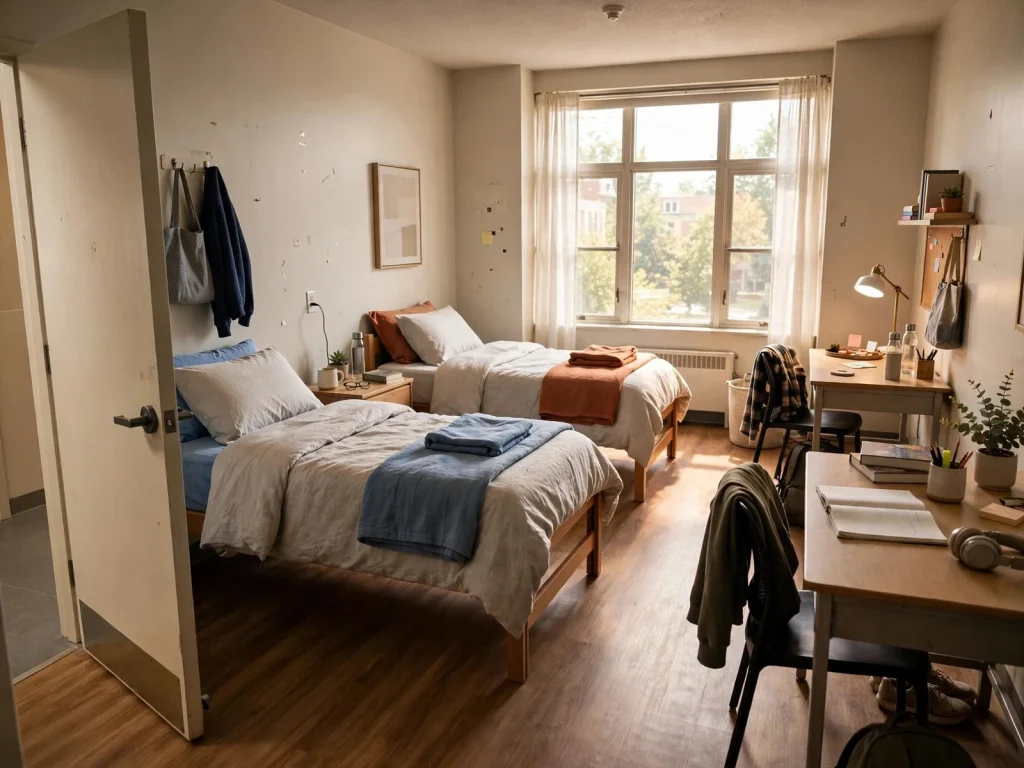
A dorm makeover often needs no purchase at all. The layout you inherited from move-in day was set for speed, not for January light or for two people studying at once. Turning the desk to face the window or swapping which wall your bed sits on changes the light and the traffic path in one afternoon and dorm room layout ideas are mostly this: the same furniture in a better order.
The rule that keeps it working comes after the move. Every path still has to measure out, with walkways at 24 inches minimum so both beds and both desks stay reachable and the door still opens flat. If a layout steals the walkway, it is not a refresh. It is a future argument.
Measure: keep 24 inches minimum of clear walkway after any move, measured at the tightest point between bed and desk.
3. Swap the soft layers, not the furniture
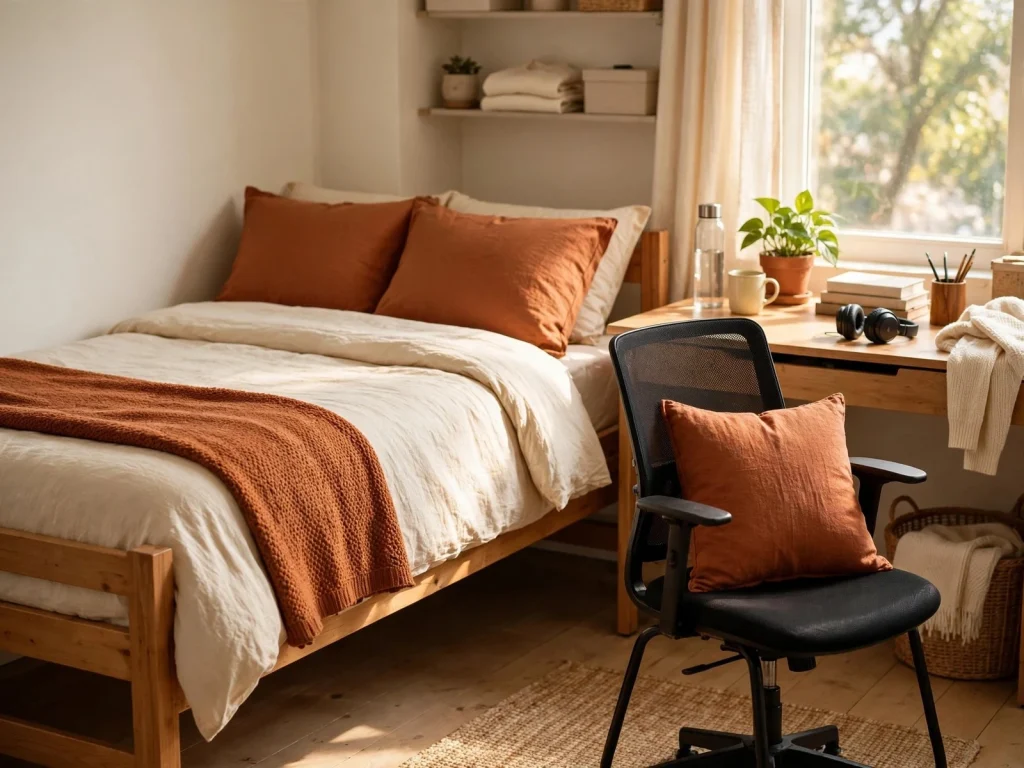
Once the bed is dressed, the next layer is everything soft that is not bedding: the throw at the foot, two pillow covers and the cushion on the desk chair. These are the cheapest textiles in the room and they carry the color story. Dorm room decor ideas live or die on this layer, because the hard furniture never changes.
Pick one color to repeat three times and stop. A rust throw, a rust pillow cover and a rust desk mat read as a plan. Five competing colors read as a sale rack. If your roommate’s side runs cool blues and greys, stay in that family and change the texture instead of the hue.
Budget: price the soft layers as one basket before checkout. Three small textile swaps land cheaper than one statement piece and change more of the room.
4. Reset every flat surface to empty, then earn items back
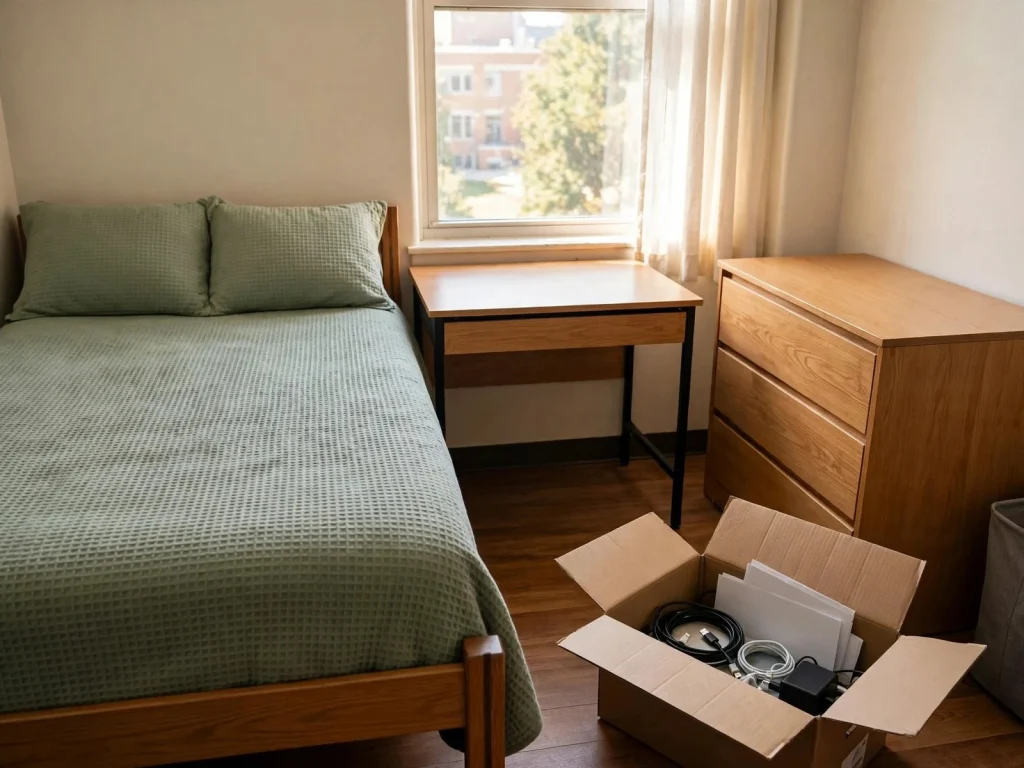
Stale is often just accumulation. Chargers, cups, hair ties and three weeks of paper spread until every surface looks tired. The reset is total: bed made, desk cleared, dresser top cleared and floor picked up. Then each surface earns back only what it uses daily.
This clean-and-move step changes what you shop for. Half the storage products students buy in January exist to hold things the reset would have recycled or returned to a drawer. Do the reset first and let the leftovers write the list for the next section.
Budget: the reset costs nothing, so it goes first. Whatever survives it is your real shopping list for ideas 5 to 7.
Storage that hides the semester mess
5. Measure under the bed and bin to the inch
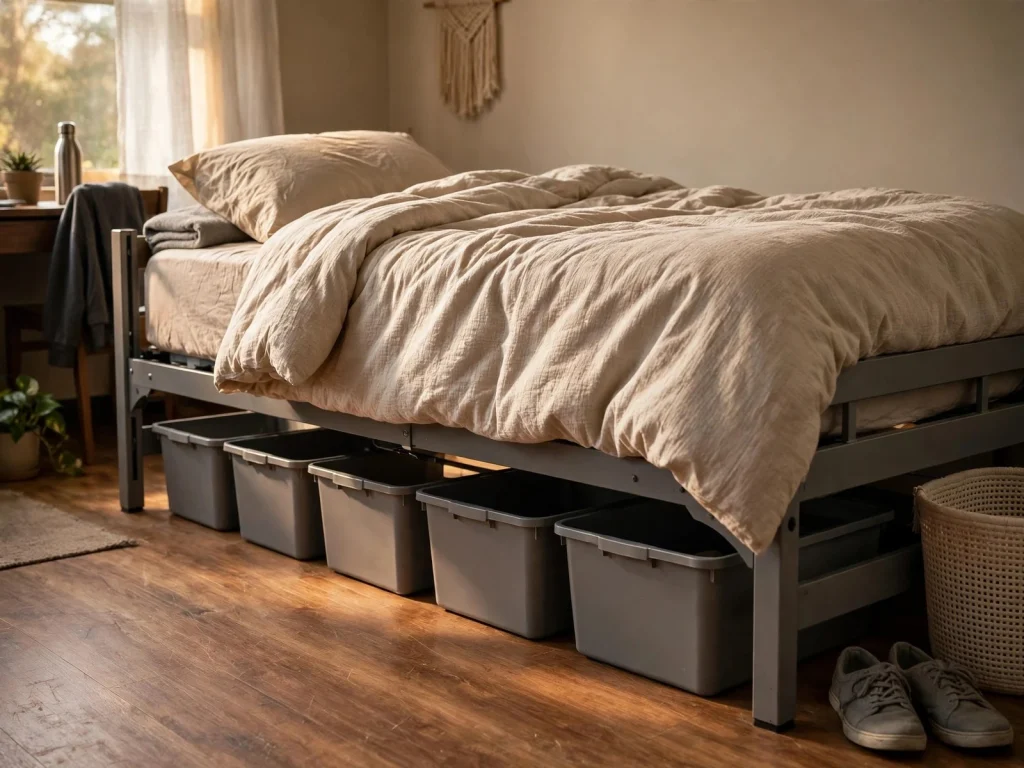
The space under a dorm bed is the room’s only hidden storage and it fails when bins are bought by eye. Standard dorm frames clear about 7 to 8 inches. A bin taller than the clearance becomes a permanent plug you drag out with your foot, so the tape measure decides this purchase completely.
Measure the clearance at the frame’s lowest bar, then buy low bins at least an inch shorter. If you need real volume, bed risers add 3 to 8 inches of height and turn the under-bed into a second closet for out-of-season clothes. The full method runs through our small bedroom storage ideas post, which uses the same measure-first logic in rented rooms.
The catch sits in the housing contract. Some schools ban risers outright and a lifted bed needs a sturdy edge for the climb up. Check the same contract you read for the wall rules before the risers go in.
Measure: standard clearance is about 7 to 8 inches and risers add 3 to 8 inches. Buy bins at least 1 inch shorter than your measured clearance.
6. Give the desk a hutch shelf for a second level
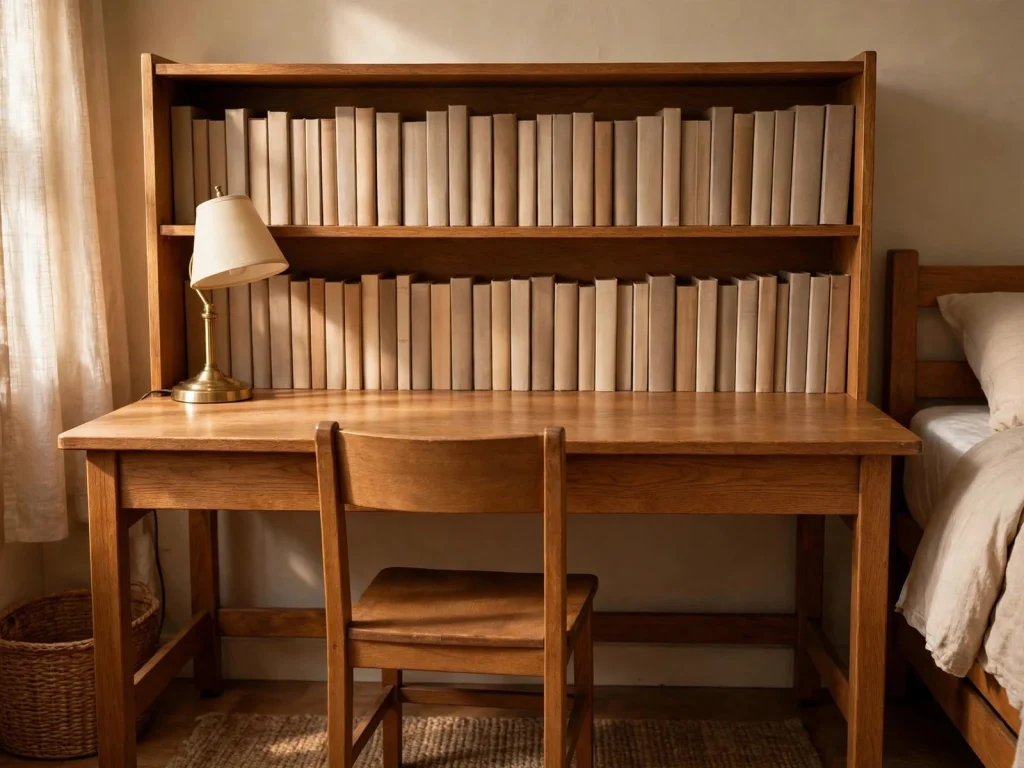
Dorm room organization ideas usually fail at the desk, because a 36 to 48 inch surface cannot hold study gear flat. A hutch shelf or a sturdy riser adds a second level without touching the footprint, so textbooks and supplies move up and the writing space opens below.
Size it to the desk you have. The shelf should stop a few inches short of the desk’s full width so the lamp base and a water bottle still land on the main surface. Anything wider turns the desk into a bookcase with a chair in front of it.
Measure: school desks run 36 to 48 inches wide. Buy the shelf 4 to 6 inches narrower than your desk so both ends of the surface stay usable.
7. Corral the daily small stuff in one caddy and one tray
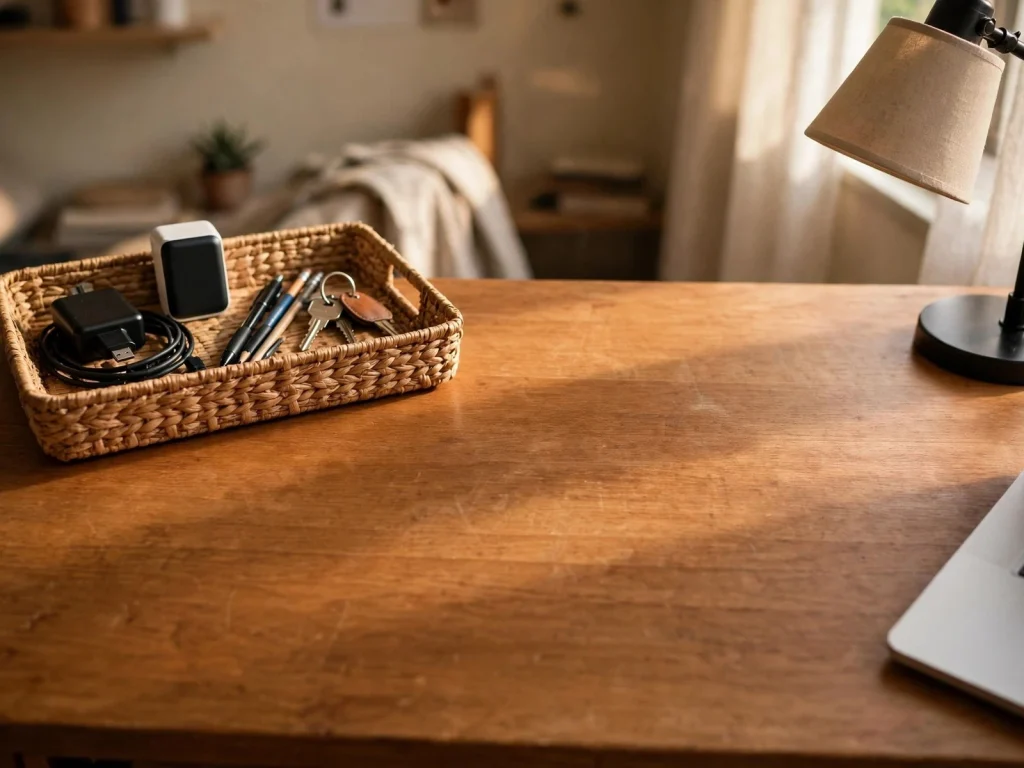
The mess that reads as stale is mostly small: chargers, pens, lip balm, keys and the remote that migrates. One caddy for toiletries and one tray for desk smalls give every category a single home, so a tidy takes four minutes instead of a dig through three drawers.
The rule is containment, not sorting. When the tray is full, something leaves the desk for a drawer or leaves the room. That single rule keeps storage honest in a room with no spare drawer to hide overflow in.
Budget: one caddy and one tray replace the five small organizers most students collect across a semester. Buy the pair once and stop.
Walls and light without damage
8. Hang a poster gallery on removable strips

Blank walls are half the stale feeling and dorm room wall ideas start with what the contract allows. Removable adhesive strips hold posters and light frames without nails and without paint and they peel away clean at move-out when you follow the pack directions.
Match the strip to the load in your hand. Small strips are rated at 1 to 4 pounds, which covers posters and unframed prints with room to spare. Large picture-hanging strips hold up to 16 pounds for a framed piece and a frame that size wants two pairs rather than one.
The catch is the wall itself. Strips let go early on dusty or greasy paint, so wipe the spot, let it dry fully and then hang. Five minutes of prep is the difference between a gallery and a 2 a.m. crash.
Renter-friendly: no nails and no paint anywhere in this idea. Small strips hold 1 to 4 pounds and large picture strips up to 16 pounds, so weigh the frame before you hang it.
9. Put adhesive hooks to work as wall storage
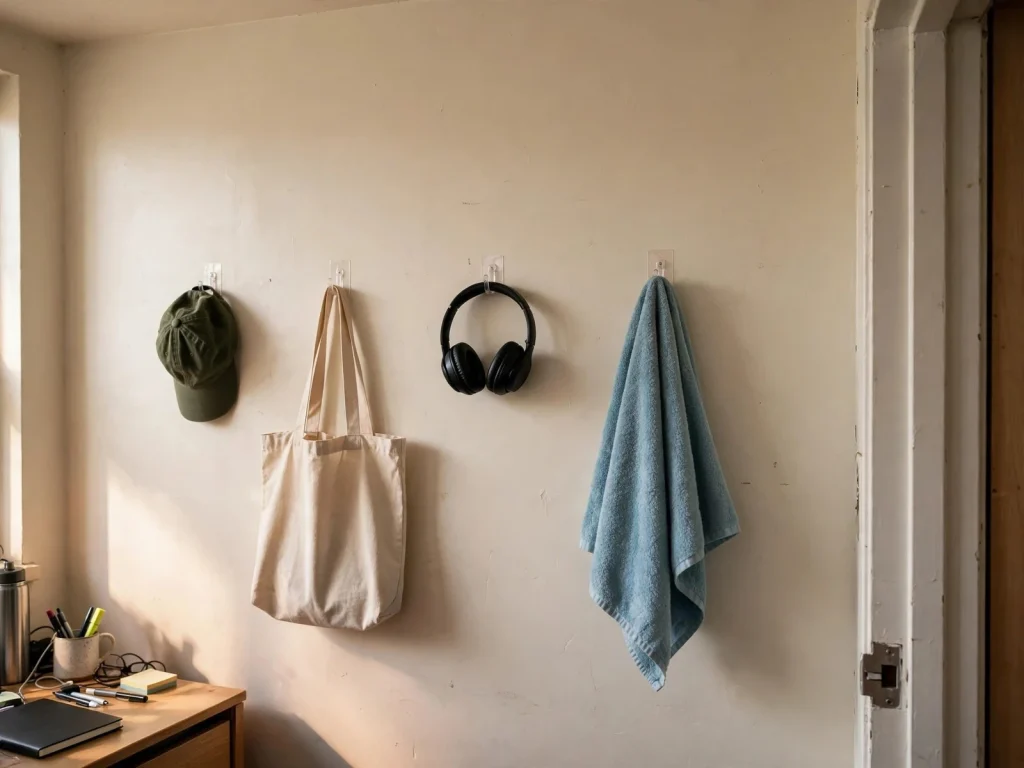
Hooks are wall decor that pays rent. A row of adhesive hooks by the door takes hats, bags, headphones and the towel that otherwise lives on the desk chair. The wall looks styled because the things on it are used daily and hung in one line.
Stay inside the ratings. One hook per item, nothing heavier than the limit printed on the pack and nothing breakable hung over the bed. Hooks over the desk hold the headphones and the lanyard you lose twice a week.
Renter-friendly: hooks come off with a pull tab at move-out and leave the paint as they found it. Keep every hooked item under the rating printed on the pack.
10. Swap the desk lamp bulb to warm 2700K
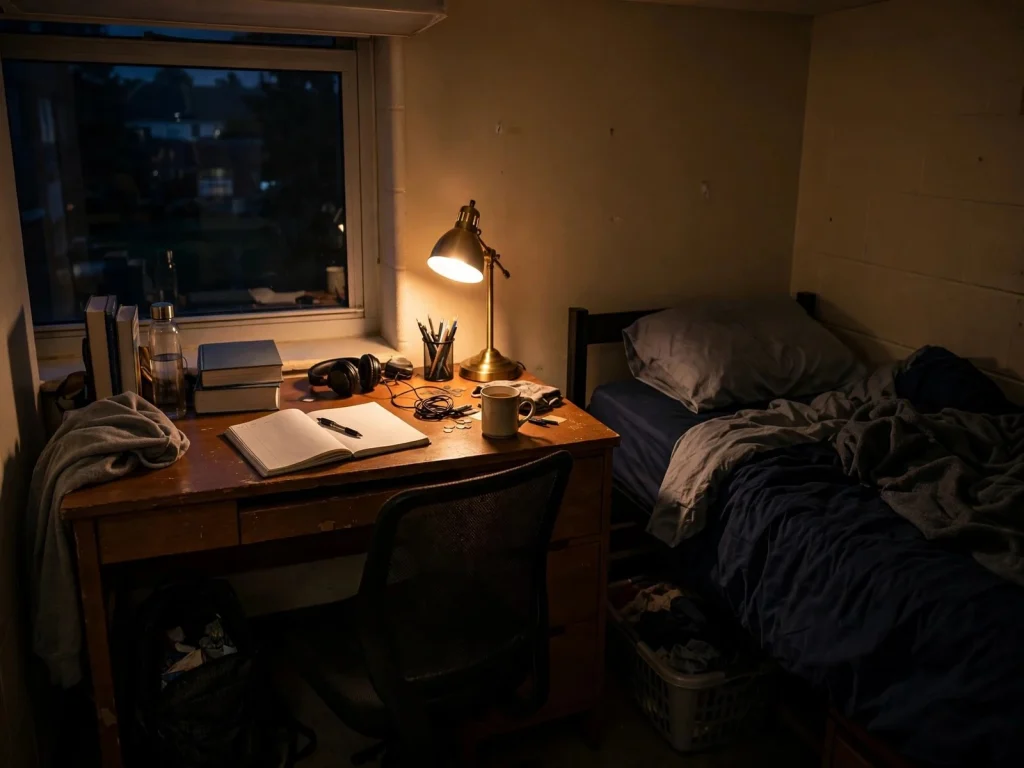
The flat and tired look of a January dorm room is often just light. Overhead dorm tubes sit near 4000K, a blue-white that makes bedding look grey and skin look washed out. Your own lamps are the part of the lighting you actually control.
Put a warm 2700K bulb in the desk lamp and keep the overhead off in the evening. The room gains the soft glow every saved dorm photo has and the light lands where you study instead of flattening the whole room from the ceiling.
Measure: warm means 2700K on the bulb box. If the box says 4000K or daylight, it will fight the refresh instead of joining it.
11. Run warm string lights on adhesive clips
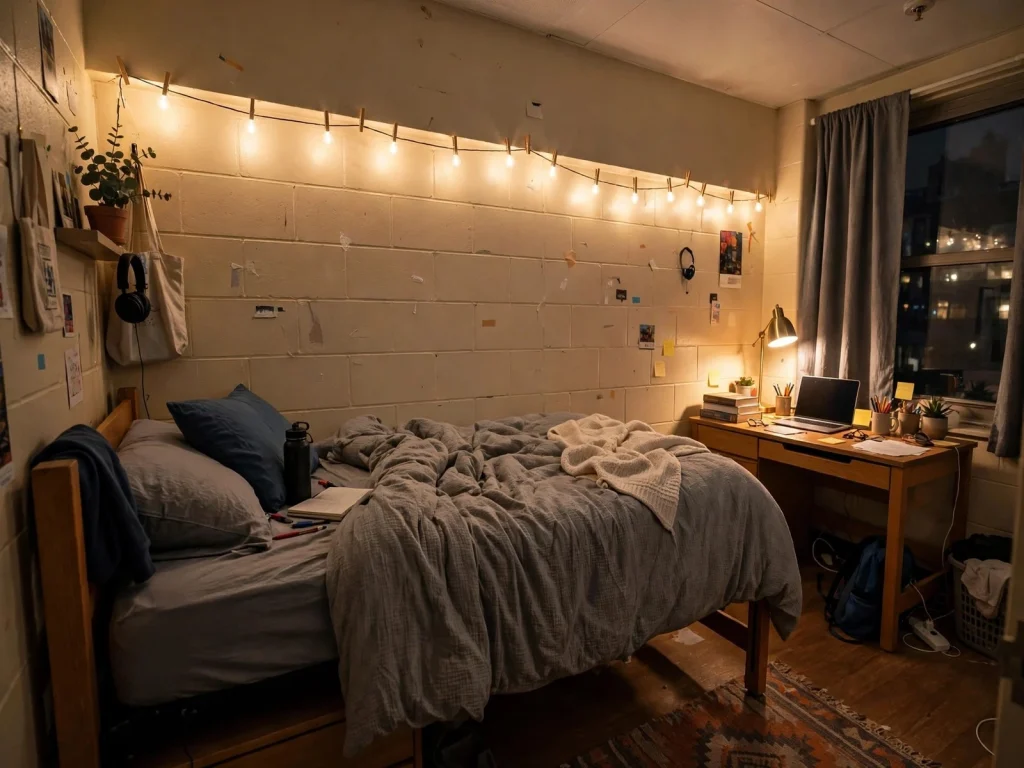
String lights are the dorm cliché because they work. A soft line of warm light at sitting height makes painted block walls look chosen. Clip the strand along the bed wall or the desk edge with small adhesive clips, never with tape that peels paint and never draped across fabric.
Choose warm white at 2700K to match the desk lamp, so the room runs one light temperature instead of three. Plug the strand where the switch is reachable from the bed or you will stop using it by February.
Renter-friendly: adhesive clips hold the strand and release clean. Keep lights clear of curtains and bedding and unplug them when you leave for break.
The bed and desk, refreshed
12. Reset the desk to three things

The desk is where spring semester is won. The reset rule is strict: only the lamp, the laptop and one tray stay on top. Books live on the hutch from idea 6, paper lives in one folder and everything else leaves the surface.
A desk of 36 to 48 inches cleared this way fits study and a meal and a mirror in rotation, because the surface resets in under a minute. The tray is the discipline. If it does not fit the tray, it does not live on the desk.
Measure: three things on top, the lamp, the laptop and one tray. If a fourth object lands, something moves to the shelf or the bin the same day.
13. Make the bed earn its daytime hours
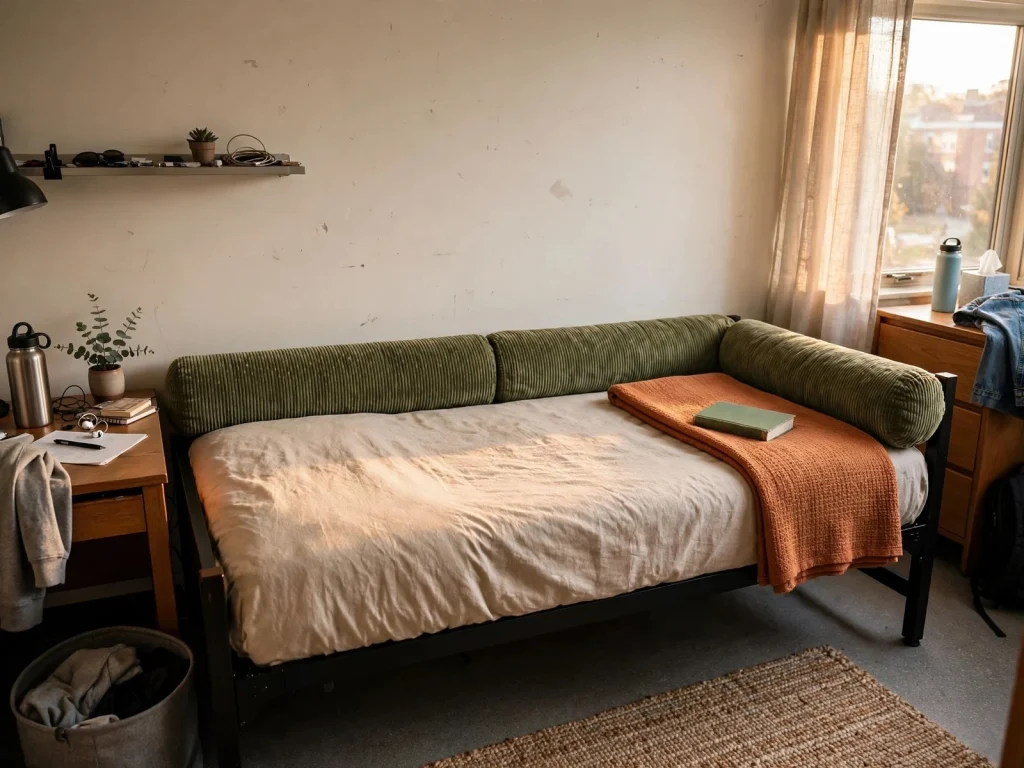
In a dorm the bed is also the sofa, the study lounge and the guest chair. A long pillow or a bolster along the wall side turns it into a seat back and the throw from idea 3 marks the sitting end. Suddenly the room has a lounge that is not the desk chair.
Keep the sleep end honest. Sitting layers stay at one end so the bed still makes in one pull at night. A twin XL at 39 by 80 inches has the length for both jobs when the daytime kit takes the top third only.
Measure: give the sitting setup the top third of the 80 inch bed length and keep the rest as clear sleep space.
14. Lay a washable runner beside the bed
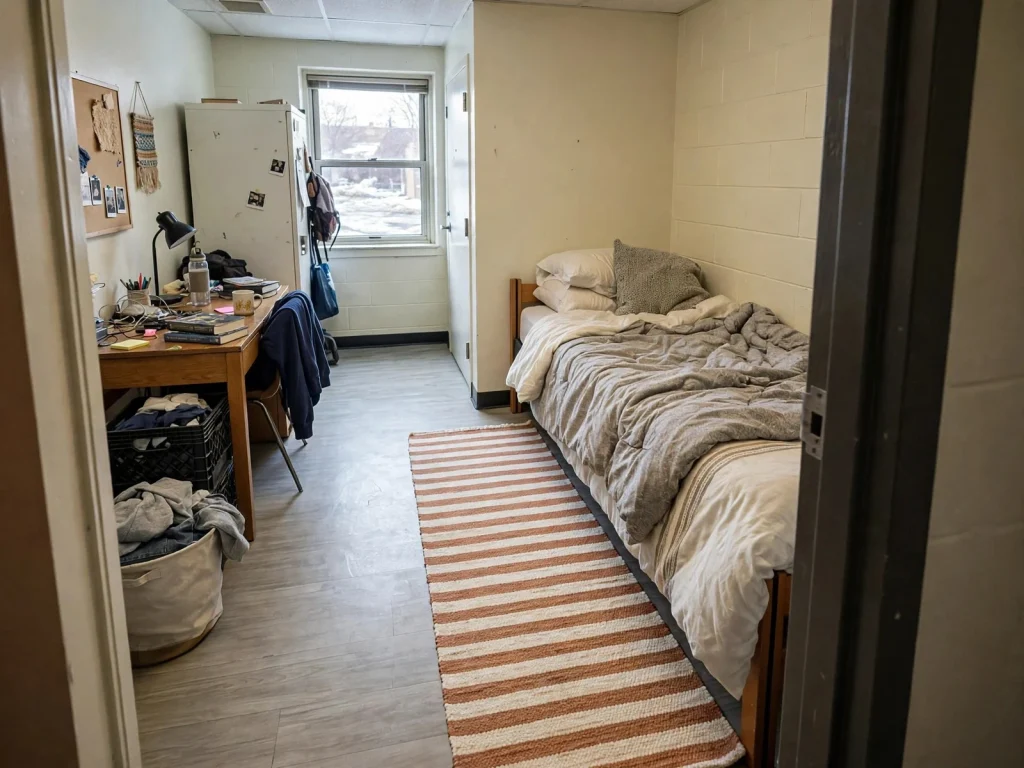
Dorm floors are cold, hard and shared with winter slush. A washable runner along your side of the bed warms the first step of the day and draws a quiet border around your half of the room, which matters in a shared layout.
Size it to the stretch of bed you actually step onto, about 5 to 6 feet of runner. Keep it inside your share of the floor so the shared walkway stays at 24 inches for both of you. Washable is the whole point, because a dorm runner meets coffee and snow by March.
Measure: a runner of about 5 to 6 feet covers the bed side you step onto. Keep the shared walkway at 24 inches minimum beside it.
A refresh that works with a roommate
A solo refresh in a shared room builds two half-rooms. The fix is a ten-minute talk before any order: agree the shared swaps first, then split the rest of the room into personal zones. Your bedding and your desk stay yours. The floor, the main wall and the light belong to both of you.
Shared money goes on shared surfaces: the runner you both step past, the string lights on the shared wall and a bulb temperature you both like. Splitting those keeps the refresh fair and our bedroom ideas on a budget post shows how to order small shared buys so neither person fronts the whole cost.
Two rules protect the peace once the boxes arrive. The walkway stays at 24 inches no matter whose bins want the space and wall strips go only on your own half unless you both pick a shared gallery. If one side refreshes hard and the other does not, meet in the middle with the free move: both beds made the same way reads as one room again.
Mistakes that make it fall flat
- Hanging first and reading the contract later. Nails and paint feel harmless in January and turn into a housing charge in May. Every wall idea on this page exists because the contract bans the obvious fix, so read the wall clause before the first strip goes up.
- Buying bins before measuring the clearance. A bin 1 inch too tall for a 7 inch gap is not storage. It is a roadblock you kick daily. Measure the frame’s lowest bar and buy at least an inch under it.
- Refreshing only your half. One styled side and one untouched side makes the room look split rather than refreshed. Agree the shared swaps with your roommate first, even when the personal layers stay different.
- Leaving the overhead tube as the main light. The 4000K ceiling light flattens every swap you make. Warm 2700K lamps at desk and bed height are what make the new layers read as new.
- Filling the desk again within a week. The refresh dies at the surface. The three-thing rule from idea 12 is the maintenance and the tray is where overflow goes to be dealt with the same day.
Questions people ask about this
How do I refresh a dorm room without buying new furniture?
Swap in this order: bedding, soft layers, light and layout. The school furniture stays, but textiles carry the color, a rearranged layout changes the light and warm bulbs change the mood. Most of the stale feeling is surfaces and light and both reset for the price of one duvet cover.
What can I put on dorm walls without losing my housing deposit?
Posters, prints and light frames on removable adhesive strips, hooks for soft goods and string lights on adhesive clips. Small strips hold 1 to 4 pounds and large picture strips hold up to 16 pounds. Nails and paint are the two moves most contracts ban and damage shows up as a housing charge at move-out.
How much storage fits under a dorm bed?
A standard dorm frame clears about 7 to 8 inches, which fits low bins for shoes and folded clothes. Bed risers add 3 to 8 inches and open room for larger bins and suitcases. Measure your frame’s lowest bar first, because one inch decides whether a bin slides or sticks.
The bottom line
A dorm refresh is not a smaller makeover. It is a reset inside rules you did not write: fixed furniture, a shared floor and a contract that prices every nail hole. Worked in the right order, bedding first and surfaces last, a room that felt used up in January feels chosen again by Sunday. This week, before you order a single thing, measure your under-bed clearance and write the number on a strip of tape stuck to the bed frame.