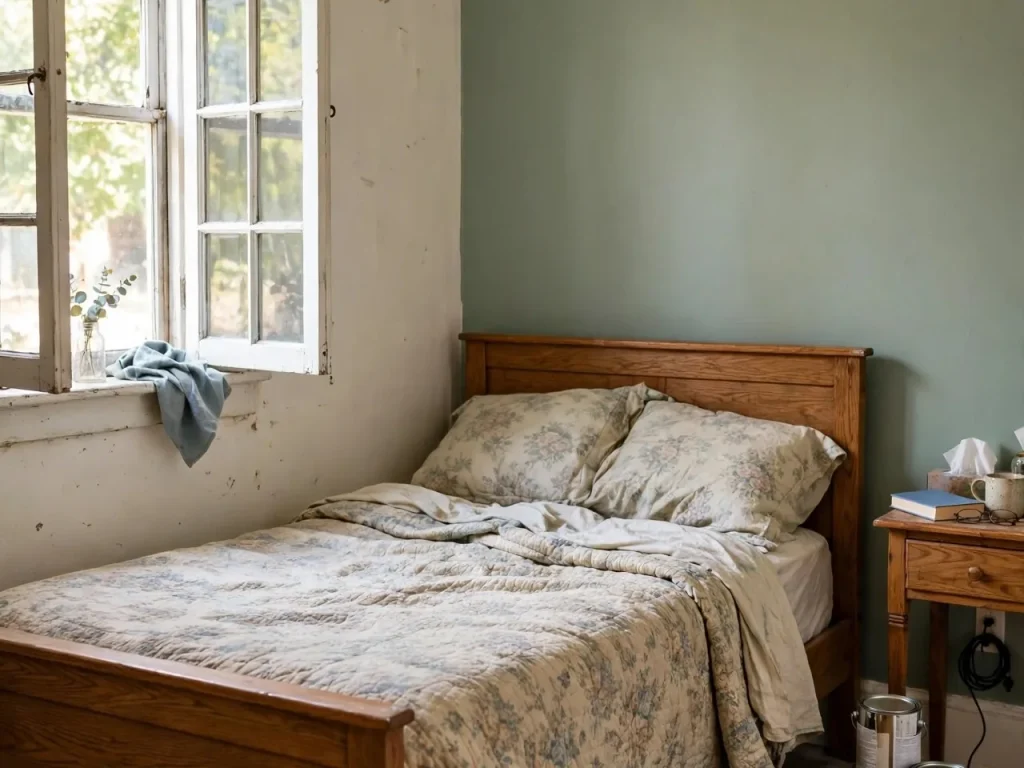
You are decorating a room for the fastest-changing person in the house. The crib that fills it this year is firewood in about three, the theme that delights a baby bores a six year old and the storage sized for onesies collapses under chapter books and a scooter with nowhere to live. Most nursery ideas pretend the calendar does not apply, so the room gets decorated three times before primary school: once for the baby, once for the toddler and once in a panic.
This page plans around the calendar instead. The 18 nursery ideas below are tagged by the band they serve: baby, toddler, 5 to 8, 9 to 12 and teen. They follow one growth rule: adjustable where a piece can be, neutral at the base and themed only in the accents you can swap in an afternoon. Safety is stated plainly on every idea it touches. Each idea carries a measurement, a budget band or a renter note. The same plan-first thinking runs through the grown-up rooms in our main bedroom ideas collection.
Before you start: measure, budget, rules
Measure the room before the crib catalogue opens. Write down the wall-to-wall width and length, the door swing, the window position and the length of the wall the crib will sit against. A standard crib takes a footprint of about 54 by 30 inches and the walkway past it needs 24 inches at its tightest, so a tape measure now decides which of the shared and small-room versions below are even possible. Note the outlets and the radiator, because the changing dresser and the feeding chair will both want the walls those things already own.
The age bands on this page are the planning unit, so tag every purchase with one before you pay. Baby covers the first two years, when sleep and feeding run the room. Toddler covers roughly ages 2 to 4, when everything drops to child height and the room itself becomes the safety boundary. The 5 to 8 band adds school, a desk and real book storage. The 9 to 12 band wants privacy and a room that no longer looks small. Teen is a different job. This page only plans the handoff to it.
Safety, stated plainly, before any of the pretty ideas. Anchor every tall piece, dressers, wardrobes and bookshelves, to the wall with the straps in the box or a $10 hardware kit. Choose cordless blinds or wind the cords onto a cleat fitted high on the frame where small hands cannot reach. At toddler height, choose rounded corners on bed frames and low tables or add stick-on corner guards for the toddler years. Keep the crib on a wall away from windows and cords. None of this is decorative and all of it comes first.
The budget bands used below are under $50, $50 to $150, $150 to $400 and $400 plus. Most ideas sit in the first two bands on purpose, because the expensive mistakes in a nursery are bought twice, not bought fancy. Renters: the theme in this system lives in peel-and-stick decals, bedding and cushions, never in paint you have to hand back. Every idea that needs a screw has a no-drill version in its practical line. If your nursery starts as a corner of your own room, the same bands apply and the layout rules are the ones in our master bedroom ideas post.
One color rule before the zones. Walls and the big pieces stay in the family that never turns babyish: warm white, sage green, dusty blue and soft clay. Pink and bright blue are welcome, but they live in the cheap layer of cushions, curtains and art, where a change of heart costs an afternoon instead of a repaint.
Sleep zone
1. Choose a convertible crib that becomes a toddler bed and then a daybed (baby to toddler)
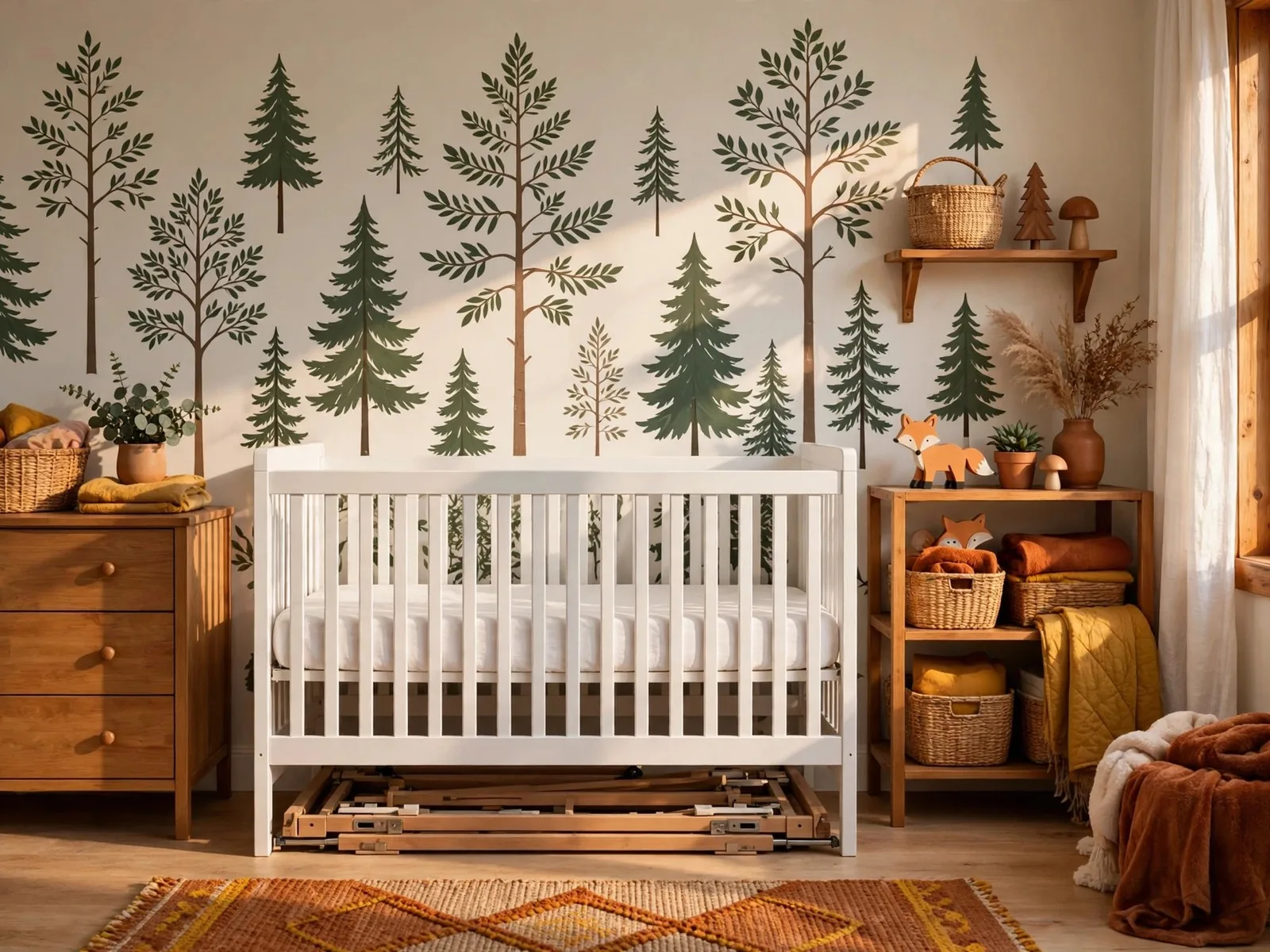
The crib is the biggest purchase in the room and the one with the shortest natural life, about two years in its first form. A convertible frame refuses that deadline. It starts as a standard crib sized for a 52 by 28 inch mattress, drops a side to become a toddler bed with a guard rail and ends as a daybed or a small sofa frame that can sit in the room for years.
Buy the conversion kit in the same order as the crib. The rails and extra panels are model-specific and brands discontinue them without warning, so the kit that costs $40 today can be unfindable in the year you actually need it. Store it flat under the crib itself, in the under-bed space idea 10 puts to work.
The catch: a convertible only pays if the frame is plain. A themed crib in a novelty shape converts into a themed daybed. The theme problem just moves house.
Budget: $250 to $500 for the crib and its conversion kit bought together, replacing two or three separate beds.
2. Build the nursery on a neutral base and swap only the accents (baby girl, baby boy and gender neutral versions)
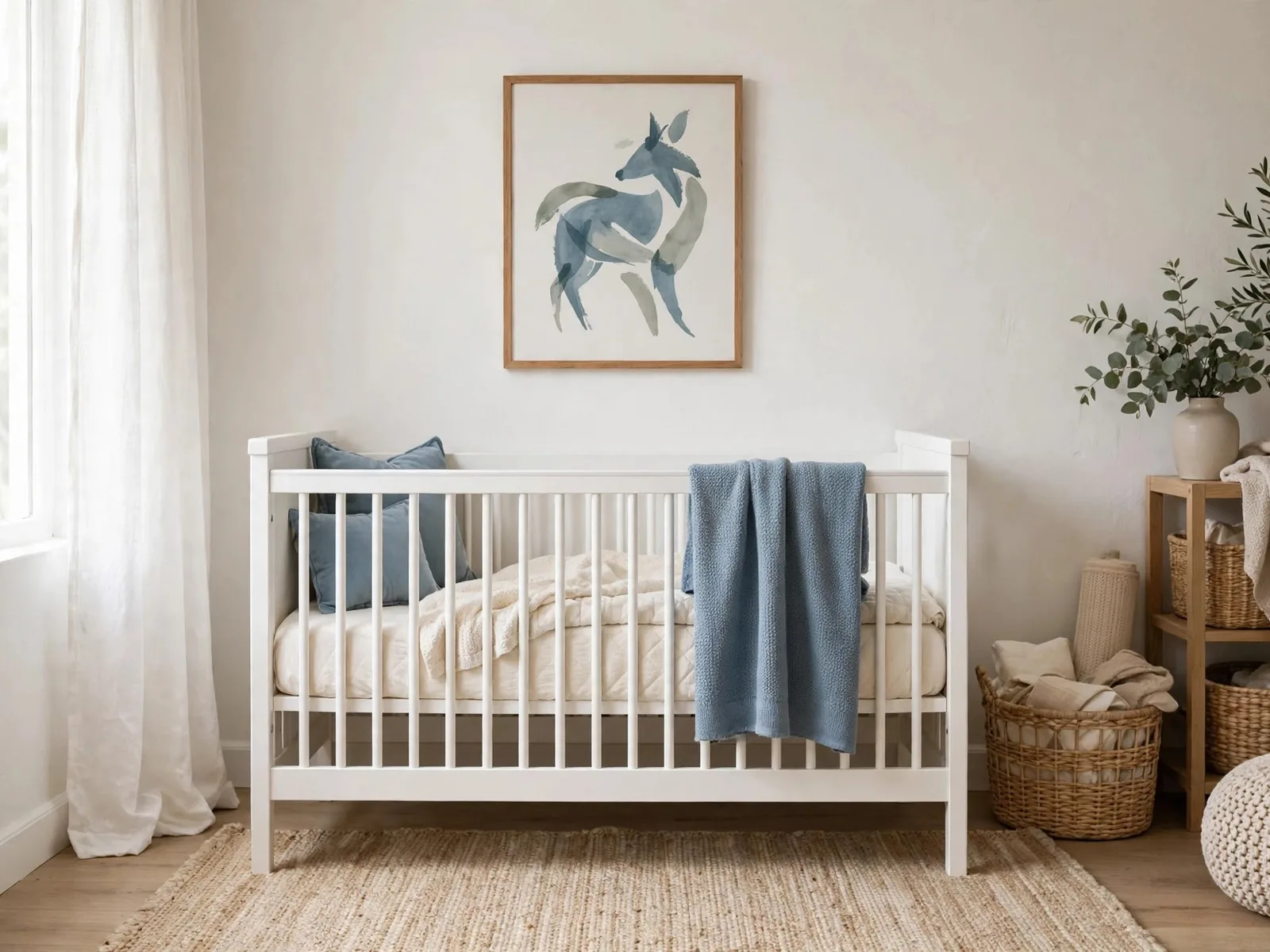
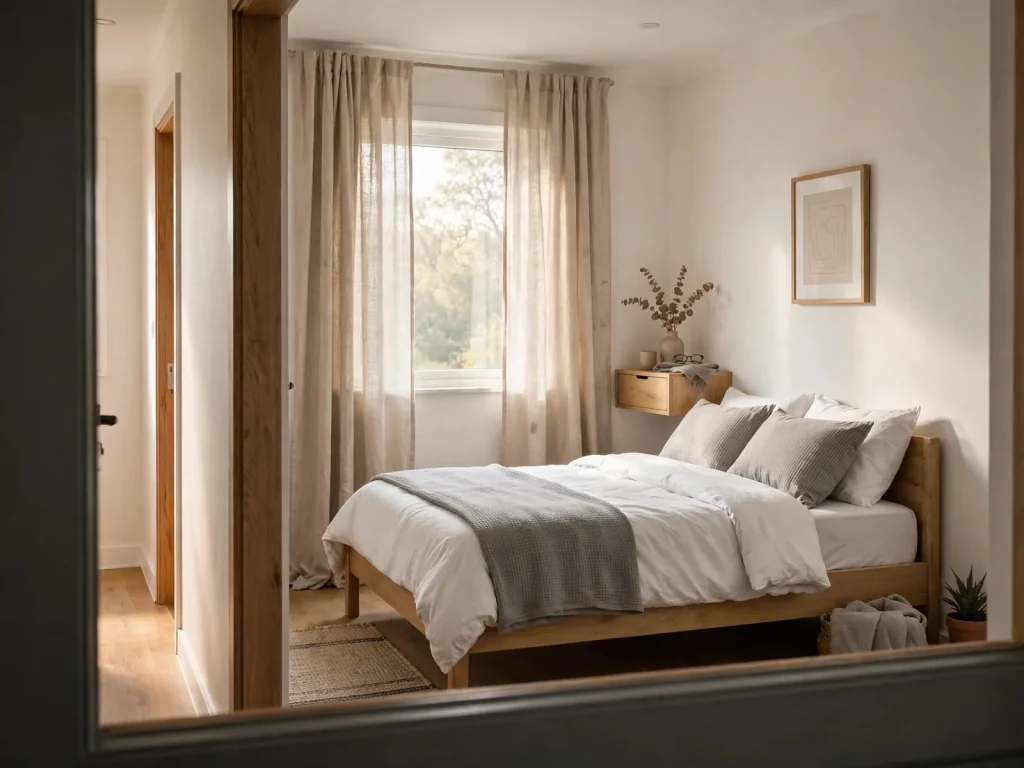
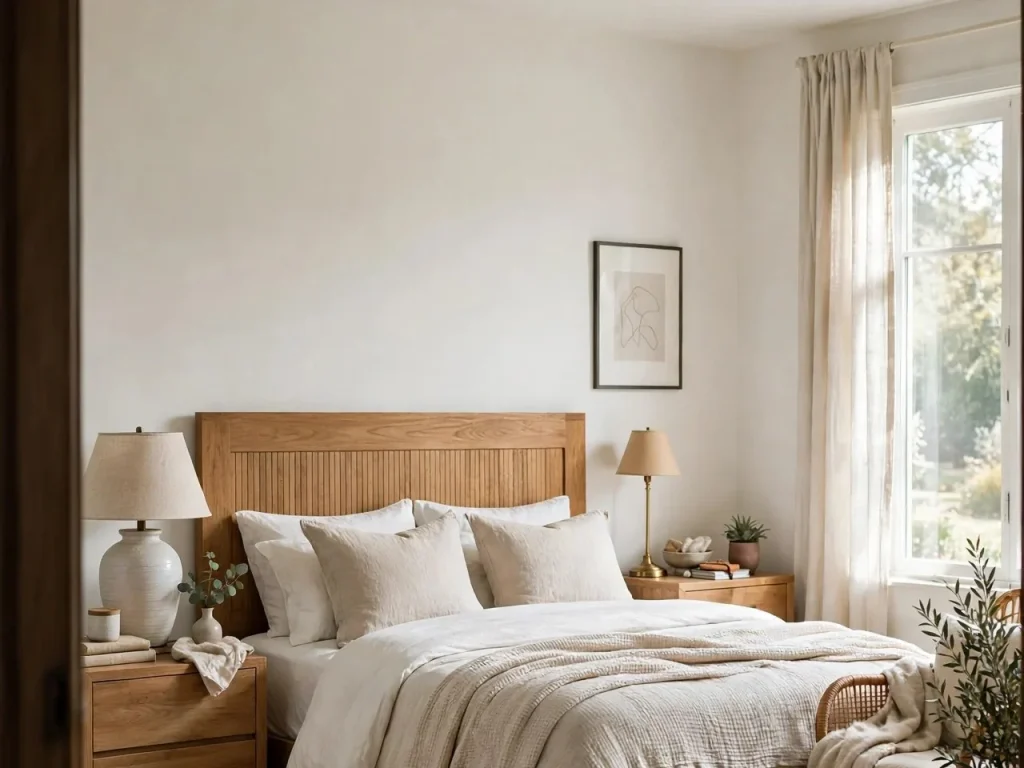
The neutral nursery is the most saved layout on Pinterest because it is the only one that survives a change of mind. The base stays quiet: warm white walls, a plain crib in white or natural wood, plain bedding and a rug in oatmeal or soft grey. Nothing in the base says girl, boy or a theme, so nothing in the base has to be replaced when the answer changes.
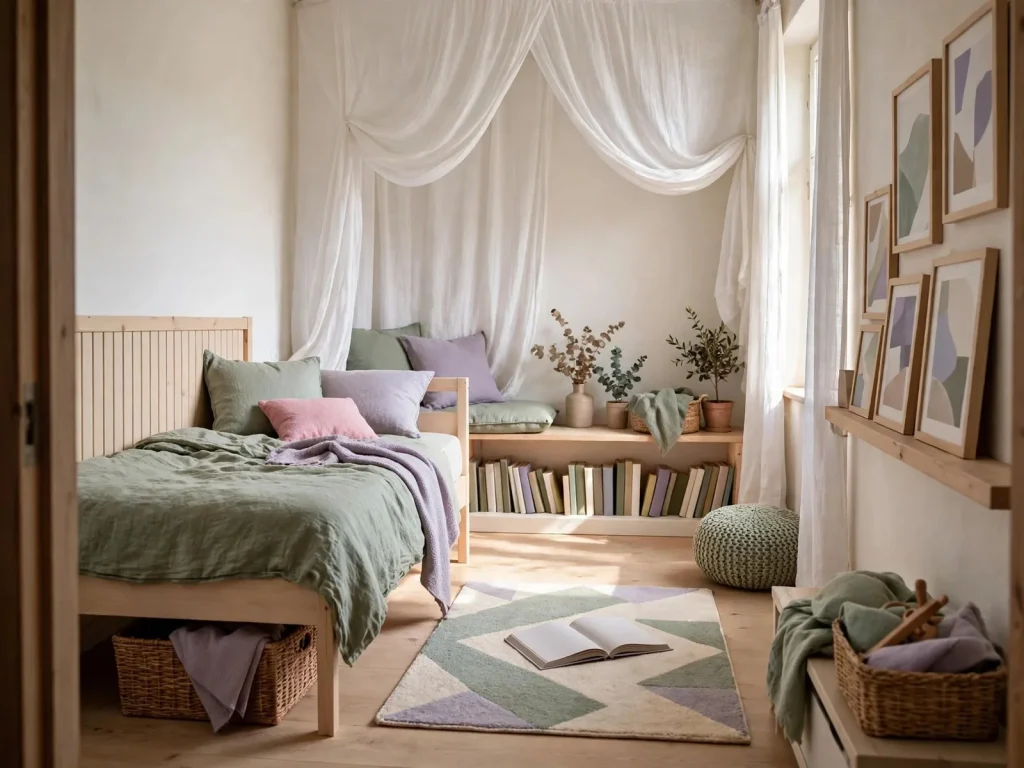
The personality rides in the accent layer. This is where the girl nursery and boy nursery versions split. A baby girl nursery might run blush and dusty rose cushions with a floral print over the crib. A baby boy nursery might run dusty blue and sage with an animal print. A gender neutral nursery runs mustard, rust and olive over the same base. The boho version, all rattan and woven texture over cream, is the one in our boho bedroom ideas post.
Toddlers develop opinions. When yours does, you replace $50 of textiles and the room is reborn. When the base itself is themed, the same change of heart costs a repaint and a new rug.
Budget: $40 to $80 for the full accent layer of cushions, one print and a throw, over a base you buy once.
3. Give the nursery theme one wall, behind the crib (baby)
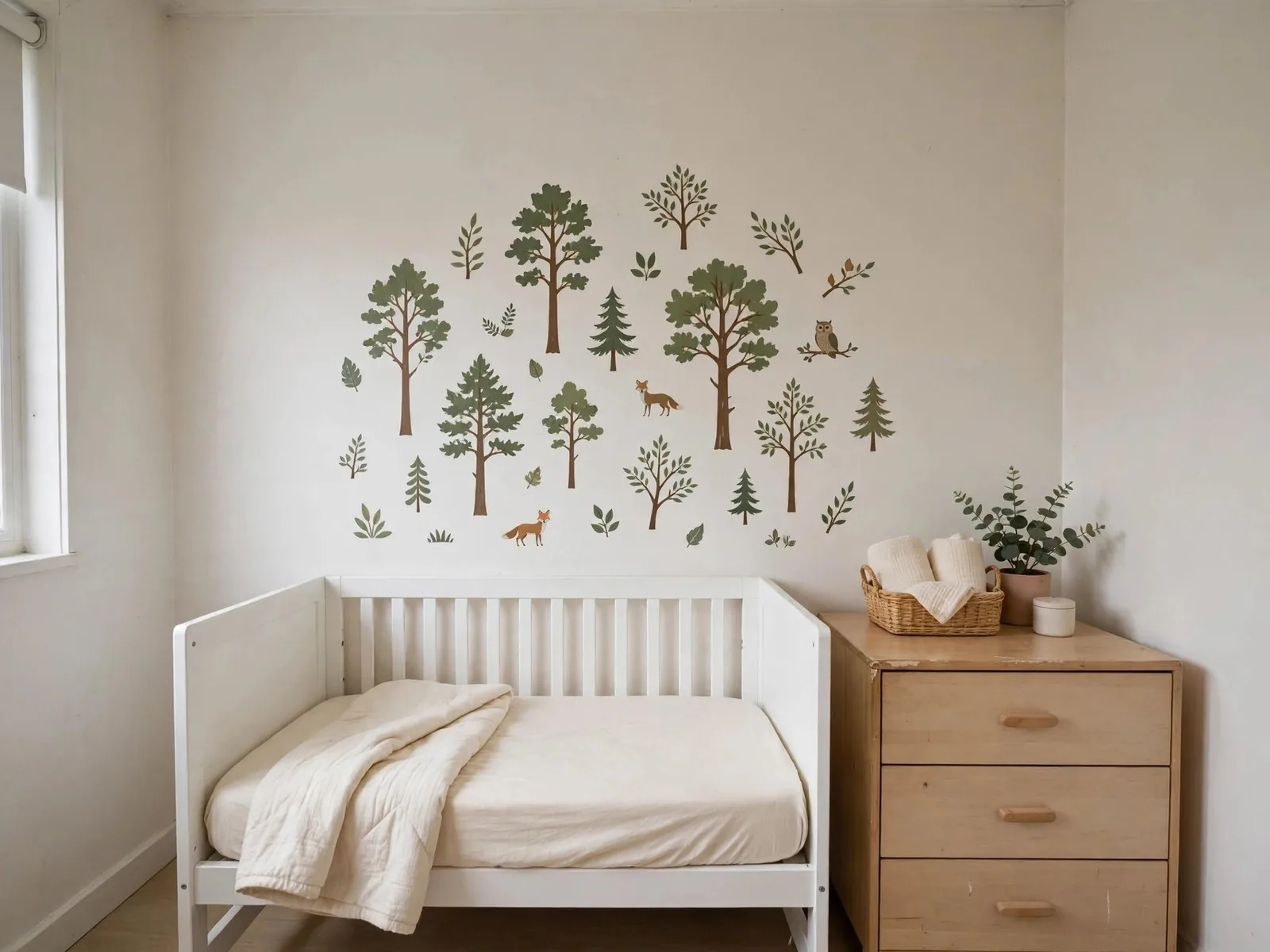
Woodland, safari, jungle and animal themes dominate the nursery theme ideas on Pinterest. The versions that last put the whole theme on one wall. Wallpaper, a painted mural or a set of large decals behind the crib carries the forest or the safari. The other three walls stay in the neutral base, so the room reads themed in photos and calm in person.
Size the feature to the crib wall, which is 8 to 10 feet wide in most rooms. Peel-and-stick wallpaper goes up in an afternoon and comes down with a hair dryer at move-out or at the theme’s funeral, whichever comes first. Our bedroom accent wall ideas post covers the same one-wall logic for grown-up rooms.
The catch is scale. Six small decals scattered over a big wall read as stickers that lost their way. One large scene, a set of trees or a single animal group at crib height, reads as a design.
Renter-friendly: peel-and-stick panels and decals carry the whole theme with no paste and no paint.
4. Plan the shared version now: two cribs or a crib beside a toddler bed (baby and toddler)
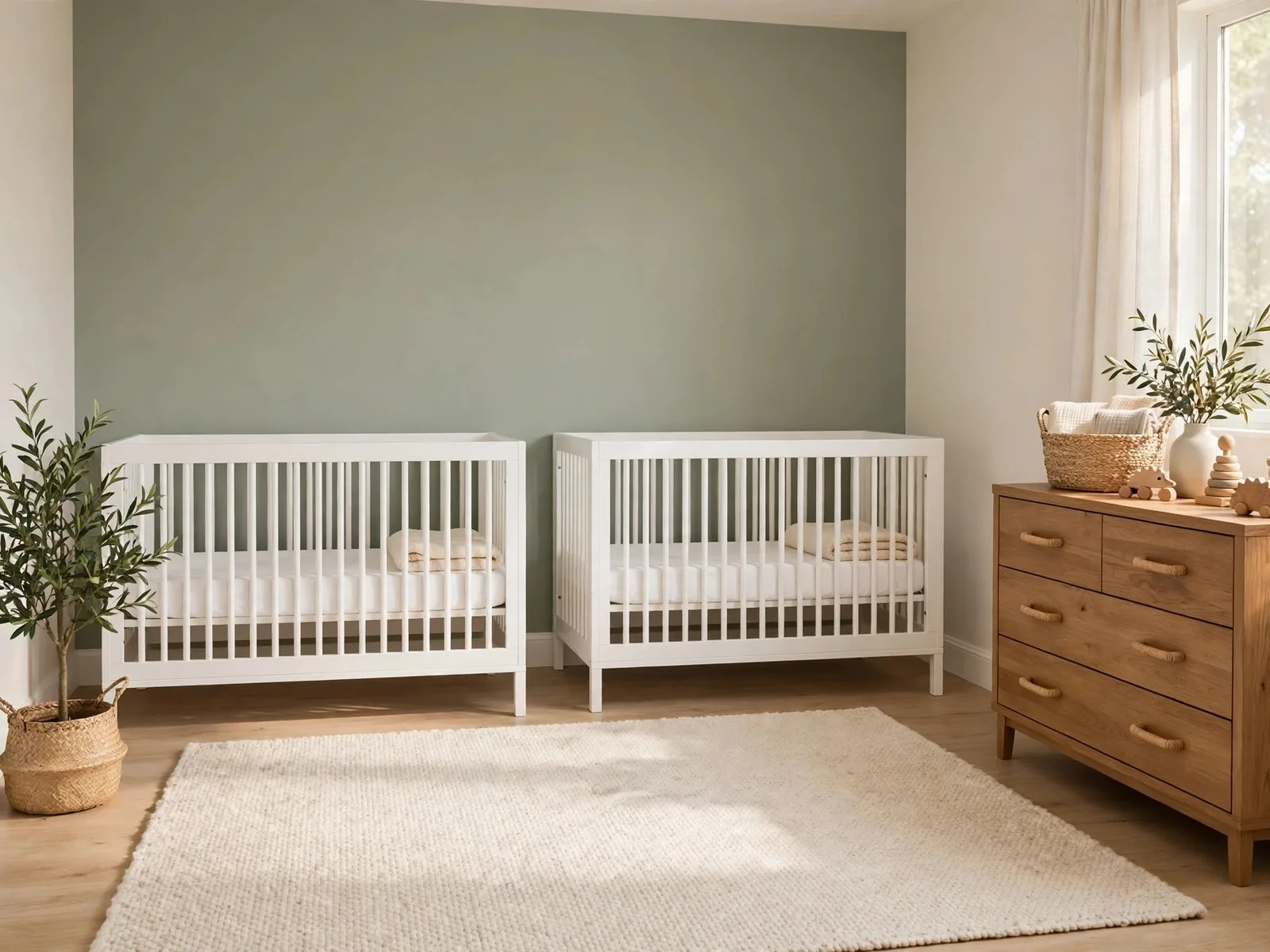
Nursery ideas for twins and for a baby arriving in a toddler’s room both run on the same wall plan. Two cribs stand along one wall with a few inches between them, which takes about 9 feet of clear wall. A crib beside a toddler bed takes about 8 feet and puts the older child at the wall end, furthest from the door.
Give each child one thing that is fully theirs even in the shared layout: their own bin, their own shelf end and their own blanket color. Share the middle of the room as play floor. The layout math, walkways of 24 inches and one clear play patch, is the same discipline our small bedroom ideas post applies to grown-up rooms of this size.
The shared plan has a second act written into it. The wall that holds two cribs today takes the bunk beds of the school years later, from about age six, with the same play floor in the middle. Buy nothing for the shared room that blocks that wall.
Measure: two cribs need about 9 feet of clear wall and a walkway of at least 24 inches past them.
5. Drop to a low floor bed when the climbing starts (toddler)
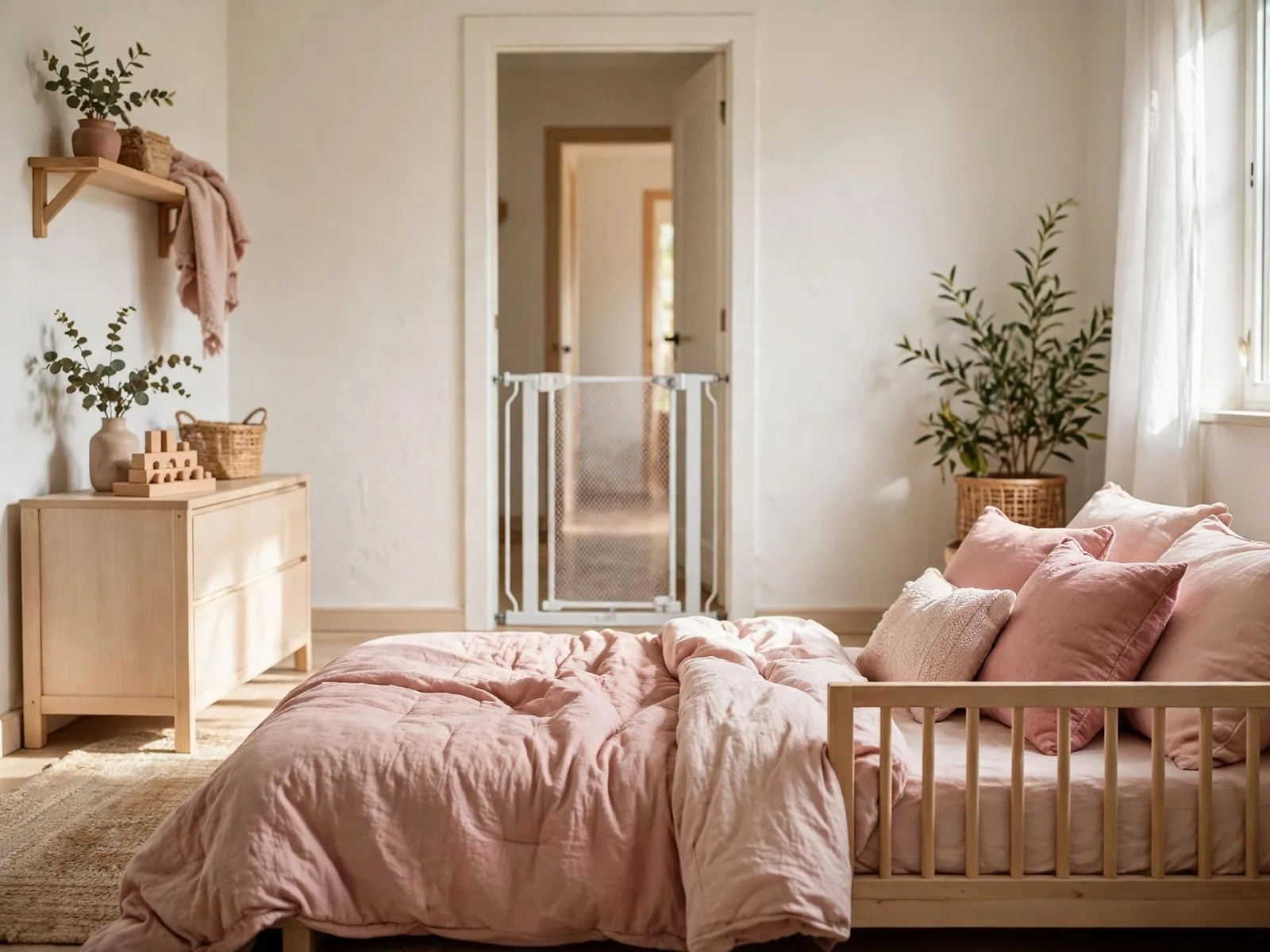
Somewhere in the second year the crib becomes a climbing frame with a mattress in it. The toddler answer is to go down instead of up: a mattress on a low frame or on slats at floor level, in the montessori style Pinterest saves constantly. A fall from 6 inches is nothing. A fall over a crib rail is not.
The price of the low bed is that the whole room becomes the crib. The door gets a gate or stays shut, every tall piece gets anchored, cords come off the floor and small objects leave the room. Rounded corners at toddler height stop being a suggestion at this stage, because the toddler now travels the room at speed, at exactly table-edge height.
Budget: $80 to $180 for a low frame and guard rail, less than any second crib-style bed.
Play and reading zone
6. Face the books out on low book ledges (baby to toddler)
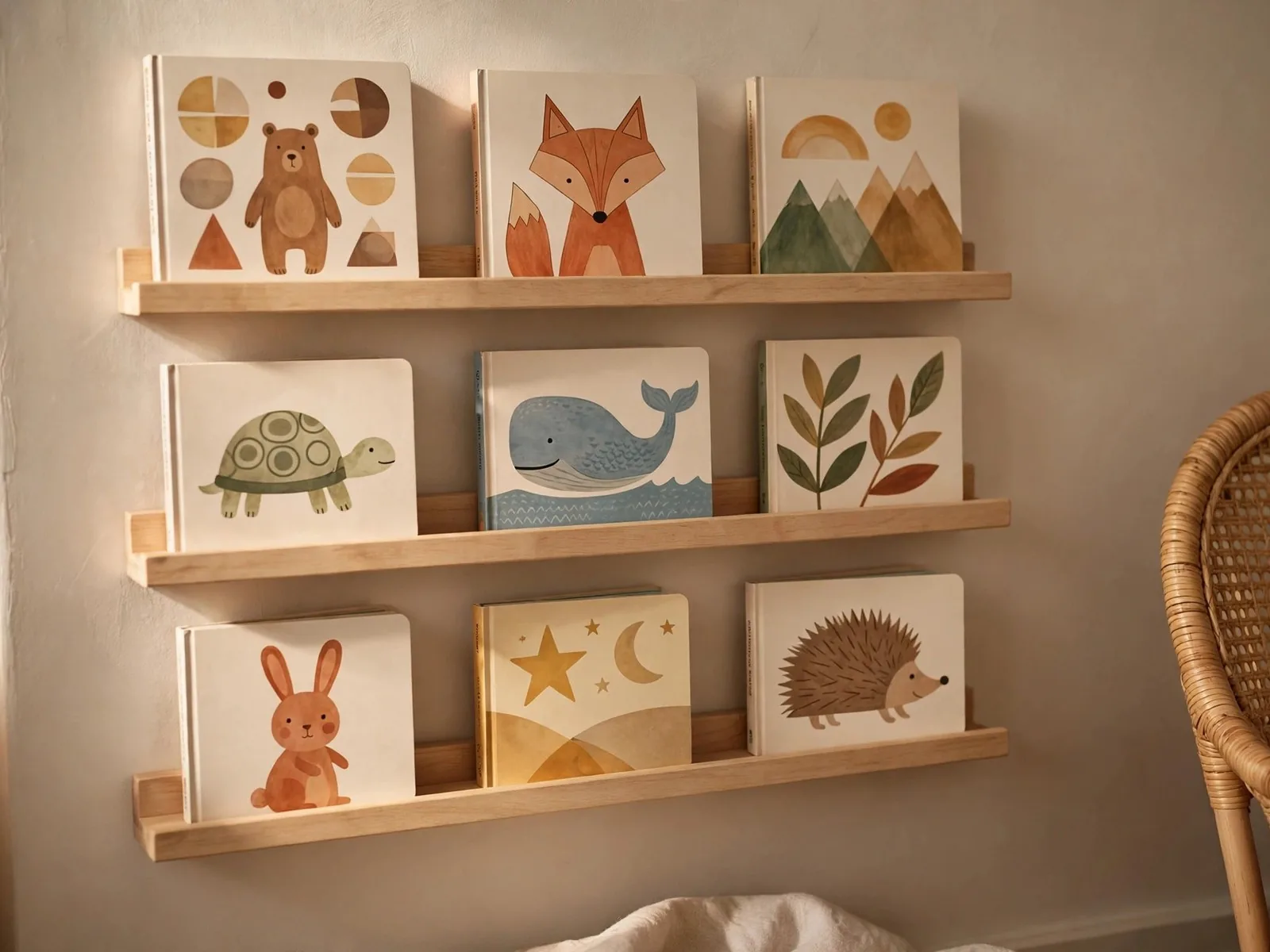
Babies and toddlers choose books by their covers, literally. A low ledge with the covers facing out works like a shop display at exactly the height of its customer. Fit two or three ledges with the lowest at about 12 inches off the floor, so a sitting baby can see the bottom row and a standing toddler can pull from the top one.
Each ledge holds four to six board books, which is the point. A tight row of thirty spines is a library for adults. Six covers facing out is a choice a toddler can actually make. The rest of the collection waits in the rotation box from idea 11.
Needs drilling: ledges screw into studs or solid anchors, because toddlers haul themselves up on anything at grab height.
7. Make the feeding chair corner the reading corner later (baby to 5 to 8)
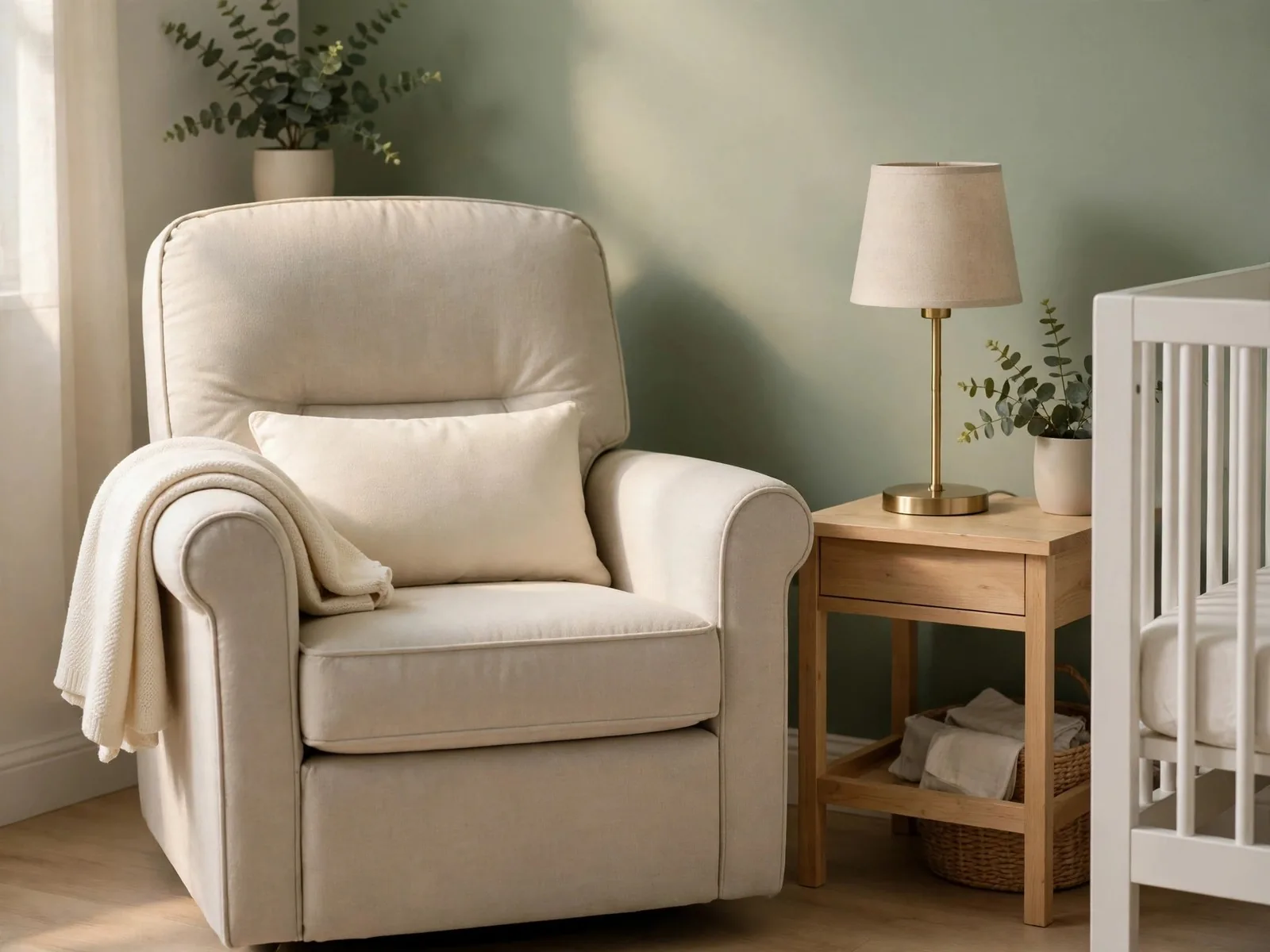
Every nursery needs one adult-sized comfortable chair, the rocking chair or glider where feeds and settling happen at 3 a.m. Claim a corner of about 36 by 36 inches for it, with a small side table and a lamp you can dim. It is the only seat in the room and it will be used every single day of the baby band.
This corner is the room’s best long-term investment after the crib. The feeding chair becomes the story chair of the toddler band and the reading chair of the 5 to 8 band without moving an inch. Choose a plain fabric in the neutral family rather than a nursery print. A plain chair can end its career in the living room.
Budget: $60 to $150 secondhand for a solid glider or rocker, the most plentiful used buy in the whole nursery.
8. Let one washable rug mark the play floor (baby and toddler)
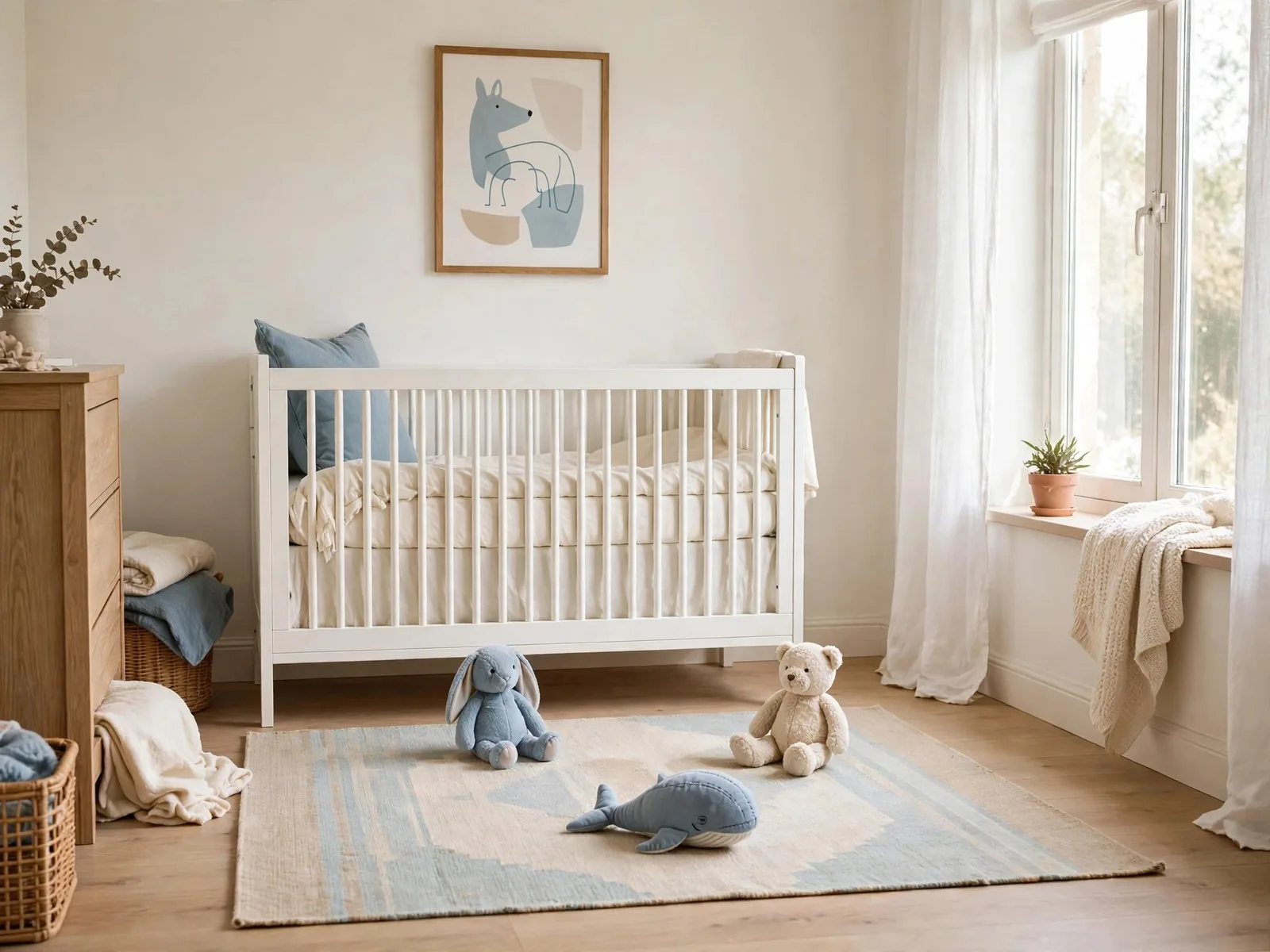
The play zone needs no furniture at all in the baby band. It needs a boundary. One washable flat-weave rug, 5 by 7 feet in a small room or 4 by 6 under the chair corner, marks the patch where tummy time, first crawling and later block towers happen. Everything soft and washable lives inside its edge.
Washable is the load-bearing word. This rug will meet every liquid a baby produces, so it goes in a home machine or it does not belong in the room. Put a non-slip pad under it from day one, because a rug that travels on hard floors takes the crawling lessons with it.
Budget: $60 to $140 for a machine-washable rug and its pad, bought once for the whole baby and toddler span.
9. Keep the first toys on one low open shelf (toddler)
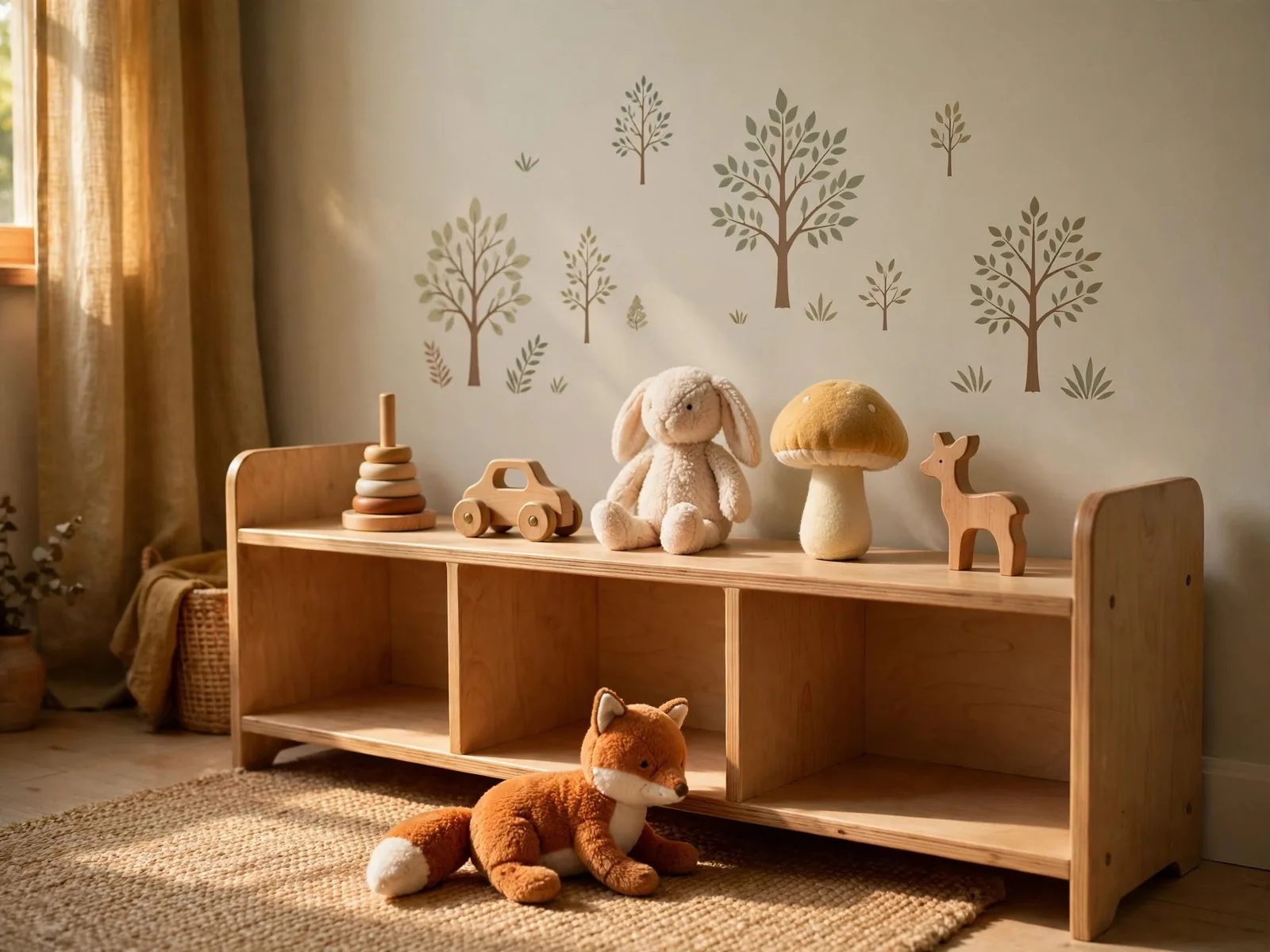
The montessori shelf is the play zone’s storage and its display in one piece: a low open shelf, no more than 30 inches high, holding four to six toys in a single row. A toddler can scan the whole offer in one look, carry one toy to the rug and carry it back, which is the entire tidy-up system at this age.
Anchor the shelf to the wall before the first toy goes on it, because a low shelf is also a climbing ladder in toddler logic. Heavy toys live on the bottom shelf and the lightest go on top, so anything that does get pulled down arrives gently.
Measure: top shelf at 30 inches or lower, so a toddler reaches it without climbing.
Storage that a child can run alone
10. Slide under-bed bins under the crib (baby to toddler)
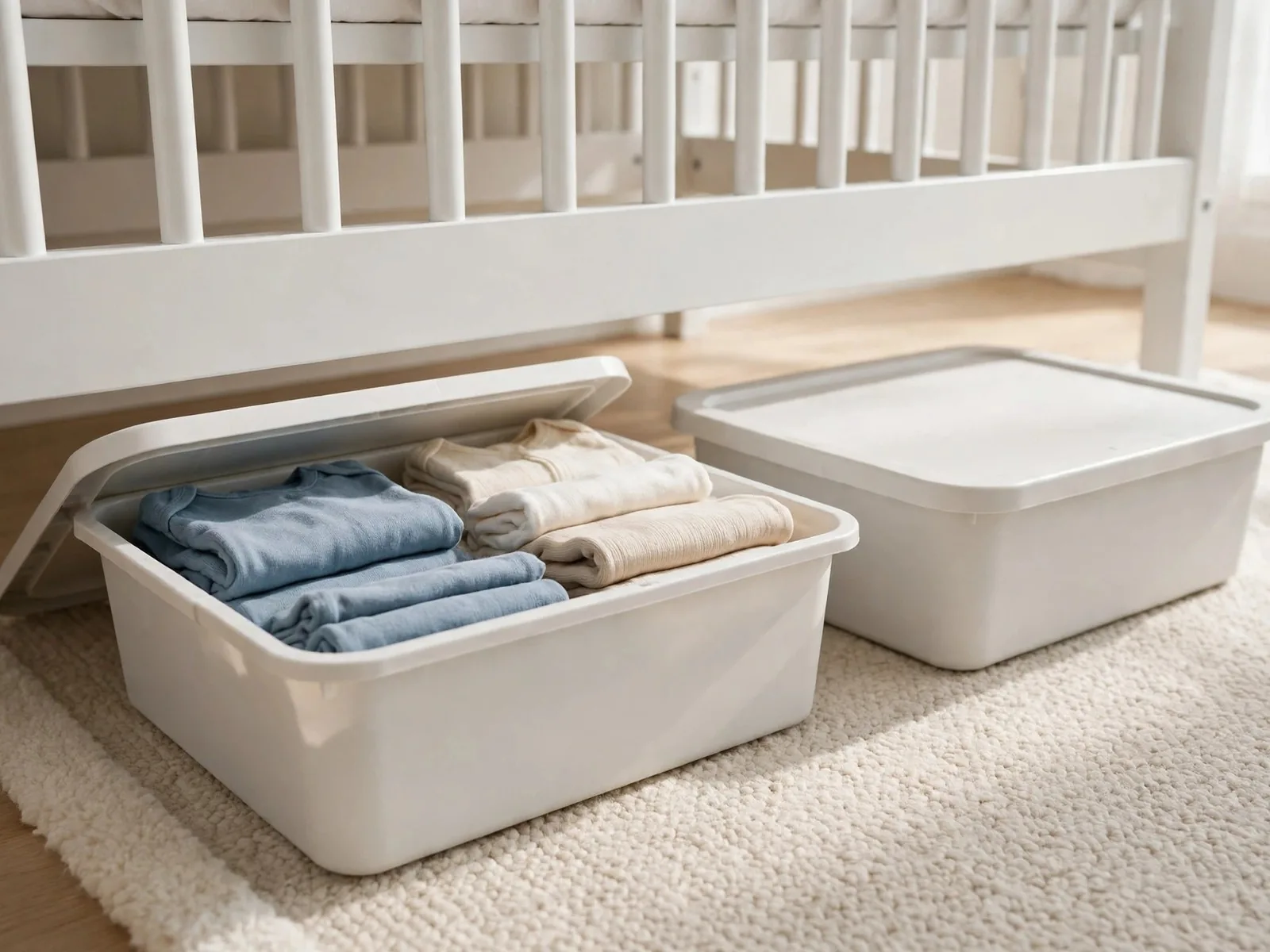
The space under the crib is the nursery’s free storage and most rooms waste it. Two low bins on that footprint hold the next size of clothes, folded and labeled by size, so the 3 a.m. growth spurt is a bin swap rather than a shopping trip. Under-bed bins are the one storage type that survives every bed change on this page, crib to toddler bed to twin.
Measure the clearance before you buy the bins. Most crib bases sit 6 to 8 inches off the floor, so bins need to be 6 inches tall or under, with lids that sit flush. Wheeled bins earn their keep here, because a bin you have to drag is a bin that stays shut.
Measure: bin height 6 inches or under for most crib bases; check yours before ordering.
11. Rotate the toys: one box out and one box away (toddler to 5 to 8)
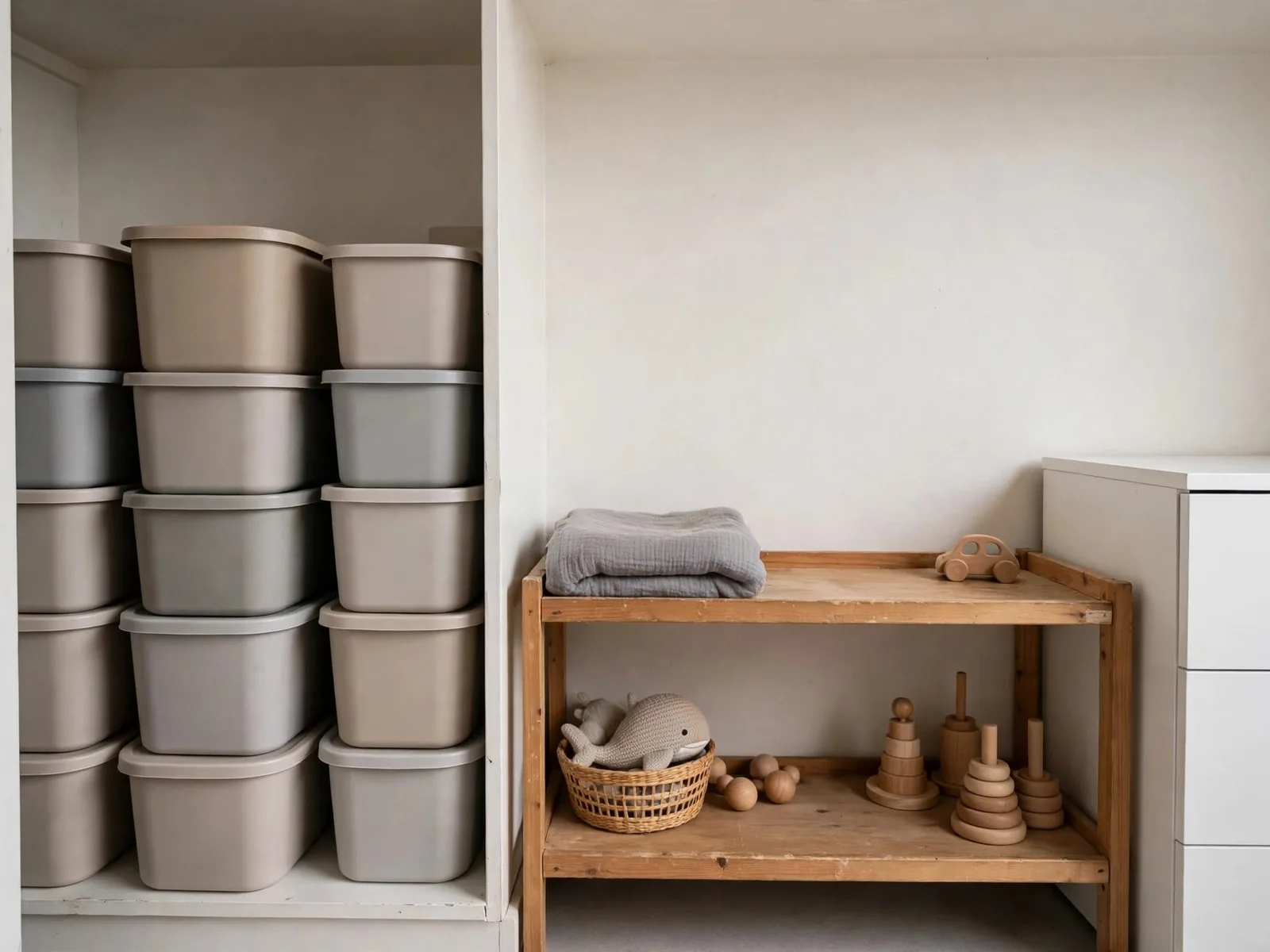
Toy rotation is the cheapest storage idea on this page and the one visitors disbelieve until they try it. Split the toys into two or three boxes. One box lives on the low shelf and the rest live in the closet or under the crib. Swap the boxes every two weeks and the returned toys land like new arrivals.
Rotation is also what keeps the play floor idea honest, because a room holding every toy at once has no floor left to play on. The discipline is the same one our small bedroom storage ideas post uses for grown-up overflow: a fixed home for the waiting stock and a hard limit on what is out.
Budget: $20 to $40 for two or three lidded boxes that stack in a closet.
12. Turn the dresser top into the changing station (baby)
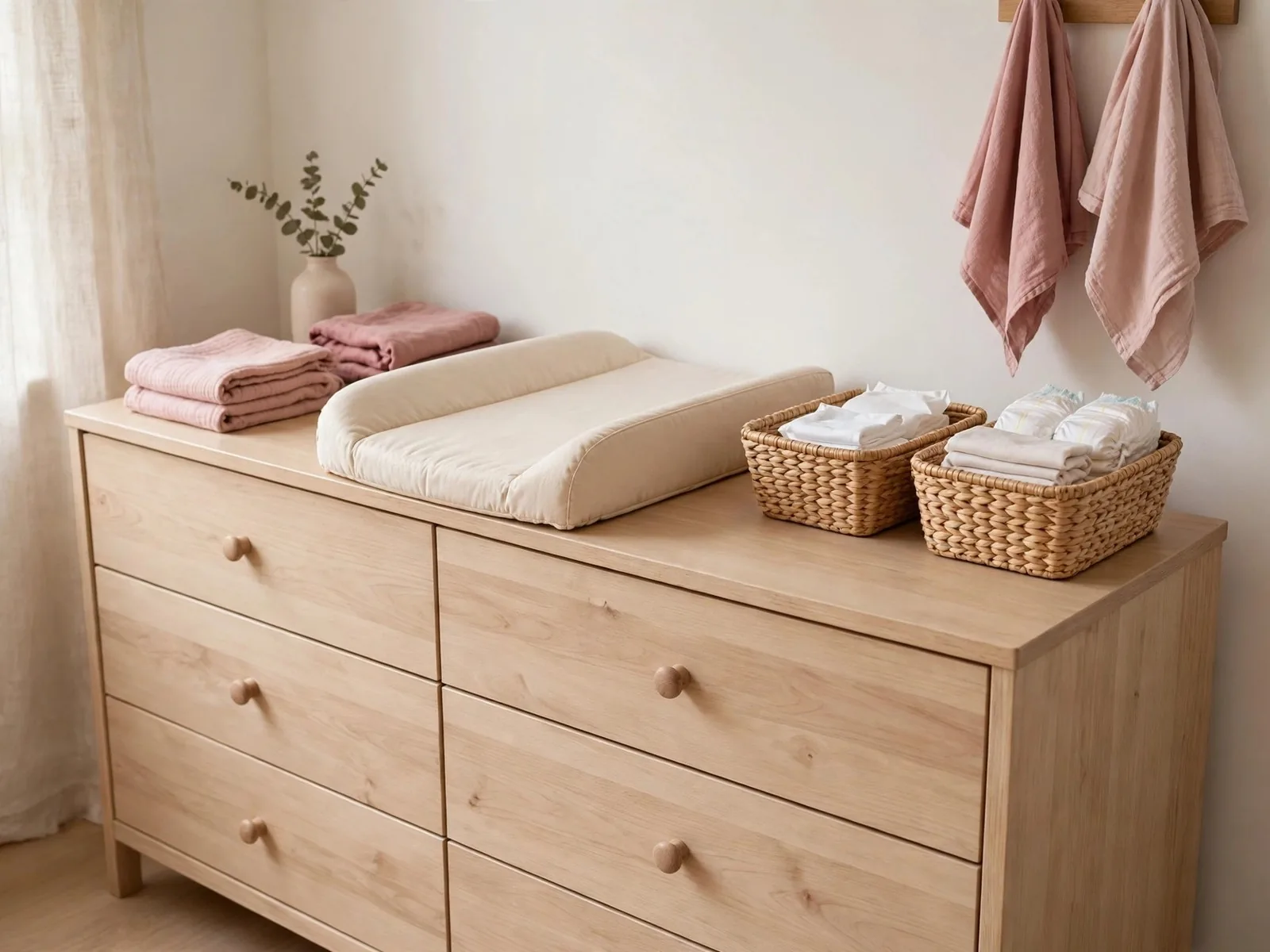
A separate changing table is a single-job furniture piece with an eighteen-month career. A full-size dresser does the same job with a contoured changing pad on top and then goes back to being a dresser. The pad sits at one end. Diapers, wipes and cream live in the top drawer or in baskets at the other end, all within one hand’s reach.
Keep one hand on the baby at the pad at all times. Never let the setup tempt you into a mid-change trip across the room, which is why everything for the change lives in the station itself. When the diaper years end, the pad lifts off in thirty seconds and idea 14’s dresser starts its second career without a scar.
Budget: $40 to $90 for the pad and baskets, against $200 plus for a dedicated changing table that expires.
13. Give them a low cube shelf they can open and empty alone (toddler to 5 to 8)
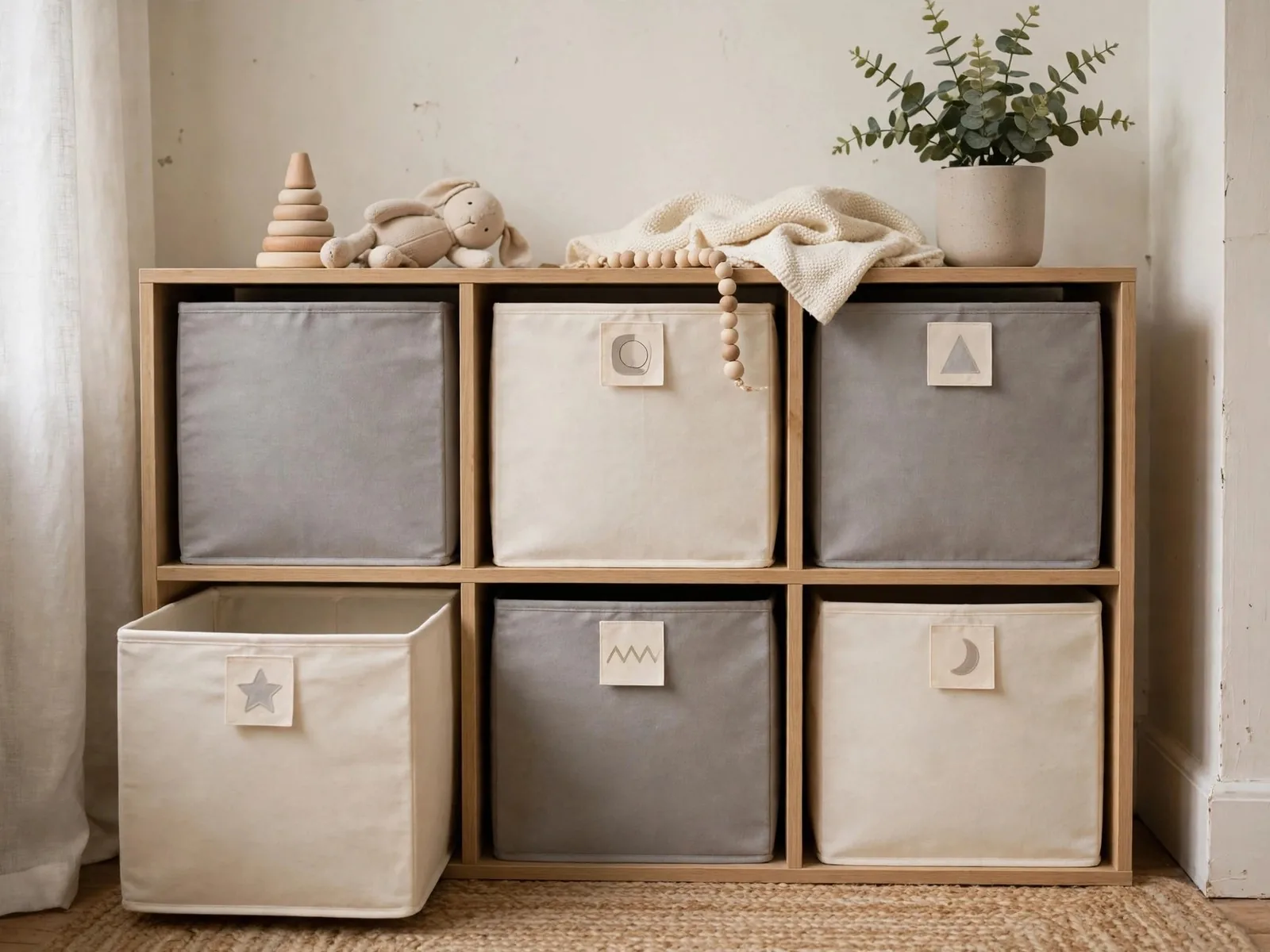
The cube shelf is the nursery’s workhorse storage on Pinterest, in 4 cube and 6 cube versions everywhere. The nursery version runs two cubes high. At about 30 inches tall it matches toddler reach end to end. Fabric bins fill half the cubes for the jumble. The open cubes hold the big books and the favorite truck where they can be seen.
Put picture labels on the bins, a sock, a car, a block, drawn or printed. A child who cannot read yet can still match the picture and put things away alone, which converts tidy-up from an adult performance into a two-minute job the room’s owner can run.
Needs drilling: cube units get anchored to the wall at this height too, because toddlers climb storage like furniture.
The pieces that grow with them
14. Choose a plain full-size dresser in a grown-up finish (baby to teen)
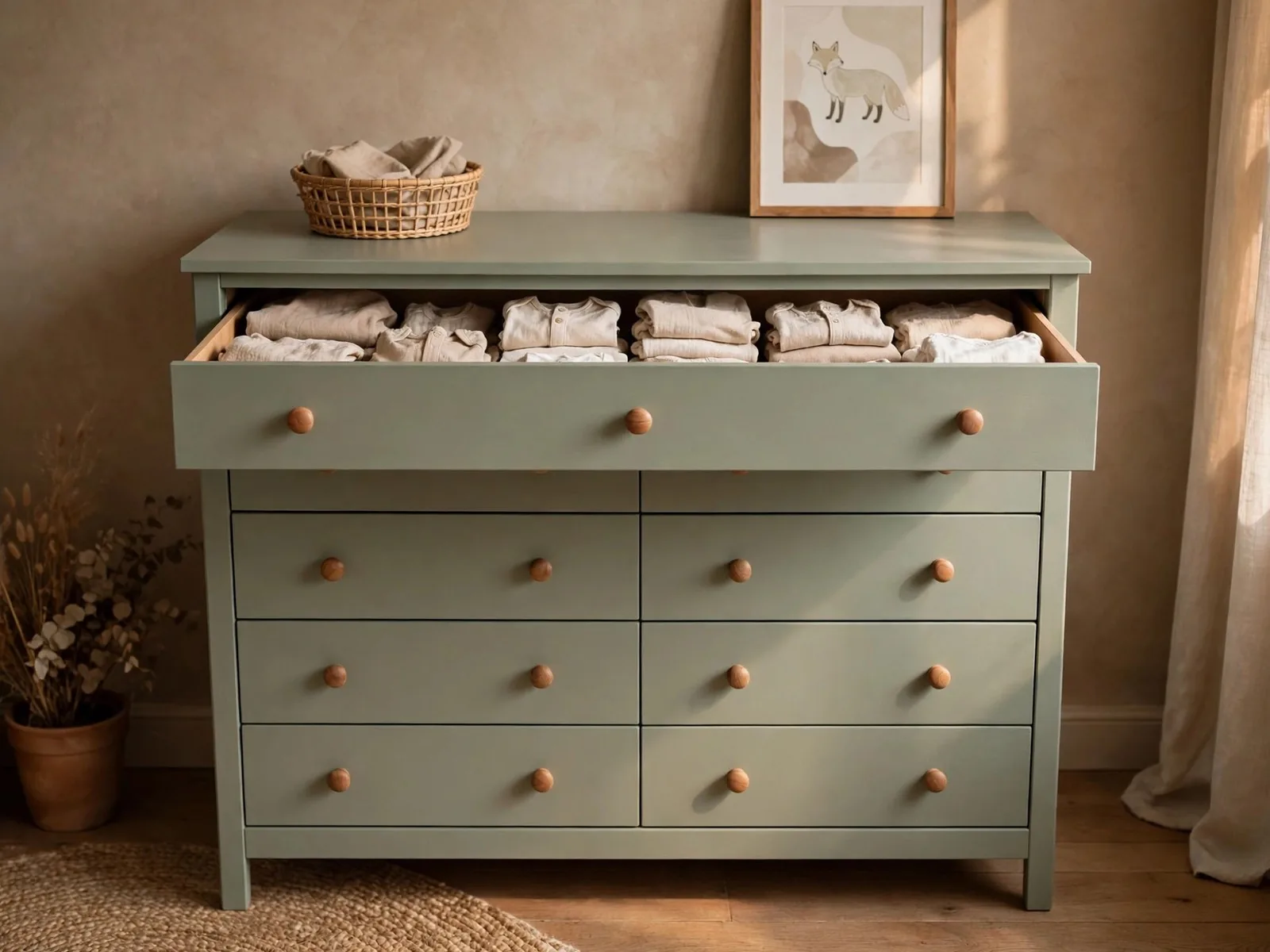
Nursery dressers, short, themed and sized for folded onesies, expire with the onesies. A plain six-drawer dresser in white, warm wood or soft sage holds the same baby clothes in two drawers and a teenager’s entire wardrobe later. It is the changing station of idea 12 and the anchor piece of the whole room, the single heaviest argument for buying adult furniture from day one.
Choose drawers that run smoothly on one finger, because you will open them one-handed, holding a baby, for two years. Soft-close runners are worth their small premium here and nowhere else in the room. Skip the matching nursery set entirely; the dresser outlives the theme by design.
Budget: $200 to $400 once for the dresser that serves baby to teen, against two or three sized-down dressers.
15. Anchor one full-height wardrobe instead of three small storage pieces (toddler to teen)
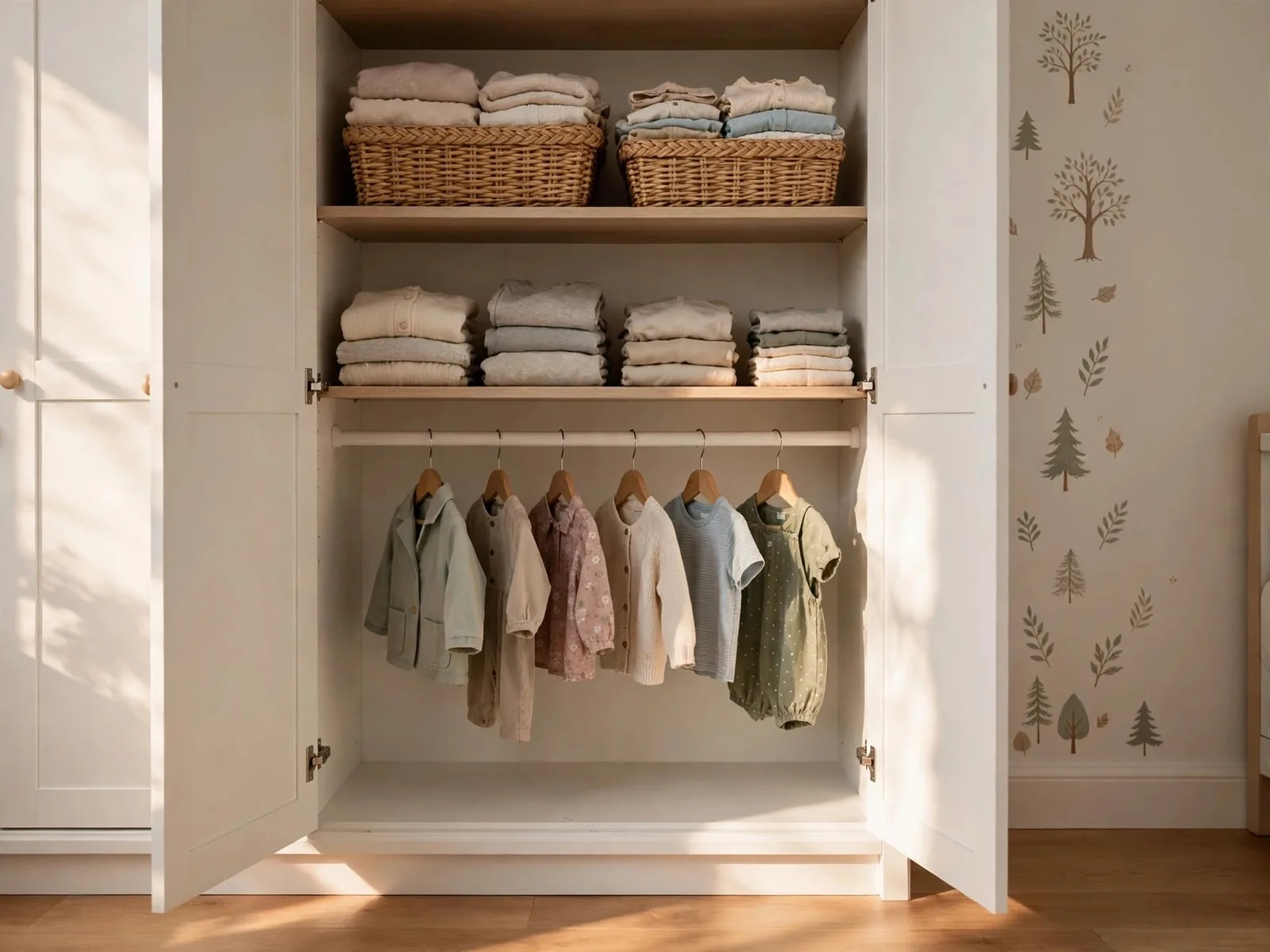
Clothes storage is where nursery spending leaks. A small wardrobe, a toy chest and a set of drawers each solve one year and then crowd the room. One full-height wardrobe with a low rod fitted now holds the whole span: toddler clothes on the low rod, next sizes and bedding on the shelves above and the rod raised in ten minutes when the 5 to 8 band arrives.
The anchor strap is part of this idea, not an accessory. A full-height piece in a room with a climbing toddler gets fixed to a stud before the first hanger goes in. It is the one hole in the wall this page insists on. Renters should ask for it by name, because landlords rarely refuse a safety fixing in writing.
Needs drilling: one anchor strap into a stud, fitted before the wardrobe is loaded.
16. Paint the walls a color that refuses to be babyish (baby to teen)
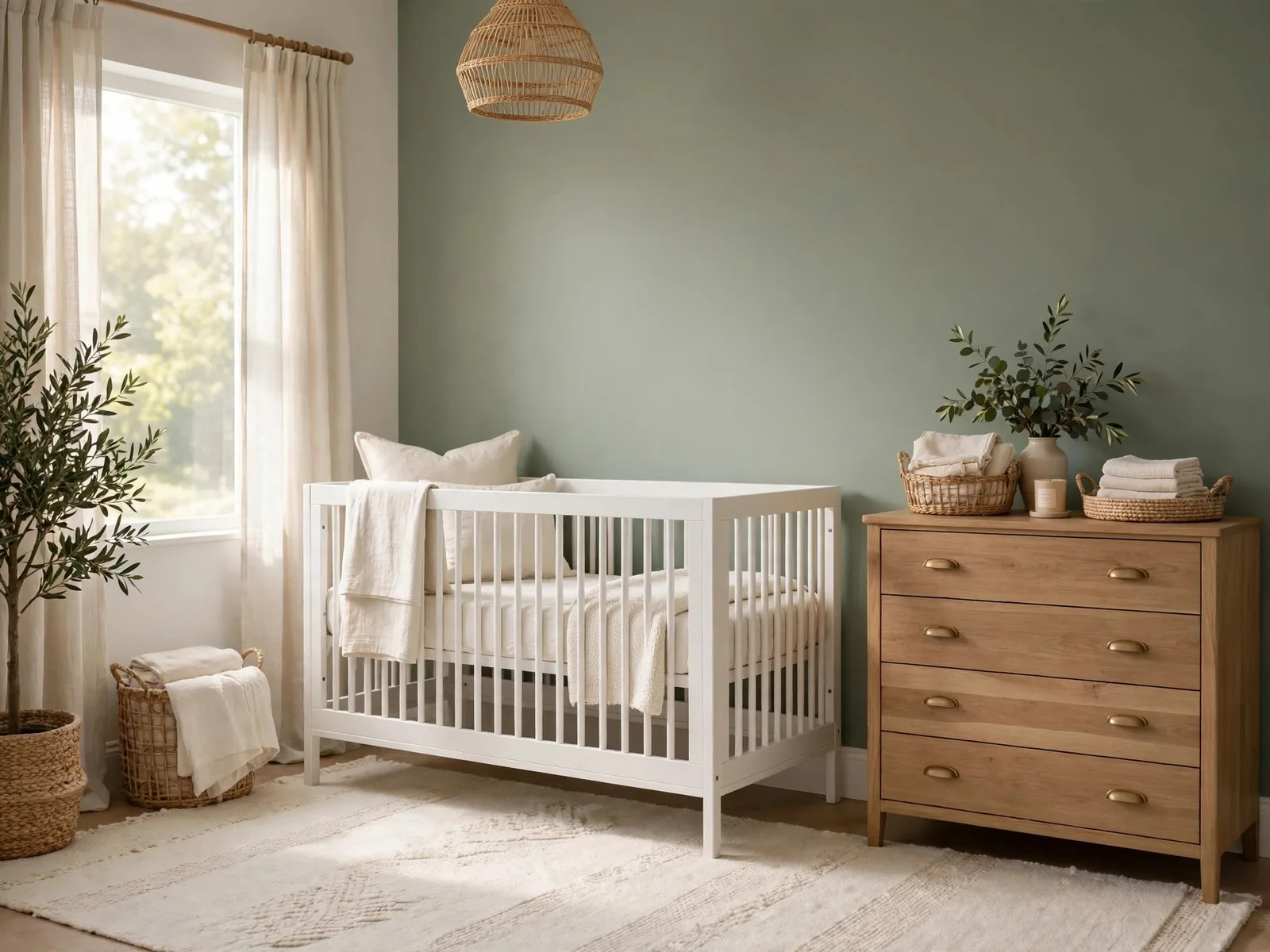
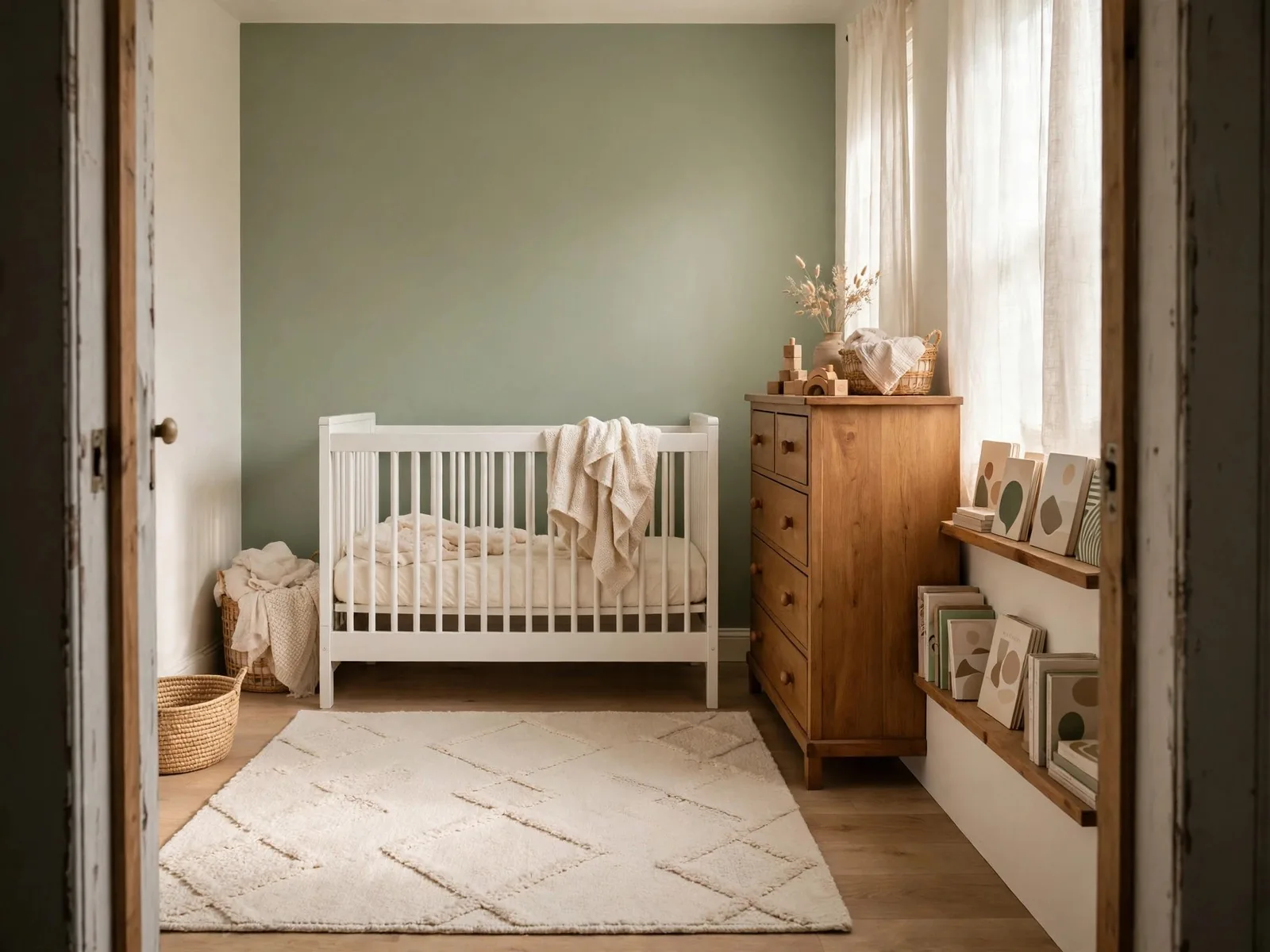
Green is the nursery color story of the last few years on Pinterest, sage green above all, because green solves the babyish problem in both directions. A sage or soft olive nursery reads gentle beside a crib, playful beside toddler textiles and calm beside a teen desk. The same logic covers dusty blue and soft clay. Our bedroom color ideas post works through the full palette for the grown-up rooms.
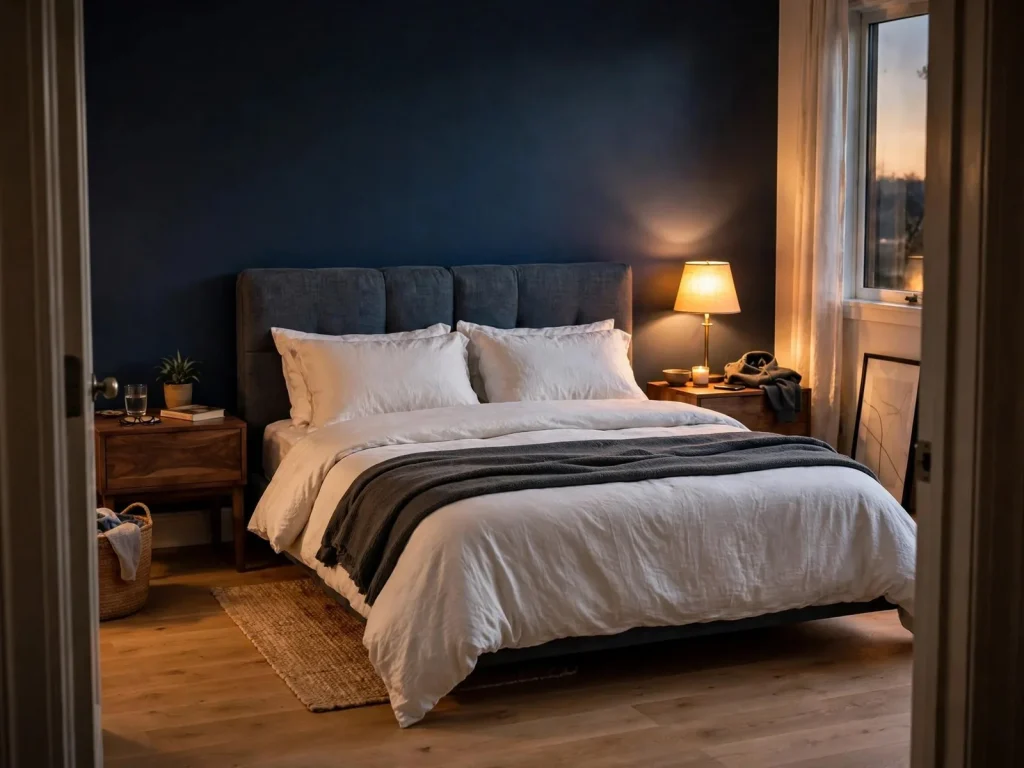
The deep version works too. A forest or emerald accent behind the crib is dramatic now and genuinely sophisticated later, the same family that carries the grown-up rooms in our moody bedroom ideas post. What dates a room is not depth of color. It is a baby print at adult scale, on all four walls, in a color mixed for exactly one age.
Renter-friendly: if paint is banned, run the same color in the curtains, the rug and the chair fabric. Leave the walls warm white.
17. Layer the light: a dim lamp for feeds and a night light that stays (baby to 9 to 12)
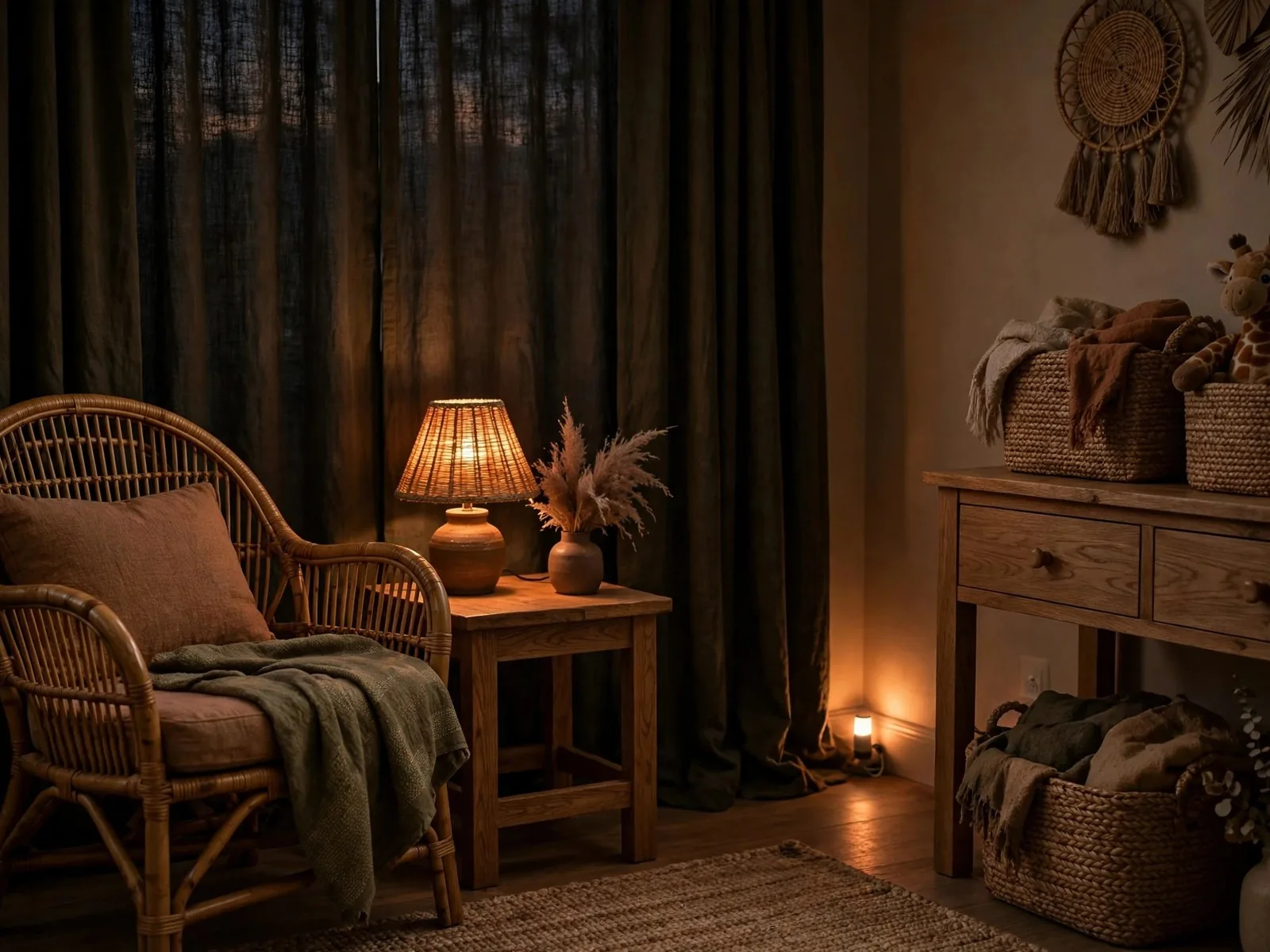
Nursery light has two jobs that fight each other. Feeds and changes at night need enough light to work by, in a warm dim glow that does not fully wake the baby or you. Play needs honest daylight-level brightness. The answer is layers: blackout curtains or a blackout blind for sleep, a dimmable lamp by the chair for the night shift and the ceiling light reserved for play and cleaning.
Every element of that stack survives the bands. The blackout layer serves toddler naps and school-night sleep alike, the dim lamp becomes the reading lamp of idea 7’s corner and the night light that starts by the crib ends by the door of the 9 to 12 room, lighting the hallway trip. Our bedroom lighting ideas post plans the same layered approach for grown-up rooms.
Budget: $30 to $70 for a dimmable lamp and a warm night light; blackout lining for existing curtains costs less than new curtains.
18. Plan the next bands now and leave the space they need (5 to 8, 9 to 12 and teen)
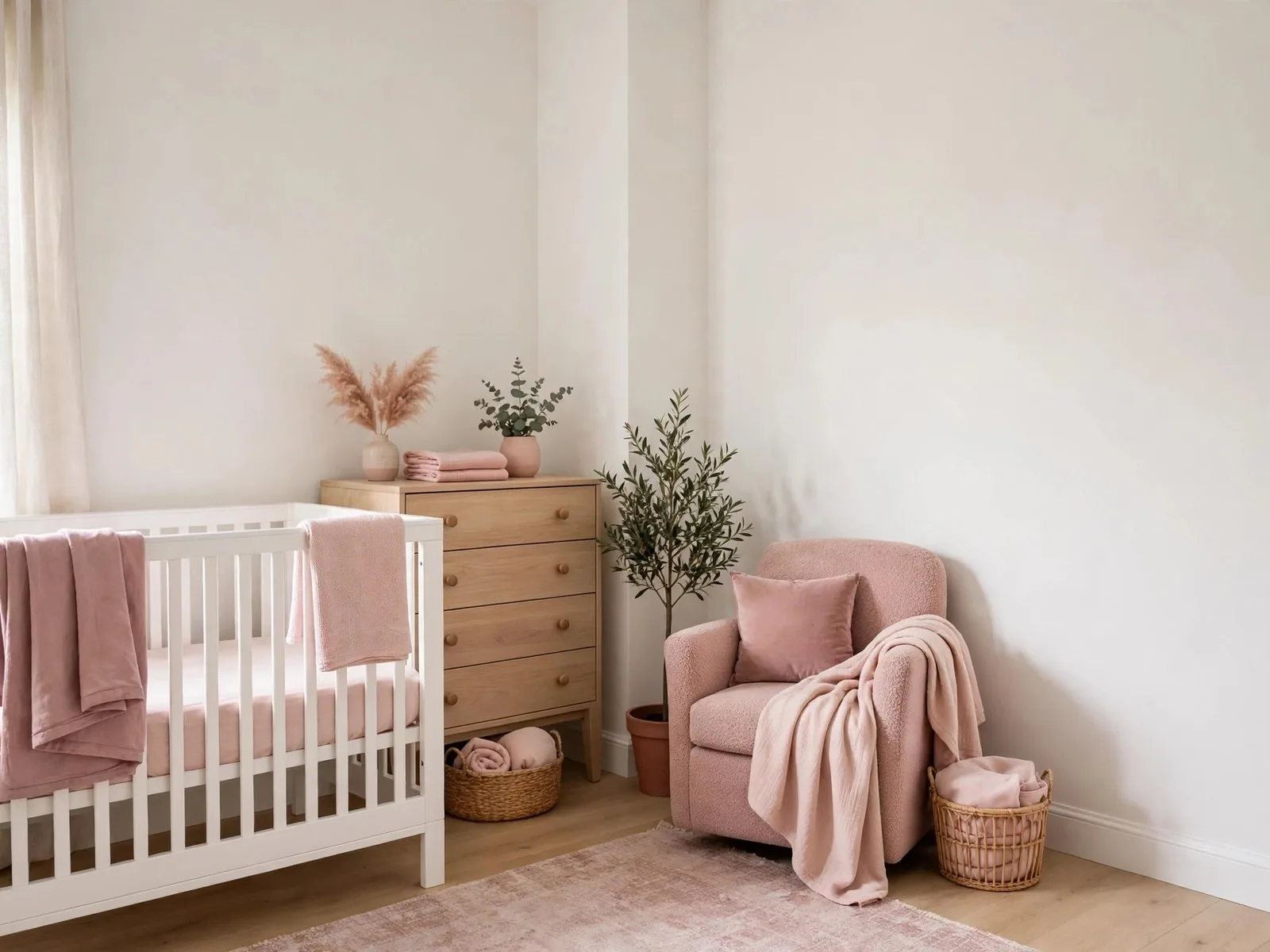
The growth plan ends with empty space, deliberately. Keep one stretch of wall, about 40 inches, free of fixed furniture. That gap is the desk corner of the 5 to 8 band. Filling it today with a toy kitchen guarantees a furniture eviction in the first school year. The reading corner of idea 7 is already the 9 to 12 band’s retreat, waiting only for a bigger book ledge.
The teen handoff, when it comes, is paint, textiles and one grown-up buy, a real headboard for the bed the convertible crib became. Our headboard ideas post is the shopping list for that day. Through every band the theme layer keeps swapping with birthdays and seasons. The festive version of that swap is the one in our christmas bedroom ideas for kids post.
Measure: keep 40 inches of wall clear for the desk that arrives with the 5 to 8 band.
Nursery Ideas on a budget
Spend in the order the room fails, not the order the shops display. The first $50 buys the safety kit and the small tools: anchor straps, a cord cleat or cordless blind fittings, corner guards and picture labels for the bins. The next $100 goes to storage that multiplies the room, the under-crib bins and the rotation boxes. Hold the serious money for the two buys that must not be made twice, the convertible crib and the full-size dresser. Our bedroom makeover ideas post runs the same spend-in-order discipline on grown-up rooms.
Secondhand is the nursery’s superpower, because children outgrow furniture long before they wear it out. Gliders, cube shelves, dressers and low shelves are plentiful and cheap for exactly that reason. Check the hardware is complete on anything that converts or anchors. Buy the crib mattress new. The theme layer is the last place to spend. It is also where sales do the most good: the cushions, decals and seasonal swaps from our christmas bedroom ideas post all arrive at half price twice a year if you let them.
Keep one line in the budget for the boring heroes: a non-slip rug pad, anchor straps and a spare set of bin labels. The whole set runs under $25 and every item on the list makes a more expensive idea on this page work properly.
Mistakes that make it fall flat
- Buying the full themed set. Crib bedding, wallpaper, rug and lamp in one character or animal theme feels finished for about eighteen months. Then the taste changes and every piece is wrong in the same week. Theme belongs in the accent layer only.
- Buying nursery-sized furniture. A mini wardrobe, a dedicated changing table and a short dresser all expire inside two years, usually in the same season. The room then needs everything at once, at full price. Buy the adjustable or full-size version first.
- Skipping the safety kit to save money. Anchor straps and cordless blinds are the cheapest lines on this page. The rooms that skip them save the price of two cushions and keep the risk those straps exist to remove.
- Storage only adults can reach. Beautiful bins on top of the wardrobe get used by adults, which means tidy-up is an adult job forever. If the child cannot reach it, open it and put it away alone, it is display pretending to be storage.
- A baby color on all four walls. Full pink or full baby blue is thrilling for a month and exhausting for a decade. It is also the hardest layer in the room to change. Color belongs on one wall or in the textiles, where a swap costs an afternoon.
- Filling every inch of floor. Crib, chair, shelf and dresser edge to edge leaves nowhere for the actual business of the baby and toddler years. Keep a rug-sized patch of floor open in the middle and defend it against every new purchase.
Questions people ask about this
How do I childproof a bedroom on a budget? Start with the free jobs. Anchor the dresser and wardrobe to the wall with the straps in the box, choose cordless blinds or wind cords onto a high cleat and move medicines and cleaning sprays out of the room. Then spend under $50 on corner guards, a non-slip rug pad and outlet covers.
What furniture grows with a child? Pieces with more than one setting. A convertible crib becomes a toddler bed and then a daybed, an extendable frame stretches to a full twin and a plain full-size dresser works from diapers to teen clothes. Add adjustable pieces next, a desk and chair that rise in steps as legs grow.
How do I set up a shared kids room? Give each child a zone that is fully theirs, their crib or bed, their shelf and their bin, even when the zones are small. Two cribs fit along one wall in most rooms if each gets 30 inches of width. Share the middle as play floor and match the sleep routine before the colors.
The bottom line
A nursery is not a theme you install before the baby arrives. It is a system that ages on a published schedule: a neutral base, a crib and dresser bought at full size, storage a toddler can run alone and a theme that lives in the cheap layer. Run it that way and the room reaches the teen handoff with two accent swaps, one desk and no panic buys. The far end of the same road, the first room of their own, is planned in our dorm room ideas post. This week, do the smallest high-value job on the page: measure the crib wall and the window wall, check the blinds for cords and write the numbers on one sticky note for the fridge.