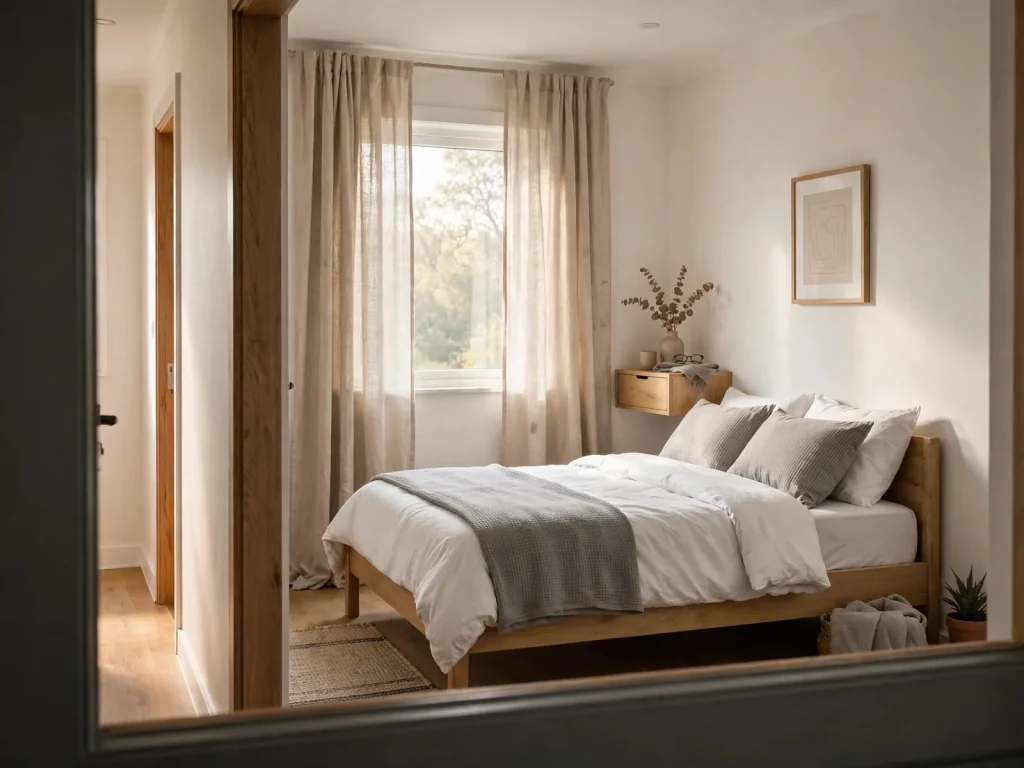
You have pinned the white bedding and the iron bed and the shiplap wall a hundred times. Your own room still reads more gift shop than farmhouse. That gap is normal. Farmhouse is the most copied style in American bedrooms and the most copied wrong, because the rooms worth saving run on materials and restraint while the copies run on signs and themes.
This page gives you the formula first: the four materials that define farmhouse bedroom ideas in real rooms, the palette in named paint colors and the two pieces worth buying before anything else. Then the ideas run zone by zone and every one carries a measurement or a budget band or a renter note in its practical line. The wider bank of rooms and styles lives on the bedroom ideas pillar and this page stays on farmhouse done properly.
Before you start: measure, budget, rules
Budget bands on this page run in four steps: under $50, $50 to $150, $150 to $300 and over $300. Three rules hold the whole page together. One weathered piece per view of the room. One pattern family in charge. No word art anywhere, because the style has to speak through materials or it does not speak at all.
Measure: the bed wall and the window wall before anything else. A 72 inch dresser on a 60 inch wall breaks the room before the style even starts.
The formula: what makes this style
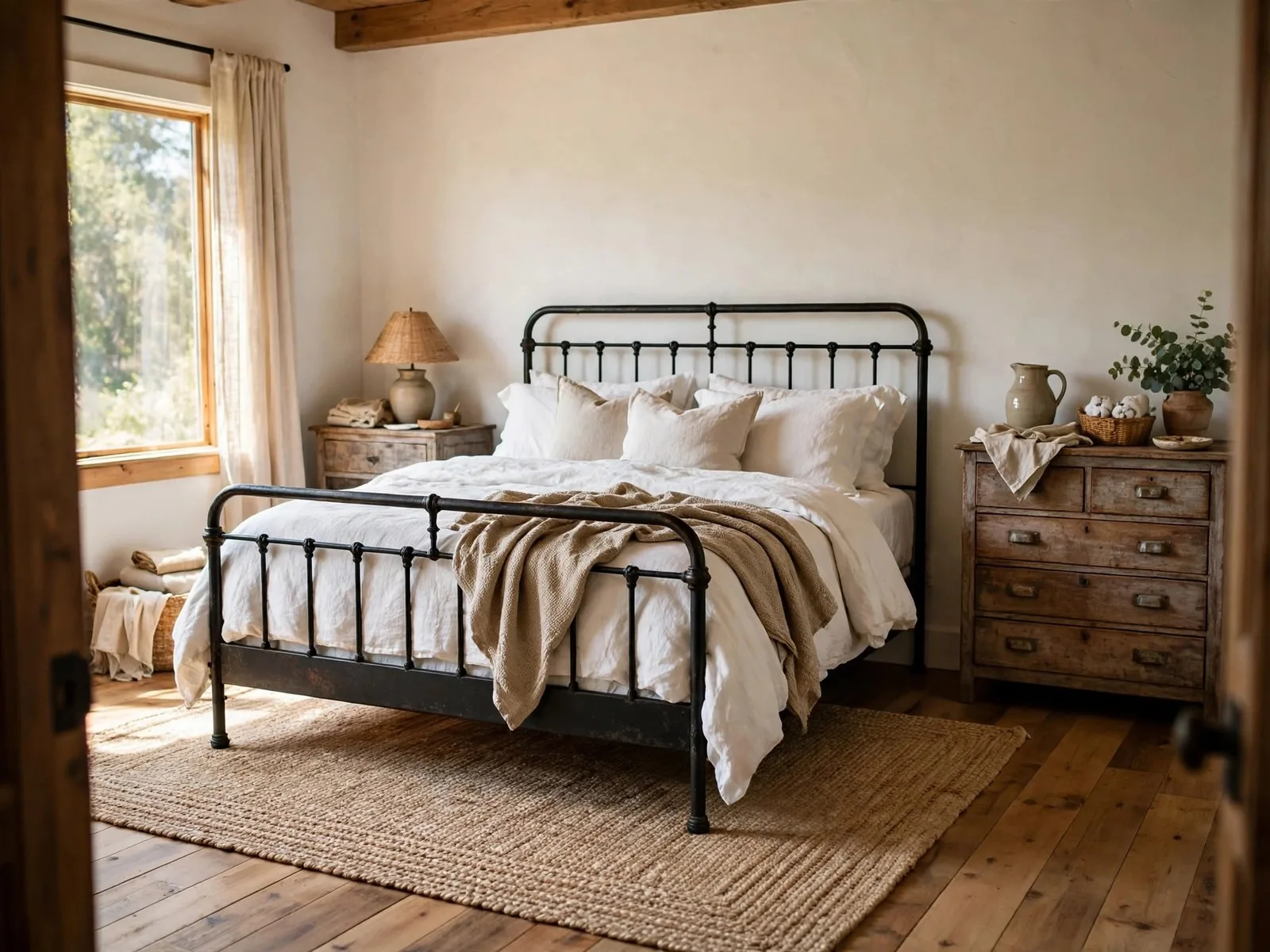
Farmhouse is a materials list before it is a look. The defining four are weathered wood, cotton and linen textiles, aged metal in black or galvanized finishes and woven naturals like jute and wool. The palette sits on warm white walls with natural wood tones doing the warming and sage or dusty blue as the quiet accent. The two signature pieces a reader buys first are the bed frame and the bedding layer, in that order. Everything in this section builds that base and everything after it is decoration on top.
1. Buy the iron or spindle bed first
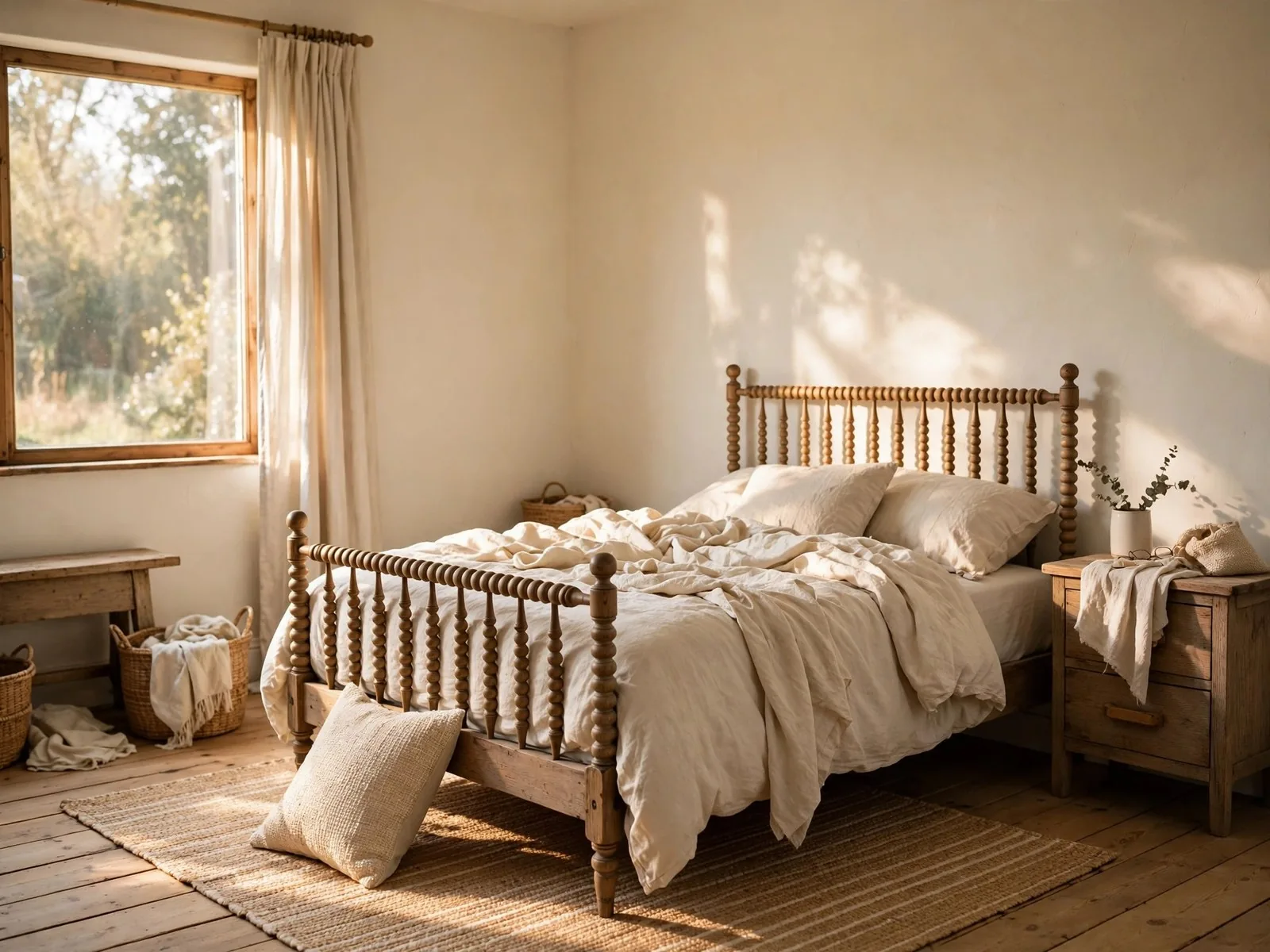
The bed is the signature piece and the room’s whole silhouette comes from it. A black iron frame gives you the modern farmhouse version: clean lines, honest material and a headboard that reads from the doorway. A turned-wood spindle bed gives you the rustic farmhouse version with the same job done warmer. Either one beats an upholstered bed here, because fabric hides the frame and the frame is the style.
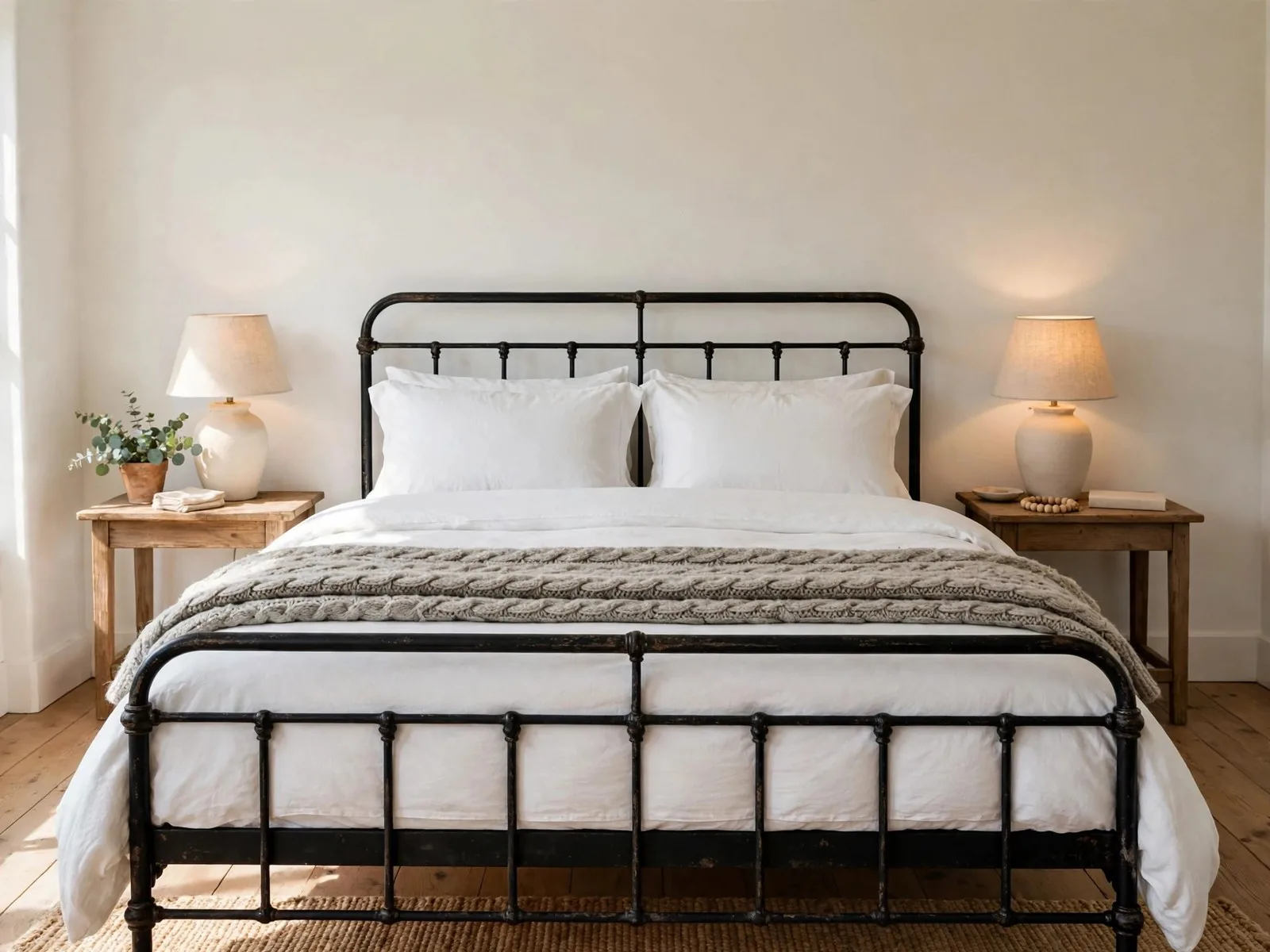
Size it to the room you have. A queen is 60 by 80 inches and a king is 76 by 80 and a headboard between 48 and 54 inches tall sits right against standard 8 foot ceilings. Our headboard guide runs the height math for every bed size and ceiling and it is worth ten minutes before you order.
Budget: $180 to $450 for a metal frame that outlasts trend cycles. Spindle wood starts around $300 and climbs with the wood quality.
2. Paint the warm white palette, not bright white
The palette is named colors, not vibes. Warm whites carry the walls: Alabaster by Sherwin-Williams and White Dove by Benjamin Moore are the two that show up in the saved rooms again and again. Agreeable Gray is the greige option for a room that gets cold north light. Bright blue-white paint is the quiet saboteur of this style, because it makes natural wood read orange and linen read dingy.
One gallon covers about 350 square feet and most bedroom walls take two coats, so a single room usually lands in the two gallon range. The full palette logic and the accent colors that sit under it live on our bedroom color page for when you are ready to go past white.
Renter-friendly: skip the paint and put the warm white in the bedding and the curtains instead. The palette still lands and your deposit stays safe.
3. Add weathered wood once, in the biggest piece
Weathered wood is the material people mean when they say farmhouse and it works by dose. One large piece with a genuinely worn or limewashed finish, a dresser or a bench or a trunk, gives the room its age. Five small distressed boxes give it a yard-sale feel. The wood should look used by life, not attacked by sandpaper in a pattern.
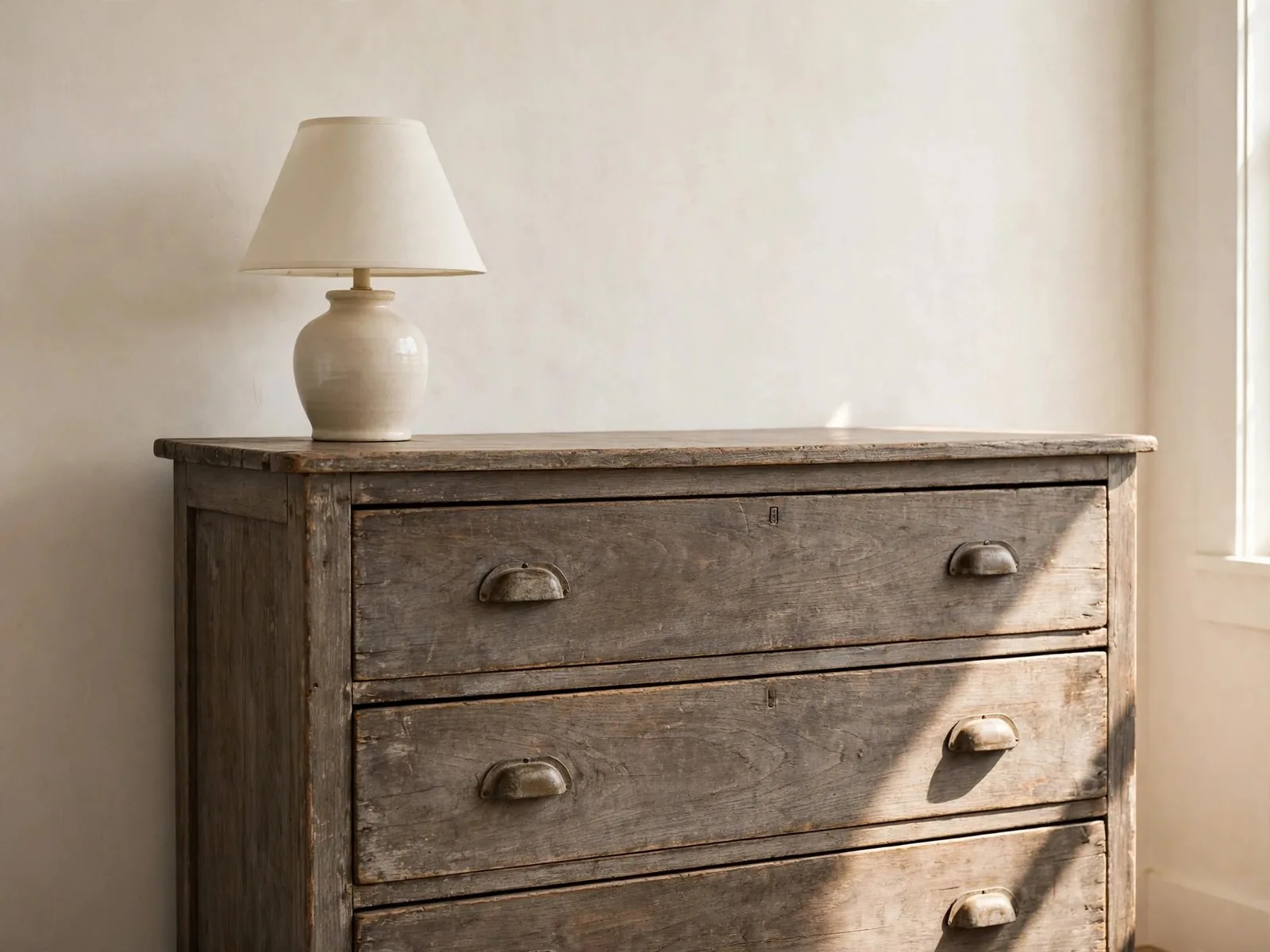
Place the piece where the eye lands first, usually the wall opposite the door or the foot of the bed. Real wear shows at the edges and the handles and the top surface. Factory distressing repeats the same dings on every unit and your eye learns the repeat faster than you would expect.
Measure: the piece should take at least half the wall it sits on. Small rustic items scattered around read as clutter, not farmhouse.
4. Layer the bedding plain: cotton, linen and one stripe
The second signature piece is the bedding layer and it is deliberately plain. A white or cream cotton or linen base does the work, one ticking stripe or grain-sack stripe layer adds the pattern and a wool or chunky cotton throw adds the weight. That is the whole recipe. The bed looks generous because the layers are real, not because the colors are loud.
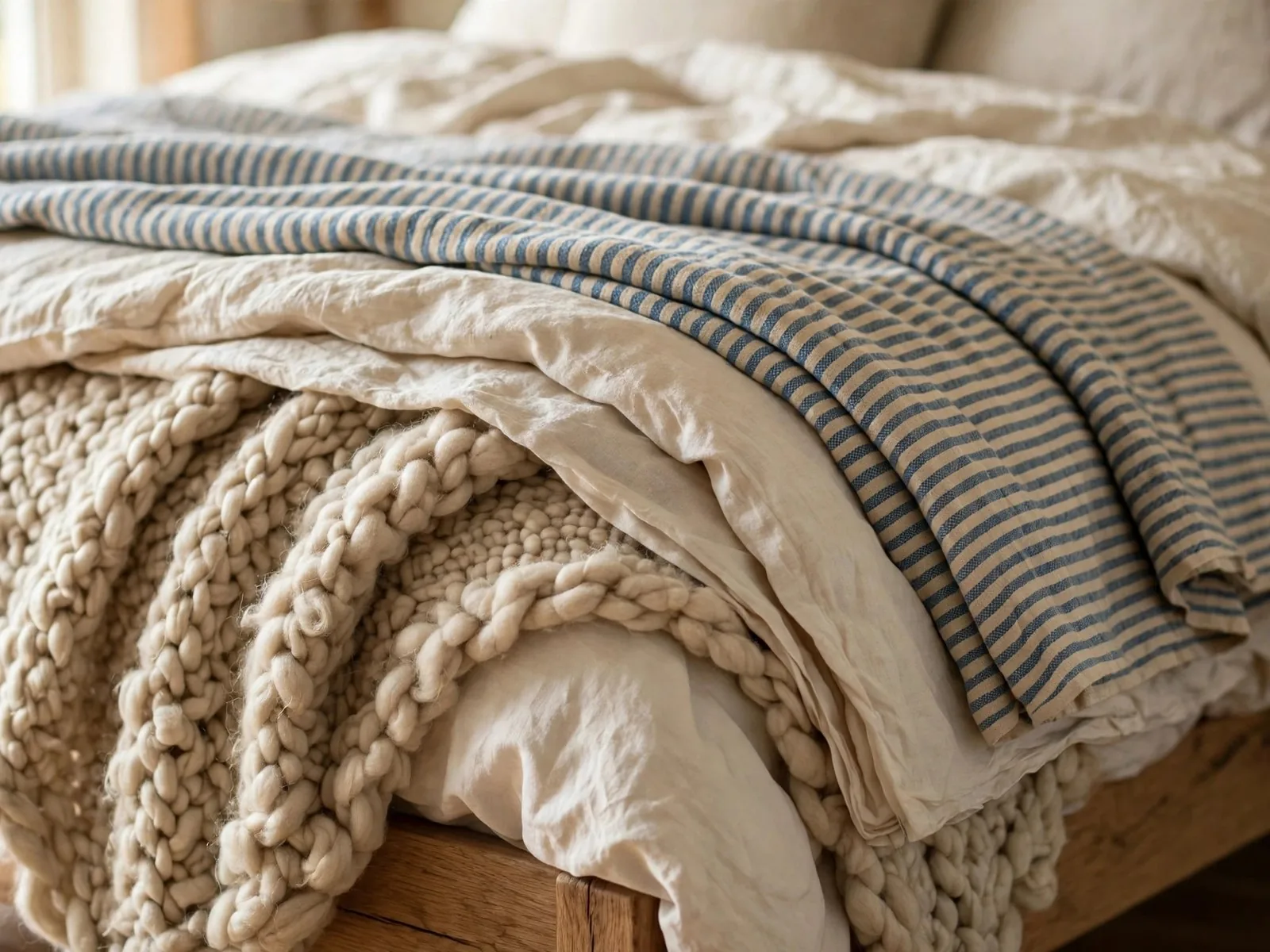
Wash everything before the first sleep and skip the iron. Linen and washed cotton are supposed to carry a soft crease in this style and a pressed bed reads hotel, not farmhouse. Buy the base set in the best fabric your band allows and let the stripe layer be the cheap part, because covers swap out and bases stay.
Budget: $70 to $120 for the cotton or linen base set. The stripe layer can wait a month and the bed still reads farmhouse.
The ideas, room zone by room zone
With the base set, the room itself gets four moves: one board wall, the lighting, the rug and the foot of the bed. Each one is a place where farmhouse is either confirmed or quietly lost.
5. Run one board wall behind the bed
Shiplap or board-and-batten on the bed wall is the farmhouse wall treatment that earns its keep. It gives the bed a backdrop with shadow lines and texture and it does the job word art pretends to do. Keep it to the one wall. Boards on every wall turn a bedroom into a shed and the style tips from calm to themed in a single weekend.
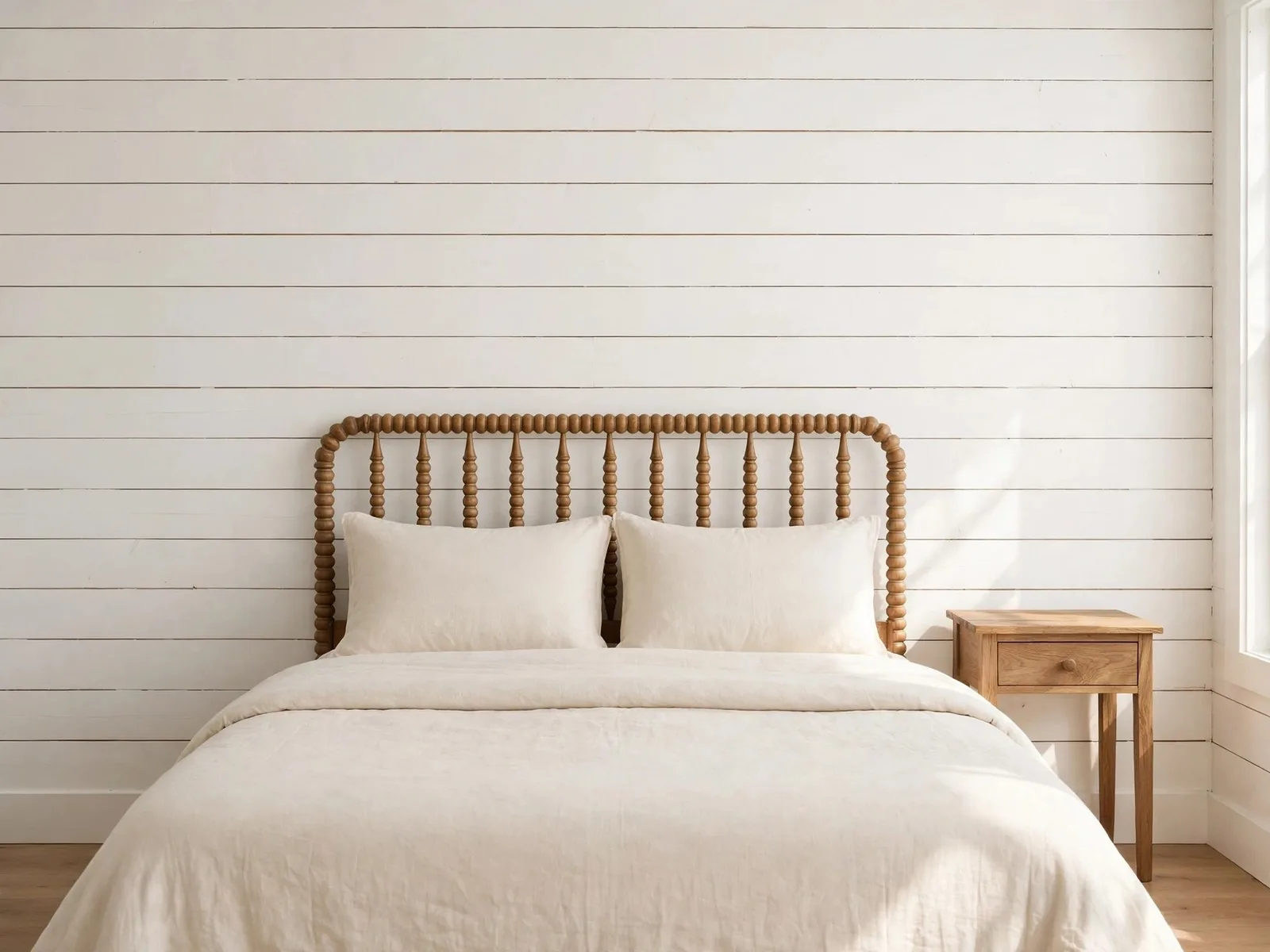
Standard shiplap boards run about 5.5 inches wide with a small nickel gap, so a 10 foot wall takes roughly 22 boards per full-height run before cuts. Our accent wall page covers shiplap against board-and-batten costs and layouts in detail and it will save you measuring twice.
Needs drilling: real boards fix into studs or a plywood backer. Renters get the same read from peel-and-stick planks at about $2 to $4 per square foot.
6. Light it with aged metal and warm bulbs
Farmhouse lighting is a finish before it is a fixture. Aged black metal and galvanized steel carry the pendants and sconces and lamp bases, while chrome and shiny brass belong to other styles. The bulb matters as much as the metal: 2700K warm light keeps wood tones honest after dark and anything cooler pushes the room toward office.

Scale the bedside lamps to the bed. A lamp between 24 and 30 inches tall puts the shade near eye level when you sit up reading and that one proportion makes bought-cheap lamps look intentional. The full sizing and placement rules live on our bedroom lighting page if your room needs more than the pair at the bed.
Budget: $25 to $60 per lamp in aged black metal. The finish matters more than the fixture shape at this price.
7. Size the rug to the bed, not the room
The rug is where farmhouse rooms quietly fail. A jute or wool flatweave in a natural tone belongs under the bed, sized so your feet land on it on both sides in the morning. An 8 by 10 rug works under a queen with the nightstands off it and a 9 by 12 does the same job under a king. Smaller rugs float in the middle of the floor and read as bath mats at bedroom scale.
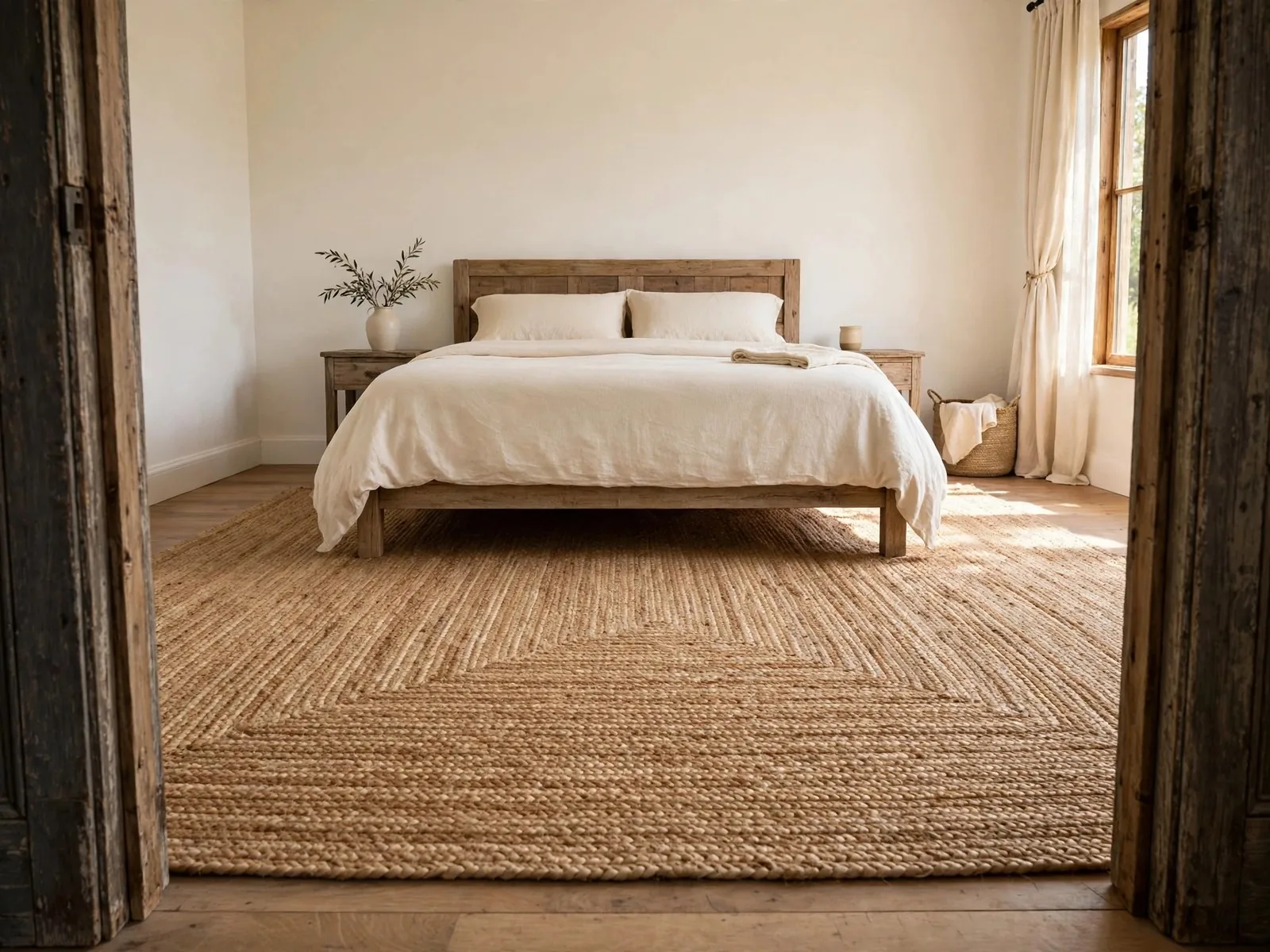
In a small bedroom the math tightens and a runner on the waking side can beat a too-small full rug. Our small bedroom page works through the tight-room versions of this layout with the walkway widths that keep it comfortable.
Measure: bed width plus 48 inches minimum across. A 5 by 7 rug under a queen always reads lost.
8. Put a bench or trunk at the foot of the bed
The foot of the bed is the farmhouse room’s second silhouette. A weathered wood bench or a vintage trunk fills it, holds the spare quilts and gives the room its sitting-down-to-put-on-shoes spot. This is also the budget way to get a second wood piece into the room without a second furniture price.
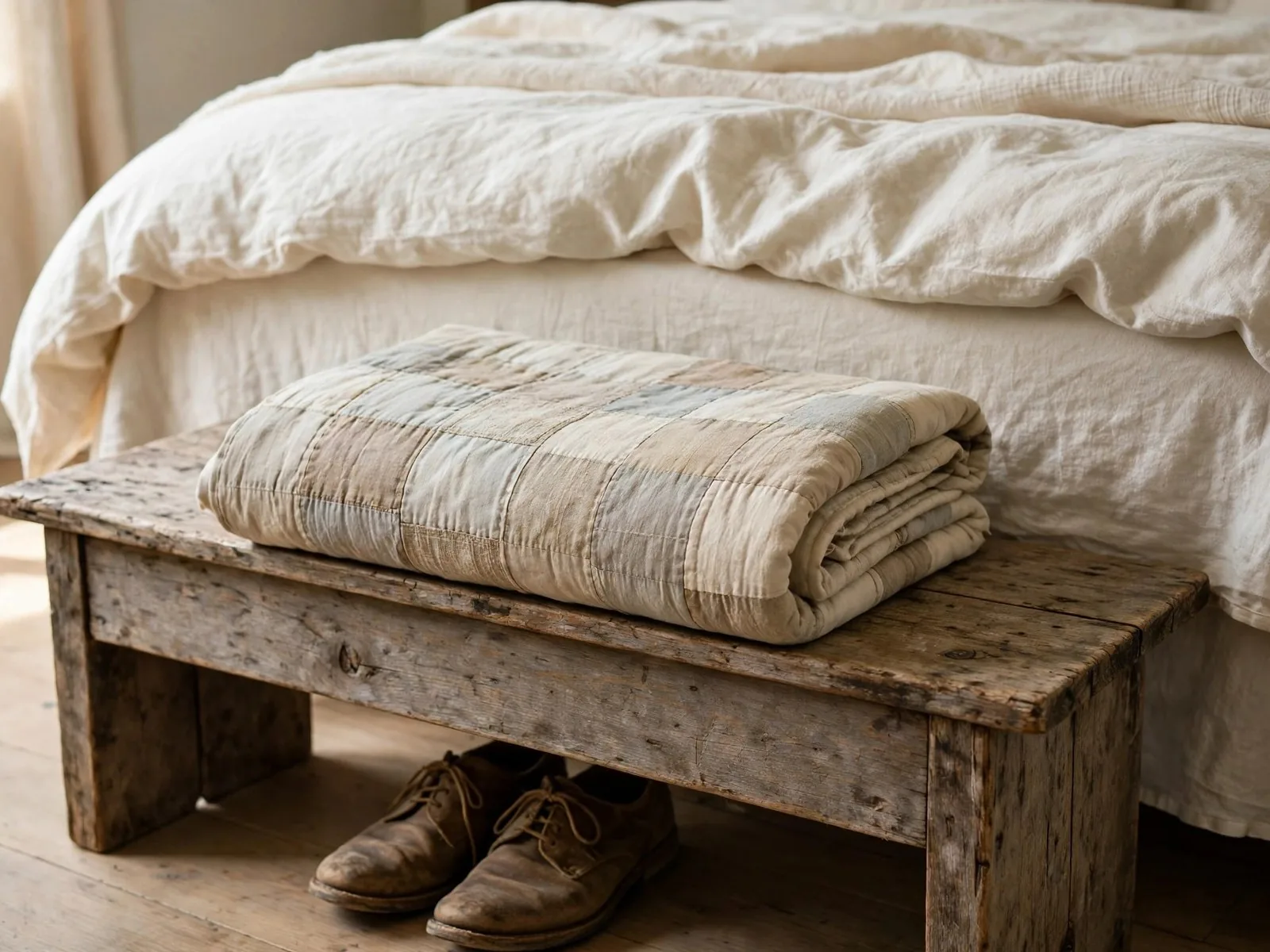
Look for a bench 48 to 60 inches wide for a queen bed, with a seat height around 18 to 20 inches so it sits just below the mattress top. A trunk with a flat lid does the same job and swallows the winter blankets whole. Our bedroom storage page has more foot-of-bed and under-bed storage that hides in plain sight for rooms where the closet is already full.
Measure: leave 24 inches between the bench and whatever stands opposite it. Less than that and the bench becomes an obstacle course.
Color and textile combinations that hold the style
Farmhouse color works in combinations, not single statements. The four pairings below are the ones the saved rooms repeat: one stripe against plain linen, sage against warm white, black in small doses and curtains that carry the wall color down to the floor.
9. Pick one stripe and repeat it
Ticking stripe and grain-sack stripe are the pattern family of this style and one of them is enough. Run it on the pillow shams and a bed runner and one cushion and the room has a scheme. The boho rooms layer pattern on pattern and get away with it because their base is texture. Farmhouse runs plainer cloth, so a second pattern family shows up as noise instead of richness.
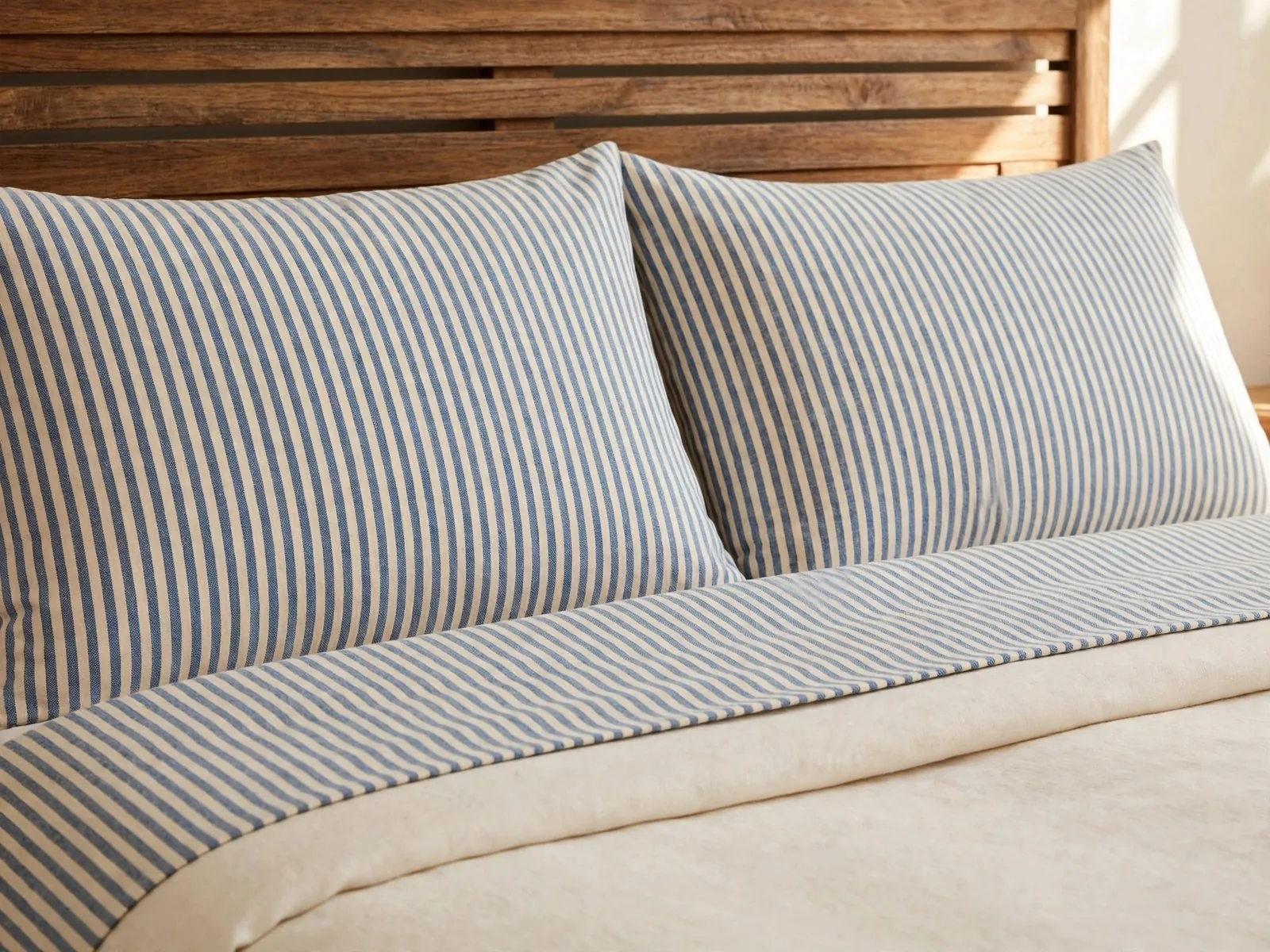
Keep the stripe in one color family, usually indigo or charcoal or faded red on a natural ground. If the stripe appears three times at three sizes it reads deliberate. If it appears once it reads accidental and if it appears nine times it reads as a theme park.
Budget: stripe pillow covers run $12 to $25 each and two covers carry the whole scheme.
10. Build the sage and warm white combination
This is the combination Pinterest saves most for modern farmhouse bedroom decor: Alabaster or White Dove walls, natural wood in the middle tones and sage green as the single quiet color. Evergreen Fog by Sherwin-Williams is the sage that behaves in north light and in south light alike. Dusty blue is the stand-in where sage feels too green for the sleeper.
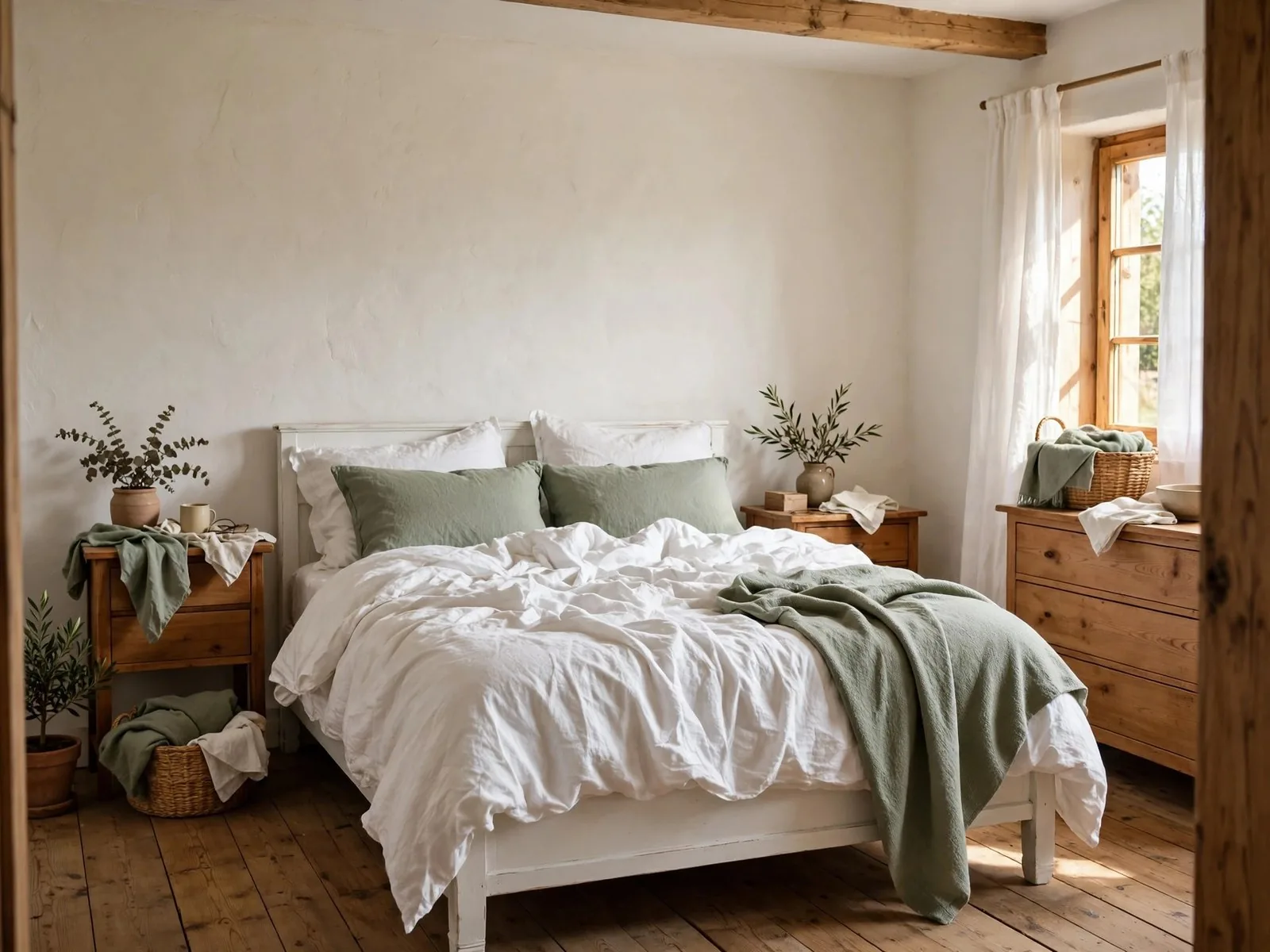
Let sage enter on textiles first: the throw, two cushion covers and maybe a small upholstered chair if the room is large. Paint is the last step and the hardest to undo, so it earns its place only after the textile version has lived in the room for a few weeks.
Budget: sage enters on textiles for under $50 total. Paint is a later decision, not a starting one.
11. Use matte black in small, repeated doses
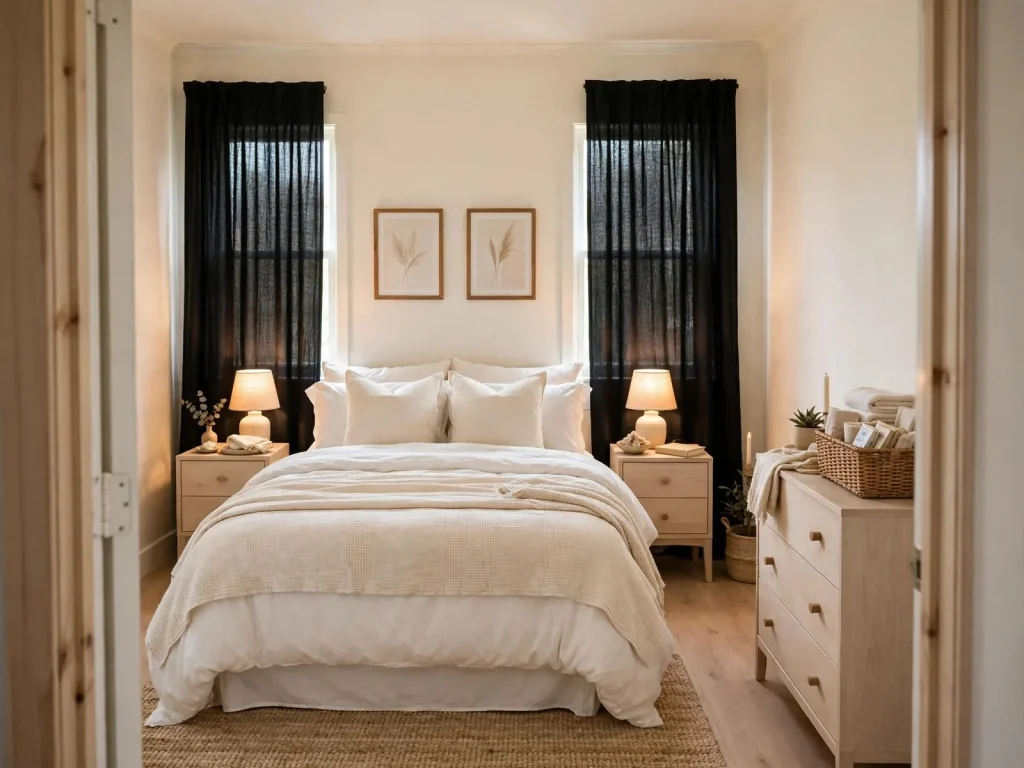
Modern farmhouse needs its contrast and matte black is where it comes from. The rule is small and repeated: curtain rod, picture frames, lamp bases and drawer pulls, each one minor and the set of them deliberate. Three or more small repeats read as a decision. One big black gesture reads as a different style arriving uninvited.
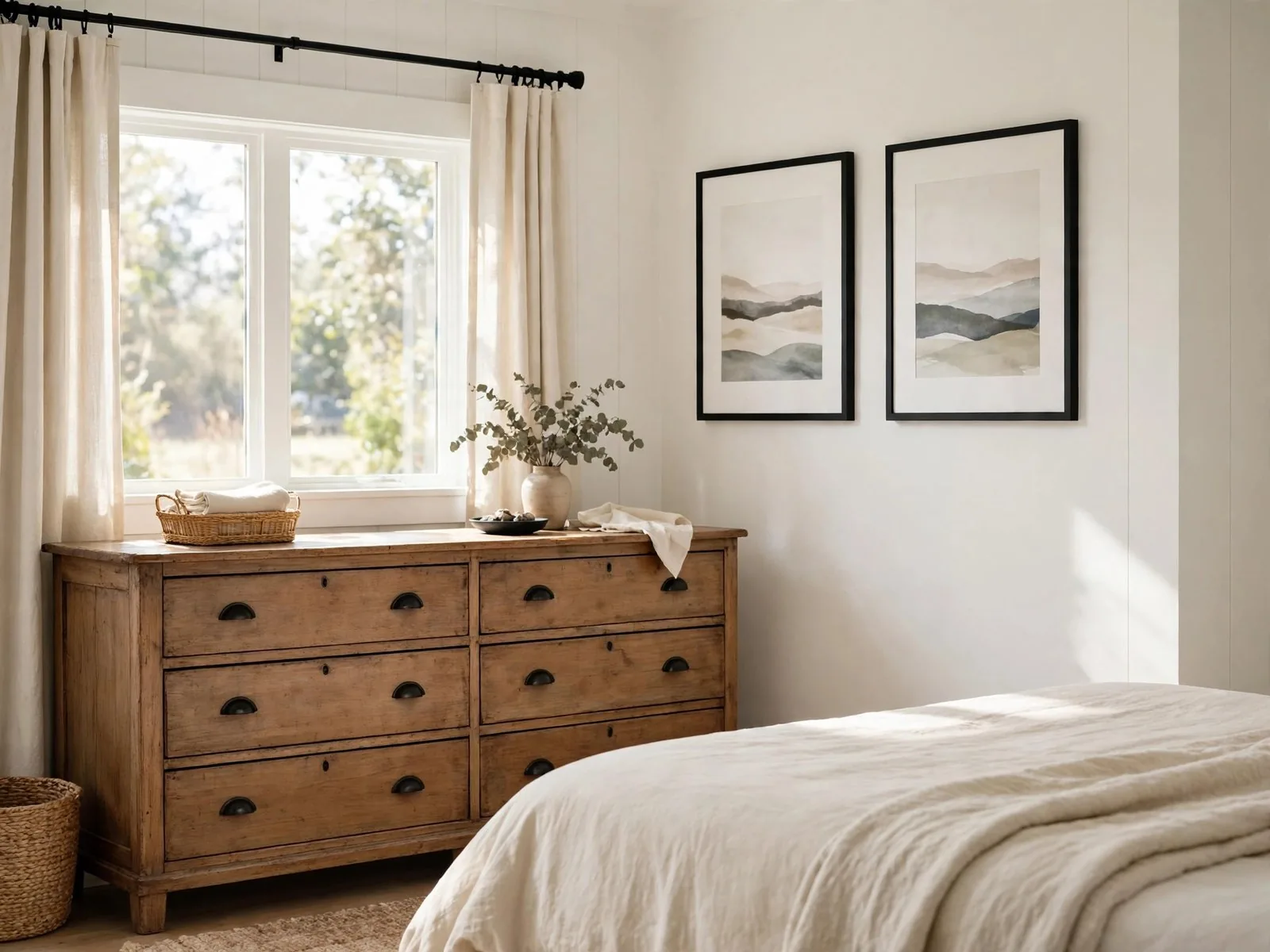
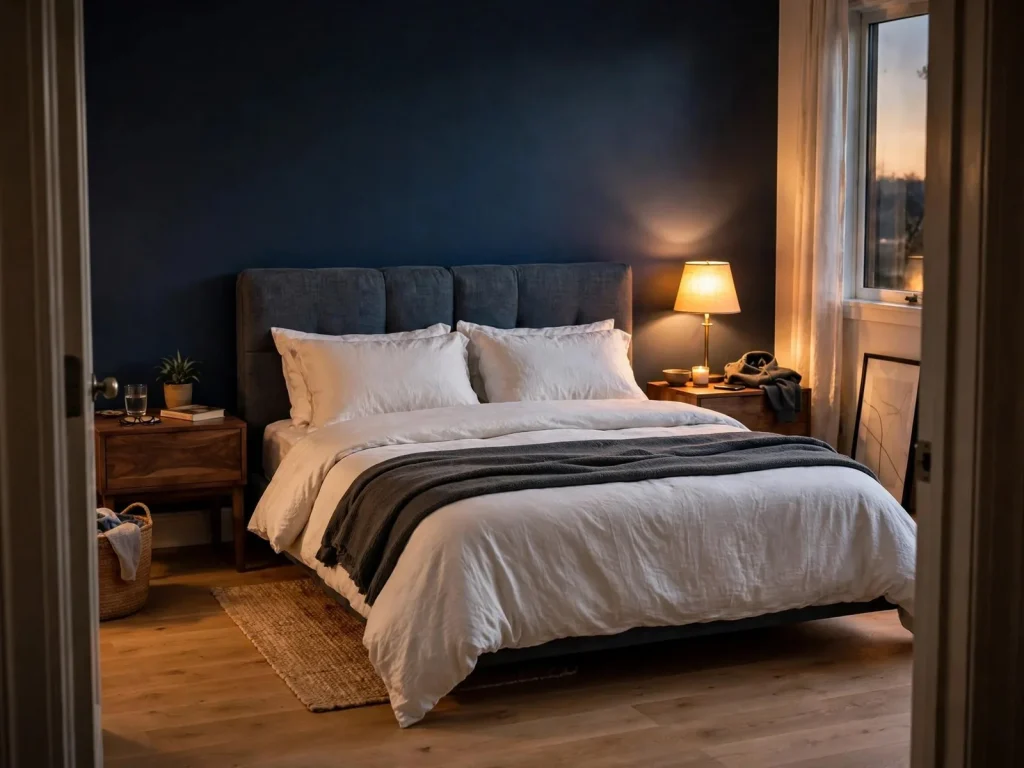
A whole black wall or a black ceiling is the moody style’s territory and it changes what every other piece in the room has to do. Farmhouse black stays at hand scale, where it sharpens the whites and the wood instead of swallowing them.
Budget: a $15 can of matte black spray paint unifies thrifted frames and lamp bases in one afternoon.
12. Hang plain linen curtains high and wide
The window treatment is plain or it is wrong. Linen or linen-look panels in white or natural flax, hung from a simple black rod, carry the wall color down and soften the room’s hard edges. Ruffles and swags and valances belong to country styles from another decade and they date a farmhouse room faster than any other single choice.
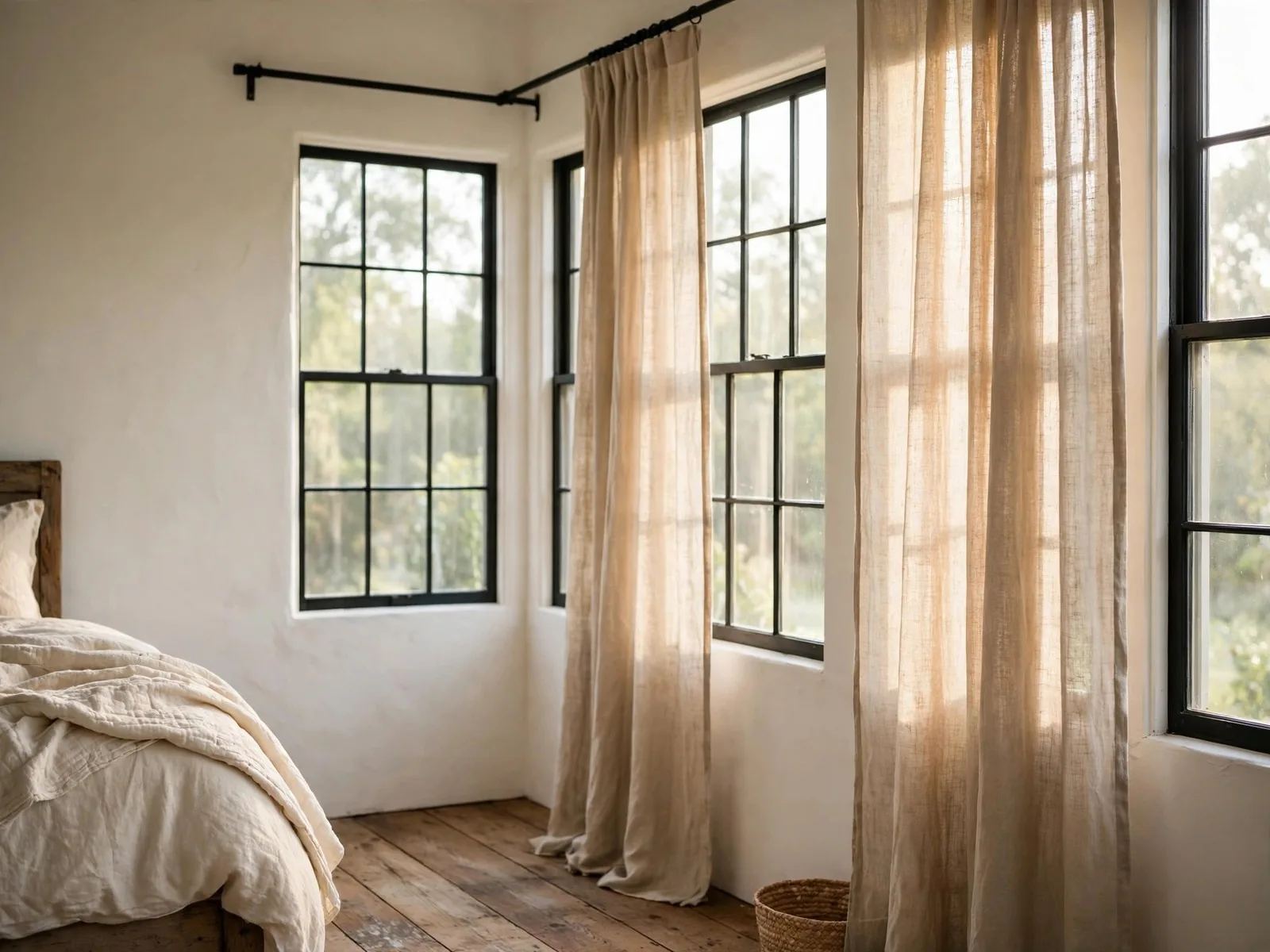
Hang the rod 4 to 6 inches above the frame and let it run 8 to 12 inches wider than the window in total, so the open panels stack on wall instead of glass and the room keeps its daylight. Panels should kiss the floor or puddle by an inch at most.
Measure: panel length equals the rod height from the floor plus 1 inch. Short curtains make farmhouse look skimpy faster than anything else.
Getting the look for less
Farmhouse was a working style before it was a retail one, so the thrifted and handmade routes are not compromises here. They are the original method and three of them beat the store-bought version outright.
13. Thrift the dresser and limewash it
This is the budget entry to the whole style: a solid wood dresser from a thrift store or an estate sale, given a limewash or matte water-based finish at home. Check that the drawers run true and the frame is solid and the top is real wood worth keeping bare. The silhouette you are buying took forty years to make and no flat-pack line sells it.
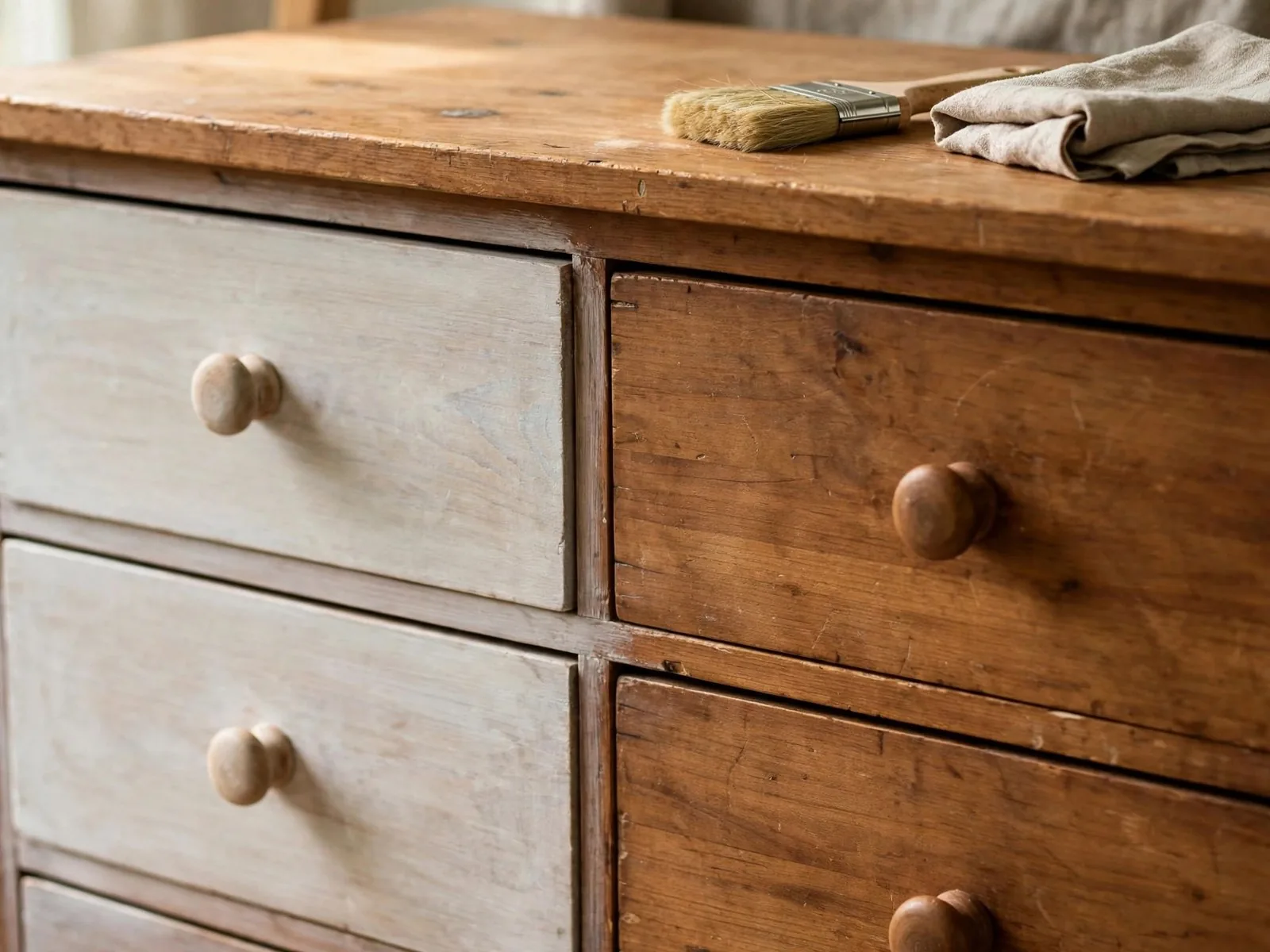
Limewash brushes on in crosses and dries to a soft cloudy finish that lets the grain ghost through, which is exactly the worn-not-fake line this style walks. Keep the top surface wood and paint only the body if the top has survived well. Swap the knobs last, once you see the finished color in daylight.
Budget: $50 to $80 all in for the dresser and the finish, against $400 and up for the same silhouette new.
14. Sew grain-sack stripes on drop cloth
A canvas painter’s drop cloth is the cheapest honest fabric in the hardware store and it takes a painted stripe beautifully. Tape two or three stripes down the middle with painter’s tape, press in fabric paint in indigo or charcoal and you have the grain-sack look for pillow covers and bed runners. No-sew hem tape handles the edges for anyone without a machine.
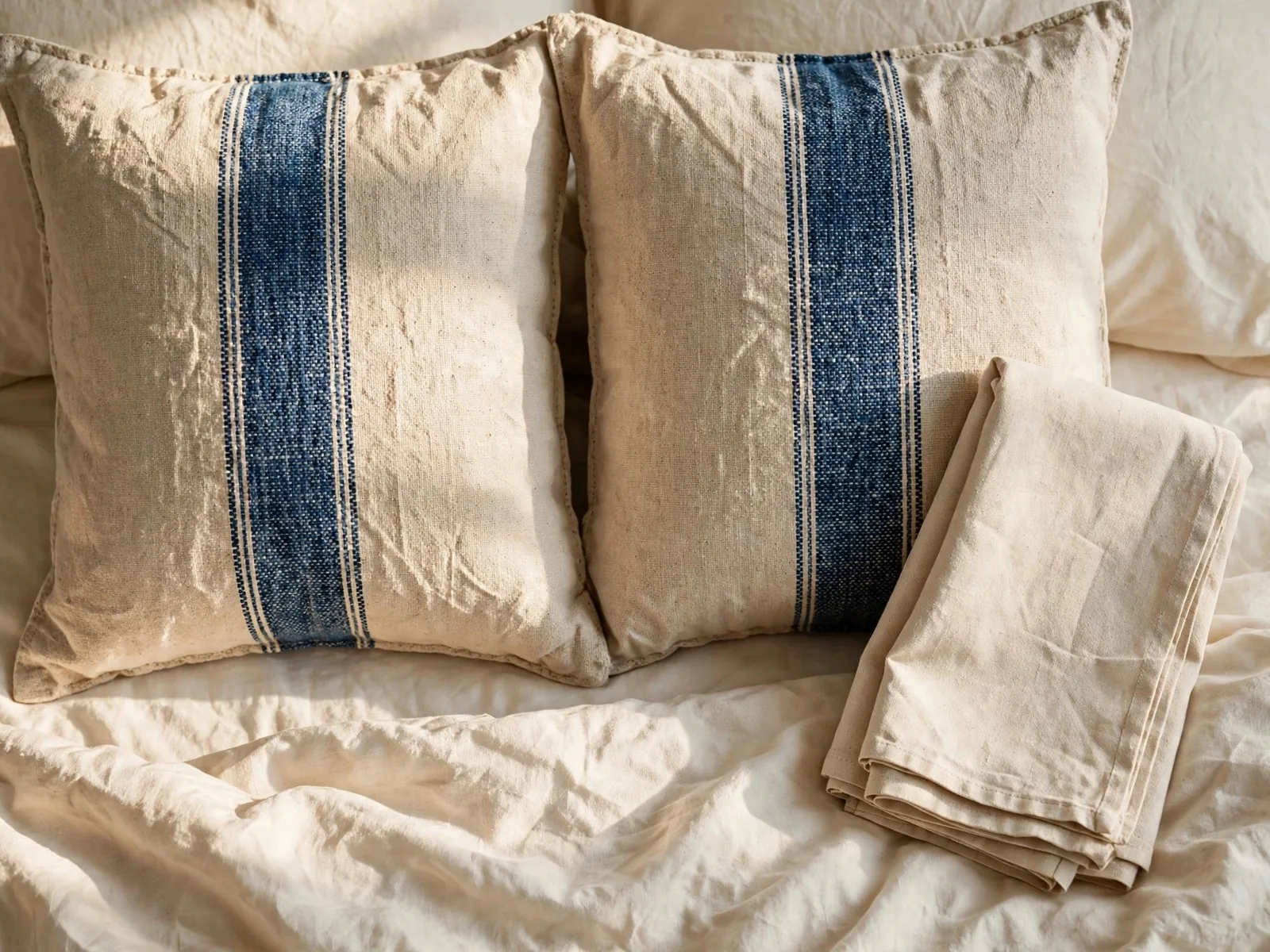
Make two covers and a runner from one cloth and stop there. The stripe is doing the farmhouse talking for the whole bed and a fourth striped piece tips it into costume. Wash the cloth first, because drop cloth shrinks and stiffens less after a hot wash and the paint holds better on the softened weave.
Budget: under $25 makes two pillow covers and a bed runner. The stripe does the talking and the cloth does the lasting.
15. Swap the hardware before you swap the furniture
Most dressers and nightstands fail this style at the handles, not the body. Shiny chrome and ornate brass pulls belong to other rooms. Matte black cup pulls and simple round knobs pull a plain piece into farmhouse in twenty minutes with a screwdriver. The old furniture suddenly matches the bed and the lighting without a single new purchase of size.
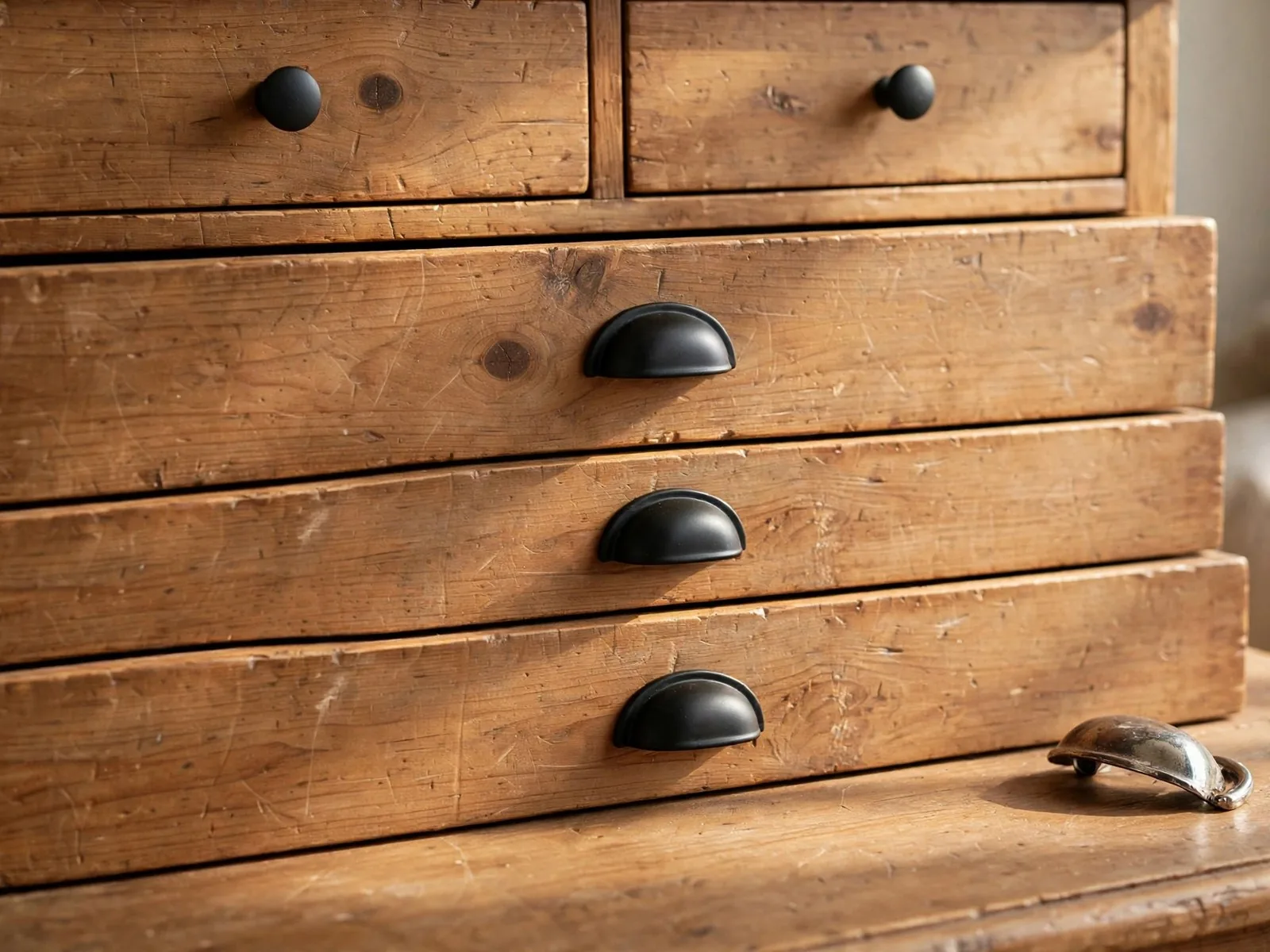
Measure before you order, because pull spacing is the trap. Three inch and 3.75 inch centers are the two common spacings on older furniture and a pull bought for one will not fit the holes of the other. Count the pulls on every piece first as well, since a six-drawer dresser eats hardware faster than the budget expects.
Measure: pull centers before ordering. Three inch and 3.75 inch are the common spacings and they do not swap.
Farmhouse Bedroom Ideas on a budget
The whole style can land for about $300 in one weekend if the order is right. Spend first on the bedding base at $70 to $120, because the bed is most of what anyone sees. Spend second on the thrifted dresser route at $50 to $80 with its limewash. The drop cloth textiles and the stripe covers together run under $50 and the hardware swap adds about $30. The plaid throw can wait for winter, when it doubles as the seasonal layer our Christmas bedroom page builds on and the room turns festive without one new furniture piece.
The same order scales up. In a farmhouse master bedroom the bed is bigger and the bedding line grows by about $40 and the rug steps up a size and nothing else in the sequence changes. If the room needs a fuller redo across a weekend, our makeover page sequences the work in the same spend-first order so nothing gets bought twice.
Mistakes that make it fall flat
1. Word art on the walls. A script sign over the bed is the single element that breaks this style fastest. The room stops reading as a farmhouse bedroom and starts reading as a gift shop display, because the style is supposed to speak through wood and cloth and iron. Take the signs down and hang one plain framed print or nothing at all.
2. Everything distressed. One weathered piece is texture and five chippy pieces are a yard sale. Factory distressing on the bed and the dresser and the nightstands and the bench repeats the same fake wear until the eye catches the pattern. Buy the wear in one honest piece and let the rest of the furniture be plain and new if it has to be.
3. Theme overload. Roosters and windmills and barn stars and cow prints in one room turn a style into a costume. Farmhouse came from working rooms that owned almost none of this imagery. Pick zero theme motifs and let the materials carry the reference on their own.
4. The matching big-box rustic set. A bed and dresser and nightstands bought as one orange-toned faux-barnwood set reads flat on arrival and worse in a year. The tones are too warm and the wood grain is printed rather than grown. Splitting the same money across one real piece and plain basics beats the set every time.
5. Hard surfaces and no textiles. Wood and metal and shiplap without the soft layer read cold and echoey, because farmhouse is a textile style wearing a wood frame. If the room feels unfinished it is almost never missing furniture. It is missing the bedding layers and the rug and the curtains.
Questions people ask about this
What defines this style in a bedroom?
Materials and restraint. A farmhouse bedroom runs on weathered wood and cotton and linen and aged metal, set against warm white walls and one or two honest vintage pieces. The bed is the anchor and the textiles do the softening. If a piece could hang in a gift shop it probably breaks the style.
How can I get this look on a budget?
Start with bedding and one thrifted wood piece. White cotton bedding costs under $100 and changes the whole bed. A solid wood dresser from a thrift store runs $30 to $60 and a limewash refresh costs about $20 more. Skip the matching sets and the signs and spend on texture instead.
What colors go with this style?
Warm whites lead. Alabaster and White Dove and Agreeable Gray keep the walls soft while natural wood tones do the warming. Sage green and dusty blue work as the quiet color accents and matte black shows up in small doses on hardware and frames. Orange wood tones and bright white walls fight the style.
The bottom line
Farmhouse holds up when it stays a materials list and an editing habit: weathered wood, cotton and linen, aged metal and warm white, with the confidence to leave the walls blank where a sign wants to hang. This week, take every word sign out of your bedroom and put the hour you save into washing and layering the whites and creams you already own at the bed.