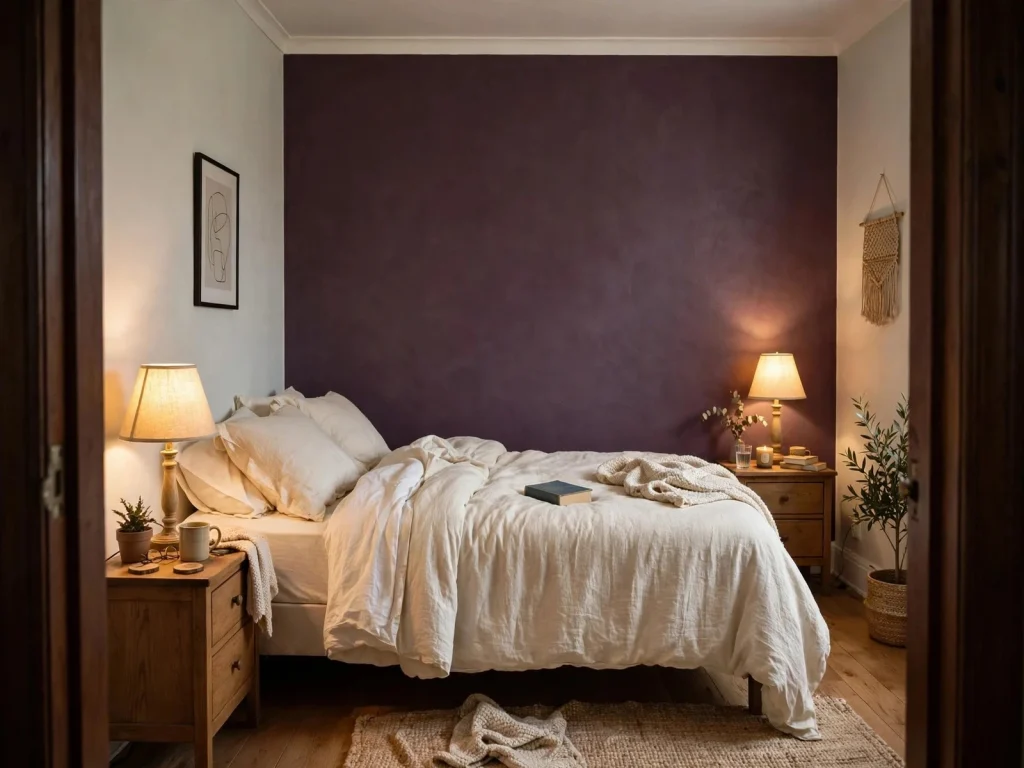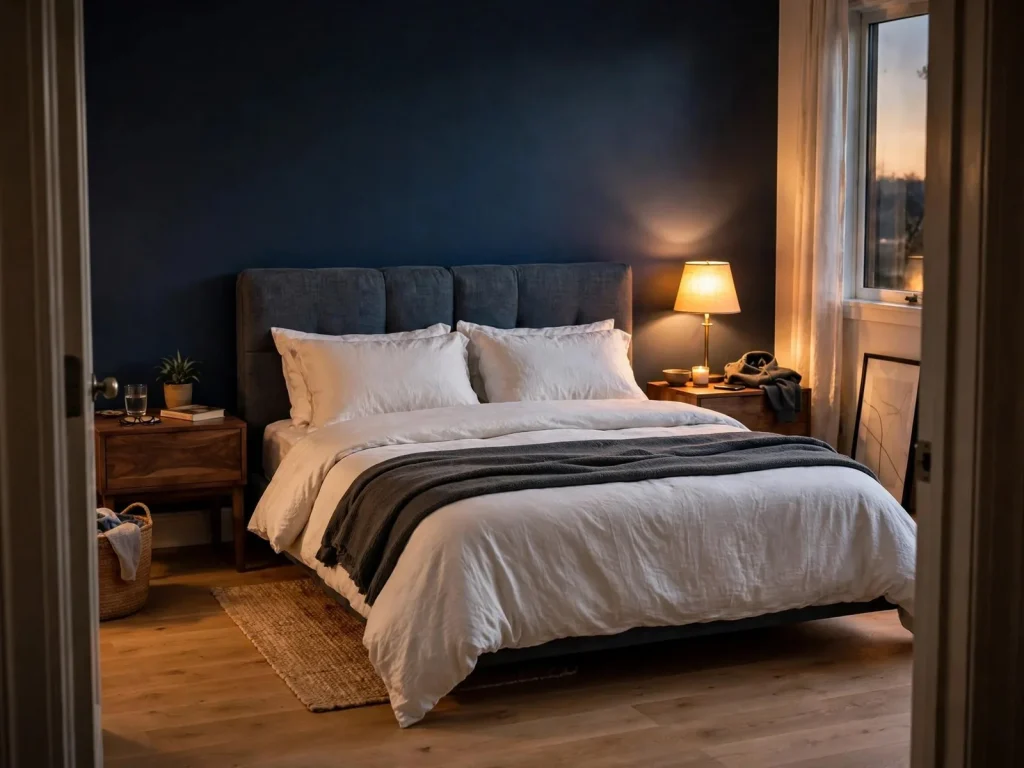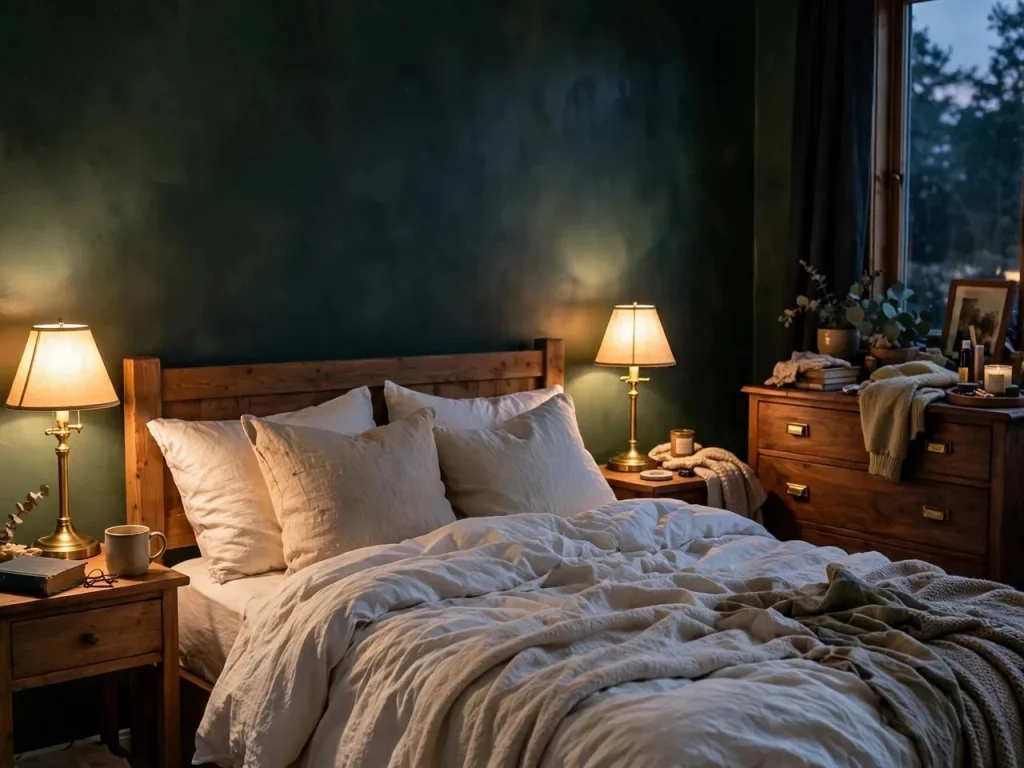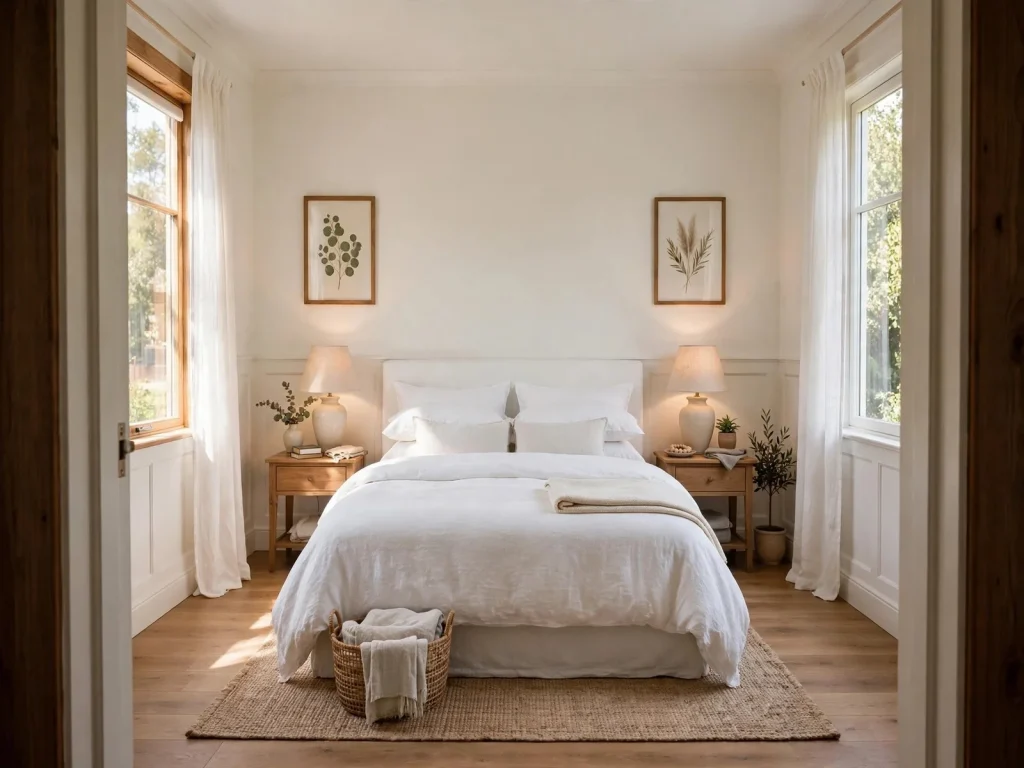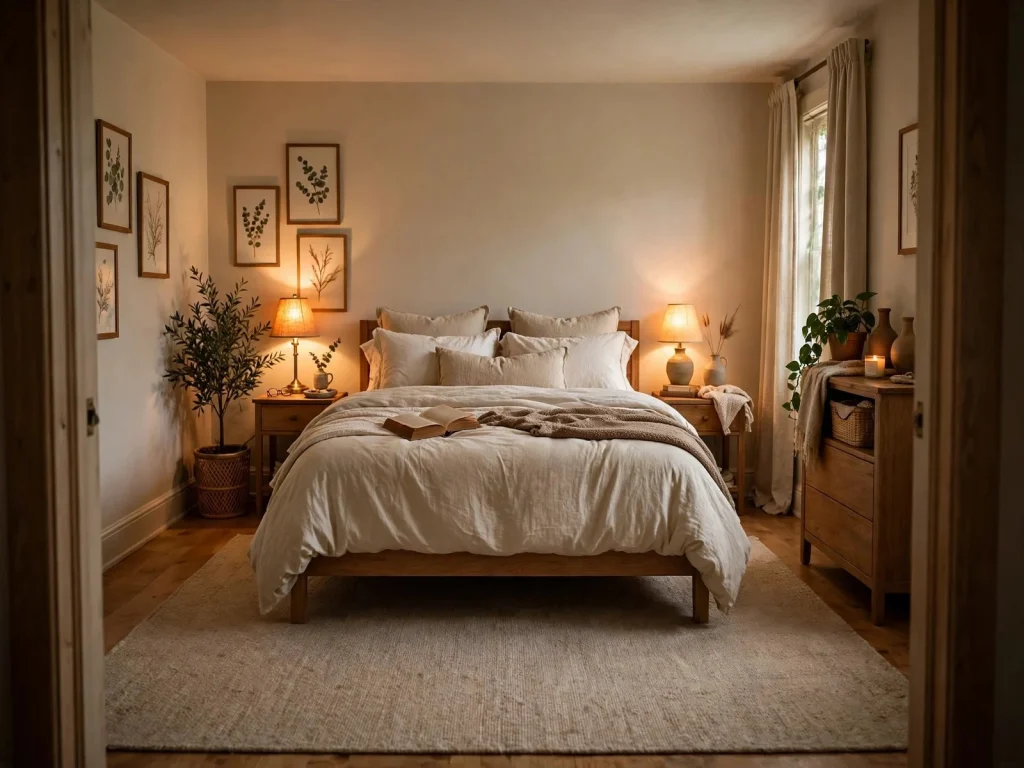
Your small bedroom feels grey and flat and every colorful room you save turns out to be twice your size. The fear is reasonable: real color in a small room can crowd it fast and paint is a slow mistake to undo. So the room stays beige and it stays dull and the saved photos pile up.
This page doses the color instead of spraying it. Colorful bedroom ideas here come with the share of the room each color is allowed, the order the surfaces get colored and the sizes that keep a small room calm while it turns cheerful. The broad color picture lives in our bedroom color ideas post and the broad small room picture lives in our small bedroom ideas post. This page owns the overlap: color, measured for small rooms.
Before you start: the measurements, cost notes and rules
Measure three things: the room size in square feet, the length of the bed wall and the size of the window. The dosage rules on this page turn on the 100 and 120 square foot lines, the bed wall decides how much bedding color the room shows and the window decides how much curtain color it can take.
Costs follow the surface order. Bedding and curtains carry the most color for the least commitment and both can be bought one piece at a time. Paint for one wall is a single gallon in most small rooms. Peel and stick pieces and small textiles cost the least and leave the easiest, which is why they carry the boldest shades on this page.
Renters, the rule is that color rides on things that move out with you. Nothing in the main run of ideas needs paint or a drill. Keep saturated pieces under 36 inches wide and the whole scheme can be packed into boxes on moving day.
Color dosage: the proportions that keep small rooms calm
1. Dose the room 60, 30 and 10
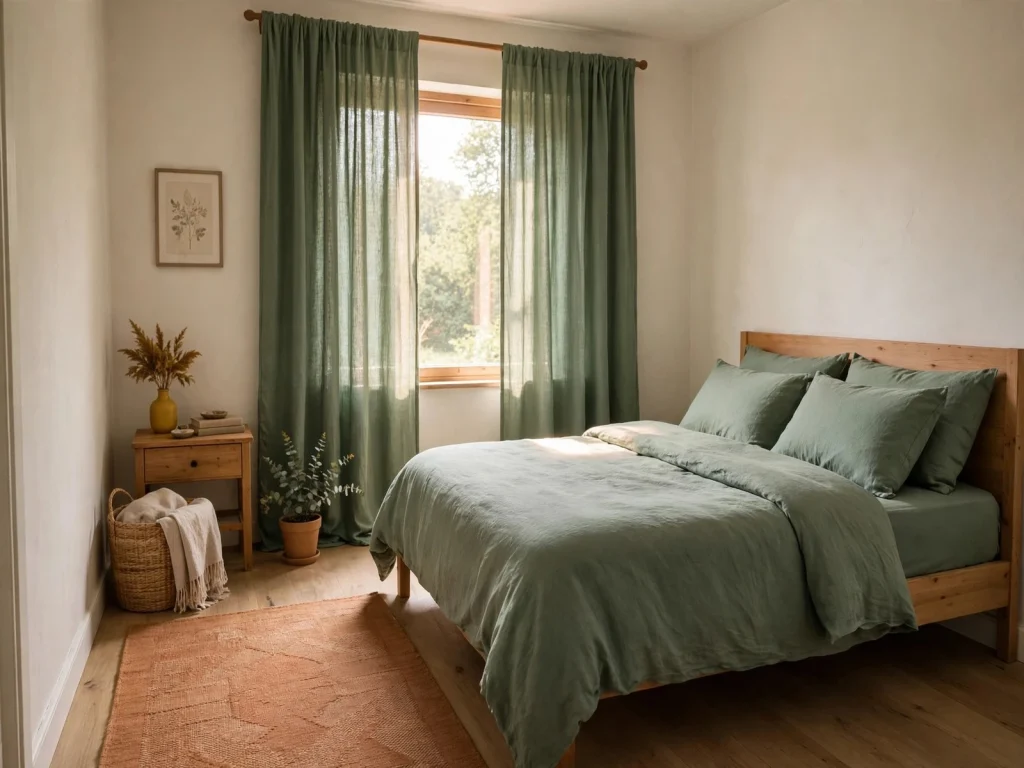
Color stops being risky the moment it gets a budget. Give one main color about 60 percent of the visible surfaces, one support color about 30 percent and one accent about 10 percent. In a small room that usually means the main color rides on the bedding and curtains, the support on the rug and cushions and the accent on one small piece.
The shares are what keep the room calm. A rainbow at equal shares reads as noise because no color is in charge. The 60 share leads, the 30 share backs it up and the 10 share is the spark the eye finds last.
Measure: one main color on about 60 percent of visible surfaces, one support on about 30 percent and one accent on about 10 percent.
2. Cap the room at three colors plus neutrals
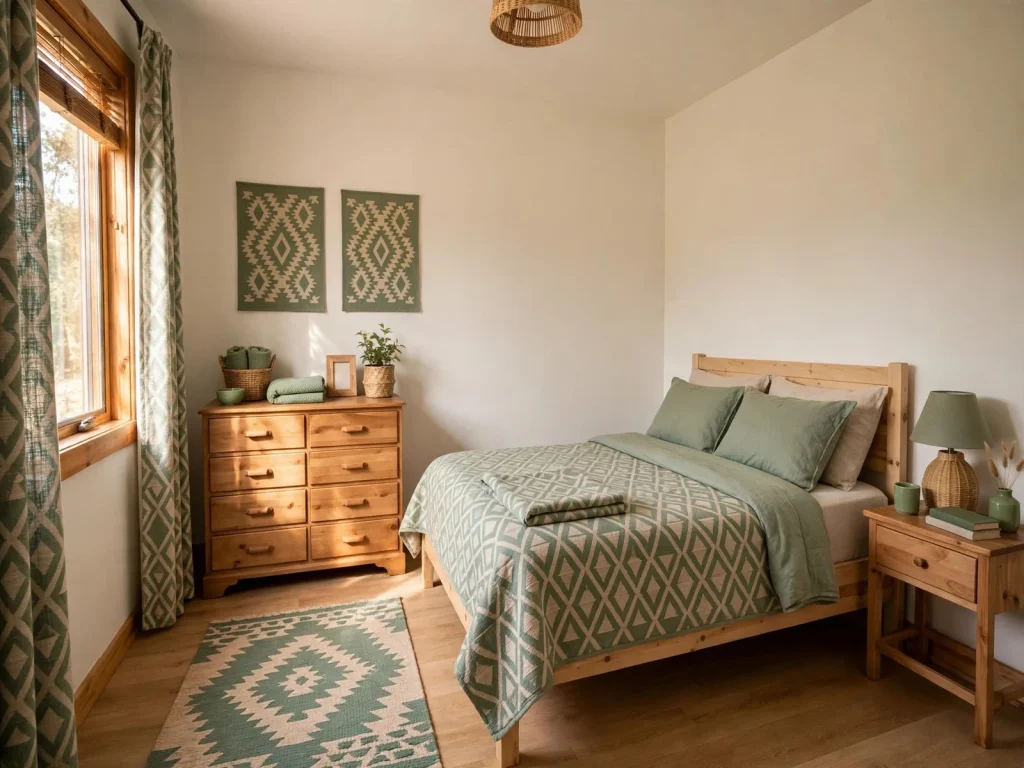
Three colors is the ceiling and neutrals do not count against it. Warm white walls, natural wood and a pale floor are the stage, not part of the cast. A fourth color may only enter inside a pattern on a piece that already belongs to the room, such as a stripe inside the duvet cover.
The count works because each new color demands repeats to look deliberate. Three colors can each appear three times in a small room without effort. Five colors cannot and the unrepeated ones read as accidents.
When you fall for a fourth color in a shop, the test is simple. It has to live inside an existing piece or it stays on the shelf.
Measure: a maximum of 3 colors plus neutrals per room, with any fourth color only inside a pattern.
3. Keep the 60 share light or mid tone under 120 square feet
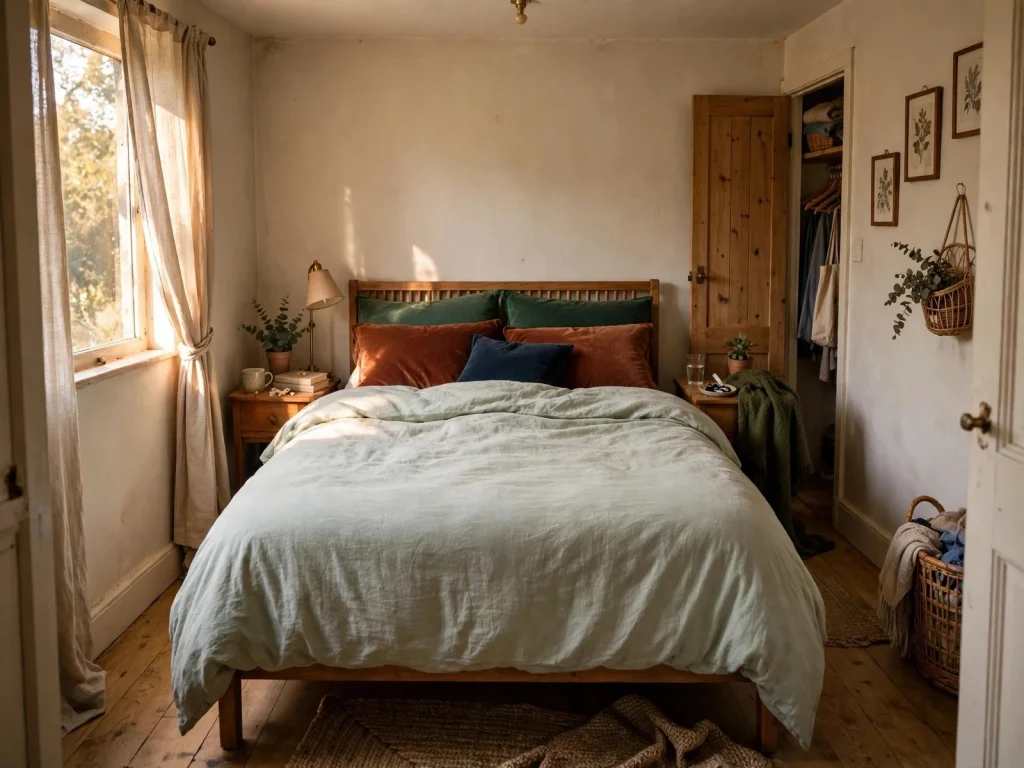
The dosage has a depth rule. In rooms under 120 square feet, the 60 percent share stays light or mid tone, because a saturated color on most of the visible surfaces shrinks the room by feel. The deep and bright shades are welcome, but they take the 30 and 10 shares where the eye enjoys them in smaller doses.
A mid tone coral or sage on the bedding gives a small room its happiness without closing the walls in. The same coral on the bedding, the curtains and the rug at full strength would crowd the room by Friday.
Light rooms get more freedom. Above 120 square feet with a big window, the 60 share can go a step deeper. The rule bends with light, never with wishful thinking.
Measure: in rooms under 120 square feet, the 60 percent share stays light or mid tone; saturated color takes the 30 and 10 shares.
4. Let one pattern carry the extra colors for you
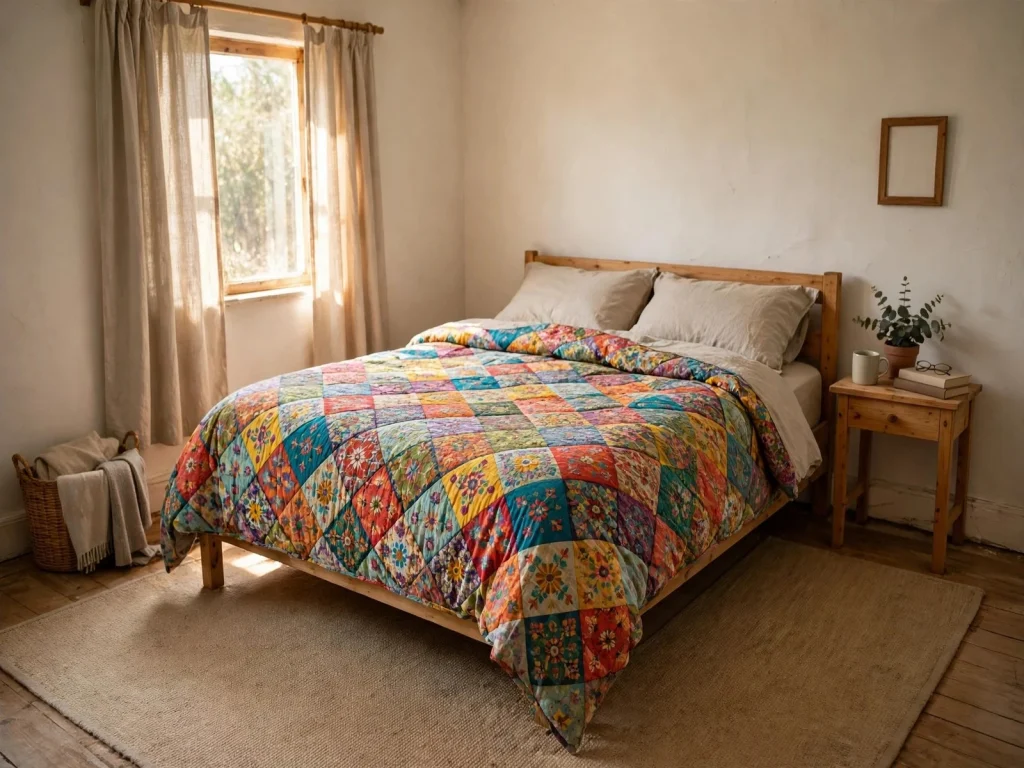
A pattern is the legal way to break the three color cap. One patterned duvet cover or one patterned rug can hold five colors at once, because the eye reads the piece as one decision instead of five. The rest of the room then pulls its 60, 30 and 10 shares from inside that pattern.
Choose the pattern first if you love several colors equally. Its largest color becomes your 60, its second becomes your 30 and its smallest becomes the accent you repeat in one plain piece.
The catch is pattern count. One patterned hero per room is the dose. Two competing patterns in a small room spend the calm the dosage rules were protecting.
Budget: one patterned hero piece per room; pull every other color in the room out of that pattern.
5. Count the visible surfaces before you buy
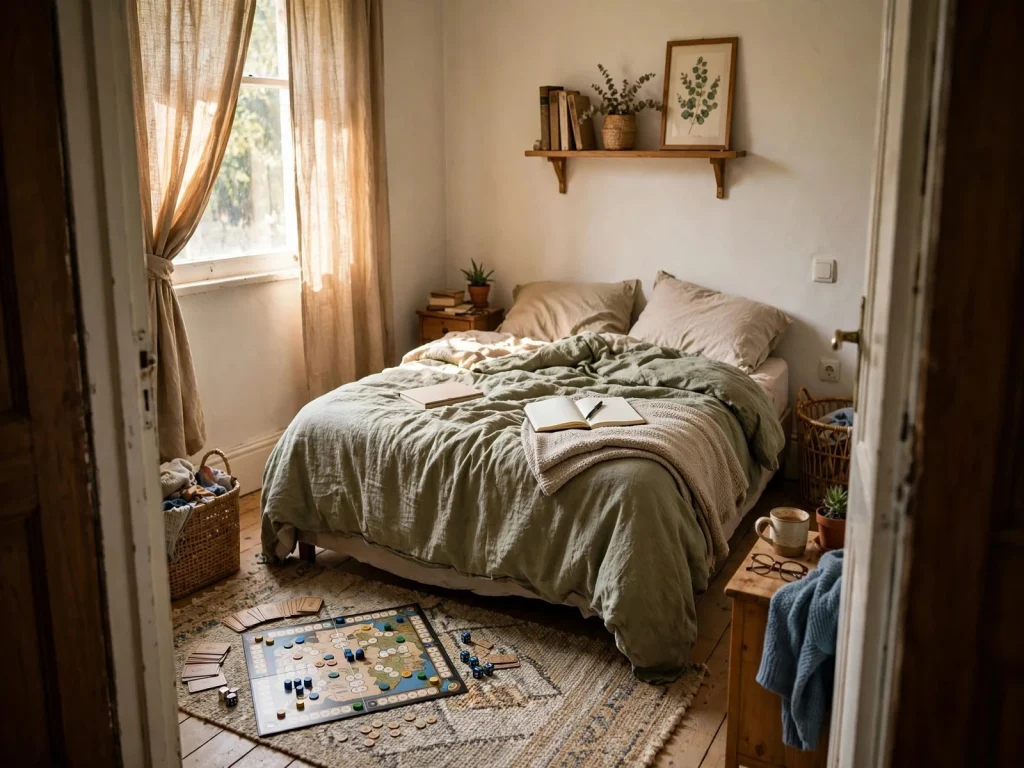
Do the audit standing at the door. Name the surfaces the eye actually sees: bedding, curtains, rug, one wall, cushions and one or two small pieces. That list is the whole game board and it is shorter than most people fear.
Give each surface its share on paper first. If the bedding is the 60, the curtains cannot also be the 60, no matter how good the sale is. Small rooms forgive almost any color and punish almost any double booking.
This five minute count is what the ranking colorful pages never show, because their rooms are big enough to hide the math. Yours is not and the math is easy once it is on paper.
Measure: list the visible surfaces from the doorway and assign each one a share before buying anything.
Bedding and curtains: the two biggest color surfaces
6. Start with the duvet cover
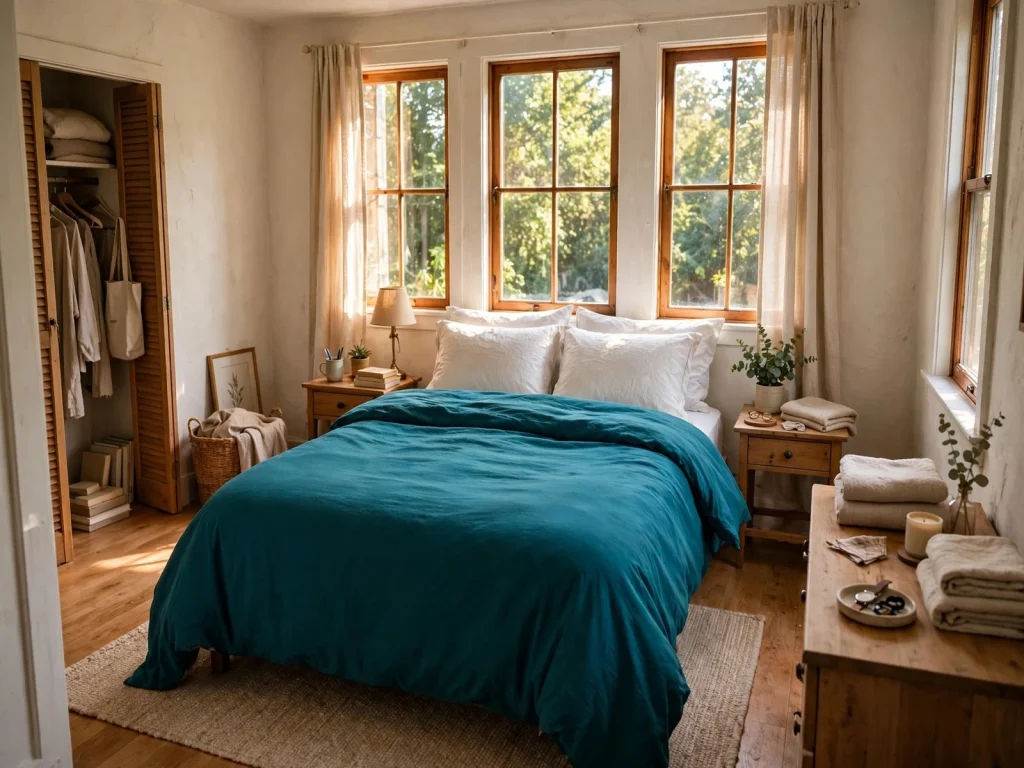
Bedding is the first color surface for a reason: a duvet cover spans roughly 20 to 25 square feet of visible color, the largest single color block in a small room. It is also the easiest piece to change, wash and take with you, so it carries the main color while walls and furniture stay safe.
Pick the duvet in the main color at the depth your room size allows from idea 3. In a room under 120 square feet that means light or mid tone, with the saturated version of the same family saved for cushions.
Our bedroom color ideas post shows whole palettes built this way for rooms of every size. Here the duvet is doing dosage duty, not just decoration.
Measure: the duvet cover is the first color buy; it carries about 20 to 25 square feet of the main color.
7. Run the second color up the curtains
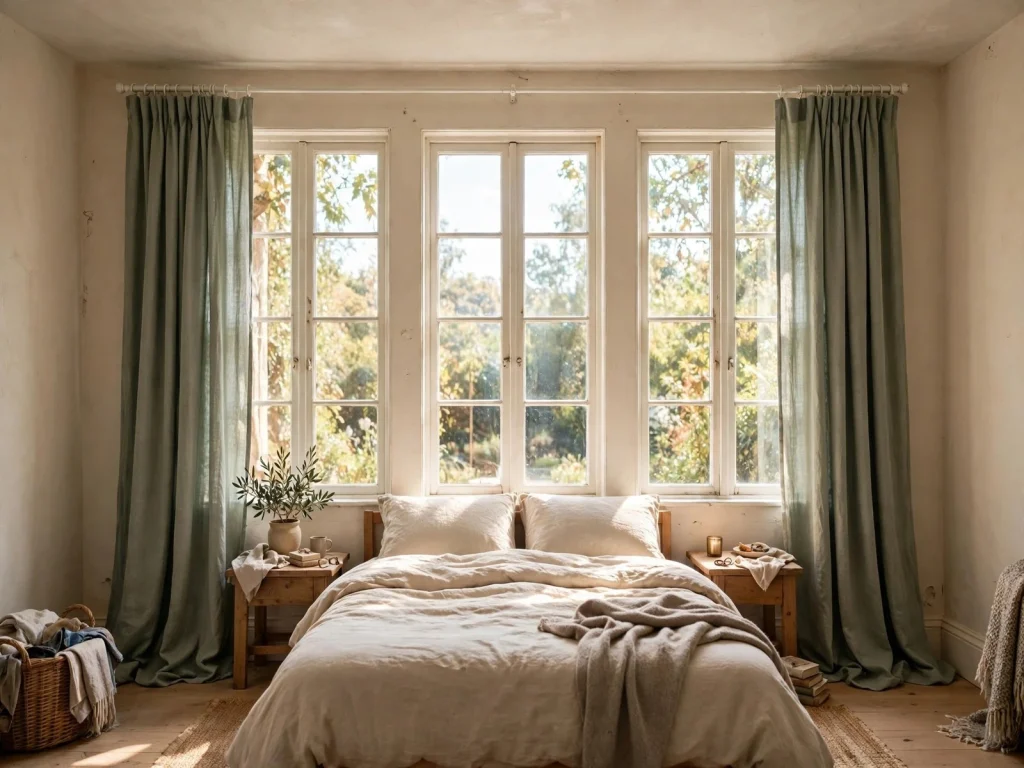
Curtains are the second surface in the order, because they frame the window wall and stand tall enough to balance the bed. Give them the support color, the 30 share, in a plain weave that lets the bedding keep the lead.
Hang them at ceiling height where you can. A tall panel of color reads as architecture instead of decoration and it lifts the eye in a room that needs height more than width.
Renters can hang color here with a tension rod and no permission. Curtain color is also the fastest seasonal swap in the room: one panel change and the support color changes with it.
Renter-friendly: curtains on a tension rod carry the 30 percent support color with no drilling and no paint.
8. Layer one colorful throw over plain sheets
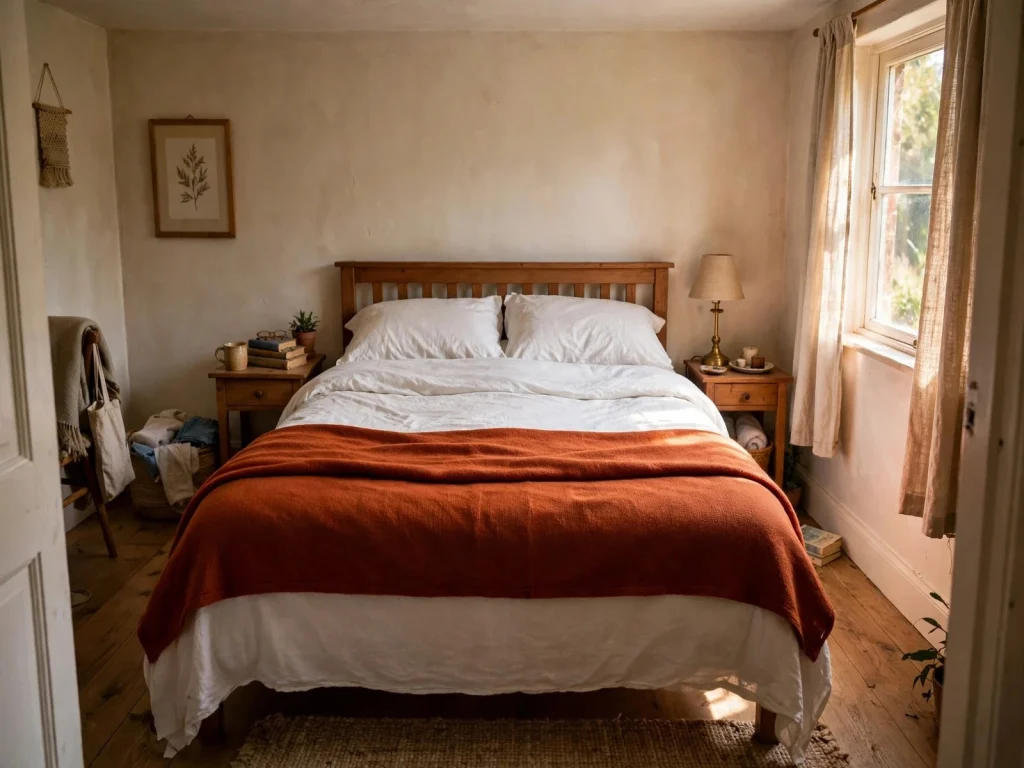
Plain sheets plus one colorful throw is the layered version of the bedding rule. The sheet set stays neutral and washes without fading worries, while the throw carries a saturated shade at the foot of the bed where the eye lands first.
This split solves the laundry problem too. The throw is the piece guests see and the piece that rarely needs washing, so its color stays true far longer than a full saturated duvet set would.
Fold it to show about a third of its length across the foot. More than that and the throw becomes a second duvet fighting the first one for the 60 share.
Budget: one throw in the saturated shade costs a fraction of a full colored bedding set and carries the same accent.
9. Tie the curtains to one color already on the bed
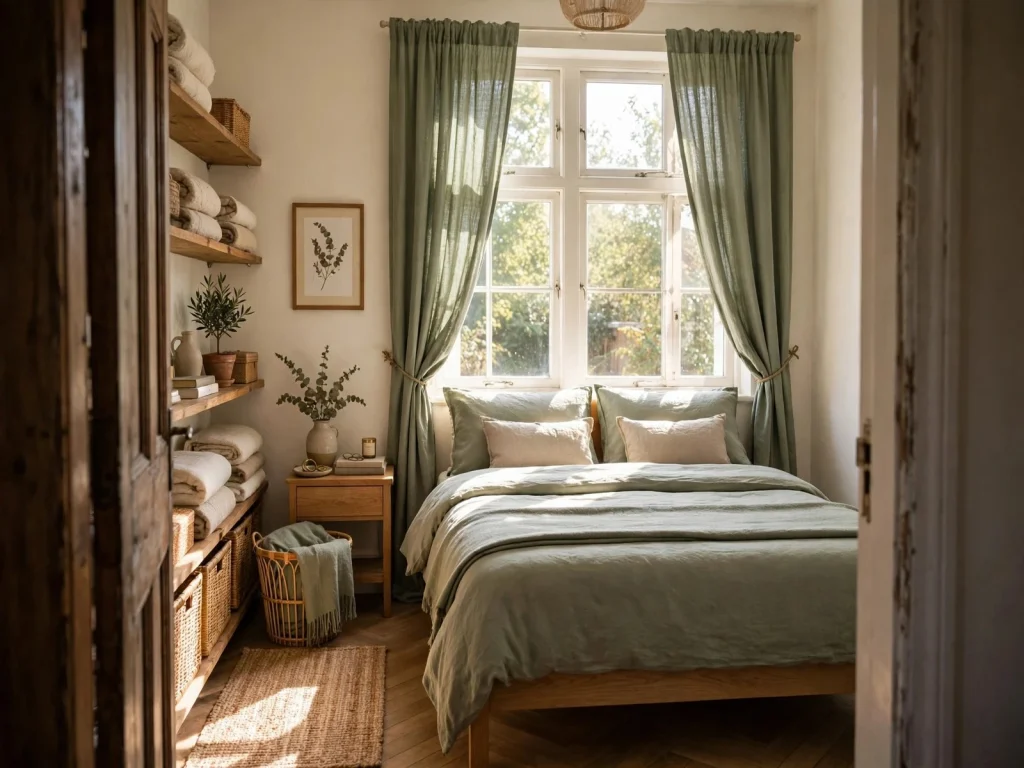
Two big surfaces in unrelated colors split a small room in half. The fix is one shared thread: the curtain color should repeat a color that already lives on the bed, either the main color at a lighter depth or the support color exactly.
Stand at the door and check the sightline. Bed and window usually sit in the same view in a small room, so the repeat is easy to verify and hard to unsee once it is missing.
This is also the cheapest rescue for a room that already has mismatched pieces. Change the cheaper of the two surfaces, which is almost always the curtains and the room pulls together in one purchase.
Measure: at least one color must appear on both the bed and the curtains, at the same or a lighter depth.
One wall, the floor and small saturated pieces
10. Paint one wall only in a room under 100 square feet
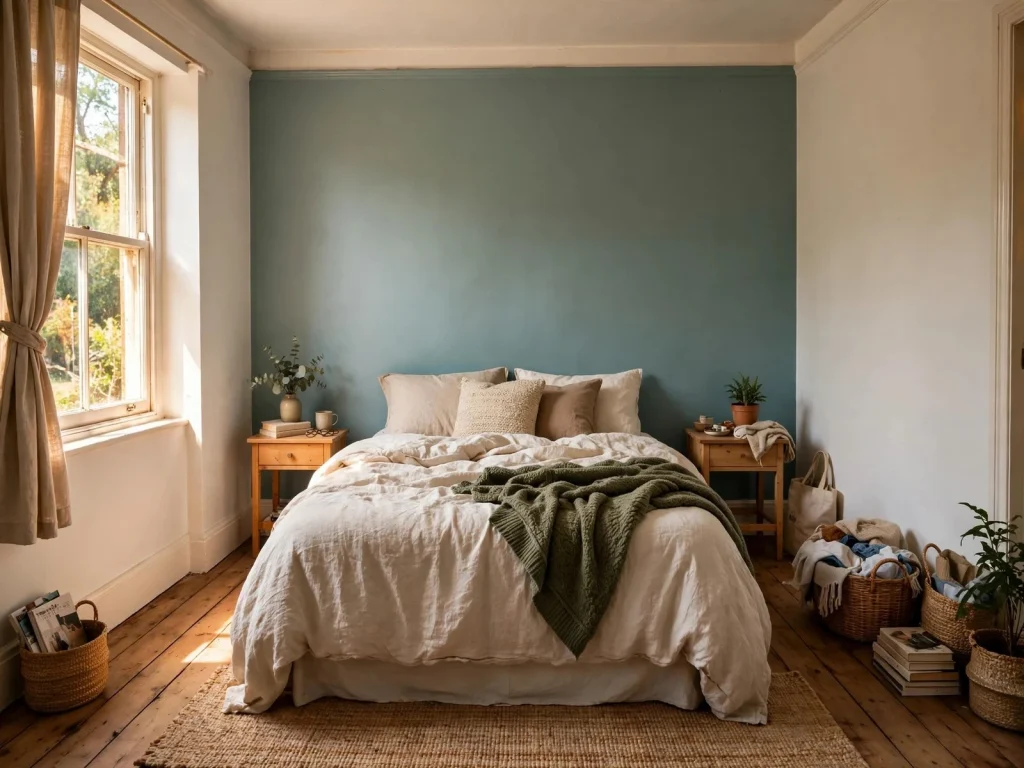
Paint is the strongest color move, so it gets the strictest dose. In rooms under 100 square feet, one wall only and the bed wall is the usual choice because the bedding in front of it breaks the color into doses the eye can handle.
One gallon covers that wall in two coats in most small rooms, which keeps the experiment cheap. The other walls stay warm white and the painted wall becomes the room’s 30 or 60 share depending on its depth.
Above 100 square feet the rule relaxes to the dosage from idea 1. Two painted walls in a tiny room is where colorful turns into crowded, no matter how pretty the shade.
Measure: one painted wall only in rooms under 100 square feet, with the bed wall first choice.
11. Keep the ceiling white or the lightest tint
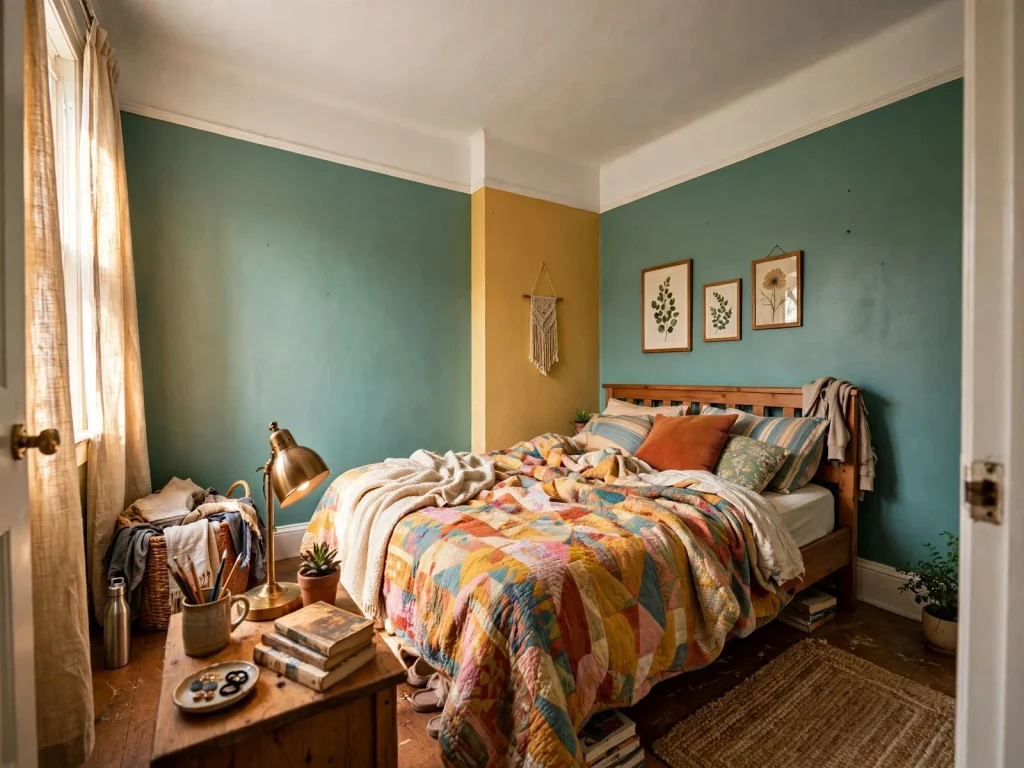
The ceiling is the surface that buys the room its height and color spends it. Keep the ceiling white or the lightest tint of the wall color so the room keeps every inch of its vertical feel. A tinted ceiling at full strength lowers the room by eye before any furniture arrives.
This rule holds even in the boldest schemes on this page. The 60, 30 and 10 shares divide the walls and textiles between them and the ceiling stays out of the split entirely.
Rental ceilings are usually white anyway, which is one rule the landlord enforces in your favor. Spend the color budget where the eye actually rests: the bed, the window and the one painted wall.
Measure: ceiling stays white or the lightest tint of the palette, never a full strength color.
12. Put the floor color down as a rug, not a renovation
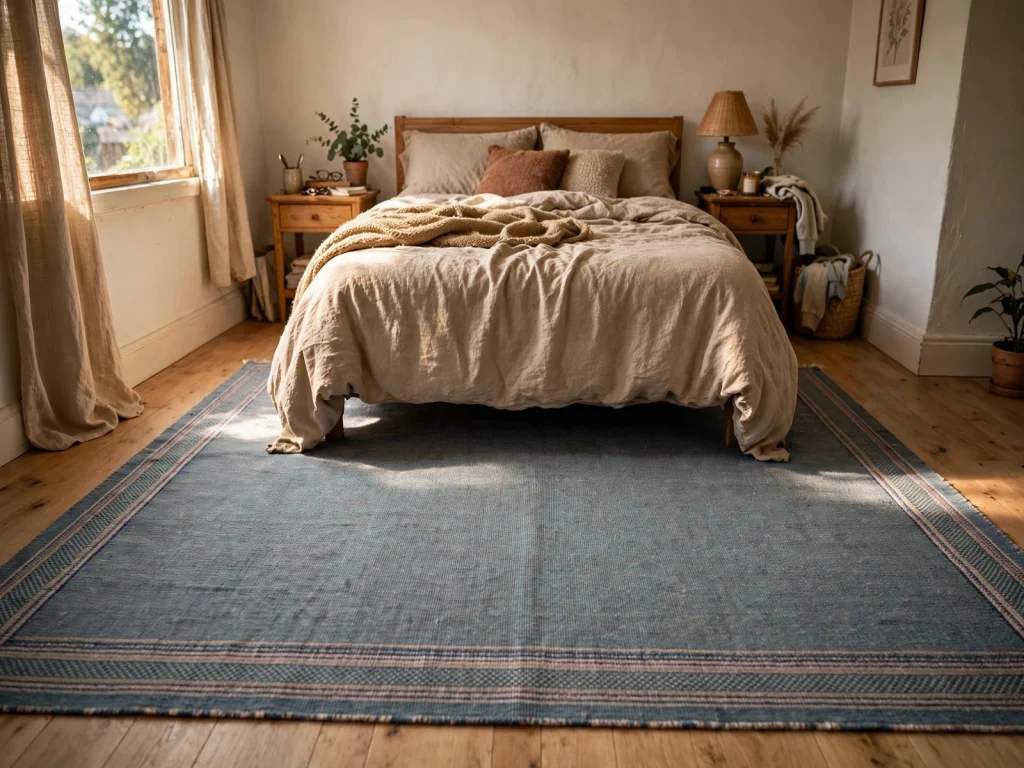
Floor color comes last in the surface order, because the bed and curtains usually spend the budget first. A rug is how a small room gets floor color without touching the floor itself. Pick the rug inside the palette: the support color or a pattern pulled from the hero piece in idea 4.
Size it to show. A rug that hides fully under the bed donates no color to the room, so let it extend past the foot and the sides where the eye can collect it during the day.
Washable flatweave is the small room default here. It takes the traffic of a room where every path crosses the rug and it rolls up if the color experiment ever needs a pause.
Renter-friendly: a washable rug carries the floor color and lifts out clean at move-out.
13. Keep saturated pieces under 36 inches wide
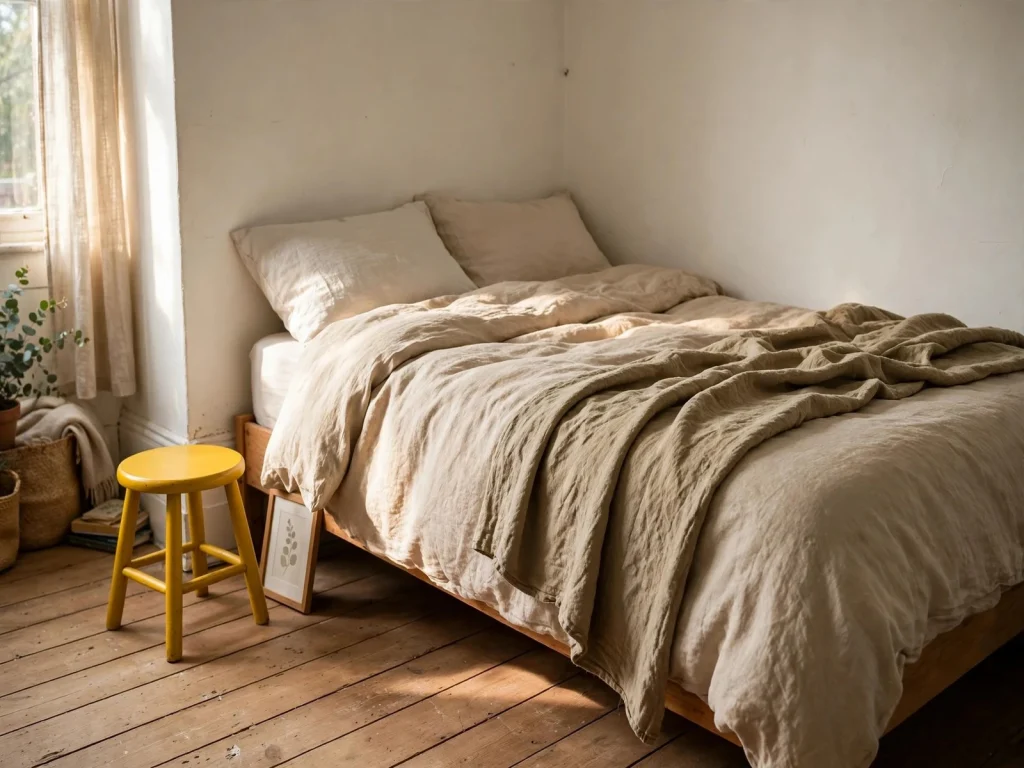
The accent share wants saturated color and small rooms want that saturation in small footprints. Hold saturated pieces to under 36 inches wide: a cushion pair, a small stool, a framed print, a lamp base. Each one reads as a jewel instead of a takeover.
The width rule is really a leaving rule. A piece under 36 inches wide fits in a moving box and through every door you will ever rent, so the boldest color in the room is also the most portable.
Cluster the accents rather than scattering them. Two saturated pieces together at the bed read as one deliberate 10 percent. The same two pieces at opposite ends of the room read as two arguments.
Measure: saturated accent pieces under 36 inches wide, clustered so the 10 percent share reads as one note.
Color pairings that stay happy, not loud
14. Pair pink with warm white and natural wood
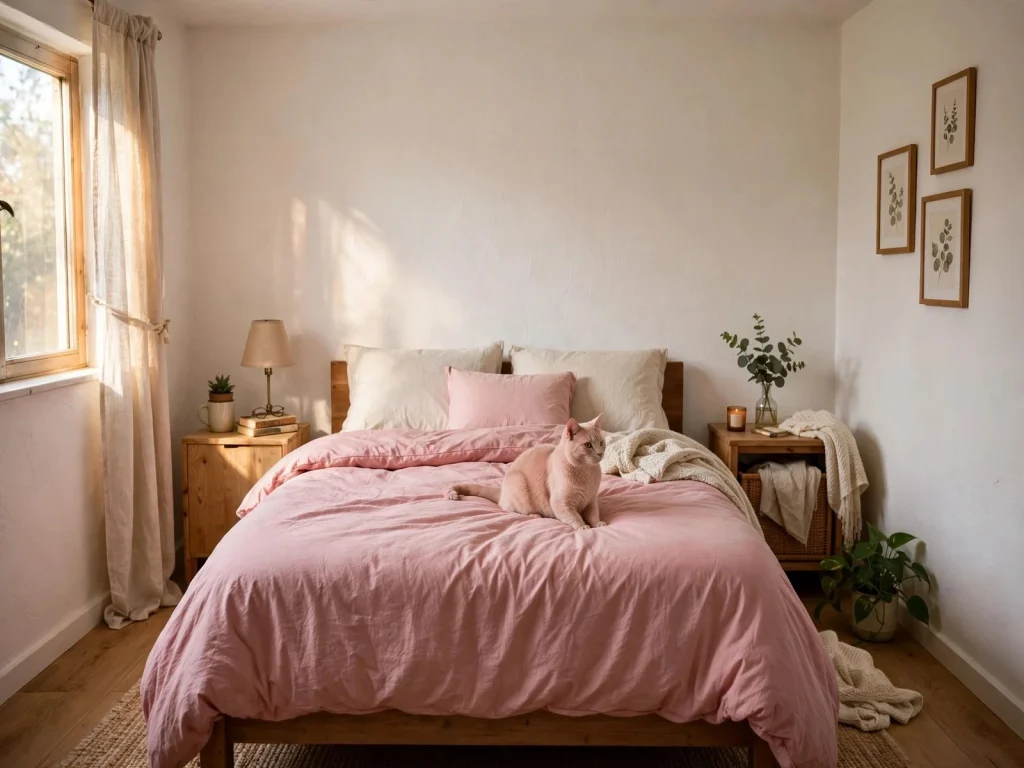
Pink is the happiest small room color when it is dosed and the pairing is forgiving: a mid tone pink as the 60 on bedding, warm white around it and natural wood as the quiet neutral that keeps pink grown up. Our pink bedroom ideas post takes this family through whole rooms at every depth.
Keep the pink warm rather than blue based in a north facing room. Cool light over cool pink turns the scheme grey at the edges, which is the flat feeling you started with.
The accent for this pairing is a small dose of rust or clay. It deepens the pink without adding a fourth color war.
Measure: pink as the 60 percent share on bedding, warm white and natural wood as the neutrals, one clay accent at 10 percent.
15. Pair blue with oatmeal and one warm metal
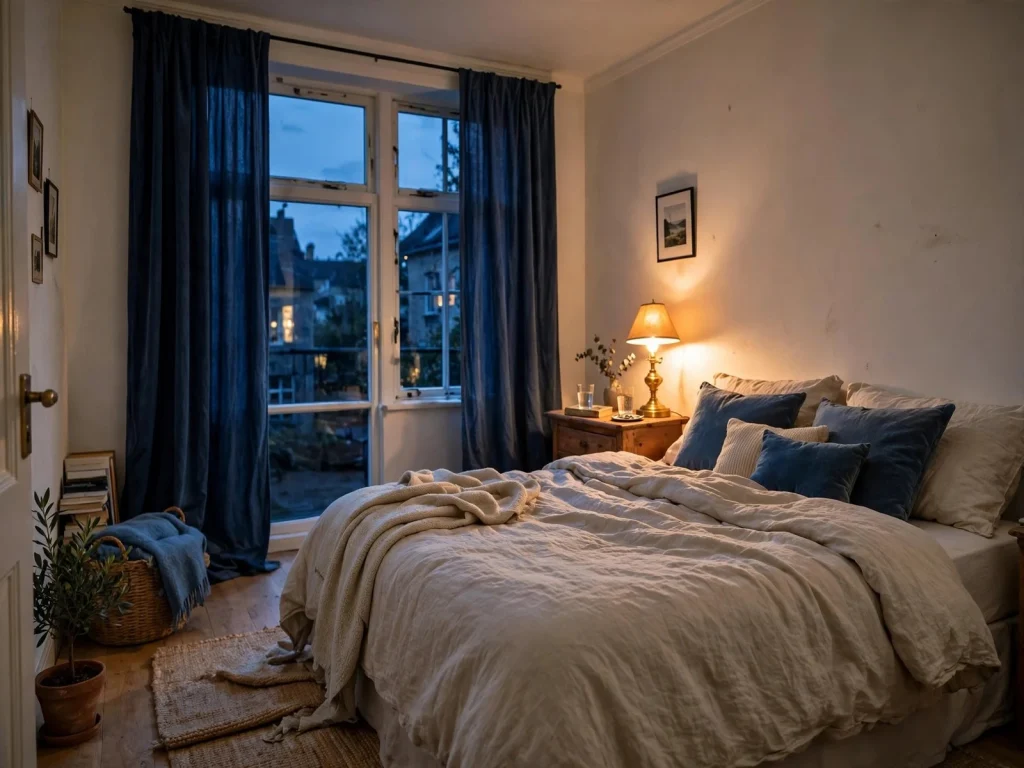
Blue reads calm at almost any depth, which makes it the easiest saturated color for a small room. Run it as the 30 share over oatmeal bedding and warm white walls and the room feels fresh instead of cold. Our blue bedroom ideas post covers the blue families in full.
The warm metal is the insurance. One brass or warm wood toned lamp beside a blue scheme keeps the night version of the room friendly, especially under 2700K to 3000K bulbs that flatter saturated colors after dark.
Avoid the icy version of this pairing. Pale blue plus bright white plus chrome is a bathroom palette and it will make a small bedroom feel tiled.
Measure: blue at the 30 percent share, oatmeal as the main neutral and one warm lamp metal repeated twice.
16. Go colorful boho when you want pattern to lead
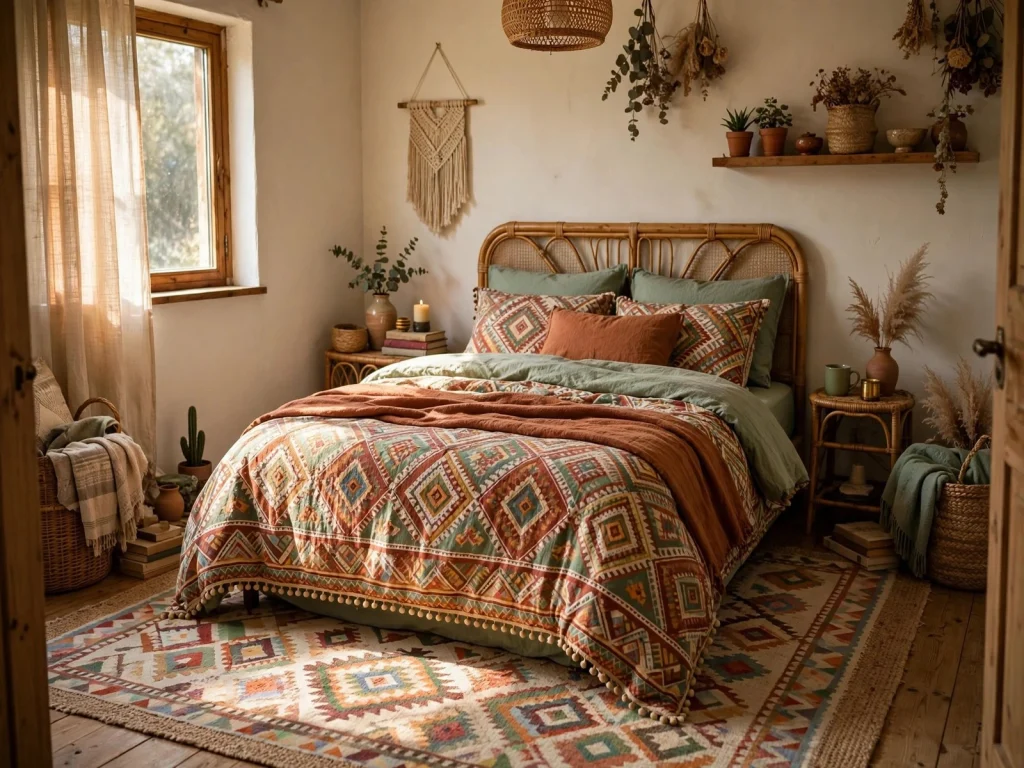
The colorful boho bedroom route lets pattern do the dosing. A patterned duvet or rug in the boho mix of rust, sage, mustard and clay becomes the hero piece from idea 4 and every plain piece in the room pulls one of its colors at the 60, 30 or 10 share.
Colorful boho bedroom ideas work in small rooms because the style expects layers at small scales: cushions, throws and woven pieces under 36 inches wide. Nothing needs to be big to be colorful here.
Hold the boho palette to one temperature family. Warm boho colors together read as sunset. Warm and icy colors mixed read as a shop clearance rail.
Budget: the boho route spends on one patterned hero and plain dyed textiles, the cheapest pairing structure on this page.
17. Pair sage with clay for the quiet version of colorful
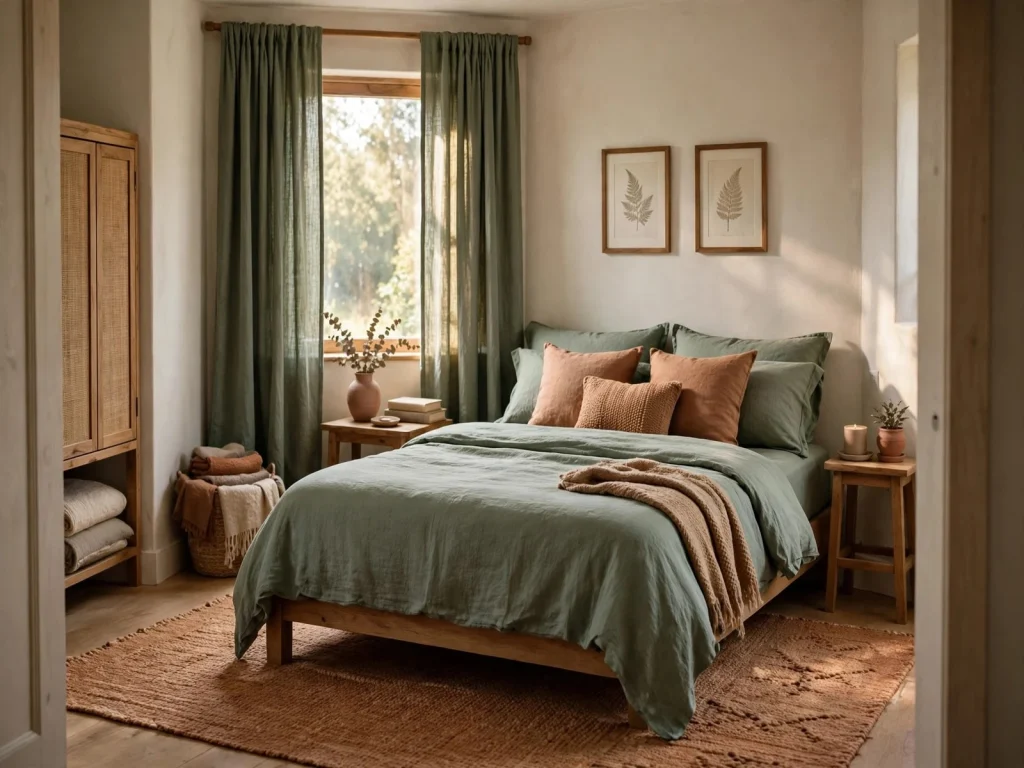
Not every colorful room wants volume. Sage as the 60 on bedding and curtains, clay as the 30 on the rug and cushions and warm white between them gives a small room clear color that still sleeps quietly. Both shades are muted, so the dosage can run at full shares without the room getting loud.
This pairing suits bedrooms that double as workspaces, because neither color shouts during a video call background check. The happiness is there at lamp light, when both shades warm up.
Swap the accent seasonally if you like. A mustard cushion in autumn and a pale lemon one in spring both sit inside the sage and clay frame without breaking the count.
Measure: sage at about 60 percent, clay at about 30 percent and one accent at 10 percent, all in muted depths.
Colorful bedroom ideas for renters in small rooms
A rented small room is where the dosage rules earn their keep, because every color move has to be reversible. Start at the bed: the duvet cover carries the main color at 20 to 25 square feet, with saturated shades kept to cushions and a throw. Curtains on a tension rod take the support color up the window wall. Nothing so far needs permission.
Spend the boldness on the small pieces. Saturated accents under 36 inches wide (a stool, a lamp, a print in a frame that leans instead of hangs) give the room its sparkle and pack into one box later. A washable rug in the support color covers a landlord floor you dislike and rolls up on moving day.
Skip the peel and stick wall until you know the room. Textiles at the right dosage change the feel of a small room within a weekend and they never argue with a deposit. If color is still missing after the bedding, curtains and rug are in, one peel and stick panel behind the bed is the final step, sized to the bed wall and nothing more.
Mistakes that make it fall flat
- Five colors at once. Each color arrives alone, never repeats and reads as clutter instead of cheer. Cap the room at 3 colors plus neutrals and let one pattern carry any extra shades inside a single piece.
- Saturated paint on all four walls. In a small room the color closes in from every side and the furniture drowns in it. Paint one wall under 100 square feet and carry the rest of the color on bedding, curtains and a rug.
- Color only in tiny accessories. A grey room with three bright cushions still reads grey, because the big surfaces never changed. Color the duvet first at 20 to 25 square feet, then the curtains and let the small pieces finish the job.
Questions people ask about this
How many colors can a small bedroom handle? Three colors plus neutrals is the working maximum. Dose them at about 60, 30 and 10 percent of the visible surfaces and let any fourth color live only inside a pattern on one hero piece. Neutrals such as warm white, natural wood and pale flooring sit outside the count.
Where should the color go first in a small bedroom? On the bed. A duvet cover spans roughly 20 to 25 square feet of visible color, more than any other single piece and it changes back in one wash day. Curtains come second, then one wall and floor color comes last as a rug.
Can I use bold color in a rented small bedroom? Yes, if the boldness rides on textiles and small pieces. Keep saturated pieces under 36 inches wide, hang curtains on a tension rod and lay color as a washable rug. The whole scheme then packs up with you and the walls stay exactly as you found them.
The bottom line
Color in a small room is a dosage problem, not a taste problem. Count the colors, give each one a share and color the big surfaces in order: bed, curtains, one wall and floor last. This week, stand at your bedroom door and list the visible surfaces with their shares on paper before buying a single thing. The list takes five minutes and it decides every purchase after it.