You have settled on plum and now the worry follows it. The color looks rich in every photo you save and then you picture your own room at night and wonder if it will feel cold and flat and a little too purple. You need to know where plum goes and how much of it your room can take and what light keeps it warm.
This page gives you that plan in numbers. These moody plum bedroom decor ideas set the wall rule first and then the soft layer fallback for small rooms and then the pairings and light that stop plum turning cold. Plum is purple leaning red and that red lean is why it reads warmer than violet. The wider family sits in our moody bedroom ideas post.
Before you start: measurements, costs and renter rules
Measure three things before you buy paint or bedding. Note the width of the wall behind the bed and the ceiling height and count the windows. One wall behind the bed is the default for plum bedroom walls. Four walls work only in a room with two or more windows or a ceiling at 9 ft or higher.
Name the shade range light to dark. Dusty plum is the palest step and deep plum is the middle step and aubergine is the darkest step. Test all three on the bed wall in patches at least 12 inches square and check them morning and night. Rough cost notes stay plain. A gallon covers the bed wall in most rooms and a plum bedding set costs less than repainting a whole room twice. Renters should skip paint unless the lease allows it in writing and should put plum on bedding and curtains instead.
Plum on the walls
1. Paint the wall behind the bed in deep plum
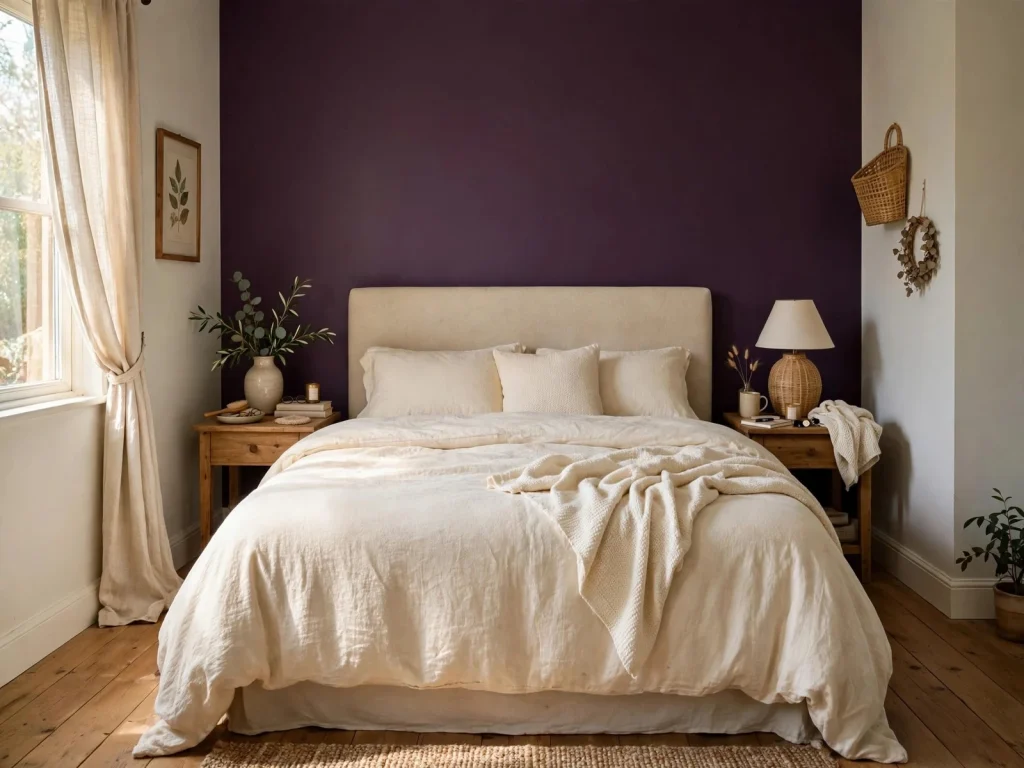
The bed wall is where plum earns its place. It frames the bed and leaves the other three walls pale enough to bounce light back into the room. That balance makes plum bedroom decor feel deep instead of heavy.
Paint a grey tinted primer first and then two coats of deep plum. Leave 24 inches of pale wall above a standard headboard if your ceiling is low. The catch is undertone shift. Deep plum can read almost black in a north facing room after dark and then dusty plum is the safer step.
Measure: paint patches at least 12 inches square and check them at three times of day before you commit.
2. Wrap all four walls in aubergine only when the room qualifies
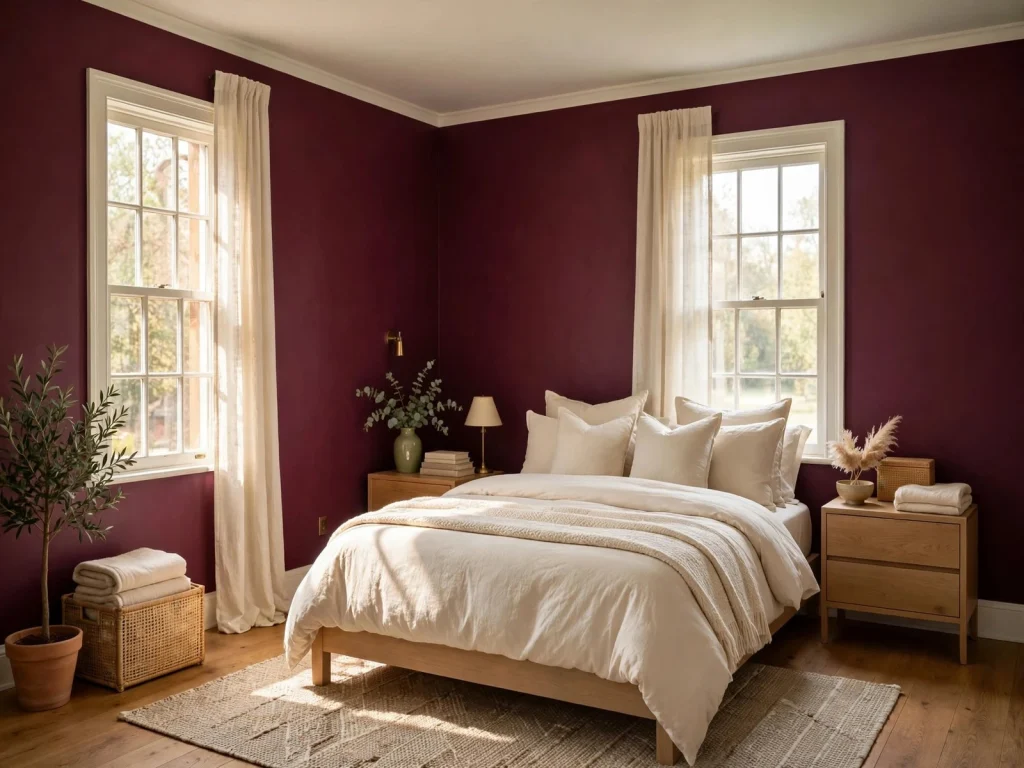
Four plum walls can feel close and calm. They can also turn a small dark room into a box with no air in it. Light and height decide which one you get.
Use all four walls only with two or more windows or a ceiling at 9 ft or higher. Keep the ceiling pale and keep bedding cream so the bed stays the bright center. The catch is cover up later. Four dark walls take extra coats to repaint and the room feels smaller on grey mornings.
Measure: four walls need two or more windows or a ceiling at 9 ft or higher. Below both marks stop at one wall.
3. Use dusty plum when the room gets little daylight
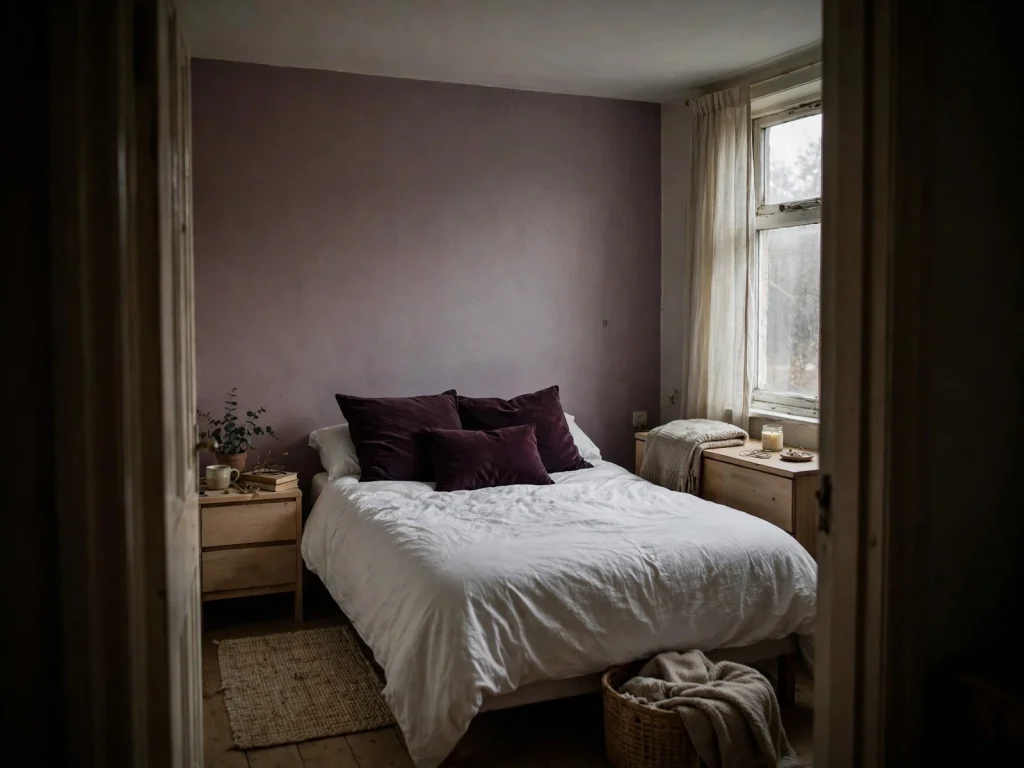
Dusty plum gives you the color family without the depth risk. It has grey in it so it sits quieter and holds up where deep plum would swallow the light by 4 pm.
Put it on the bed wall in a low light room and pair it with white bedding and light wood. The catch is impact. Dusty plum alone will not give the moody depth you want so deepen it with aubergine cushions or a deep plum throw.
Budget: start with dusty plum on one wall and add the dark note in textiles for less than a second paint job.
4. Keep walls pale in a small room and move plum to the soft layers
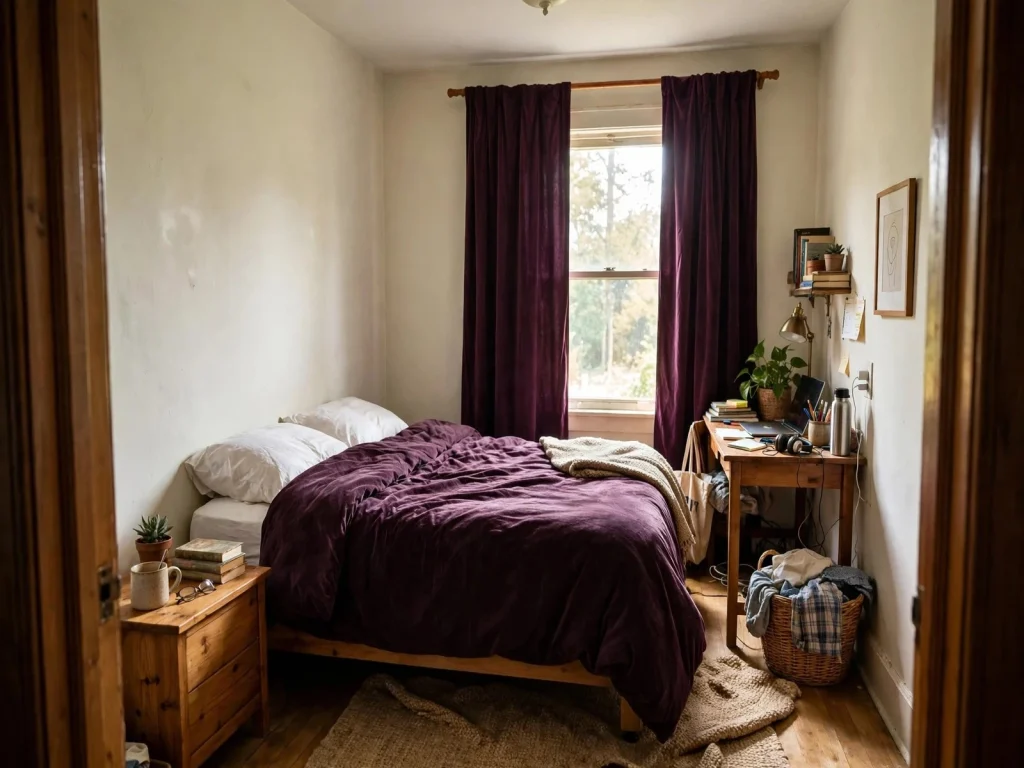
This small room rule saves more plum bedrooms than any shade pick. In a room under 120 sq ft plum walls shrink the feel of the space and eat light the room cannot spare.
Keep walls pale in cream or warm white and put plum on bedding and curtains instead. Bedding and curtains are the two largest soft surfaces after the walls so the color still fills the view from the doorway. The catch is scale. One small plum cushion reads as a dot. One of those pieces must be full size.
Measure: under 120 sq ft keep plum off the walls. Put it on bedding and curtains in full size pieces.
Plum in bedding and soft layers
5. Layer velvet and washed linen and matte cotton with one sheen at most
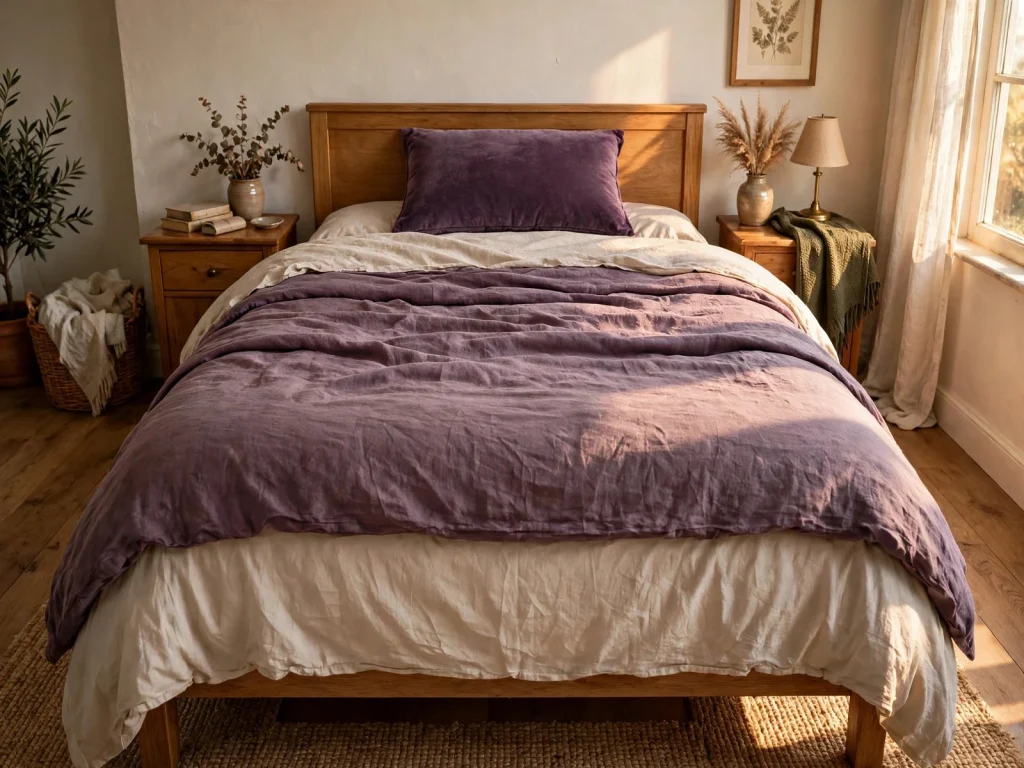
Fabric stops dark plum feeling cold. Velvet and washed linen and matte cotton each take the color softly so the bed looks deep instead of shiny. Name all three when you shop because the mix is the point.
Build the bed with matte cotton sheets and a washed linen duvet in plum and one velvet cushion or throw. Keep sheen to one fabric at most across the whole bed. The catch is too much velvet. Velvet everywhere turns the bed into one dark block and the layers stop reading.
Budget: buy the velvet piece last and smallest. One 20 inch cushion gives the sheen note for the least money.
6. Dress the bed in deep plum and break it with pale sheets
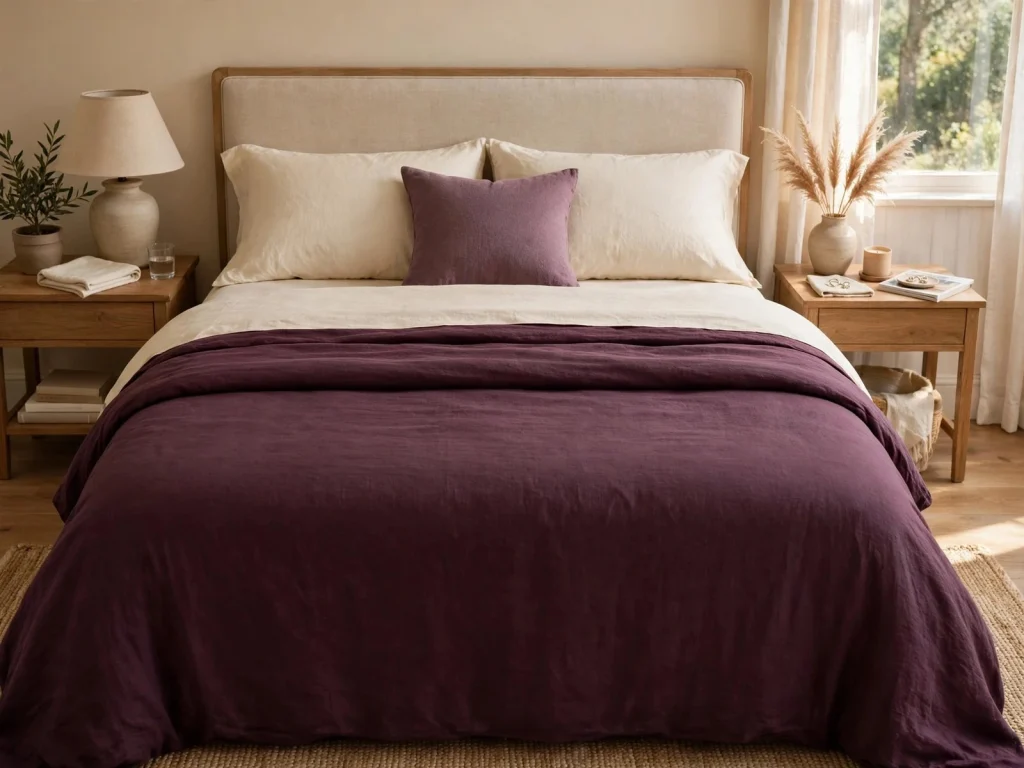
A deep plum duvet is the fastest no paint version of this look. It covers the largest surface in the room and strips off in five minutes if the mood changes.
Fold the duvet back 18 inches at the head so a band of cream sheet shows across the top. That pale break stops the dark bed merging with a dark bed wall. The catch is lint and fading. Dark bedding shows pale lint fast and fades at fold lines in strong sun so wash it inside out.
Measure: fold the duvet back 18 inches to show the pale sheet band across the full bed width.
7. Hang plum curtains for the full drop from rod to floor
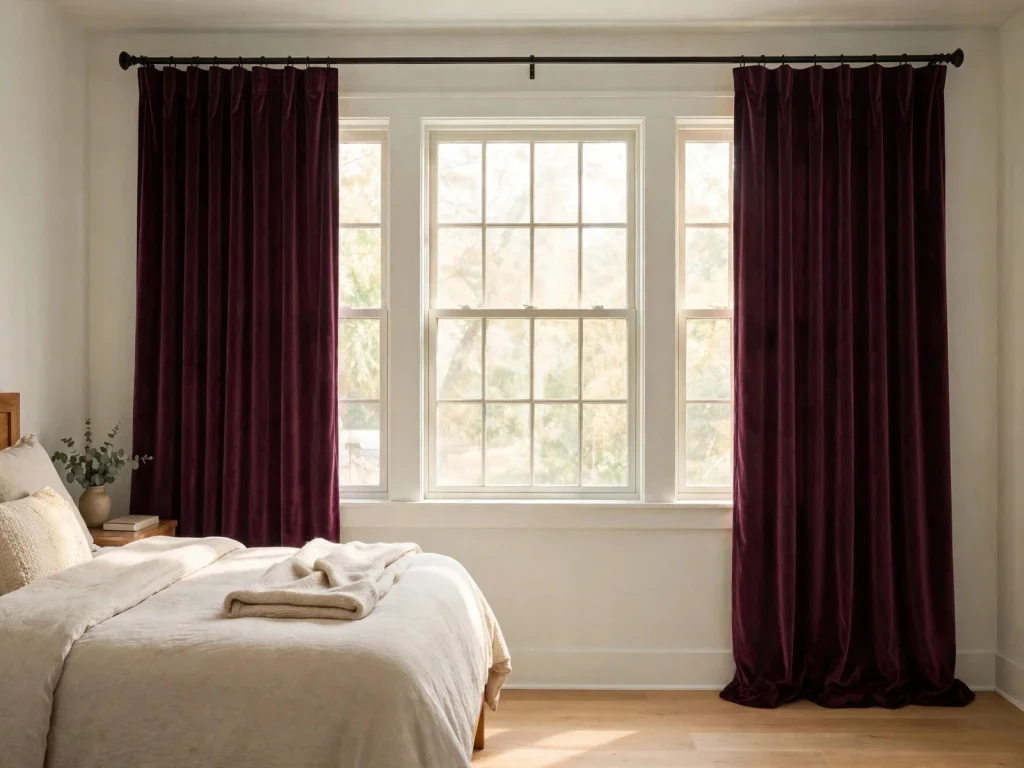
Curtains are the second place plum belongs in a small room and the first place it belongs in a rental. A full height pair frames the window and draws the eye up so the room feels taller.
Mount the rod 4 to 6 inches above the frame and wide enough that open curtains clear the glass. The hem should touch the floor. Panels at 84 inches suit an 8 ft ceiling and 96 inch panels suit a 9 ft ceiling. The catch is daylight. Lined deep plum panels darken a room at midday when closed.
Measure: rod 4 to 6 inches above the frame and hem at the floor. A hem 3 inches short shrinks the window.
8. Add a plum throw and cushions as the low commitment test
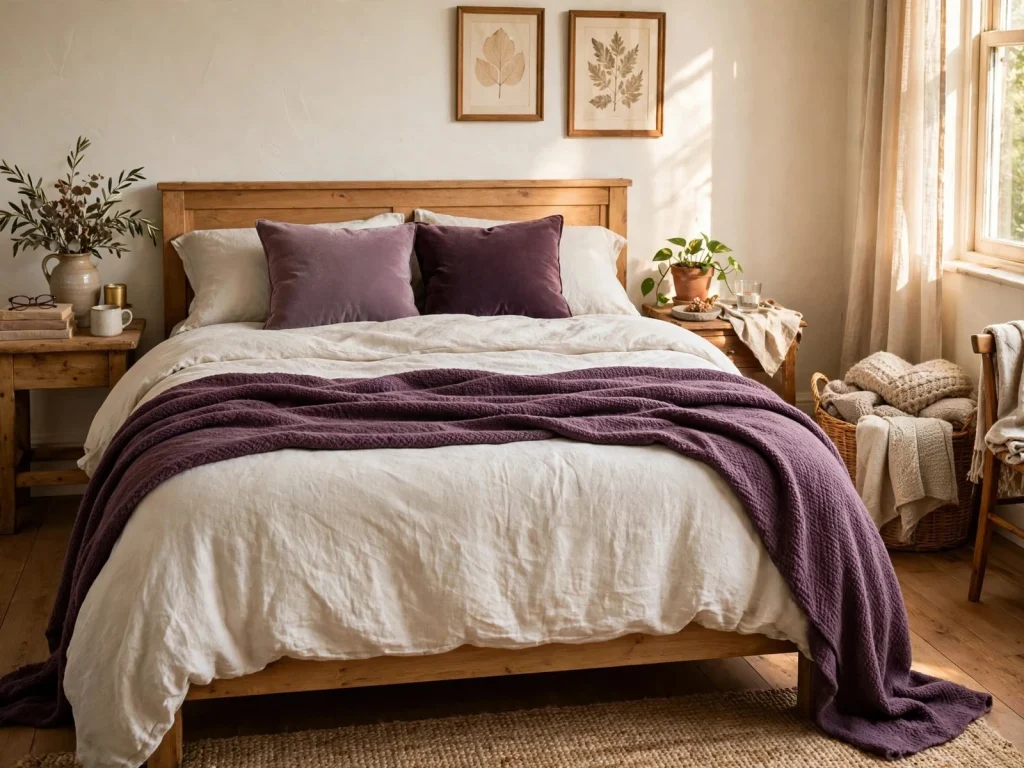
A throw and two cushions test how plum sits with your light and wood tones and bedding for the price of one small order. It is the right first step if paint still feels like a leap.
Place the throw across the foot third of the bed at 50 inches wide or more so it spans a queen with drape on both sides. Use one cushion in dusty plum and one in aubergine to test light and dark at once. The catch is judgment. Pair this test with a 12 inch paint patch and judge both after three nights.
Renter-friendly: a throw and cushions need no permission and no drilling and they leave with you at move out.
Pairings: plum with neutrals, brass and grey
9. Pair plum with cream and warm white to keep it cozy
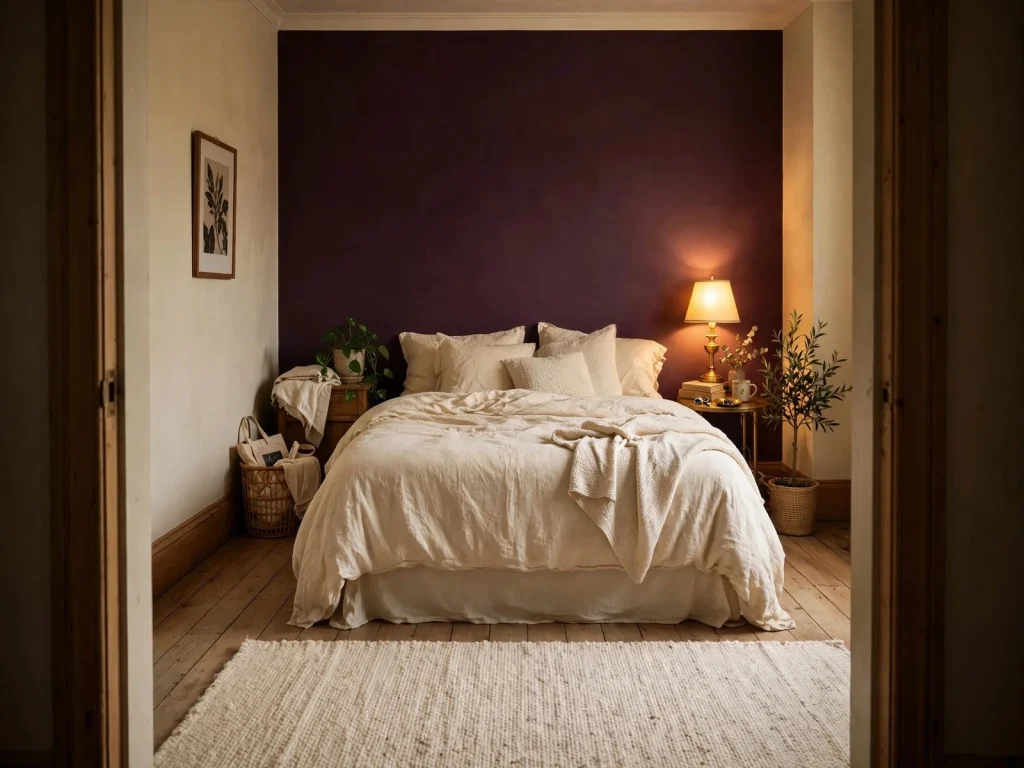
Plum needs a warm neutral beside it or it turns cold. Cream and warm white carry yellow warmth that answers the red lean in plum. Cool bright white does the opposite and makes plum look harsh.
Use cream for the three walls off the bed wall and for sheets and for one large textile. Keep the neutral share at about a third of the view from the doorway. Our bedroom color ideas post uses the same main color plus warm neutral rule for other shades. The catch is sun. Cream can read almost butter at midday in a south facing room.
Measure: hold warm neutrals to about one third of the doorway view so plum stays the main color.
10. Add brass for warmth in two or three small places
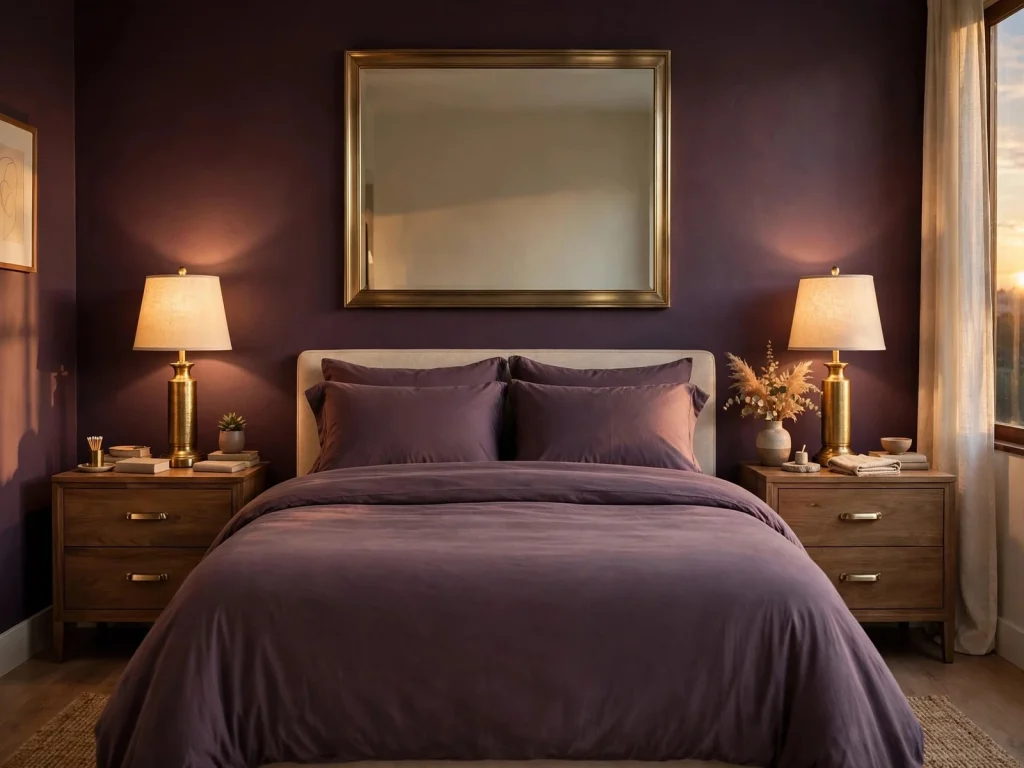
Brass warms plum instead of cooling it. Its gold tone echoes the red lean in the shade and glows under warm bulbs. Chrome and silver pull plum toward violet and make the room feel colder.
Keep brass to two or three places. Lamp bases and drawer pulls and a mirror frame is a complete set and each piece should read as a glint. This is where plum meets the softer end of dark romantic bedroom ideas without copying that palette. The catch is shine. High shine brass beside matte bedding can look formal fast so choose brushed brass.
Budget: swap lamp bases first. Two brass bedside lamps warm the bed wall for less than new furniture.
11. Soften plum with warm grey and keep cool grey out
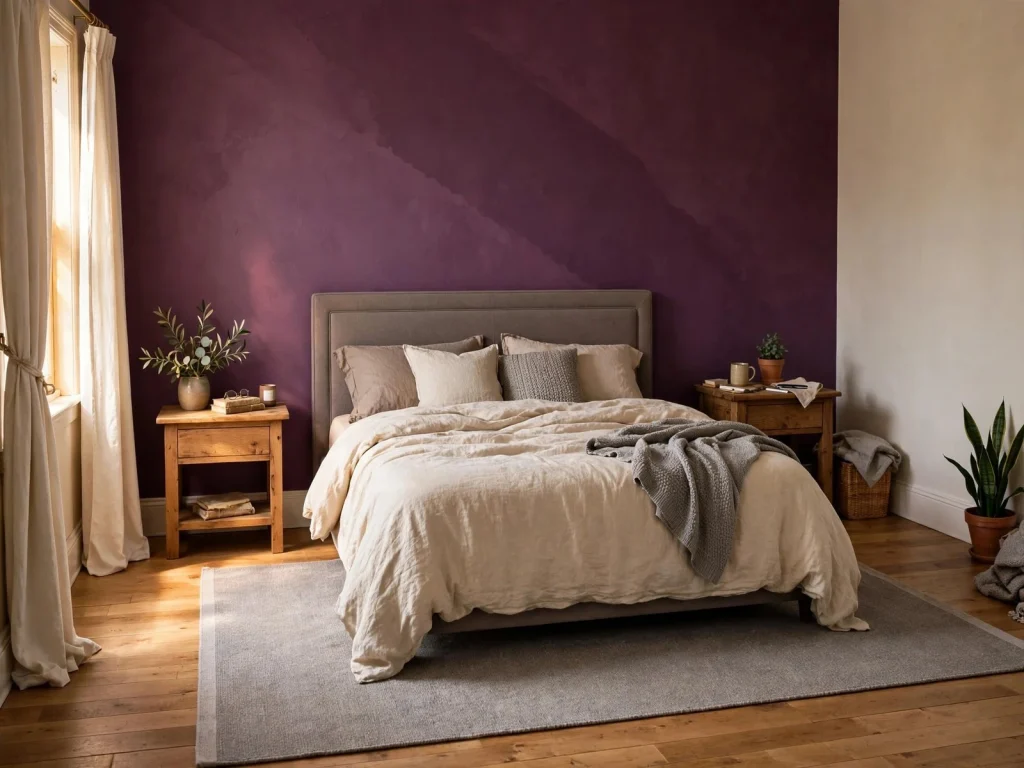
Grey can soften plum or freeze it and undertone decides. Warm grey has a hint of brown in it and settles beside plum like a shadow. Cool grey has blue in it and pushes plum toward a cold violet cast.
Use warm grey for one large piece such as a rug or an upholstered headboard. Burgundy is different from plum here. Burgundy leans red brown and lives on our burgundy bedroom ideas post while plum leans purple red on this page. The catch is overload. Grey everywhere leaves plum as the only color note and the room goes dull.
Measure: test grey and plum together in a swatch at least 12 inches wide. Small chips hide undertone clashes.
Light for a dark plum room
12. Build three light layers before you judge the color
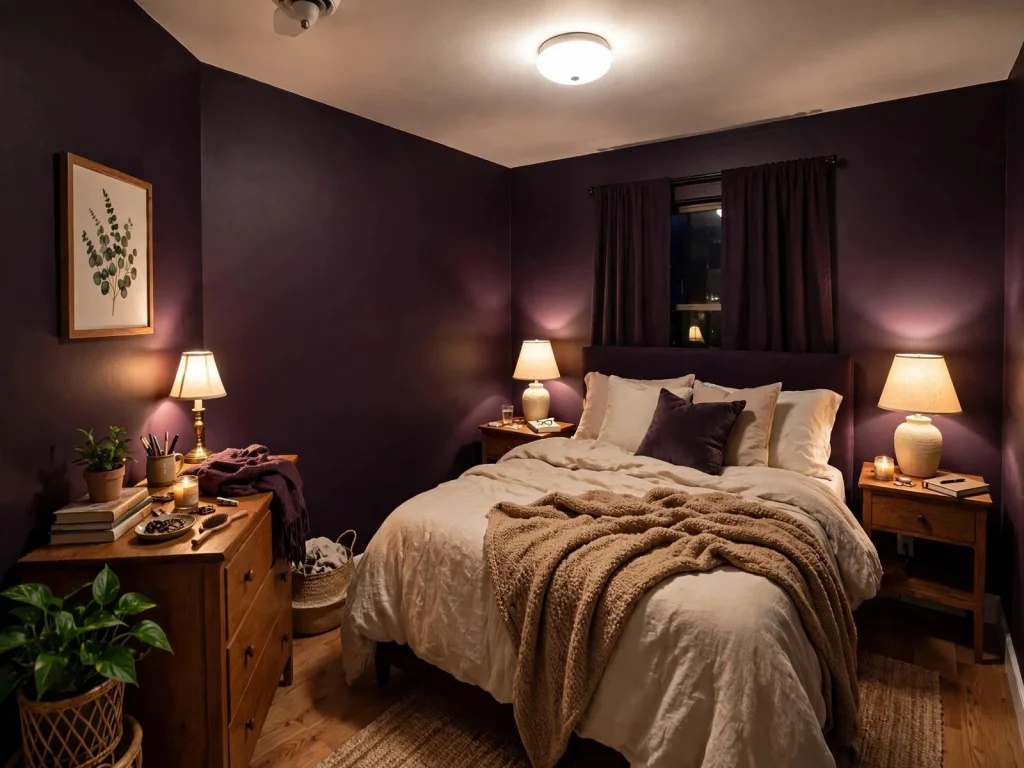
Dark plum fails under one ceiling light and succeeds under layered light. A dark room needs 3 light sources. The overhead light is layer one and a bedside pair counted as one layer is layer two and one low accent light is layer three.
Place the accent light low on a dresser or in the corner away from the bed. Each layer should switch on its own. The catch is judging too soon. Most people pick the shade under the single overhead bulb and then blame the paint. Finish the light plan and look again.
Measure: count 3 layers in the finished room. Overhead plus a bedside pair as one plus one low accent light.
13. Set every bulb in the room to 2700K
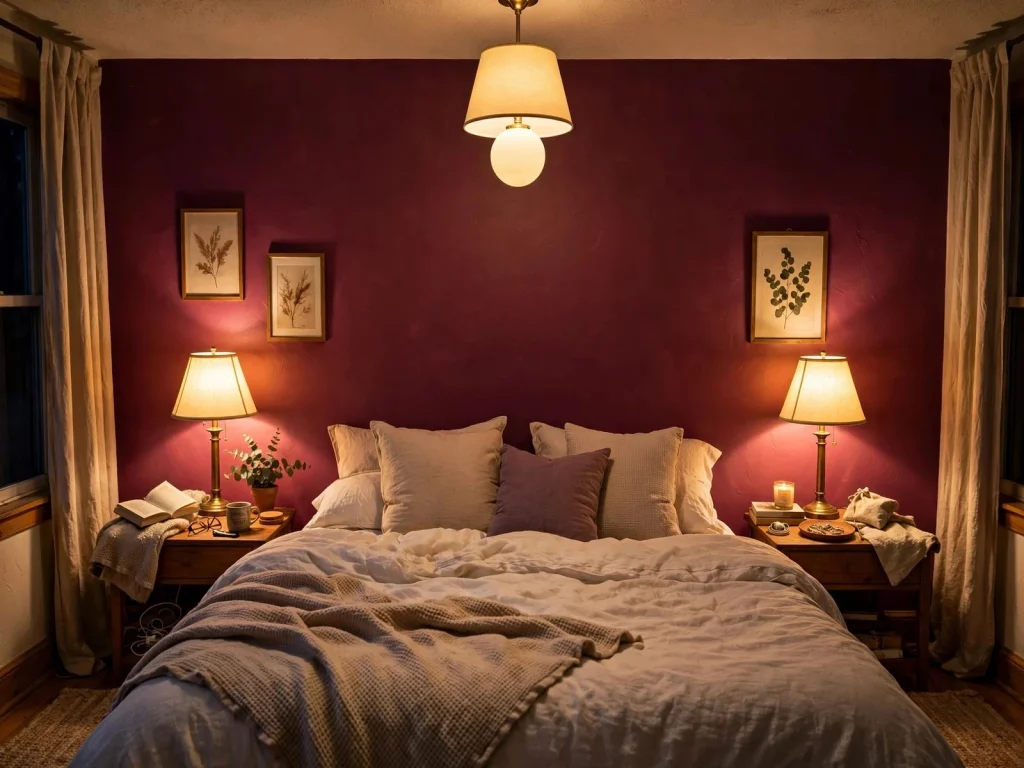
Bulb color decides whether plum reads warm or cold more than the paint name does. Bulbs at 2700K give warm white light that flatters the red lean in plum. Bulbs at 4000K and above push the same wall toward blue and violet.
Replace bulbs in all three layers with 2700K at the same time. One cool bulb will fight the warm pair all night and the wall will change color as you switch layers. The catch is labels. Check the kelvin number on the box and not the cozy word on the front.
Budget: a full swap to 2700K costs less than one tin of paint and fixes more cold plum rooms than a shade change.
14. Use lampshades and dim levels to keep the glow low and warm
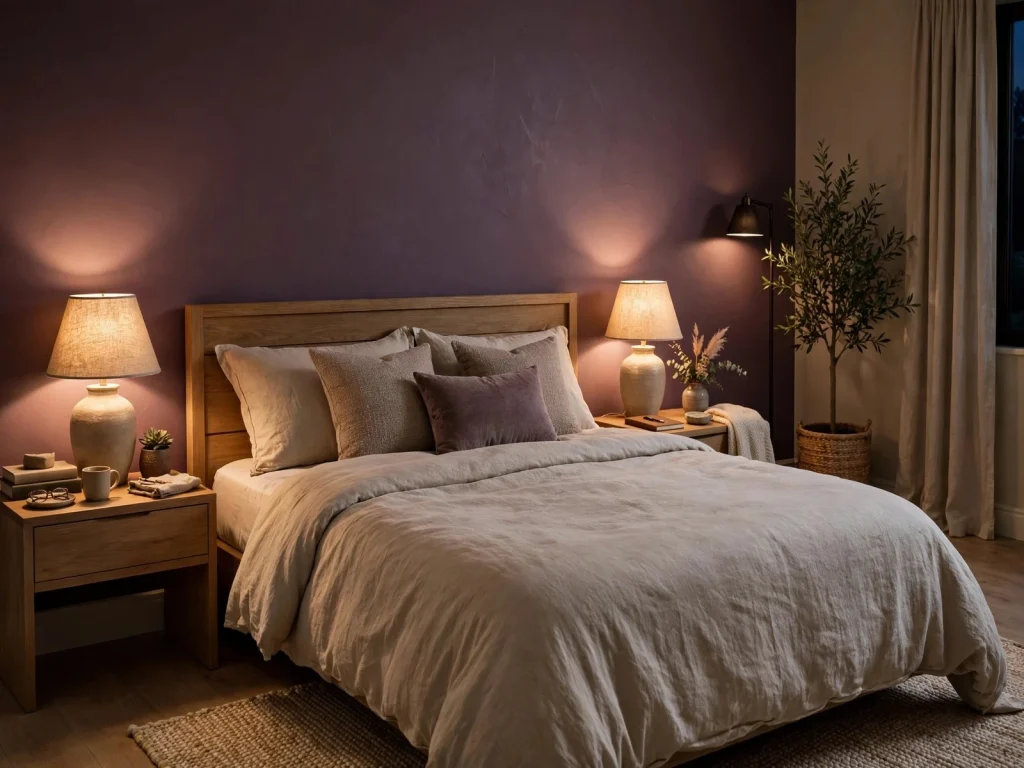
Layered light still fails if every lamp blasts at full power. Dark walls absorb light so the instinct is to go brighter and that creates glare pools and black corners at the same time.
Fit cream shades that push light down at bed height and keep the accent layer at about half the strength of the bedside layer. The room should have no single bright point your eye lands on first. The catch is dimmers. Some LED bulbs flicker on older dimmers so test one bulb before you buy the full set.
Needs drilling: none for lamps and shades. A hardwired picture light needs drilling and an electrician if no socket sits nearby.
Moody plum bedroom ideas on a budget
The budget order on this page is light and textiles first and paint last. Swap every bulb to 2700K first because that cheap fix tells you if your room can take plum at all. Then buy the throw and cushion test from idea 8 and live with it for a week. If the color still feels right the next spend is deep plum bedding with the pale sheet fold from idea 6.
Paint comes third and only on the bed wall. One gallon and a tinted primer cover that wall in most rooms and the other walls stay pale so the cost stays contained. Curtains come last because full drop panels cost more per window than bedding costs per bed and they matter less once the bed carries the color. Small rooms save most. The under 120 sq ft rule means no paint spend at all and the whole look rests on a duvet set and one pair of curtains and a pack of warm bulbs.
Mistakes that make it fall flat
- Painting four walls in a room that fails the light test. One window and a ceiling under 9 ft cannot carry aubergine everywhere. The room reads smaller each morning. Use one bed wall and keep the rest pale.
- Judging plum under a single cool bulb. A 4000K overhead light turns a warm shade cold and flat and you repaint a good color for a lighting fault. Set all bulbs to 2700K and build three layers first.
- Stacking sheen fabrics across the whole bed. Velvet and satin together turn plum shiny and hard and the bed loses its cozy read. Keep sheen to one fabric at most and let washed linen and matte cotton do the rest.
- Matching plum to burgundy pieces you already own. Burgundy leans red brown and plum leans purple red so the two clash at close range. A burgundy throw on a plum duvet looks like a mistake. Keep the families apart or bridge them with cream.
- Floating the curtains short of the floor. A hem inches above the floor cuts the window height and cheapens the color beside it. Hang panels that touch the floor.
Questions people ask about this
What colors go with plum in a bedroom?
Cream and warm white keep plum cozy and warm grey softens it without cooling it. Brass warms it in small touches such as lamps and pulls. Cool white and cool grey and chrome push plum toward cold violet.
Is plum too dark for a small bedroom?
No if plum stays off the walls. In a room under 120 sq ft keep walls pale and put plum on bedding and curtains in full size pieces. Deep plum bedding with a pale sheet fold gives the mood without shrinking the room.
What is the difference between plum, aubergine and burgundy?
Plum is purple leaning red and sits in the middle of this range with dusty plum as the palest step. Aubergine is the darkest plum step and reads almost black purple in low light. Burgundy is separate and leans red brown with no purple lead.
Should plum go on all four walls or just one?
One wall behind the bed is the default for most rooms. Four walls work only with two or more windows or a ceiling at 9 ft or higher. Small rooms should keep plum on bedding and curtains instead of any wall.
The bottom line
Plum works when the wall rule and the light rule come before the shade name. One bed wall for most rooms and pale walls for small rooms and three warm layers at 2700K will make dusty plum or deep plum or aubergine feel deep and cozy instead of cold. This week tape a 12 inch test patch of deep plum on your bed wall and check it at night with warm bulbs only.