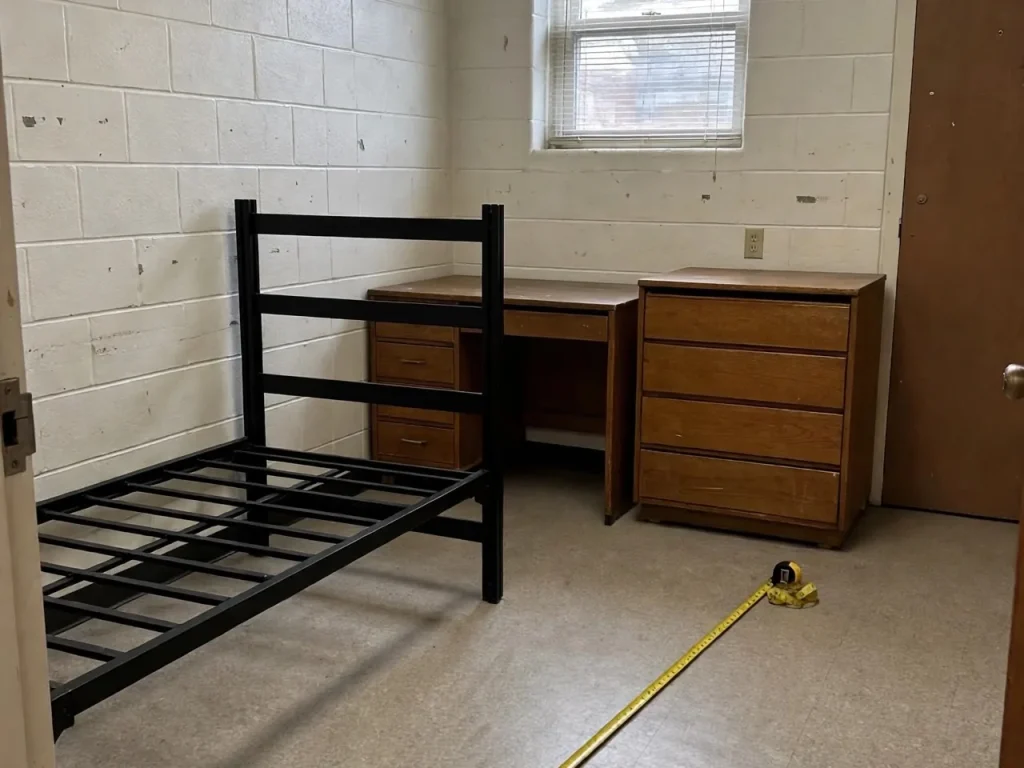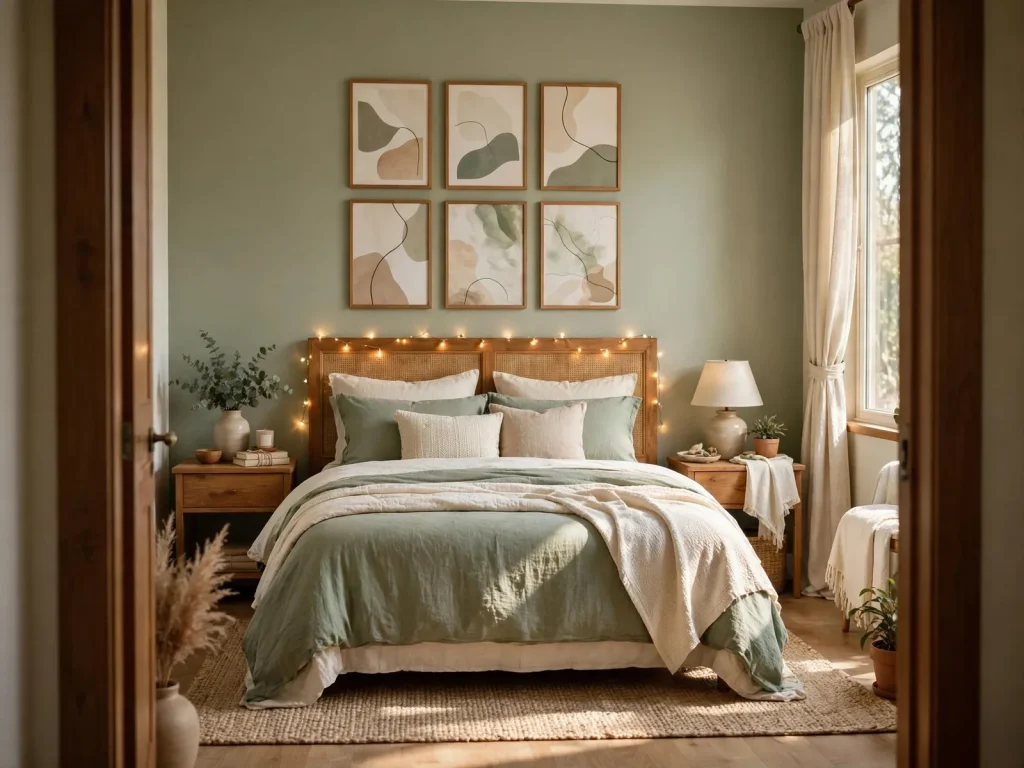
You decorated this room two years ago and it already looks wrong. The toddler bed is outgrown, the cartoon decals that thrilled a three year old now embarrass a seven year old and the storage that once held picture books overflows with chapter books, craft kits and a scooter that has nowhere to live. Most kids bedroom ideas pretend a child stays one age forever, so the room fails on a schedule set by somebody else’s growth chart.
This page plans for the growth spurt instead of decorating against it. Every idea is tagged by age band, toddler, 5 to 8 or 9 to 12, so you never buy silently for the wrong stage. Shared rooms, small rooms and attic rooms get named versions of the ideas, because the plan changes with the walls you actually have. The furniture follows one growth rule: adjustable where it can be, neutral at the base and themed only in the accents you can swap in an afternoon. Each idea carries a measurement, a budget band or a renter note, because a kids room is a working room, not a showroom. The same plan-first approach runs through our main collection of bedroom ideas for the grown-up rooms in the house.
Before you start: measure, budget, rules
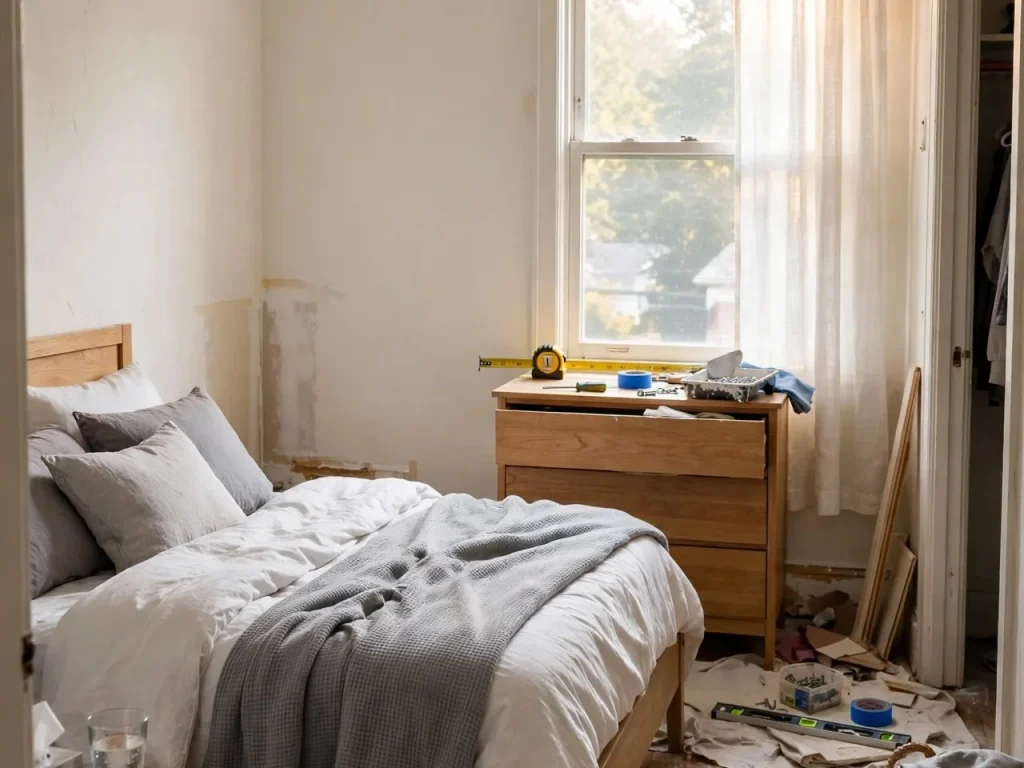
Measure the room before you fall for anything. Write down the wall-to-wall width and length, the door swing, the window position and the ceiling height. Ceiling height decides the bunk and loft ideas later: a top bunk needs at least 30 inches between the top of the mattress and the ceiling so a child can sit up without ducking. Note the radiator and outlet positions too, because beds and desks both want the walls those things already own.
The age bands on this page are the planning unit. Toddler covers roughly ages 2 to 4, when everything must sit low and within reach. The 5 to 8 band is the school-start band, hungry for play floor, book storage and the first homework surface. The 9 to 12 band wants privacy, a real desk and a room that no longer looks like a little kid lives in it. The teen band is a different job with its own page in the works, so nothing here pretends to cover it.
Safety, stated plainly. Anchor every tall piece, dressers and wardrobes and bookshelves, to the wall with the straps in the box or a $10 hardware kit. Choose cordless blinds or fit a cleat high on the frame and keep cords wound up out of reach. At toddler height, pick rounded corners on the bed frame and table edges or add stick-on corner guards for the toddler years. These are one-afternoon jobs and they come before every decorative idea on this page.
The budget bands used below are under $50, $50 to $150, $150 to $400 and $400 plus. Most ideas sit in the first two bands on purpose. Renters: every idea that needs a screw or a strap has a no-drill or low-drill alternative flagged in its practical line and the theme in this system lives in peel-and-stick decals, bedding and cushions, never in paint you have to undo at move-out.
One color rule before the zones. Paint and the big pieces stay in the not-babyish family: warm white, sage green, dusty blue and soft clay. These read playful beside toddler textiles and calm beside teen ones, so the color never forces a redo on its own.
Sleep zone
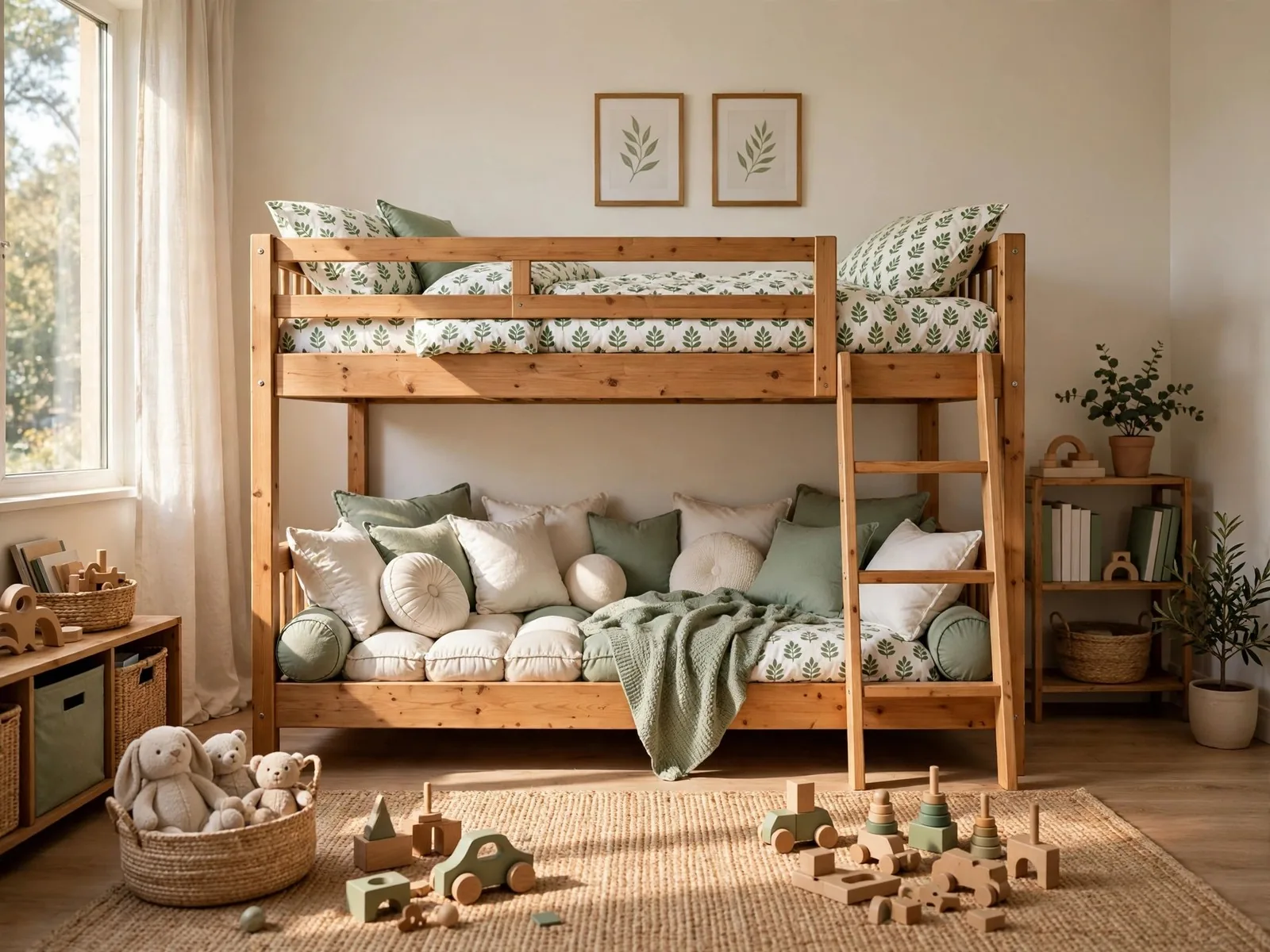
1. Choose bunk beds when two kids share one room (ages 6 to 12)
A shared room is the most searched kids layout on Pinterest for a reason: two beds eat the floor that play needs. Bunk beds stack the sleep zone into one footprint, roughly 80 by 42 inches for a twin over twin and hand the freed floor back to the rest of the room. The top bunk suits the older child and the lower bunk becomes the reading pit and fort headquarters by day.
Price the frame against its second life. A solid bunk in the $400 plus band splits into two twin beds in most designs, so the shared-room years can end with two beds for the teen handoff instead of one piece of firewood. Check that the frame separates before you pay for that promise.
Check the ceiling first, then the ladder position. A ladder at the end of the frame keeps the walkway clear and a ladder on the long side is easier for younger climbers. Leave room at the foot for the trundle or storage drawers if your frame offers them later.
Measure: you need at least 30 inches between the top mattress and the ceiling and a room ceiling of 8 feet or more for a standard bunk.
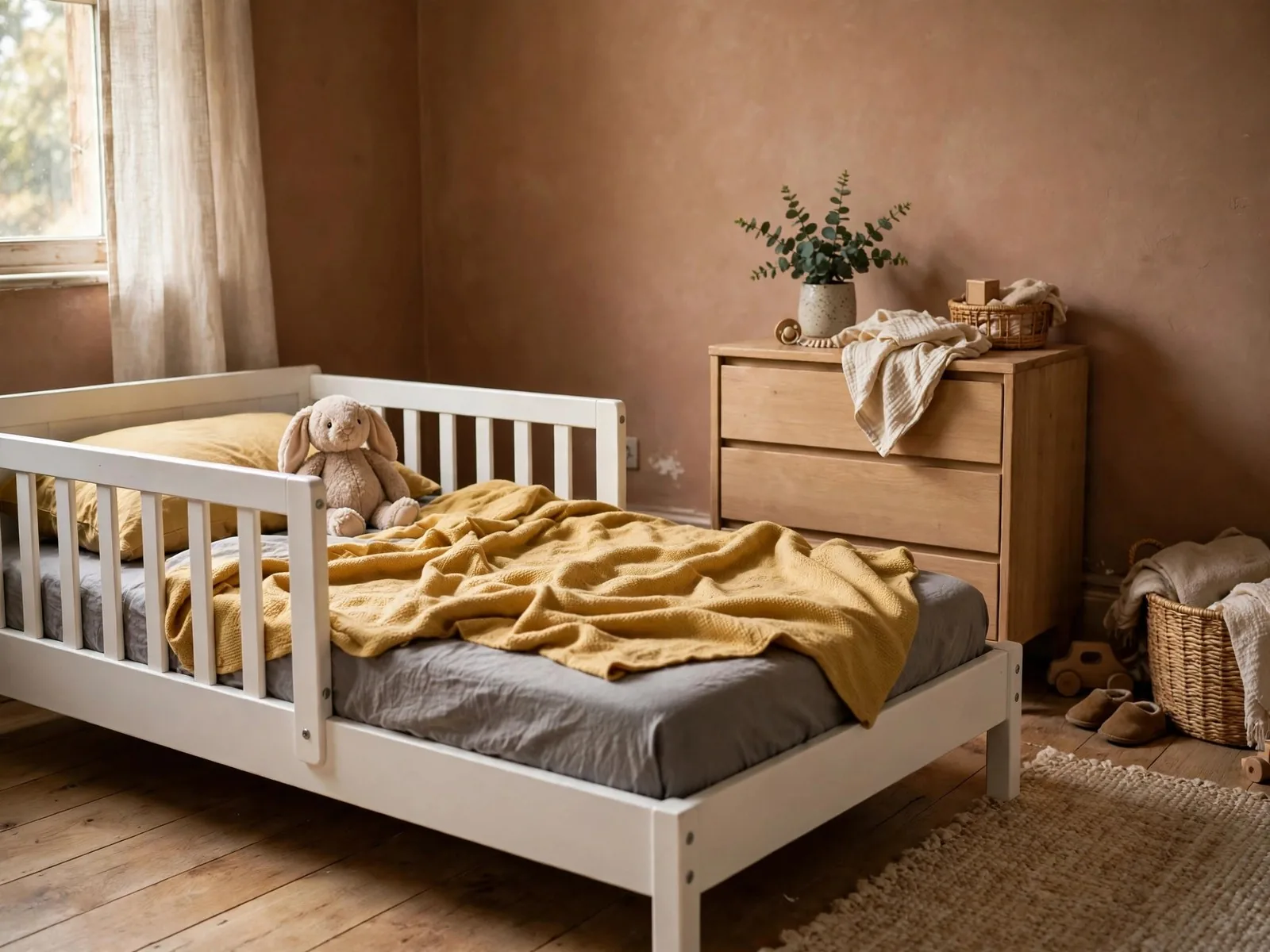
2. Start a toddler in an extendable bed that stretches to a twin (toddler to age 8)
A toddler bed lasts about two years and then the child outgrows it overnight, or so it feels at 2 a.m. An extendable frame is the cheat code for the toddler band: it starts as a short toddler bed, then slides out to a full twin as the child grows. You buy one bed, one set of bedding and one mattress progression, then you never shop for a bed again until the teen years.
Size it from the small end. A 70-inch room wall fits the toddler configuration with room to spare and the extended twin still leaves room for a book ledge beside it. Look for a frame with a guard rail included, not an accessory you pay for later, and a finish you can live with at eight as well as at two.
Budget: $150 to $400 for an extendable frame that replaces two beds across six years.
3. Build the bed on a neutral base and swap only the accents (ages 5 to 8)
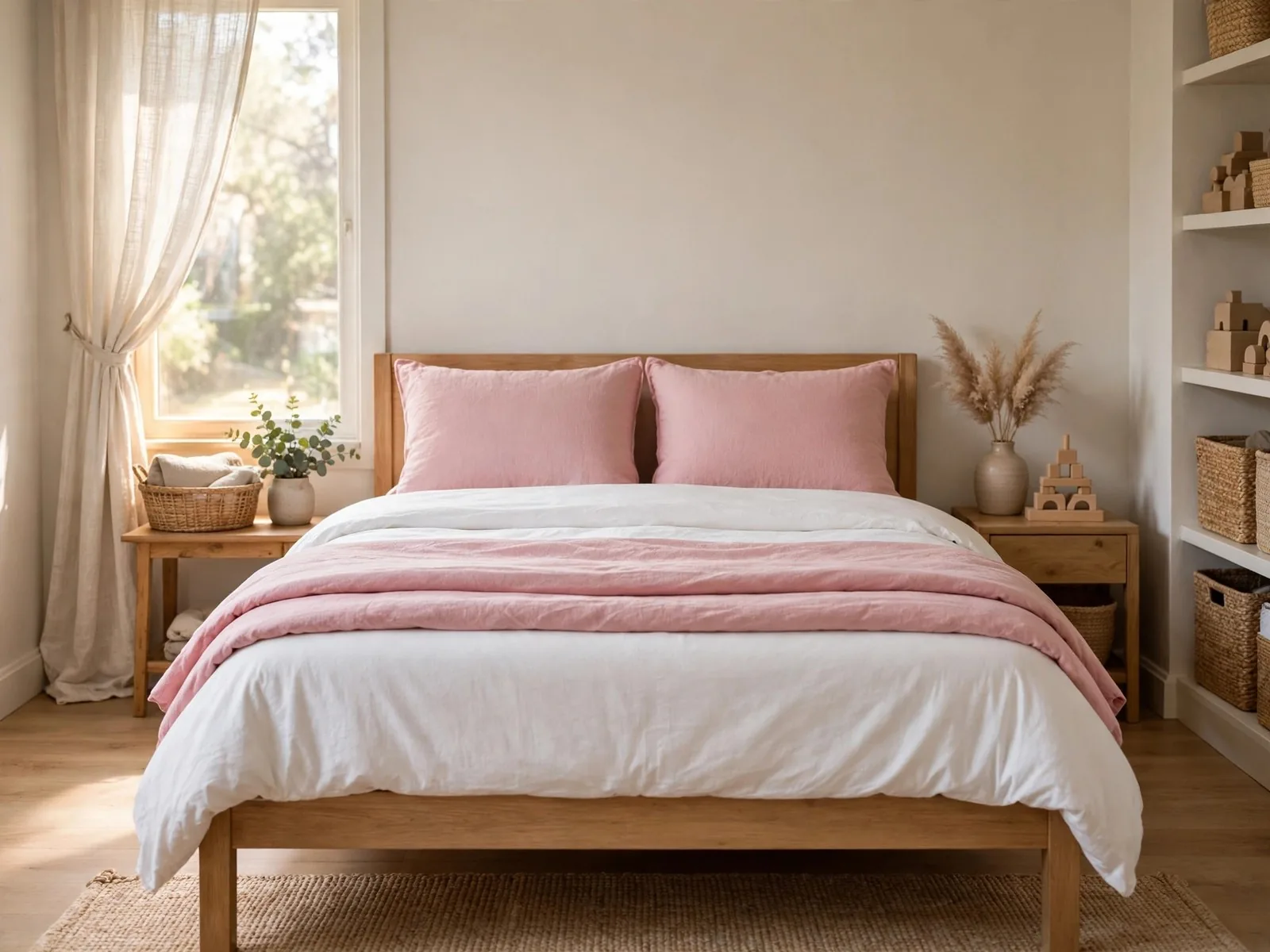
This is the idea behind half the girls bedroom ideas and boys bedroom ideas that actually last. The room has a bed, a rug and curtains in a neutral base, white, pale grey or natural wood, and every themed element is a cheap accent. The bedding, cushions and one wall decal carry the dinosaurs or the space rockets, so the theme is a layer you lift off rather than a commitment you live with.
When dinosaurs give way to space, you replace $40 of textiles and the room is reborn. When the base itself is themed, the same change of heart costs a bed, a rug and a repaint. Neutral is not boring here. Neutral is the mechanism that makes every later change cheap.
The full palette logic, including the colors that do not turn babyish at age ten, is the same one we use for grown-up rooms in our bedroom color ideas post.
Budget: $30 to $60 per accent swap, against $300 plus for a themed furniture set.
4. Slide a trundle under the bed for sleepovers and small rooms (ages 5 to 12)
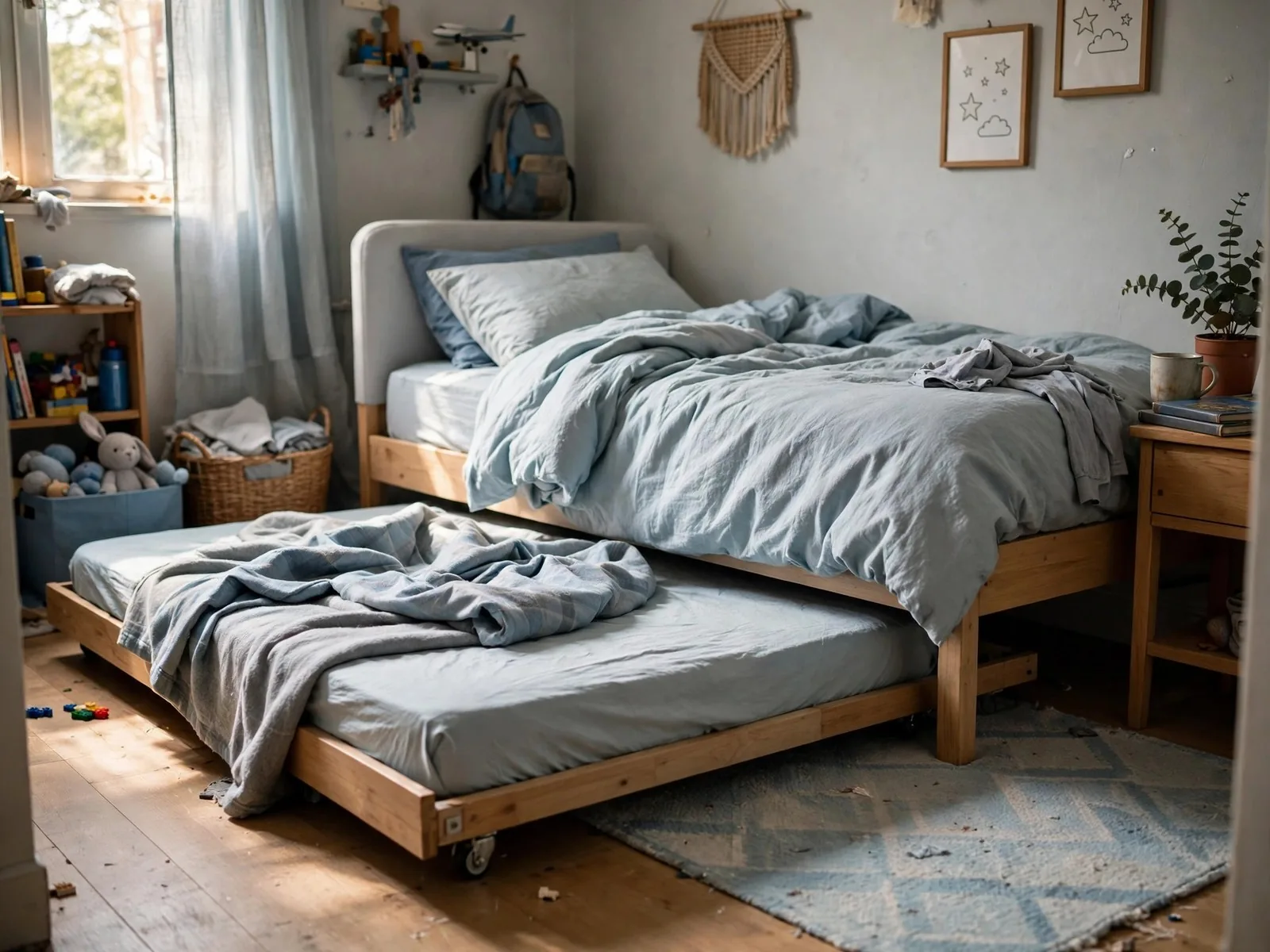
Sleepovers are the fastest way a kids room outgrows itself. One extra child needs a whole bed, and a room that fits one twin suddenly needs two. A trundle solves it without adding a single square foot to the room: a low bed on wheels that slides under the main bed by day and rolls out at night, taking the same floor it already owns.
It also works for the small room that is not a sleepover room at all. In a room under 100 square feet, a trundle turns the daytime floor into play space and the night-time floor into a second bed, with no folding, no air mattress and no sofa to drag. The second mattress stays made and ready under the first, so a guest is a two-minute job instead of a production.
Measure the under-bed space before you shop, then read our small bedroom ideas post for the layout that fits the rest of the room around it.
Measure: under-bed clearance of 10 to 12 inches fits most trundle frames and their mattresses.
5. Put a low loft in the attic room and use the space underneath (ages 9 to 12)
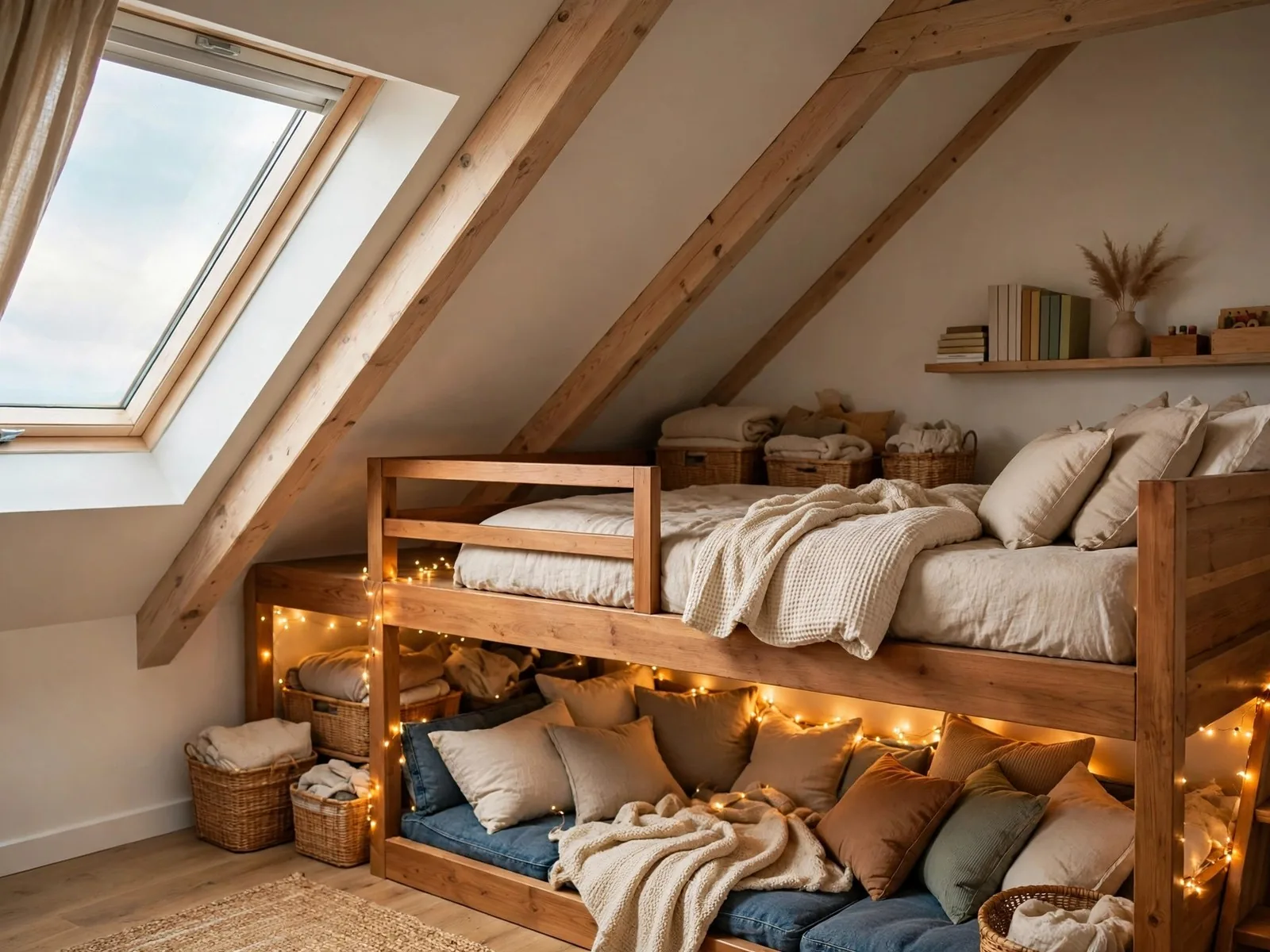
An attic room with a sloped ceiling is a problem until you stop fighting the slope. A low loft, a mid-sleeper at 45 to 50 inches high, puts the bed in the low part of the room where standing height is wasted and leaves the tall part for the desk and the wardrobe. The space under the bed becomes the den, the reading corner or the homework zone, and the room gains a whole extra floor of usable space without a single wall moving.
Guard the edges. A loft needs a full-length guard rail on the open side and a ladder the child can climb half-asleep at 2 a.m. Put the desk under the high side of the slope so the child can sit upright, and keep the den low and soft with cushions and a rug, because a child will climb down in the dark eventually and the landing should be forgiving.
Measure: the sleeper still needs 30 inches of sit-up room above the mattress, measured at the slope, not at the room’s peak.
Play and reading zone
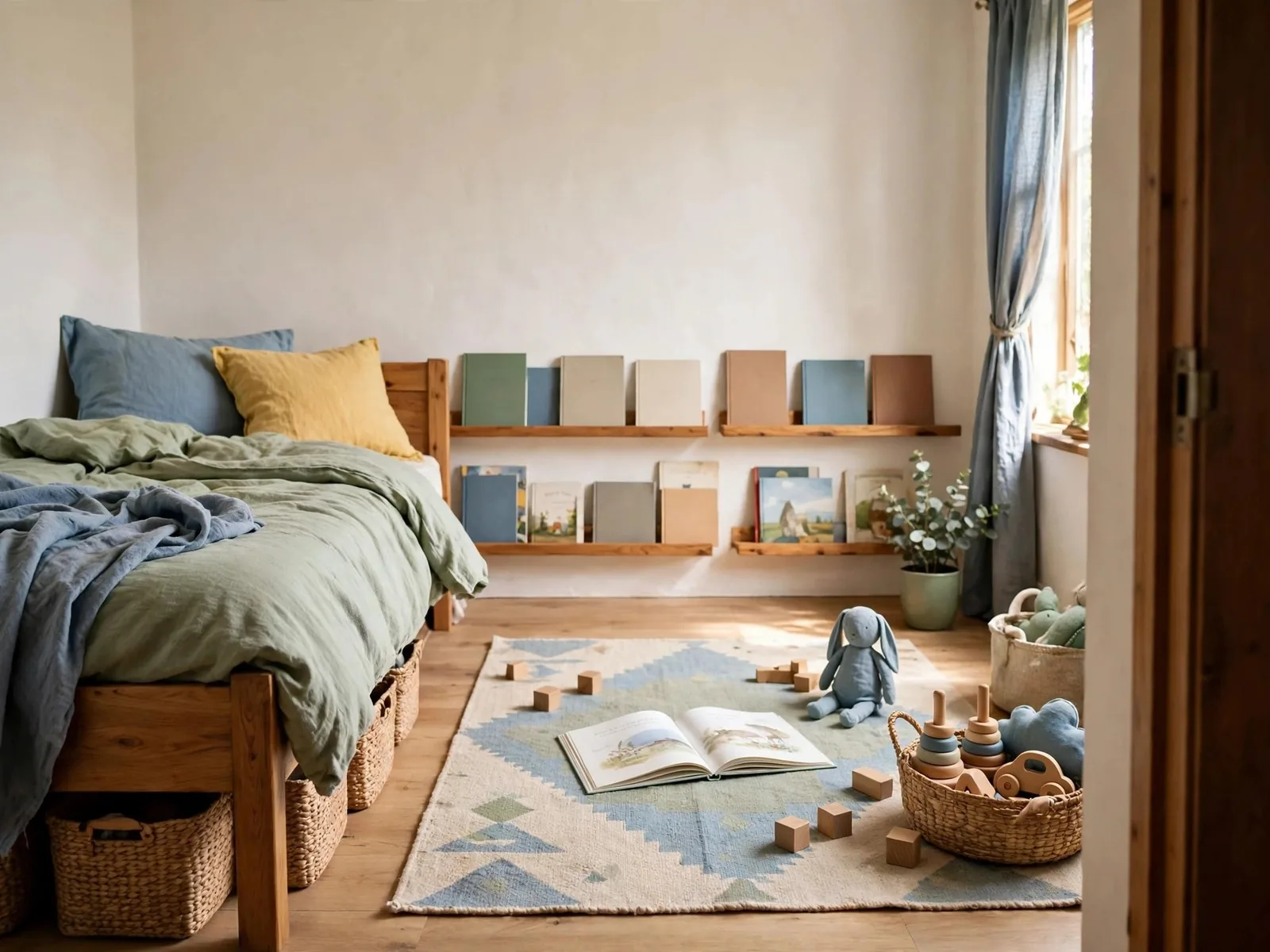
6. Face the books out on low ledges a toddler can scan (toddler and ages 5 to 8)
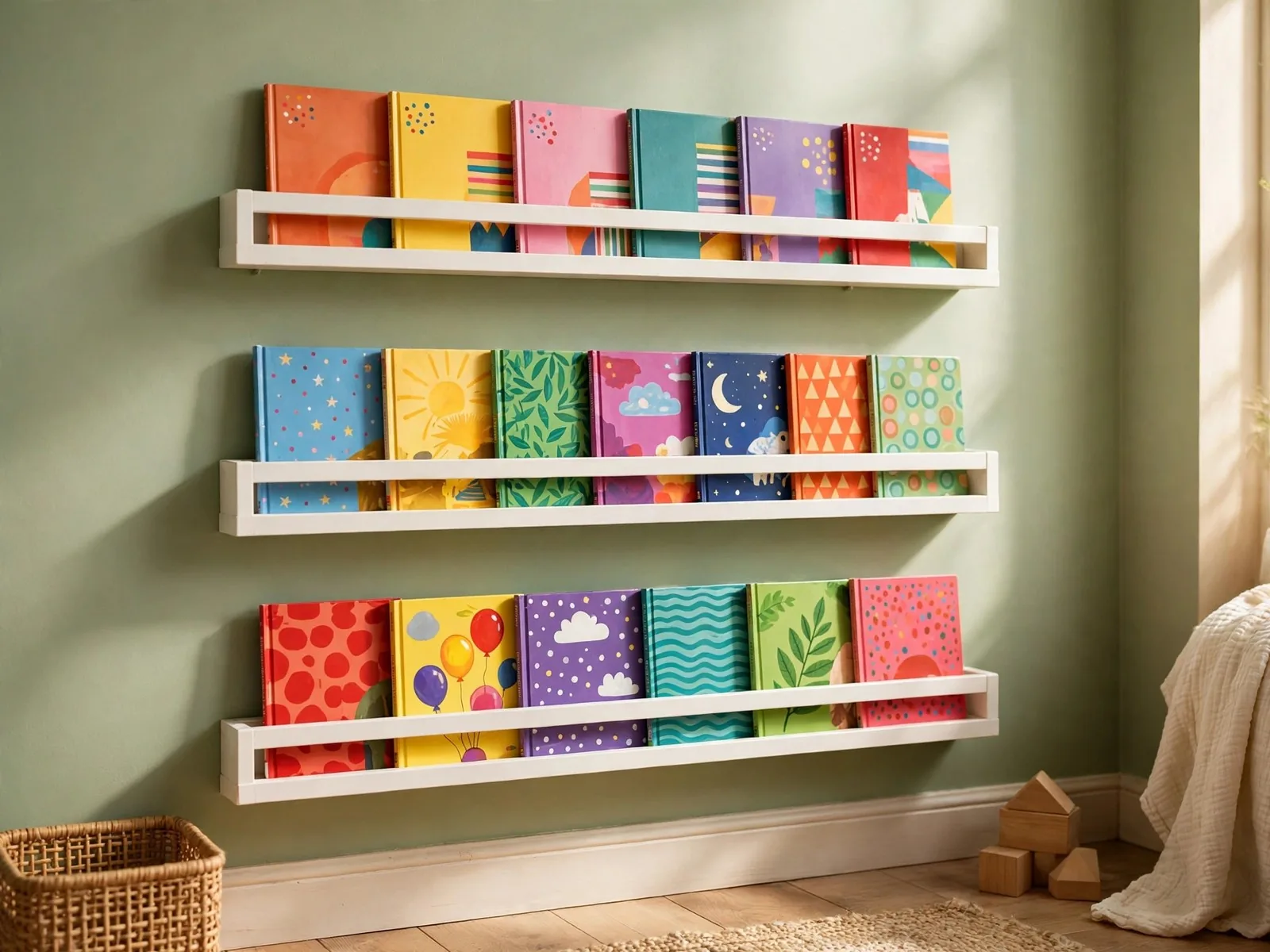
A bookshelf with spines out is a library for adults. A child cannot read a spine, so the books may as well be invisible. Turn the covers out on low ledges and the room becomes a bookshop a toddler can browse alone: the child picks by the picture, pulls the book down, reads it and puts it back on the ledge facing out, which is the whole tidy-up system in one habit.
Ledges beat a bookcase for the under-seven band for a second reason: they hold fewer books, so the collection stays curated. A ledge that holds twelve picture books forces a rotation, and rotation is the mechanism that keeps old favorites fresh. When the child outgrows a title, it leaves the ledge and a new one takes its place.
Mount the lowest ledge at the child’s eye level when sitting on the floor, about 12 to 14 inches off the rug. That height lets a toddler reach, choose and reshelve without standing on anything, which is the entire point of the system.
Needs drilling: ledges screw into studs; renters can use a leaning floor ledge shelf against the wall instead.
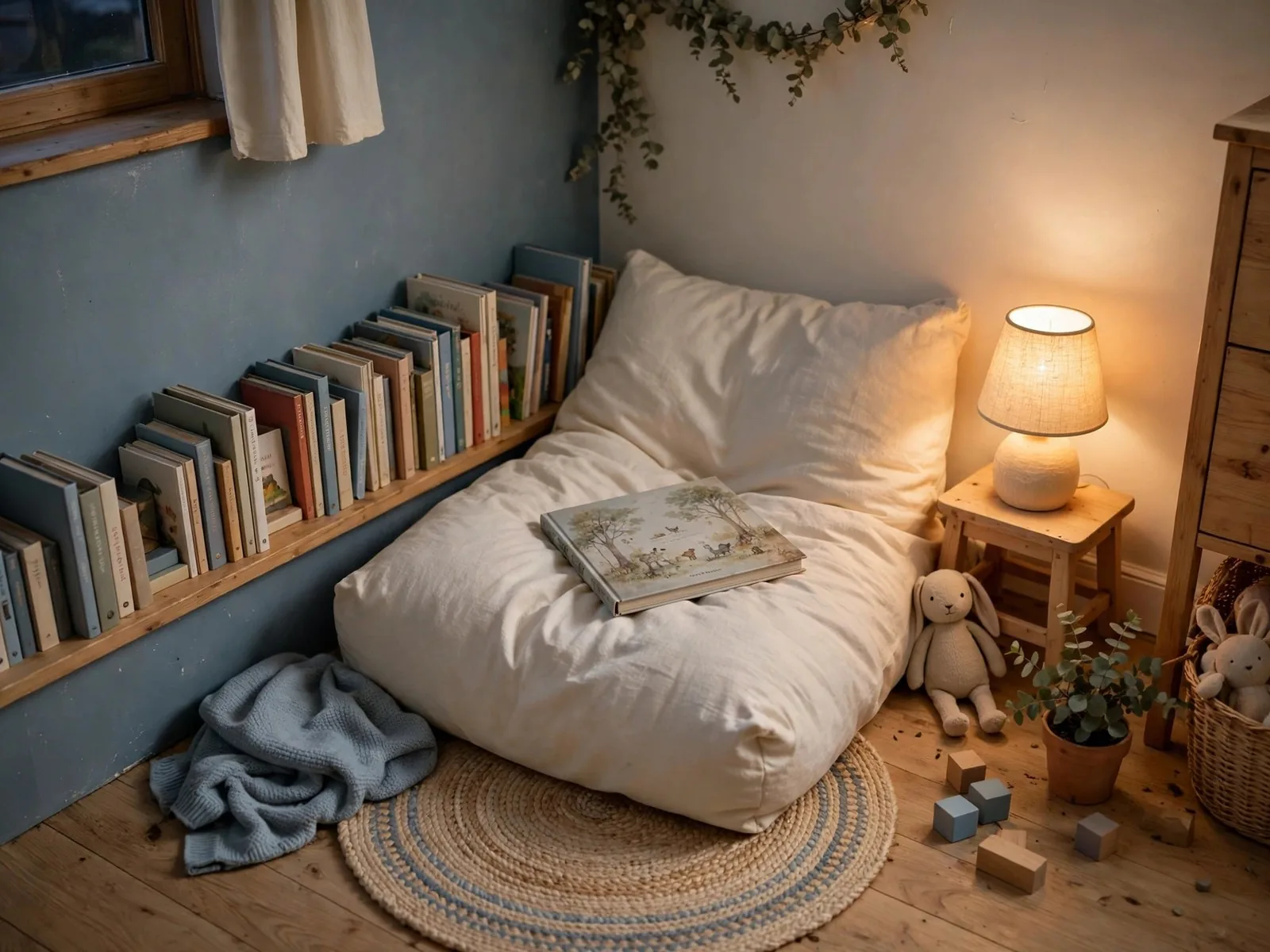
7. Carve a reading nook out of one corner (ages 5 to 8)
Every kids room has one dead corner, the spot beside the wardrobe or behind the door that collects the things with no home. Turn it into the reading nook and the dead corner becomes the most-used square foot in the room. A floor cushion, a small rug and a low ledge of books are the whole build, and the child will choose it over the bed for reading within a week.
Light it like a room, not a corner. A warm lamp at the child’s eye level when sitting makes the nook feel intentional after dark, and the full lamp logic is the same one in our bedroom lighting ideas post. Keep the nook unplugged from screens: a book ledge, a cushion and a lamp are the entire inventory, and the simplicity is the point.
Budget: under $75 total if the cushion and lamp come from the discount aisle or a thrift run.
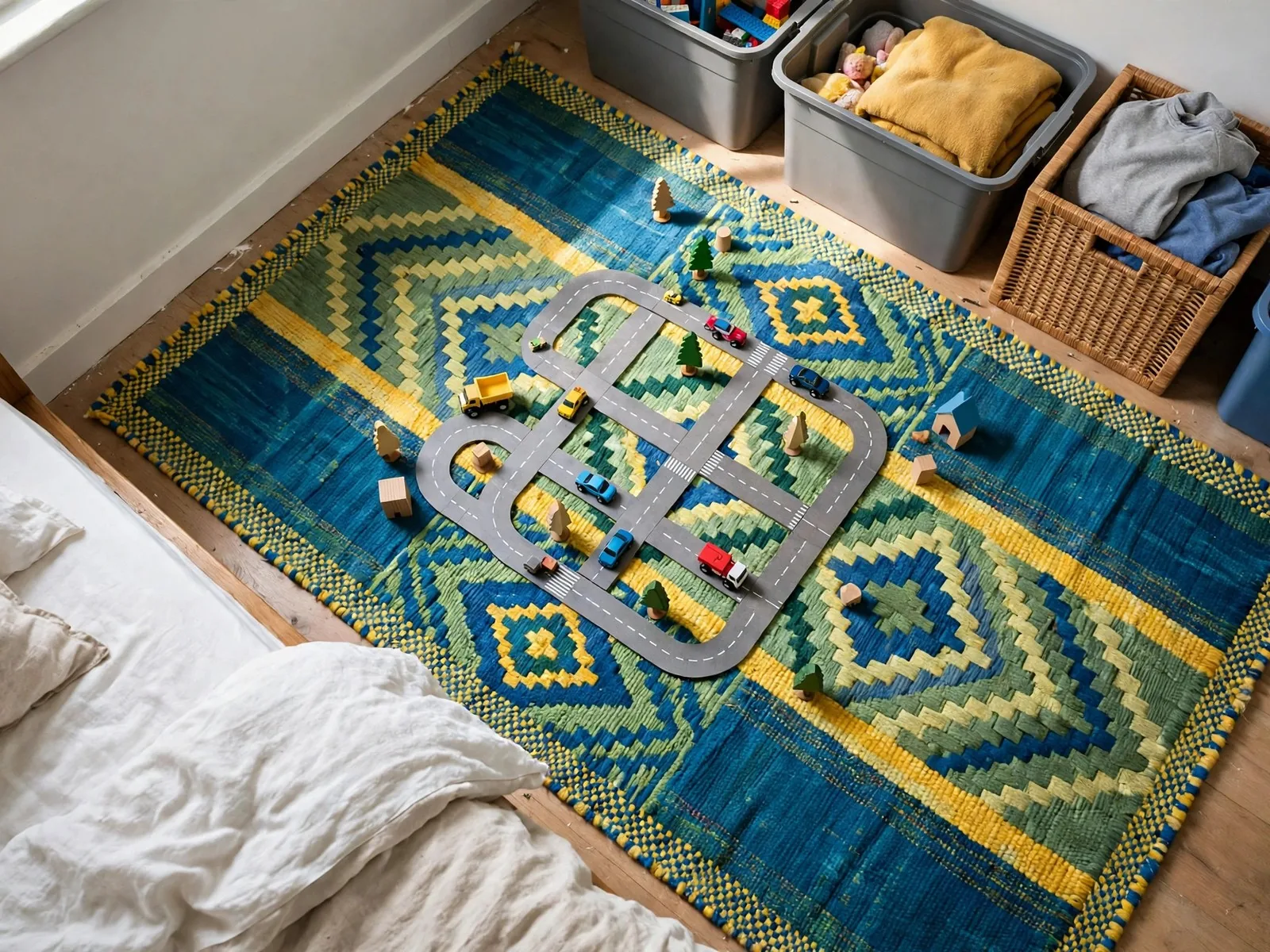
8. Let one washable rug define the play zone (all ages)
A kids room without a defined play zone is a room where the toys migrate to every corner and the tidy-up never ends, because there is no edge to tidy toward. One washable rug draws that edge: everything that belongs to play lives on the rug, and everything off the rug gets put away. The child learns the boundary in a day, and the room stays readable even mid-play.
Size the rug to the play, not the room. A 5 by 7 foot rug holds a building set, a dollhouse or a train track with room for two children to sit on it. Choose a flat-weave or low-pile rug that a robot vacuum can cross and that survives a juice spill in the washing machine, because a rug that cannot be washed in a kids room is a rug you will replace.
Renter-friendly: a rug is the biggest color change you can make with no permission and no deposit risk. Budget $40 to $120.
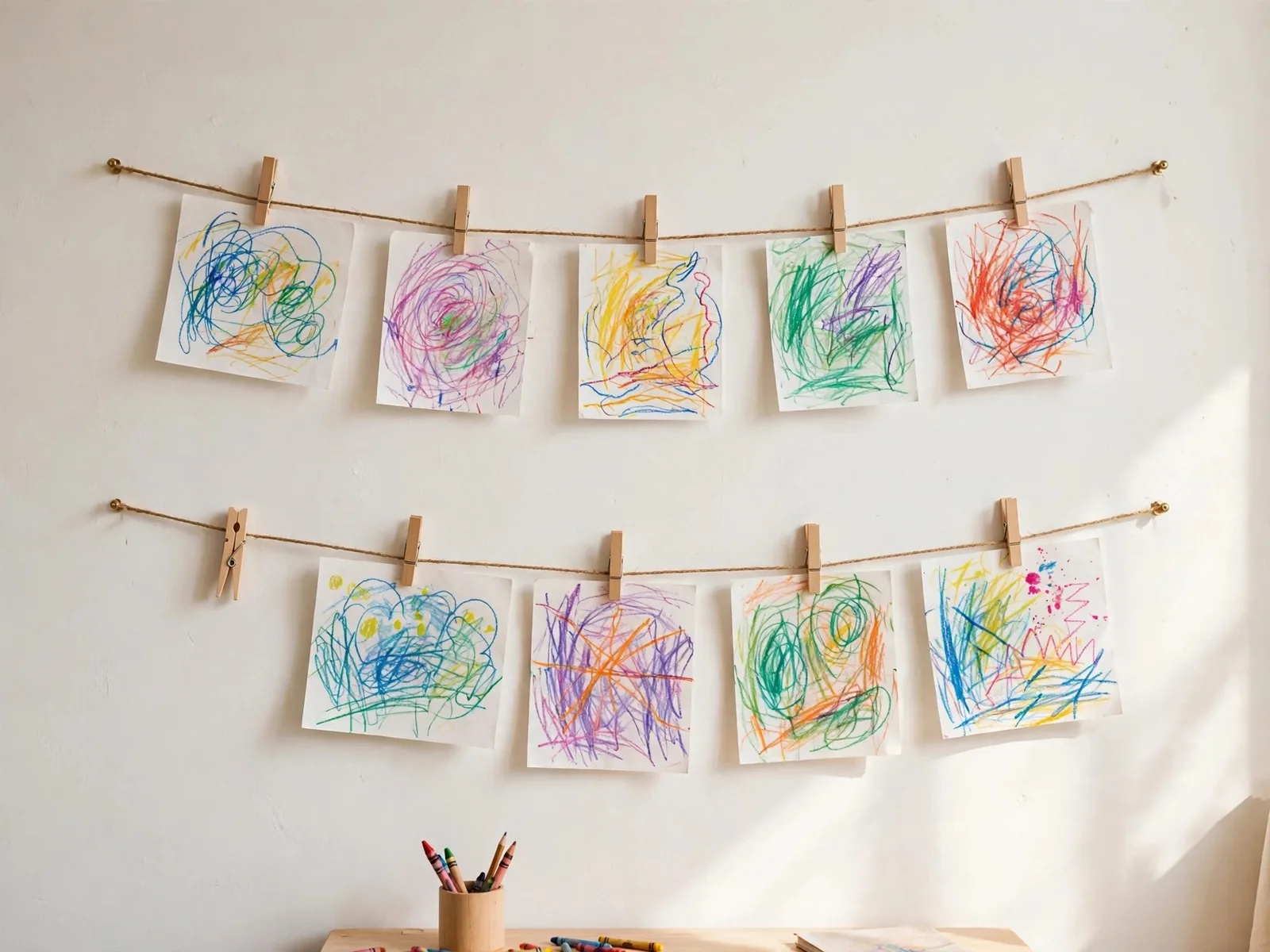
9. Hang a display line for art that changes every week (ages 5 to 12)
The fridge door is the first gallery most children ever have, and it is full. Move the gallery to the wall with a cord and clips, and the art gets the display it deserves without a single frame or nail hole that matters. A display line holds a week’s worth of drawings at child height, and the child can swap the art alone, which is the point: the wall changes because the child changed it.
Hang the cord at the child’s eye level, about 48 inches off the floor, and keep a small basket of clips beside it so the change takes thirty seconds. The line works in any room and any rental, because a cord on two hooks is the lowest-commitment wall in the house.
Budget: under $15 for cord, clips and hooks. The cheapest wall in the room and the one visitors photograph.
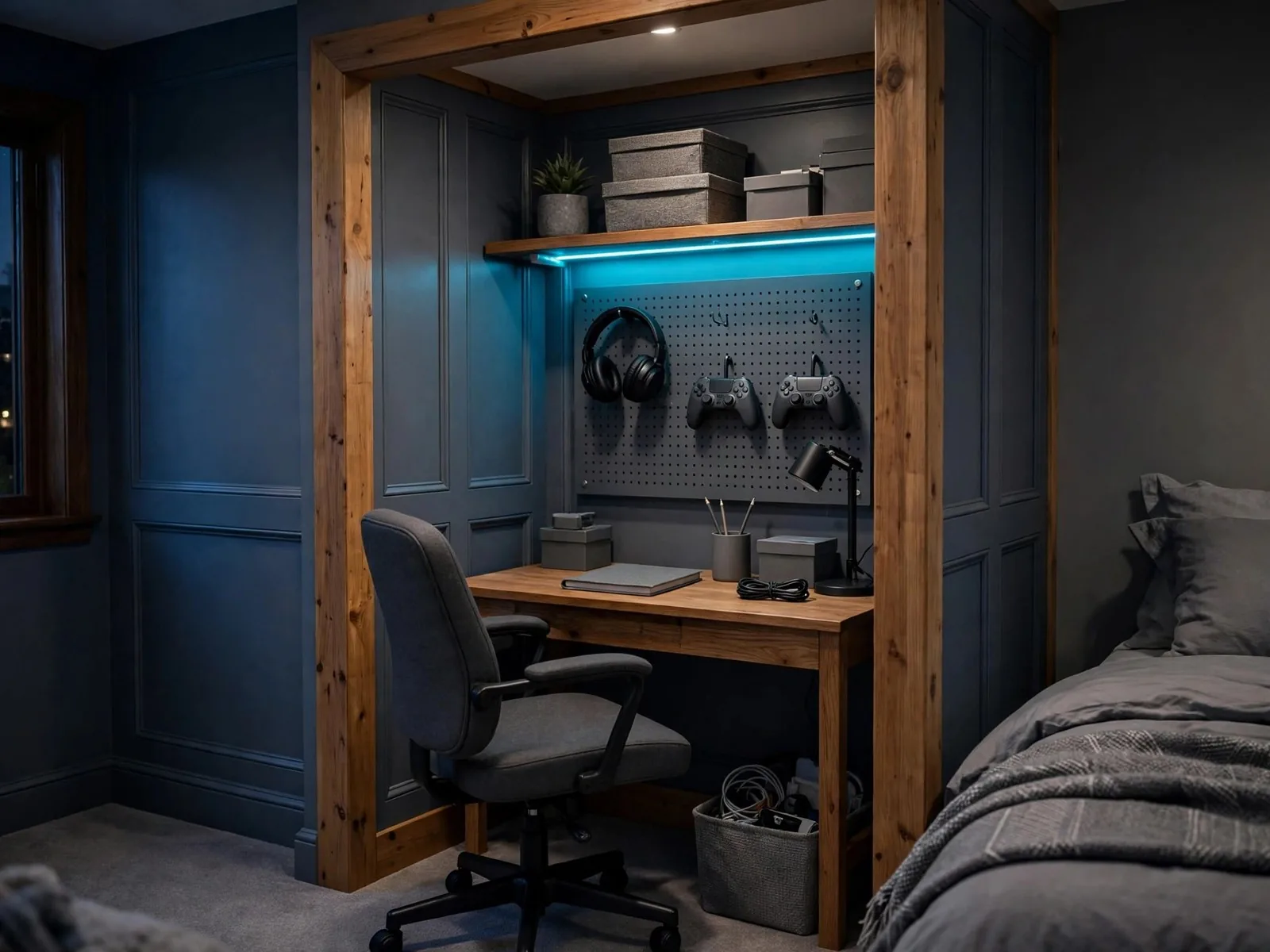
10. Build a game-inspired corner for the 9 to 12 band (ages 9 to 12)
The 9 to 12 band is the first age that wants a desk and a screen in the room, and the room should answer with a corner that is theirs. A small desk, a pegboard for headphones and controllers and a shelf with a plug-in light strip turn one corner into a game station that looks deliberate instead of improvised. The light strip is the trick: a $15 strip makes a flat-pack desk look like a setup.
Keep the station to one corner and one outlet. A power strip with a switch lets the whole corner go dark at bedtime, and the desk stays a desk in the morning instead of a second bed. The pegboard holds the controllers, the headphones and the charging cables, so the floor stays clear and the room still reads as a bedroom.
Budget: $80 to $150 for the desk from a flat-pack store, pegboard and strip. No wiring, everything plugs in.
Storage that a child can run alone
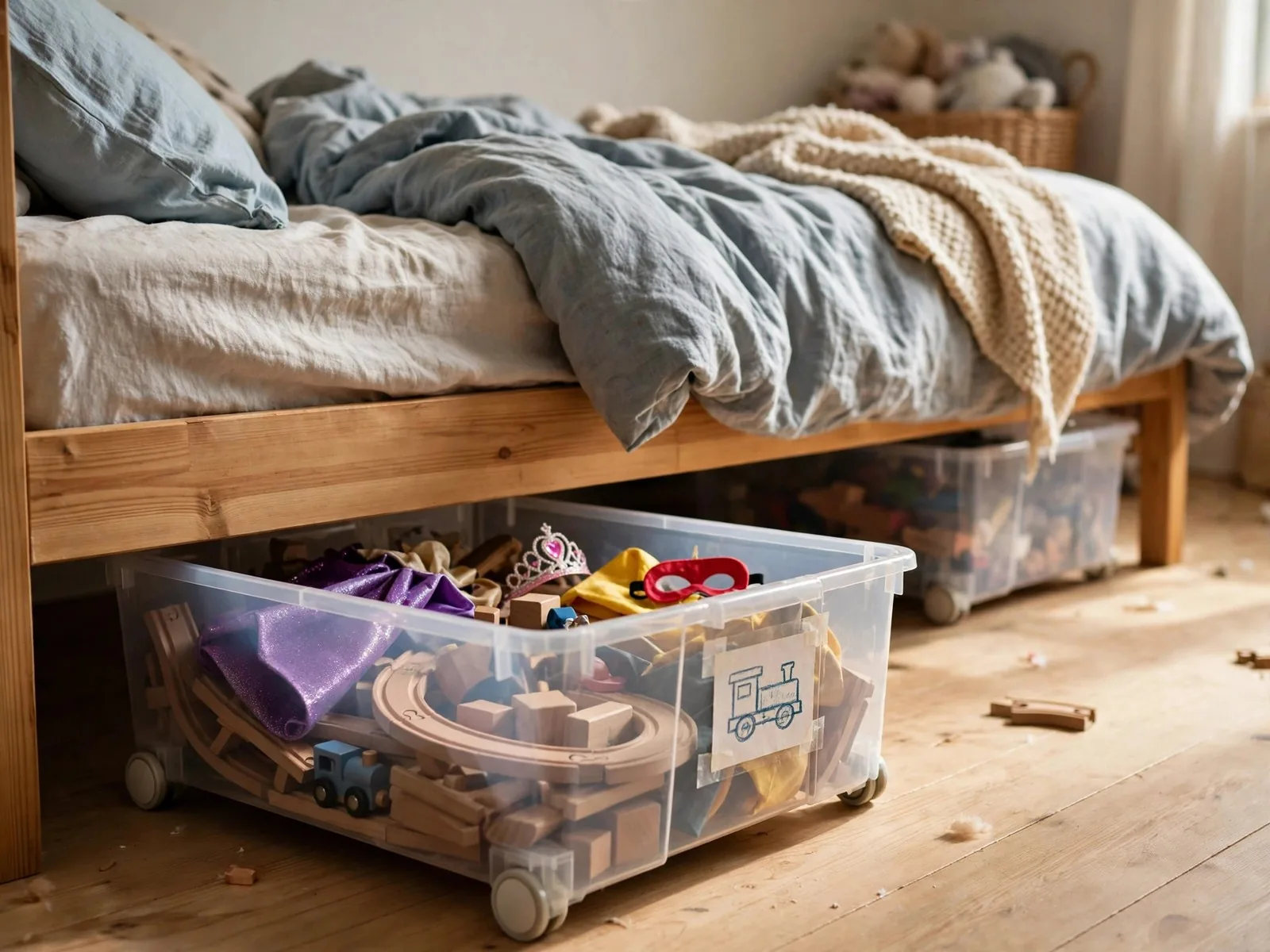
11. Slide wheeled bins under the bed and label them by picture (ages 5 to 8)
Under-bed storage only works if the child can open it, use it and put it away without an adult. Wheeled bins do all three: they roll out on the floor, the child takes what they need and rolls them back, and the bed hides the mess in between. Label the ends with pictures, not words, so a child who cannot read yet can still find the blocks and put them away.
Buy the bins after you measure the clearance, not before. A bin that is one inch too tall does not fit under the bed at all, and a bin without wheels is a bin the child will not use. Clear bins beat opaque ones for the same reason: the child can see what is inside without opening three boxes.
Measure: buy bins at least 1 inch shorter than the under-bed clearance, wheels included in the height.
12. Rotate the toys instead of storing all of them (all ages)
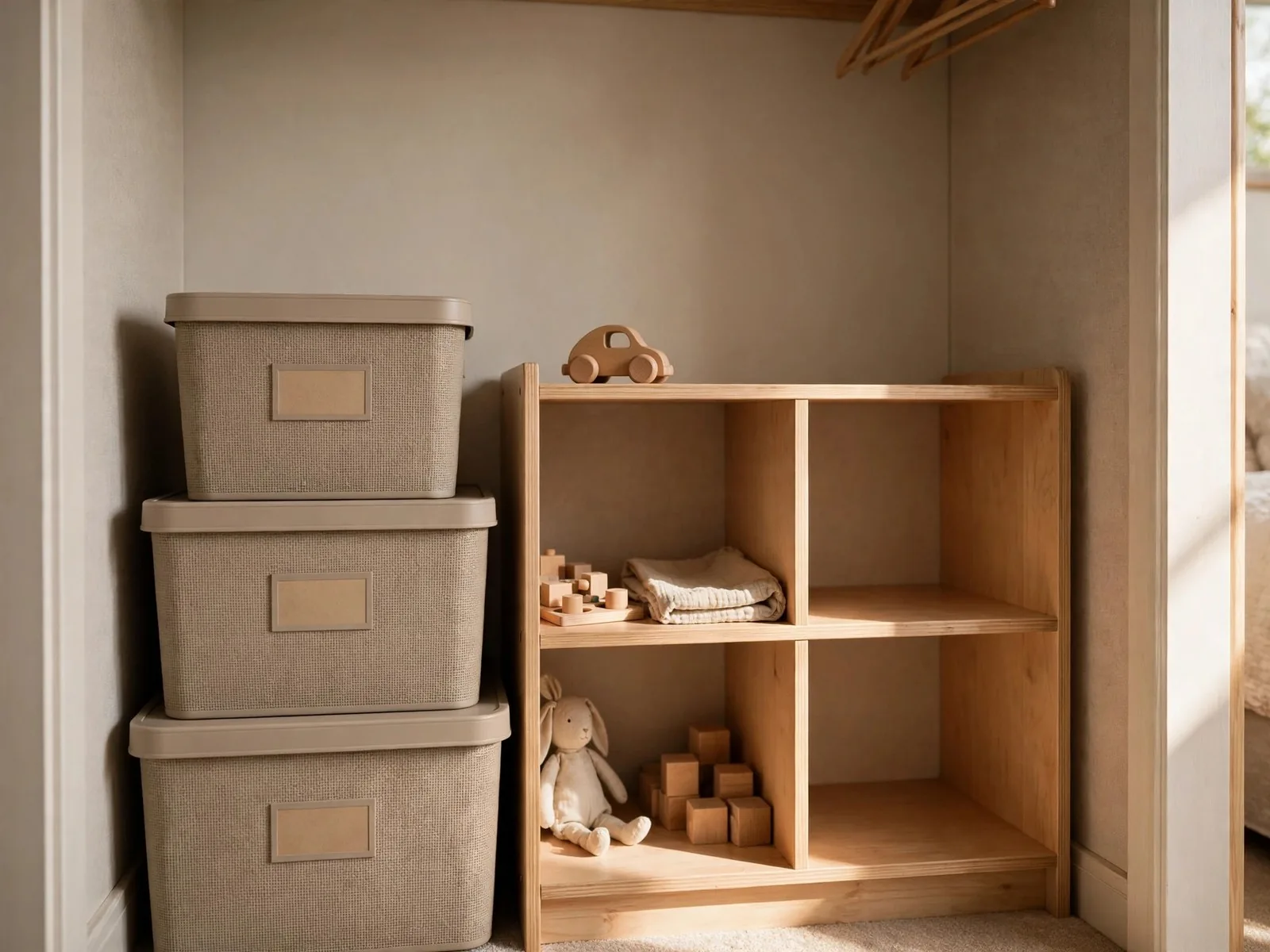
A room with every toy out is a room where nothing gets played with, because the choice is too big and the mess is too visible. Rotation fixes both: keep a third of the toys out, a third in the closet and a third in the garage or the top of the wardrobe, and swap one box every two weeks. The toys that come back feel new, and the room never holds more than the child can actually use.
The closet does the heavy lifting here, and the full closet logic is the same one in our small bedroom storage ideas post. Label each box by its contents in pictures, keep the swap to one box at a time and let the child choose which box comes back, because a child who chooses the rotation will keep it.
Budget: $0 if you already own boxes. Two lidded 18-gallon boxes run about $10 each if you do not.
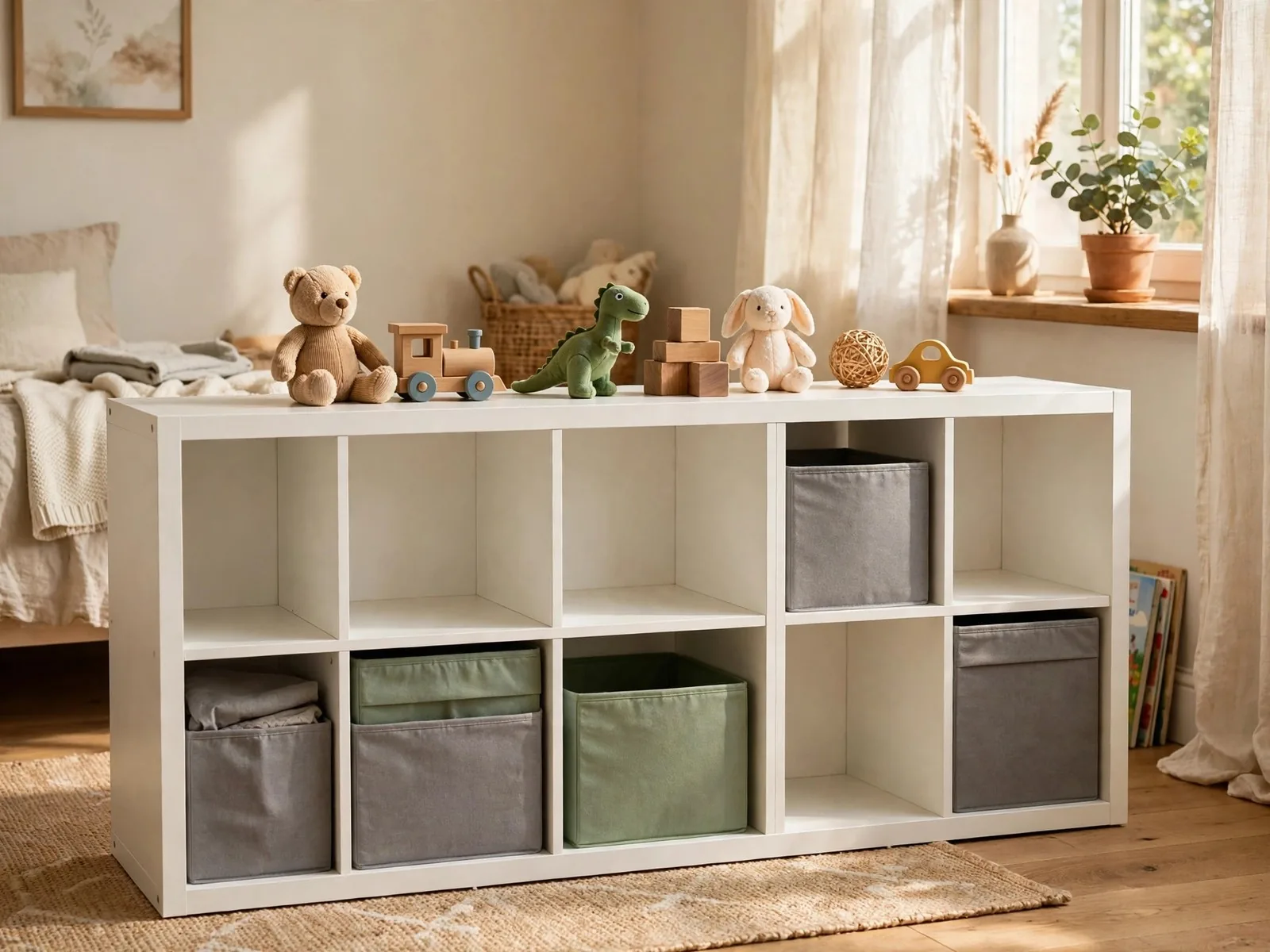
13. Give them a low cube shelf they can reach end to end (toddler and ages 5 to 8)
A cube shelf on its side is the lowest, most reachable storage in the room: the child can see every bin, reach every bin and put every bin away alone. Fabric bins in the cubes hide the mess and soften the edges, and the top of the shelf becomes the display for the toys that are too good to hide. The shelf grows with the child, because the bins change while the shelf stays.
Anchor it anyway. A low shelf is a climbing frame to a toddler, and a shelf that tips is a shelf that hurts. Two straps into a stud cost $10 and ten minutes, and they turn the shelf from a risk into the safest piece in the room.
Needs drilling: anchor straps into a stud, even for the low version, because children climb what they can reach.
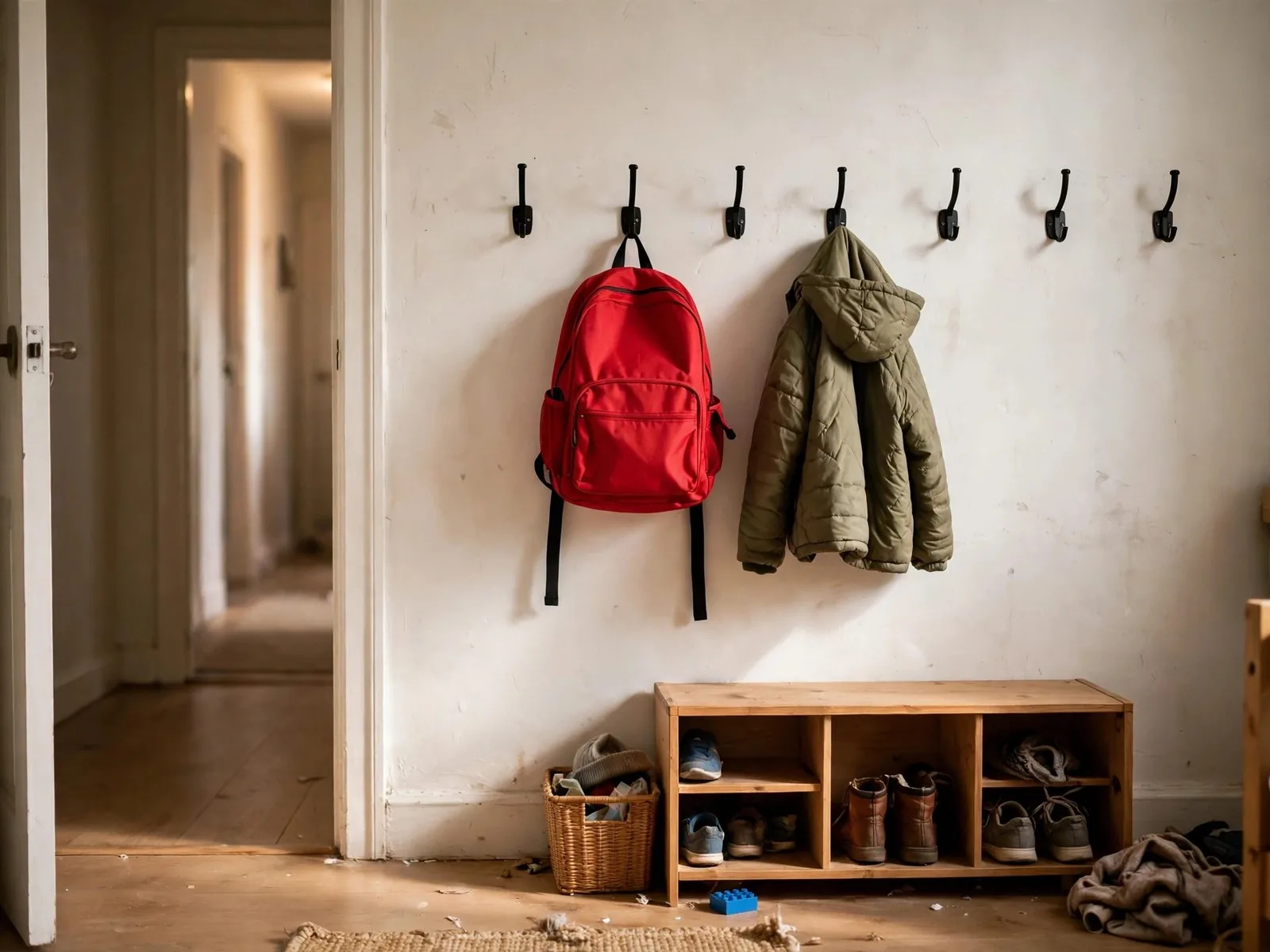
14. Put hooks and cubbies by the door at child height (ages 5 to 12)
The floor by the door is where the shoes, the bags and the coats live, because the child drops them the moment they come in. Hooks and cubbies at child height move that pile off the floor and onto the wall, and the child can hang the coat alone, which is the whole point: a hook the child cannot reach is a hook the adult uses, and the floor stays covered.
Mount the hooks at the child’s shoulder height, about 40 to 44 inches off the floor for the 5 to 8 band, and keep one cubby per child so the shoes and the bag have a named home. The row should be short enough that the child can see every hook at once, because a hook the child cannot see is a hook the child will not use.
Renter-friendly: over-door hook racks and stick-on hooks carry coats and bags fine. Budget $15 to $40.
15. Split the closet into now clothes and next-size clothes (all ages)
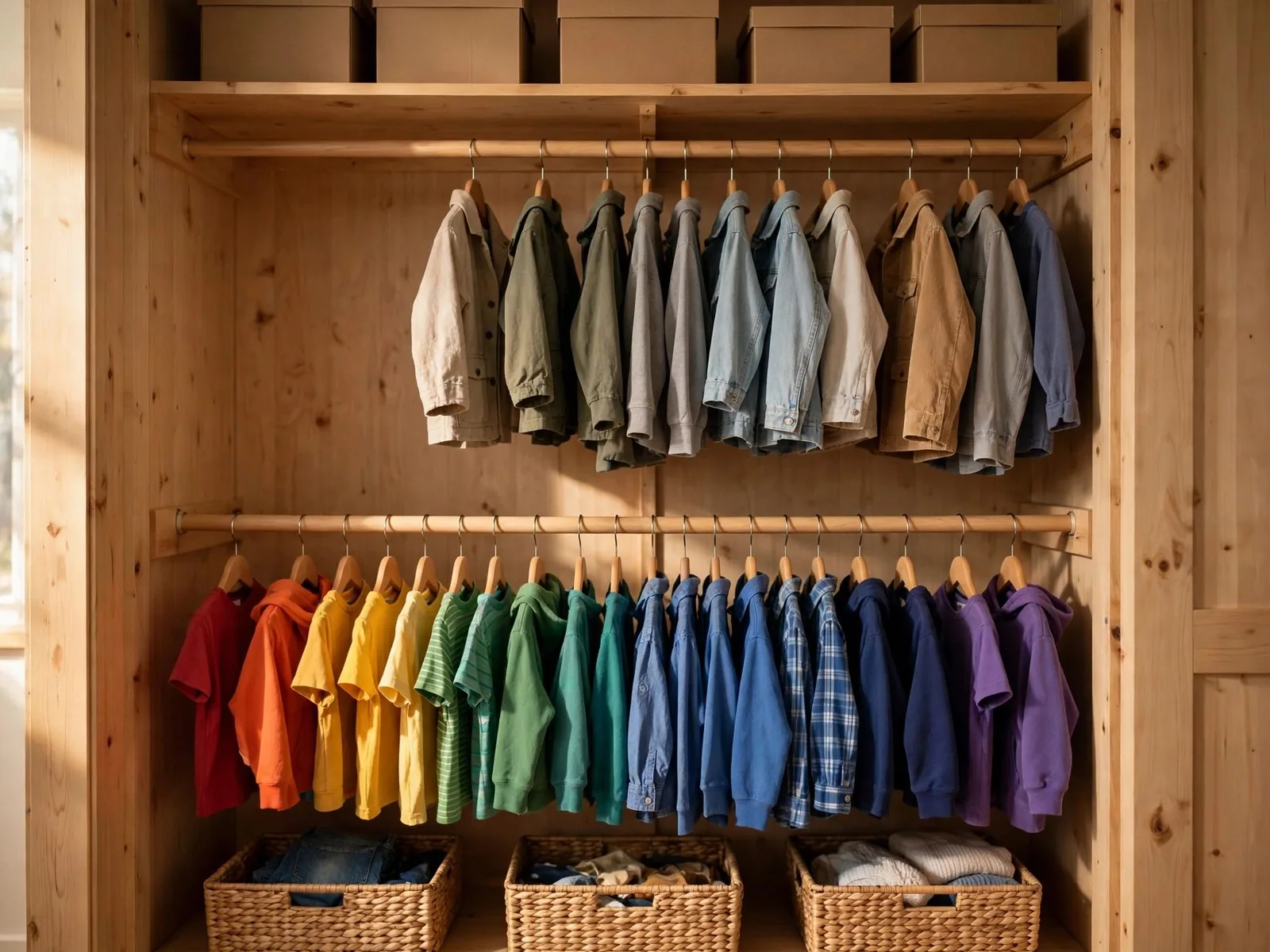
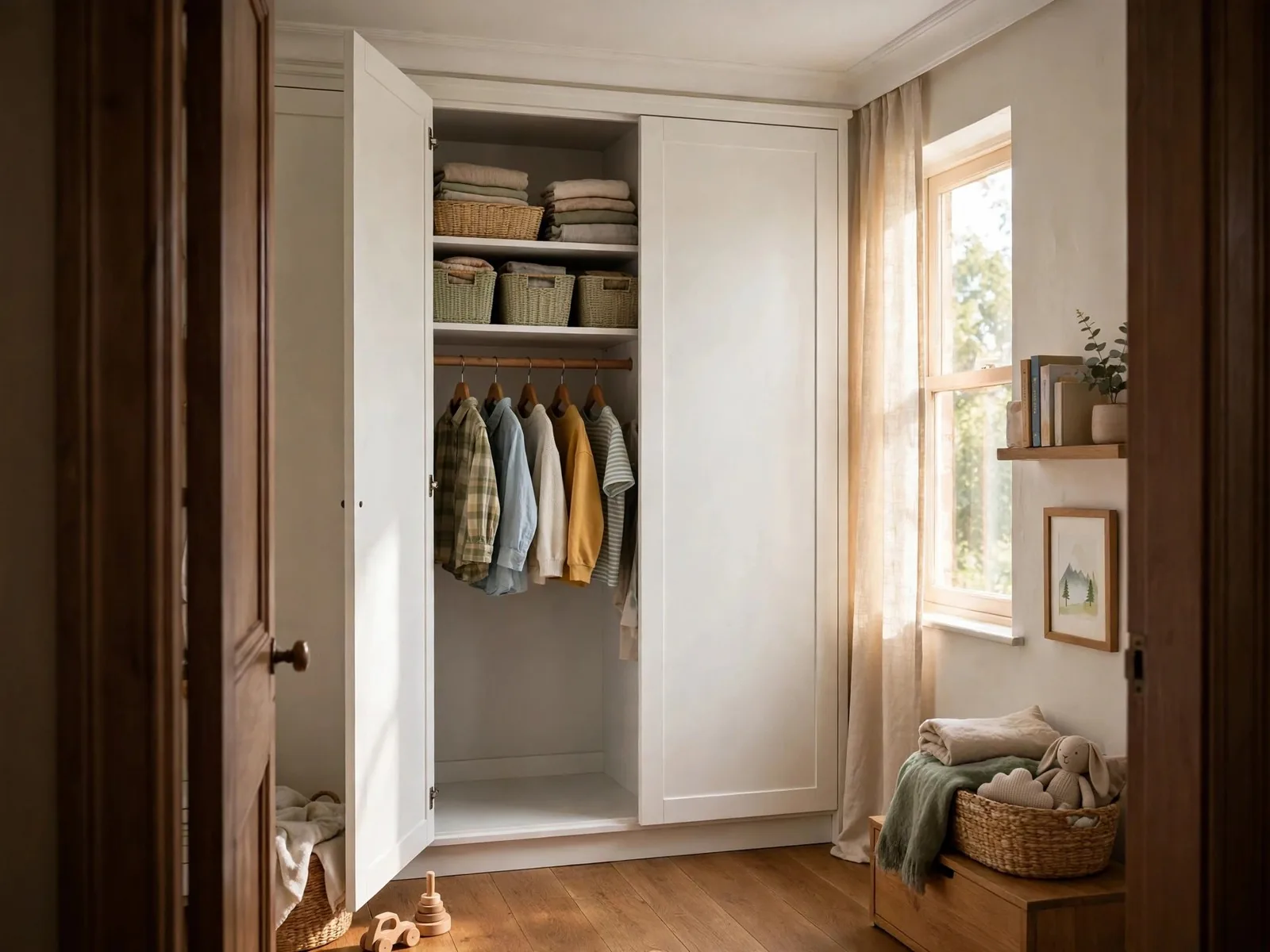
A kids closet holds two sizes at once, the clothes that fit now and the clothes that will fit next season, and the mornings fail when the child cannot tell them apart. Split the closet on two rods: the low rod holds this season, the high rod holds next season, and the child dresses from the low rod alone. The split is the system, and the child can run it without help.
The low rod should be the child’s rod, not the adult’s: at 30 to 36 inches off the floor, a child can reach the hangers, choose the clothes and put them back. The high rod holds the next size and the out-of-season clothes, and it stays out of the morning entirely.
A tension rod makes the split in ten minutes with no drilling and no damage, which is the renter version of the same system. When the next size becomes the now size, the rods swap roles and the closet never needs rebuilding.
Measure: a tension rod at 30 to 36 inches gives the younger band a rail they can work alone. No drilling, fully renter-safe.
The pieces that grow with them
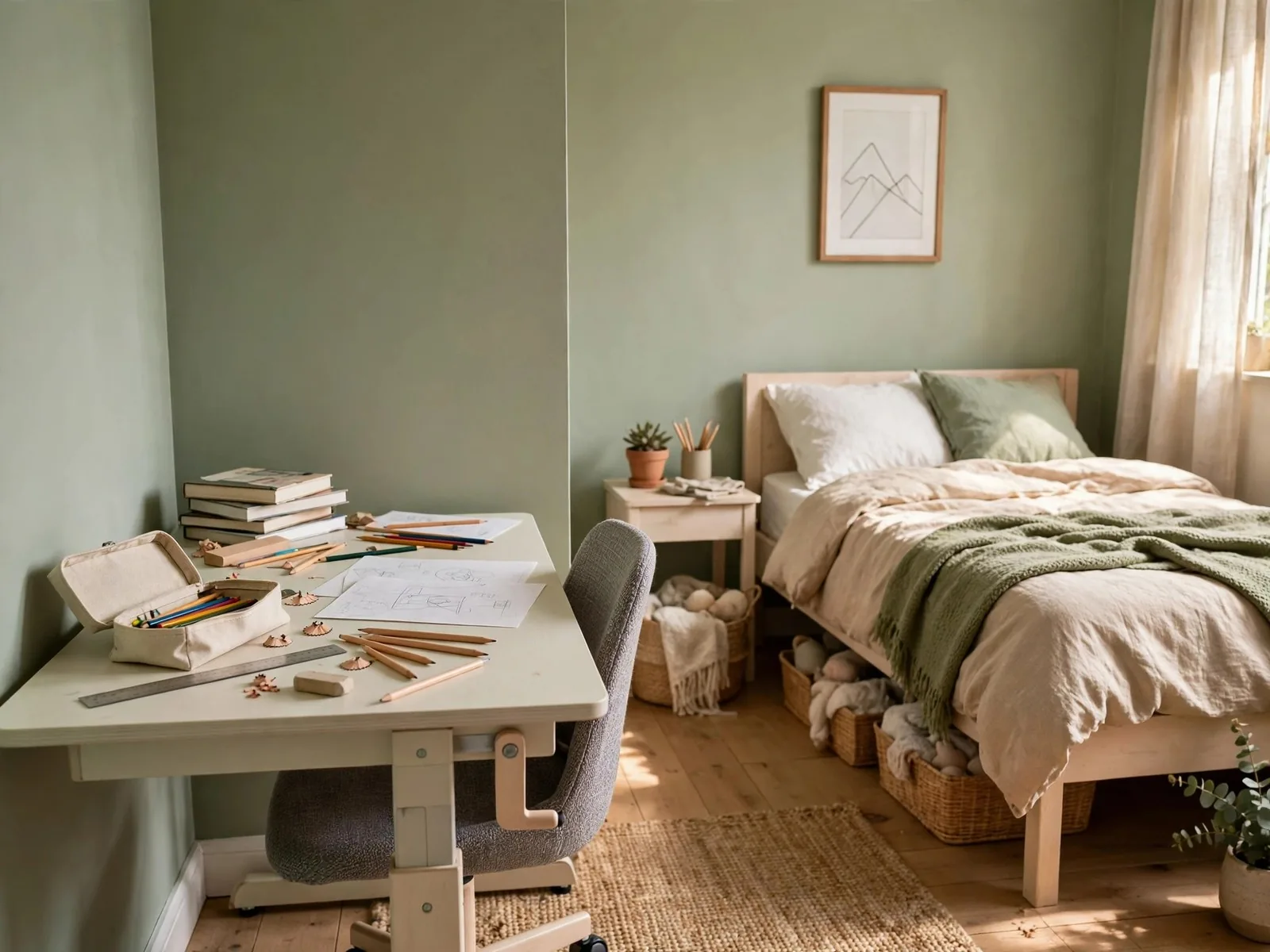
16. Buy one adjustable desk and let it rise with the child (ages 5 to 12)
A fixed desk is a bet on a height that changes every year, and the bet loses by age nine. An adjustable desk rises from about 21 inches for a six year old to 30 inches for a twelve year old, so one desk covers the whole school-age band without a single replacement. The chair should adjust too, because a desk that rises and a chair that does not is a desk the child will not sit at.
Buy the desk once and let the room grow around it. The adjustable desk is the only piece in the room that needs to last six years, and it is the piece most parents buy twice because the first one was fixed. A crank or a simple lever beats a motor for a kids room: fewer parts, no power cable and nothing to break.
Budget: $150 to $300, against two or three fixed desks across the same years.
17. Choose a plain dresser in a grown-up finish (all ages)
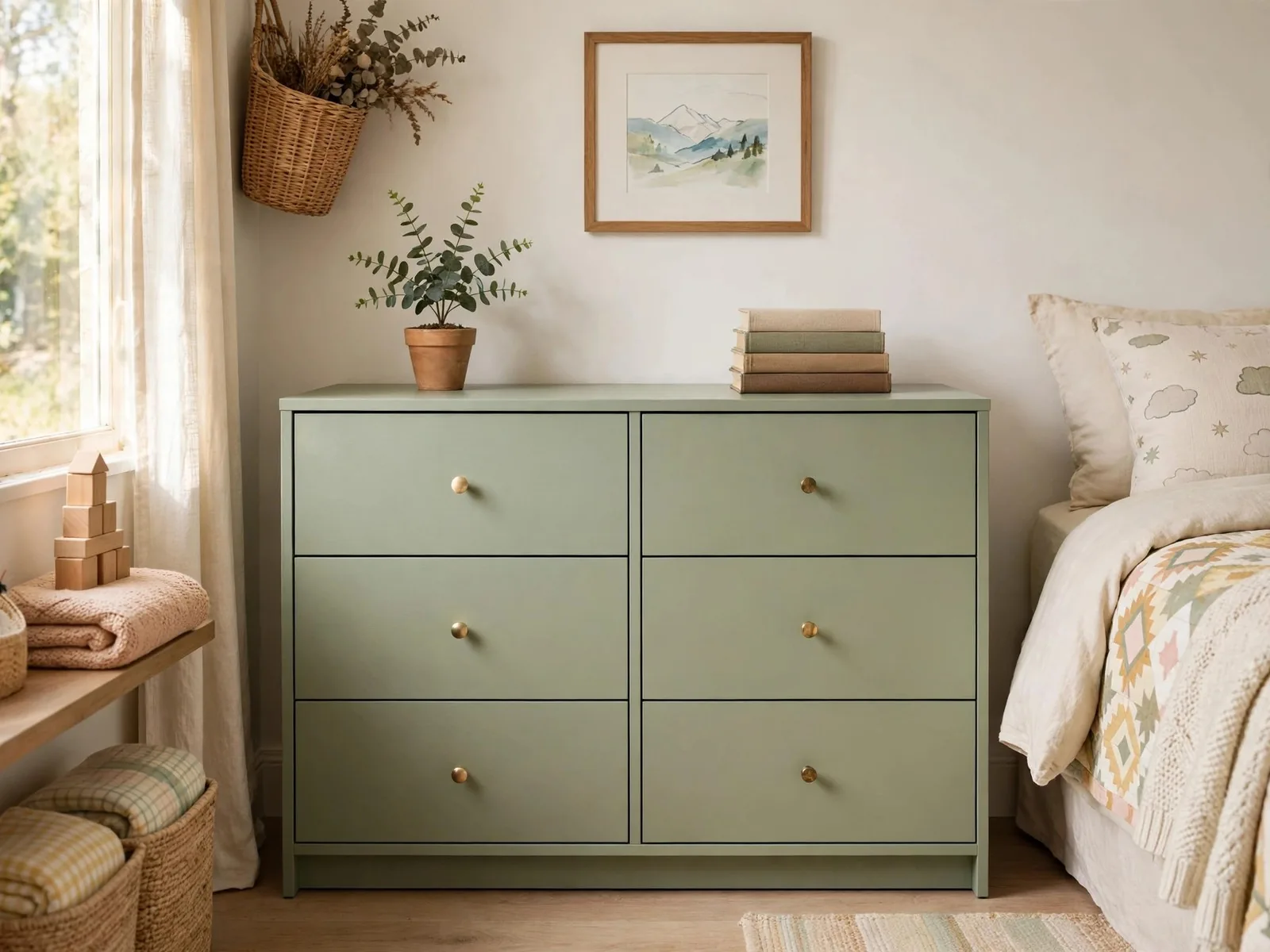
A dresser in a character theme is a dresser that expires with the theme, and the theme expires faster than the dresser. A plain dresser in a grown-up finish, soft sage, warm white or natural wood, skips the kid stage entirely and goes straight to the teen room, because the finish never looks babyish and the shape never looks young. The knobs are the theme: swap them for $10 when the taste changes.
Buy it once, in the finish you would put in your own room. A six-drawer dresser holds the clothes from age five to age fifteen without a single change, and the only thing that changes is what is inside the drawers. Secondhand is the smart version of the same buy: a solid wood dresser in a plain finish is the easiest furniture to find used and the hardest to wear out.
Budget: $200 to $400 once or $80 to $150 secondhand. Anchor it the day it arrives.
18. Swap the theme with curtains, cushions and one decal wall (all ages)
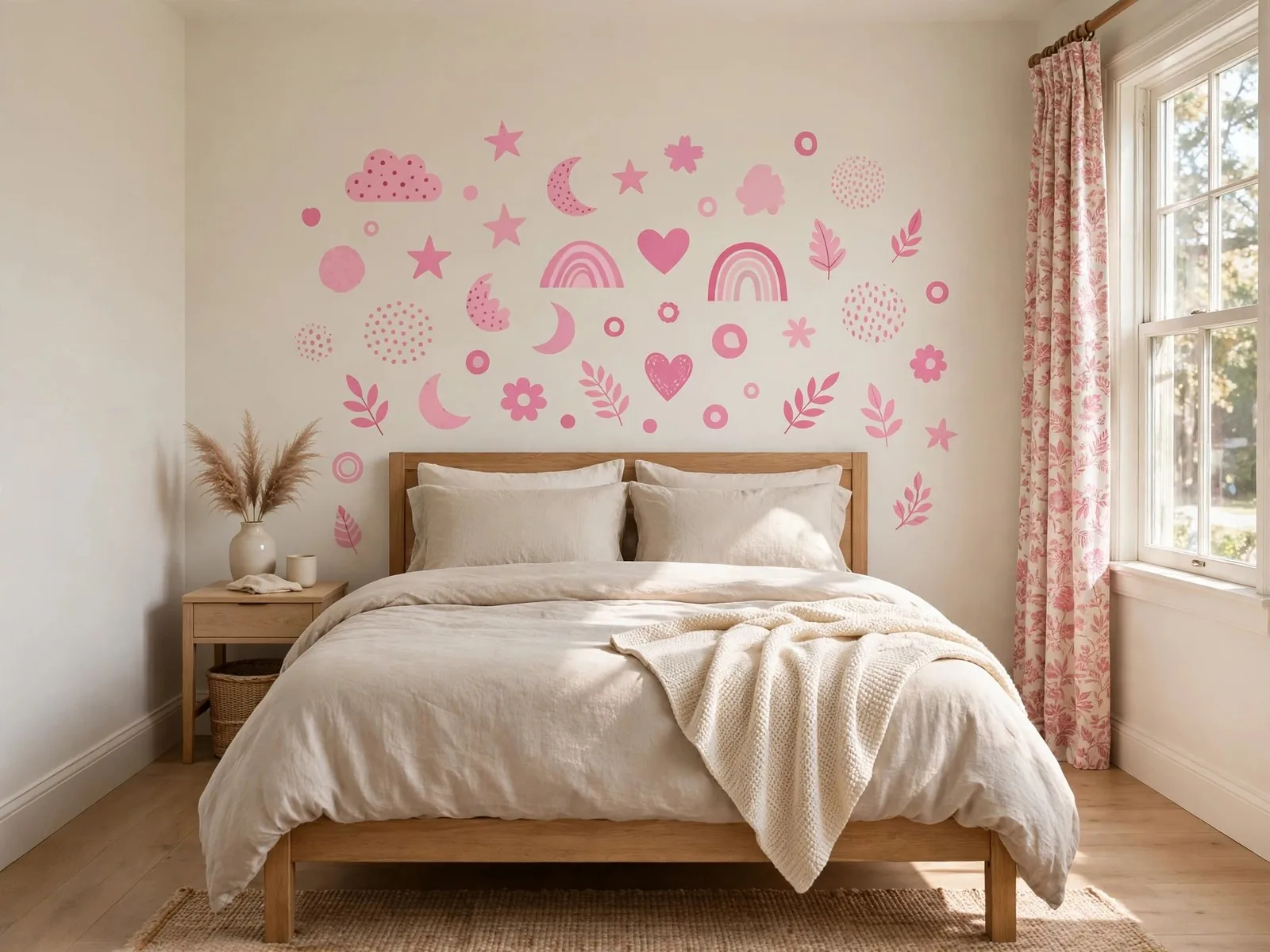
A theme that lives in the furniture is a theme you cannot change without buying furniture. A theme that lives in curtains, cushions and one decal wall is a theme you can swap in an afternoon for the price of a takeaway. The base stays neutral, the curtains carry the color, the cushions carry the character and the decal wall carries the story, and when the story changes, the room changes with it.
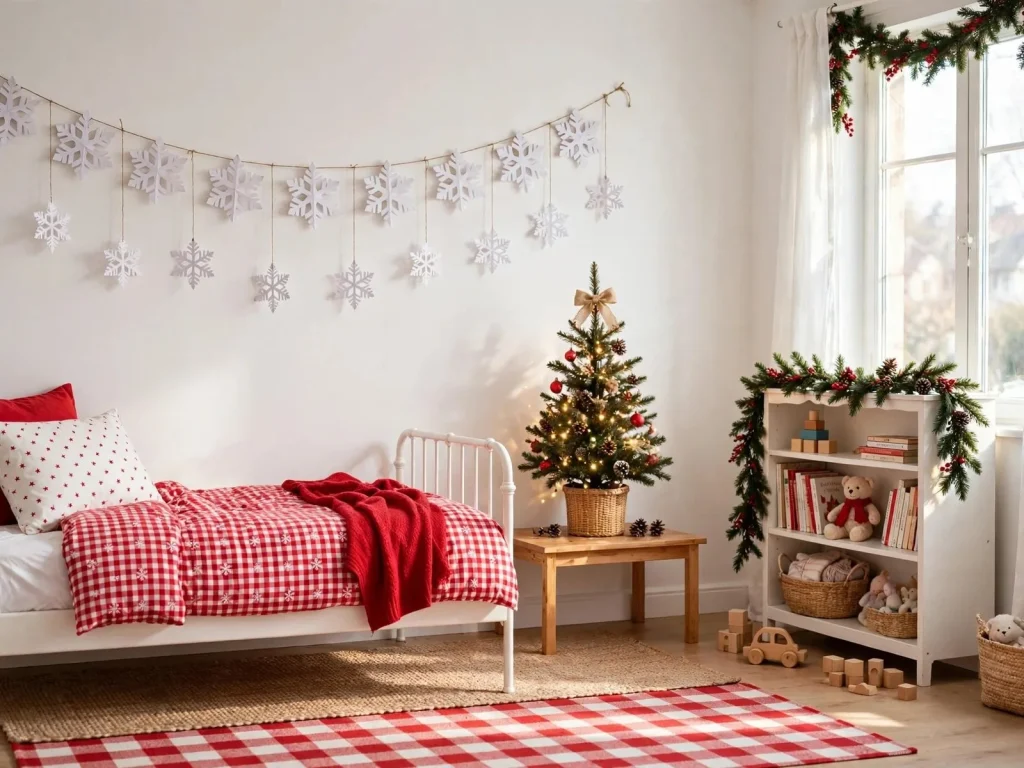
The swap is the system: new curtains, new cushion covers and a fresh set of peel-and-stick decals, and the room is a different room by dinner. The same trick works for a season, and our christmas bedroom ideas for kids post uses it for the holidays, or for a single wall, and our bedroom accent wall ideas post shows the one-wall version.
Renter-friendly: fully. Peel-and-stick decals and textiles need no permission and leave no trace. Budget $40 to $90 per swap.
19. Anchor one full-height wardrobe instead of buying three small ones (ages 5 to 12)
Three small wardrobes cost more than one tall one, hold less than one tall one and fill the wall with three doors that never quite close. One full-height wardrobe on the one tall wall holds the clothes, the shoes and the out-of-season boxes in a single piece, and the room gains a wall instead of losing one. The wardrobe is the closet the room did not come with.
Anchor it the day it arrives, because a tall wardrobe is the tallest thing in the room and the most likely to tip. A wardrobe that reaches the ceiling needs a strap into a stud, not a hope and a prayer, and the strap is the difference between a wardrobe and a hazard.
Measure: ceiling height minus 2 inches is your maximum unit height and the anchor strap is not optional.
20. Plan the teen handoff now and change only paint and light later (ages 9 to 12)
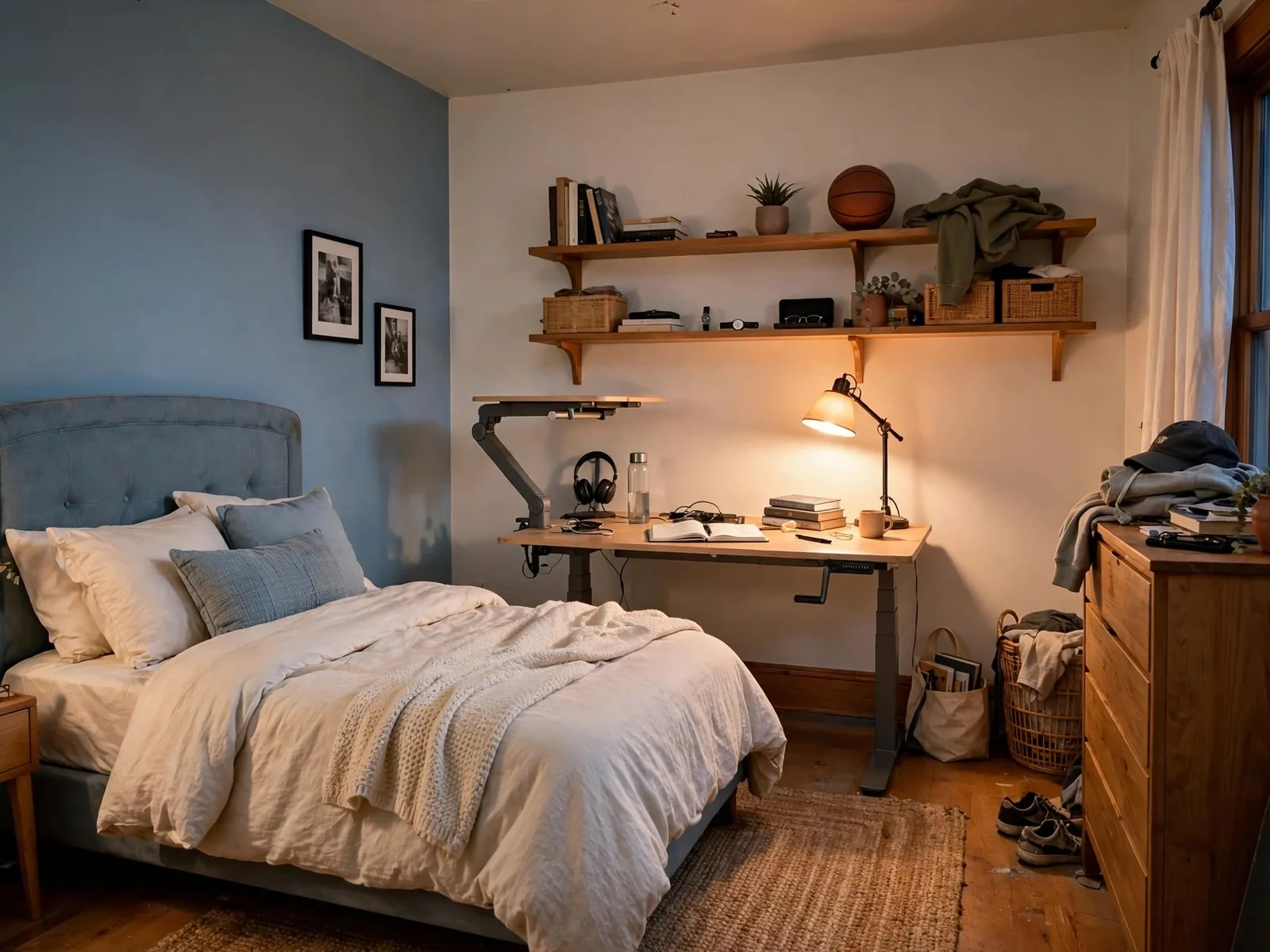
The teen room is not a renovation, it is a handoff, and the handoff works if the bones are already right. A neutral base, an adjustable desk and a plain dresser are already teen furniture, so the change is paint, light and one headboard, not a new room. Plan the handoff now and the teen years cost a weekend instead of a refit.
The headboard is the hinge: one upholstered headboard turns a kids bed into a teen bed without moving the bed at all, and the full headboard logic is the same one in our headboard ideas post.
Budget: $100 to $250 for the whole handoff, paint, bulbs and a headboard, against a full room refit.
Kids bedroom ideas on a budget
Spend in this order and the room works at every step: measure first, then the bed, then the storage the child can run alone, then the desk, then the theme. A room bought in that order never has a themed bed and no storage, because the order forces the working pieces first and the decoration last. The budget bands are the guardrails, not the goal: under $50 for the first round, $50 to $150 for the second and $150 to $400 only when the piece has to last six years.
The makeover logic is the same one in our bedroom makeover ideas post, spend on the pieces that move the room and save on the pieces that only dress it.
Buy secondhand where the piece does not move: dressers, wardrobes and bookshelves are the easiest furniture to find used and the hardest to wear out, and a $80 dresser in a plain finish is the same dresser as the $300 one once the knobs change. Buy new where the piece moves or holds a child: beds, mattresses and anything with a hinge or a wheel.
Mistakes that make it fall flat
- Buying the full themed set. Bed, curtains, lamp and rug all in one character theme feels like a finished room for about 18 months. Then the taste changes and every piece is wrong at once. Theme belongs in the cheap layer only.
- Furniture sized exactly for now. A toddler table, a tiny wardrobe and a short bed all expire in the same season. The room then needs everything at once, at full price, in a panic. Buy the adjustable or adult-size version first.
- Storage the child cannot reach. Beautiful bins on high shelves get used by adults, which means tidy-up is an adult job forever. If the child cannot reach it, open it and put it away alone, it is display pretending to be storage.
- A bold theme color on all four walls. Dark superhero blue or full pink reads thrilling for a month and exhausting for years and it is the hardest layer to change. Bold color belongs in textiles and one decal wall, where a swap costs an afternoon.
- No play floor left. A room filled edge to edge with furniture has nowhere for the actual business of childhood. Keep a rug-sized patch of floor open in the middle, even in a small room and defend it against every new purchase.
- Treating the desk as the last purchase. Homework arrives in the 5 to 8 band whether the room is ready or not. A child working at the kitchen table every night is a room that failed its brief. The adjustable desk belongs in the first round of buys.
Questions people ask about this
How do I childproof a bedroom on a budget? Start with the free fixes. Anchor the dresser and bookshelf to the wall, move cleaning sprays and medicines out, fit cordless blinds or tie cords up out of reach and add corner guards at toddler head height. Then spend on a non-slip rug pad and a night light. The whole list runs under $50.
What furniture grows with a child? Look for pieces with more than one setting. Extendable bed frames grow in steps from toddler length to a full twin, adjustable desks rise from about 21 to 30 inches and plain dressers in grown-up finishes skip the kid stage entirely. Neutral bones with swappable accents beat themed sets every time.
How do I set up a shared kids room? Give each child one zone that is fully theirs, even in a small room: their bed, their shelf and their hook by the door. Share the middle with a rug and shared toy storage, keep walkways at least 24 inches wide and match the sleep schedule before you match the colors. Bunks suit siblings from about age six.
The bottom line
A kids room is not a theme you install, it is a system that ages. Neutral bones, adjustable furniture, storage a child can run alone and a theme that lives in the cheap layer will carry a room from toddler to the edge of teen with two accent swaps and no panic buys. The same bones even survive the next move, into the first rented room and the setups in our dorm room ideas post. This week, do the smallest high-value job on the page: measure the room and the ceiling height, write the three numbers on one sticky note and put it on the fridge. Every later decision on this page gets easier with those numbers in the house.