
Your lease is signed, the bedroom measures ten feet by ten and the landlord’s rules are taped inside a kitchen cabinet: no paint, no nails, nothing you cannot undo at move-out. Standard decorating advice quietly assumes a bigger room and a house you own. These apartment bedroom ideas start from your actual room, your actual lease and a bed that has to fit alongside a life.
Every idea here is sized to a real apartment bedroom, worked at 70, 100 and 120 square feet. Each one carries a measurement, a budget band or a renter note. Nothing needs drilling unless the idea says so and nothing costs your deposit. For the wider idea bank across every room size, start with the main bedroom collection.
Before you start: measure, budget, rules
Grab a tape measure before you open a single shopping tab. Write down both wall lengths, the ceiling height, the window position and the door swing, meaning the arc the door sweeps as it opens. Then do the math on the bed: a twin is 38 by 75 inches, a full is 54 by 75 and a queen is 60 by 80. Those three numbers decide almost everything else in the room.
The budget bands on this page run in three tiers. Tier one is free: rearranging, editing and swapping pieces between rooms. Tier two is under $100: risers, boxes, hooks and bins. Tier three is $100 to $300: a storage frame, tall shelving or a large mirror. Most rooms on this page are finished inside tier two.
Renter-friendly: read the lease before the ideas. Get paint and drilling permission in writing, keep every screw and fitting you remove in a labeled bag and photograph each wall the day you move in.
Layout first: where the bed and the big pieces go
1. Put the bed on the longest wall
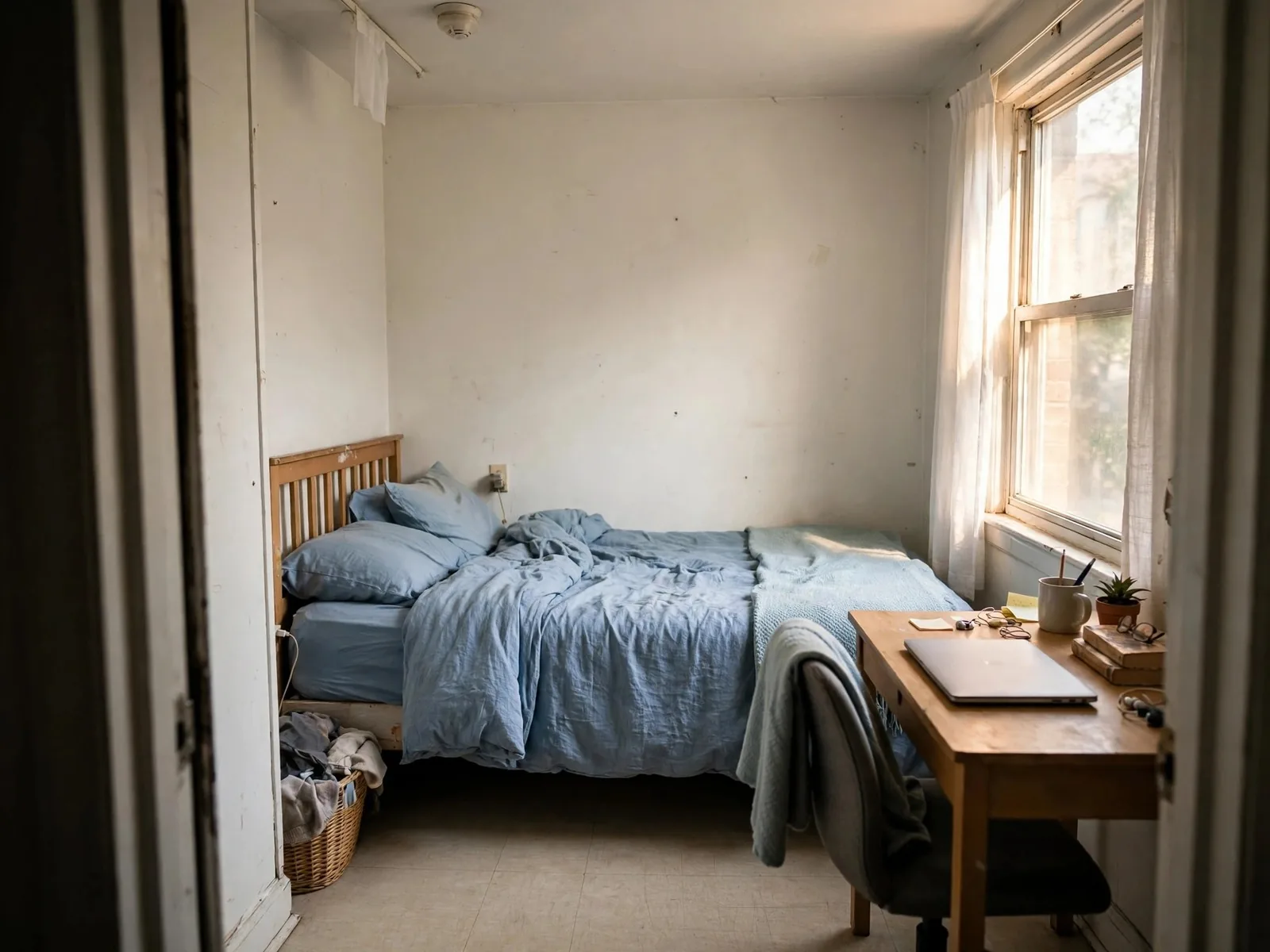
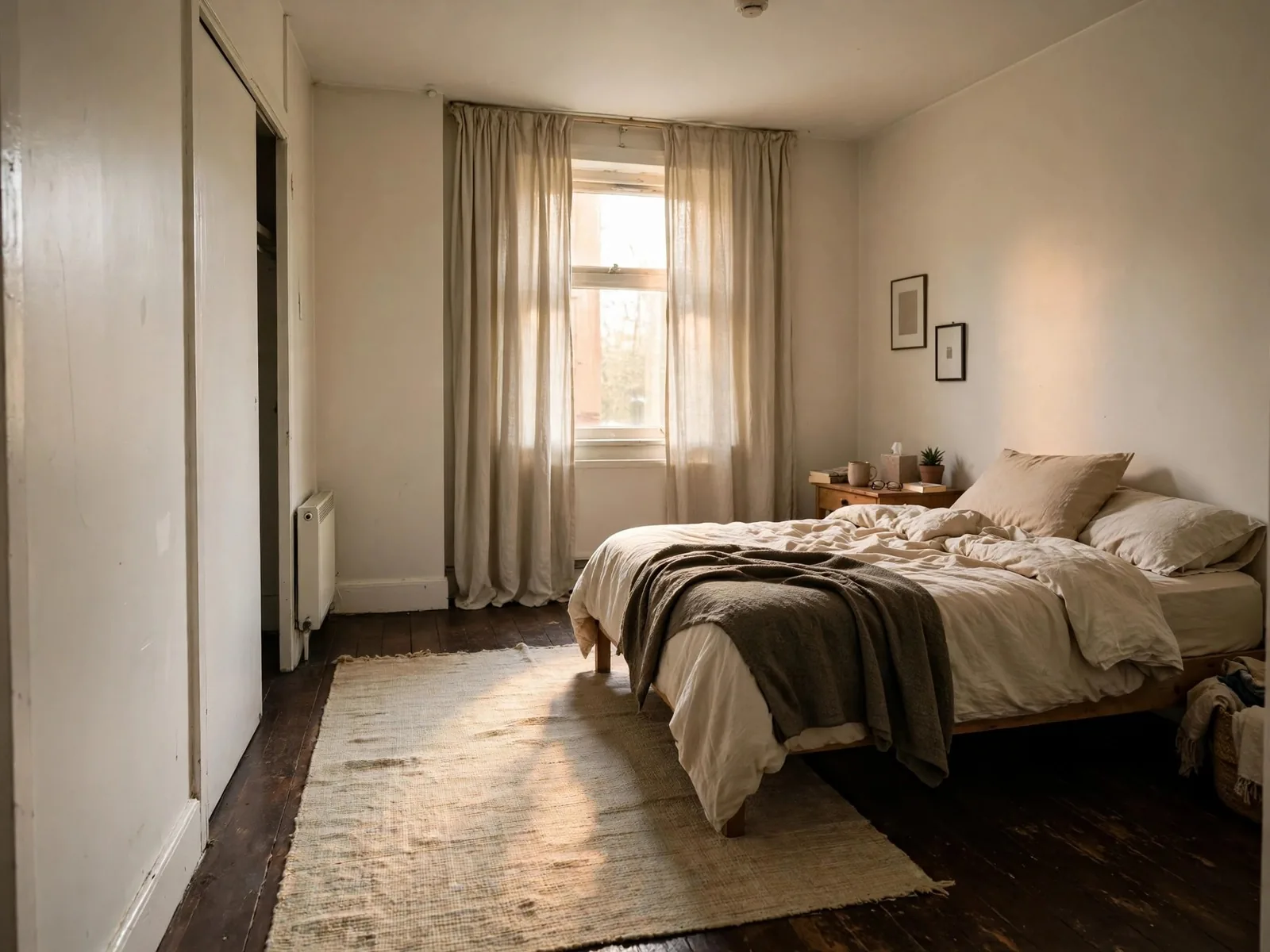
The longest wall is the only wall that takes the bed and still leaves room for anything beside it. In a 10 by 10 foot room of 100 square feet, a queen at 60 by 80 inches eats 33 of those feet all by itself. Centered on the longest wall, it leaves a workable strip on each side. Pushed onto a short wall, it eats the strip and the doorway view too.
Keep 24 to 30 inches clear on the entry side of the bed. That is the gap you walk through, carry laundry through and make the bed from. Under 24 inches you turn sideways. The room starts to feel like a corridor with a mattress in it.
Measure: longest wall in inches minus bed width equals what is left. If one side ends up under 20 inches, drop the second nightstand before you drop the bed size.
2. Keep the door swing and one walking lane clear
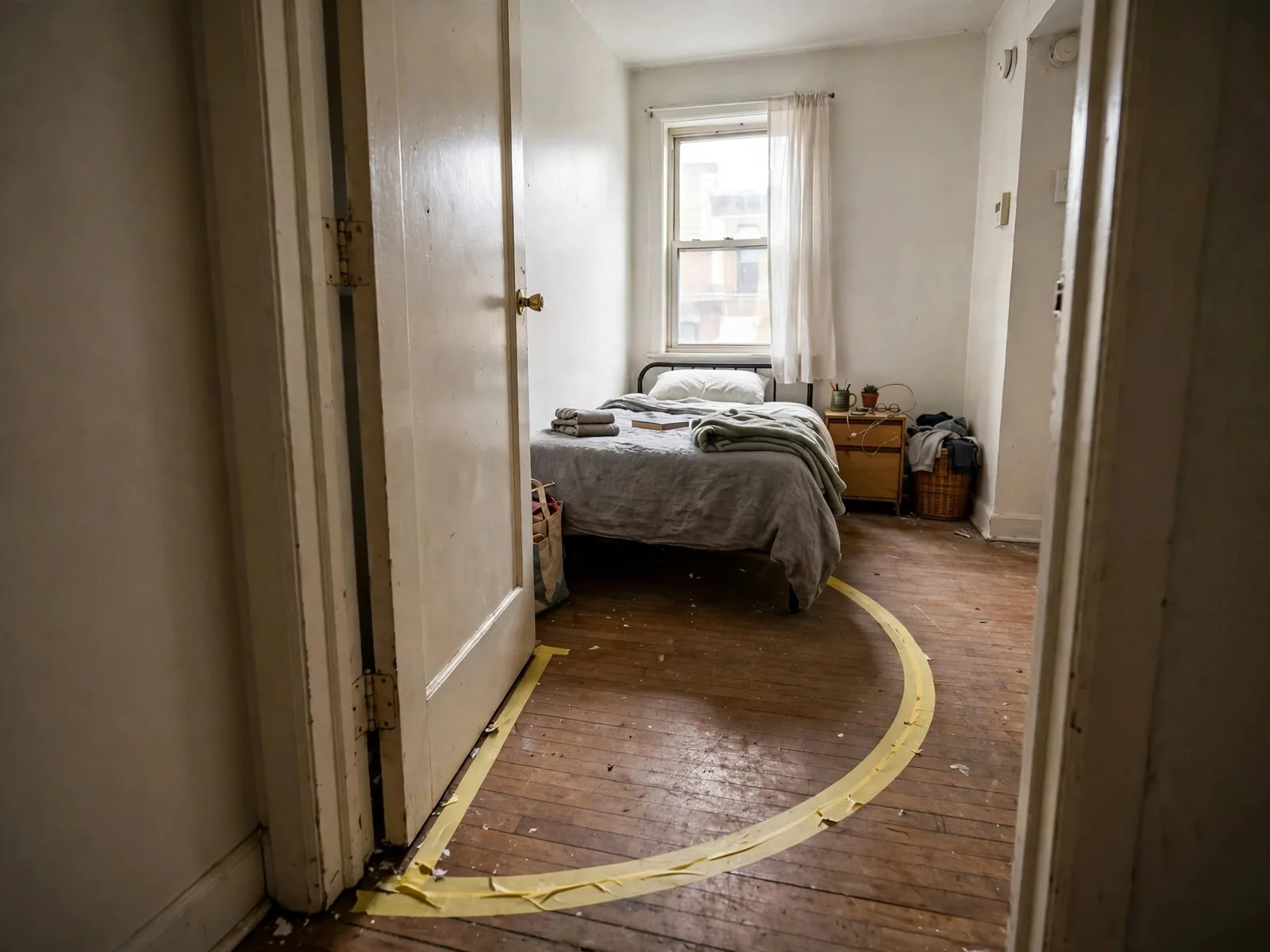
A standard bedroom door swings through an arc of roughly 30 inches. Anything inside that arc gets clipped, blocks the door at half open or forces the dresser two inches deeper into the room than it should sit. Mark the arc before you place a single heavy piece.
Then protect one walking lane from the door to the bed and on to the closet or window. Twenty-four inches wide is the minimum that still feels like walking rather than edging. The cheap test costs nothing: run painter’s tape on the floor for the swing and the lane, then live with the tape for a day.
Measure: tape the door swing arc on the floor first. Nothing you love goes inside that arc.
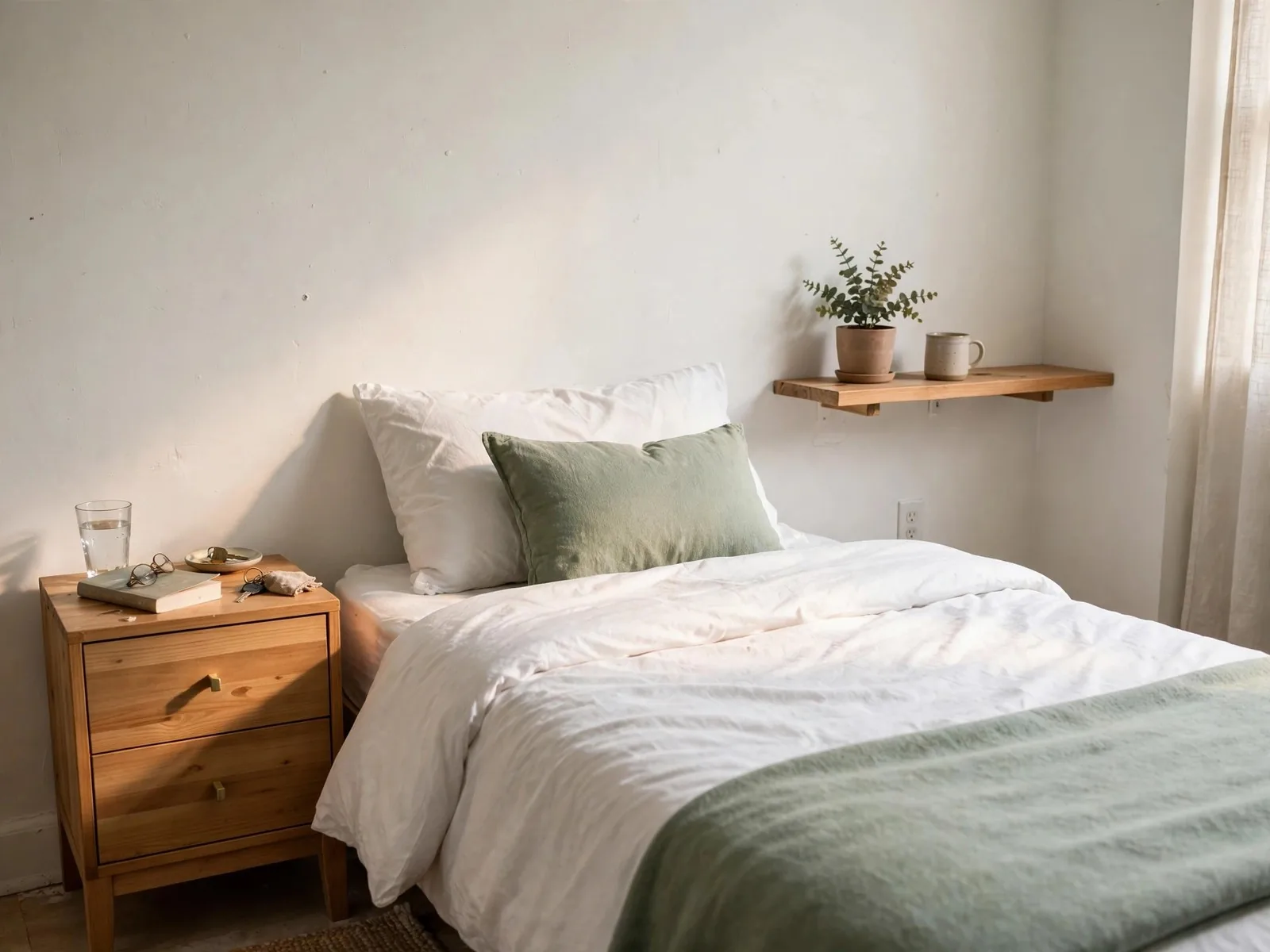
3. Run one nightstand, not two
Symmetry is a showroom habit and small apartment bedroom ideas die by it. One proper nightstand with a drawer, on the side you actually use, holds the lamp, the book and the phone. The other side gets a floating wall shelf, a narrow stool or a tall plant stand, each of which takes a third of the floor space.
Skipping the second nightstand frees 18 to 24 inches of width along the bed wall. In a 70 square foot room, that strip is often the exact difference between a dresser fitting against the opposite wall and a dresser not fitting at all.
Budget: one good nightstand at $40 to $90 beats two cheap ones crowding both sides of the bed.
4. Size the bed to the room, not the other way round
A full at 54 by 75 inches gives up six inches of width and five inches of length to a queen. In a 100 square foot room those inches are a desk, a laundry basket that is not in the walkway or a door that opens all the way. Couples sleep fine in fulls across most of the world; the queen is a preference, not a law.
The working rule: the bed should take no more than about a third of the floor. A twin at 38 by 75 inches in a studio corner frees an entire work zone, which is why studio bedroom ideas live or die on this single choice. The same sizing math runs the small rooms in houses too.
Measure: divide the bed footprint by the room area. Over 35 percent and every other piece in the room starts apologizing.
Storage that hides, not storage that shows
5. Raise the bed and use the space under it
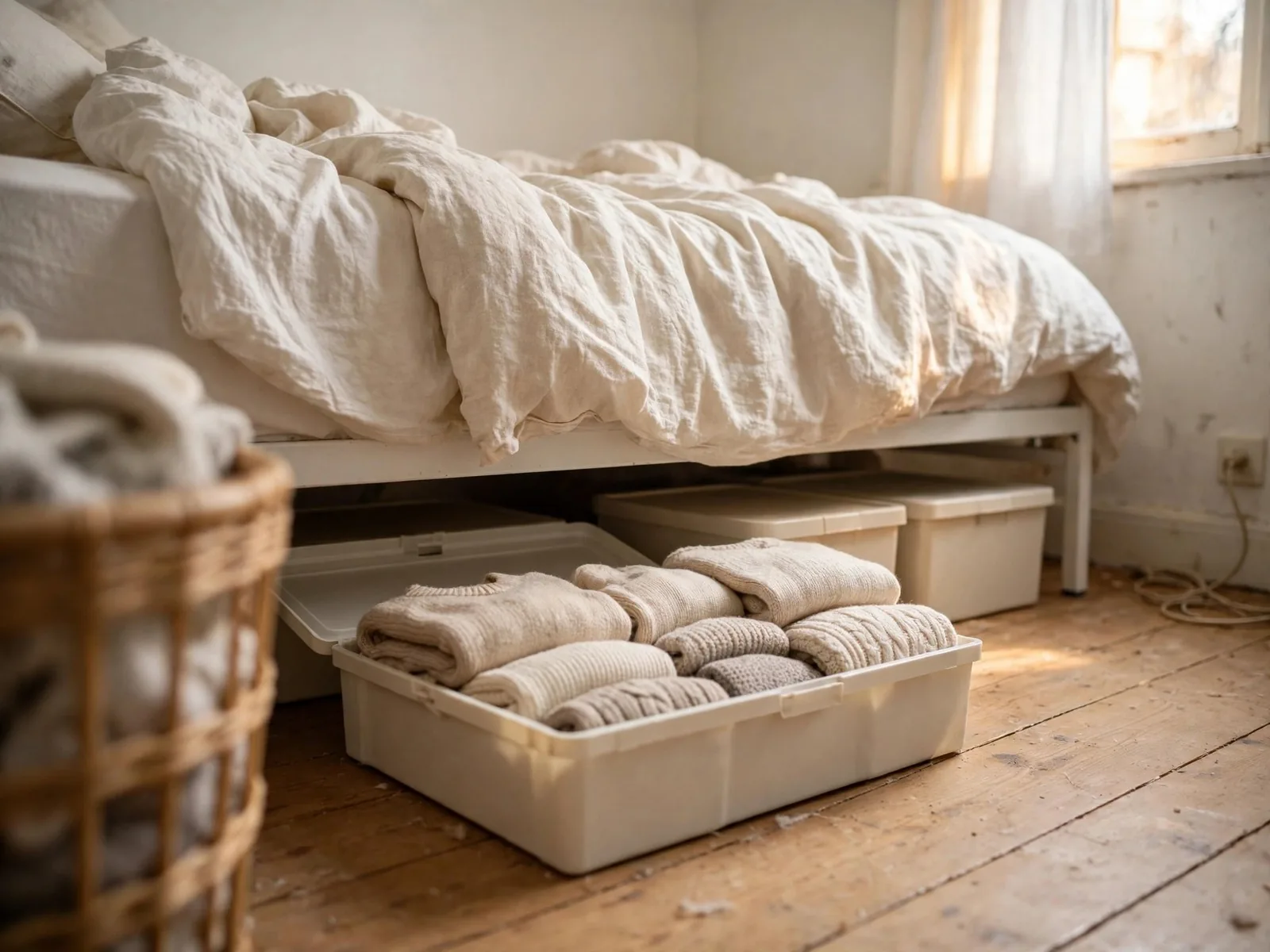
The floor under a queen bed is about 33 square feet, the largest free storage in the apartment and most renters use it for dust. Bed risers add 5 to 8 inches of height for a few dollars. A storage frame gives 12 to 14 inches of clear space, enough for low lidded boxes to slide in and out without a fight.
Fill those boxes with what rotates: out-of-season clothes, spare bedding and the towels guests use twice a year. Label the foot end of each box, because the box you need is always the one at the back. A full storage-only plan for small rooms lives in the companion storage guide.
Renter-friendly: risers and boxes change nothing permanent, hold a season of clothes and leave with you on moving day.
6. Hang storage on the back of the door
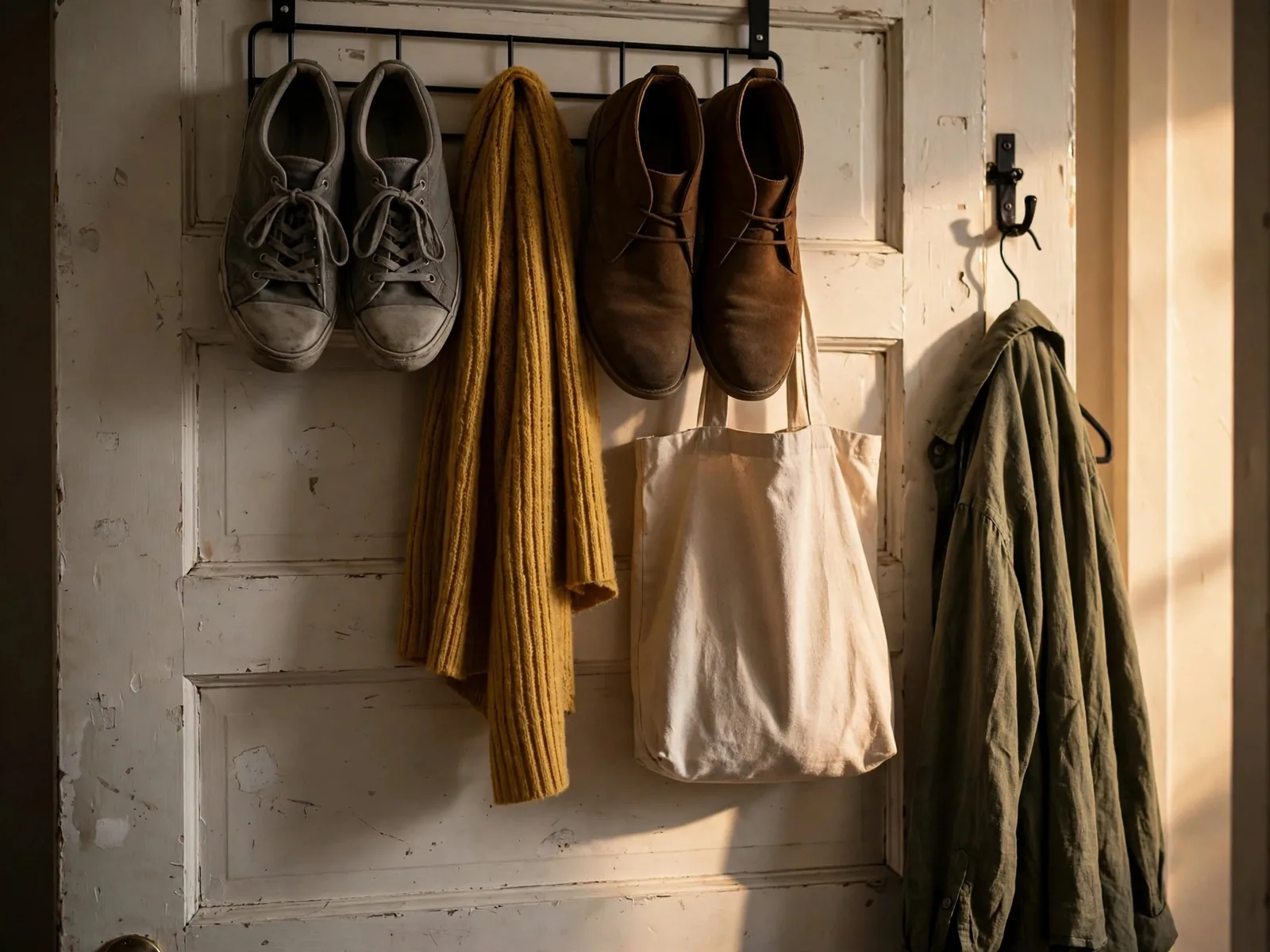
The back of the bedroom door is dead space in nearly every rental and it is two inches deep at the most. An over-door rack takes shoes, bags, scarves and the hoodie that otherwise lives on the floor. Hook rows hold tomorrow’s outfit so the chair can retire from that job.
Test the fit before you load it: some door frames sit tight and a loaded rack can stop the door closing flush. Felt pads on the hooks stop the rattle that drives people to take the whole thing down in week two.
Renter-friendly: an over-door rack hangs in a minute, needs no screws and comes off clean at move-out.
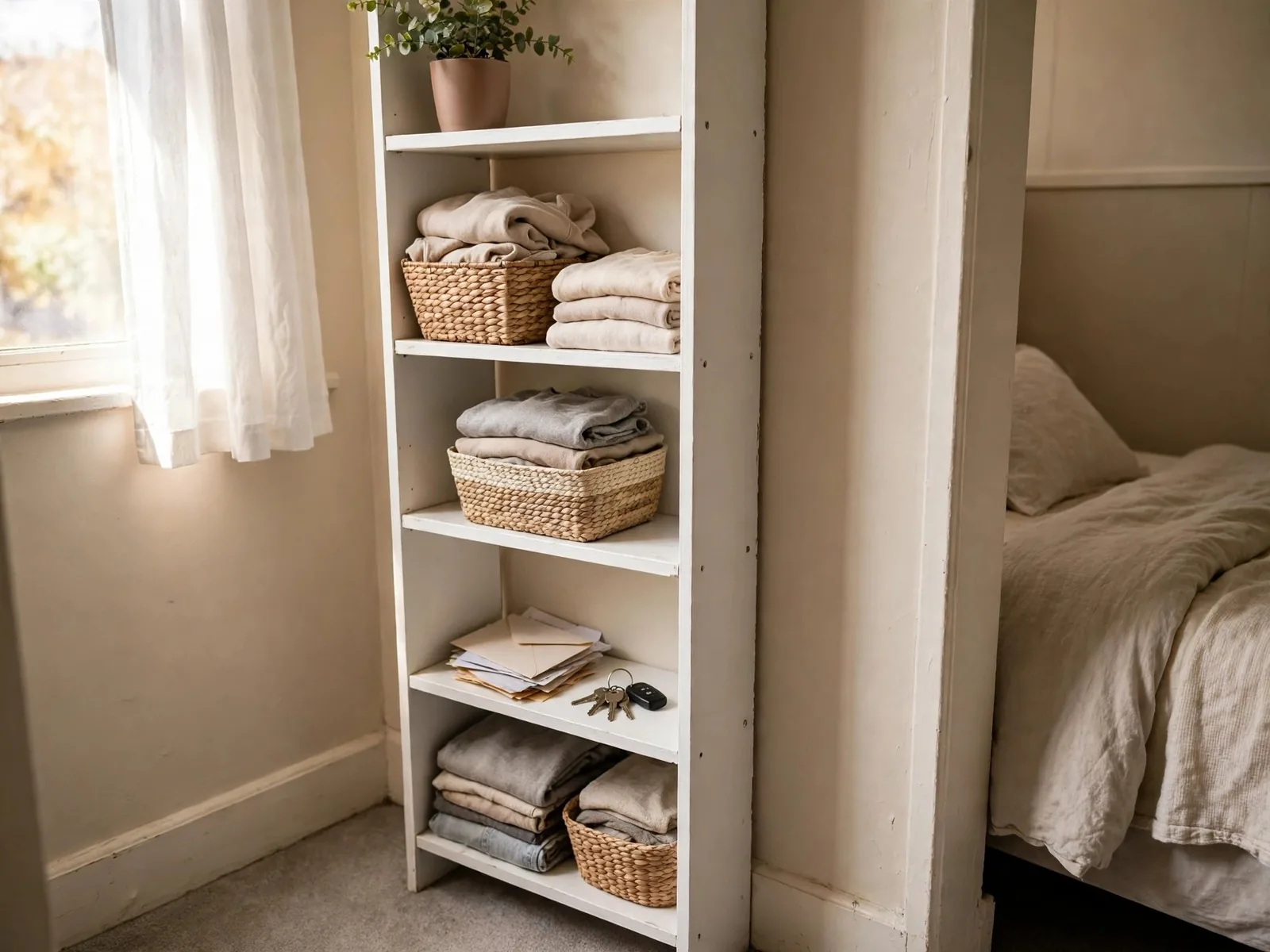
7. Go tall with one narrow shelving unit
Vertical storage is how a small room grows without touching the floor plan. One unit at 24 inches wide and 72 inches tall stands on about two square feet of floor. A standard dresser at 48 inches wide stands on six. The tall unit holds folded clothes, baskets and books in the space a plant usually wastes.
Load the heavy things low and the light things high. The unit stays steady without help that way. If your lease allows a single wall strap at the top, take it; if not, heavy at the bottom does most of the same work.
Measure: shop by footprint, not by shelf count. Two square feet of floor is the budget a storage piece gets in this room.
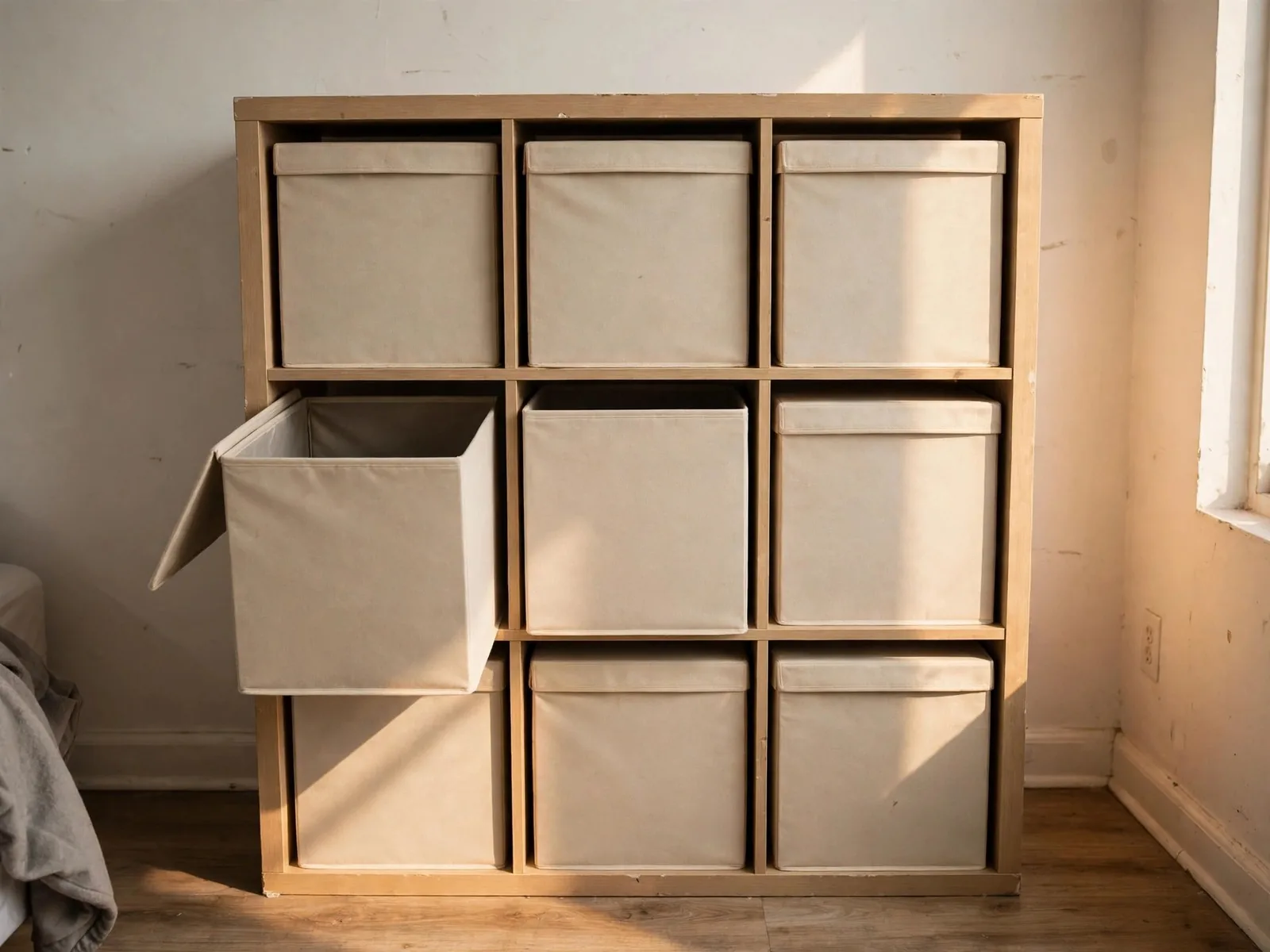
8. Choose closed storage that hides the clutter
Open shelves in a small bedroom put every object you own on permanent display and visible clutter reads as mess no matter how tidy the rows are. Closed storage that hides clutter is the fix: lidded boxes, fabric bins inside a cube unit and one basket with a lid for the daily pile.
Keep the boxes in one color family. A wall of matching bins reads as a single calm piece of furniture, while twelve different containers read as twelve problems. This is the cheapest visual upgrade on the page.
Budget: matching lidded bins run $6 to $12 each and six of them calm a whole wall for under $75.
Light, mirrors and color that open the room
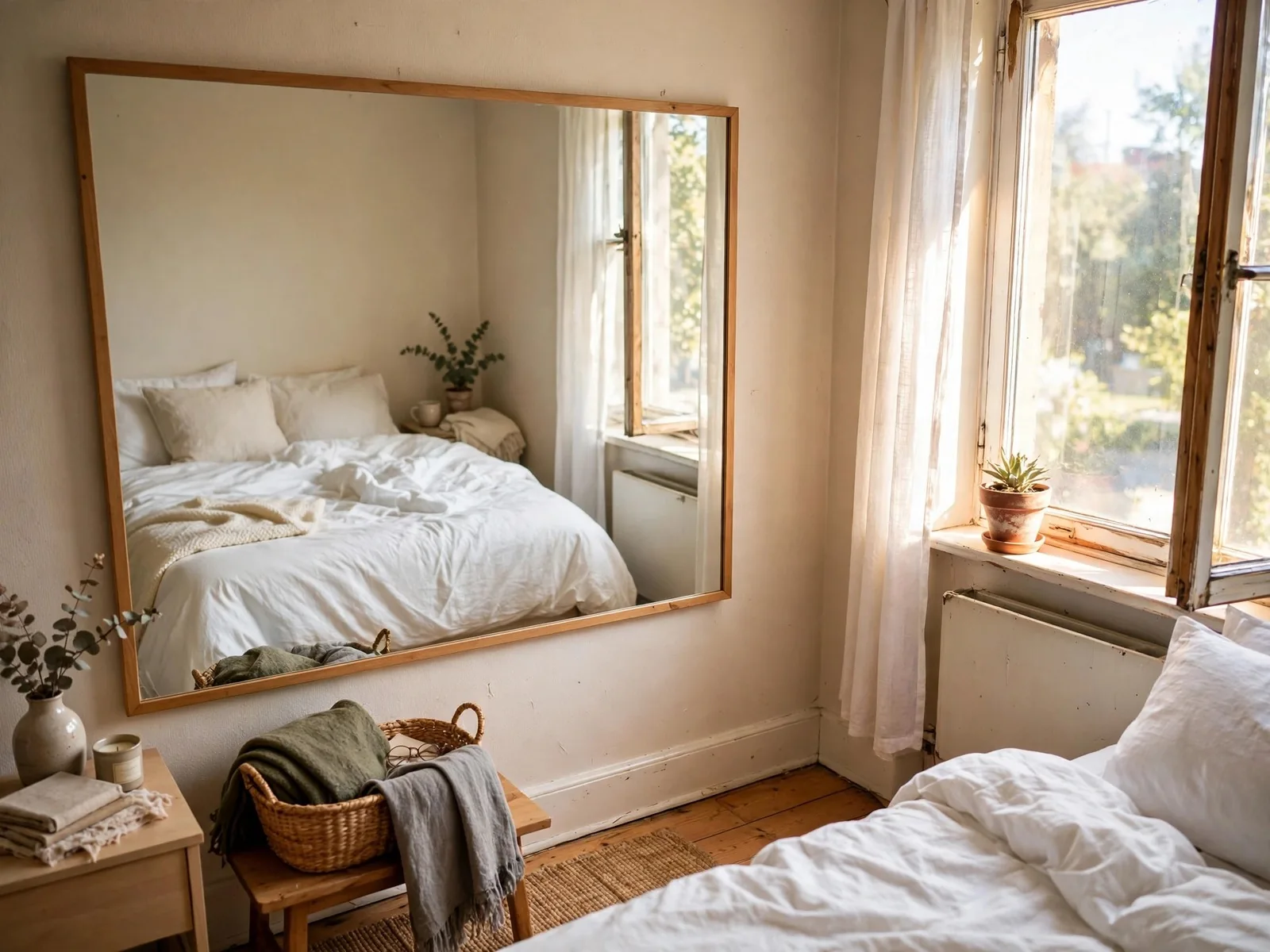
9. Hang one large mirror opposite the window
A mirror placed opposite the window throws daylight across the room and doubles the view, which is the closest thing to a free extra window a renter can install. Beside the window is the second-best spot. Facing the bed is the one to skip if morning glare lands on your pillow.
Size is what separates a light tool from a decoration: 24 by 36 inches or larger actually moves light around the room. Smaller mirrors are garnish. Lean a large floor mirror against the wall if strips worry you and angle it a few degrees so it catches the window, not the ceiling.
Renter-friendly: use adhesive strips rated above the mirror’s weight or lean it. No holes either way.
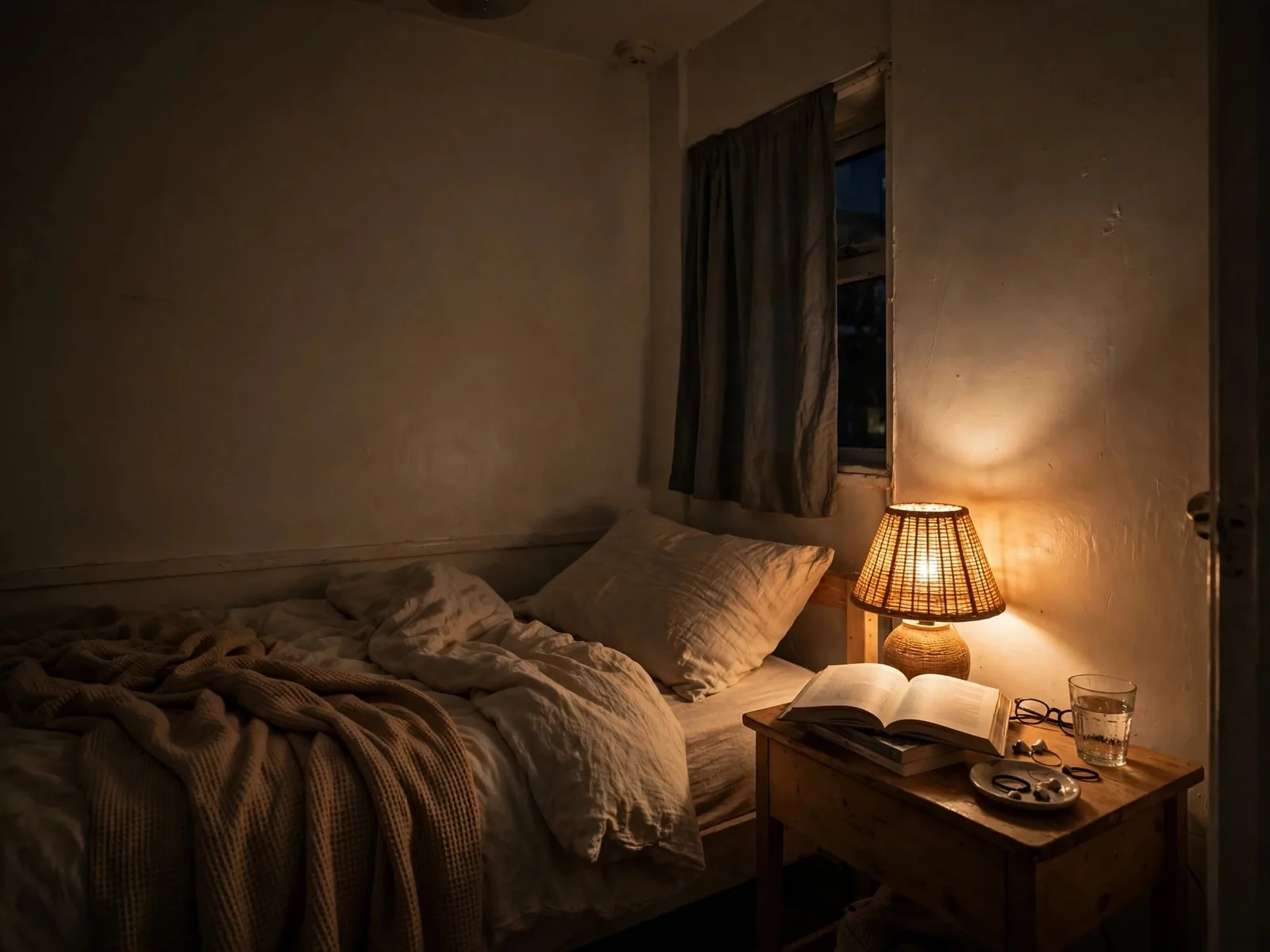
10. Layer the light: ceiling plus one warm lamp
Rentals give you one ceiling light with the warmth of a dentist’s office. It flattens everything it touches. Layered light fixes the room for the price of a bulb: the ceiling light for cleaning and dressing, plus one warm lamp at bed height for the hours you actually live in the room.
Choose a 2700K bulb and put the lamp where you read. A plug-in wall sconce or a clamp lamp on the headboard saves the nightstand surface entirely. The deeper layouts and bulb-by-bulb plans live with the bedroom lighting ideas.
Budget: one warm lamp with a 2700K bulb at $25 to $60 changes this room more than any cushion you could buy.
11. Give the room one focal wall and make it removable
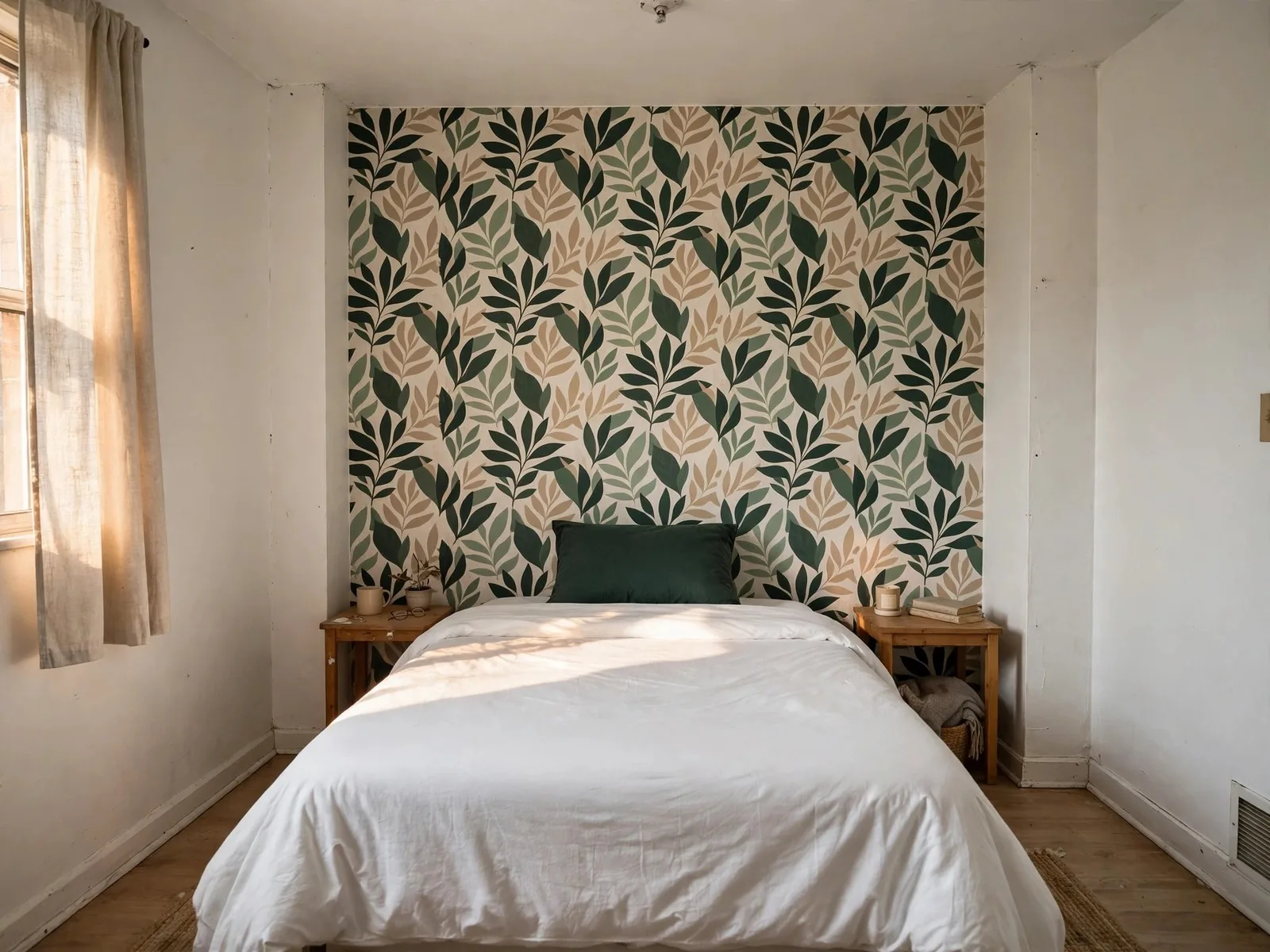
One focal wall only: that is the layout rule that keeps a small room calm and the wall behind the bed is the natural pick because the bed already points at it. Renters get their version through peel-and-stick wallpaper, a large framed print or a fabric panel on a removable rod.
Peel-and-stick quality varies wildly, so test one panel in a hidden corner for a week before the full wall. If it lifts paint on the test, switch to the framed print and keep the deposit. Dozens of renter-safe patterns and placements sit in the accent wall collection.
Renter-friendly: test peel-and-stick in a hidden corner for a full week before you commit to the whole wall.
12. Keep the big surfaces light and let texture do the work
Light colors make a small bedroom feel larger because they bounce the daylight you have instead of absorbing it. Warm white, pale greige and soft sage on the big surfaces are the reliable three, teamed with bedding and curtains in the same family so the eye reads one long stretch of light.
Paint only with written permission. If the lease bans paint, the same effect comes from a light duvet cover, full-length curtains hung close to the ceiling and a pale rug over dark rental flooring. One deeper accent in a cushion or a throw stops the room feeling washed out.
Budget: a light duvet cover and curtain panels in one tone, $50 to $110 total, fake a paint job the landlord cannot object to.
The pieces that do two jobs
13. Put a storage bench or ottoman at the foot of the bed
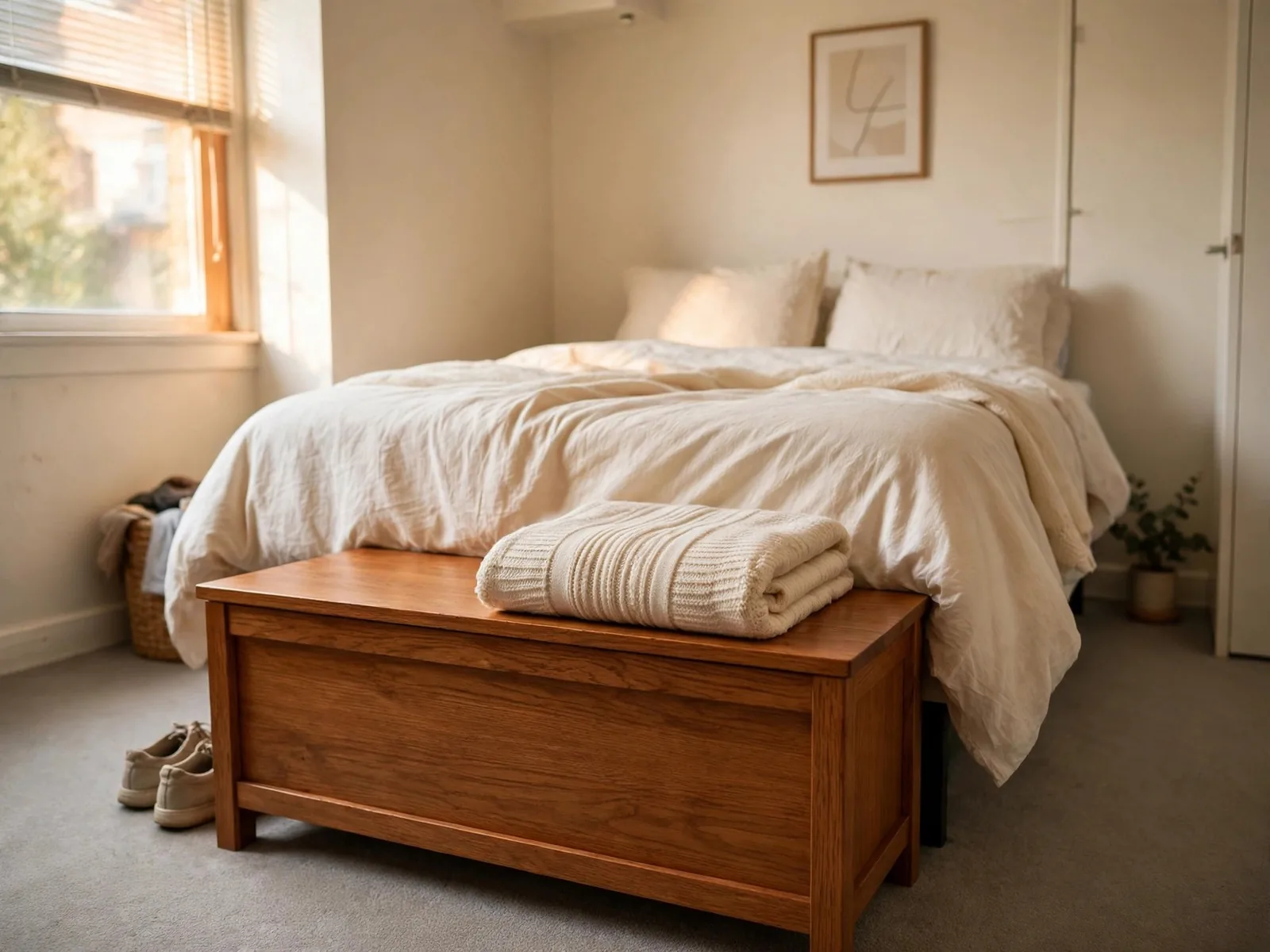
A storage bench is three pieces wearing one footprint: a seat for putting on shoes, a box for blankets and spare pillows and a surface that holds a tray, a book stack or tomorrow’s clothes. At about 14 inches deep it asks very little of the room.
Fit is the catch. In a 120 square foot room it earns its place. In a 70 square foot room it eats the walking lane, so skip it and let the under-bed boxes from idea 5 do the same job flat.
Measure: keep 18 inches between the bench and whatever faces it or you will catch your shins on it nightly.
14. Work a desk that folds away or doubles up
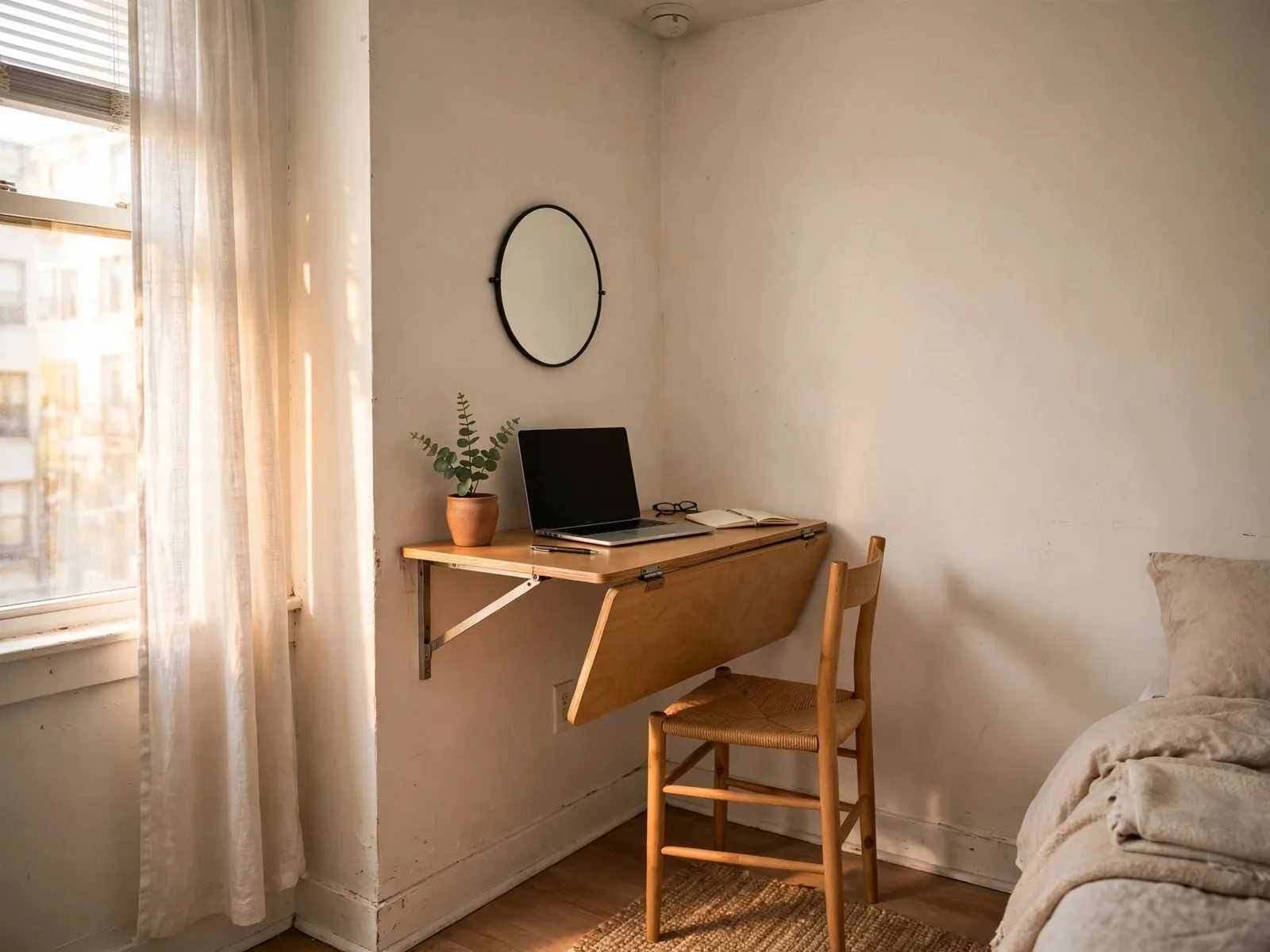
A wall-mounted drop-leaf desk folds down to about four inches deep, which means the work zone exists only while you work. A small fixed desk at 36 inches wide does double duty as a vanity with a mirror above it and the same corner holds a compact keyboard stand if your evenings include making music after hours.
Keep the desk on the window wall if the room gives you the choice, because daylight on a work surface is worth more than daylight on a dresser. Cable mess is the failure mode here; one strip of Velcro ties along the desk leg keeps the corner looking finished.
Budget: drop-leaf desks run $70 to $140 and move with you to the next apartment instead of the donation pile.
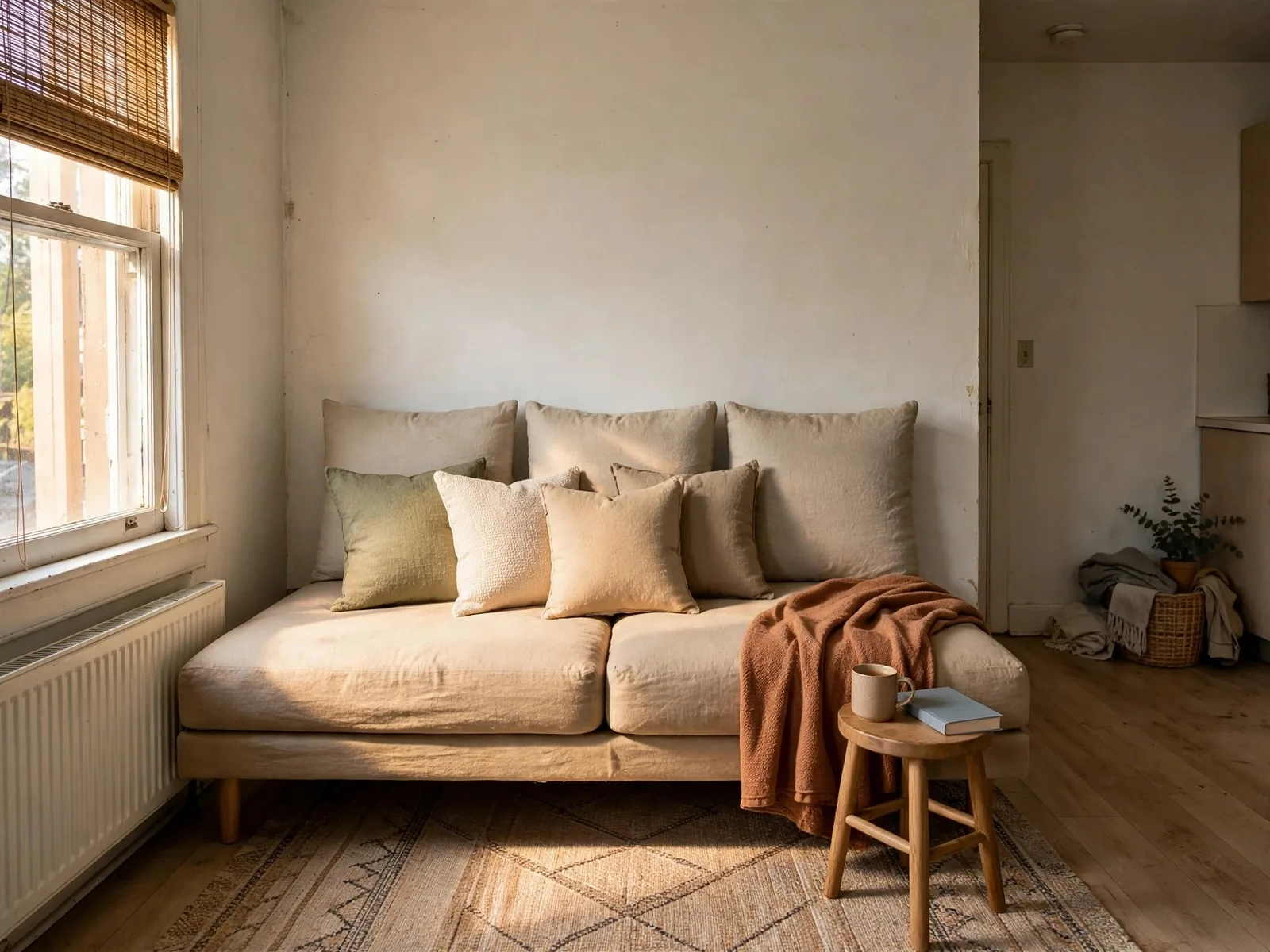
15. Let a daybed be the sofa in a studio
Studio bedroom ideas turn on one piece: a daybed with firm bolsters along the wall side reads as a sofa all day and sleeps as a twin all night. At 38 by 75 inches it takes the floor of a twin while doing the social work of a couch, which is how a studio gets a living room back.
Style it like seating, not like a bed that gave up: back cushions upright, one throw folded over the arm end and the bed pillows swapped for two square cushions in daytime covers. Dorm rooms run this same play at an even smaller scale.
Measure: a daybed is a twin at 38 by 75 inches, so it buys back every square foot a queen would have eaten.
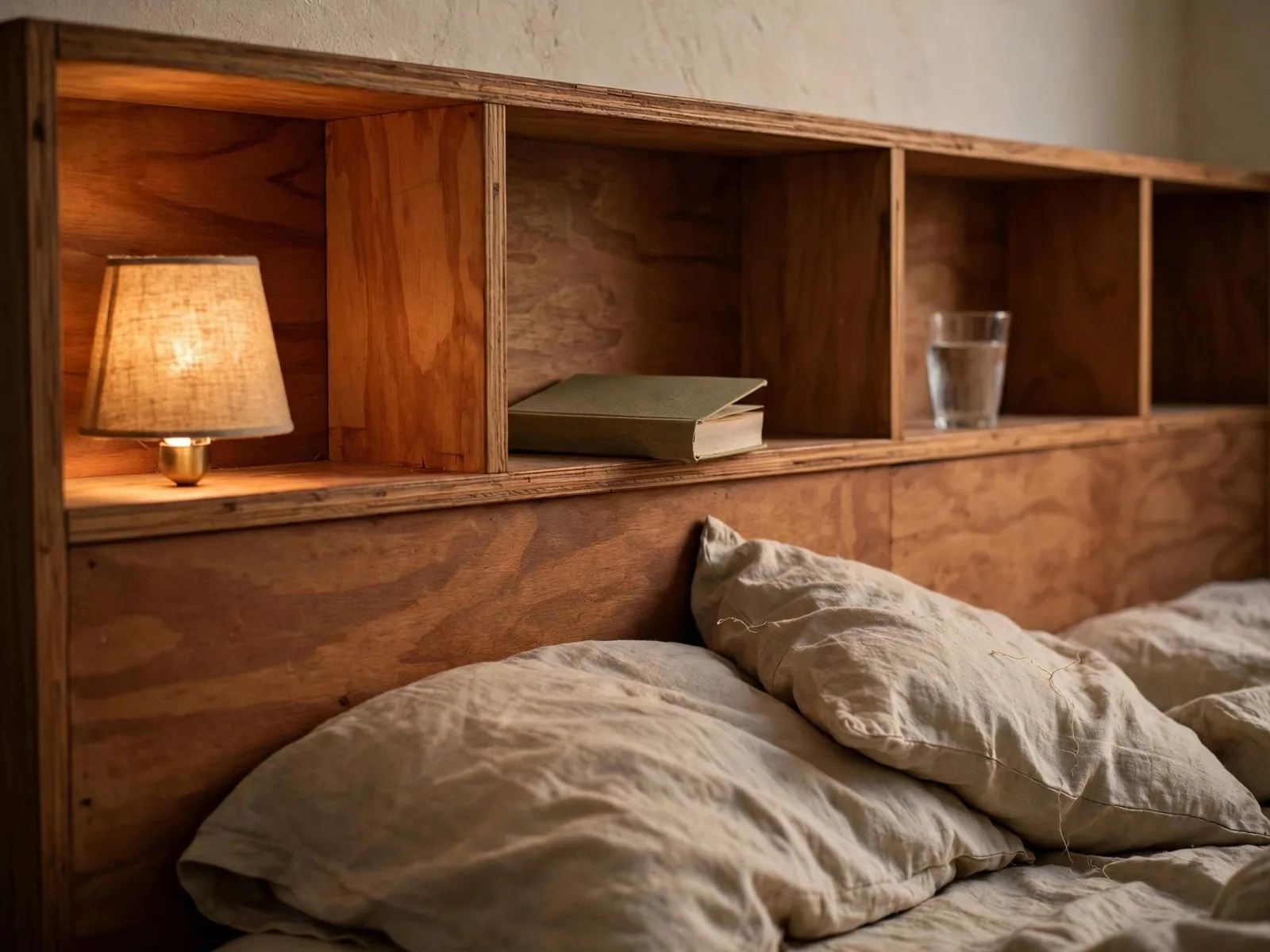
16. Pick a headboard with shelves and delete a nightstand
A storage headboard carries two open shelves at pillow height: lamp, book, phone, water glass and the small clutter that usually demands a nightstand each side. With the shelves doing that work, one or both nightstands can leave the room and the bed wall gains a foot of breathing space.
Most storage headboards are freestanding or mount to the bed frame, so the wall behind stays untouched. Depths run 6 to 10 inches, which the room repays by deleting a 20 inch nightstand. More shapes and sizes sit with the headboard ideas.
Renter-friendly: frame-mounted headboards need no drilling and leave the wall exactly as the landlord left it.
Apartment bedroom ideas on a budget
Most 1 bedroom apartment decorating ideas fail on order, not on money, so spend in this sequence. Day one is free: bed on the longest wall, one nightstand out, the walking lane cleared and every surface edited down. That rearrangement alone makes most rental bedrooms feel a size bigger and it costs a Saturday morning.
The first $100 goes under and behind things: risers and lidded boxes for the under-bed, an over-door rack and a set of matching bins. The next spend, when there is one, is the single tall shelving unit or the large mirror, whichever your room lacks more. A full weekend version of this sequence, with the pieces swapped room by room, is laid out in the bedroom makeover ideas.
Mistakes that make it fall flat
Buying furniture before measuring. The dresser that fit the showroom does not fit the door swing, the hallway turn or the wall it was bought for. Measure the room, the door and the delivery path first, because returns on large pieces cost real money in a rental.
Filling the room with open storage. Every shelf and rail on show turns your possessions into the wallpaper and a small room reads as cluttered even when it is clean. Closed boxes and doors are what make the same belongings look calm.
Pushing the bed into a corner to save space. The corner bed kills the far side: making it means climbing over it and the trapped side collects dust you cannot reach. A centered bed with a slim 20 inch gap beats a corner bed with a useless one.
Going dark on all four walls. One deep focal wall adds drama; four dark walls in a small north-facing rental absorb the little light the room gets. There is also the deposit: dark paint takes three coats to cover at move-out and landlords bill for it.
Questions people ask about this
How do I make a small bedroom look bigger without buying furniture?
Start with layout. Put the bed on the longest wall, pull each piece two inches off the wall and clear one walking lane so the floor shows in an unbroken path. Then edit hard: remove one piece entirely, empty every surface and raise the curtains as high as the rod allows. Visible floor reads as space.
Where does the bed go in a very small bedroom?
On the longest wall, headboard centered on the usable stretch of that wall. Keep 24 to 30 inches clear on the entry side so you can walk in and make the bed without turning sideways and keep the door swing empty. If a queen leaves under 20 inches, drop to a full at 54 by 75 inches.
What storage works in a small bedroom with no closet?
Work in three layers. Under the bed takes low lidded boxes for clothes that rotate by season. The back of the door takes a hanging rack for shoes and bags. One tall narrow shelving unit with closed bins replaces the dresser. Together they hold a full wardrobe on roughly four square feet of floor.
The bottom line
An apartment bedroom gets bigger the moment you measure it honestly, because every good decision on this page is just a number you respected: the longest wall, the 24 inch lane and the bed that fits the room instead of the wish. This week, tape your bed’s true outline on the floor, live with the tape for one full day and move only what the tape proves is wrong.