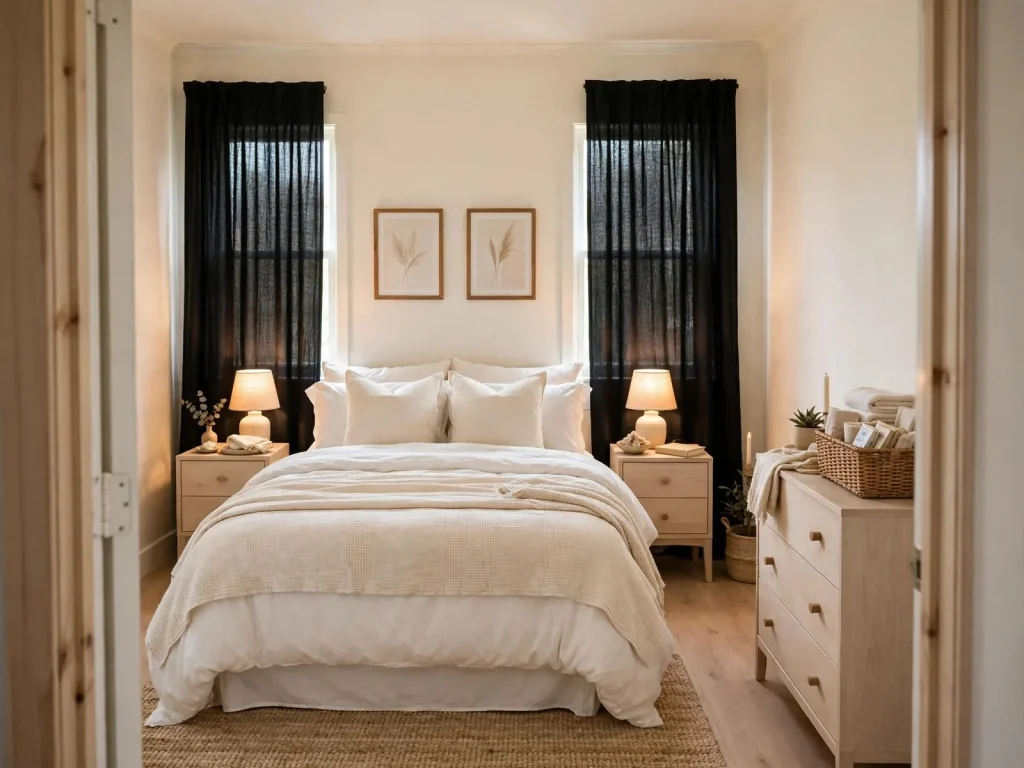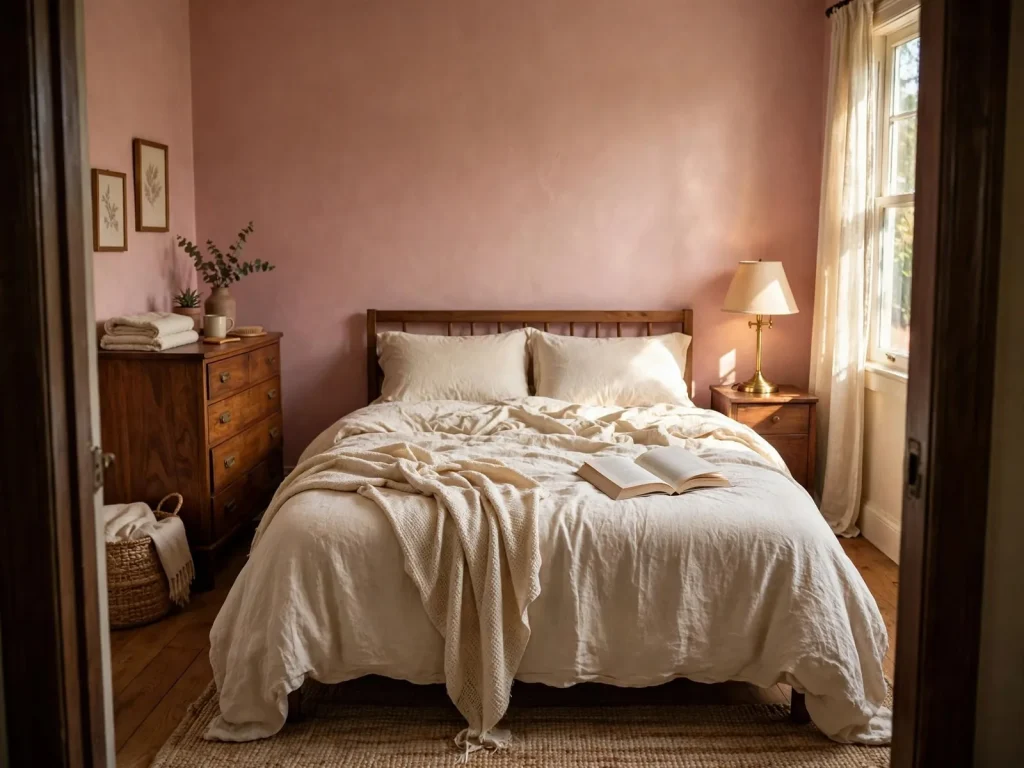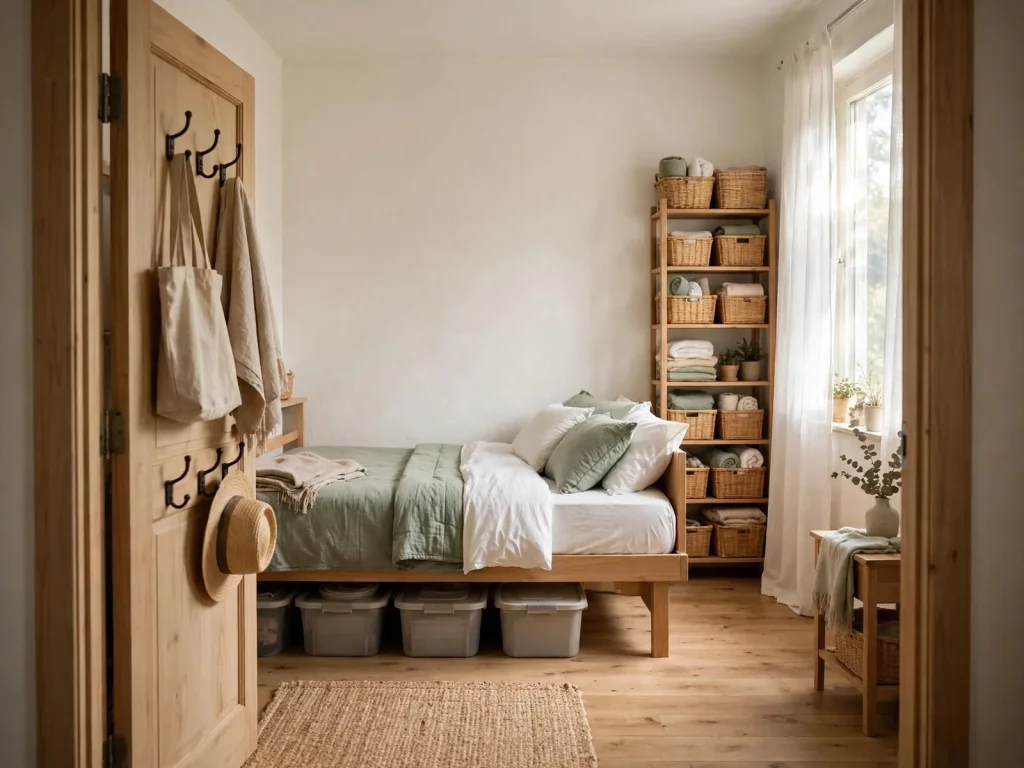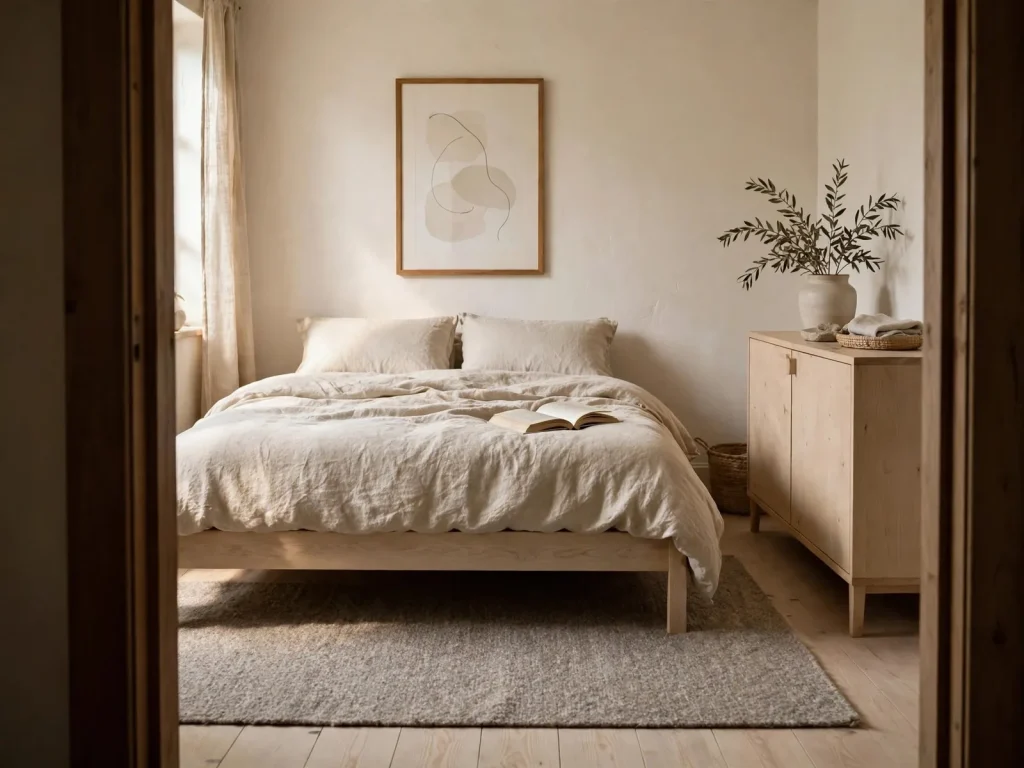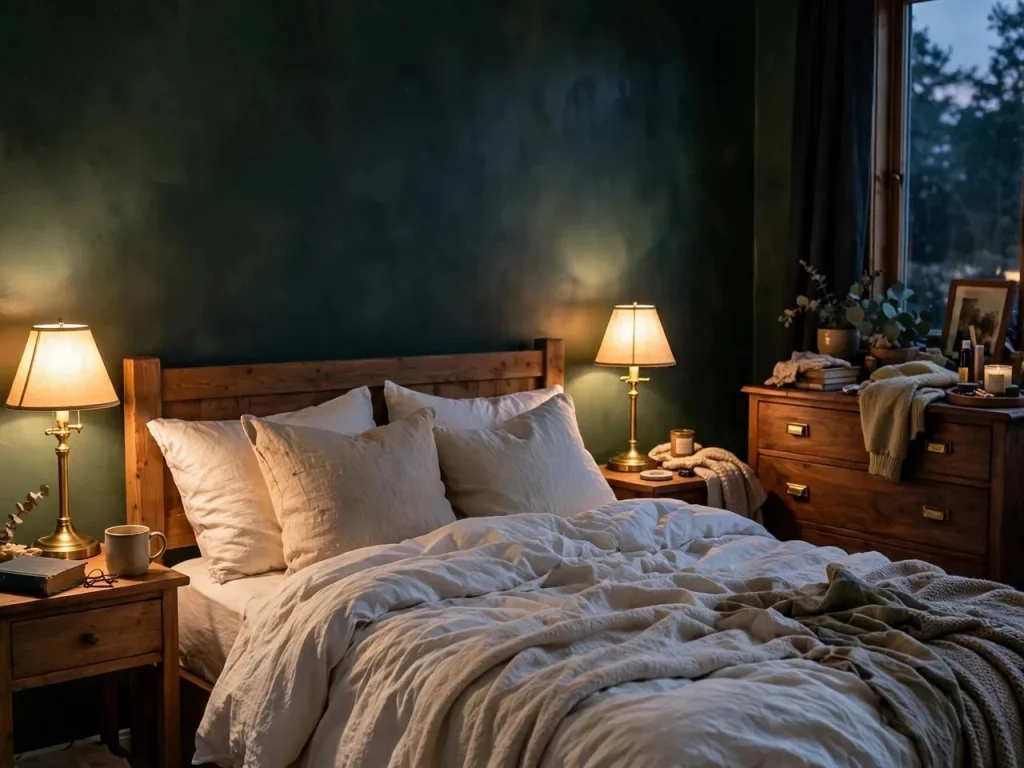
You have pinned dozens of coastal bedroom ideas and every one of them looks calm. White bedding, pale wood, curtains moving a little in the breeze. Then you try it in your own room and the calm curdles into theme: an anchor print here, a rope lamp there and suddenly the bedroom is a beach shop with a bed in it.
This page gives you the working version instead: the formula first, in named materials and named colors, then 14 coastal bedroom ideas zone by zone. Every idea carries a measurement or a budget band and a renter note where one applies. The closest cousin here is boho, which runs on the same natural materials in a warmer palette. The full idea bank lives in our bedroom ideas pillar.
Before you start: measure, budget, rules
Three measurements run this whole page. Bed width: a queen is 60 inches and a king is 76. The headboard and rug rules key off that number. Window width and height: curtain panels and rod placement are sized from them. The floor strip beside the bed: 18 to 24 inches of rug has to land there, so measure it before you fall for a rug size.
Budget bands on this page: under $50 for textile swaps, $50 to $150 for pieces like lamps and curtain panels and $150 to $400 for the one anchor buy, which is the headboard. Renters: nothing in these 14 ideas requires paint or a drill. The palette arrives through bedding, curtains and rugs. Landlord white walls turn out to be the palette’s lead color anyway.
Measure: write down bed width, window width and window height, in inches, before you buy anything. Every number below keys off those three.
The formula: what makes this style
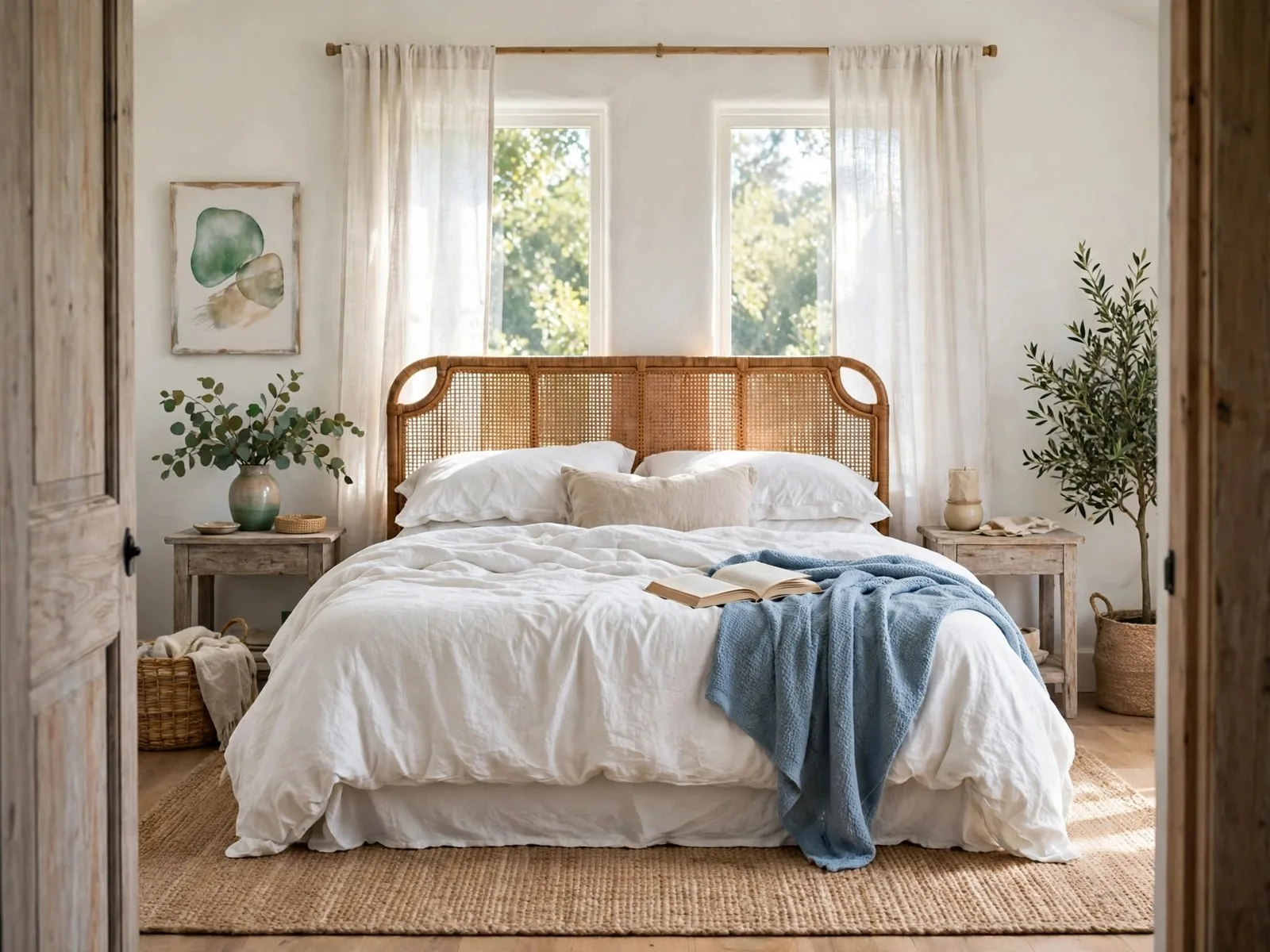
Coastal is a materials style wearing a color palette, not a theme. Get the four materials and the palette right and the room reads coastal from the doorway, with not one picture of the sea anywhere in it. The four ideas below are the whole formula. Everything after them is application.
1. Build the room from four natural materials
Name them, because the style is the list: rattan, washed linen, weathered or whitewashed wood and jute. Rattan does the furniture accents and the light shades. Linen does the bed and the curtains. Weathered wood does the big surfaces. Jute does the floor and the baskets. If a material in the room is shiny plastic or chrome, it is a guest from another style and it should be the only one.
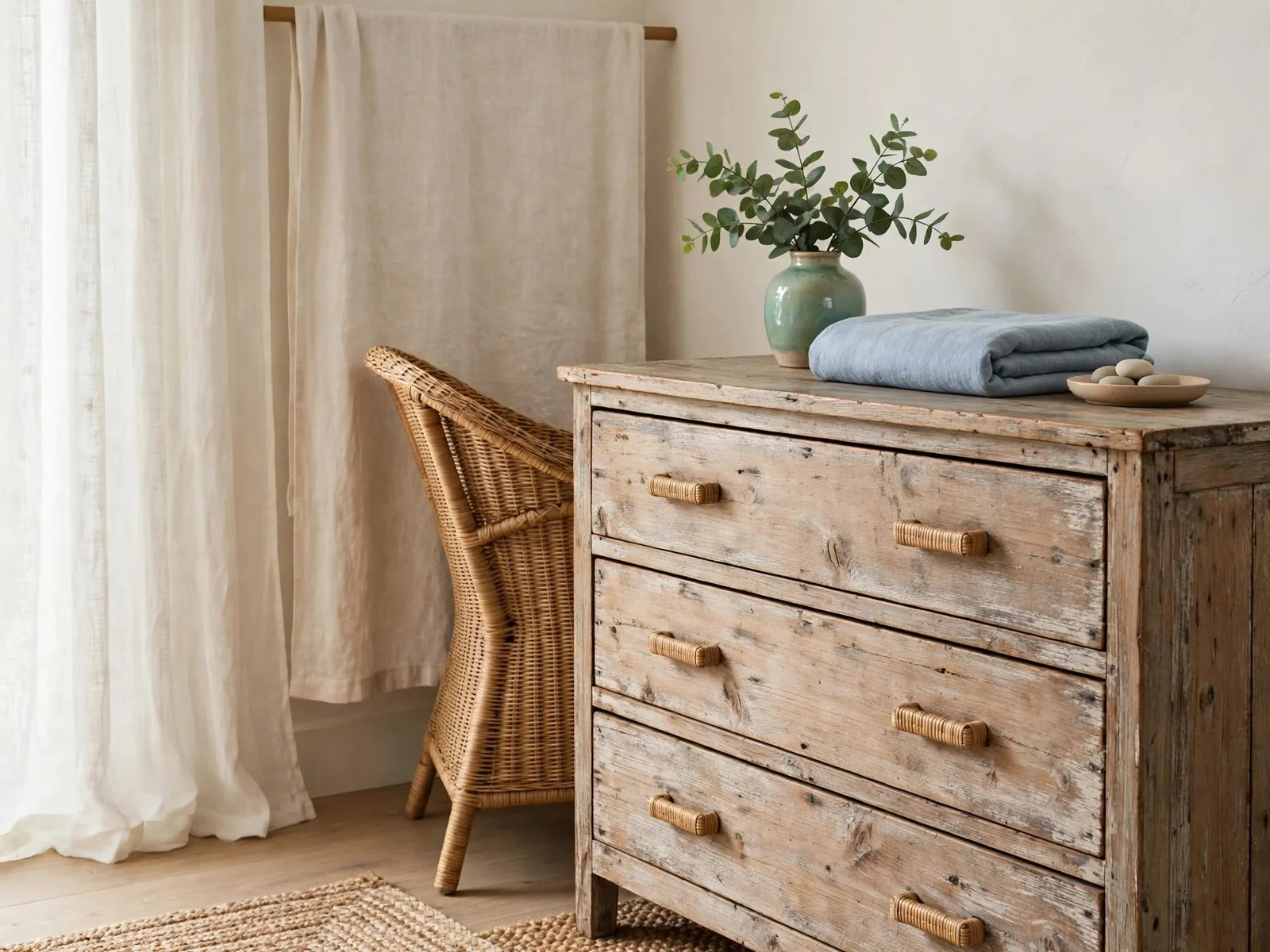
You do not need all four in equal amounts. Two carrying the room and two in supporting roles is the working ratio. A room with a weathered dresser and a jute rug is already halfway there; it needs linen on the bed and one rattan accent, not a refit.
Budget: $0 to start. Count the four materials in your room today; most bedrooms already own two of them.
2. Wash the room in warm white, sand, sea glass and soft blue
The palette, stated with its proportions: warm white carries about 60 percent of what you see, across walls, bedding and curtains. Sand is the mid-tone, in jute, pale wood and oatmeal textiles. Sea glass green and soft blue split what is left, one leading and one supporting, never in equal shares. The full palette method sits in our bedroom color ideas post.
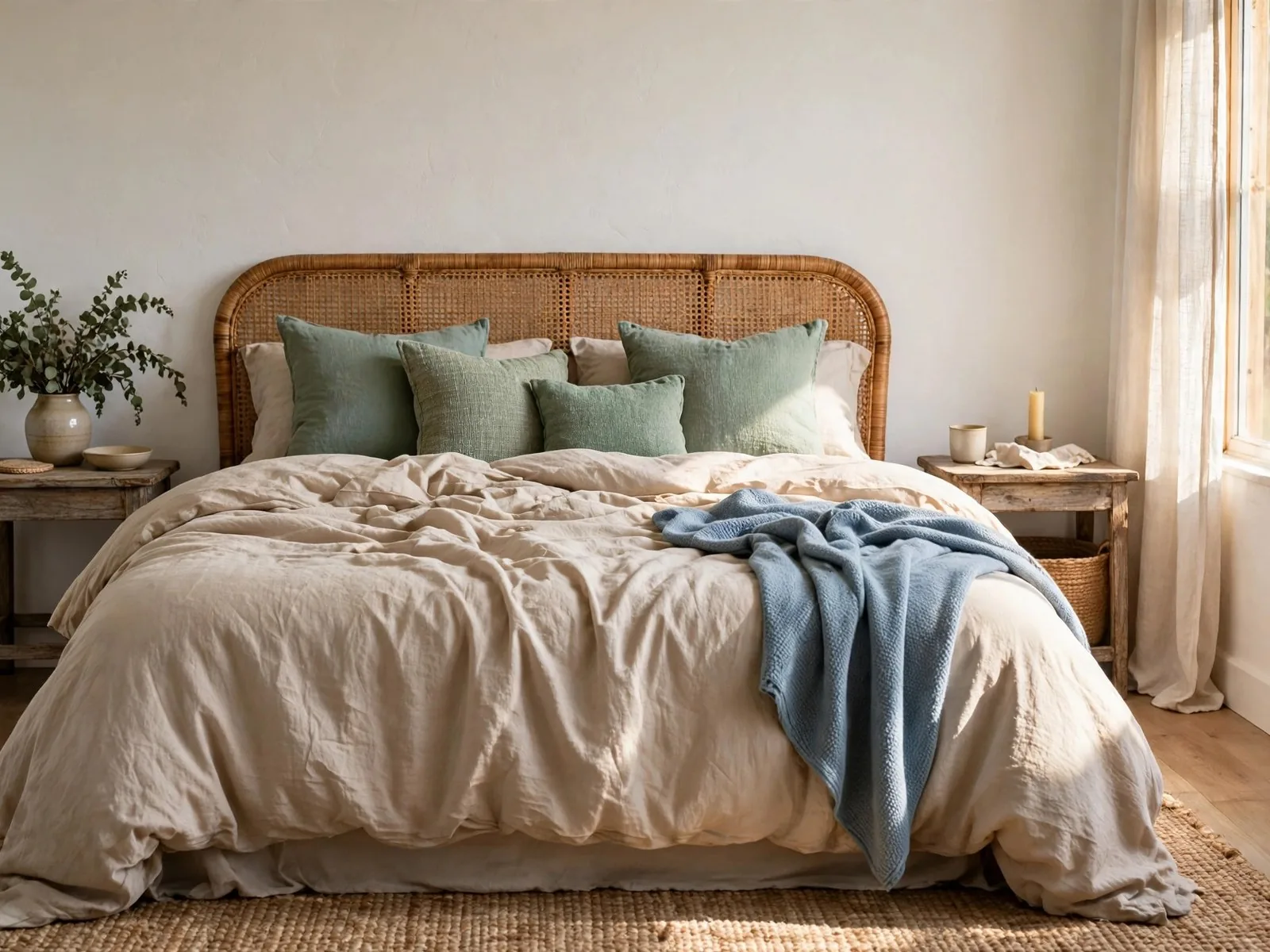
The catch is temperature. Every color here is warm-leaning or sun-faded. A crisp blue white or a blue gray turns the same furniture into a hotel corridor, because those shades belong to offices and lobbies, not to shore light.
Measure: paint any new color as two 12 by 12 inch swatches and judge them in morning light and again at dusk before you commit.
3. Buy the two signature pieces first: a woven headboard and white linen bedding
If the budget stretches to two buys, these are the two. A rattan or cane headboard puts the style’s lead material at the room’s focal point, at eye height, in a single purchase. A washed white linen duvet set turns any bed frame into the coastal bed from your saved photos. Everything else on this page is cheaper and can arrive slowly. Our headboard ideas post compares woven, wood and upholstered shapes by bed size.
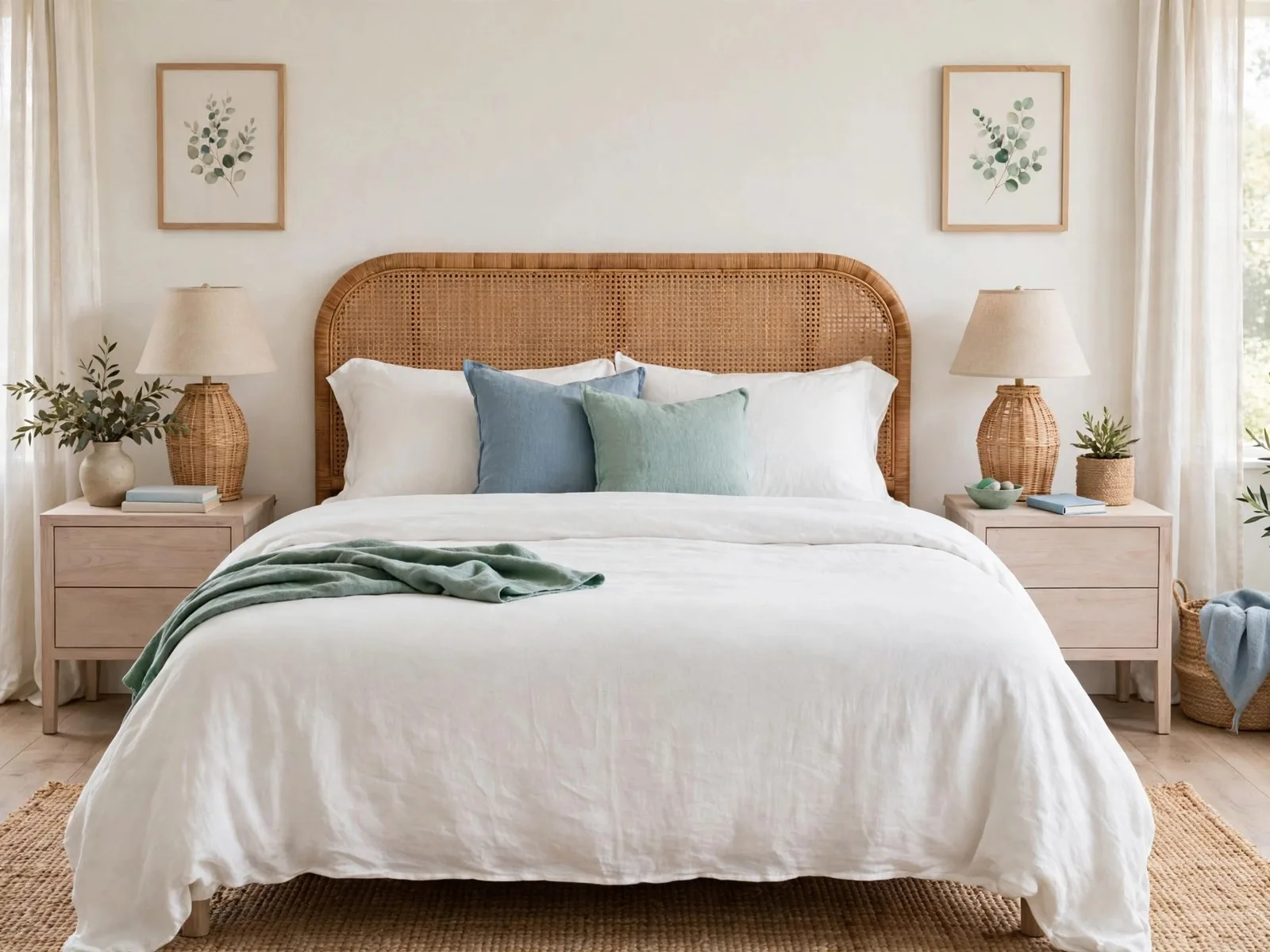
Order matters because these two set the scale for every later choice. The headboard’s tone becomes the room’s wood reference. The bedding’s white becomes the palette’s white. Buy them first and the throws, lamps and rugs have something to match.
Measure: choose a headboard 2 to 4 inches wider than the mattress, so 64 to 68 inches for a queen and at least 48 inches tall if you read in bed.
4. Trade theme prints for texture
The saved rooms are minimalist bedroom ideas in disguise: plain bedding, plain curtains, plain walls. Their interest comes from weave and grain, the nub of jute, the ribs of cane and the crinkle of washed linen. A printed motif is a shortcut that spends the room’s calm on a single object.

Use one test before anything themed crosses the door: could this object exist in a farmhouse 200 miles inland? If yes, it is furniture or texture and it may stay. If it only makes sense at a beach, it is a prop and props are what turn this style into a gift shop.
Budget: $0. This idea is a removal. Take one themed object out and notice the room get calmer for free.
The ideas, room zone by room zone
Zones, in the order you would tackle them on a Saturday: the bed, the windows, the floor, the furniture, the light and the surfaces.
5. Layer the bed in white with one sea color
The bed recipe: white or warm white base layers, then exactly one sea color, sea glass or soft blue, in exactly two places. A throw across the foot of the bed and two cushion covers is the usual pair. One color twice reads as a decision. One color five times reads as a theme fighting its way back in.
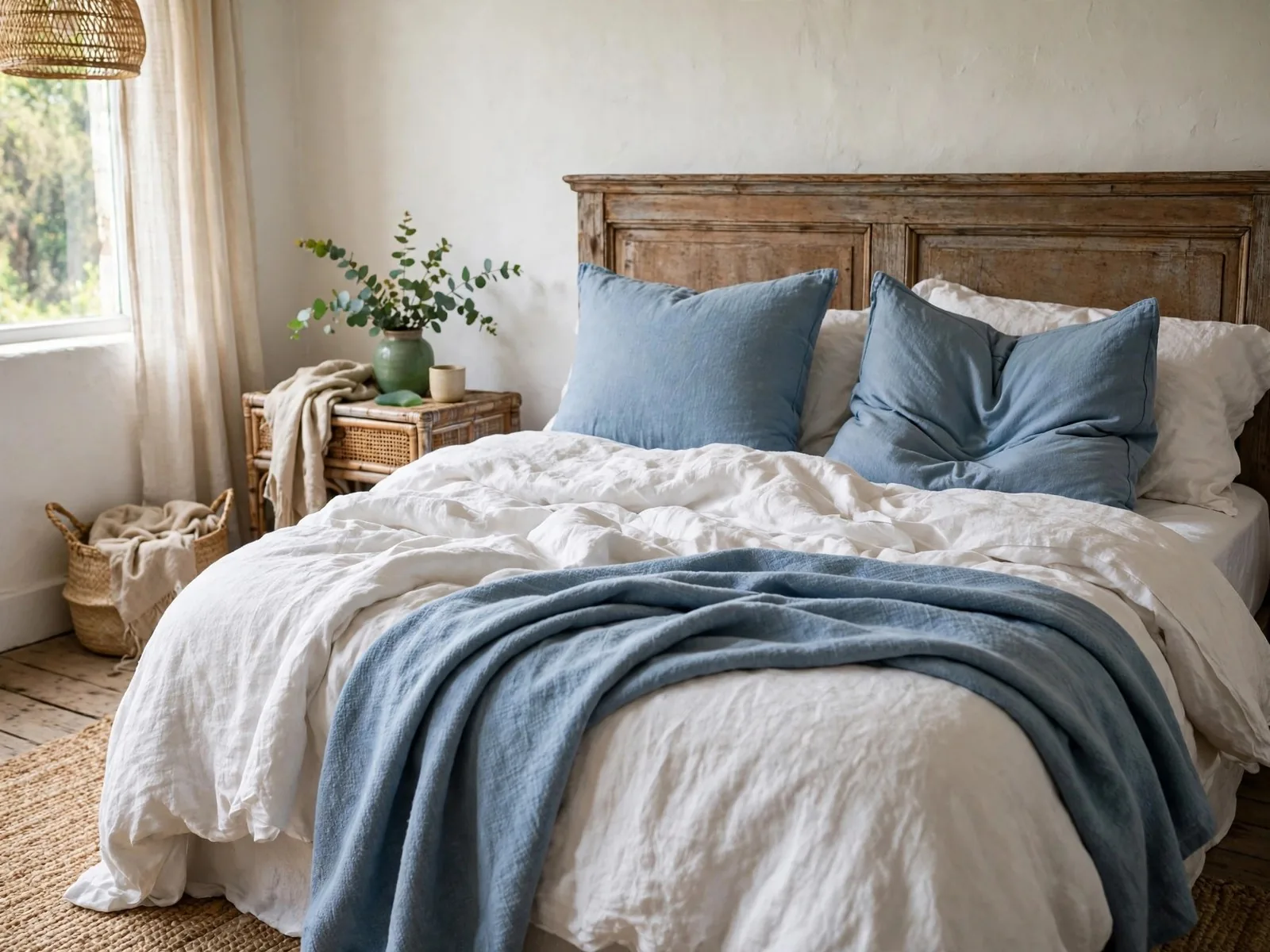
Keep every layer natural fiber. Cotton and linen wrinkle honestly and soften with washing. A polyester duvet cover keeps a slight sheen that reads as hotel stock under daylight. It is the fastest way to make plain white bedding look cheap.
Budget: $40 to $90 covers a cotton throw and two cushion covers in your palette’s sea color.
6. Hang sheer linen curtains high and wide
Coastal light is half the style, so the windows get fabric that filters rather than blocks. Sheer or open-weave linen panels soften noon glare without dimming the room. Hung high and wide, they make the window itself read taller. Panels should kiss the floor or puddle by an inch at most; curtains ending two inches short read as a measuring mistake all day, because they are one.
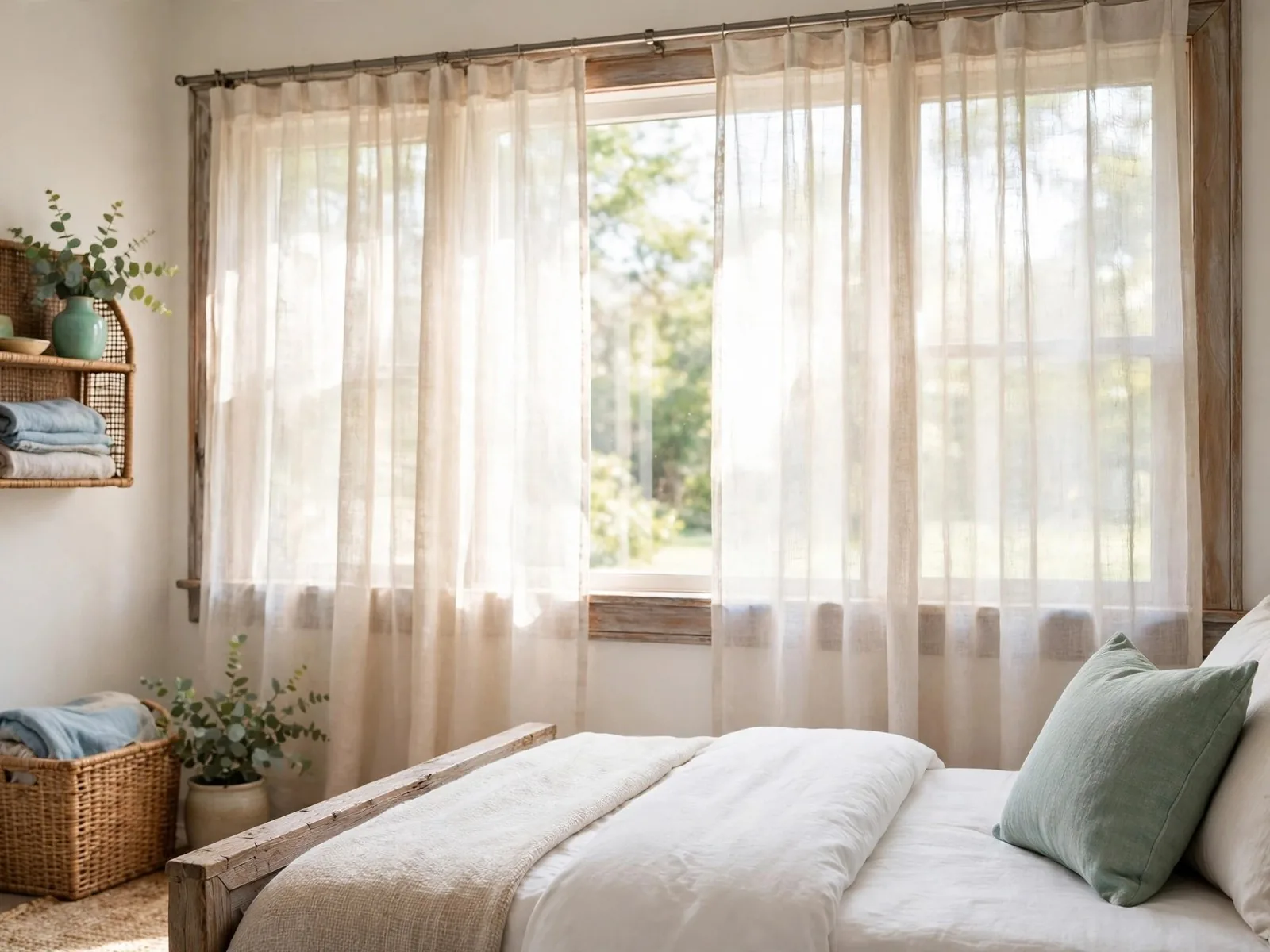
In a rental the same effect needs no holes at all. A tension rod inside the frame carries sheers easily, because the fabric weighs almost nothing. Landlord blinds can stay behind the sheers for sleep.
Renter-friendly: tension rod, zero holes. Hang the rod as high as the frame allows and let the panels run wide of the glass.
7. Ground the room with a jute or seagrass rug
The floor is where sand enters the palette. A flat-woven jute or seagrass rug under the bed lays the room’s warm mid-tone at the largest scale in the room and its texture does the quiet work that pattern does in other styles. Natural fiber has a second virtue: it hides everyday dust that a pale solid rug would announce.

Jute is firm underfoot and that is honest texture, not a flaw. Size generously instead of layering a soft rug on top. Bare feet land on the rug’s edge strip beside the bed and 18 inches of jute there feels fine at 7 in the morning.
Measure: an 8 by 10 foot rug under a queen bed leaves 18 to 24 inches of rug on both sides and at the foot. Go one size up rather than down.
8. Pick weathered wood furniture in one tone family
Rustic bedroom ideas and coastal share this furniture rule: wood that looks faded by sun and salt air, kept inside one family of tones. A whitewashed dresser beside a pale oak nightstand works, because both speak the same pale warmth. Add a dark walnut armoire and the room splits into two climates.
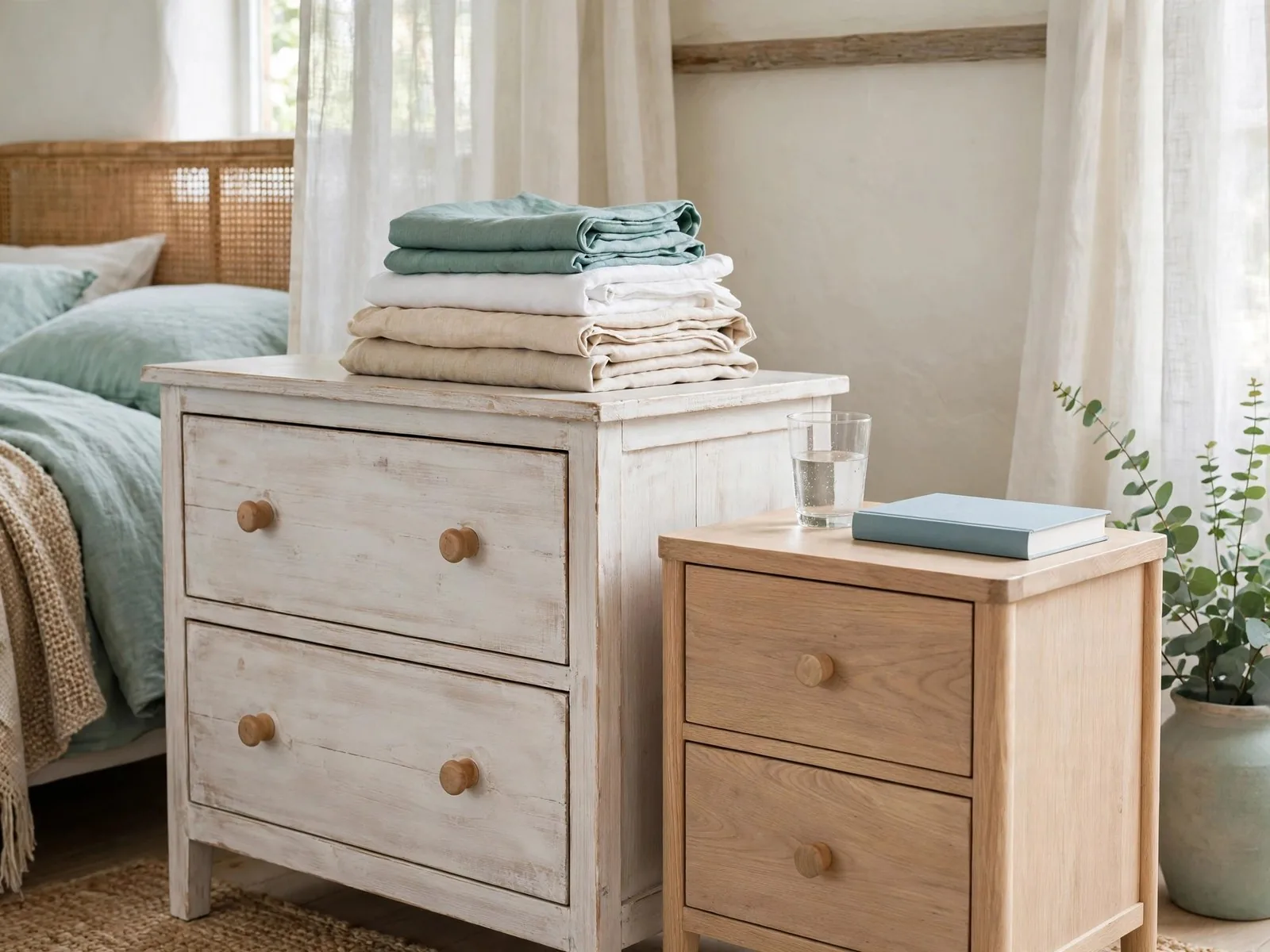
The trap is the matched coastal set, where bed, dresser and nightstands wear an identical factory-distressed finish. Real weather never repeats in unison. One genuinely old piece, bought for its worn edges, beats three new pieces pretending.
Budget: one secondhand solid wood piece at $50 to $150 anchors the tone family better than any new matched set.
9. Light it like late afternoon
Woven shades do the lighting in this style: a rattan pendant overhead or cane and seagrass shades on the bedside lamps. They pattern the light into soft dapples and they put a lead material up at eye level where it gets noticed. Fit warm bulbs at 2700K, because the light this style imitates is late afternoon sun, bright but golden. The full layering method sits in our bedroom lighting ideas post.
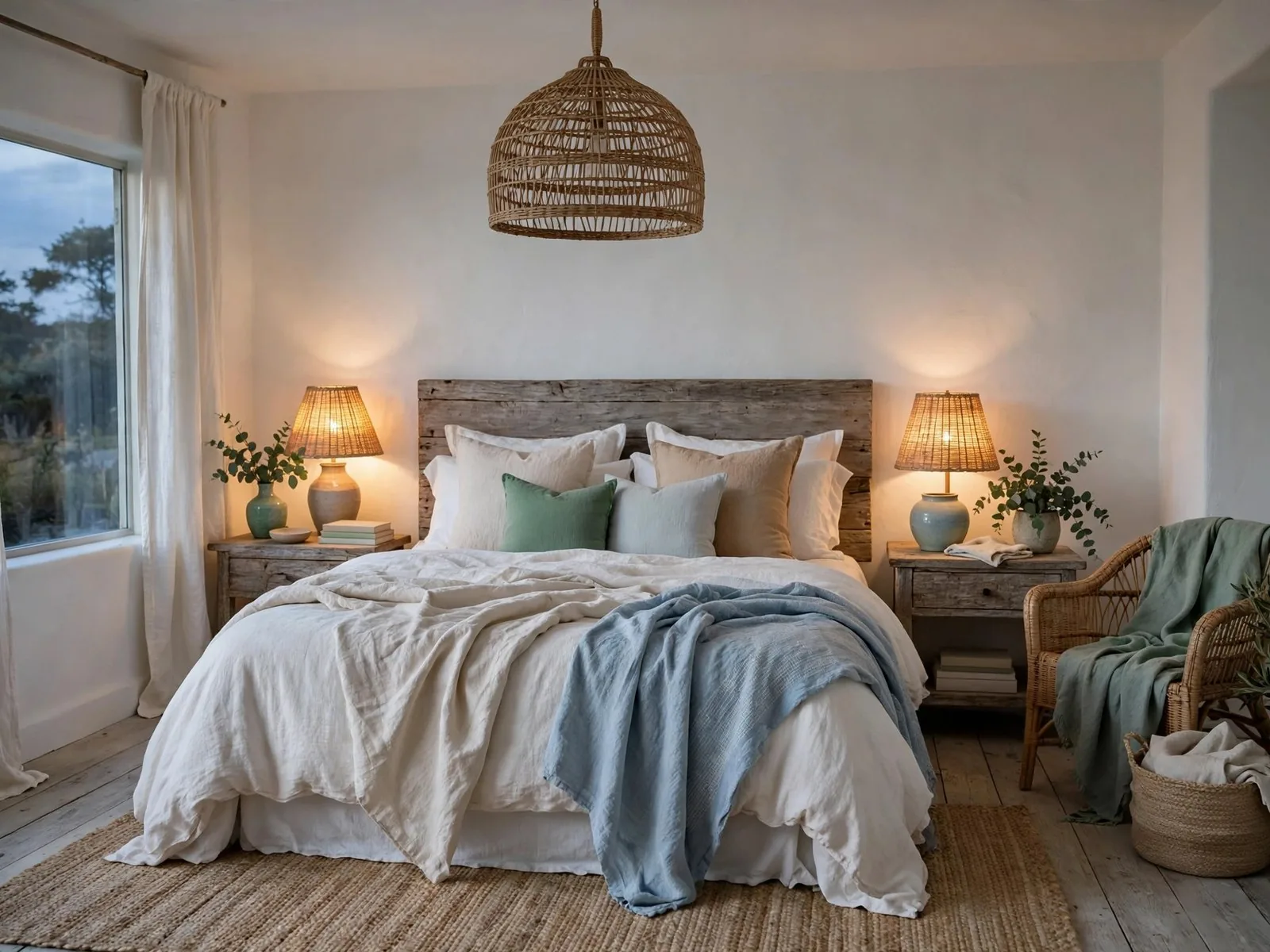
Keep the ceiling light for cleaning and suitcase packing only. A coastal room lit from one cold overhead bulb loses its palette every evening, whatever the textiles did all day.
Measure: bedside lamps should stand 25 to 28 inches tall on the nightstand, which puts the shade at eye level when you sit up in bed.
10. Style the surfaces with baskets and one ceramic piece
Storage in this style is woven and visible: a lidded seagrass basket swallows the chargers and clutter and an open basket by the bed holds the throws. The basket system is spelled out in our small bedroom storage ideas post. On each surface, allow one deliberate object beside the storage: a ceramic vase, a sea glass bowl, a stack of two books.
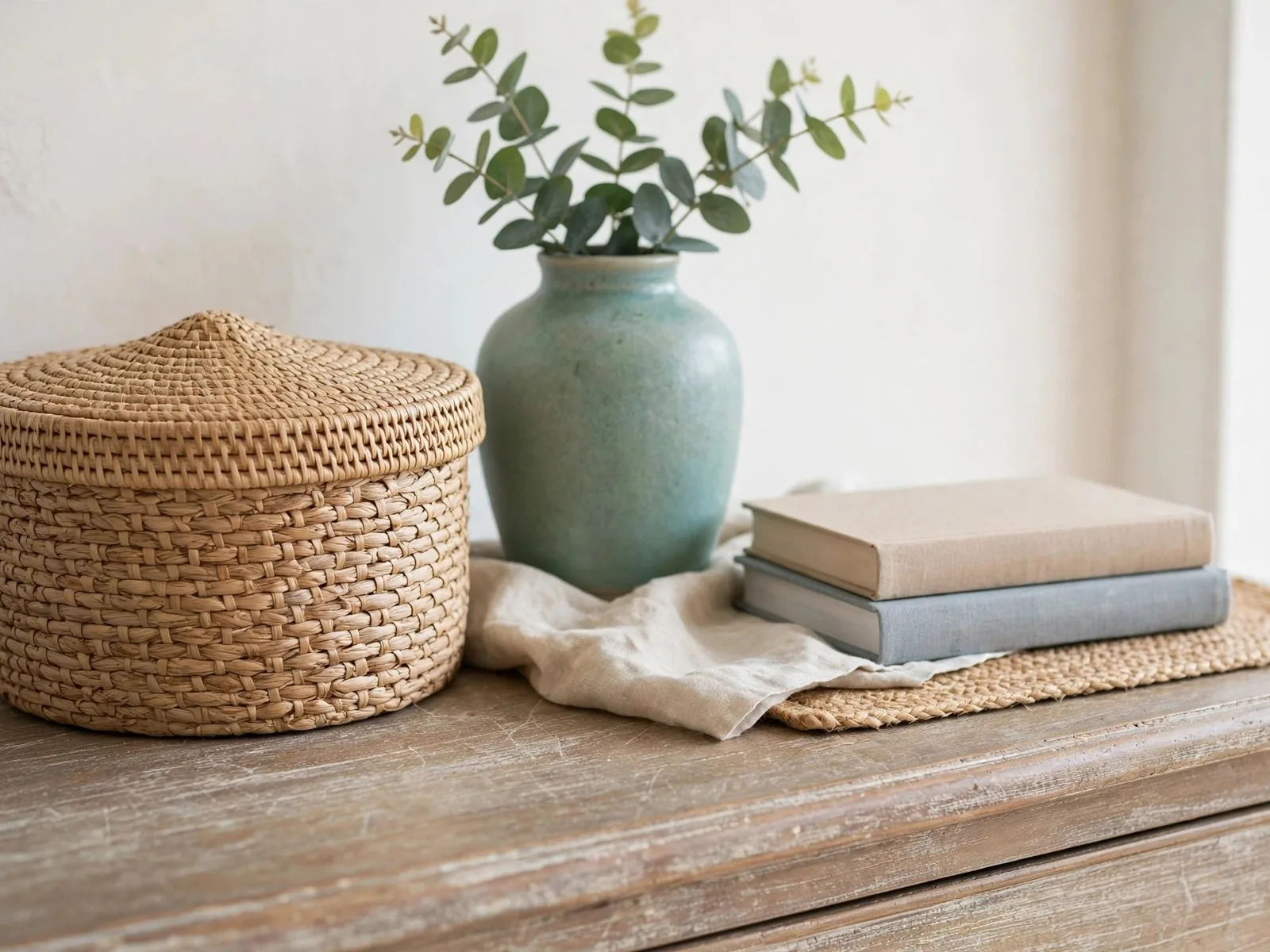
The edit rule is three things per surface, storage included. Past three, a surface stops looking styled and starts looking like a counter where objects wait for a home.
Budget: $8 to $25 per basket. Two lidded baskets and one open basket run most bedrooms.
Color and textile combinations that hold the style
11. Run the classic combination: warm white, sand and soft blue
This is the coastal bedroom decor scheme behind most saved photos, written as a textile recipe. Walls and bedding in warm white. Rug, wood and one oatmeal throw in sand. Soft blue in exactly three textiles: a throw, two cushion covers and one folded blanket at the foot of the bed. The blue lives only in washable layers, so it can leave the room in one laundry load.
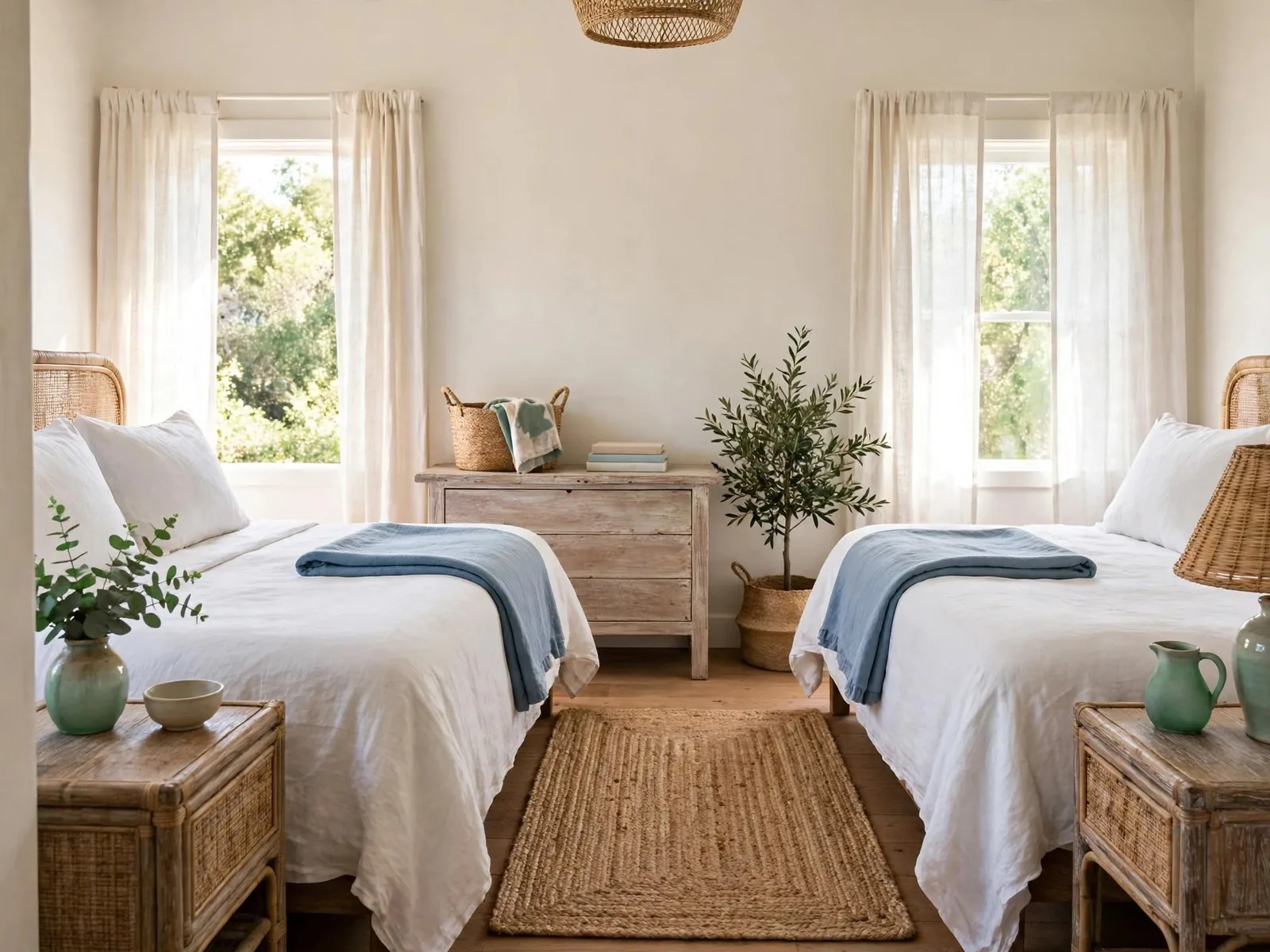
The scheme survives trends because its bones are neutral. Swap the blue textiles for sea glass green next year and nothing else has to move. Blue in paint or furniture is a commitment; blue in textiles is a mood.
Budget: the blue layer is three textile pieces at $40 to $90 total. It is the only part of this scheme that ever needs replacing.
12. Try the cottage combination: cream, faded floral and weathered wood
French country and cottage bedroom ideas meet coastal here. The base goes cream instead of white. One faded floral, on the duvet cover or a single curtain panel, does the pattern work for the whole room. Weathered wood carries the furniture and the sea color shrinks to a single sea glass bottle or bowl on the dresser.
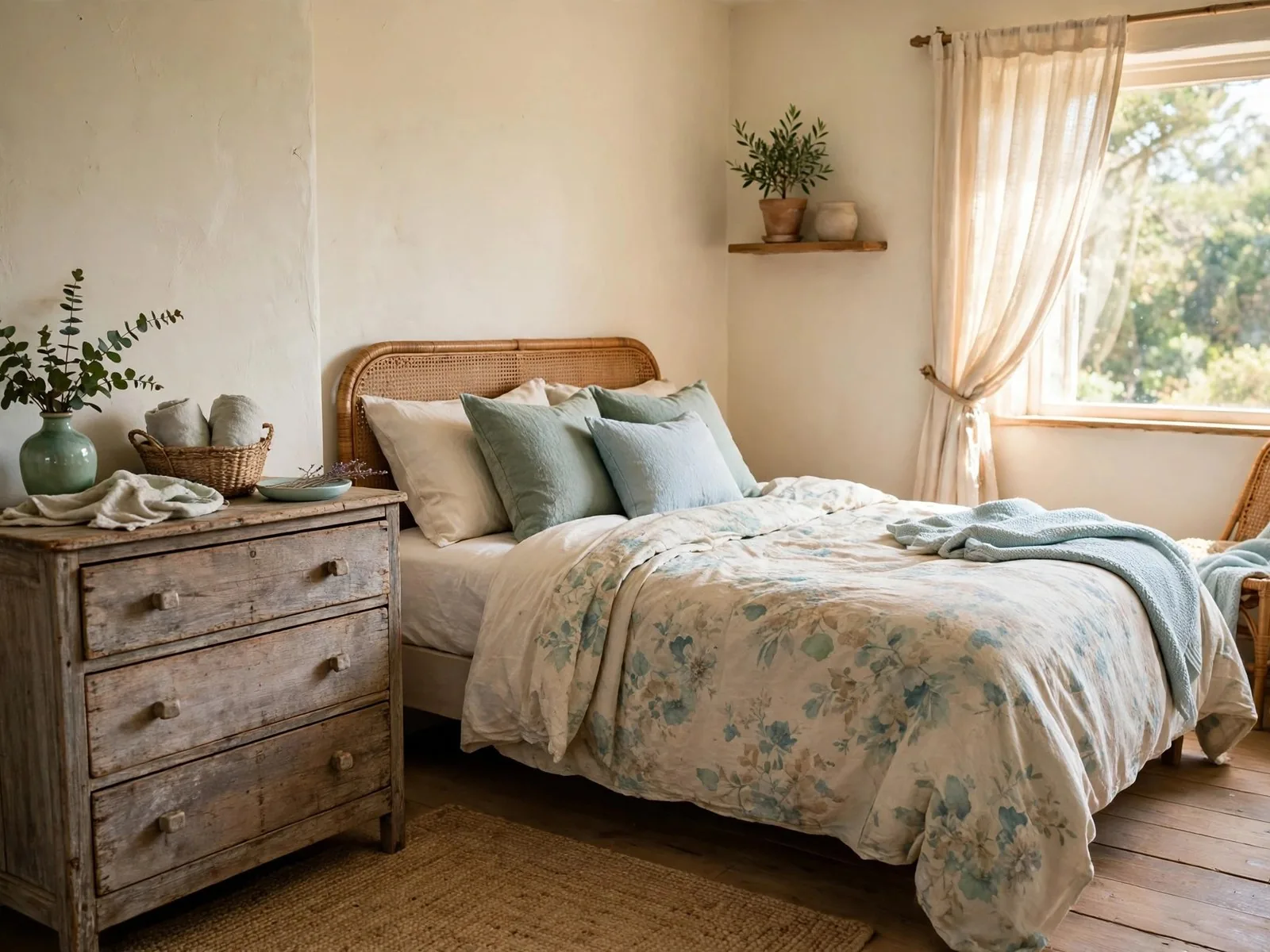
This is the version that welcomes inherited furniture, which is why vintage bedroom ideas searches keep landing on it. A grandmother’s dresser looks intentional here instead of apologetic. Keep every other textile plain, because the floral is spending the room’s whole pattern allowance.
Measure: keep the floral to one large piece and one small echo, a cushion or a folded throw, so the pattern reads as a family and not a field.
Getting the look for less
The two buys below replace the two signature purchases from idea 3, for readers whose budget runs thrift-first.
13. Thrift the rattan headboard instead of buying it new
Rattan headboards flood secondhand shops and marketplace listings, because the style cycles every decade or so and each cycle leaves furniture behind. Check three things before you pay: press the cane gently, where a little give is fine and a crackle is not; wiggle the frame joints; and smell the piece, because smoke does not wash out of cane.
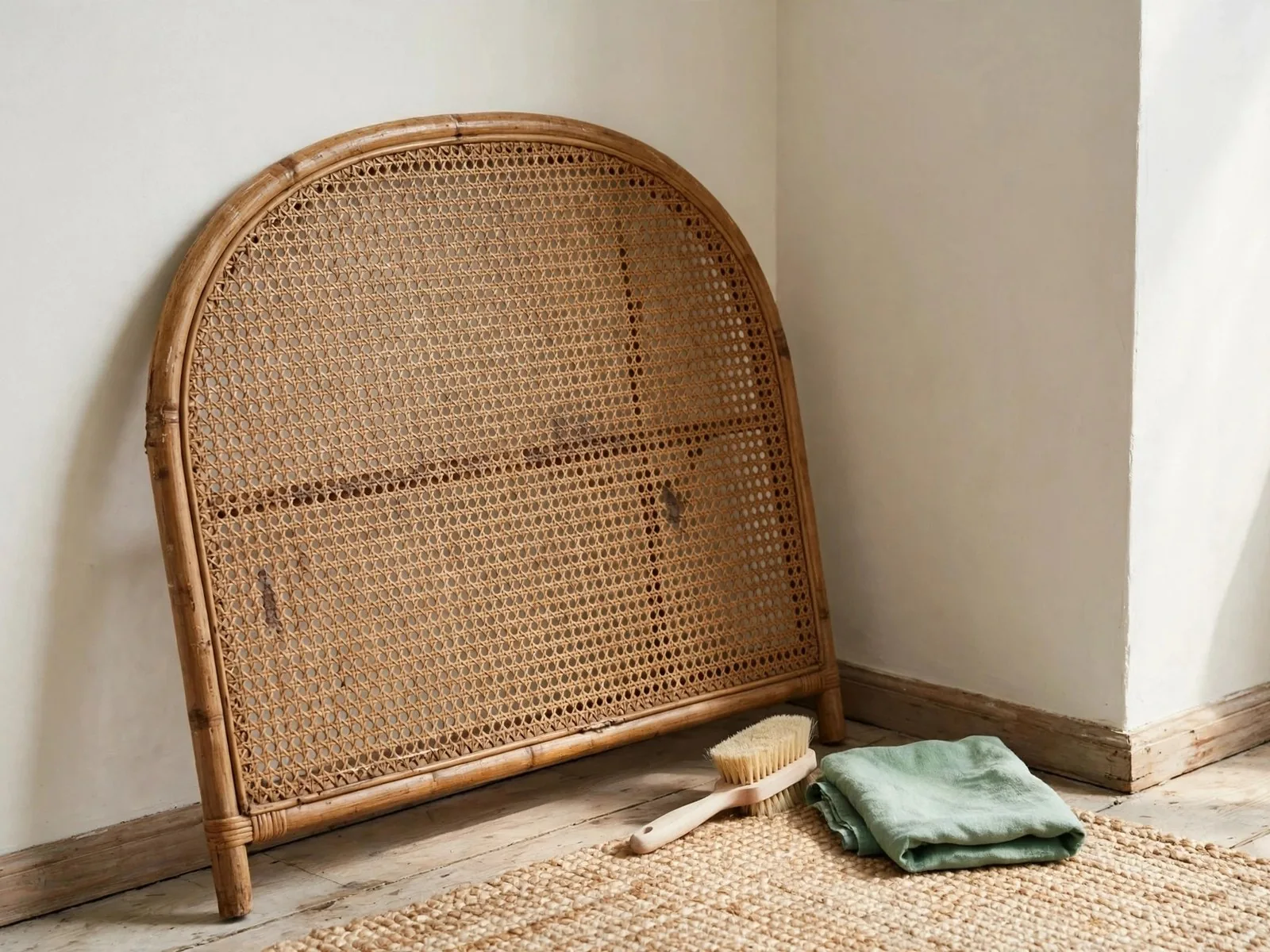
Cleaning is gentle work: vacuum with the brush attachment, wipe with a barely damp cloth and dry the piece in moving air. This is the brief’s budget entry in its purest form, the signature piece of the whole style at a thrift price.
Budget: $30 to $120 secondhand against $250 to $500 new. This is the style’s single best thrift buy.
14. Whitewash a dresser you already own
The DIY route to weathered wood: thin matte warm white paint at one part paint to one part water, brush it on with the grain and wipe back with a rag while it is still wet, so the wood shows through in streaks. Test on one drawer front first. Two thin coats is the ceiling; a third turns whitewash into paint.
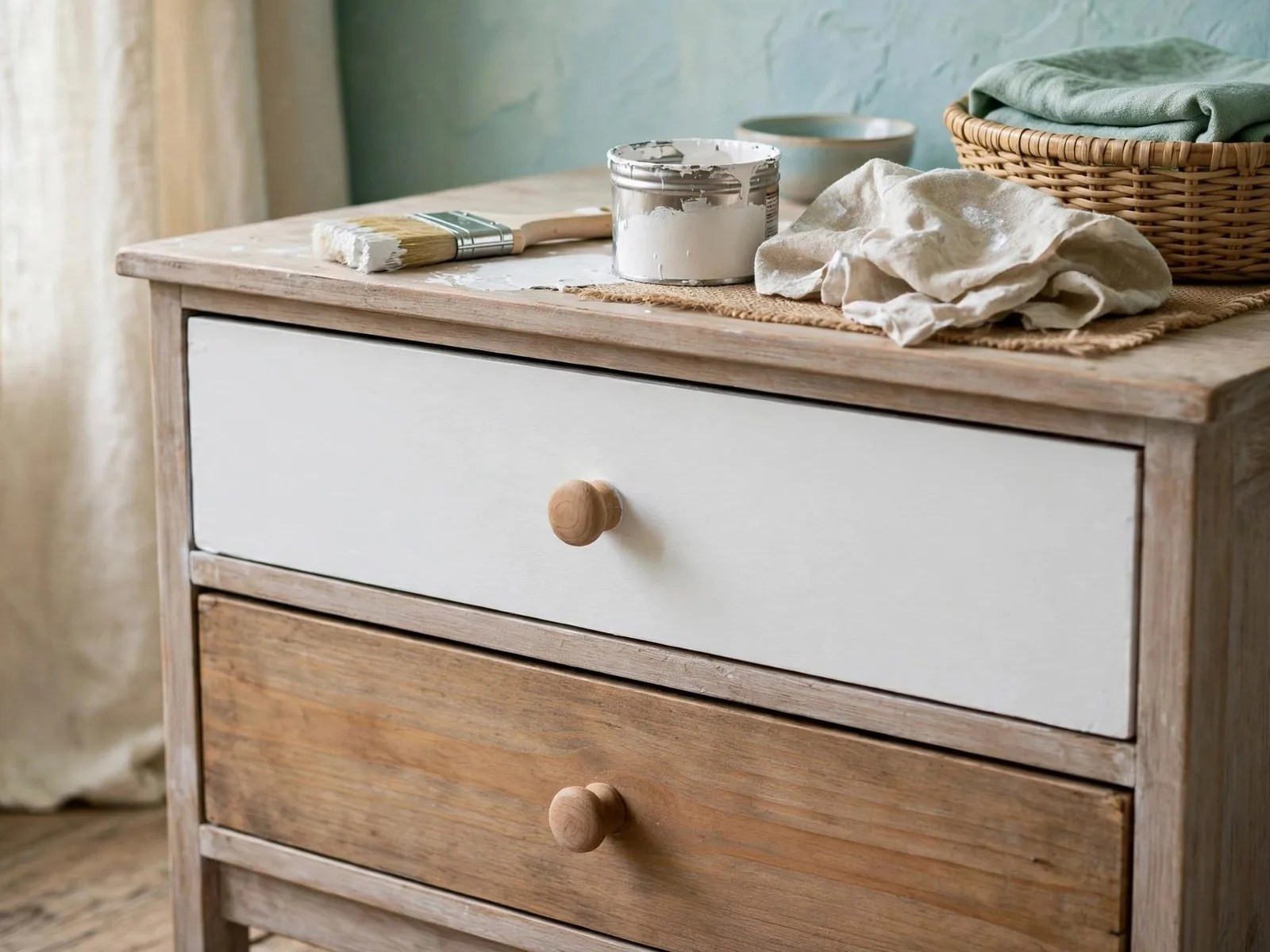
It works on solid wood and on veneer in sound shape. Skip flaking veneer, because the wipe-back step lifts loose edges. The finish will not match a factory piece and that unevenness is exactly what reads as weather.
Budget: $15 to $30 for a quart of paint and brushes. One dresser takes one afternoon, most of it drying time.
Coastal Bedroom Ideas on a budget
First $50: a white cotton duvet cover and one soft blue throw. The bed is most of what a doorway view contains, so the bed is where the style gets bought first. Next $75: sheer linen-look panels for the window, on a tension rod if you rent. Light changes how every color in the room reads. Next $150: the thrifted rattan headboard or an 8 by 10 jute rug, whichever your room lacks more.
Small rooms run this style easily, because the palette is light and the furniture contrast stays low; our small bedroom ideas post has the layouts that fit the rug and curtain rules into tight footprints. At master suite scale the formula does not change, only the numbers grow. Our master bedroom ideas post shows the bigger room layouts.
Mistakes that make it fall flat
- Theme props. Anchor prints, rope-wrapped lamps and driftwood signs painted with beach words. This is the element that breaks the style: it swaps real materials for pictures of materials. Spend the same money on one woven piece and the room calms down immediately.
- A cold palette. Blue gray walls, navy bedding and chrome lamps read as a serviced apartment, not a shore house. The coastal palette is sun-warmed from end to end. If a color would look at home in an office, it fails here.
- The matched distressed set. Bed, dresser and nightstands in one identical faux-weathered finish. Real weather never repeats in unison and the repetition is what the eye catches. Mix pieces inside one tone family instead.
- Blocking the light. Heavy blackout drapes drawn through the day in a style that runs on brightness. Use sheers for the day and a simple blackout roller behind them for sleep if you need one.
- Shell clutter. One shell on a dresser is a souvenir. Eleven shells and two starfish are a gift shop. One natural object per surface is the dose that keeps the room adult.
Questions people ask about this
What defines this style in a bedroom?
Materials and light, not motifs. A coastal bedroom runs on rattan, washed linen, weathered wood and jute, in warm white, sand, sea glass and soft blue. The bed wears plain white linen, the floor wears a natural fiber rug and nothing in the room pictures the beach literally.
How can I get this look on a budget?
Start with the bed and the windows, because they carry the style furthest per dollar. A white cotton duvet cover, one soft blue throw and sheer linen curtains cost under $150 together and change the room’s whole read. Thrift the rattan headboard after that and skip every themed accessory.
What colors go with this style?
Warm white leads, then sand, sea glass green and soft blue in roughly that order of size. Weathered wood and jute count as colors here, because they cover so much of the room. Keep navy to one small accent at most; a blue gray palette turns the room cold.
The bottom line
Coastal done well is a discipline, not a shopping list: rattan, linen, weathered wood and jute, in warm white, sand, sea glass and soft blue, with the theme props left at the shop. Most rooms are closer than they look, because the palette’s lead color is probably already on the walls. This week, stand in your doorway, count how many of the four materials you can see and let the missing one be your only purchase.