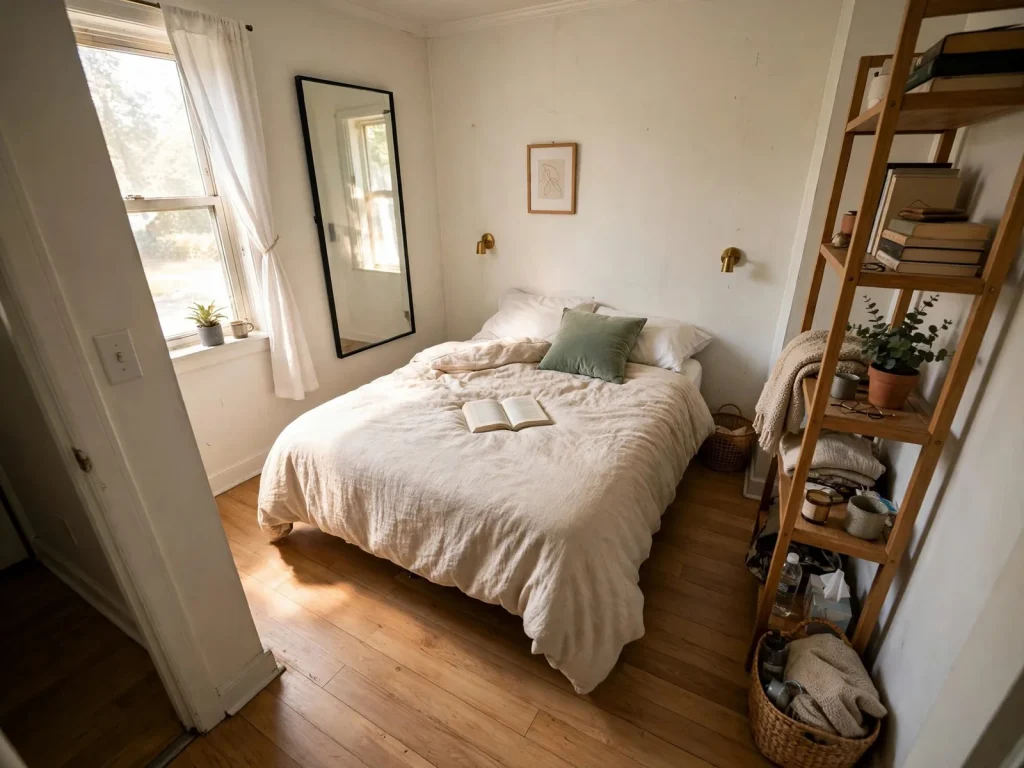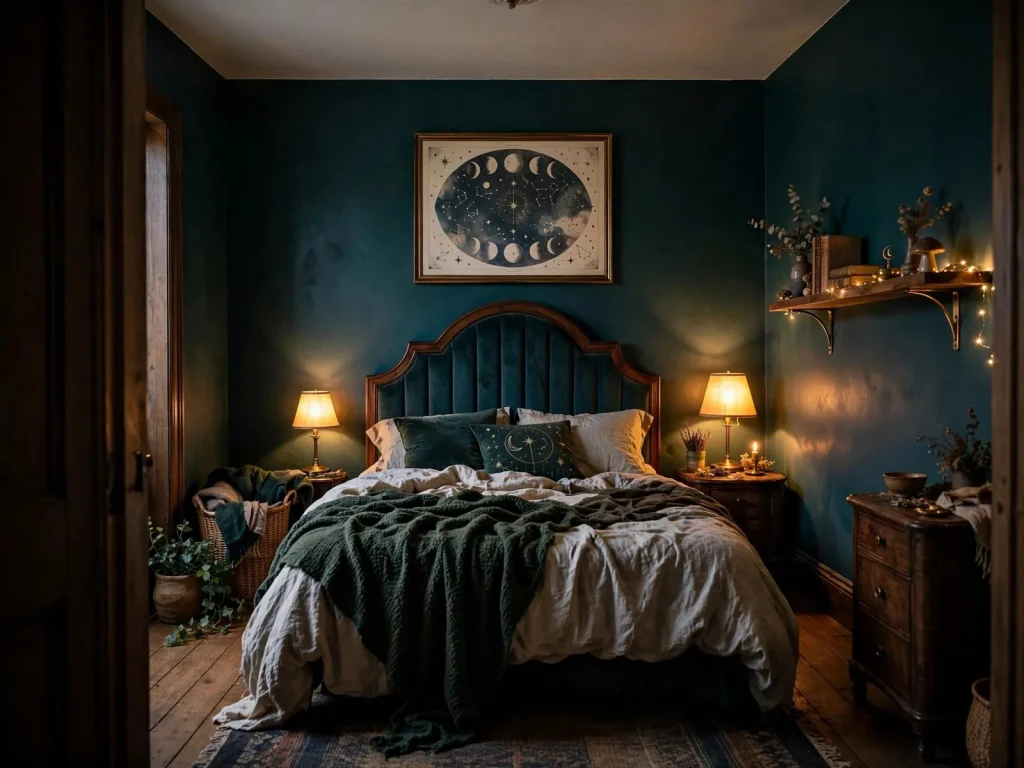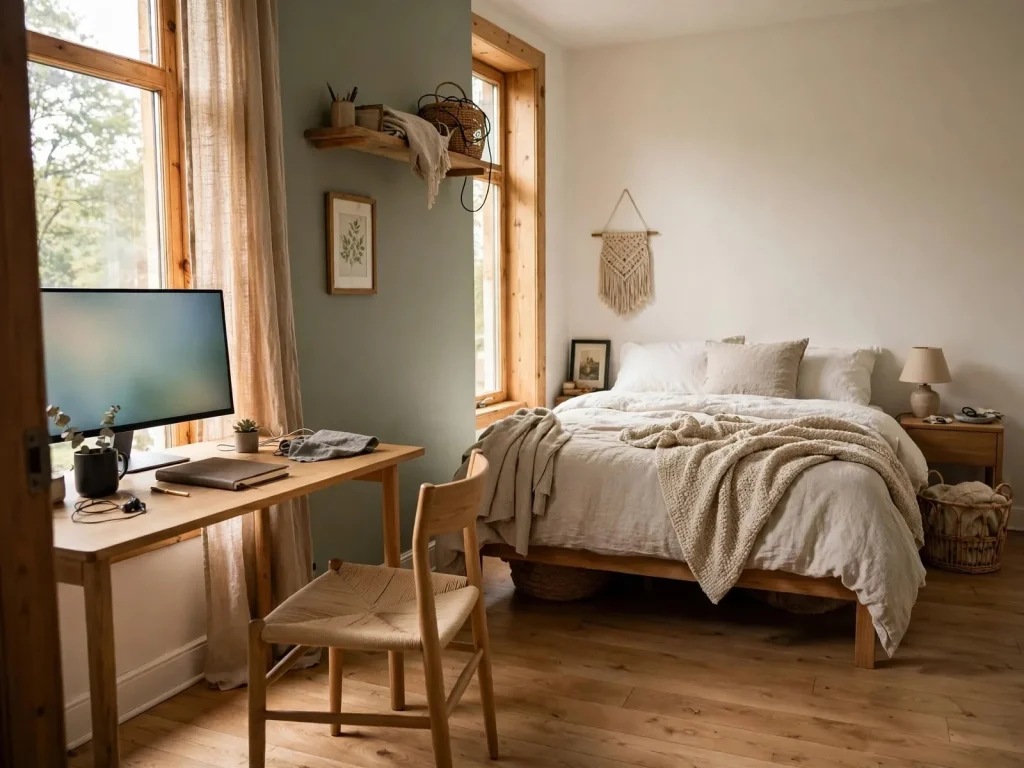
The photos stop you mid-scroll. One shade over the walls, the trim and the ceiling and the room looks calm and bold at the same time, like a deep breath in color form. Then the doubt arrives: your room is smaller than that room, your window faces the wrong way and your ceiling is not twelve feet high. Serene or cave. You cannot tell and paint is an expensive way to find out.
These color drenched bedroom ideas replace the guessing with the rules the trend photos never print. The full surface list the shade must cover, the sheen ladder that keeps one color reading as layers, the light value floor for small and north-facing rooms and the swatch test that settles the question before two gallons are bought. Color drenching bedroom ideas are having a moment; the version with numbers is the one that survives contact with a real bedroom. The full shade families and their pairings live in our bedroom color ideas post.
Before you start: measure, budget, rules
Measure three things. The room’s floor area in square feet, because the light value rule in idea 2 turns on the 100 square foot line. The window count and direction, because a single small or north-facing window tightens the same rule. And the full surface list in idea 5, wall by wall, so the paint order in the rough cost notes matches the room you actually have.
The rough cost notes here are paint-led. A drenched room drinks more paint than a standard one because the ceiling, trim and doors join the order and deep shades need two coats over primer on pale existing walls. Budget for the ceiling’s gallon and the trim’s smaller can from the start and the project stops surprising you at the register.
Renters, honesty first: a true drench is a landlord conversation, not a weekend surprise. Where permission covers one wall only, this page names that a partial drench and treats it as its own legitimate choice in idea 4, with the accent route linked there. Everything about testing and sheen still applies to the partial version.
Picking the one shade
1. Test with a big swatch on two walls, in two coats
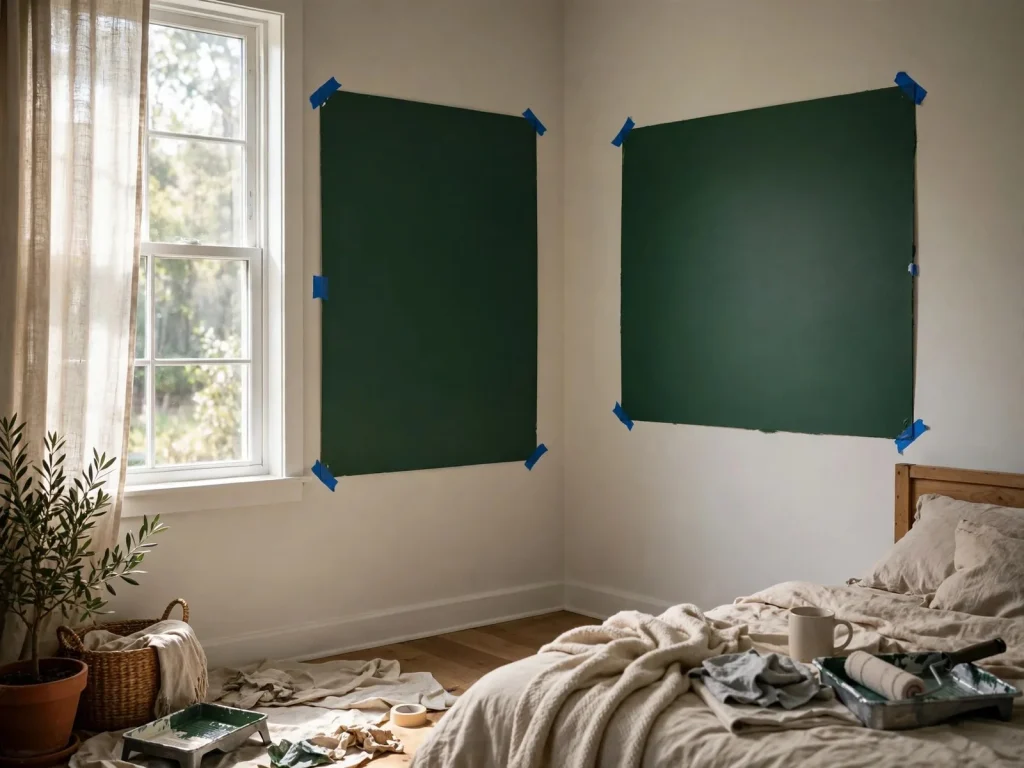
A drenching shade is the only color in the room, so its test has to be more serious than a paint chip held at arm’s length. Paint a swatch at least 12 by 12 inches on 2 different walls and give the swatch 2 full coats, because one coat reads lighter than the finished wall and will lie to you in the optimistic direction.
Check the pair at three times: morning light, midday light and lamplight after dark. Two walls matter because the wall beside the window and the wall opposite it live in different light and a shade that passes on one can sulk on the other. You are not choosing a color in this test. You are choosing the room’s entire weather.
The catch is scale temptation. A brave shade that sings at 12 inches can shout at 400 square feet of wall. Live with the swatches for two full days, including one evening in the room doing nothing but reading, before the gallons are ordered.
Measure: swatches at least 12 by 12 inches on 2 walls, in 2 coats, judged in morning, midday and lamplight across 2 days.
2. In a small or dim room, hold the shade above LRV 25
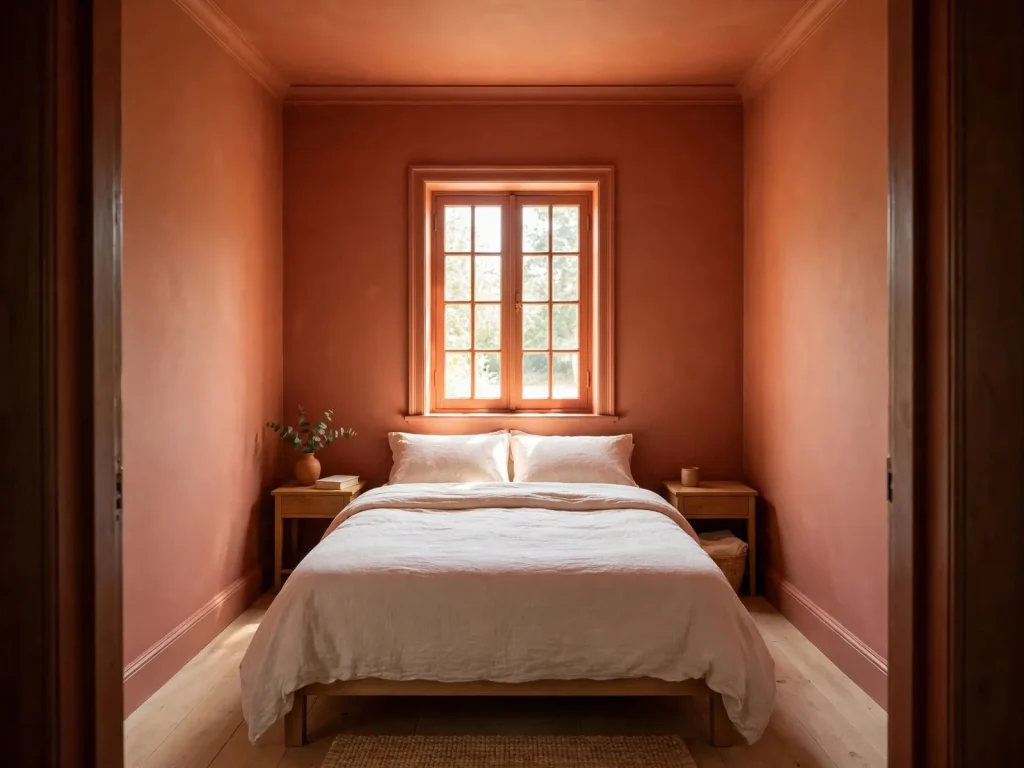
Light reflectance value is the number printed on the paint chip that predicts a cave. In a room under 100 square feet or a room with a single small window, choose a shade with a light reflectance value above 25. Above that line, a drenched room has enough reflected light bouncing between its same-colored walls to stay serene. Below it, small rooms start eating their own light.
LRV is not a taste score. A deep forest at LRV 8 can be glorious in a large bright room and a mistake in a nine by ten with one north window. The rule lets you keep the shade family you love and move up it, from the deepest tone to its mid sibling, until the number clears the floor.
The catch is that LRV hides on the chip. It sits in the small print on the back or the maker’s listing, stated as a plain number. Ask for it before the swatch stage, so the testing in idea 1 only ever involves shades that were allowed to win.
Measure: in rooms under 100 square feet or with one small window, the shade’s light reflectance value stays above 25.
3. Plan the second light source before a deeper shade
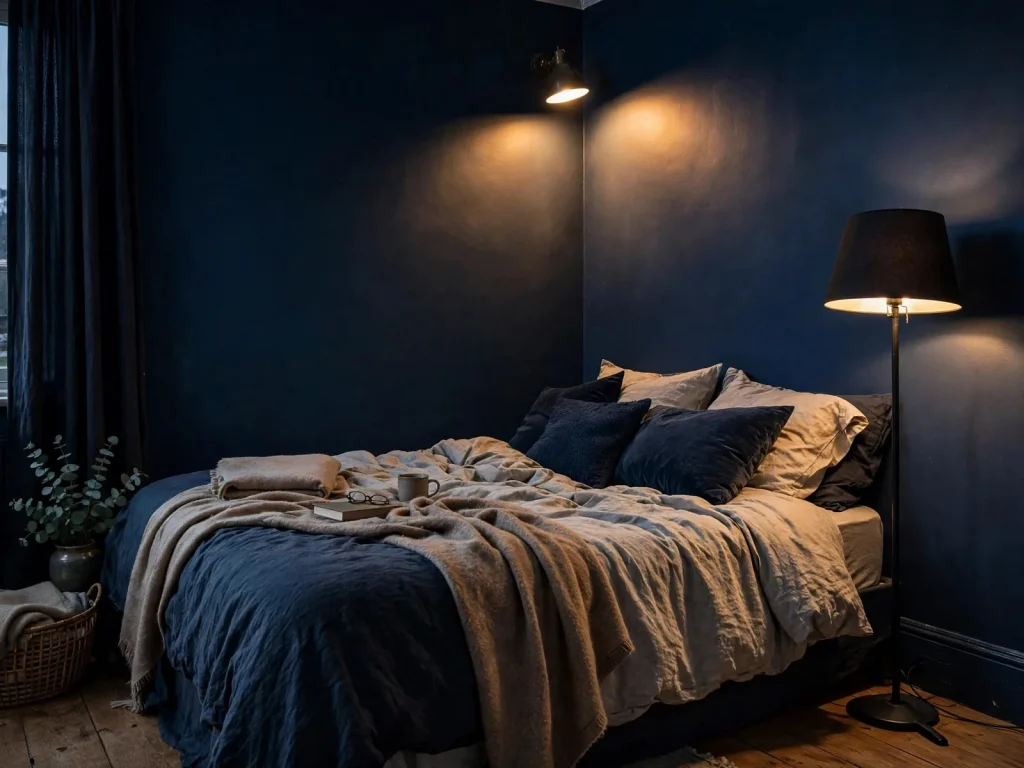
Deep shades below the LRV line are not banned. They are conditional. A shade under LRV 25 in a small or dim room needs a second light source planned before painting, because a single shade absorbs contrast and the room’s one window or one ceiling light cannot restore it alone.
Plan means placed and wired, not imagined. Know which corner takes the floor lamp or which wall takes the sconce pair and know it while the paint decision is still reversible. Light added after a dark drench often lands wherever an outlet happens to be, which is rarely where the shade needs it.
The catch is sequence pride. Painters like to finish the color and then decorate, but in a drenched room the light plan is part of the color decision. Decide them in the same week and the deep shade becomes a choice instead of an accident you explain to guests.
Measure: any shade below LRV 25 in a small or dim room gets at least 1 extra planned light source before the first coat.
4. Decide honestly between a full drench and a partial one
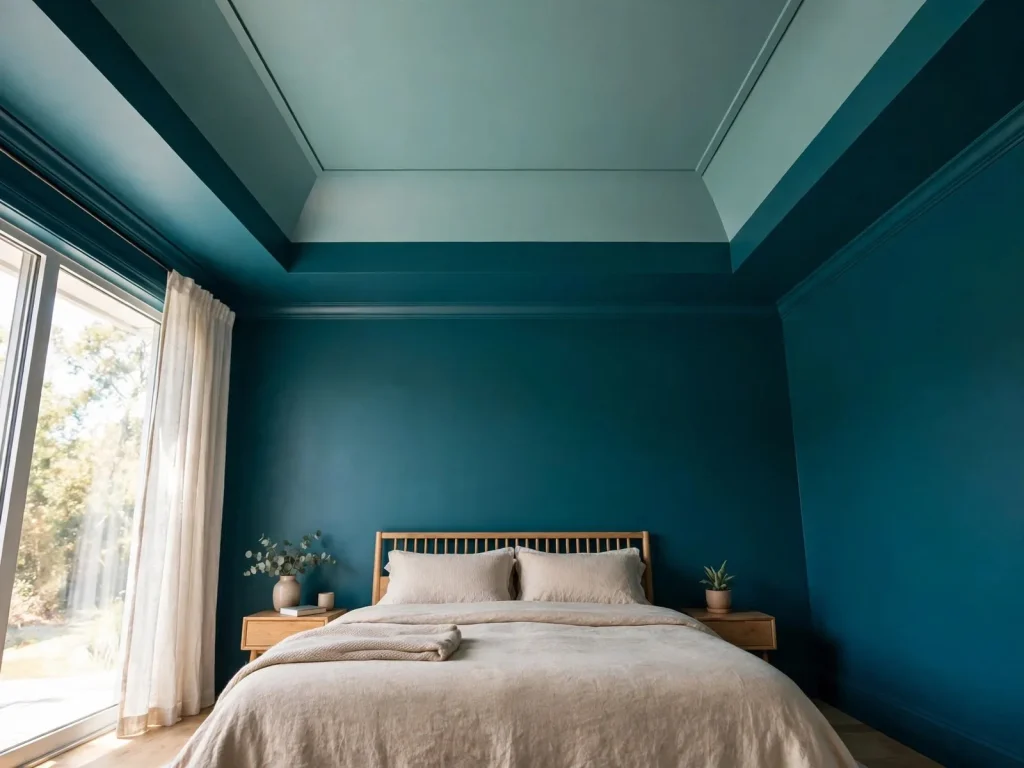
Names keep this trend honest. A drench that stops at the ceiling line or leaves the trim white is a partial drench. There is no shame in it; some rooms and some leases end exactly there and a partial drench done deliberately looks intentional. What fails is the accidental partial, where the ceiling stayed white because nobody decided anything.
Decide by the room’s proportions and your permission, in that order. High ceilings take the full wrap gracefully. Low ceilings in small rooms sometimes read better with the ceiling held a step lighter within the same shade family, which is a designed partial, stated here so it can be chosen rather than drifted into.
If one wall is genuinely all your room or your lease allows, that is the accent wall decision and it deserves its own planning rather than a quarter of this one. Our bedroom accent wall ideas post weighs one wall on its own terms.
Measure: name the version before painting, full drench over every surface or partial drench by design and buy paint for the version you named.
Walls, trim and ceiling in the same shade
5. Cover the full surface list in the one shade
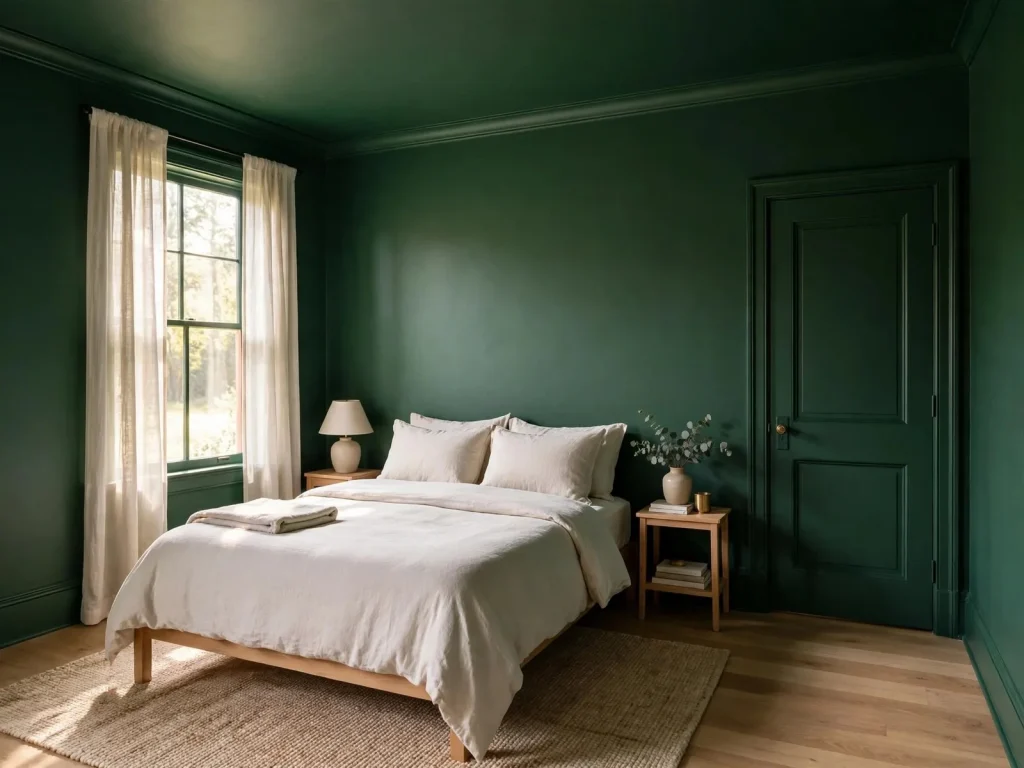
Here is the definition this page works to: the same shade covers the walls, the trim, the baseboards, the doors and the ceiling. Five surfaces, one color. Each surface left out is a white outline drawing the room’s edges back in and the calm the trend promises leaks out through exactly those outlines.
Work the list room by room with a pencil before ordering. Doors get missed most often, because they stand open during painting and present their unpainted faces afterward. Baseboards get missed second, hidden behind furniture on painting day and visible forever after.
The catch is hardware and vents. Door handles, hinges and vent covers are not on the list and painting them by enthusiasm creates the overdone look people blame on the trend. The list is surfaces, not everything vertical.
Measure: 5 surfaces in the one shade, walls, trim, baseboards, doors and ceiling, checked off room by room before ordering.
6. Climb the sheen ladder, one step per surface
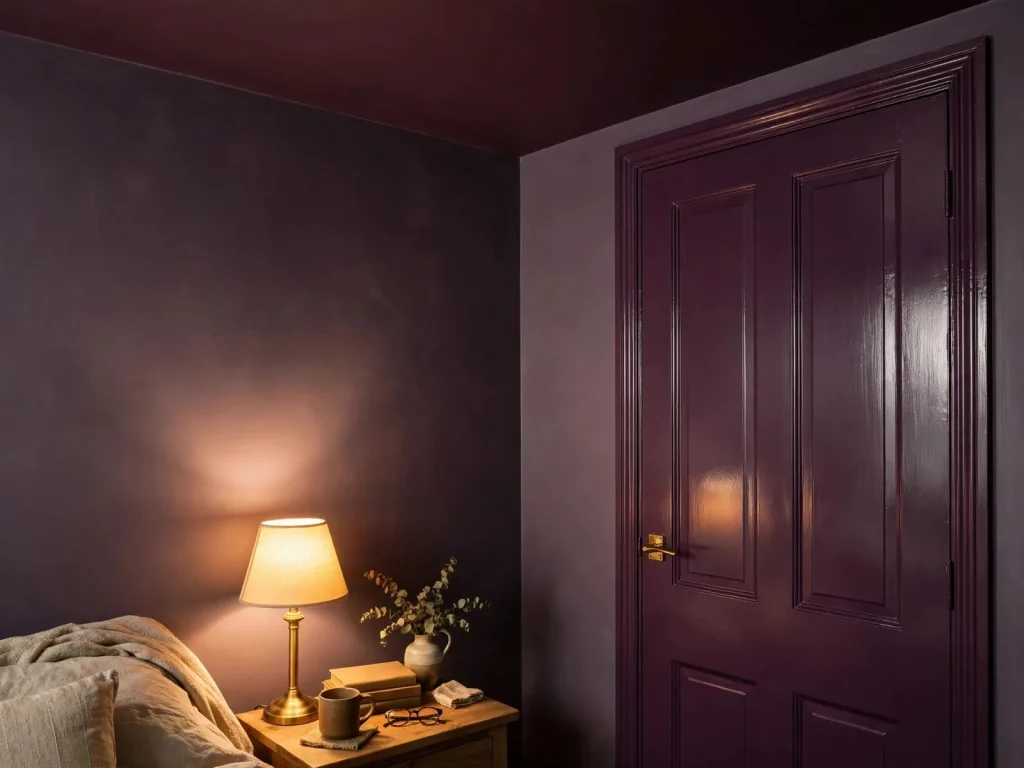
One shade in one sheen reads as a flat block and flat is where the cave fear comes from. The ladder fixes it: flat or matte on the ceiling, eggshell on the walls and satin on the trim and doors. One sheen step up per surface, so light moves differently across each plane and the single color reads as layers of itself.
The ladder also respects how surfaces live. Ceilings take no contact and can stay matte. Walls take bags, hands and furniture rubs and need eggshell’s washability. Trim and doors take the most touching and earn satin’s harder, slightly glossier skin, which also makes them read as the room’s fine detail.
The catch is skipping a rung. Satin walls under a matte ceiling invert the ladder and spotlight every wall flaw at lamp height. Buy the three sheens in the same shade on the same day from the same maker and the color match across finishes stays honest.
Measure: flat or matte ceiling, eggshell walls and satin trim and doors, one sheen step up per surface, all in the one shade.
7. Take the shade over the ceiling
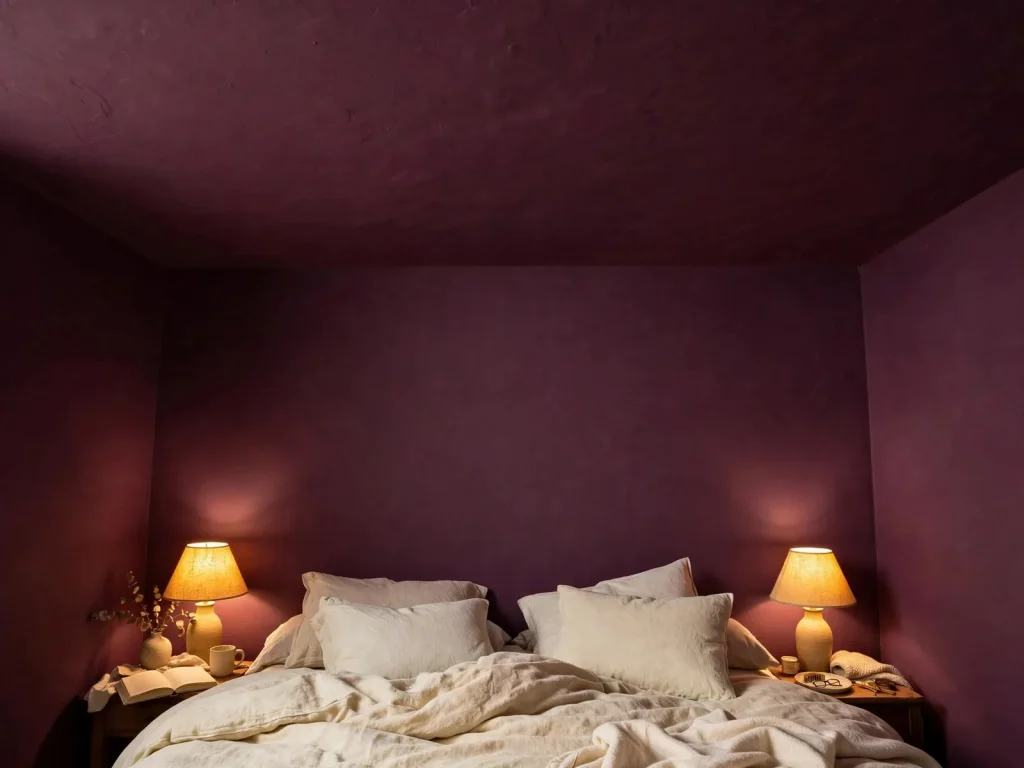
The painted ceiling bedroom is where most drench attempts quietly quit and it is the surface that decides whether the wrap reads as a room or as four decorated walls under a white lid. Run the same shade over the ceiling in the flat sheen from idea 6 and the room’s corners soften, because the eye stops finding the ceiling line altogether.
Expect the ceiling to read deeper than the walls. Overhead planes get less light, so the same shade presents a tone darker up top, which is the desired effect in a drench: a gentle gradient the room makes by itself. This is why the ceiling takes the flattest sheen, to keep its deeper read soft rather than glossy.
The catch is ceiling condition. A drenched ceiling shows cracks and seams the white ceiling forgave, since color and lamplight rake across it. Fill and sand before the first coat or the ceiling will draw the eye for the wrong reasons.
Needs drilling: none for the paint itself, but allow a full day for ceiling prep and two coats overhead. The deeper read up top is the point, not a mismatch.
8. Bring the radiator and the built-ins into the shade
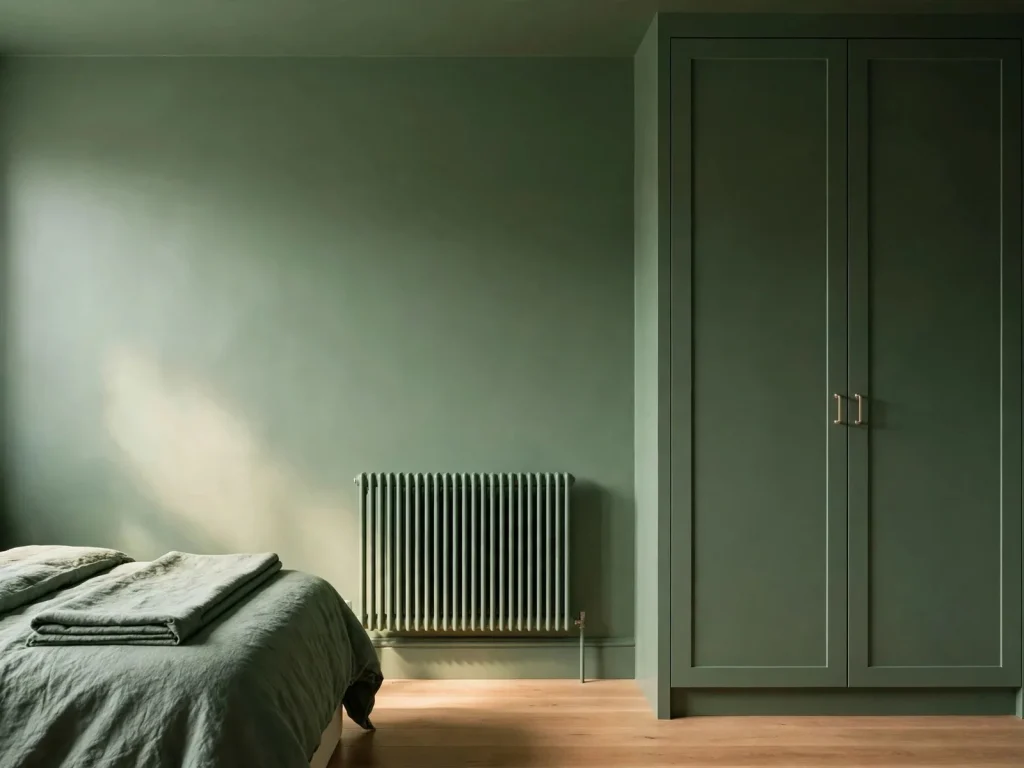
A white radiator in a drenched room is a billboard. Where a radiator exists, it joins the shade family in a heat-rated paint in the satin step, so it settles into the wall it stands against. Built-in wardrobes, window seats and shelving join as well, doors and frames in the trim’s satin and interiors left pale if they hold clothes or books you need to see.
This is where the drench either commits or confesses. A built-in left white announces that the room’s owner painted the easy surfaces and stopped and the eye believes the confession over the intention every time.
The catch is heat and use. Radiator paint must be rated for the temperature and built-in interiors that store white linens or paperwork stay pale for visibility. The rule covers faces and frames, the surfaces the room sees, not the inside of every drawer.
Budget: radiator and built-in faces join the existing paint order in the satin step. One extra quart covers a typical radiator and a built-in’s frame.
Furniture and textiles that join the drench
9. Keep the bedding pale and undrenched
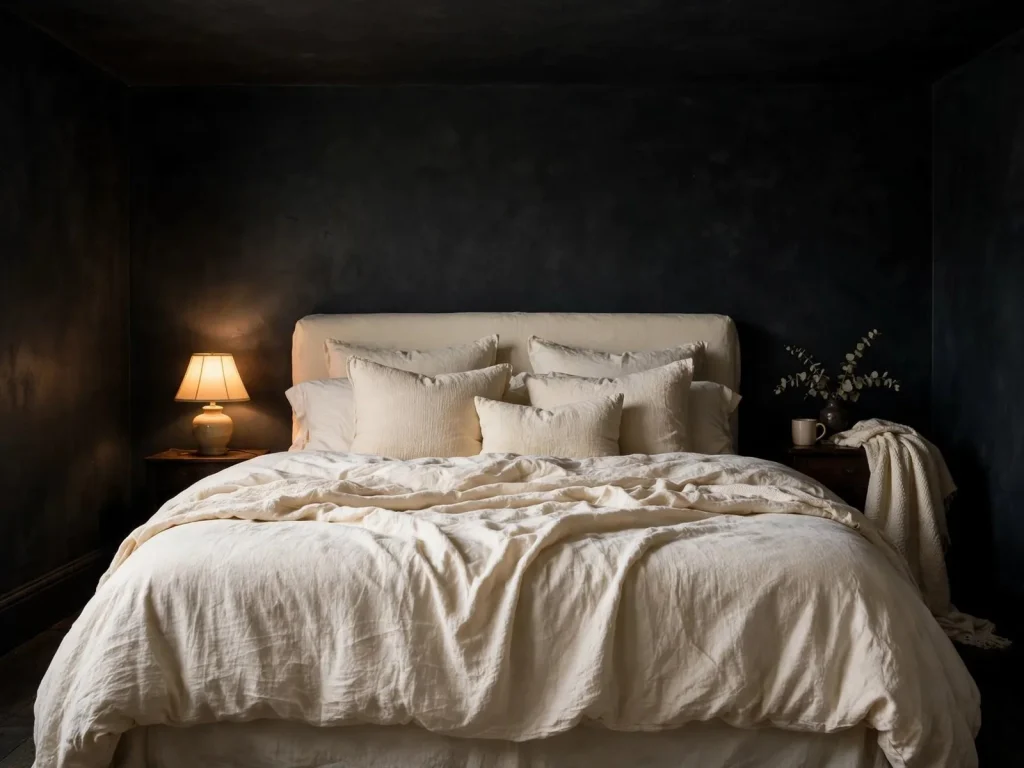
Every drench keeps one exemption and it is the bed. The bedding stays undrenched in a pale neutral, warm white or soft cream, so the bed remains the room’s focal point floating in the shade. Against deep walls and a same-shade ceiling, pale bedding is the contrast the whole composition leans on.
This is a rule, not a leftover. Readers who drench the bedding too discover the room has no resting place for the eye and the serene photos they saved all share this single pale island whether the captions mention it or not. Sheets, duvet and the main pillows stay in the pale family; the throw may flirt with the shade.
The catch is undertone agreement. The pale bedding should lean the same warm or cool way as the shade or the island reads as an intruder from another room. Judge the bedding fabric against the dried swatch from idea 1, in lamplight, before the set is bought.
Measure: bedding held in the pale neutral family as the room’s 1 exemption, with its undertone checked against the dried wall swatch.
10. Paint one furniture piece into the family or let it leave
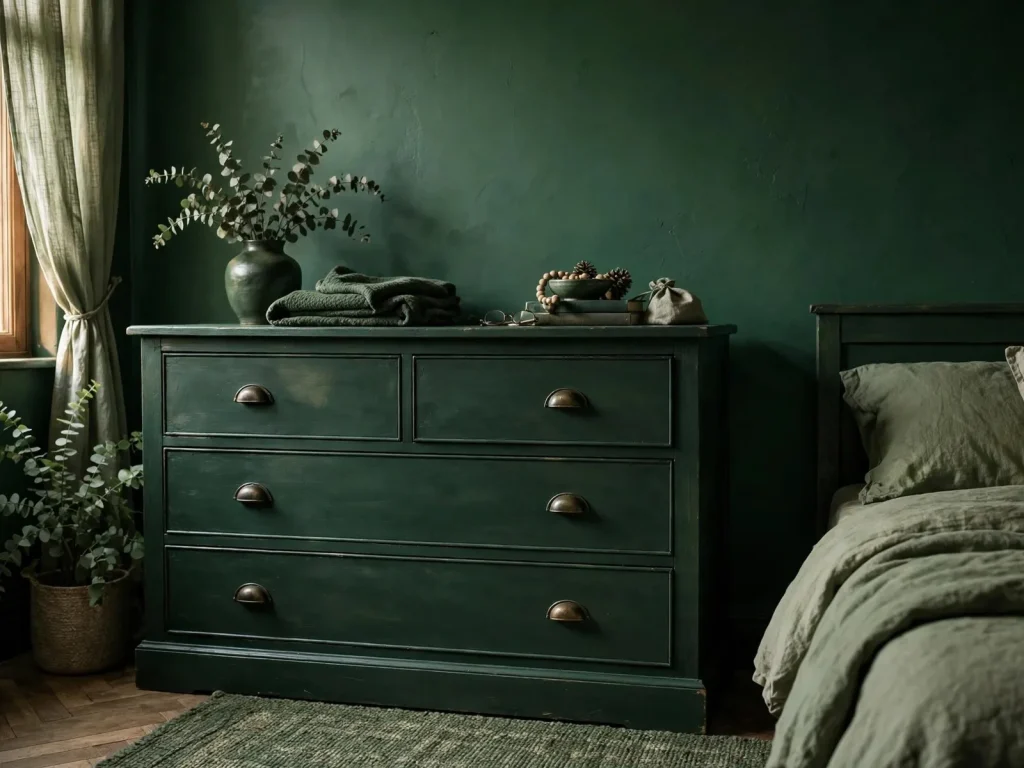
Furniture in a drenched room has two honest options: join the shade family or leave. A dresser painted in the room’s shade, a step deeper or lighter within the family, settles into the wall and adds storage that visually disappears. Furniture in a rival tone, a warm oak piece in a cool green drench, stands in the middle of the room arguing, forever.
Start with the largest piece. The dresser or wardrobe carries the decision; small pieces can stay as texture. Painting the big piece in satin a half step deeper than the walls gives the room a shadow of itself, depth without a second color.
The catch is heirlooms and honest wood. A piece with real grain and real history should leave rather than be painted to match a trend cycle. The rule protects the room’s calm, not the shade’s ego and a good piece in another room beats a ruined one in this one.
Budget: one large piece painted into the family in a quart of the trim’s satin costs a fraction of replacing it and only the largest piece needs the treatment.
11. Run the curtains inside the shade family
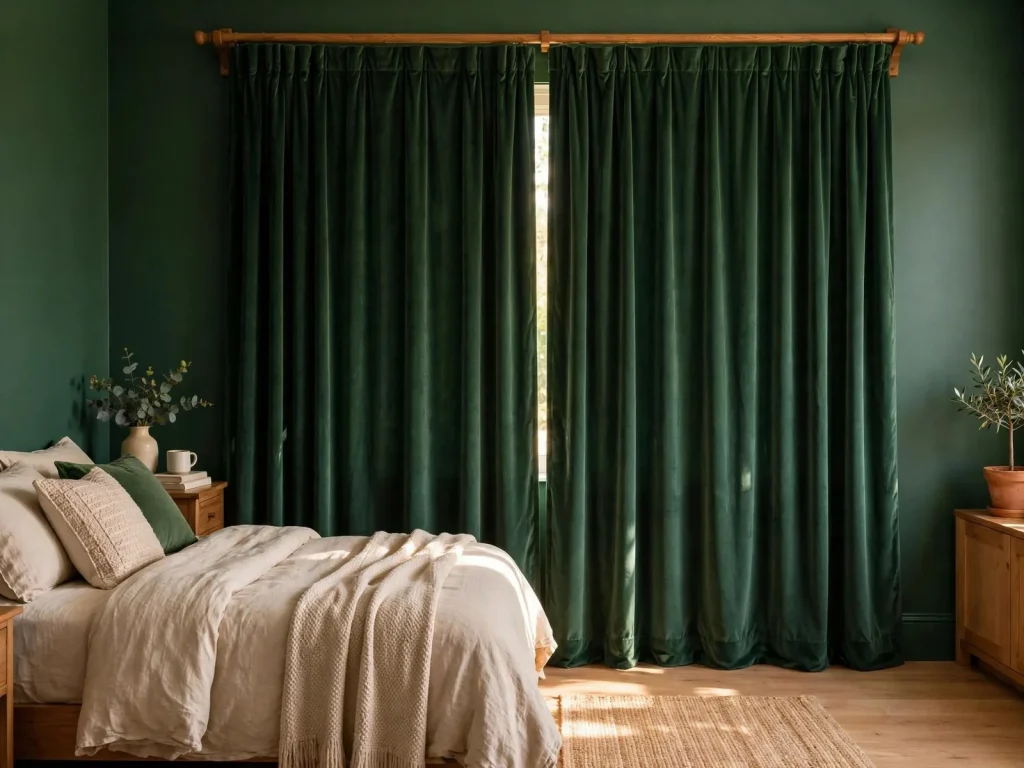
Curtains in a drenched room do not get to be a second color. Panels inside the shade family, at the wall’s depth or one step deeper, turn the window wall into a continuation of the room and daylight filtered through them tints toward the shade instead of cutting it. A monochrome bedroom lives or dies at its window, because the window is where outside light and outside color enter.
Hang them to read as surface. Full-width panels that close completely give the window wall the same unbroken field as the other three and a full drop to the floor keeps the line unbroken at the bottom as well.
The catch is fading. Deep dyed fabric at a sunny window lightens unevenly over a year and the panel’s top can drift a step paler than the wall behind it. Lined panels slow the drift and hang with the weight this style wants anyway.
Measure: curtains inside the shade family at the wall depth or 1 step deeper, lined, closing fully across the window.
12. Lay the floor layer inside the shade family too
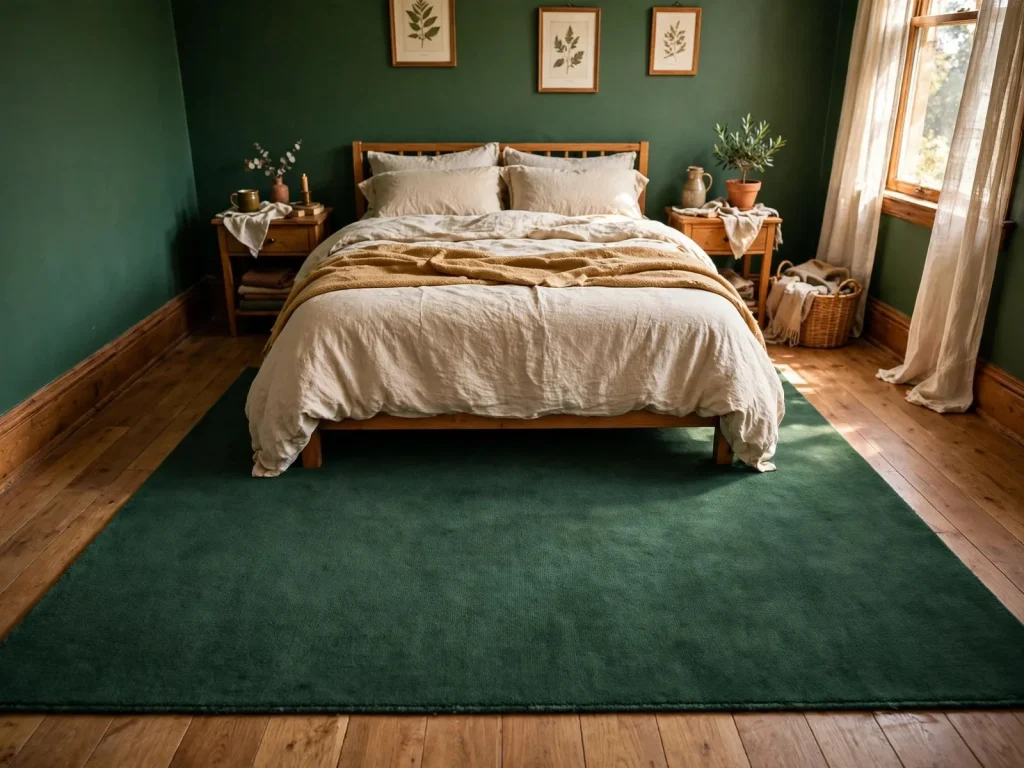
The floor is the sixth surface and the eye counts it even when the painter does not. A rug inside the shade family, deeper at the edges of the room and holding the bed in its field, completes the wrap at ground level. A bright patterned rug in a drenched room is a hole in the floor of the concept.
Choose value over pattern here. A solid or tone-on-tone rug a step deeper than the walls grounds the room and lets the pale bed float above it, while the rug’s texture supplies the interest its pattern declined to. Keep the rug large enough to carry the bed’s footprint with borders to spare, as in any well-sized bedroom rug.
The catch is existing good rugs. A rug with real quality in a neighboring tone can stay if its value sits inside the family’s range, judged against the dried swatch. The rule is family and value, not dye-lot loyalty.
Measure: the rug inside the shade family at wall depth or 1 step deeper, solid or tone-on-tone, sized to carry the bed with borders showing.
Light and contrast so it does not go flat
13. Add at least two light sources besides the ceiling light
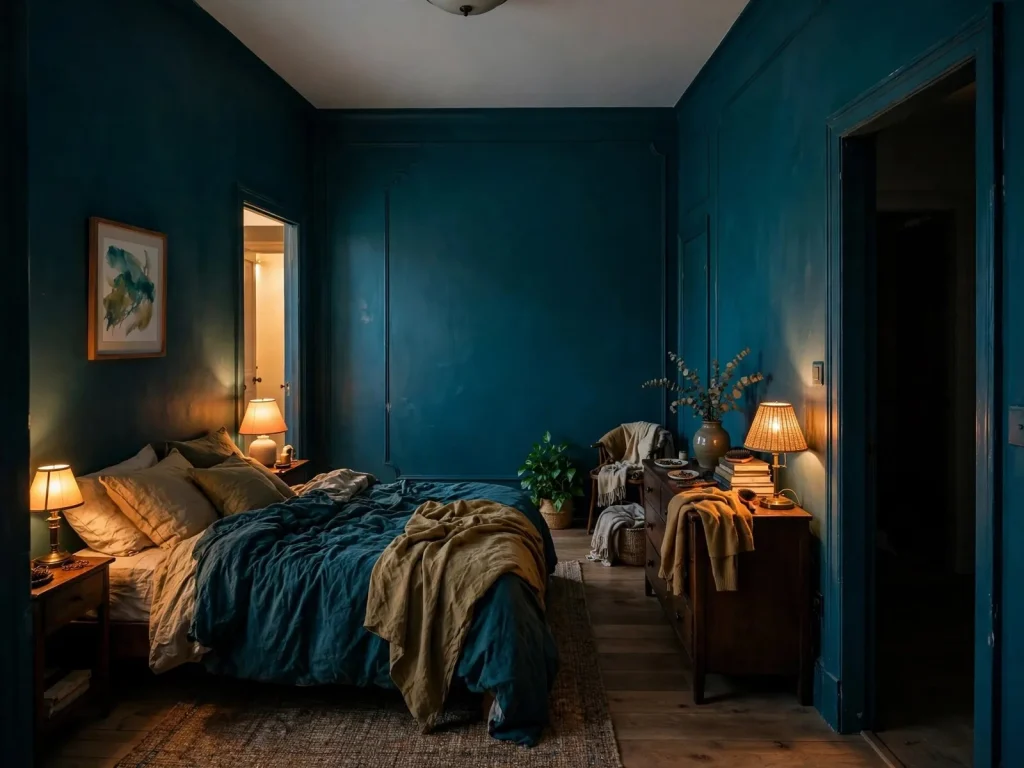
A single shade absorbs contrast, so a drenched room needs light in more places than a normal room does. The rule is at least 2 light sources besides the ceiling light: the bedside pair counting as one type, plus a second type such as a dresser lamp, a floor lamp in the reading corner or sconces flanking the bed. Each source carves its own pool of light and the pools are what model the room’s depth.
Place the sources at different heights, as in any layered scheme, but judge them by a drench-specific test: from the bed, every wall should hold one lit passage and one shadowed passage. Uniform light flattens the shade. Alternating light lets it breathe.
The catch is the ceiling light’s demotion. In a drenched room the overhead becomes the utility light for cleaning and dressing, rarely the evening source. Put the bedside sources on the switch you touch at the door if you can, so the room’s good light is also its easiest light.
Measure: at least 2 light sources besides the ceiling light, at different heights, with each wall holding a lit and a shadowed passage from the bed.
14. Warm every bulb to 2700K
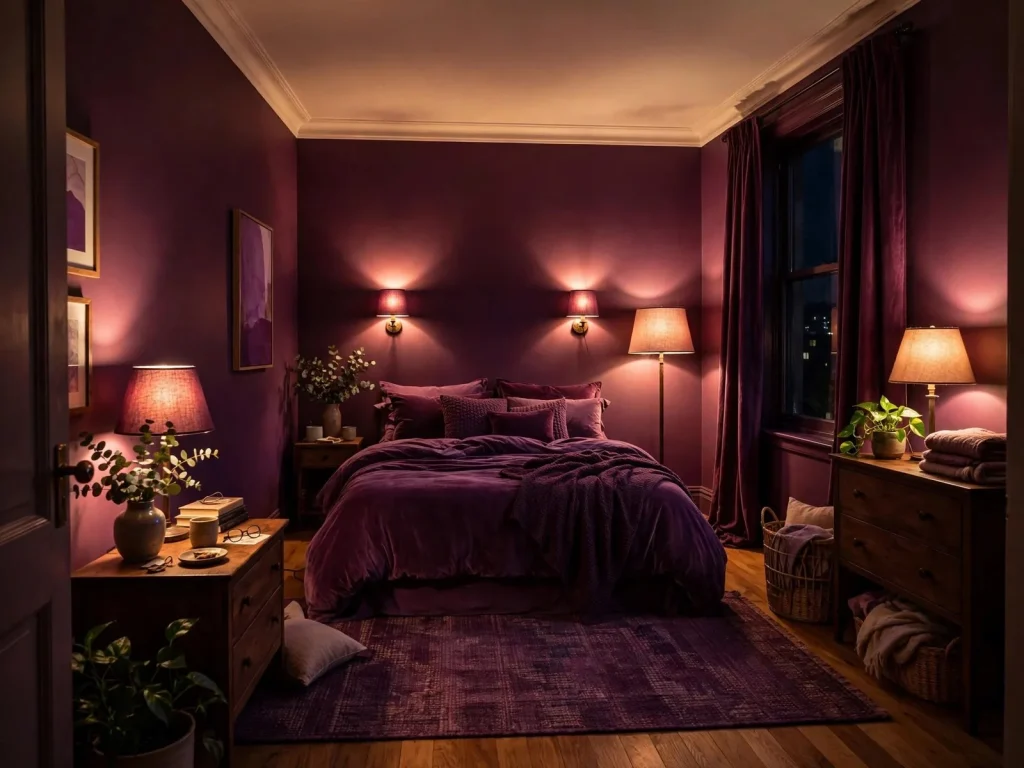
Bulb temperature is the drench’s second color decision. At 2700K, warm light feeds deep shades their richness and keeps pale bedding creamy. Cooler bulbs push a green drench toward teal-grey and a plum toward mud and the room you tested so carefully in idea 1 quietly becomes another room after dark.
Include every source from idea 13 in the rule. One cool bulb in a floor lamp splits the room’s mood at exactly the corner that lamp was hired to save. Buy the room’s bulbs in one batch, as with any palette built on agreement.
The catch is daylight honesty. Warm bulbs cannot fix a shade that fails in morning light and they are not asked to. Ideas 1 and 2 judged the shade in daylight first; this rule protects the evening half of the verdict.
Measure: every bulb at 2700K, one batch for the whole room, including the ceiling fixture and any sconces.
15. Let texture separate the layers color cannot
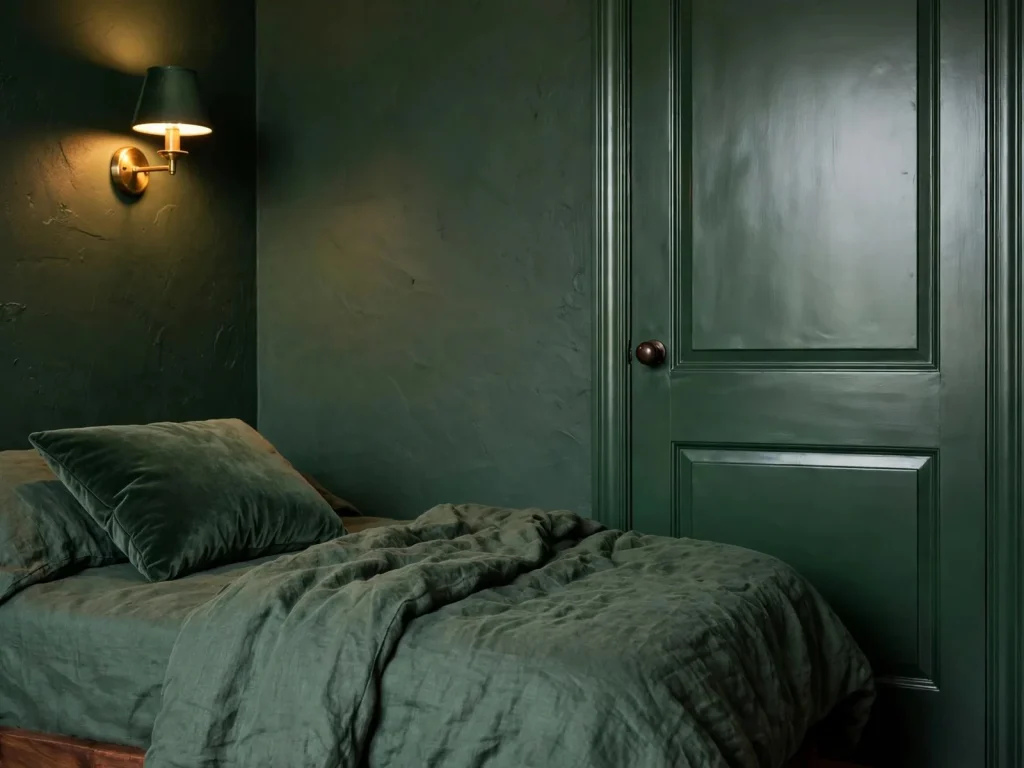
When every surface shares one shade, texture becomes the room’s second language. Matte walls against satin trim, linen bedding against a velvet cushion in the shade and a woven rug underfoot give the eye edges to read where color gives it none. A drenched room without texture contrast is the flat block the sheen ladder warned about, completed.
Assign each major surface a different hand feel. Walls smooth, bedding slubbed or washed, one cushion in a pile fabric and wood or metal as the single hard note. You should be able to describe the room with your eyes closed and still know where you are in it.
The catch is pattern sneaking back as texture. A heavily patterned weave is pattern wearing a disguise and spends the room’s quiet. Keep textures solid and let their shadows do the talking.
Measure: at least 3 distinct textures across walls, bedding and floor, all inside the shade family and all solid.
Color drenching a small bedroom
Small rooms are where this trend is doubted most and where its rules matter most. Hold the shade above LRV 25 per idea 2 and lean toward the warm mid tones within your family, since small rooms spend their evenings in lamplight where warm shades stay generous. The full surface list still applies; a small room’s ceiling is close enough to read as a fifth wall, so its white lid would shout louder here than anywhere.
The sheen ladder earns its keep double in a small room, because the surfaces are near enough to compare in one glance. Flat ceiling, eggshell walls and satin trim keep the single shade legible as layers at arm’s length. Keep the pale bedding exemption and make the bed’s island slightly larger in proportion: in a small drenched room the bed is most of the furniture and its pale field is the room’s main rest.
Light closes the case. Two sources besides the ceiling light is the floor, not the target, in a small room and one of them should wash the darkest corner. Our small bedroom ideas post works the same rooms from the layout side, for the floor plan decisions that sit under the paint. Drench after the layout earns it and the small room reads as a jewel box rather than a cave.
Mistakes that make it fall flat
- Stopping at the ceiling line. Four drenched walls under a white ceiling is the accidental partial and the eye reads the lid as the room’s real color decision. Either drench the ceiling or choose the partial openly with the ceiling held a step lighter inside the family.
- Using one sheen everywhere to save money. A single eggshell across walls, trim and ceiling merges the room into one flat block and the cave fear comes true for reasons that have nothing to do with the shade. The ladder costs two extra cans and returns the whole effect.
- Testing with one coat on one wall at noon. One coat reads lighter than the finish, one wall hides the light difference and noon hides the evening entirely. Two walls, two coats and three times of day is the test and skipping any leg of it buys a surprise.
- Drenching the bedding too. With the bed inside the shade, the room loses its only contrast and its focal point in one move. The pale bedding exemption is structural. Rooms that break it feel like swimming in the color instead of living inside it.
Questions people ask about this
What does color drenching include: just the walls or the ceiling and trim too? The full list is five surfaces in one shade: walls, trim, baseboards, doors and the ceiling, with the radiator and built-ins joining where they exist. Anything less is a partial drench, which can be a deliberate and good choice when it is chosen openly rather than drifted into.
What sheen should each surface be in a color drenched room? Climb the ladder one step per surface: flat or matte on the ceiling, eggshell on the walls and satin on trim and doors. The steps let light move differently across each plane, so the single shade reads as layers of itself instead of one flat block.
Can I color drench a small or north-facing bedroom? Yes, with the light value rule doing the guarding. In a room under 100 square feet or with a single small window, keep the shade’s light reflectance value above 25 and plan a second light source before painting if you fall in love with anything deeper. Warm 2700K bulbs and the pale bedding exemption do the rest.
The bottom line
A color drenched bedroom succeeds on definitions and ladders, not on bravery. The full surface list, one sheen step per surface, a shade tested at three times of day and one pale island of bedding. This week, paint your two swatches, two coats on two walls and sit with them through one ordinary evening with the lamps you actually own. The shade that still looks like a promise after that evening is the one your room has already chosen.