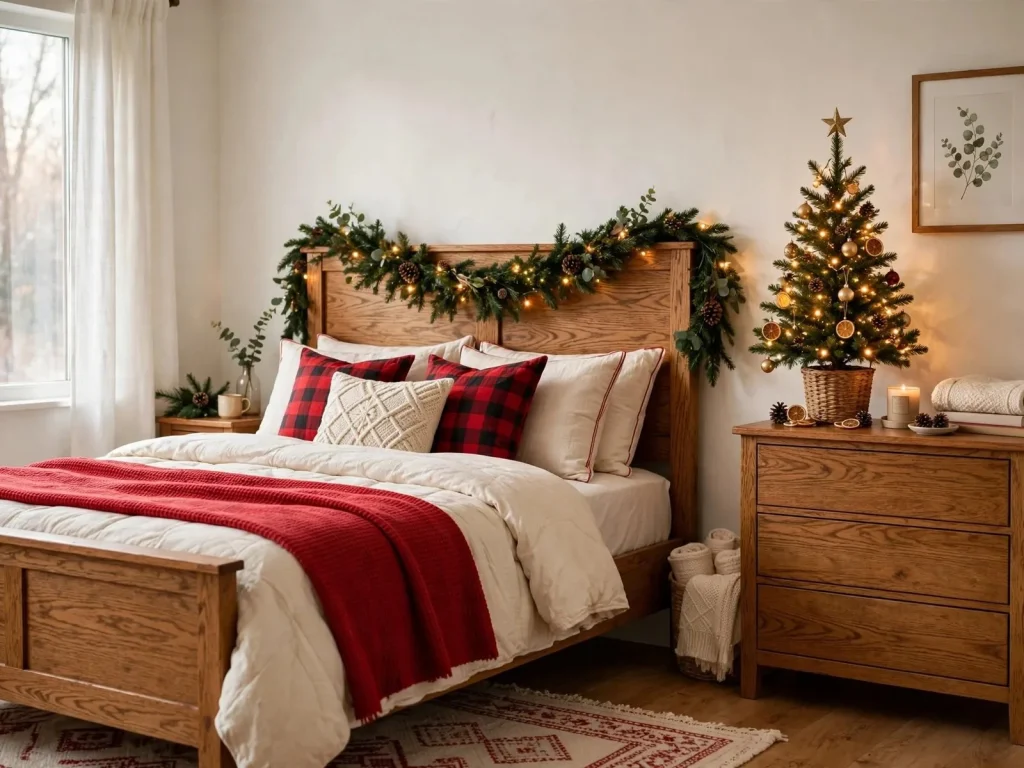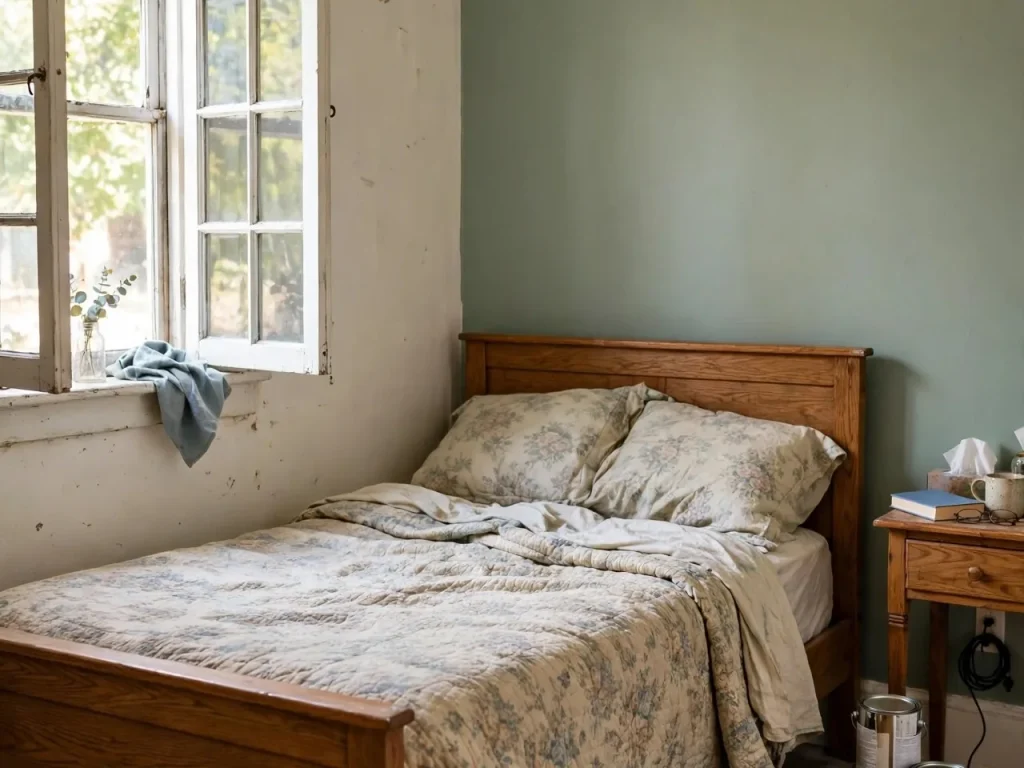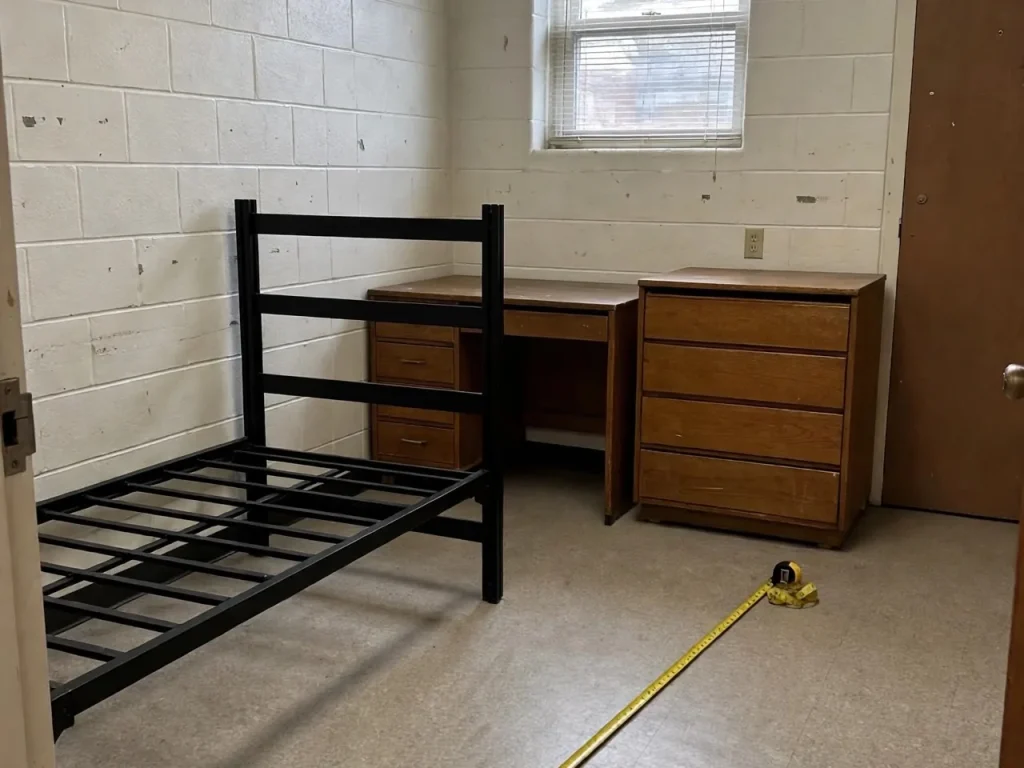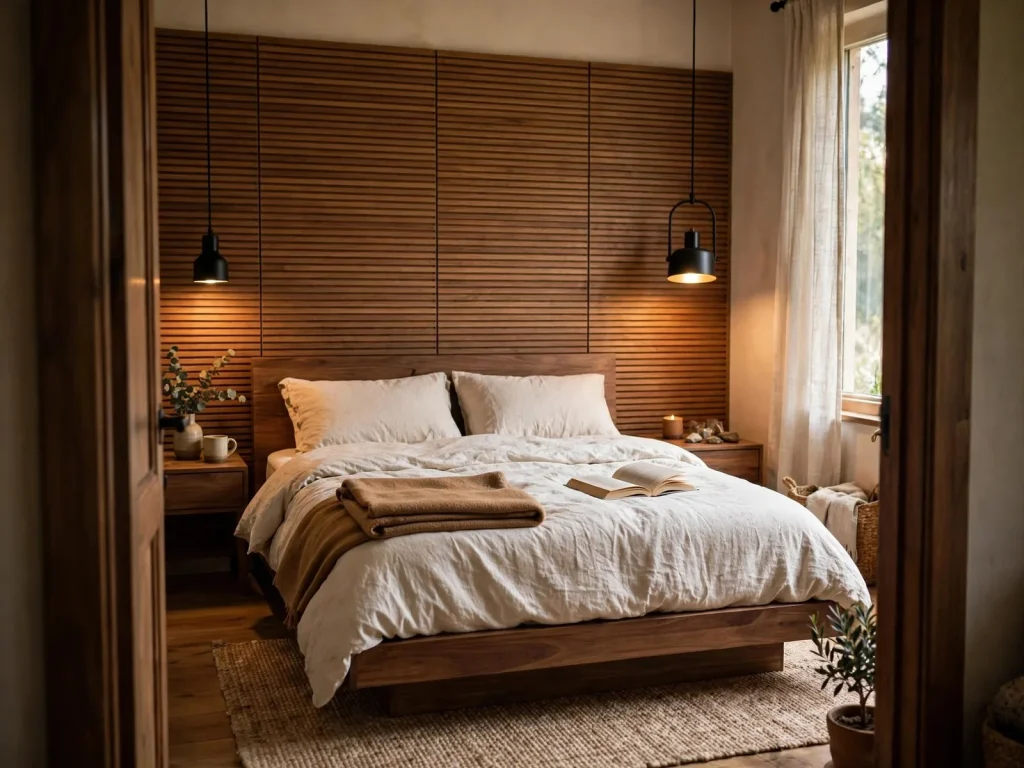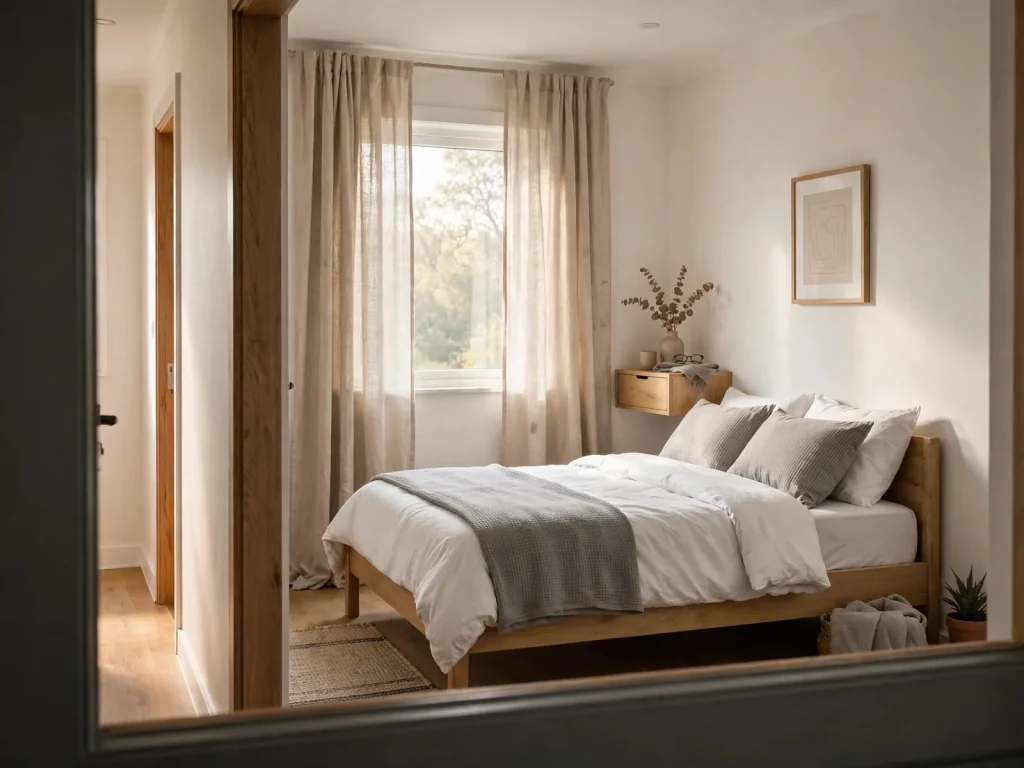
The room still runs on the last redo: a theme she picked at eleven, a twin bed she now sleeps across diagonally and a floor that disappears under clothes by Wednesday. You are not short of teen girl bedroom ideas. You are short of ideas your daughter will still like in two years and a plan that survives her veto.
So this page is built for that negotiation. Every idea is tagged for the two teen sub-bands, 13 to 15 and 16 to 19. Each one carries a measurement, a budget band or a renter note. The rule that runs the whole page is the two-signature rule: she chooses the look and you set the budget and the safety lines. Zones run in the order the room gets used: sleep first, then the corners for study and getting ready, then storage she will actually maintain and the look that ties it together.
Before you start: measure, budget, rules
Measure four things before anything is bought. The room’s length and width (most teen girl rooms run 10 by 10 to 12 by 14 feet), the longest clear wall for the bed, the width of the wall where a desk could go and the ceiling height if a canopy frame is on the table. Write the numbers on your phone. Every idea below assumes you have them.
Know which sub-band you are decorating for. This page covers girls aged 13 to 19 only and it splits that span in two. The first band, 13 to 15, is when sleepovers and the first real desk matter most. The second, 16 to 19, is when the room starts acting like a first studio. The under-13 room follows different rules and gets its own page in this series; our full bank of bedroom ideas plans every age band the same deliberate way. For the older band, buy with one eye on the move out: the pieces flagged below travel well into the rooms on our dorm room ideas page.
The two-signature rule runs every decision on this page. She chooses the look: the palette, the bedding and the wall. You set the budget and the safety rules and your signature is what makes a purchase final. Rooms decorated by adult decree get quietly undone within a term. Rooms she chose inside your lines get defended by their owner, which is the closest thing to a tidy-room guarantee that exists.
The budget bands on this page are refresh (under $150), reset ($150 to $500) and rebuild (over $500). Most teen girl rooms need one reset, not a rebuild. Light, paint and textiles do the visible work. The bed and the desk are where the money earns its place.
Safety, stated plainly. Anchor tall furniture to a stud: the wardrobe, the bookcase and any shelf unit over chest height. Blinds near the bed are cordless or fitted with a cleat. Mirrors and display shelves fix into studs or onto rated anchors, never adhesive alone. Renters: everything below works with adhesive strips, tension rods and freestanding pieces unless a line says Needs drilling.
The bed and sleep setup
1. Size the bed up to a full or a queen (ages 13 to 19)
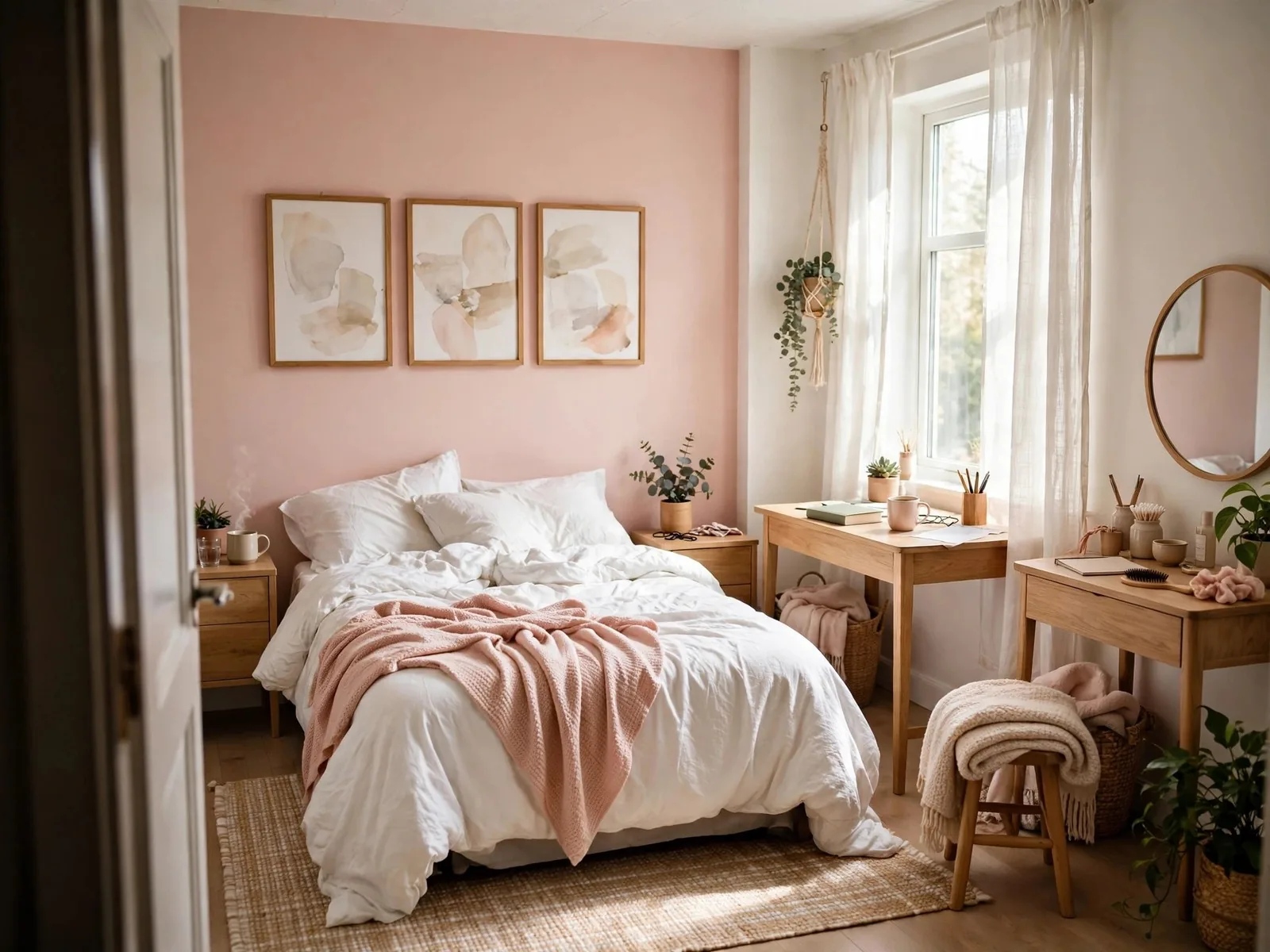
A twin bed is 38 inches wide and 75 inches long. The switch point is easy to read: when she sleeps diagonally, when her feet pass the end of the mattress or when she passes about five foot four, the twin is done. A full at 54 inches or a queen at 60 inches ends the diagonal sleeping and gives the bed the adult footprint the rest of the room gets planned around. This is the change that makes a teen girl room read grown up on its own, which is why teen girl bedroom ideas with a queen bed are among the most searched phrases in this whole topic.
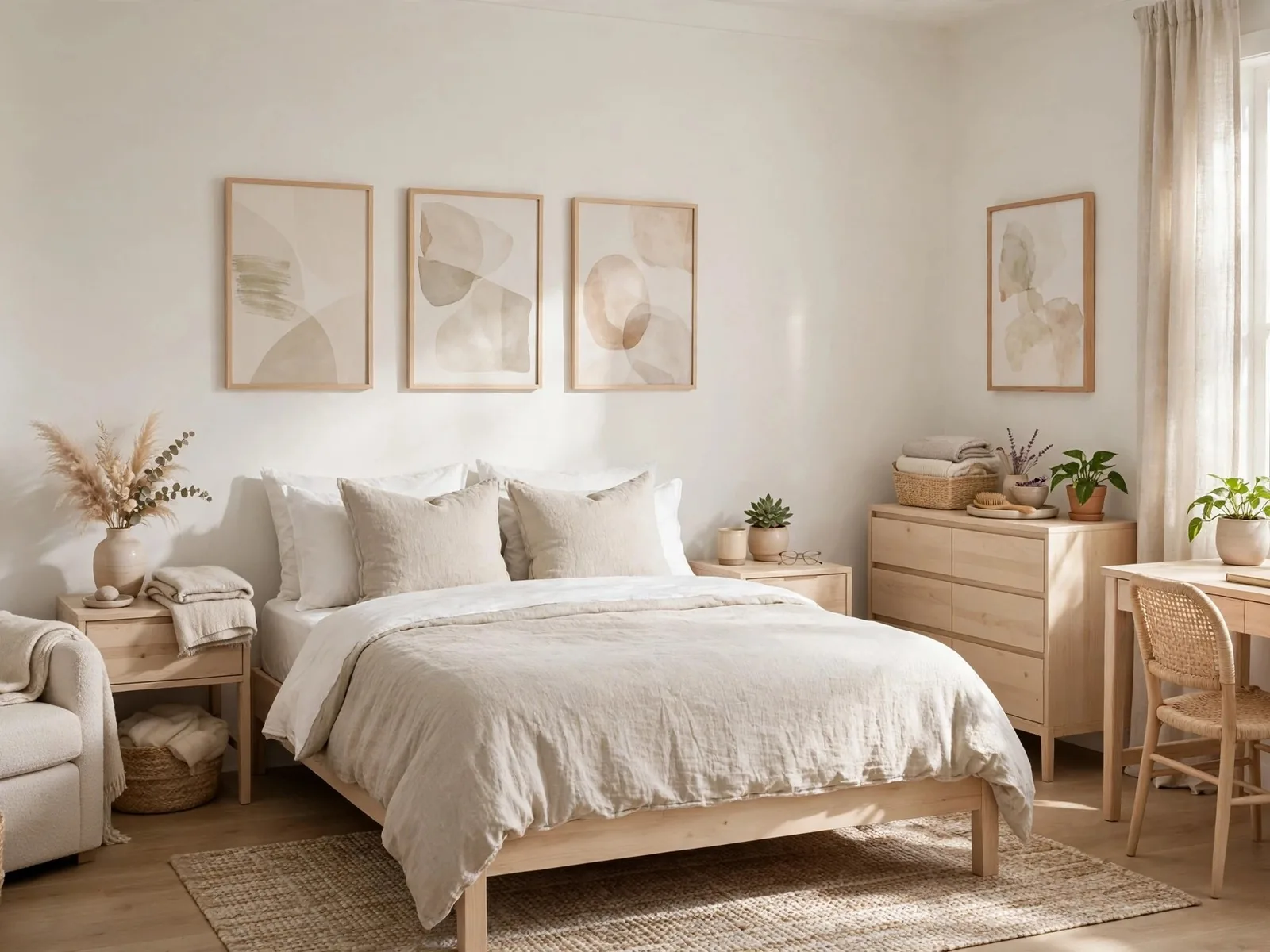
Put the bed on the longest clear wall and keep 24 inches of clear floor on the side she gets out of. In a 10 by 12 room a queen fits with one nightstand and a slim desk. In a 10 by 10 room a full is the honest maximum and the queen belongs to the next house.
Measure: 24 inches of walkway on the exit side, minimum or the bigger bed just moves the squeeze.
The catch is bedding cost. Full and queen sets cost more than twin sets and the old twin bedding retires to the guest pile or the sleepover kit in idea 5. Budget for two sets in her palette from the start, because laundry day waits for no teenager.
2. Layer the bedding in a palette she picked (ages 13 to 19)
Bedding is the largest color surface in the room and the cheapest one to change, so it carries the palette she chose under the two-signature rule. Build it in three layers: a plain base set in white or oatmeal, a duvet or quilt in her palette color and one throw plus two cushions as the accent layer. The base never changes. The top layer is the phase.
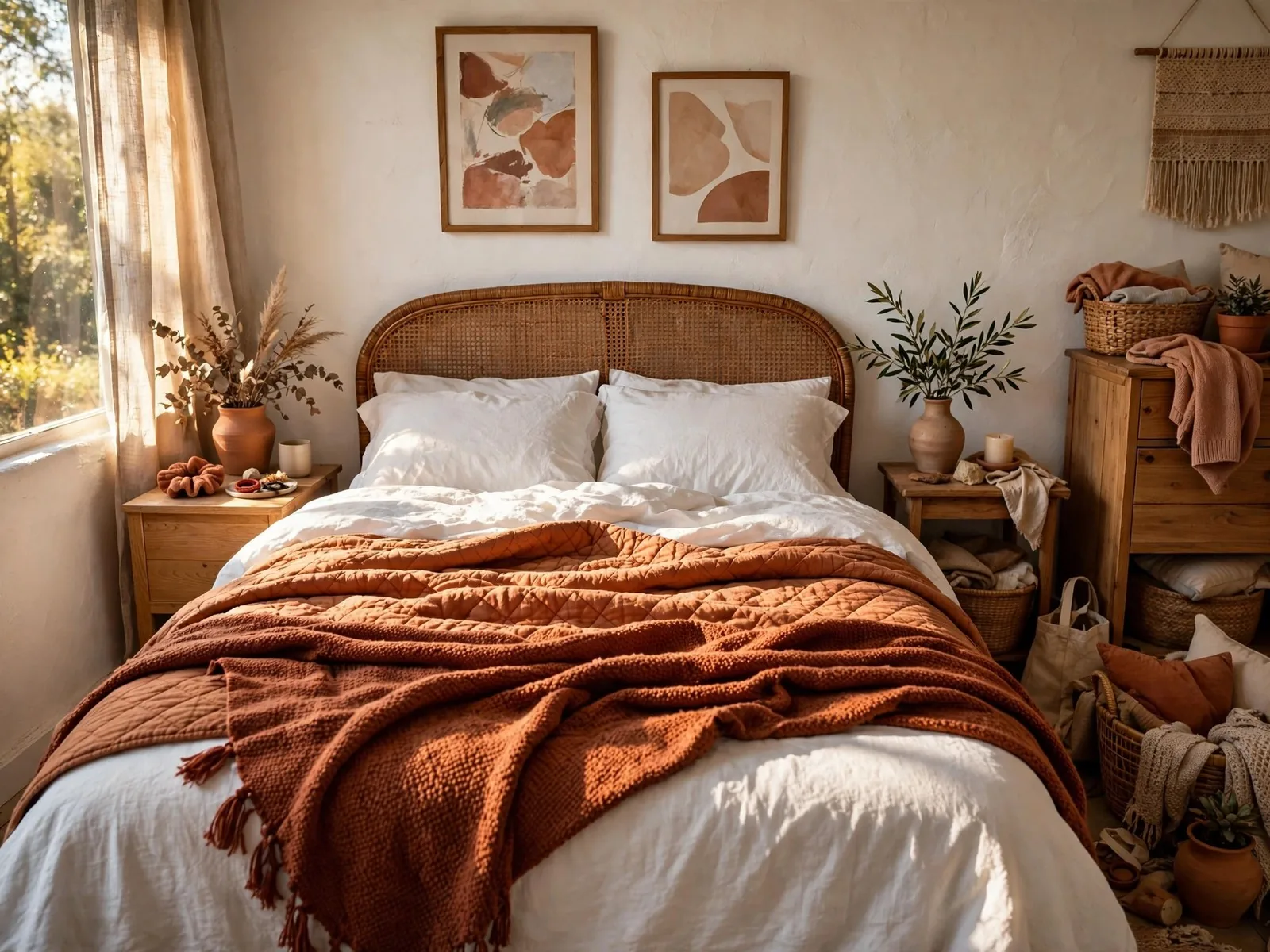
The named palettes in the search data give her a short list to choose from instead of an open argument: aesthetic pink, clean girl neutrals, dusty blue, earthy terracotta and one dark moody option. Idea 14 puts the same list on the wall. Two sets per palette is the working number, one on the bed and one in the wash.
Budget: $60 to $90 for a layered set in the mid-range stores. The base set is bought once and the accent layer swaps for $25 to $40.
The catch is taste speed. Palettes rotate every eighteen months or so at this age, which is exactly why the color lives in the layer that costs the least to replace. Paint follows the bedding choice, never the other way round.
3. Hang a canopy or curtain frame for a grown-up cocoon (ages 13 to 15)
The canopy is one of the most repeated words in the teen girl search data and the grown up version is not a princess net. Two ceiling hooks and a length of sheer or linen curtain, draped at the head of the bed, build a cocoon that reads calm and private. It gives the bed a ceiling in a room that feels exposed and it softens the LED glow from idea 4.
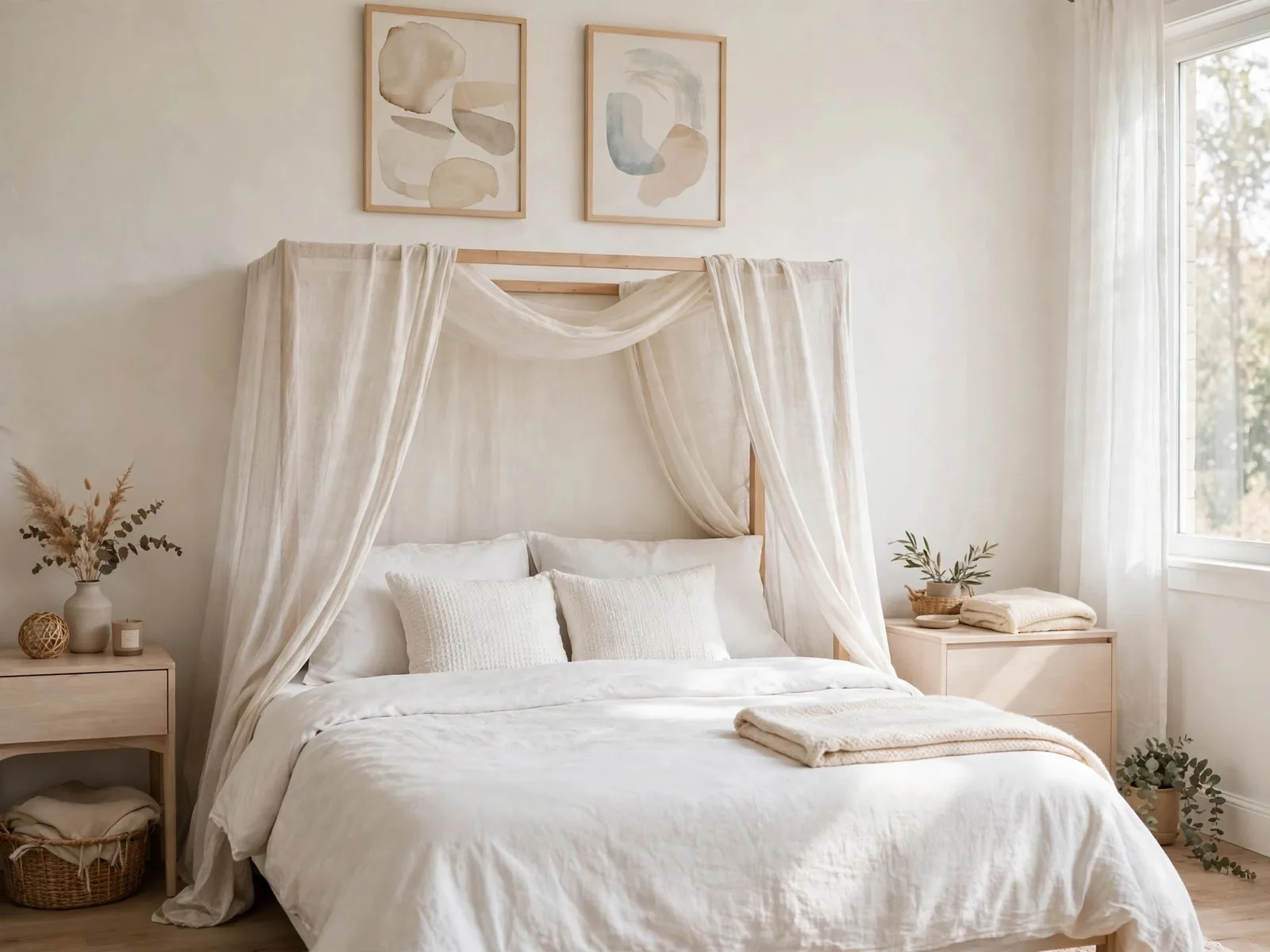
Keep the fabric at the head end only. A full surround traps heat and collects dust at exactly pillow height. The headboard underneath still does its own job for reading and propped homework. The shapes that pair well with a draped frame are in our headboard ideas.
Needs drilling: two hooks into ceiling joists or rated anchors. Renters use a tension rod between tall bed posts or a freestanding clothes rail behind the headboard instead.
The catch is laundering. Sheer panels need a wash every couple of months in a teen room or the cocoon starts to smell like one. Choose machine-washable fabric or skip the idea. The drape keeps working into the older band if the fabric stays plain and the color stays in her palette.
4. Run LED strip light behind the headboard or shelf edge (ages 13 to 19)
Teenage girl bedroom ideas with led lights are a search phrase in their own right and the strip earns it. A line of warm light behind the headboard or under a shelf edge turns the bed wall into the room’s focal point after dark and it costs less than a pizza night. It is the single most saved feature in this whole cluster.
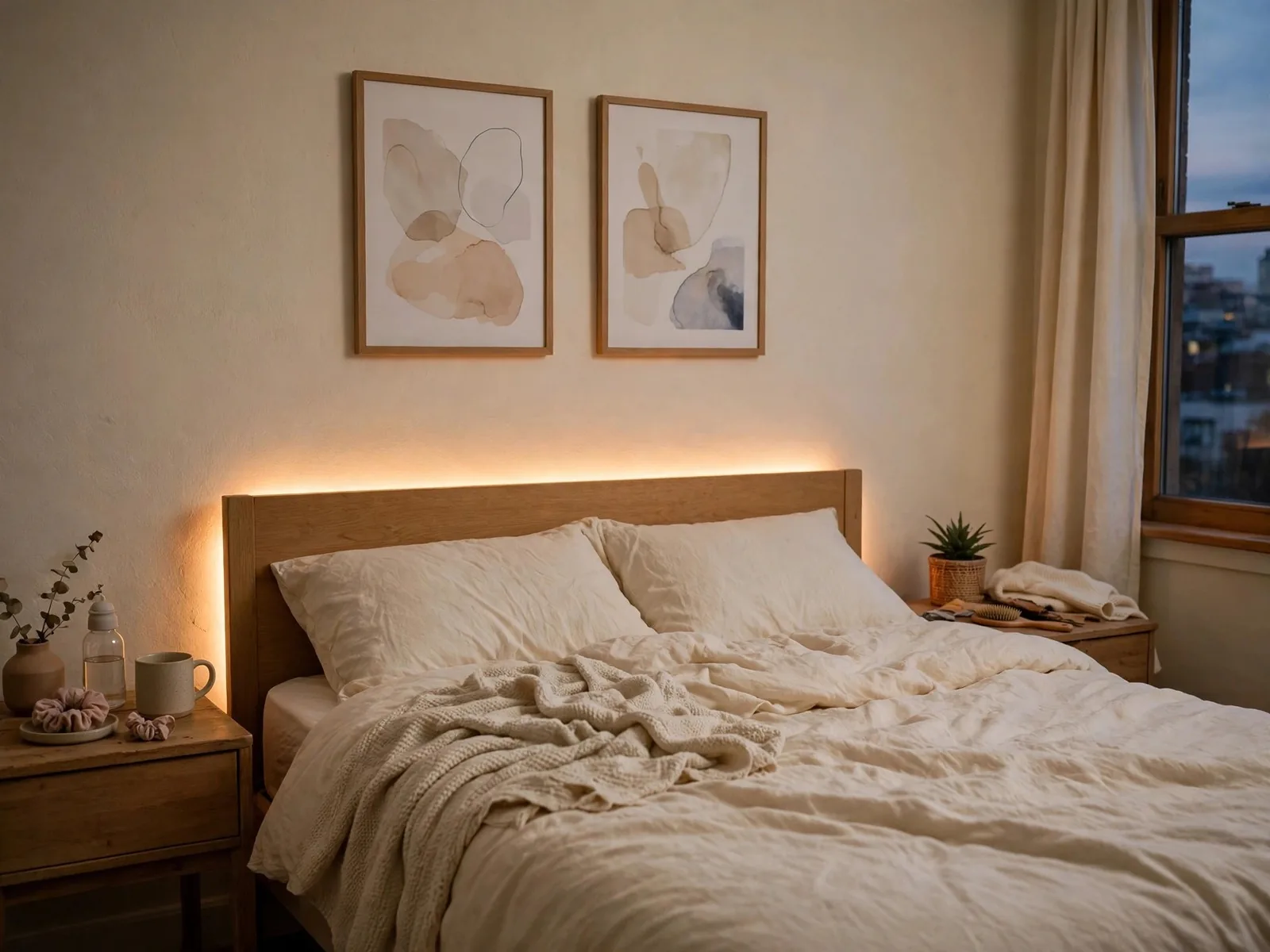
A standard 16 foot roll covers the headboard wall and one return. Choose warm white at 2700K to 3000K for the sleep zone. Color-changing strips exist and most girls settle them on one warm setting within a month, so buy the warm strip with a dimmer and skip the remote circus. Put it on a timer or a switch she can reach from the pillow.
Renter-friendly: adhesive-backed strips peel off cleanly at move-out. Budget $15 to $25 for the roll and the dimmer together.
One caution: strip light shows every wall flaw after dark. If the paint is tired, idea 14 is the fix and the strip will make the new color look twice as expensive.
5. Add a trundle or a floor bed for sleepovers (ages 13 to 15)
Sleepovers are infrastructure in the younger band and the floor is where they currently happen. A trundle that slides under the main bed sleeps a friend at mattress height and disappears by breakfast. Where the frame has no clearance, a folding floor bed or a thick roll-out mattress stored in the closet does the same job for less.
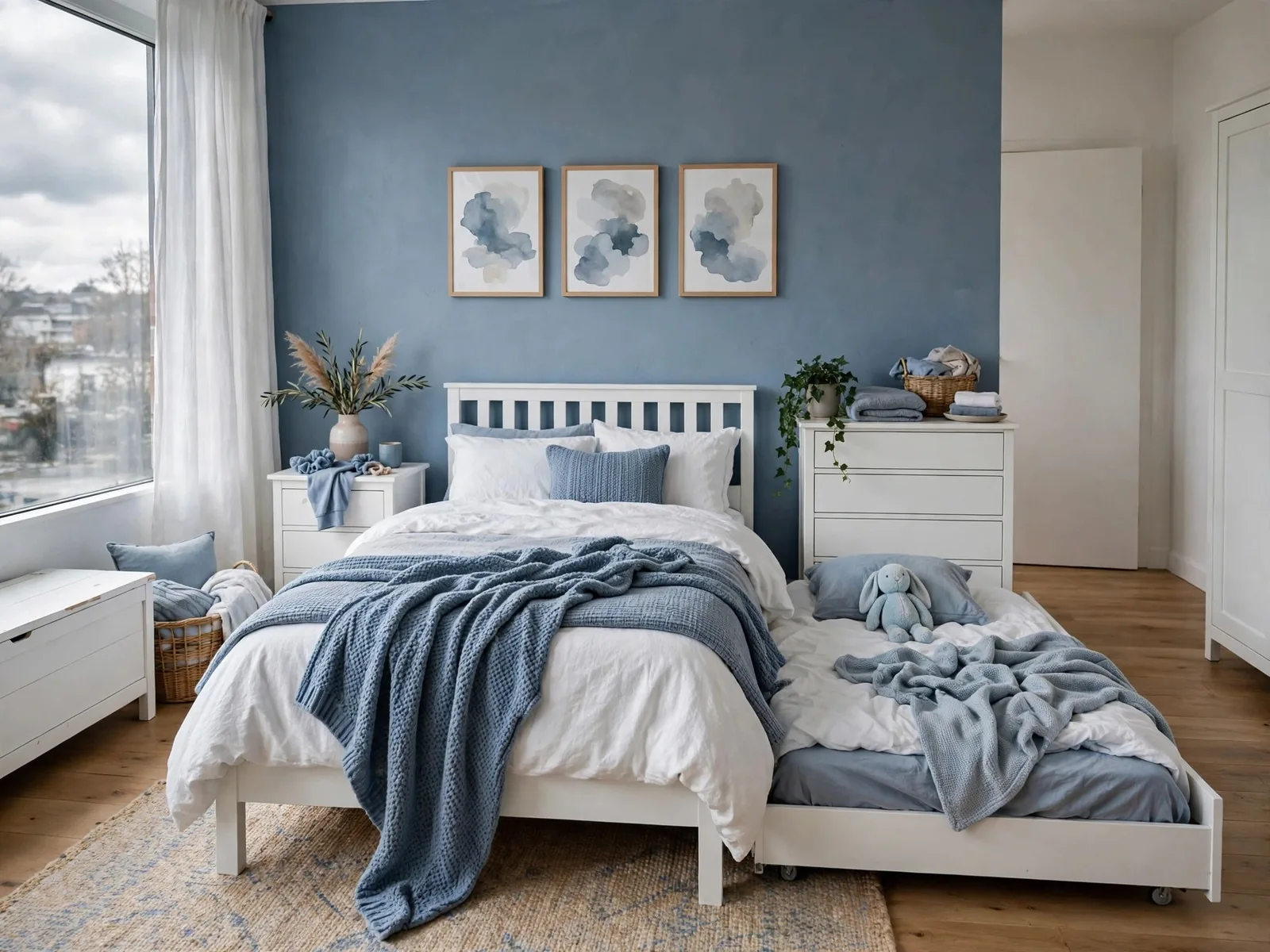
Shared rooms run on the same rails. Two sisters sharing permanently need two real beds with a defined side each and matching storage on both sides; the trundle is the guest layer on top of that, not a substitute for a second bed. The sleepover kit (the trundle, a spare set of the retired twin bedding and one extra pillow) lives in the under-bed bins in idea 12. In the older band the floor bed version suits better, because a sixteen year old hosting a friend reads a low floor setup as lounge furniture rather than a spare bed.
Measure: a trundle needs 10 to 12 inches of clear height under the frame and a clear slide-out run the full length of the bed.
The catch is the morning after. A trundle left out becomes a second laundry surface. The rule that keeps it working is simple: the guest bed goes away before screens come out.
Study, getting ready and downtime corners
6. Fit a desk that holds homework and a laptop (ages 13 to 19)
By thirteen the desk is not optional furniture. Homework, a laptop and the growing pile of school admin need a surface that is not the bed. The right size is 48 inches wide and 24 inches deep: room for a laptop, an open textbook and a lamp, small enough to leave the room a room.
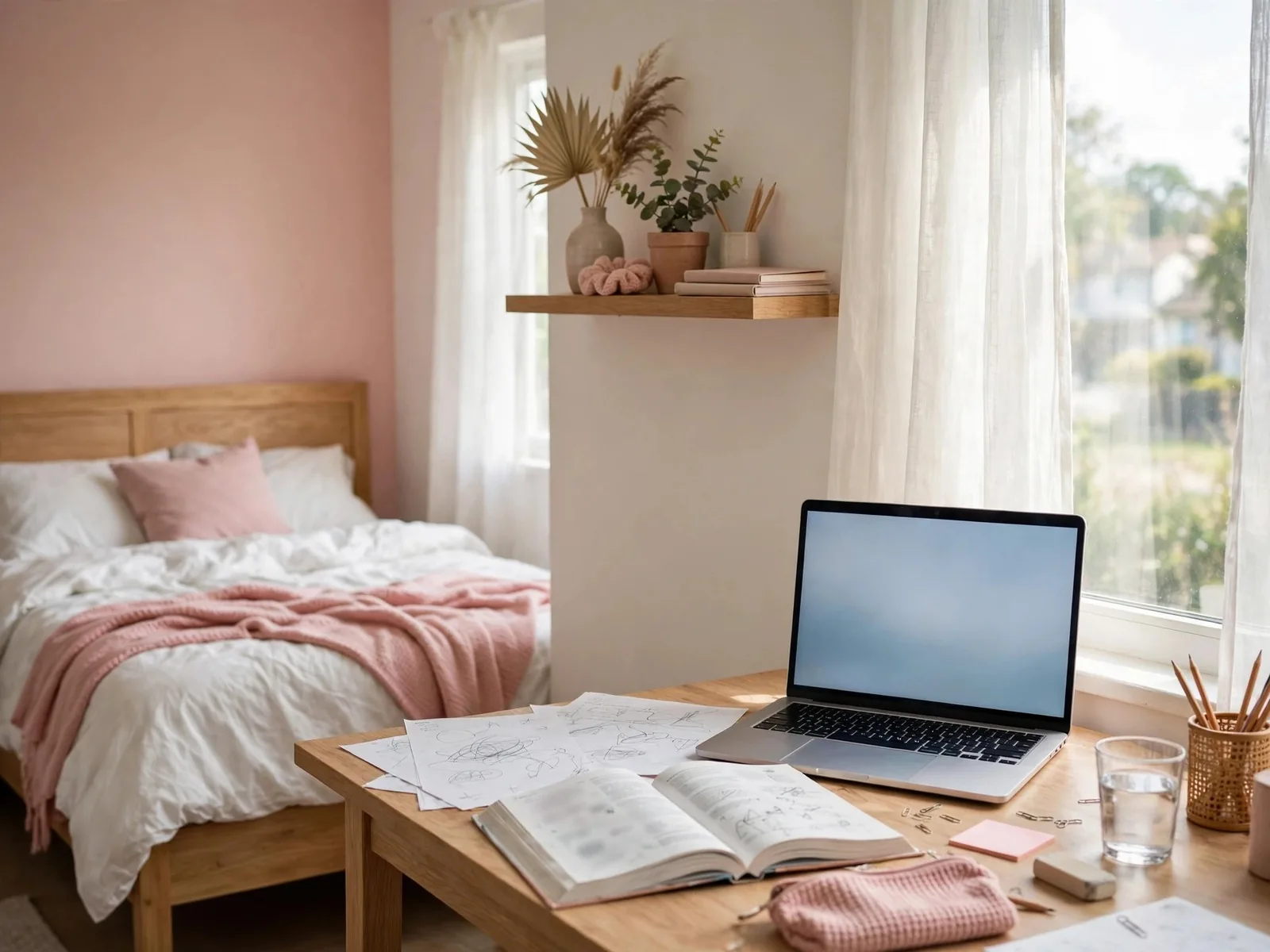
Put it on the wall with the best daylight, at a right angle to the window where you can, so the screen stays readable and the chair does not block the door swing. One shelf above the desk beats a hutch. The shelf keeps the surface clear and the wall does the storing.
Measure: leave 36 inches from the desk edge to the wall or the bed behind it, so the chair has room to work.
The chair matters more than the desk brand. Study sessions run two hours by the older band and a dining chair borrowed nightly is a backache with a timetable. A secondhand desk chair with real back support beats a pretty stool every term.
7. Build a getting-ready station with daylight-true light (ages 16 to 19)
Getting ready is the second job the room took on and the bathroom mirror queue is the symptom. A getting-ready station needs three things in one place: a mirror at face height, a surface for the daily kit and light that tells the truth. A 36 inch vanity or the end of the desk from idea 6 both fit the footprint.
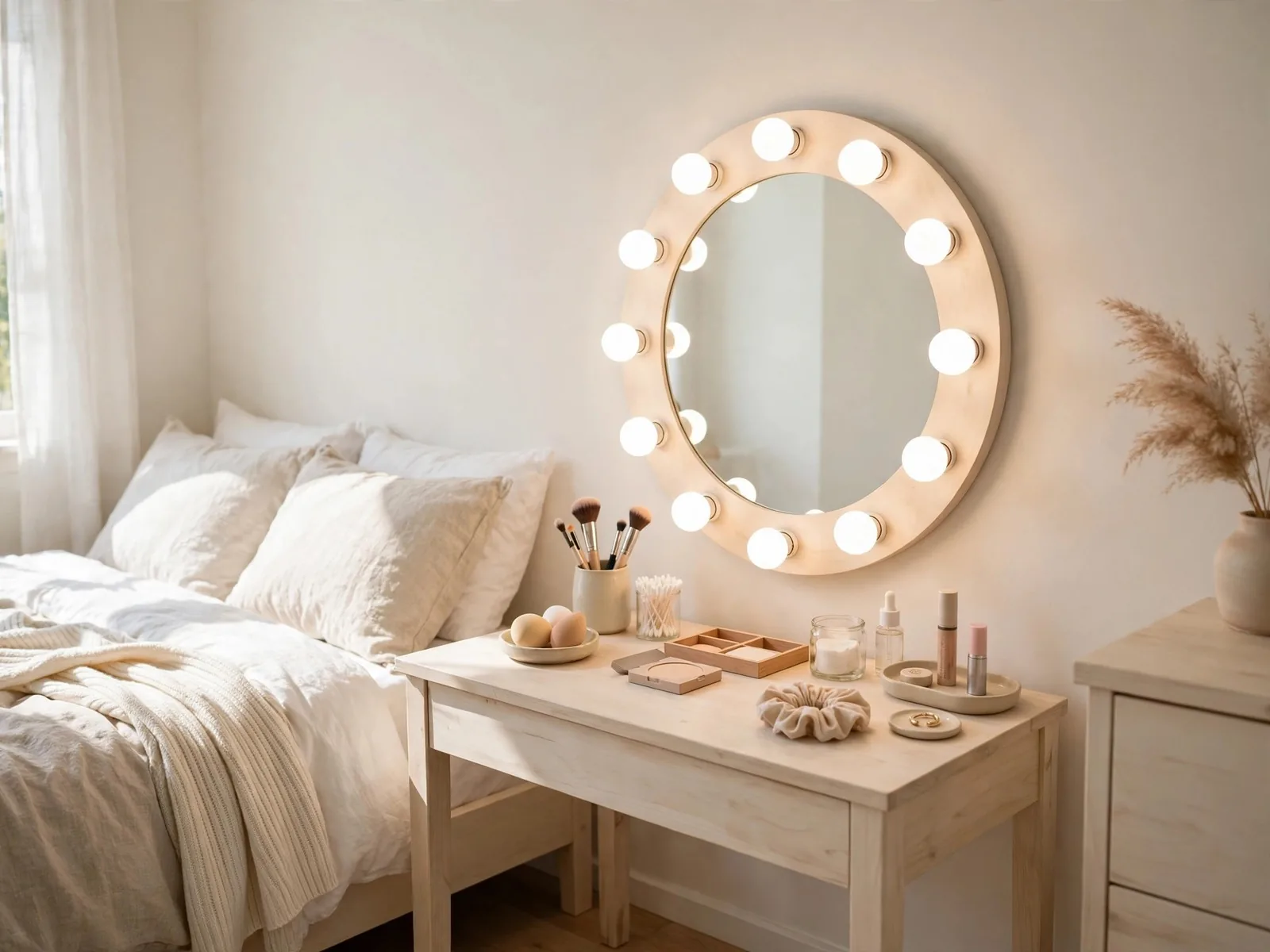
Light is the detail most stations get wrong. Bedside light stays warm at 2700K, but the mirror wants daylight-true bulbs at 4000K to 5000K with a high color rendering rating, so skin and makeup read the way they will outside. A bulb frame or a pair of small lamps at face height on both sides kills the overhead shadows. At 13 to 15 the same corner runs lighter: the mirror over the desk and one lamp, with the full station arriving when the routine does.
Budget: $30 to $60 for a mirror and a bulb frame or two small lamps, using the desk she already has as the surface.
The catch is sprawl. The station holds the daily kit only: one tray on the surface and one small drawer or box for the rest. Everything else lives in the closet zone in idea 10. Otherwise the station becomes a second floor.
8. Carve out a reading chair corner (ages 13 to 19)
A teen girl room needs one seat that is not for sleeping and not for homework. A small secondhand armchair, a stack of floor cushions or a bean bag in the corner by the window gives reading and downtime a home that is not the bed, which quietly protects sleep.
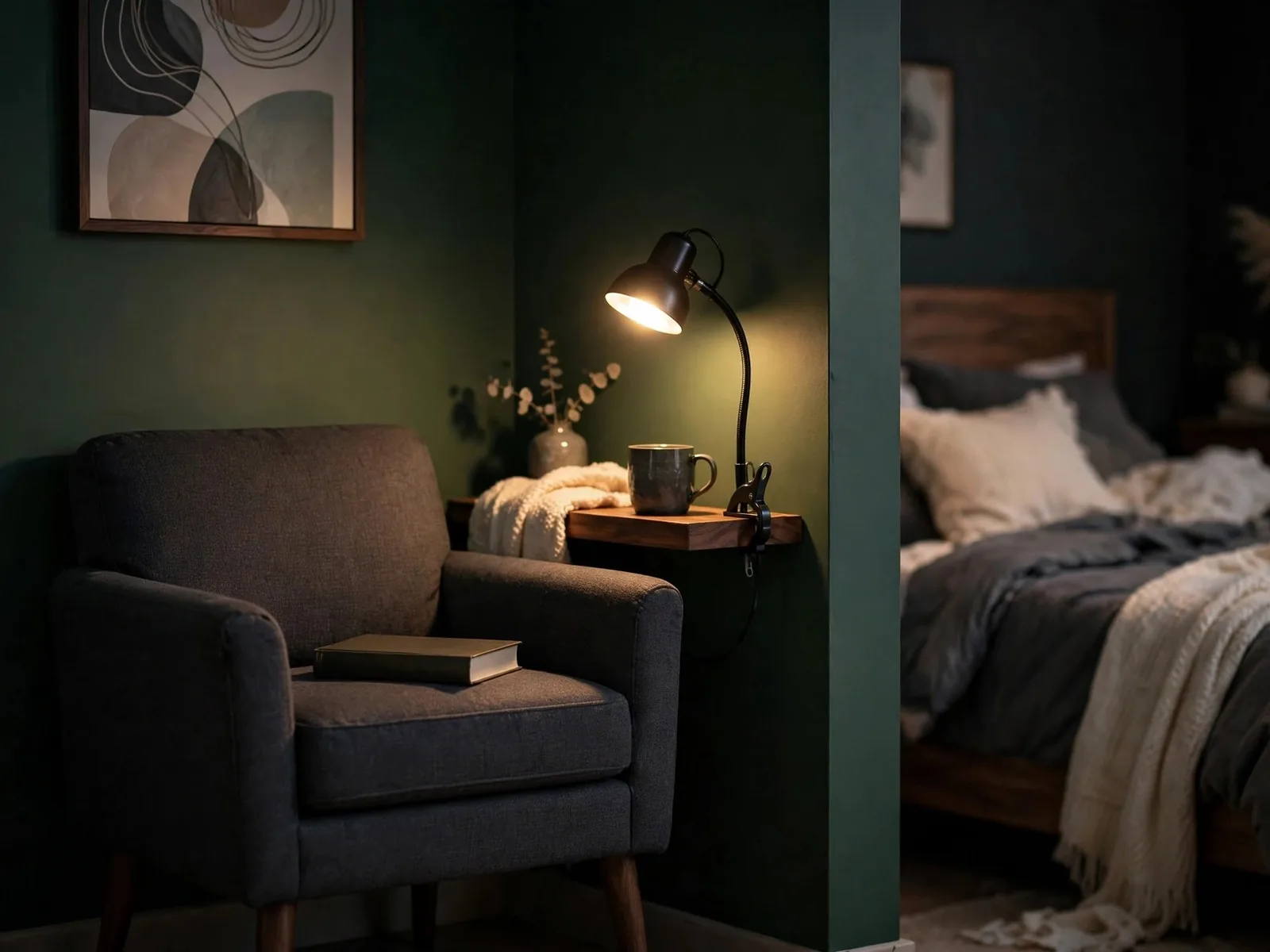
The corner needs its own light: a clip lamp or a small floor lamp at shoulder height when seated, plus one shelf or one basket within reach for the current book stack. Three cushions is plenty. A nook she has to tidy before sitting in will not be sat in.
Budget: $25 to $70 secondhand for the chair and the lamp together. Comfort first, looks second.
The catch is drift. The reading chair is the first surface every room dumps clothes on. The drop zone in idea 13 exists to give those clothes a closer home.
9. Tame chargers and tech with one charging station (ages 13 to 19)
Phone, earbuds, laptop, smartwatch, e-reader: the teen room now runs a small electronics department and every device arrives with its own cable. One charging station ends the cable nest. Use a power strip mounted at the back of the desk or inside a shallow box on the nightstand, with short cables and one home for every device.
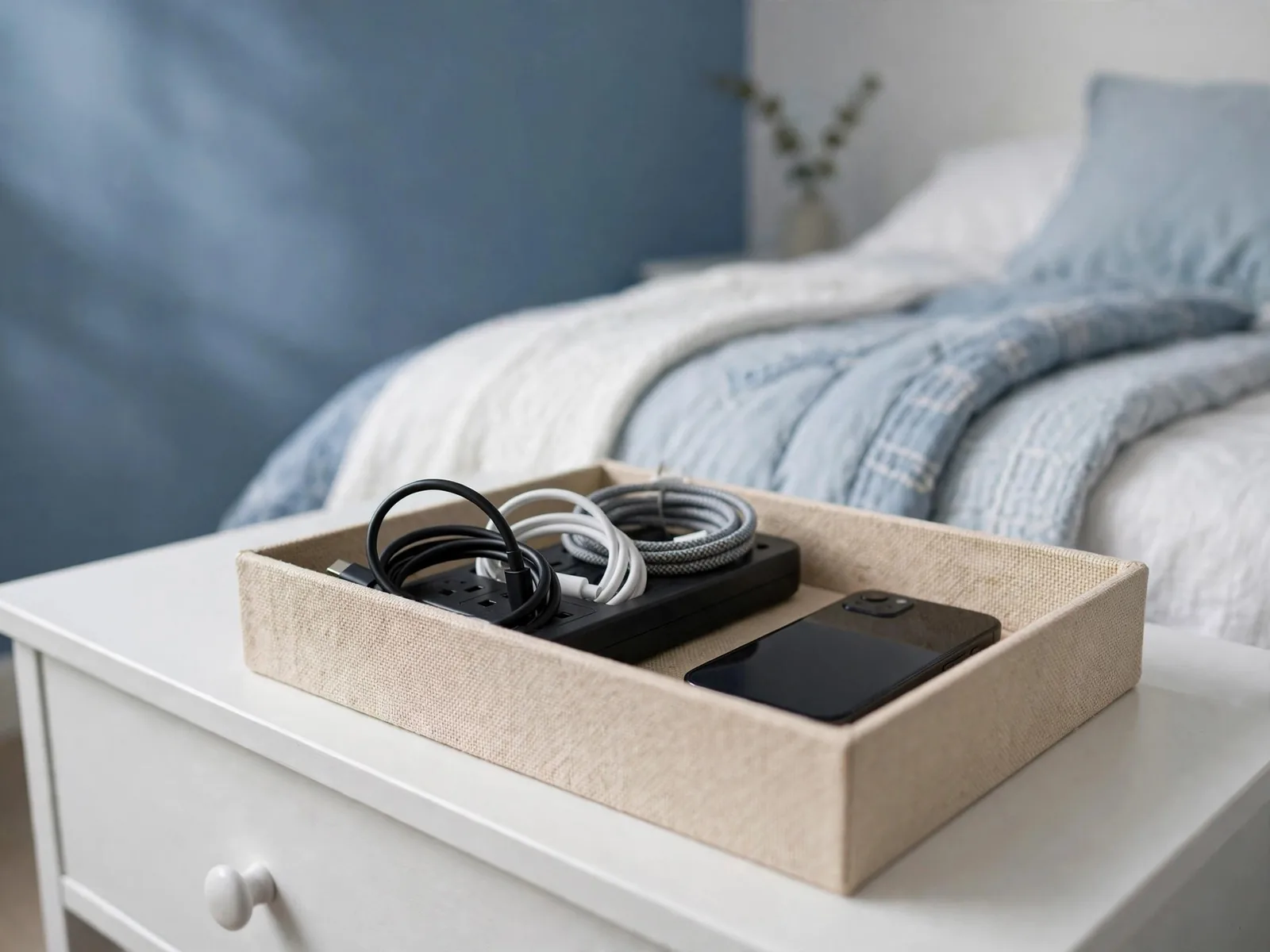
Mount the strip where it cannot hide under bedding. Devices charge on the desk or the nightstand surface, never on the bed and never under a pillow. Velcro ties cost almost nothing and they keep the setup readable at a glance.
Budget: $15 to $30 for the strip, the short cables and the ties. Renter-friendly: the strip mounts with adhesive pads, no screws.
The catch is habit. A station only works if devices sleep there too. The household rule that makes it stick: screens charge at the station overnight, which is also the rule most likely to improve the mornings.
Storage she will actually use
10. Zone the closet or rail by outfit type (ages 13 to 19)
Teen closets fail by mixing. School clothes, going-out clothes, sports kit and the one formal dress all fight on a single rail and the layer she wears this week wins by landing on the floor. Zoning ends it: the rail split by outfit type with dividers or plain spacing, school and everyday at the front, occasional pieces at the back and sports kit in one bin at the floor.
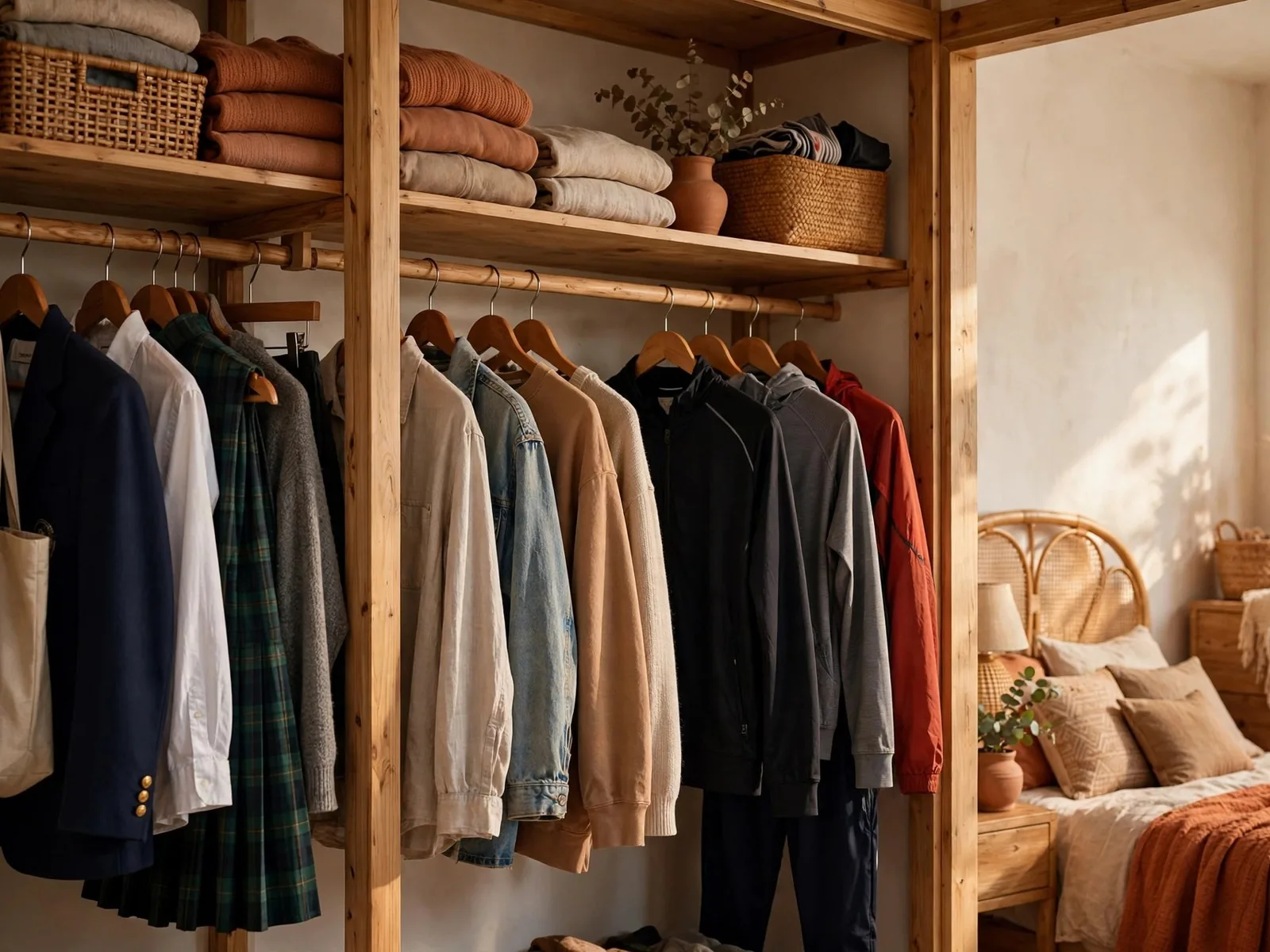
A standard reach-in closet is 24 inches deep and a 48 to 60 inch rail covers one teen’s current rotation. What does not fit the zones leaves the closet: off-season goes to the under-bed bins in idea 12 and outgrown goes to a donate bag by the door. A closet she can see across is a closet that stays zoned past Tuesday.
Measure: keep the everyday zone on the 36 inches of rail nearest the door. That stretch is the whole system on a school morning.
The catch is maintenance by committee. She zones it or it will not survive the month. Your job in this idea is the dividers and the bins; the arrangement is hers.
11. Display shoes and bags on open shelves (ages 13 to 19)
The collection is real at this age: the good shoes, the bags and the pieces she rotates like a shop display. Open shelves give the collection a home that doubles as decor, which is why display storage gets used when closed storage gets ignored. Two or three shelves on the wall beside the closet or above the drop zone do the job.
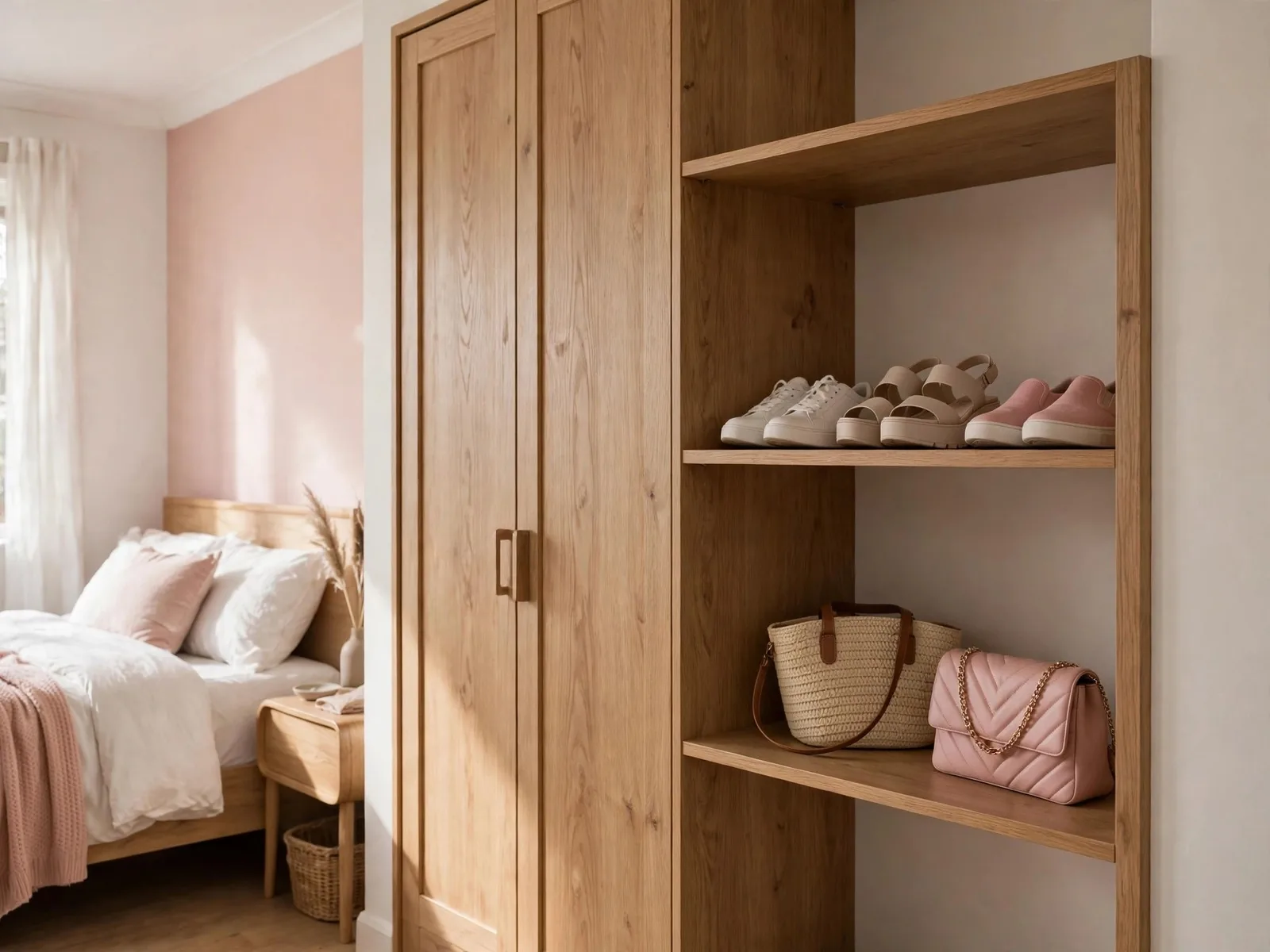
Keep the shelves 12 inches deep for shoes and space them about 14 inches apart vertically for bags. The daily pair stays by the door in idea 13; the shelves hold the rotation. Fixings go into studs. A loaded shoe shelf is heavier than it looks and adhesive strips are not a plan here.
Needs drilling: into studs for loaded shelves. Standard stud spacing is 16 inches, so plan shelf lengths in 16 inch steps.
The catch is dust and creep. Open display invites open dumping. The rule is one shelf and one category. Anything that does not fit the category goes to the closet zone or out of the room.
12. Slide under-bed bins in for off-season clothes (ages 13 to 19)
The space under the bed is 6 to 8 inches of free storage that most rooms waste. Low bins on wheels turn it into the overflow system: off-season clothes, the sleepover kit from idea 5 and the spare bedding all live there, labeled, where she can reach them without help.
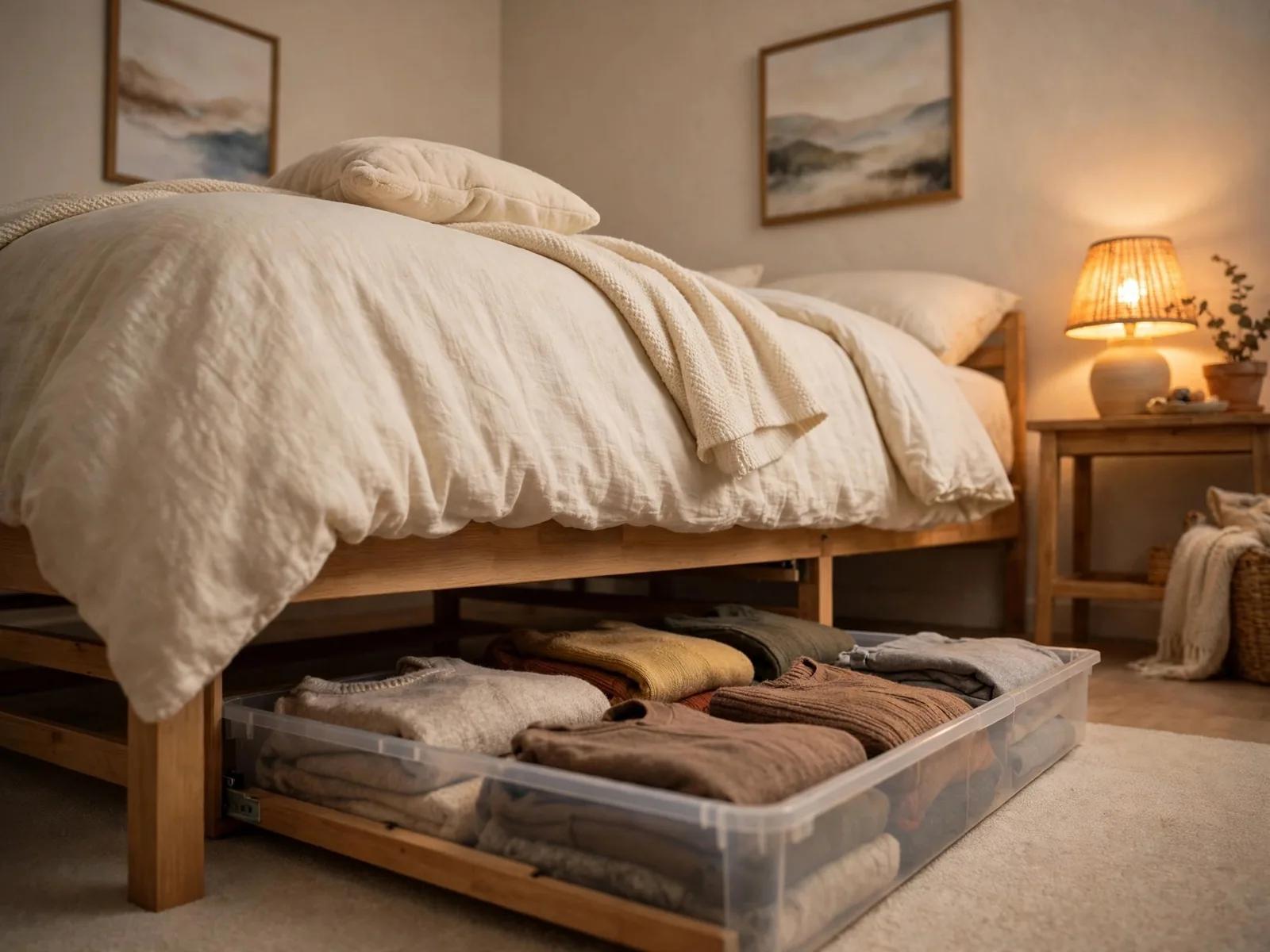
Lidded bins stack better and stay dust-free. Open bins get used more. The working compromise is lidded bins for the stored season and one open bin for the weekly rotation of sports kit and hoodies. Label the bin ends, not the lids, so the label reads while the bin is still half under the bed.
Measure: check the frame clearance before buying. Standard frames give 7 inches and platform beds can give as little as 4.
The catch is buying bins first. Measure the clearance and the slide-out run before the store trip. Otherwise the bins become the clutter they were bought to fix.
13. Put a drop zone by the door for bags and laundry (ages 13 to 19)
Every room has a drop zone. The only choice is whether it is a designed one by the door or an accidental one on the bed. Three hooks, one laundry basket and one small tray for the daily carry (keys, lanyard and earbuds case) at the door catch the school bag, the jacket and the gym kit at the border instead of mid-room.
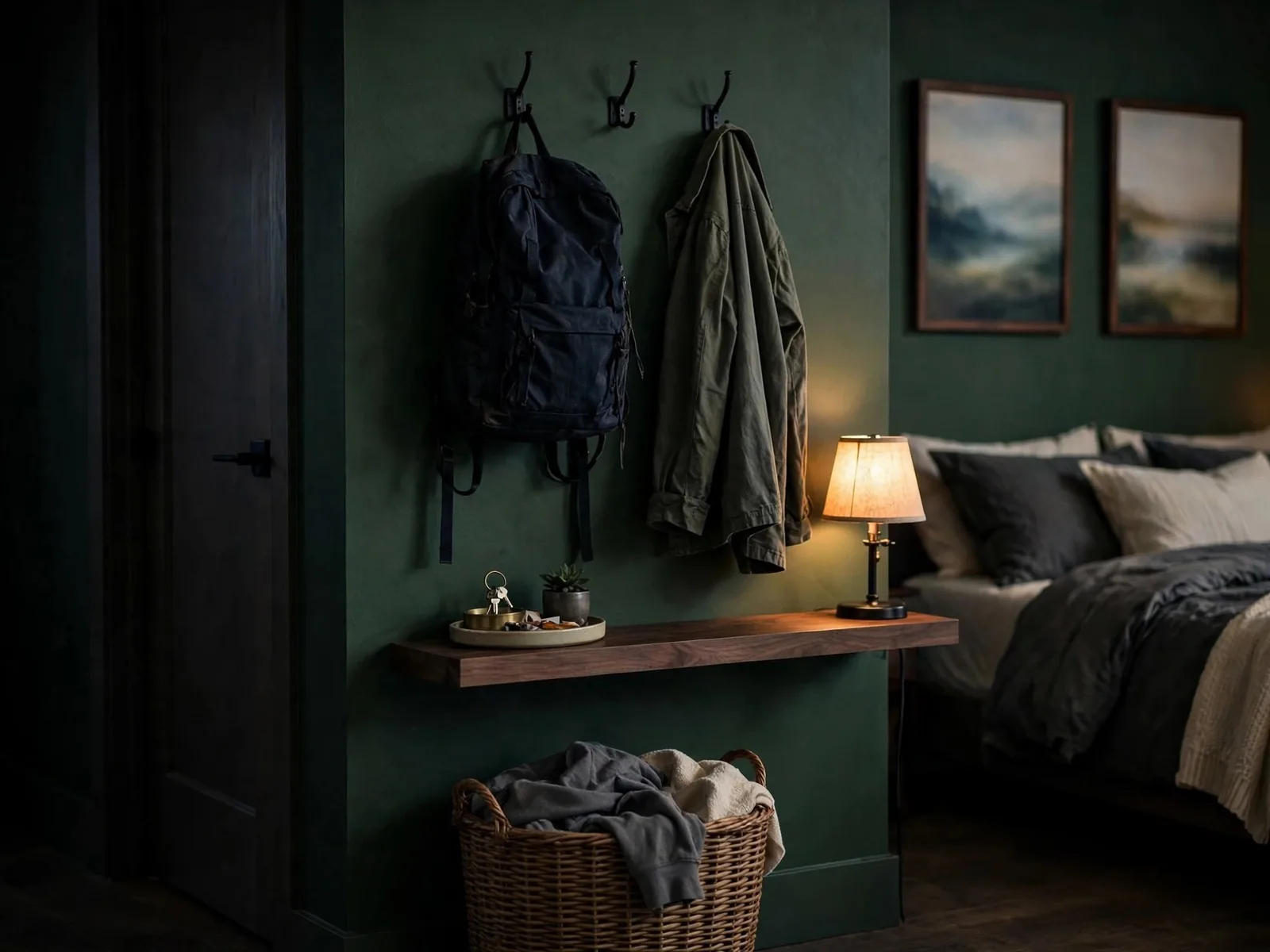
Height does the work: hooks at 48 to 54 inches hold bags off the floor and the laundry basket sits under them, so the strip-down path is one motion. In a shared room each sister gets her own hook row in her own color and the symmetry keeps the peace.
Renter-friendly: over-door hooks and adhesive hooks rated for bag weight do the whole job. Budget $15 to $40.
The catch is capacity. A drop zone sized for one bag fails when the sports season adds a second. Size it for the worst week of the school year, not the first.
The look: color, walls and light
14. Paint one accent wall in a color she picks (ages 13 to 19)
Four walls of a strong color is a commitment she will outgrow by summer. One accent wall behind the bed is the version that survives and the choice comes off a short tested list, not an open paint deck. The palettes that repeat across this topic are blush pink (Setting Plaster by Farrow & Ball or First Light by Benjamin Moore), clean girl neutrals (White Dove by Benjamin Moore), dusty blue (Beach Glass by Benjamin Moore), earthy terracotta (Cavern Clay by Sherwin-Williams) and one dark moody option (Backwoods by Benjamin Moore). Our bedroom color ideas page shows how each of these behaves in north light and south light.
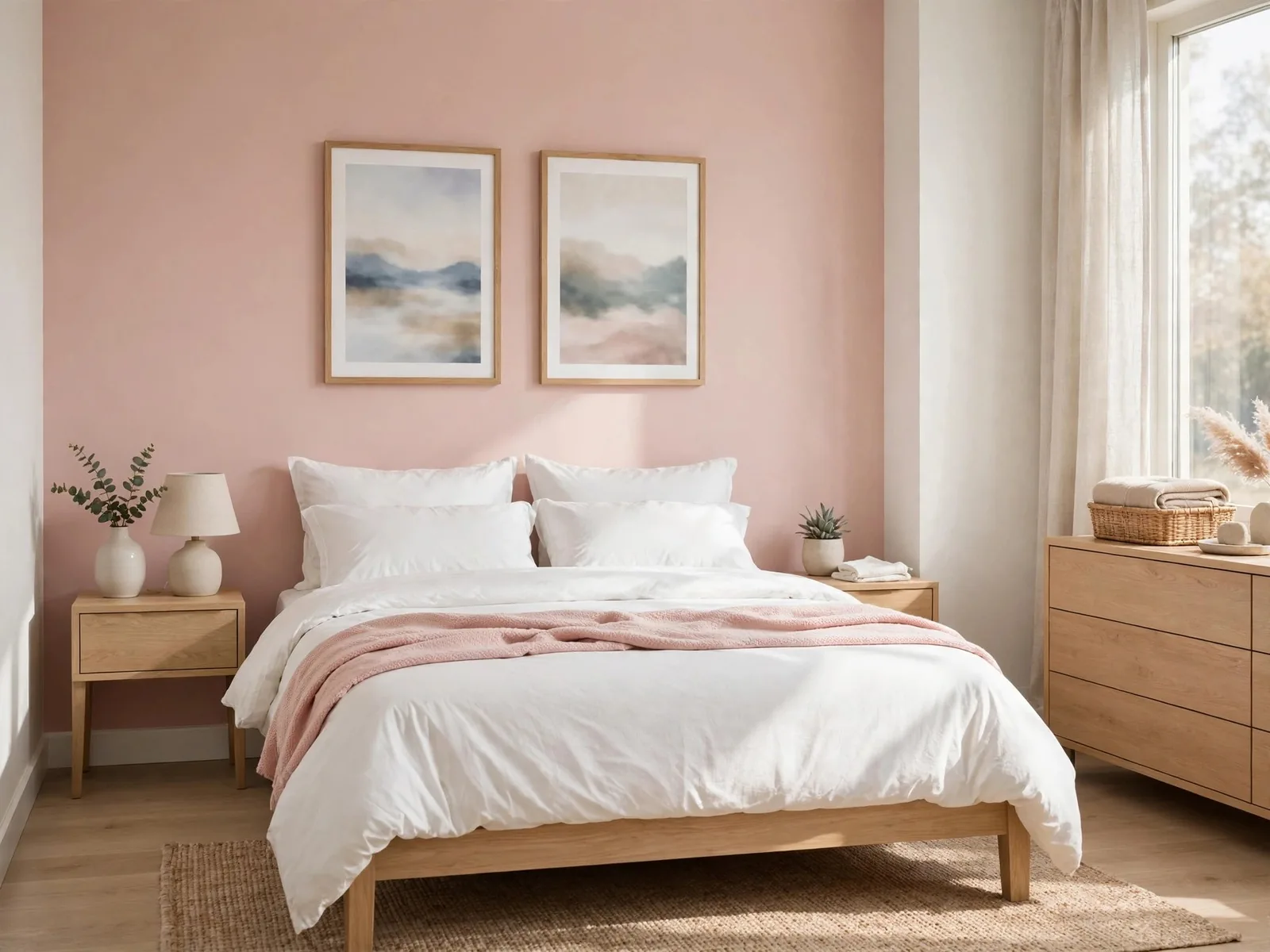
Keep the other three walls warm white, so the accent can change for the price of one gallon later. For the wall itself, the stripe, panel and two-tone shapes live in our bedroom accent wall ideas. The pink end of the list gets a page of its own in our pink bedroom ideas, coming later in this series.
Budget: one gallon of paint and a roll of tape, $35 to $55 for the whole transformation.
Test the color on the wall before the gallon is committed. A blush that reads soft at noon can read peach at dusk under warm bulbs and teen rooms live most of their life after dusk.
15. Start a gallery wall and photo ledges she can redo (ages 13 to 19)
The wall she curates herself is the wall she will not ask to repaint. Matching slim frames at 8 by 10 and 11 by 14 turn prints, photos and her own art into a gallery wall that changes its contents in ten minutes without changing its structure. Add one or two photo ledges below it for the rotating pieces that have not earned a frame yet.
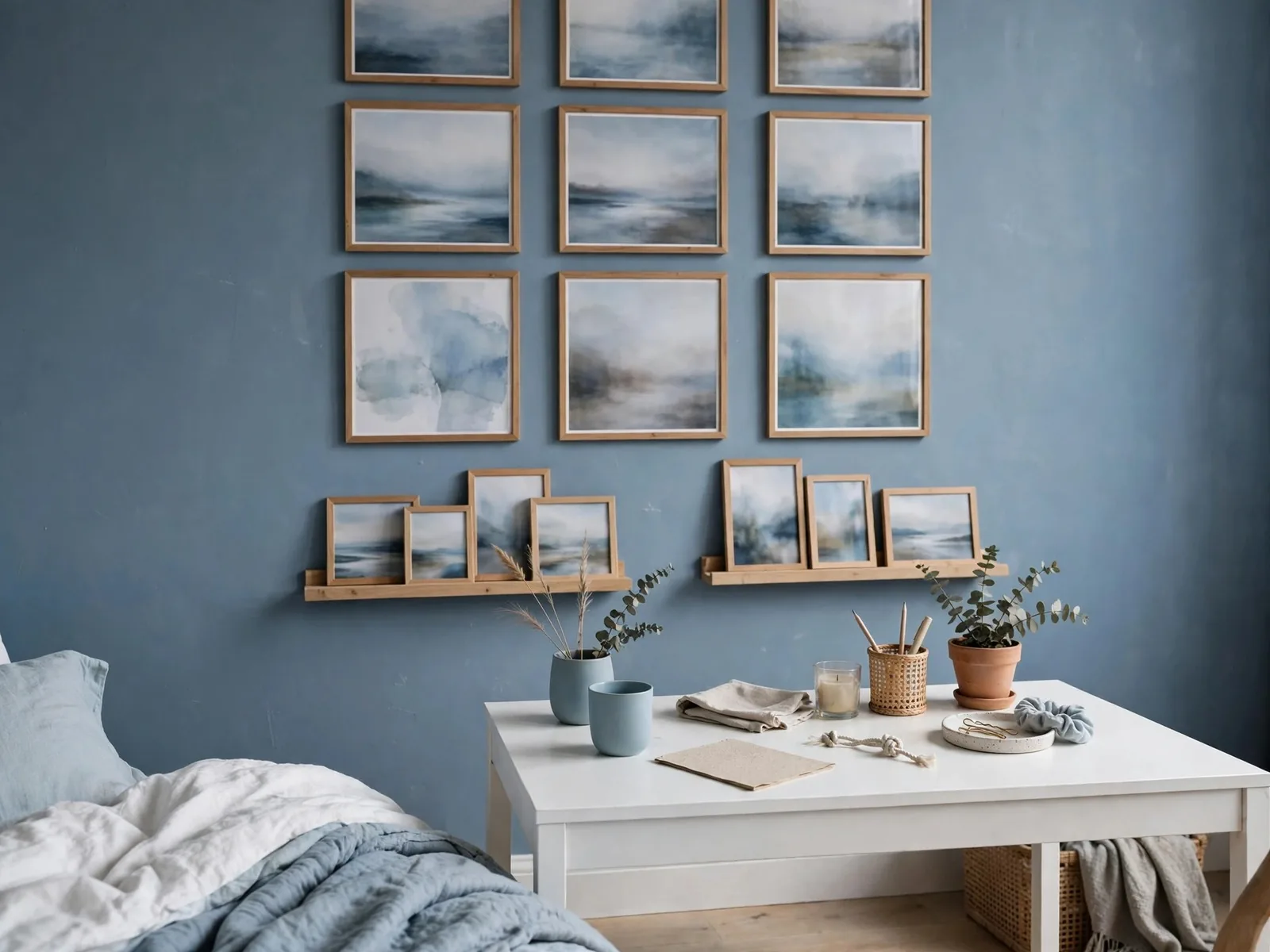
Plan the grid on the floor first. Keep 2 inches between frames and start the lowest row at desk height or about 48 inches from the floor. Ledges sit at 36 to 40 inches, so swapping prints stays a one-minute job at her height instead of a step-stool job.
Renter-friendly: adhesive strips rated per frame weight leave no holes. Ledges are the one exception: screw them into studs, because a loaded ledge falls as one piece.
The catch is the starter set. Buy frames in one finish and two sizes only. A wall of mixed frames reads as clutter by the third curation and matching bones are what let the contents change weekly.
16. Warm the whole room with layered light and LED accents (ages 13 to 19)
The ceiling light is why the room feels flat in every photo she takes of it. Layered light fixes the read: a warm main source for the whole room, task light at the desk and the getting-ready station and the LED strip from idea 4 as the accent layer. Three low warm sources beat one bright overhead every time. Our bedroom lighting ideas page works through the full layering system.
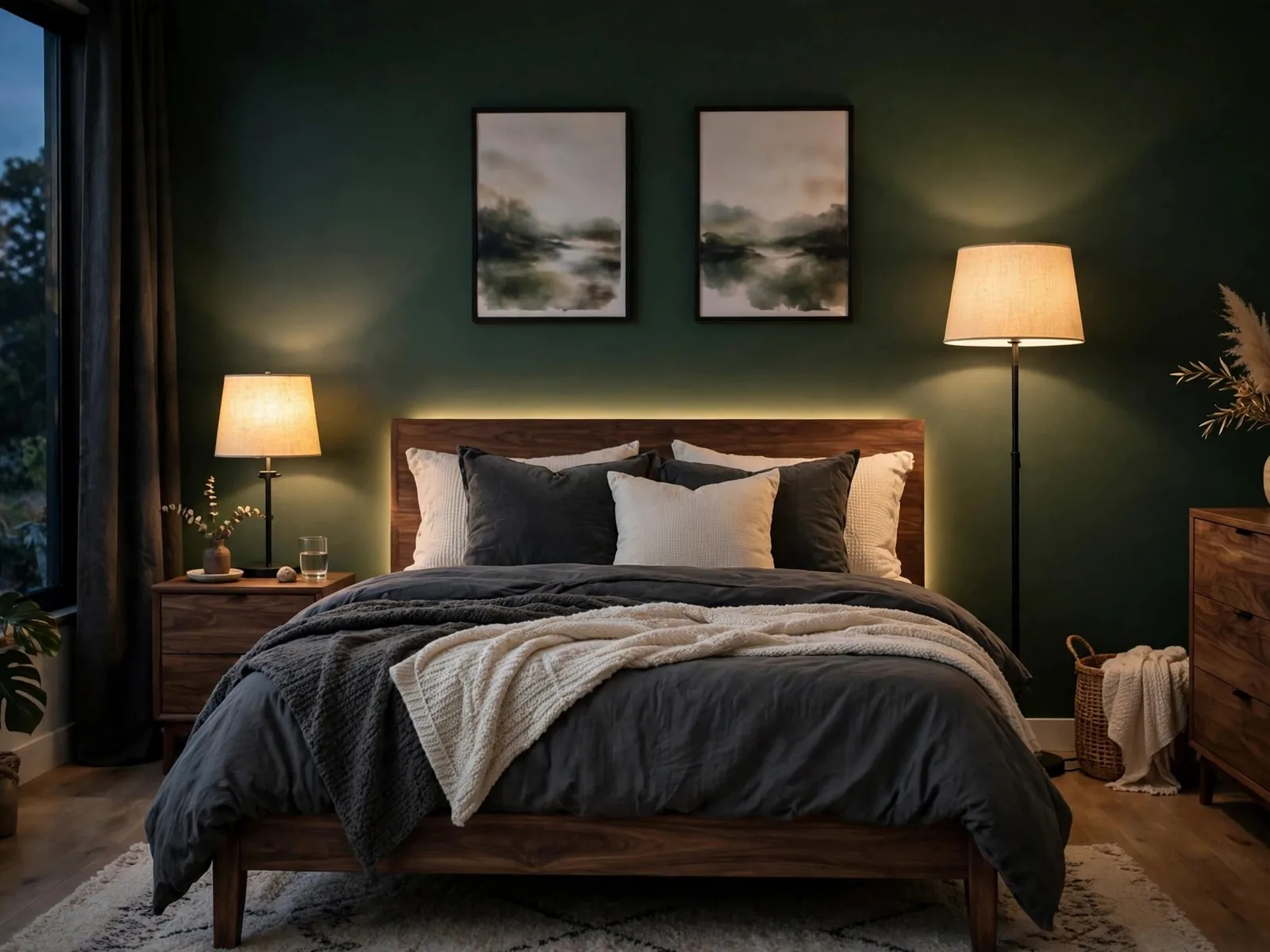
Keep every bulb in the sleep and downtime zones at 2700K to 3000K. The mirror light in idea 7 is the only daylight-true exception and it points at a face, not at the room. Dimmers or smart bulbs on the main source let the room drop to evening level without a lamp hunt.
Budget: $40 to $80 for two warm lamps secondhand plus the strip. The ceiling light stays; it just stops being the only light.
The catch is mixing temperatures by accident. One cool-white bulb in a warm room reads as an office. Check the Kelvin number on every box before it goes in the basket.
Teen Girl Bedroom Ideas for small rooms
Teenage girl bedroom ideas for small rooms live or die on one decision: the desk and the vanity are the same piece of furniture. One 48 inch desk with a mirror mounted above it covers homework by day and getting ready under a daylight-true lamp in the morning, in a single footprint. The full small-room playbook, bed sizes included, is in our small bedroom ideas.
The bed shrinks honestly too. A full at 54 inches instead of a queen hands back 6 inches of floor along the whole bed wall and in a 10 by 10 room that strip is the walkway. The trundle from idea 5 still fits under it, so the sleepover survives the smaller bed. The squeeze does not.
Storage goes vertical or it does not go. Display shelves above the drop zone, photo ledges over the desk and a closet rail zoned tight carry what a dresser would. The floor stays clear enough to get dressed in, which in a small teen room is the real luxury. Skip the reading chair: the bed with the canopy panel at its head is the nook and the clip lamp moves to the headboard.
Mistakes that make it fall flat
- Decorating without her signature. A room redone as a surprise gets politely tolerated and quietly undone by October. Bring two or three options per decision and let her make the final call inside them. The two-signature rule is not a courtesy; it is the mechanism that keeps the room redone.
- Buying the full themed set. Bedding, curtains, lamp and rug all in one aesthetic expire together in twelve to eighteen months and take the whole budget with them. Buy the neutral base and let the theme live in the swap layer of prints, cushions and one throw.
- Keeping the twin and the child-size desk. The outgrown bed and the too-small desk announce that the room was not really redone. The bed and the desk are the redo; everything else is dressing. Adult sizes bought once cost less than teen sizes bought twice.
- Installing storage she did not choose. A system a parent designs and a parent runs collapses within a term. Zoned rails, bins and labels she arranged get maintained, because the system is hers. Your role is the hardware and the budget line.
- Four walls of the bold color. The color she loves at full saturation on every wall becomes the color she cannot escape by spring. One accent wall gives the hit and keeps the exit at one gallon.
- Skipping the anchors because she is bigger now. Bookcases and wardrobes go unstrapped in most teen rooms on the theory that the child grew. The climbing risk did not shrink with her. The strap takes ten minutes and it goes into a stud.
Questions people ask about this
How do I decorate a teen girl’s bedroom on a budget? Start with light and textiles, not furniture. An LED strip costs $15 to $25 and changes the room after dark. One gallon of paint covers the accent wall for $35 to $55. New bedding in her palette runs $60 to $90. Storage bins and frames come secondhand. The bed and desk upgrades wait until the budget reaches them.
What colors do teen girls like in a bedroom? The palettes that repeat across teen girl bedroom ideas are blush pink, clean warm neutrals, dusty blue, earthy terracotta and one dark moody option in forest or charcoal. The pattern matters more than the color: one strong wall or textile layer over a neutral base. Let her pick from two or three tested options.
How do I fit a desk and a vanity in a small teen bedroom? Do not buy both. One 48 inch desk with a mirror mounted above it does both jobs: homework by day and getting ready under a bulb frame or a daylight lamp. Keep the surface at 24 inches deep and the chair shared. The wall above holds shelves instead of a hutch, so the footprint stays one piece of furniture.
The bottom line
A teen girl room works when the plan respects the negotiation: her look, your budget and safety lines, furniture at adult size and color that lives where it is cheap to change. The palette will rotate twice more before she leaves and the plan underneath does not have to. This week, take the four measurements from the top of this page and let her pick the accent color off the short list. Those two signatures start everything.