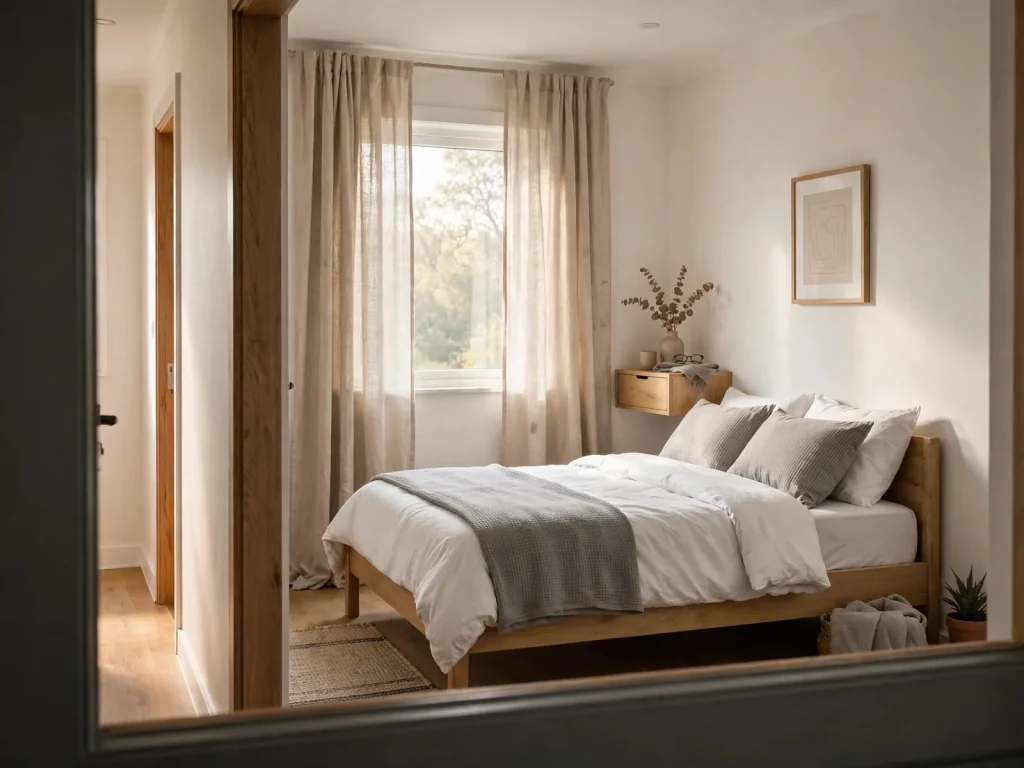
The room you decorated for a three year old is expiring in front of you. The toddler bed is too short, the princess decals that once caused squeals now get an eye roll and your daughter has started issuing design opinions with the confidence of a magazine editor. Redoing her room feels urgent and slightly terrifying, because whatever you buy now has to survive the next growth spurt too.
This page treats girls bedroom ideas as a growth plan instead of a shopping trip. Every idea is tagged to one of three age bands, 4 to 6, 7 to 9 or 10 to 12, so you can see which stage it serves and when it hands over to the next one. The color stories run well past pink, the theme lives in pieces that swap in an afternoon and the sleepover and two-sister layouts are planned rather than improvised. Each idea carries a measurement, a budget band or a renter note, because a girl’s room is a working room and not a showroom. The same plan-first thinking runs through our main collection of bedroom ideas for the grown-up rooms in the house.
Before you start: measure, budget, rules
Measure the room before you fall for anything. Write down the wall-to-wall width and length, the door swing, the window position and the ceiling height. Pick the bed wall on paper first, because the bed is the biggest object in the room and every other zone fits around it. Note the radiator and outlet positions too, since the desk and the reading lamp both want the walls those things already own.
The age bands on this page are the planning unit. The 4 to 6 band is the big-girl band: first real bed, dress-up within reach and everything low enough for small hands. The 7 to 9 band adds school, so a first desk, real book storage and strong opinions about color all arrive together. The 10 to 12 band is pre-teen: a getting-ready corner, more say in the decor and the first pieces chosen to hand over to the teen years at 13. That next stage is a different job with its own page, so nothing here pretends to cover it.
Safety, stated plainly. Anchor every tall piece, dressers and wardrobes and bookshelves, to the wall with the straps in the box or a $10 hardware kit. Choose cordless blinds or fit a cleat high on the frame and keep cords wound up out of reach. At the 4 to 6 band, pick rounded corners on the bed frame and table edges or add stick-on corner guards for those years. These are one-afternoon jobs and they come before every decorative idea on this page.
The budget bands used below are under $50, $50 to $150, $150 to $400 and $400 plus. Most ideas sit in the first two bands on purpose. Renters: every idea that needs a screw or a strap has a no-drill or low-drill alternative flagged in its practical line and the theme in this system lives in peel-and-stick decals, bedding and curtains, never in paint you have to undo at move-out.
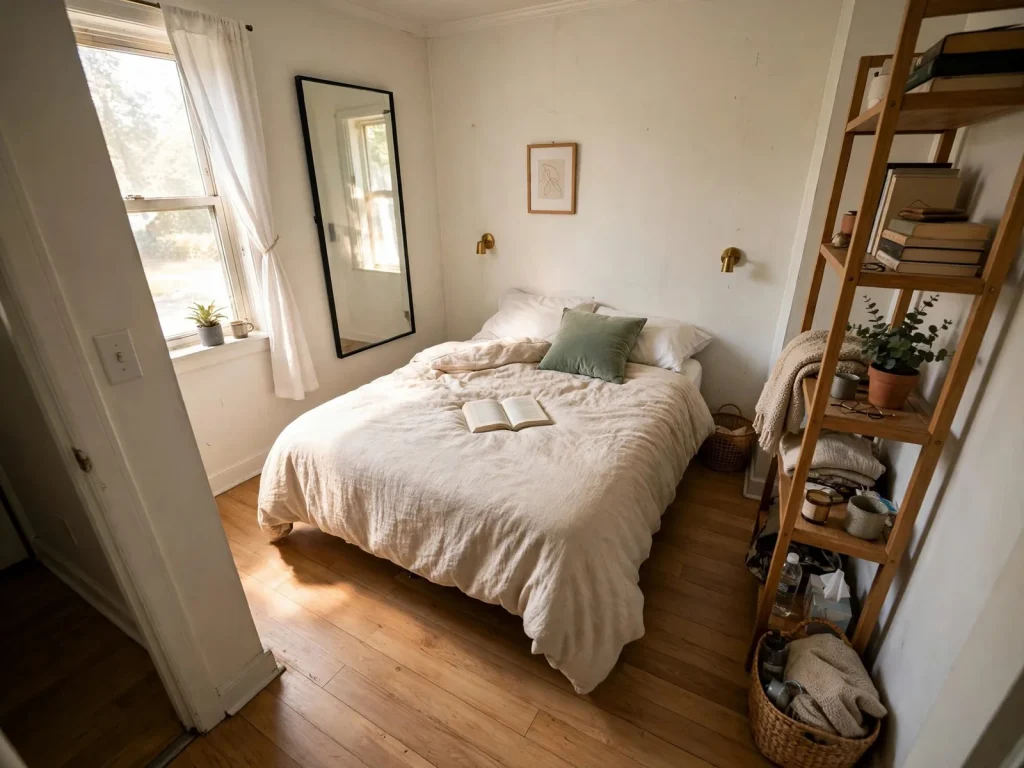
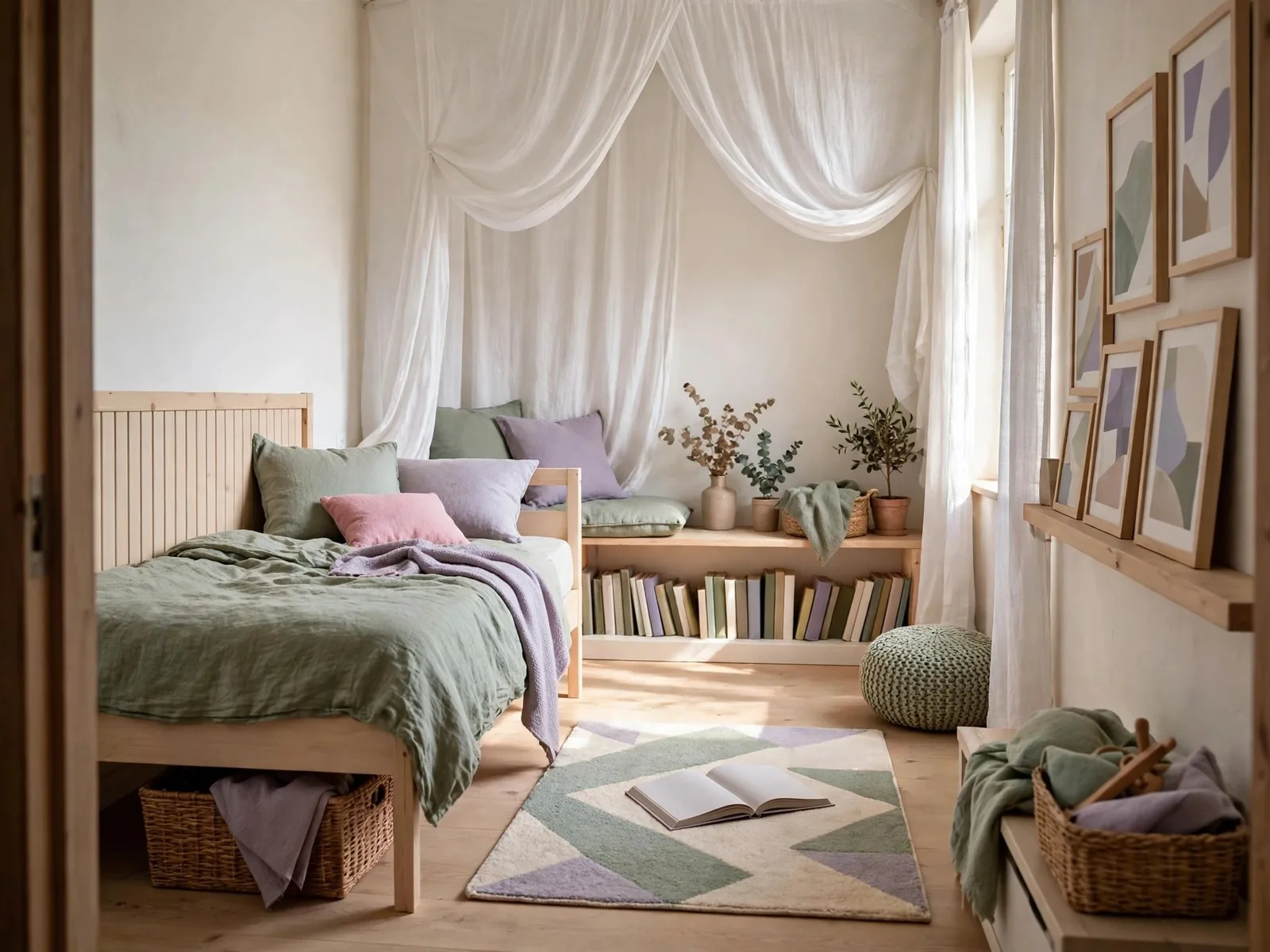
One rule before the zones, because it decides everything else. The base of the room stays neutral: warm white walls, pale wood or white furniture and plain curtains. The theme and the color story live in the layer that swaps cheaply, the bedding, decals, cushions and art. Pink gets used in doses inside that layer and the named palettes beside it are sage, lavender, butter yellow and dusty blue. A room built this way becomes the age 10 room with soft pieces only, which is the whole point of the page.
Sleep zone
1. Move her into a first big-girl bed that lasts (ages 4 to 6)
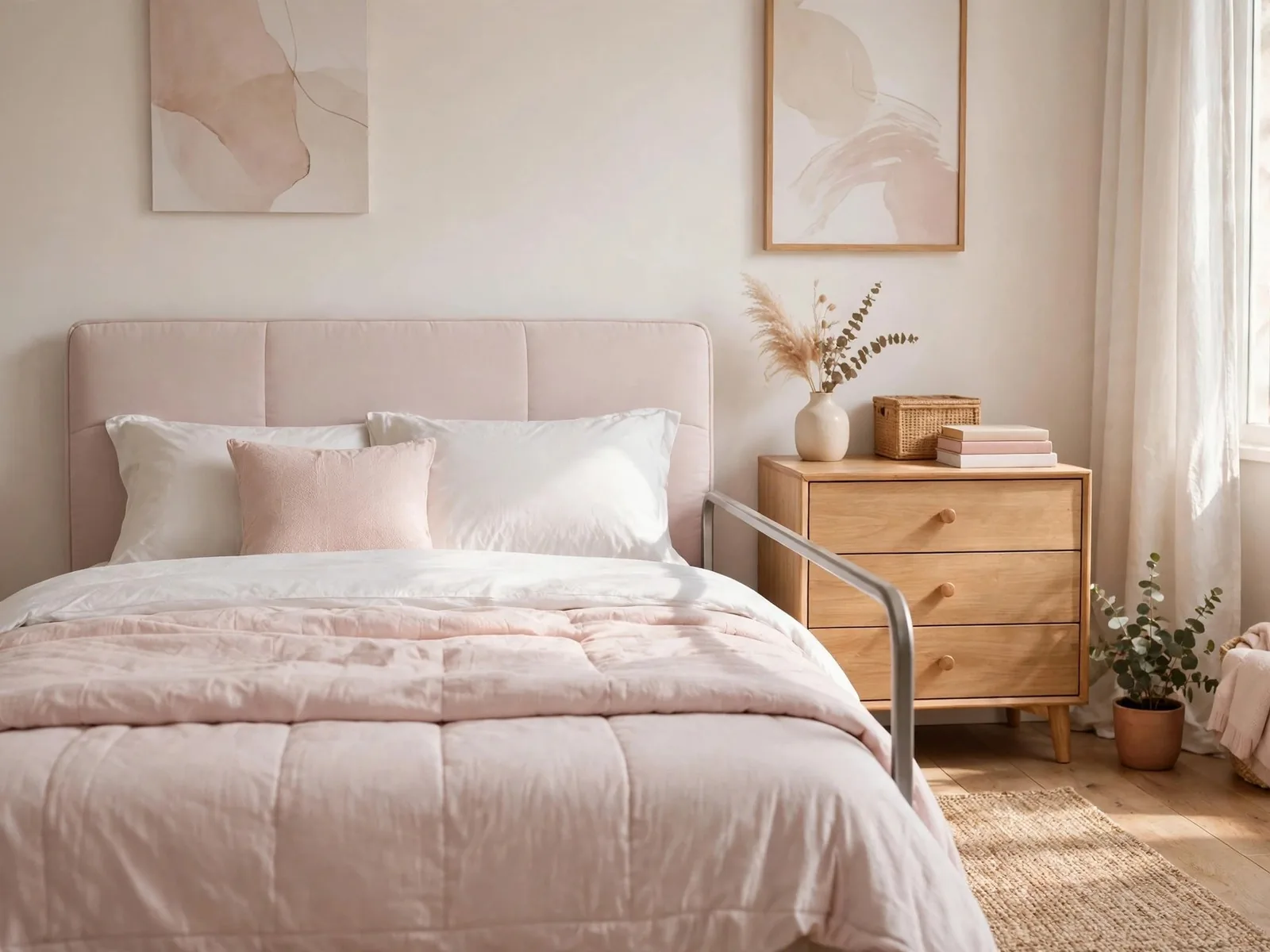
The move out of the toddler bed usually announces itself. She climbs out at night, her feet press the foot rail or she starts asking for a big girl bed like her cousin’s. Most girls are ready somewhere between age 4 and age 5 and this page starts at 4 for exactly that reason. When the signs are there, skip the novelty bed shaped like a carriage or a castle. It fits her for about two years and fits the room for even less.
Go straight to a twin, 38 by 75 inches, on a low plain frame. A twin carries her from the first big-girl night to the edge of the teen years, so the bed is bought once. Choose a frame with rounded corners at this band and add a slim guard rail on the open side for the first months. The rail comes off in minutes when she stops rolling and the frame never has to change.
The headboard is where a little personality can live safely. A simple padded or plain wood shape in a neutral fabric reads young beside pink bedding now and calm beside sage bedding later. The shapes worth copying are the simple ones in our headboard ideas post.
Measure: a twin frame needs a clear wall run of about 80 inches including the headboard, so measure the bed wall before the frame arrives and not after.
2. Slide a trundle under the bed for sleepovers (ages 4 to 12)
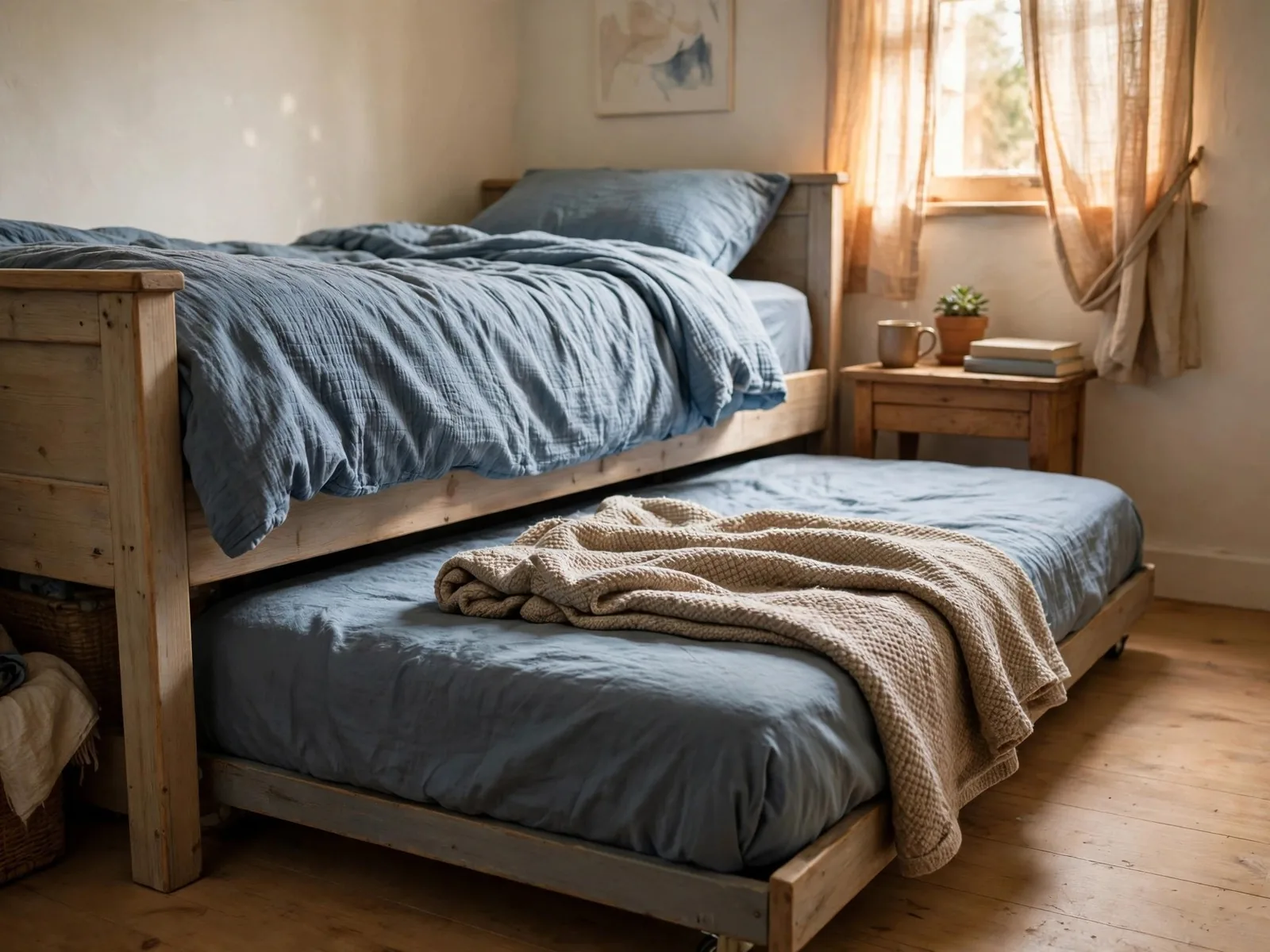
Sleepovers start in the early school years and small rooms fail at sleepover o’clock, when the guest ends up on an air mattress across the only walkway. A trundle solves it inside the bed’s own footprint. It rolls out at night to a second twin and rolls away by breakfast, so the room keeps its floor on the 29 nights a month nobody is visiting.
Check the slide-out run before you buy. The trundle needs a clear stretch of floor the full length of the bed, about 79 inches, plus knee room for the adult making it up. If the door swings across that stretch, park this idea and use a folding camp cot instead. Keep the trundle made up with its own fitted sheet and a folded throw, so a sleepover takes five minutes to set up and your daughter can pull it out herself by the 7 to 9 band.
Measure: under-bed clearance of 10 to 12 inches fits most trundle frames and their mattresses.
3. Hang the canopy over a corner and not over the bed (ages 4 to 9)
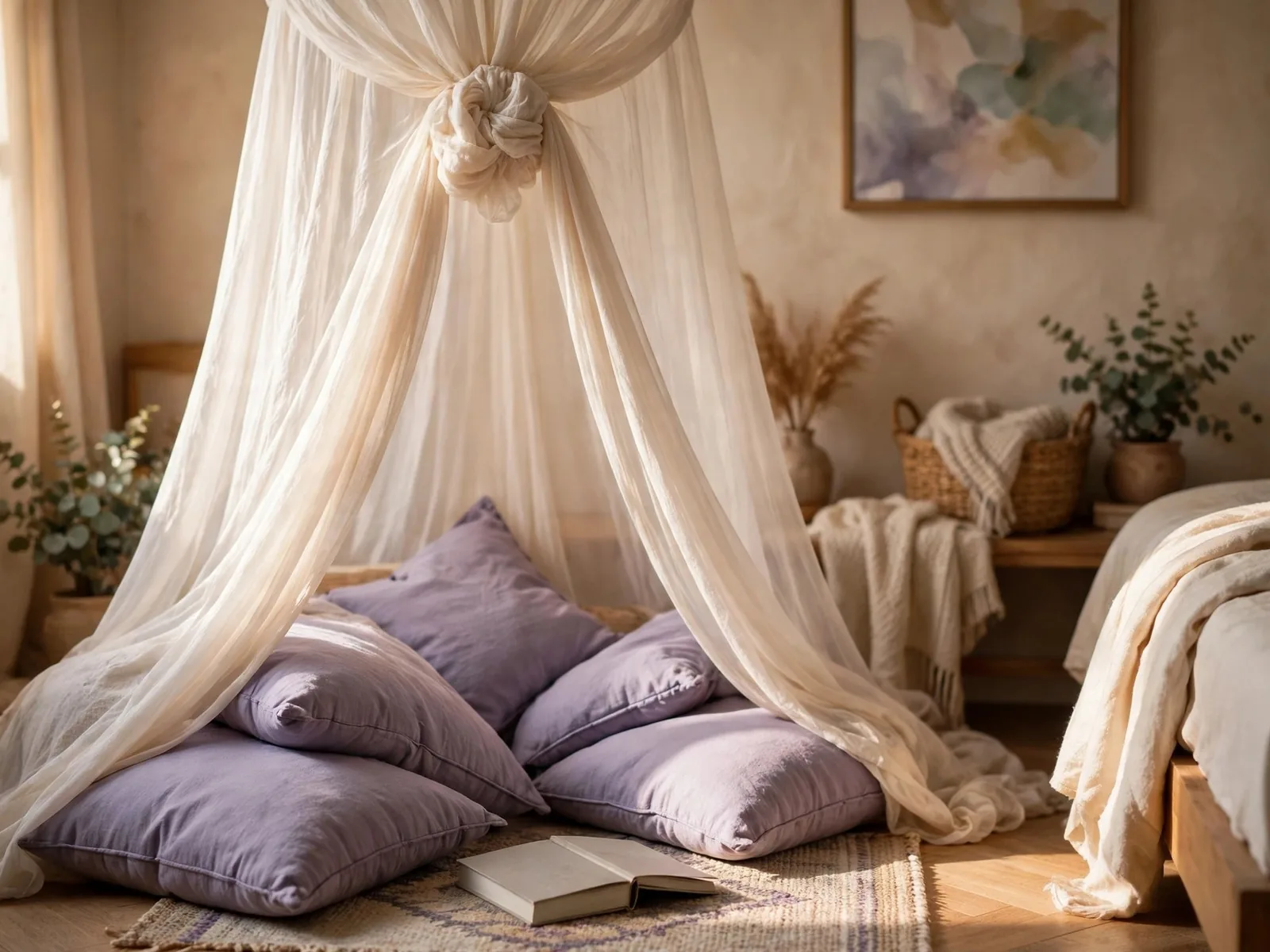
The canopy is the most saved image in girls bedroom ideas age 8-10 searches and the one most often done unsafely. Fabric draped over a young child’s bed is a tangle risk and a dust trap in the one place she breathes all night. The fix is placement. Hang the canopy over the reading corner instead, where it makes a tent for books and dress-up and stays clear of sleep entirely.
Mount it properly. The hook goes into a ceiling joist or a wall stud with a rated fitting and the fabric hangs in one gathered column that a child cannot pull down on herself. Choose a light washable fabric and take it down for a wash every few months. At the 7 to 9 band, the safer grown-up version is two curtain panels on a tension rod across the bed nook, pretty in photos and fully cordless in practice. The room’s window blinds follow the same rule, cordless or cleated high, with no loop within reach of the bed.
Needs drilling: the canopy hook must land in a joist or a stud. A plaster anchor alone is not a safety fitting.
4. Layer the bedding so she can change it herself (ages 4 to 12)
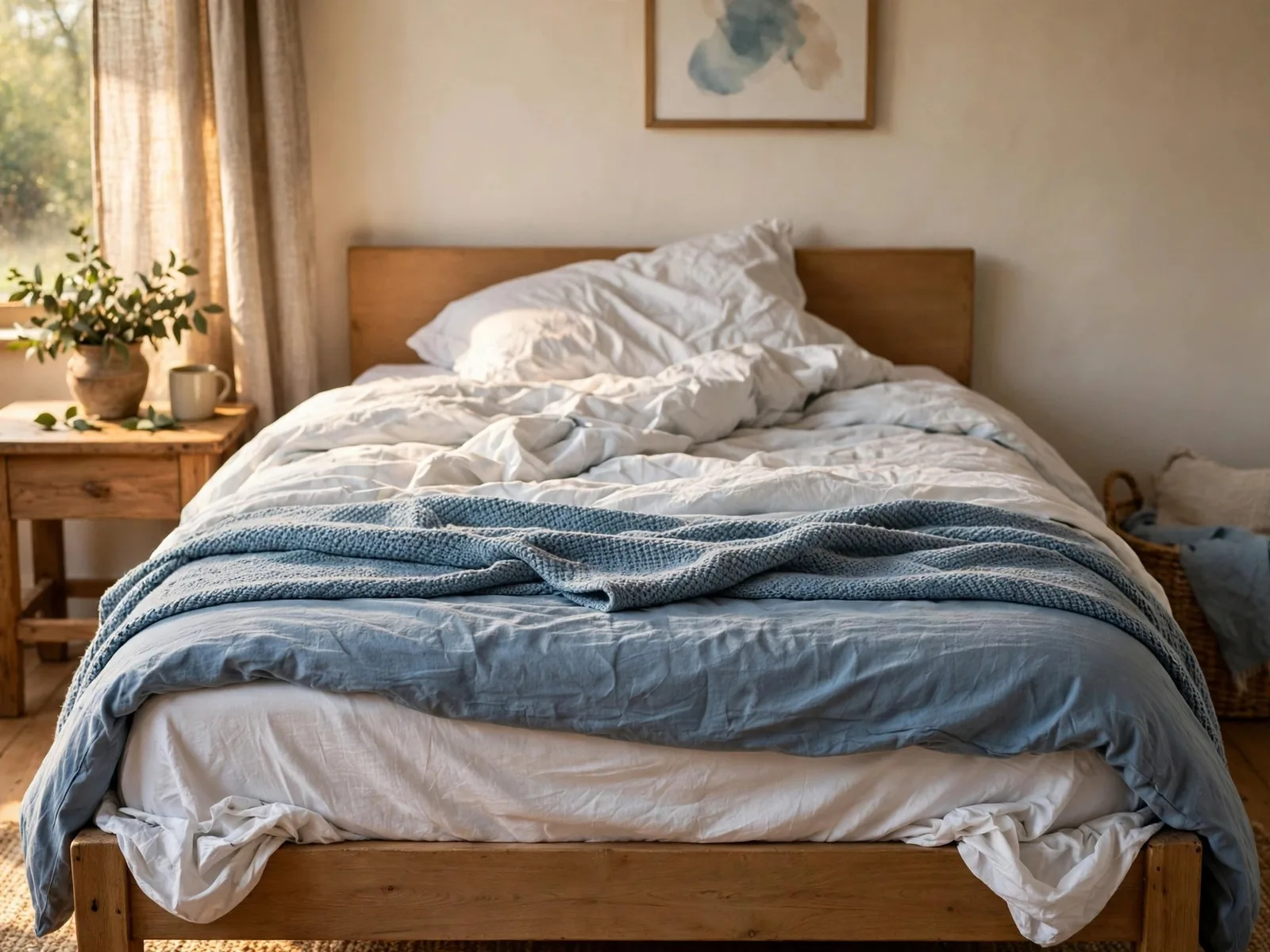
A bed she can make is a bed that gets made. Build the layers for small hands: a fitted sheet she can pull over the corners, a light duvet in a cover she can shake into place and one throw across the foot for the finished look in photos. Skip the stack of decorative cushions that has to be removed and replaced twice a day. Two sleeping pillows and one cushion is the honest limit at this age.
Buy two full sets in her color story, so laundry day is a swap and not a crisis. The second set is also the sleepover set and the sick-day set. Choose a duvet weight she can lift without a wrestling match: a light all-season fill beats a heavy winter duvet that an adult has to heave back onto the bed every morning.
Budget: $40 to $80 for two full bedding sets in the swap layer, sized to the twin.
5. Give two sisters one sleep wall and two identities (ages 4 to 12)
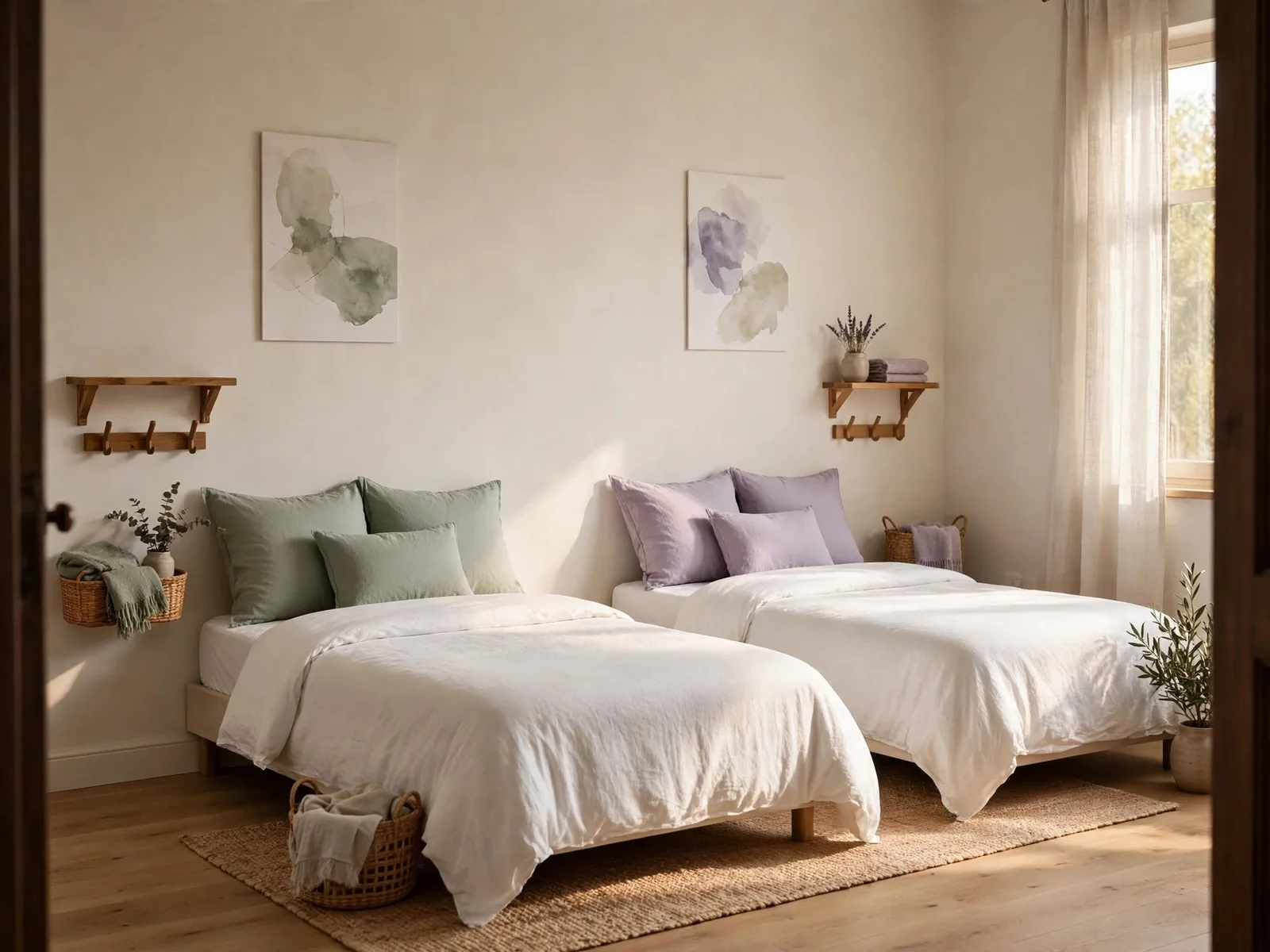
Two sisters in one room works when the sleep zone is planned as one wall with two owners. Put two low twins along the same wall or one twin with the trundle from idea 2 if the room is tight and give each sister her own shelf, her own hook and her own bin inside that layout. Shared is fine for the middle of the room. It fails at the bed, where each girl needs one square of the room that is fully hers.
Run the color story as a shared base with two accents. Both beds get the same white bedding and the same frame, then one sister takes sage cushions and the other takes dusty blue or lavender. The room reads as one design and neither girl got the leftover version. At the 10 to 12 band, a curtain panel on a tension rod between the two beds buys each sister a little privacy for the price of a curtain.
Measure: keep at least 24 inches of walkway between the beds and the dresser, so both girls can pass at bedtime without a negotiation.
Play, reading and getting-ready zone
6. Face the books out on low ledges in a reading nook (ages 4 to 9)
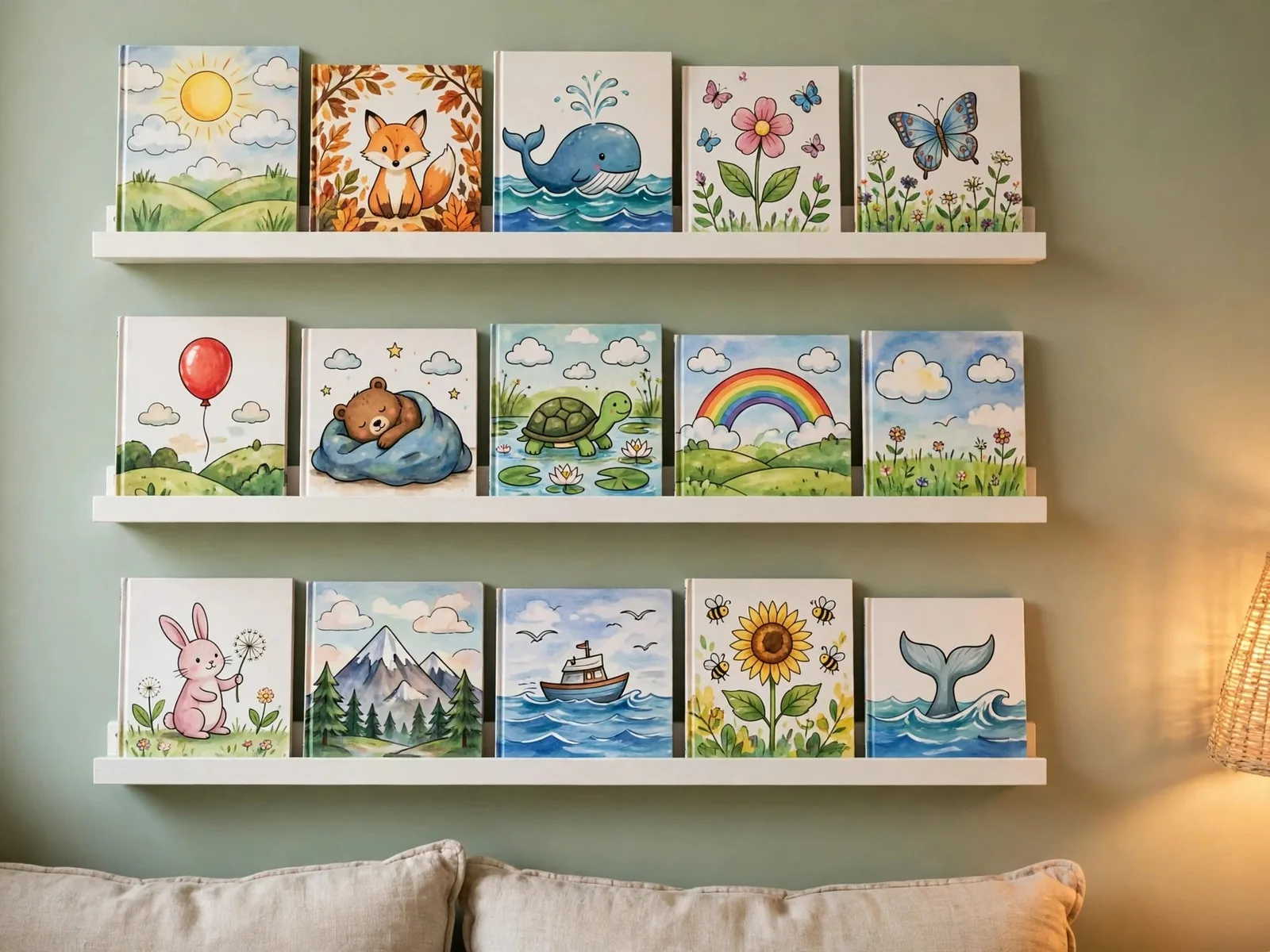
Young readers choose books by their covers, so store them like a bookshop, covers out. Two or three shallow ledges, each about 36 inches long, hold 15 to 20 picture books in a row she can browse without pulling a whole shelf down. Put the ledges beside a floor cushion and a small rug and the corner becomes the reading nook she chooses over the bed in daylight hours.
Height is the whole game. Put the lowest ledge at 18 inches for the 4 to 6 band and the top one at 36 inches for the 7 to 9 band. Rotate what is on show every few weeks and keep the overflow in a bin, because twenty visible books get read and sixty crammed books get ignored. When chapter books take over, the same ledges turn into display shelves for collections and school certificates.
Light makes or breaks the nook. A plug-in lamp on a low stool gives the warm pool of light that says stay here. The bulb rules are the same ones we give adults in our bedroom lighting ideas post: warm white, shaded and low.
Needs drilling: ledges screw into studs; renters can use a leaning floor ledge shelf against the wall instead.
7. Put a dress-up rail at her height in the play corner (ages 4 to 6)
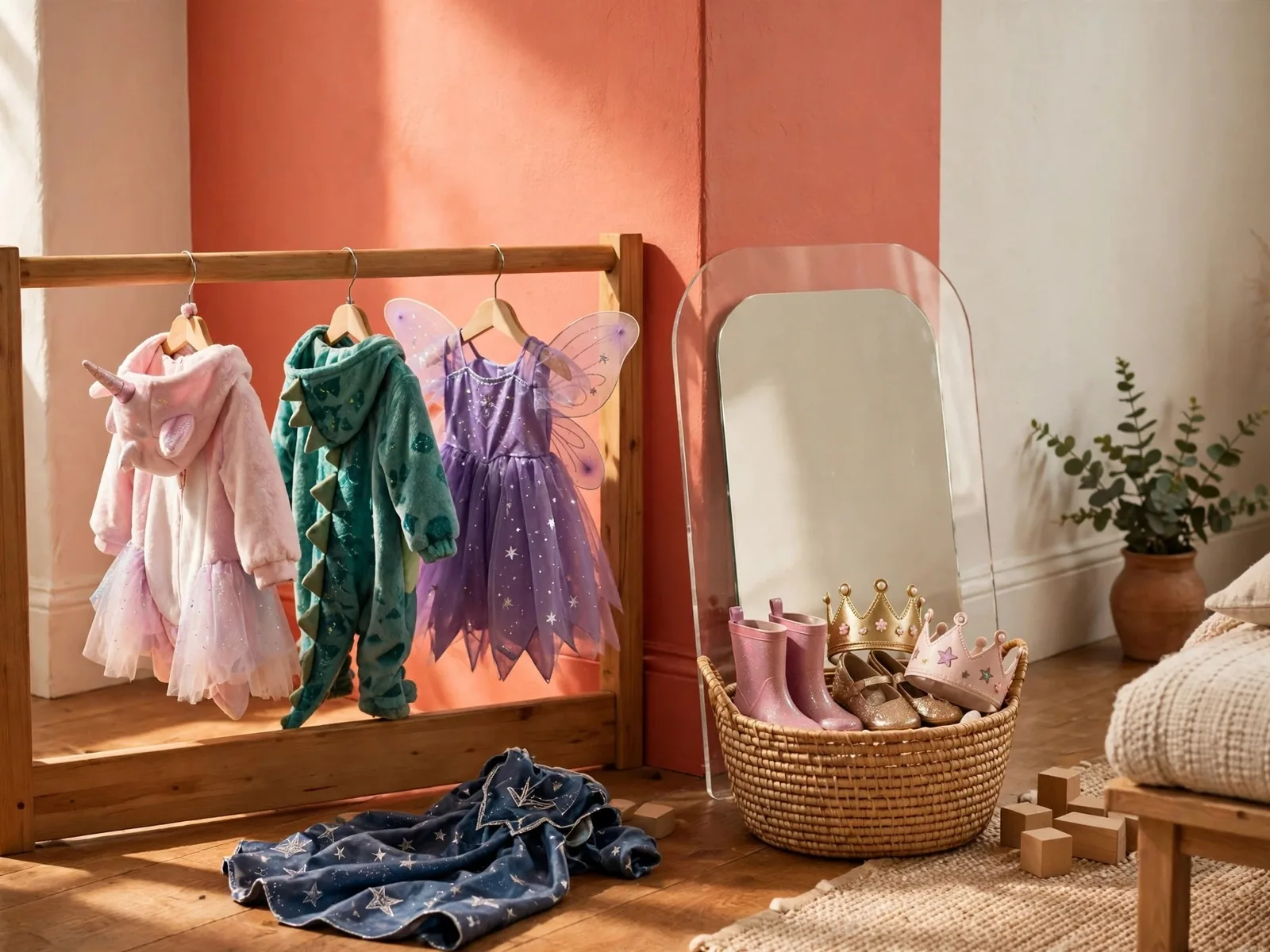
The young band lives half the day in costume and the costumes live wherever they were dropped. A low rail at about 30 inches gives dress-up a home she can run alone: princess dresses, capes and the one pair of wings on small hangers she can reach and rehang without help. A basket on the floor underneath takes the shoes, crowns and props that never hang well.
Set the rail in the play corner with an acrylic mirror beside it. Acrylic, not glass, because this is the band that falls into furniture. The mirror gets rounded corners and a stick-on or screwed mount at her eye height. When dress-up fades around age 7, the same rail becomes the costume overflow for school plays or a display rail for the dress and jacket rotation in the closet system below. Nothing about it is wasted.
Budget: under $50 for a small garment rack or a tension-rod rail, an acrylic mirror and a floor basket.
8. Add a first desk when school starts (ages 7 to 9)
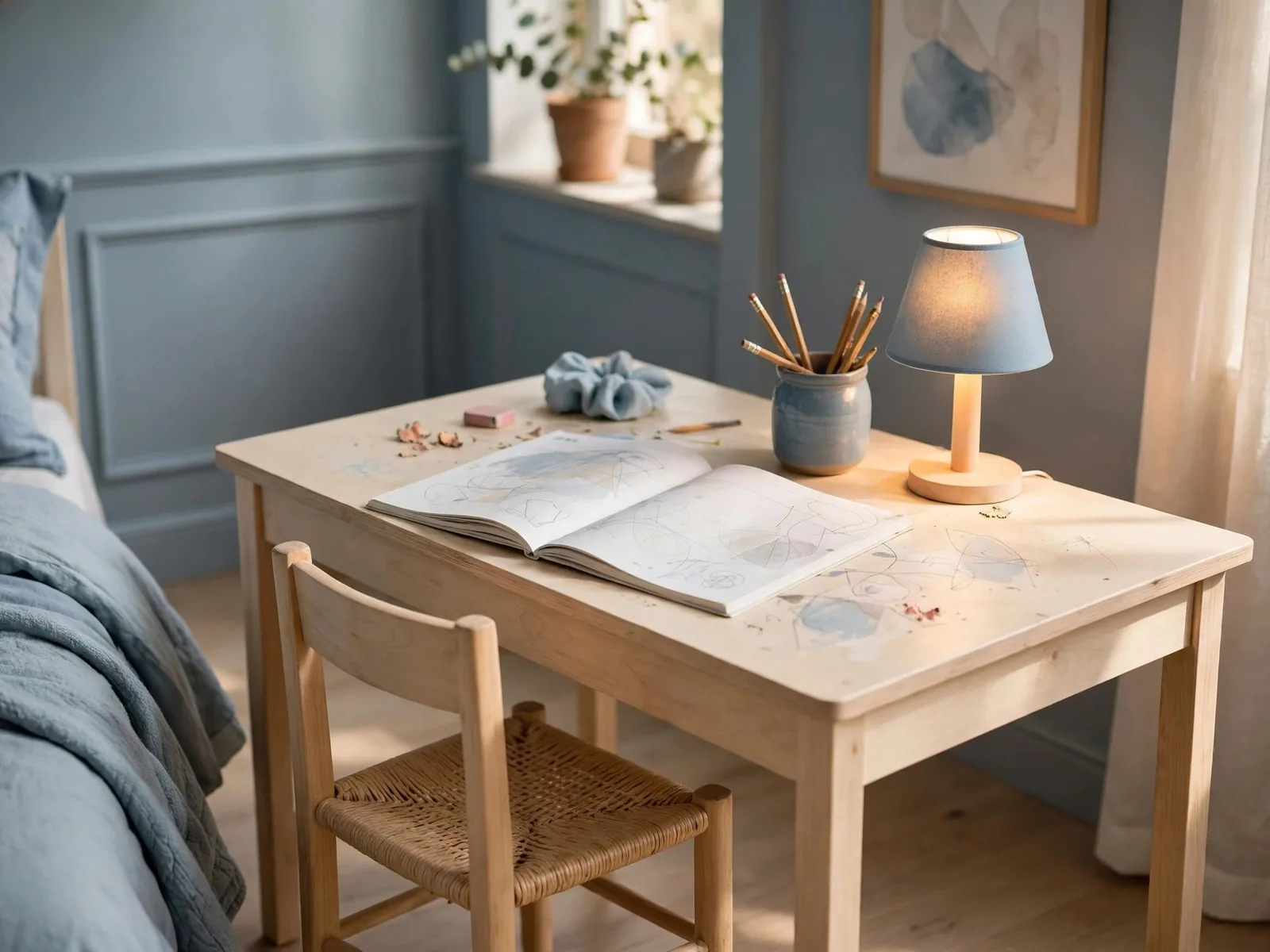
Homework arrives in this band whether the room is ready or not and a girl working at the kitchen table every night is a room that missed its moment. A first desk does not need to be big. A top 40 to 48 inches wide holds a workbook, a pencil pot and a lamp with room to spare and it fits along the wall a toy shelf just vacated.
Choose plain and light: a simple flat-pack desk in white or pale wood with a top around 26 to 28 inches high and a chair that lets her feet sit flat on the floor. Plain matters because this desk will sit beside three different color stories across its life and a neutral desk never argues with any of them. Give the desk one drawer or one box on top for the school clutter, so the surface resets in a minute at bedtime.
Budget: $80 to $150 for a plain desk and chair that still read fine at age 9 and at age 12.
9. Build a small vanity and accessory station (ages 10 to 12)
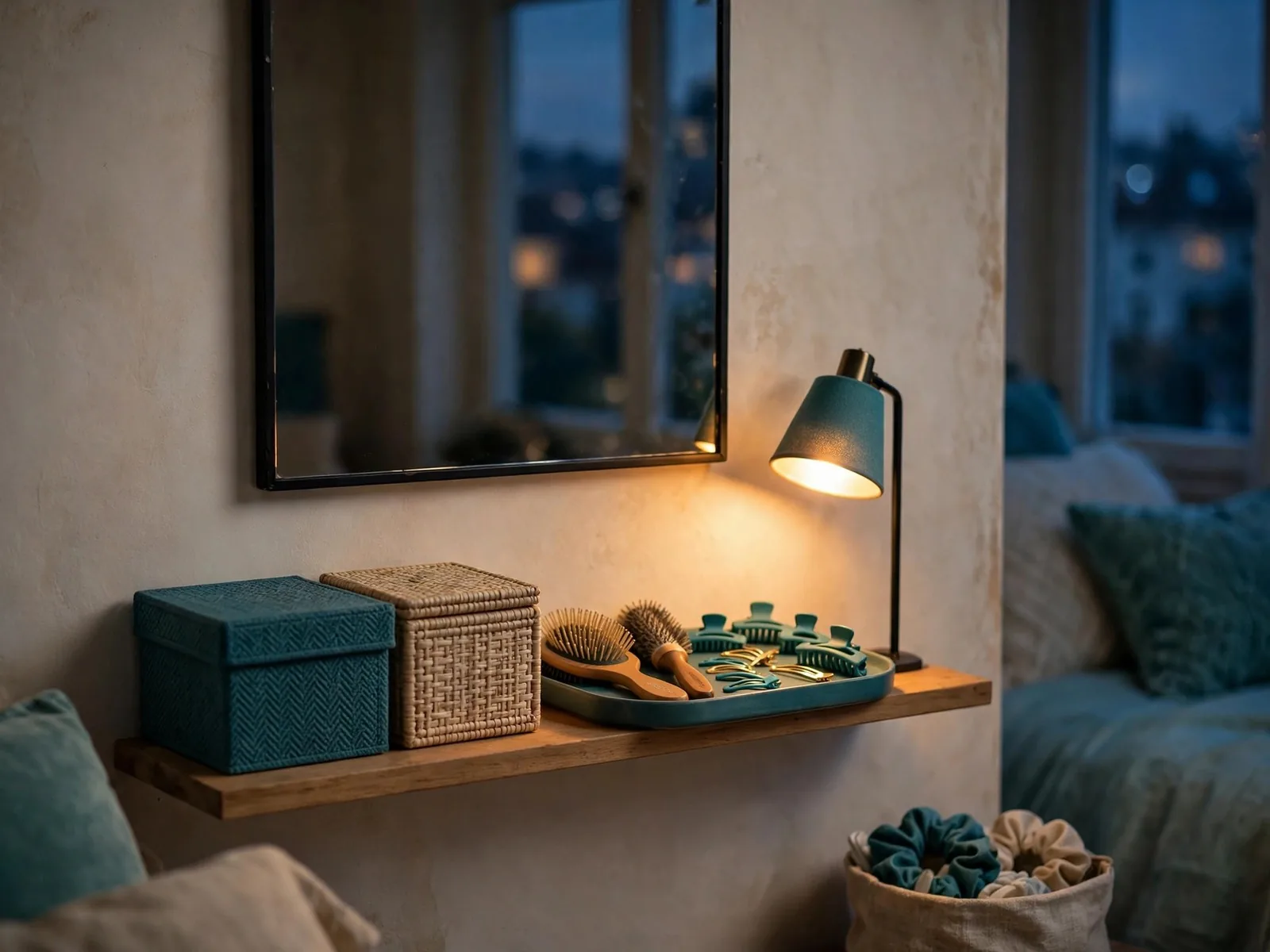
The oldest band on this page asks for one thing the younger room never needed: a place to get ready that is hers. A small vanity corner answers it without a furniture spree. A shelf or narrow desk about 30 inches wide, an acrylic or framed mirror above it and one tray for brushes, hair ties and clips turns the morning scramble into a station she runs herself. This is the pre-teen version of the idea. The full study-led and identity-led version belongs to the teen years and gets its own page when she turns 13.
Keep the station small on purpose. Two organizer boxes hold everything this band actually owns and a small task lamp with a warm bulb does the lighting job better than the ceiling light. Hair tools stay unplugged in a heat-safe pouch on the tray at this age and perfume and sprays live on the tray and not on the bedding shelf. The catch is drift: accessories multiply, so the tray is the boundary and anything that stops fitting on it gets edited at the next refresh.
Budget: $30 to $70 for a mirror, a tray and two organizer boxes, set on a shelf or desk she already owns.
Storage she can run alone
10. Run low open shelves at her height, not yours (ages 4 to 9)
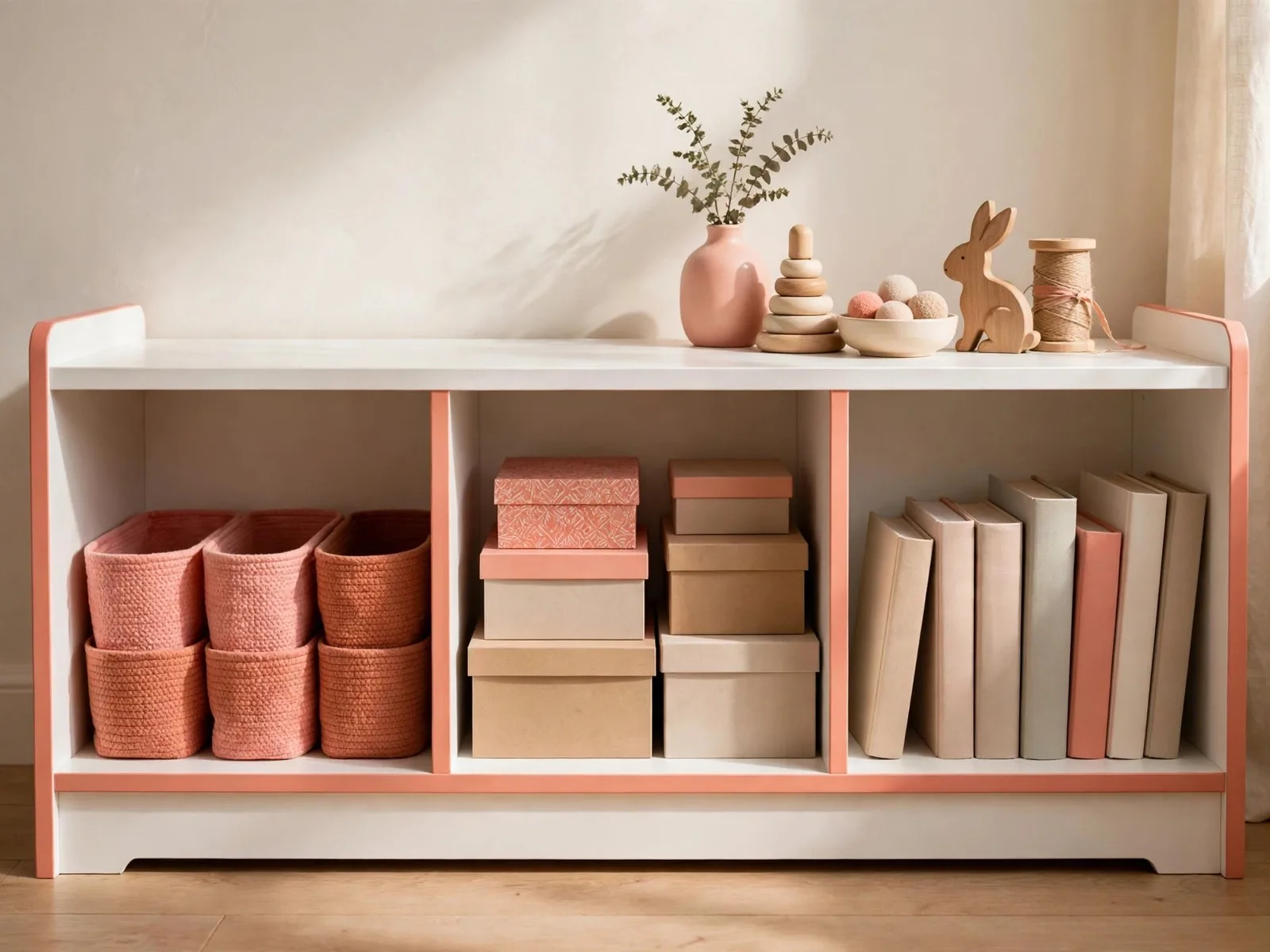
Storage only works if the owner can reach it, open it and put things back without an adult lift. Low open shelves pass that test. A unit with the top shelf at 36 to 40 inches puts books, craft boxes and the current collection in her working zone and the openness matters as much as the height: she can see where things go, so tidy-up is a matching game instead of a memory test.
Give each shelf one job and label the young band’s shelves with a picture as well as a word. Fabric baskets on one shelf hide the small and messy categories, hair clips, craft scraps and tiny figures, while the open shelves carry the big and tidy ones. Anchor the unit to the wall even at this height, because children climb what they can reach and a low shelf is a ladder with better marketing.
Measure: the top shelf she uses daily should sit no higher than 40 inches in the 4 to 6 band and no higher than 48 inches by age 9.
11. Slide wheeled bins under the bed for the overflow (ages 4 to 12)
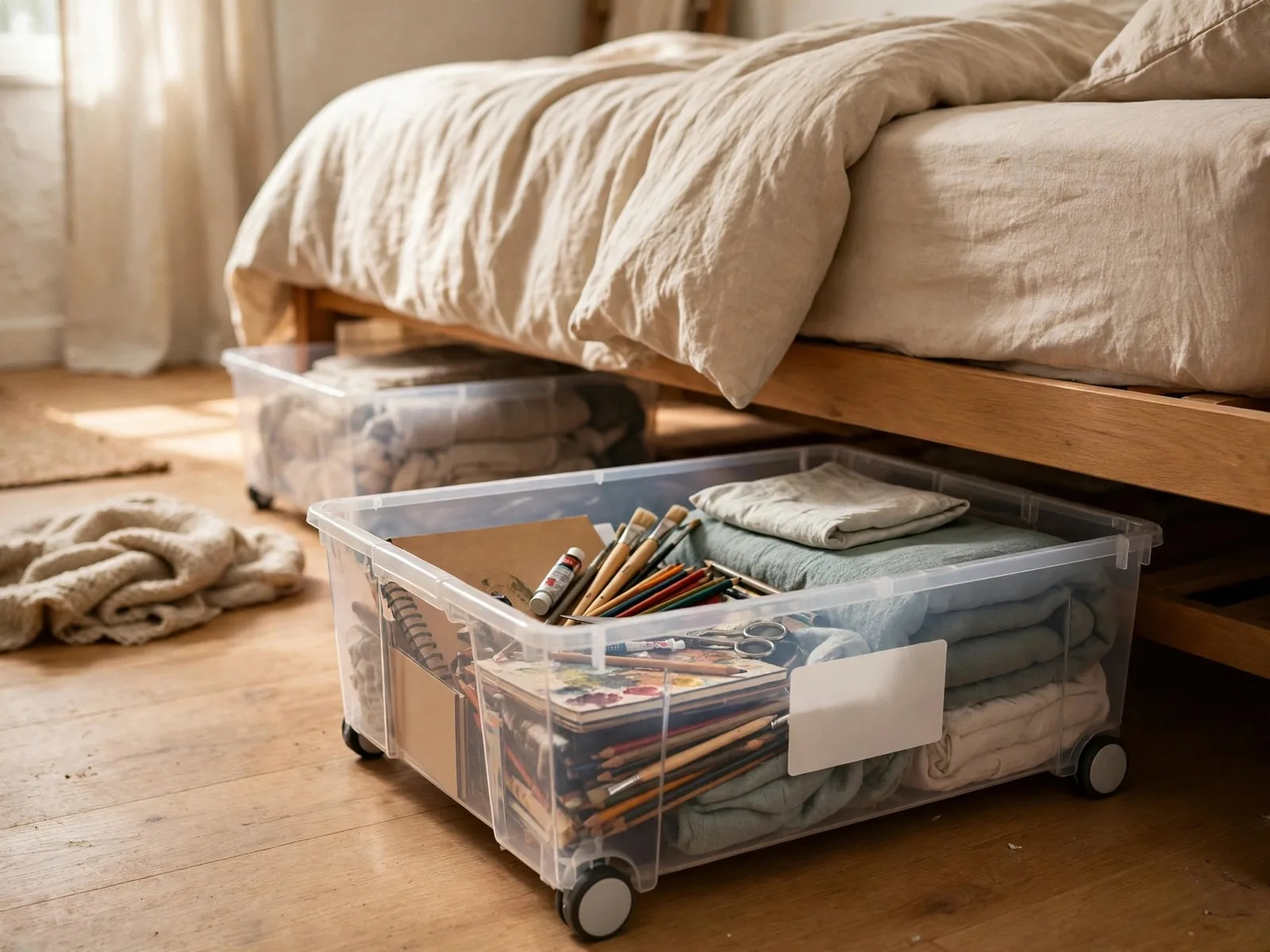
The floor under a twin bed hides about 12 square feet of storage that most rooms waste. Low wheeled bins, about 6 inches tall, turn it into her own warehouse: one for dress-up overflow, one for art supplies and one holding the spare bedding set and the sleepover blankets. Wheels matter. A bin she can pull out and push back alone is a bin that gets used.
Label each bin on the end that faces the room. A picture label works for the 4 to 6 band and a plain word label takes over at 7 to 9, so the system ages with her reading. Measure the clearance first: most frames give 6 to 12 inches and the bin plus its wheels must fit inside that number with room to roll.
Measure: buy bins at least 1 inch shorter than the under-bed clearance, wheels included in the height.
12. Split the closet into now clothes and next-size clothes (ages 4 to 12)
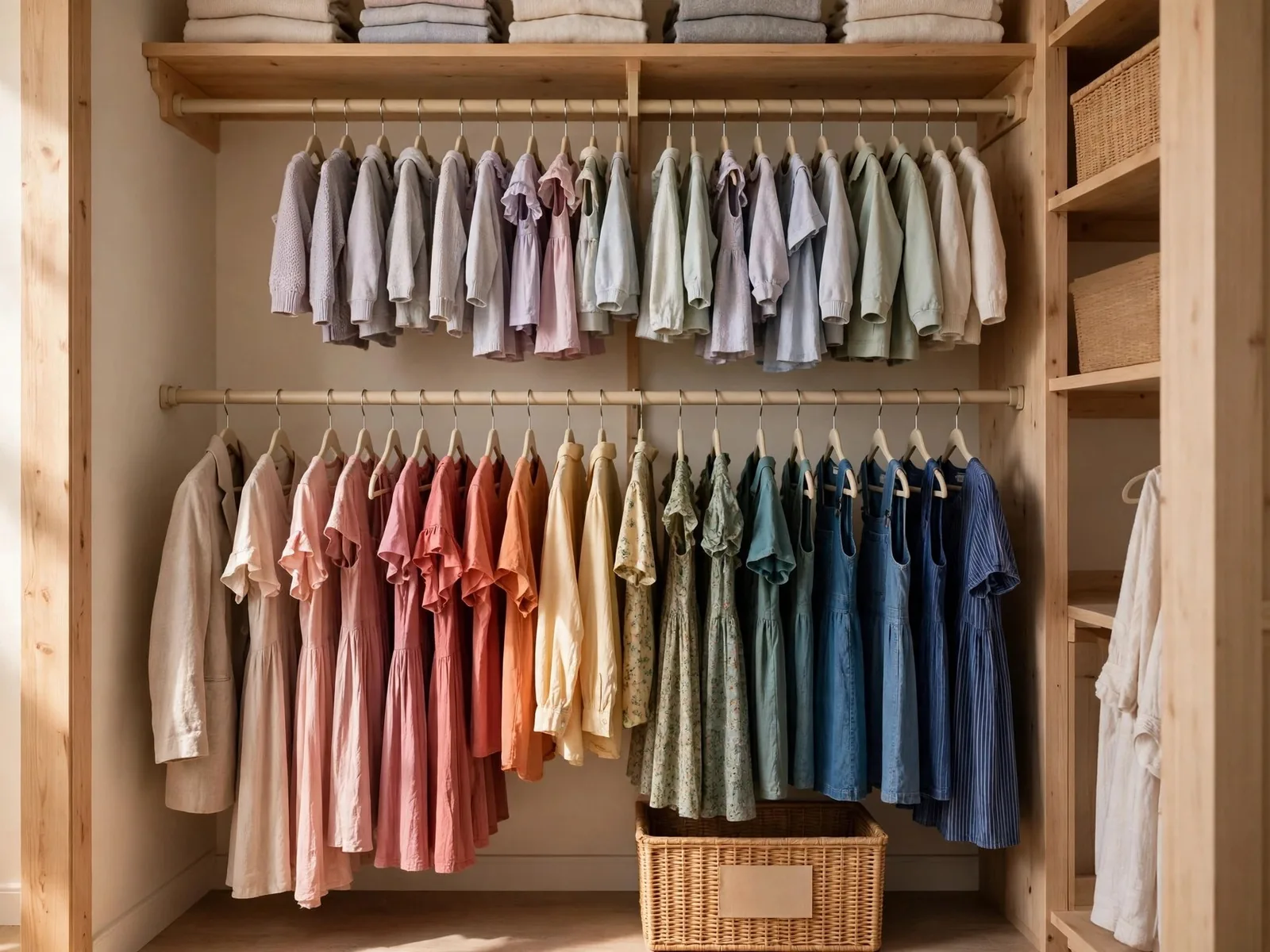
Girls closets fail because they store the past and the future at the same height as the present. Split the closet into two zones. A low rod at 30 to 36 inches holds this season’s clothes in her current size, at a height she can reach and choose from. The high rod holds next-size clothes, out-of-season pieces and the dress and occasion section that only comes out for events.
When a growth spurt hits, the swap takes twenty minutes: now clothes move out and next-size clothes move down. No shopping emergency and no drawer full of too-small tops confusing the morning. One labeled bin on the closet floor catches the outgrown pieces for a younger sister, a cousin or donation. Girl bedroom ideas with closet searches are really asking for this split, because the closet is where the growth plan either works or collapses.
Renter-friendly: a tension rod at 30 to 36 inches gives her a rail she can work alone, with no drilling and no marks.
13. Hang a gallery ledge for art and treasures that rotates (ages 4 to 12)
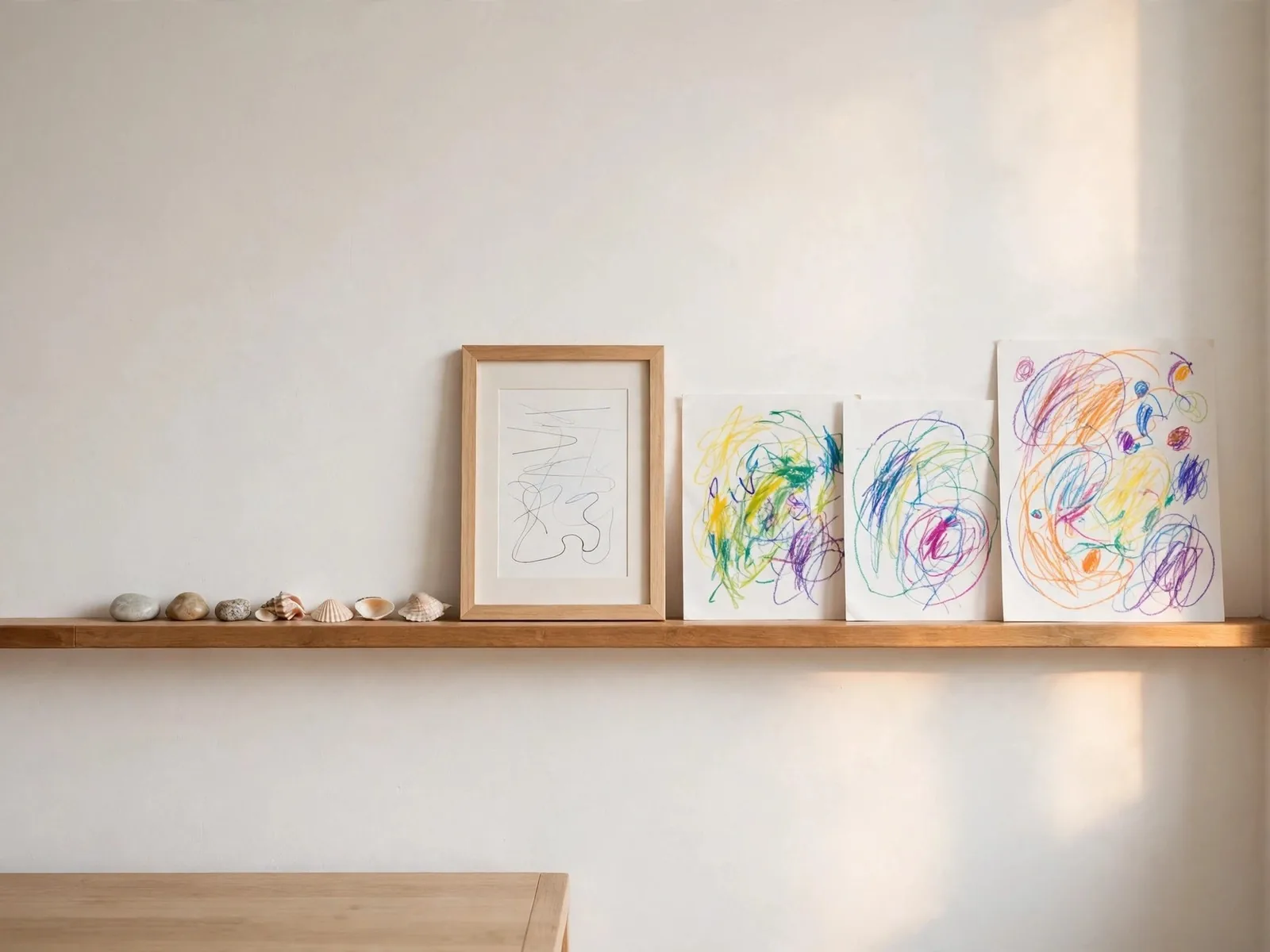
A girl this age produces art, certificates and treasures faster than frames can hold them. One gallery ledge, 36 to 48 inches long and set at her eye height, turns the overflow into a display she curates herself: this week’s drawing at the front, the school certificate behind it and the current collection of stones or figures along the front edge. Rotating the ledge takes two minutes, so the wall stays current instead of fossilizing at age 6.
The ledge beats tape and pins for two reasons. Nothing touches the paint, which renters will appreciate at move-out and the display reads deliberate instead of stuck on. Run a second ledge above it at the 10 to 12 band and the pair becomes her version of a gallery wall, ready to hand over to the photo and poster walls of the teen room later.
Budget: under $25 for one ledge and a pack of small clips for the pieces that will not stand on their own.
The pieces that grow with her
14. Build the room on a neutral base (ages 4 to 12)
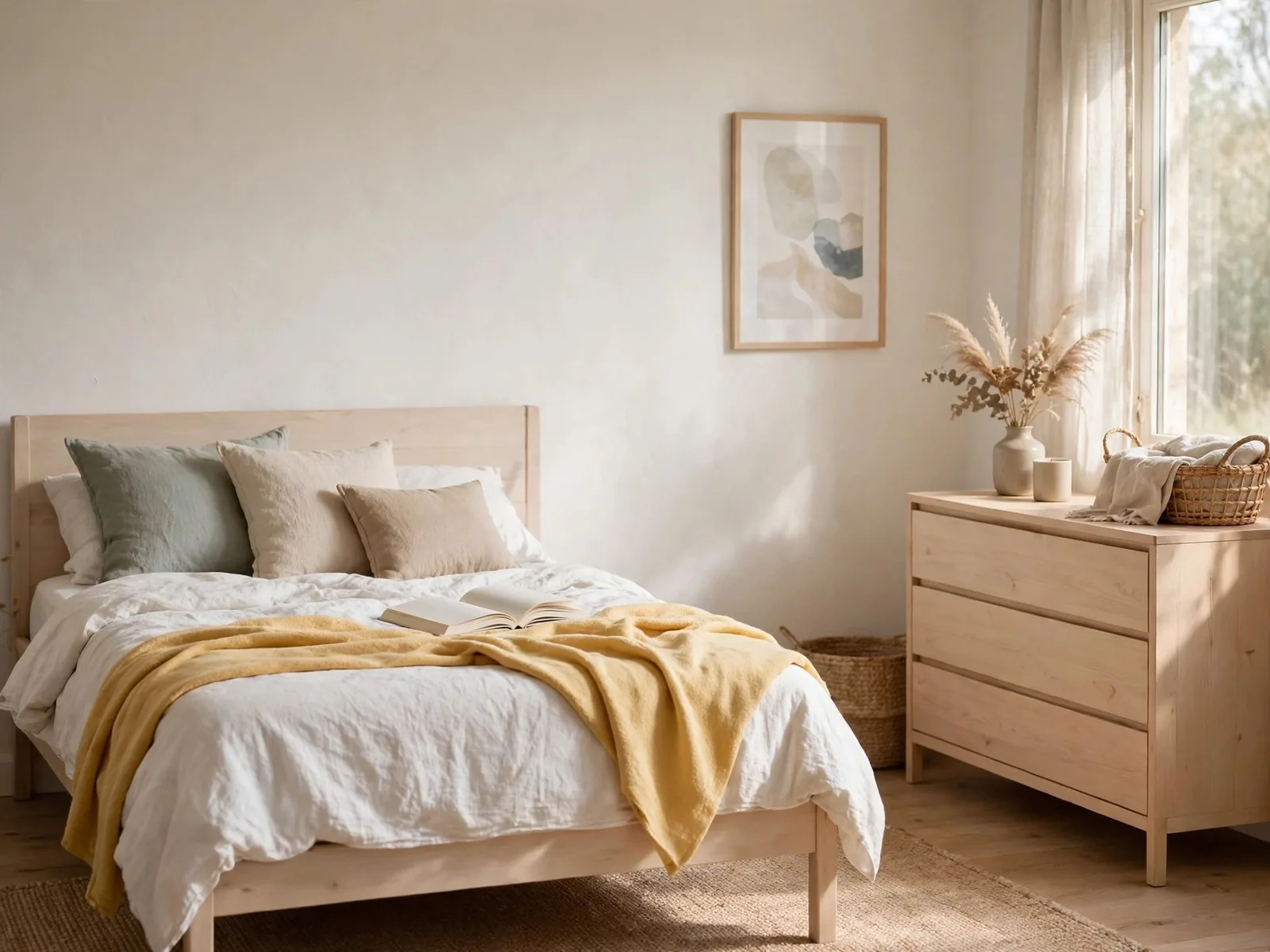
This is the growth rule stated as one purchase policy. Paint, the bed, the dresser and the wardrobe stay in the not-babyish family: warm white, pale wood, white and soft grey. None of those finishes belongs to an age, so none of them expires at a birthday. The expensive layer of the room is deliberately calm and the personality moves into the layer that costs almost nothing to change.
Neutral is not boring here. Neutral is the mechanism that makes every later change cheap. A sage cushion story, a boho rainbow print or a full pink moment all read clearly against a calm base and each one can leave in an afternoon when tastes move on. Rooms that skip this rule do not age in stages. They age all at once, in one expensive weekend.
Budget: $0 to decide now, against the $300 plus a themed furniture set costs to replace when it dates.
15. Carry the whole theme in decals and textiles only (ages 4 to 12)
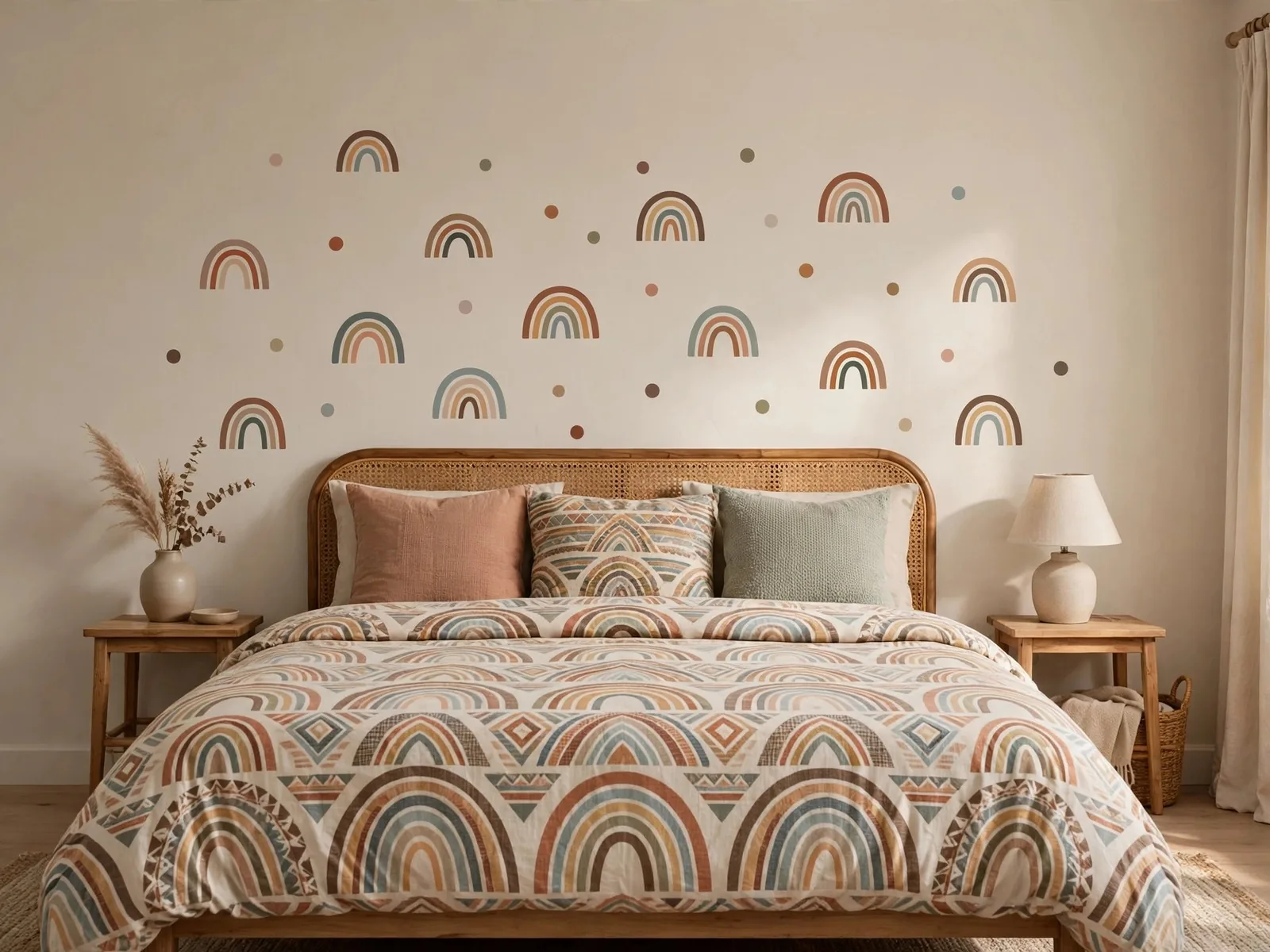
If the theme must change every two years, keep the theme in the layer that changes in an hour. One wall of peel-and-stick decals behind the bed, a duvet cover, two cushion covers and a curtain swap carry the entire identity of the room, in boho rainbows or jungle leaves or full girly pink, while the walls and furniture stay calm underneath. Wallpaper counts as a theme layer only in its peel-and-stick form at this age, pretty, removable and gone without a steamer when she outgrows it.
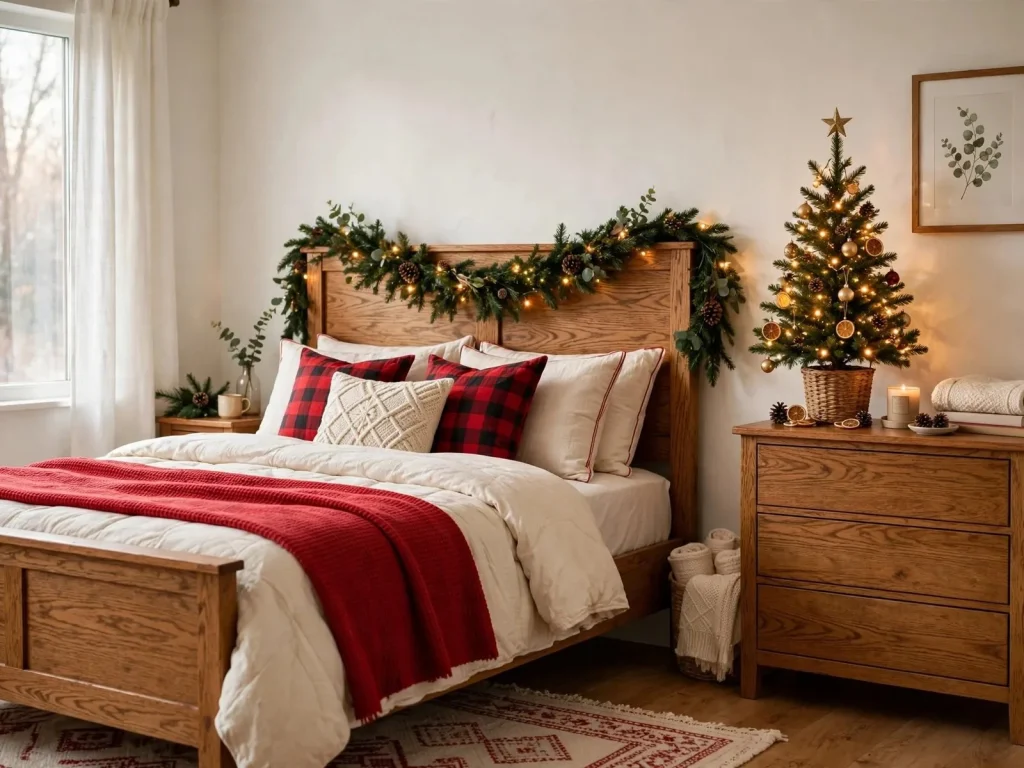
The removable wall options sit in the same family as the ones in our bedroom accent wall ideas post, where one wall does the talking and the other three stay quiet. The seasonal test proves the system. The same swap logic puts a Christmas layer over a neutral girl’s room in December and lifts it off in January, which is exactly how our christmas bedroom ideas for kids post builds its rooms.
Renter-friendly: fully. Peel-and-stick decals and textiles need no permission and leave no trace. Budget $40 to $90 per swap.
16. Use pink in doses and write down the swap path (ages 4 to 12)
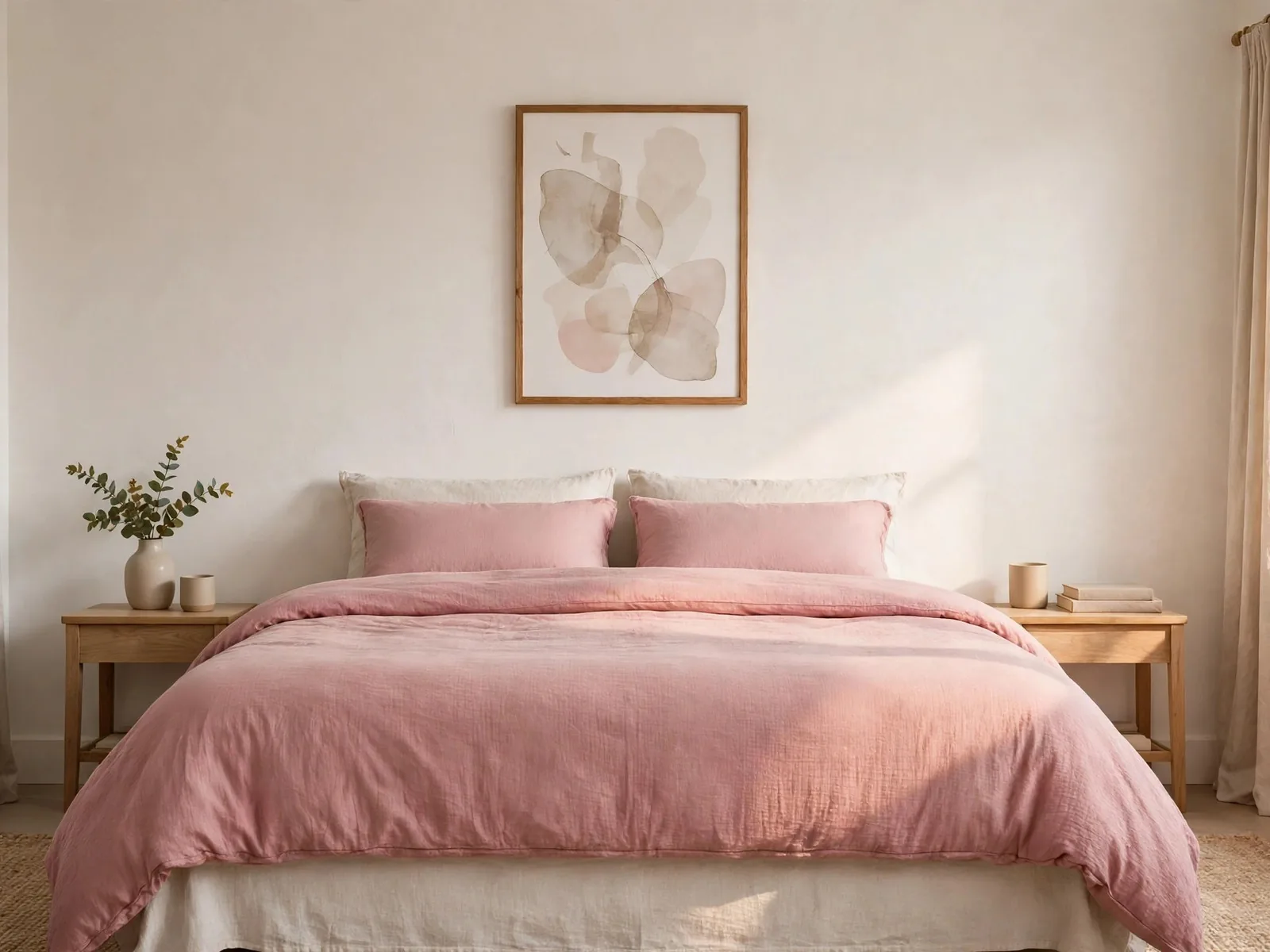
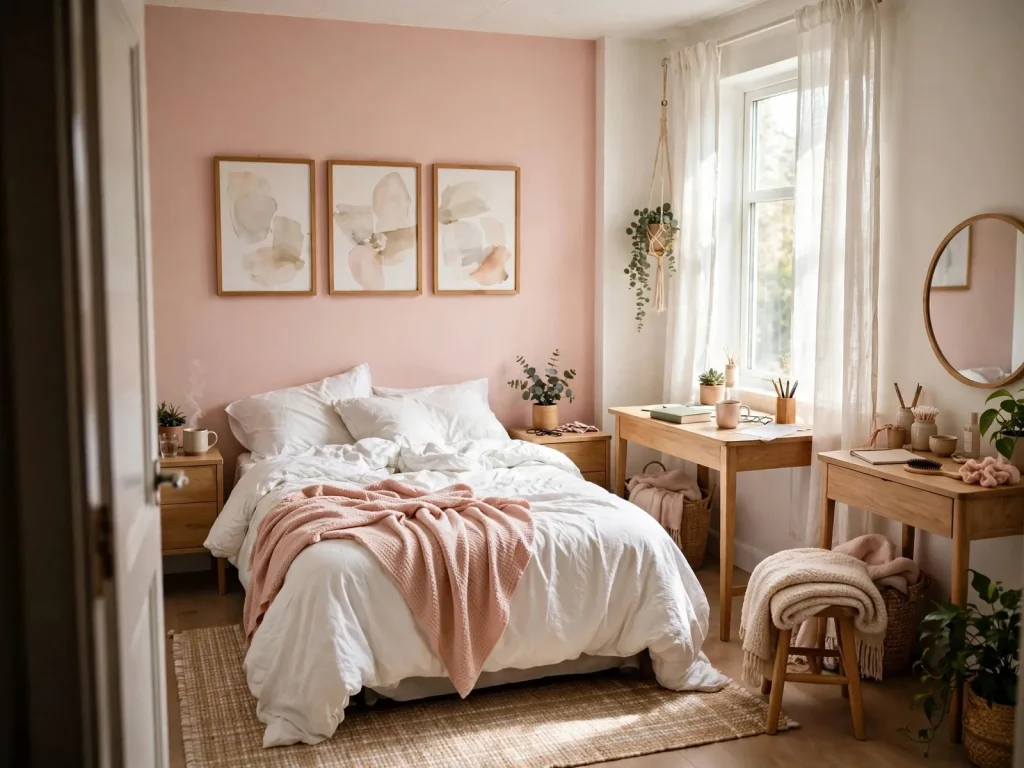
Girls bedroom ideas pink searches are really asking how much pink is safe to commit to. The answer on this page is doses: pink in the duvet cover, two cushions, one art print and the throw, over warm white walls and pale wood furniture. At age 5 it reads as a pink room. The walls never signed the contract, so the room can change its mind without a paint job.
Write the swap path down when you buy. At the 7 to 9 band, the pink bedding softens to dusty rose accents beside sage or lavender. At the 10 to 12 band, one pink cushion survives as the nod to the younger room and the main story moves to her new palette. The full palette logic, including how pink behaves in north and south light, is the same one we use for grown-up rooms in our bedroom color ideas post.
Budget: $30 to $60 per band change, because the pink lives in textiles and never in paint or furniture.
17. Pick one non-pink palette that ages up (ages 4 to 12)
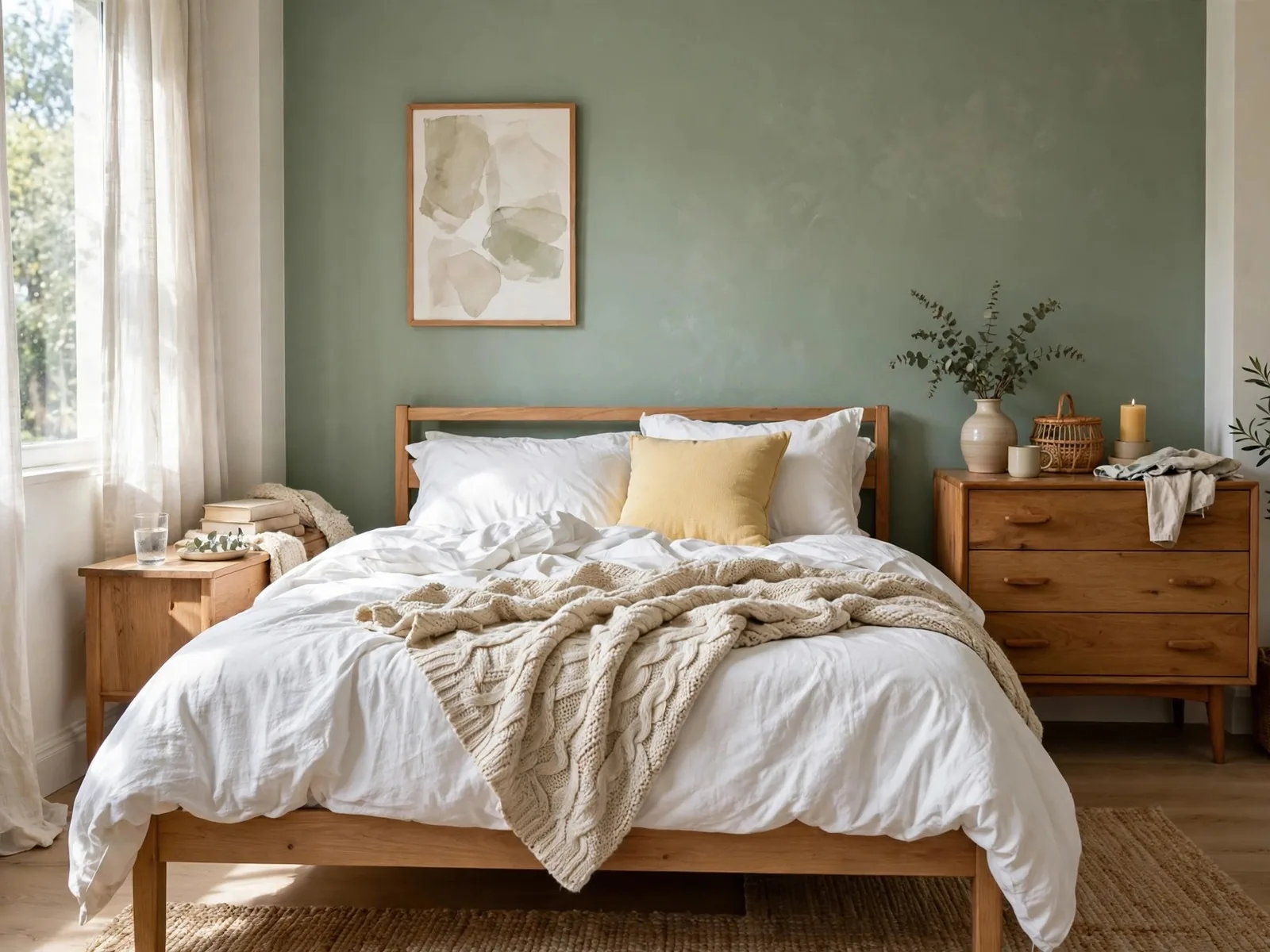
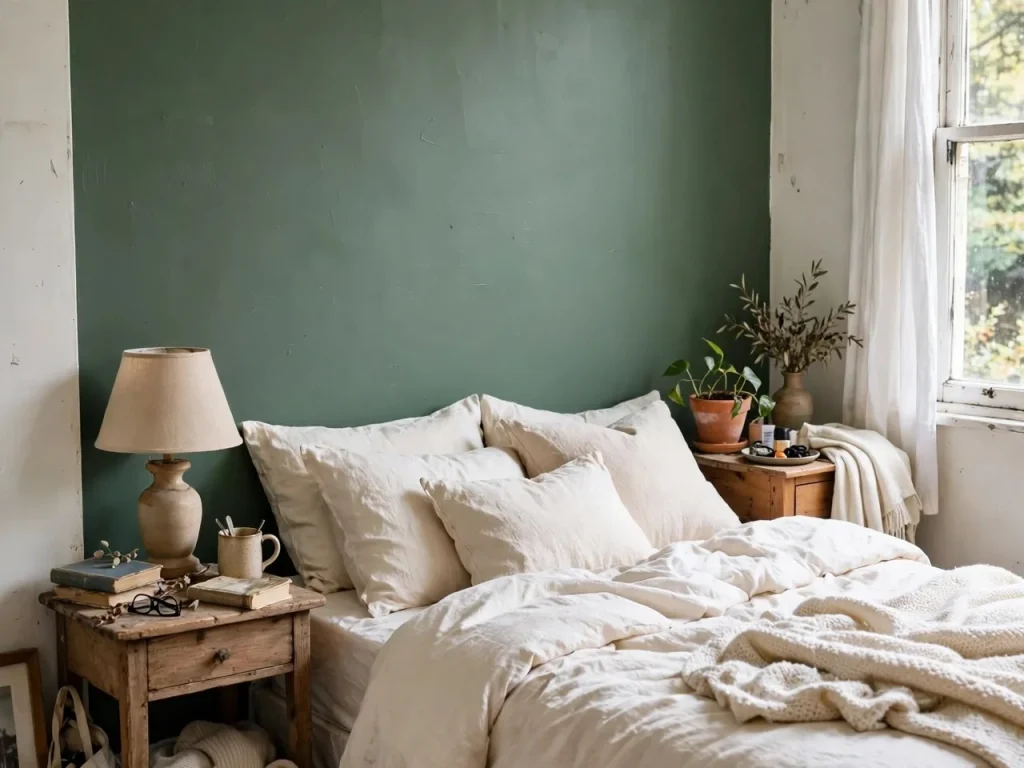
Every girl’s room on this page gets one named alternative palette, chosen early, so pink is a choice and not a default. Sage green is the strongest of the set. At age 5 it pairs with white bedding and butter yellow accents and reads soft and young. At age 11 the same sage pairs with natural wood, cream and one black accent and reads calm and grown-up. The wall color never changed. Only the accents grew up.
Lavender, butter yellow and dusty blue run the same trick with different moods. Lavender deepens toward plum accents, butter yellow warms toward ochre and dusty blue holds navy beside it at the older band. Paint the palette on one wall if she wants commitment or carry it in bedding and curtains if the room is rented. Either way, choose the palette by how it looks at age 11 and not only by how cute it is at age 5.
Budget: one gallon of paint at $35 to $55 covers the one-wall version; the bedding version costs one duvet set.
18. Run the age 10 refresh as a soft-pieces-only list (ages 10 to 12)
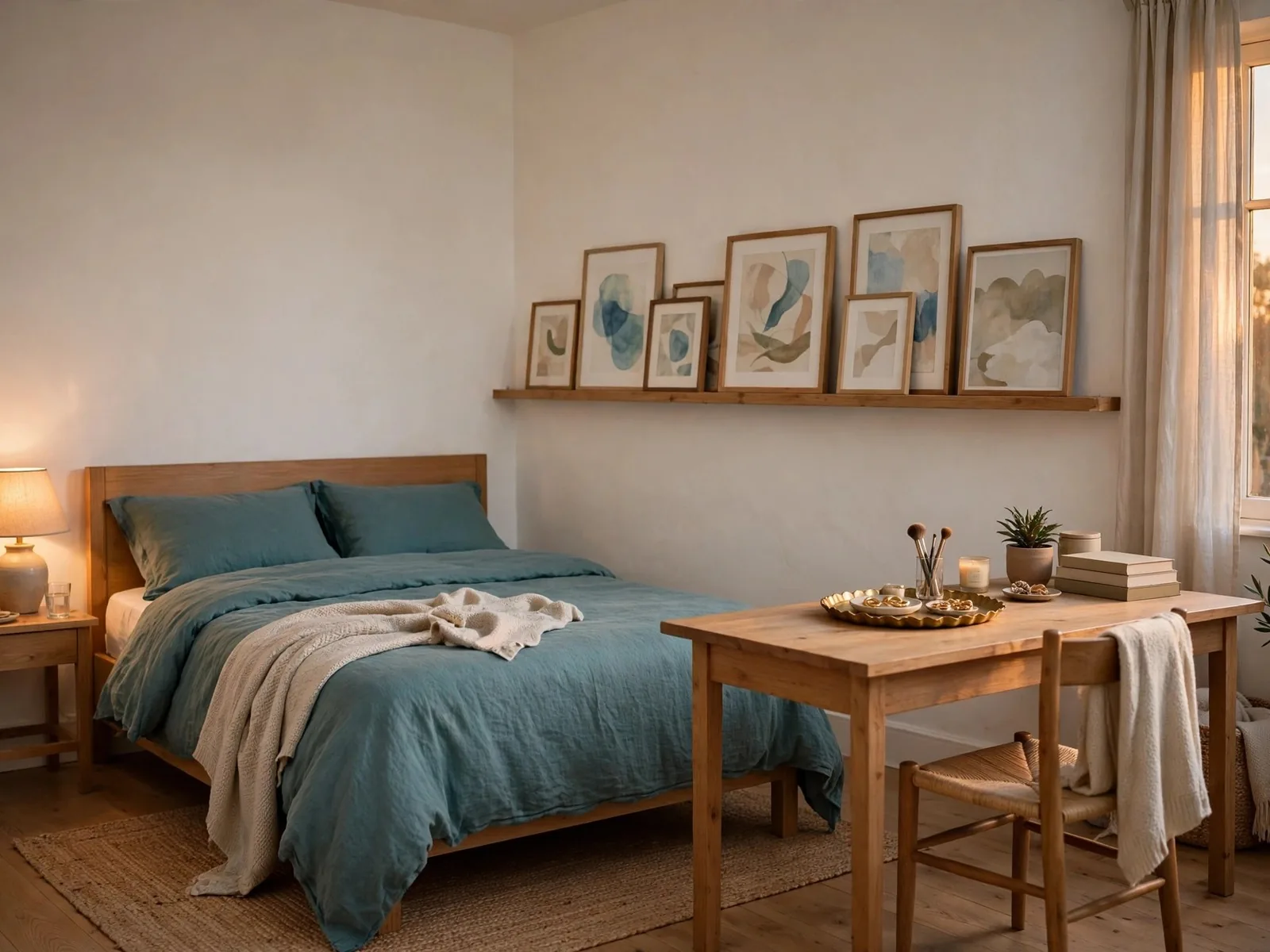
The last idea is a scheduled event, not a shopping spree. Around age 10 the room gets one planned refresh and every item on the list is soft or small: a new duvet set in her current palette, a curtain swap, the vanity tray and mirror from idea 9, a lamp with a warmer dimmer bulb and a full reset of the gallery ledge with new art and photos. The bed, desk, dresser and wardrobe all stay where they are.
Write the list when the room is young and tape it inside the closet door. Knowing at age 6 that the refresh is coming turns the in-between years into small swaps instead of slow drift toward a room she is embarrassed by. After this refresh, the page hands over: the teen years, with study-led layouts and identity decor, are a different job with their own plan.
Budget: $100 to $200 for the whole refresh, against a full room redo in the $400 plus band.
Girls bedroom ideas for small rooms
A small room for a daughter runs the same plan with the pieces turned vertical. Start with the sleep zone: one twin on the longest wall with the trundle underneath, so the sleepover layout from idea 5 fits inside one bed’s footprint. Girls bedroom ideas for small rooms fail when a second bed, a big wardrobe and a play table all claim the floor at once. The floor is the room’s scarcest resource, so spend it once, on the play and reading patch in the middle.
Storage climbs instead of spreading. Book ledges replace the bookcase, under-bed bins replace the toy chest and the gallery ledge replaces a desk she has no floor for yet. The closet split from idea 12 does more work in a small room than anywhere else, because the closet is the only storage wall the room has. The full footprint-first method is the one in our small bedroom ideas post, written for grown-up rooms and just as strict here. The wheeled-bin and category-box discipline comes from our small bedroom storage ideas post.
Mistakes that make it fall flat
- Painting all four walls pink at age five. It reads thrilling for a year and exhausting for six. Paint is the slowest and messiest layer to change. Pink belongs in the textile layer, where a band change costs one duvet set.
- Buying the full themed furniture set. Bed, dresser and wardrobe in one character or princess theme all expire in the same season. Theme belongs in decals and bedding only, so the furniture never has to be re-bought when tastes move.
- Storage she cannot reach or run alone. Pretty bins on high shelves get used by adults, which makes tidy-up an adult job forever. If she cannot reach it, open it and put it away alone, it is display pretending to be storage.
- Loose fabric and cords near the bed. A canopy draped over the sleep area and corded blinds beside the pillow are the two risks hiding in the prettiest photos. Move the canopy to the reading corner and make every blind in the room cordless.
- No floor left for play or sleepovers. A room filled edge to edge with furniture has nowhere for the actual business of being 7. Keep a rug-sized patch of floor open in the middle and defend it against every new purchase.
- Waiting to add the desk and the getting-ready corner. Homework arrives at 7 and morning routines get serious at 10, whether the room is ready or not. Both corners are cheap at the band change and expensive as emergency buys mid-term.
Questions people ask about this
How do I make a girl’s bedroom grow with her? Keep the big pieces neutral and let the cheap layer carry her age. Bed, dresser and paint stay in warm white, pale wood or sage while the theme lives in bedding, decals and cushions she can swap in an afternoon. Buy furniture one size up and tag each purchase to an age band before it enters the room.
What colors work for a girls bedroom besides pink? Sage green, lavender, butter yellow and dusty blue all read as a girl’s room without locking the walls to one age. Paint the walls warm white and carry the color in bedding and curtains or paint one wall in that color and keep the three neutral. Each palette ages up by deepening the accent pieces rather than repainting the room.
How do I fit two sisters in one small bedroom? Stack or slide the sleep zone first. A trundle under one twin bed or two low twins along one wall frees the floor, then give each sister one shelf, one hook and one bin that is fully hers. Share the middle of the room with a rug and keep one walkway at least 24 inches wide so bedtime still works.
The bottom line
A girl’s room is not a theme you install at age 4, it is a system that changes its soft layer at 7 and again at 10 while the bones stay put. Neutral furniture, age-tagged ideas, storage she can run alone and a color story with a written swap path will carry one room from the first big-girl bed to the edge of the teen years with no panic redo. This week, do the smallest high-value job on the page: measure the bed wall and write her current age band on a sticky note for the fridge. Every later decision on this page gets easier with those two facts in the house.