
The chair has become a wardrobe, the shoes live in a pile by the door and the closet door has not fully closed since spring. Sound familiar? Here is what is easy to miss: most rooms short on small bedroom storage ideas are not short on space. They are leaving their biggest spaces empty. The floor under the bed, the wall above the door and the back of the door itself can hold a season of clothes without taking one inch of floor.
Every idea below is marked renter-friendly or needs drilling, with the one measurement that decides whether it fits in your room. They are in the order to tackle them: start with the space you already own, then the walls, then clothes, then furniture. This page is the small-room half of our storage section; the general system for rooms with closets is bedroom storage ideas. Pick the two or three that match your lease and your pile and ignore the rest for now.
If the room itself is the puzzle, our small bedroom ideas page covers layout, bed size and light first; this page picks up where it stops, at storage.
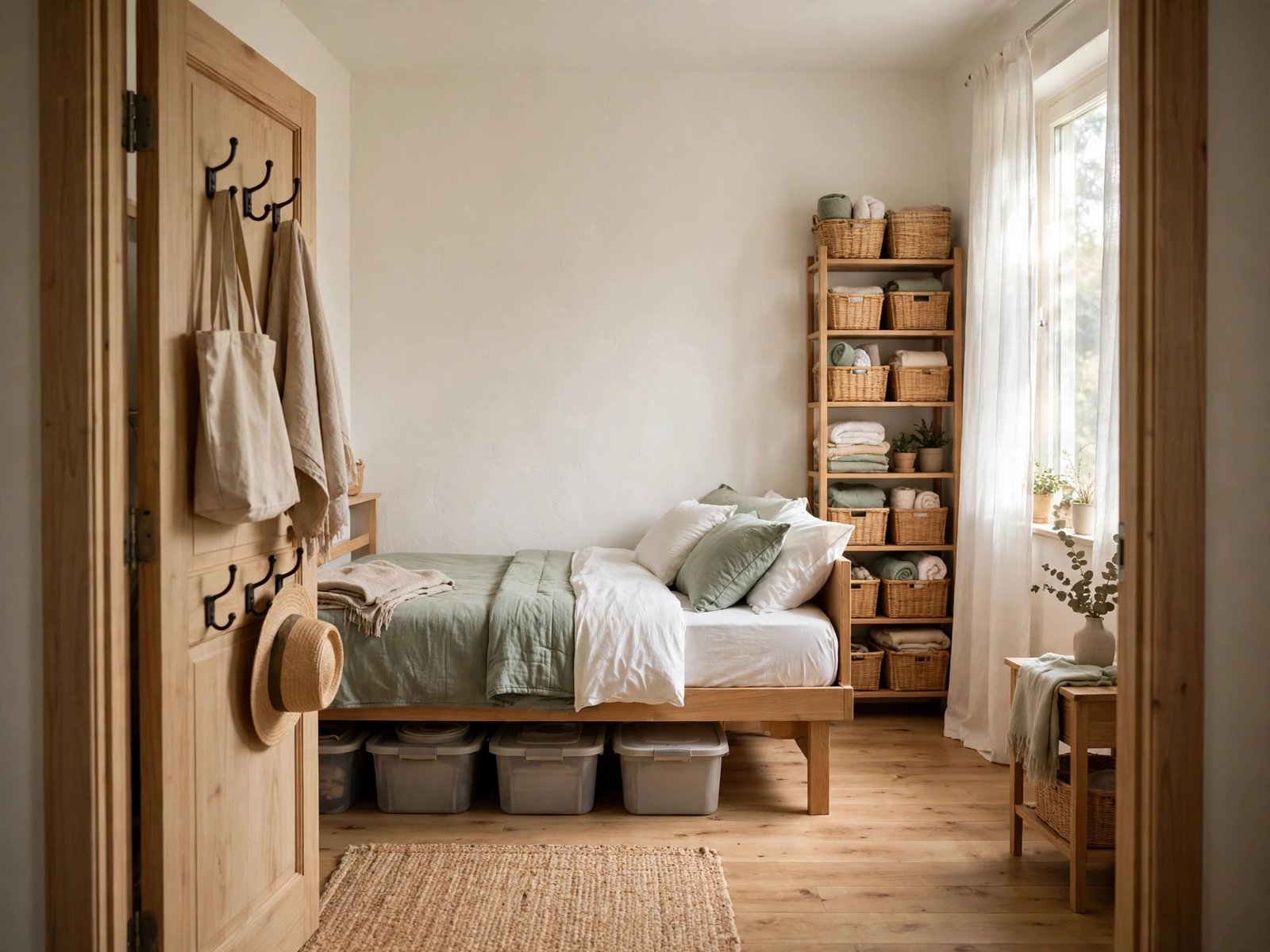
Before you buy a single bin, check these 3 things
Ten minutes here saves the classic mistake: a car full of bins that fit nothing.
- Measure under the bed. Stretch a tape from the floor to the underside of the bed frame, not the mattress. Write the number on your phone. That one figure decides your bin height (idea 4), whether risers help (idea 3) and half the under-bed advice on the internet.
- Read your lease, or ask. Some leases allow picture hooks but no screws, some allow anything you fill before you leave and some allow nothing at all. Your answer splits this whole list in two: the renter-friendly ideas you can do today and the needs-drilling ideas to ask about first.
- Sort before you store. Make three piles: clothes, shoes and everything else. Things that fit no pile are not a storage problem, they are a letting-go problem and no bin fixes that. Count what is left, because the no-closet plan (idea 13) is built from that count, not from hope.
Under the bed
The biggest empty box in the room is already there. Start underneath.
1. Swap the frame for a lift-up storage bed
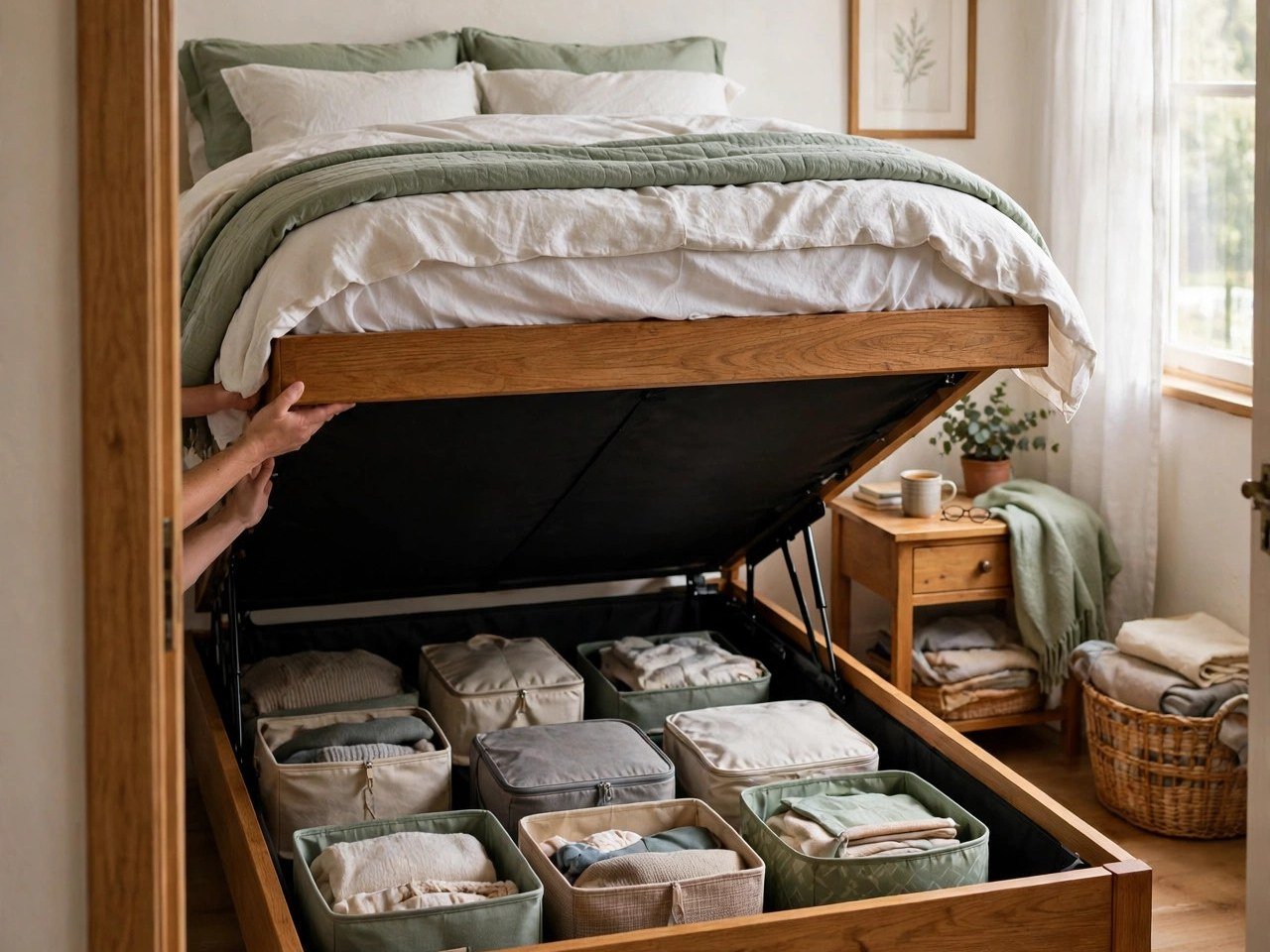
A lift-up bed turns the whole footprint of the bed into one deep cupboard, with no drawers to swing out and no side space to keep clear. That matters most when the bed nearly touches both walls.
Choose gas struts rated for your mattress weight and store things in soft bags inside so the space stays easy to search. Keep everyday things near the foot end, where you can reach them without lifting the whole bed to full height.
The catch: a full mattress is heavy and a cheap mechanism makes you dread opening it. If you will open it weekly, this is the best single buy on this page. If monthly, ideas 3 and 4 do the job for far less.
Renter-friendly. Measure: none needed at the sides, that is the point.
2. Choose a bed with drawers if you have floor beside it
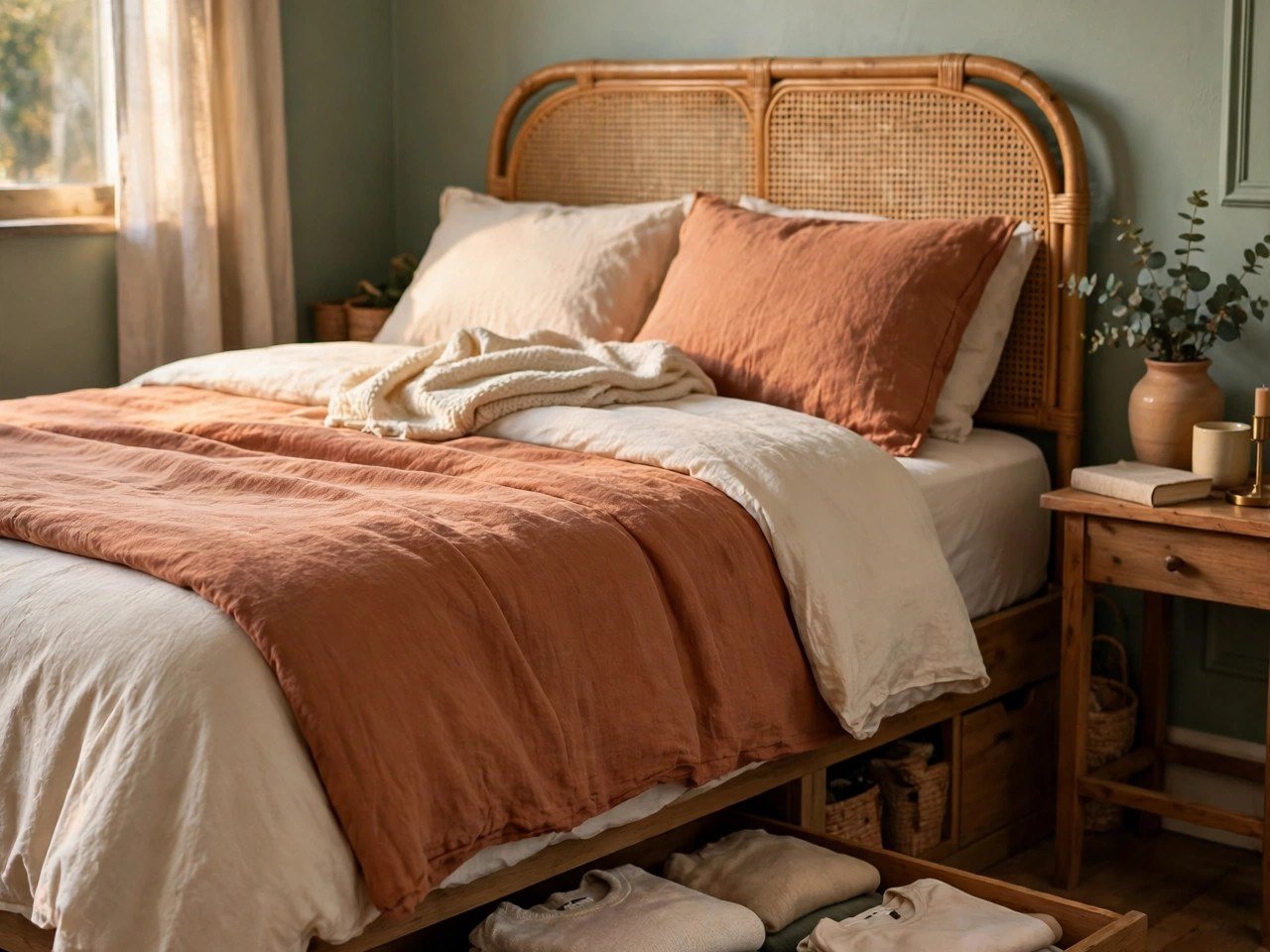
Drawer beds are the easier daily option. Nothing to lift, nothing to hold up and each drawer becomes a category: one for clothes, one for bedding, one for the things that used to live on the floor.
They only work if the drawers can open fully. Measure the drawer depth, then check you have that much clear floor beside the bed, plus about 4 inches so your fingers and the drawer front are not fighting the nightstand.
The catch: if a nightstand, radiator or wall blocks one side, that drawer is decoration. In that room, the lift-up bed (idea 1) wins, because it asks for no side space at all.
Renter-friendly. Measure: drawer depth plus about 4 inches clear beside the bed.
3. Raise the bed on risers and claim the gap
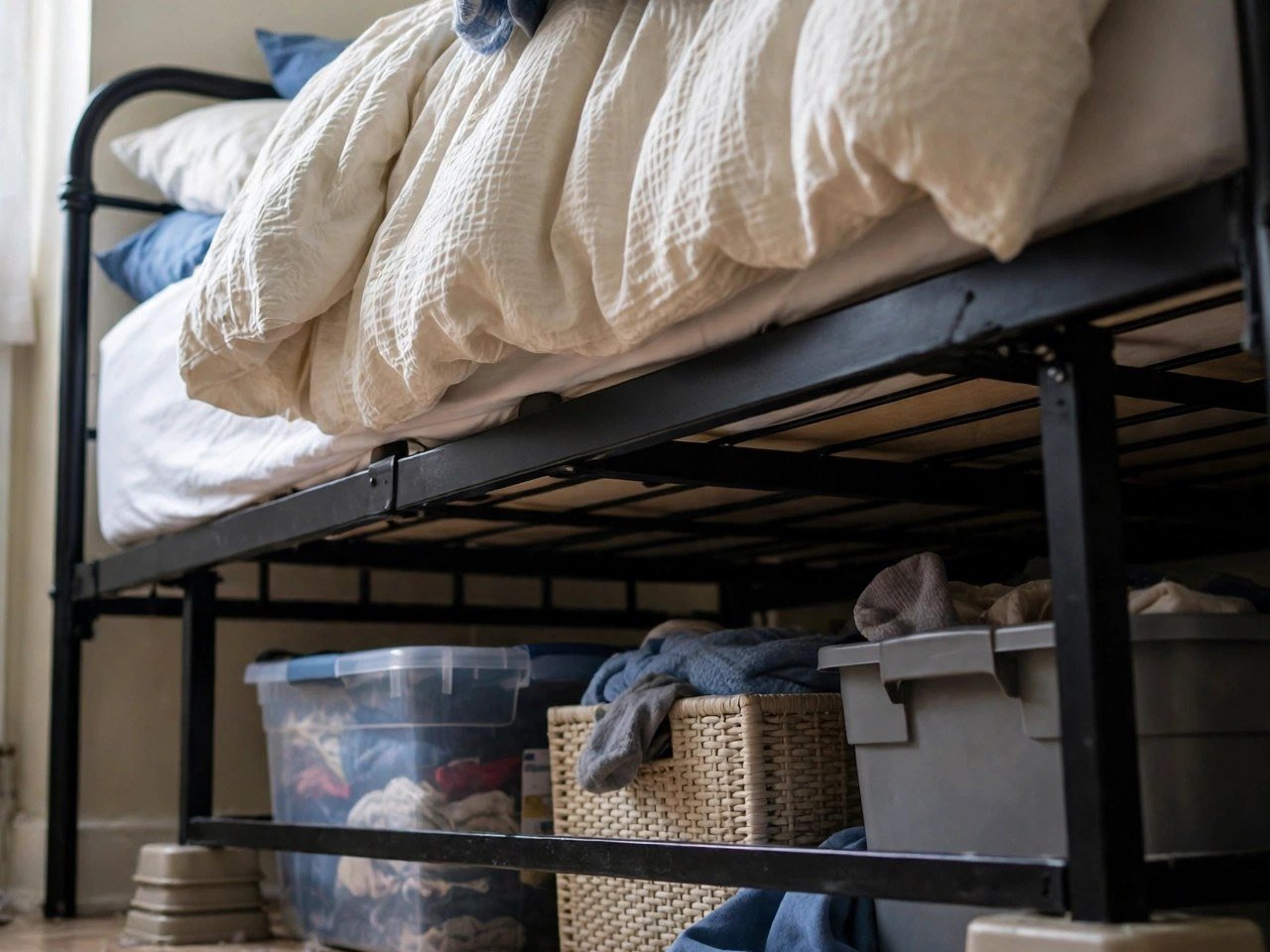
If a new bed is not in the budget, risers lift the frame you already own by several inches and those inches are exactly what taller bins need. A frame that cleared flat boxes last year can clear real storage this weekend.
Buy risers with a stated weight rating and check that the rating covers the frame, the mattress and the people sleeping on it, with room to spare. Put one under every leg and test the bed with a firm sit on each corner before you trust it at 2 a.m.
The catch: a taller bed is a taller climb, which matters for kids, anyone with a bad knee and dogs with opinions about both.
Renter-friendly. Budget: one of the cheapest fixes on this page.
4. Roll lidded bins under the bed, then hide them
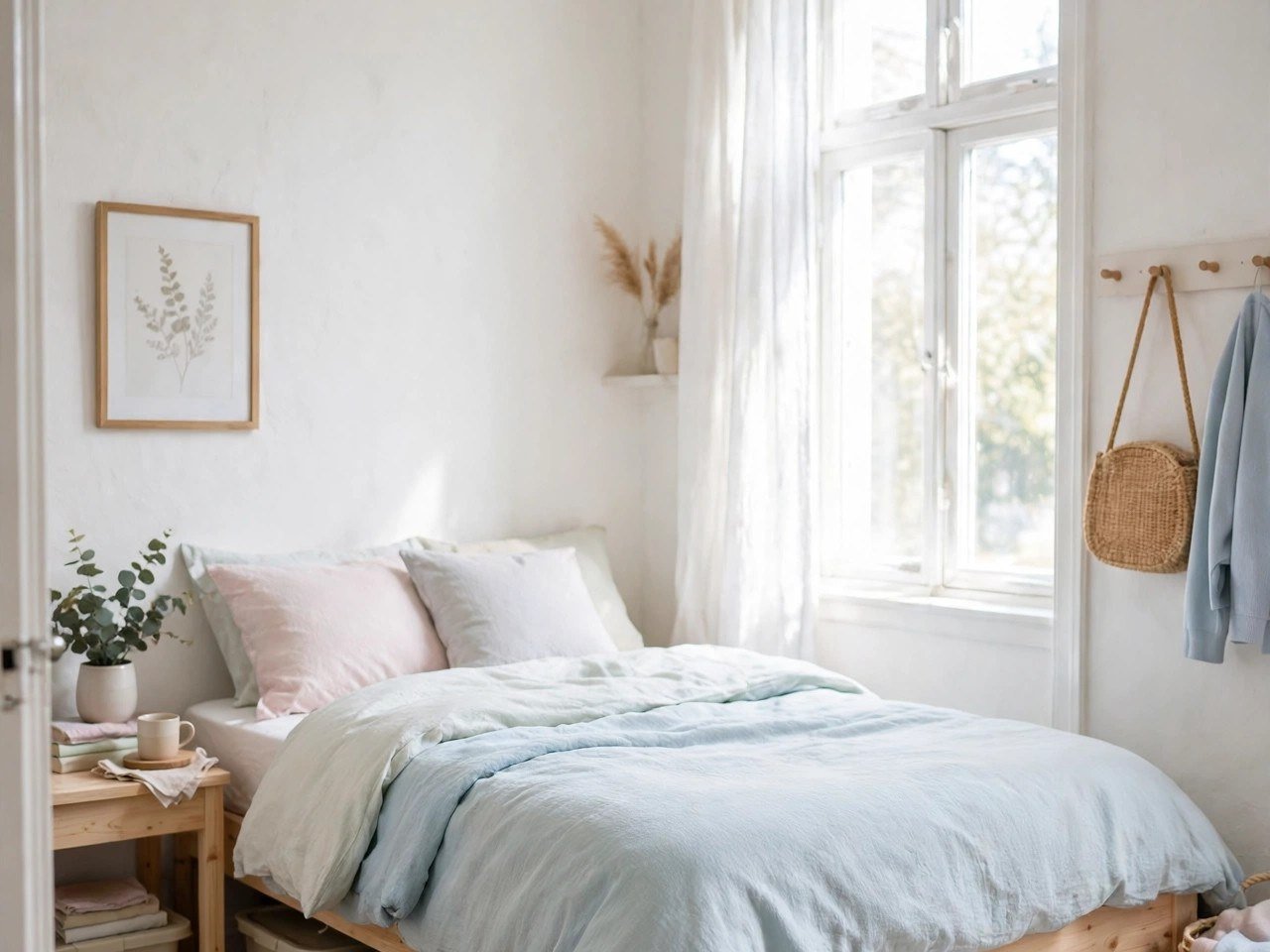
This is the workhorse move and the prep section already did its hard part. Buy bins at least an inch lower than the clearance you measured, so they slide without scraping and pick lids every time. Open bins collect dust.
Wheels help on hard floors, a low fabric bag works better on carpet and one bin per category ends the rummage: shoes, off-season clothes, spare bedding. Label the end that faces out, not the lid you cannot see.
The catch: out of sight can mean forgotten. Keep a short list on your phone of what lives under there. A bed skirt hides the bins if their sight bothers you.
Renter-friendly. Budget: buy the bins once, in the size you measured. Measure: bin height at least 1 inch below your under-bed clearance.
Walls and over the bed
Floor space runs out fast. Wall space usually has not even started.
5. Put a shallow shelf unit over the bed

The wall above the headboard is the most wasted wall in most small bedrooms and it is the one people search for directly. A shallow shelf unit there holds books, a small plant and the things that keep migrating to the nightstand.
Keep it shallow, 6 to 8 inches deep, keep it to light things and fix it into studs or with proper anchors. This is not the place for a row of heavy hardbacks or anything glass.
The catch is obvious once you picture it: anything that falls, falls on you. If that thought will keep you awake, skip this one and take the high shelf (idea 6) instead, where nothing hangs over the pillow.
Needs drilling. Measure: 6 to 8 inches deep, light items only.
6. Run one shelf high, where nobody reaches
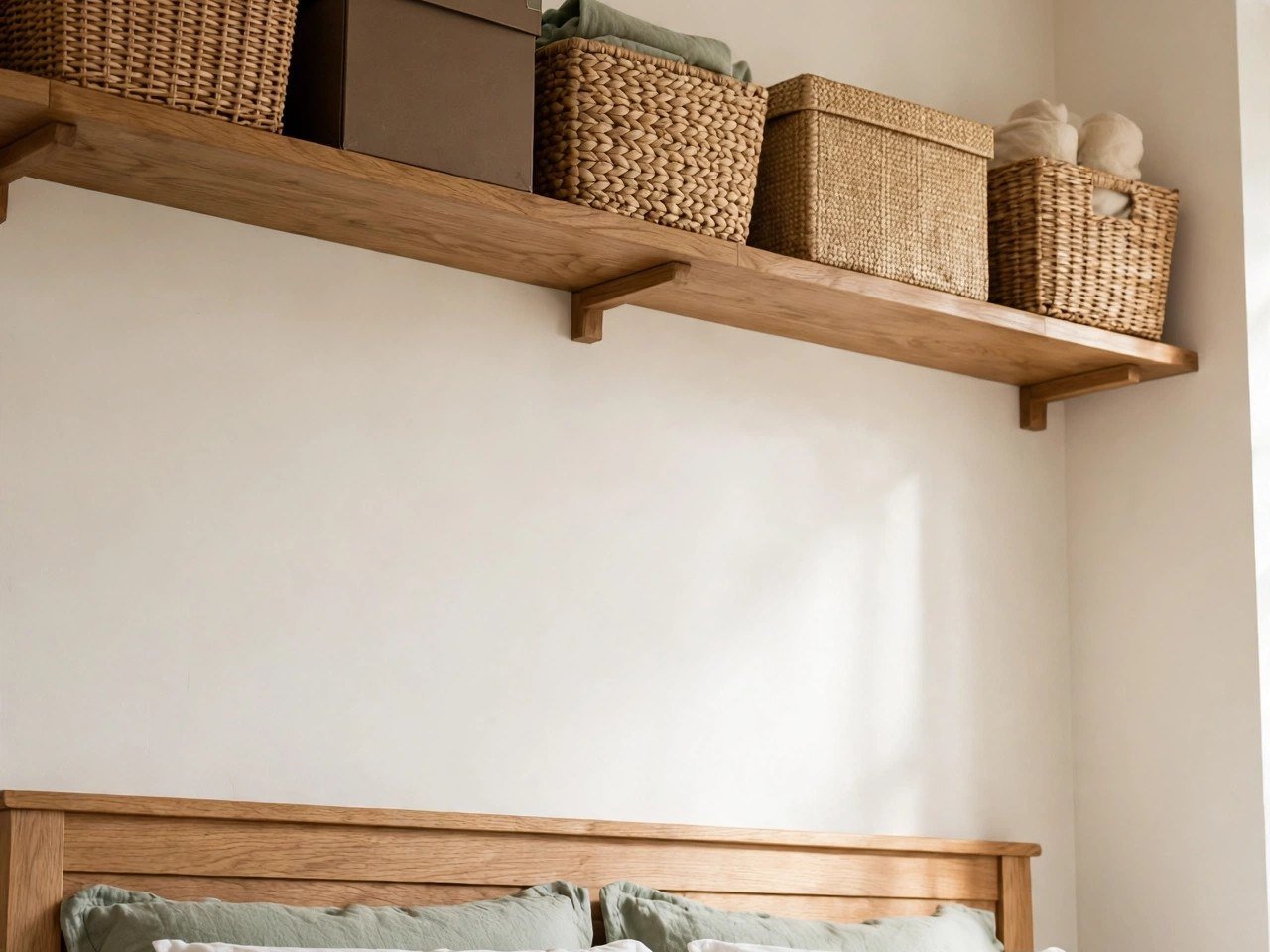
The strip of wall above the door line and above head height is useless for daily things, which makes it perfect for the other kind: suitcases, spare duvets, the fan that comes out twice a year.
One long shelf up there beats three small shelves at eye level, because it keeps the walls you actually look at calm. Use lidded boxes in one color, so the shelf reads as a line, not a jumble.
The catch: if you need it weekly, it is in the wrong place. High shelves are for the twice-a-year stuff only and heavy boxes do not belong up there either. Renters, ask your landlord before you drill this one.
Needs drilling. Measure: shelf above the door line, boxes sized before you buy.
7. Lean a ladder shelf against an empty wall
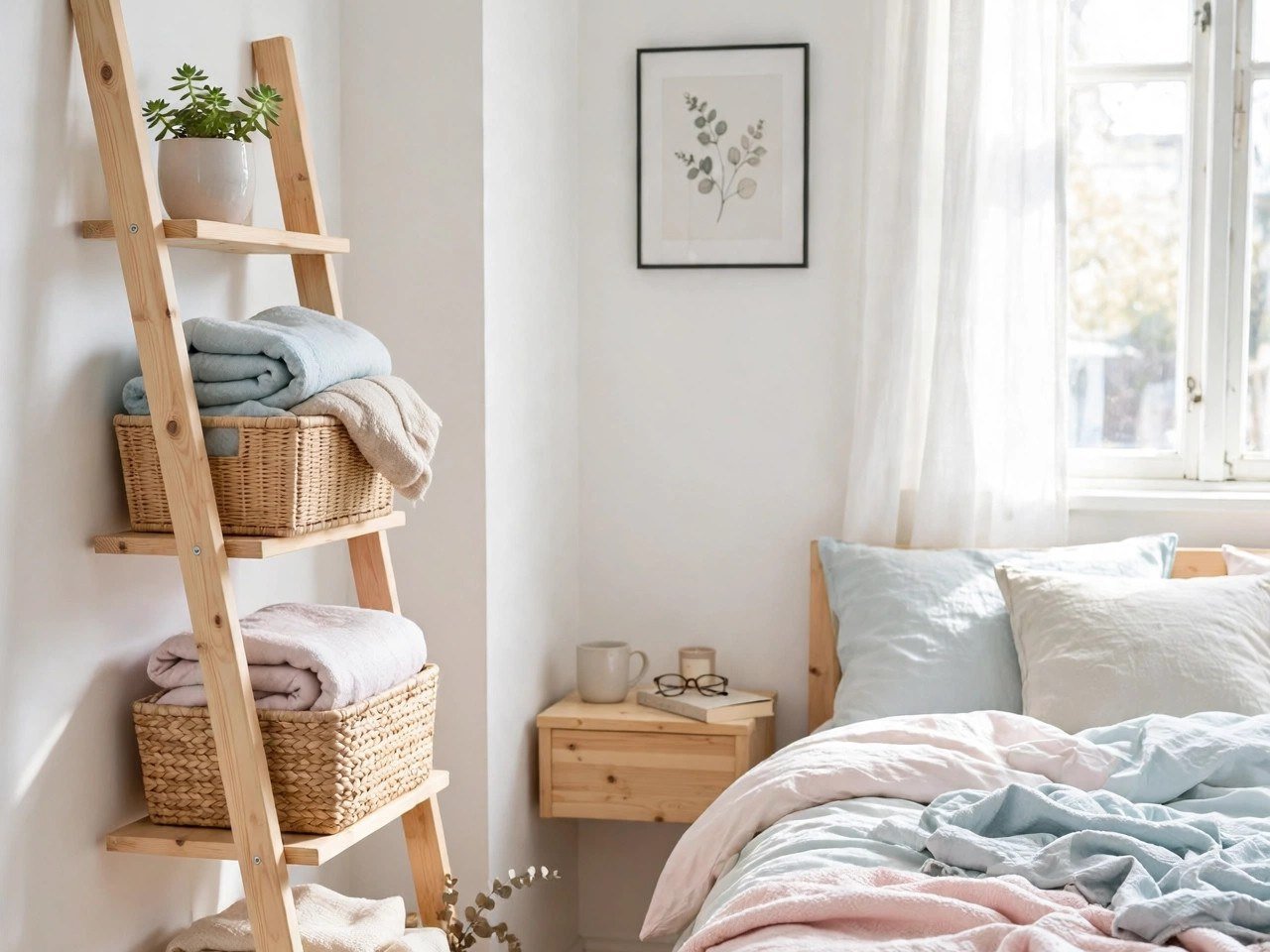
A ladder shelf gives you four or five shelves and asks for no holes, no studs and no permission. The shelves get deeper toward the floor, which suits real life: baskets and folded blankets low down, small things up top.
It works best on the wall you see least, often the one beside the door, because a ladder shelf is wide at the base. Leave it a few inches on each side, or it looks wedged in.
The catch: anything tall and freestanding can tip. Fix it to the wall with the tip-over kit it ships with, the point the U.S. Consumer Product Safety Commission makes in its Anchor It! campaign, especially if kids or pets climb in your home.
Renter-friendly. Measure: check the base depth against your walkway before you order.
8. Hang a pegboard for the daily stuff
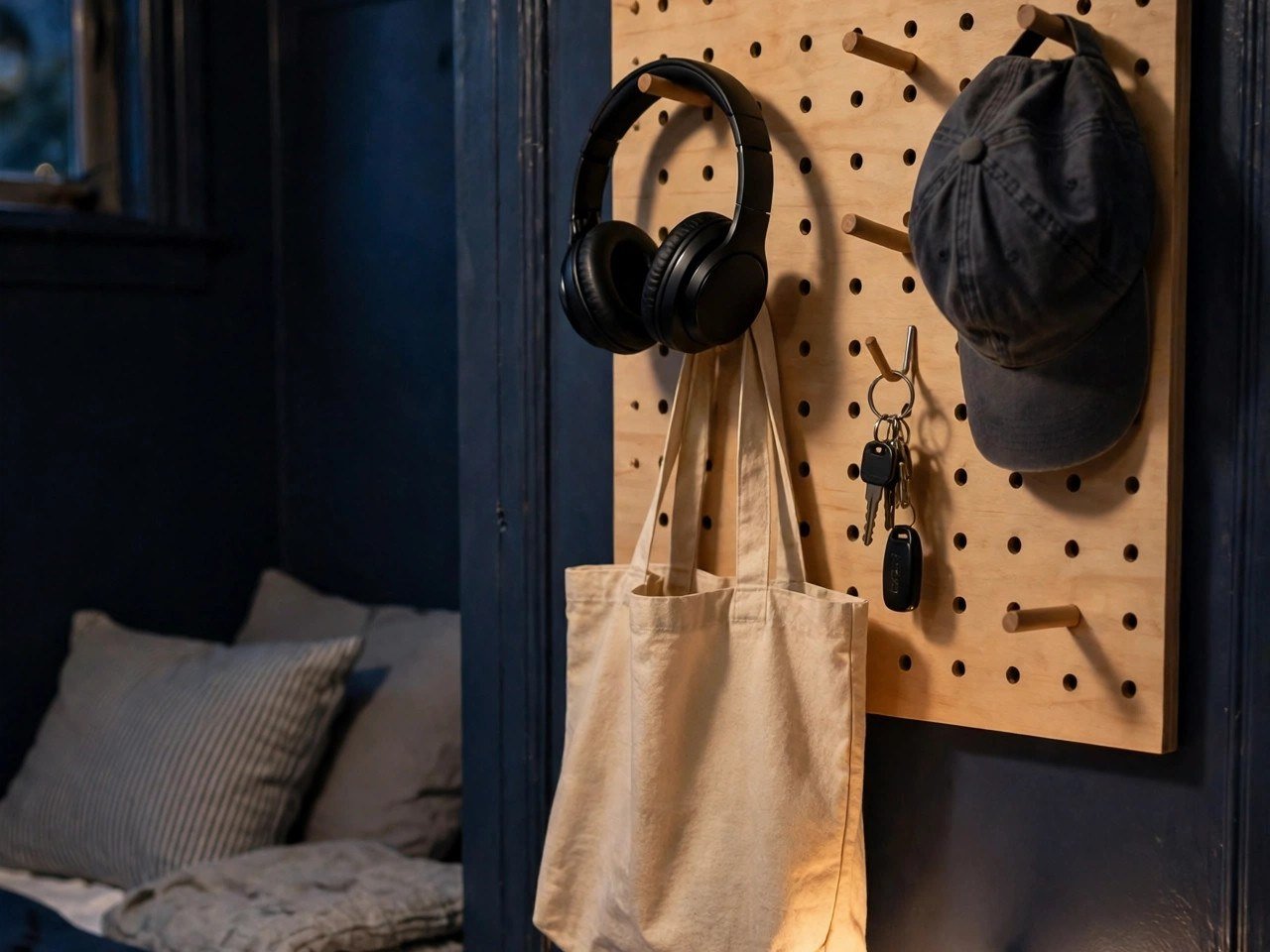
Bags, keys, headphones, a cap, the tote you grab every morning: these are the things that land on the chair. A pegboard gives them one home that can change as your routine changes.
Mount it by the door at shoulder height and keep the grid honest: one hook, one thing. The moment two things share a hook, the chair pile starts again.
The catch: a pegboard shows everything it holds, so it suits tidy-by-nature people and small, good-looking daily kit. If your daily stuff is bulky, a row of hooks (idea 12) or a door organizer (idea 10) hides it better. Renters can hang light items from adhesive rails instead and the limit printed on the pack is the limit, not a suggestion.
Needs drilling, or adhesive rails for light items. Budget: hooks move, so you buy it once.
9. Float the nightstand and free the floor
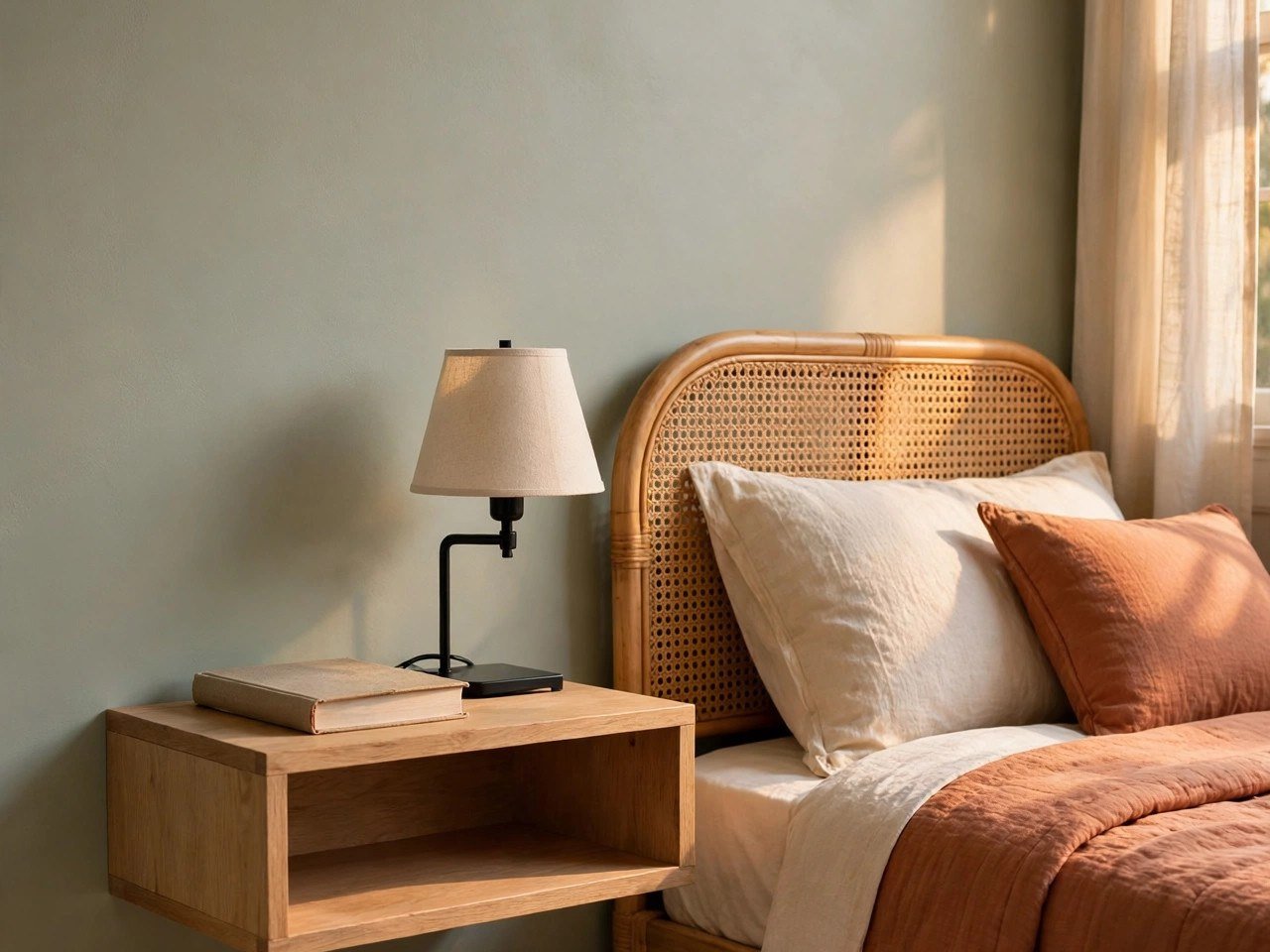
A floating shelf or cubby at the side of the bed holds a book, a phone and a glass of water and gives you back the patch of floor a leggy table was standing on. In a tight room, visible floor is what makes the room read bigger.
Mount it level with the top of the mattress and choose 8 to 10 inches deep: enough for a paperback and a water glass, too shallow to become a dumping shelf. A closed cubby hides chargers and the small mess.
The catch: it holds less, on purpose. If you keep ten things by the bed, take the drawer nightstand (idea 18) and get your floor space from another idea.
Needs drilling. Measure: mattress height, 8 to 10 inches deep.
Doors and corners
Two places every room has and almost nobody uses on purpose.
10. Hang shoes on the back of the door

The back of the bedroom door is a full-height storage wall that costs you nothing in floor space. A clear over-door shoe organizer takes the pile by the door off the floor in about five minutes and clear pockets matter: shoes you can see are shoes you wear.
Before you hang it, open and close the door slowly. The organizer adds thickness, so check the door still shuts cleanly and the pockets clear the frame on the hinge side.
The catch: it suits flats, sneakers and sandals best. Heavy boots sag and stretch the pockets, so boots belong in a bin (idea 4) or by the front door.
Renter-friendly. Measure: door thickness and clearance at the frame, checked before you buy.
11. Put the awkward corner to work
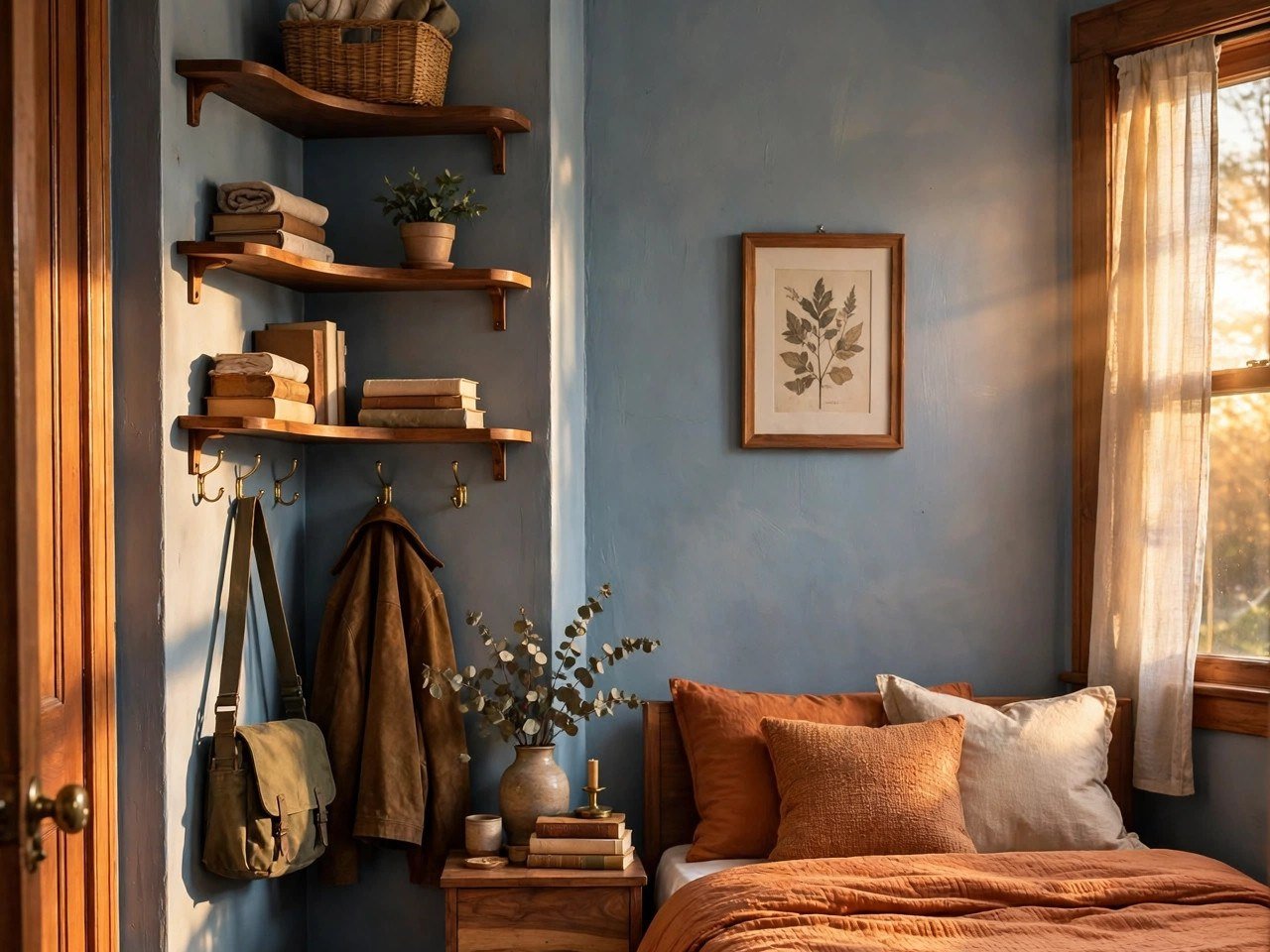
Every small bedroom has one corner that fits nothing standard: too narrow for a dresser, too visible to ignore. That corner is the right size for a corner shelf unit or one tall, narrow cabinet and tall is the trick.
Use it for one category only, such as bedding or books, so it stays a system, not an overflow ledge. Anchor it to the wall with its tip-over kit, the same Anchor It! advice as idea 7, because narrow and tall is the least steady shape.
The catch: corner units hold less than their photos promise, since the back of each shelf is hard to reach. Keep the front half for things you use and let the deep back hold the rarely touched.
Renter-friendly, with the anchor kit fixed. Measure: corner width both ways, corners are rarely square.
12. Give bags and hats their own row of hooks
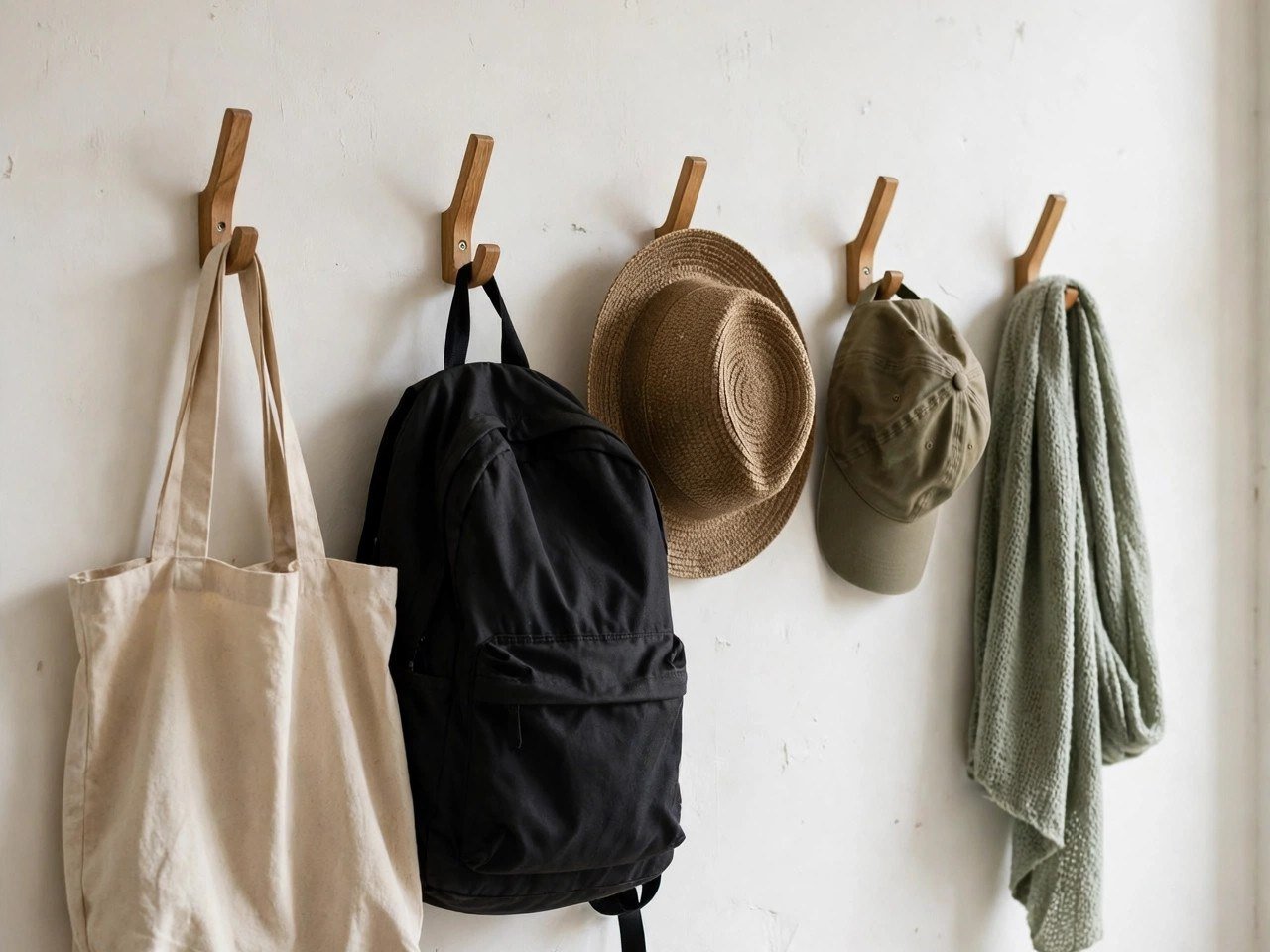
The chair pile starts with one bag dropped on it, then a hat, then a jacket. A short row of hooks by the door ends the pile at its source and it is the cheapest idea in this section.
Three or four hooks are enough. Space them so bags hang side by side without stacking and put the row where you walk in, not where it looks best. Hooks you pass are hooks you use.
The catch: adhesive hooks have a real limit, printed on the pack by makers such as 3M Command and a heavy work bag can pass it. One heavy bag gets a screw-in hook, with permission if you rent, or a pegboard hook (idea 8) built for weight.
Renter-friendly with adhesive hooks, within the limit on the pack. Budget: a few hooks, one afternoon.
Clothes, closet or not
The pile is mostly clothes. This is the section that decides the room.
13. No closet? Build one from a rail and a curtain

A freestanding rail, a shoe shelf under it and a curtain across the front gives a room with no closet a working wardrobe for less than a flat-pack wardrobe and it moves rooms when you do. The curtain is what makes it read as furniture rather than a shop rail: linen or cotton, in a color close to the wall.
Size it from the count you did in the prep section. Most single rails hold one person’s weekly rotation plus a few occasion pieces. The rest lives in bins (idea 4) or vacuum bags (idea 16).
The catch: it holds a wardrobe, not a collection. If your clothes fill two rails, no furniture in this section will save you and the honest first step is the sort, not the rail.
Renter-friendly. Budget: less than a wardrobe and it leaves with you.
14. Turn one wall into an open closet
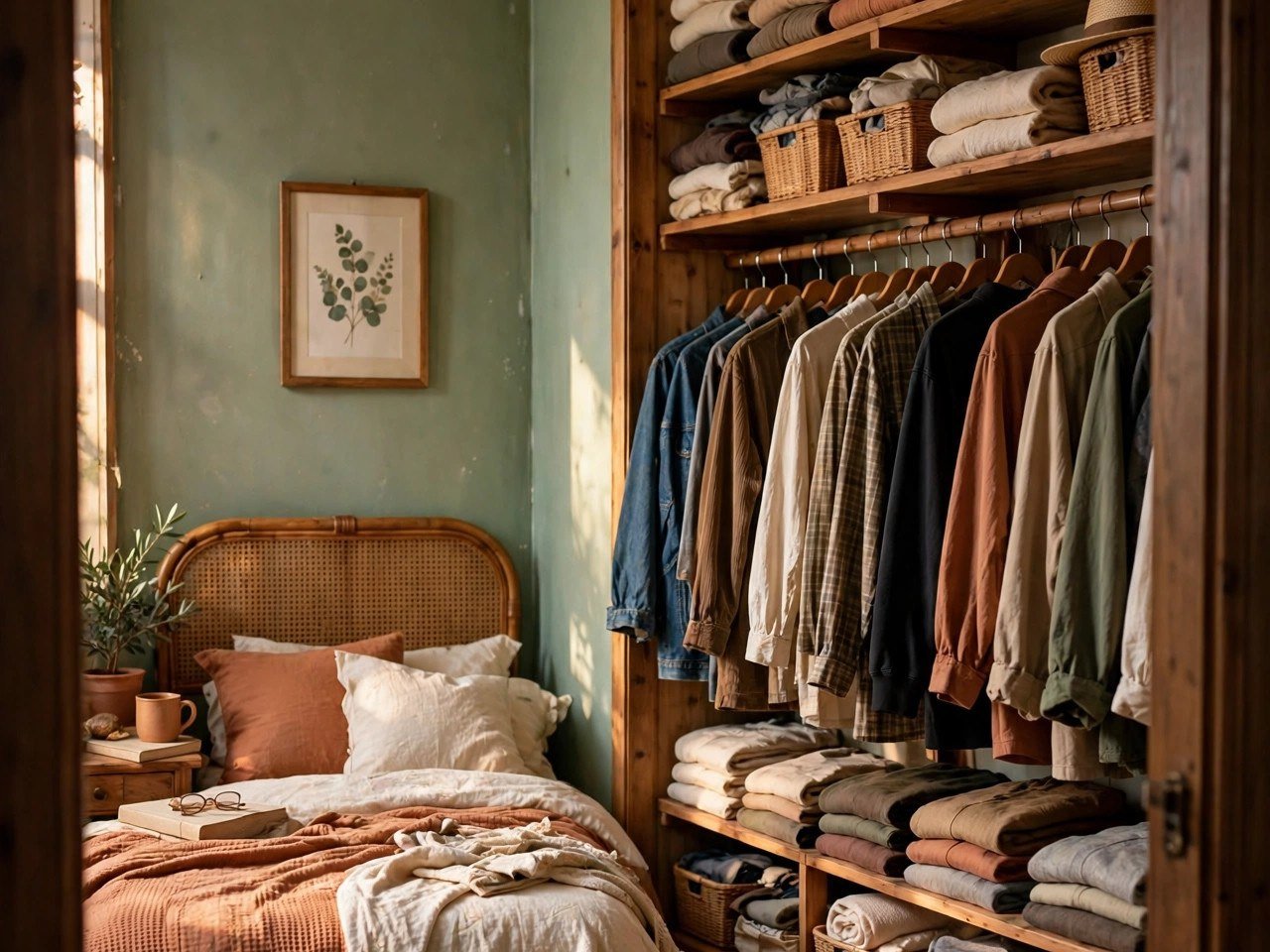
If you have one clear wall, a rail with shelves above and below it stores more than a small closet does and you can see everything you own at once.
Keep it edited or do not do it at all. Open clothes show every gap, bulge and odd hanger, so this only looks good under a rule: matching slim hangers (idea 15), one color family per section if you can manage it and nothing stored on top of the top shelf.
The catch: dust. Open clothes collect it, so this suits rooms away from a busy road and people who wear most of what they own often enough to keep it moving.
Needs drilling for the fixed version; a freestanding rail (idea 13) is the renter version. Measure: one clear wall, end to end.
15. Double the closet you already have
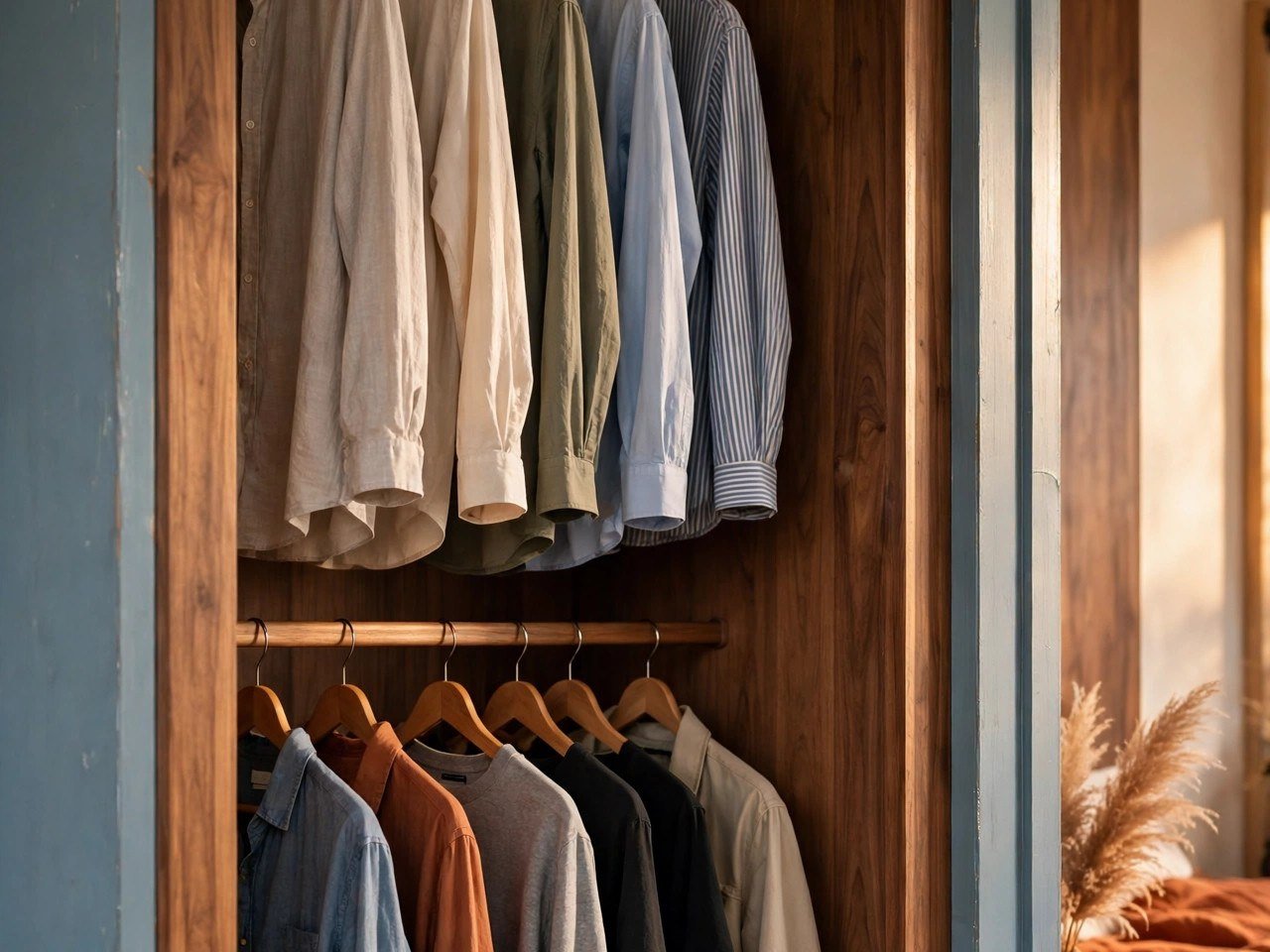
A standard closet wastes its lower half: one rail at the top, shirts hanging to waist height and a tangle of shoes below. Hang a second rail under the first, from a tension rod or a hanging rail extender and that dead space takes a full second row of shorter clothes.
Swap fat hangers for slim matching ones. On a short rail, that can be the difference between clothes that slide and clothes that jam. Then stand a slim drawer unit inside the closet for folded things and the dresser can leave the room entirely.
The catch: two rails only work for short items. Long dresses and coats still need full height, so keep one section of the closet at single-rail length for them.
Renter-friendly. Budget: one extra rail and a pack of slim hangers.
16. Vacuum-pack the season you are not in

Sweaters, spare duvets and winter throws are mostly air. Vacuum bags take the air out and a pile that filled a shelf can slide under the bed beside the bins (idea 4).
Label each bag before you seal it and store bags flat, so the bottom one is not a wrestling match in January.
The catch: not everything likes being squashed. Follow the bag maker’s care guidance, keep wool coats and anything that needs to hold its shape on hangers and let down fillings recover in the open before you judge them flat.
Renter-friendly. Budget: a pack of bags costs less than one new bin.
Furniture that does two jobs
When floor space is the shortage, every piece has to earn its place twice.
17. Set a storage bench at the foot of the bed
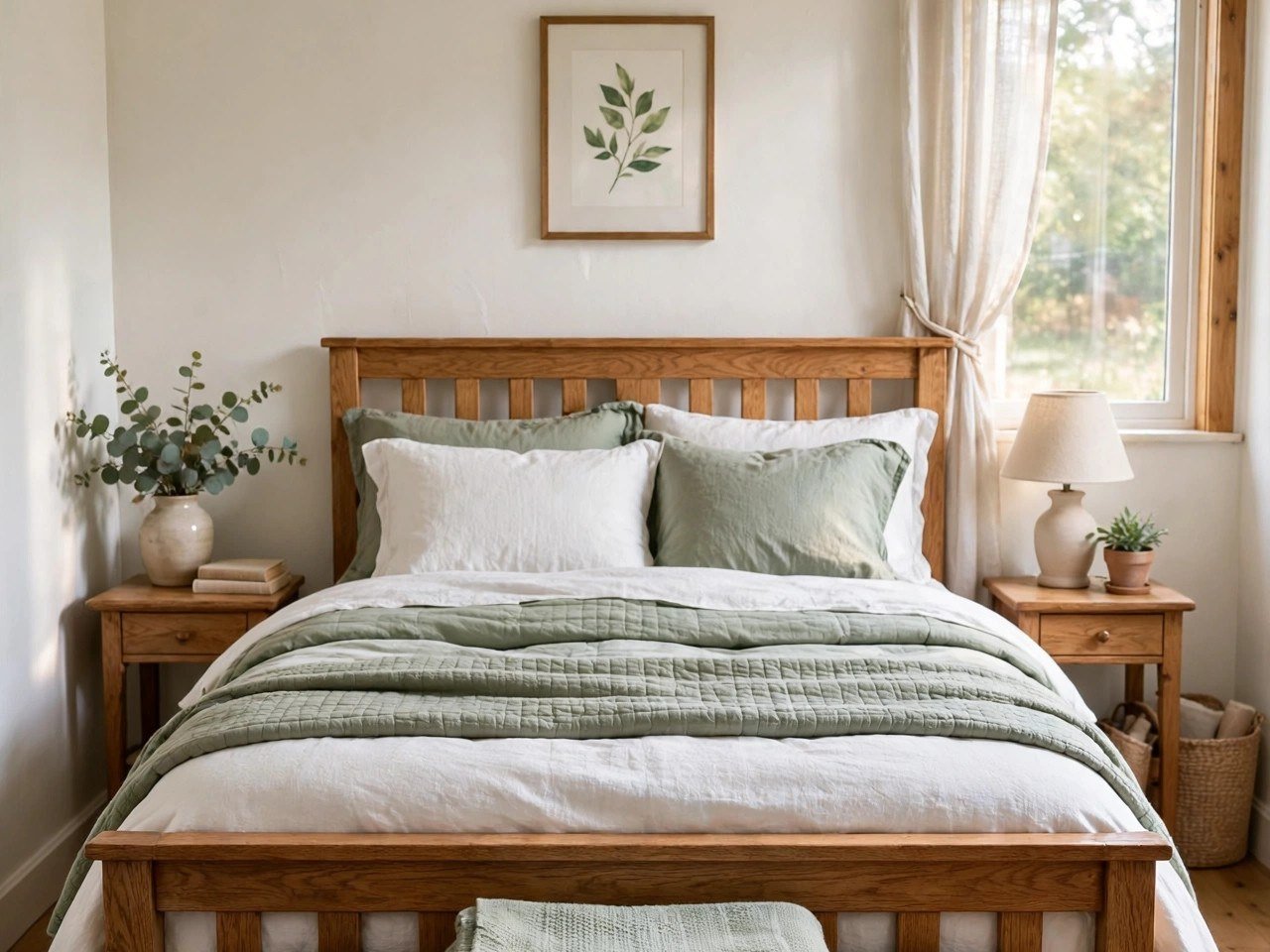
A bench at the foot of the bed is a seat for putting shoes on, a clear surface instead of the bed and a box for the throws and spare bedding that otherwise live on it. Three jobs, one footprint.
Choose one as wide as the bed or slightly less, so it reads as part of the bed rather than a stray box and a lid you can lift with one hand. A soft top matters more than depth: you sit on it daily and open it weekly.
The catch: foot-of-bed space is also walkway space. In a room where the bed already ends close to the wall, a bench eats the path and the under-bed ideas (1 to 4) are the better spend.
Renter-friendly. Measure: bed width or slightly less and the walkway left behind it.
18. Pick a nightstand with drawers, not a table
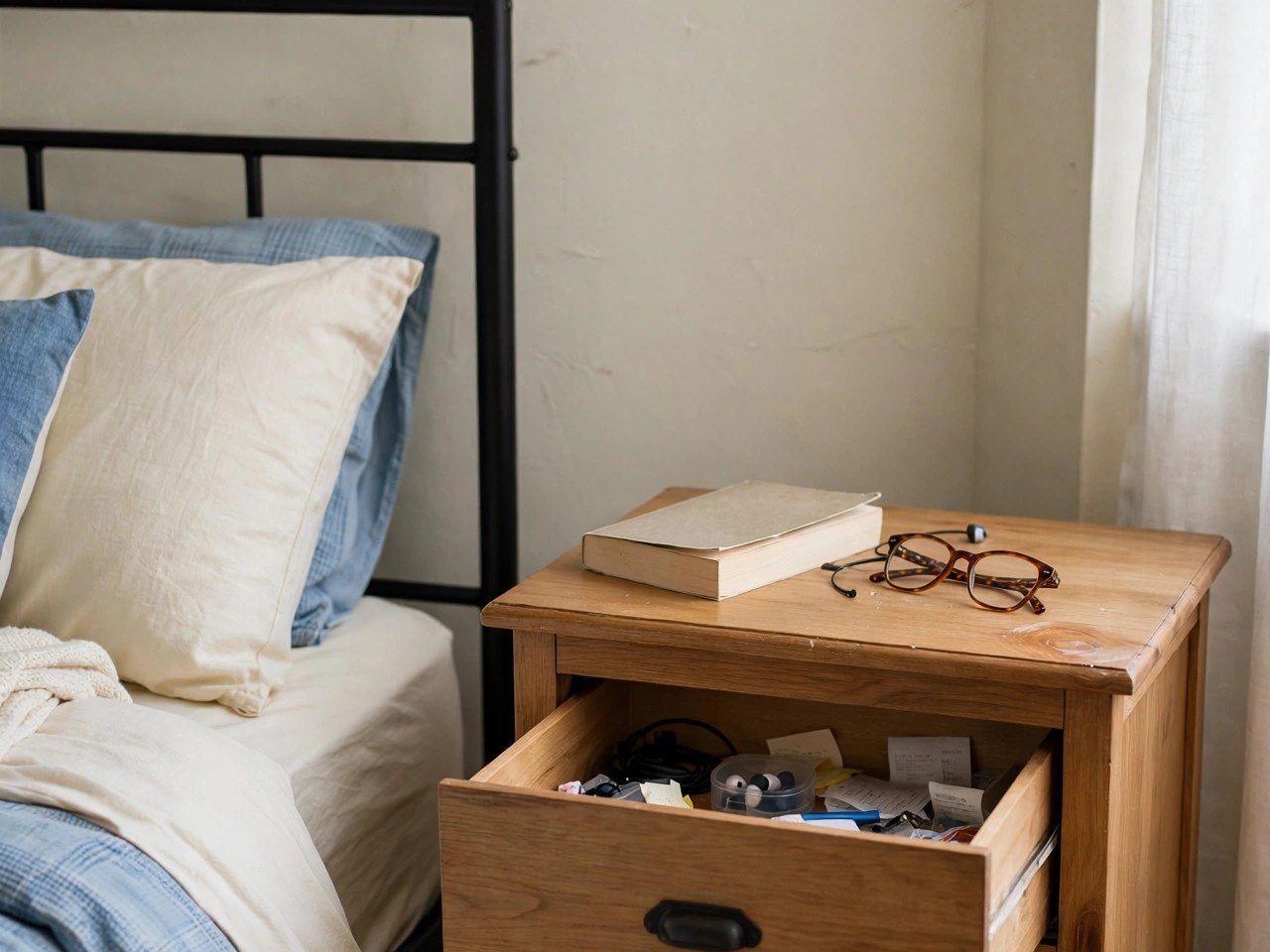
An open table by the bed collects everything: chargers, creams, three books, a glass, a tangle. A nightstand with drawers holds the same things behind a front and the top stays clear enough to look calm in the morning.
Two drawers beat one deep one, because the top drawer becomes the daily drawer and the mess sorts itself. Keep the depth modest in a tight room, no deeper than about 16 inches, so it does not steal the walkway beside the bed.
The catch: drawers hide things so well that they fill with things you do not need. Give each drawer a job when you set it up.
Renter-friendly. Measure: no deeper than about 16 inches in a tight room.
19. Make the desk hold the paperwork
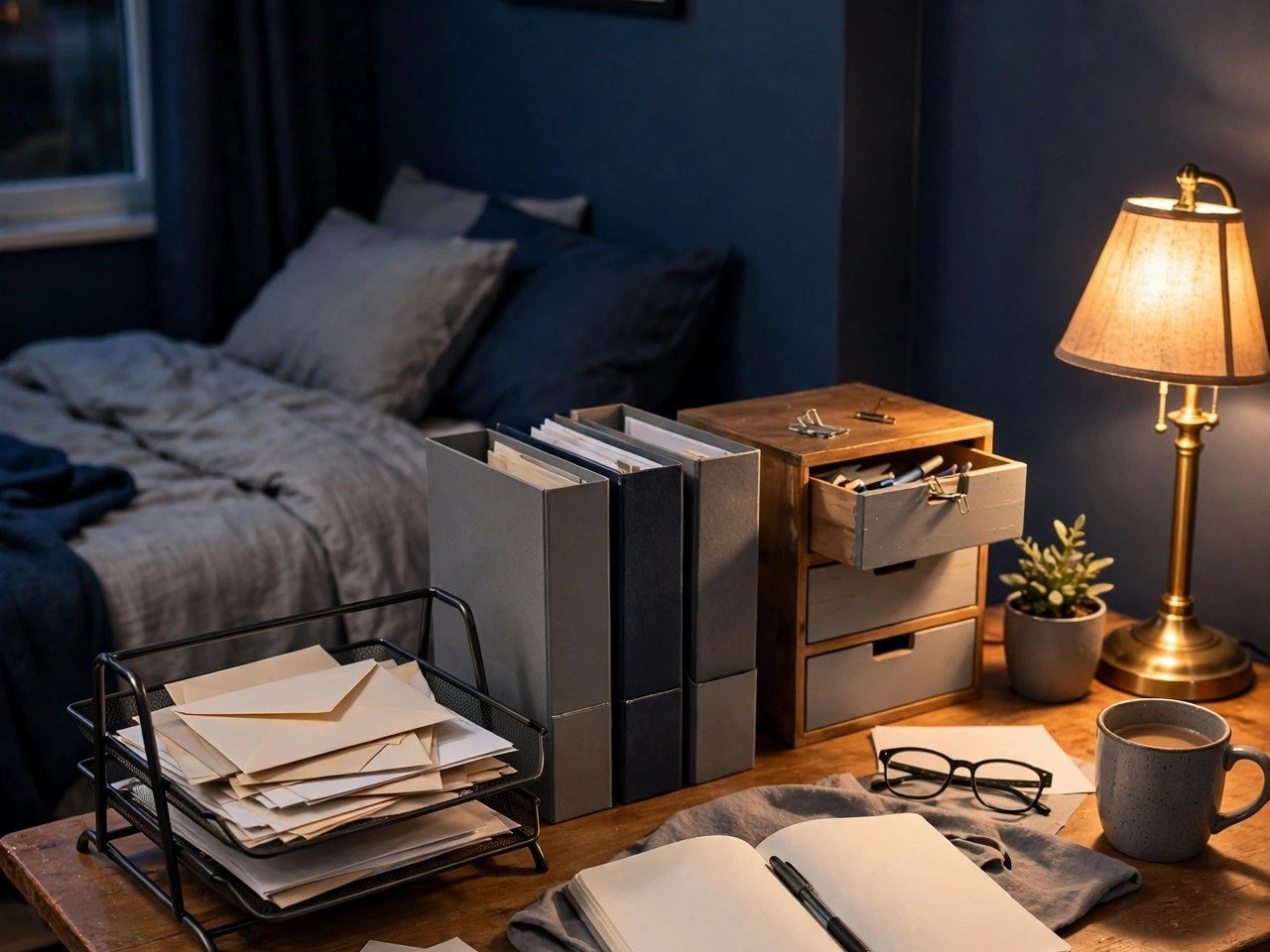
If your bedroom is also your office, the desk is either a second storage unit or a second mess. A desk with drawers, or a bookcase desk with a shelf run, takes the paperwork, the printer paper and the chargers that otherwise colonize the floor and the bed.
Give its drawers the jobs the nightstand cannot take (idea 18): documents in one, tech in the other, nothing homeless. The desk in small bedroom ideas (idea 5 there) shows how a slim one fits.
The catch: a bedroom desk full of work is hard to sleep beside. A lid, a closed drawer and a curtain or screen if the room allows one keep the office shut at night and that boundary is worth more than the storage.
Renter-friendly. Measure: drawer or shelf space counted before you buy, not after.
20. Corral makeup and small things in one drawer
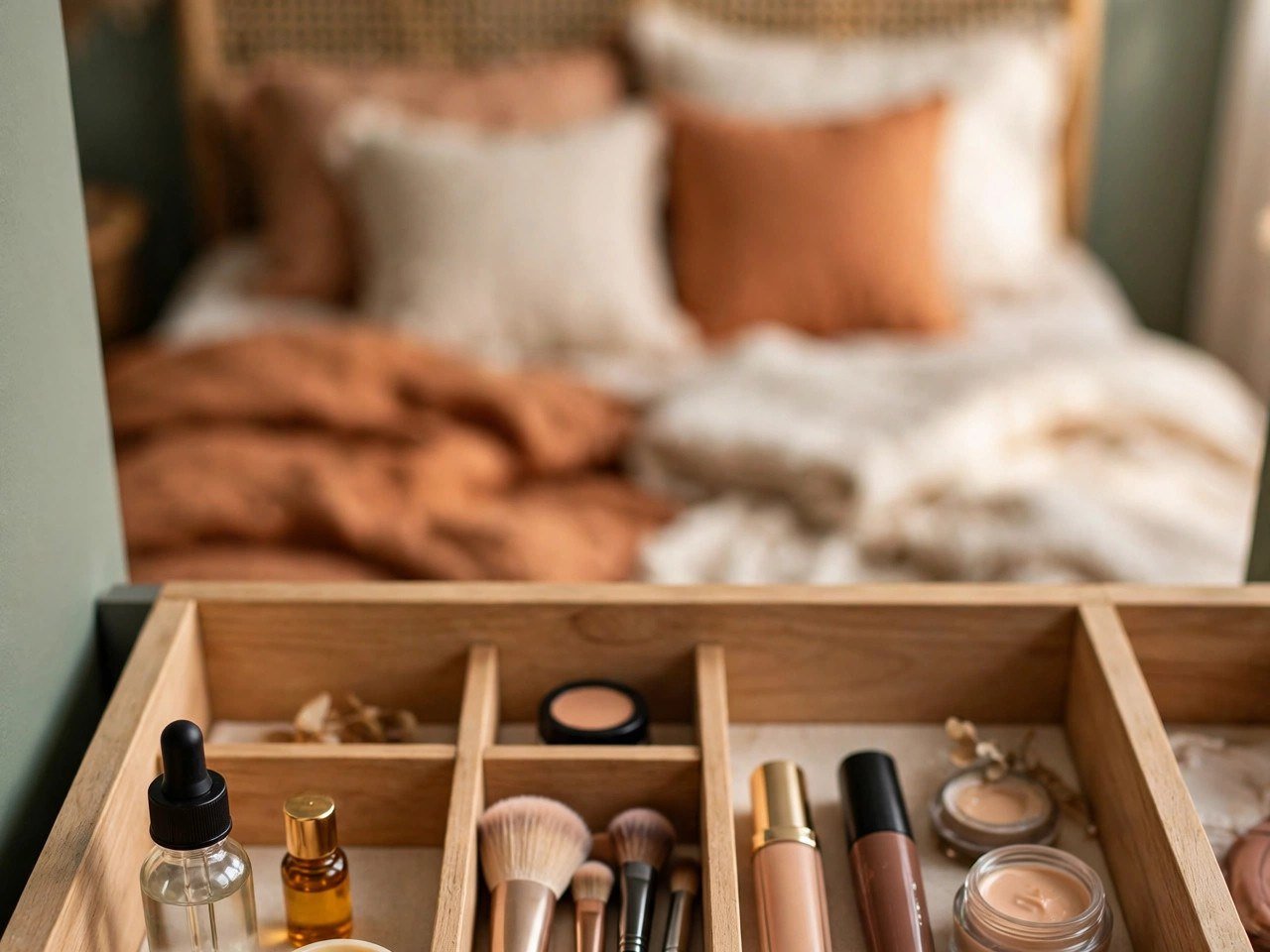
The last mess in most small bedrooms is not big at all. It is forty small things spread across three surfaces. Give them one drawer, divided, near where you actually get ready and the surfaces clear themselves.
Drawer dividers sort the drawer into sections and a small turntable or pot keeps brushes and bottles upright. One drawer is the rule: if it will not fit in one, the collection is the problem and a sort beats a second drawer.
The catch: dividers sized for another drawer are worse than none, because things slide under them. Measure the drawer inside, all three dimensions, before you order a single insert.
Renter-friendly. Budget: dividers and a pot, the smallest spend on this page. Measure: inside of the drawer, width, depth and height.
Small bedroom storage ideas for your situation
No closet at all
Start with the rail and curtain (13) for hanging clothes, shoes on the door (10), a lift-up bed (1) for bedding and bulk and vacuum bags (16) for the season you are not wearing. That set covers a full wardrobe.
On a budget
The five cheapest ideas here are bins under the bed (4), risers (3), shoes on the door (10), a row of hooks (12) and vacuum bags (16). Do them in that order; together they cost less than one piece of storage furniture.
Two people, one small room
Split everything by person before you split it by category: half the rail each (13 or 14), one drawer nightstand each (18) and a lift-up bed (1) because drawer beds fail when one side is against a wall. Two small systems that stay separate beat one big shared one that tangles.
Renting and cannot drill
Your list is 1, 2, 3, 4, 7, 10, 12 with adhesive hooks, 13, 15, 16, 17, 18, 19 and 20. That is most of this page, which is the point: in a small bedroom, the floor and the furniture do the heavy lifting and the walls are the bonus, not the plan.
Storage mistakes that make a small room feel smaller
Ranked by how often they show up:
- Storage that is too deep for the room. A deep unit steals the walkway and the room feels tighter than before it arrived. Buy shallow and measure depth first (ideas 5 and 18).
- Buying bins before clearing out. New containers for old clutter just organize the problem. Sort first (prep section), then buy to the count.
- Open shelves crammed full. An open shelf is a display, not a warehouse. Once it is full edge to edge, it reads as clutter at eye level (ideas 6 and 14).
- Heavy things above the bed. It is a safety problem before it is a style one. Shallow, light and fixed into studs, or not at all (idea 5).
- Tall furniture left unanchored. Narrow, tall units tip. Use the tip-over kit every time (ideas 7 and 11).
Questions people ask about this
How do I store clothes in a bedroom with no closet?
Use a freestanding rail with a shoe shelf as your wardrobe, hang a curtain across it and size it to one season at a time. Keep the other season in vacuum bags under the bed, shoes on the back of the door and folded things in a slim drawer unit beside the rail. That set replaces a closet.
How do I maximize storage in a small bedroom?
Start with the space the room already has: under the bed first, then high on the walls, then the back of the door and only then new furniture. Measure the under-bed clearance before you buy anything, match each idea to what your lease allows and give every category one home.
How do I organize a small bedroom with not enough storage?
Sort first, into clothes, shoes and everything else and let go of what fits none of them. Then store by how often you use things: daily items at hand height, weekly items in drawers and under the bed, twice-a-year items on a high shelf or in vacuum bags. Most rooms that feel short on storage are really short on sorting.
How do I add storage without making the room look cluttered?
Close it, match it and raise it: lidded containers in one material family, storage moved to the under-bed and high-wall zones instead of new floor footprints and nothing stored on open surfaces. Clutter is mostly storage that is visible, mismatched and at eye level; fix any one of the three and the room calms down measurably.
How can I add storage to a small bedroom without drilling?
Use the floor and the furniture: a lift-up bed, risers with lidded bins, a leaning ladder shelf, over-door organizers, adhesive hooks within the limit on the pack, a freestanding clothes rail and drawer furniture. Most of the ideas on this page need no drill; the label under each one tells you which.
What should I store under the bed?
Store things you use weekly to seasonally, in lidded bins you can slide out: off-season clothes, spare bedding and towels, shoes you are not wearing daily and books or files you need but do not read often. Keep daily items out. Label each bin on the end that faces out.
Start under the bed
Of every space in a small bedroom, the one under the bed is the biggest, the closest and the most ignored and that is the real insight in this list: you rarely need more room, you need the room you have to start working. So tonight, before you buy anything, slide a tape measure under your bed, write down the clearance and order bins an inch lower than that number. By the weekend the chair can go back to being a chair.
2 Responses